What Is Matcha Latte? When the Tea Becomes an Ingredient
In a matcha latte the tea stops being the drink and becomes an ingredient in one. Milk fat, lactose and heat all push against the astringency, which changes the dose, the temperature and the powder you should be buying.
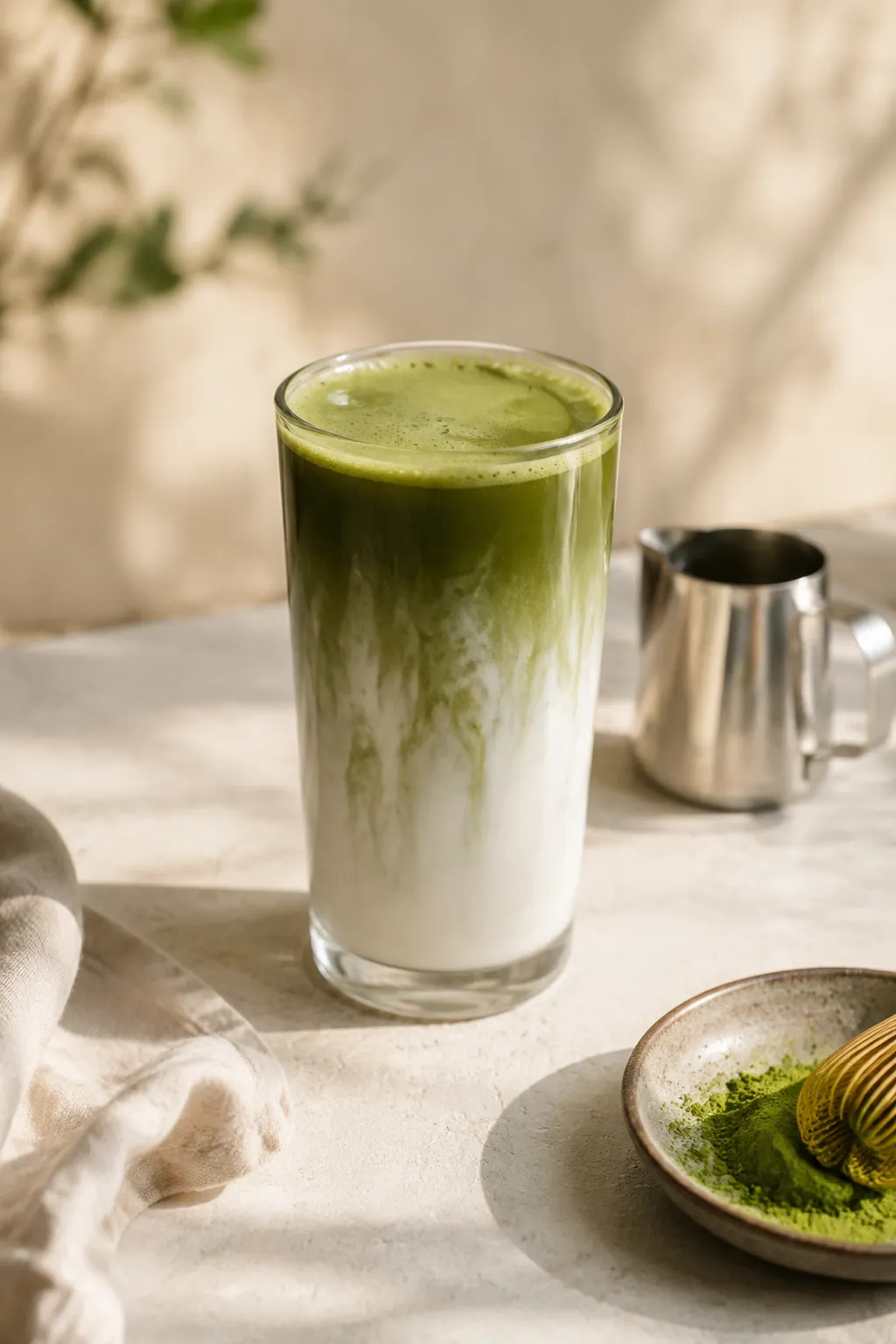
A matcha latte is matcha whisked to a small concentrate and then let down with milk, usually two to four grams of powder against a hundred and fifty to two hundred and fifty millilitres of it. The name borrows from coffee, and the structure borrows from coffee as well.
What it does not borrow is the balance. Espresso is bitter and milk softens it, whereas matcha is astringent and savoury, and milk does something rather different to that.
The most useful way to think about the drink is that the tea has changed job. It is no longer the thing in the cup; it is one ingredient in a cup of something else, and almost every practical decision follows from that.
Matcha latte at a glance
- What it is
- Matcha used as a flavouring for milk rather than drunk on its own
- Powder
- 2 to 4 g, roughly one to two times a plain bowl
- Concentrate
- Whisked into 40 to 60 ml of water first, never straight into milk
- Milk
- 150 to 250 ml, heated to about 60 to 65 C
- Sweetener
- Usual in a cafe, optional at home, and best added as a syrup
- Powder to buy
- A bolder daily or upper-culinary tier, not the top of the range
- Where it differs from usucha
- Volume, dilution and the fact that something else is in the cup
Here the matcha is an ingredient
That single shift explains most of what follows.
A plain bowl is judged on the tea alone, so every fault in the powder is on show and every technique note in whisking a bowl exists to protect it. A latte is judged on the finished drink.
The tea has to survive contact with fat, sugar, protein and four times the volume, and the qualities that survive that are not the delicate ones.
Cafes worked this out long ago, which is why the version sold over a counter is a formulated product rather than a bowl with milk in it. That is not a scandal, and it is worth understanding before comparing a home cup with a shop one, because what matcha actually is describes a tea that most latte drinkers have never tasted undiluted.
What milk actually does to the tea
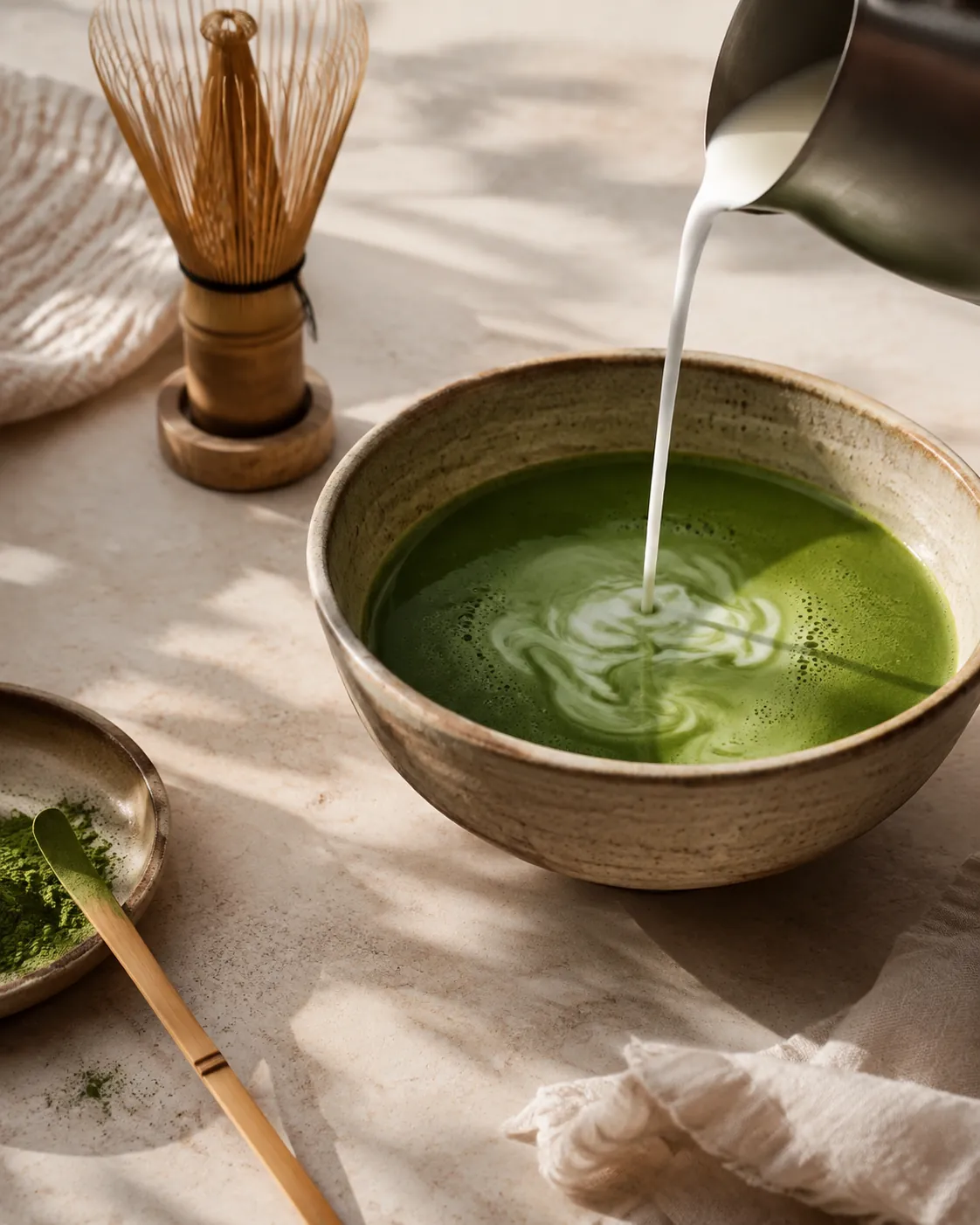
Milk does three separate things to a bowl of matcha, and only one of them is the sweetness that people expect it to add. Fat, protein and lactose each act on a different part of the flavour.
Fat coats the tongue and shortens everything, so astringency lands softer and the finish stops early. Protein is the more interesting one: casein binds to the polyphenols in tea and takes a real share of the drying sensation out of the drink, which is the same mechanism behind milk in a strong cup of chai.
Fat
Coats the palate, blunts astringency and shortens the finish.
Casein
Binds tea polyphenols, so less of the drying edge reaches you.
Lactose
A mild background sweetness, around 4 to 5 g per 100 ml of dairy.
Water
Simple dilution, and the largest effect of the four.
Aroma
The marine and vegetal top notes are muted along with the harshness.
Every one of those works in the same direction, which is the catch. Milk does not soften the astringency and leave the good part standing; it flattens the aroma and the savoury sweetness at the same time.
That is why a powder chosen for its delicacy is largely wasted, and why how matcha tastes on its own reads like a description of a different drink.
Why cafe versions are almost always pre-sweetened
Read the ingredients on a cafe matcha tub and sugar is usually the first line.
These are blends rather than tea: sugar, green tea powder, sometimes milk powder, sometimes an anti-caking agent. The proportion varies, and it is common for the sugar to outweigh the tea several times over, which is why the same order tastes broadly identical in two unrelated shops.
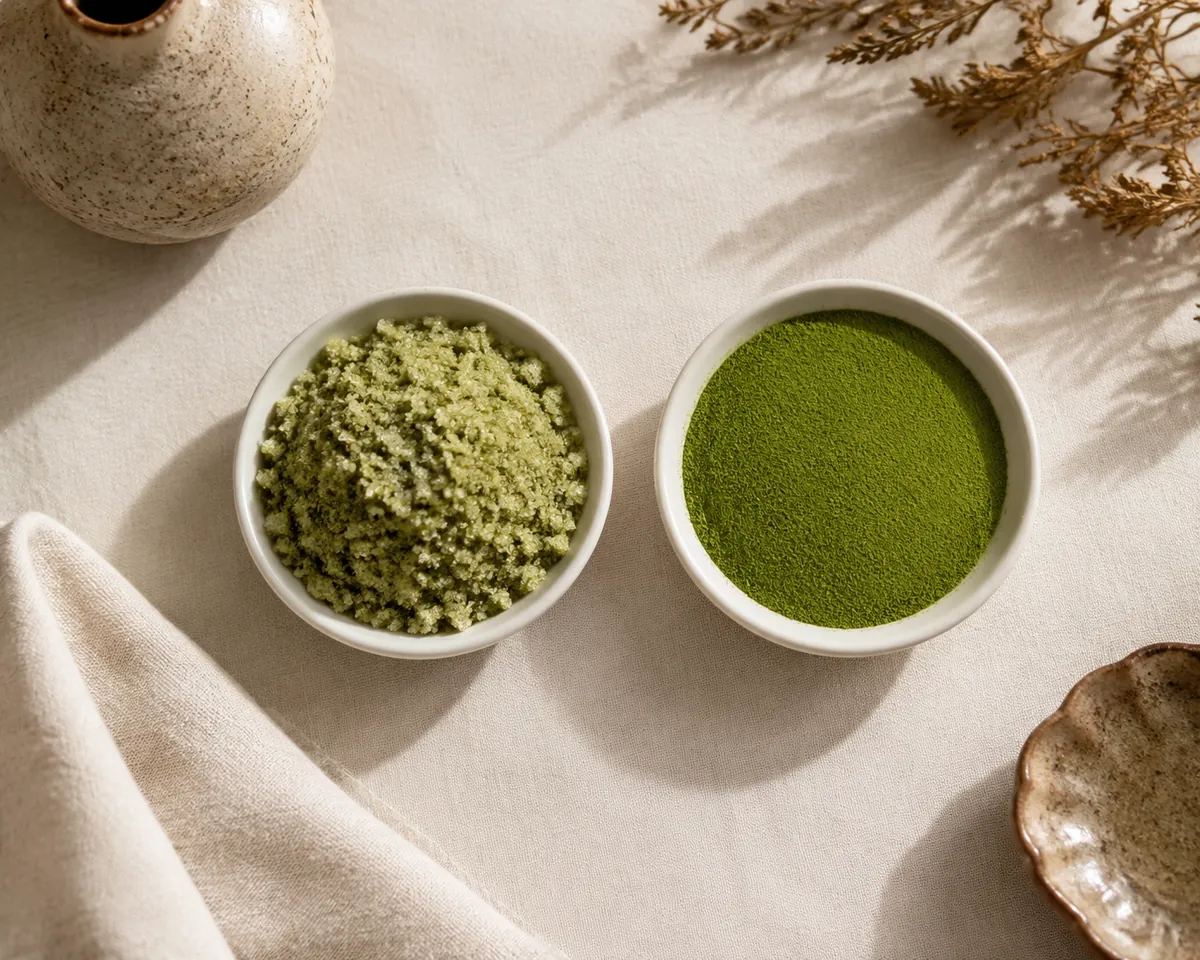
The commercial logic is not mysterious. A blend is consistent between staff, needs no whisk, no sieve and no water station, and it hides a cheap powder well enough that nobody sends it back.
Speed is the whole argument, and it is a good one at a counter with a queue.
What it costs you is the ability to judge a tin. Ordering a latte to decide whether a shop's matcha is any good tells you almost nothing, and the faults collected in matcha faults in general are precisely the ones sugar and milk are best at covering.
How much powder survives a large cup
A standard bowl puts two grams of powder into seventy millilitres of water, and a takeaway cup asks the same two grams to fill five times that volume. The arithmetic is the whole problem with a weak latte.
Powder against volume, strongest to faintest
- 4 g in 40 ml of waterThe concentrate, before any milk goes in
- 2 g in 70 mlA plain thin bowl, for comparison
- 4 g in 250 ml of milkA latte where the tea clearly leads
- 2 g in 250 ml of milkPleasant, mild, and the tea is a background note
- 2 g in 400 ml of milkGreen-tinted milk, and very little else
Most disappointing lattes are a dosing problem rather than a powder problem. Someone measures a bowl's worth of matcha, pours a mug's worth of milk over it, and concludes the tin is weak.
Three to four grams is the honest figure for a large cup, and it roughly doubles the cost per serving, which is the real reason cafe recipes do not use it.
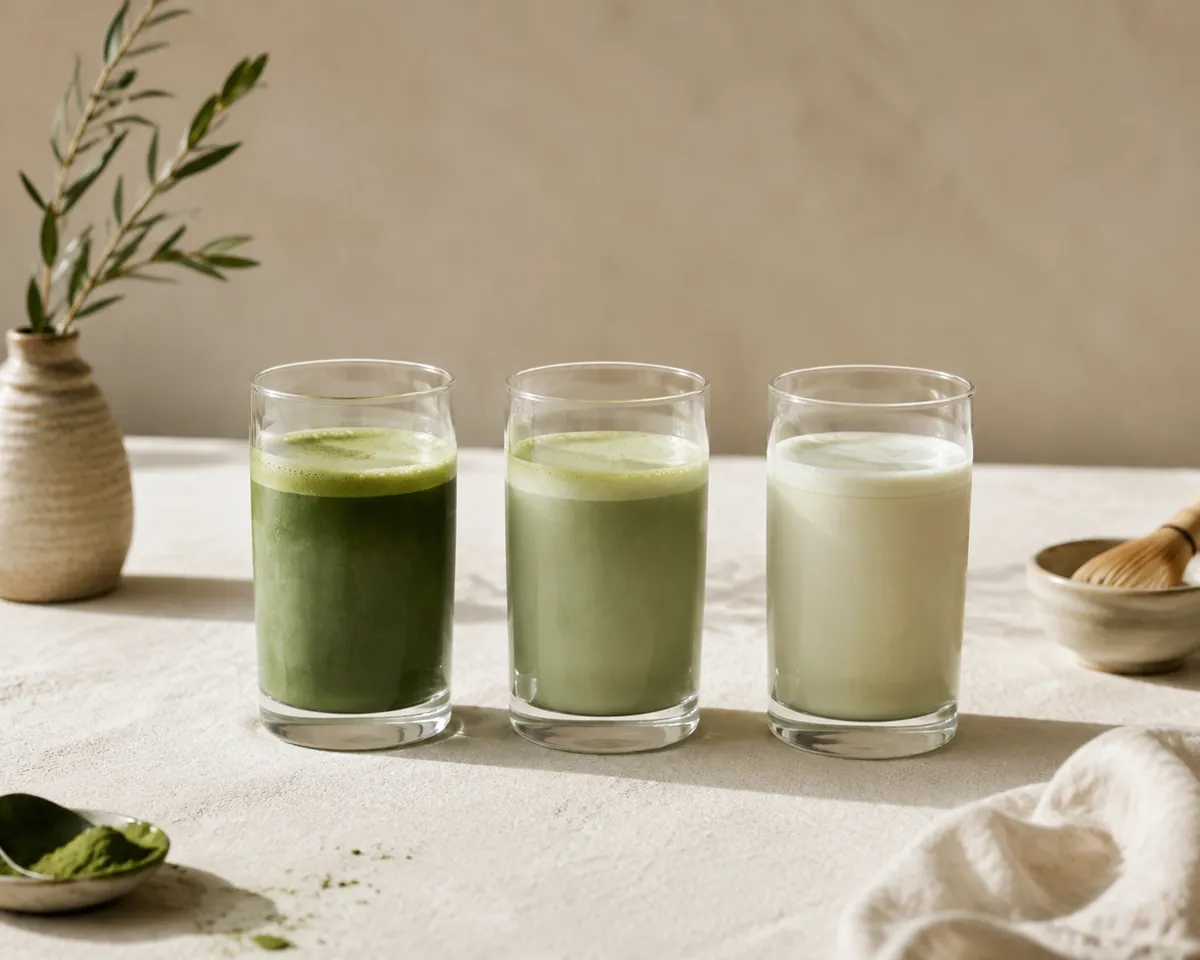
The other half of the answer is to reduce the milk rather than raise the powder. A two hundred millilitre cup made properly beats a four hundred millilitre one every time, and it is closer in spirit to a flat white than to a big milky mug.
Two heat windows have to overlap
Getting this wrong is what makes a home latte taste savoury.
Matcha wants water at 75 to 80 C, because hotter water pulls the astringent catechins forward. Milk wants to stop at about 60 to 65 C, since dairy heated much beyond that develops cooked, faintly sulphurous notes and its sweetness starts to fade.
The two temperatures
- Water for the concentrate
- 75 to 80 C, off the boil for two minutes
- Milk
- 60 to 65 C, warm to the hand through the jug
- Combined in the cup
- Around 60 C, which is comfortable to drink at once
- Too hot
- Milk past 70 C, where the drink turns broth-like
- Too cool
- Below 50 C, where the fat reads waxy and the tea flat
Push the milk past seventy and the cooked note meets matcha's marine, vegetal side. The two combine into something closer to a thin savoury broth than to a sweet drink, and it is the milk that has gone wrong rather than the tea.
This is the single most common complaint in why a latte goes wrong, and it is free to fix.
Choosing between dairy and a plant drink
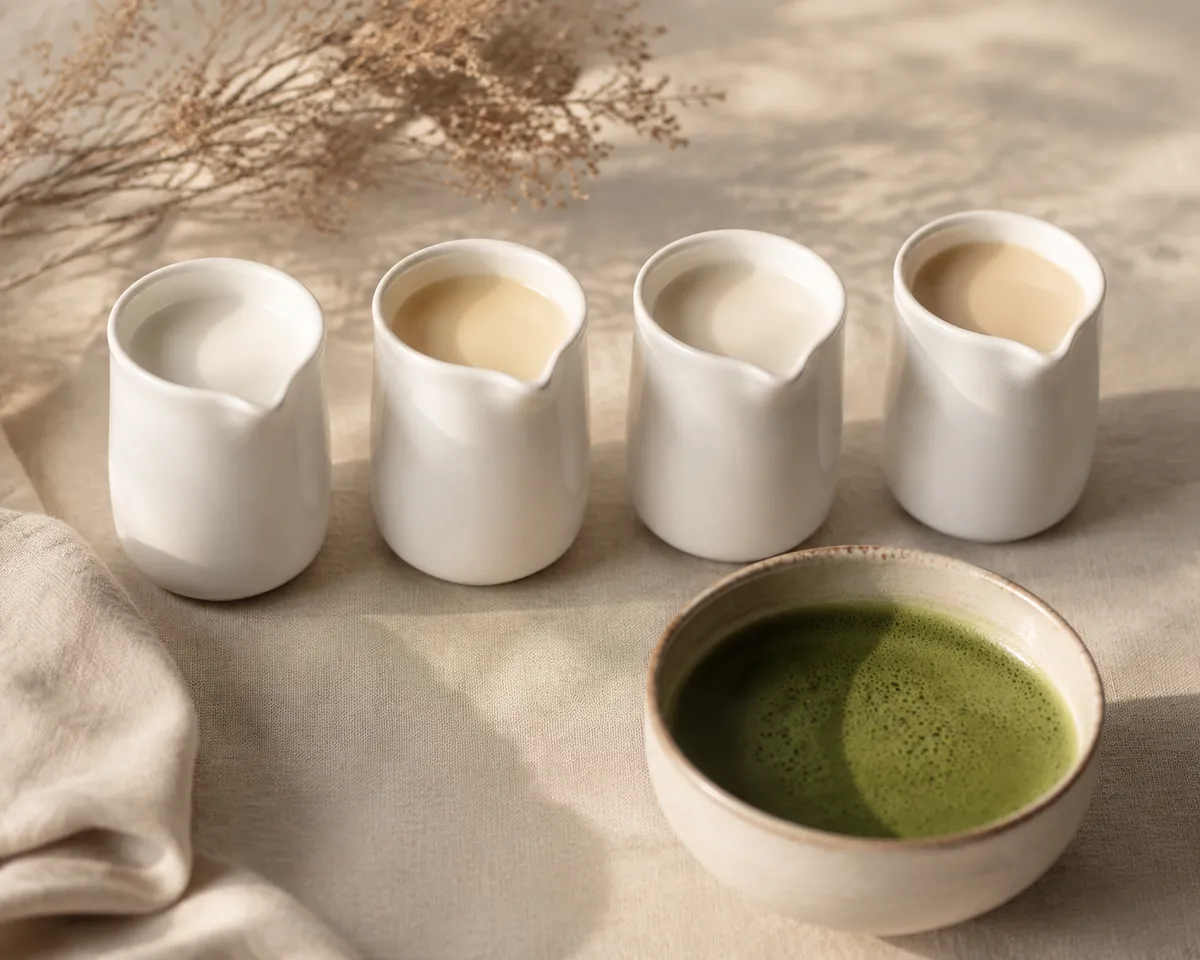
Milk selection changes this recipe more than the powder does at four times dilution, and it is the cheapest experiment available.
Whole dairy is the softest option and the one that mutes the tea most. Semi-skimmed leaves more of the tea audible and foams perfectly well, while skimmed gives you volume without body and tends to taste thin against matcha rather than clean.
| Milk | Foam | What it does to the tea |
|---|---|---|
| Whole dairy | Excellent | Softest and sweetest, and hides the most |
| Semi-skimmed | Very good | A reasonable middle, with the tea still audible |
| Oat drinks | Excellent in a barista formulation | Sweet and thick, and the usual first choice |
| Soy milk | Good | Beany against a delicate powder, fine against a bold one |
| Almond milk | Poor to fair | Thin, and its own nuttiness competes |
| Coconut milk drink | Fair | Assertive, and it takes the drink somewhere else entirely |
Splitting is rarer here than in coffee because there is no acid to trigger it, so the why plant milk curdles problem mostly does not apply. Where a plant drink does fail it fails on texture instead, going watery under heat, and a barista formulation is worth the extra cost purely for the fat and protein it carries.
Why the grade decision here is not the ceremonial one
Grade advice written for a plain bowl does not transfer to this drink. The tier that makes a superb bowl is chosen for delicacy, sweetness and a fine aroma, and every one of those qualities is exactly what milk erases.
Paying for those qualities and then covering them with milk is the most common waste of money in this category.
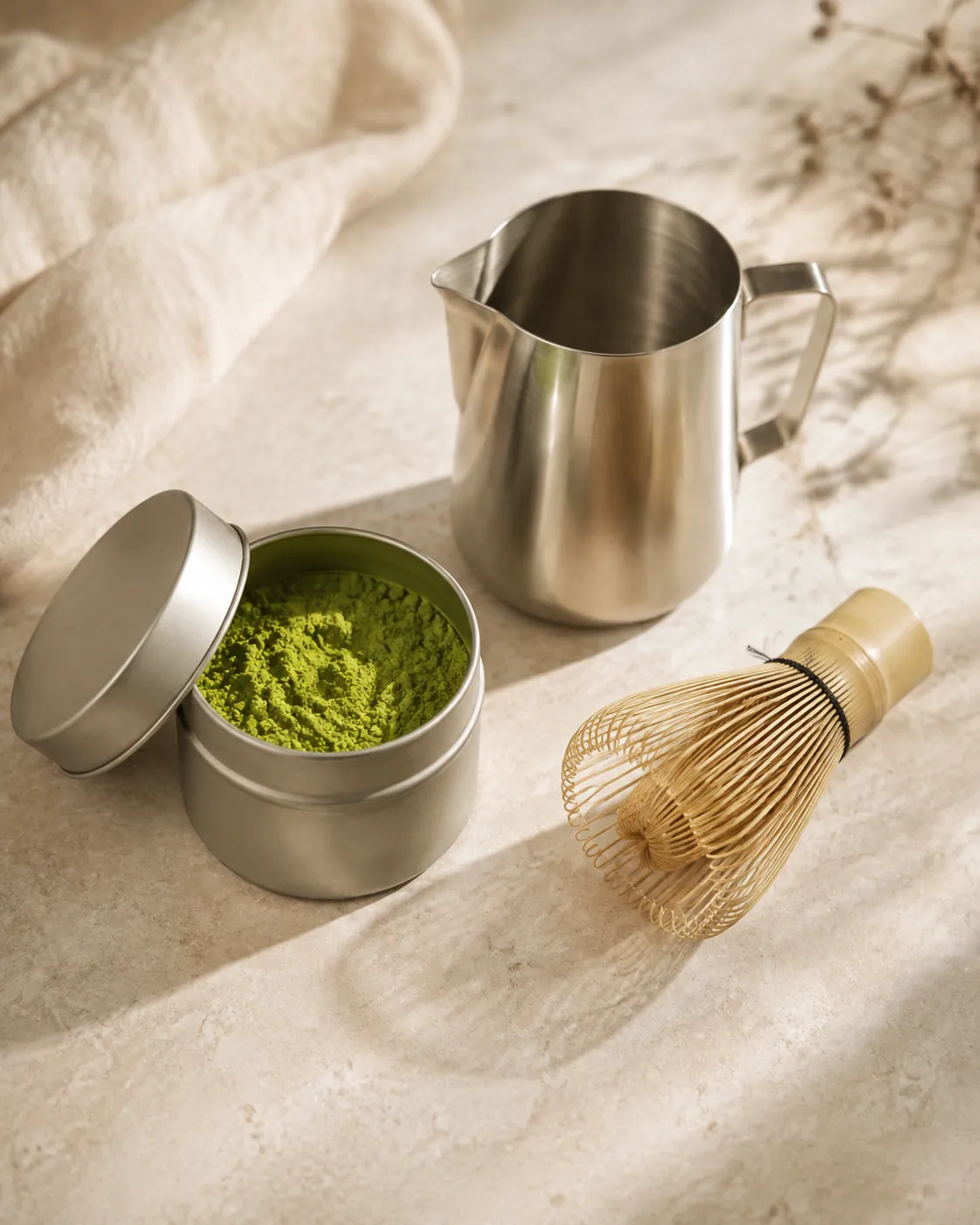
What a latte needs is the opposite profile: colour that holds against pale milk, enough body to be tasted through fat, and a bit of the forward bitterness that would be a fault in a bowl. That is very close to the specification for culinary grade, and it is why the tier exists at all.
The trap is assuming the cheapest tier will therefore do. Dull, khaki, stale powder goes grey in milk and tastes of hay, so the working answer is the upper end of culinary or a daily-drinking tier, leaving the ceremonial tier for the bowl and for thick tea, where its qualities are visible.
Order is the whole trick
Everything else in this article is a preference; this part is a rule.
Matcha will not disperse in milk. The proteins and the fat get in the way of the particles separating, so powder tipped into a jug of milk produces lumps that no amount of whisking will break down.
The fix is to whisk it into a small quantity of water first and only then introduce the milk, which takes about twenty seconds longer than doing it the wrong way.
The build, in order
- SiftPush 3 to 4 g of powder through a fine sieve into a bowl or a wide jug.
- PasteAdd a tablespoon of water at 75 to 80 C and work it smooth.
- ConcentrateAdd water to about 50 ml in total and whisk briskly until even.
- MilkHeat to 60 to 65 C, texture it if you want foam, and pour it in.
- SweetenAdd syrup at the end, to taste, rather than sugar at the start.
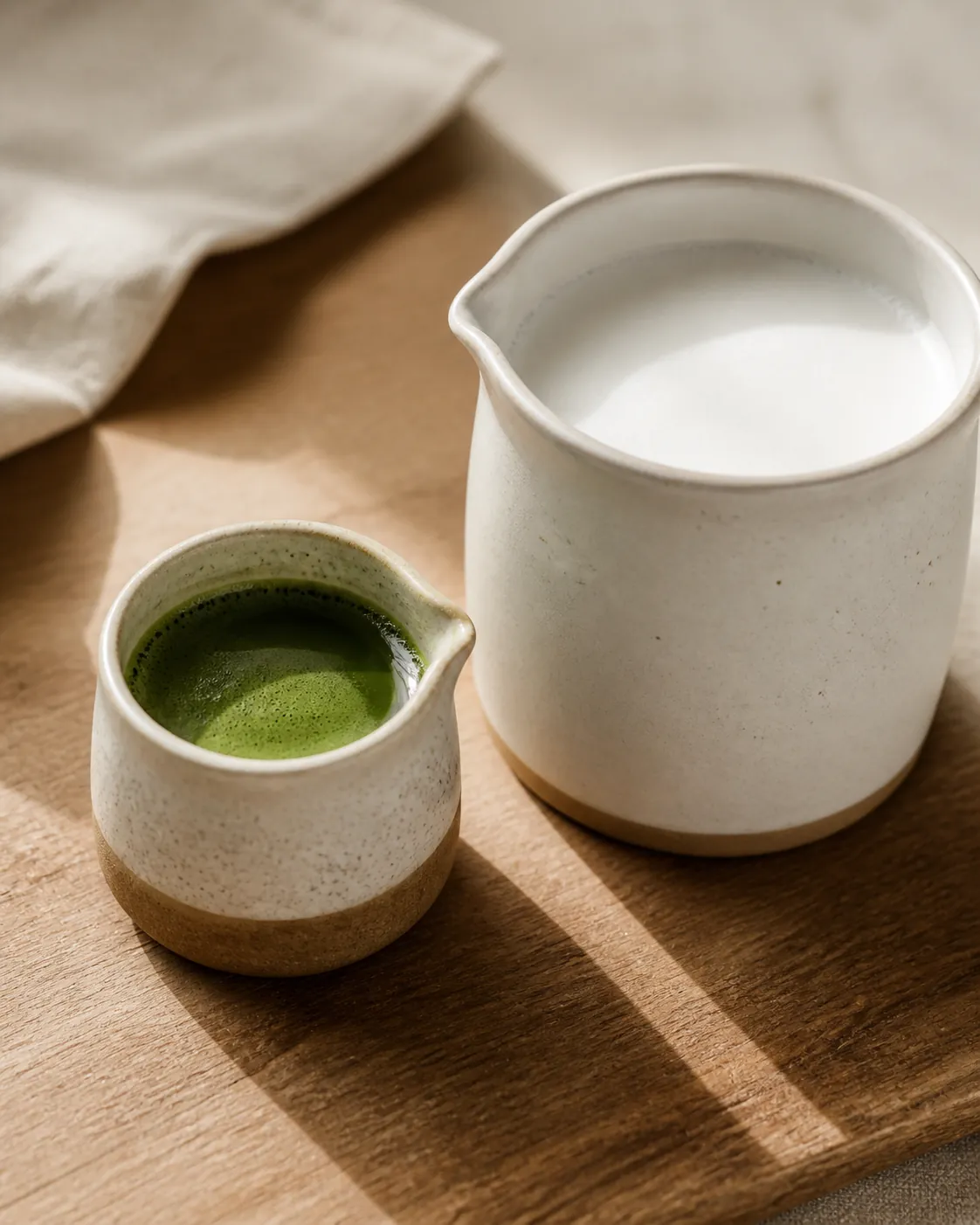
An electric frother is fine for the milk and poor for the tea, since its spinning head needs depth to work against and a shallow bowl of concentrate gives it none. Use it for the jug and keep a whisk for the powder, or follow the build, step by step as written.
Why iced and hot are not the same recipe
Iced is not the hot version poured over ice, and treating it that way is why so many home attempts arrive watery and pale. Melt is a second dilution on top of the milk, and it lands after the drink has already been balanced.
Cold water also disperses matcha reluctantly. A sealed jar shaken hard for twenty seconds does the job better than a whisk does, which is the technique iced matcha is built around, and it works just as well when milk is going in afterwards.
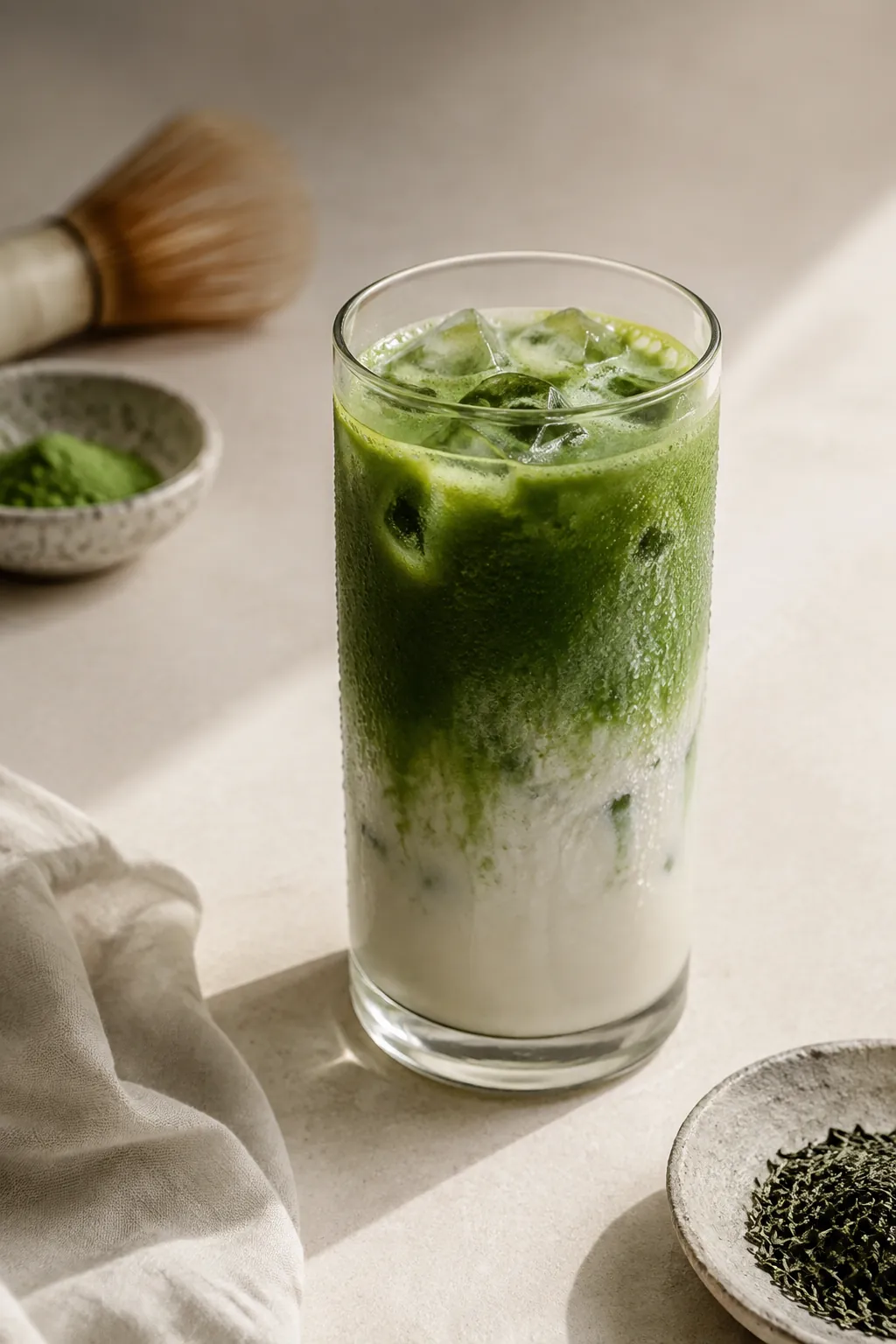
Build it strong, then. Four grams into forty millilitres of cool water, a glass filled with ice, cold milk poured over and the concentrate on top gives you the layered green line people photograph, and it also gives you a drink that still tastes of tea once the ice has done its work.
What the sweetener is doing
Sweetness in this drink is doing structural work rather than simply making it taste nice. Sugar suppresses the perception of both bitterness and astringency, so a sweetened latte reads smoother at the same measured strength.
Take it out and the drink tastes sharper as well as less sweet, which surprises people who expected only the sweetness to go.
- Add sweetener as a syrup, since granulated sugar will not dissolve in a cold drink.
- Sweeten at the end, after tasting, rather than by habit at the start.
- Increase the powder before increasing the sugar if the drink tastes flat.
- Remember that a barista oat drink is already sweeter than dairy.
Simple syrup is the neutral choice and the one that changes nothing else, while cane sugar works only in the hot version and only if it goes into the water. Honey brings a flavour of its own that sits oddly against a vegetal tea, and vanilla syrup is the flavour most cafe blends are quietly built on.
None of that is advice about how much anyone should drink, and There is none here. It is a description of what sugar does to the balance of a cup, in the same way that caffeine in a bowl describes what is in the powder and keeping a tin fresh describes what happens to it on a shelf.
Where the finished drink lands on the palate is the subject of what the finished drink tastes like, and the coffee original it is named after sits in a coffee latte.
Common questions
Should you whisk matcha straight into milk?
No. Whisk it into 40 to 60 ml of water first to make a concentrate, then let that down with the milk. Milk is too viscous for the powder to disperse in, so going straight in leaves lumps.
How much matcha goes into a latte?
Two to four grams against 150 to 250 ml of milk, which is roughly one to two times the powder in a plain bowl. The larger volume is why a single bowl's worth disappears in a big cup.
Do you need ceremonial grade for a matcha latte?
No, and the grade decision is a different one. The tea has to survive fat, sugar, protein and several times the volume, and the delicate qualities that a top grade is bought for are the first to be lost. A bolder daily tier suits it better.