What Is Ceremonial Grade Matcha? A Term With No Regulator
Ceremonial grade is a marketing term with no regulator behind it. That does not make it meaningless, but it does mean the words on the tin are worth less than the colour, smell and price.
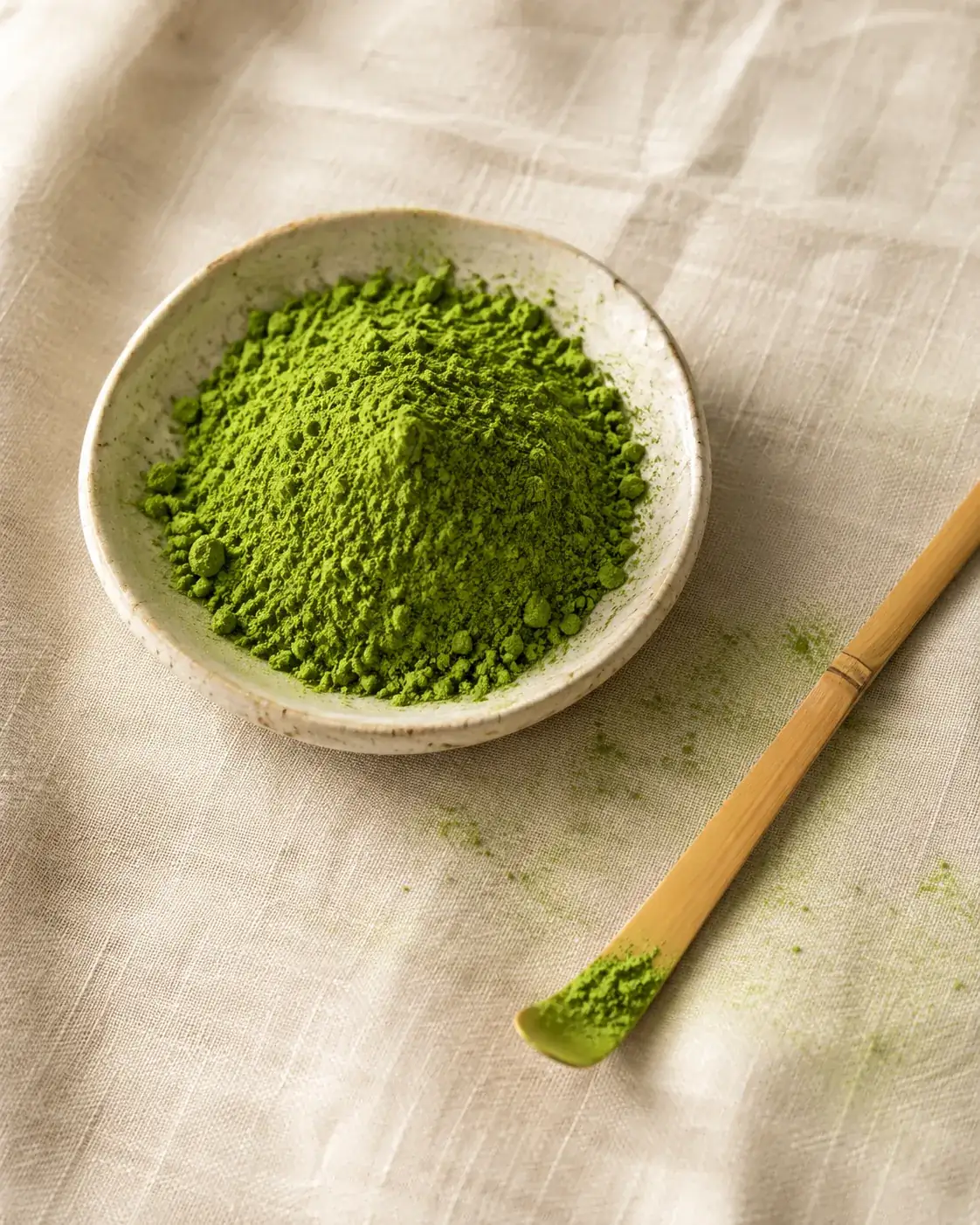
Ceremonial grade is the phrase used for the highest tier of matcha. It appears on tins across the world, and no standards body in Japan or anywhere else defines it.
There is no certification behind it, no minimum requirement, and nothing stopping a producer from printing it on any powder at all. What the words are reaching for is real even so, and it can be described precisely, because it is a set of decisions taken in the field and at the mill rather than a category on a form.
What good matcha for drinking actually has
- Harvest
- First harvest leaf, picked in spring, which is younger and sweeter
- Shading
- Three to four weeks under cover before picking
- Leaf part
- Tencha with stems and veins removed entirely
- Milling
- Stone milled, slowly, which keeps the particles fine and avoids heat
- Colour
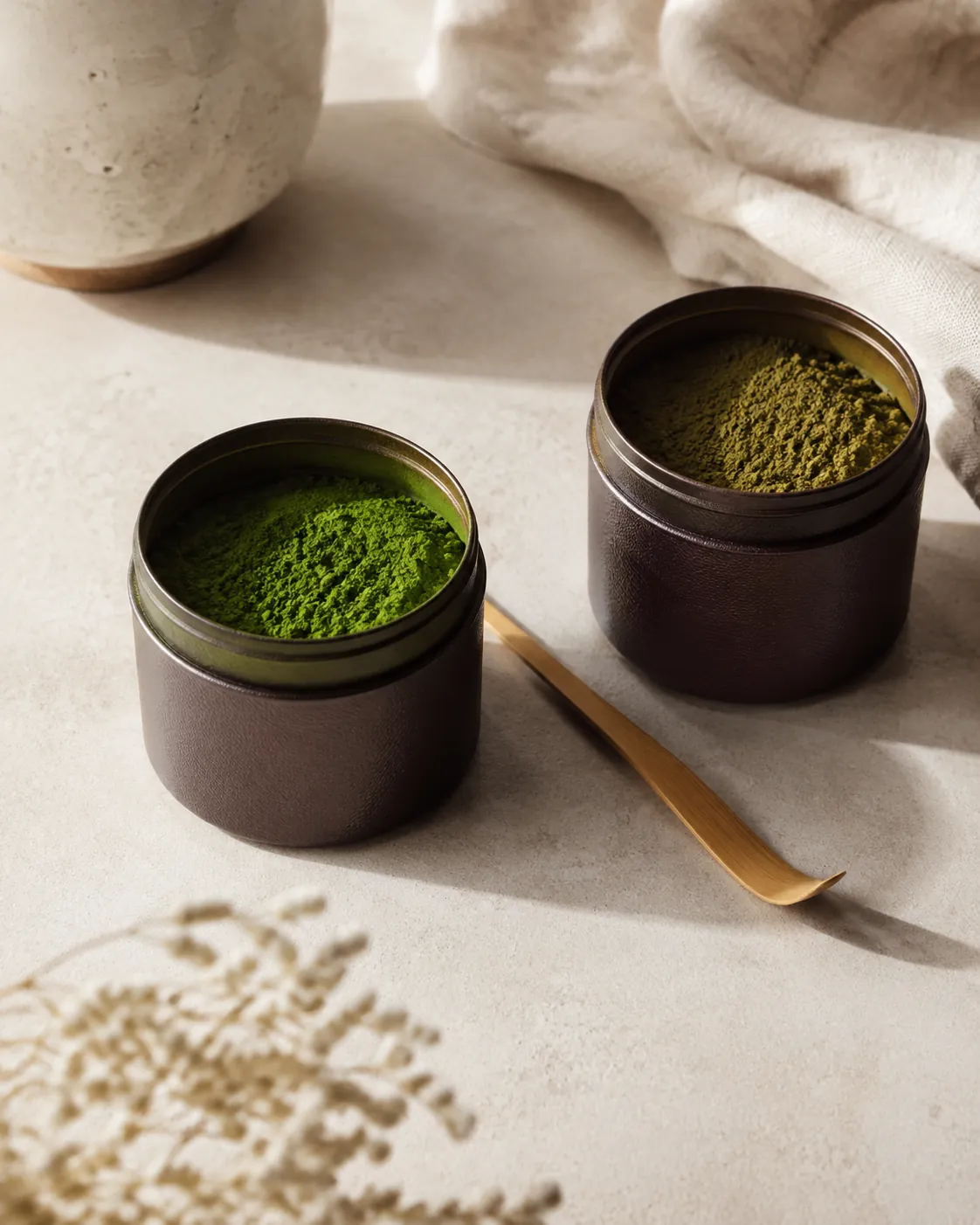
- Vivid, almost fluorescent green
- Flavour
- Sweet and savoury, with very little bitterness
What the phrase is standing in for
Those six things are what the phrase is gesturing at. A powder with all of them is excellent whatever the tin says, and a powder with none of them is not improved by the words printed on the lid.
What decides quality, in order
- CultivarSome tea cultivars are grown specifically for matcha and are naturally sweeter.
- ShadingThree to four weeks under cover raises chlorophyll and amino acids.
- HarvestFirst harvest leaf in spring is younger, softer and sweeter than later pickings.
- De-stemmingStems and veins are stripped, leaving only leaf flesh, which is tencha.
- MillingGranite stones grind slowly, around 40 g an hour, without heating the powder.
Shading is where the flavour is built. Covering the bushes starves the plant of light, which pushes it to make more chlorophyll and more of the amino acids that read as sweetness and savouriness, and the leaf that comes off a shaded bush is softer and thinner than one grown in full sun.
De-stemming is what separates tencha from ordinary leaf. Stems and veins are stripped out completely, so what reaches the mill is leaf flesh alone, and a powder that tastes fibrous or hay-like has almost always had some of that material left in.
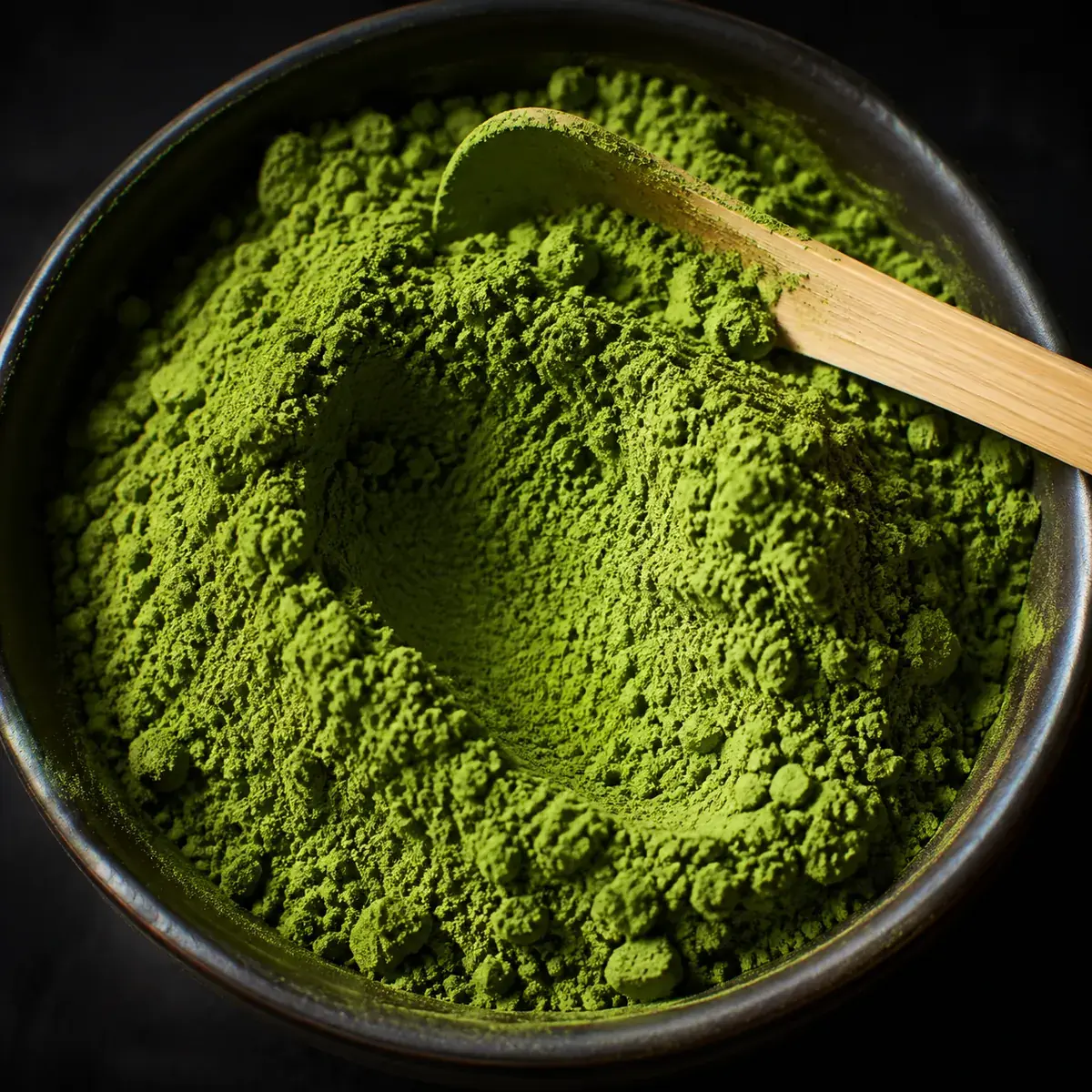
Milling is the step people underestimate most. Granite stones turn slowly enough to grind roughly forty grams an hour without warming the powder, which is what keeps the particle down to a few microns and the flavour intact, and a machine-milled powder is coarser, duller and slightly cooked by the process that made it.
Colour, smell and the feel between two fingers
Since the words on the tin cannot be trusted, the useful skill is reading the powder itself.
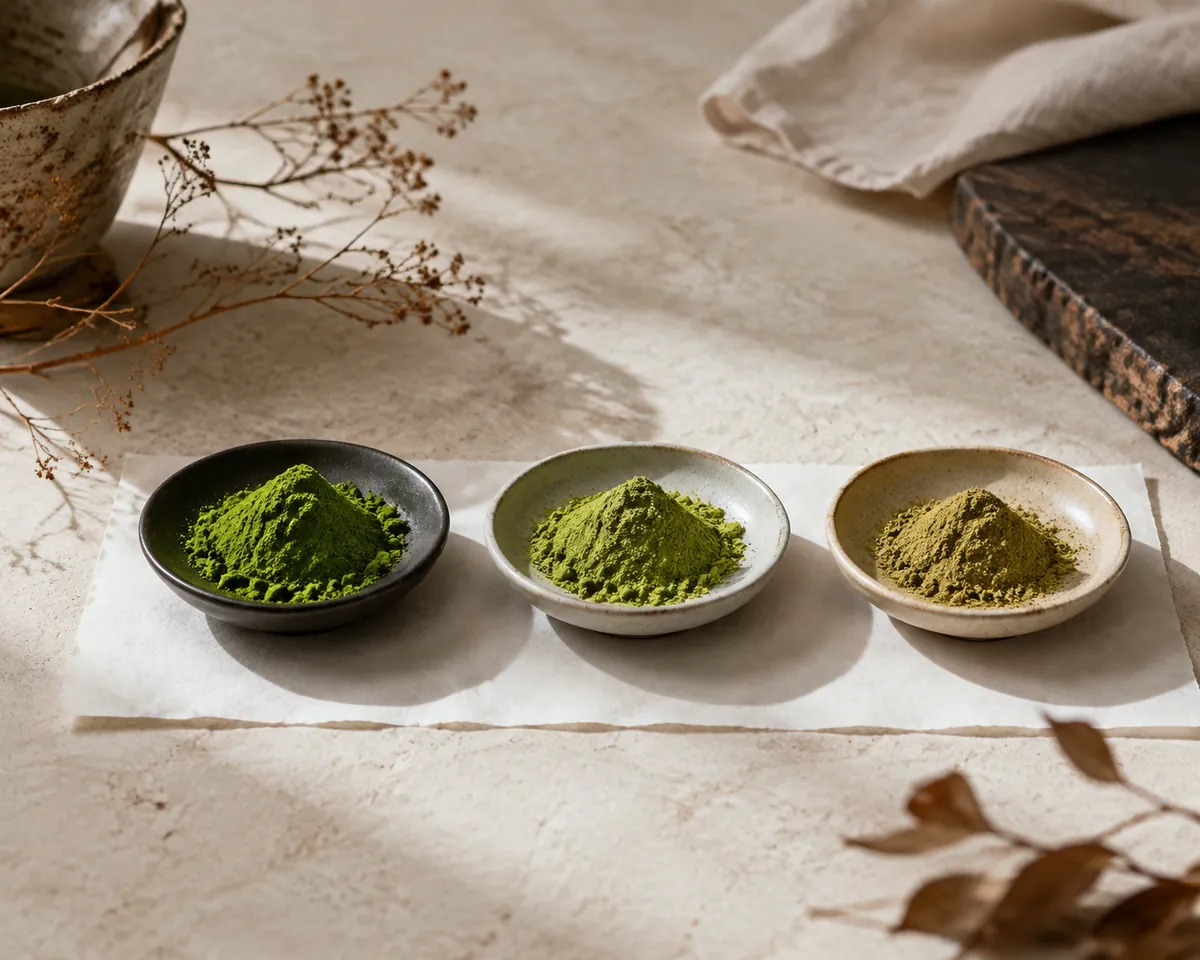
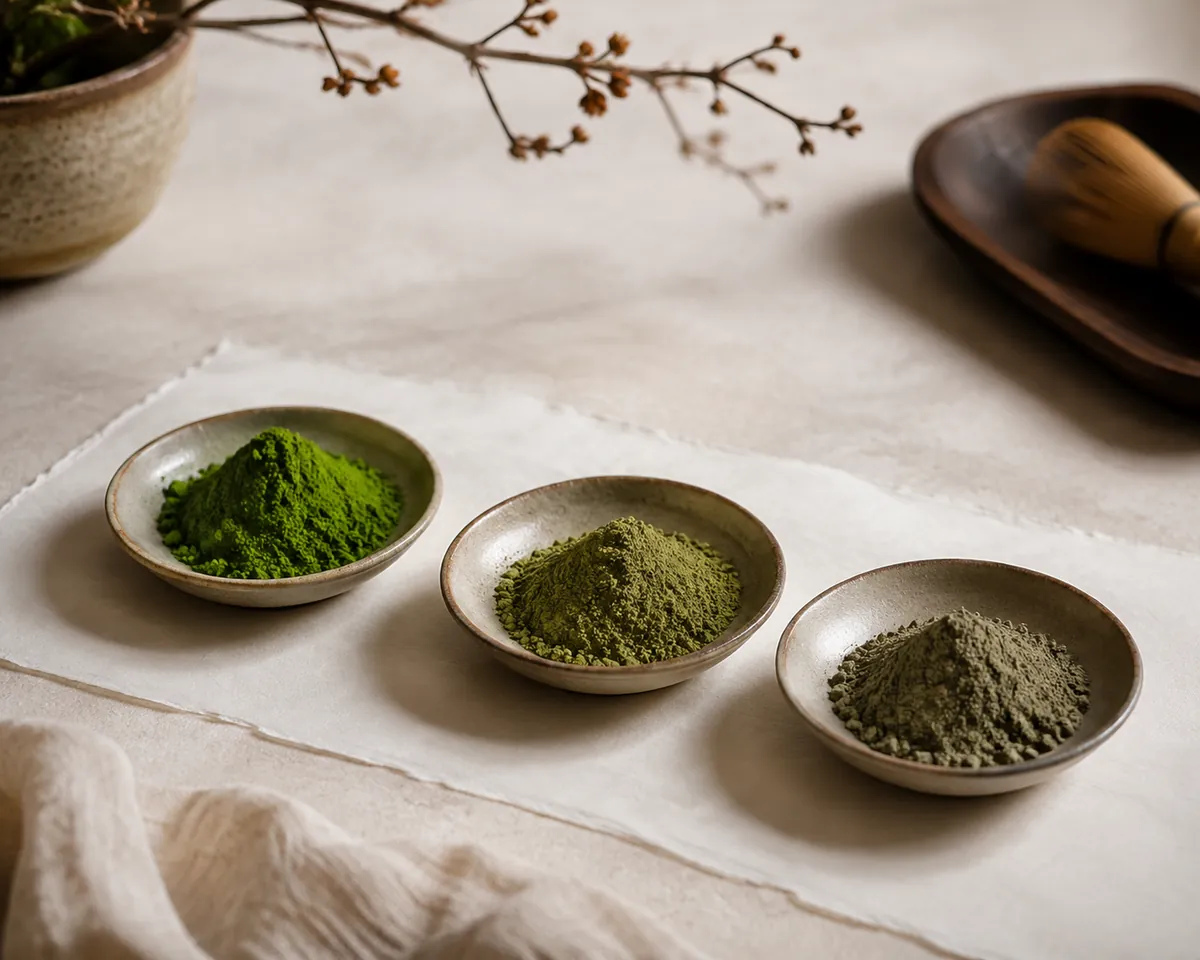
Colour, and what it indicates
- Vivid jade, almost glowingFirst harvest, well shaded, freshly milled
- Bright greenGood quality, possibly later harvest
- Dull olive greenLater harvest, less shading, or some age
- Yellow-greenPoor leaf, little shading, or stems included
- Brown-greenOld, oxidised, or stored badly
Colour is the single most reliable signal available before tasting, and it is reliable because three separate things converge on it. Chlorophyll is what makes matcha green, shading is what concentrates the chlorophyll, and oxidation is what takes it away again, so one glance reports on leaf, growing and age together.
Smell is the second check and it is quicker than most people expect. Good matcha reads sweet and marine, something between fresh seaweed and cut grass, and a powder that smells of hay or of very little has either been picked late or sat too long.
The vocabulary for it is worked through in ceremonial matcha taste.
Texture is the third and it identifies the mill. Rubbed between finger and thumb, stone-milled powder feels silky in the way cornflour does, while a coarser grind feels faintly gritty and will never whisk to a stable foam however good the leaf underneath it was.
What the premium buys, and when it buys nothing
Both tier names describe intent rather than a standard, and the full production comparison between them belongs to culinary grade rather than being repeated here. If the question is simply which tin to buy for which drink, grade against grade answers it directly.
| Ceremonial | Culinary | |
|---|---|---|
| Intended use | Whisked with water, drunk alone | Lattes, baking, cooking |
| Harvest | First | Later harvests |
| Colour | Vivid jade | Duller, more olive |
| Bitterness | Low | Noticeable, and intended to cut through sugar and milk |
| Price | Several times higher | Lower |
| Regulated | No | No |
What the premium buys is survivability without milk. A powder drunk with nothing but water has nowhere to hide, so sweetness, low astringency and a fine particle stop being refinements and become the whole drink.
Putting that powder into a caffe latte is the expensive mistake, because milk erases precisely the qualities the price was paid for. The habits below protect against the opposite error, which is paying a top-tier price for a powder that has none of them.
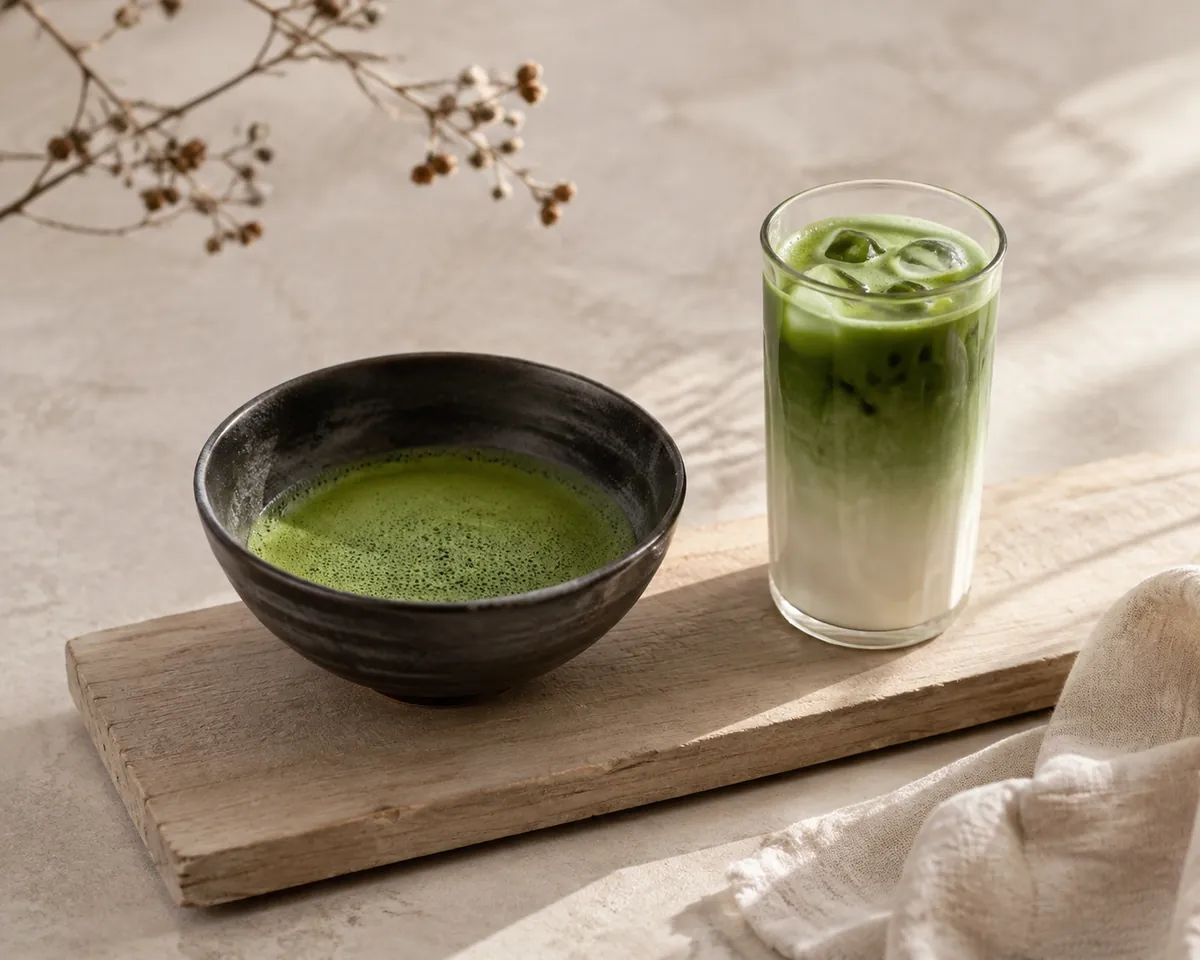
- Look for a stated harvest, and prefer first harvest for drinking grades.
- Look for a named origin such as Uji, Nishio or Yame, rather than just Japan.
- Check for a milling or best-before date; matcha fades within months of milling.
- Prefer small tins, since matcha degrades quickly once opened.
- Be suspicious of very cheap ceremonial grade, which is the clearest signal the term is decorative.
A milling date is the most useful of those and the least often printed. Origin claims come second, because Uji, Nishio and Yame are checkable reputations rather than adjectives, and a producer willing to name one is making a statement that can be held against them.
Usucha, koicha, and the drink the grade exists for
Two preparations, and the second is the reason the top grades exist at all.
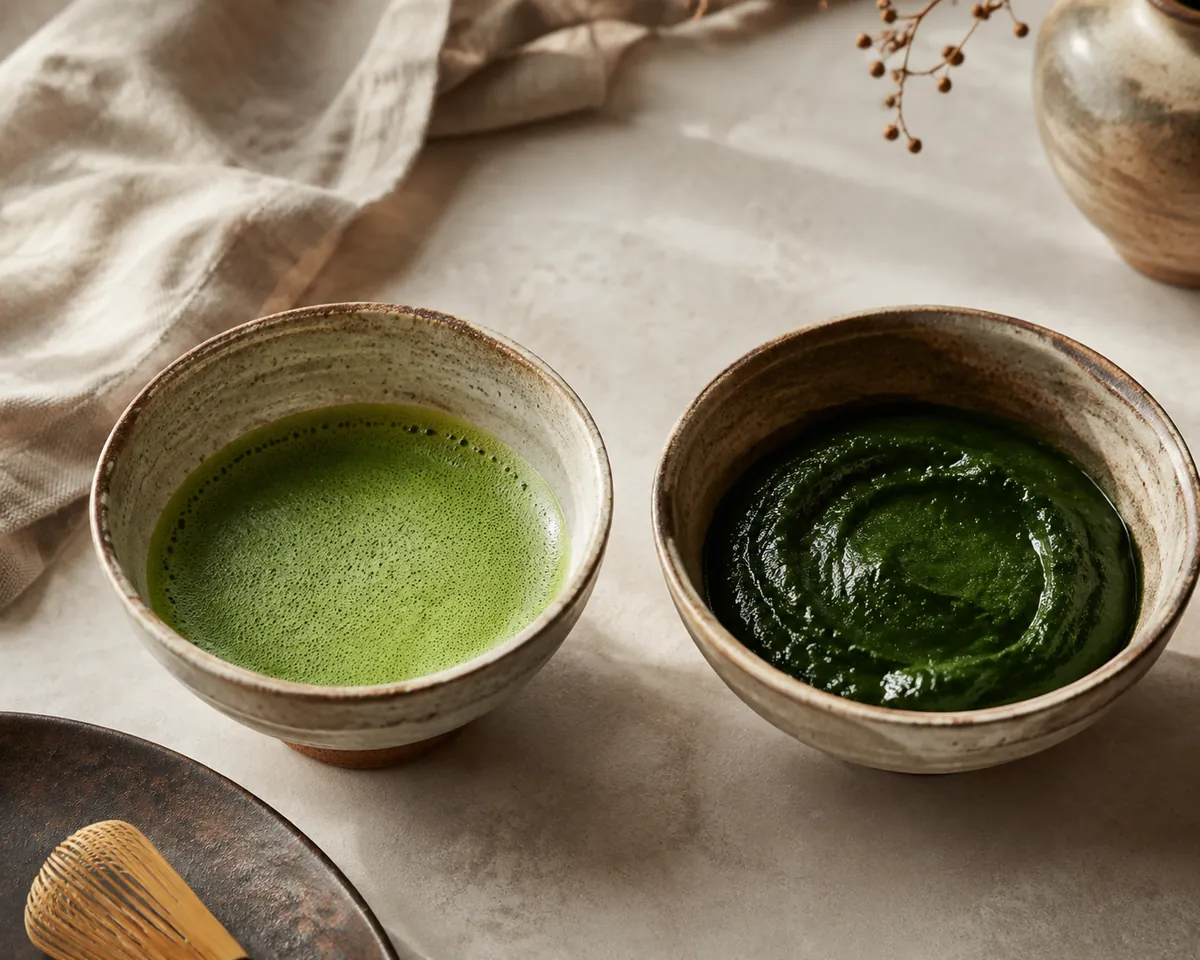
The two preparations
- Usucha, thin
- 2 g matcha to 70 ml water
- Usucha texture
- Whisked to a fine foam. The everyday preparation
- Koicha, thick
- 4 g matcha to 30 ml water
- Koicha texture
- Kneaded rather than whisked, and closer to paint than to tea
- Koicha requirement
- Only the best matcha is drinkable at that concentration
Koicha doubles the powder and cuts the water by more than half, which multiplies everything in the leaf by roughly five. Any astringency present becomes overwhelming at that strength, so only genuinely sweet leaf survives the treatment, and that is the specification the highest grades are built to.
That single decision saves more money than any other in matcha and costs nothing in the bowl. The two preparations are set out at length in usucha and koicha, and a bowl that tastes wrong is far more often a preparation fault than a grade one, which is where matcha problems starts.
Water temperature, the sifter, the bowl and the chasen
Good powder prepared badly is worse than mid powder prepared well, and four things decide which of those you end up drinking.
Water at 70 to 80 C is the working range, and boiling water is the most common reason an expensive tin disappoints. It scalds the powder and pulls out a bitterness the leaf does not otherwise have, which is the same mechanism that ruins delicate leaf tea and is covered in steeping temperature.
Sifting matters more than it sounds. Matcha clumps as it sits, clumps do not break under a whisk, and they survive into the bowl as gritty pockets that were entirely avoidable thirty seconds earlier.
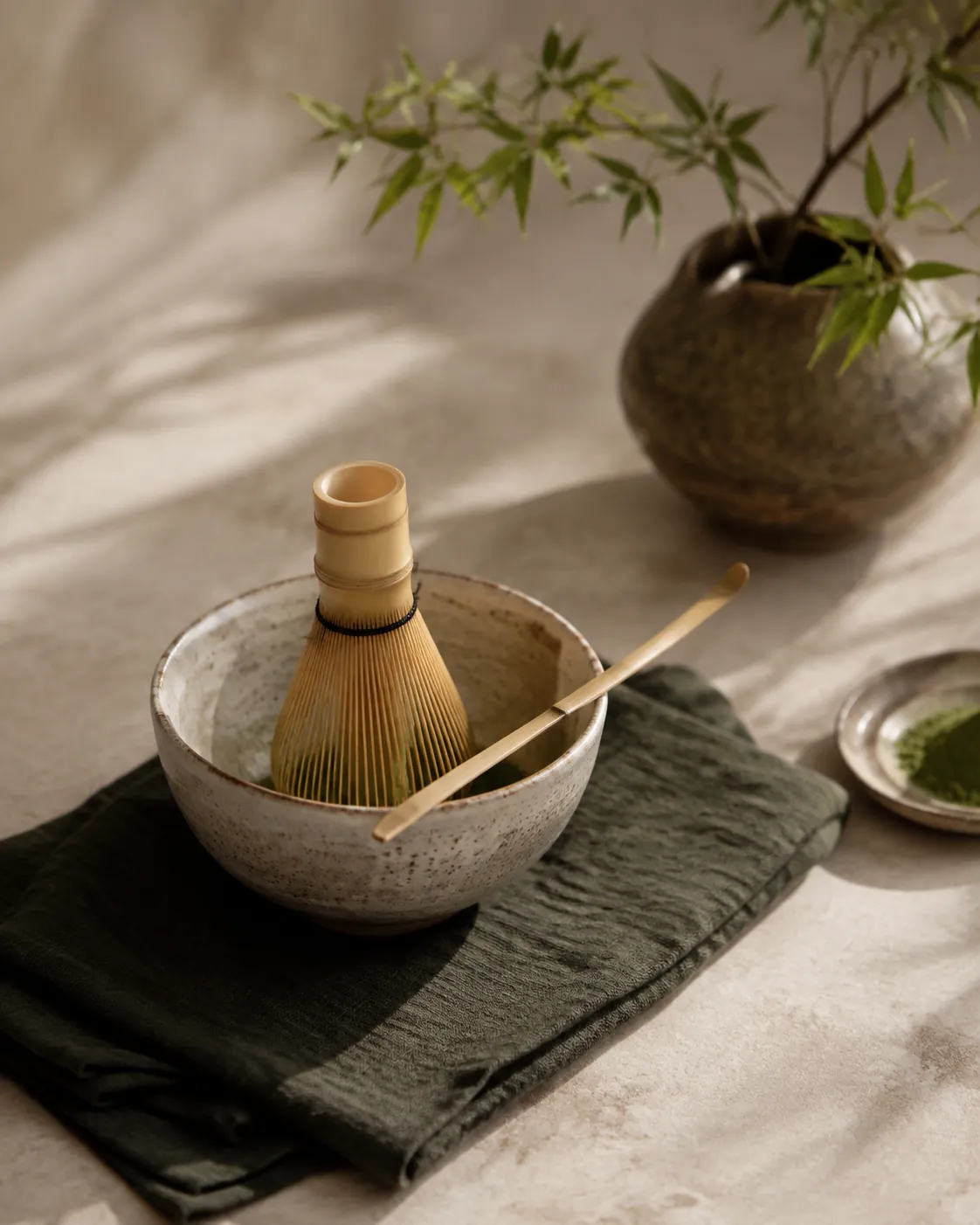
The bowl is doing real work rather than decorative work. A chawan is wide and shallow, which gives the whisk room to move and presents a large surface for foam, and matcha whisked in a narrow mug foams poorly for exactly that reason.
The chasen finishes the argument. Its eighty to a hundred fine bamboo tines break clumps and beat air in at the same time, where a kitchen whisk offers a handful of thick wires that do neither job, and the full stroke is described in whisking matcha.
An electric milk frother is the one honest substitute, and the sifter is the tool people skip and then blame the powder for.
Caffeine, and why drinking the leaf changes the figure
Matcha differs from brewed tea in one structural way that shifts every number.
The whole leaf is consumed rather than infused, so the entire caffeine content of the powder ends up in the bowl. An infusion of green tea leaves a proportion of it behind in the spent leaf, and matcha leaves nothing behind at all, which is the difference the green tea against matcha comparison turns on.
Shading raises the caffeine content of the leaf as well as the sweetness, which is one reason top grades sit at the higher end of that range rather than the lower. Figures by serving size are gathered in ceremonial matcha caffeine.
Why it fades in weeks rather than years
Nothing else in the cupboard perishes faster, and the cause is geometry rather than fragility.
Ground to a few microns, a gram of powder presents an enormous surface to oxygen and light, and every particle of it is exposed at once. Whole leaf tea has an interior that stays protected for months, and matcha has no interior at all, so it goes from vivid green to dull olive within weeks of opening in the wrong container.
Sealed, cold, dark and dry is the whole rule, and storing matcha sets out what each of those means in a domestic kitchen. A tin kept in the fridge and brought up to room temperature before it is opened holds its colour far longer than one left in a cupboard, because condensation on cold powder does damage of its own.
Buy small quantities often rather than one large tin cheaply. A 30 g tin finished inside a month is better value than a 100 g tin that has gone dull by the halfway mark, and the arithmetic is set out in storing ceremonial matcha.
Where the price actually accumulates
Every stage of production removes yield, and the price is the sum of what was thrown away.
Shading comes first and costs before anything is picked. Three to four weeks under cover slows growth and reduces the crop, and the covers and the labour to fit them are spent on a smaller harvest than the same bushes would otherwise have given.
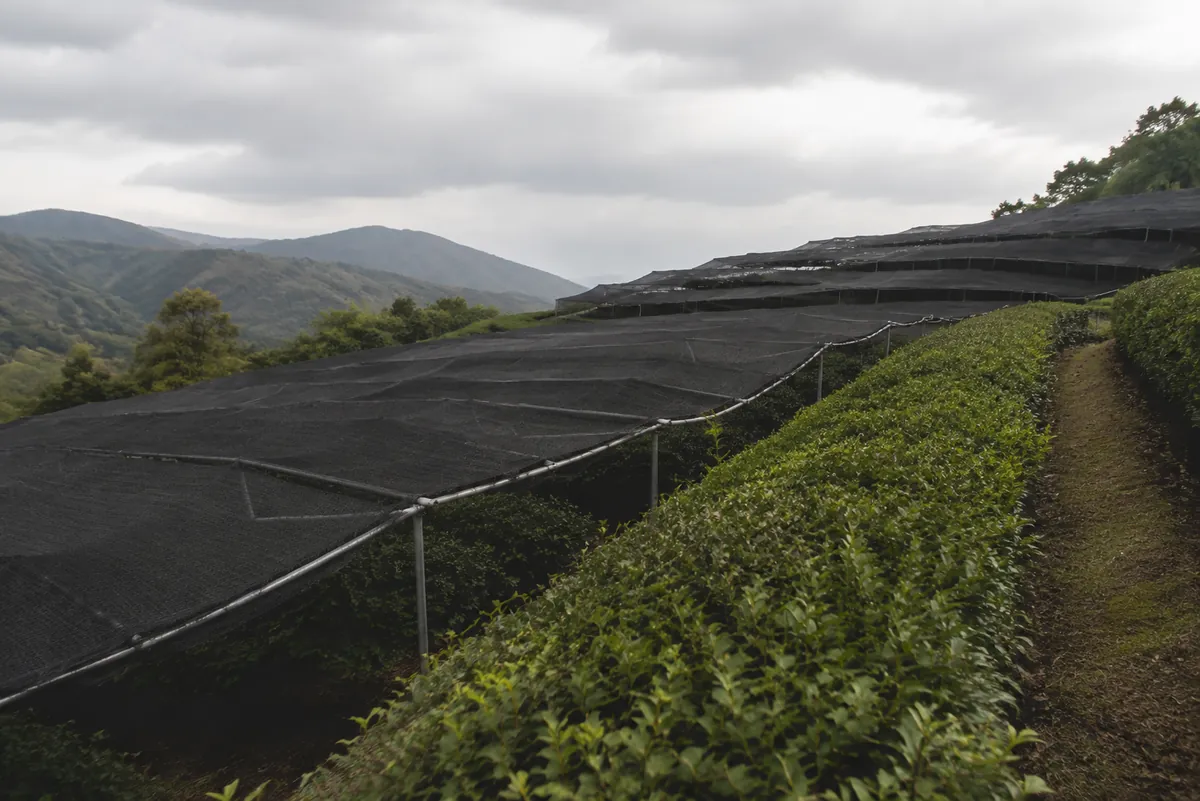
Where the cost accumulates
- Shading
- Reduces yield, and the covers and labour cost money
- First harvest only
- One picking a year rather than several
- De-stemming
- Discards a large share of the harvested weight
- Stone milling
- Roughly 40 g per hour per mill, which is extraordinarily slow
- Shelf life
- Short, so stock has to move quickly
De-stemming discards a large share of what was picked, since only leaf flesh becomes tencha. Stone milling is the real bottleneck, because a single granite mill produces about forty grams an hour, which puts a kilogram at a full day of continuous grinding on one machine.
Short shelf life then compounds all of it. Stock has to move quickly, unsold tins lose value on the shelf rather than holding it, and that risk is priced into the tin you buy.
A full sequence from bush to bowl is set out in making ceremonial matcha.
Origins that mean something on a tin
Matcha is unusual among the drinks here in that origin claims are specific, regional and checkable.
Uji, Kyoto
The most prestigious and the oldest, and priced accordingly. Deep umami and sweetness.
Nishio, Aichi
A large producer of high-quality matcha, often slightly milder than Uji.
Yame, Fukuoka
Known for rich, sweet matcha with pronounced umami.
Shizuoka
Enormous tea region, more variable, and strong at the mid tier.
Kagoshima
Southern and warm, with an earlier harvest and generally brighter matcha.
Naming one of those regions is a claim a producer can be held to, and it carries a reputation built over generations rather than a marketing cycle. A tin that says only "product of Japan" is telling you the legal minimum and nothing more.
Origin matters more than the grade word on the front. A named-region powder with no tier claim on it at all is usually a safer purchase than an unnamed one calling itself ceremonial, because one of those statements can be checked and the other cannot.
A first tin, and what usually spoils it
Most of the money wasted on matcha is wasted on the first purchase, which is made before anyone has a reference point to judge against.
- Buy 20 to 30 g, never 100. A first tin is an experiment and matcha fades in weeks.
- Look for a harvest year and a region on the tin, which say more than any grade word.
- Prefer a seller who also sells culinary matcha honestly, rather than calling everything ceremonial.
- Check the packaging is opaque and resealable before checking the price.
- Buy from somewhere that will sell you a second tin of something different next month.
Comparison is what teaches, since one tin tells you only what you have. Two tins tasted side by side, prepared the same way and drunk within a minute of each other, tell you what the money actually bought, and making usucha is the preparation to standardise on while you do it.
- Water too hot, which scalds the powder and produces bitterness the leaf does not have.
- Not sifting, which leaves clumps that survive whisking as gritty pockets.
- A mug instead of a wide bowl, which gives the whisk no room and produces no foam.
- Old stock, which is the most common problem and is invisible until you taste it.
- Buying ceremonial grade for lattes, where the qualities you paid for are erased.
Age is the fault people least suspect and the hardest to detect at the counter. A tin with no milling date, sold from a shelf that turns over slowly, may well have been dull before anyone bought it, and no amount of care with the whisk will bring it back.
If the choice is between a better powder and a proper bowl and whisk, buy the tools first.
Common questions
Is ceremonial grade matcha an official classification?
No. It is an unregulated marketing term with no standards body behind it, in Japan or elsewhere. It points at real qualities such as first harvest and stone milling, but nothing prevents any producer using it on any powder.
How can I tell good matcha without trusting the label?
Colour first: vivid jade indicates first harvest, good shading and freshness, while dull olive or yellow-green indicates the opposite. Then smell, which should be sweet and marine, and texture, which should be silky rather than gritty.
Should I use ceremonial grade matcha in a latte?
Usually not. Its delicacy is exactly what milk erases, and culinary grade is formulated with more bitterness specifically to be tasted through milk and sugar. It also costs several times as much.