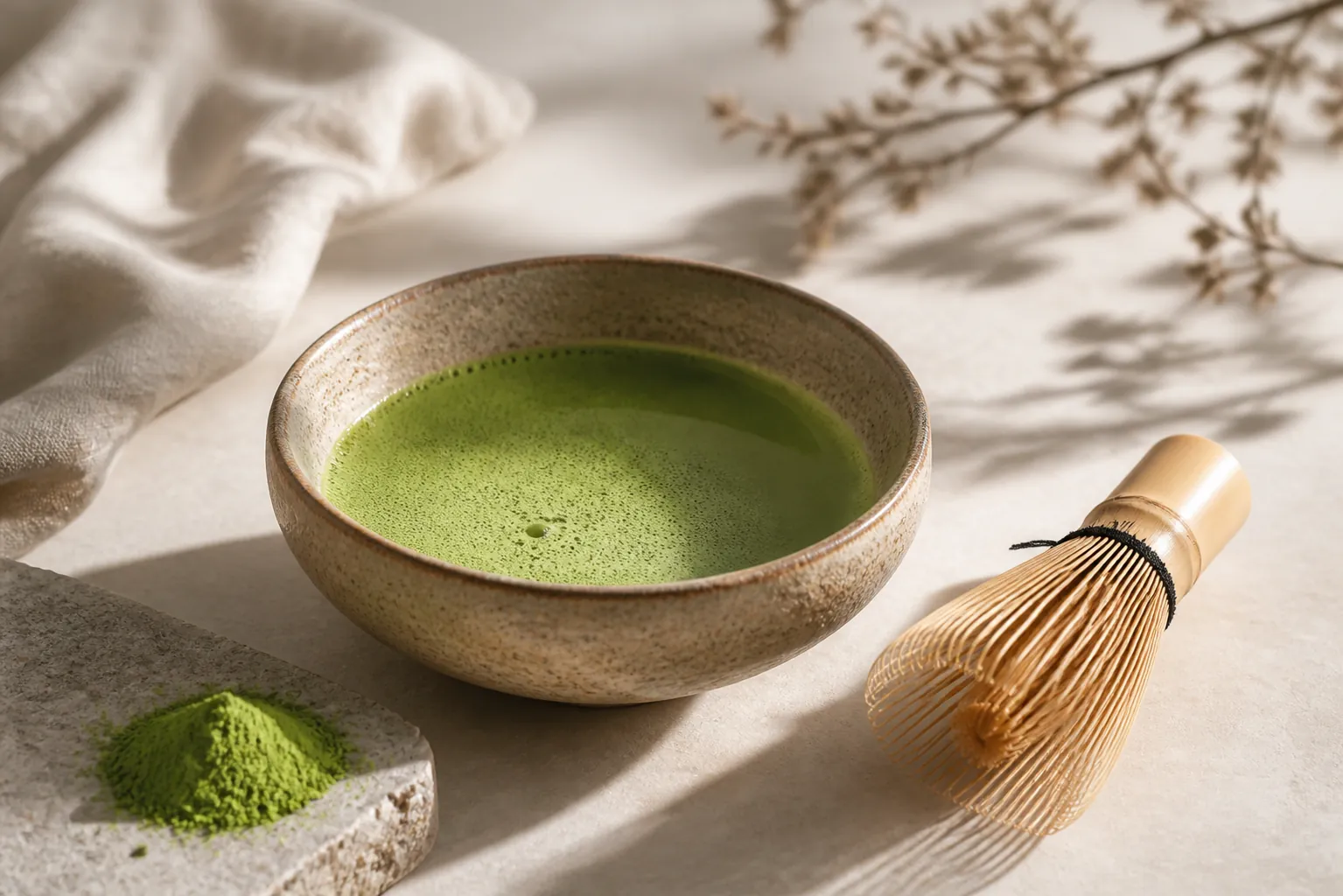
Matcha, Whisked and Understood
Matcha is not steeped and strained like other tea. The leaf is ground to powder and suspended in the water, so you drink the whole thing, which changes both the flavour and the method.
Matcha starts as a shade-grown green tea. Covering the plants in the weeks before harvest slows growth and raises the amino acid content, which is where matcha's savoury depth comes from. The leaves are then steamed, dried, stripped of stems and veins, and stone-ground into a fine powder.
Because nothing is strained out, water temperature and whisking technique matter more than they do with a steeped tea, and the powder's grade and freshness show up directly in the cup.
Grade language is marketing rather than regulation. Ceremonial and culinary are useful shorthand and no authority defines either, so colour, aroma and price tell you more than the word on the tin.
Matcha is the most perishable thing on a tea shelf. Ground to a few microns it presents an enormous surface to oxygen, and an opened tin fades in weeks where a leaf tea fades in months.
The powder never dissolves, which is the fact behind most complaints.
It is held in suspension, so it settles in the cup, clumps in cold liquid, and needs sifting before it meets water at all.
Thin and thick are two preparations of one powder rather than two products. Thin is what almost everyone means by matcha; thick uses roughly four times the density and leaves a defect nowhere to hide.
Milk changes the job the tea is doing. In a latte the matcha stops being the drink and becomes an ingredient in one, which is where a cheaper powder built for the purpose belongs.
New to Matcha? Start Here
What the powder actually is, which grade to buy, and what the price is paying for.
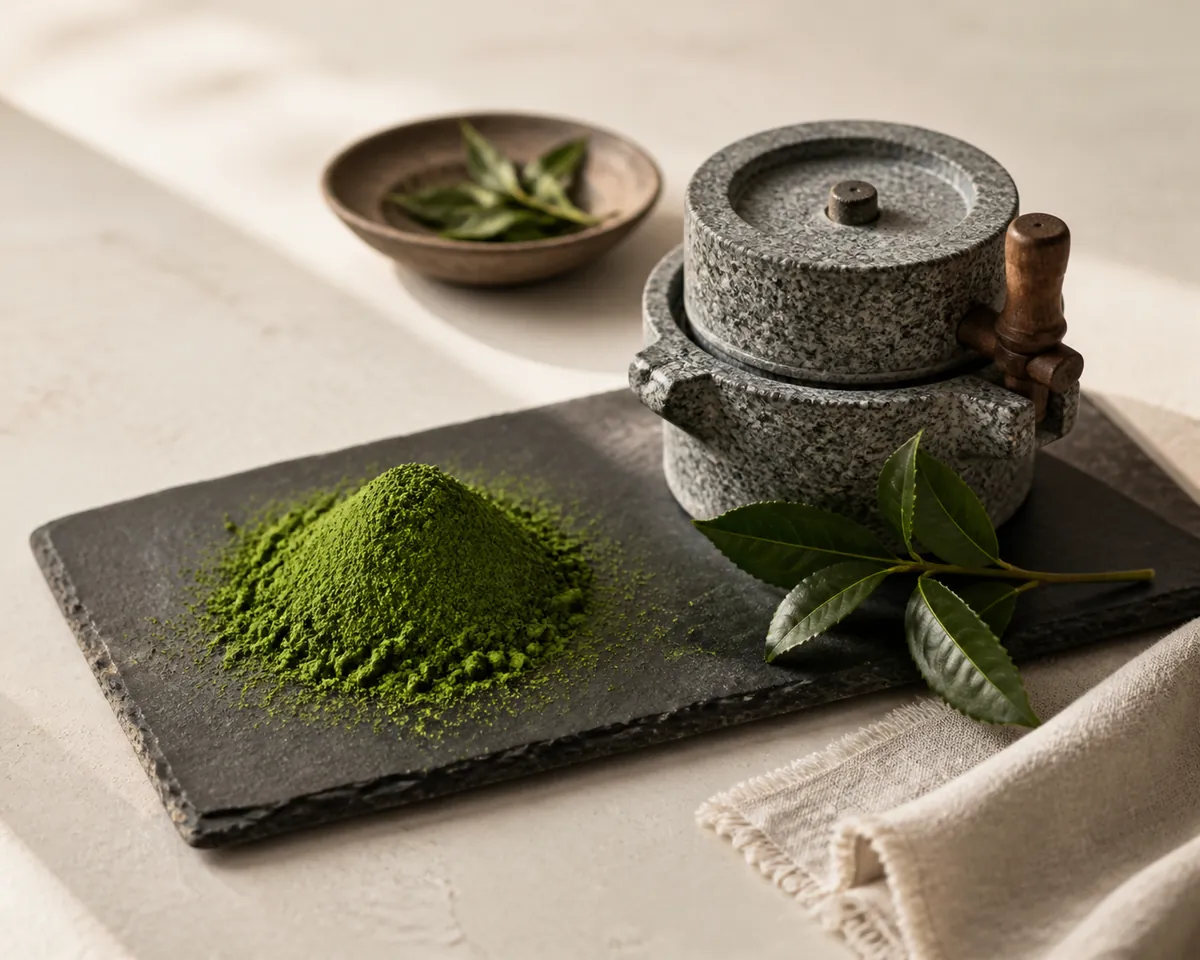
What Is Matcha? Shade Grown, Steamed, and Stone Ground
Matcha is green tea leaf that has been shade grown, steamed, dried, stripped of stems, and stone ground into a fine...
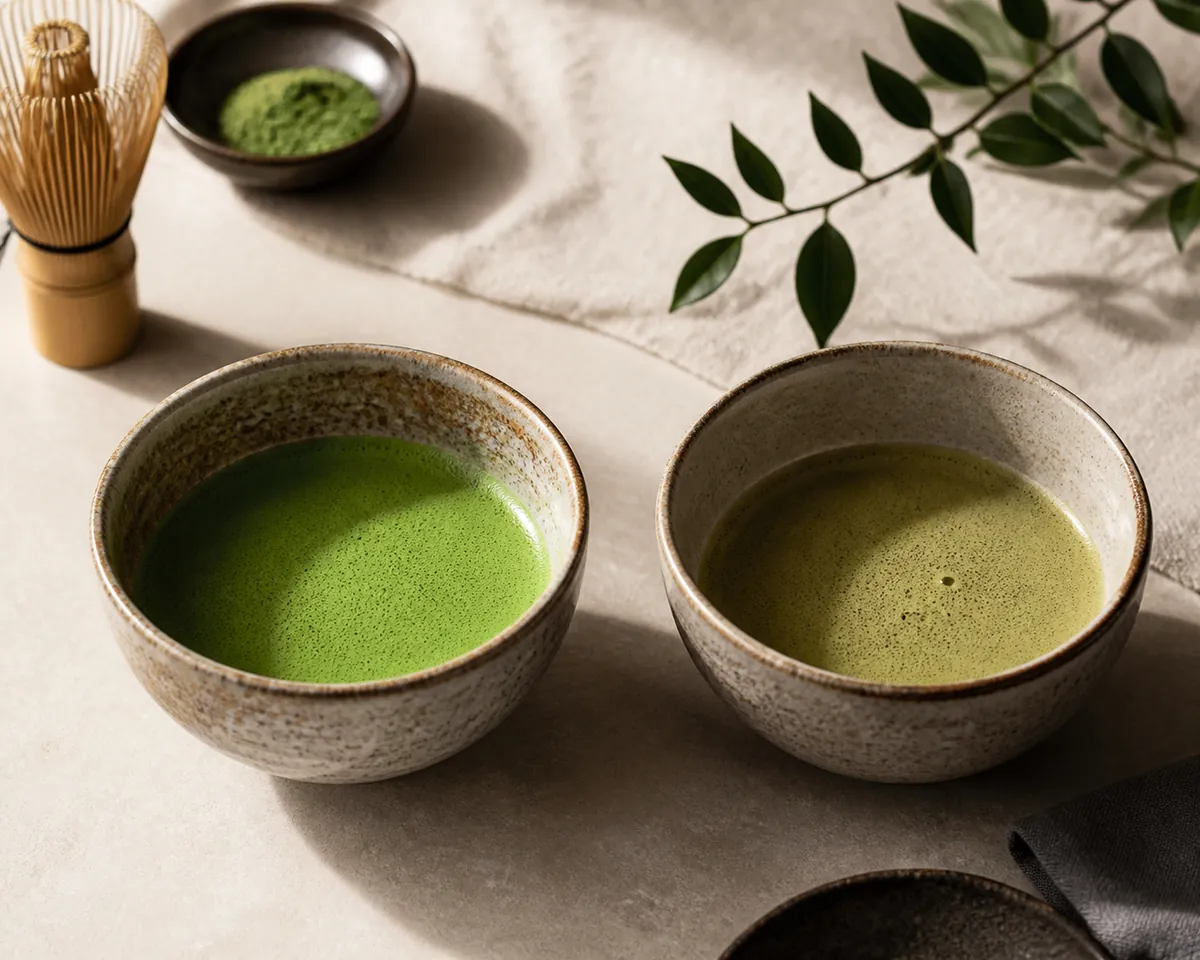
What Does Matcha Taste Like? Vegetal, Savoury, and Creamy
Good matcha tastes vegetal and savoury with a creamy texture and a sweet finish. Poor matcha tastes bitter, flat, and...
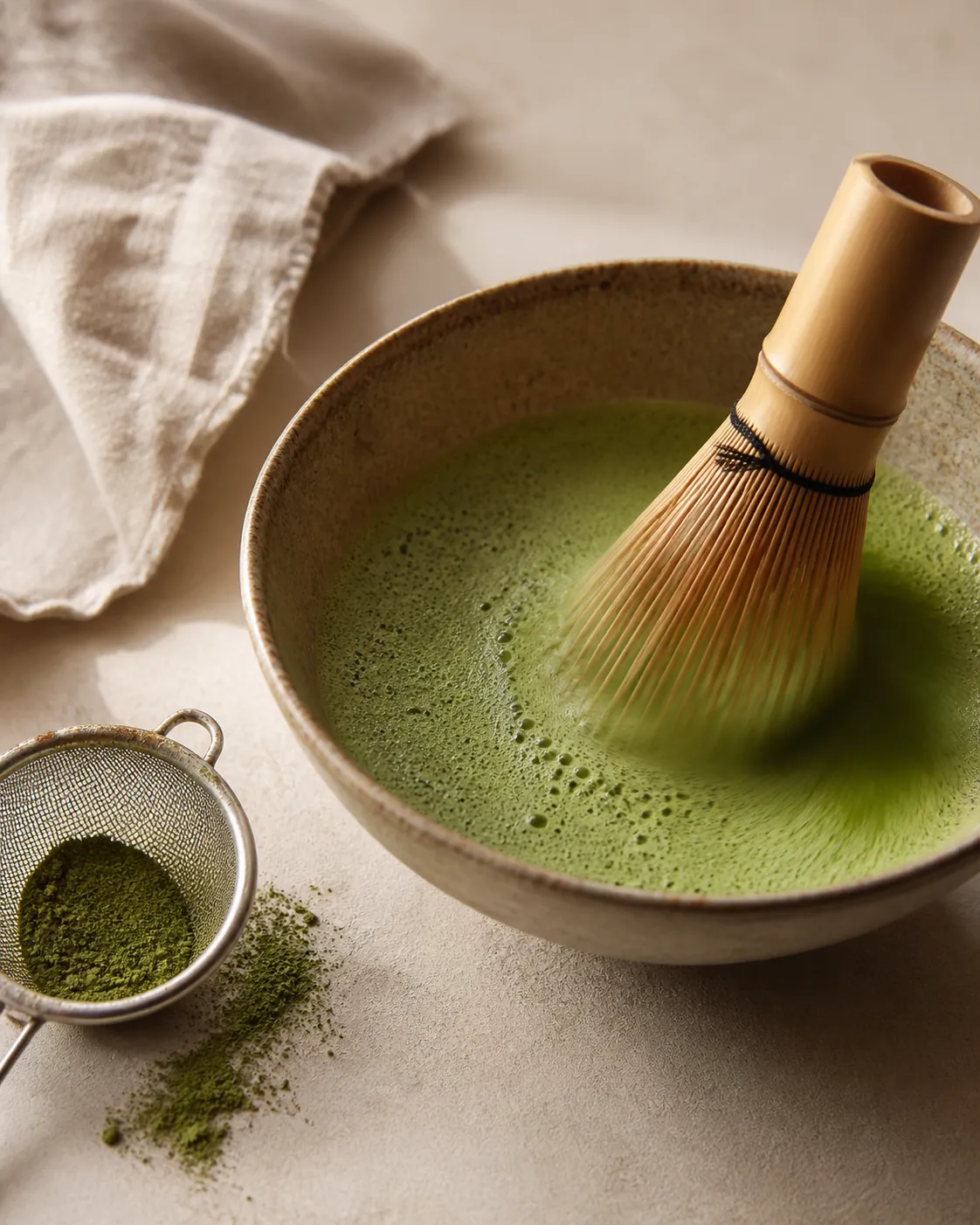
How to Whisk Matcha Without Lumps: Sift, Cool Water, W Shape
Sift the powder, use water at 75 to 80 C rather than boiling, and whisk briskly in a W shape rather than stirring in...
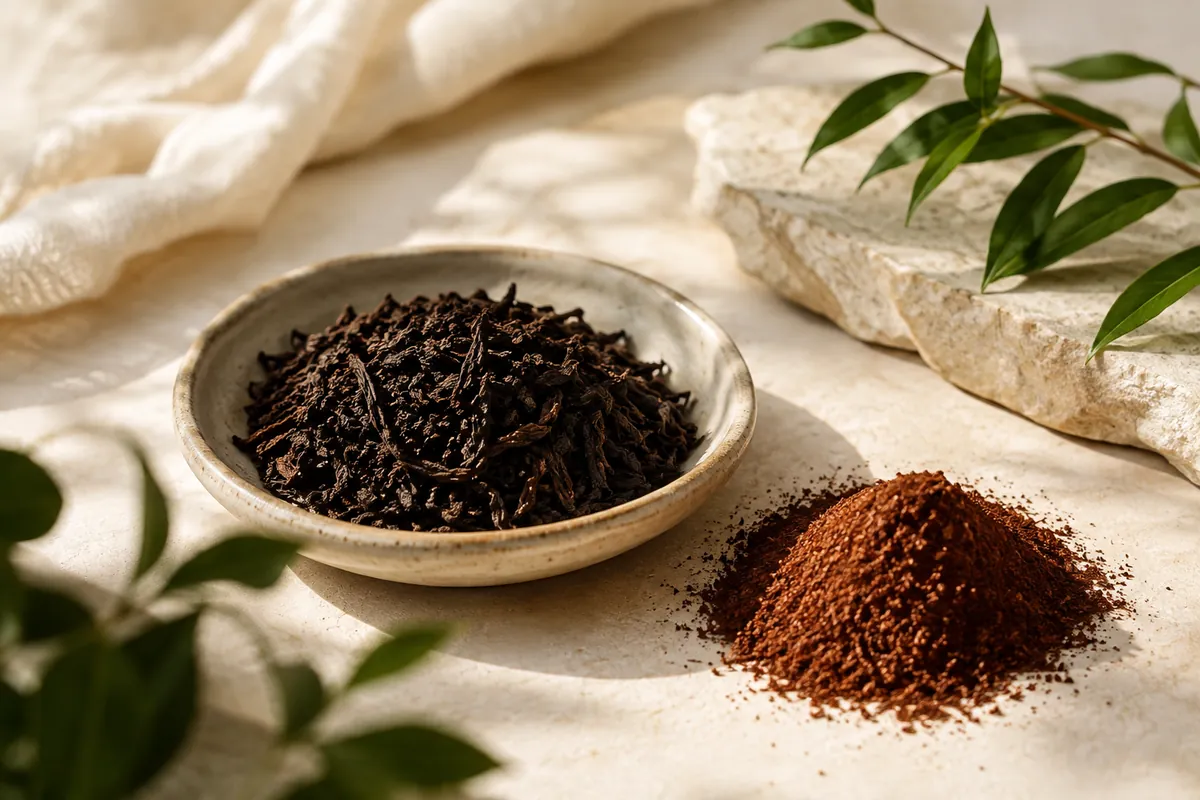
What Is Hojicha Powder? Whisked Like Matcha, Roasted Unlike It
Hojicha powder is whisked like matcha and sold beside it, but the roast makes it a different tea entirely: brown rather...
Whisking It, Keeping It, and Fixing a Bad Bowl
The technique, the storage that stops it going dull, and what to change when it comes out gritty or bitter.
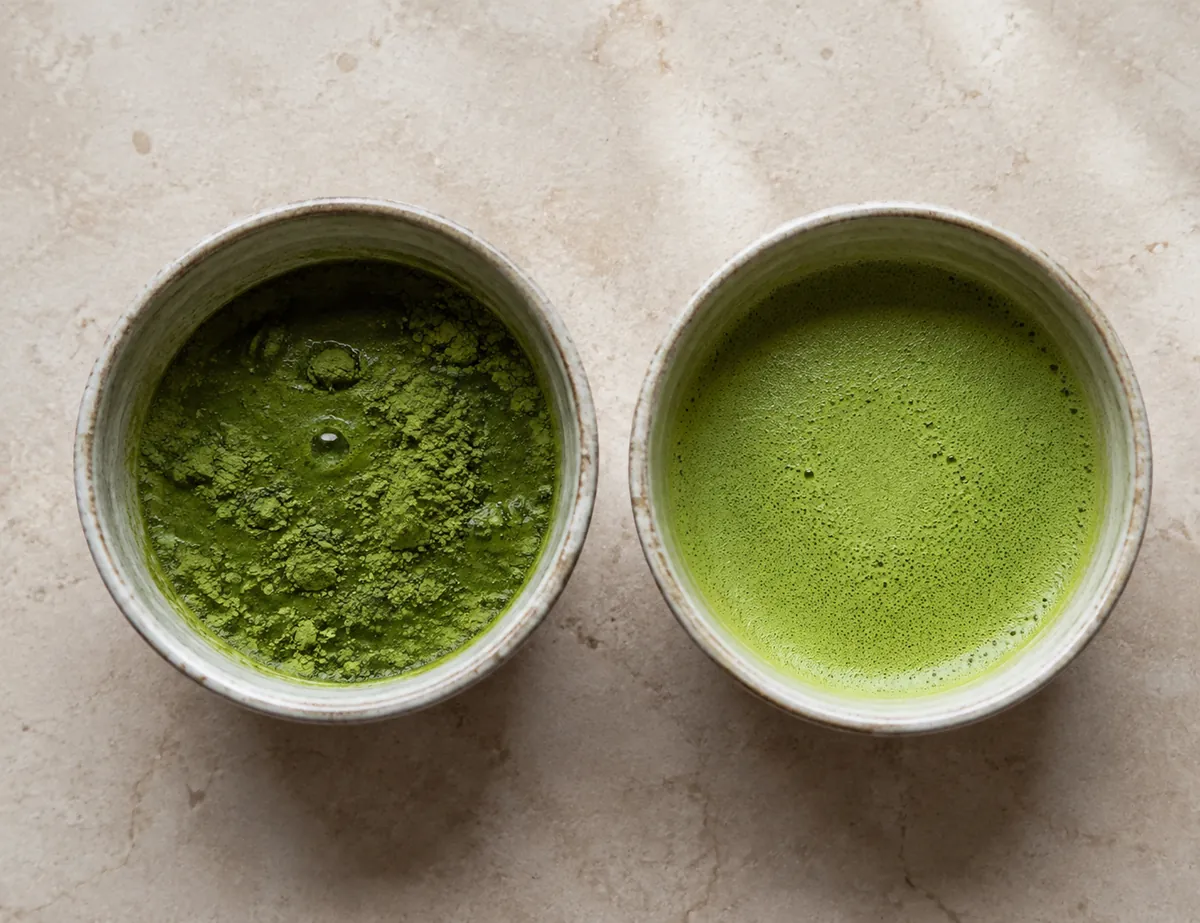
Why Your Matcha Tastes Wrong: Four Faults With Four Causes
Matcha fails in four distinct ways, and each has a different cause. Telling them apart matters, because two are fixed...
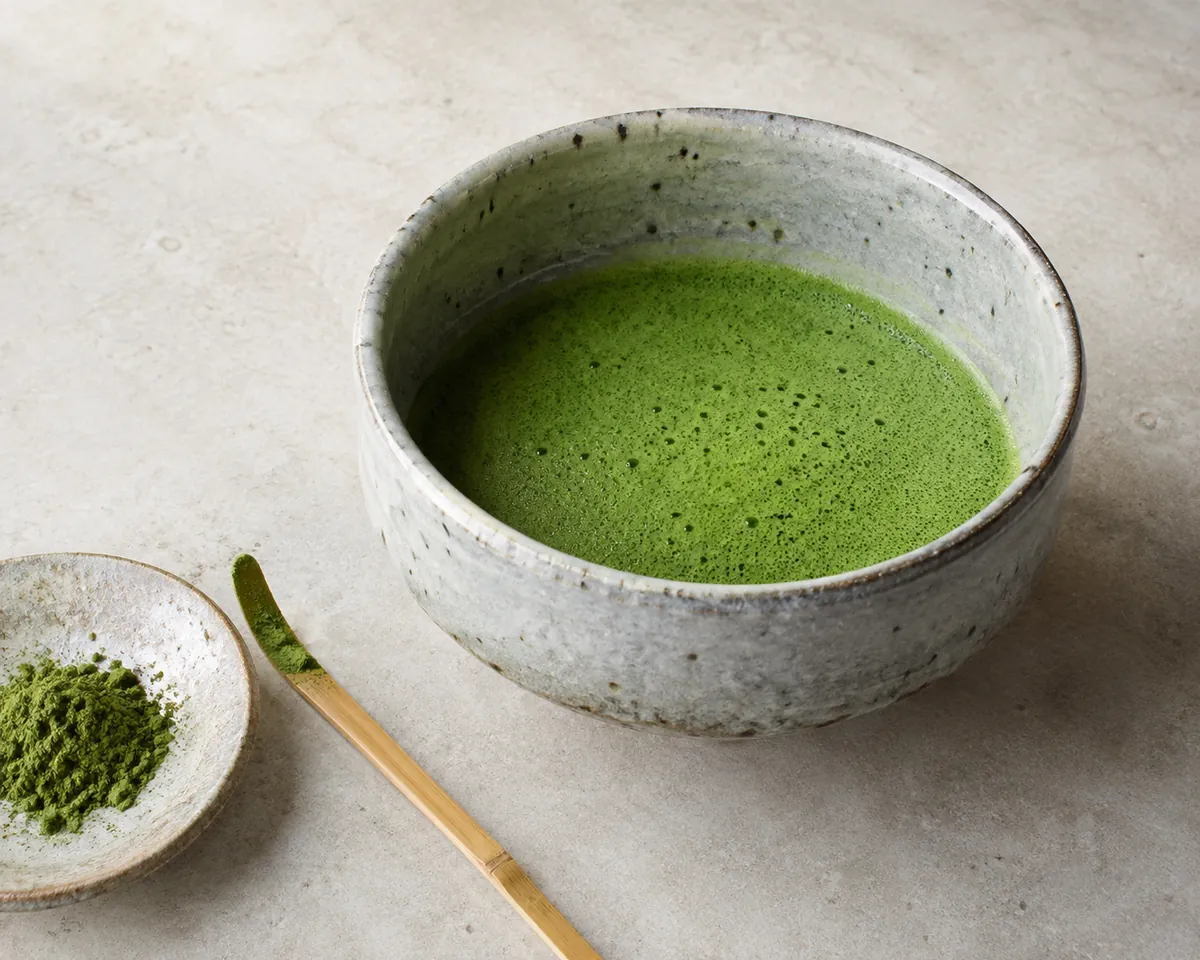
Caffeine in Matcha, and Why Drinking the Leaf Changes It
Matcha is the only tea where the leaf itself is consumed rather than infused. That single fact is why its caffeine...
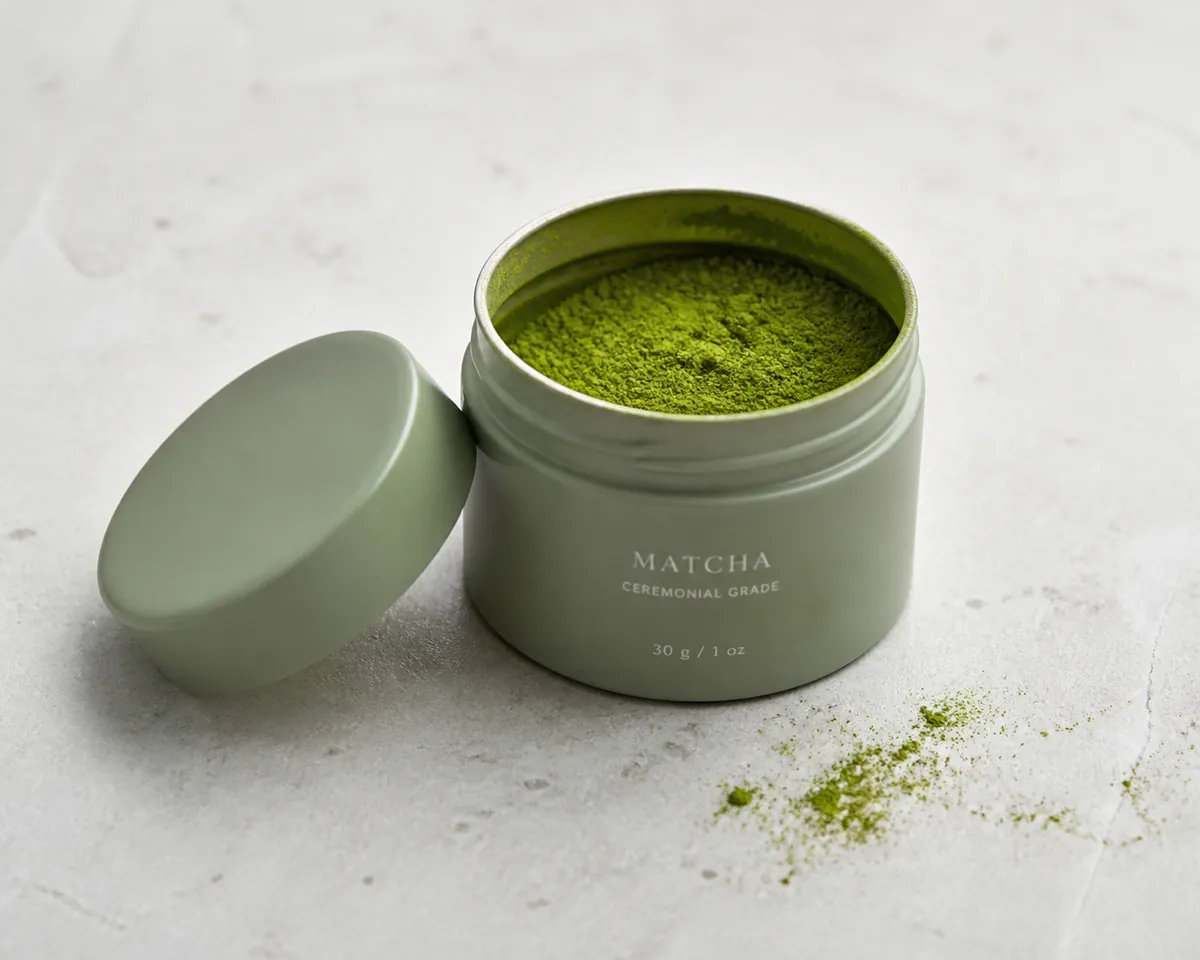
How to Store Matcha, the Most Perishable Thing on the Shelf
Matcha is the most perishable thing on a tea shelf. Ground to a few microns, it presents an enormous surface to oxygen...
More Matcha Guides
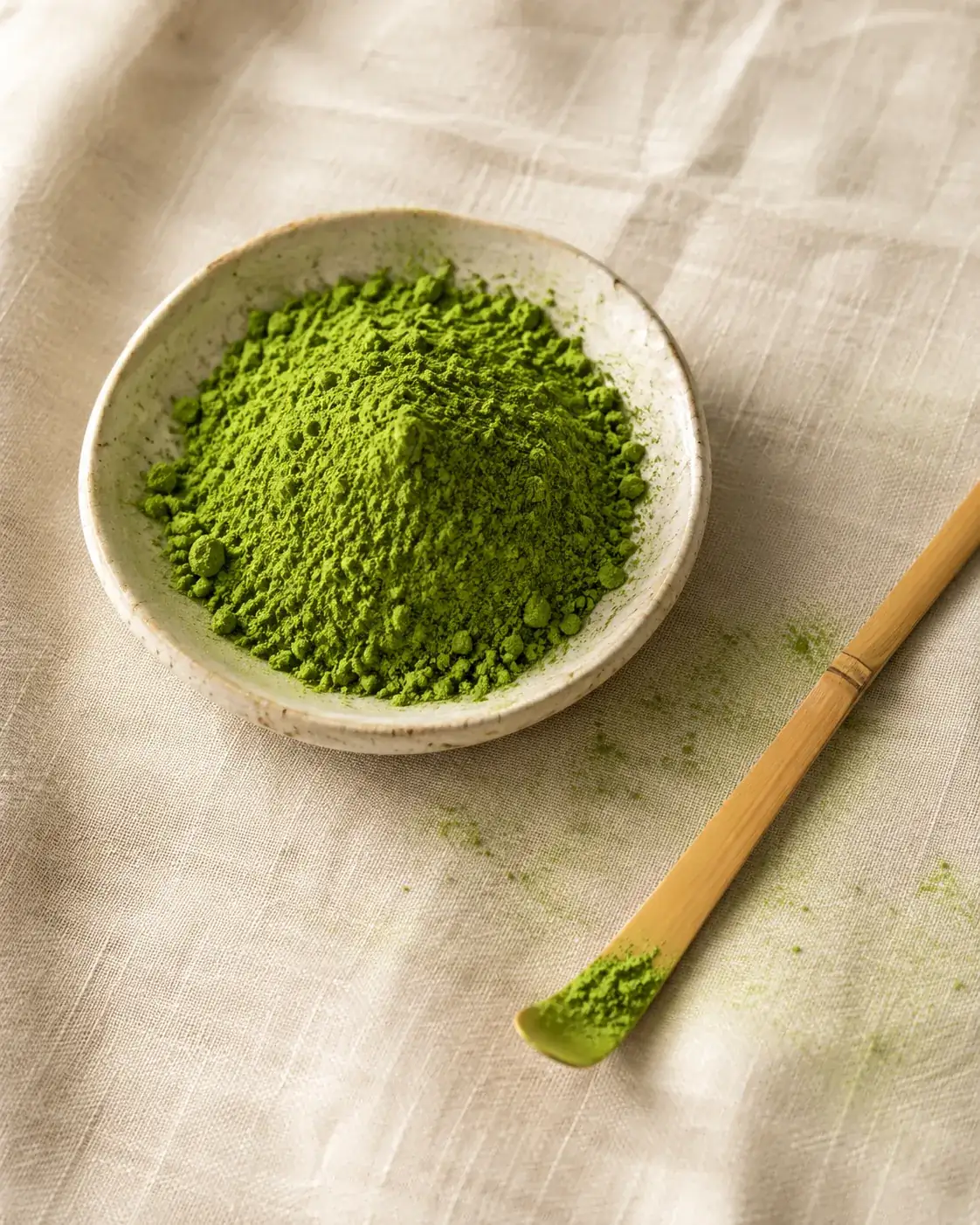
What Is Ceremonial Grade Matcha? A Term With No Regulator
Ceremonial grade is a marketing term with no regulator behind it. That does not make it meaningless, but it does mean...
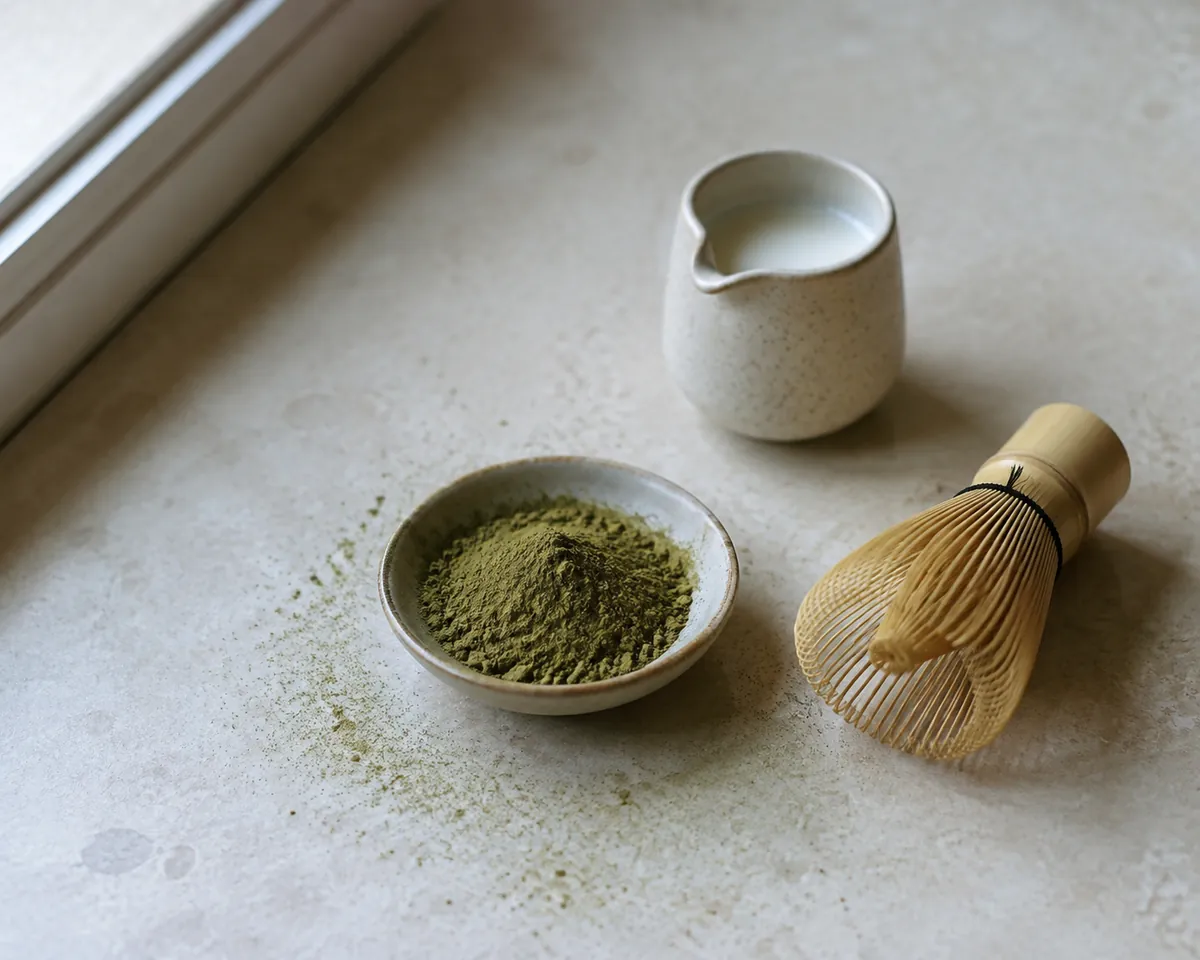
What Is Culinary Grade Matcha? Built to Survive Milk and Heat
Culinary grade matcha is not failed ceremonial matcha. It is made to survive milk, sugar and heat, which needs more...
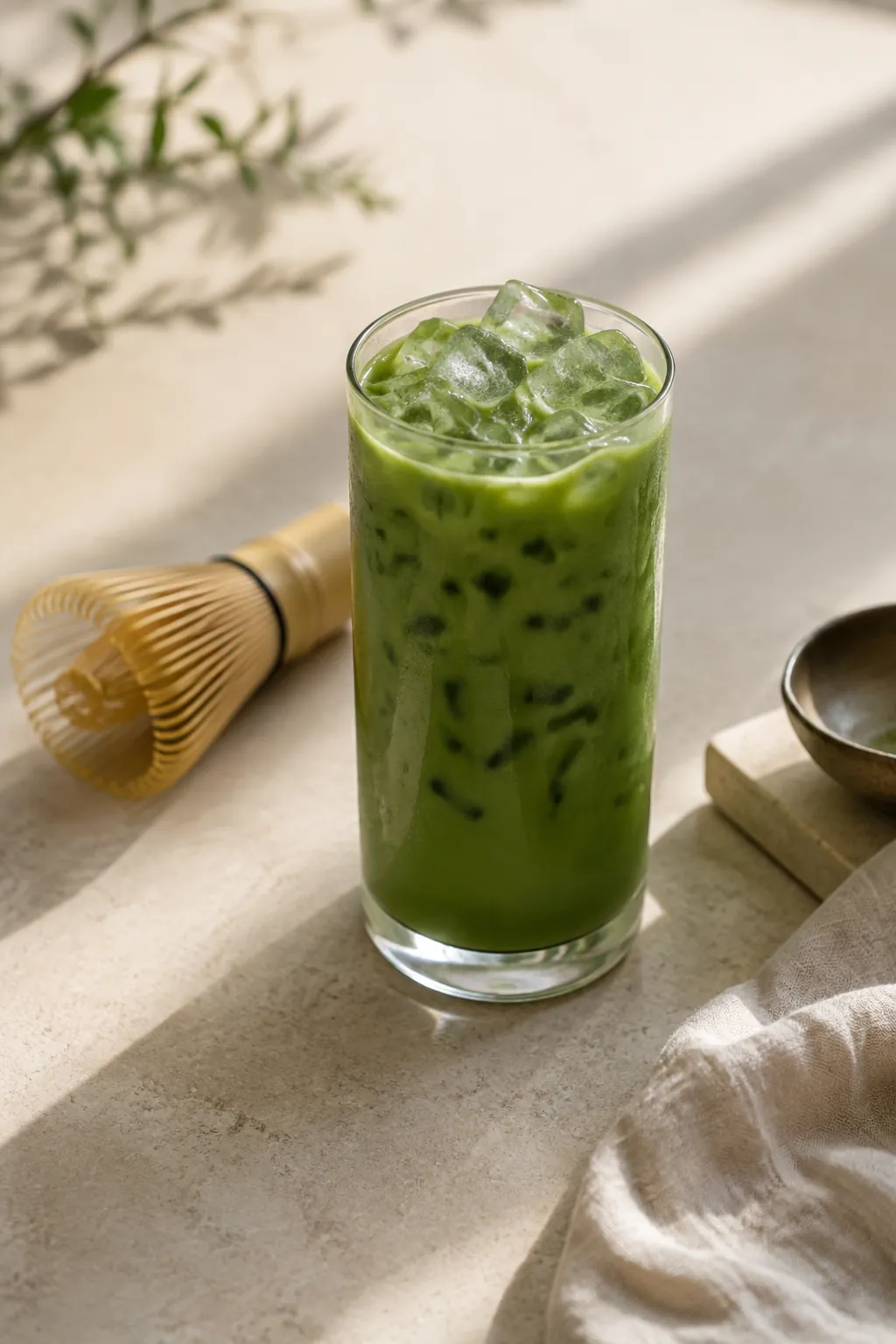
What Is Iced Matcha? Why Cold Water Will Not Hold the Powder
Matcha never dissolves. It is a powder held in suspension, and cold water is far worse at holding it than hot water is...
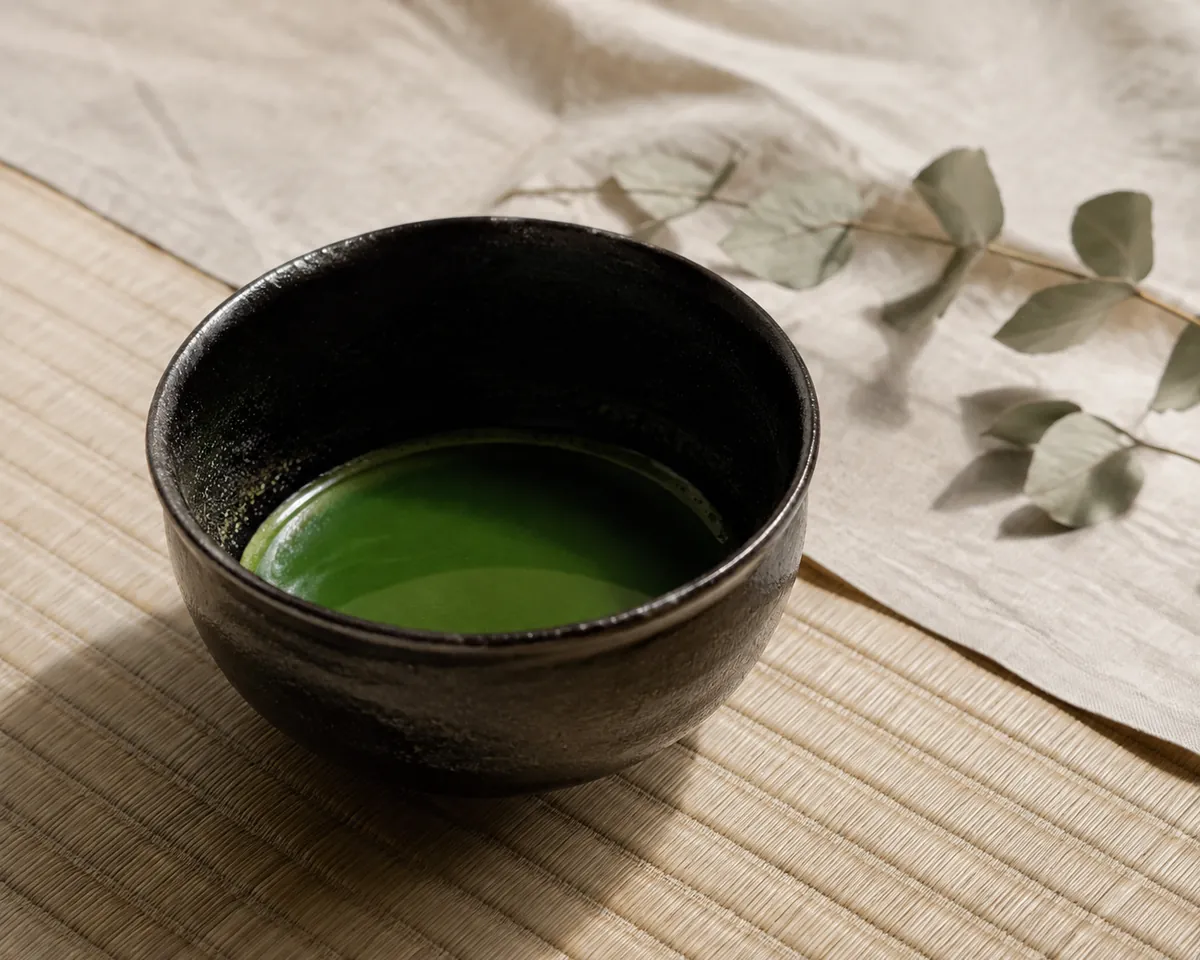
What Is Koicha? Matcha at Four Times the Usual Density
Koicha is matcha at roughly four times the usual density, folded rather than whisked and finished without a trace of...
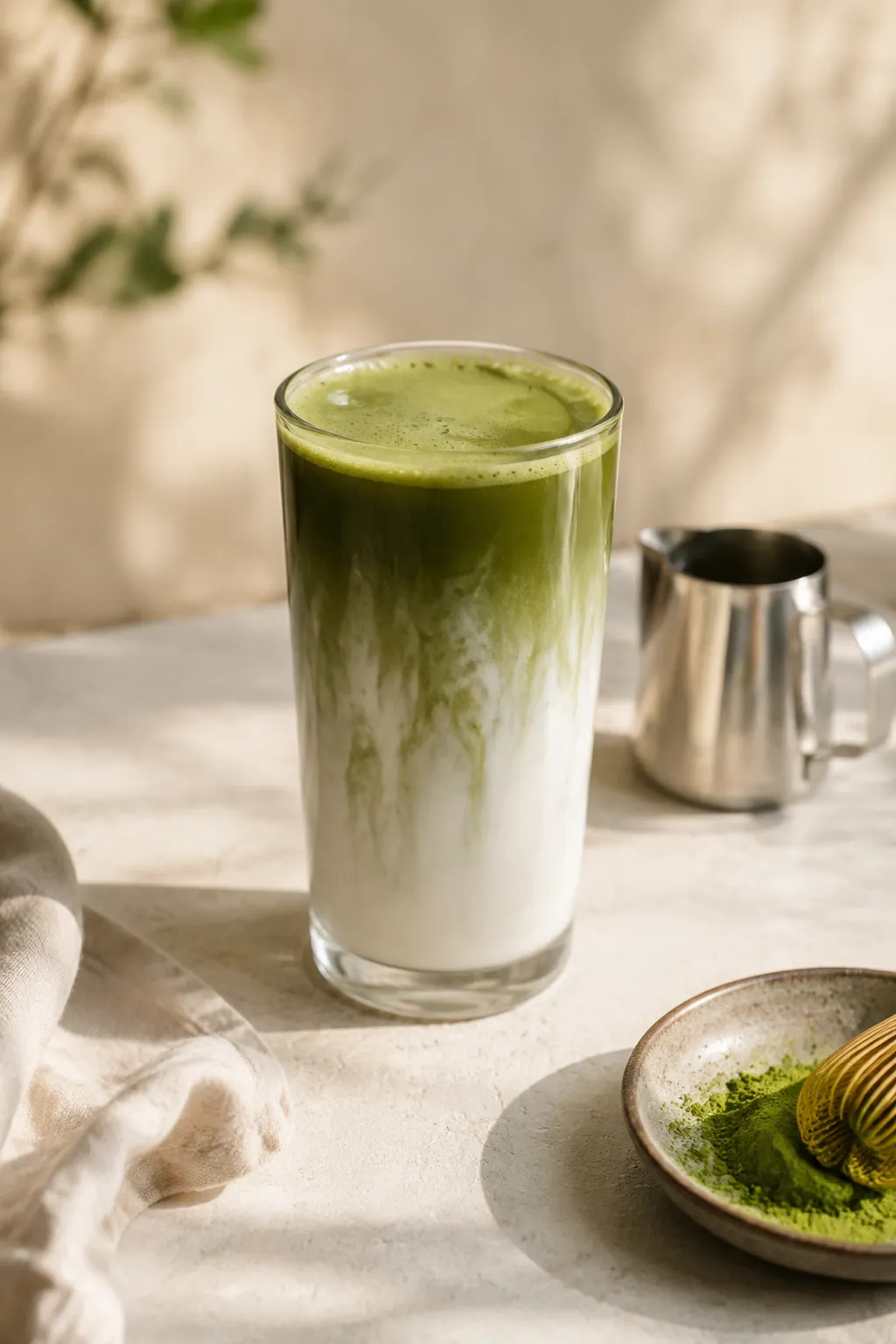
What Is Matcha Latte? When the Tea Becomes an Ingredient
In a matcha latte the tea stops being the drink and becomes an ingredient in one. Milk fat, lactose and heat all push...
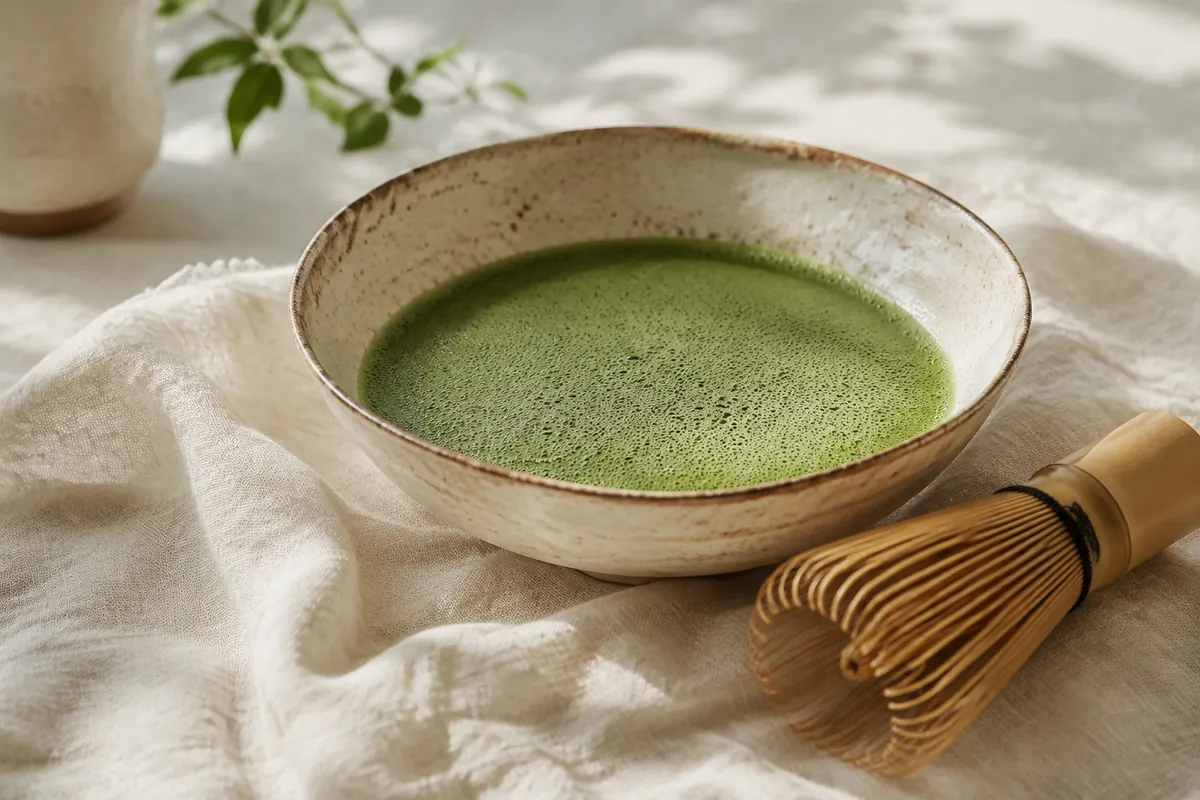
What Is Usucha? The Thin Matcha Almost Everyone Means
Usucha is the thin preparation of matcha, and it is what almost everyone means by the word. Thin describes a...
More drinks worth knowing
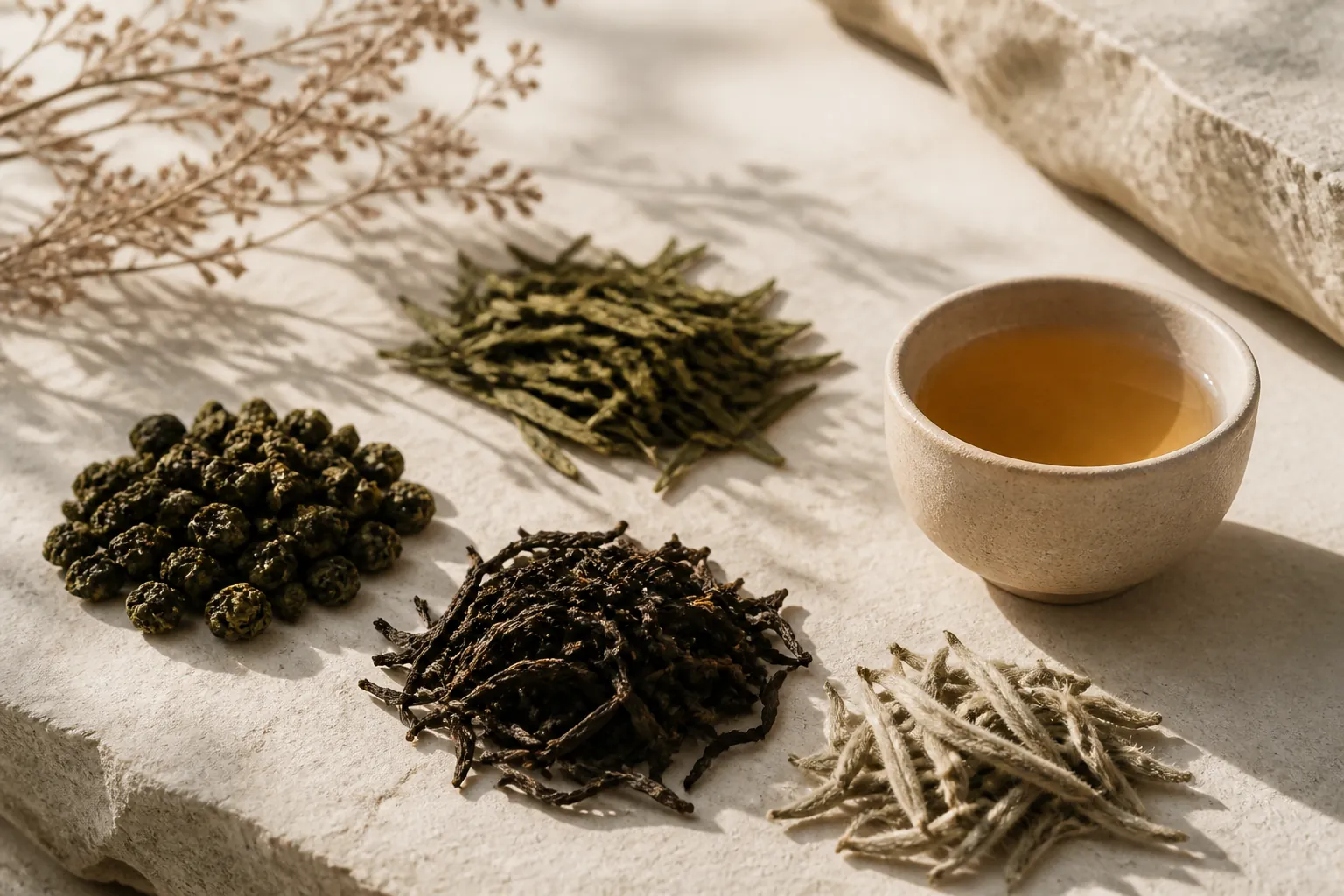
Tea
Every true tea comes from one plant. What separates green from black, and a good cup from a...
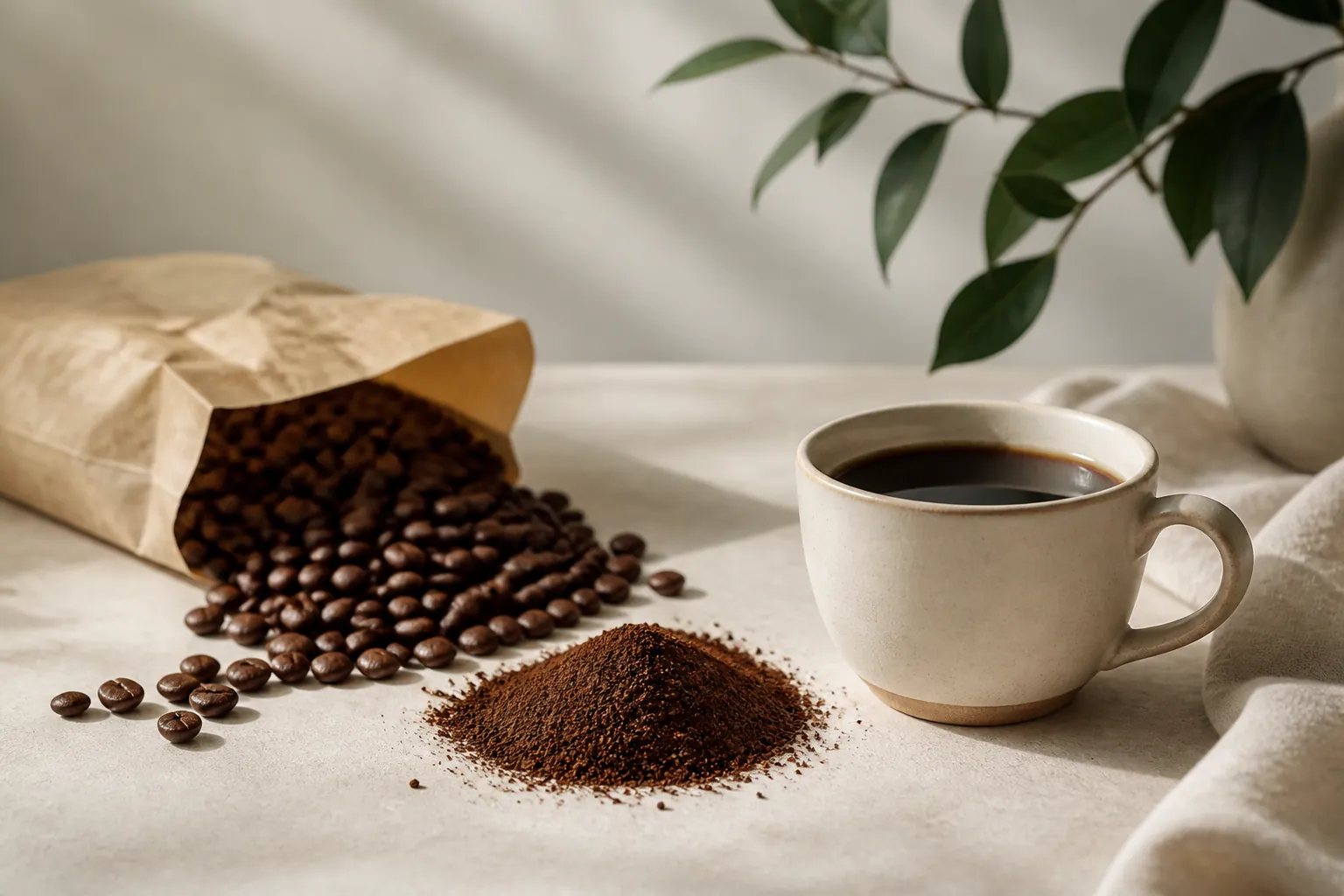
Coffee
Four things decide what lands in your cup: the bean, the grind, the water, and the time they...
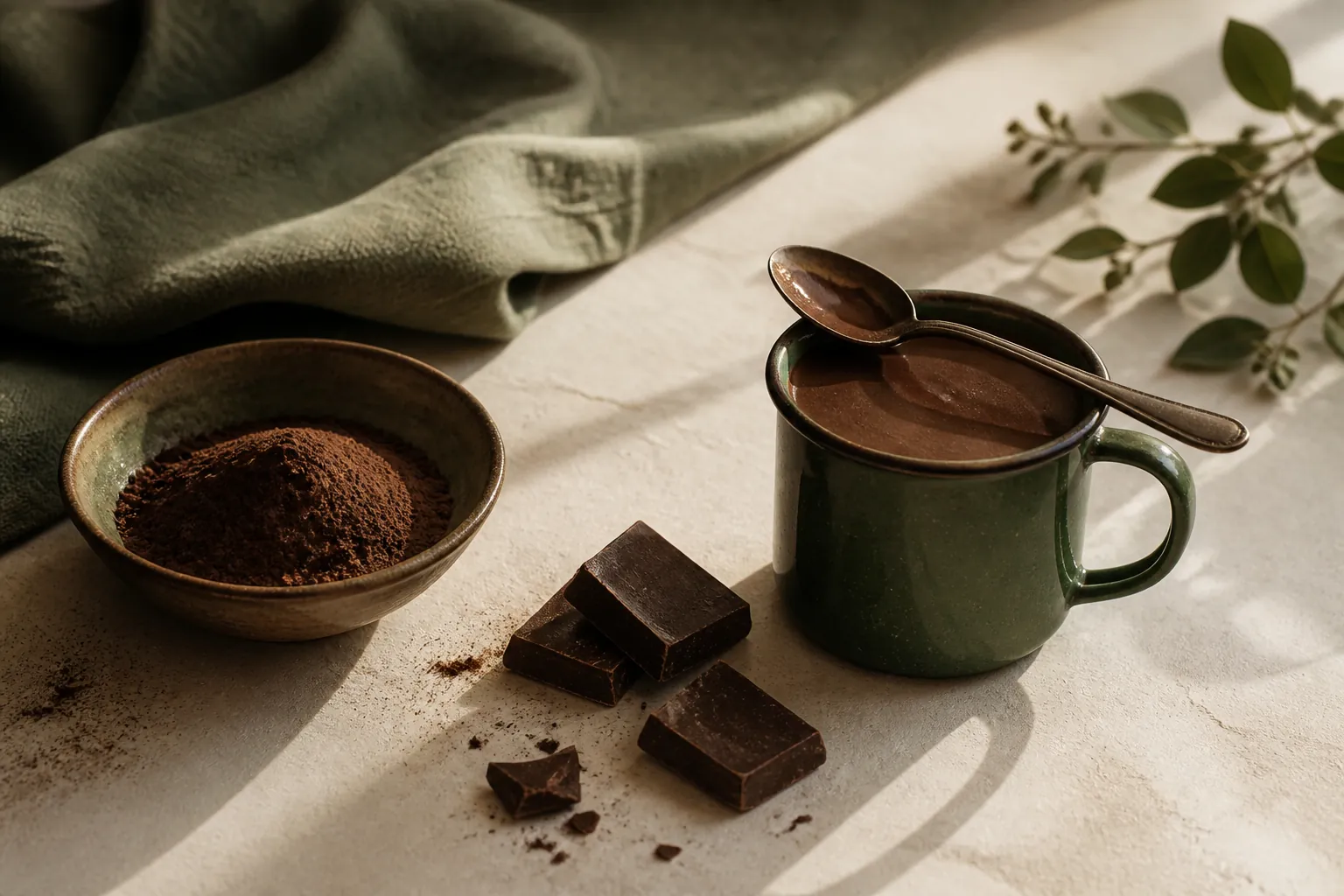
Cocoa
Cocoa powder and drinking chocolate are not the same product, and they do not behave the same...