What Is Chai? Why It Is Simmered Rather Than Steeped
Chai is simmered, not steeped. That single difference is why a chai teabag in hot water never tastes like the drink it is imitating.
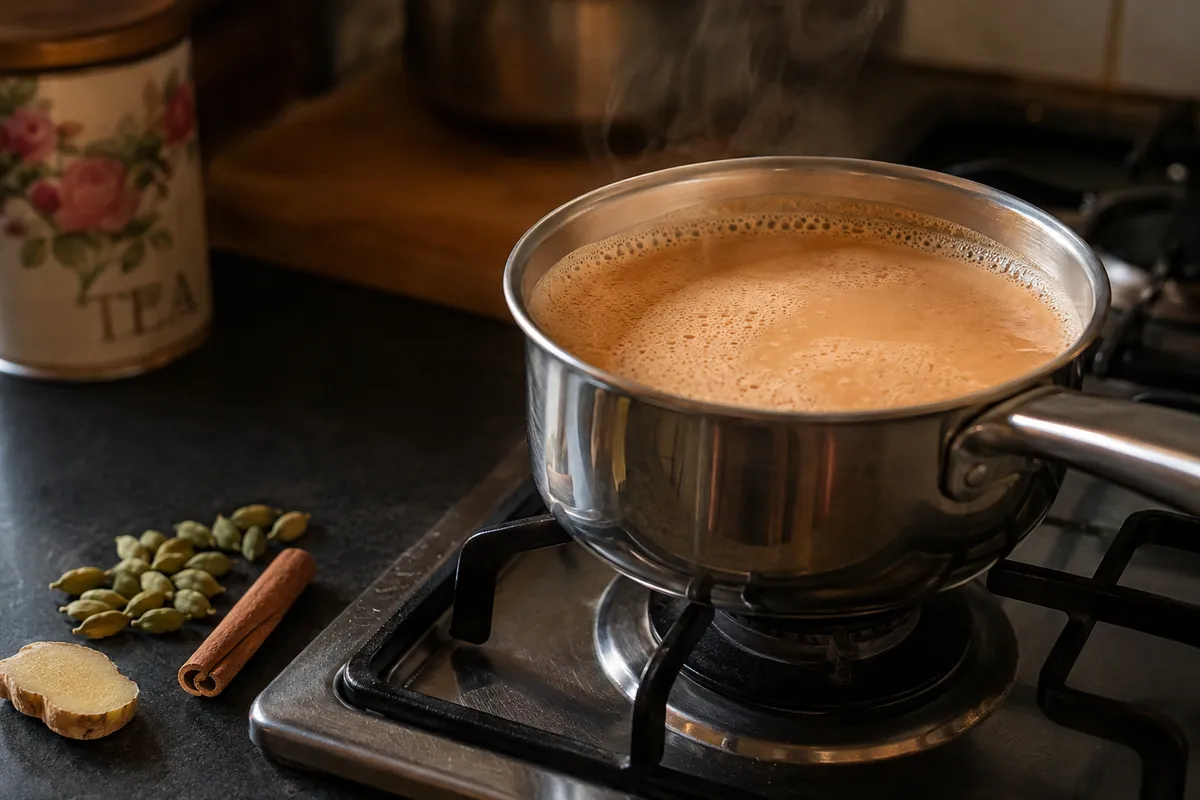
Chai simply means tea in Hindi and several other languages. What English speakers mean by chai is masala chai: black tea simmered with milk, sugar and spices in one pan.
Calling it chai tea is redundant, though the phrase is now common enough that arguing about it is a lost cause. What matters more is the method, because the difference between a good cup and a thin one is entirely in how the pan is handled.
Chai at a glance
- What the word means
- Tea. What English calls chai is masala chai
- Method
- Simmered in one pan, never steeped
- A single cup
- 200 ml water, 200 ml whole milk, 6 g CTC tea, spices
- The tea to use
- CTC, because whole leaf extracts too gently to read through milk
- The backbone spice
- Green cardamom, which nearly every blend contains
- Easiest to overdo
- Cloves, two or three at most
Why chai has to be simmered
When making masala chai, tea, water, milk, sugar and spices go into a pan together and are brought to the boil, often more than once, over several minutes, and that single decision separates chai from every spiced teabag on a supermarket shelf. Steeping is a gentle process suited to leaf.
Chai asks water to pull flavour out of bark, seed and rhizome, which are hard materials that a three-minute infusion barely touches.
What the simmer is doing
- SpicesCardamom pods, cinnamon bark and ginger are hard material that hot water alone barely touches.
- TeaStrong CTC leaf extracts hard and fast under boiling conditions.
- MilkSimmering thickens it slightly and deepens the flavour.
- SugarDissolved throughout rather than stirred in at the end.
- TogetherEverything extracts into one liquid rather than layering.
Steeping cannot extract bark, seeds and rhizome. The same constraint makes ginger tea a decoction rather than an infusion, and it is why a chai teabag dropped into hot water tastes thin and vaguely perfumed instead of hot and sharp.
Milk changes the arithmetic again. Fat and protein blunt the perception of spice and tannin alike, so a brew strong enough to read through half a cup of milk has to be pushed harder than anything you would drink black.
The pan is doing the pushing.
Cardamom, ginger and the rest of the masala
There is no fixed recipe. Every household and every stall has its own, the balance shifts by region, and the blend is where chai stops being a formula and becomes somebody's habit.
The common components
- Green cardamom
- The one nearly every blend contains. Floral and sweet
- Ginger
- Fresh or dried. Provides the heat
- Cinnamon or cassia
- Usually cassia, which is stronger. Warmth and depth
- Cloves
- Powerful, and easy to overdo
- Black pepper
- Adds a slow heat at the back of the throat
- Fennel or star anise
- Regional, and gives a liquorice note
Cardamom and ginger are the backbone. A blend with only those two is recognisably chai, while one carrying everything except them is a spiced milk drink wearing the wrong name.
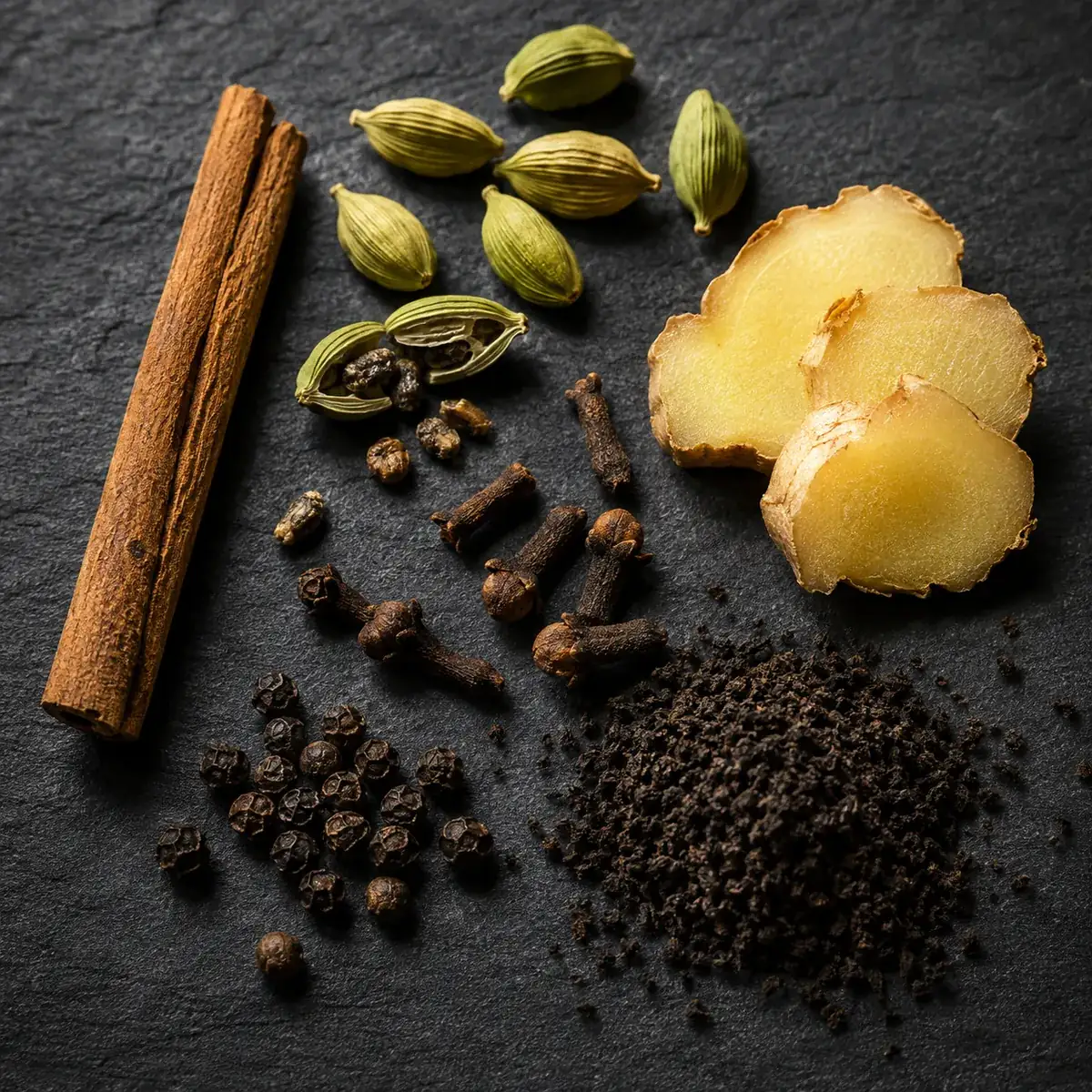
Whole spices crushed just before use give a far cleaner result than pre-ground blends, which fade within weeks and carry a dusty note that no amount of simmering removes. Crushing also matters more than quantity, since an uncracked cardamom pod gives up almost nothing in ten minutes of boiling.
How much each spice can take
- CardamomThe backbone. Hard to overdo
- GingerGenerous. Fresh is brighter, dried is hotter
- Cinnamon or cassiaModerate. Cassia is roughly twice as strong
- Fennel or star aniseSmall. It takes over quickly
- Black pepperA few corns. It builds at the back of the throat
- CloveTwo or three at most. The commonest thing to overdo
Make the masala in batches and keep it whole rather than ground, crushing what you need as you go.
A masala for about twenty cups
- Green cardamom
- 30 pods
- Cinnamon or cassia
- 2 sticks, broken
- Cloves
- 10
- Black peppercorns
- 15
- Fennel seeds
- 1 teaspoon, optional
- Ginger
- Added fresh per pot rather than kept in the blend
Ginger is the one component that stays out of a dry blend. Dried ginger works and tastes noticeably different from fresh, hotter and flatter, and fresh root cannot sit in a jar of whole spices without spoiling everything around it.
The milk-to-water ratio, and the repeated boil
Half water and half milk is the workable default, and getting that split wrong is the commonest reason a home attempt tastes either watery or like warm spiced milk with no tea in it.
Masala chai for two
- Water
- 200 ml
- Milk
- 200 ml, whole
- Black tea
- 2 heaped teaspoons of CTC, or 6 g
- Spices
- 4 cardamom pods, a slice of ginger, a small piece of cassia, crushed
- Sugar
- To taste, added during the simmer
- Method
- Simmer spices in water 3 minutes, add tea, add milk, bring to boil, strain
Order matters as much as proportion. Spices go into water first because water extracts them faster than milk does, the tea follows, and the milk arrives last so it spends the shortest possible time over direct heat.
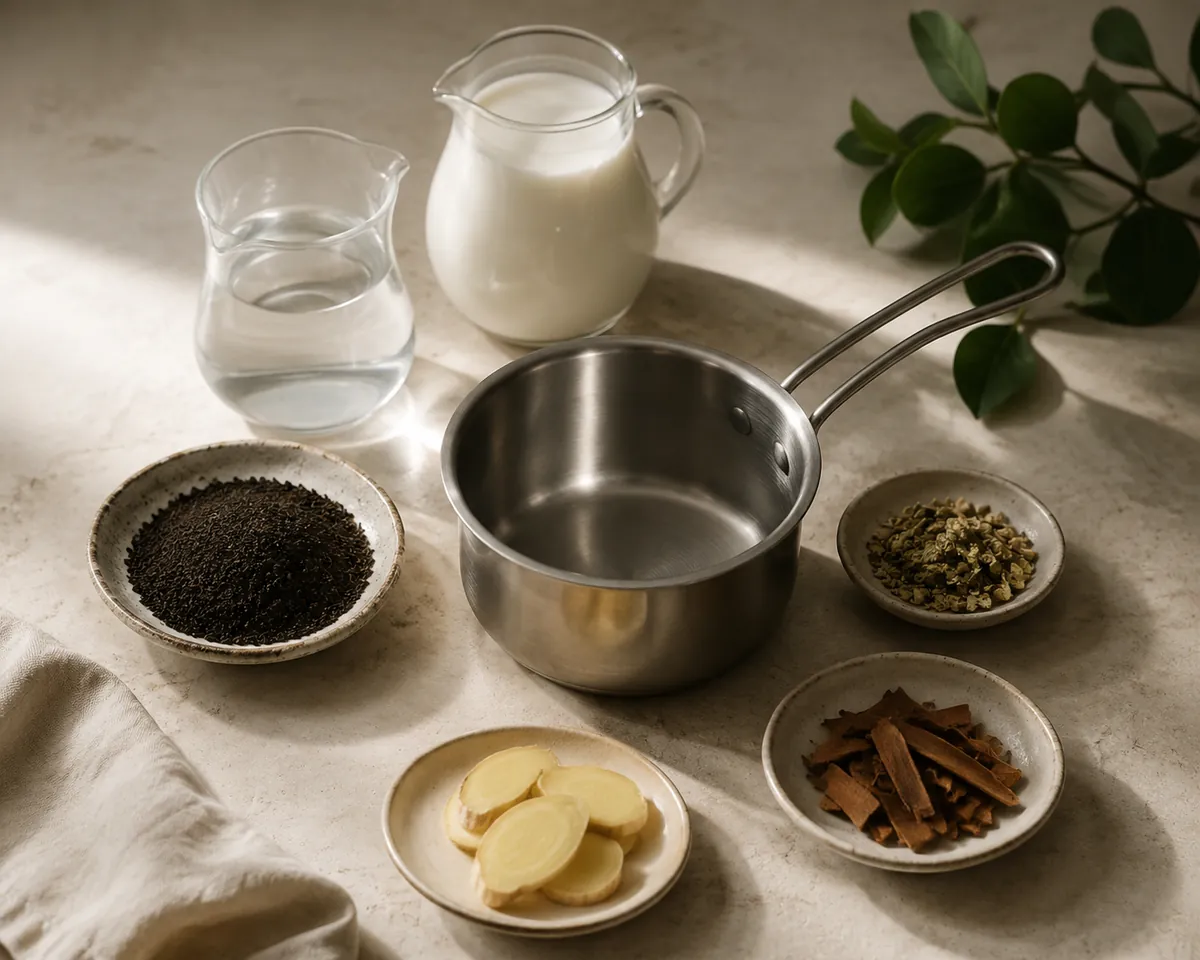
Strength and sweetness are the two dials that vary by region and by stall. Kadak chai is the strong version, with more tea, longer boiling and a deep colour, and it is what most roadside stalls serve.
Sweetness in traditional preparation is high by Western standards and it goes in during the simmer rather than at the table, which is not the same thing as stirring it into a finished cup.
Adjusting either downward is easy. Adjusting the spice upward is not, once the pan is off the heat and the milk is in, so start generous and dilute rather than the other way round. Making masala chai walks the whole sequence through in order.
CTC, and why an expensive tea is wasted here
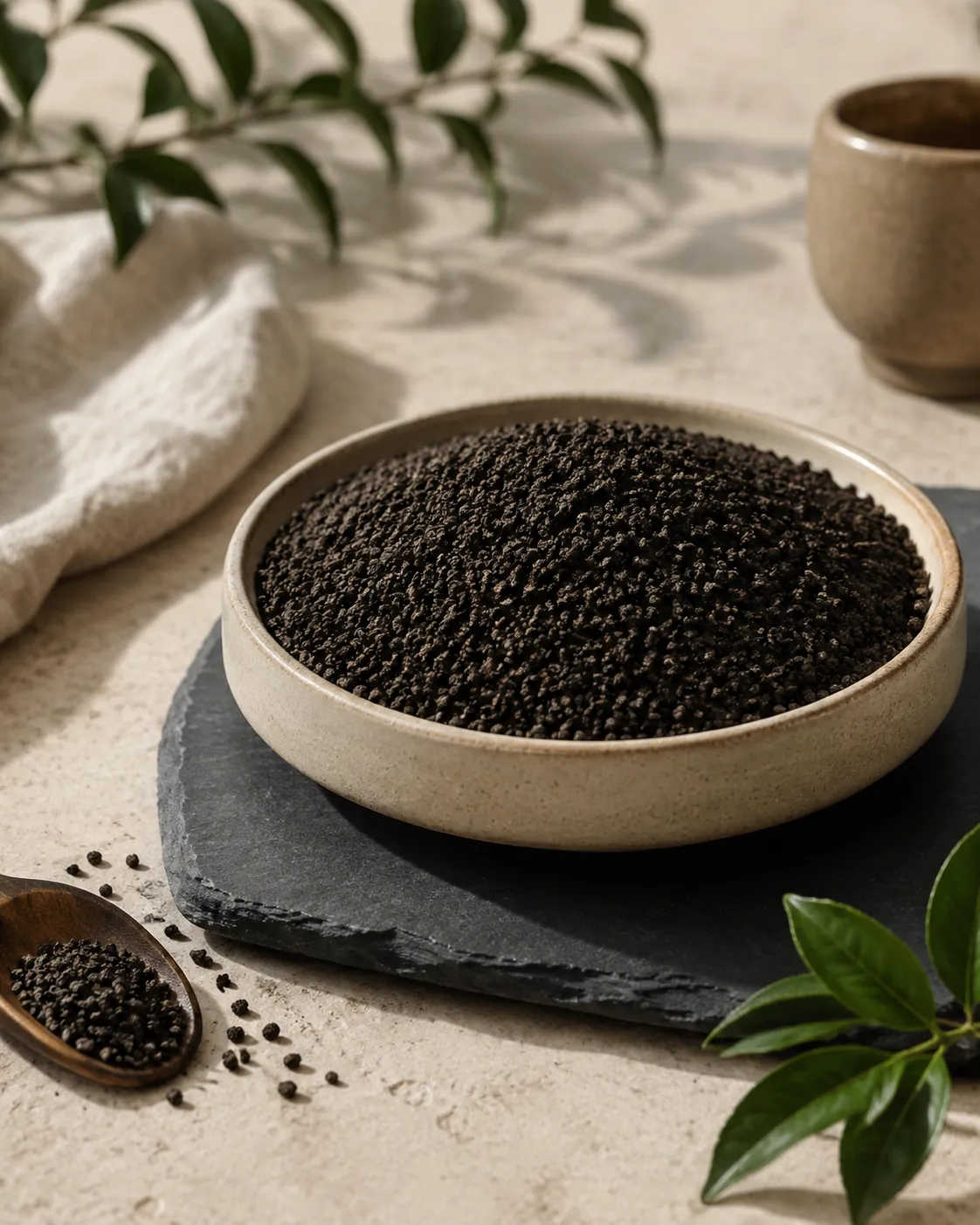
The leaf in chai is chosen for one job, and most of what a tea shop sells is wrong for it. Assam CTC is the standard, and the crushed granules extract hard and fast under boiling conditions.
Why CTC and not whole leaf
- Extraction
- Crushed granules give everything up in minutes of boiling
- Strength
- Enough tannin and colour to read through milk
- Cost
- Far cheaper than orthodox leaf, which matters at street-stall volumes
- Whole leaf
- Extracts too slowly and too gently; the milk buries it
- Darjeeling
- Wasted entirely. Its delicacy is the first thing lost
The same logic governs the milk. A tea brewed this hard needs a dairy that can meet it, which is why evaporated milk turns up in so many tea traditions built on a similar brew, and why skimmed milk makes chai taste hollow however much tea goes in.
Using an expensive leaf here is a category error rather than an extravagance.
Spices, milk and sugar erase exactly the qualities you paid for, which is the same reasoning that makes culinary grade the right matcha for a latte and the wrong one for a bowl.
Concentrate, and how to have chai on a weekday
Simmering a fresh pan every morning is the thing that stops most people making chai properly. The drink batches well, and a jar of concentrate in the fridge turns a ten-minute job into a ninety-second one.
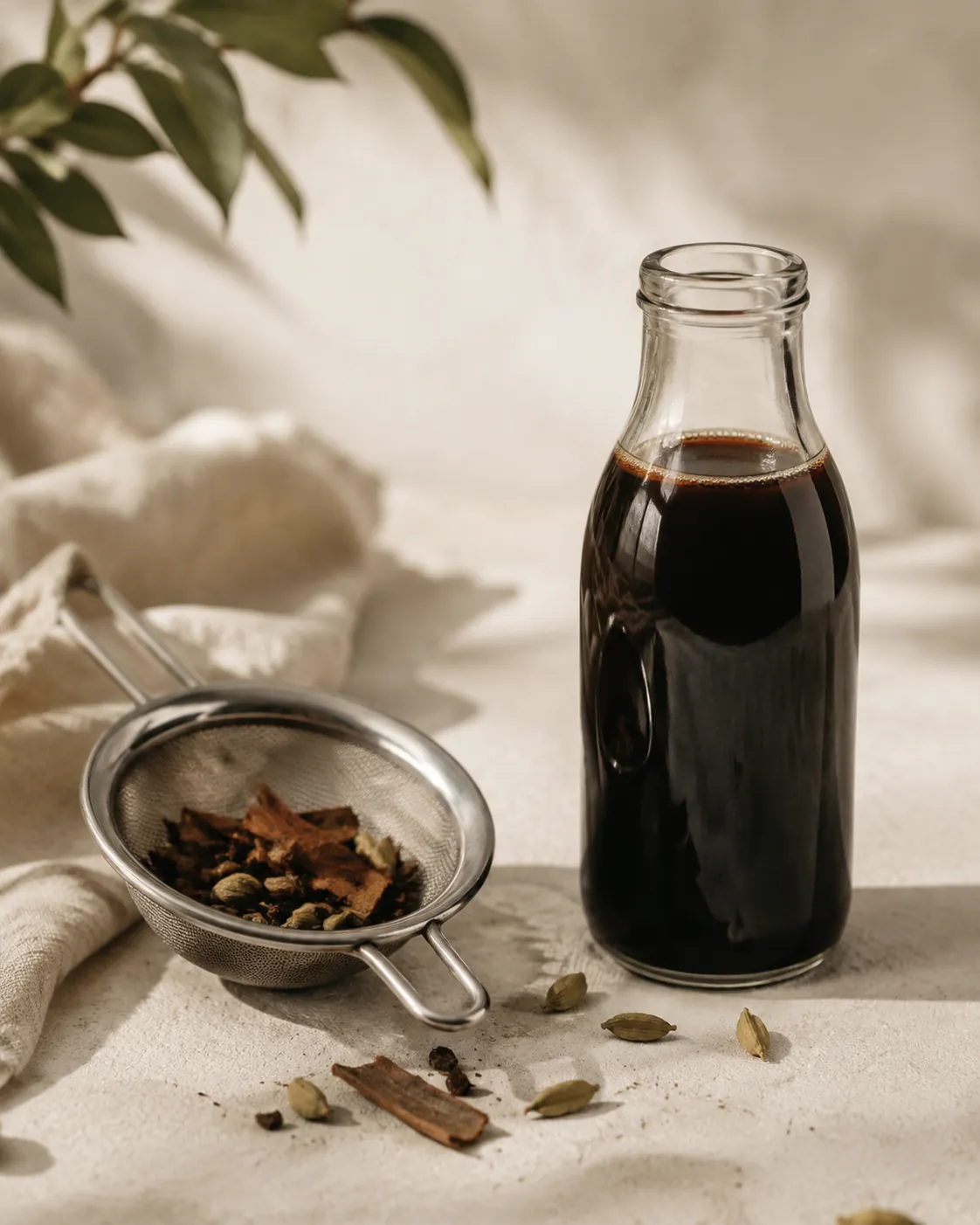
Concentrate, about 500 ml
- Water
- 700 ml
- Tea
- 30 g of a strong broken-leaf black tea
- Spices
- 8 crushed cardamom pods, 1 cinnamon stick, 6 cloves, 20 g sliced ginger, 6 peppercorns
- Method
- Simmer spices 10 minutes, add tea, simmer 5 more, strain hard
- Keeps
- 5 days refrigerated
- To serve
- 1 part concentrate to 1 part hot milk
The concentrate is made without milk, and that omission is what lets it keep for days rather than hours. Straining hard rather than gently is worth the effort, since pressing the spent spices releases a noticeable amount of what you simmered for, and leaving them loose in the jar over-extracts the batch by the second day.
Iced chai needs the concentrate rather than a cooled pan. Chai brewed with milk and then chilled separates and tastes dull, because the fats set and the aromatic oils lose their lift.
Cold concentrate, cold milk and ice, stirred, keeps both.
Use a stronger concentrate for the cold version, around two parts to three parts milk, since ice will dilute it as it goes. A spoon of simple syrup mixes in where granulated sugar sinks to the bottom and stays there.
Simmering with oat, soy and coconut
Chai is simmered with milk rather than merely mixed with it, which is a harder test than a latte and rules several plant drinks out entirely.
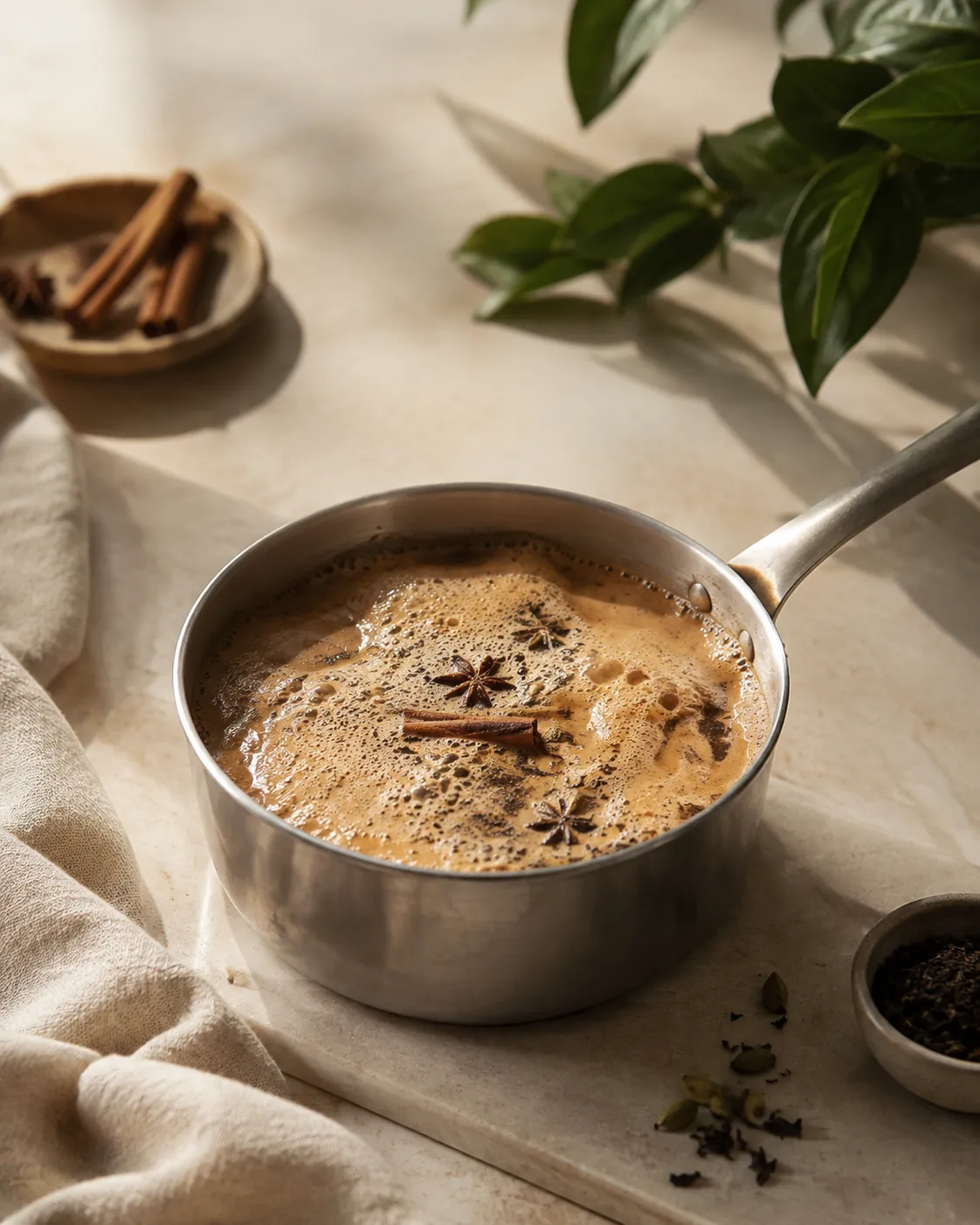
Tea is acidic and so is ginger, and sustained heat is exactly what breaks an unstable emulsion, which is why plant milk curdling is a bigger risk in a chai pan than in a coffee cup. The split usually happens in the last thirty seconds, as the pan comes to a rolling boil.
Almond
The most likely to split. Add it off the heat if at all.
The general fix is to build the concentrate with water only, then add the plant drink off the heat. That removes the simmer from the equation, and it is the only reliable method for the less stable drinks rather than a compromise for them.
Masala chai, chai latte, and the powders between them
One word covers several drinks that are made in completely different ways, and the gap between the ends of that range is wider than most menus admit. Masala chai is simmered fresh.
A chai latte is usually a sweetened concentrate or syrup mixed with steamed milk in the same way as any other latte, with nothing simmered and the tea extracted somewhere else weeks earlier.
Masala chai
Simmered fresh. Strong, spicy, and as sweet as you make it.
Chai concentrate
Brewed in bulk, then diluted. Reasonable, and convenient.
Chai latte from syrup
Sweetened flavour base plus milk. Usually very sweet, mildly spiced.
Chai teabag
Steeped, so the spices barely extract. The weakest of the group.
Most chai sold outside South Asia is neither simmered nor especially tea, and the tin says so in the ingredients rather than on the front. A chai latte powder is typically sugar first, then milk powder, then spice, with instant tea somewhere down the list, so the sweetness is doing most of the work.
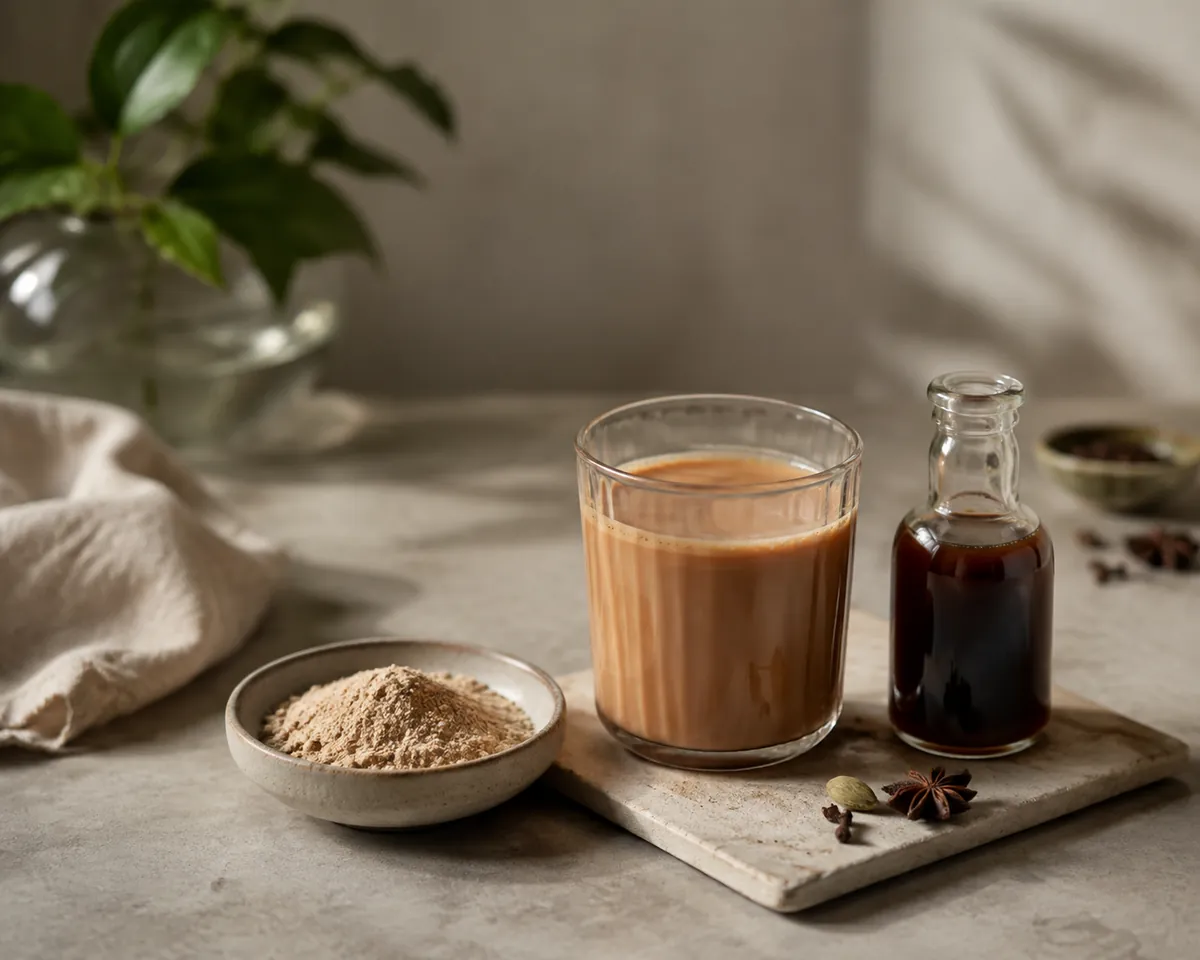
Syrups are the same formulation without the milk powder: sugar, water, spice extracts and a little tea extract. Both are built for consistency and speed rather than for the simmered character, and that is the honest reason a cafe chai latte tastes smooth and sweet where a home-simmered pan tastes sharp and spiced.
None of them is illegitimate; they are simply four drinks sharing one word.
Kadak, Irani, noon chai and sulaimani
India is not one chai culture. The variations are substantial enough that a stall three states away would be serving something a regular customer would not recognise.
| Style | Where | What differs |
|---|---|---|
| Masala chai | Widespread | The general spiced version described above |
| Kadak chai | North India | Very strong, boiled long, deep colour |
| Irani chai | Hyderabad, Mumbai | Made with heavily reduced milk. Rich and sweet |
| Noon chai | Kashmir | Pink, salted, with bicarbonate. A completely different drink |
| Sulaimani | Kerala, Gulf | Black, no milk, with lemon and spices |
| Cutting chai | Mumbai | Half a glass, shared or drunk quickly. A portion, not a recipe |
Noon chai is the outlier worth knowing about. Green tea, bicarbonate of soda and salt produce a pink, savoury drink that shares almost nothing with masala chai beyond the word, and the colour comes from the reaction rather than from anything added.
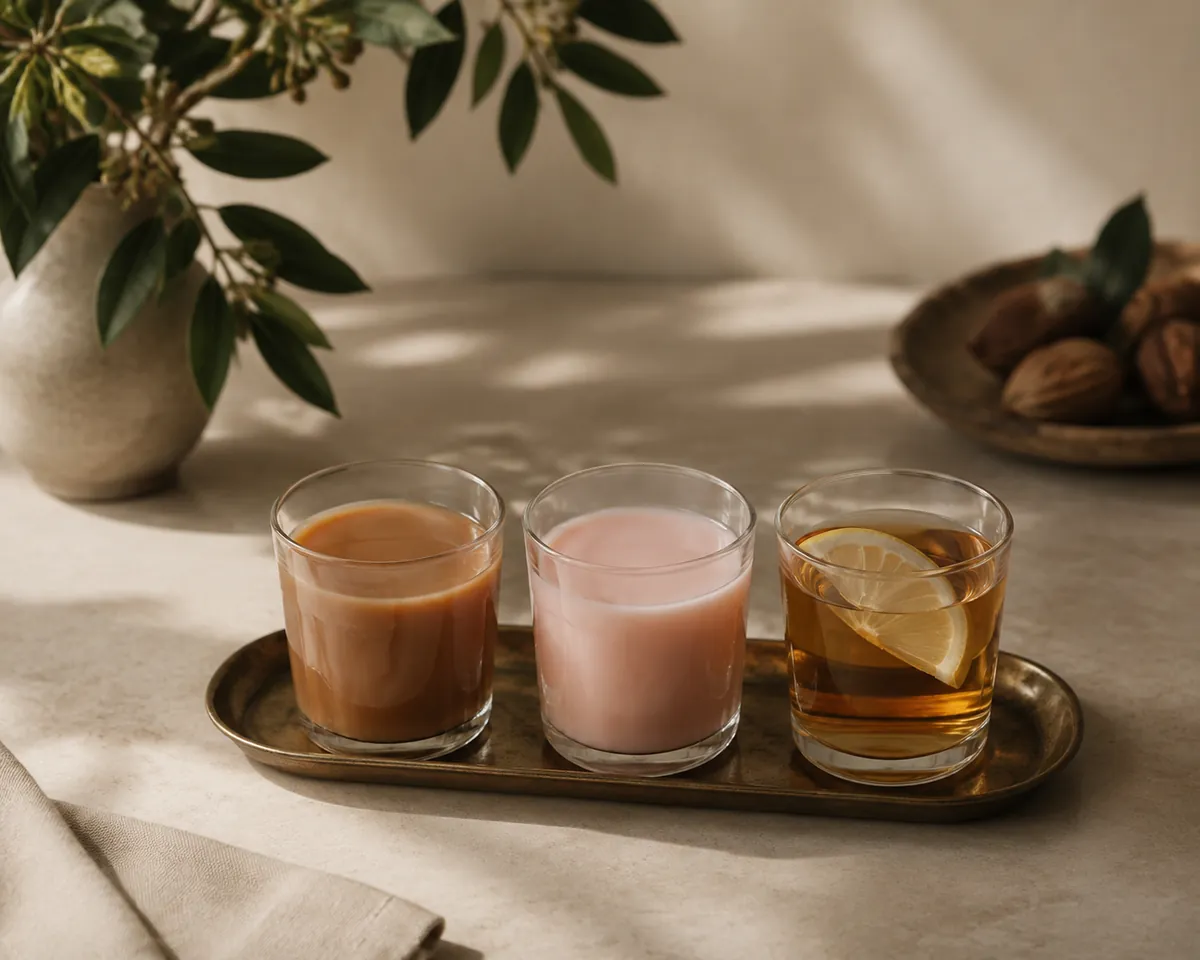
Sulaimani goes the other way and drops the milk entirely, which leaves the spices and the lemon exposed and makes it the only version on that list where a delicate tea would not be wasted. Kadak is the one worth copying at home, because it is the version that survives being made in a hurry.
A cutting, and the two minutes it is drunk in
Cutting describes a serving size rather than a recipe, and it explains a surprising amount about why chai tastes the way it does. A cutting is half a glass, sold cheaply and drunk quickly, usually standing at a stall rather than sitting anywhere.
It exists because chai punctuates the day instead of filling an hour of it, and because half a glass shared between two people is how a break gets taken. That context accounts for both the strength and the sweetness.
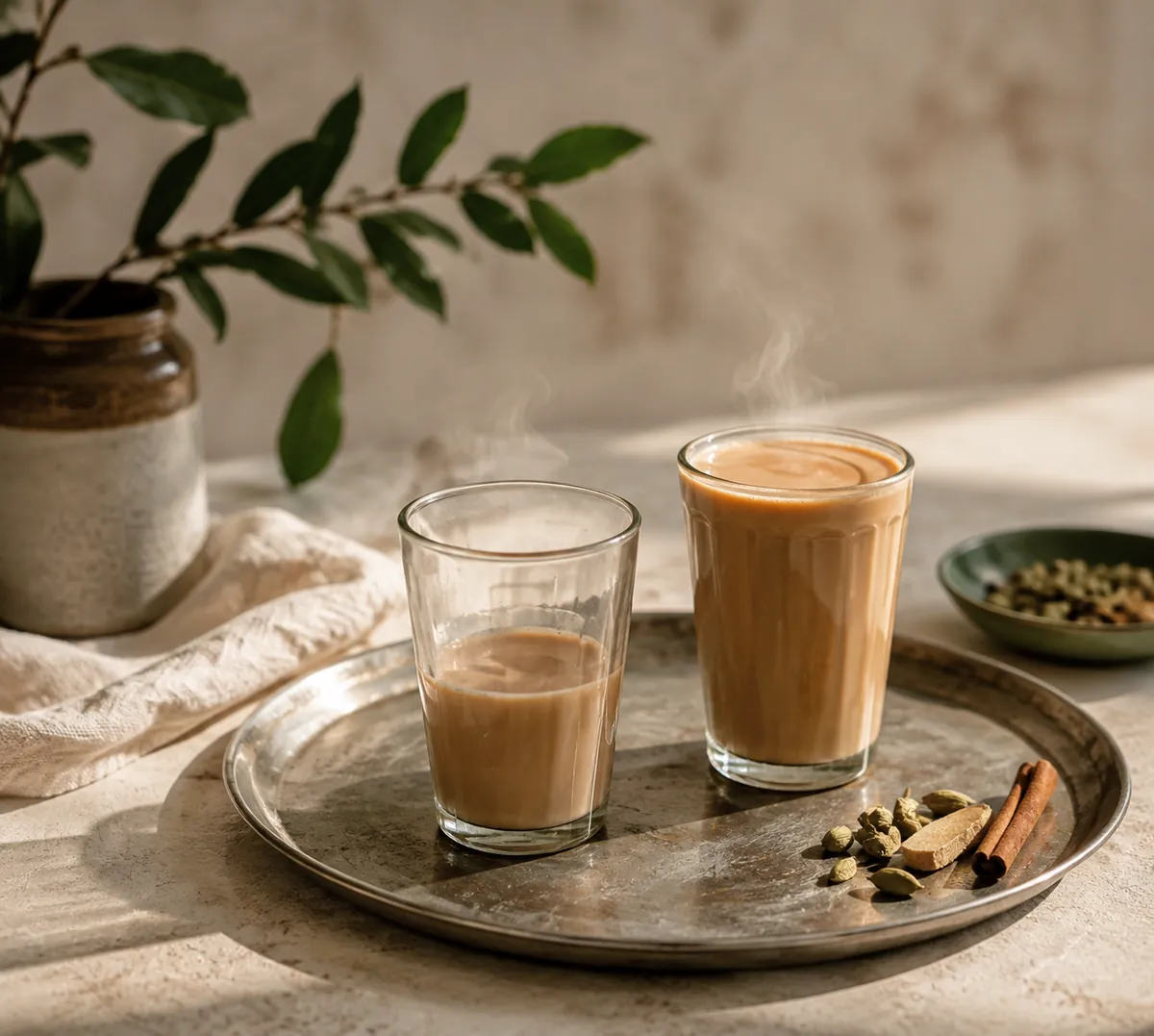
A drink meant to be finished in two minutes, outdoors, has to register immediately, so it is built to hit hard rather than to reward slow attention. Scaling it up to a mug at home without changing anything is why a first attempt often tastes overwhelming, and cutting the sugar before cutting the spice is the adjustment that keeps the character.
What chai tastes like sets out what you should be aiming at.
Keeping the masala when the drink itself will not keep
Chai does not keep, and the components keep on completely different timescales, so the useful habit is to store the parts rather than the pan.
Made chai holds a few hours refrigerated and reheats badly. The milk catches on the base, the aromatics flatten, and the tea turns tannic, which makes it a drink to make in the quantity you will actually drink.
The dry masala is the durable part and keeps six months to a year in a sealed jar as long as the spices stay whole. Ground blends fade within weeks, which is the main argument for keeping them whole and crushing to order rather than a point of purism.
Fresh ginger is the perishable component and belongs in the fridge or the freezer rather than in the blend, as storing chai sets out alongside the concentrate. Frozen root grates straight from the freezer and behaves almost exactly like fresh in a pan.
Common questions
Why does a chai teabag taste nothing like real chai?
Because chai is simmered, not steeped. Cardamom pods, cinnamon bark and ginger are hard material that hot water alone barely extracts. A decoction in a pan pulls them out; a teabag in a mug cannot.
Is it wrong to say chai tea?
It is redundant, since chai means tea. The drink English speakers mean is masala chai, or spiced tea. The phrase is now common enough that it is well established regardless.
What is the difference between masala chai and a chai latte?
Masala chai is simmered fresh with tea, milk and whole spices. A chai latte is usually a sweetened concentrate or syrup mixed with steamed milk, so nothing is simmered and it is generally much sweeter and less spicy.