What Is a Flat White? Between a Latte and a Cappuccino
A flat white is the milk coffee for people who find a latte too long and a cappuccino too airy. It is the same size as a cappuccino with the foam taken out, and that one change is why it tastes stronger.

A flat white looks like a small latte and tastes nothing like one. The cup holds the same as a cappuccino and the surface is level rather than domed, which is where the name came from and, more usefully, where the whole drink came from.
Take the air out of a cappuccino and the same volume has to be filled with liquid milk instead. That milk sits against the same shot, so the coffee has less foam to travel through and more fat and protein to be carried by, and it reads denser and stronger without anything having been added to it.
A flat white at a glance
- Espresso
- A double, or a double ristretto in most of the places that invented it
- Steamed milk
- About 120 ml, filling the rest of the cup
- Foam
- 3 to 5 mm, folded through rather than layered on top
- Total volume
- 150 to 180 ml
- Cup
- Small ceramic, usually tulip-shaped
- Surface
- Glossy and level, which is what the name describes
- Where it came from
- Australia or New Zealand, in the 1980s, and the claim is disputed
The numbers, and why the volume is half the definition
Two shots and roughly 120 ml of milk is the whole build, and the second number carries as much weight as the first. Get the ratio right in the wrong cup and the drink stops being a flat white.
A flat white, as usually built
- Espresso
- A double, about 60 ml, in most of the places that invented it
- Steamed milk
- About 120 ml, filling the rest
- Foam
- A few millimetres, folded through rather than layered on
- Total volume
- 150 to 180 ml
- Cup
- Small, usually ceramic and tulip-shaped
- Surface
- Glossy and level, which is the name

A flat white and a cappuccino hold the same volume, and the only thing swapped between them is air for milk.
A flat white served in a 300 ml cup is a latte whatever the menu calls it, because the extra milk is the only variable that moved and milk is what separates the two drinks. The ratio scales, so a triple shot in 300 ml keeps the proportions, but almost nowhere does that: the extra volume gets filled with milk, and the price stays the same.
The cup size is the honest label on this drink and the menu name is not. Anyone ordering one somewhere unfamiliar learns more from looking at what comes out on the tray in front of them than from anything printed on the board, which is also why the drink is more consistent in cafes that only own one size of cup for it.
Sydney, Auckland, and two words that mean nothing abroad
Australia and New Zealand both claim the drink, both claims point to the 1980s, and no document settles it. Sydney has cafes with a story and Auckland has cafes with a story, and the accounts differ on the year, the room and the person holding the jug.
What nobody disputes is why it appeared. Espresso machines had arrived, cappuccinos were being made with stiff dry froth, and asking for one flat and white was a way of saying you wanted the milk without the meringue on top.
The name is a complaint that hardened into an order.
The drink reached the rest of the world through Antipodean cafes in London during the 2000s, which is why British menus carried it a decade before American ones did, and why the London version rather than the Sydney one is what most of Europe copied. The dispute has never been settled and probably cannot be, since the thing being claimed is a phrase used across a counter rather than a recipe anyone wrote down at the time.
Stretching against texturing
Steaming does two separate jobs at once, and the balance between them is what makes one drink rather than another. Stretching is the introduction of air, which happens with the wand tip breaking the surface.
Texturing is the spinning that follows, which breaks the bubbles down and folds them through the liquid until they cannot be seen.
A cappuccino spends comparatively long on the first job. A flat white spends a second or two on it and everything else on the second, which is why the milk pours as a single glossy liquid rather than as milk with a lid on it.
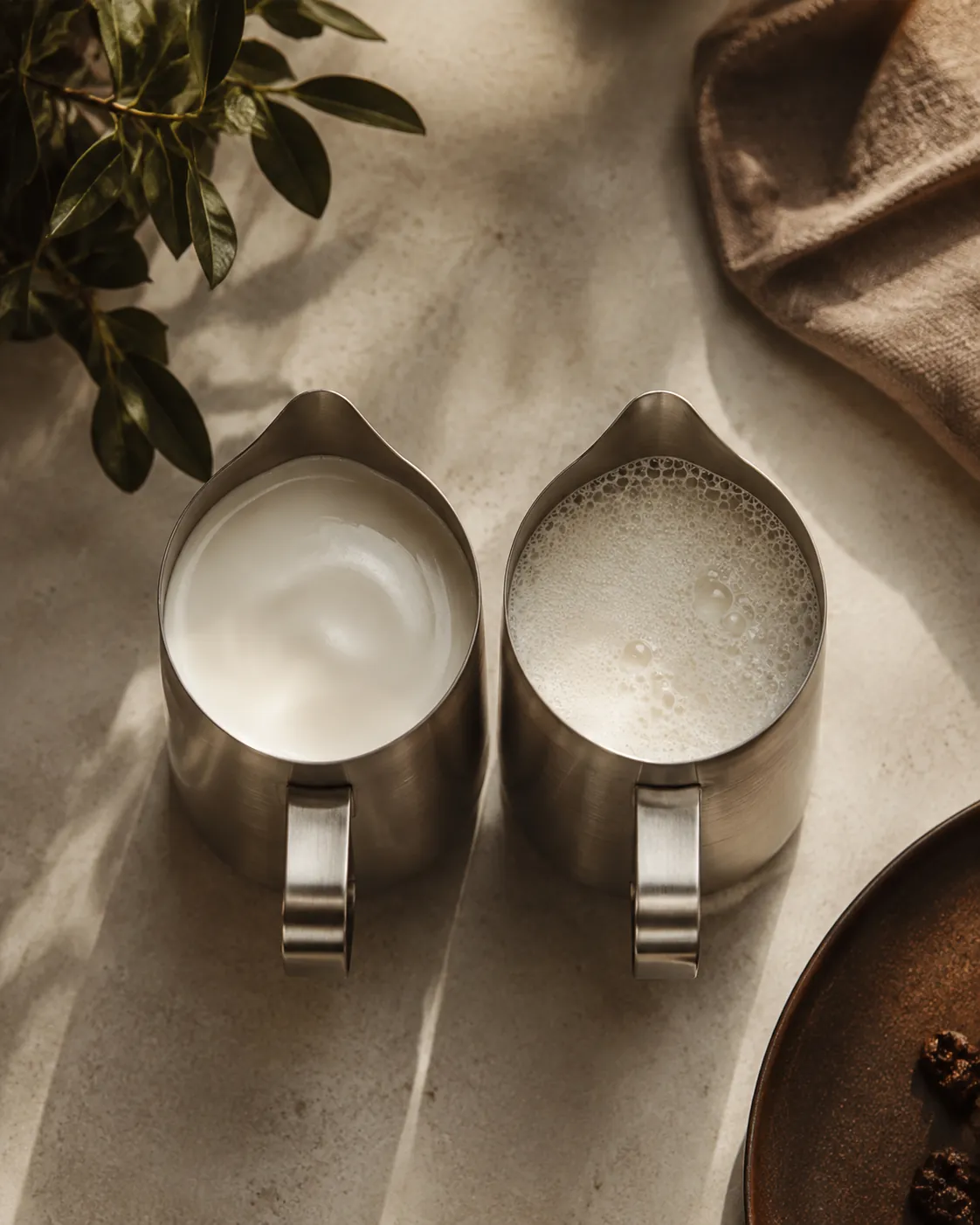
Cold milk is the reason the window is so short. Air can only be worked into milk while the proteins are still able to stabilise it, and past about 37 C that ability falls away quickly, so a flat white made by someone who started stretching after the jug warmed will have visible bubbles no swirling can remove.
The whole technique lives in the first four seconds, and everything afterwards is spinning what has already been decided, which is why how a flat white tastes is so closely tied to how it was steamed.
Why so many cafes build it on ristretto
A large number of cafes pull ristretto shots for this drink rather than normal ones, and it is worth knowing what that changes before deciding whether you like it.

| Base | Volume | What you taste |
|---|---|---|
| Double ristretto | About 45 ml | Sweeter, rounder, shorter finish |
| Double normale | About 60 ml | Balanced, slightly more bitterness |
| Double lungo | About 90 ml | Thinner and sharper, and the milk goes further than it should |
A ristretto is the same dose of coffee with less water driven through it, so extraction stops before the drying, bitter end of the shot arrives. In a small milk drink that reads as more chocolate and less edge, and it holds up against 120 ml of milk better than a longer shot does.
None of the three is correct in any formal sense, and espresso sets out how they differ. The practical point is at the other end of the table: a flat white built on lungo shots is the version people describe as watery, since the extra water dilutes the coffee before the milk has even arrived, and a cafe running long shots to stretch a bag will produce that consistently rather than occasionally.
The small-cup family: piccolo, magic, cortado, gibraltar
Neighbouring names crowd the same page of a menu, and all of them are attempts at the same instinct: keep the coffee legible by holding the milk down.
| Cortado | Flat white | Cappuccino | Latte | |
|---|---|---|---|---|
| Volume | 90 to 130 ml | 150 to 180 ml | 150 to 180 ml | 240 to 350 ml |
| Foam | Almost none | A few mm | 1 to 2 cm | A few mm |
| Milk to coffee | About 1 to 1 | About 2 to 1 | About 2 to 1 | 4 to 1 or more |
| Served in | Glass | Ceramic cup | Wide cup | Tall glass or large cup |

Piccolo
A single ristretto in about 90 ml of milk, in a small glass. Roughly half a flat white and noticeably sweeter.
Magic
A Melbourne drink. A double ristretto in about 150 ml, so a flat white built to a fixed recipe rather than to a cup.
Gibraltar
A cortado named after the glass it was first served in, under a San Francisco name.
Two of those distinctions actually matter at the counter. A piccolo is half the coffee, so ordering one expecting a flat white gives a drink that tastes sweet and short.
A cappuccino is the same volume with a third of it replaced by air, and the swap of air for milk is the single change that separates it from what you are holding. Below the whole group sits the macchiato, which stops at a spoonful.
Why it arrives cooler and tastes stronger
Served at the same milk temperature as everything else on the menu, a flat white reaches the table cooler than a latte does, and three things account for it: the volume is small, so there is less thermal mass to hold heat; the cup is often thinner than a cappuccino cup; and there is no foam layer insulating the surface.
The strength is a separate effect with a related cause. Foam is mostly air and carries almost no flavour of its own, so replacing a cappuccino's cap with liquid milk puts more fat and protein in the mouth, and both of those hold aromatic compounds and release them slowly.
The same shot in a denser liquid reads as fuller and more persistent rather than sharper.

None of that changes what is in the cup. Tasting stronger and being stronger are different claims, and the caffeine follows the shot count rather than the texture, which is what caffeine by brew method sets out across the whole menu.
A decaf flat white tastes just as dense as a regular one.
Milk, and what fat does in 120 ml
Whole milk gives the body this drink is built around, and the difference between milks shows here more clearly than in any larger cup, because there is nothing else present to hide behind.
What each milk gives a flat white
- Whole dairyThe benchmark. Fat for body, protein for the thin layer of foam
- Barista oatClose in body, slightly sweeter, and the usual plant choice here
- Semi-skimmedFoams more easily and tastes noticeably thinner in a small cup
- SoyFoams well and reads leaner, with a flavour of its own against the shot
- Almond and riceLittle fat and little protein, so the drink is thin and separates easily
Foam comes from protein rather than fat, which is why semi-skimmed builds a cap more readily and still disappoints in a flat white: the cap is not what this drink needs, and the body it lost is. Whole milk wins on the criterion that actually applies.
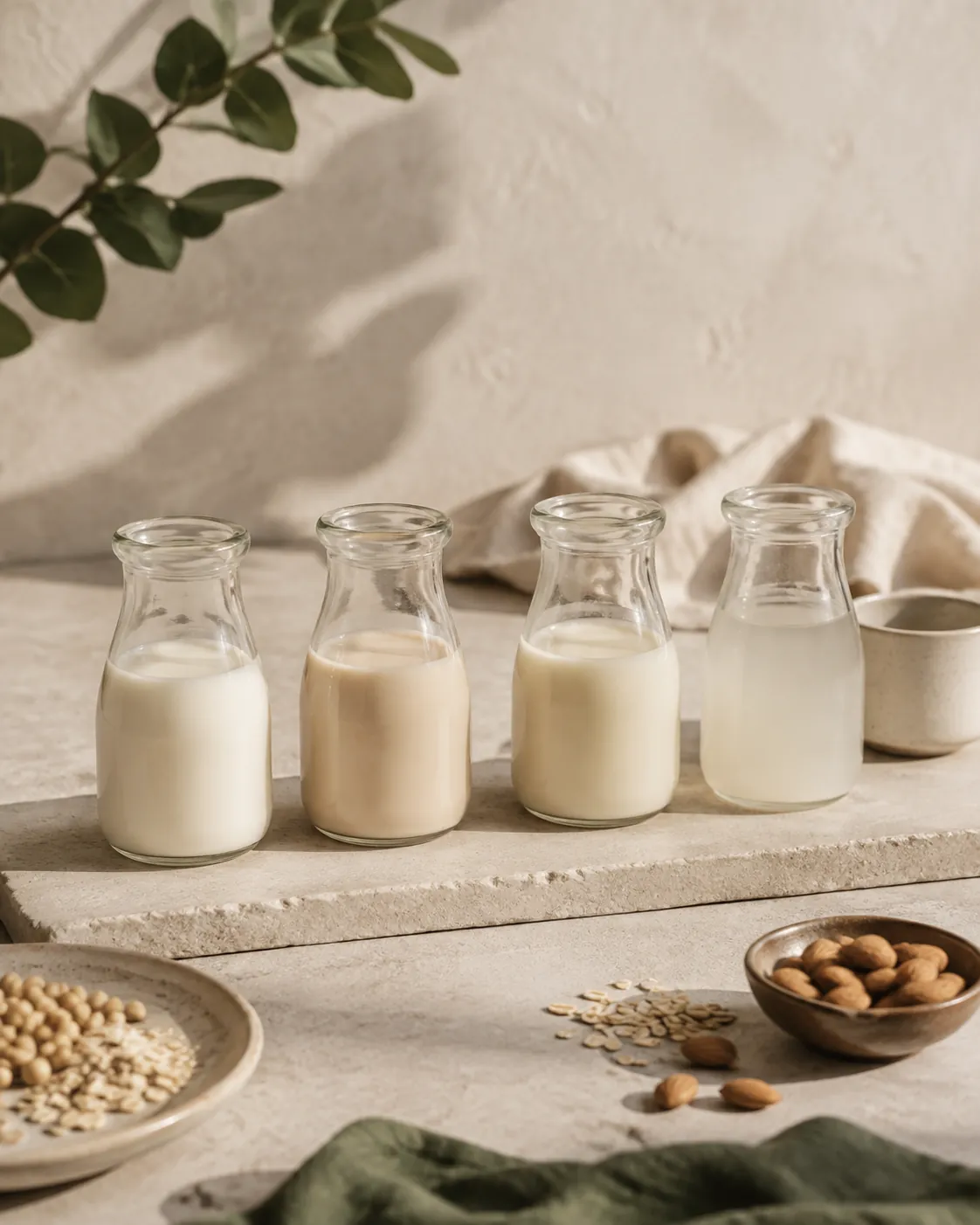
Among the plant drinks, oat suits a flat white better than it suits a cappuccino, since texture rather than a standing cap is what is being asked for and oat gives that without help. Soy ranks the other way round between the two drinks, which surprises people who learned one rule and applied it everywhere.
Splitting against a hot shot is a separate question from either, and why plant milk curdles deals with it.
A flat white on a domestic machine
The shot is the easy half. Milk is where a home flat white falls down, because domestic wands are underpowered and the volumes involved are small enough that a large jug cannot get the milk moving at all.
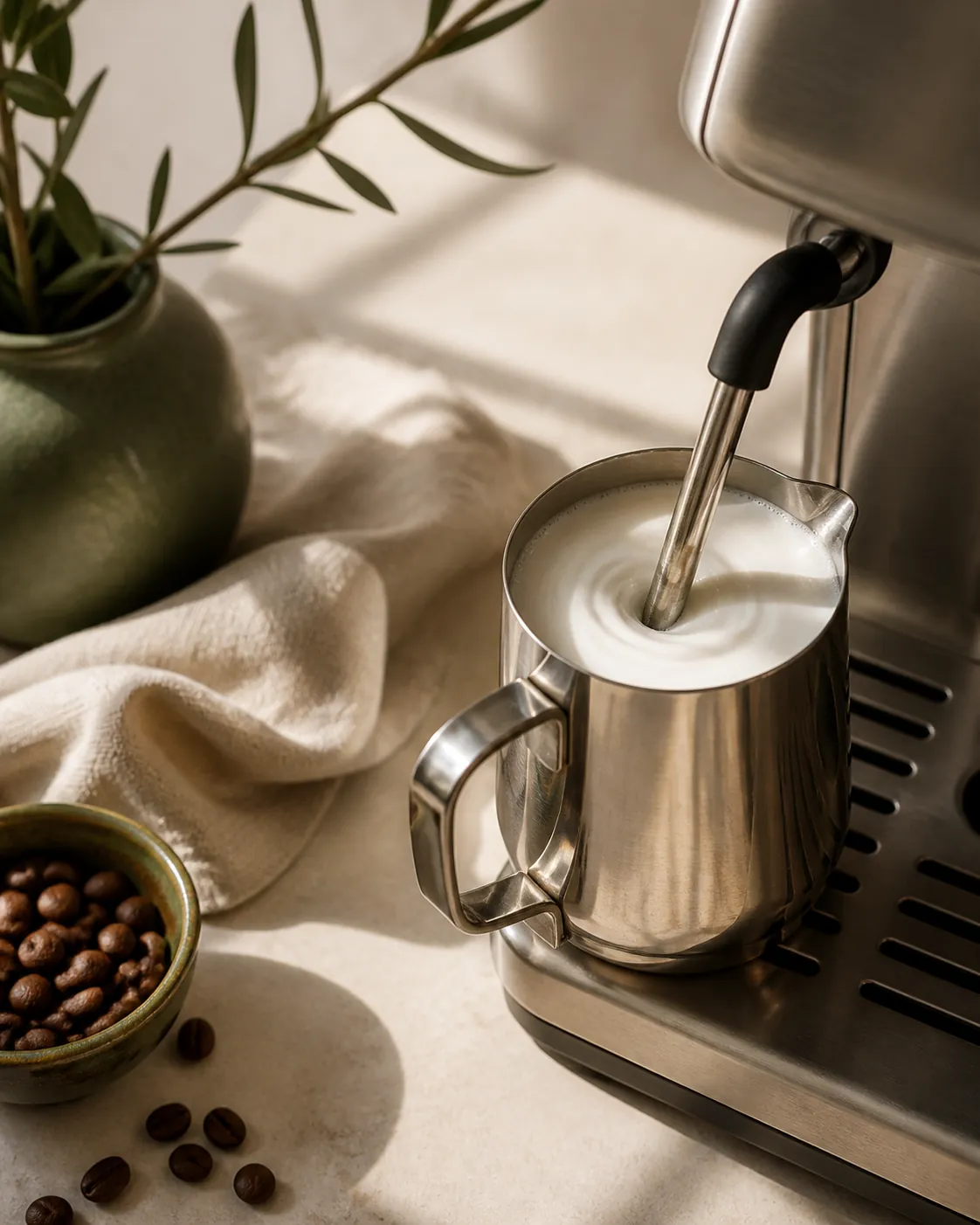
A flat white on a domestic machine
- Pull a doubleAbout 60 ml, or a double ristretto at 45 ml if you want it sweeter.
- Fill the jug low130 ml of cold whole milk in the smallest jug you own. A large jug with little milk in it cannot spin.
- Air for two secondsTip audible, at the surface, only while the milk is cold. Then submerge it.
- Spin to 60 to 65 CKeep the wand just off-centre so the milk turns. Stop when the jug is uncomfortable to hold.
- Tap and swirlKnock the jug once to burst any large bubbles, then swirl until the surface is glossy.
- Pour high, then lowStart from a height to sink the milk under the crema, then drop close to the surface to bring the pattern up.
Tip design matters more than machine price for this particular drink. A single-hole tip handles 130 ml far better than a multi-hole one, which was designed for jugs twice the size and will blow small volumes apart before they can be textured, so an espresso machine sold on its wand is worth checking on that point.
A hand milk frother gets closer here than it does for a cappuccino, because less air is wanted, and it still will not reach the same sheen. A grinder is the better upgrade if only one is possible, since a burr grinder fixes the shot underneath, and making a flat white works through the order of operations.
Reading a poor one, and spotting a good cafe first
Five faults cover almost every disappointing flat white, and four of them are milk rather than coffee.
| What you notice | Cause | What to change |
|---|---|---|
| Bubbly surface | Air introduced after the milk warmed | All the air goes in cold, in the first two seconds |
| Tastes thin and long | Cup too large, or lungo shots | 150 to 180 ml, and a shorter shot |
| Milk skin on top | Milk overheated past about 70 C | Stop at 60 to 65 C |
| Pattern will not form | Milk too foamy or too hot to pour | Texture first. Art is a symptom rather than a skill |
| Sour and sharp | Under-extracted shot the milk cannot hide | Finer grind or a longer shot |
The last row is the one worth remembering, because it is the only one that is not about the jug. A flat white carries the least milk of any drink its size, so a shot that passes in a latte will be audible here, which is the same reason the drink is a fair test of a cafe.

- Small jugs on the bench. A place that only owns litre jugs cannot texture 130 ml properly.
- Milk poured fresh for each drink rather than one large jug steamed and shared across an order.
- Cups sitting on the machine top, which is where they get warm.
- The wand wiped and purged between drinks, since milk baked onto a tip goes into the next jug.
- A grinder adjusted during service, which means someone is watching the shots rather than the queue.
None of those guarantees anything and all of them correlate. Jug size is the most reliable tell, because it is the one thing a busy cafe cannot fake, and common flat white faults covers what the rest of them predict.
Iced, and ordering it outside the Antipodes
Chilling costs this drink almost nothing, which is why an iced flat white is coherent where an iced cappuccino is not. The milk was never carrying much air, so there is no cap to collapse and no texture to lose, and pouring a double over cold milk and ice gives the same ratio and the same density as the hot version.
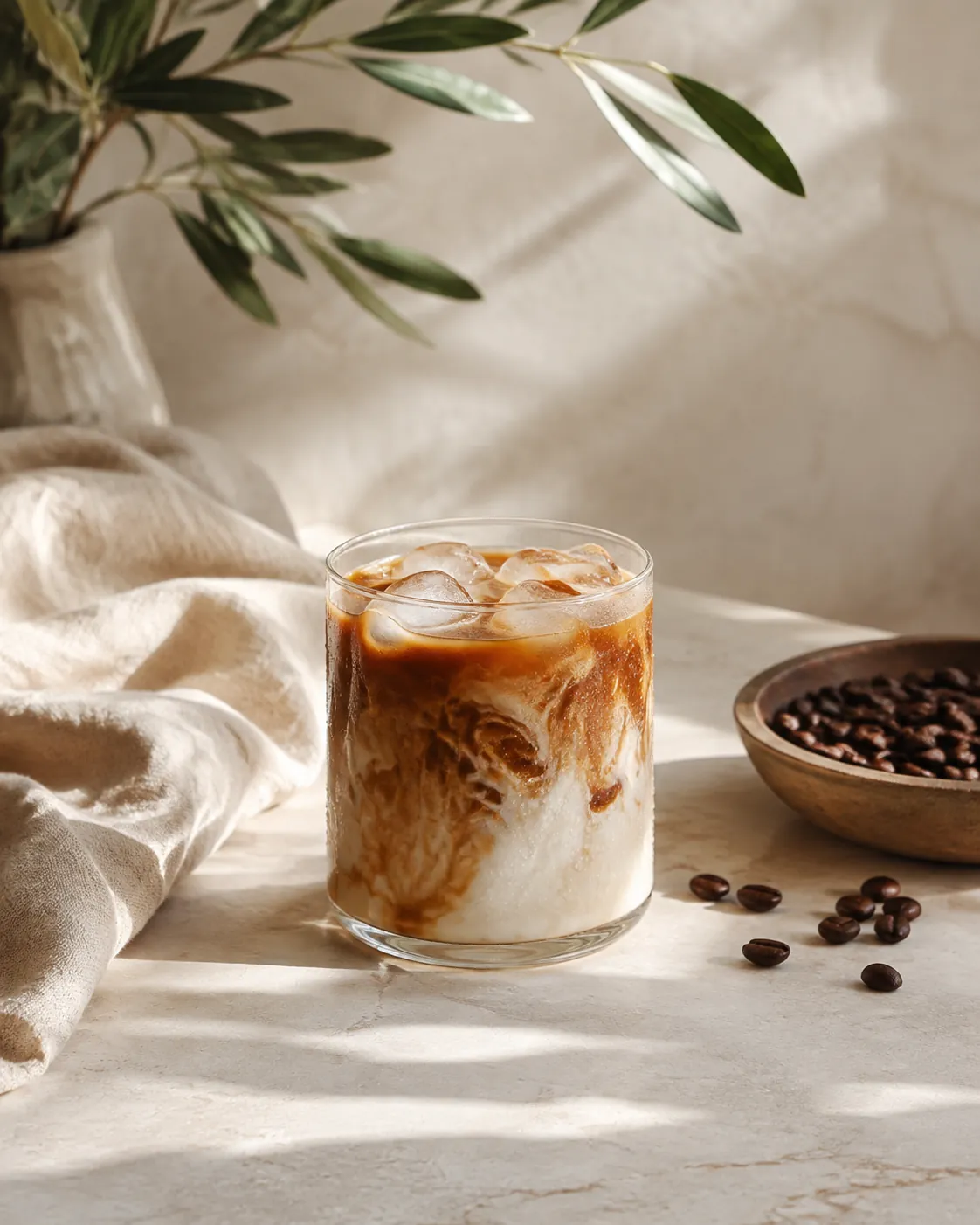
Serve it in a small glass rather than a tall one. Concentration is the point of the drink, and a 400 ml glass of ice undoes it as thoroughly as a 400 ml cup of milk would, which is the same mistake in a colder form.
Australia and New Zealand
The original. Assume a double ristretto in about 160 ml unless the menu says otherwise.
United Kingdom
Widespread since the 2000s and usually built as above, though chain versions run larger.
United States
On most chain menus, often larger and sweeter, and sometimes closer to a small latte.
Continental Europe
Less common. A cortado or a piccolo is the nearer drink to ask for.
Size drift is the thing to watch wherever you are. A flat white that arrives in a 350 ml cup has been reclassified rather than made badly, and ordering the smallest one on the board is usually the fix.
Where the word is not on the menu at all, asking for a double arabica shot in a cappuccino cup with steamed milk and no foam describes it accurately enough for anyone standing behind a wand.
Common questions
What is the difference between a flat white and a latte?
Volume. Both carry a thin layer of foam, but a flat white is 150 to 180 ml against a latte's 240 to 350 ml. The same shot in less milk reads denser and more strongly of coffee.
Is a flat white stronger than a cappuccino?
It tastes stronger at the same shot count, because the cappuccino gives a third of its volume to air while the flat white fills it with milk. In many cafes a flat white also carries a double where a cappuccino carries a single, which widens the gap.
Should a flat white be made with ristretto?
Many cafes in Australia and New Zealand do, and it makes the drink sweeter and rounder. It is a house choice rather than part of the definition, and a flat white on long shots is the version people describe as watery.
Why is there no foam on a flat white?
There is a few millimetres, folded through the milk rather than layered on top. Air is introduced for a second or two while the milk is cold, then the wand is submerged so the rest of the steaming spins the milk instead of aerating it.
Which milk works best in a flat white?
Whole dairy milk gives the body the drink is built around. Among plant drinks oat suits it better than it suits a cappuccino, because the drink needs texture rather than a standing foam.