What Is Koicha? Matcha at Four Times the Usual Density
Koicha is matcha at roughly four times the usual density, folded rather than whisked and finished without a trace of foam. That concentration is also a test, because there is nowhere in the bowl for a fault in the leaf to hide.
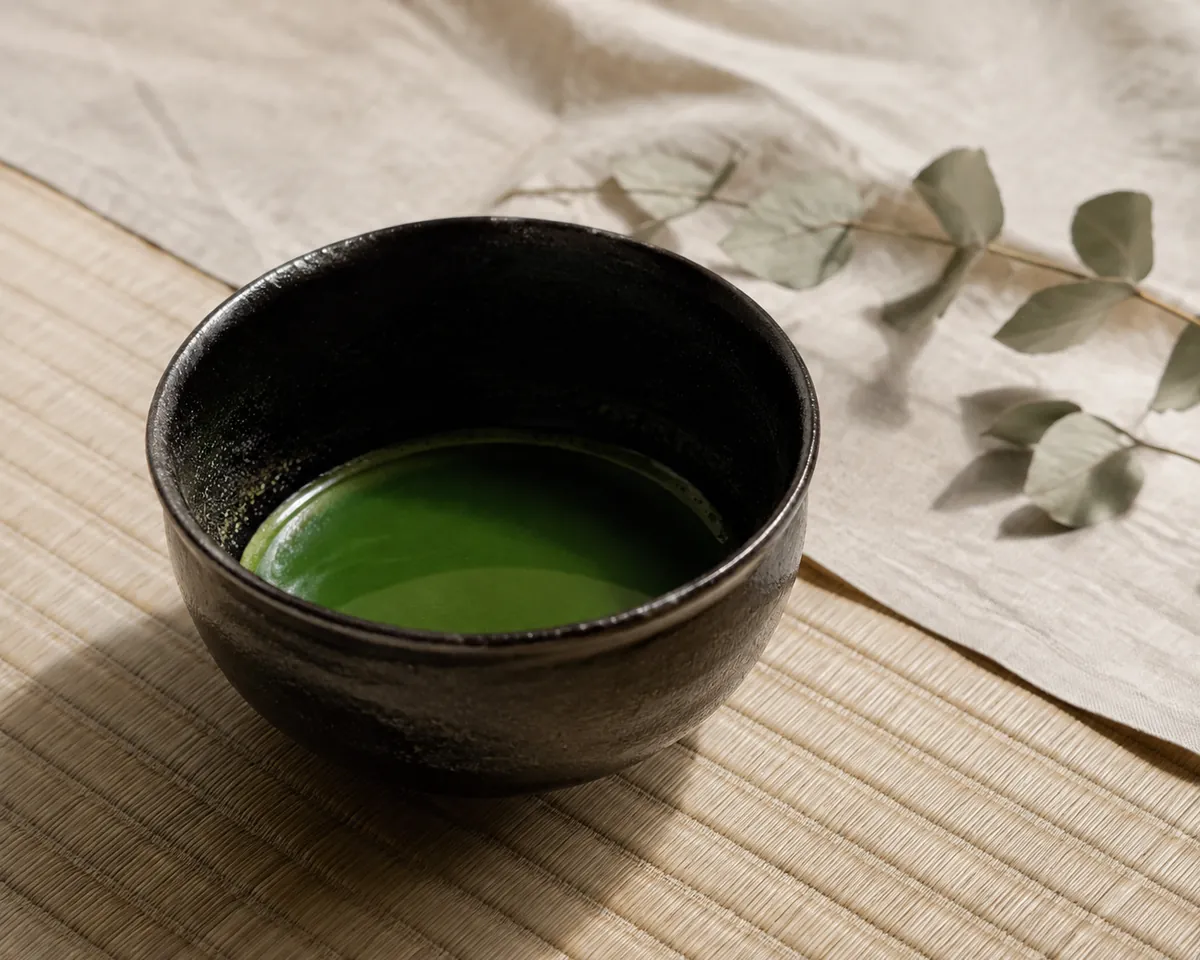
Koicha is matcha made thick: about four grams of powder worked into thirty millilitres of water, which is roughly four times the density of an ordinary bowl. The word means thick tea, and thick here is literal rather than figurative.
It does not pour like a drink. A finished bowl is glossy, slow-moving and closer in body to single cream than to anything else on a tea shelf, and it carries no foam at all.
That density is also a test. Everything in the leaf arrives at once with almost no water to dilute it, so a powder that makes a pleasant thin bowl can be genuinely unpleasant when it is made thick.
Koicha at a glance
- Name
- Koicha, which reads as thick tea
- Powder
- About 4 g for one serving, sifted, and it must be a high grade
- Water
- Around 30 ml, at roughly 70 to 80 C
- Technique
- Folded and kneaded with the whisk, never beaten
- Surface
- Glossy and unbroken, with no foam
- Where it sits
- The formal centre of a tea gathering, ahead of thin tea
- Time in the bowl
- Drunk within a minute, because it stiffens as it cools
Thick tea is the same powder at four times the density
Nothing about the leaf changes between the two preparations, because the same tin, the same sieve and the same bamboo tools make both of them. The only variable that moves is how much water the powder is asked to occupy.
Move that one variable far enough and the drink stops behaving like a suspension you can whisk. There is not enough liquid for the tines to travel through, the mixture resists the whisk instead of splashing around it, and every instinct trained on a thin bowl becomes actively wrong.
The technique in the whisking sequence is designed to force air into water, which is the opposite of what is wanted here.
Concentration, then, is the whole story of this article, and everything below is a consequence of it.
How much powder goes into thirty millilitres
Recipes vary by school, and the band they vary within is narrow. Four grams to thirty millilitres is the usual single serving, which works out near a hundred and thirty grams of powder per litre against the thirty or so that makes a thin bowl.
Some schools sit slightly wetter and finish nearer forty millilitres. A bowl made for three guests scales up to roughly ten or twelve grams, and the ratio is what scales rather than the technique.
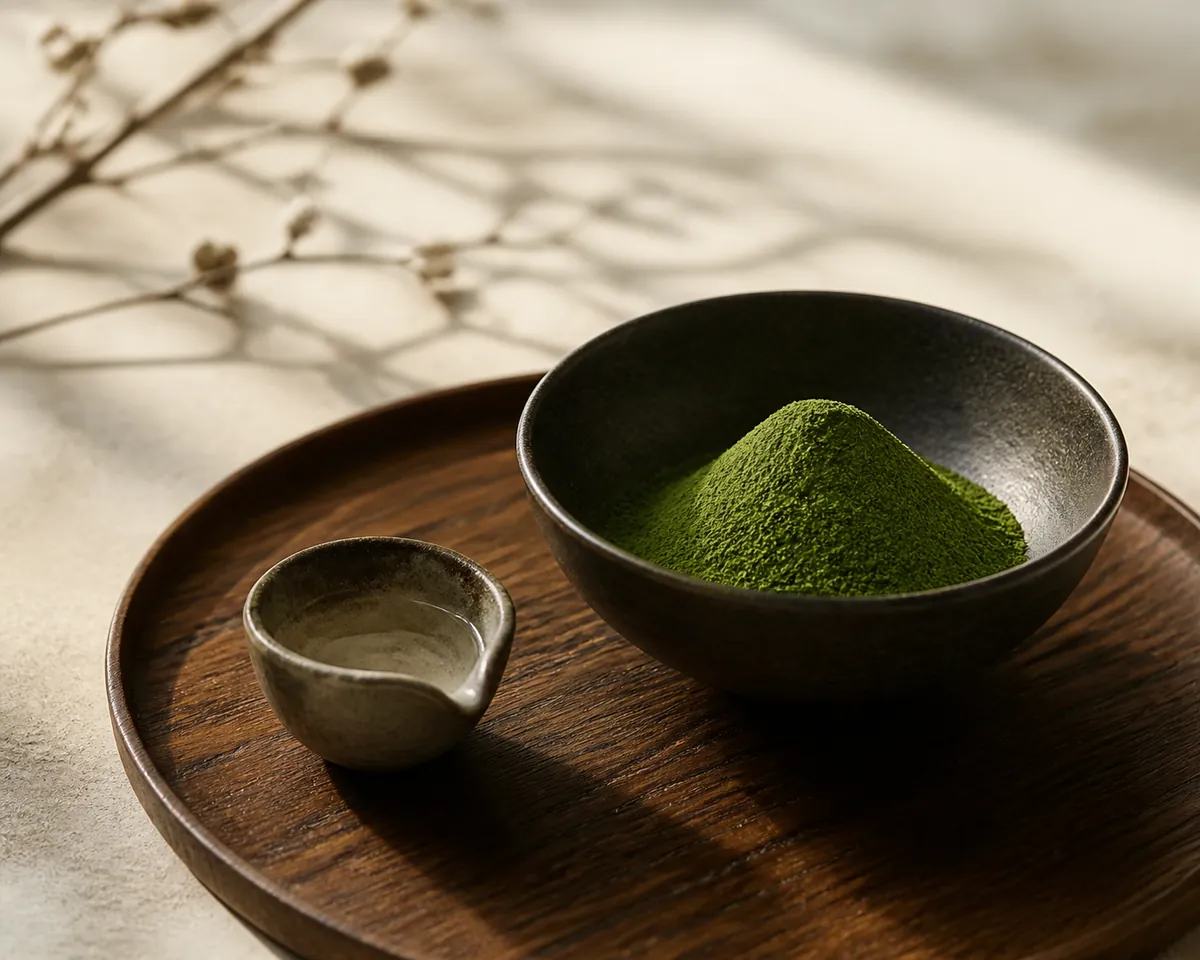
Water usually goes in twice rather than once. A first pour of about twenty millilitres makes the paste and takes the longest to work smooth, then a smaller top-up loosens it to the finished consistency.
Working the volume out in advance is safer than correcting afterwards, because thinning a bowl that has already been folded leaves streaks that will not close up again.
Why the chasen kneads instead of whisking
Force and speed both fail here.
A rapid back-and-forth traps air into a stiff paste and leaves it lumpy and grey rather than glossy, which is the single most common failure in a first attempt. What works instead is a slow fold: the tines are pressed down through the paste, turned, lifted a little and pressed again, so the powder is worked against the base of the bowl rather than beaten in the middle of it.
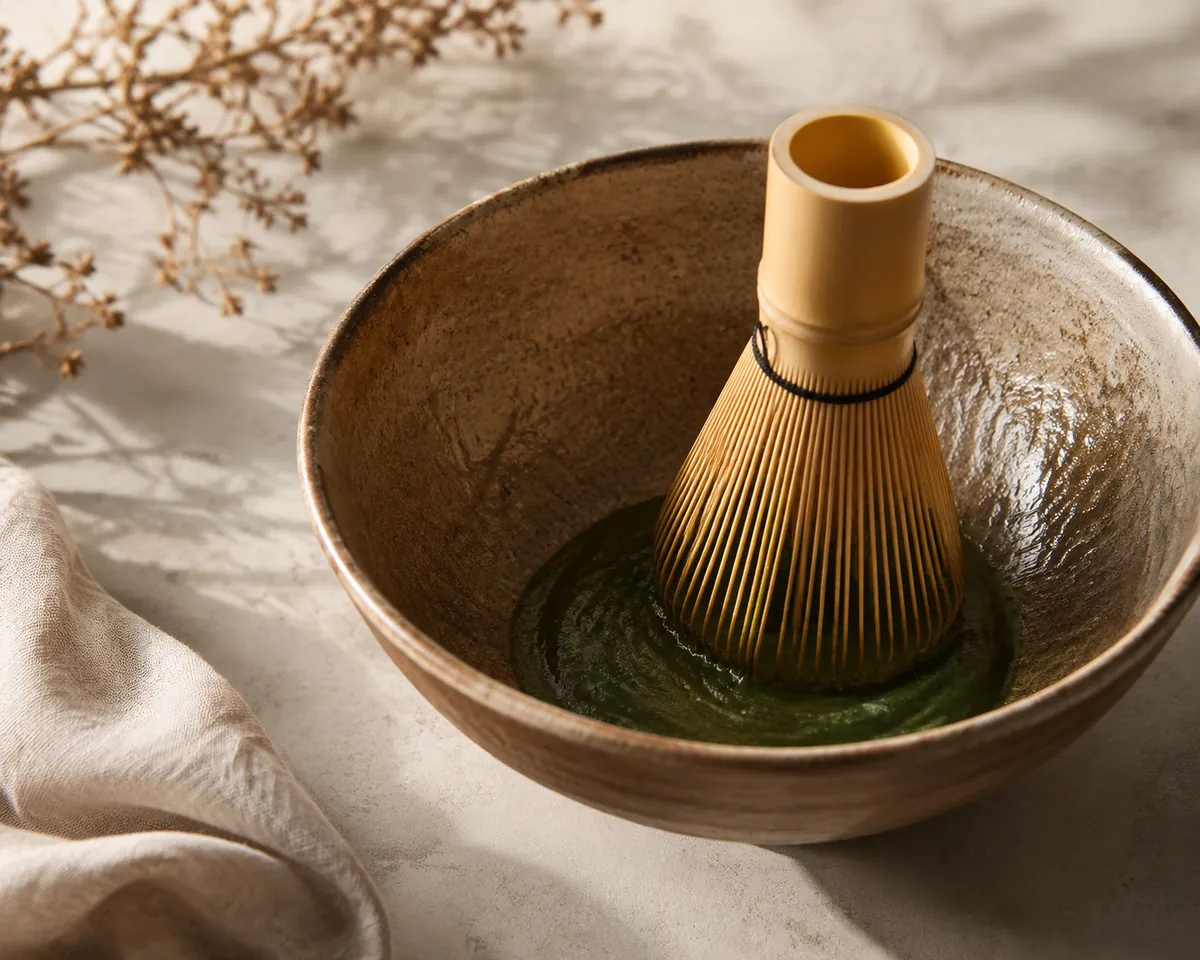
Thirty to forty-five seconds is normal, and it is slow work by comparison with a thin bowl. The sound is the tell: a thin bowl rattles and a thick one is nearly silent, because the tines are moving through paste rather than through liquid.
Sifting stops being optional. A single dry clump in four grams is a much larger fraction of the bowl than it would be in two, and it will not hydrate once it is surrounded by paste, which is why why a thick bowl goes wrong starts with the sieve rather than with the whisk.
What a defect does at this concentration
Dilution is a form of forgiveness, and there is very little of it here. Every fault a tin has is present in a thin bowl too, and sixty-five millilitres of water simply spreads it out far enough that the sweetness and the foam can carry the drink past it.
What the ratio does to each fault
- A slightly coarse millGrit you might not notice thin, obvious in paste
- Late-harvest leafDrying and a little sharp thin, punishing thick
- Stem and vein left inA faint woodiness thin, bitter and hollow thick
- A tin two months openFlat and hay-like thin, and flatly undrinkable thick
- Water too hotA sharp edge thin, and a coating of astringency thick
That buffer is exactly what thick tea removes, so nothing on the list above is new at this ratio and all of it simply arrives at full strength instead.
That is the honest argument for a good tin, and it is the only place where the argument is unanswerable. Price stops being a matter of taste once the water is gone, which is what ceremonial grade is describing when it separates a drinking powder from a culinary powder built to be tasted through sugar.
Why there is no foam, and why that is correct
Foam is a defect in thick tea rather than a target, which is the reverse of everything a thin bowl is trying to achieve.
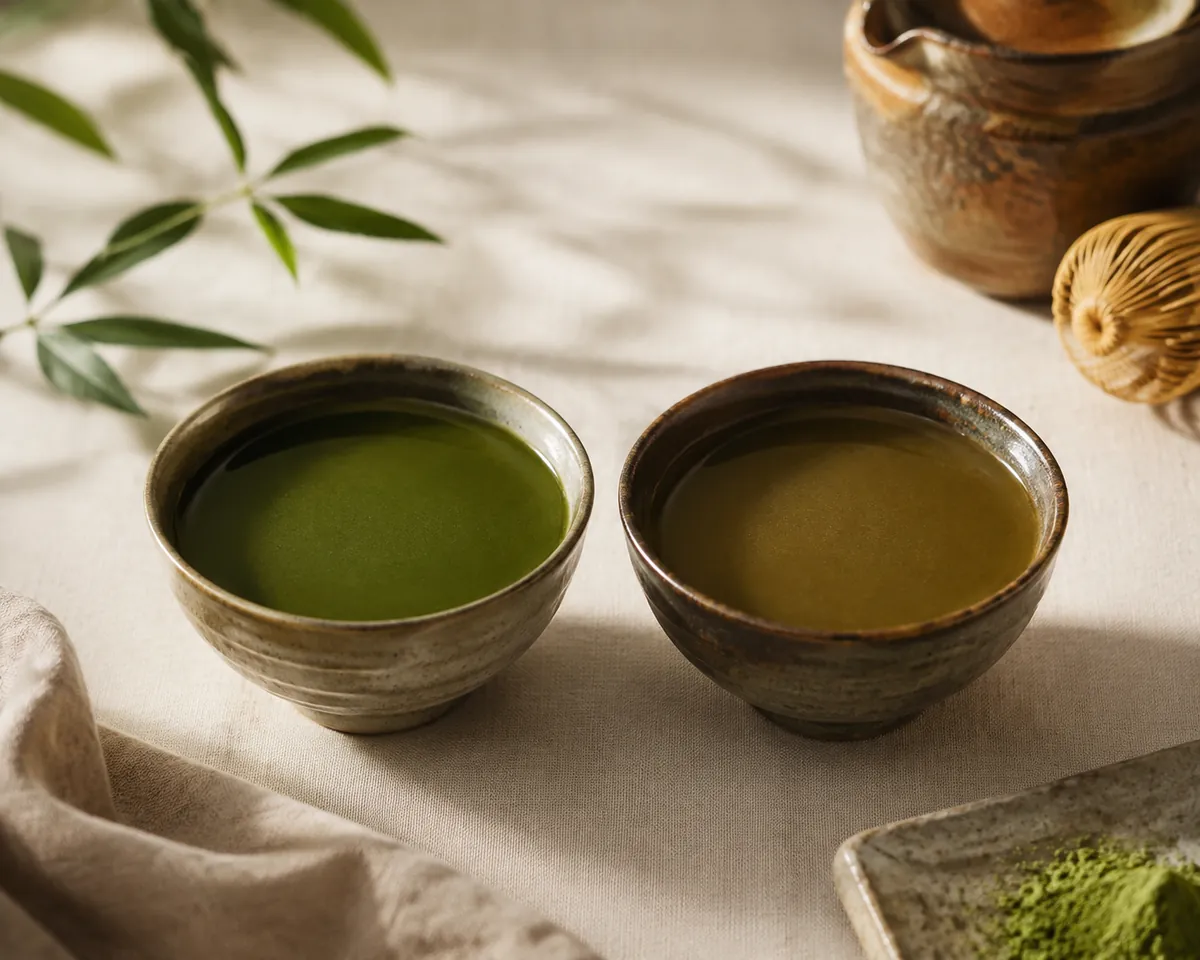
A thin bowl is deliberately aerated, because the bubble layer supplies texture to a drink that has very little body of its own. Thick tea already has body in abundance.
Adding air to it produces a pale, streaky, slightly foamy surface that looks like a mistake because it is one, and the correct finish is an unbroken sheet with a wet shine on it.
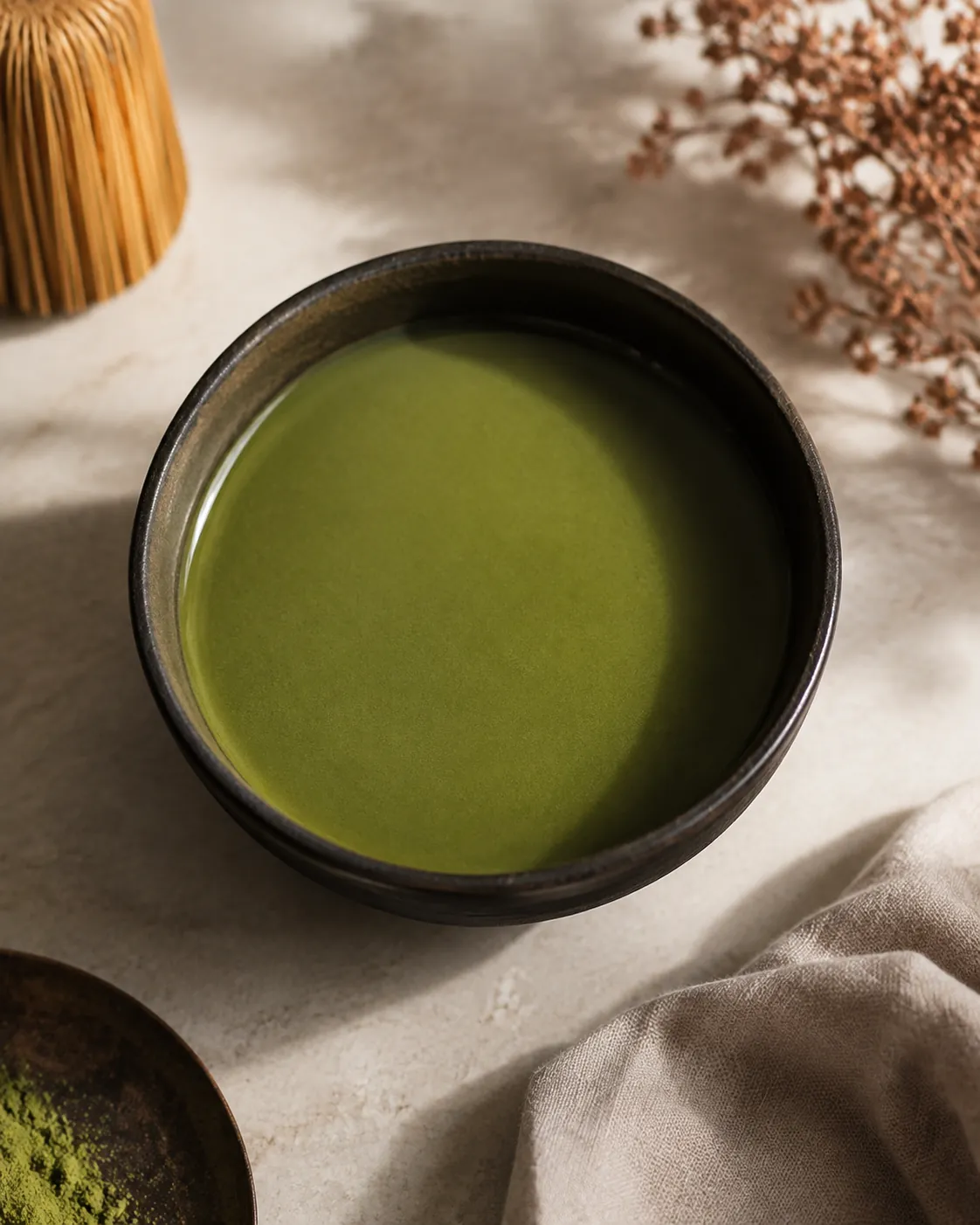
Colour reads differently too. The same powder that looks bright and slightly yellow-green when it is thin goes deep and almost dark at this density, and a dull olive cast in the bowl is a reliable sign that the tin has been open too long, a decline traced in how to store an open tin.
One bowl, shared round the room
Formality changes the serving, and this is the part that surprises people most. In a full gathering the host makes a single bowl of thick tea for everyone present rather than one each.
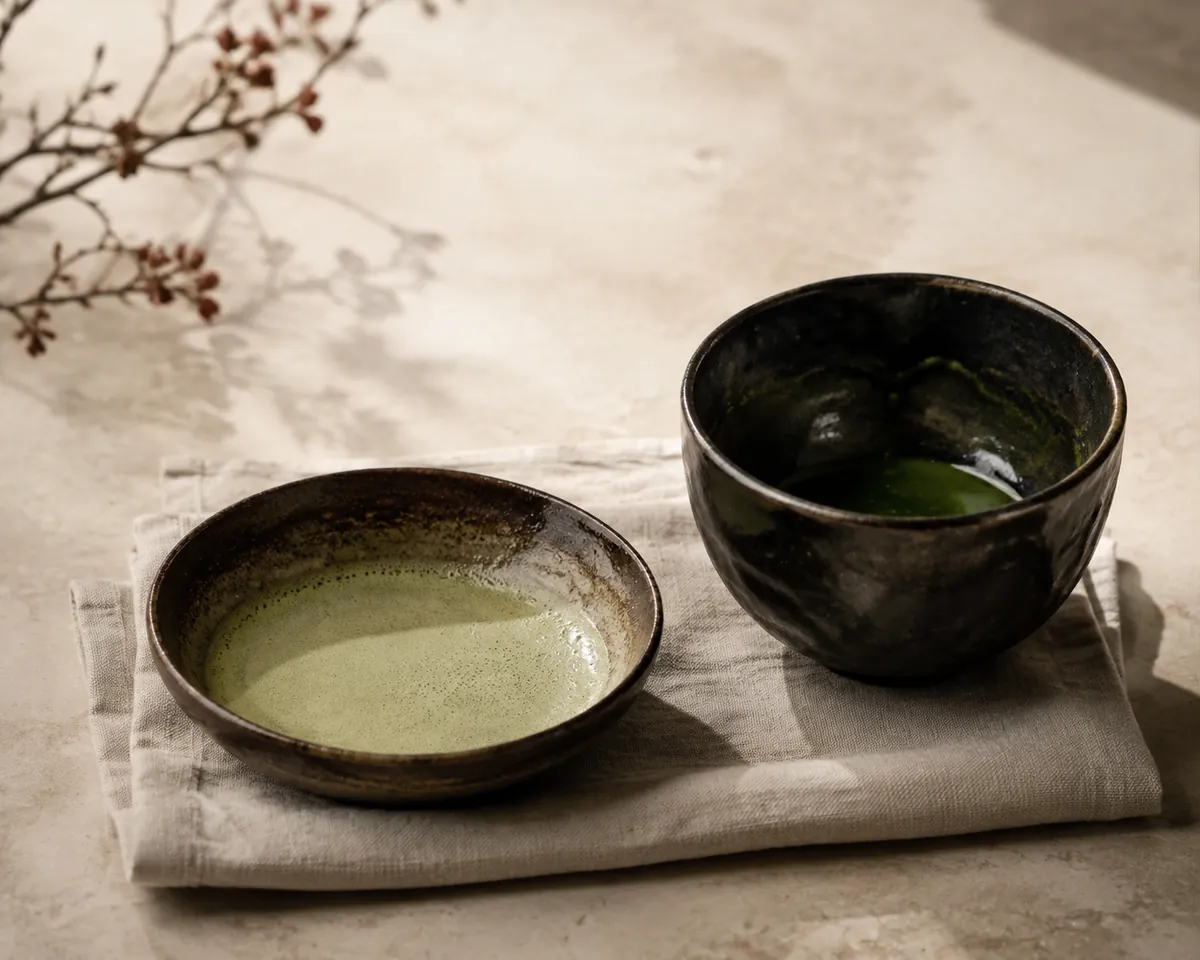
It is passed from guest to guest, each taking about three sips before wiping the rim with folded paper and handing it on. The bowl comes back to the host close to empty.
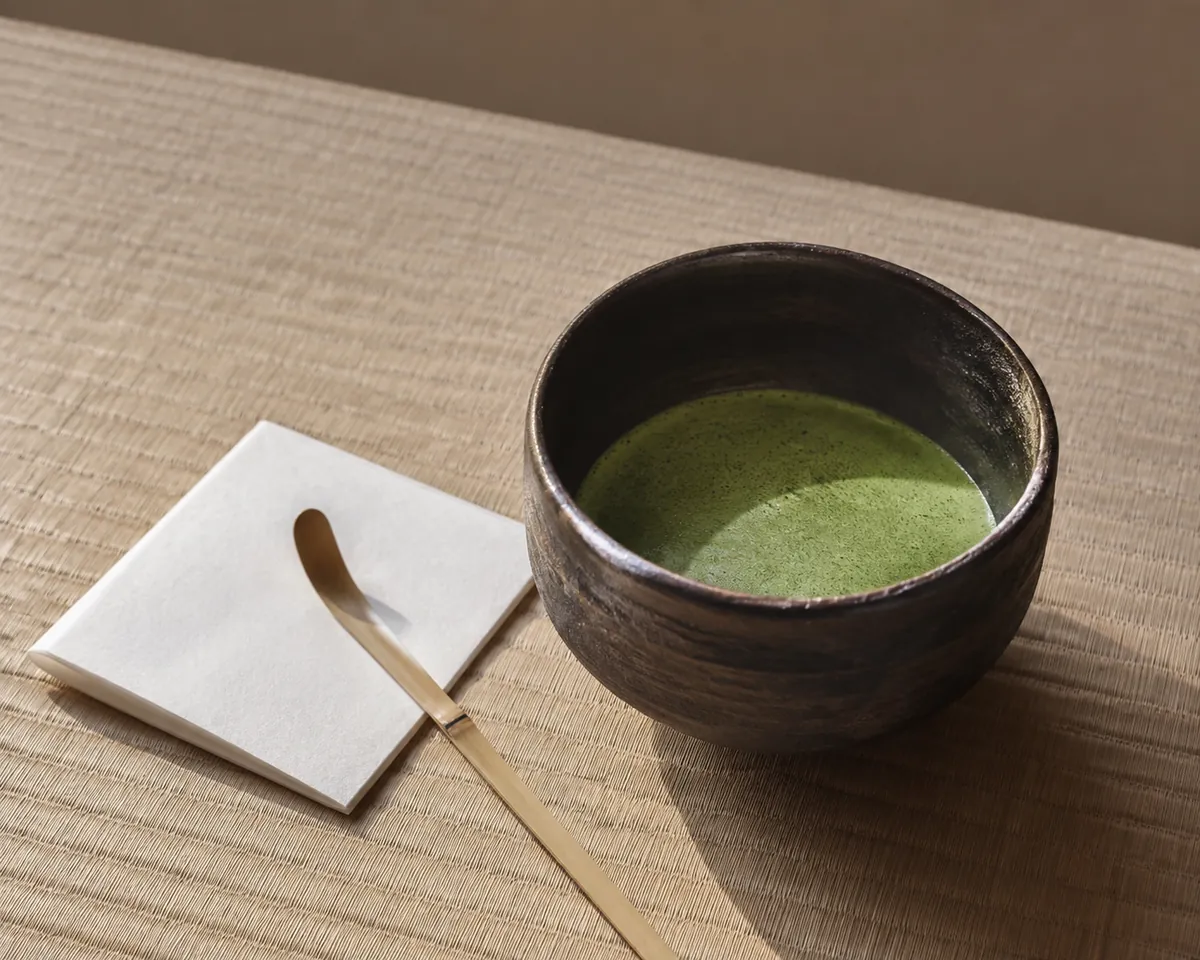
That shared bowl is why the powder has to be good and why the maker is being watched. There is one attempt and no second chance, with no milk, sugar or ice available to correct it.
Nothing about the setting is casual, and the drink is built accordingly.
Individual bowls do get made, at home and in less formal settings, and the ratio does not change when they are.
What thick tea tastes like in the mouth
Texture arrives before flavour does. The first impression is weight and a slight cling, closer to a spoonful of something than a sip of tea, and it coats the whole mouth rather than passing over it.
Only after that does the flavour open up.
What comes then is savoury and sweet at once, with the deep marine and vegetal notes described in the flavour of matcha in general turned up several times over. A good bowl has remarkably little bitterness for its strength, and that is the surprise: concentration does not automatically mean harshness, because the sweetness and the amino acids concentrate as well.
The finish is very long, and it is the part regular drinkers talk about. Ten or fifteen minutes after the bowl the sweetness is still there at the back of the mouth, which is why a thin bowl usually follows rather than precedes it, and why what thick tea tastes like in detail treats the aftertaste as a separate subject from the sip.
Why the water runs cooler and the pour is slower
Water temperature is the tighter variable. Hot water accelerates the release of the catechins that read as drying, and at a hundred and thirty grams per litre there is nothing to spread that harshness across.
Around seventy to eighty degrees is the working range, which means water left off the boil for two or three minutes rather than poured straight from a kettle, for the reasons set out in why tea water is not boiling water.
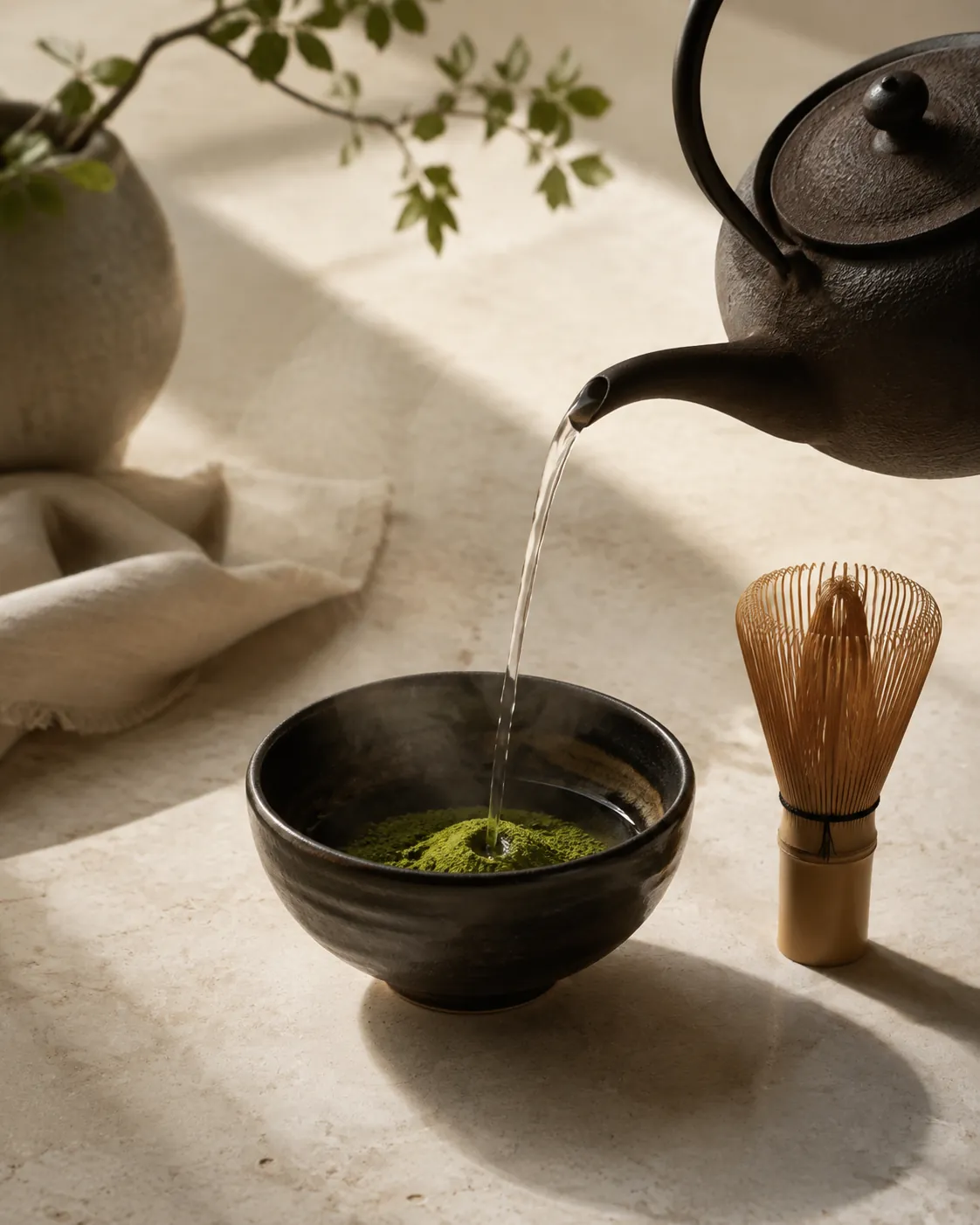
What the water should be
- Temperature
- 70 to 80 C, cooler than most people expect
- Volume
- About 20 ml first, then 10 ml to finish
- Hardness
- Soft. Calcium flattens the sweetness the ratio is meant to show
- Pour
- Slow and controlled, onto the powder rather than around it
- Chlorine
- Filter it out; there is no dilution to hide it
Control matters more than the kettle does, though a narrow-spouted kettle makes small pours easy to judge. Mineral content is the other half of it, and soft water is not a refinement here but a condition of the drink working at all, which is the case water chemistry makes across every brewed cup on this site.
When the thin bowl follows
Order in a formal gathering is fixed, and thick tea is not the last thing served. What follows it is the thin bowl, and the sequence is worth seeing laid out in full.
Where koicha sits in the sequence
- KaisekiA light meal, with a moist sweet to follow it.
- KoichaThick tea, shared from one bowl. The formal centre of the occasion.
- SumiThe charcoal is rebuilt and the room resets.
- UsuchaThin tea, a bowl for each guest, and the mood relaxes.
Thin tea afterwards is doing real work rather than filling time. It clears the coating that thick tea leaves behind and it is light enough to drink while a conversation runs.
By then the formality of the shared bowl has been discharged, and the room can relax.
At home the same logic holds without any of the ceremony. A thick bowl is a deliberate occasion rather than a habit, the everyday drink remains usucha, and making matcha at home assumes the thin ratio unless it says otherwise.
Buying a powder that can take it
Shopping for thick tea is a narrower exercise than shopping for anything else in this category, and it is the one case where the top of the range is not a luxury.
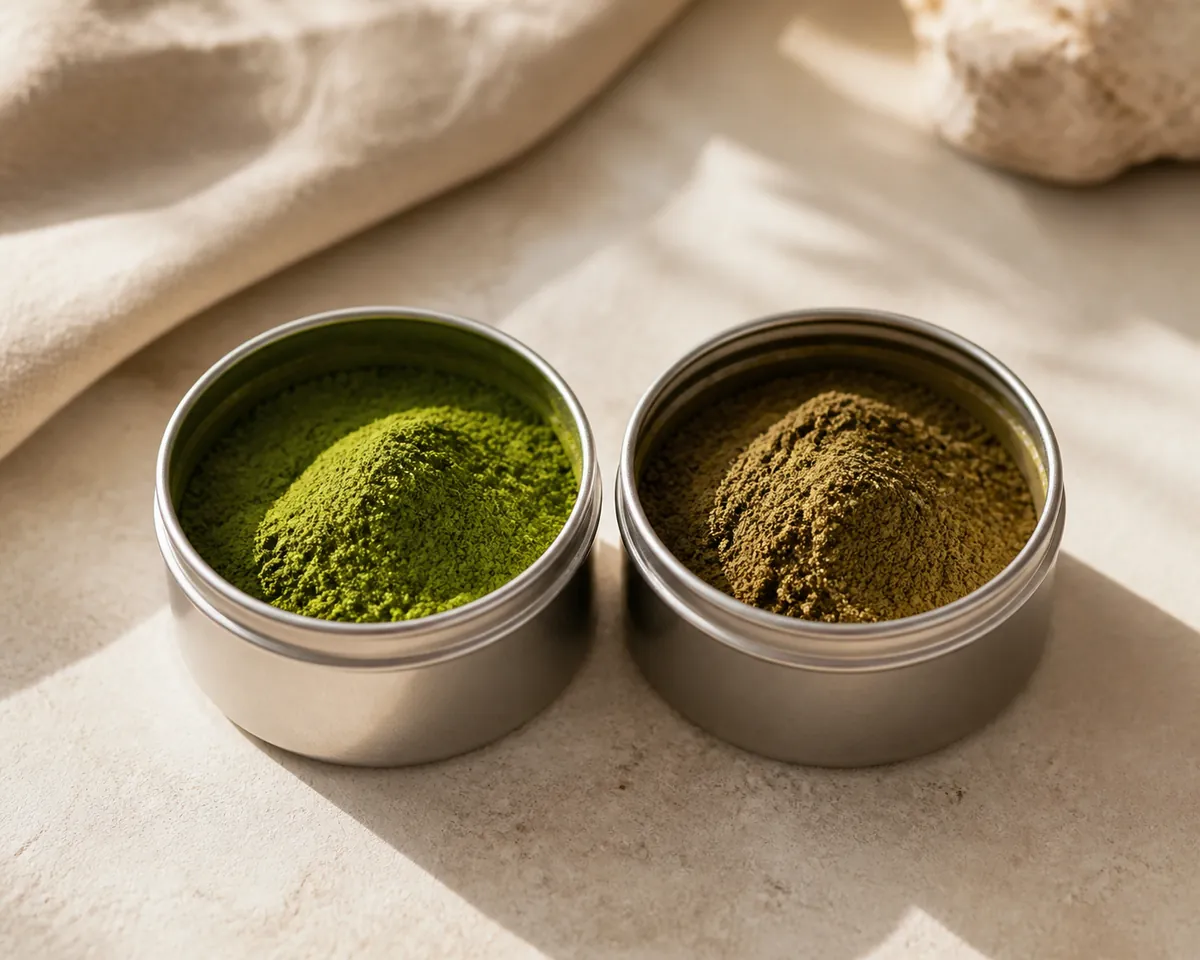
- Look for a tin sold explicitly for thick tea, which producers usually mark.
- Take the first harvest of the current year, and check the year is printed.
- Prefer a named cultivar over an unnamed blend.
- Buy a small tin, since it must be finished while it is fresh.
- Ignore anything sold for baking, blending or lattes.
Cultivar names start meaning something at this end of the market. Producers select particular varieties for the thick preparation because they carry sweetness and body rather than brightness, and a tin that names one is telling you the maker expects a buyer who will notice.
Freshness outranks almost everything else on the list. A superb tin two months open makes a worse thick bowl than a modest tin opened last week, so buying thirty grams and finishing it beats buying a hundred and watching it fade, as how matcha is grown and milled explains from the mill onwards.
Two comparisons help place the expense. A gram of this powder costs many times what a gram of steeped sencha does and roughly what a shaded leaf such as gyokuro costs at the top of its own range, which is the gap matcha set against green tea works through in detail.
Everything else made from a matcha tin sits somewhere below this in demand. Milk drinks, cold preparations and even a well-made thin bowl all give the leaf somewhere to hide, and the faults collected in the usual faults are mostly faults thick tea would have exposed immediately.
Common questions
What is the difference between koicha and usucha?
The same powder at about four times the density. Koicha uses roughly 4 g into 30 ml of water, is folded and kneaded rather than beaten, and carries no foam at all. Usucha is about 2 g into 60 to 70 ml, whisked briskly to a fine foam.
Why does koicha have no foam?
There is not enough liquid for the whisk tines to travel through, so the mixture resists the whisk instead of aerating. The technique folds and kneads the powder into the water, and a glossy unbroken surface is the correct result rather than a failure.
Does koicha need a better grade of matcha?
Yes. At four times the density everything in the leaf arrives at once with almost no water to dilute it, so a powder that makes a pleasant thin bowl can be genuinely unpleasant made thick.