How to Store Matcha, the Most Perishable Thing on the Shelf
Matcha is the most perishable thing on a tea shelf. Ground to a few microns, it presents an enormous surface to oxygen and light, and it fades in weeks rather than months.
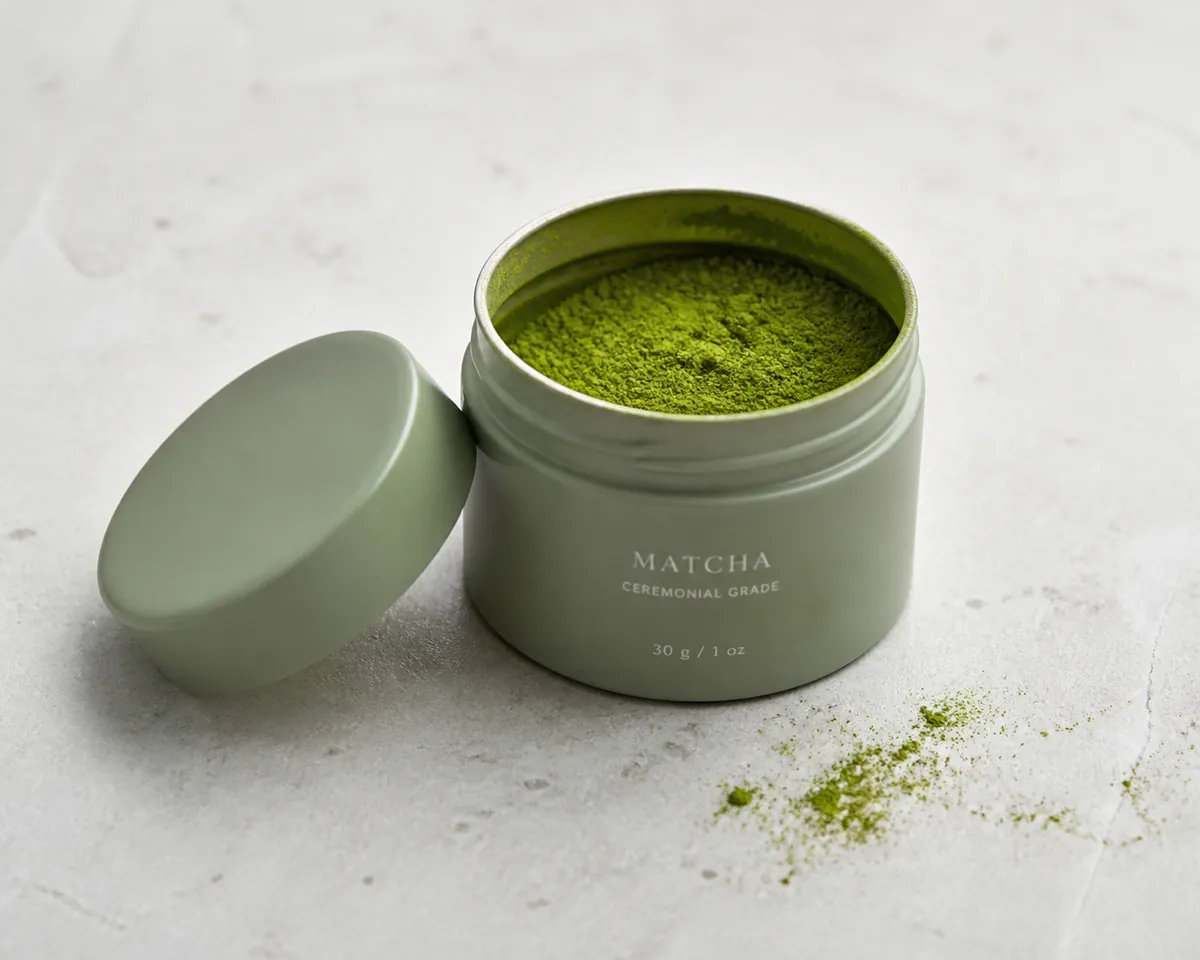
Matcha fades faster than any other tea on the shelf, and the cause is physical rather than chemical. A whole leaf presents a modest surface to the air; a powder milled to a few microns is almost entirely surface.
Everything below follows from that one fact. The compounds that go first are exactly the ones that made the tin expensive, which is why storage is a flavour question rather than a housekeeping one.
Oxygen, light, heat and damp
Fading begins with the colour and ends with the aroma, and the sequence runs faster here than in any other tea because a milled powder has almost no protected interior left.
What degrades matcha
- Oxygen
- Oxidises chlorophyll and aromatics. The main cause of fading
- Light
- Breaks down chlorophyll directly. Fastest in daylight
- Heat
- Accelerates every other reaction, including oxidation
- Moisture
- Causes clumping, and clumped matcha cannot be recovered
- Odours
- Absorbed readily, and the powder holds them permanently
A tin that has gone from vivid jade to olive has lost flavour as well as appearance. The order in which things go is consistent enough to read backwards from a bowl.
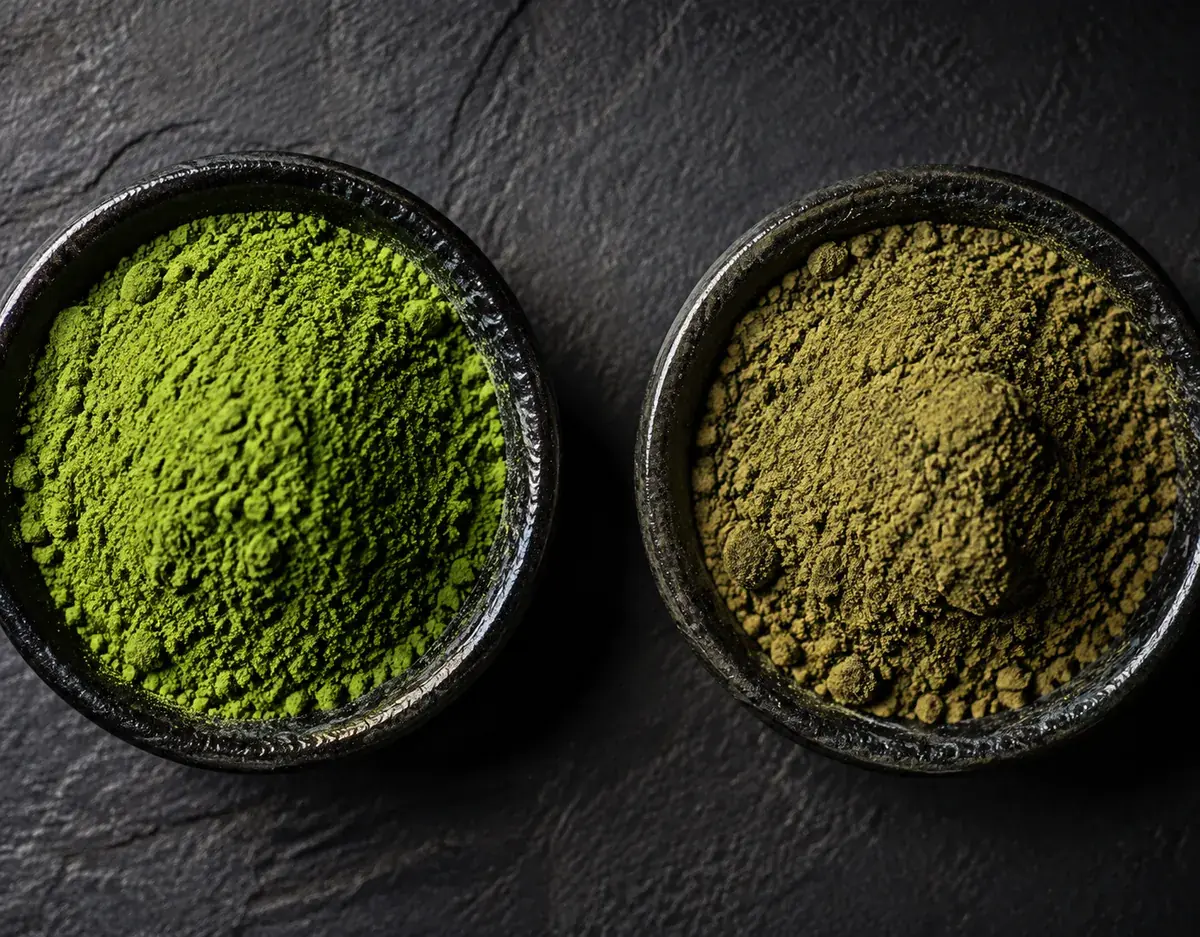
Chlorophyll degrades first, as the magnesium at the centre of the molecule is displaced, which is why jade shifts towards olive and then towards brown. Theanine and the simple sugars go next, and they were the sweetness and the savoury depth that the shading weeks built into the leaf, as what matcha is describes.
Catechins oxidise last and most slowly, and their breakdown produces the hay and dust notes. By the time a powder smells of hay it has lost the first two groups entirely, which is why an old tin reads flat rather than bitter and why what matcha tastes like puts the finish rather than the front at the centre of any assessment.
A whole sencha leaf oxidises from the outside in over many months because it has an inside to protect. Milled powder has none, and that difference is the whole reason the timescales on this page are measured in weeks.
The tin, and why a glass jar is worse
Most matcha already ships correctly.
A small opaque tin with a tight inner lid is correct storage as it stands, and decanting matcha into something prettier is almost always a downgrade. Clear glass in particular fails on the single factor that acts fastest in a kitchen.
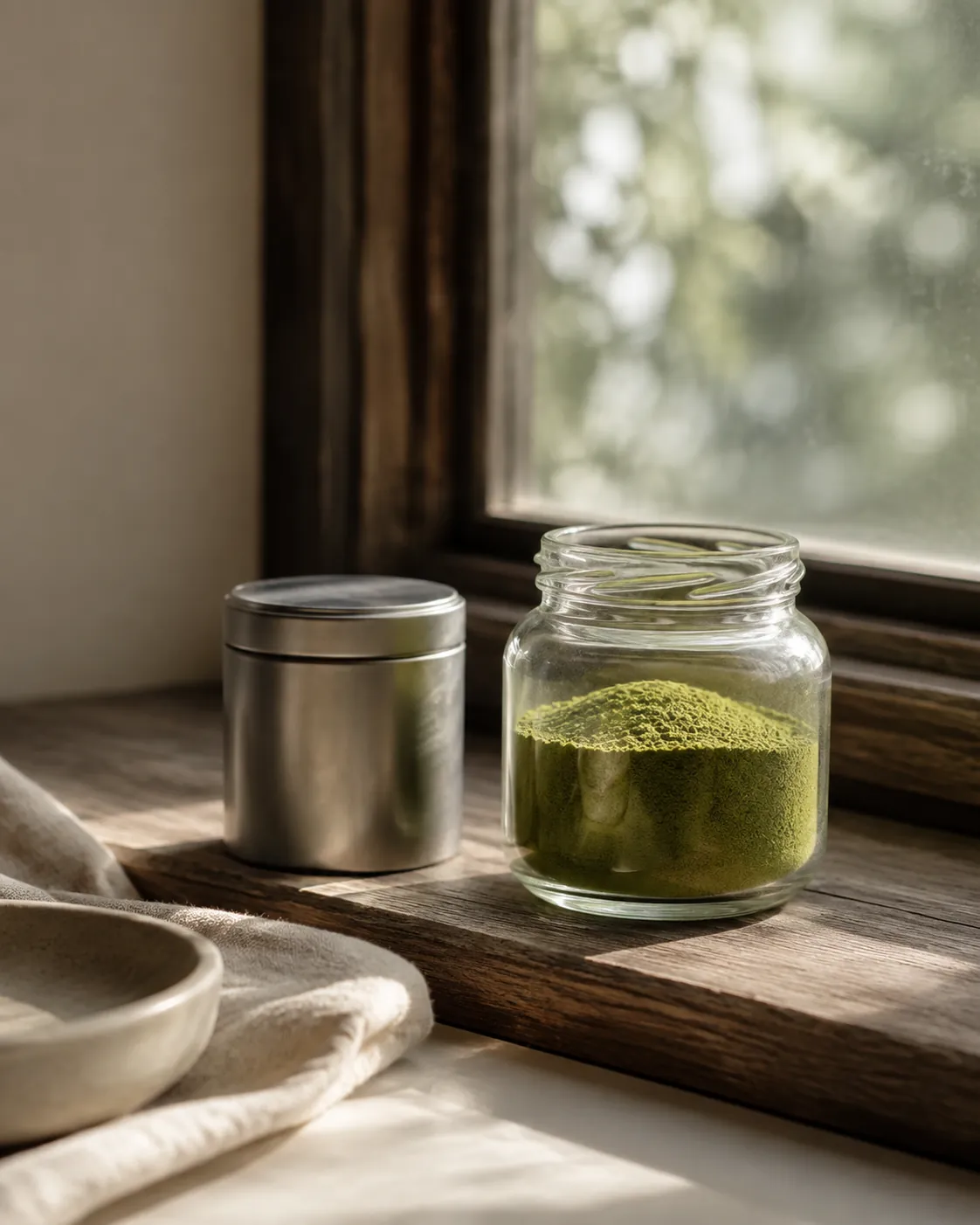
- Opaque, not clear. Light degrades chlorophyll directly and glass jars are the worst offender.
- Airtight, with a genuine seal rather than a loose-fitting lid.
- Small, so there is little headspace holding oxygen against the powder.
- Non-porous, so it does not absorb or transmit odours.
- Its own container, kept away from spices, coffee and anything aromatic.
Where the tin sits matters as much as what it is. A cupboard above a hob cycles between warm and cool all day, and that cycling adds condensation to the heat, so the coolest dry cupboard in the room is worth the extra reach.
Odour is the factor people forget, because it does not show. Matcha takes on whatever is beside it and holds it permanently, so a tin next to cardamom or ground coffee will taste faintly of them within a fortnight, and the same rules that govern loose leaf tea apply here with the clock running several times faster.
The fridge, the freezer and the condensation trap
Refrigeration helps, and it introduces one specific risk that has to be managed every single time.
Cold slows oxidation substantially, which is why unopened matcha is routinely held cold at origin and in transit. The problem starts at the moment a cold tin meets warm room air.
What happens when a cold tin is opened
- Cold tinThe powder and the tin are at fridge temperature.
- Opened warmRoom air enters, carrying moisture.
- CondensationThat moisture condenses on the cold powder and tin.
- ClumpingThe powder absorbs it, clumps, and begins degrading rapidly.
- IrreversibleClumped, damp matcha cannot be dried back out usefully.
If that habit will not hold every time, a cool dark cupboard is genuinely the better choice, because inconsistent fridge use is worse than none at all. The freezer is the same argument at a longer timescale and a slower thaw, and a sealed tin needs several hours rather than one before it is safe to open.
The debate that surrounds storing coffee beans resolves more narrowly here. Powder absorbs water instantly where a bean does not, so freezing is defensible for an unopened tin you will not reach for a month, and repeated freezing and thawing is simply a way of watering your matcha.
Unopened, opened, and every time you open it
Cases divide cleanly, and the second one is the one that costs money.
| Unopened | Opened | |
|---|---|---|
| Fridge | Sensible, and standard practice | Only with the warm-up habit |
| Realistic life | 6 to 12 months from milling | 1 to 2 months at good colour |
| What degrades | Slowly, through the packaging | Quickly, with every opening |
| Freezer | Possible if fully sealed | Not advisable |
| Best practice | Buy close to the milling date | Buy small and finish it |
Every opening exchanges the air inside the tin for fresh air carrying fresh oxygen. A tin opened daily therefore fades faster than one opened weekly even when both have been on the shelf for exactly the same number of days.
That reframes the whole problem usefully. The unit that matters is openings rather than elapsed time, and a tin of usucha powder drunk twice a day is being ventilated fourteen times a week whatever the date on the base says.
Decanting into a small working tin
Four factors act on the powder, and every one of them acts only while the tin is open.
A 100 g tin opened daily for a month is exposed thirty times. The same tin decanted once into a small working container, with the large one resealed and put back cold, is exposed twice.
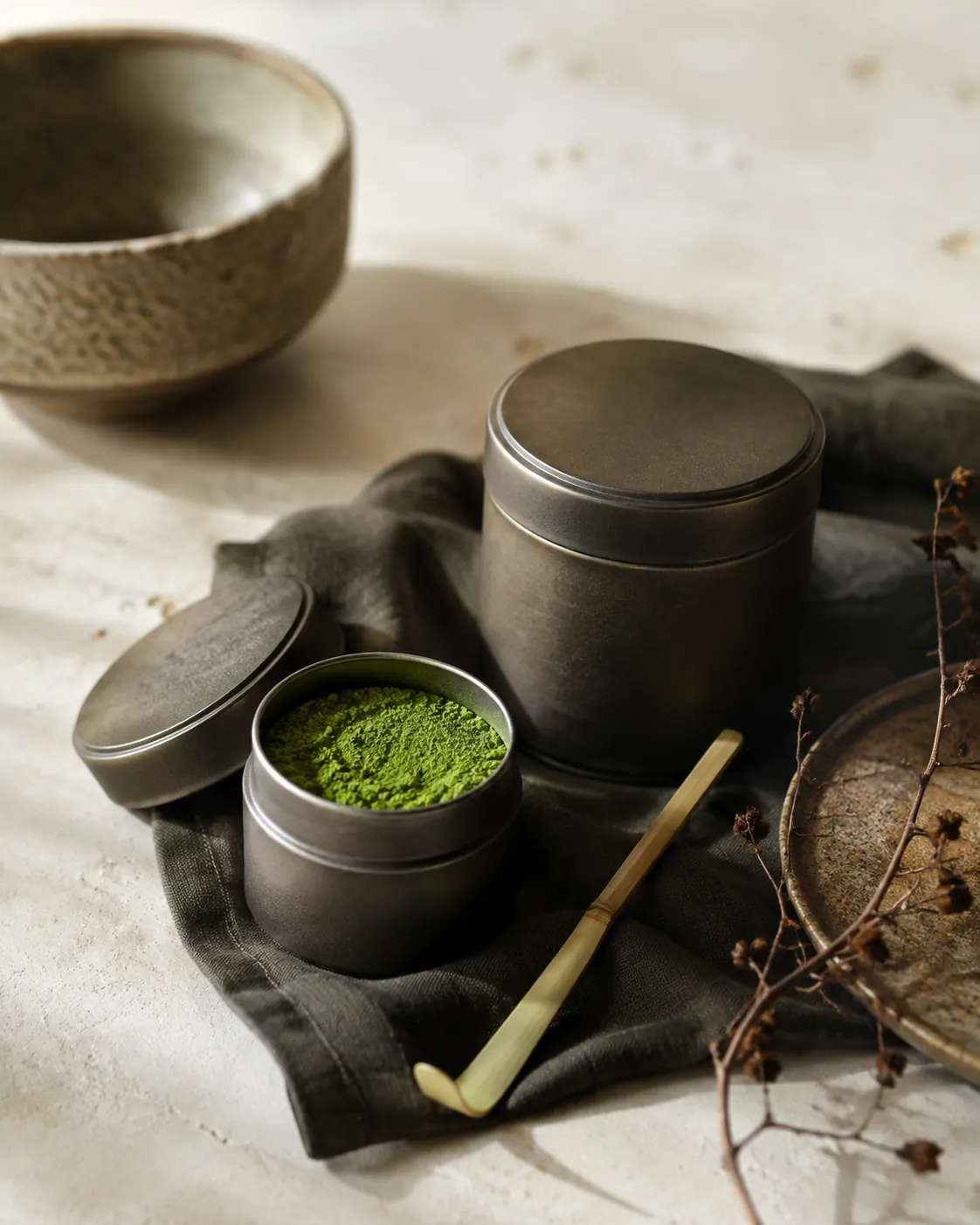
- Decant a week or two at a time into a small airtight tin.
- Fill the working tin as full as it will go, so there is less air in it.
- Keep the main tin closed, cold and dark between decants.
- Do it quickly, in a cool room, rather than leaving both open on a warm counter.
- Label the working tin with the date it was filled.
This single habit improves how a tin tastes across its life more than any container upgrade, and it costs the price of a second container. Filling the small tin to the brim matters for the same reason the large one is resealed: headspace is stored oxygen sitting against the powder.
The one place to be careful is the counter itself. Decanting slowly in a warm kitchen undoes the benefit, so weigh out what how to whisk matcha calls a fortnight of bowls, close both lids, and put the main tin back before anything else happens.
Milling date beats harvest date
Tins carry two dates.
Only one of them describes freshness. Harvest date says when the leaf was picked, which decides quality; milling date says when it was ground, which decides how much of that quality has survived to the bowl.
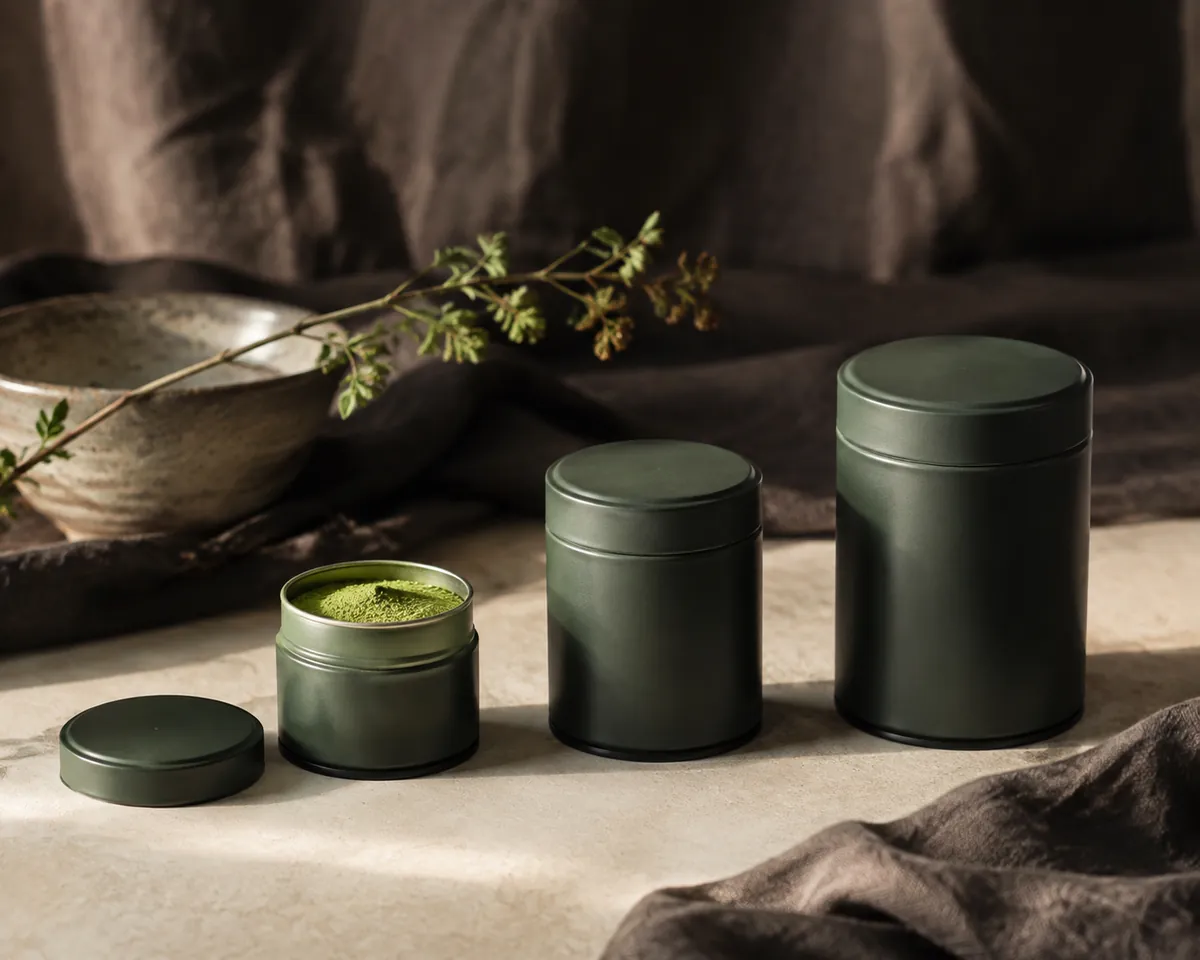
Leaf keeps well as unmilled tencha for a long time, because it has not yet been given all that surface area. The rapid decline starts at the stone mill, so a first-harvest powder milled last month is fresher than a first-harvest powder milled a year ago despite identical harvest information.
Freshness is worth more than grade at almost every price point. A mid-tier tin milled two months ago will beat a ceremonial grade that has been open since spring, and buying small is how you avoid ever having to make that comparison.
Turnover at the shop is the part of this you cannot see. Matcha sitting on a slow shelf under retail lighting is fading before anyone buys it, which is the most common reason an expensive tin disappoints on the first bowl.
Jade, olive, khaki: reading the colour
Colour goes first.
Matcha does not spoil in a way that makes it unsafe, so the real question is when it stops being worth drinking as it was intended, and the powder answers that visually before it answers it in the mouth.
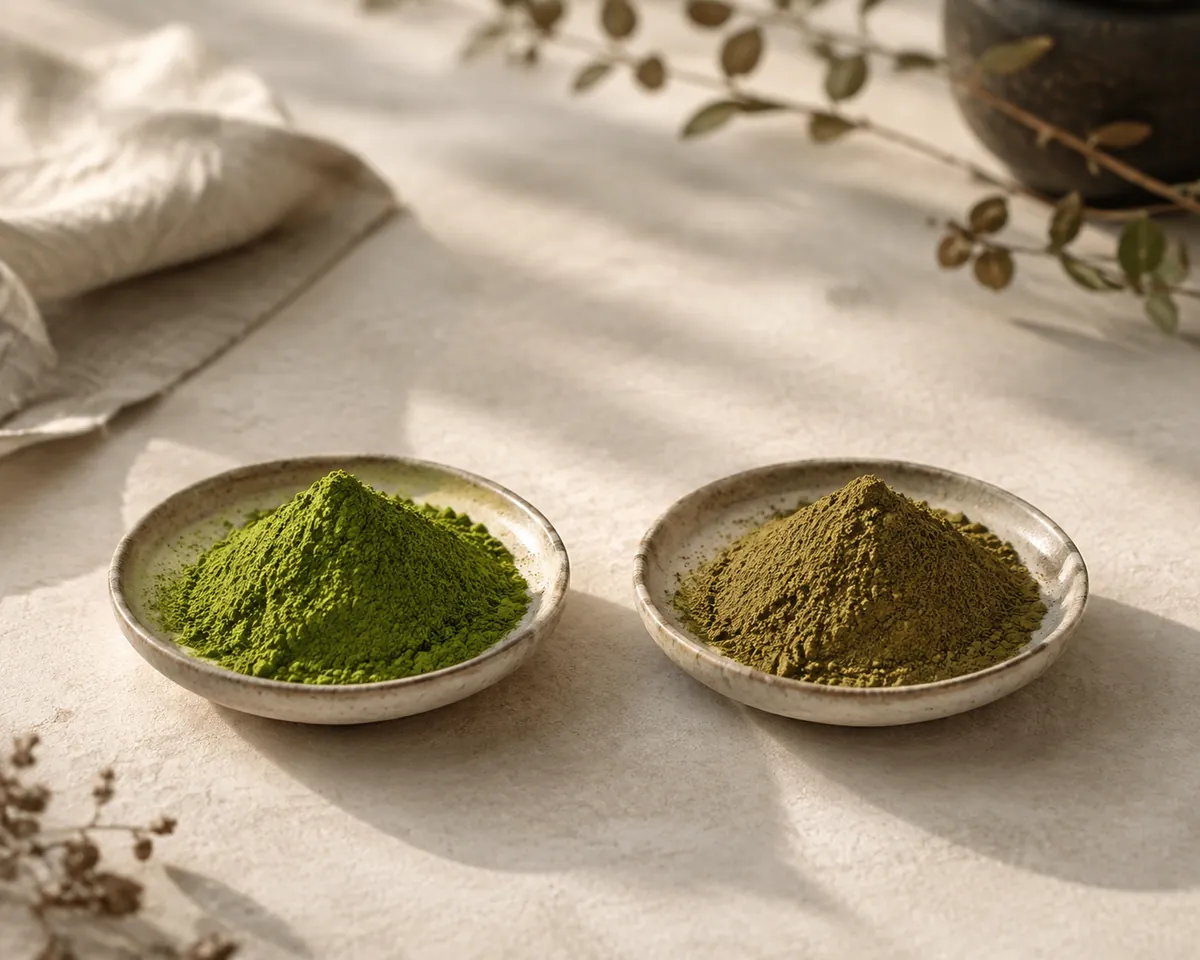
Reading the colour
- Vivid jadeFresh and well stored
- Bright greenStill good. Normal for a few weeks after opening
- Dull oliveFading. Fine for lattes and baking, poor whisked with water
- Yellow-greenWell past its best. Culinary use only
- Brown-greenOxidised. It will taste of hay whatever you do with it
Smell confirms what the colour suggests, and it is the more reliable of the two. Fresh powder smells sweet and faintly marine, faded powder smells of hay or of very little, and the nose picks up the change earlier than the eye does in kitchen lighting.
Clumping that will not break under a sieve is a separate signal and a worse one. It indicates moisture rather than age, and that powder tastes flat and feels gritty regardless of technique, which is one of the faults why matcha tastes wrong traces back to the tin rather than the bowl.
Where a faded tin should go instead
Powder past its best is not waste, and there are sensible places for it to go.
Baking
Heat dulls colour and flavour anyway, so the powder starts where the oven would have put it.
Milk drinks
Sugar and dairy cover flatness that would be obvious in a plain bowl.
Savoury finishing
Matcha salt for tempura or grilled vegetables uses the astringency deliberately.
Not a plain bowl
The one job a faded tin cannot do is the one it was bought for.
Baking is the obvious destination and the least wasteful, since heat flattens colour and aroma in any case. A matcha latte works too, up to a point, because milk and sugar mask a great deal of what has been lost.
Savoury use is the last resort and a genuinely good one. Mixed with sea salt as a finishing seasoning, the astringency becomes the point rather than the flaw, and colour matters less there than anywhere else.
What a faded tin should not be asked to do is the preparation it was bought for. If it was a drinking grade and it has gone dull, that money is already spent, and the honest move is to buy fresh and redirect the old tin rather than to keep being disappointed by it.
Ceremonial and culinary do not keep alike
Tin for tin, the two tiers decline along different curves, and the difference changes how much storage discipline each one is worth.
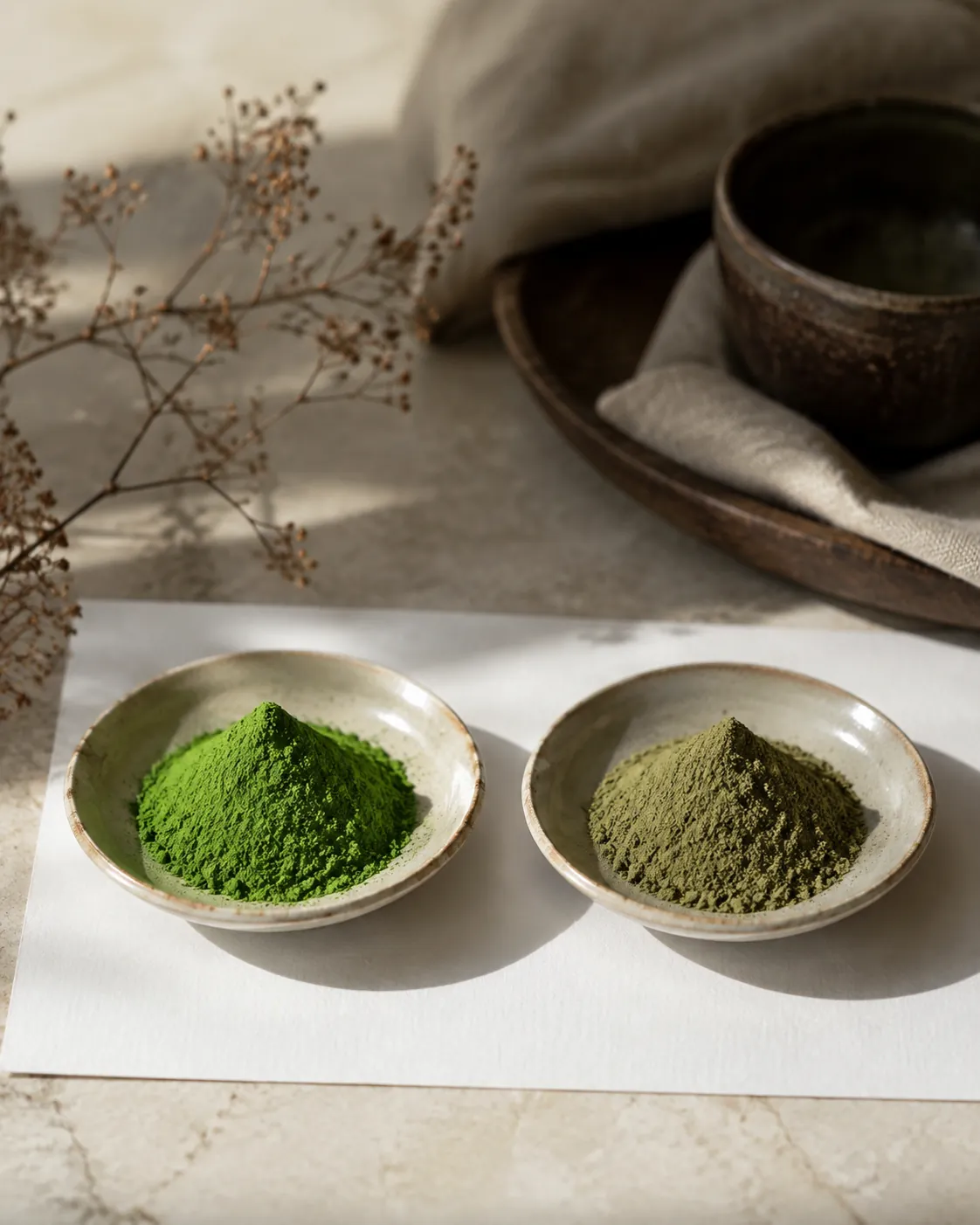
A drinking grade is first-harvest leaf whose entire value sits in the compounds that fade first: the sweetness, the marine note and the vivid colour. It is the tier where a month of careless handling is unmistakable, and storing ceremonial matcha is worth treating as a separate discipline.
Culinary grade is more robust, and not because it is better made. Its character already leans on astringency and vegetal notes, which are the last things to go, and it is normally drunk through milk and sugar that cover the change in any case.
Ceremonial, 20 to 30 g
Four to six weeks of daily bowls. Buy small and buy often.
Culinary, 100 g
Two to three months of lattes. The economics work at this size.
Both
Same tin, same cupboard, same rules. Only the tolerance differs.
Neither
Buy 250 g of anything unless a household is getting through it.
That suggests two different buying habits rather than two different cupboards. A small tin bought often for drinking and a larger one bought rarely for cooking is the arrangement that wastes least, and storing culinary matcha is the more forgiving half of it.
A whisked bowl keeps for minutes
Storage advice stops at the tin, and the question people actually ask is about the bowl already sitting in front of them.
Whisked matcha begins settling within a minute and oxidising within several. A bowl made and left for twenty minutes is flat and separated, and stirring it again puts the powder back into the water without putting the foam back on top.
Cold preparation is the one exception worth knowing. Powder shaken into cold water and kept sealed in the fridge holds acceptably for a day, because the cold slows oxidation and the absence of aeration slows the rest, which is what makes a bottle of iced matcha practical when a hot bowl is not.
Thick tea keeps least well of anything, and nobody tries. At that concentration koicha begins skinning over almost immediately, which is one reason it has always been made in front of the people about to drink it.
Common questions
Should matcha be kept in the fridge?
Cold slows oxidation, so it helps, but only if you let the sealed tin warm to room temperature before opening. Otherwise moisture condenses on the cold powder and causes clumping that cannot be reversed.
How long does matcha last once opened?
One to two months at good colour, kept sealed, cool and dark. It stays usable for baking and lattes well beyond that, but the vivid green and the sweetness go first.
Is faded matcha still safe to use?
Yes. It does not spoil in a way that makes it unsafe; it simply loses colour and flavour. Baking, lattes and savoury uses such as matcha salt are all reasonable destinations for a tin past its best.