Almond milk vs Oat milk
Almond Milk vs Oat Milk: A Dilution Against a Conversion
One is a dilution and the other is a conversion. Almost every practical difference between them, including the coffee answer, comes from that.
Almond milk is nuts ground with water and strained, so most of the solid is discarded and the drink is thin. Oat milk is oats broken down by enzymes and kept whole, which makes it sweeter, fuller and far better in coffee. Neither carries meaningful protein: that comparison belongs to soy and pea.
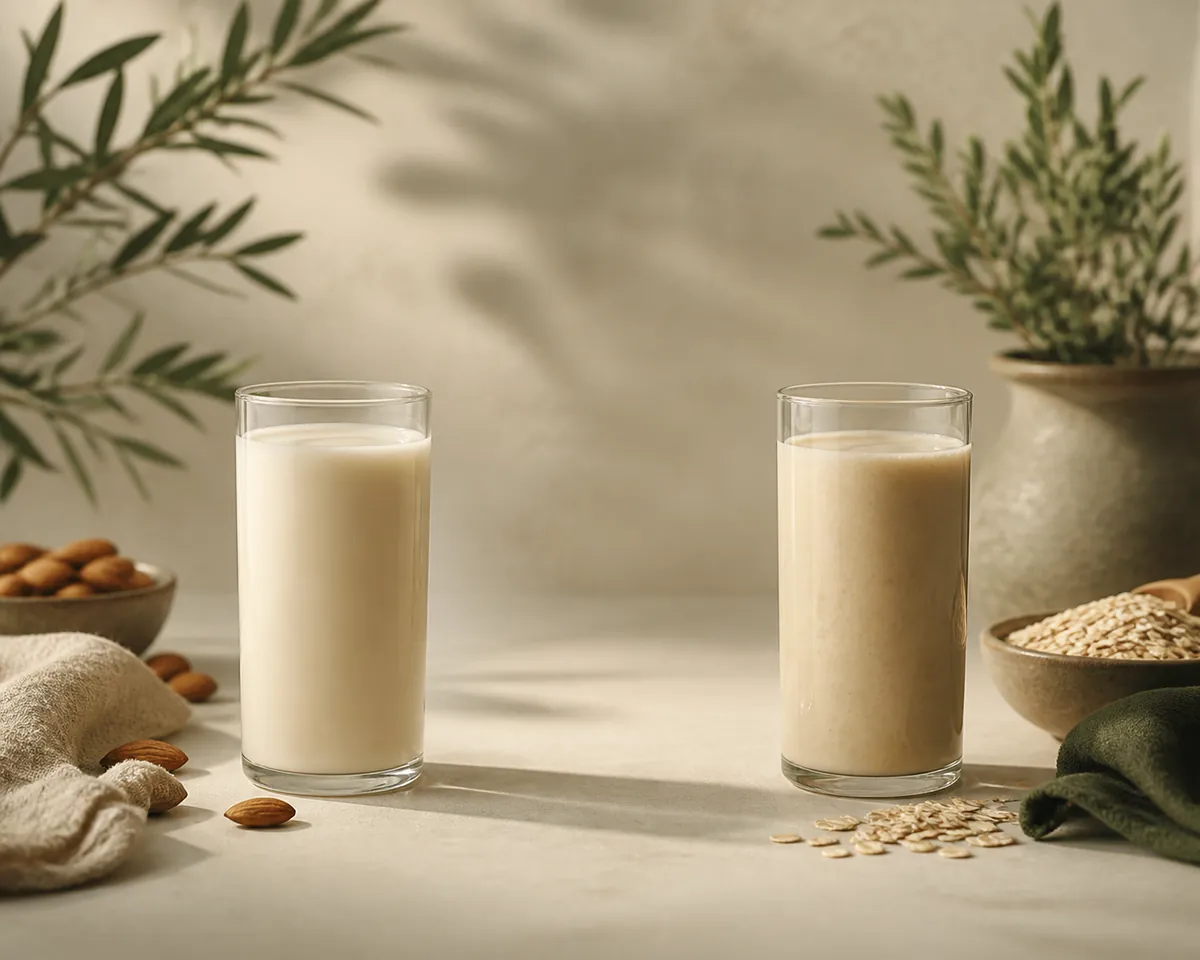
Side by side
| Attribute | Almond milk | Oat milk |
|---|---|---|
| Made by | Grinding nuts with water, then straining | Enzymes converting oat starch, nothing strained |
| Headline ingredient | 2 to 7 per cent almonds | 9 to 15 per cent oats |
| Body | Thin, slightly translucent | Full, close to semi-skimmed dairy |
| Sugars | 0 to 0.5 g per 100 ml | 2.5 to 4 g per 100 ml, none added |
| Protein | About 0.5 g per 100 ml | About 1 g per 100 ml |
| In coffee | Splits readily, poor foam | Stable, fine microfoam |
| Latte art | Not realistically | Yes |
| In cooking | Does not thicken, splits with acid | Thickens gently, tolerates heat |
| Flavour | Faint, barely nutty | Sweet, cereal-like |
| Price, carton | Lower | Higher |
| Price, homemade | Higher. Most of the nut is discarded | Much lower. High yield |
A dilution against a conversion
These are the two best-selling plant drinks on the shelf, and they are built on opposite principles, which is why almost every practical difference between them traces back to a single step in the factory.
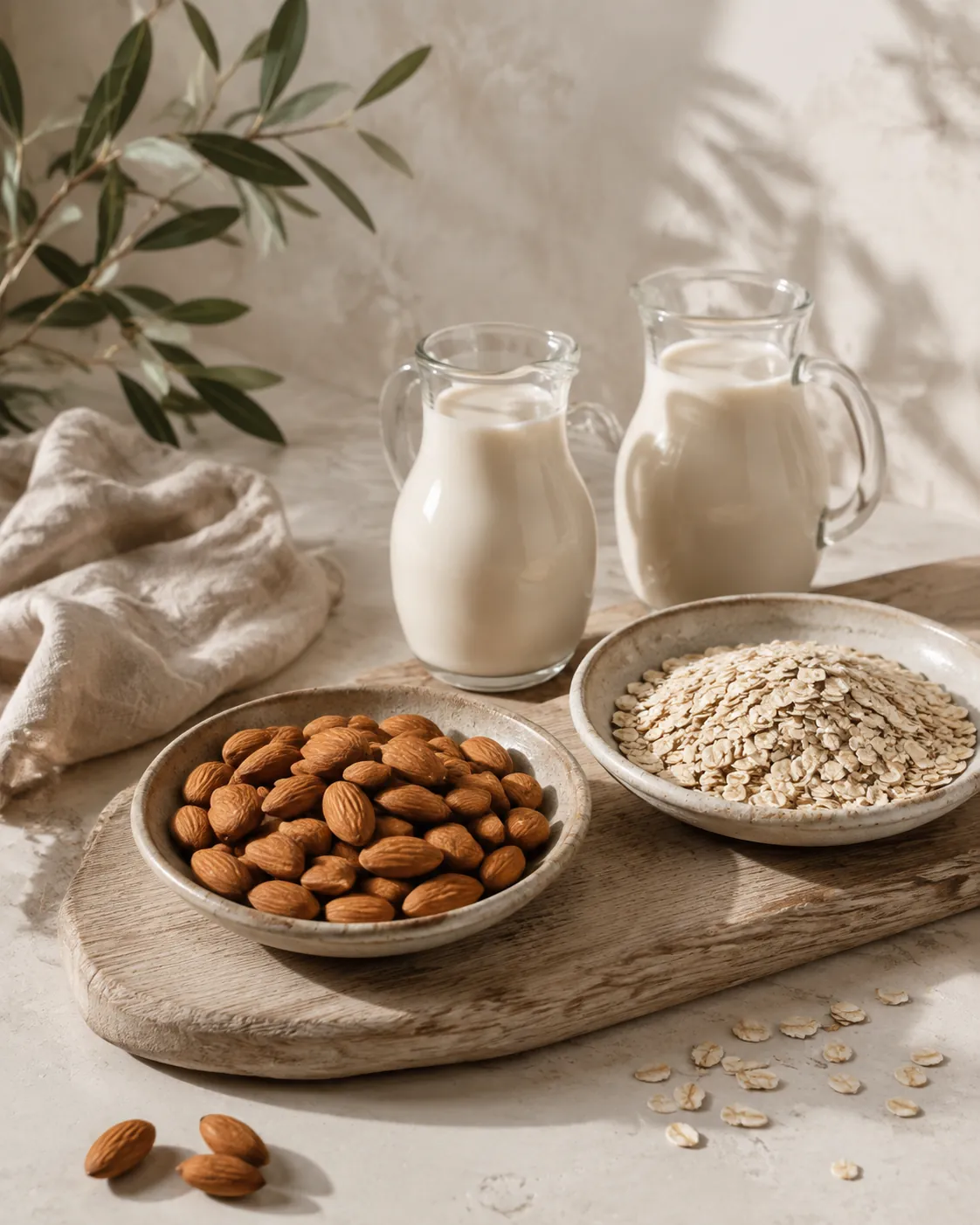
Almond milk is nuts ground with water and strained. Most of the solid leaves as pulp, and what stays behind is a thin liquid carrying a faint nutty note.
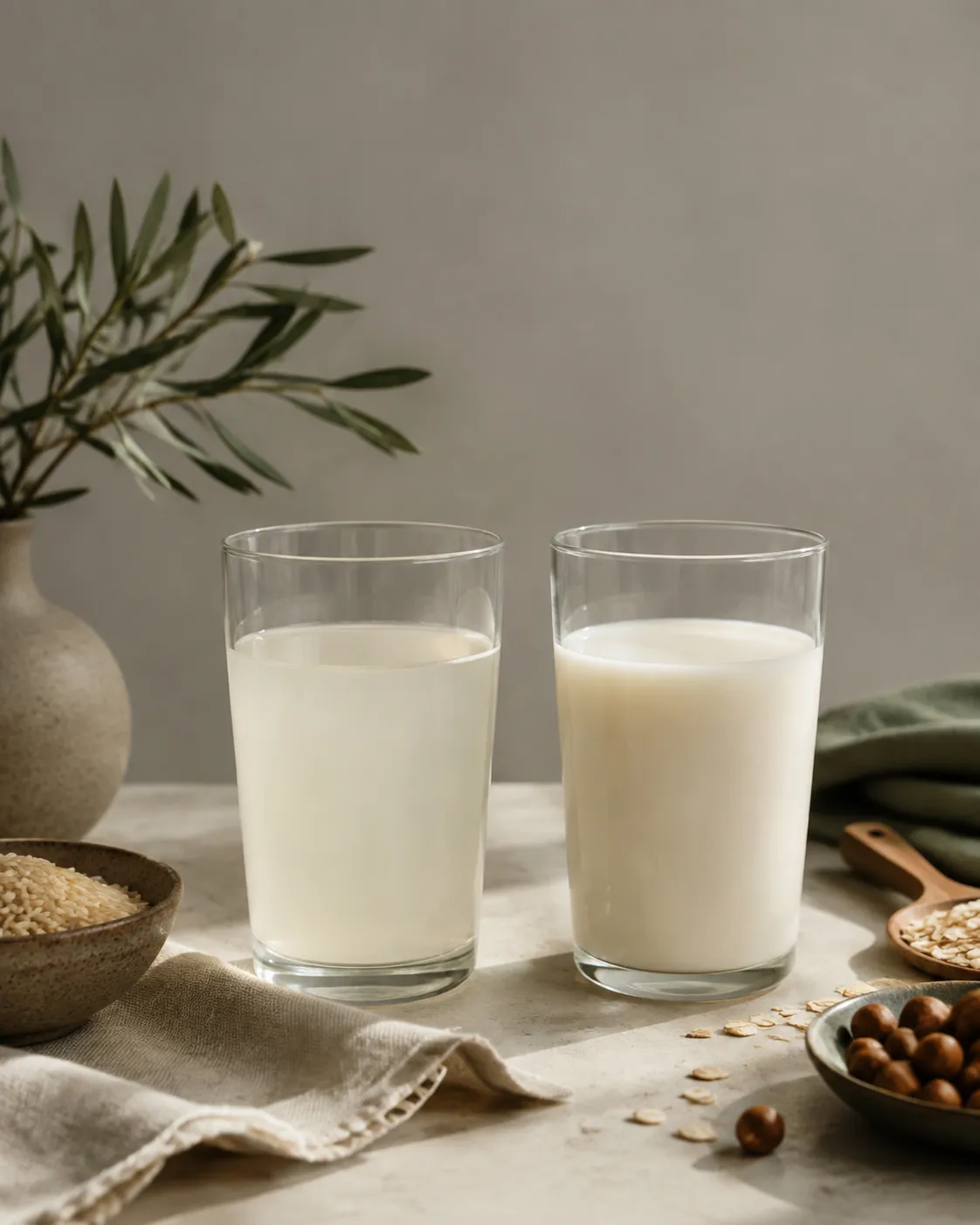
Oat milk goes the other way. Enzymes break the oat starch down into a liquid that is then kept whole, sugars and all, so nothing is discarded on the way to the carton.
The percentages on the two ingredient lists make the same point from the other end. A typical almond drink is 2 to 7 per cent almonds, where an oat drink runs 9 to 15 per cent oats and strains nothing out at all.
Neither carries meaningful protein, which is worth establishing early because it takes a whole class of question off the table. Anyone choosing a plant drink for protein is choosing between soy and pea rather than between these two.
Under espresso, the answer is not close
This is the decision most people arrive with, and one of the two loses it outright.
Oat was formulated for coffee in the first place. Barista versions carry added oil for body and buffering salts that hold their ground when hot espresso drops the pH, so they steam into a stable microfoam and pour like dairy.
Almond behaves the opposite way under the same conditions. There is very little protein in it to build a foam structure with and very little buffering to resist the acid, so it flocculates into pale flecks, a mechanism curdling in coffee sets out in full.
| Almond | Oat | |
|---|---|---|
| Foam | Large bubbles that collapse | Fine microfoam that holds |
| Splits in coffee | Readily, especially hot and acidic | Rarely, in a barista formulation |
| Body in the cup | Thin. The coffee dominates | Full, close to semi-skimmed dairy |
| Latte art | Not realistically | Yes |
| Flavour with coffee | Faint, slightly bitter | Sweet, cereal note that suits coffee |
| Barista version helps | Substantially, and it still trails oat | It is the default recommendation |
The two barista cartons are solving different problems with the same tools. An oat formulation adds oil, usually rapeseed or sunflower, to supply the fat that carries body, plus dipotassium phosphate or calcium carbonate to blunt the acid arriving from the shot.
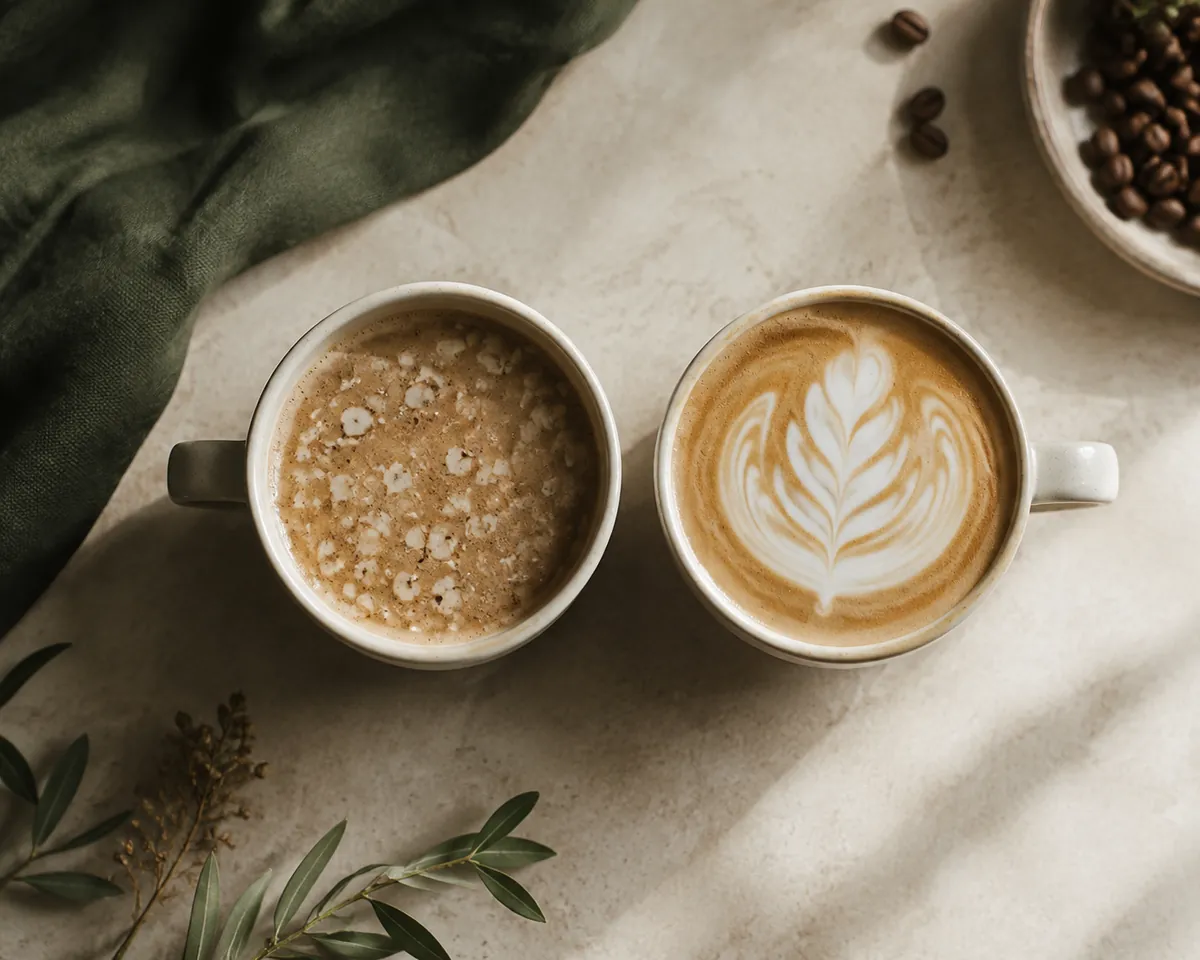
An almond formulation adds much the same ingredients and starts from a long way further back, so the additives are compensating rather than enhancing. The gap narrows and never closes, which in practice means a barista almond makes a passable latte while an ordinary oat still makes a better one.
For a flat white, oat is the stronger coffee choice, and oat wins this axis outright.
Sweetness the label does not explain
Sweetness arrives without a sugar bag. Oat drink tastes sweet with nothing added to it, and the reason sits in the process rather than in an ingredient.
Enzymes break the oat starch into shorter sugars during production, chiefly maltose. An unsweetened oat drink can therefore carry more sugar per 100 ml than a sweetened almond one, which is the commonest surprise for anyone holding two cartons and reading the panels.
The near-total absence of sugar on the nut side is why that drink reads as thin rather than merely light. Nothing is carrying the body, so what remains is water with a nutty edge, which is the starting point almond milk flavour has to work from.
Where this decides something practical is in drinks you sweeten yourself. A cocoa or a chai built on oat usually needs less added sugar than the same recipe built on almond, and a dairy recipe moved across to oat unchanged frequently tastes cloying.
Away from espresso: pans, tea and cocoa
Once the espresso machine is out of the picture the ranking loosens considerably, and in more than one of the places these drinks actually get used the thin one is the better choice.
Oat thickens gently when heated, because the converted starches are still in the liquid. It holds up in a sauce, a porridge or a soup, and it browns a little faster than dairy in a hot pan.
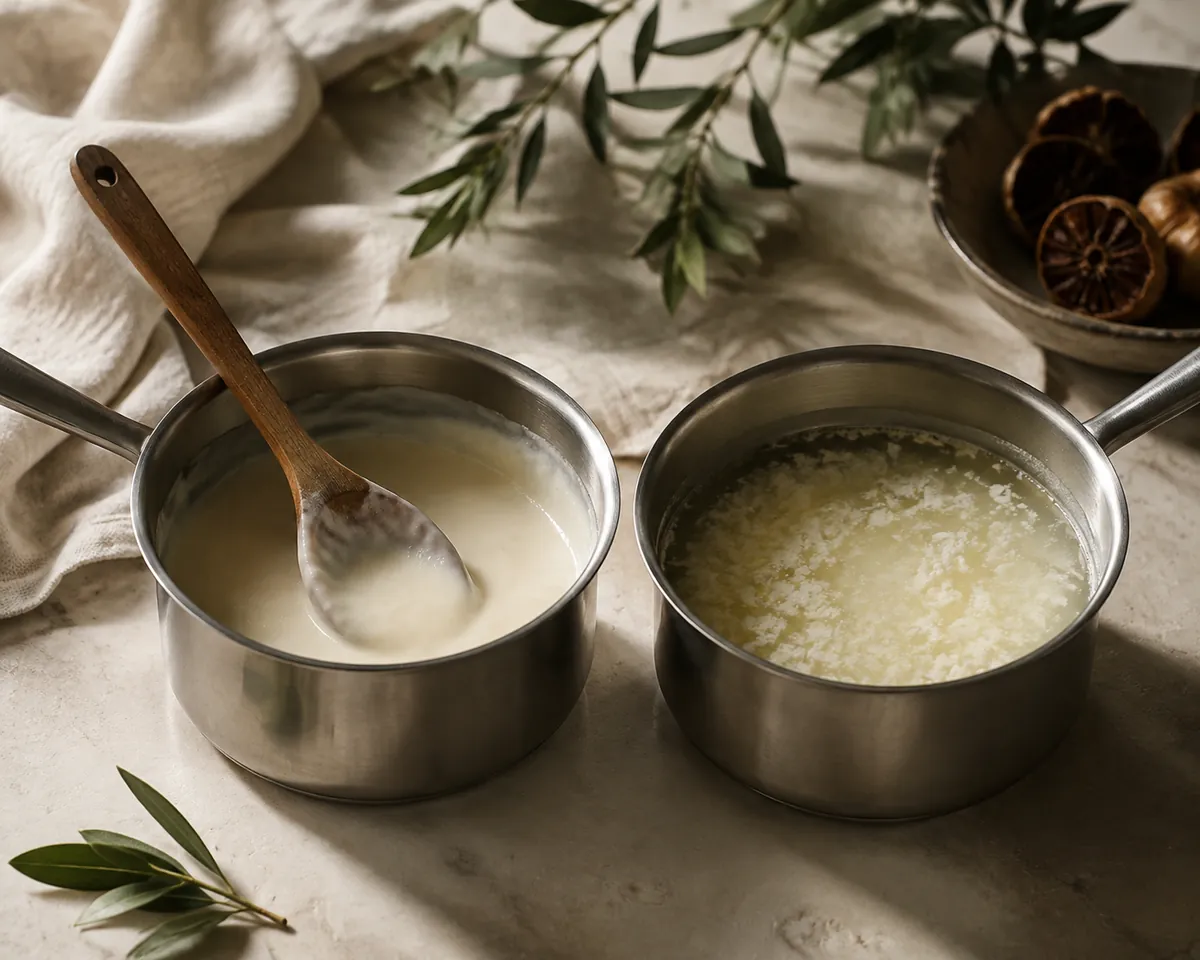
Almond does neither of those things. It will not thicken, and in anything acidic, a tomato sauce or a citrus custard, it separates on the heat and no amount of stirring recovers it.
In black tea the pattern from coffee softens without reversing.
Tea is less acidic, so the nut drink rarely splits. It also gives the cup no body, which is most of what milk in tea is there for.
Under matcha the two draw close, since the powder supplies its own body and colour and asks little of the liquid. Cocoa is the one place almond genuinely wins, because the chocolate carries all the richness needed and a faint nuttiness sits underneath it rather than competing.
Which one suits which hot drink
- Flat whiteOat, and the gap is enormous
- Porridge or a pan sauceOat, since it thickens
- Black teaOat, for body rather than for stability
- MatchaClose, because the powder carries the drink
- Hot chocolateAlmond, which sits under the cocoa rather than fighting it
Anything thin and cold belongs to almond as well. A smoothie, a bowl of cereal or a light batter takes it without complaint and gains nothing from the cereal sweetness of oat flavour.
The shelf price and the kitchen price run opposite
Shelf price puts oat above almond in most markets, though the gap has narrowed as volumes have risen.
Almond is cheap to manufacture precisely because so little nut is needed per litre, and the pulp that carries most of the raw material never reaches the carton. Oat needs more grain and an enzymatic step, and barista formulations add oil and salts on top of that.
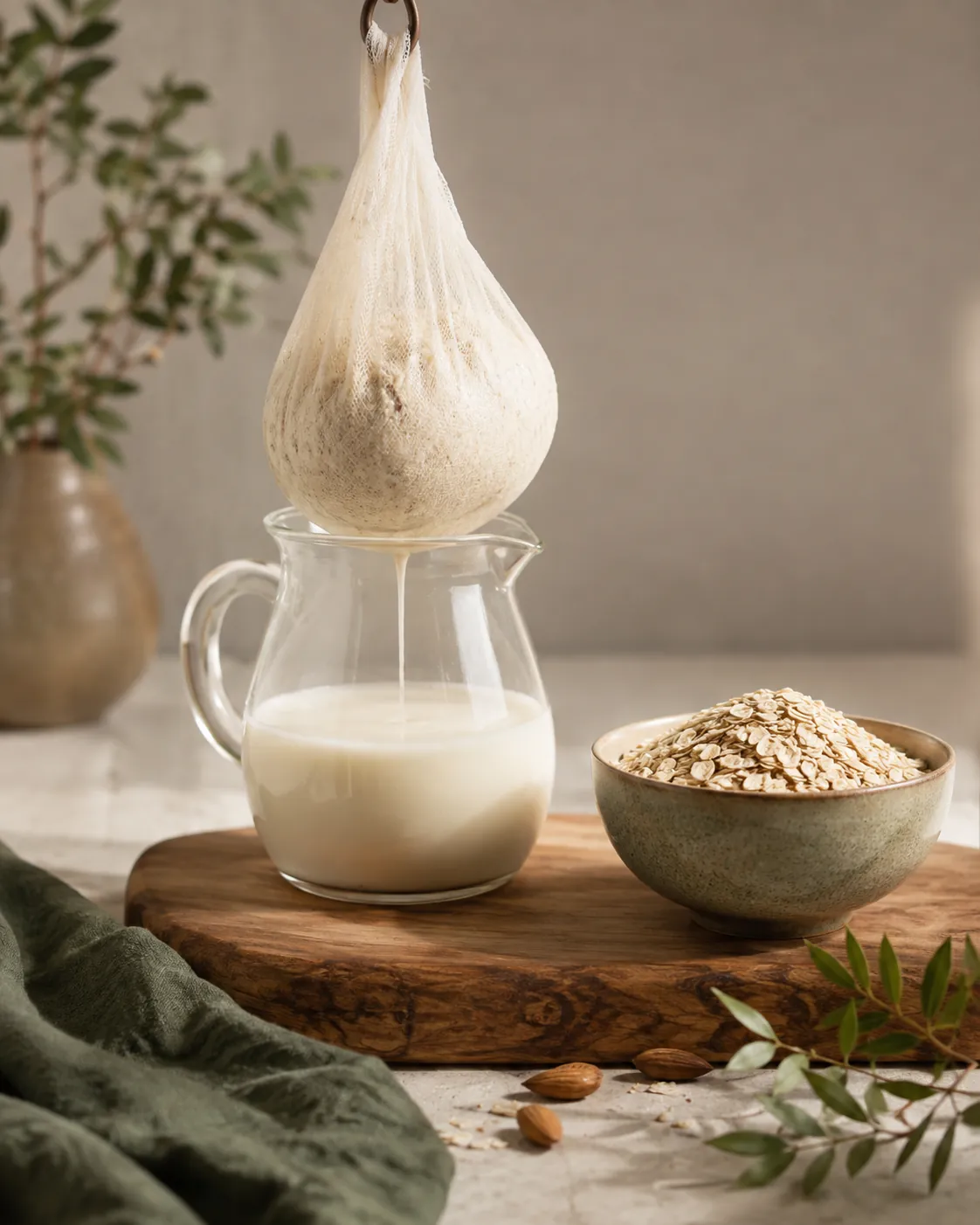
Making either at home reverses the comparison completely. Nuts are expensive and most of what you buy ends up in a bag of pulp, where oats cost very little per litre and the yield is high, so homemade oat is by a distance the cheaper thing to produce.
Each home version has exactly one failure mode. Blending almonds is forgiving and wasteful, while oats punish speed and warmth by gelatinising into something slimy that straining cannot rescue.
- Almond: soak 8 hours, blend, strain through a nut bag, expect to discard most of the nut.
- Oat: 80 g rolled oats to 1 litre of cold water, blend 30 seconds only, strain once.
- Never heat oats during blending, and never blend them twice.
- Neither home version will behave in coffee like its barista carton.
- For body without straining, cashew is the easier nut to work with.
Neither kitchen version matches its carton under coffee, and the buffering salts are the part a kitchen cannot reproduce. That is the honest limit on home production rather than a question of technique or equipment.
Choosing by the job in front of you
Pick by the drink, not by the carton.
Flat white or latte
Oat, barista version. Nothing else in this pairing is close.
Filter coffee or tea
Either. Oat adds body, almond stays out of the way.
Cold, over cereal or in a smoothie
Almond. Its thinness is an advantage here.
Cooking a sauce
Oat, which thickens and tolerates heat better.
Anything acidic
Almond will split. Oat usually will not.
The cheapest carton on the shelf
Almond, and it will disappoint in coffee.
No version of this comparison ends with almond winning on versatility. What it wins on is lightness, on price, and on staying out of the way of whatever else is in the glass, which is a narrow brief that it fills better than anything else in the category.
The rest of the shelf is where the honest answer often lies, because several of the jobs people ask these two to do are done better by a third drink entirely.
Read against that list, oat is the generalist and almond the specialist. One does most jobs adequately and coffee well, and the other does a single job, lightness, better than anything else on the shelf.
What the water argument actually claims
Both drinks are marketed on environmental grounds, and the two claims are narrower and more specific than the marketing on either carton suggests.
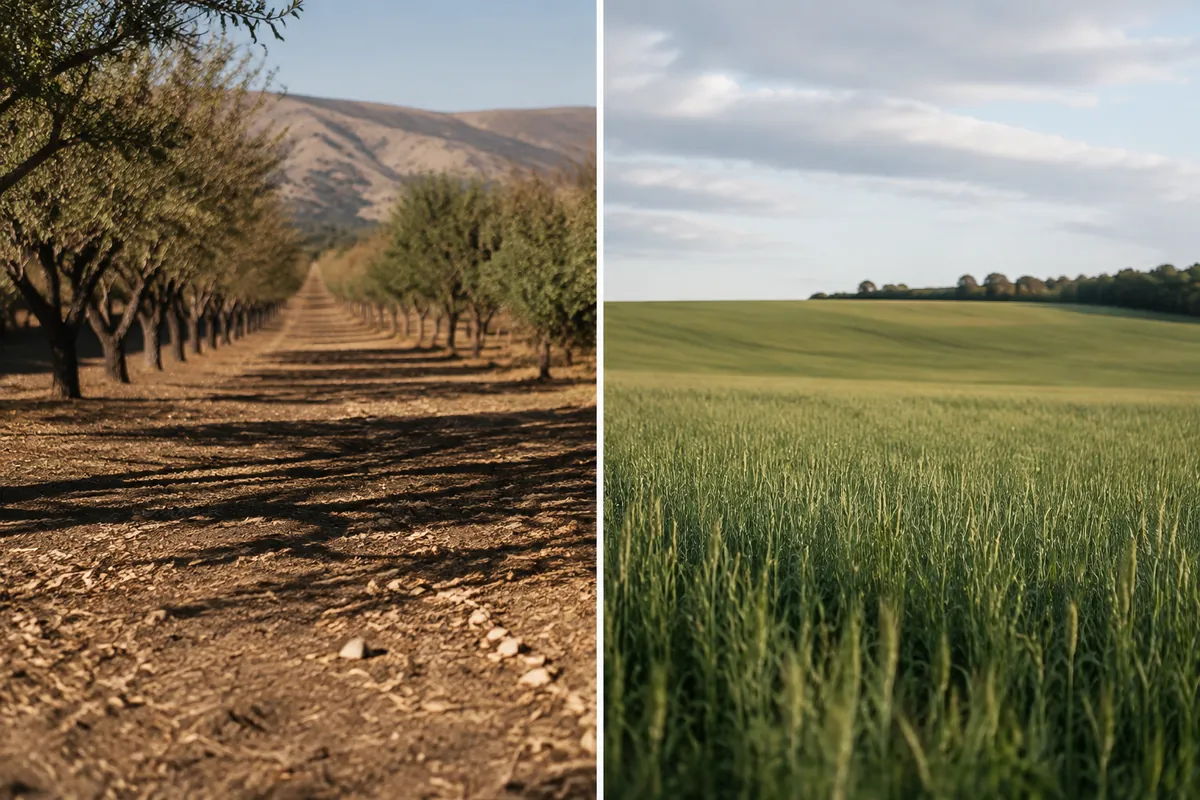
Almond growing is water-intensive per nut, and the great majority of the world crop comes from California, where water is scarce and the pressure on it is real. That is a genuine issue and a geographically concentrated one, which is part of why it is so often quoted.
Oats grow across temperate regions with far lower irrigation demand, and that single comparison is the basis of most oat marketing. Land use per litre is a different measure again, and the ranking changes with the measure chosen, which is why two confident claims can both cite real numbers.
An open carton fails abruptly, not gradually
Both are sold ambient and chilled, and once the seal is broken they behave almost identically.
An unopened ambient carton keeps for months, because the UHT treatment it has been through is severe. Five to seven days refrigerated is realistic for either drink after opening, and the number moves with how warm the fridge door gets rather than with which plant is in the carton.
Separation is normal in both and reverses with a shake. The oat version separates less, since its converted starches help hold the suspension, which is the same property that makes it thicken in a pan.
That abruptness is why date discipline matters more here than with dairy, and the practical detail for each sits under storing oat and almond in the fridge rather than on any carton.
The calcium on the carton was added
Fortification is the clearest case of something a label implies and the plant never supplied.
Neither almonds nor oats contribute a meaningful amount at these dilutions, so the calcium quoted on a carton has been added as a carbonate or a phosphate. That is also why an unfortified organic version frequently lists none at all while sitting beside an identical-looking product that lists plenty.
Vitamins B12 and D appear on most cartons for the same reason and by the same route. They are formulation choices rather than properties of the ingredient, and two products from one brand can differ from each other on the same shelf.
The consequence for anyone comparing labels is awkward. A fortified almond drink and an unfortified oat drink read very differently on a nutrition panel while telling you almost nothing about the drinks themselves, and the ingredients list is where the real difference between them is recorded.
What do allergy and gluten labels change?
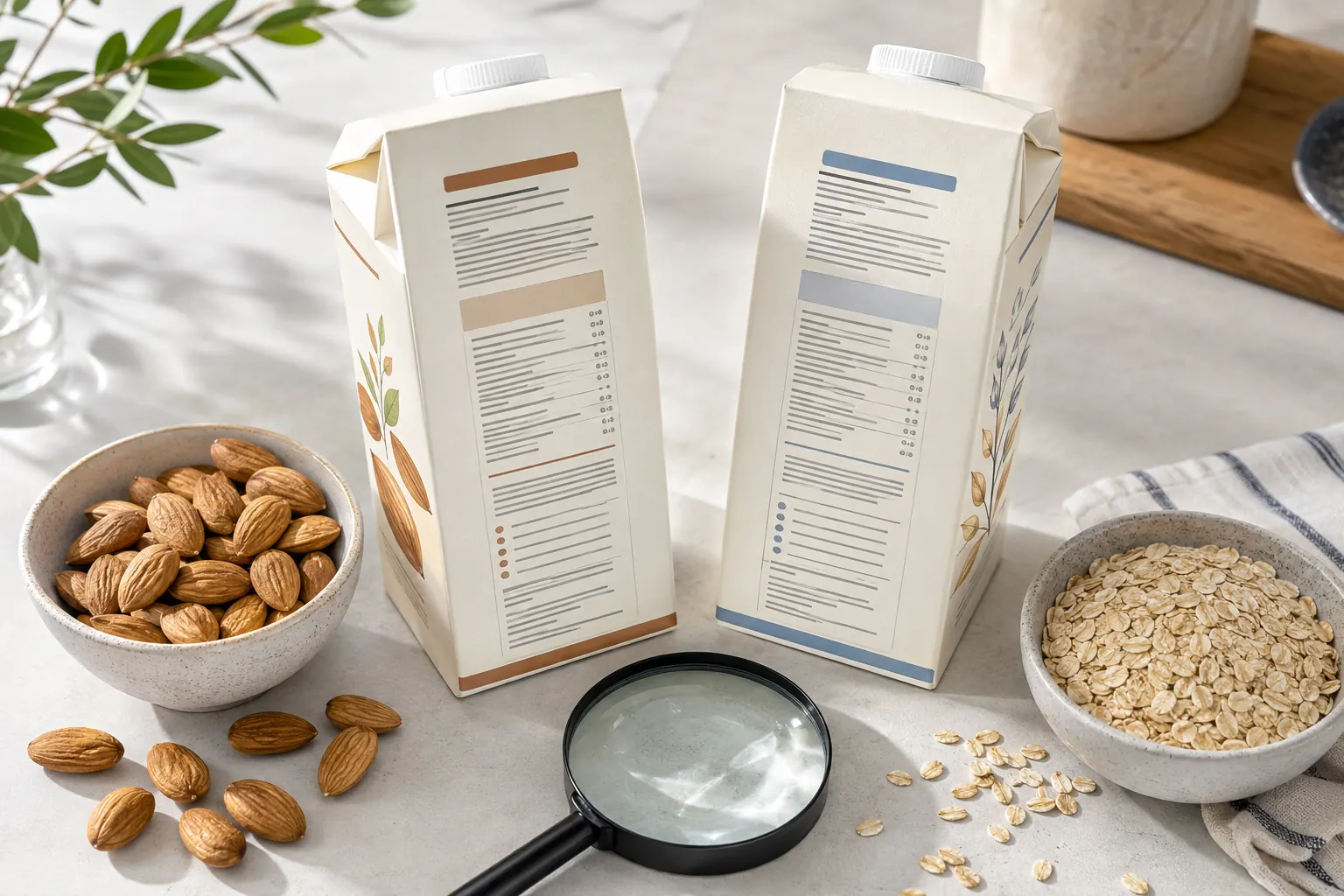
Almond and oat cartons do not carry the same label obligations. In the United States, almond must be identified as a tree-nut allergen, while oats are not one of the major allergens named by federal law.
That does not make every oat drink suitable for every person. A gluten-free claim is voluntary, and a product using the claim must meet the federal limit of less than 20 parts per million of gluten; oats without that claim may have been handled alongside wheat, barley, or rye.
| Label check | Almond drink | Oat drink |
|---|---|---|
| Major allergen declaration | Tree nut: almond | Oat is not a U.S. major allergen |
| Gluten-free wording | Product-specific | Look for the regulated claim when it matters |
| Added oils and gums | Varies by formulation | Varies by formulation |
| Fortification | Check calcium, vitamin D, and B12 | Check calcium, vitamin D, and B12 |
| Shared equipment statement | Manufacturer-specific | Manufacturer-specific |
The package label decides what applies to a particular carton because recipes and handling differ between brands and even between versions from one brand. Reading the label tells you what a manufacturer declares about its own line, which is a different question from whether a particular carton suits a particular person.
Four assumptions that go wrong here
Most of the disappointment with this pairing comes from beliefs that are perfectly reasonable, arrive from the dairy aisle, and stop being true the moment the liquid is made rather than milked.
- That unsweetened means low sugar. Oat's sugars are created during production rather than added, so an unsweetened oat drink can carry several times the sugar of a sweetened almond one.
- That a barista almond will behave like a barista oat. It helps, and it does not close the gap, because the underlying protein is not there to build foam with.
- That almond milk tastes strongly of almonds. At 2 to 7 per cent nut it barely tastes of anything, which is why the ones that do taste nutty usually carry added flavouring.
- That barista versions are marketing. They are a different formulation, with added oil for body and buffering salts that resist the pH drop from hot espresso, and the difference in the cup is obvious.
The first of those is the one that changes shopping behaviour, since it is the only case where the label is technically accurate and still misleading. The others are corrected by one bad latte, and a cup that goes wrong is usually a formulation question rather than a technique question, which is what oat milk faults and almond milk faults are for.
For a plant drink that behaves like dairy across the widest range of uses, neither of these two is the answer. Soy still carries the protein both of them lack, and cashew gives more body than almond without oat's sweetness following it into the cup.
Buy oat if
Coffee is the reason you are buying, or the carton has to work in a pan as well as a glass.
Buy almond if
You want the liquid to disappear behind cereal, fruit or chocolate, and price matters.
Buy both if
One household drinks lattes and the other drinks smoothies. They are not substitutes for each other.
Buy neither if
Protein or a dairy-like set in cooking is the actual requirement.
Common questions
Which is better in coffee, oat or almond?
Oat, clearly, and a barista formulation of it especially. It has the body and the buffering to survive hot espresso and steam into a stable microfoam, where almond has very little protein to foam with and splits readily against coffee's acidity.
Why does unsweetened oat milk contain sugar?
The sugars are created rather than added. Enzymes break the oat starch into shorter sugars, chiefly maltose, during production, which is also why oat drink tastes sweet with nothing on the ingredients list to explain it.
Does almond milk actually taste of almonds?
Barely. A typical carton is 2 to 7 per cent almonds, so the flavour is faint, and products that taste distinctly nutty usually carry added flavouring. A homemade version made without straining tastes far more of the nut.
Is either one high in protein?
No. Almond sits near 0.5 g per 100 ml and oat near 1 g, against roughly 3.3 g for dairy. Soy and pea are the plant drinks that carry dairy-comparable protein.