Ceremonial matcha vs Culinary matcha
Ceremonial Matcha vs Culinary Matcha: Which Tin to Open
Ceremonial matcha has nowhere to hide, so it is made from the youngest first-harvest leaf. Culinary matcha is made to push back through milk and ice. Matching the powder to the drink matters more than buying up the ladder.
Ceremonial matcha is first-flush leaf from the top of the bush, fully deveined and stone-ground to a talc-fine jade powder, made for whisking with water alone. Culinary matcha is later-harvest leaf from lower down, coarser and more astringent, made to read clearly through milk, sugar and ice. Neither is a worse version of the other: a ceremonial powder in a latte loses exactly the qualities it was bought for, and a culinary powder in a bowl of usucha has nothing to cover its edges.
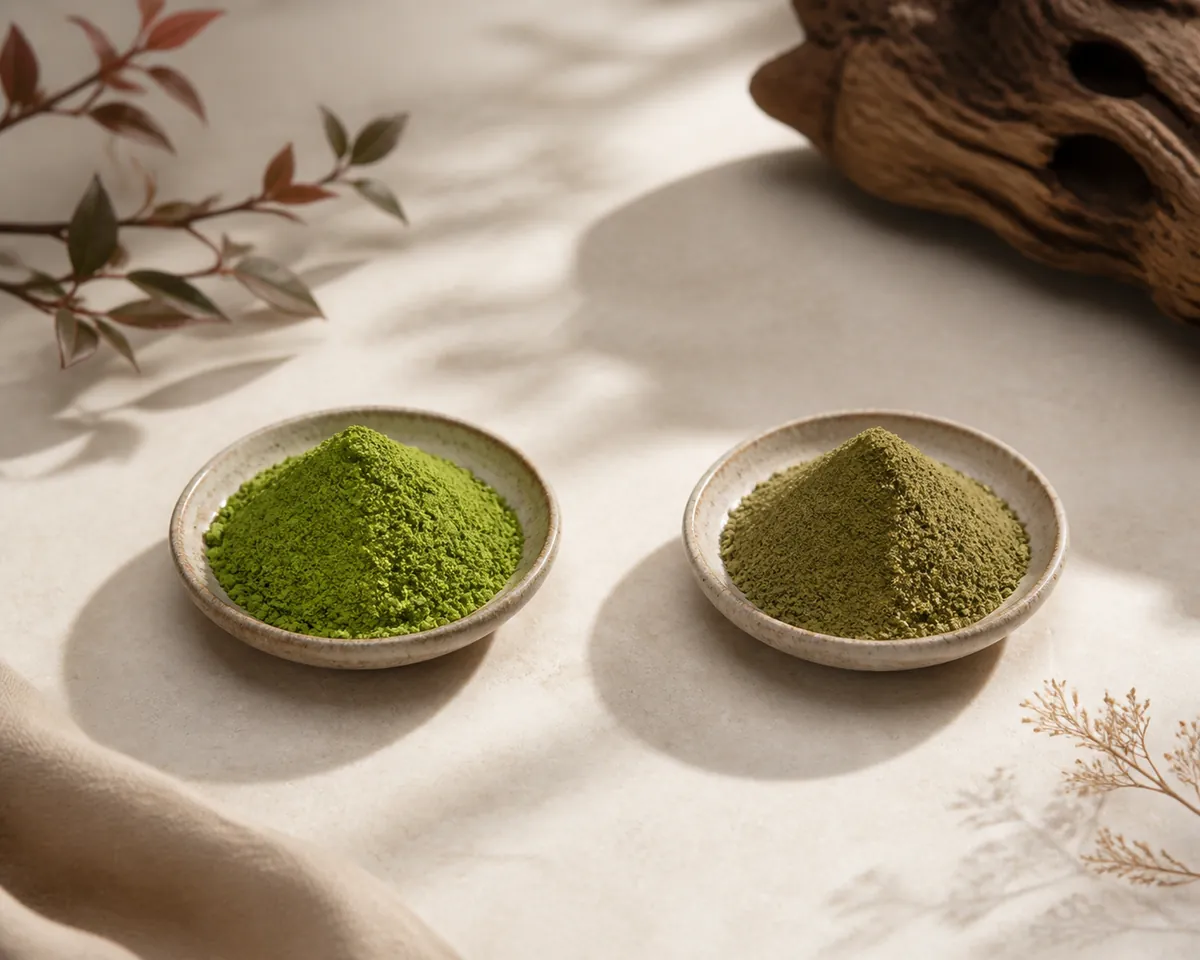
Side by side
| Attribute | Ceremonial matcha | Culinary matcha |
|---|---|---|
| Harvest | First flush, spring | Second harvest onwards |
| Leaf taken | Youngest top shoots | Larger, older leaves lower down |
| Stem and vein | Removed thoroughly | Sometimes included |
| Colour | Vivid jade | Duller olive or yellow-green |
| Grind | Stone-ground, talc fine | Often machine-ground, coarser |
| Taste in water | Sweet, savoury, clean | Green and astringent |
| Taste in milk | Subtlety largely lost | Reads clearly, as intended |
| Price per gram | Three to five times higher | The everyday option |
| Belongs in | Usucha and koicha | Lattes, iced drinks, baking |
Both powders are ground green tea leaf and both are sold as matcha. The difference is which leaves went in and what the resulting powder is expected to survive once it reaches a cup.
Ceremonial grade is made to be drunk with nothing but hot water, so it has nowhere to hide. Culinary grade is made to be tasted through milk, sugar and ice, so it is built to push back rather than to be delicate.
Neither is a compromised version of the other. A culinary powder whisked with water alone is disappointing, and a ceremonial powder buried under oat milk and syrup is money burned.
The choice is a question about the drink, not about quality.
The leaf each one starts from
All matcha comes from shade-grown tea, which is what raises the sweet, savoury character and suppresses the bitterness that full sun encourages. What separates the grades is which leaves are picked and when.
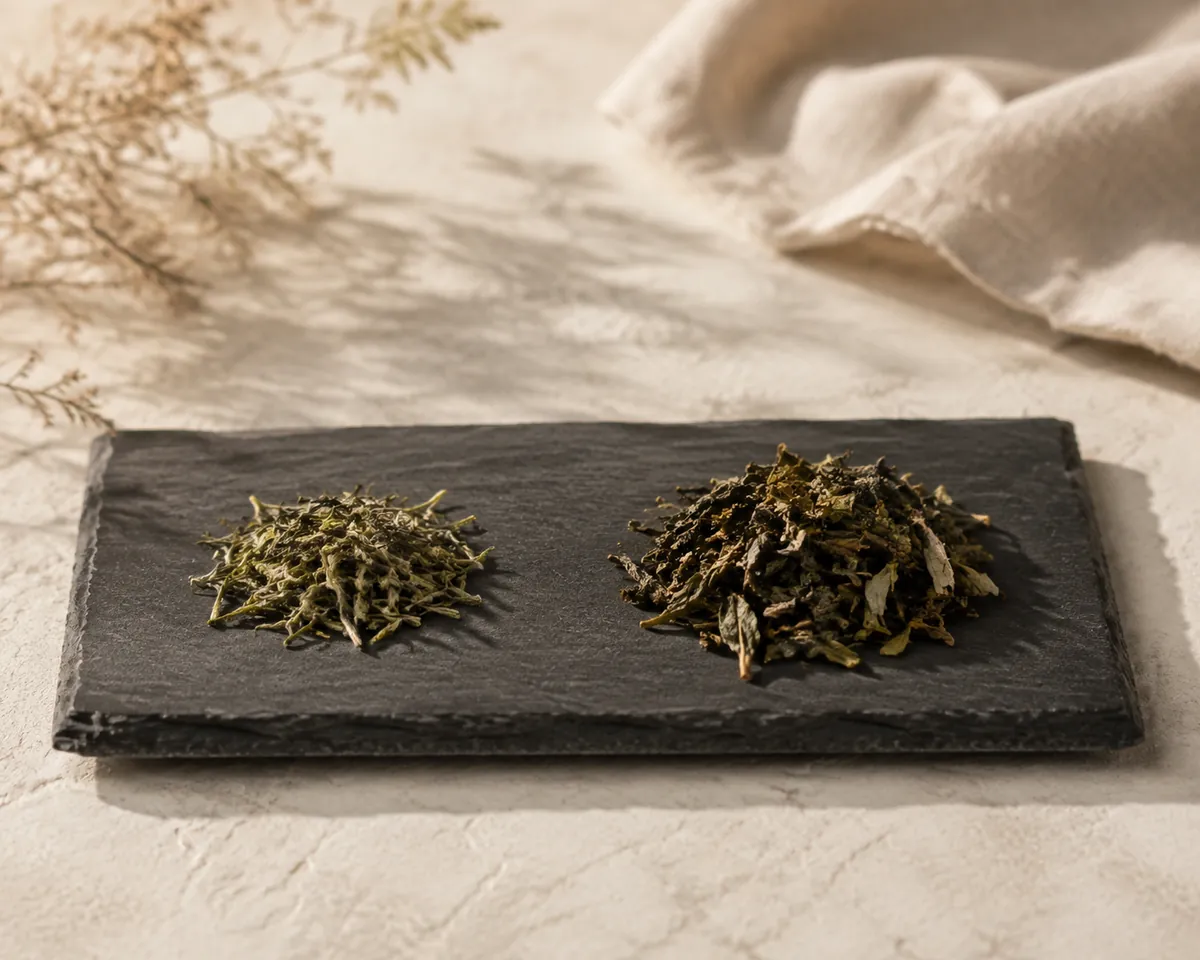
Ceremonial powder comes from the first harvest of the year, taking the youngest shoots at the top of the plant. Those leaves are thin, soft, high in the compounds that read as sweetness and body, and low in the ones that read as harsh.
Culinary powder comes from later harvests and from lower down the bush, where the leaves are larger, tougher and more exposed. They have spent longer in the light, which builds the astringency and bitterness that a first-flush leaf largely lacks.
| Ceremonial | Culinary | |
|---|---|---|
| Harvest | First flush, spring | Second harvest onwards |
| Leaf position | Top shoots, youngest | Lower, larger, older |
| Shading | Long, and carefully managed | Shorter or less consistent |
| Stem and vein | Removed thoroughly | Sometimes included |
| Target drink | Water only | Milk, sugar, baking |
Stem and vein removal is the step that quietly separates the two. Those parts carry a coarse, woody note, and taking them all out is slow work, which is a real part of what the higher price buys.
Why the colour tells you most of it
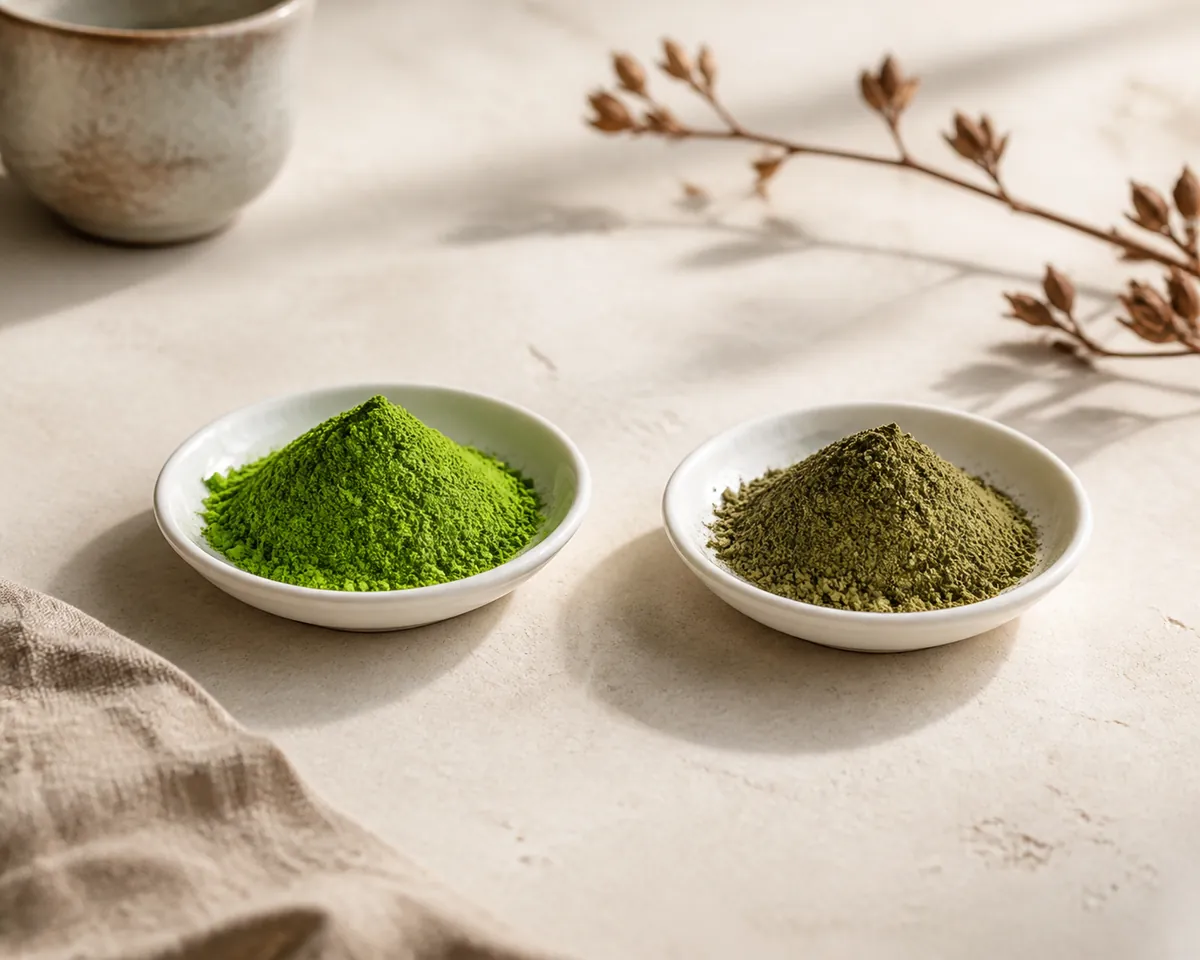
Set the two powders side by side and the difference is immediate, and it needs no expertise at all. Ceremonial matcha is a vivid, almost fluorescent jade.
Culinary matcha is duller, flatter, and often distinctly olive or yellow-green.
That colour is chlorophyll, and chlorophyll is what shading builds. A leaf shaded properly for weeks produces a great deal of it; a leaf that had less shade or more sun produces less, and the powder shows it directly.
Colour is the single most reliable indicator available to a buyer, and it needs no tasting and no expertise. A powder sold as ceremonial that looks olive in the tin has either been mislabelled or has oxidised on a shelf.
Brown or khaki is the warning, in either grade. That is age rather than harvest, and it means the powder has been open to air and light long enough to lose what it started with.
What the grades actually taste like
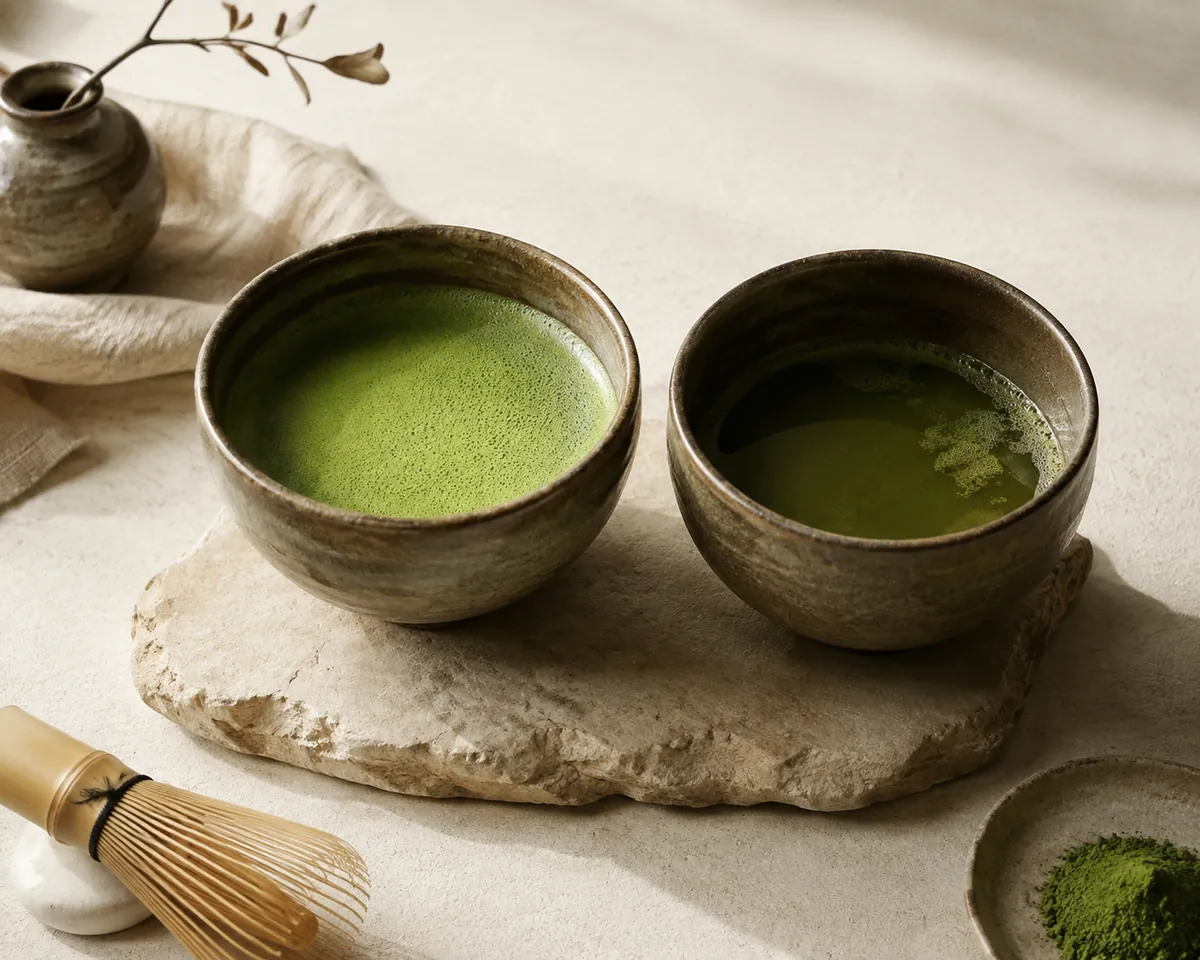
Whisked with water alone, ceremonial matcha is sweet at the front, savoury through the middle and clean at the end. There is bitterness, but it sits behind everything else rather than leading, which is what makes a plain bowl worth drinking at all.
The same treatment applied to culinary matcha produces a sharper, greener, more astringent drink. It is not undrinkable, and some people prefer it, but the balance has moved and the sweetness that carries a good bowl is largely absent.
Add milk and the ranking inverts in usefulness. Milk fat and protein bind to the astringent compounds and mute them, and they mute the delicate sweetness of a ceremonial powder along with everything else.
How much survives being covered
- Ceremonial, in waterEvery note readable, nothing hidden
- Ceremonial, in milkThe subtlety is largely lost to the dairy
- Culinary, in waterGreen and astringent, unbalanced
- Culinary, in milkReads clearly through the milk, as intended
- Culinary, in a sweetened iced drinkHolds up against sugar and dilution
The fuller account of what the powder tastes like on its own is under matcha taste, and the same vocabulary applies to both grades with the dial turned differently. The shading behind it is covered under what matcha is, and the closest thing in leaf form is gyokuro, grown the same way and never ground.
Grinding, and why it changes the drink
Grinding decides it. A good powder is made or lost at the mill.
Matcha is stone-ground slowly because the process generates heat, and heat damages what the shading built; a granite mill turns at a speed that produces perhaps 30 to 40 grams an hour, which is a real constraint on price.
Particle size follows from that. Well-ground matcha runs to a few microns and feels like talc between the fingers; coarser powder feels faintly gritty and behaves differently in water.
What fineness decides
- SuspensionFine powder stays suspended; coarse settles quickly
- FoamFine powder whisks to a stable, tight crema
- TextureCoarse powder reads as chalky on the palate
- ColourFiner particles scatter light and look brighter
- ExtractionCoarser particles give up flavour more slowly
Culinary powders are more often machine-ground and coarser, which matters less than it sounds when the destination is a blender or a hot milk drink. In a latte nobody detects the grind, because the milk is carrying the texture.
In a bowl of usucha it is unmissable. A coarse powder will not hold a foam, it settles to a sludge at the bottom within a minute, and the drink is gritty in a way no whisk technique repairs.
Most of what gets filed under matcha problems starts here rather than with the water.
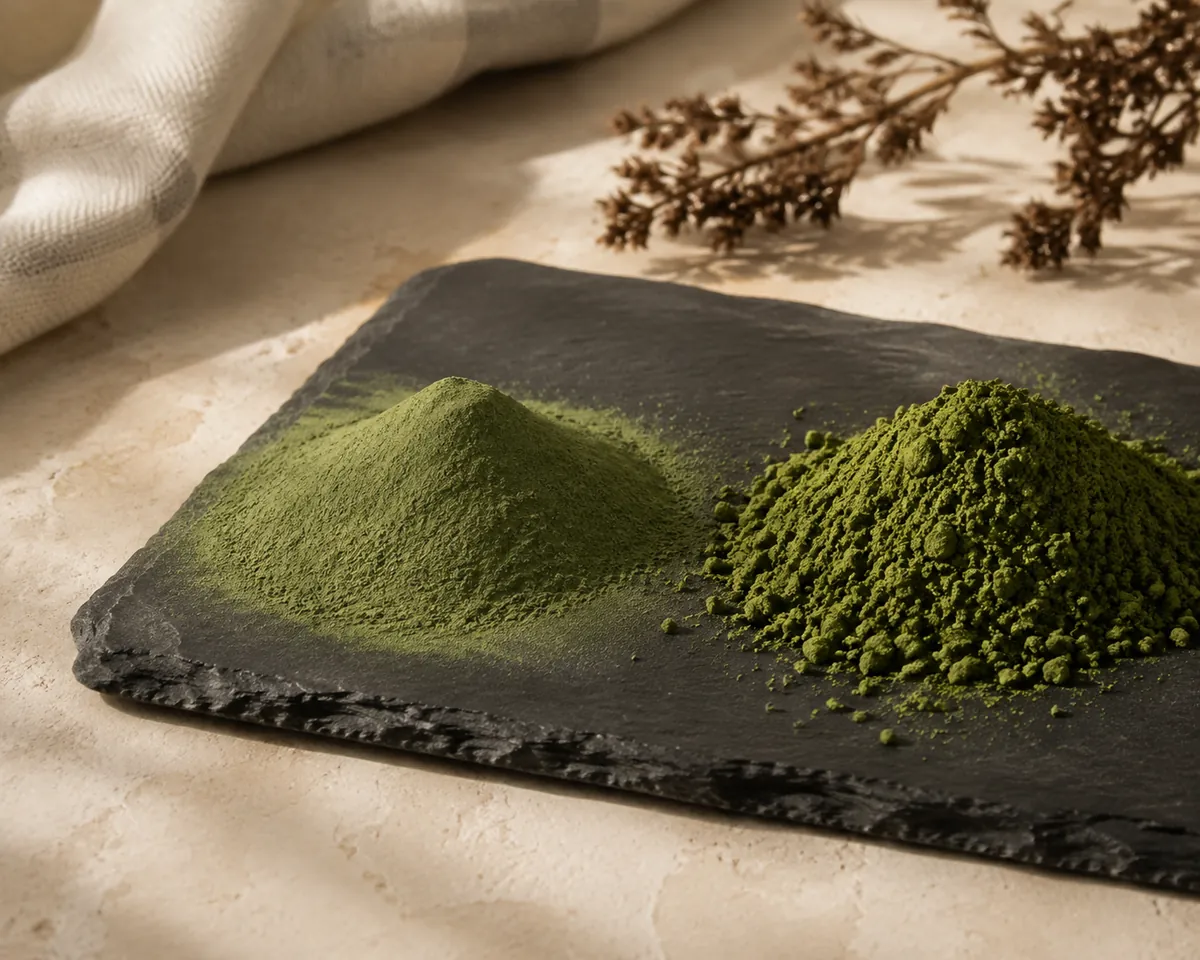
Where each one belongs
The assignment is unusually clean. For a drinks question that is rare: the two powders are optimised for genuinely different conditions, so the answer follows from the drink rather than from a budget.
- Ceremonial for usucha and koicha, whisked with water and nothing else
- Ceremonial where you want to taste the tea itself
- Culinary for lattes, hot or iced, where milk is doing half the work
- Culinary for smoothies, where fruit and dairy would bury anything finer
- Culinary for baking, where heat destroys delicacy regardless
Koicha is the strictest case. It uses roughly twice the powder in half the water, so every fault is doubled, and a culinary grade at that concentration is close to undrinkable.
A matcha latte is the opposite. There is enough milk to soften anything, and the astringency culinary powder carries is exactly what stops the tea disappearing under dairy.
The same holds when the sweetener is cane sugar rather than a syrup.
Iced matcha sits with the latte. Cold mutes flavour further and dilution thins it, so a robust powder is doing the drink a favour rather than shortchanging it.
Why culinary is not a lesser product in a latte
This is the point most often missed, and it costs people money every week in cafes and kitchens. A ceremonial powder in a milk drink is not an upgrade.
The qualities you paid for are precisely the ones milk removes.
The sweetness and umami that distinguish a first-flush powder are subtle by design. Milk fat coats the palate and mutes them, sugar suppresses what is left, and ice thins the whole thing further.
What survives a latte is body and green intensity, and culinary grade has more of both. Blind tastings of milk drinks made with each grade routinely fail to separate them, and where they do, the cheaper powder often reads as the more clearly matcha of the two.
That is not an argument for buying badly. It is an argument for matching the powder to the drink, which is the only version of this question that has a practical answer.
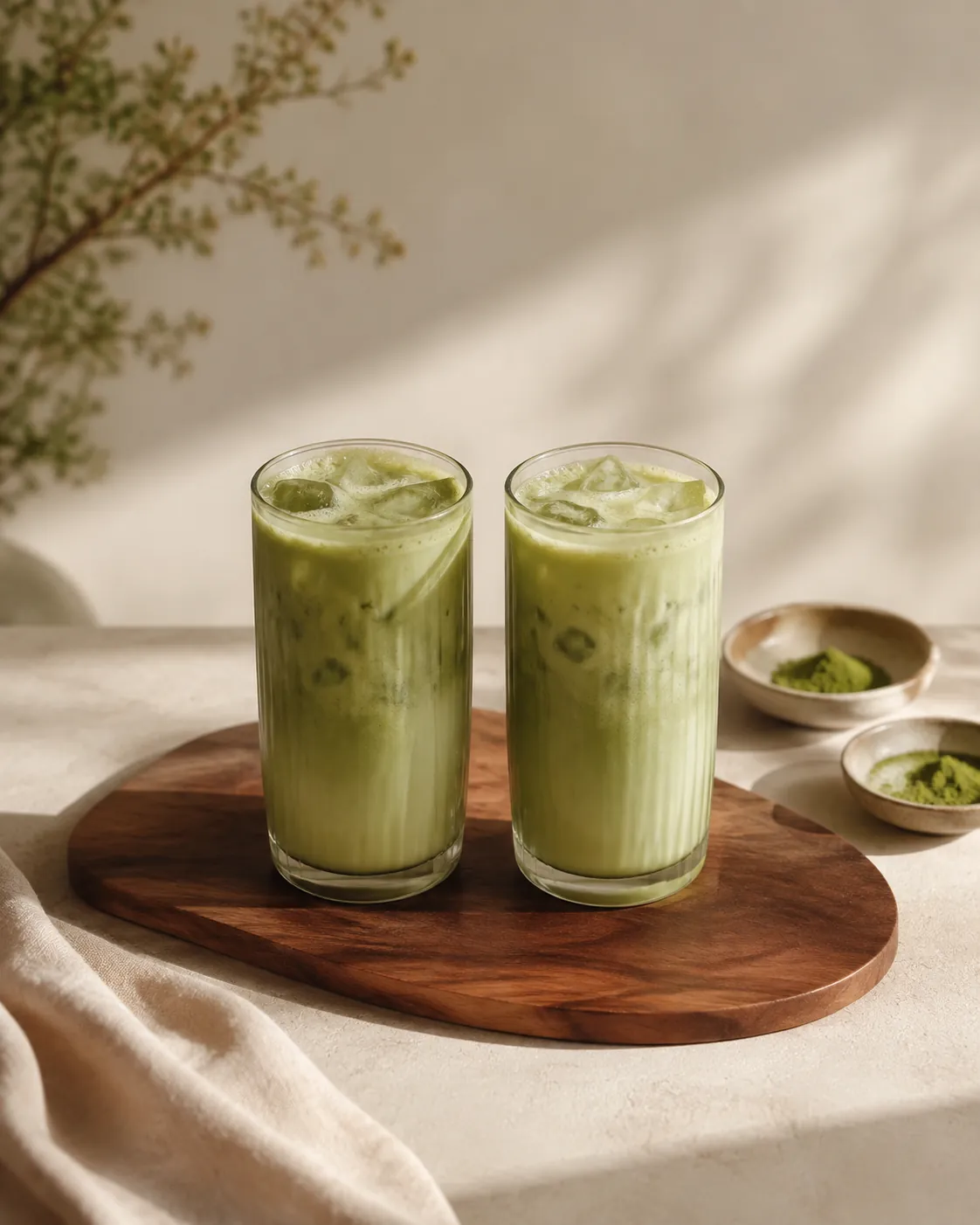
What the word ceremonial does and does not mean
There is no legal definition and no certifying body anywhere in the trade. Ceremonial grade is a marketing term, used honestly by most sellers and loosely by some, and nothing on a tin guarantees what is inside it.
In Japan the distinction is drawn differently, by named cultivar, producer and blend rather than by a two-tier grade ladder. The ceremonial and culinary split is largely an export convention, invented to make an unfamiliar product legible to buyers abroad.
That does not make the term useless. It is a reasonable shorthand for first-harvest, stem-free, stone-ground powder, and most reputable sellers use it that way.
It just cannot be relied on alone.
The related terms are worse. Premium, latte grade and ingredient grade have no agreed meaning at all, and they usually sit somewhere in the culinary band.
Price, and what you are paying for
The gap is large. It is not arbitrary either.
Ceremonial powder commonly costs three to five times as much per gram. Every one of the reasons sits upstream of the tin, in the field and at the mill.
Harvest timing
First flush yields less leaf per bush
Hand picking
Top shoots are selected rather than cut in bulk
Shading
Weeks of managed shade, with the labour that implies
Deveining
Stem and vein removed by hand or careful machine
Stone grinding
Tens of grams an hour, not kilograms
Against that, culinary powder is produced at volume from later harvests with less selection, and it is priced accordingly. Neither price is a trick; they reflect genuinely different amounts of work.
The waste is in the mismatch, not in the price.
Buying ceremonial and putting it in a blender with banana and oat milk discards the entire premium, and buying culinary for a quiet bowl of tea produces a drink you will not want twice.
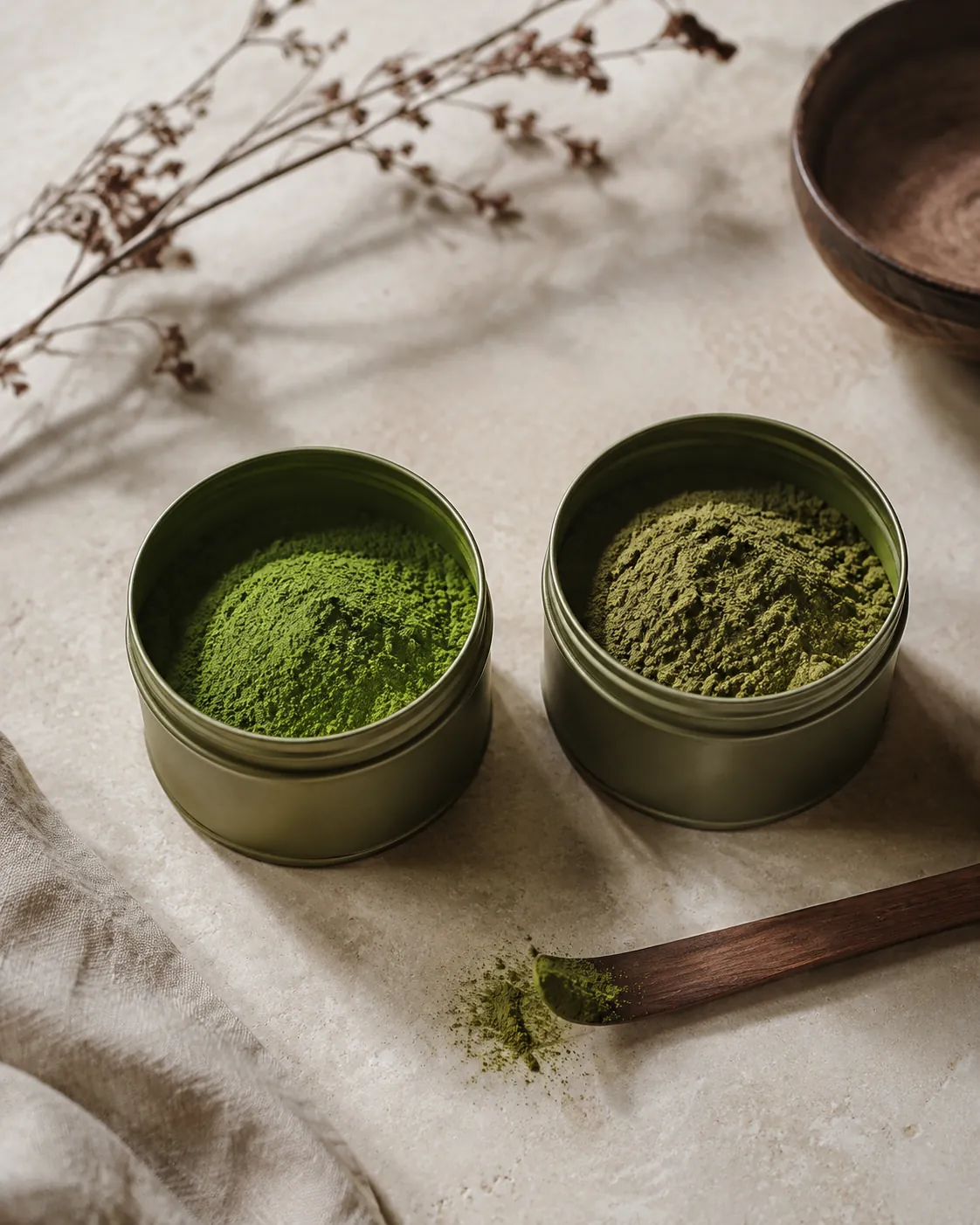
Buying either one without being caught out
The same checks apply to both grades, and none of them requires a trained palate. Most can be done through the packaging, before any money changes hands.
- Judge the colour first, and reject anything khaki or brown in either grade
- Look for a stated harvest and origin rather than a bare grade word
- Prefer small tins, since both grades fade quickly once opened
- Check for a packing date, not only a best-before
- Expect a fresh green smell, not a hay or tobacco note
Origin claims are worth more than grade claims. Uji, Nishio and Yame are the names that carry meaning, and a powder that names its region is usually one whose seller has something to say about it.
Bulk bags are a false economy for both. Matcha oxidises fast once air reaches it, and a large bag is a powder that will be dull before it is finished, which the section on matcha storage covers in detail.
Soft water helps the finished bowl too, for the reasons set out under water for brewing.
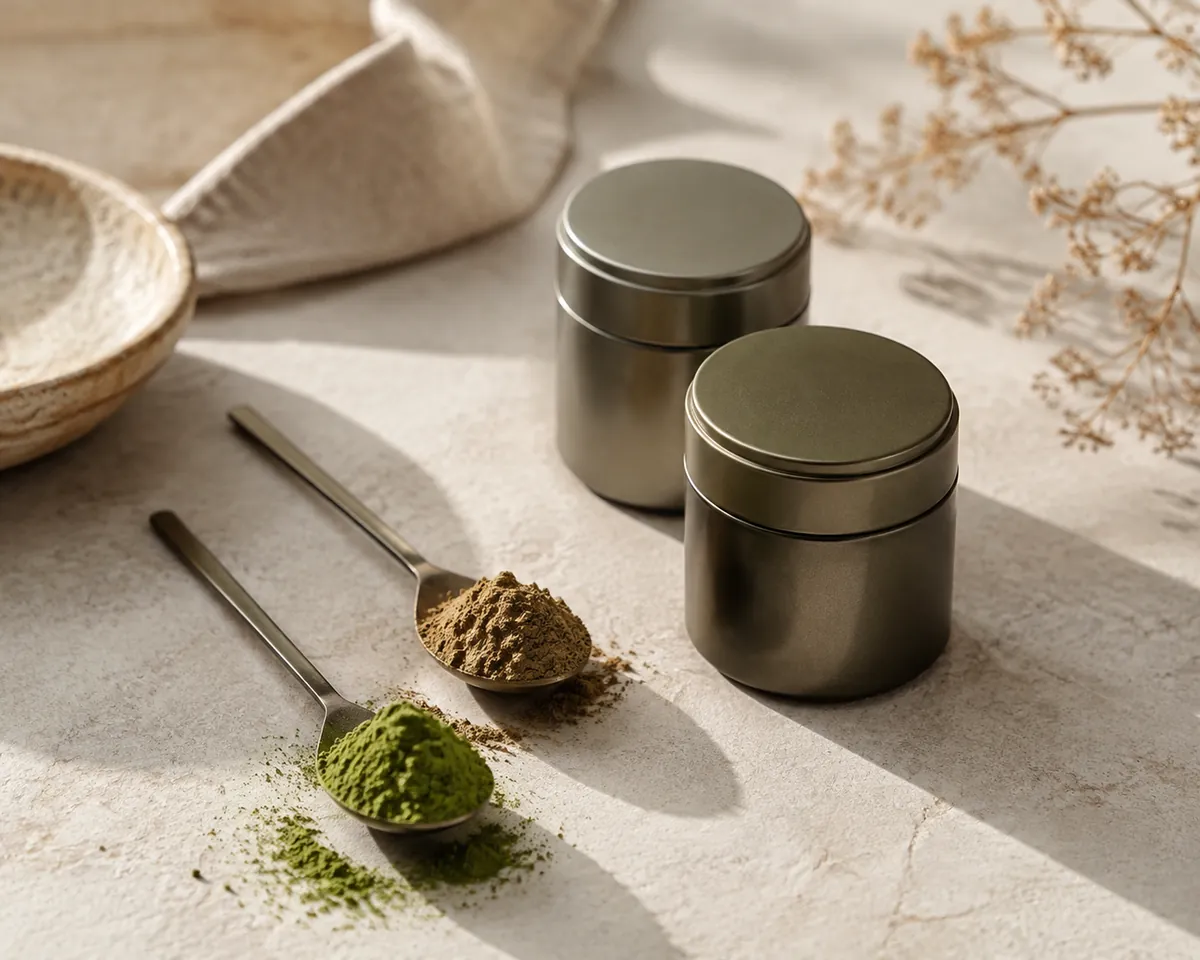
Grind quality shows in the tin. Tap a little onto a spoon: fine powder clumps softly and coats the metal, while a coarse one runs and scatters.
Storage is the same for both
Neither grade keeps well. The ceremonial powder has more to lose.
Air, light, heat and moisture all work against the colour and the aroma. None of them acts slowly.
Sealed and refrigerated, an unopened tin holds for months. Opened, both grades are at their best within a few weeks, and both are noticeably duller after a couple of months at room temperature.
The fridge rule has one condition attached.
Let a cold tin come to room temperature before opening it, because condensation on cold powder clumps it permanently and accelerates everything you were trying to prevent.
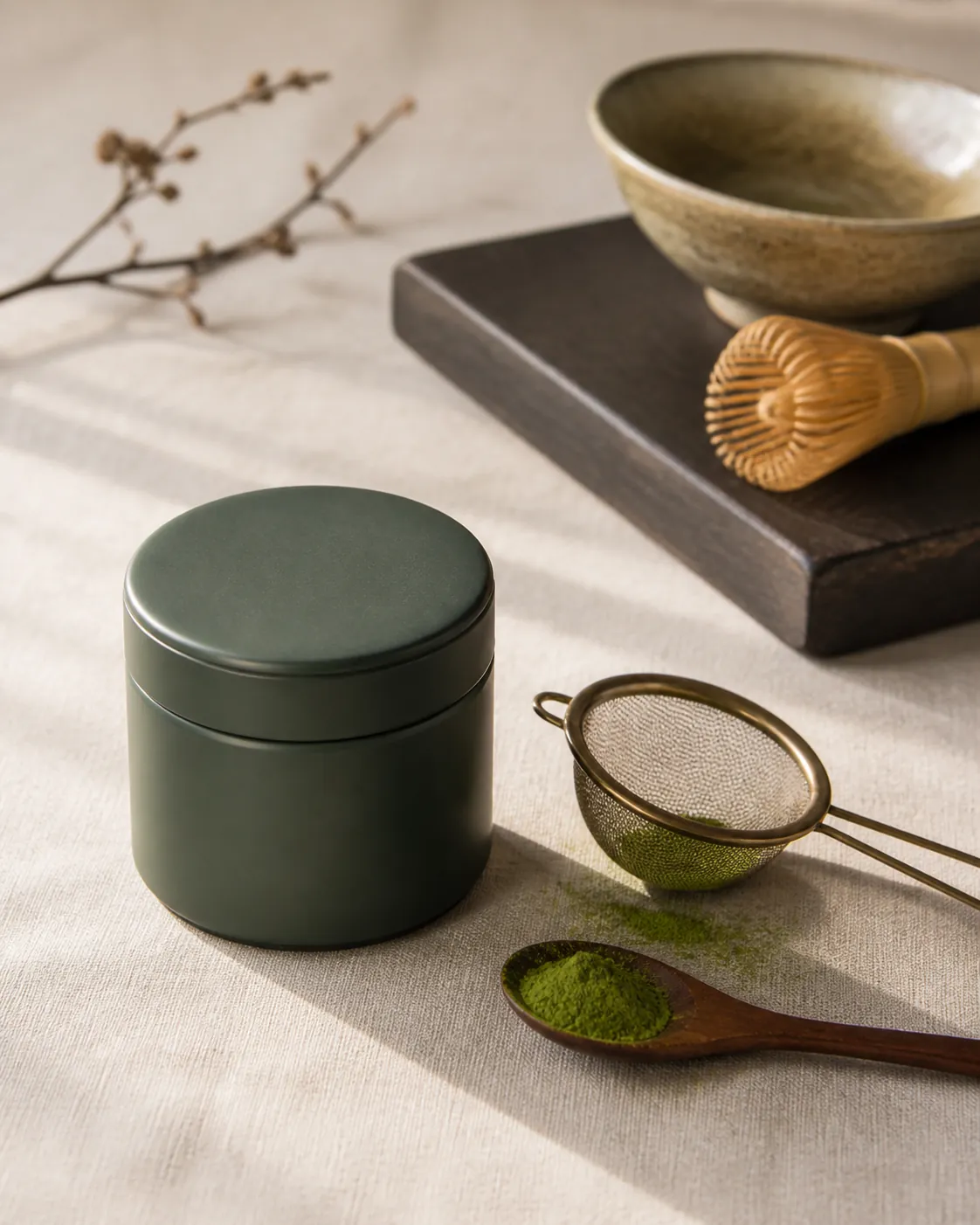
Clumping is worth reading correctly. Fresh matcha clumps softly and breaks up under a sieve; matcha that has taken on moisture forms hard lumps that do not, and that powder is past saving whatever it cost.
Choosing between them
If the matcha is meeting water and nothing else, buy ceremonial, and buy a small tin of something good rather than a large tin of something adequate. That drink has no cover, and every pound spent is audible in the bowl.
If it is meeting milk, sugar or ice, buy culinary and spend the difference on more of it. The full argument for each is set out under ceremonial grade and culinary grade, and both start from the same place this comparison does.
Caffeine does not separate them in any useful way, as matcha caffeine sets out, so it is no tiebreaker. Most households that drink matcha regularly end up with both, which is the honest answer.
One tin for the morning bowl and one for everything else costs less over a year than trying to make a single powder do both jobs badly.
Common questions
Should you use ceremonial matcha in a latte?
No, and it is the most common way to waste money on matcha. The sweetness and umami that distinguish a first-flush powder are subtle by design, and milk fat coats the palate and mutes them while sugar suppresses what is left. What survives a milk drink is body and green intensity, and culinary grade has more of both.
Is ceremonial grade an official classification?
No. There is no legal definition and no certifying body, and in Japan the distinction is drawn by cultivar, producer and blend instead. The two-tier grade ladder is largely an export convention. Most sellers use it honestly as shorthand for first-harvest, deveined, stone-ground powder, but the word alone guarantees nothing.
How can you tell the two apart before buying?
Colour. Ceremonial powder is a vivid, almost fluorescent jade because long shading builds chlorophyll; culinary powder is duller and often distinctly olive. Khaki or brown means age rather than harvest in either grade, and a bright powder labelled culinary is a better buy than a dull one labelled ceremonial.