What Is Iced Matcha? Why Cold Water Will Not Hold the Powder
Matcha never dissolves. It is a powder held in suspension, and cold water is far worse at holding it than hot water is, which is why an iced glass starts with a splash of warm water and why the two faults it has are dilution and separation.
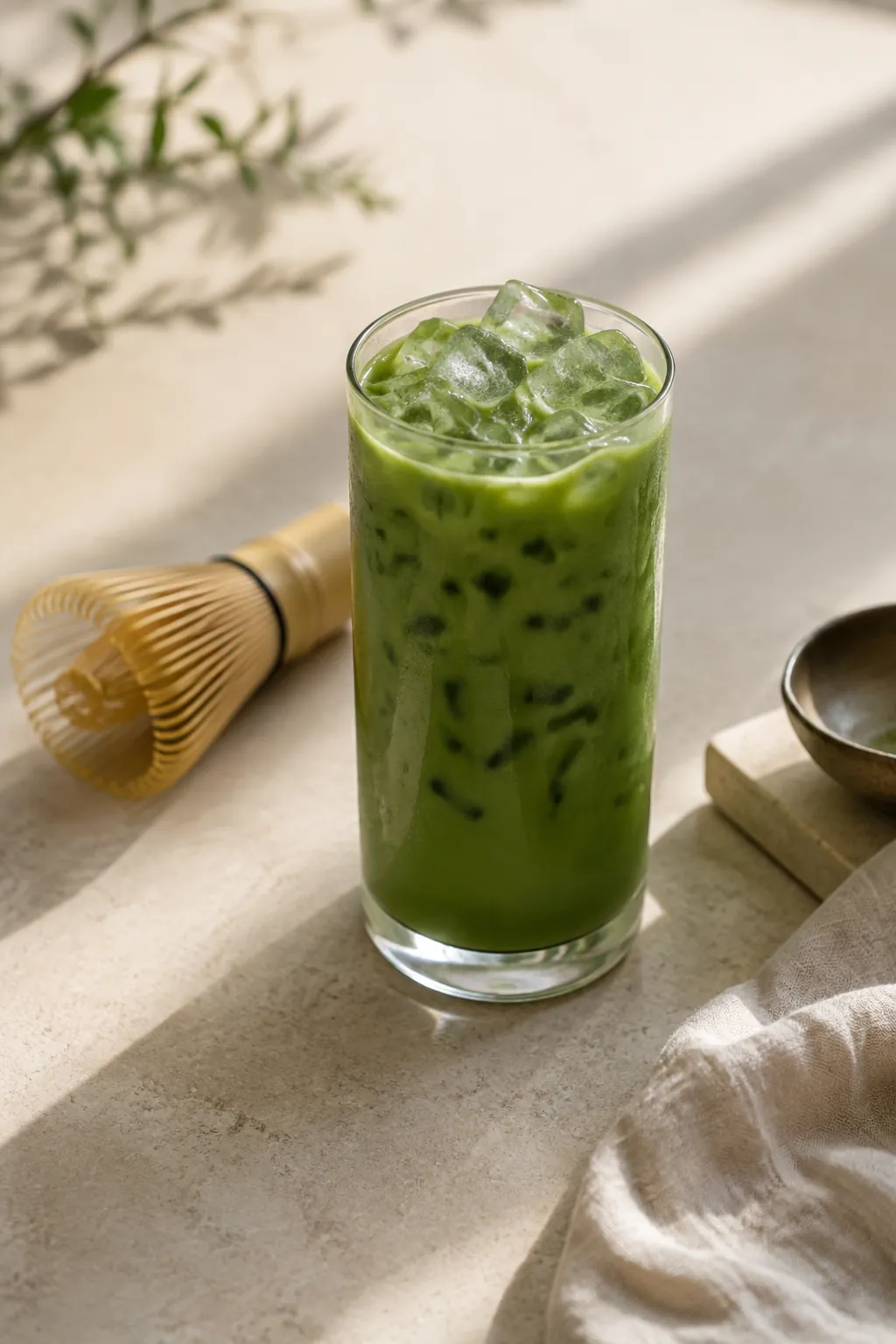
Iced matcha is green tea powder held in cold water. That phrasing is deliberate, because the powder is held rather than dissolved, and holding it is precisely what cold water is bad at.
Every difficulty the drink has comes out of that one fact. The lumps, the layers, the pale watery last mouthful and the glass that looks nothing like the photograph are all the same problem seen from different angles.
Iced matcha at a glance
- What it is
- Powdered green tea suspended in cold water, over ice
- Dissolves
- No. It is a suspension, and it settles
- Powder per glass
- About 4 g, roughly double a hot bowl
- The trick
- Whisk into a little warm water first, then pour over ice
- Two faults
- Dilution from the melt, and separation on standing
- Drink it
- Within about twenty minutes, and stir once halfway
- Not the same as
- A matcha latte, which adds milk to the same base
A suspension, not a solution
Matcha does not dissolve.
Whole leaf is stone-ground to a powder of a few microns across, and when you whisk it into water most of what you have made is a cloud of solid particles held up in liquid. A small fraction genuinely does go into solution: amino acids, some catechins, the caffeine.
The green is not in solution at all.
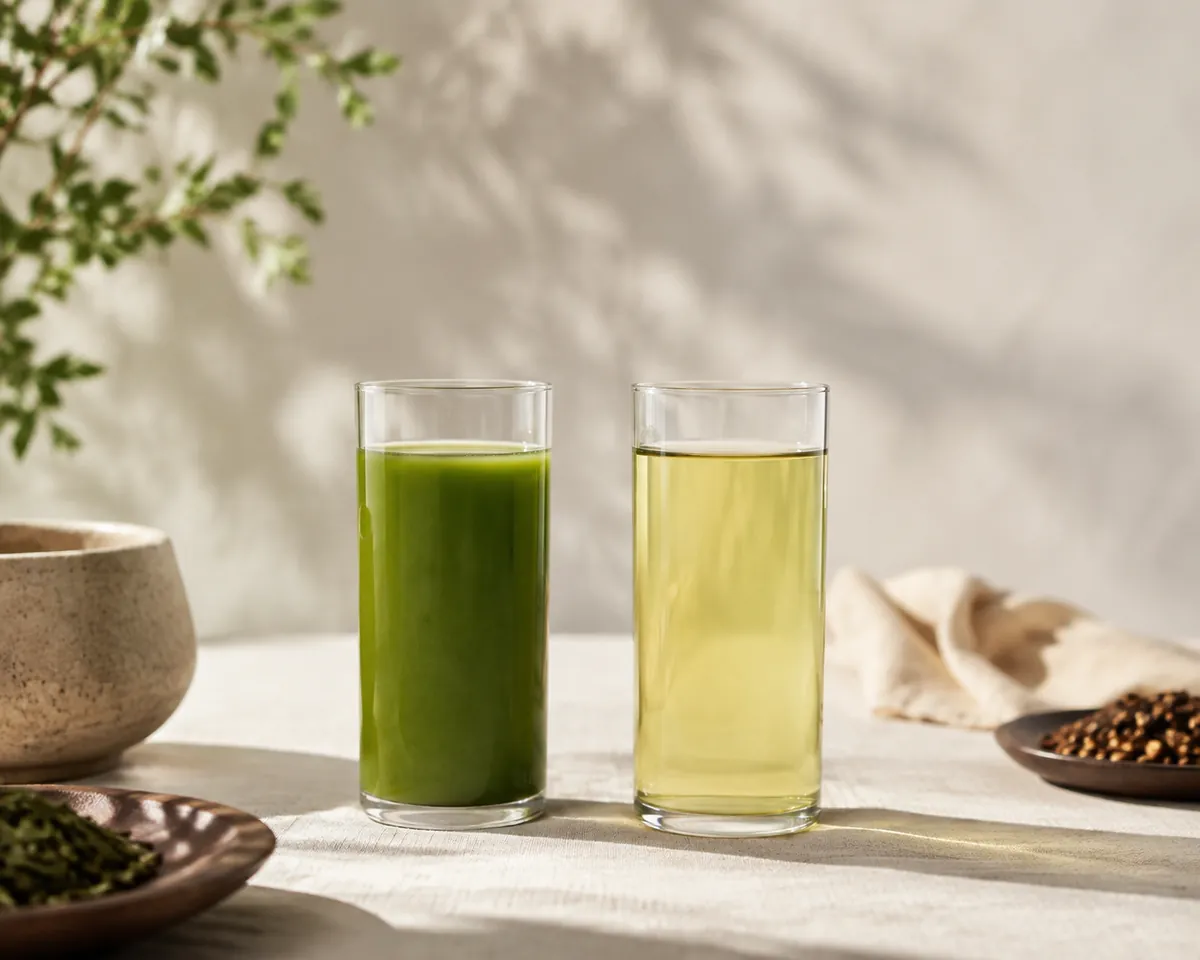
That division explains a great deal. The dissolved fraction is what your tongue meets first, and the suspended fraction is what carries the colour, the body and the rest of the flavour into your mouth a moment later.
What is actually in the glass
- DissolvedAmino acids, caffeine and some catechins. Tasted immediately.
- SuspendedGround leaf particles. Colour, body, and most of the flavour.
- Held up byWhisking, foam, and whatever viscosity the liquid has.
- Pulled down byGravity, from the moment you stop agitating it.
- The consequenceA glass left standing separates, because nothing is keeping it mixed.
An infusion has no equivalent problem. A cup of green tea is a solution and stays one, while matcha is closer to a very fine sediment you have agreed to drink, and how the two differ across the board is set out in green tea against matcha.
Why cold water resists the powder
Cold water is a worse solvent and a worse wetting agent at the same time, and both of those work against you in the same glass. Neither is a small effect, which is why an iced glass made the way a hot bowl is made almost always fails.
Wetting is the first problem. Dry matcha carries fine cell-wall material that water has to penetrate before a particle will disperse, and colder, more viscous water does this slowly enough that particles stick to each other into rafts instead.
A whisk then pushes those rafts around rather than breaking them up.
Solubility is the second. The compounds that do dissolve go into cold water reluctantly, so a glass whisked entirely cold tastes thinner and flatter than the same powder in a hot bowl even when nothing is lumpy.
Foam suffers as well, and for related reasons. Cold liquid whips less readily and the head collapses faster, which matters more than it sounds: the foam on a hot bowl is part of what holds particles up, so losing it means losing the one thing that was resisting gravity.
Sifting stops being optional in the cold. A clump that a hot whisk would break apart in three seconds will survive a cold one entirely, so the sieve does work here that the whisk cannot.
Why it starts with warm water and finishes cold
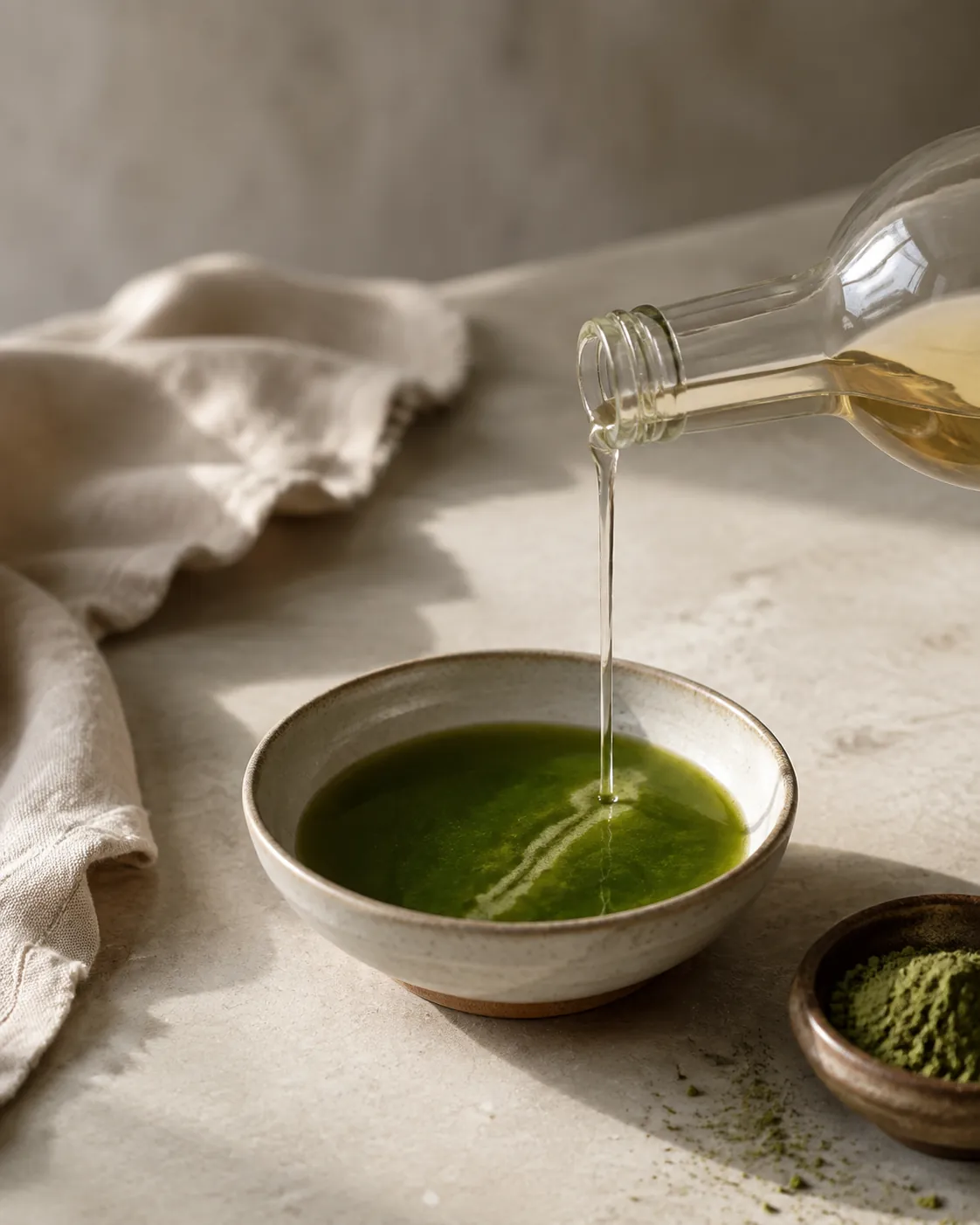
Forty millilitres of warm water is doing the work that the other two hundred cannot. The powder is wetted, dispersed and partly dissolved in a volume small enough to whisk properly, and only then does it meet anything cold.
Warm rather than hot is the point of the whole step. Water at around 60 to 70 C disperses the powder without pulling out the harsh edge boiling water does.
Forty millilitres is also small enough that it has almost no effect on the temperature of the finished glass.
Building a glass, in order
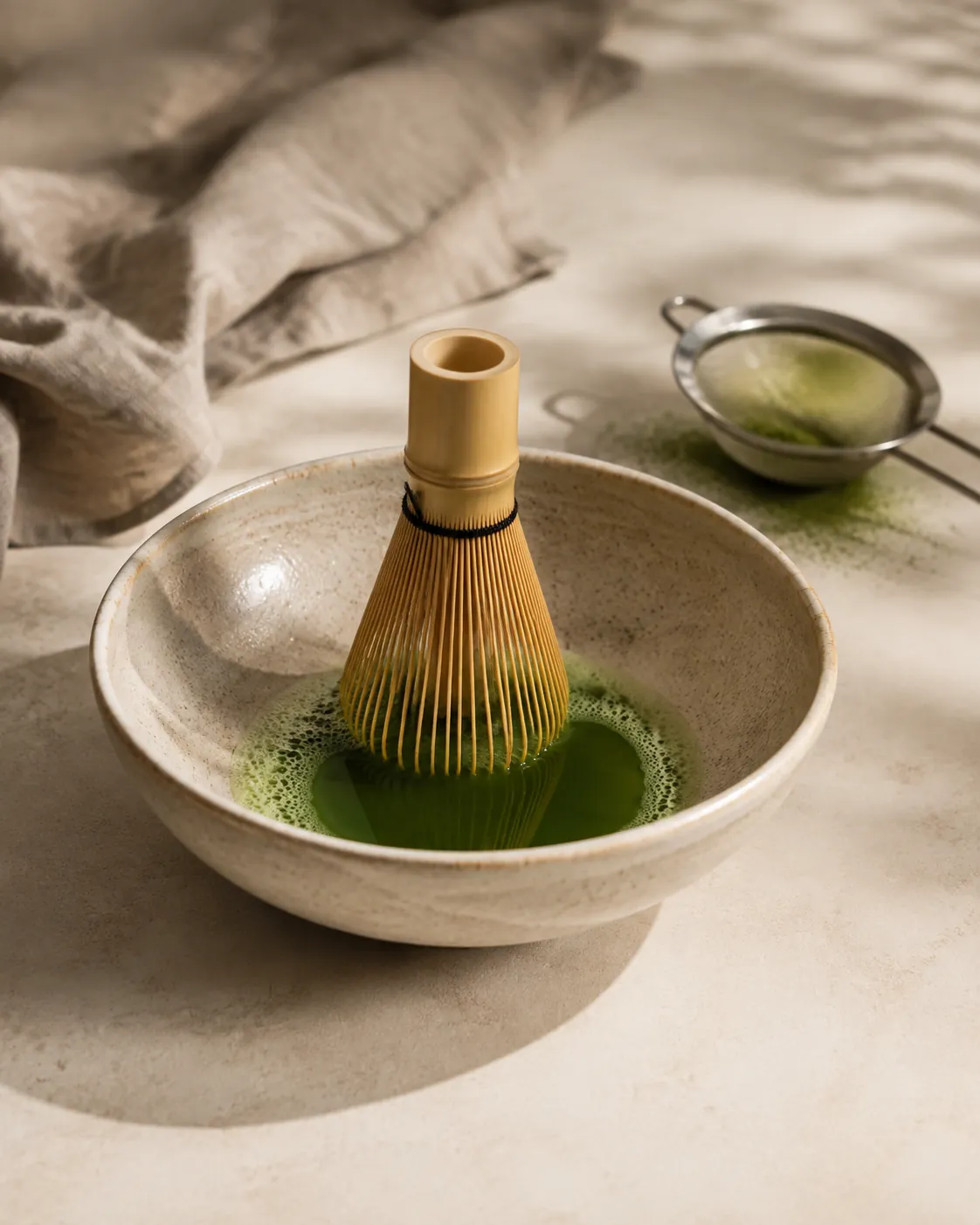
- Sift4 g of powder through a fine tea strainer into a bowl. Non-negotiable when cold.
- Wet itAbout 40 ml of water at 60 to 70 C. Whisk until no grain is visible.
- Check itTilt the bowl. A smooth surface with no speckles means it is ready.
- Fill the glassIce to the top, not a token two cubes.
- PourThe concentrate over the ice, then top with cold water to taste.
- Stir onceFrom the base, immediately before drinking.
There is an all-cold alternative and it is worth knowing. A sealed jar with the powder, cool water and ice shaken hard for twenty seconds disperses everything mechanically, which is what whisking matcha sets out as the cold-water technique, and it trades a little of the dissolved sweetness for not having to boil anything.
What fails in both cases is the obvious route. Whisking a full hot bowl and tipping it over ice gives you a drink that was balanced for 70 ml arriving in a glass of 250, and the melt does the rest of the damage.
How much powder a glass of ice needs
A bowl of thin tea is 2 g in 70 ml, and an iced glass is nothing like that. Once the ice has melted a tall glass holds somewhere around 250 ml, so the same 2 g would be spread across more than three times the water it was measured for.
An iced glass that still tastes of tea
- Matcha
- 4 g, sifted
- Warm water
- 40 ml at 60 to 70 C, for the whisk
- Ice
- 150 g, filling the glass
- Cold water
- 60 to 100 ml, to taste
- Finished volume
- Around 250 ml once the ice has gone
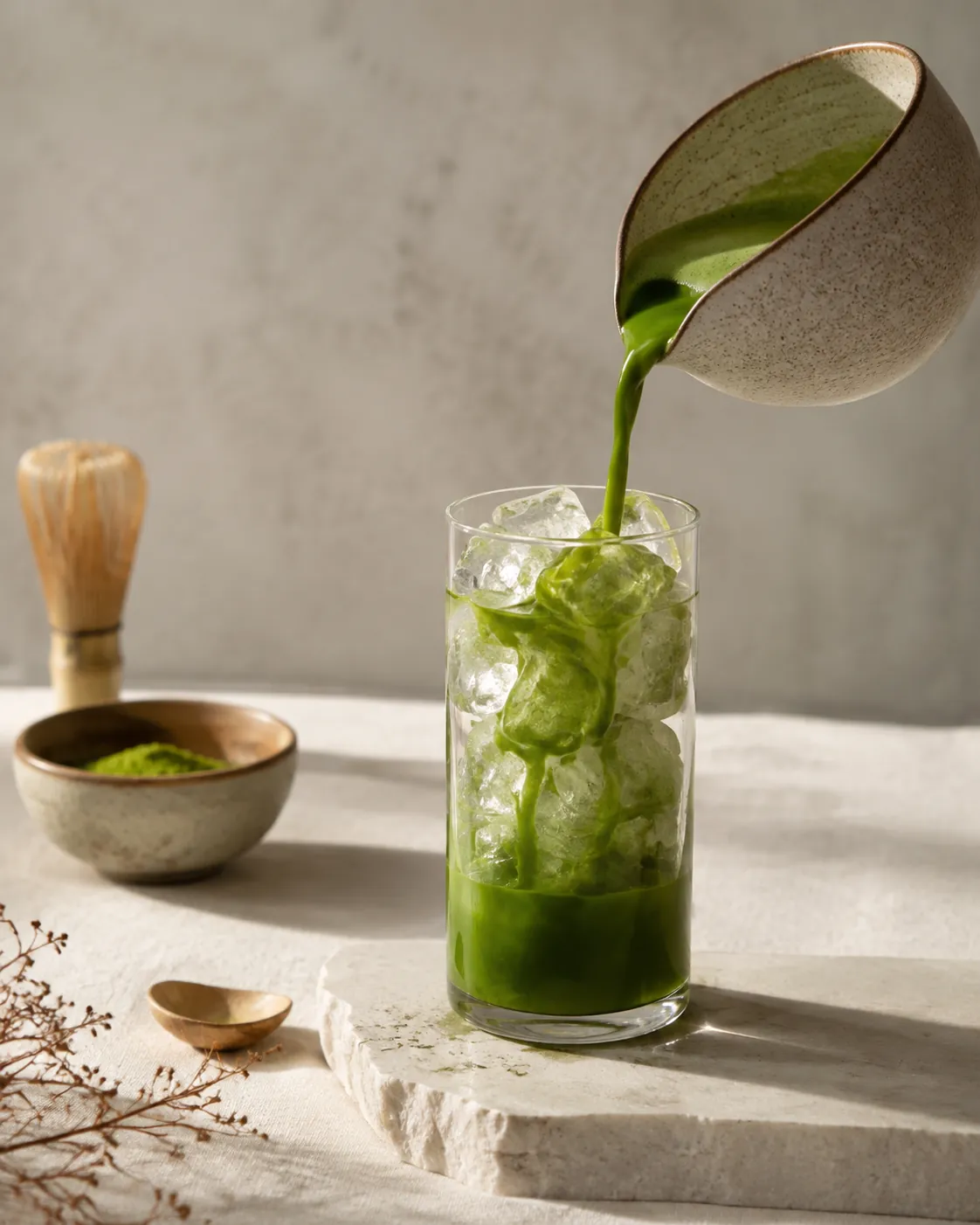
Doubling the powder is the honest fix, and it is the one cafés use. The alternative is halving the water.
That gives a short intense glass closer to a cold usucha than to the long drink most people came for.
What each dose gives in a 250 ml glass
- 6 gDense and astringent. Closer to thick tea than to a cold drink
- 4 gThe working figure. Still clearly tea at the last mouthful
- 3 gLight and pleasant, and thin once the ice has melted
- 2 gA hot bowl's dose in three times the water. Pale and watery
- Under 2 gGreen-tinted water with a faint vegetal note
Filling the glass properly is the other half of the arithmetic. A glass packed with ice melts more slowly than one with three cubes rattling in it, because the cubes insulate one another and there is less warm liquid per gram of ice, which is the same effect that makes a full glass of iced coffee hold its strength longer.
Why the green layer people photograph is the fault
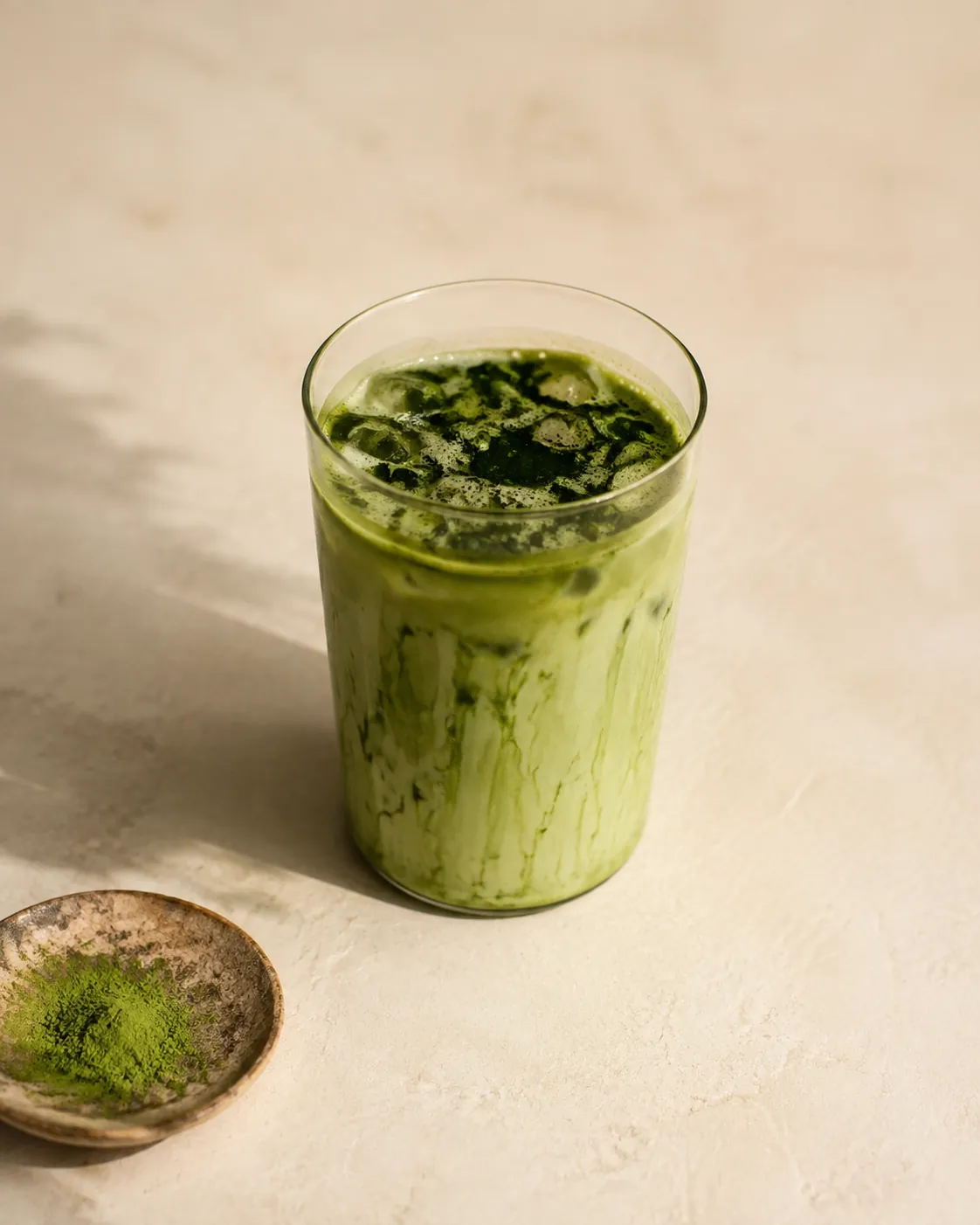
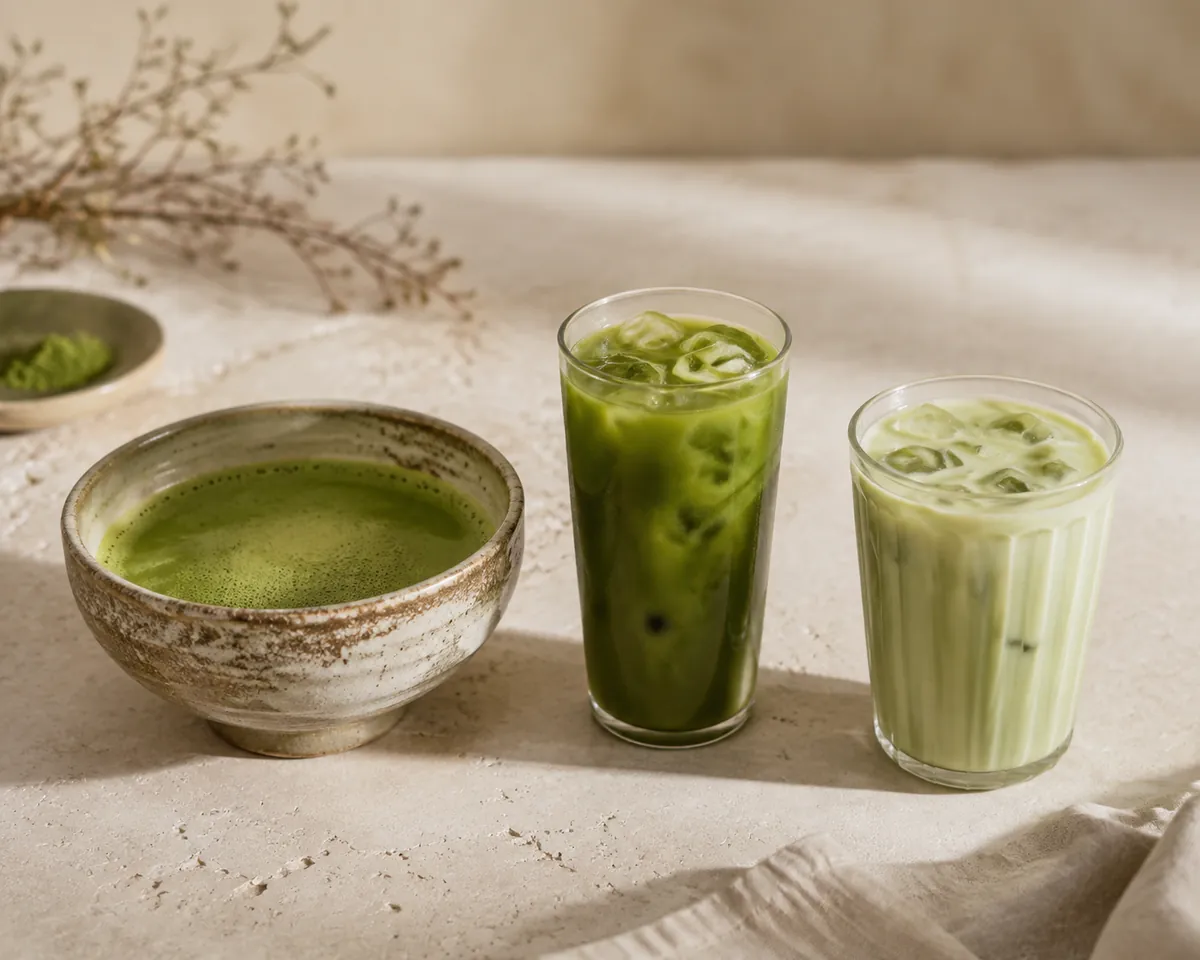
That band of dark green settling through pale milk is separation, which is to say a defect that has been rebranded as a look. It is genuinely attractive and it is also the drink coming apart in front of you.
Particles fall under gravity at a rate set by their size and by the viscosity of what they are falling through. Nothing about matcha stops that happening; whisking only postpones it, and the moment you put the bowl down the clock starts.
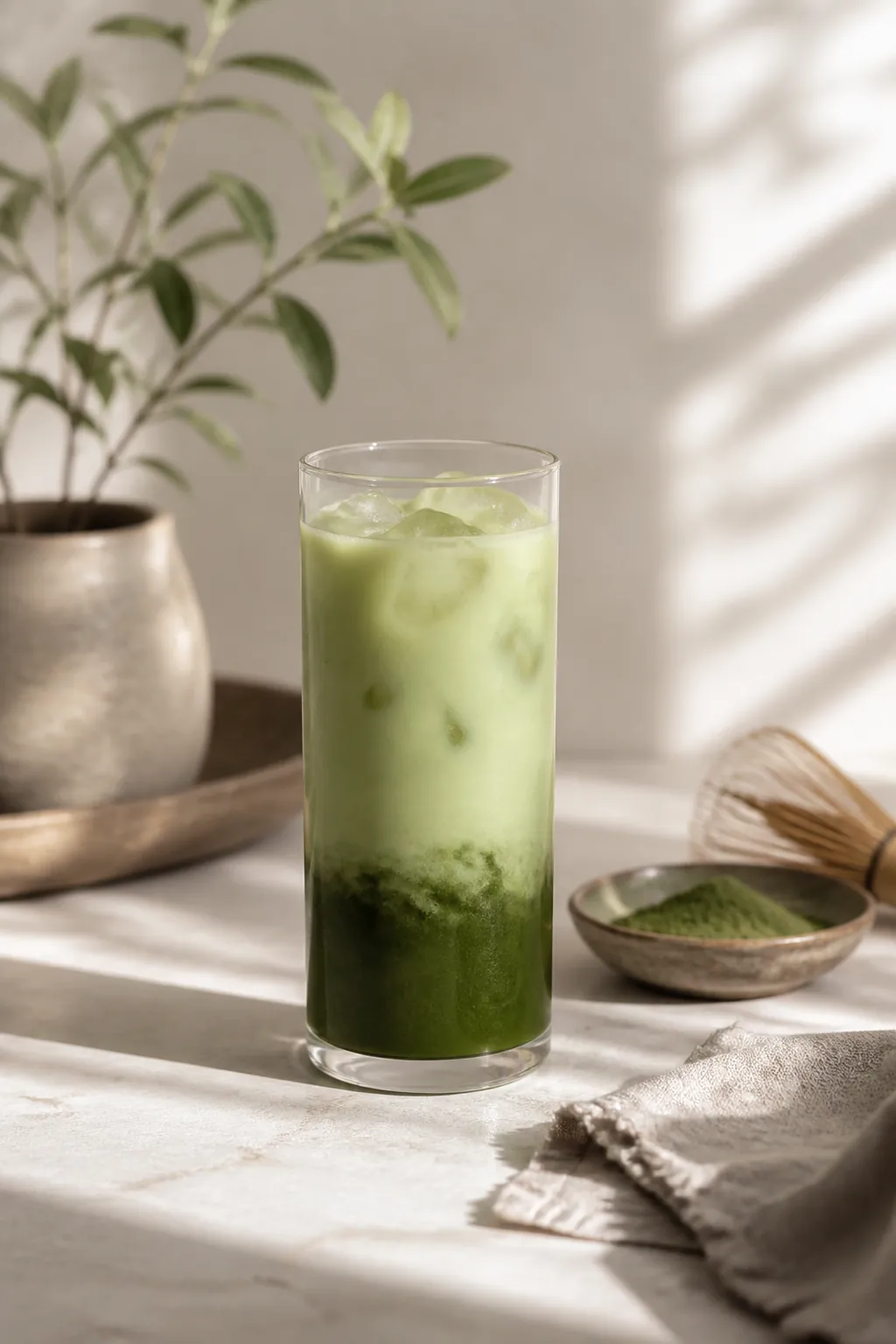
Cold slows the fall slightly, since colder liquid is more viscous, but that gain is swallowed by the fact that an iced drink sits around for far longer than a hot bowl ever does. Nobody nurses a bowl of thin tea for twenty minutes and almost everybody nurses a tall glass.
The remedy is unglamorous. Stir it once from the base halfway down the glass and the drink is restored exactly, because nothing has been lost and nothing has spoiled.
A straw does the same job on the way past.
What holds it together once it is poured
Viscosity is what keeps particles up.
Anything that thickens the liquid slows the settling, which is why a matcha latte separates more slowly than a plain iced matcha and why a sweetened one holds together better than an unsweetened one. This is physics rather than a quality difference between the drinks.
Milk
Protein and fat raise viscosity noticeably. The slowest to separate.
Syrup
Dissolved sugar thickens the liquid and helps a little.
Plain water
Thinnest of all, so it separates fastest.
Foam
Whatever survives from the whisk holds particles near the top.
A straw
Re-mixes on every sip, which is why cafés hand you one.
Cafés lean on this harder than they admit. A commercial iced matcha is frequently built on a pre-sweetened powder, and part of what the sugar is doing is keeping the drink looking mixed for the ten minutes between the counter and the table.
For a home glass the useful version of the same idea is simply to build it in the order that gives the most agitation last. Concentrate poured over ice and stirred at the base beats concentrate sitting under a cold pour, and a barista oat drink turns the whole thing into a matcha latte, which is a different drink with the same base.
A jar beats a whisk once the water is cold
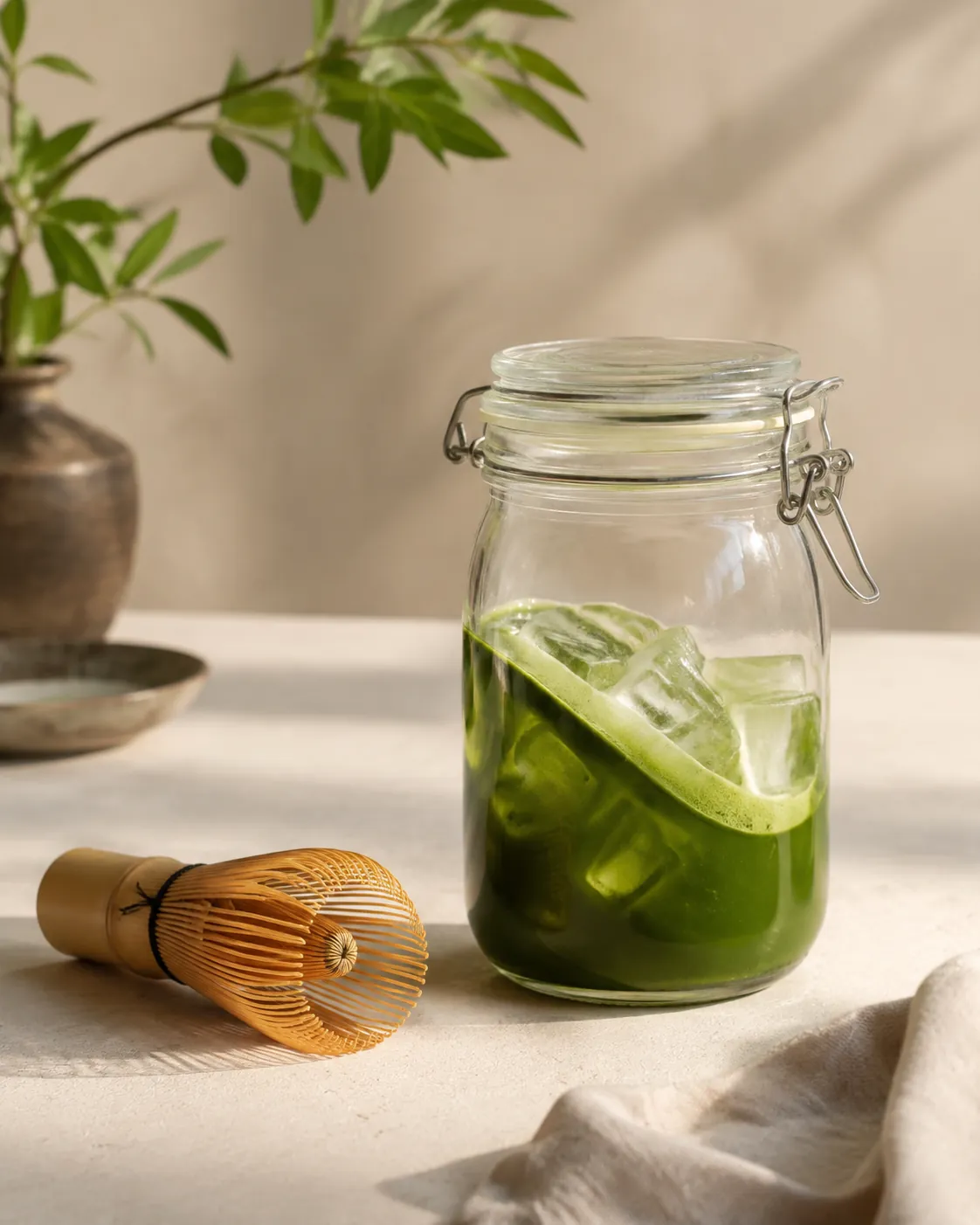
A sealed jar outperforms a bamboo whisk in cold water, which is not true anywhere else in matcha. The reason is that shaking applies force in three dimensions and for as long as you like, while a chasen works a shallow layer of liquid in one plane.
The whisk is still the right tool for the warm start.
Forty millilitres in a wide bowl is exactly the situation a chasen was designed for, and nothing disperses a small volume better, which is why the hybrid method uses both tools for the stage each is good at.
| Tool | In warm water | In cold water |
|---|---|---|
| Bamboo chasen | Excellent. The tool it was built for | Poor. Pushes rafts around |
| Sealed jar, shaken | Unnecessary | Excellent. Force in every direction |
| Electric frother | Good, and noisy | Good, though it foams little |
| Spoon | Hopeless | Hopeless |
| Blender | Overkill, and it warms the drink | Works, and hard to justify |
An electric milk frother sits between the two and is the pragmatic choice for anyone making this daily. It is less pleasant to use than a chasen and it does not care what temperature the water is.
None of this replaces the technique itself, which whisking a bowl sets out in full. The tool decides how easy dispersal is, not whether the physics changes, and the full account of the motion, the bowl and the care of a chasen belongs to whisking matcha.
Why grade matters more here than in a latte
Cold takes away the very thing an expensive powder is sold on. Perceived sweetness and umami both fall as temperature drops, while astringency is much less affected, so a cold glass shifts the balance towards the sharp end of whatever powder you used.
That runs against the usual advice.
People reach for cheaper powder when the drink is iced on the assumption that cold hides faults, and cold does the opposite: it removes the sweetness that was covering them.
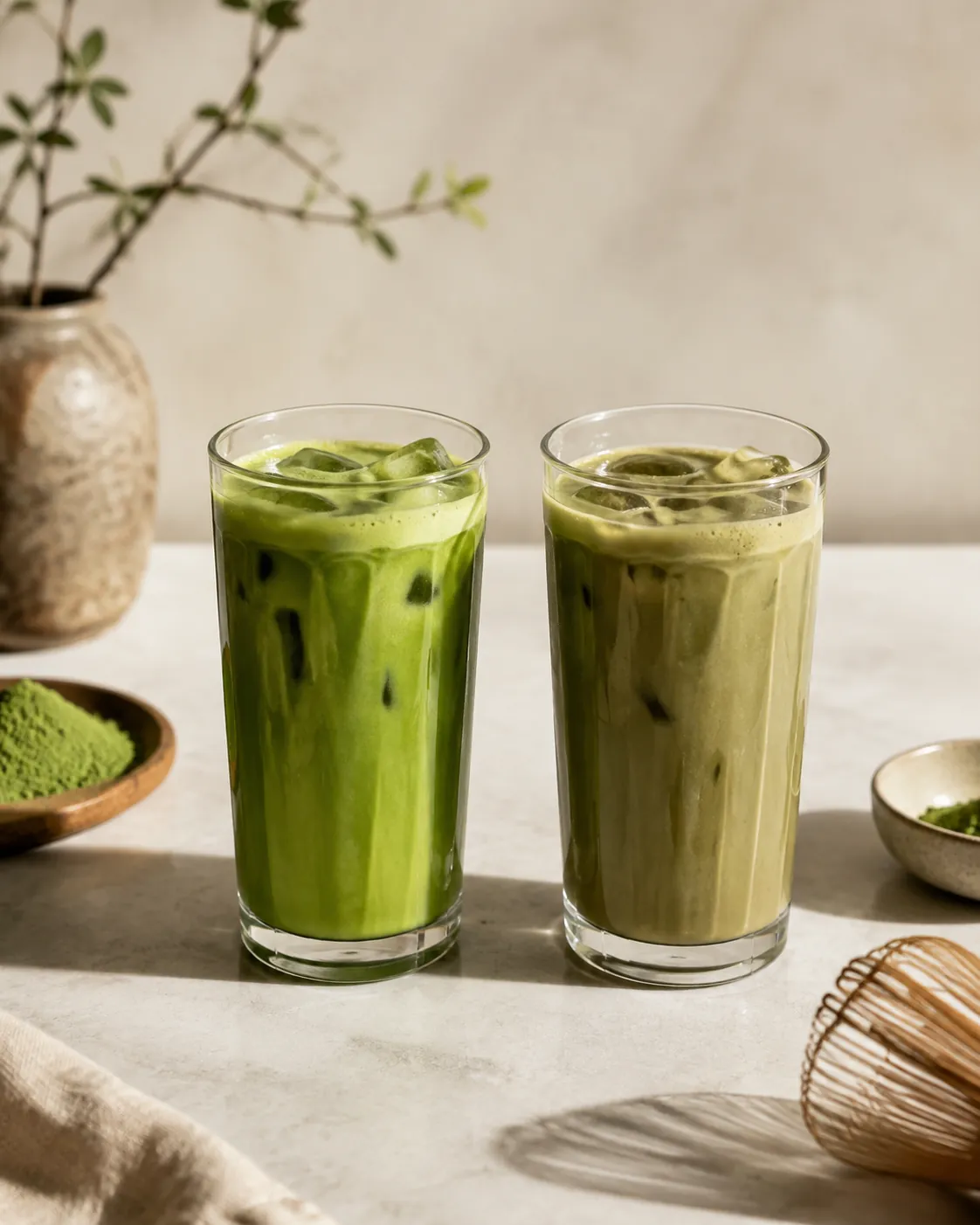
Milk is what actually hides a rough powder, through fat, protein and usually sugar, which is the case for using culinary grade in a latte and not in a plain iced glass. Strip the milk out and there is nothing left between you and the tea.
Where each grade lands in a plain iced glass
- Ceremonial, good spring harvestBright, sweet, and worth the money cold
- Everyday ceremonialThe sensible default for a plain glass
- Upper culinaryWorkable, with syrup or milk to soften it
- Standard culinaryNoticeably astringent without milk
- Old or badly kept powderDull, olive-toned and flat, whatever the grade
Colour is the quick check before you commit. A powder that looks yellowish or khaki in the tin will look worse in a clear glass than it ever does in a ceramic bowl, and what to look for when buying is covered in ceremonial grade and culinary grade.
Sweeten it as a syrup or not at all
Granulated sugar is not an option here. Sucrose dissolves readily in hot liquid and very poorly in cold, so a spoonful stirred into a finished glass settles at the bottom and turns the last third cloying while the first two thirds taste unsweetened.
- Use a liquid sweetener, or dissolve sugar in the warm water at the whisking stage.
- Sweeten after tasting, once the first melt has happened.
- Add more powder before adding more sugar if the drink tastes flat.
- Remember that a barista plant drink is already sweetened.
- Stir from the base, since syrup sinks and stays there.
Sugar is also doing structural work rather than only tasting sweet. It suppresses the perception of astringency, so a sweetened glass reads smoother at the same measured strength, and taking it out makes the drink sharper as well as less sweet.
Simple syrup is the neutral choice and changes nothing else about the glass. Anything with a flavour of its own competes with a vegetal tea, which is why vanilla syrup works better in a milk version than a plain one, and none of this is guidance about how much anyone should drink.
How long a glass stays good
Twenty minutes.
That is not a safety figure and nothing spoils; it is the window in which the drink is still the drink you made. Three separate things are working against it and they run on roughly the same clock.
| Change | Cause | Fix |
|---|---|---|
| Layers form | Particles settling under gravity | Stir from the base |
| It tastes weaker | Melting ice adding water | Build it stronger, fill the glass |
| Colour dulls | Light and air acting on the leaf | Drink it, or keep it shaded |
| Foam collapses | Cold liquid does not hold a head | Expected, not a fault |
| It turns flat | The whole of the above together | Make a fresh one |
Colour is the most visible of the four and the most useful signal. Bright jade fading towards olive is the same change that happens to a badly kept tin, only compressed into half an hour, and it tracks the flavour closely enough to judge by eye.
Making it ahead does not work well for this reason, and a jug of iced matcha in the fridge is a different and worse drink by the time anyone pours it. What that costs, and how far ahead is too far, belongs to keeping iced matcha, while the faults that show up in the making are collected in matcha problems.
Where it sits against the bowl and the latte
Three drinks come out of the same tin and they are not versions of one another. Each is built around a different amount of water, a different tool and a different expectation of how long you will take over it.
| Iced matcha | Thin bowl | Matcha latte | |
|---|---|---|---|
| Powder | 4 g | 2 g | 3 to 4 g |
| Liquid | 250 ml with the melt | 70 ml | 200 ml, mostly milk |
| Tool | Whisk then jar, or a jar alone | Chasen | Whisk, then pour |
| Drunk over | Twenty minutes | Two minutes | Fifteen minutes |
| Chief risk | Dilution and separation | Under-whisking | Milk burying the tea |
The bowl is the reference point and the one worth making first. Until you know what 2 g in 70 ml tastes like, there is no standard against which an iced glass can be judged, and thin tea is where that standard is set.
Iced matcha is the format that asks the most of the powder and gives it the least help. That makes it a fair test of a tin and an unfair place to use up an old one, and where the flavour actually lands across all of this is described in matcha taste and, for this drink specifically, in iced matcha flavour.
The step-by-step build sits at making iced matcha.
Common questions
Why does my iced matcha go lumpy?
Cold water wets the powder badly, so particles clump into rafts that a whisk pushes around rather than breaks up. Sift the powder, whisk it into about 40 ml of warm water until it is smooth, and only then pour it over ice.
Why does iced matcha separate into layers?
Matcha is suspended rather than dissolved, so the particles settle out under gravity once nothing is holding them up. The dark green band that collects at the bottom of a glass is that settling, and stirring it back in restores the drink.
How much matcha does an iced glass need?
Roughly double a hot bowl. A bowl of thin tea is about 2 g in 70 ml, while a tall glass ends up nearer 250 ml once the ice has melted, so 4 g is the working figure if the drink is still to taste of tea at the last mouthful.