Green tea vs Matcha
Green Tea vs Matcha: An Infusion Against the Whole Leaf
Same plant, same family, entirely different drink. Steeping gives you what dissolved; matcha gives you the whole leaf.
They are both Camellia sinensis, but with steeped green tea you drink an infusion and throw the leaf away, while with matcha the leaf is ground to powder and suspended in the water, so you consume all of it. That difference drives everything else: matcha is more concentrated, more savoury, higher in caffeine per serving, and needs whisking rather than steeping.
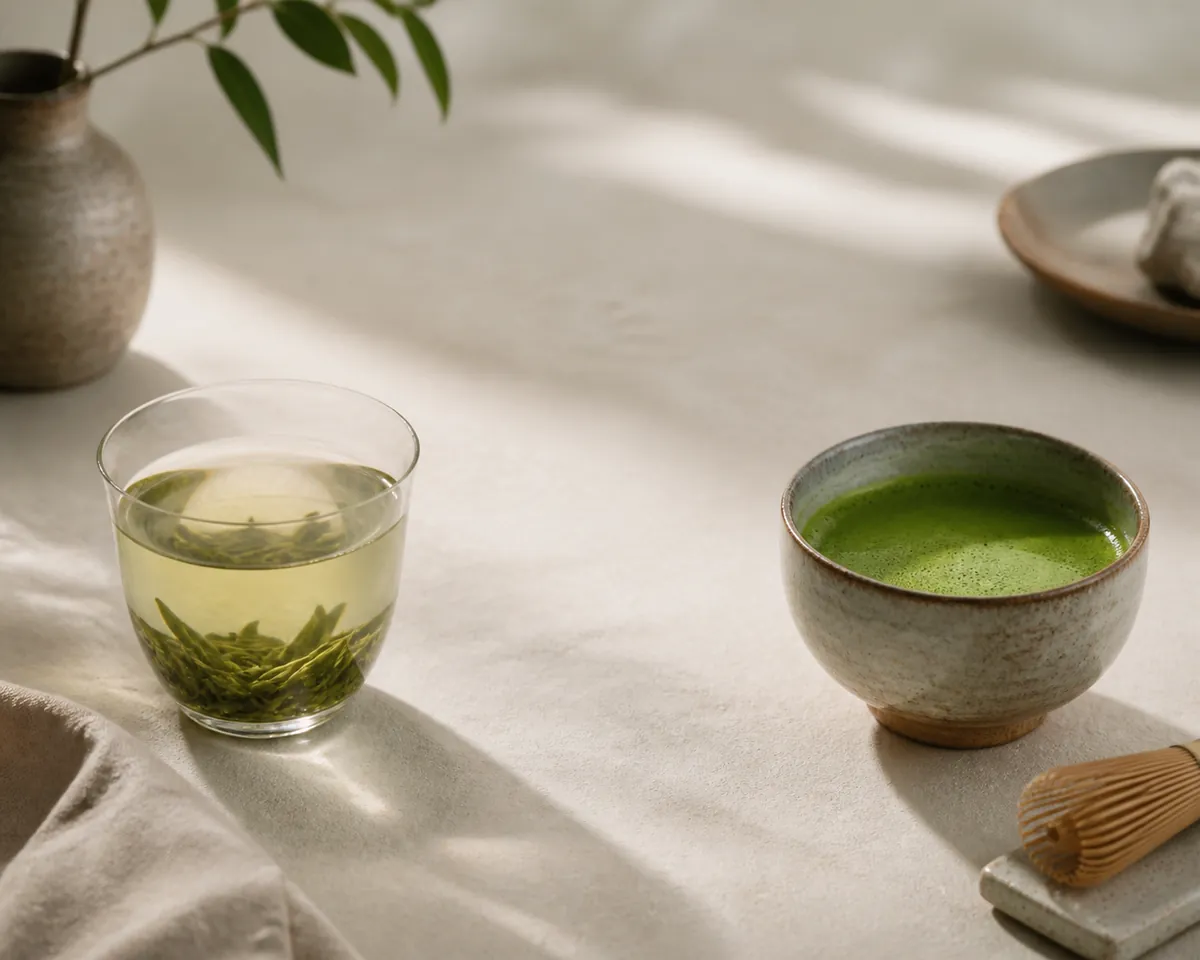
Side by side
| Attribute | Green tea | Matcha |
|---|---|---|
| Plant | Camellia sinensis | Camellia sinensis, the same species |
| Growing | Usually grown in full sun | Shaded for roughly three to four weeks before harvest |
| Form | Whole or broken dried leaf | Stone-ground powder, de-stemmed and de-veined first |
| How it is made | Steeped in water, then strained | Whisked into water and drunk as a suspension |
| What you consume | Only what dissolved. The leaf is discarded. | The entire leaf |
| Flavour | Grassy, light, sometimes nutty or marine | Intensely vegetal and savoury, creamy, sweet finish |
| Body | Light, like an infusion | Thick and creamy from the suspended particles |
| Caffeine per serving | Around 28 mg per 8 fl oz cup | Commonly 40 to 90 mg per 2 g bowl, varying widely |
| Water temperature | 70 to 80 C | 75 to 80 C |
| Equipment | A pot or an infuser | A whisk or frother, a wide bowl, and a sieve |
| Time to make | 2 to 3 minutes of steeping | About 2 minutes of preparation |
| Cost per serving | Low | Considerably higher |
| Tolerance of poor leaf | Poor leaf gives a dull cup | Poor leaf is immediately obvious and harsh |
Extraction against suspension
Steeped tea is an extraction. Hot water pulls the soluble compounds out of the leaf, you strain the leaf off, and whatever refused to dissolve goes in the bin.
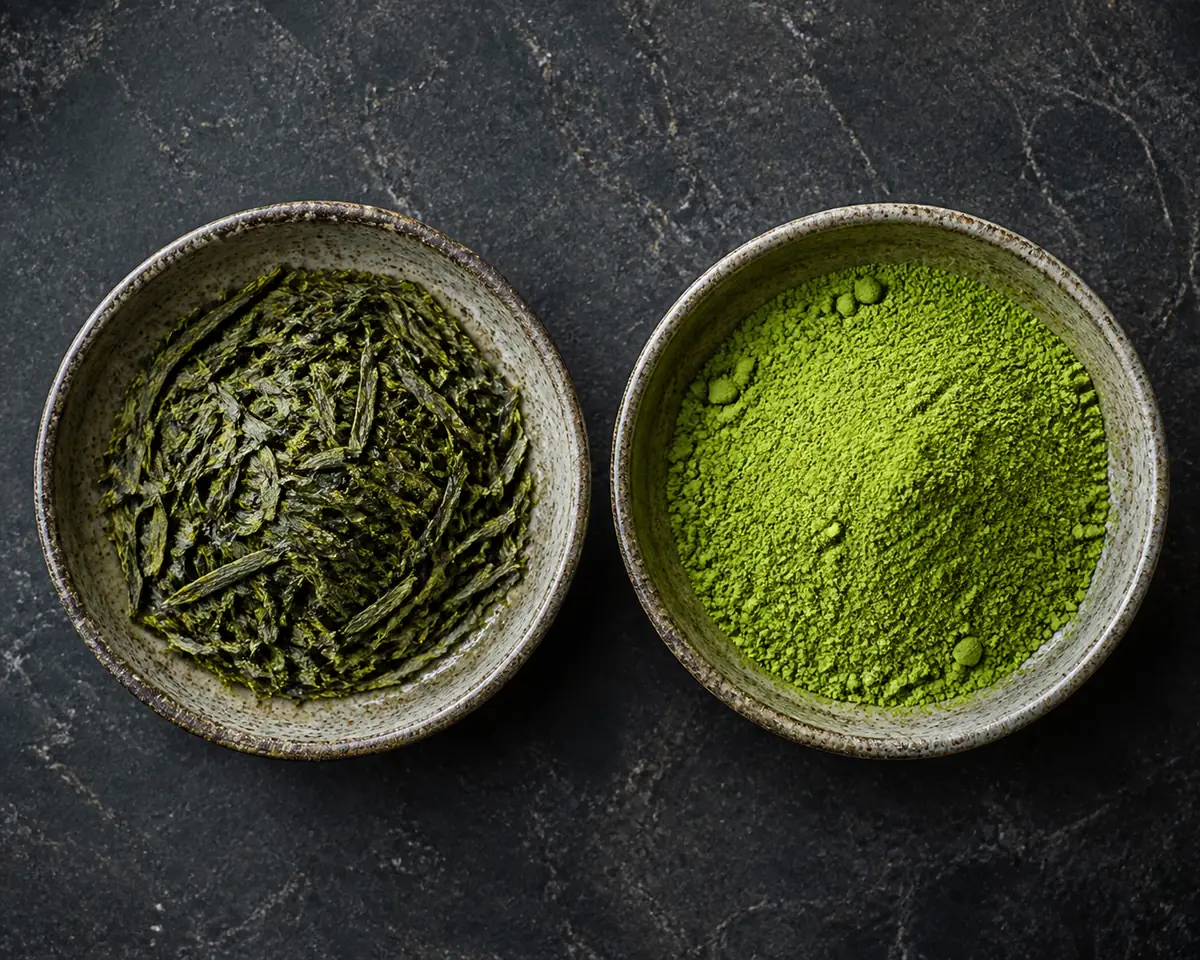
Matcha is a suspension. The leaf is milled fine enough to stay dispersed in water, so nothing is strained and nothing is thrown away, and what reaches the mouth is the leaf itself rather than a solution made from it.
Where the two diverge
- Same leafBoth start as Camellia sinensis, picked and heated to stop oxidation.
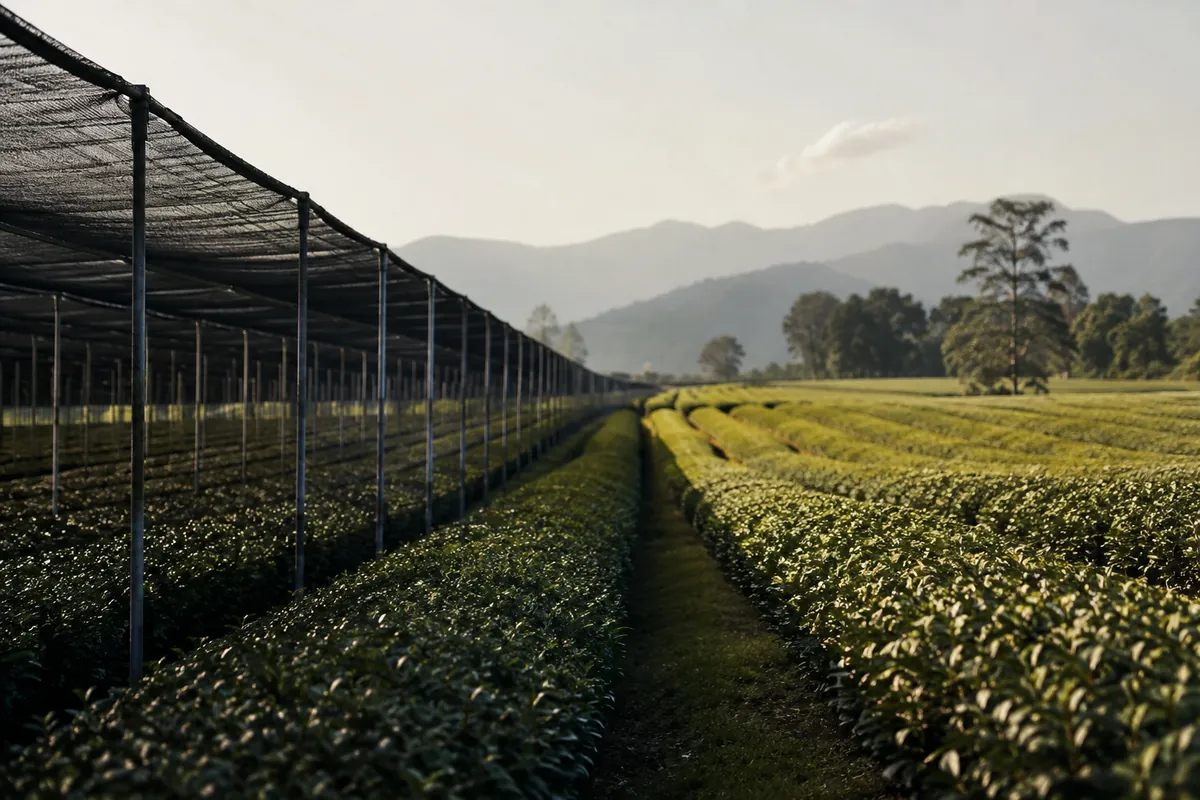
- ShadingMatcha leaf is covered for weeks first; most green tea is not.
- FinishingGreen tea is rolled and dried. Matcha is de-stemmed, then stone milled.
- In the cupGreen tea is infused and strained. Matcha is suspended and drunk whole.
A few minutes of hot water can only deliver what dissolves in a few minutes of hot water, which is the ceiling on any steeped cup however strong you make it. Milled leaf clears that ceiling entirely, and everything that follows on this page is a consequence of it.
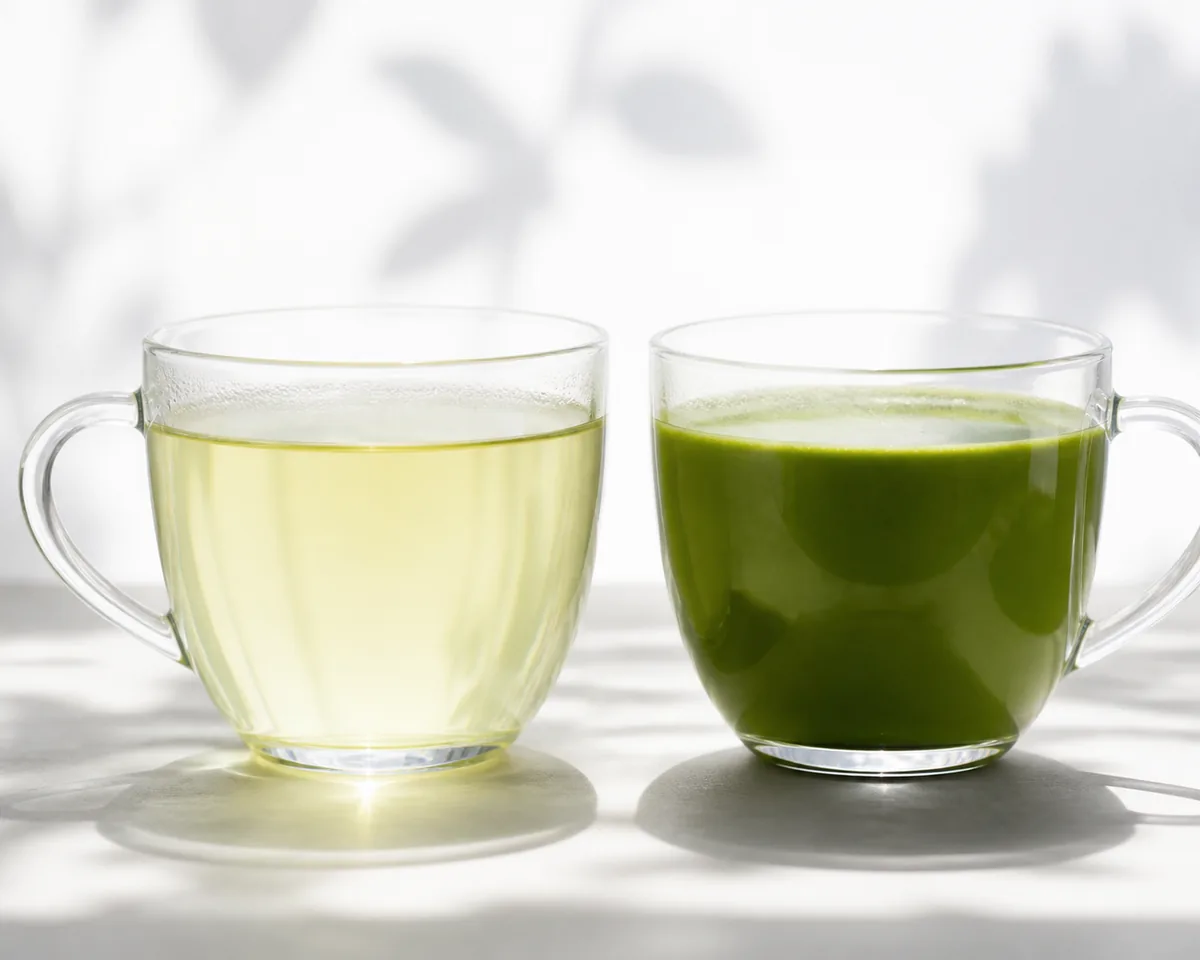
That is why a bowl reads as thicker, more savoury and far more concentrated than even a strong green tea, and why it has a texture that no infusion produces. Body in a steeped cup is a memory of the leaf, and body in a bowl is the leaf, still there.
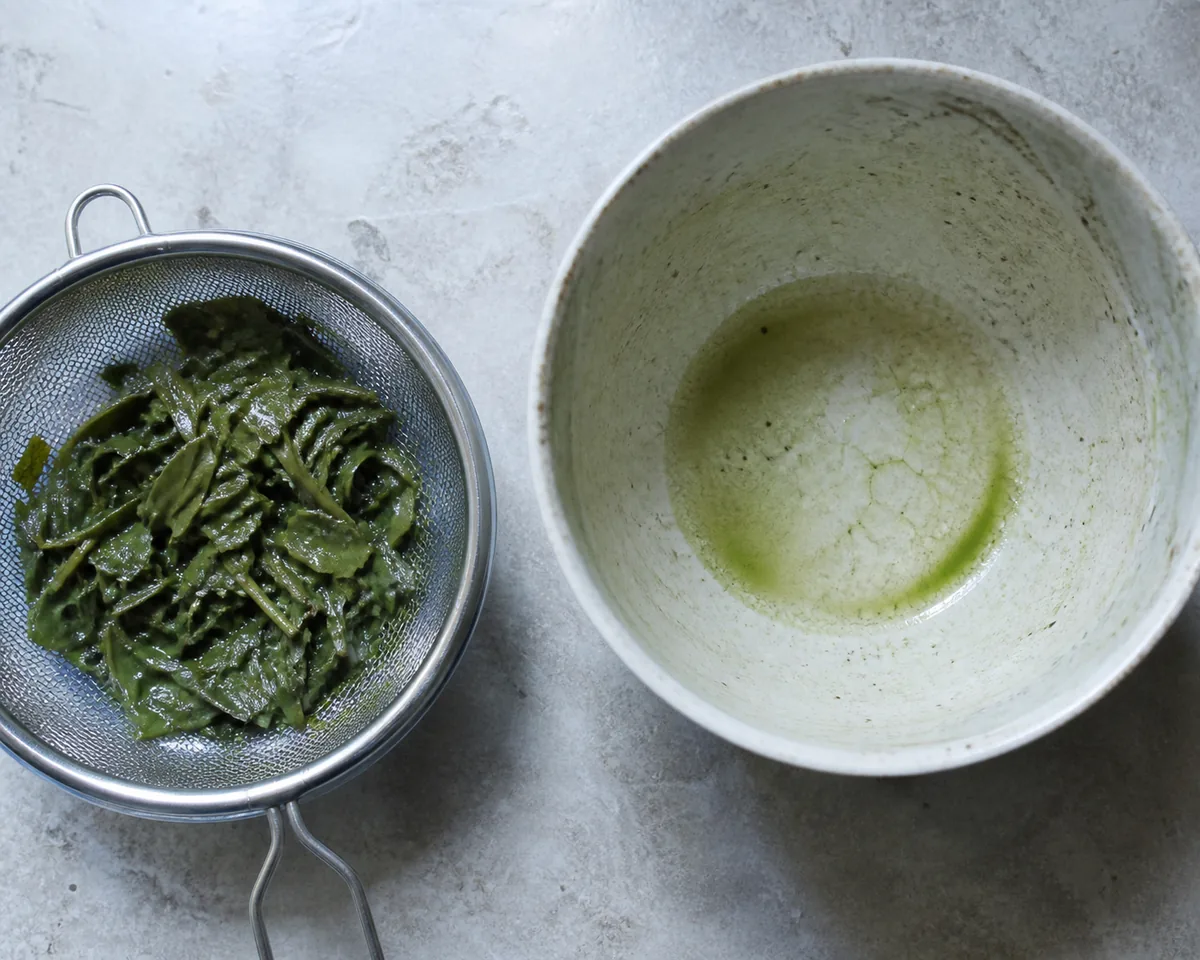
Shading compounds the effect before the mill ever touches it. Covering the plants for weeks before harvest raises the amino acid content, particularly theanine, which is the source of the savoury depth, and most green tea is grown in full sun and never gets it.
That is the one respect in which the two are no longer the same raw material.
How much caffeine is in green tea vs matcha
Matcha generally delivers more caffeine per serving, for the plain reason that a bowl contains the whole leaf while a cup contains an extract of one, and no adjustment to steep time closes that gap.
Both figures move a great deal. A cup of brewed green tea sits around 28 mg according to USDA FoodData Central, while published matcha figures commonly land between 40 and 90 mg for a standard 2 g bowl, depending on grade and preparation.
Serving size does more of the work than the ranges suggest. A mug of green tea is around 240 ml and a bowl of matcha around 70 ml, so the smaller vessel carries the larger dose, a point matcha caffeine sets out in detail against the same brewed baseline.
Any single number here is an estimate of a category rather than a fact about your cup, since grade, dose and whisking all move it. Read the two ranges as a comparison between two drinks, and note that both sit well below coffee and the figures on green tea caffeine overlap the lower matcha estimates.
Sift, whisk, drink: what the bowl demands
Sifting is the step people skip and the one that decides whether the bowl works.
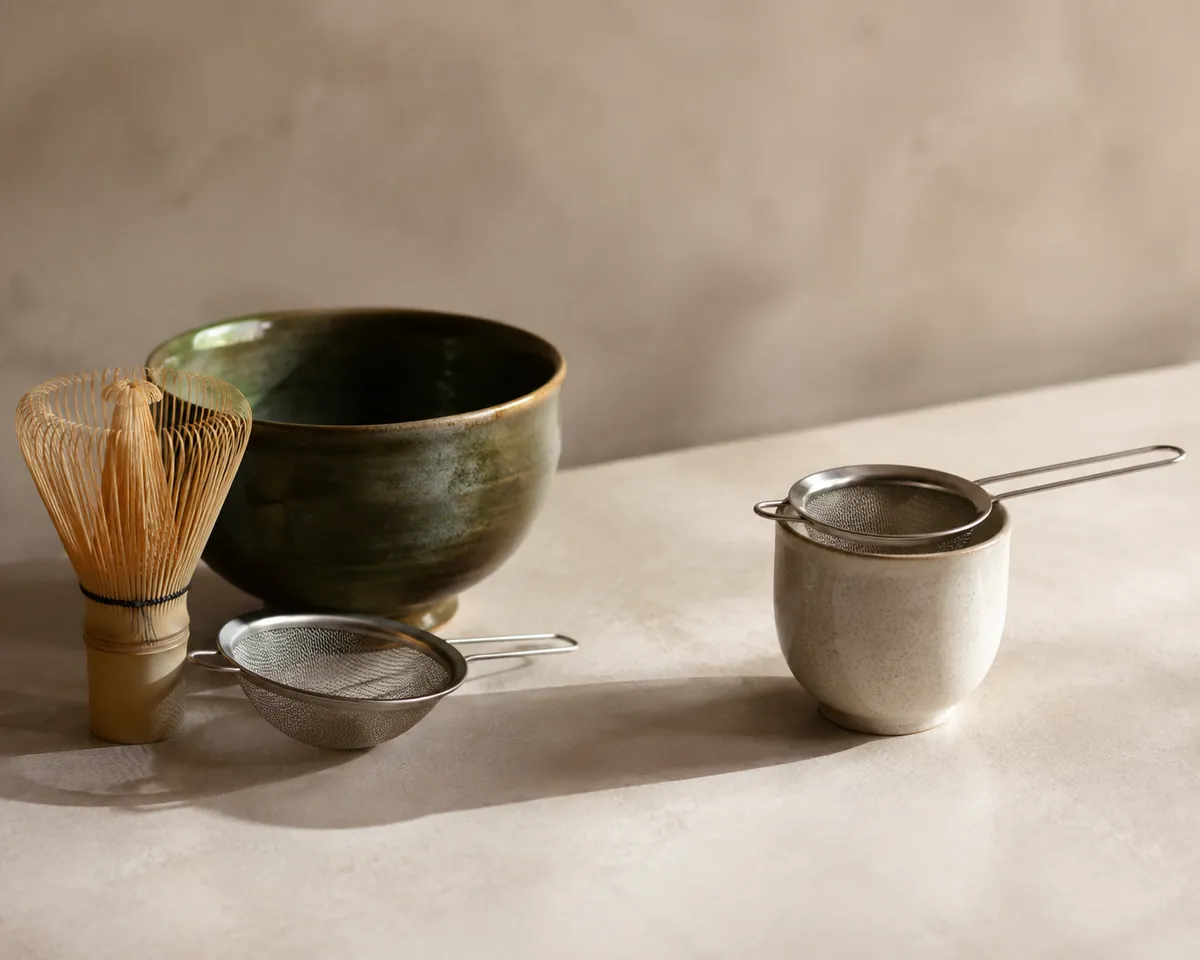
Milled leaf clumps in the tin, and a clump that meets water becomes a lump that no amount of whisking disperses, which is why whisking a bowl begins with a sieve rather than with the kettle. A steeped cup has no equivalent failure, because the water finds the leaf whatever state it is in.
| Steeped green tea | Matcha | |
|---|---|---|
| Equipment | A vessel and a strainer | Sieve, wide bowl, whisk or frother |
| Water temperature | 70 to 80 C | 75 to 80 C |
| Time at the counter | Pour and wait | Sift, whisk, drink promptly |
| Can you walk away? | Yes, though it over-steeps | No, it settles within minutes |
| Second infusion | Yes, often two or three | No, there is nothing left |
The second-infusion row is easy to read past and it decides the economics of both drinks. A good leaf gives two or three cups from one measure, each tasting slightly different, where a measure of powder gives one bowl and then nothing at all.
The attention gap is smaller than the equipment list implies and it lands differently. Matcha cannot be made absent-mindedly, since the suspension starts settling within a minute or two of being whisked, while a pot of leaf tolerates being forgotten as far as making green tea allows before astringency arrives.
What goes wrong, and how fast each fades
Drinks that fail for different reasons need different care, and these two fail at opposite ends of the process: one at the counter and one at the point of purchase.
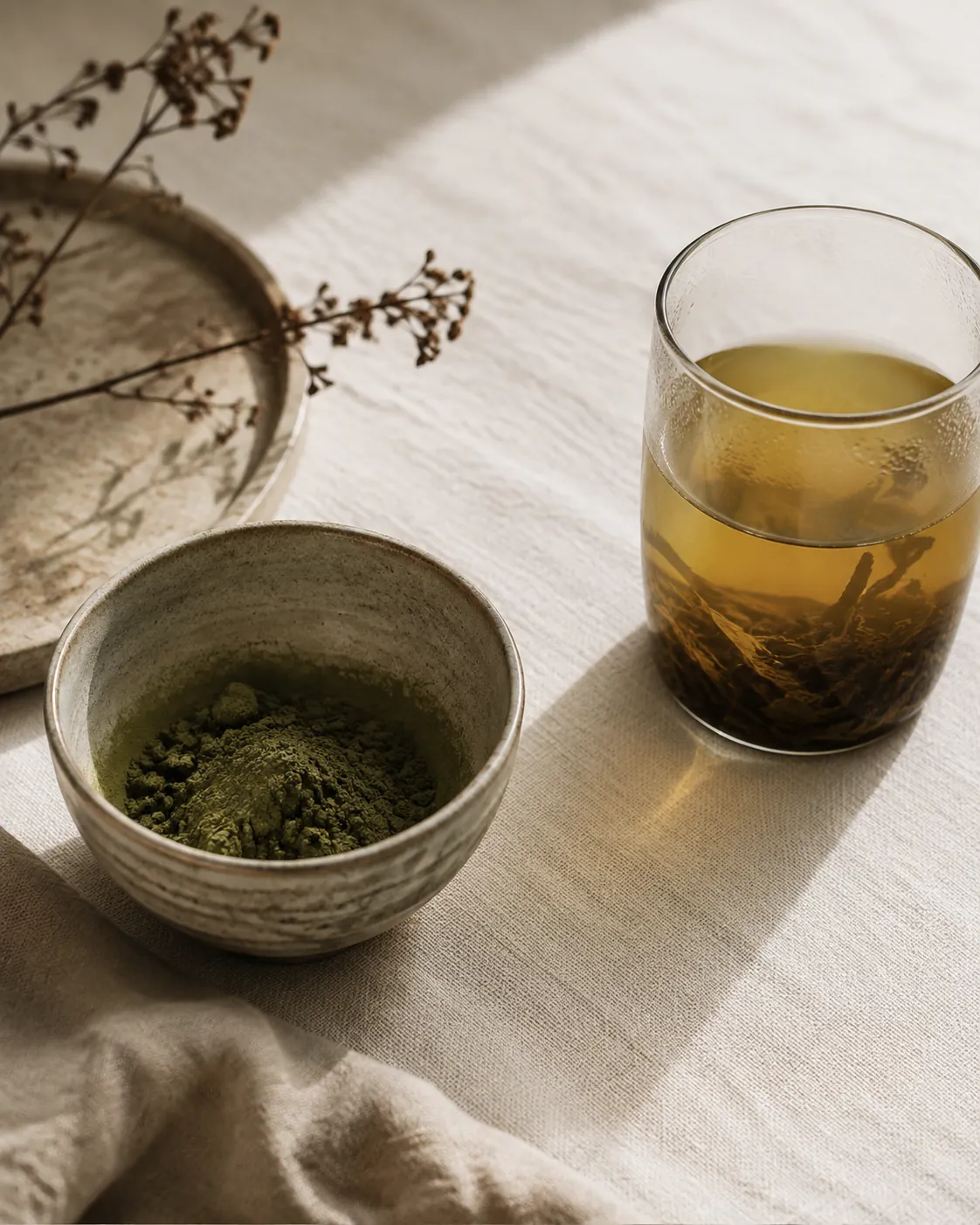
- Green tea punishes inattention. Water off the boil and two minutes too long turn a good leaf harsh, and why green tea tastes bitter is common enough to be worth reading on its own.
- Matcha punishes bad material. Poor powder cannot be rescued by technique, because you are drinking the leaf rather than an infusion of it.
- Green tea keeps six to twelve months in an opaque sealed tin at room temperature, fading gradually.
- Matcha keeps weeks rather than months once opened, because milled leaf exposes an enormous surface area to air.
Neither fault is a question of skill. One is about attention that costs nothing and the other is about a decision already made in a shop, which is why matcha problems is mostly a page about buying and storing green tea is mostly a page about air.
Both lose sweetness before they lose astringency, so a stale example of either tastes harsh rather than weak, and only one of them shows it. Powder fades visibly from jade toward khaki, where leaf gives almost no warning at all.
The safest habit is buying the smallest tin sold and finishing it in three weeks, which is the practical core of storing matcha.
Cost per cup, counted honestly
Price on the shelf overstates the gap, and the reason sits in how many cups each measure produces.
| Steeped green tea | Matcha | |
|---|---|---|
| Typical shelf price | Lower per 100 g | Much higher per 100 g |
| Leaf or powder per serving | 2 to 3 g | 2 g |
| Servings from one measure | Two or three infusions | One bowl |
| Equipment needed | A strainer | Sieve, bowl, whisk |
| Cost per finished cup | Low | Several times higher |
Multiple infusions are the line people forget when they compare two price labels. A good leaf gives two or three cups from a single measure, so its real cost per cup is a fraction of what the shelf suggests, and a measure of powder gives one bowl and nothing afterwards.
The shelf price is high for reasons that are all labour. Shading, hand-picking, de-stemming and stone milling are each low-yield steps, and the mill is the slowest of them by a wide margin, which explains the price better than any grade name printed on the tin.
Equipment closes a little of the gap in the other direction. A strainer costs almost nothing, a bowl and whisk are a one-off outlay, and a milk frother does the job well enough that anyone unsure about the habit can test it before buying a matcha whisk.
Buying a first tin, and what ceremonial actually tells you
Mediocre leaf still makes a pleasant cup, which is the whole reason a first purchase of green tea is low-risk and a first purchase of matcha is not.
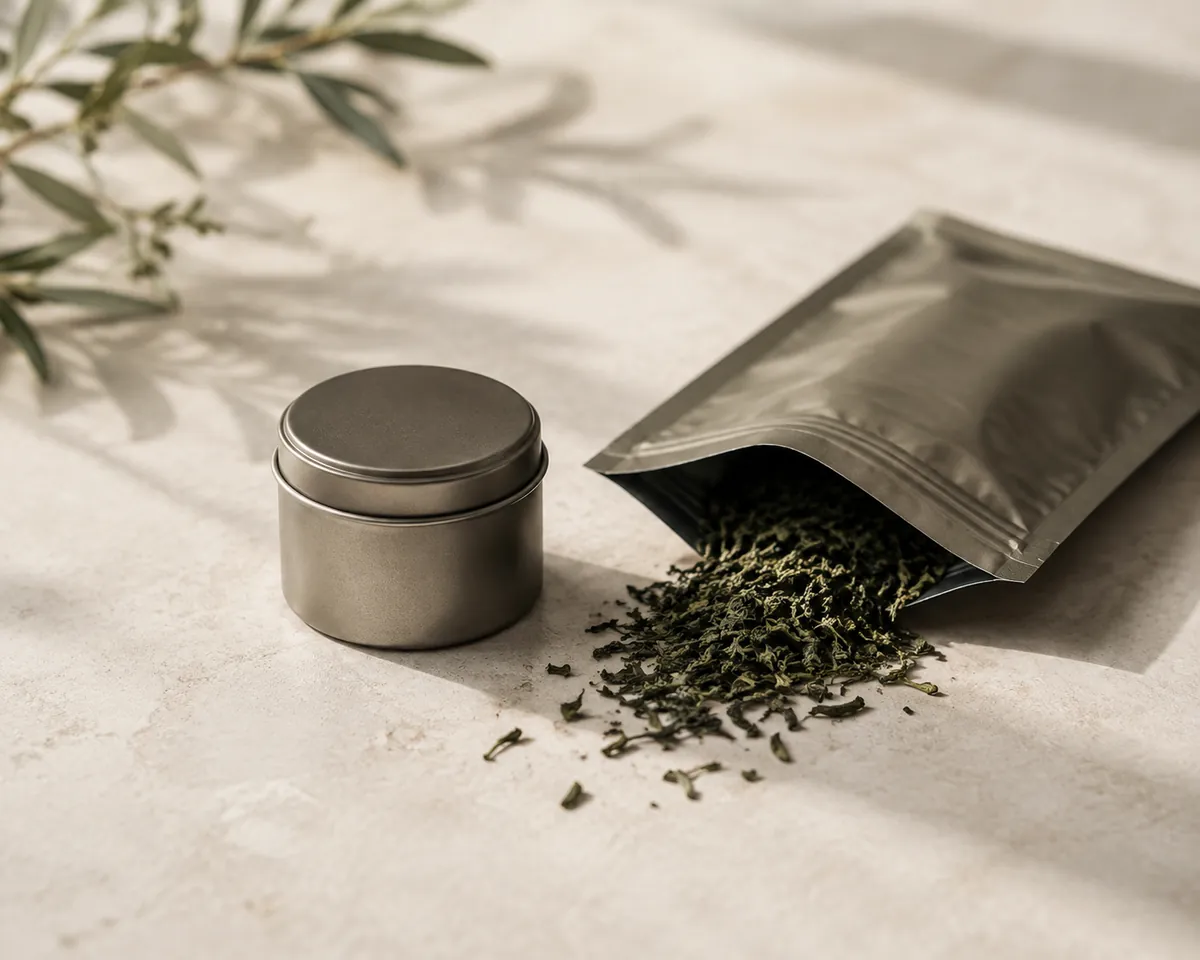
A mediocre powder makes a genuinely unpleasant bowl, and most people who say they dislike matcha met a culinary grade whisked plain, which was never what that grade was milled for. The same money spent on leaf buys a forgiving product, and spent on powder it buys a verdict.
- For green tea, start with a named sencha or a Chinese Longjing from a shop that lists a harvest year.
- For matcha, buy the smallest tin of a grade sold for drinking rather than baking, even though the price per gram looks poor.
- Check the colour of matcha through the packaging if you can. Jade is what you want, khaki is not.
- Avoid pre-sweetened matcha blends if you are trying to decide whether you like matcha.
- If you only want to try matcha once, order it plain in a shop that makes it properly rather than buying a tin.
The grade names on a tin are marketing vocabulary rather than a specification, and this is where price comparisons between the two drinks go wrong. Ceremonial grade usually indicates first-flush leaf intended to be whisked with water alone, though no body certifies the term and a producer can print it on anything.
What the word reliably signals is intent. Someone milled this powder expecting it to be drunk plain, and whether they did it well is answered by the colour and the price rather than by the label, which is also why a sweetened matcha latte is a poor test of a tin.
See how matcha is actually prepared
Where each one is grown
Production traditions diverge even where the species does not.
Green tea is grown across China, Japan, Korea, Vietnam and Taiwan, and the style shifts sharply by country. Chinese greens are usually pan-fired, which pushes them nutty and toasted, and Japanese greens are usually steamed, which keeps them marine and vegetal.
Matcha production is concentrated in Japan, principally around Uji near Kyoto, Nishio in Aichi, and parts of Kagoshima and Fukuoka. That concentration exists because shading, tencha production and stone milling form a specialised chain rather than a general one, and the same chain produces gyokuro from the leaf that is not milled.
Production at a glance
- Green tea origin
- China, Japan, Korea, Vietnam, Taiwan and others
- Matcha origin
- Overwhelmingly Japan, with Uji and Nishio the best known
- Harvests per year
- Green tea commonly two to four; matcha usually the first harvest only
- Shading
- Rare for everyday green tea; essential for matcha
- Final step
- Green tea is rolled and dried; matcha is de-stemmed then stone milled
Matcha made outside Japan exists and is increasingly common, particularly from China. It is generally cheaper and more variable, and origin is not always stated on the tin, so a low price with no stated region is the combination worth treating carefully.
Two beliefs that spoil a first bowl
Both come up constantly and both are reasonable.
The first belief is that matcha is simply a stronger green tea. What it actually is is a different preparation of the same leaf, and the intensity comes from swallowing the leaf rather than from a longer or hotter steep, which is why brewing green tea harder never gets you closer to it.
The second is that any green powder is matcha. Powdered green tea and matcha are separate products, since matcha starts as shaded tencha with the stems and veins removed, and a generic powder does not.
Those two beliefs together account for most disappointing first encounters, and they compound each other. Someone expecting a stronger green tea buys the cheapest green powder available, whisks it plain, and concludes the drink is bitter, when the tin was never milled to be drunk on its own.
What each one asks of your water
Water well below boiling suits both drinks, and the reason they want it is not the same reason, which is why the same mistake produces two different faults.
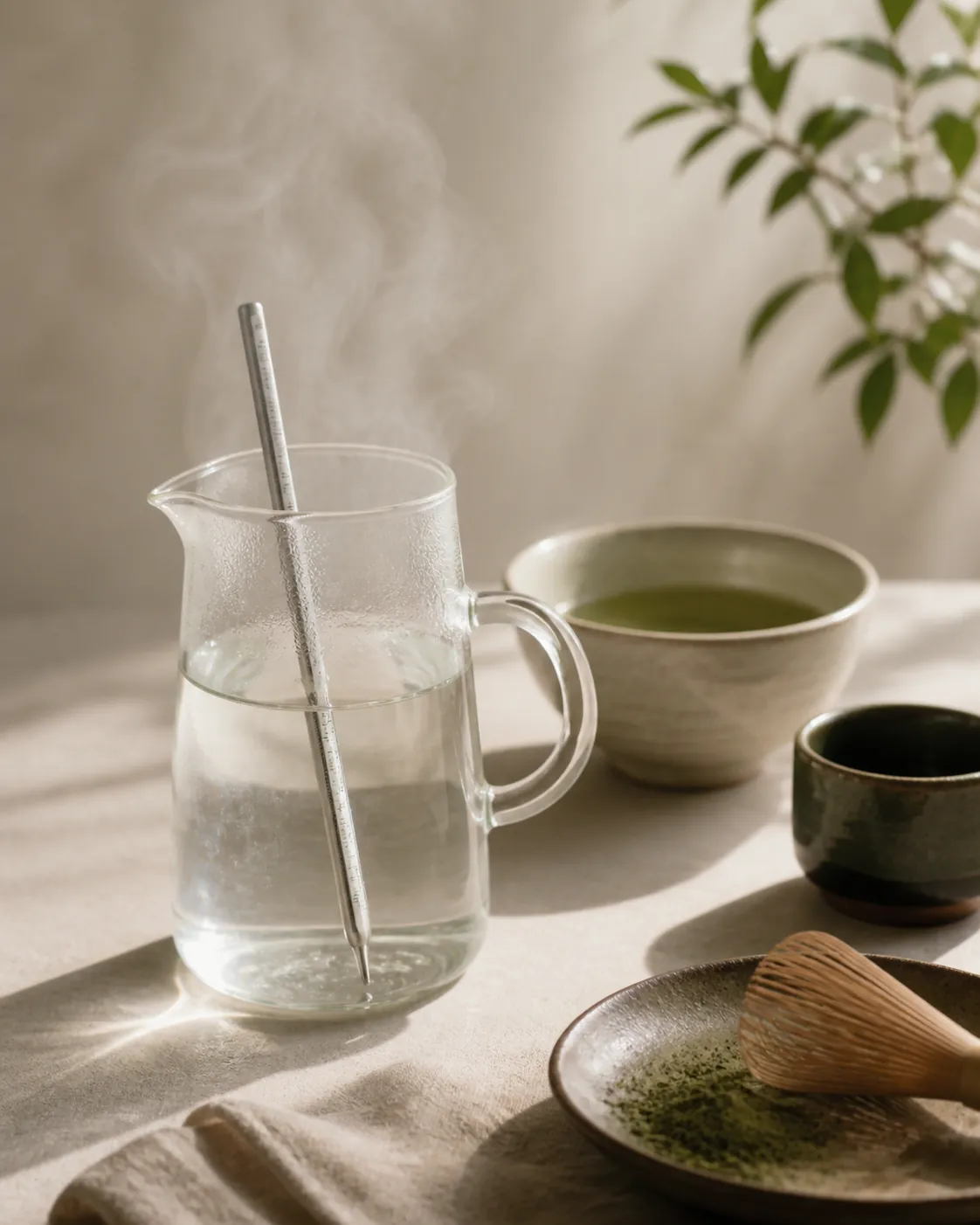
Green tea over-extracts. Catechins arrive faster than sugars in hot water, so the cup tips astringent and the sweetness never catches up.
Matcha cannot over-extract at all, because nothing is dissolving, so hot water instead pushes the catechins already present forward and flattens what was there.
| Steeped green tea | Matcha | |
|---|---|---|
| Target temperature | 70 to 80 C | 75 to 80 C |
| What boiling water does | Extracts catechins faster than sugars | Cannot extract more, but tastes harsher |
| Can you recover it? | Yes, by shortening the next steep | No, the bowl is made in one go |
| Water hardness | Noticeable | Less so, since nothing is being extracted |
A bowl has no second chance, since it is whisked once and drunk within minutes, where a leaf that came out harsh can be corrected on the next infusion from the same measure. That asymmetry is worth knowing before spending money on a kettle for either drink.
Hardness matters in the same lopsided way. Minerals change what comes out of a leaf and change very little in a suspension, so brewing water is a green tea problem first, and steeping temperature basics covers hitting the numbers without special equipment.
If you already drink one, what the other adds
Coming from green tea, matcha adds texture and concentration rather than novelty.
It is the same family of flavours arriving at once, with a body no infusion produces, and it asks for two minutes of attention where a cup asks for none. The savoury depth that shading builds is the unfamiliar part, and sugar and milk hide it most completely, which is why what matcha tastes like describes a bowl whisked plain.
Coming from matcha, green tea adds range and repeatability. One tin covers several quite different drinks depending on temperature and steep length, it yields two or three infusions from a measure, and it can be made while thinking about something else entirely.
Neither displaces the other, and most people who try both keep both for different hours of the day. Anyone who wants the range without the fuss has a third option in the roasted and blended greens, where hojicha and genmaicha sit further from both of these than the two sit from each other.
Common questions
Is matcha just powdered green tea?
Not exactly. Any green tea can be powdered, but matcha is shade-grown, de-stemmed, de-veined, and slowly stone ground. Those steps are what give it its colour, its savoury depth, and its texture.
Does matcha have more caffeine than green tea?
Generally yes, per serving, because you consume the whole leaf rather than an infusion of it. Brewed green tea sits around 28 mg per cup, while matcha commonly falls somewhere between 40 and 90 mg per 2 g bowl.
Can I make matcha by steeping it like tea?
No. Matcha does not dissolve, it is suspended. Left to steep it settles into a sludge at the bottom, which is why it is whisked and drunk promptly.