What Is Almond Milk? Ground, Blended, and Mostly Strained Out
Almond milk is ground almonds blended with water and strained. Most of the almond is removed in that last step, which explains nearly everything about how the drink behaves.
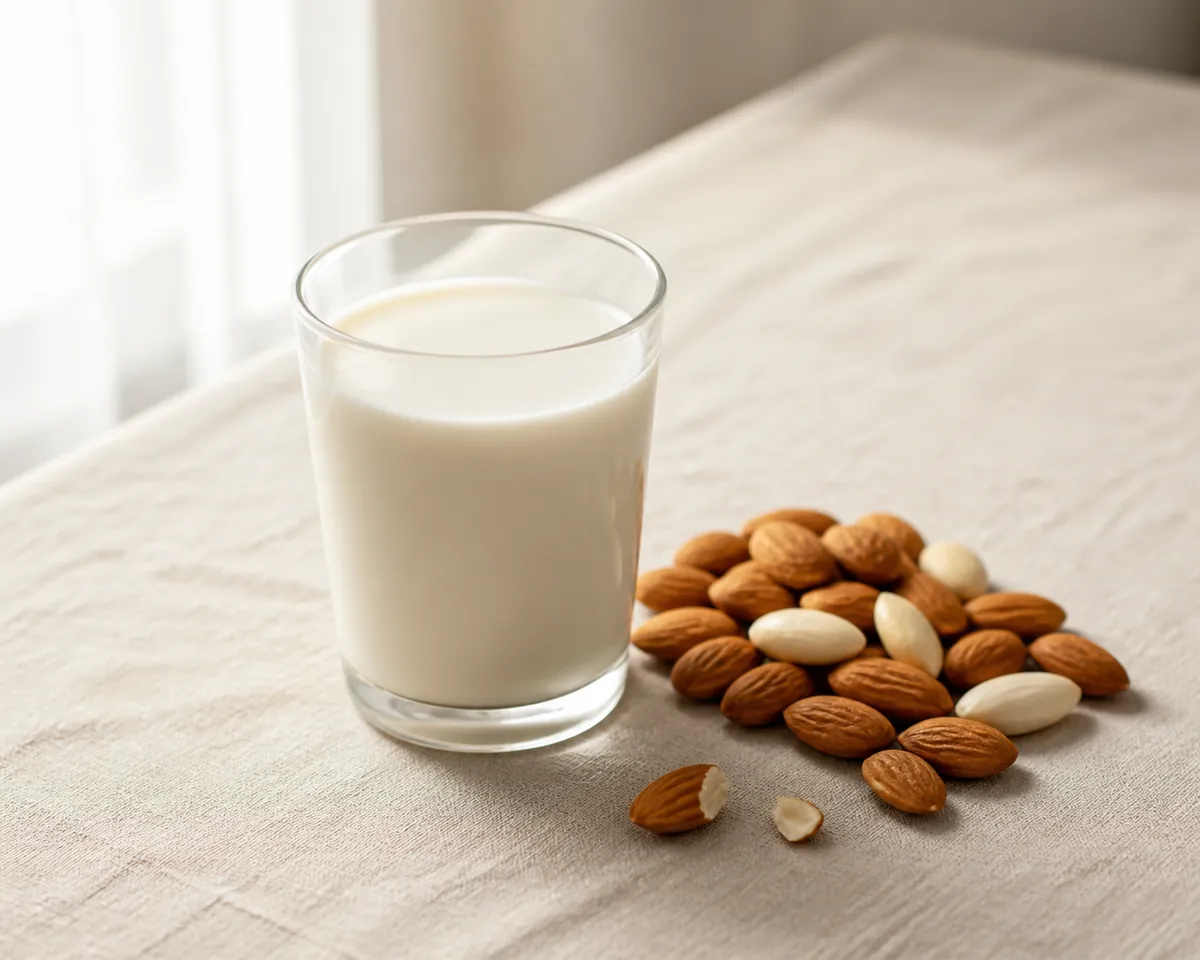
Almond milk is made by blending almonds with water and straining out the solids. What reaches the carton is mostly water with a small proportion of almond material suspended in it.
That proportion is the single most useful thing to know about the product, and it is usually printed on the pack.
Almond milk at a glance
- Almond content
- 2 to 4 per cent in most cartons, 5 to 7 in barista versions
- Protein
- Around 0.5 g per 100 ml, against roughly 3.4 g in dairy
- Body
- The thinnest of the common plant drinks
- In coffee
- Splits readily. The barista formulation is not optional
- Taste
- Faintly nutty, mostly neutral, often sweetened
- Once opened
- Five to seven days refrigerated. Shake before pouring
How little almond is actually in it
Almond content decides how the drink tastes and behaves, and it varies enormously between brands.
Almond content across the category
- Budget supermarketAround 2 per cent almond
- Standard branded2 to 4 per cent
- Premium or barista5 to 7 per cent
- Homemade, standard ratioRoughly 10 to 15 per cent
- Homemade, richHigher still, and noticeably thick
A 2 per cent almond drink is 98 per cent water and additives. That is not a scandal, it is simply what the product is, and the percentage is printed on the carton in most markets.
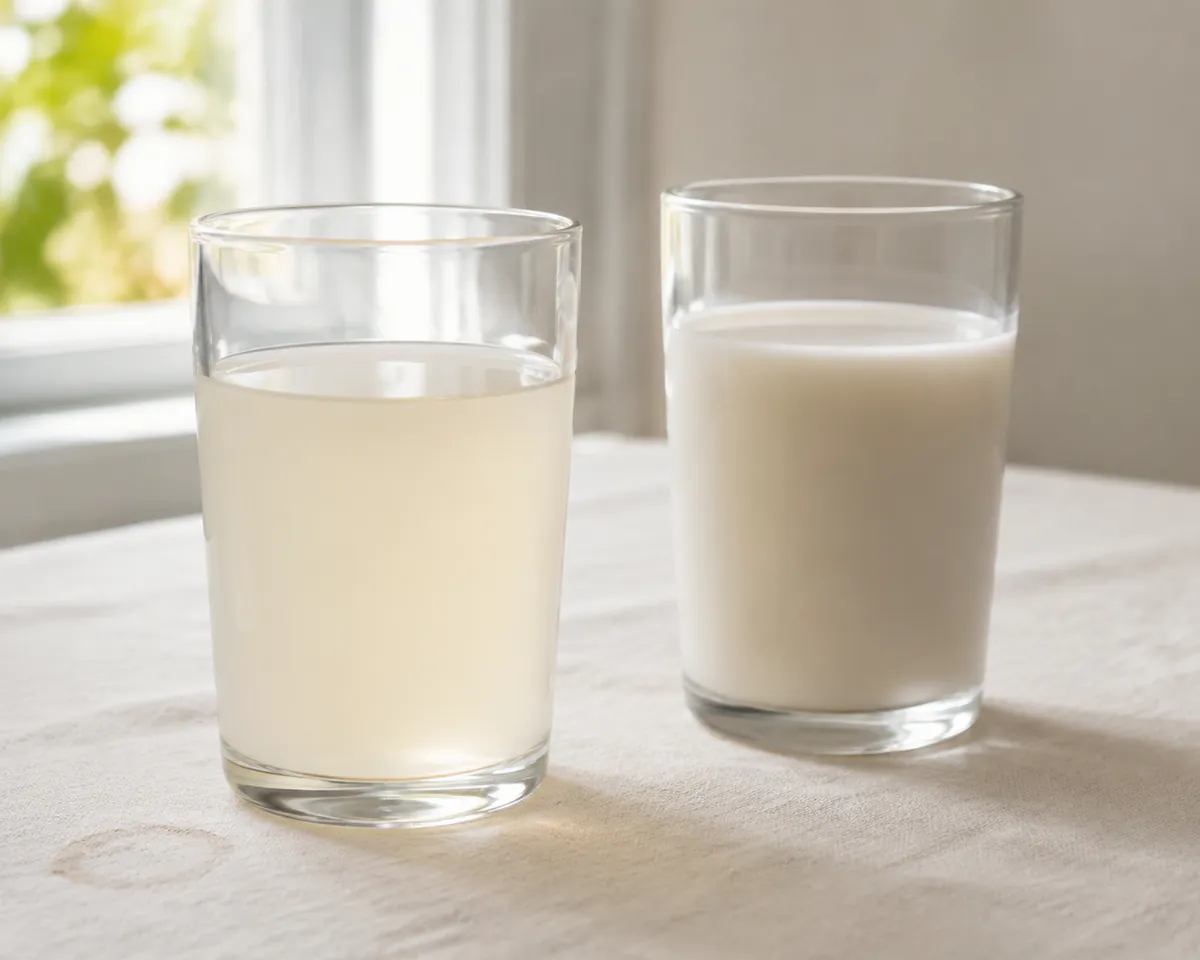
It does explain why almond drinks vary so much more than dairy milk does. Two cartons on the same shelf can differ threefold in the ingredient they are named after, which is true of no other drink in this section.
Reading that one number first saves most of the disappointment people report with the category. A thin, watery almond milk is usually not a bad brand, it is a 2 per cent one.
How almond milk is made, and why it is so thin
The process is short, and each step removes something.
From nut to carton
- SoakAlmonds are soaked to soften them, which makes them easier to break down.
- BlendThey are milled with water into a coarse slurry.
- StrainThe slurry is filtered. Most of the solids, including nearly all the fibre, are removed.
- FormulateWater, stabilisers, emulsifiers, salt and often sugar or calcium are added.
- Heat treatUHT or pasteurisation, which sets the shelf life and slightly changes the flavour.
Straining is where the body goes. The pulp removed at that stage, called almond meal, holds most of the fibre and a good deal of the protein, which is why the finished drink is thin.
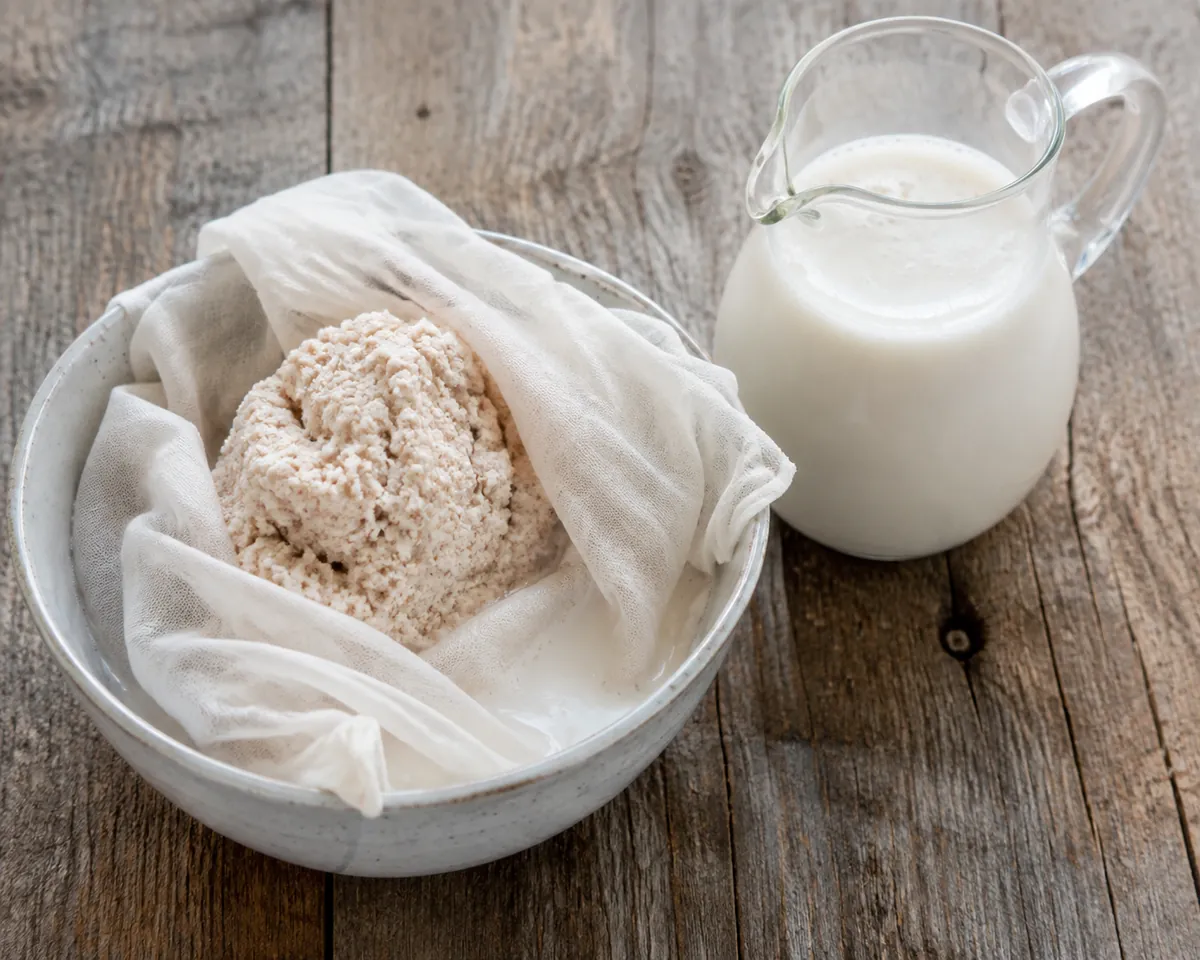
That pulp is a real proportion of what you paid for, which is why homemade almond milk feels wasteful until you start using it.
Where the body comes from, or does not
- Fat
- Present, but at low almond percentages there is very little
- Protein
- Around 0.5 g per 100 ml, against roughly 3.4 g in dairy milk
- Fibre
- Almost entirely removed during straining
- Stabilisers
- Gellan gum or locust bean gum, added to stop separation
- Emulsifiers
- Sunflower lecithin and similar, to keep fat dispersed
There is a second reason beyond the low solids. Almond protein does not build the structure dairy protein does, so even a rich homemade version is thinner than milk at the same solids level.
Those last two lines of the table are why commercial almond milk holds together and homemade separates within hours. It is a formulation difference rather than a quality one.
Why almond milk splits in coffee, and what barista versions change
Almond milk is the plant drink most likely to curdle, and the coffee usually gets the blame.

Coffee is acidic, typically around pH 5. Almond protein is not very soluble and sits close to the point where it drops out of suspension, so a splash of acid and heat together pushes it over.
The full mechanism, and why it affects some plant drinks more than others, is set out in why plant milk curdles. Splitting is the commonest of the faults collected in almond milk problems, and very nearly the only one that shows up in a cup of espresso rather than in the carton.
Barista editions are a genuinely different formulation rather than a marketing tier. They typically carry a higher almond percentage, added fat, and adjusted stabilisers and acidity regulators, and the regulators are the important part: they buffer the drink so it resists the pH drop that causes splitting.
| Standard | Barista | |
|---|---|---|
| Almond content | 2 to 4 per cent | 5 to 7 per cent |
| Added fat | Little or none | Usually yes |
| Acidity regulator | Often absent | Almost always present |
| Foams | Poorly, large collapsing bubbles | Reasonably, finer and more stable |
| Splits in coffee | Frequently | Rarely |
| Cost | Lower | Noticeably higher |
If you drink it in coffee, the barista version is not optional. The price difference is real but small against the frequency of a ruined cup, and it is the only formulation that will hold anything resembling a texture under a milk frother.
What almond milk tastes like
Less of almond than the name promises.
What you notice, in order
- WaterThe dominant impression in low-percentage versions
- Faint nuttinessMarzipan-adjacent, and stronger in higher-percentage products
- SweetnessUsually added, unless the carton says unsweetened
- Slight bitternessFrom almond skins, if the nuts were not blanched
- Thin finishVery little lingers, which is the texture rather than the flavour
Roasted almond versions taste considerably more of almond, because roasting develops the aroma compounds that raw almonds hold quietly. They are uncommon on a supermarket shelf and worth looking for.
Blanching explains the other variable. Skins carry a faint bitterness, so a drink made from unblanched nuts reads as slightly sharper and a little more astringent at the finish.
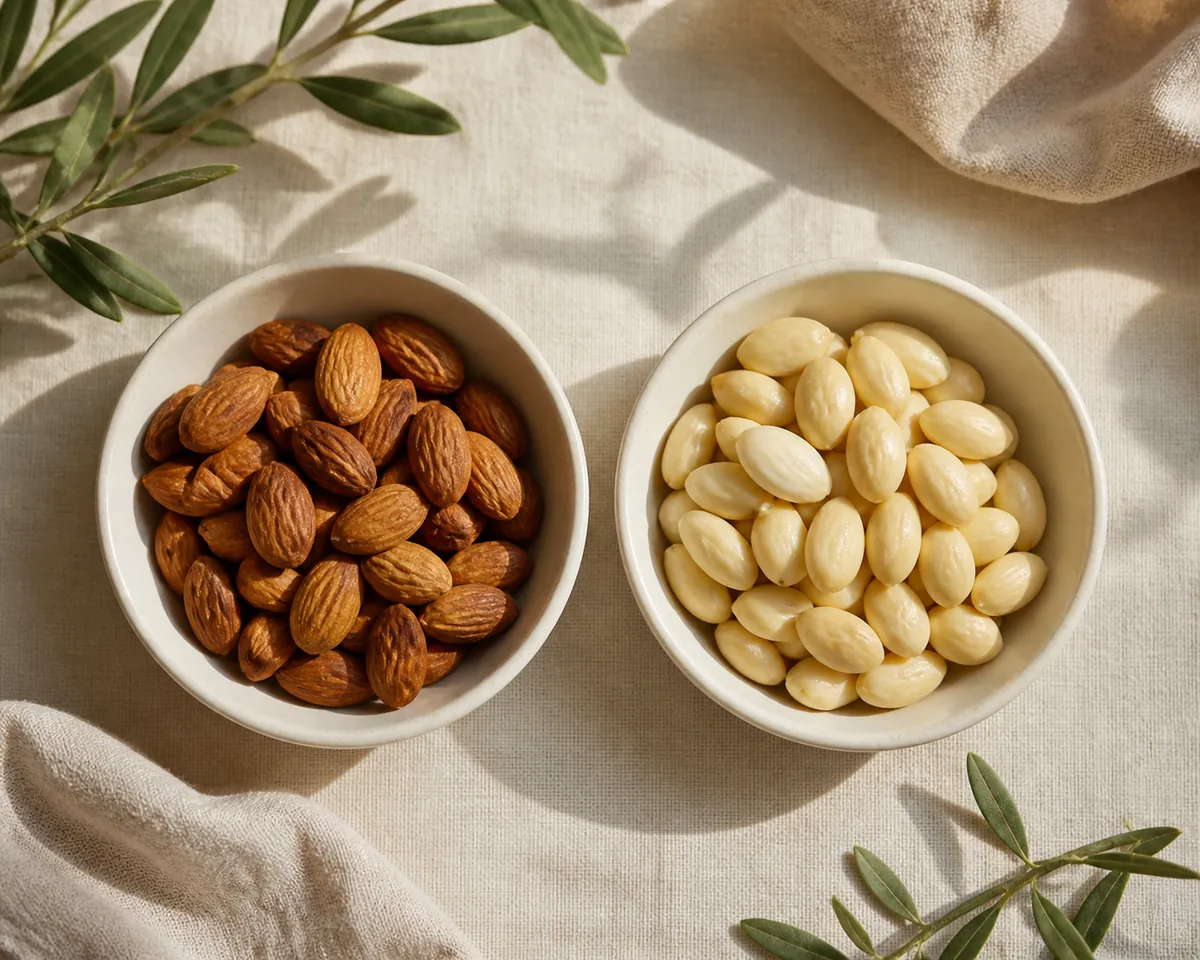
Almond's neutrality is genuinely its strongest feature rather than a failing. It is the plant drink that interferes least with whatever it is added to, which is exactly what a cereal bowl or a smoothie wants.
What almond milk tastes like works through the same sequence against the sweetened and roasted versions.
What to look for on the label, and why prices vary
Almond milk labels carry more useful information than most, if you know which lines matter.
- Find the almond percentage. It is the single best predictor of taste and texture.
- Check sweetened against unsweetened. The gap is usually several grams of sugar per 100 ml.
- Look for added calcium if you are replacing dairy, since almonds contribute very little.
- Note whether it is a barista formulation, which changes coffee behaviour entirely.
- Check for added oil, which is what most barista versions use for body.
Almond content is also the largest factor in the price. Going from 2 to 7 per cent more than triples the cost of the main ingredient, and almonds are expensive relative to the oats or soybeans behind rice and soy drinks.
Added fat, acidity regulators and organic certification each add a little more, and barista versions carry most of these at once, which is why they sit at the top of the range.
What does not justify a premium is packaging or origin claims. Almond origin has very little effect on a drink that is 96 per cent water.
How to make almond milk at home
Easy, better tasting, and one trade-off.
Homemade almond milk
- Almonds
- 150 g, soaked 8 to 12 hours and drained
- Water
- 750 ml fresh
- Salt
- A small pinch, which sharpens the flavour considerably
- Method
- Blend on high for 90 seconds, then strain through a nut milk bag or fine cloth
- Yield
- About 700 ml
- Keeps
- Three to four days, and it will separate
The trade-off is stability. Without emulsifiers it separates in the fridge within hours, which is cosmetic and reverses with a shake, and it will not behave in hot coffee.
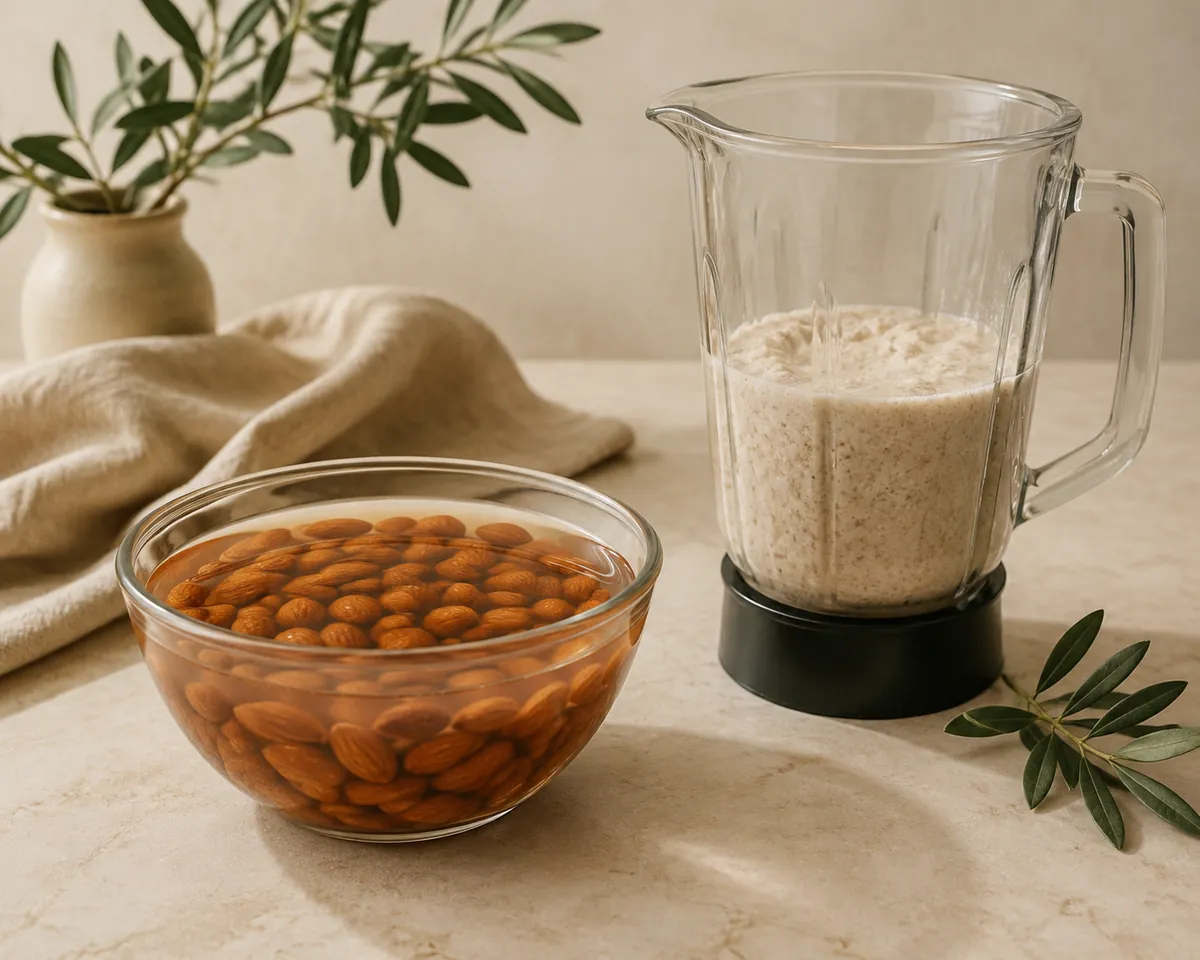
Do not discard the pulp. It is most of the fibre and protein you paid for, and it works in porridge, baking and granola.
The pinch of salt does more than it sounds like it should. Homemade almond milk without it tastes flat and slightly chalky, and a small pinch in 700 ml brings the nuttiness forward without reading as salty at all.
Making almond milk covers the roasted and blanched variations on the same ratio.
Almond against the other plant drinks
Almond is one option among several, and in most respects it performs less well than the others.
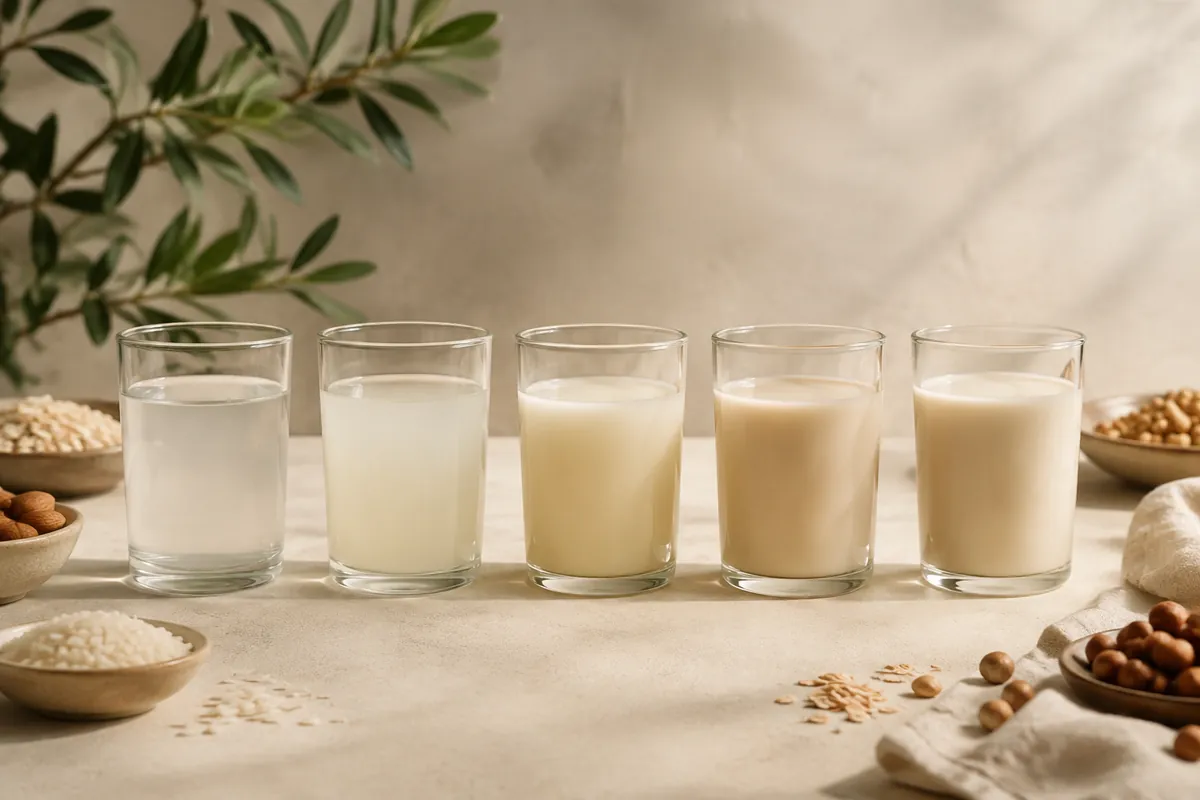
| Almond | Soy | Oat | Coconut | |
|---|---|---|---|---|
| Protein | Very low | High | Low | Very low |
| Body | Thin | Full | Full and slightly sweet | Rich, distinct flavour |
| Coffee behaviour | Splits readily | Splits, but foams well | Best all-round | Splits sometimes |
| Flavour | Faint, nutty | Beany, distinctive | Cereal, sweet | Strongly coconut |
| Neutrality | High | Low | Moderate | Very low |
Soy milk is the closest thing to a nutritional match for dairy, and oat milk is generally the best behaved in coffee. Two more sit just outside the table: cashew milk, which is creamier than almond at the same nut percentage, and pea milk, which is the only one that comes close to soy on protein.
Choose almond
For neutrality and lightness, in cereal, smoothies and cold drinks.
Choose soy
For protein and for foam, and if a beany note is acceptable.
Choose oat
For coffee, and where a cereal sweetness suits the drink.
Choose rice
For the mildest flavour and natural sweetness, accepting no body.
Choose coconut
When you want the drink itself to taste of something.
There is no best plant drink, only the right one for the job. Almond's job is to get out of the way, and it does that better than any of the others except rice, and what to use instead of almond milk is really a question about which job you are handing over.
Read down the columns and the choice turns into a question about the job rather than about the drink. A cereal bowl and a flat white are asking for opposite things, and no single carton is good at both.
Only coconut drink is chosen for the reverse reason, because its flavour is the point rather than something to be minimised. Almond and coconut sit at the two ends of that question.
How to store almond milk, and how it behaves in cooking
Two formats that keep differently, and a substitution that works unevenly.
Ambient cartons are UHT treated and sit unopened at room temperature for months. Chilled cartons are pasteurised and have a shorter life throughout.
Once opened
- Fridge
- Five to seven days for most brands
- Shake first
- Separation is normal and fully reverses
- Door or shelf
- The body of the fridge, not the door, where temperature swings
- Freezing
- Not recommended. It separates permanently and turns grainy
- Off signs
- Sourness, thickening or a bitter edge. Trust these over the date
A carton that has thickened before its date was probably stored warm at some point, which is the most common cause of an early failure. Storing almond milk covers the ambient and chilled formats separately, since they fail in different ways.
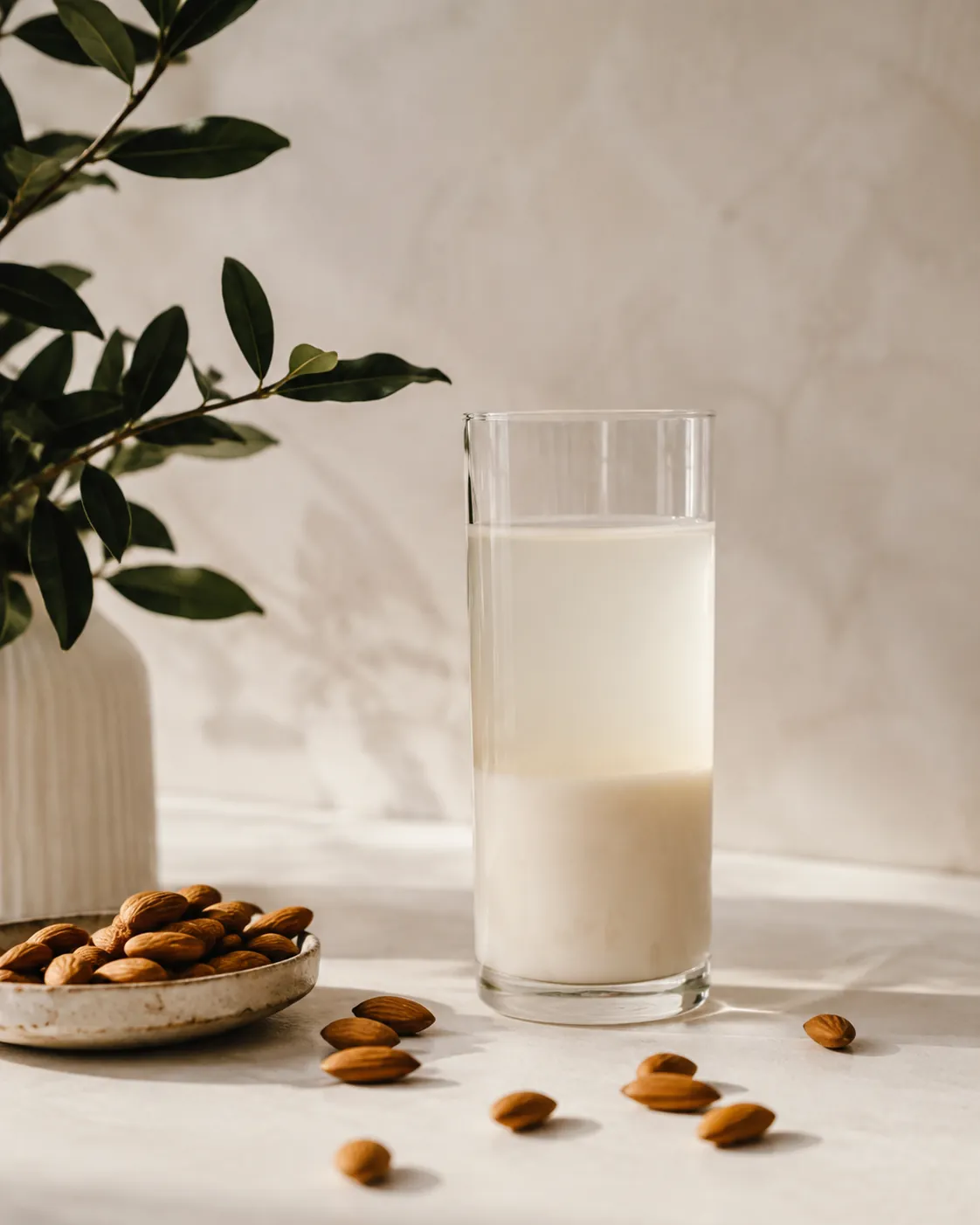
In cooking, its low protein and low fat mean it cannot do the two things dairy does structurally: it will not thicken a custard, and it will not brown or enrich a sauce. Where milk is a carrier rather than a builder, it works fine.
Works well
Cereal, smoothies, cold drinks, pancake batter, anything where milk is mostly liquid.
Works with care
Béchamel and similar, but only with more flour and no expectation of richness.
Works poorly
Custards and anything set with egg, where dairy protein is doing the work.
Avoid
Reducing sauces, where it separates and goes watery rather than concentrating.
Unsweetened is essential for savoury cooking, since sweetened almond milk carries enough sugar to make a savoury sauce taste wrong and the vanilla in many brands makes it worse.
In black tea it is thin and it does not split, because tea's acidity is far below coffee's, though it gives the drink no body either. In hot chocolate it works better than expected, since the chocolate supplies the body almond lacks and the flavour is strong enough to sit on top of it.
Where a recipe wants concentrated dairy, such as evaporated milk, there is no almond equivalent at all.
The water question, and the name on the carton
Two arguments follow almond milk around, and both are narrower than they look.
Almonds are a water-intensive crop, and a large share of the world supply is grown in California, where water is contested. Set against that, almond milk uses far less water than dairy milk per litre, and more than oat or soy.
Where it sits depends entirely on what you are comparing it to. Almond against oat takes that one pairing apart properly, since those two are the drinks most people are actually choosing between.
The second argument is about the word milk itself, and it is a labelling dispute rather than a factual one. Dairy bodies in several jurisdictions have pushed to reserve the term for animal milk, which is why some cartons read almond drink or almond beverage instead, and why the shelf edge sometimes says one thing while the pack says another.
Nothing about the contents changes with the word. A carton labelled almond drink and one labelled almond milk from the same producer are the same formulation, and the percentage line remains the only part of the front of the pack worth reading.
No environmental recommendation is made here, and this page states the comparison rather than drawing a conclusion from it.
The second argument is about the word itself. In the European Union, milk is legally reserved for animal milk, so almond products are sold as almond drink, while the United States permits the term after long argument about whether it misleads.
None of that changes the contents. It is a labelling rule about a word, and the percentage and ingredients list beside it tell you what is actually inside.
Common questions
How much almond is actually in almond milk?
Usually between 2 and 4 per cent by weight for standard products, and 5 to 7 per cent for barista versions. The percentage is printed on the carton in most markets and is the best single predictor of taste and texture.
Why does almond milk split in coffee?
Coffee is acidic and almond protein is poorly soluble, so acid plus heat pushes it out of suspension. Pouring coffee into the milk rather than the reverse, letting the coffee cool briefly, and using a barista formulation all reduce it.
Is barista almond milk different or just marketing?
Genuinely different. It carries more almond, added fat, and acidity regulators that buffer the pH drop which causes splitting. That is why it foams better and curdles less.