What Does Matcha Taste Like? Vegetal, Savoury, and Creamy
Good matcha tastes vegetal and savoury with a creamy texture and a sweet finish. Poor matcha tastes bitter, flat, and drying. The gap between the two is larger than for almost any other drink.
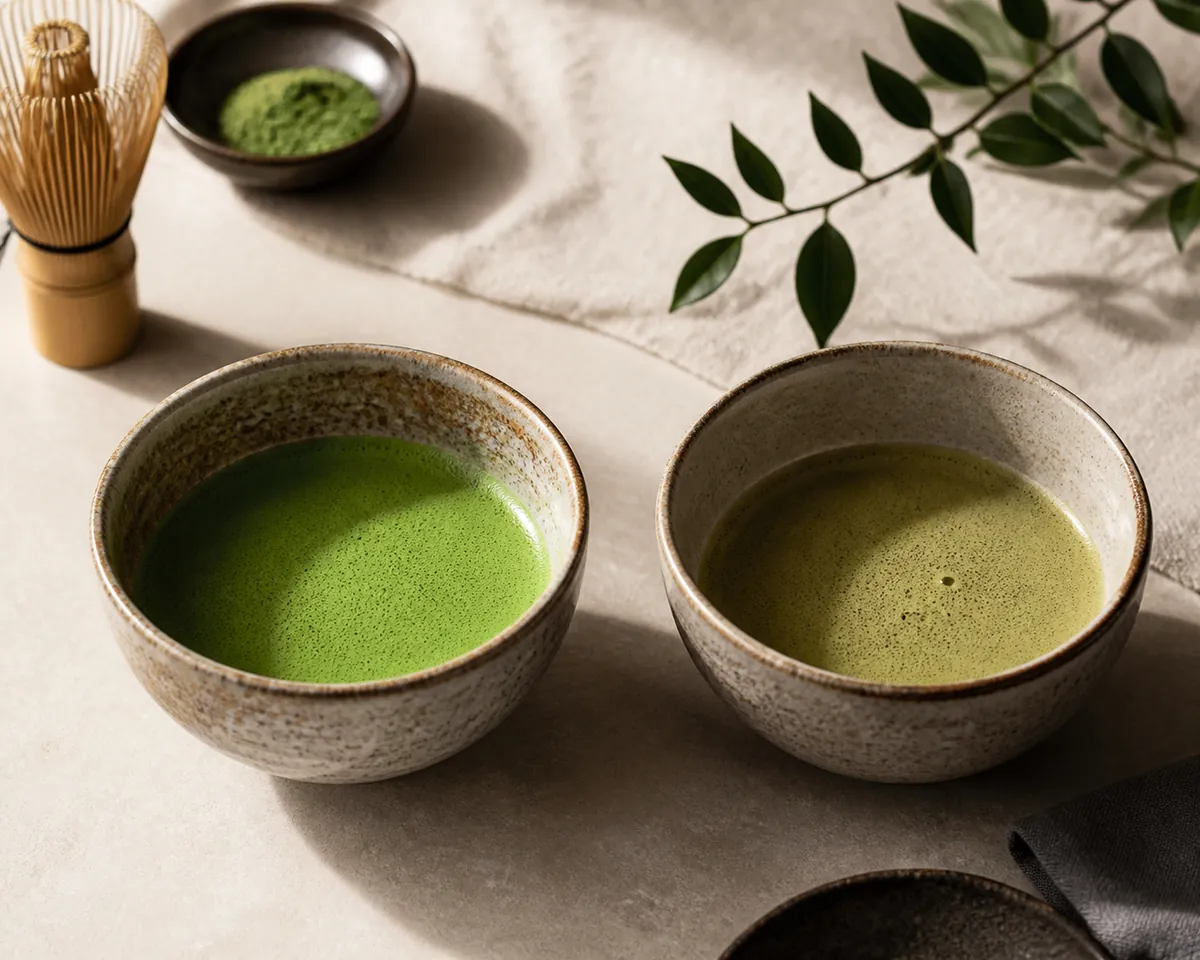
Matcha is a difficult drink to describe by comparison, because most people meet it first in a sweetened latte, where sugar and milk cover most of what it actually tastes like.
Whisked with water alone it is savoury before it is anything else, and the sweetness arrives last rather than first. What follows is what is in the bowl and where each part of it comes from.
What you taste, and where it comes from
- Vegetal
- Fresh green notes: spinach, steamed greens, cut grass. This is the base of the flavour.
- Savoury
- A broth-like depth, called umami. It comes from theanine, which shade growing raises considerably.
- Creamy
- A rounded, almost dairy-like body, from the suspended leaf particles rather than from any fat.
- Sweet finish
- Good matcha finishes sweet after the initial vegetal hit. This lingering sweetness is the clearest marker of quality.
- Marine
- A faint sea or seaweed note in some Japanese matcha. Normal, and not a fault.
- Astringency
- A drying grip, from catechins. A little gives structure. A lot is the main flaw in poor matcha.
Vegetal first, savoury underneath, sweet at the end
Milk hides most of this.
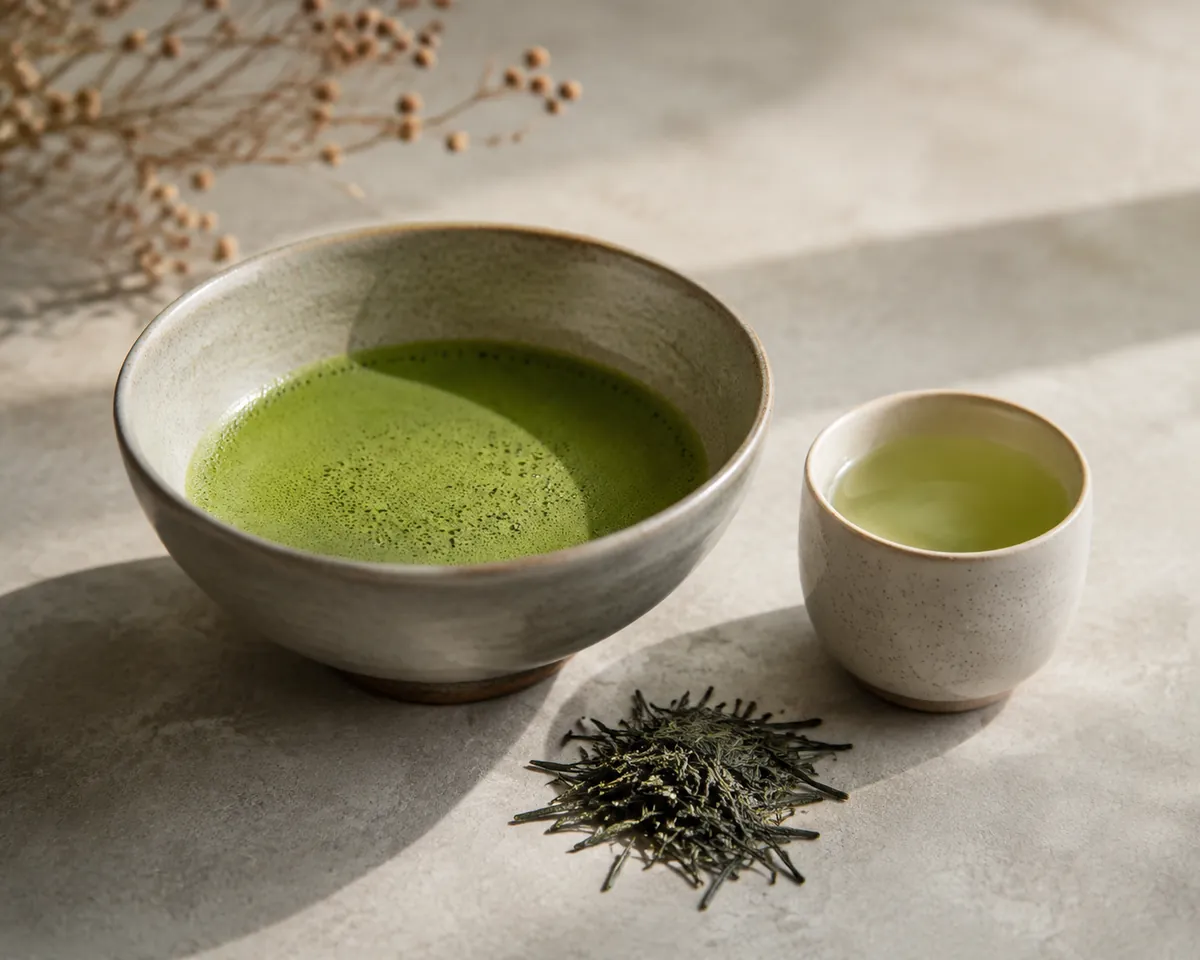
Whisked plain, a good bowl opens on fresh green notes closest to steamed spinach and cut grass, and a broth-like depth arrives underneath them almost immediately. The creaminess that surprises people is the third arrival and nothing creamy has been added to produce it.
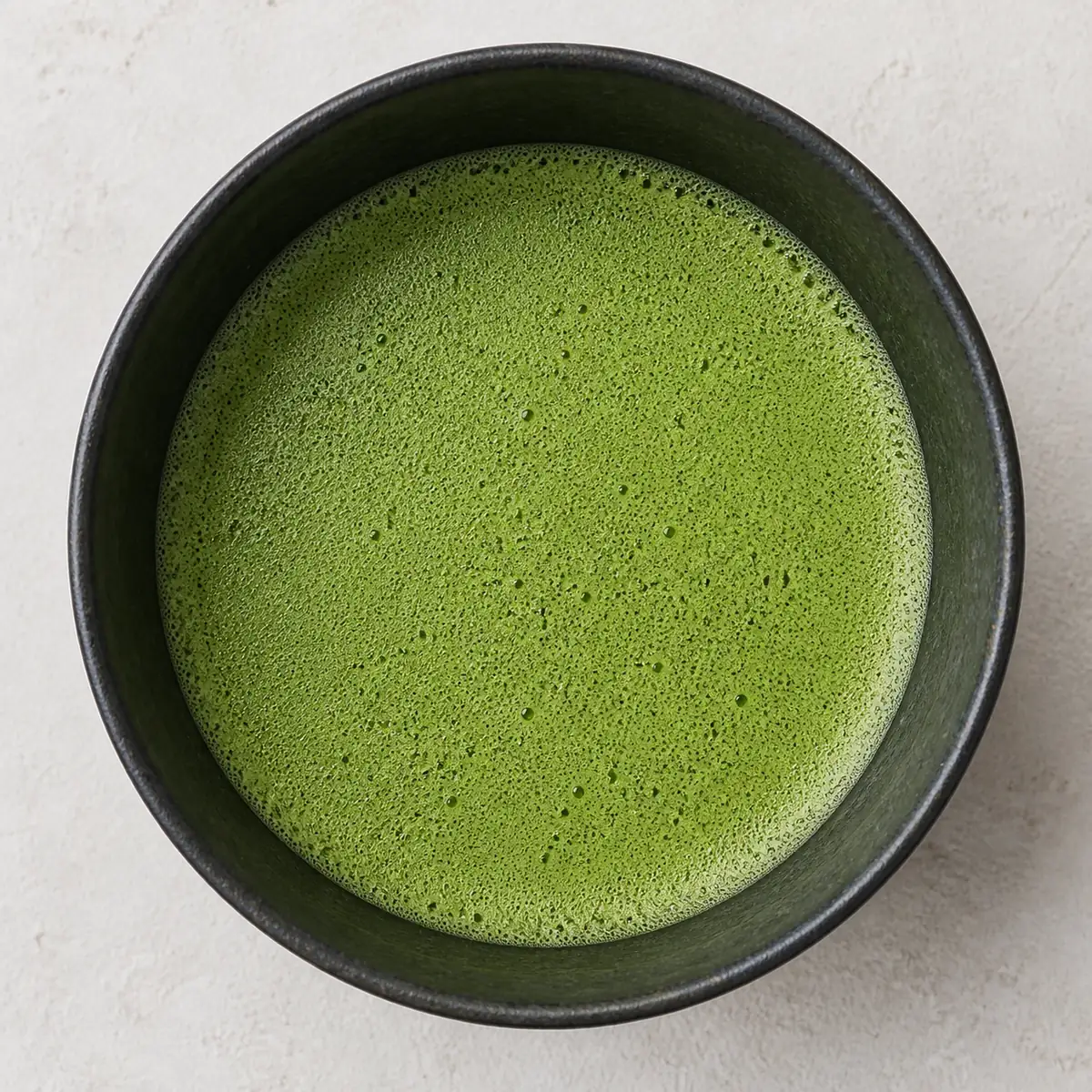
That body comes from the suspended particles and from the foam a whisk builds on top of them, which makes it a texture rather than a taste. A thin, watery bowl of usucha has usually lost it to under-whisking rather than to the powder.
What a good bowl does, in order
- VegetalFresh green, the first thing you notice
- SavouryBroth-like depth arrives underneath it
- CreamyBody from the suspended leaf, not from fat
- Sweet finishLingers after swallowing. The clearest marker of quality
Matcha rewards attention because that sequence takes several seconds to complete. A useful habit is to wait ten seconds after swallowing: poor powder leaves a dry, slightly chalky blank, and good powder leaves a sweetness that only turns up once the vegetal notes have cleared.
Umami, theanine and the weeks under shade
Umami is doing real work here rather than standing in for the word savoury.
It is the taste of glutamate and related amino acids, the same one that makes stock, aged cheese and ripe tomatoes read as full rather than merely salty. In tea the main carrier is L-theanine, an amino acid the plant makes in its roots and moves up into the leaf.
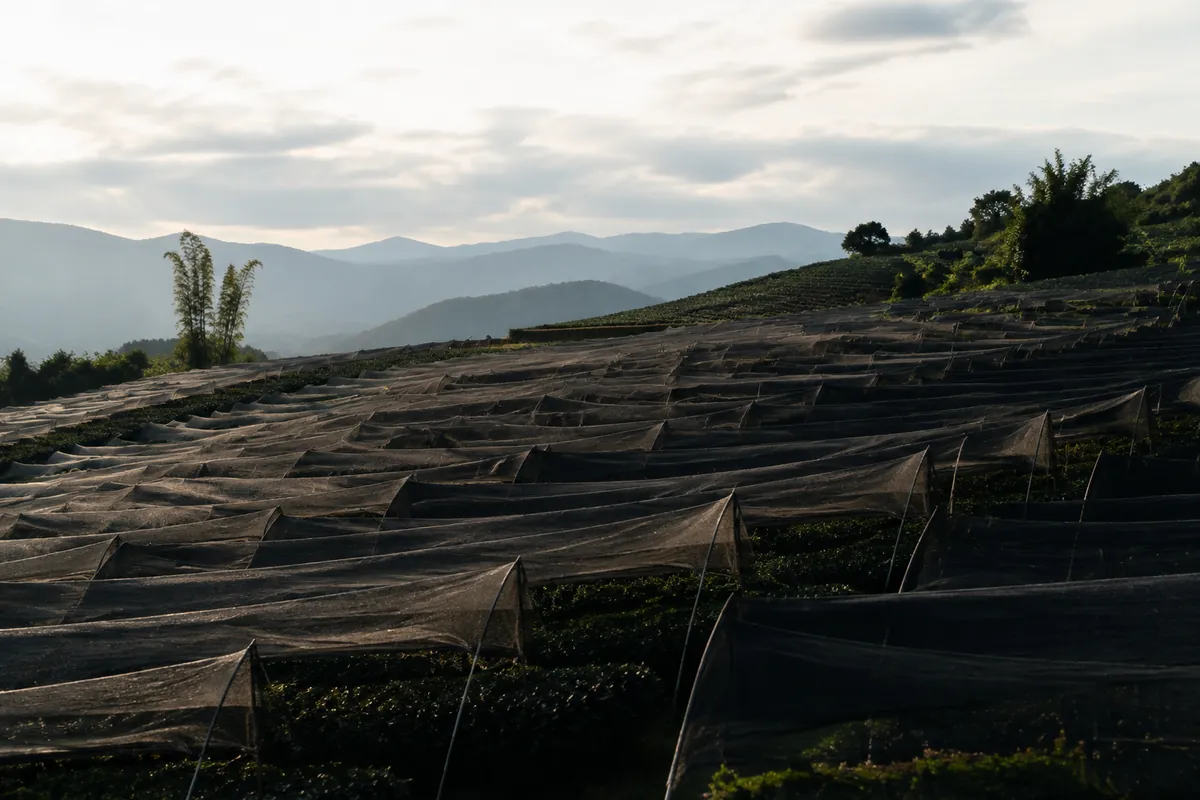
Shading is what concentrates it. Covered for three to four weeks before picking, the plant builds more theanine and converts less of it into the catechins that taste astringent, which is the mechanism what matcha is sets out at length.
That single agricultural decision explains most of the quality gap this page describes. A first-harvest shaded leaf is high in theanine and low in catechins, a later unshaded one is the reverse, and no adjustment at the bowl moves a powder from one column to the other.
How shade becomes sweetness
- Cover the bushesReed screens or netting cut most of the light for three to four weeks.
- Theanine buildsThe plant moves more of the amino acid it makes in the root up into the leaf.
- Catechins stallLess light means less of that theanine is converted into astringent compounds.
- The bowl changesSavoury depth arrives early and the drying grip arrives late, or not at all.
The clearest way to hear the difference is to drink sencha alongside a bowl. Sencha is grown in full sun, so its astringency sits at the front and its sweetness well behind, which is exactly the arrangement shading reverses.
Bitterness, astringency and the water you used
Almost everyone who calls a bowl bitter means something more specific, a drying grip across the whole tongue that has a different cause from bitterness proper and a different fix.
Bitterness is a taste registered at the back of the mouth. Astringency is a tactile sensation, catechins binding to the proteins in saliva so the mouth feels stripped, and it is what dominates a badly made or badly chosen bowl.
| Variable | Result of getting it wrong | Better approach |
|---|---|---|
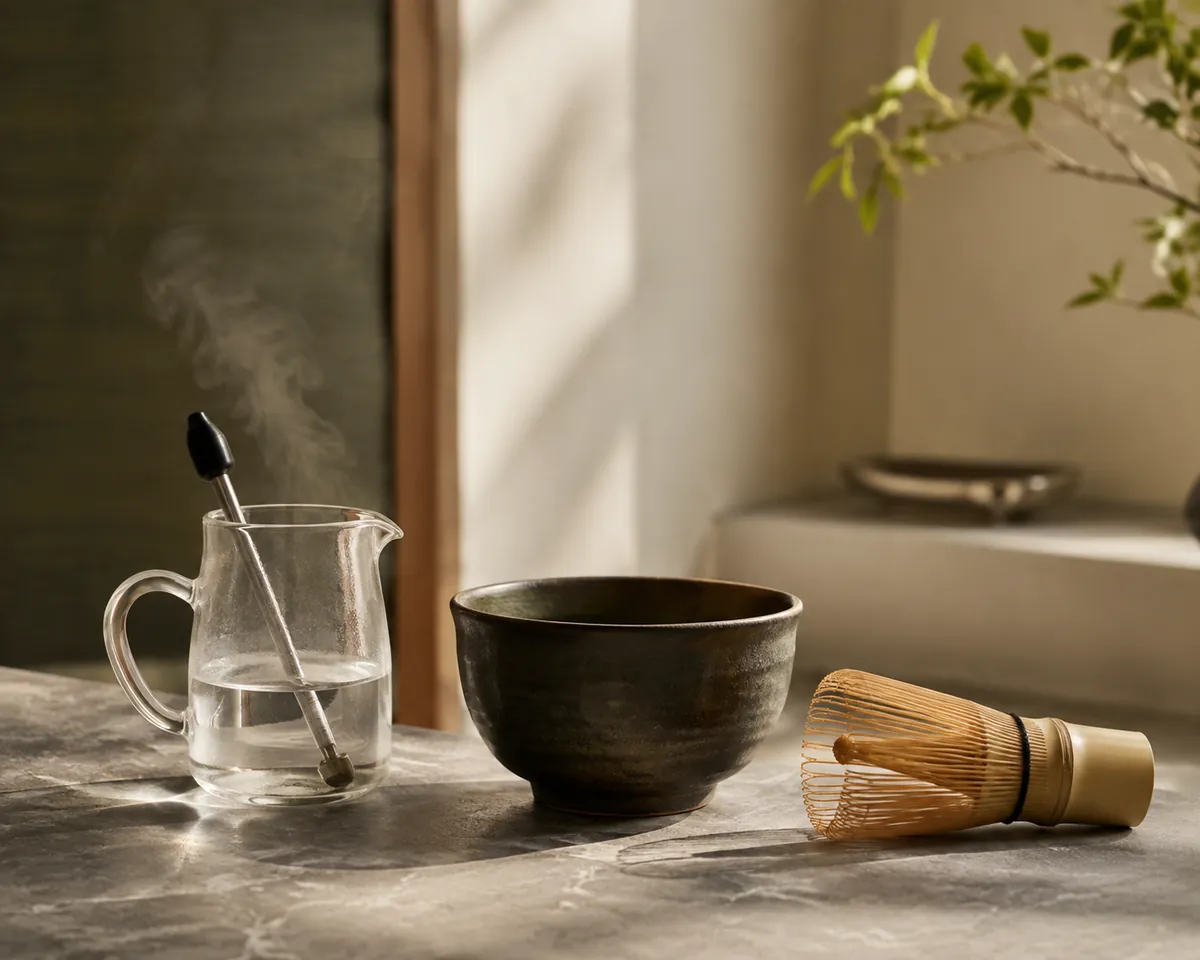
| Water temperature | Boiling water pushes astringency forward and flattens sweetness | Around 75 to 80 C |
| Ratio | Too much water reads thin and grassy; too little reads harsh | About 2 g powder to 60 to 70 ml water |
| Whisking | Under-whisked matcha is lumpy, with concentrated bitter pockets | Whisk briskly until a fine, even foam forms |
| Sifting | Unsifted powder clumps and never fully suspends | Sift the powder before adding water |
Temperature is the variable worth fixing first because it costs nothing and moves the most. Water off a rolling boil extracts catechins hard and drives the sweetness down underneath them, which the same arithmetic makes true of steeping temperature in leaf tea.
Hardness matters more than people expect, since a suspension is mostly water by volume and there is no spent leaf to blame. High-calcium water sharpens the grip and flattens the umami, and brewing water covers what the minerals are doing.
Grade is the other half of the answer and it is the half no kettle fixes. Where the water is right and the bowl is still harsh, how to whisk matcha rules out the technique and why matcha tastes wrong works through what is left.
Harvest, and why the quality gap is so wide
Poor leaf has nowhere to hide in a suspension.
With steeped tea, weak material makes a thin, uninteresting cup and stops there. With matcha you swallow the leaf, so everything that was wrong with it in the field arrives in the mouth at full strength.
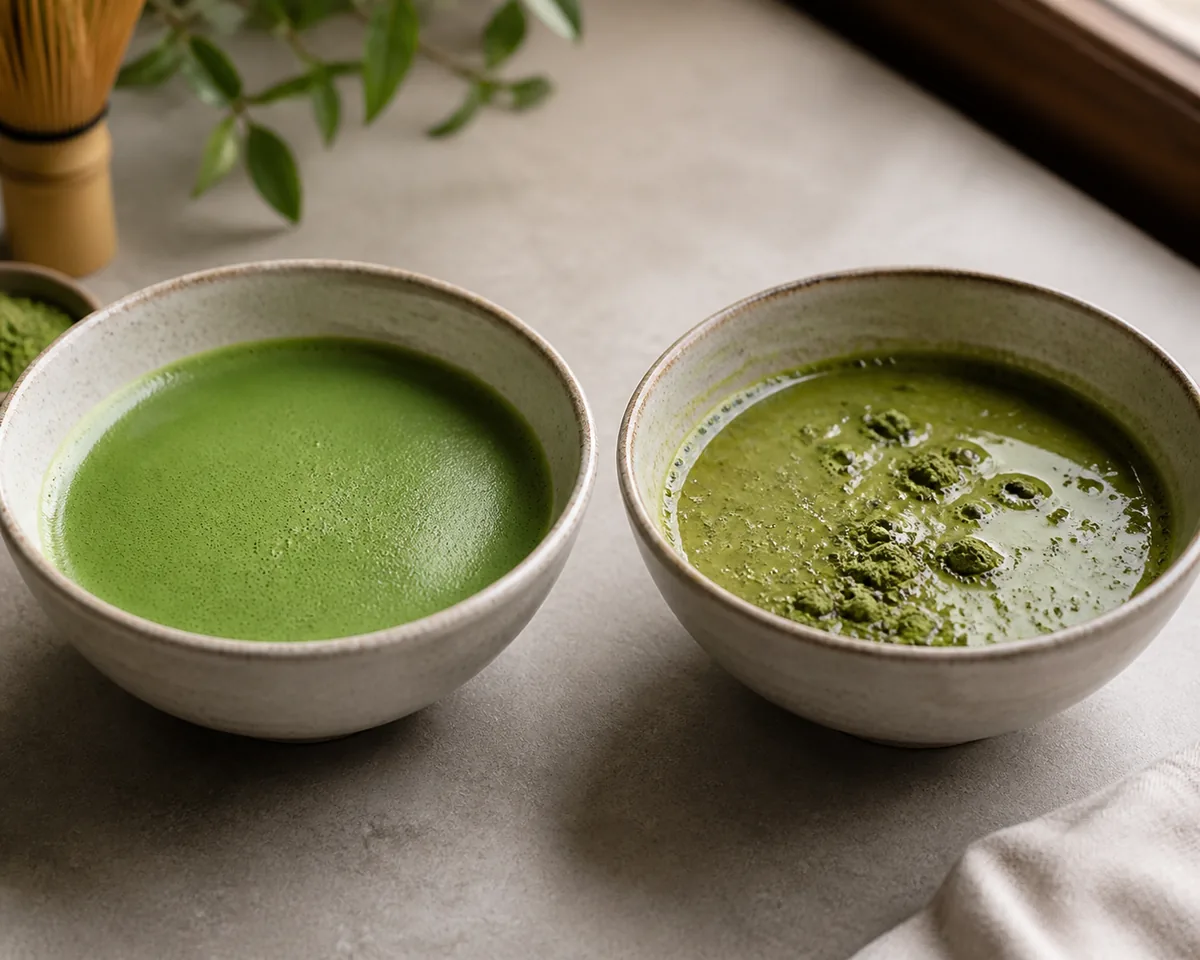
Japanese tea is picked in flushes through the season. The first flush, ichibancha, comes off the bush in spring after a winter of storing amino acids, and every picking after it carries less theanine and more of the catechins that dry the mouth.
What later harvests do to a bowl
- SweetnessHighest in the first flush, falling steadily
- Savoury depthFollows theanine, so it falls with each picking
- AstringencyLowest in spring, rising through the season
- ColourVivid jade early, duller and yellower later
- Typical useDrunk plain early, blended into lattes and baking later
A grade name is largely a proxy for that timing, which is why culinary grade and a drinking grade taste so unlike each other whisked plain. Later leaf is not defective; it was made for a context that includes sugar and milk, and it performs well in one.
Later harvest
Older, tougher leaves carry more catechins and less theanine, so more astringency and less sweetness.
Stems left in
Stems and veins add coarse, bitter notes. Removing them is a defining step for good matcha.
Oxidised powder
Matcha exposed to air loses its bright colour and turns dull and flat. Very fine powder oxidises quickly.
Fast grinding
Heat from rapid milling damages the aromatics before the powder ever reaches you.
Only one item on that list is yours to control after purchase, and it is the third. A tin left open, warm or in daylight loses its sweetness within weeks, which is why storing matcha belongs beside a page about flavour rather than after it.
Cultivar, blends and how much they matter
Cultivar sits below both.
Japanese tea is grown from named plant varieties that carry recognisable characters in the way grape varieties do. Yabukita dominates the country and gives a balanced, familiar profile; Okumidori and Saemidori are prized for matcha because they run sweeter and a deeper green; Asahi and Samidori turn up in the higher tiers from Uji.
Most tins name no cultivar at all, and blends are the norm rather than the exception. When one is named it usually signals a producer who expects the buyer to taste the difference, which is a reasonable proxy for care taken at the mill and in the packing room.
Shading and harvest between them account for most of what a bowl tastes like, and cultivar accounts for a slice of the remainder. It is the last variable worth chasing, and a fair way behind buying a fresh tin of ceremonial grade from a seller who prints a harvest year.
What milk and a cafe counter change
Adding milk changes the drink substantially, because fat and protein bind the catechins that dry the tongue and mute the vegetal notes sitting underneath them.
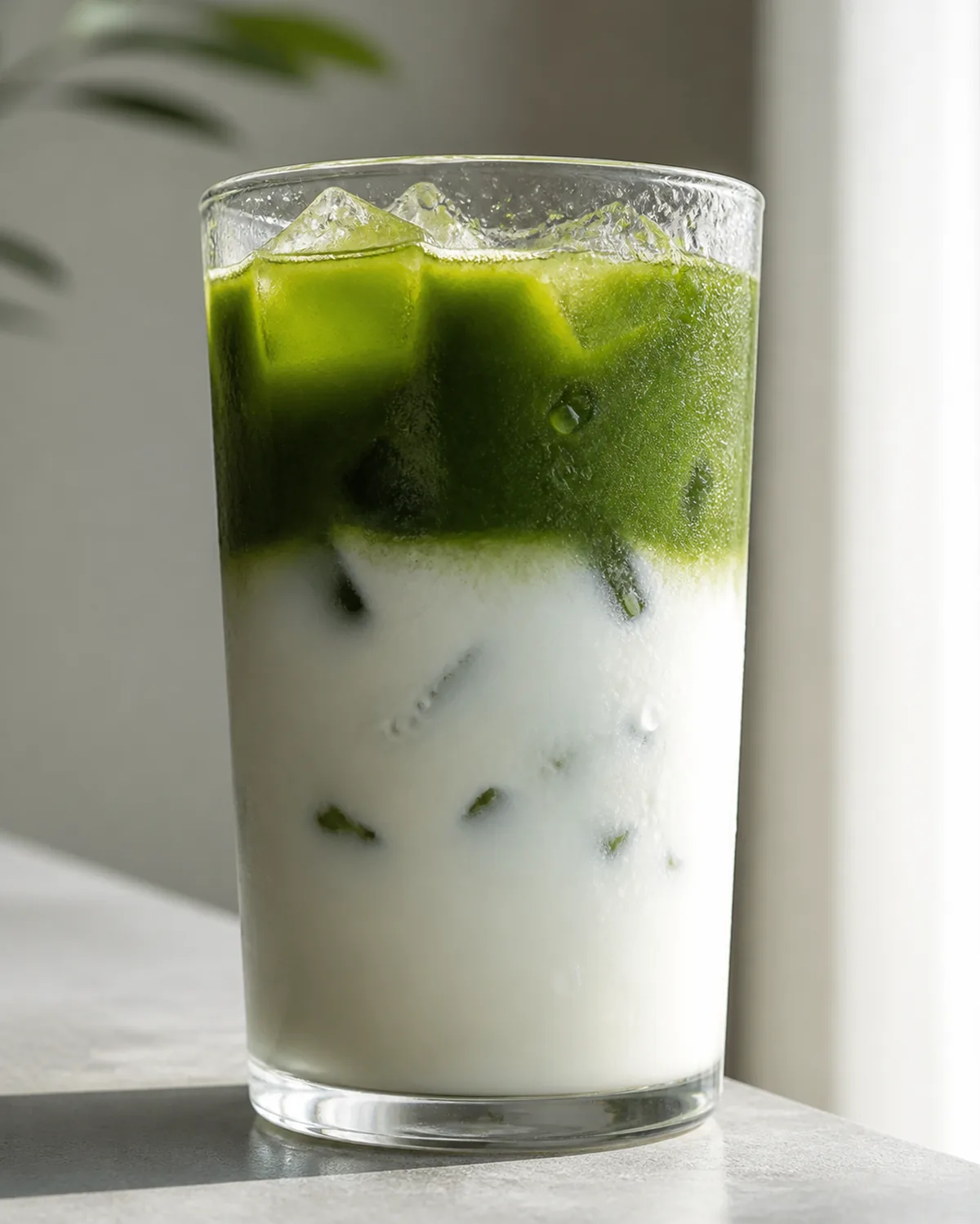
What is left is rounder and sweeter, tasting far more of creaminess and far less of leaf. That is the trade a matcha latte makes, and it is a fair trade for an everyday drink and a poor one for a tin you paid a lot for.
Three things usually explain why a cafe bowl and a home bowl taste nothing alike, and none of them is skill. A cafe buying for volume buys for cost; many counters use a pre-sweetened blend where the sweetness is added rather than earned; and steamed milk at 65 C carries a completely different flavour from water at 75 C even with identical powder.
Plant drinks shift it again, since each one brings its own sweetness and its own body. A barista formulation of oat milk sits closest to dairy in how it handles the astringency, and thinner nut drinks let more of the vegetal edge through.
The finish, and where the money shows
The end of a mouthful carries more information than the beginning does.
Good matcha has a long sweet return, sometimes several seconds after swallowing, which Japanese tasting vocabulary calls amami. That returning sweetness is theanine, and a low-theanine powder cannot produce it however carefully it is made.
Poor matcha finishes short and dry instead. The astringency arrives, peaks and stops, and the mouth is left feeling stripped rather than coated, which is the same short brutal shape that makes green tea bitterness such a common complaint about over-brewed leaf.
That is the single most reliable test available without a reference sample beside you. A bowl still giving something back five seconds after the sip is a good one, and a bowl that has gone silent by then has told you what it is.
Front and finish are genuinely independent. Cheap and expensive powders often open in much the same place, which is why judging a matcha on the first sip alone is the fastest way to buy the wrong tin twice.
Tasting a bowl on purpose
Judging a powder needs a method.
Drinking it and forming an impression is not the same activity, and the difference is mostly about controlling everything except the one thing you are trying to assess.
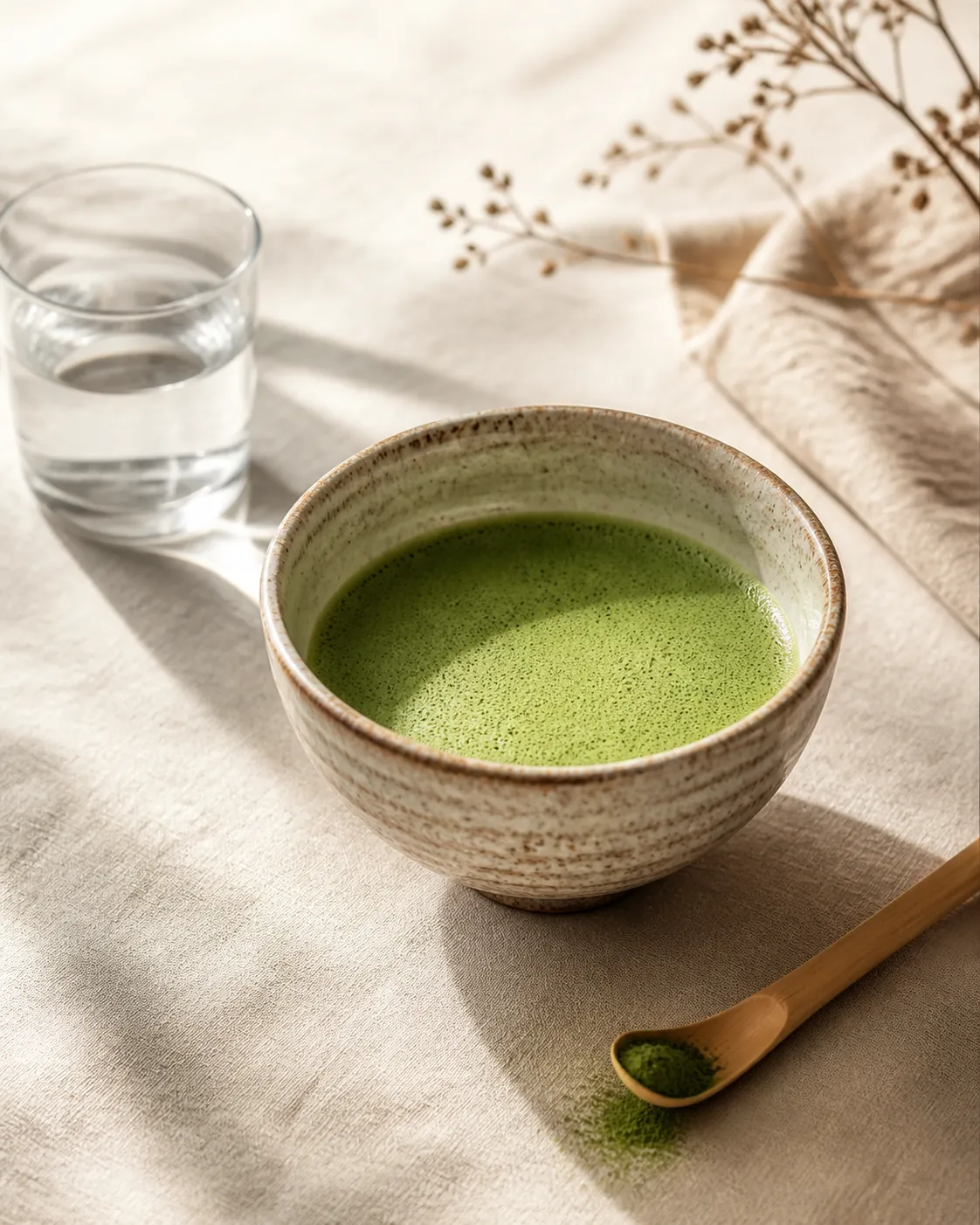
- Whisk it plain with water at 75 to 80 C. Milk and sugar hide exactly what you are trying to assess.
- Smell the dry powder first. Good matcha smells sweet and green in the tin, not dusty or hay-like.
- Look at the colour in daylight. Jade is what you want; khaki or yellow-green signals age or later leaf.
- Taste it in two stages: the first impression, then the finish ten seconds after swallowing.
- Judge the finish above everything else. Lingering sweetness is the clearest quality marker there is.
A comparison teaches faster than any single bowl, and it only means something if the two bowls are made identically. Same water, same temperature, same dose, same whisk, one straight after the other.
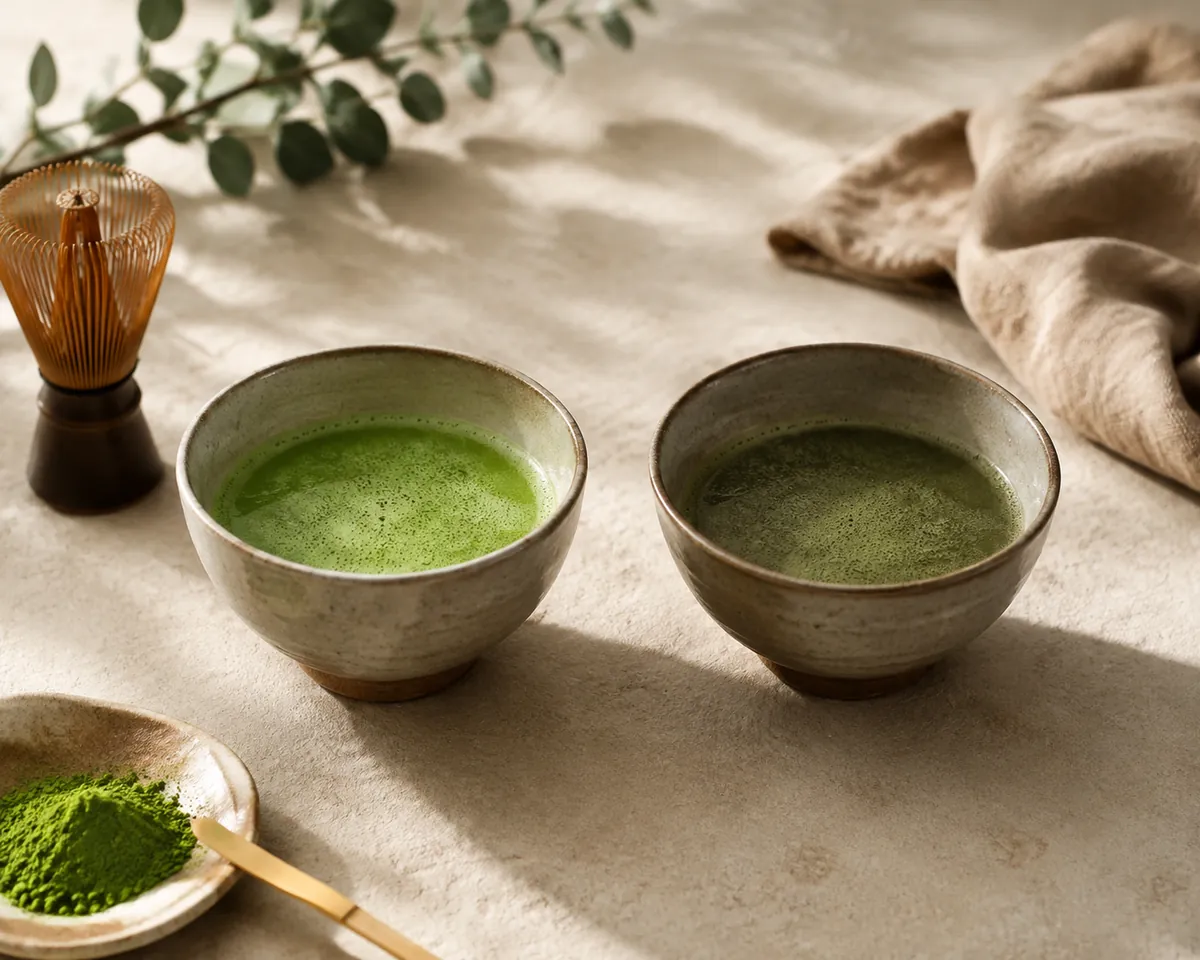
A controlled tasting
- Two bowls, same everythingSame water, same temperature, same dose, same whisk, made one after the other.
- Smell the dry powder firstBoth, before any water. This is where freshness is clearest.
- Look at the colour drySide by side on white paper, not in the tin.
- Taste the first sip warmNote where the sweetness sits and how long it lasts.
- Wait and taste againThe aftertaste is the half most people never assess.
- Note the finish, not the frontCheap and good matcha often open similarly and diverge completely at the end.
The clearest first exercise is a drinking grade against a baking one, because the gap is too large to argue with. Ceremonial matcha and a supermarket culinary tin differ in a way that no amount of palate training is needed to hear.
Gyokuro, sencha and a supermarket teabag
Placing matcha beside the teas it is genuinely related to turns an abstract description into something you can check against a cup you have already drunk.
| Tea | How it compares | Why |
|---|---|---|
| Gyokuro | The nearest taste in tea, like matcha strained | Also heavily shaded, also high in theanine, also brewed cool |
| Sencha | Sharper and grassier, astringency forward and umami back | Unshaded, which is exactly the variable being removed |
| Supermarket green teabag | At the far end of the range from a ceremonial bowl | Broken leaf, no shading, brewed hot and fast |
| None of them | Carry the body | Only suspended powder gives that, and no infusion can |
Gyokuro is the closest relative by taste, and for the same reason: heavily shaded, high in theanine, brewed cool to keep the sweetness in front. Drinking one is close to drinking matcha that somebody has strained for you.
At the other end, a supermarket teabag is broken leaf grown in full sun and brewed hot and fast, so it delivers astringency and very little else. Setting it against a bowl is less a comparison than a demonstration of how wide the green tea category actually is.
Body is the one quality no infusion can supply. White tea is delicate and sweet and still has none of it, because nothing is suspended in the cup, and the green tea and matcha comparison turns on exactly that.
A vocabulary for describing it
Describing this is harder than describing coffee, because the reference points are less familiar and the useful words are borrowed from a language most drinkers do not have.
Marine
The clean, faintly oceanic note of good first-harvest matcha. Closer to nori than to fish.
Creamy
A texture rather than a taste, from the suspended particles and the foam.
Vegetal
Green and leafy. Pleasant in balance, and dominant in lower grades.
Astringent
The drying grip on the tongue. A structural element, not a fault at low levels.
Kokumi
The sense of thickness and mouth-filling depth, distinct from the taste itself.
Hay
The note of an oxidised, faded powder. Always a fault.
Marine and hay are the two most useful poles for a beginner, and they are separable by nose alone. A powder smelling faintly of the sea is fresh and well made, and one smelling of dry grass has gone, which is most of the assessment done in a single sniff.
The roasted vocabulary belongs elsewhere and borrowing it causes confusion. Nutty, toasty and grain-like notes describe hojicha rather than matcha, and a bowl reading toasty has usually oxidised rather than acquired a new virtue.
Kokumi is the word worth learning last and the one that describes what people are reaching for when they call an expensive bowl thick. It is not sweetness, saltiness or umami but the sense of the drink filling the mouth, and it is the quality that vanishes first when a tin gets old.
Common questions
Is matcha supposed to taste bitter?
Not predominantly. Good matcha is vegetal and savoury with a sweet finish. What people usually call bitterness is astringency, a drying grip from catechins, and a lot of it points to lower-grade powder or water that was too hot.
Why does my matcha taste like grass?
A fresh green, vegetal character is normal and expected. If it reads as harsh grass with no sweetness behind it, the likely causes are a later-harvest powder, water that was too hot, or powder that has oxidised.
Does matcha taste like green tea?
It is related but much more concentrated. Steeped green tea is an infusion, while matcha is the whole leaf suspended in water, so it is thicker, more savoury, and considerably more intense.