Why Cold Drinks Need Simple Syrup, and How to Make It
Sugar does not dissolve in a cold drink. Simple syrup exists to solve that one problem, and everything about how it is made follows from it.
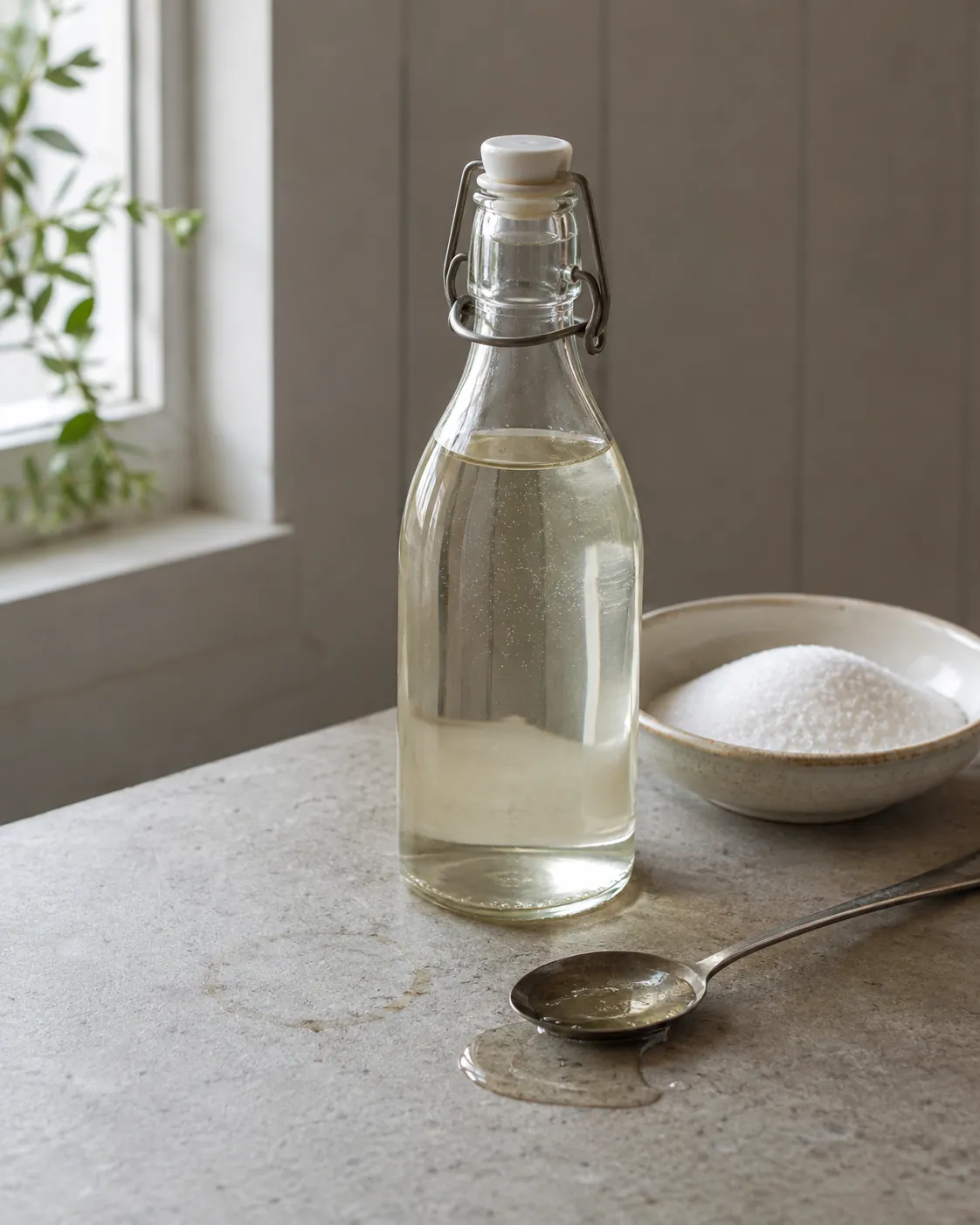
Simple syrup is sugar dissolved in water, and the reason it exists is worth one sentence: granulated sugar barely dissolves in a cold liquid, so stirring it into iced tea or a glass of cold coffee leaves most of it sitting at the bottom, sweetening the last mouthful and none of the others.
Dissolving it in advance solves that permanently. Everything else about a syrup, from the ratio you choose to whether you heat it, what you keep it in and how long it survives there, follows from that one job.
Simple syrup at a glance
- What it is
- Sugar dissolved in water, nothing else required
- Standard ratio
- 1:1 by weight, roughly 50 Brix
- Rich ratio
- 2:1 by weight, roughly 66 Brix, near saturation
- Made by
- Gentle heat, or cold shaking in a jar for 1:1 only
- Keeps
- About a month refrigerated at 1:1, up to six at 2:1
- Fails by
- Crystallising, which is fixable, or moulding, which is not
- Belongs in
- Cold drinks. Anything hot dissolves sugar unaided
Why a cold drink needs it and a hot one does not
Sugar solubility falls steeply as water cools, which is the whole of the argument. In a hot cup the sugar is gone before the spoon stops moving; in a glass of iced coffee it drifts down, settles, and stays there no matter how long you stir.
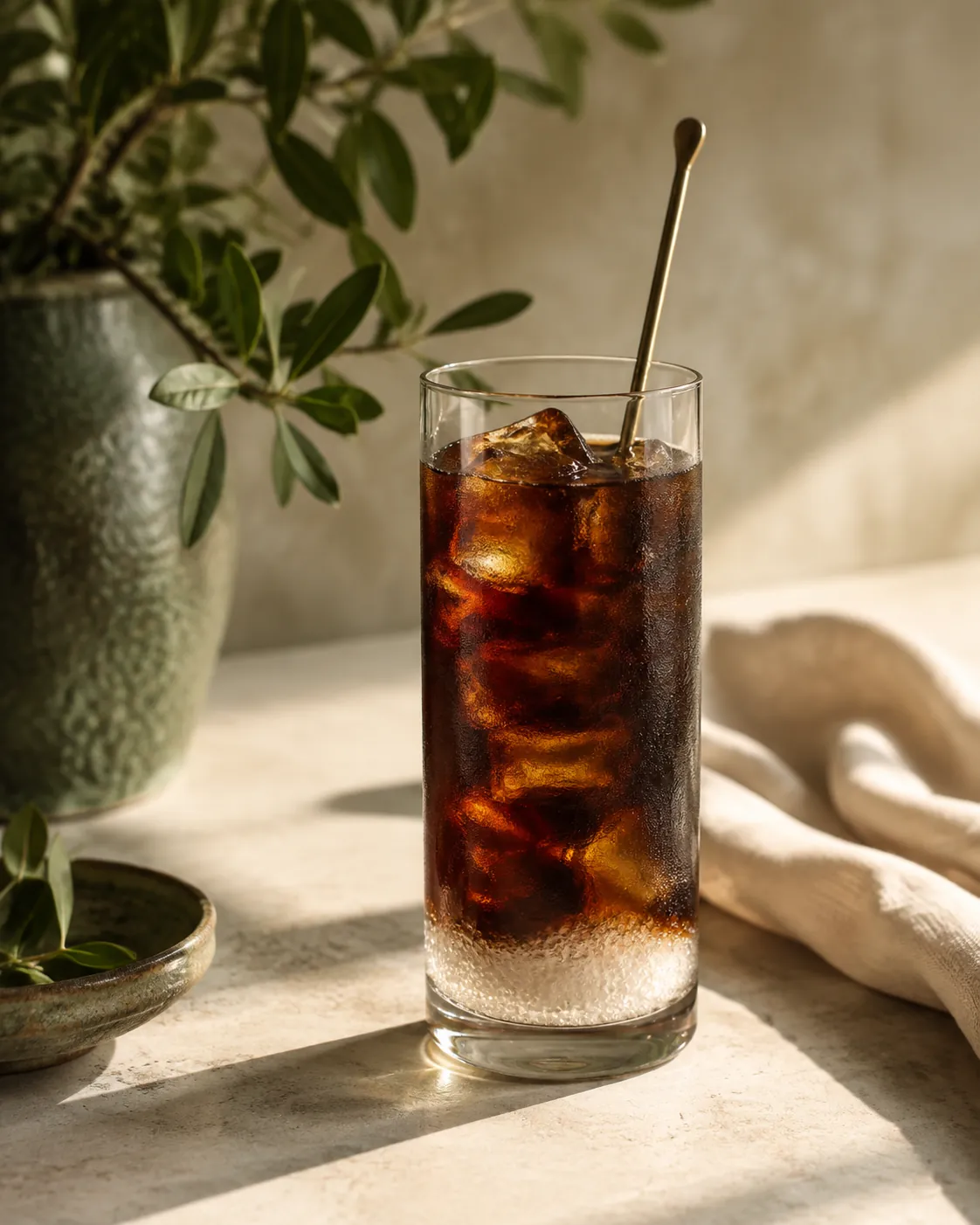
Iced cold brew
Sweetened after brewing and after chilling, when granulated sugar has no chance at all.
Iced tea
The same problem. Sweetening the hot brew instead works, but commits every glass in the jug.
Homemade soda
A soda maker carbonates plain water, so all the sweetness and flavour arrive afterwards as syrup.
A hot cup of tea
The wrong place for it. Granulated sugar dissolves unaided, and syrup adds water nobody asked for.
Two further cases are worth ruling out. A drink already carrying its own sugar, such as a fruit juice or a sweetened plant drink, is almost always better adjusted with acid than with more sweetness, so a squeeze of lemon does more than a spoon of syrup would.
And anything meant to stay transparent needs the syrup filtered or left out, because the fine solids in a cloudy homemade batch drop out in the glass over an hour and look like a fault in the drink.
The ratio, and why bars call it a number
Almost every recipe uses one of two ratios, and swapping one for the other without adjusting anything else changes the drink rather than the sweetness.
| Simple, 1:1 | Rich, 2:1 | |
|---|---|---|
| Sugar to water | Equal by weight | Twice as much sugar |
| Sweetness per ml | Lower | Roughly double |
| Texture | Thin, like water | Noticeably viscous |
| Keeps | About a month refrigerated | Up to six months |
| Use | General purpose | When dilution matters, or for longer storage |
Measure by weight, not volume. A cup of sugar and a cup of water are not equal amounts of anything, so a recipe written in cups lands somewhere between the two ratios depending on how firmly the sugar was packed. Measured by volume, a nominal 1:1 comes out around a fifth stronger than intended, which is enough to make every drink built on it taste faintly wrong without anyone being able to name the cause.
Professional kitchens sidestep the argument by describing a syrup as a number. Brix is the percentage of dissolved solids by weight, which in a syrup means sugar and nothing else.
Where the common syrups land
- 1:1 by weight
- About 50 Brix. The general-purpose syrup
- 1:1 by volume
- About 60 Brix, because a cup of sugar outweighs a cup of water
- 2:1 by weight
- About 66 Brix. Rich syrup, close to saturation
- Maple syrup
- About 66 Brix, a figure set by law rather than by taste
- Honey
- About 80 Brix, which is why it is supersaturated and crystallises
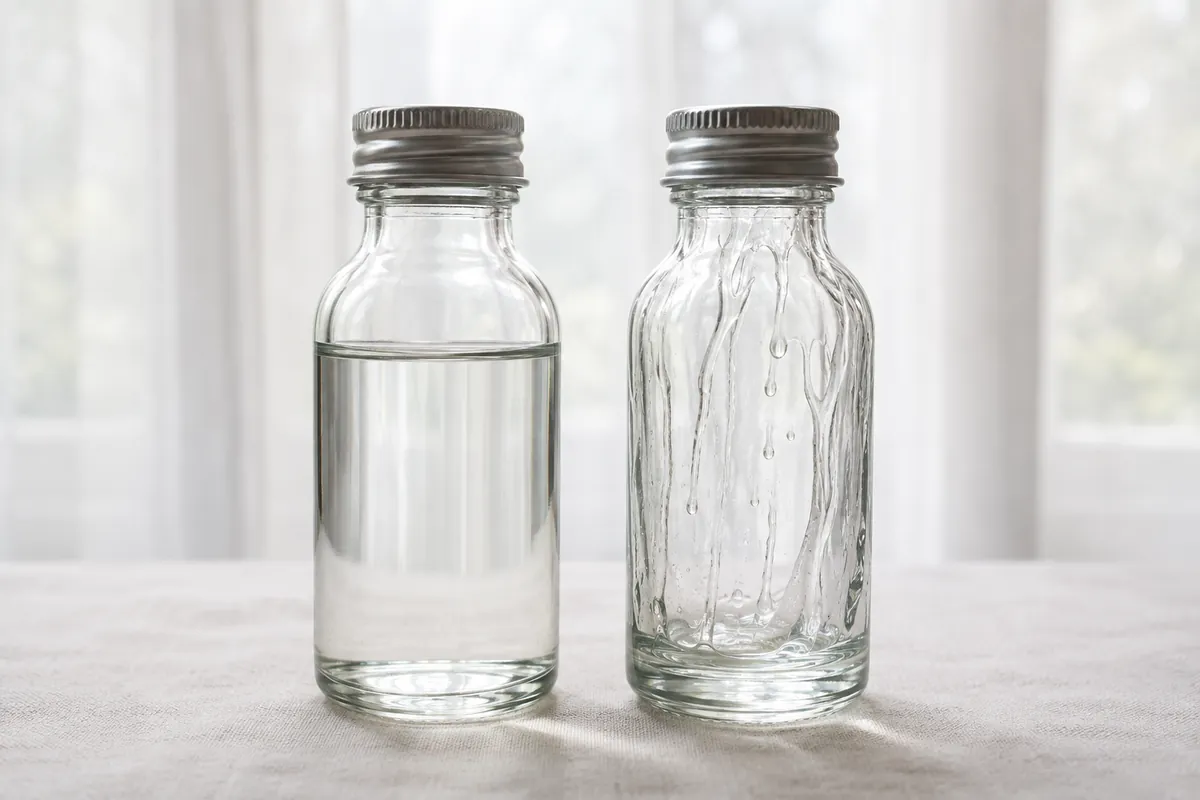
Rich syrup is the more useful default for anything cold, since it delivers the same sweetness in half the volume and therefore waters down an iced coffee or a cordial far less.
The pan method and the jar method
Heat is optional at 1:1 and compulsory at 2:1, which is the only real difference between the two ways of making this.
Hot method
- Sugar
- 200 g
- Water
- 200 ml
- Heat
- Warm gently, stirring, until clear. Do not boil
- Cool
- Fully, before bottling
- Yield
- About 300 ml
Boiling is the mistake almost everyone makes once. It drives off water, which quietly changes the ratio you just weighed out, and sustained heat starts splitting the sugar, which alters both the flavour and the way the syrup keeps.
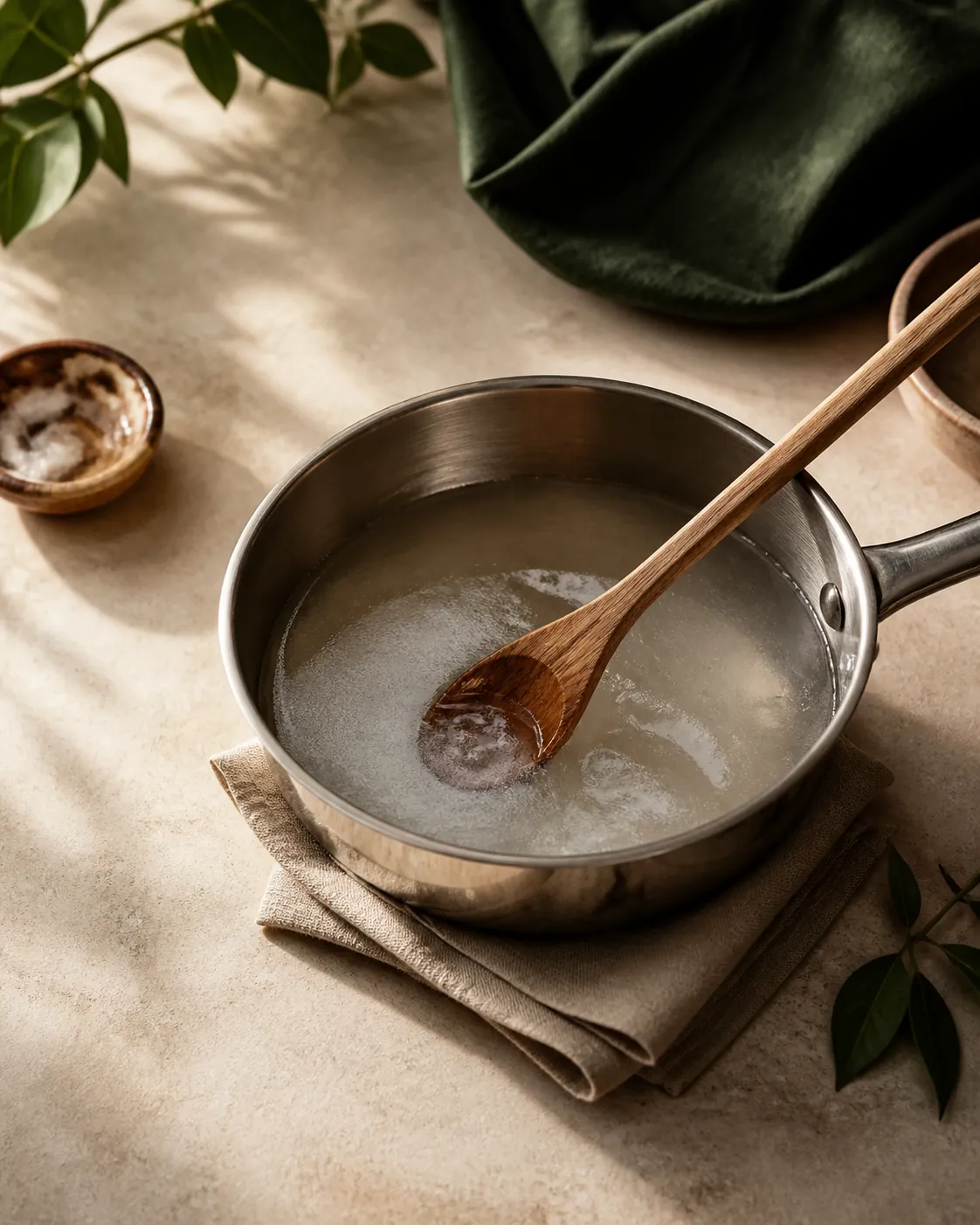
Warm until the liquid turns from milky to clear, then take the pan off the heat; that clarity is the finish line and there is nothing to gain past it.
The cold method needs no pan at all. Put sugar and water in a sealed jar, shake it hard, leave it a few minutes and shake again, and after about ten minutes of intermittent effort you have a syrup that tastes fractionally cleaner because nothing in it has been cooked.
Why it clouds, and what inversion does about it
A syrup made at home clouds within weeks while one made in a bar stays clear for months, and the difference is a chemical change rather than a colder fridge.
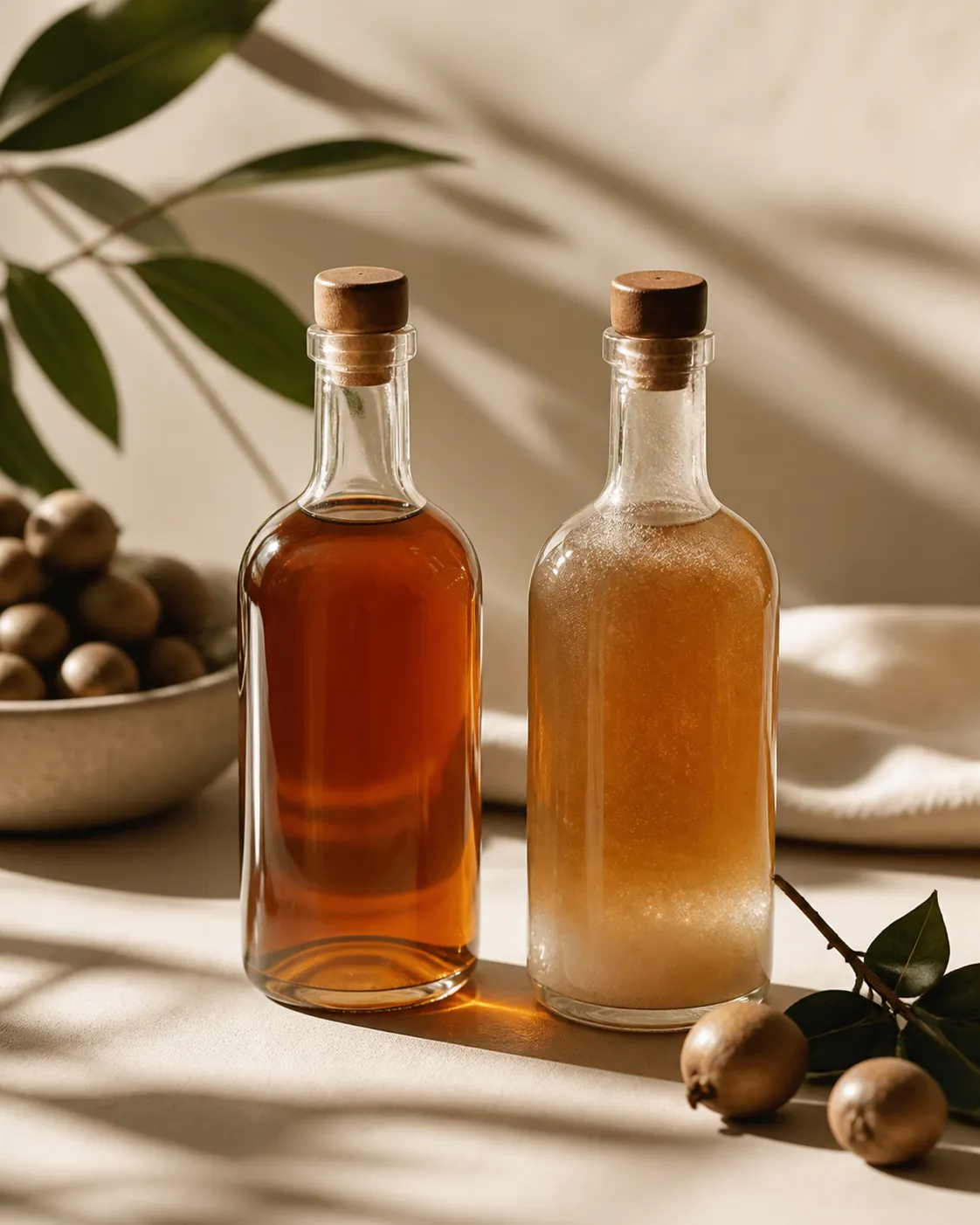
Cloudiness is crystallisation. The solution was carrying about as much sugar as it could hold, the temperature dropped, and some of that sugar came back out as solids.
Gentle warming redissolves it and the syrup is fine, but it will do the same thing again unless something changes.
What changes it is inversion. Table sugar is sucrose, one glucose bonded to one fructose; heat plus a little acid splits a proportion of those bonds, and the resulting mixture of three sugars crystallises far less readily than a pure solution of one.
That is the whole trick behind a bar syrup, and it also makes the syrup taste fractionally sweeter than the sugar that went in, because fructose is the sweeter of the two halves.
Encouraging it deliberately
- Acid
- A teaspoon of lemon juice, or a pinch of citric acid, per litre
- Heat
- Gentle and sustained. Ten minutes below boiling is enough
- Glucose
- A spoon of liquid glucose reaches the same place by another route
- Effect
- A clear bottle for months rather than weeks
- Trade
- Slightly softer flavour, and it will never crystallise again if you wanted it to
The same reaction explains why boiling ruins a plain syrup and improves this one. Uncontrolled inversion is a problem when it happens to a ratio you carefully measured, and a feature when you set out to cause it.
Bottling it so it does not spoil
Crystallisation is the fixable failure; mould is the other one, and it never comes from the syrup itself. It arrives on a bottle that was not clean or on a spoon that had been somewhere else first, and once it is in, the bottle is finished.
Sugar at these concentrations is a difficult environment to grow in, which is why the contamination almost always announces itself as a single spot on the surface rather than a general souring, and why the syrup underneath still looks and smells perfectly good.
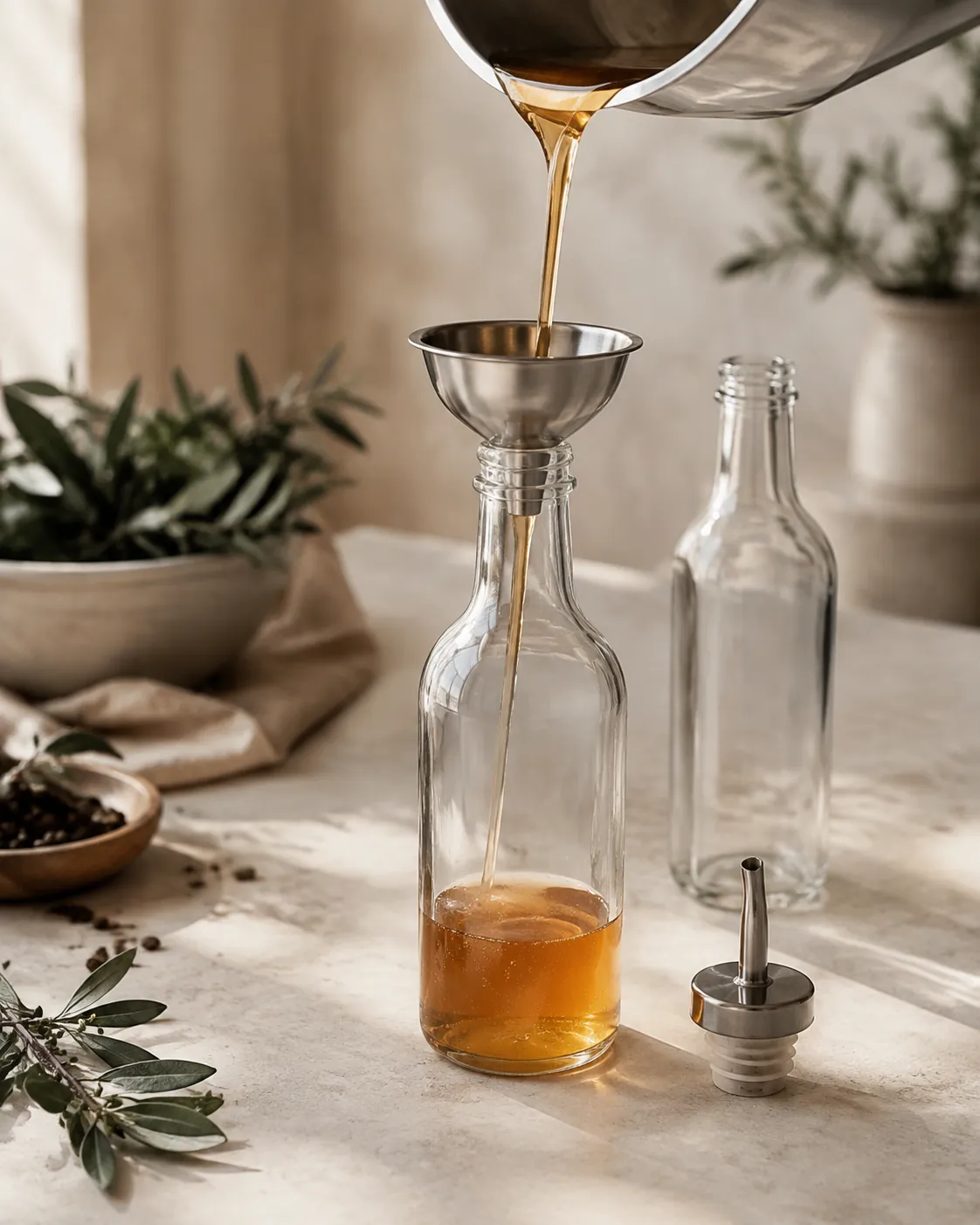
- Glass over plastic, and a bottle you can pour boiling water through.
- A pouring spout or squeeze top, so nothing is ever dipped into the syrup.
- Fill while warm and seal immediately, which sterilises the headspace as it cools.
- Label with the ratio and the date. Two clear bottles are indistinguishable a week later.
- Refrigerate everything, at either ratio, regardless of what the recipe claims.
What actually extends the life
- Higher sugar
- 2:1 is a harsher environment for microbes than 1:1
- Refrigeration
- The single largest factor at either ratio
- A clean bottle
- Sterilised glass, and never a used spoon
- Acid
- Slows crystallisation. It is not a preservative
- Small batches
- The most effective measure, because nothing sits long enough to fail
Never top up an old bottle with a fresh batch. Whatever was growing slowly in the old syrup gets a clean supply of sugar and warm liquid to grow in, and the combined bottle spoils faster than either half would have on its own.
Freezing turns a fortnight batch into a season
Storage is the reason most people keep only plain syrup, and the freezer removes that constraint entirely.
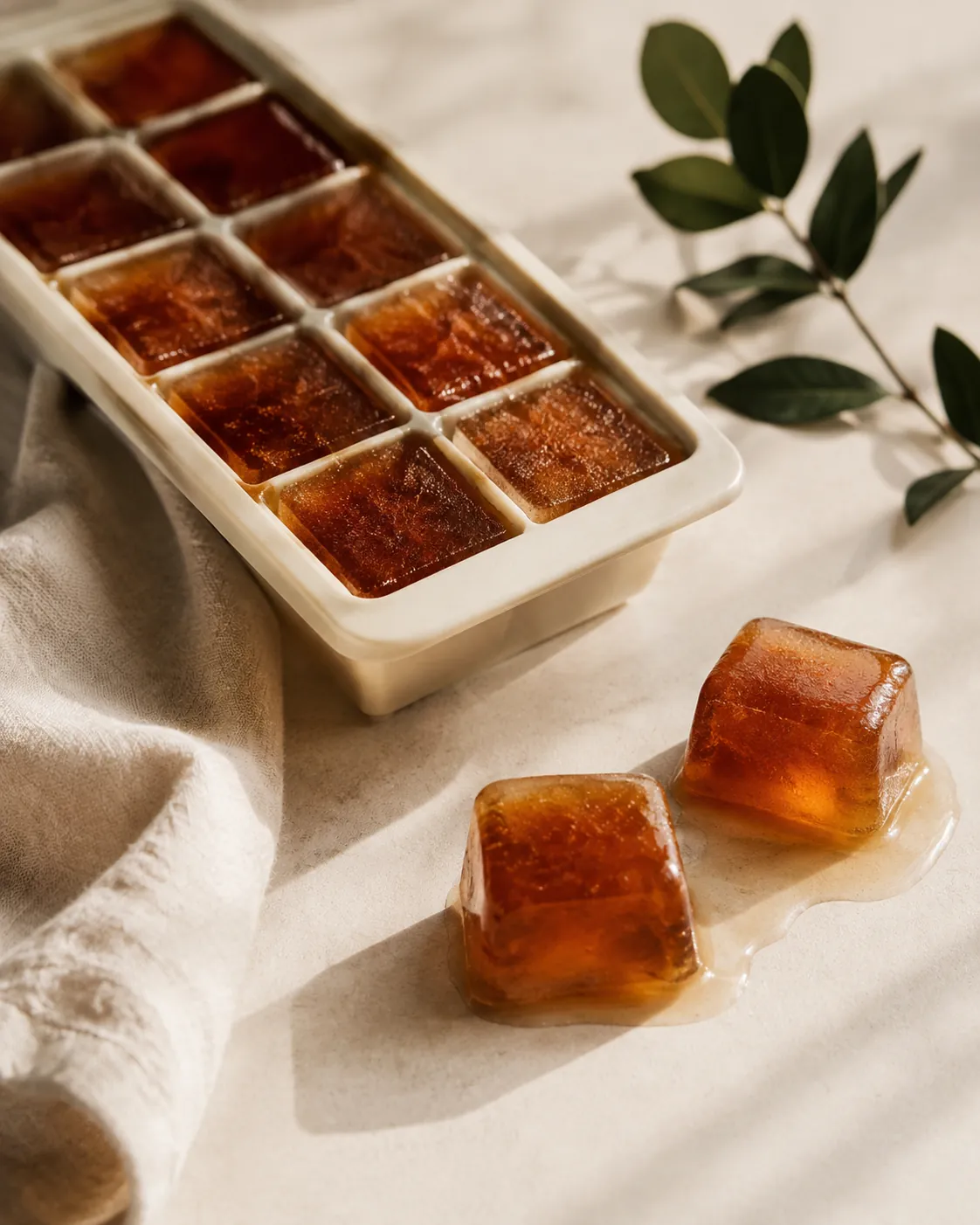
A small batch of flavoured syrup goes off before anyone finishes it, so the effort of infusing rhubarb or cardamom rarely repays itself. Frozen in an ice cube tray and then tipped into a bag, the same batch keeps for months and thaws in a minute under a warm tap.
The two ratios behave differently in the freezer, and the difference is useful rather than academic. A 1:1 syrup sets into a hard cube; a 2:1 stays slushy at domestic freezer temperature, because the higher sugar concentration pushes the freezing point further down.
The rich version can be spooned straight from the tray, which makes it the one to batch if you intend to freeze from the start.
That single change makes small-batch syrups worth making at all. A 200 ml batch of cinnamon or ginger syrup covers a season rather than a fortnight, and there is no reason to scale up a flavour you only want occasionally.
Infusions, and the sugar underneath them
The base takes flavour readily and the method barely changes, which is why the interesting part of this ingredient is what you put into it rather than how you make it.
Demerara or turbinado
Unrefined sugar, molasses notes, and a natural fit for dark coffee and spiced drinks.
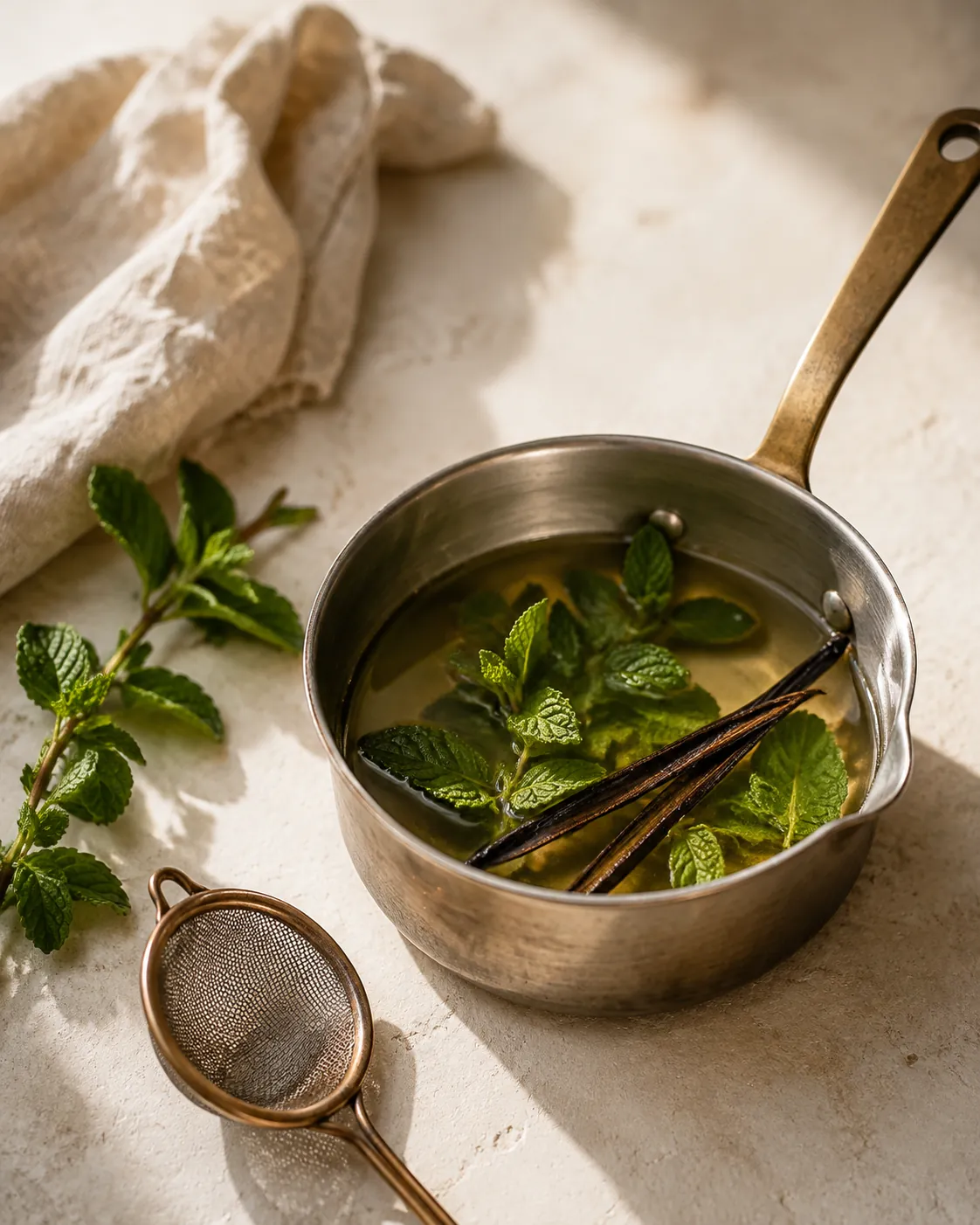
Steep aromatics off the heat rather than in it. Simmering herbs pulls out chlorophyll and turns them grassy and bitter, while the residual warmth of a just-made syrup extracts everything worth having and stops there.
The sugar underneath matters as much as the infusion on top.
| Sugar | Colour | Flavour | Notes |
|---|---|---|---|
| Granulated white | Clear | Neutral, sweetness only | The default, and the only truly neutral one |
| Caster | Clear | Neutral | Dissolves faster, otherwise identical |
| Demerara | Light amber | Light molasses, toffee | Excellent with dark coffee and spiced drinks |
| Muscovado | Very dark | Strong molasses, faintly bitter | Overwhelming in a light drink |
| Coconut palm | Mid brown | Caramel, faintly savoury | Dissolves less readily. Strain it |
Molasses is where both the character and the trouble come from in an unrefined sugar. It brings colour a clear drink may not want and a faint acidity that behaves unpredictably against dairy, so demerara is the one worth keeping beside the white, dark enough to flavour a spiced or roasted drink and mild enough not to take it over.
Swapping one syrup for another
Recipes are written around whichever bottle the writer happens to keep, and substituting without adjusting the volume is the commonest way a drink comes out thin.
| Recipe asks for | Substitute | Adjust |
|---|---|---|
| 30 ml of 1:1 | 15 ml of 2:1 | Add 15 ml of water if the volume matters |
| 30 ml of 2:1 | 60 ml of 1:1 | Remove 30 ml of another liquid |
| 30 ml of 1:1 | 25 ml of honey syrup | Honey is sweeter, and it brings its own flavour |
| 30 ml of 1:1 | 20 g of granulated | Only in a hot drink, where it will dissolve |
| 30 ml of 2:1 | 30 ml of maple syrup | Similar sweetness, entirely different character |
Volume is the part people forget, because sweetness is the part they are thinking about. Replacing a rich syrup with a standard one at matched sweetness puts an extra 30 ml of water into the glass, which a tall iced drink absorbs without complaint and a short one does not.
Flavoured sweeteners are not swaps at any ratio. Honey and maple both arrive with a character strong enough to redefine what you are drinking, which is occasionally the point and never a like-for-like exchange, and the same caution applies to agave syrup despite its reputation for neutrality.
A pinch of salt stirred into a finished bottle is the one addition that changes nothing about the volume and still makes the sweetness read as less flat.
Cordial is a syrup with acid in it
The two words appear interchangeably on labels and describe genuinely different things, which matters the moment a recipe assumes one and you reach for the other.
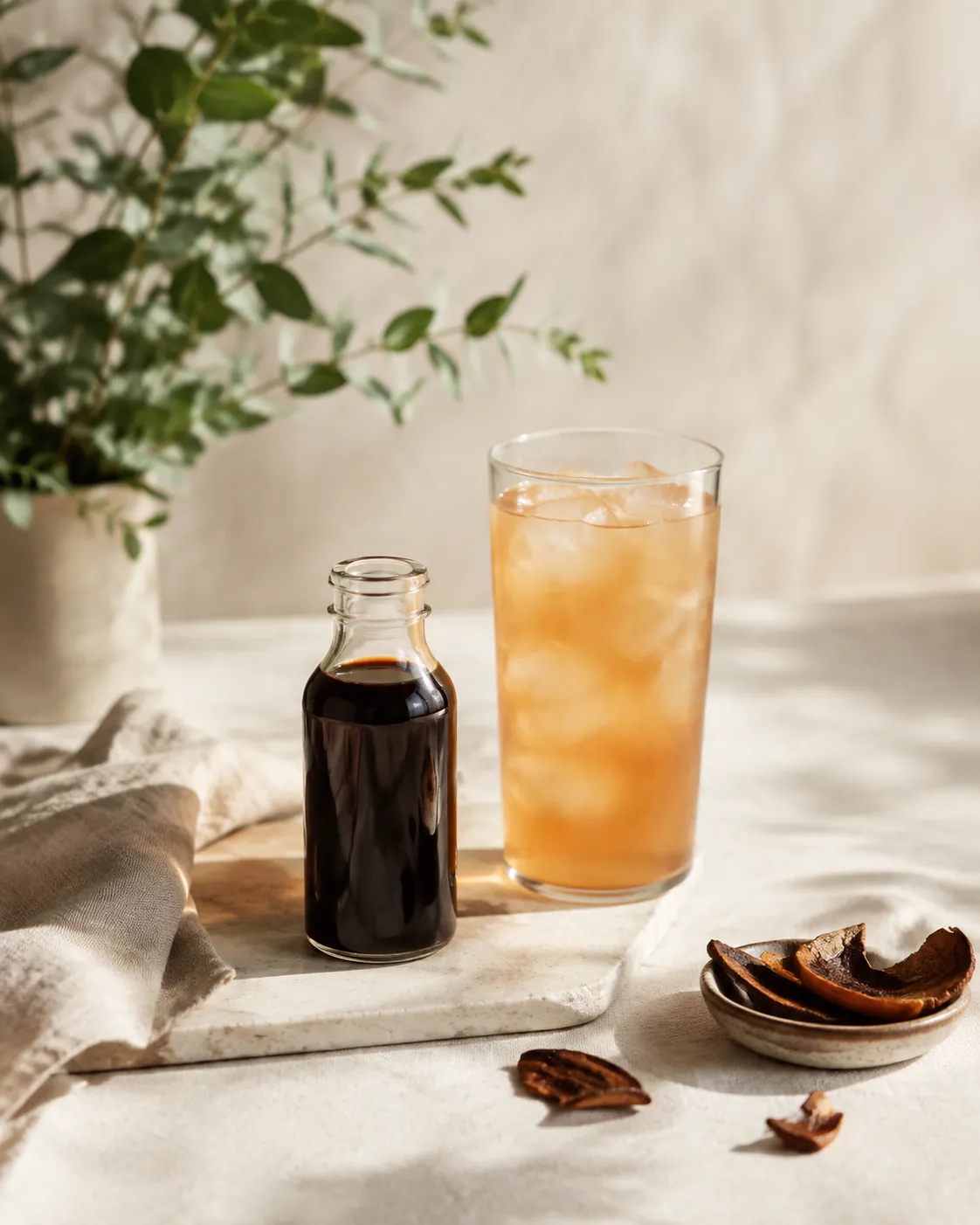
A syrup is sugar and water with flavour infused into it. A cordial is that plus acid, usually citric or the juice of the fruit itself, which makes it sharp as well as sweet and lets it be diluted far further before it stops tasting of anything.
A basic cordial
- Sugar
- 400 g
- Water
- 400 ml
- Citric acid
- 15 g, or the juice of 4 lemons
- Flavour
- Elderflower, mint, or the zest of 4 citrus fruits
- Dilution
- Around 1 part in 8, against 1 in 5 for a plain syrup
That acid is doing two jobs at once. It balances the sweetness, so the drink can be concentrated enough to taste of its flavouring rather than of sugar alone, and it lowers the pH far enough to extend the keeping time well beyond what a plain syrup manages.
Which one to reach for follows from what the drink already brings. A cordial makes the better base for a long cold drink over ice or topped with soda water, where it supplies both halves of the balance; a plain syrup is the better choice for sweetening something like an Italian soda or a fruit juice that brings acidity of its own.
Common questions
What is the ratio for simple syrup?
Either 1:1 or 2:1 sugar to water by weight. The 1:1 version is thinner and keeps about a month refrigerated; the 2:1 rich syrup is roughly twice as sweet per millilitre and keeps up to six months.
Why did my simple syrup go cloudy?
Usually crystallisation rather than spoilage: the solution was saturated and sugar is coming back out. Warm it gently to redissolve, and a little lemon juice or glucose discourages it from recurring. Mould is different and means contamination.
Can you make simple syrup without heat?
Yes, at 1:1. Shake sugar and water in a sealed jar over about ten minutes and it dissolves fully, giving a slightly cleaner taste. A 2:1 rich syrup needs gentle heat, because there is not enough water to dissolve that much sugar cold.