What Is Matcha, and Why Is It Whisked Instead of Steeped?
Matcha is shade-grown tencha milled into a fine powder and whisked into water, so the leaf remains in your bowl. Its flavour depends on decisions made in the field, the refinery, the mill, and finally your kitchen.
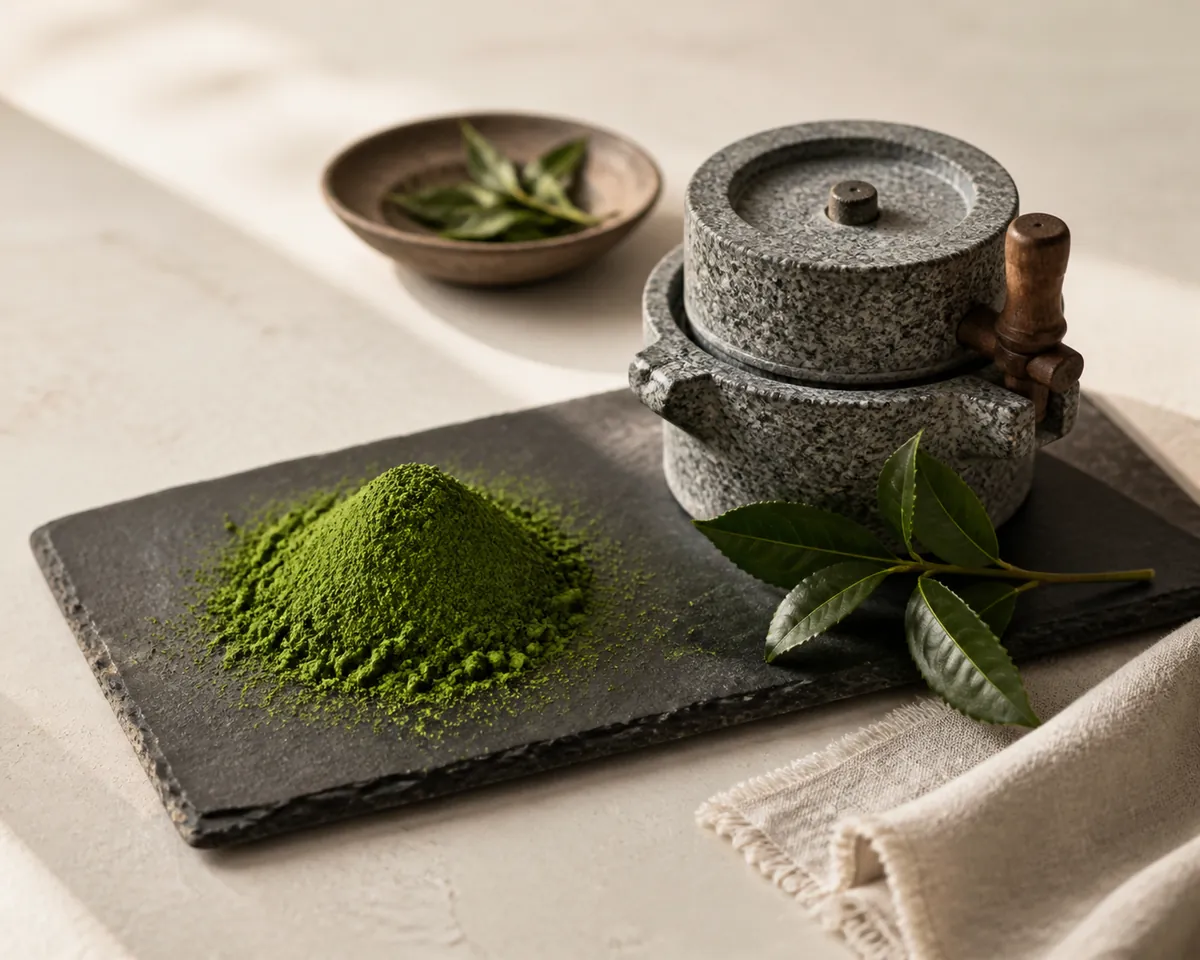
Matcha is green tea made to be consumed as a fine suspension rather than steeped and removed. You whisk the powder into water, so the leaf stays in the bowl and gives the drink its dense colour, texture, flavour, and caffeine.
That definition sounds simple, but it leaves out the work that happens before grinding. Purpose-grown matcha begins as shaded leaf, becomes stemmed and deveined tencha, and is then milled finely enough to disperse under a whisk.
Once you know that chain, you can separate matcha from ordinary powdered green tea and read a tin with more confidence. You can also see why freshness, particle size, and preparation matter so much in the final bowl.
What makes matcha different from powdered green tea?
All matcha is powdered green tea, but not every green-tea powder is matcha. Traditional matcha is ground from tencha, a shaded tea that is steamed, dried without rolling, and refined to remove stems and veins before milling.
Powder made by grinding sencha follows a different process and may taste more brisk or fibrous. It can still be useful in drinks and food, but the word matcha implies a production route that begins well before the mill.
Matcha at a glance
- Tea base
- Shade-grown tencha
- Fixing method
- Steam deactivates oxidation enzymes
- Refining
- Stems and veins are removed before grinding
- Preparation
- Whisked into water as a suspension
- Common bowl styles
- Usucha is thinner, while koicha uses more powder and less water
- Freshness
- Heat, light, moisture, oxygen, and odours quickly dull the powder
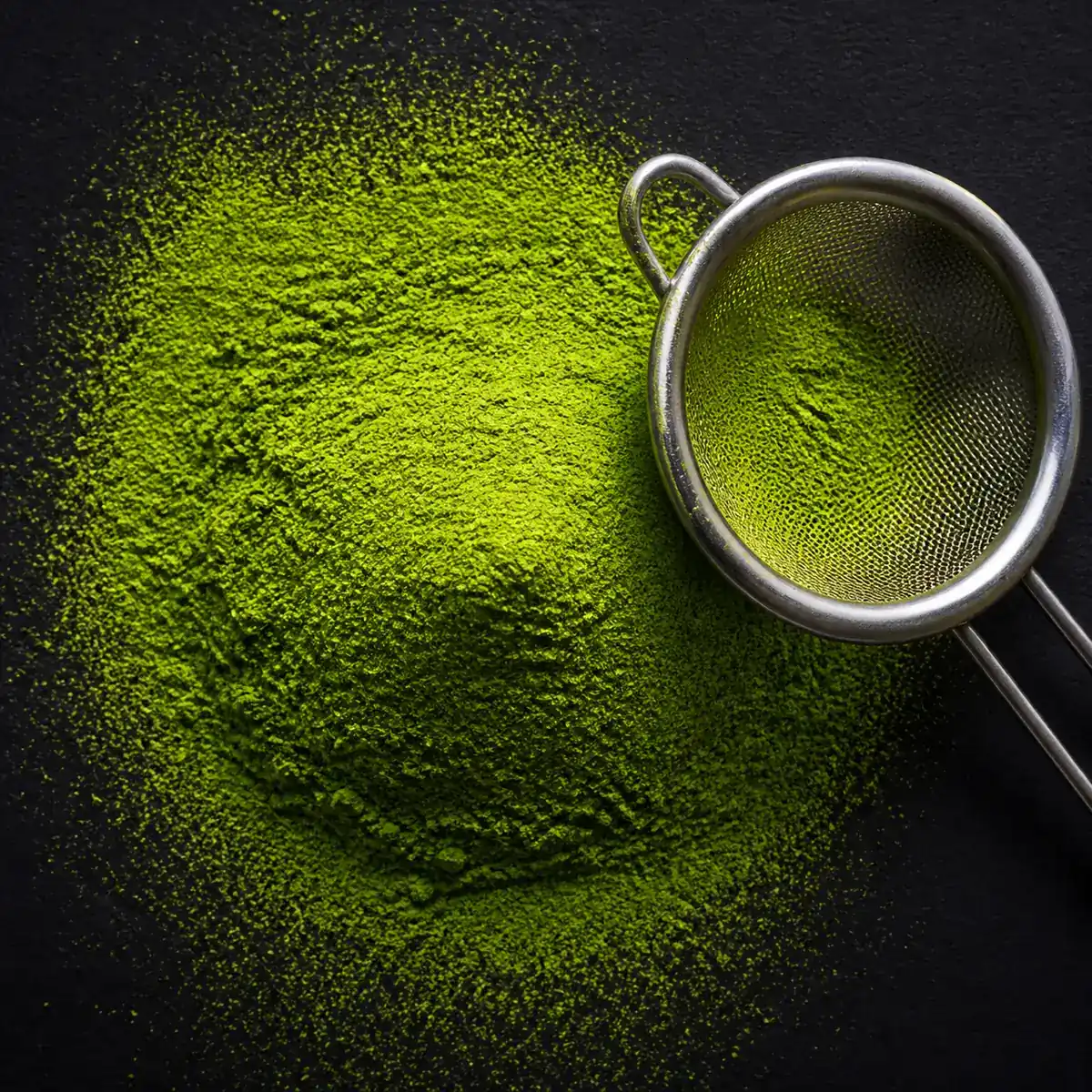
The texture gives you an immediate clue. Properly milled matcha feels very fine and can disperse into a smooth bowl, although it never truly dissolves like sugar.
A coarse powder settles faster and may feel sandy on your tongue. Whisking can distribute those particles for a moment, but it cannot turn a rough grind into fine matcha.
Why is matcha grown under shade?
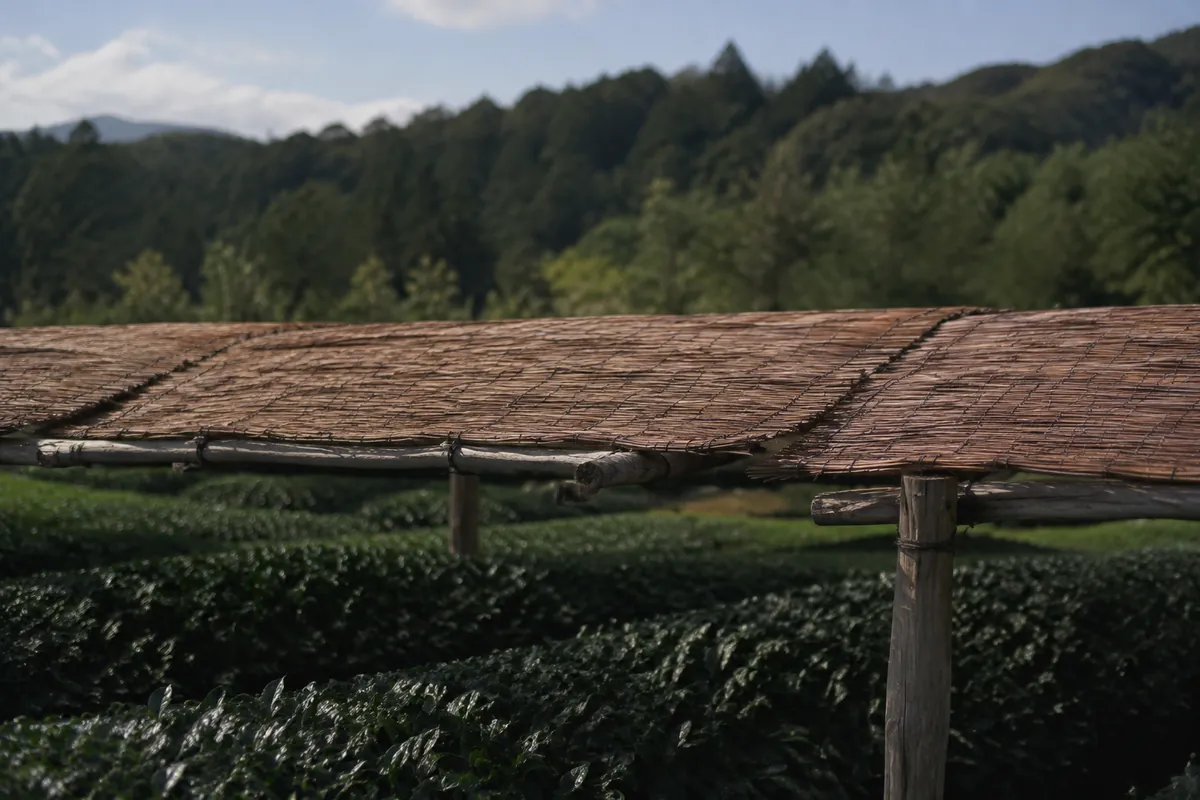
Producers cover the tea bushes before harvest, reducing the light that reaches the developing shoots. The plant responds by changing its leaf chemistry and building more chlorophyll, which helps explain matcha's deep green colour and savoury character.
A shaded infusion such as gyokuro shares part of this agricultural background, but matcha continues through tencha refining and grinding.
Research comparing shade-grown tea with open-field material reports shifts in chlorophyll, amino acids, caffeine, and catechins. Those changes vary with cultivar and shading conditions, but the reviewed evidence on matcha supports the broad relationship between shading and the composition of the finished leaf.
For you, the useful distinction is sensory rather than chemical. Shaded leaf often gives matcha more umami, sweetness, and body, while reducing the sharp edge you might expect from an ordinary green-tea powder.
Shade cannot rescue poor processing. Leaf maturity, steaming, drying, refining, grinding, and storage still determine whether the matcha tastes rounded and fresh or flat, rough, and stale.
Freshness changes how those choices reach you. A newly opened powder may smell sweet, green, and nutty, while the same tin can lose its top notes after repeated exposure to warm humid air, leaving bitterness more exposed.
How does tencha become matcha?
Fresh shaded leaf is steamed soon after harvest to limit oxidation, then dried flat rather than rolled into needles. The dry leaf is refined so the tougher veins and stems do not enter the final powder, leaving thin flakes known as tencha.
From shaded leaf to matcha
- Shade | Bushes are covered before harvest to change the developing shoots.
- Steam | Heat fixes the fresh leaf and preserves its green character.
- Dry | The leaf is dried without the rolling used for sencha.
- Refine | Stems and veins are separated from the leaf material.
- Grind | Tencha is milled into a fine powder shortly before packing.
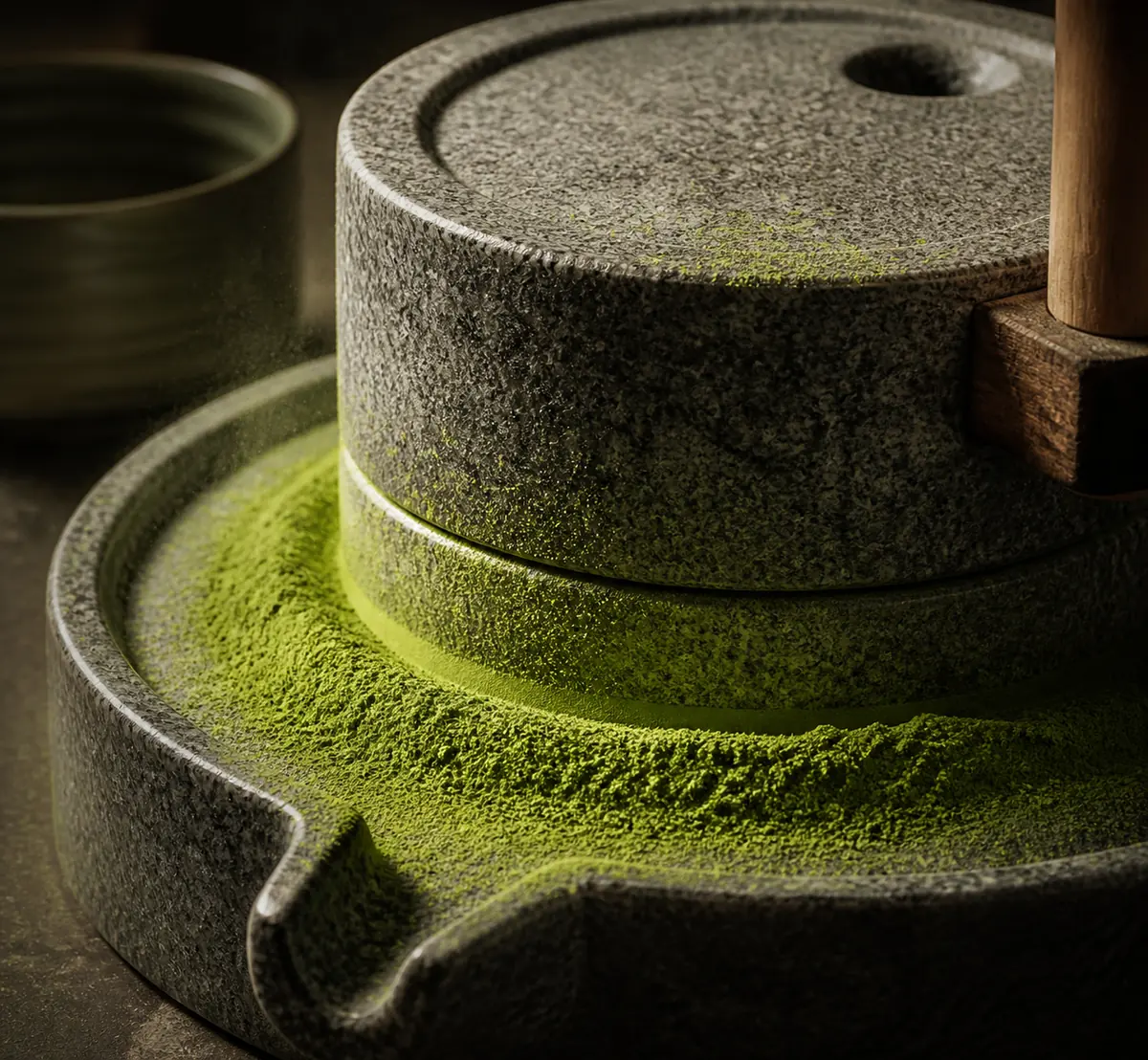
Traditional stone mills work slowly because friction generates heat, and excess heat can damage aroma and colour. Modern milling methods also exist, so stone grinding should be treated as one production detail rather than a guarantee that every tin will be excellent.
Research on shade-grown tencha and matcha production helps show why the finished powder carries the whole process into your bowl. Unlike an infusion, it does not leave the spent leaf behind for you to discard.
This is also why origin language alone cannot tell you how a matcha will perform. A producer who controls refining, milling, packing, and cold storage may deliver a fresher powder than a vague prestige label suggests.
Why do you whisk matcha instead of steeping it?
Matcha particles do not dissolve. Water separates and suspends them, while the whisk breaks small clumps and spreads the powder through the bowl.
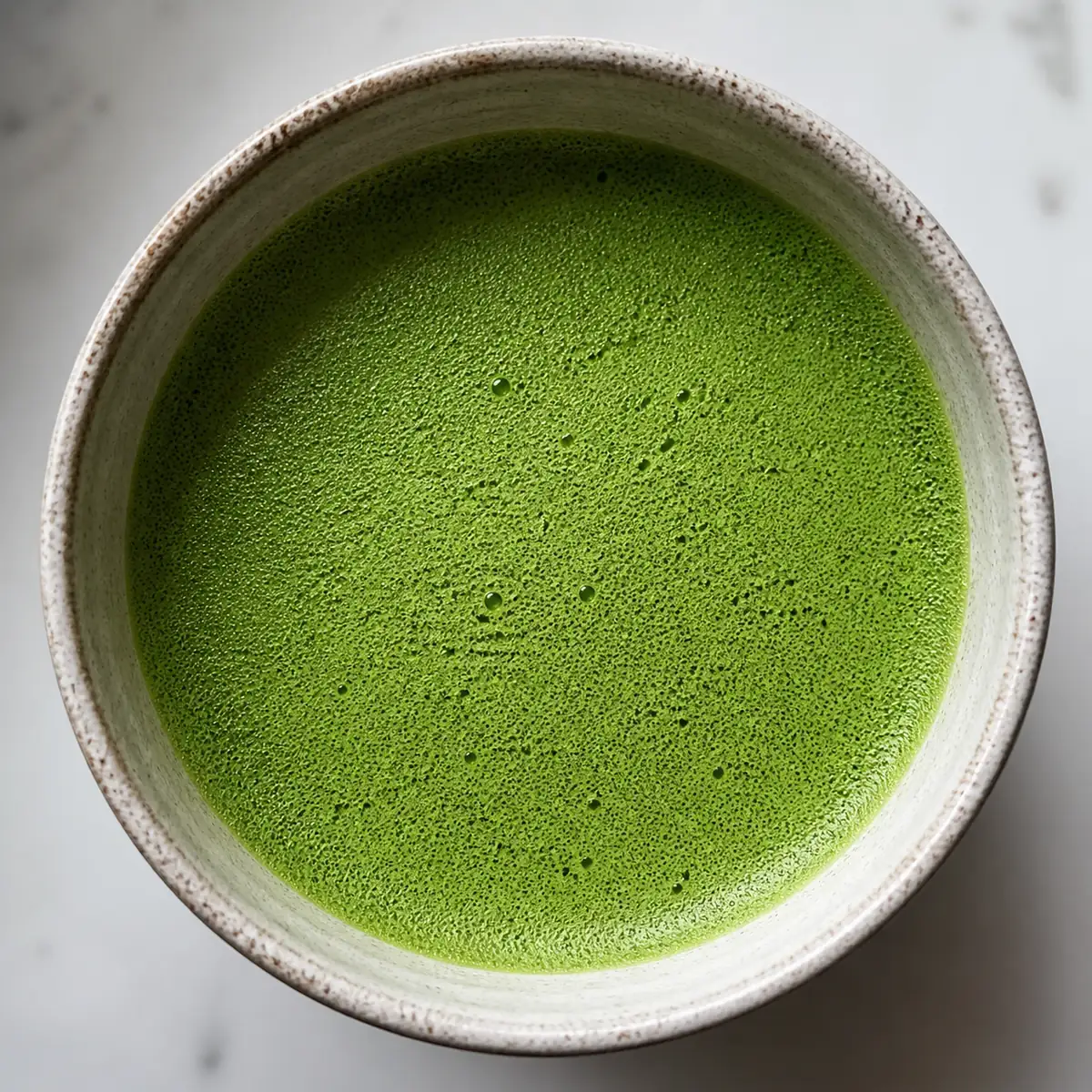
Sifting helps because dry matcha readily forms compact lumps, especially after it has absorbed a little moisture. Adding a small amount of water first can make a smooth paste, then the remaining water thins it into an even bowl.
The whisking motion matters less than keeping the powder moving through the water. A bamboo whisk creates many fine bubbles efficiently, but the practical goal is a uniform suspension with no dry pockets at the bottom.
The detailed matcha whisking guide covers bowl shape, water temperature, and hand movement. If your matcha tastes harsh, the matcha problems guide helps you separate water that is too hot from stale powder or an unsuitable dose.
Because the particles remain suspended, they will settle if the drink stands. A quick swirl or short re-whisk brings them back together, and that settling is normal rather than evidence that the matcha is fake.
How do usucha and koicha differ?
Most matcha served in cafés and homes is usucha, or thin tea. It uses enough water to create a flowing drink that can carry a light foam, while koicha uses more powder with less water and is kneaded into a glossy, dense texture.
| Feature | Usucha | Koicha |
|---|---|---|
| Texture | Fluid and easy to sip | Thick, glossy, and slow-moving |
| Foam | Often whisked to a fine foam | Usually prepared without a foamy cap |
| Flavour demand | Can suit a wider range of matcha | Exposes bitterness and roughness immediately |
| Typical use | Everyday bowls and a base for iced drinks | Formal preparation with matcha chosen for thickness |
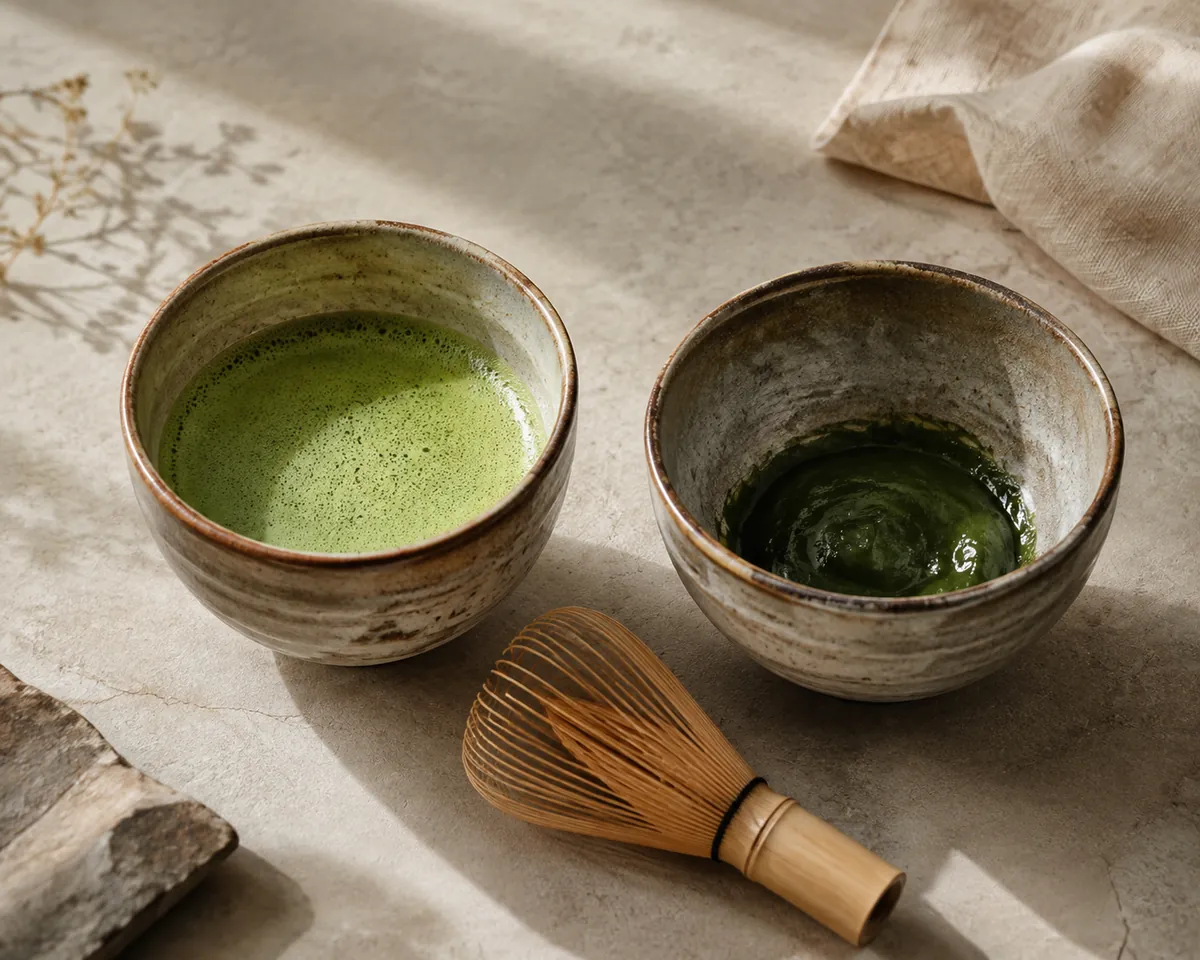
The difference is concentration, not a separate tea plant or regulated grade. A matcha pleasant as usucha may become aggressively bitter as koicha because the thicker preparation leaves nowhere for flaws to hide.
Labels such as ceremonial grade and culinary grade are not universal legal standards. They can describe a seller's intended use, but you still need the producer, harvest, cultivar, sensory notes, and preparation guidance to understand what the tin actually contains.
Milk and sugar change the job again. A matcha latte needs enough intensity to remain recognisable after dilution, so a bright, assertive powder may work better there than a subtle matcha priced for drinking with water.
How much caffeine does matcha contain?
Matcha contains caffeine, and the amount depends heavily on how many grams you use. Since the powder stays in the drink, a two-gram bowl and a four-gram bowl cannot be discussed as though they were the same serving.
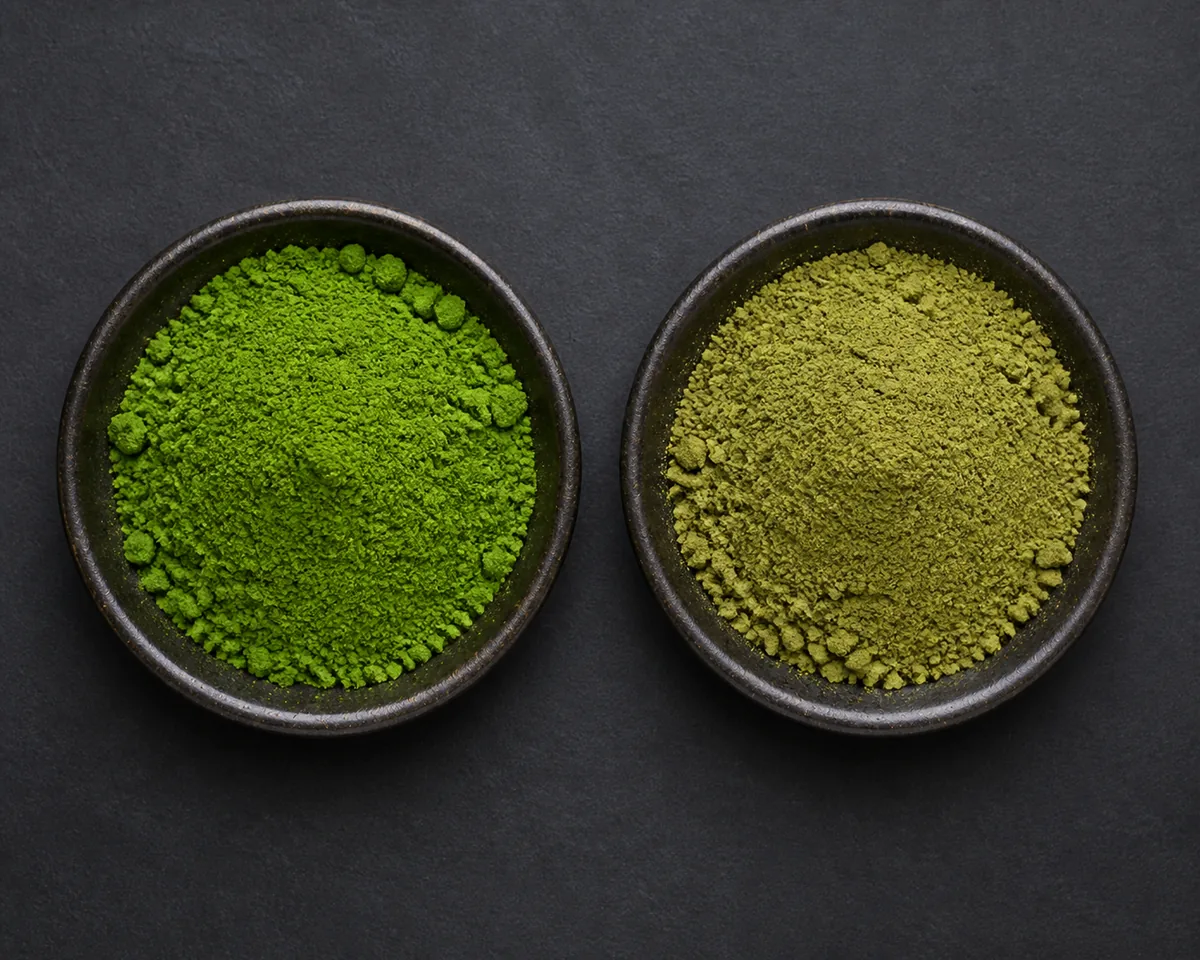
Shading, cultivar, harvest, and product composition also contribute to variation. Analyses of commercial matcha and green tea show that caffeine values can differ across products, so a single category number is only an estimate, not a promise about your tin.
This makes the label and your scale more useful than a generic chart. The green tea and matcha comparison shows why an infusion and suspended powder should not be compared by cup size alone.
If caffeine is important to your choice, note the grams per serving and compare products on the same amount of powder.
The guide to caffeine in matcha develops that comparison without treating a bowl as an intake recommendation. It also explains why comparing matcha with a strained green-tea infusion requires attention to dose and preparation.
How can you judge and store a tin of matcha?
The matcha taste guide can help you separate intended vegetal or savoury notes from flat bitterness.
Colour can reveal gross staleness, but vivid green is not proof of quality by itself. Lighting, photography, cultivar, and processing all affect appearance, so you should read colour alongside aroma, texture, origin, packing detail, and taste.
- Specific identity | Producer, region, cultivar, harvest, or milling detail gives you more than a generic grade word.
- Fine texture | The powder should feel smooth rather than gritty when rubbed lightly between dry fingers.
- Fresh aroma | Look for sweet greens, seaweed, nuts, or soft florals rather than dust, cardboard, or mustiness.
- Practical pack size | Buy an amount you can finish while the aroma remains lively.
- Sealed storage | Close the tin promptly and protect it from heat, light, moisture, and strong odours.
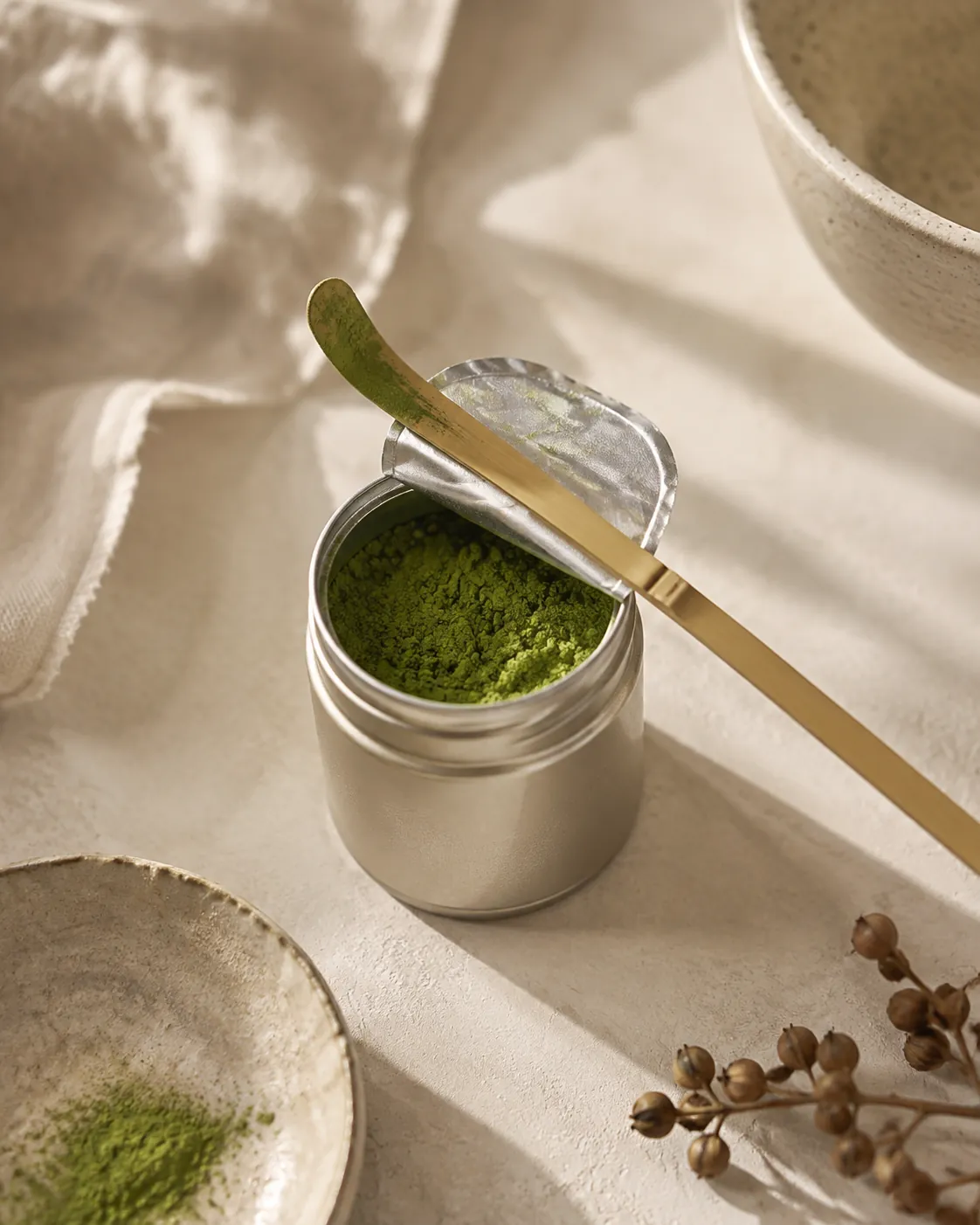
After opening, keep the powder in its original opaque inner bag or a small airtight tin. Press out excess air when the package allows it, and use a dry spoon so condensation never reaches the powder.
Refrigeration can slow change when the pack is tightly sealed, but opening a cold tin immediately may cause moisture to condense inside. The matcha storage guide explains how to let a sealed tin warm before opening and how to avoid repeated temperature swings.
A good tin should tell you enough to choose it for the bowl you intend to make. Matcha quality becomes meaningful only when the processing, freshness, and use all line up, whether you want usucha, koicha, or a drink with milk.