Oat Drinks, and the Enzymes That Make Them Sweet
Oat drinks are made by treating oats with enzymes that break their starch into sugars. That single step explains the natural sweetness, the body, and why oat has become the default plant drink in coffee.
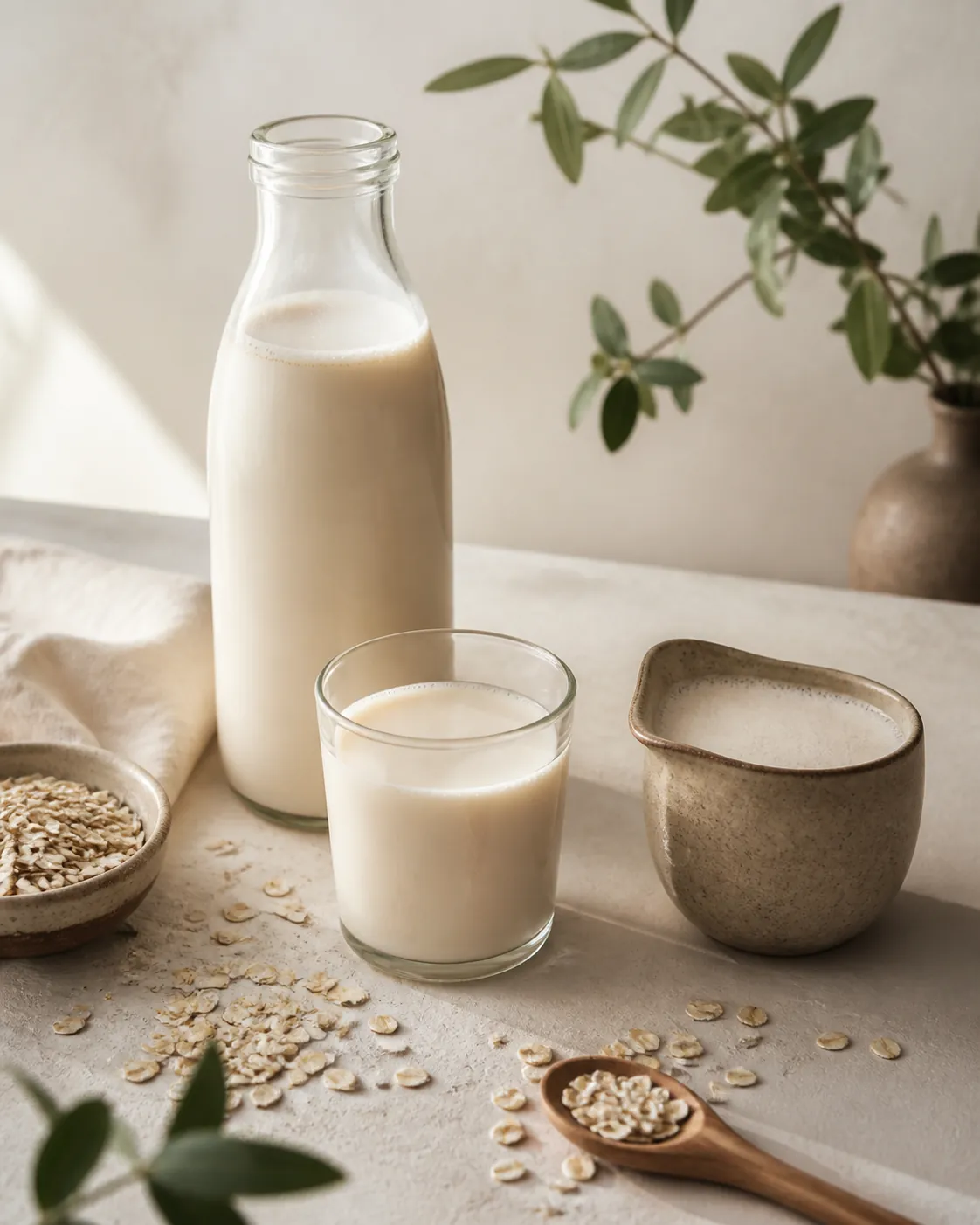
An oat drink starts as oats and water, and almost everything that makes it interesting happens in one step in the middle.
The oats are milled, mixed with water, and treated with enzymes, usually amylases, which break the oat starch down into shorter sugars. The solids are then strained out and the liquid is standardised, often with added oil, salt, and vitamins and minerals.
That enzyme step explains the sweetness, the body, the behaviour under a steam wand, and the reason a blender at home cannot reproduce any of it.
An oat drink at a glance
- What it is made from
- Milled oats, water, enzymes, usually a little oil and salt
- The step that matters
- Amylase conversion of oat starch into shorter sugars
- Why it tastes sweet
- Sugar made from the oats during production, not added afterwards
- Why it foams
- Dissolved solids and added oil, rather than protein as in dairy
- Two formats
- Standard for cereal and cold drinks, barista for hot coffee
- Its weak point
- A definite cereal sweetness that delicate drinks cannot hide
The enzyme step, and why an unsweetened carton still tastes sweet
Starch is a long chain of glucose units and tastes of nothing at all. Broken into shorter chains and free sugars, the same material tastes distinctly sweet. Nothing between those two states was added except water and enzymes.
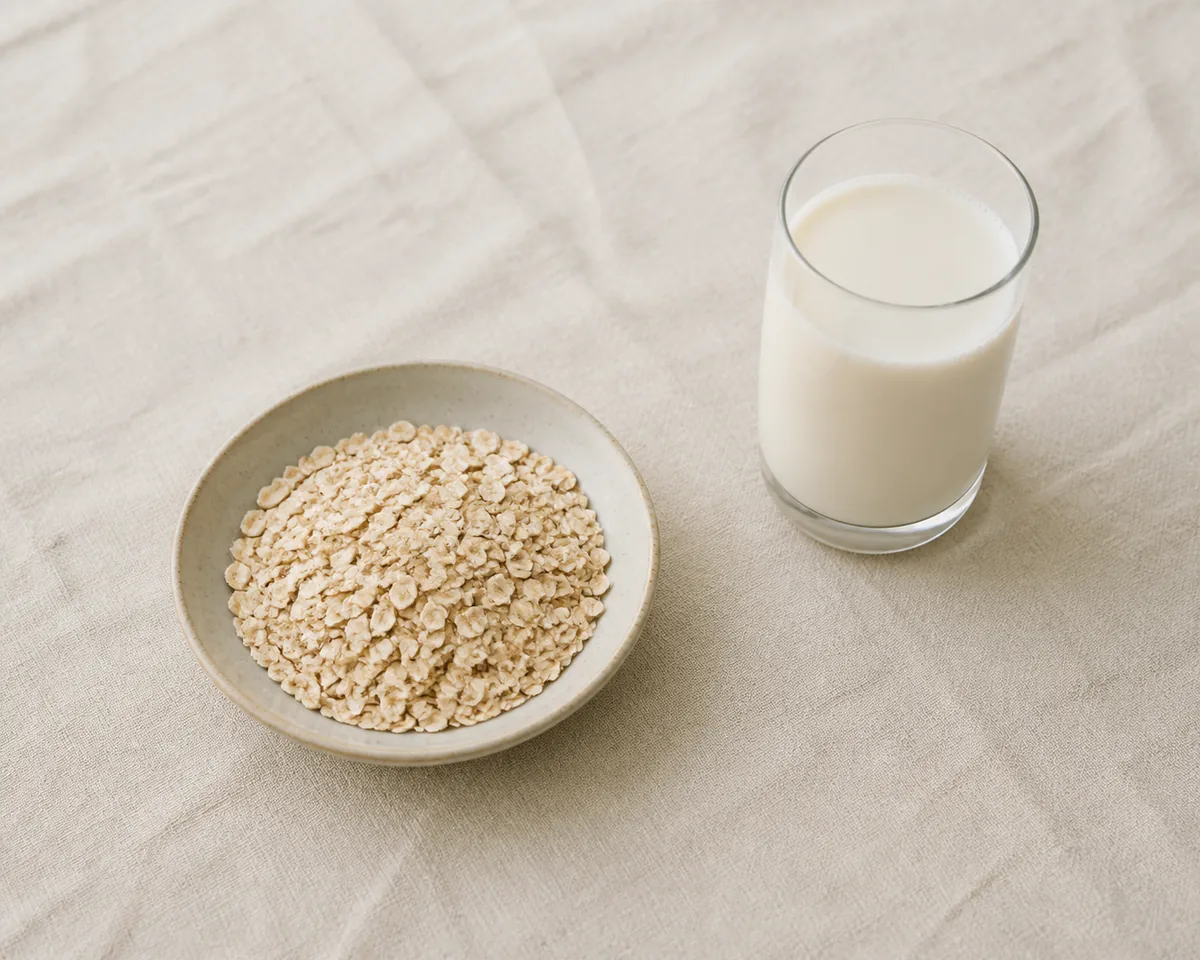
That is why the ingredients list can be short and honest while the product tastes as though something was put in. The sugar was made from the oats, not added to them, and a carton marked unsweetened is telling the truth about what was added rather than about what is present.
Almost every other point on this page traces back to that one step. It creates the sweetness, it creates the body, and it sets the fine line between a drink with real texture and one that comes out thin, which is why two cartons made from the same three ingredients can behave nothing alike.
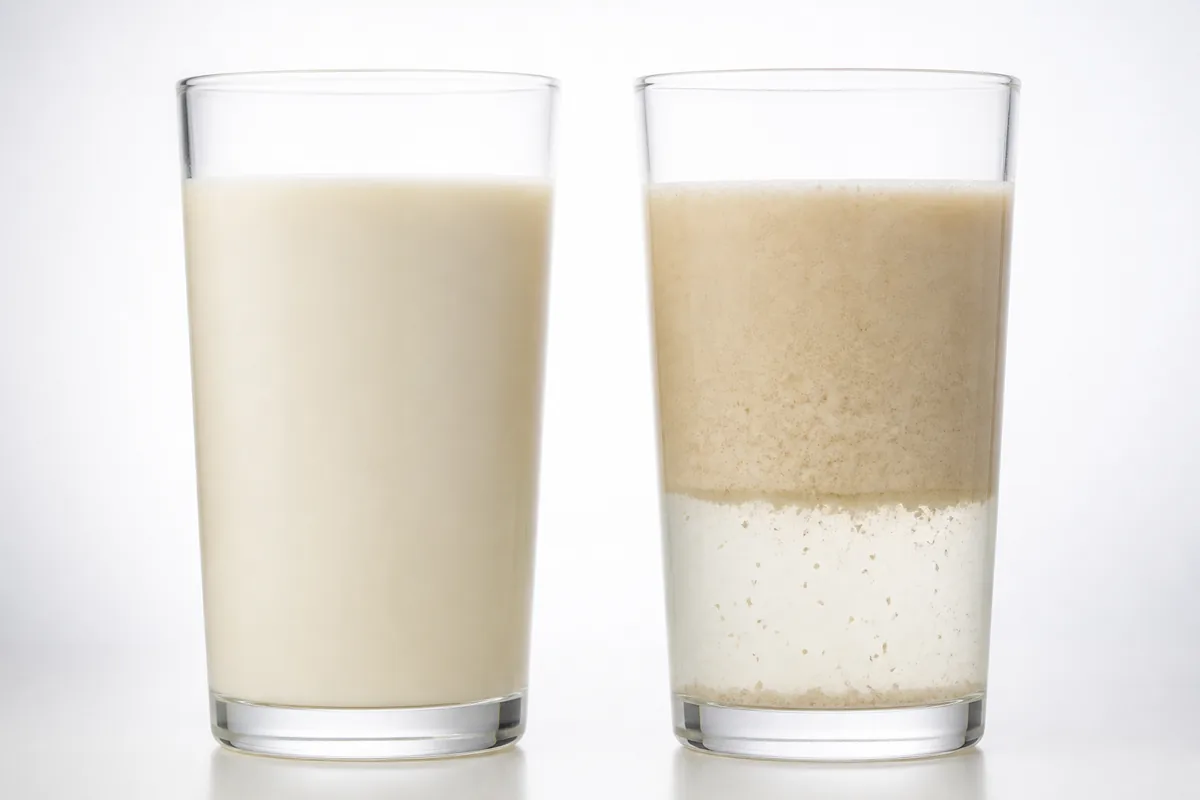
It is also why a blender version at home is a different drink rather than a cheaper one: without enzymes you get suspended starch instead of sugars, and starch behaves badly the moment it meets heat.
From oats to carton, and where one brand diverges from another
The process is short. The choices that separate one brand from another are made in a matter of minutes, near the beginning, and everything downstream of them is standardisation.
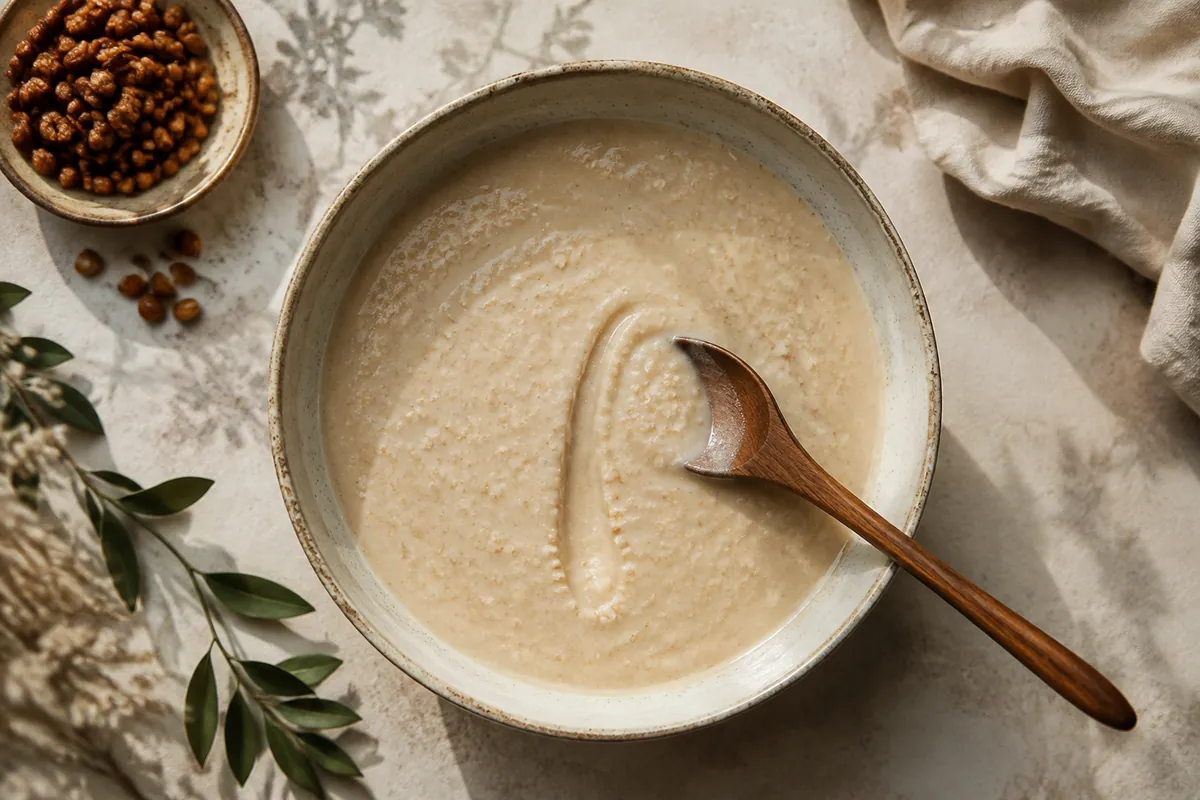
From oats to carton
- Mill the oatsWhole or rolled oats are ground and mixed with water into a slurry.
- Add enzymesAmylases break the oat starch into shorter chains and free sugars. This is the step that creates the sweetness and the body.
- Hold and controlTime and temperature decide how far the starch is broken down, which sets the final viscosity.
- SeparateThe solids are strained or centrifuged out, leaving the liquid.
- StandardiseOil, salt, and often calcium and vitamins are blended in to a target specification.
- Heat treat and fillThe liquid is UHT treated or pasteurised, then filled aseptically.
The enzyme hold is where one brand diverges from another. Stop it early and the drink is thin and starchy; run it long and it is sweeter and thinner again, because the starch that gave body has been converted away.
How far the starch is broken down
- Under-convertedThin and starchy, turns gluey when heated
- Lightly convertedSome body, only faintly sweet
- Target windowFull body and natural sweetness together
- Over-convertedSweet but thin, the body has been converted away
Brands sit at different points on that line deliberately, which is why one oat drink foams and another simply tastes sweeter, and it is the whole explanation for the most common home failure. Raw oat starch swells and gelatinises when it meets heat, blending releases plenty of it into the liquid, and warming that drink in a pan or against a steam wand makes it do exactly what it does in a pot of porridge.
- Use cold water for blending, and blend briefly rather than thoroughly.
- Do not soak the oats first. Soaking releases more starch before you start.
- Strain through a fine cloth rather than a coarse sieve.
- Accept it will not steam. Home oat milk is a cold drink or a cereal drink.
- Keep it refrigerated and use it within a few days, since there is no heat treatment.
Those habits limit the damage rather than solving it. Anyone following a home method is working around the absence of the enzyme stage, and the commercial version sidesteps the problem entirely by converting the starch on purpose before it has a chance to gelatinise.
Body, foam, and how oat took over the cafes
Oat became the default plant drink in coffee shops for reasons that are mostly technical, and the sequence of events matters as much as the chemistry.
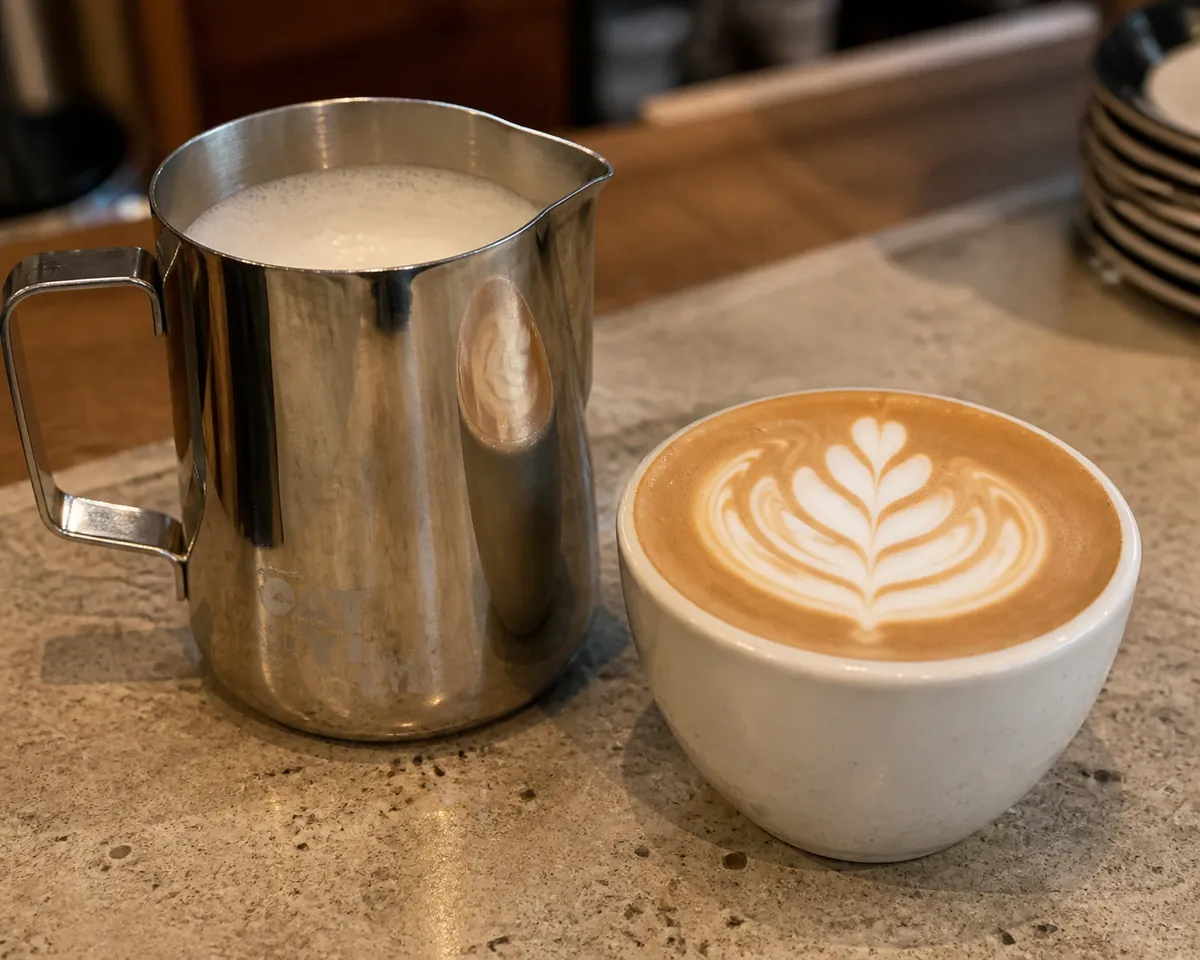
Dairy foams because of its protein. Oat foams because of a combination of protein, dissolved solids and added fat, which is why formulation matters so much here and hardly at all in a glass of cashew or rice drink.
Body
The partially broken starch gives real viscosity, so the drink does not thin out a coffee the way a watery plant drink does.
Foam
There is enough protein and enough dissolved solids to build a stable microfoam under a steam wand, which almond and rice struggle with.
Acid tolerance
Oat protein is generally more tolerant of coffee's acidity than soy protein, so it splits less readily.
Flavour
Mild and slightly cereal-like, so it sits behind the coffee rather than competing with it.
It is not immune to splitting. Very acidic light roasts, very hot espresso, and a cold pour straight from the fridge will still curdle it, and why plant milk curdles in coffee sets out what to change first.
Almond dominated the category before it and had two weaknesses in a cafe: very low protein, so it foams poorly, and a tendency to split against espresso, which is the substance of the almond and oat comparison. Soy foamed better and split more often still.
Oat arrived with a formulation built specifically for steam wands, which no earlier plant drink had been, so baristas adopted it because it worked and shoppers followed the cafes rather than the other way round.
Barista cartons are a different formulation, not different packaging
Two cartons from the same brand can differ on every line that matters, which is why brand loyalty is a poor guide and the ingredients panel is a good one.
| Standard | Barista | |
|---|---|---|
| Fat | Lower | Higher, usually from added rapeseed or sunflower oil |
| Acidity regulators | Often none | Commonly present, frequently phosphate salts |
| Foam | Loose, collapses quickly | Fine and stable, holds its structure |
| Behaviour in hot coffee | Splits more readily | Markedly more resistant to splitting |
| Best for | Cereal, cold drinks, baking | Hot coffee, especially espresso drinks |
The acidity regulators are doing the important work in that column. They buffer the pH so the drink resists the coffee's acid instead of being destabilised by it, and their presence on a label predicts foam stability more reliably than any wording on the front.
Four things on the panel tell you how a carton will behave. Oil, whether rapeseed or sunflower, near the top of the list means a barista-style formulation whatever the front of the pack claims.
An acidity regulator such as dipotassium phosphate is the buffering agent. Calcium and vitamins are fortification, which changes the nutrition rather than the behaviour.
Gluten-free labelling has to be explicit, because oats are frequently milled and processed alongside wheat.
Under the steam wand
Oat foams at a lower temperature than dairy. It also collapses faster once overheated, so taking it to around 60 to 65 C rather than the 70 C many people use for milk keeps the foam stable and stops the sweetness reading flat and cooked.
Those two adjustments cover most of the gap between the two.
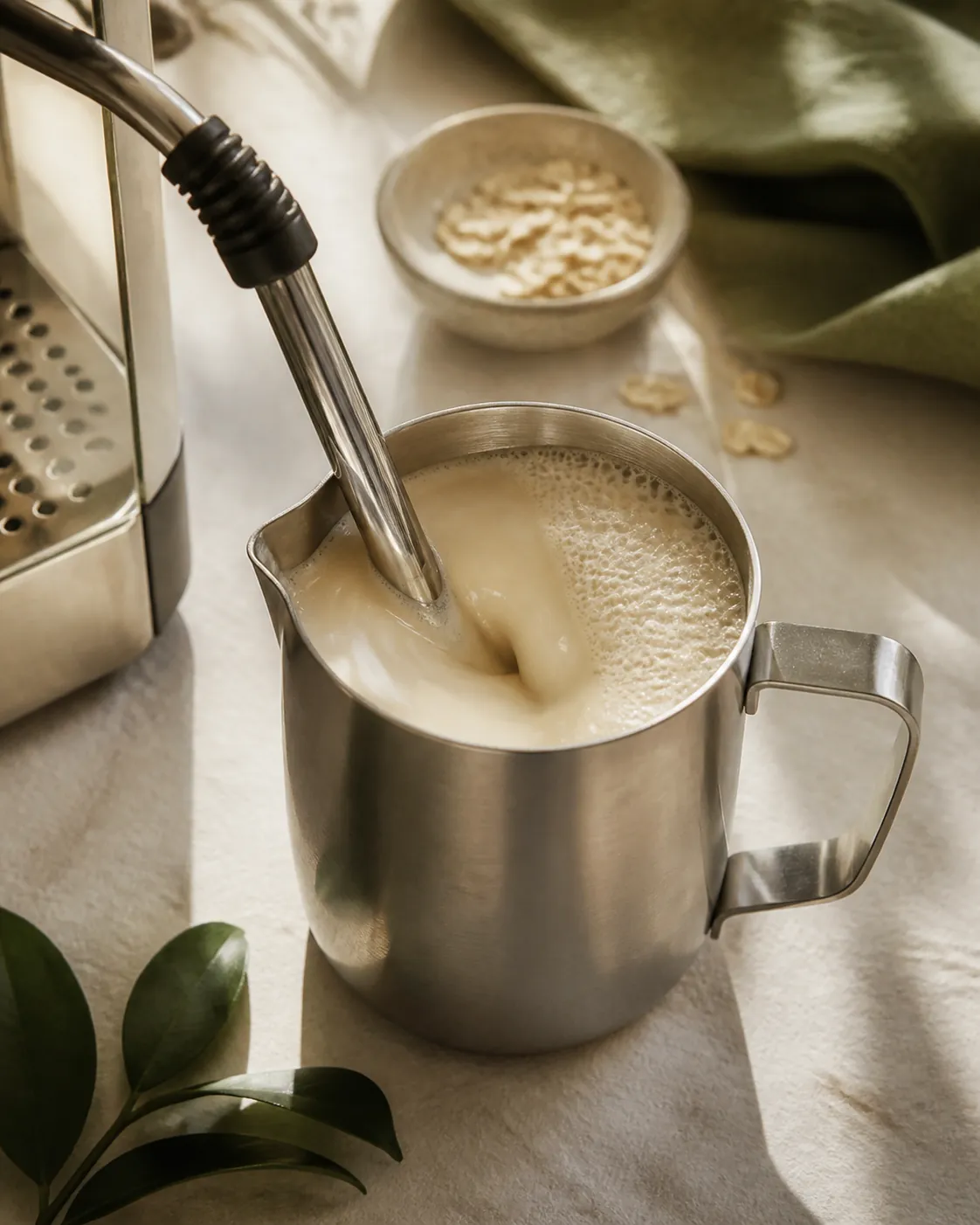
Introduce air early
Oat builds foam in the first few seconds and stops accepting air sooner than dairy.
Keep the jug moving
The starch content means it thickens against the wand if left still.
Stop cooler than dairy
Around 60 to 65 C. Past that the foam collapses and the drink tastes cooked.
Use it immediately
Oat foam separates faster than dairy foam, so it does not sit.
Reheating steamed oat milk does not work, and it is worth knowing before you try to save half a jug. The starch that gave the drink its body has already been worked once, and a second pass through the wand gives a thin, faintly gluey result that no amount of aeration recovers.
The practical consequence is that oat rewards making one drink at a time. A cortado or a flat white steamed to order comes out close to dairy, and a jug steamed for three drinks and poured over four minutes gives the third person something noticeably worse than the first.
What the nutrition panel varies on
Two of these lines are set by the process, not the recipe. That is the reason the figures on an oat carton move around more between brands than they do between plant drinks generally, and why a figure you checked last year may not hold now.
| Line | Typical range | Why it varies |
|---|---|---|
| Sugars | 2 to 8 g per 100 ml | Entirely from enzyme conversion unless sugar is added |
| Fat | 0.5 to 3 g per 100 ml | Added oil in barista formulations |
| Protein | Around 0.3 to 1 g per 100 ml | Naturally low, occasionally supplemented |
| Calcium | 0 or around 120 mg per 100 ml | Fortification is optional and market dependent |
| Salt | Around 0.1 g per 100 ml | Added for flavour balance |
Fortification is the line most worth checking, because an unfortified oat drink carries essentially no calcium while a fortified one is set to a figure that matches dairy, and neither fact is visible from the front of the carton. The sugars line varies for a different reason: it is a readout of how far the enzyme hold was allowed to run.
The behaviour in coffee tracks the fat and the formulation rather than any of the nutrition lines, so a carton can be low in fat and excellent on cereal while being the wrong choice for a cappuccino.
Against soy, almond, rice and dairy
Oat is the plant drink most often described as closest to milk, and it is worth being specific about which respects that holds in, because the comparison is usually made about texture and then applied to everything else.
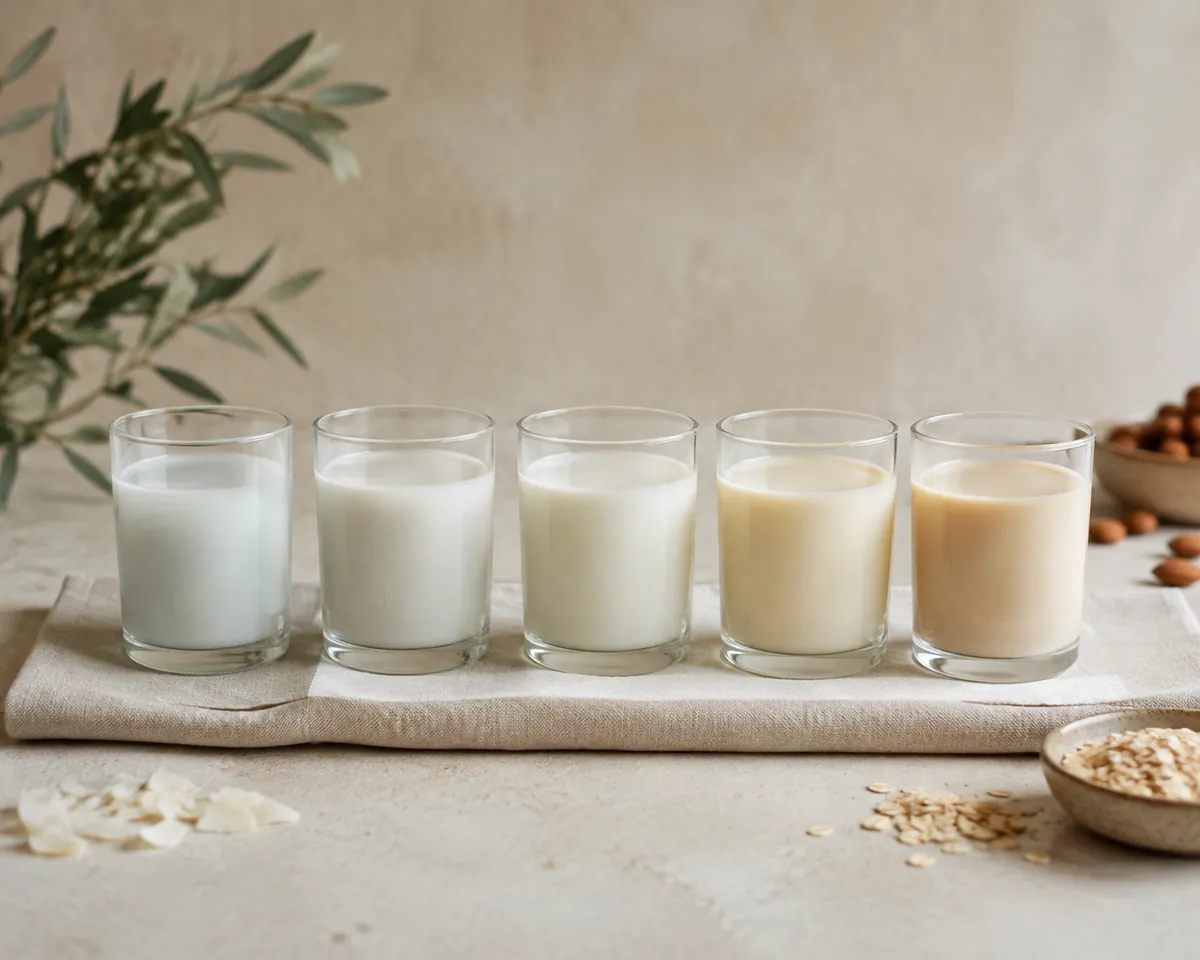
In hot coffee
- Oat
- Best all-round: good body, good foam, reasonably acid tolerant.
- Soy
- Foams well when it holds, but splits readily with acidic coffee.
- Almond
- Thin and low in protein, so weak foam and it splits fairly easily.
- Coconut
- Varies enormously by formulation. Distinct flavour that carries into the drink.
- Rice
- Very thin, barely foams, but rarely splits because there is little protein to curdle.
It steams and pours like dairy, which is the property most people actually mean, and the foam is slightly looser while behaving predictably. What it does not carry is dairy's protein.
A barista oat drink gets its body from added oil rather than from protein, which is why it feels similar in the mouth and behaves differently in a pan.
For protein, soy remains the closest plant substitute and has been for decades, and pea is the newer entrant on the same ground. Oat won the cafe on texture and flavour rather than on composition, which is a fair basis for choosing a drink and a poor basis for a straight swap in a recipe.
It also loses on neutrality, so if you want the coffee to taste only of coffee, it is not the obvious choice at all.
Where it works away from the espresso bar, and where it does not
Oat is not equally good everywhere. The sweetness that makes it excellent in one drink is exactly what ruins it in another, and the split runs along how much the drink has of its own to hide behind.
- In tea. Its cereal sweetness sits on top of the leaf, which suits a robust black tea and buries a delicate green one.
- In hot chocolate. Excellent. The body suits cocoa and the sweetness means less added sugar.
- In matcha. Divisive. Oat sweetness competes with matcha's savoury depth rather than supporting it, though it works well with a culinary grade powder built for lattes.
- On cereal. The everyday use, and where a standard rather than barista formulation makes sense.
- In cooking. Works in sauces, though the sugars can catch in a hot pan more readily than dairy.
The pattern behind that list is worth stating on its own, because it predicts drinks the list does not cover. Oat contributes sweetness, a cereal note and real viscosity, so it improves any drink that was short of all three and damages any drink whose appeal rests on being clean and light.
Cocoa and spice have enough of their own character to absorb what oat brings, and a pale infusion has none, which is why the same carton is an improvement in one mug and a spoiling agent in the next.

Latte and flat white
What barista oat was formulated for. It steams and pours closer to dairy than anything else in the category.
Espresso alone
A splash in a short black works, and the acidity is where a non-barista formulation splits.
- In very delicate tea, where its cereal sweetness covers the leaf.
- Where a neutral flavour is wanted. Oat is mild but it is not tasteless.
- For anyone avoiding gluten, unless the product is specifically labelled gluten free. Oats are frequently processed alongside gluten-containing grains.
- When you want a thin, light drink. Oat's body is a feature in coffee and a drawback elsewhere.
Those are preferences rather than faults, and the honest limit of oat's dominance sits in that list. It is the most versatile plant drink rather than the most neutral one, so a light-roast filter coffee or a good green tea will not hide what it brings, and an unsweetened almond interferes less where interference is the problem.
Opened cartons, and what the fridge does
Two formats sit on shop shelves. They behave quite differently once the seal is broken, which catches out anyone who buys one and stores it the way they stored the other.
Ambient cartons are UHT treated and sit unrefrigerated until opened, after which they need the fridge and about five to seven days. Chilled cartons are pasteurised rather than UHT and have a shorter life throughout, both before opening and after, and paying for one and storing it in a cupboard is the mistake that follows from not reading which is which.
- Shake before every pour. Separation is normal and reverses completely.
- Keep it in the body of the fridge rather than the door, where the temperature swings.
- Do not freeze it. It separates on thawing and the texture does not come back.
- Trust the smell over the date once opened, and discard anything sour or thickened.
A carton that has thickened in the fridge before its date is usually telling you it was stored warm at some point in its life, on a delivery van or a shop floor, and the same goes for one that separates and refuses to come back together when shaken. Neither is a fault in the storage at home, and neither is recoverable.
Barista or standard, and which carton suits which job
The formulation decides the use, the front of the carton is a poor guide to the formulation, and buying one carton to cover everything is the usual mistake. Hot coffee is where it shows first, because that is the only application demanding enough to expose a standard formulation.
For hot coffee
A barista version, identified by added oil and an acidity regulator in the ingredients rather than by the word on the front.
For cereal and cold drinks
A standard version, which is cheaper and behaves perfectly well without heat.
For cooking
Unsweetened standard, since the enzymatic sugars can catch in a hot pan before the sauce has thickened.
For iced coffee
Either format works, because nothing is being heated and splitting is far less likely.
For tea
Honestly, something else, unless the tea is robust enough to stand up to the sweetness.
Two cartons in the fridge, one of each type, costs very little and removes most of the disappointment. The barista carton earns its price only under heat, so using it on cereal is spending money on a property nothing in the bowl will ever call on.
Common questions
Why does oat milk taste sweet if no sugar is added?
Enzymes used in production break the oat starch into shorter sugars. The sweetness is made from the oats themselves rather than added, which is why an unsweetened oat drink still tastes sweet.
What makes barista oat milk different?
It usually contains more fat and added acidity regulators, often phosphate salts, which buffer the pH so it resists coffee's acidity. That gives better foam and much less splitting.
Is oat milk gluten free?
Not automatically. Oats are frequently processed alongside gluten-containing grains, so a product is only gluten free if it is specifically labelled as such.