Cane Sugar, and the Three Jobs It Does in a Glass
Cane sugar is doing three jobs in a glass, and sweetness is only the first. The other two explain why a drink with the sugar taken out tastes thinner and sharper rather than simply less sweet.
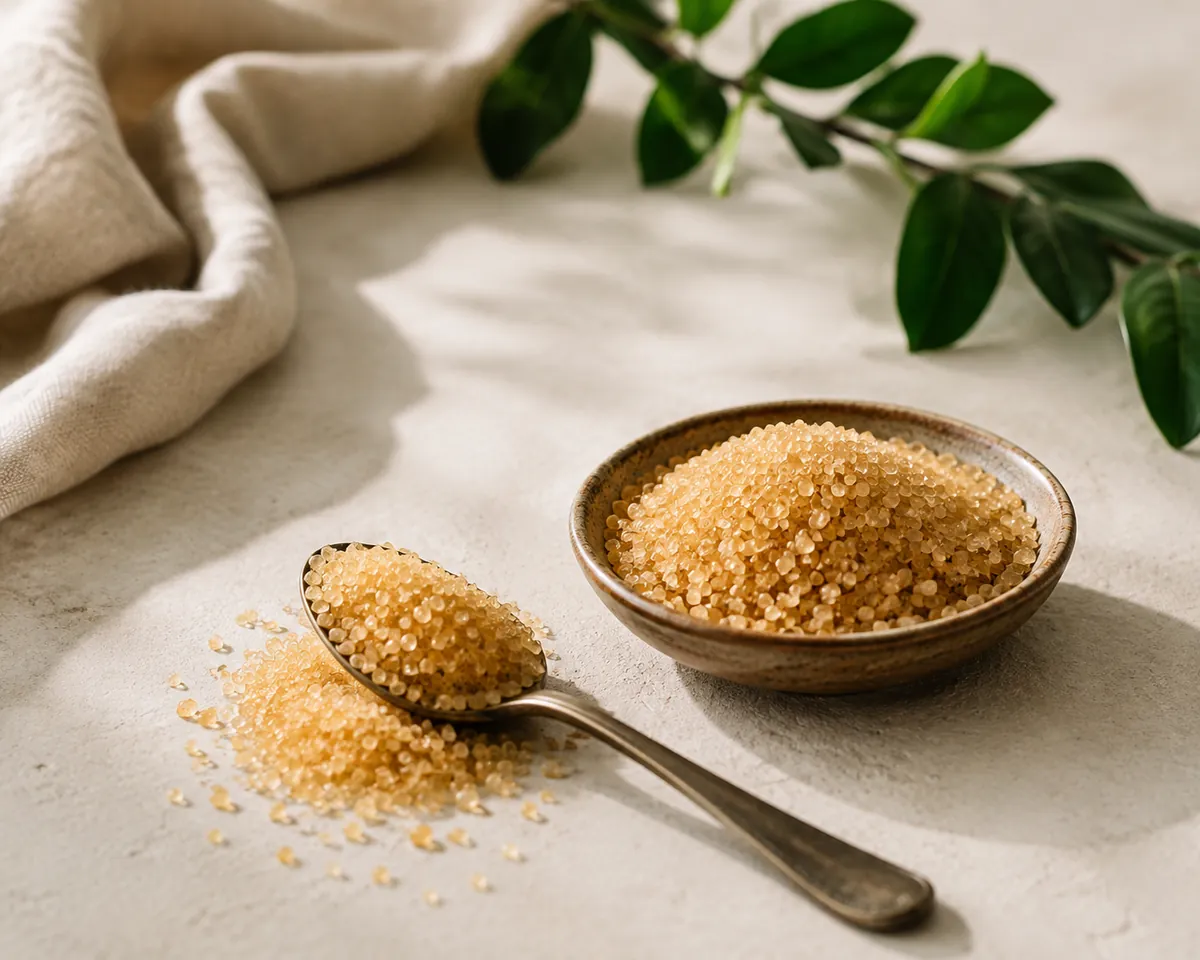
Cane sugar is sucrose crystallised from the juice of sugarcane. In a drink it is doing at least three jobs at once, and only the first of them is sweetness.
The other two are the reason a drink sweetened to the same measured level can taste thin in one glass and rounded in another. Sugar carries body, and it changes how every other flavour in the glass registers.
Cane sugar in a drink, at a glance
- What it is
- Sucrose, crystallised from sugarcane juice
- Jobs in a glass
- Sweetness, body, and suppression of bitterness and acid
- Dissolves
- Readily in hot liquid, poorly in anything cold
- The cold-drink answer
- Simple syrup, which is sugar already dissolved
- Typical strength
- Around 8 to 12 g per 250 ml before a drink reads as sweet
- Keeps
- Indefinitely if dry. Humidity, not age, is what ruins it
What cane sugar does in a drink
Sweetness is the obvious job and the least interesting one. The two that decide whether a drink works are body and suppression, and neither is visible on a label.
Body is straightforward physics. Dissolved sucrose thickens the liquid slightly and slows it across the tongue.
That is why an unsweetened cold brew can read as watery next to the same coffee with a little sugar in it, even when the coffee itself is identical and the difference is a single spoonful.
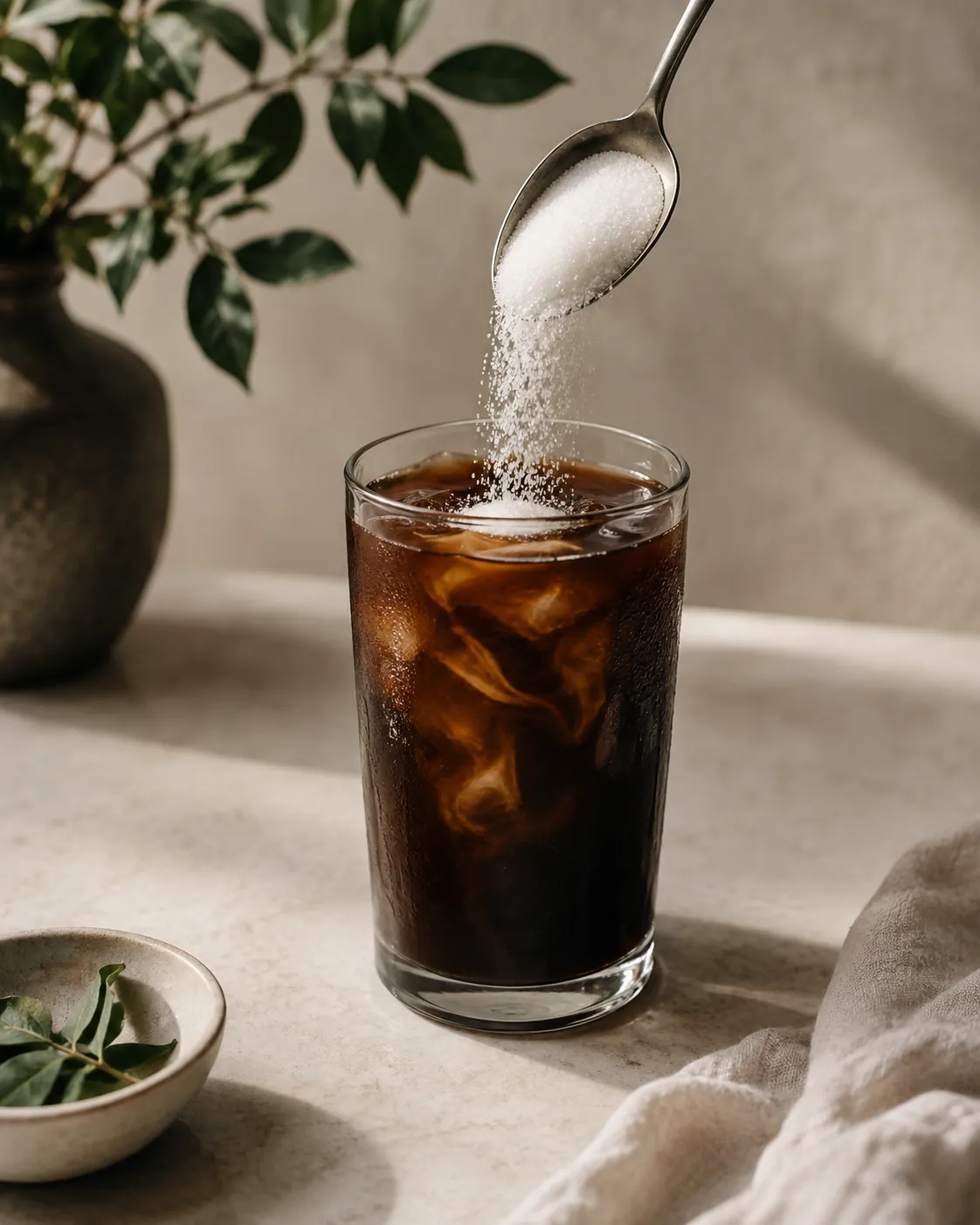
Suppression is the one people underestimate. Sugar does not merely sit alongside bitterness and acid; it actively lowers how much of both you perceive. That is why a very sweet drink can carry an acidity that would be unpleasant at half the sugar.
Sweetness
The intended job, and the one a label reports.
Body
Dissolved sucrose thickens the liquid and slows it on the tongue.
Bitterness suppression
Less perceived bitterness at the same measured bitterness.
Acid suppression
The same effect on sourness, which is why cola does not taste as sharp as its pH suggests.
Aroma carrying
A slightly thicker liquid holds volatile aroma longer in the mouth.
That last point is why reducing sugar rarely tastes like the same drink with less sweetness in it. Take the sugar out and the acid arrives unbuffered, the body thins, and the aroma leaves faster, all at once.
Nothing about the drink was rebalanced to compensate, so three things change together and only one of them was intended.
Why it will not dissolve in a cold drink
This is the single most common failure with cane sugar, and it is not a matter of stirring harder. Sucrose dissolves readily in hot water and very reluctantly in cold, so a spoonful stirred into iced tea largely sits at the bottom.
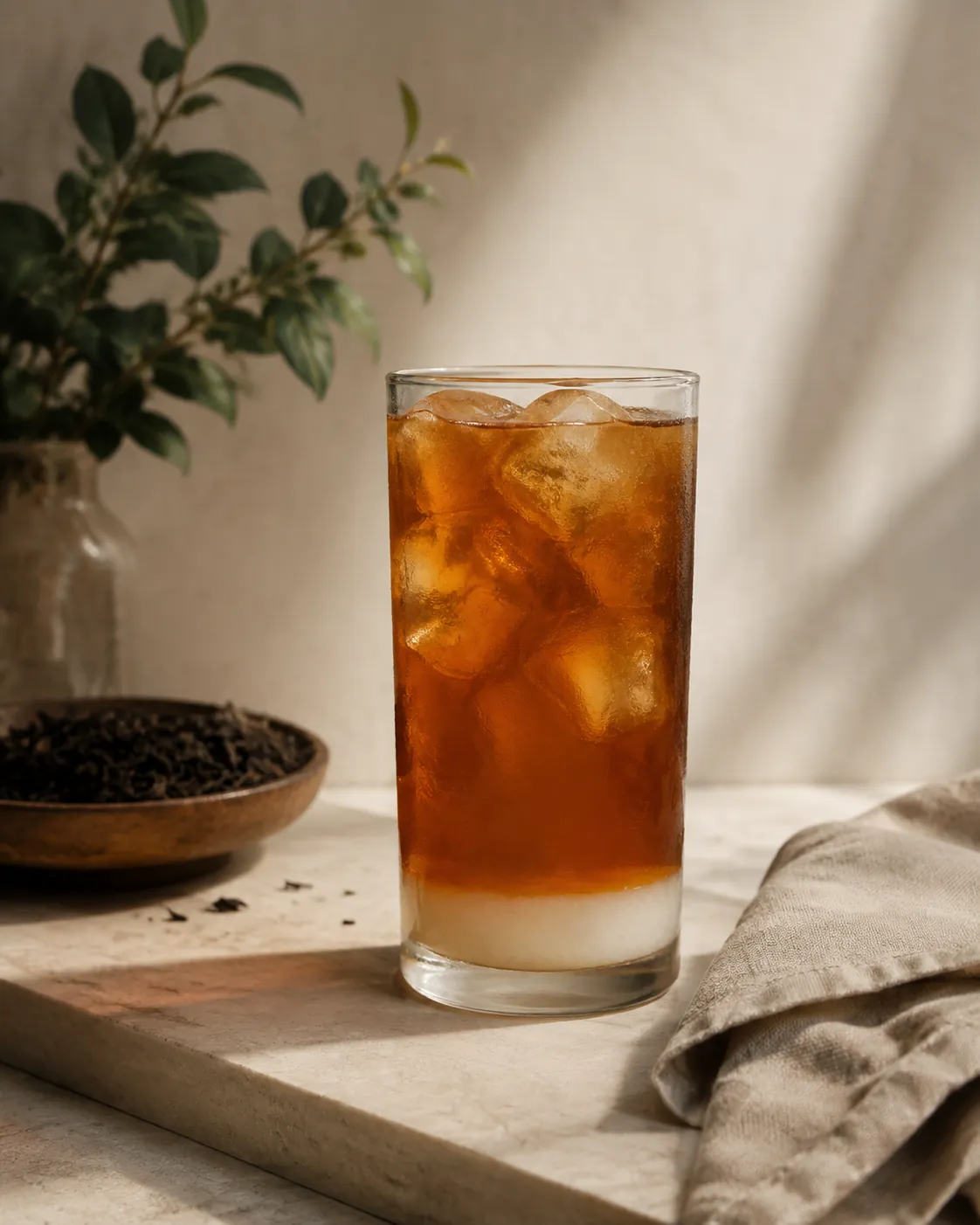
What makes it worse is that the first mouthfuls taste unsweetened, so the natural response is to add more. The undissolved sugar then slowly finds its way into the last third of the glass, which arrives cloying.
The fix is to dissolve the sugar before it meets the cold drink rather than after, which is the entire reason simple syrup exists as a bar staple and why every good iced drink recipe calls for syrup rather than granulated sugar.
Hot drinks have none of this problem, which is why the question never comes up with tea or filter coffee and comes up constantly with anything served over ice. It is the single most common complaint about home iced tea, and about every iced coffee built in the wrong order.
The useful range, and where more stops helping
There is no single figure, because the amount depends on what the sugar is being asked to cover rather than on the volume alone. A bitter drink needs more than a neutral one at the same size.
Roughly where drinks land, per 250 ml
- Lightly sweetened tea4 to 6 g, enough to round the tannin
- Sweetened coffee6 to 10 g, more for a darker roast
- A standard soft drinkAround 25 g, which is where cola sits
- An Italian soda at cafe strength25 to 30 g from the syrup alone
- A sweetened iced tea, commercial20 to 25 g
The useful threshold is around 8 to 12 g per 250 ml, which is where most people begin to register a drink as sweet rather than merely rounded. Below that, sugar is doing the body-and-suppression job without announcing itself, which is roughly where a well-made orange juice already sits on its own fruit sugars.
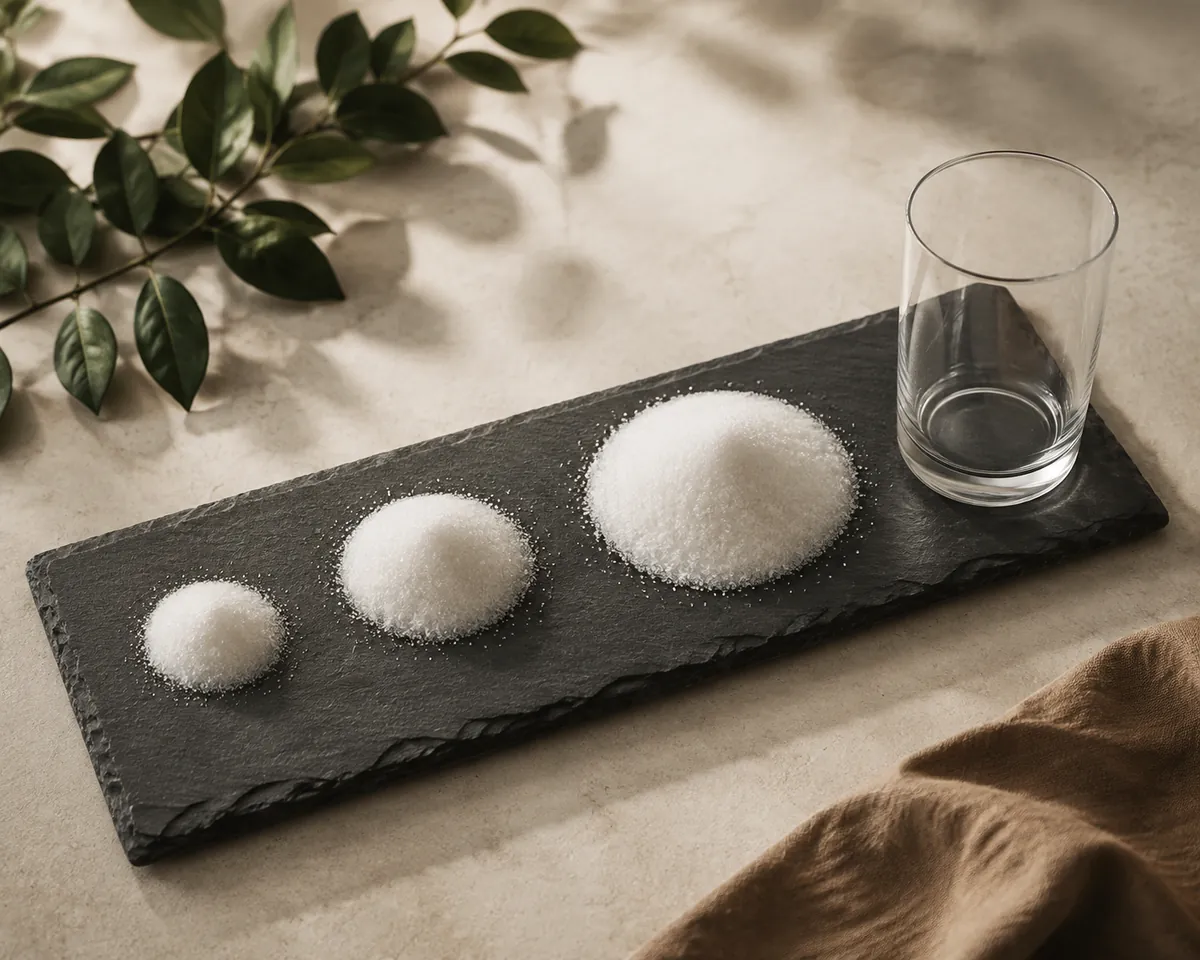
That is worth knowing because it is the range in which sugar is doing the most work per gram.
Going from zero to six grams changes a drink noticeably; going from twenty to twenty-six barely registers, because perception of sweetness flattens as concentration rises.
When to add it
Earlier than most people do, and the reason is dissolution rather than flavour. Sugar added while a drink is hot dissolves completely and distributes evenly; sugar added at the table often does neither.
Where sugar goes in, by drink
- Hot tea or coffeeStraight into the cup. It dissolves in seconds at brewing temperature.
- Anything icedAs syrup, before the ice. Granulated sugar will not dissolve once the glass is cold.
- Turkish coffeeInto the pot at the start, because the drink is never stirred afterwards.
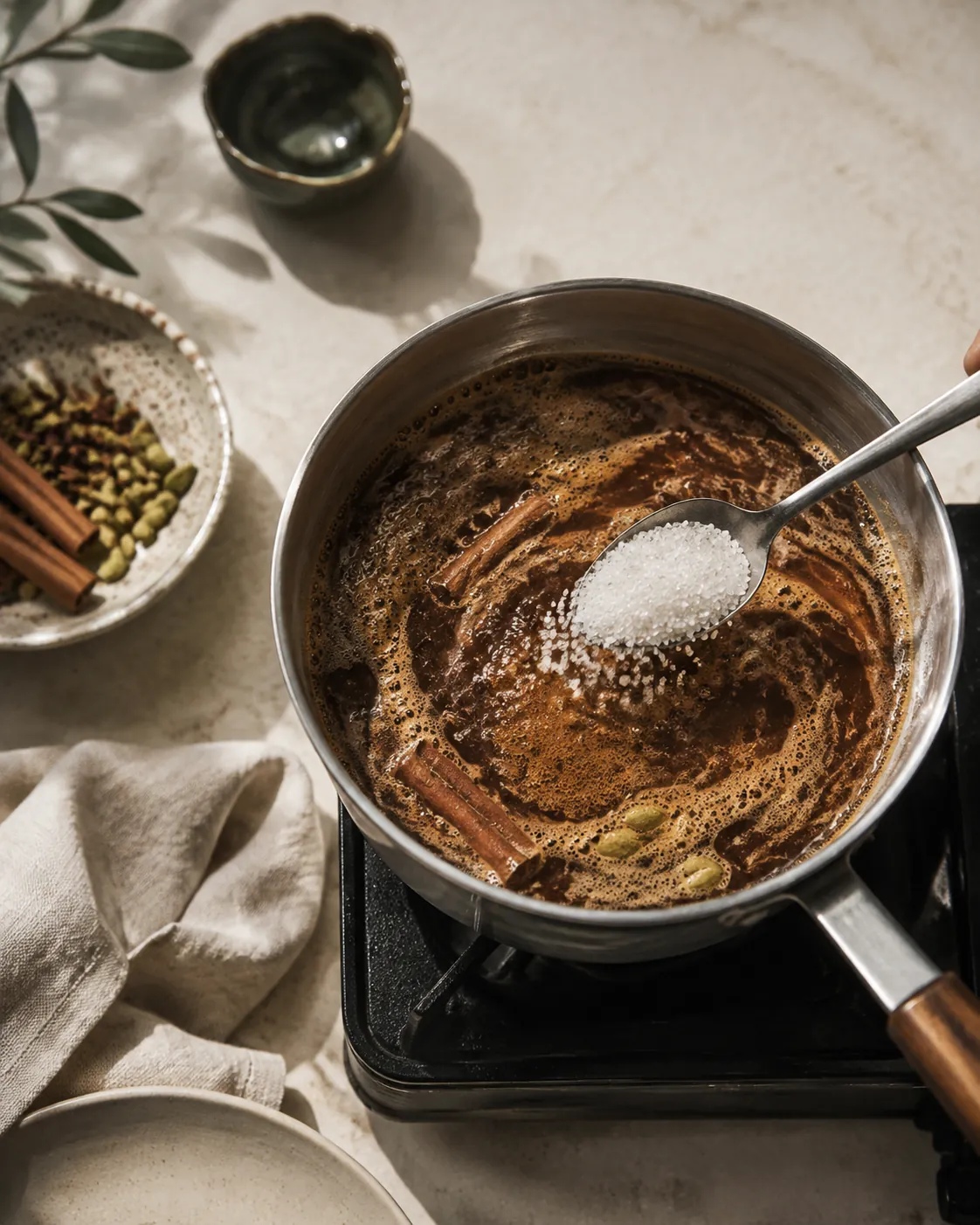
- A simmered drink such as chaiDuring the simmer, so it dissolves and rounds the spices.
- A blended drinkInto the liquid before blending, not onto the fruit.
The chai case is the clearest illustration of the principle. Sugar simmered with the tea and spices tastes integrated, and the same quantity stirred in at the end tastes like sweetened tea rather than chai, because it never had the heat or the time to distribute.
Where a drink is built in layers rather than stirred, order matters more still. Syrup at the bottom of a glass with soda water poured over it stays at the bottom unless it is lifted once from the base, which is the standard failure in a home-built soda.
Cane, beet, and whether anyone can tell
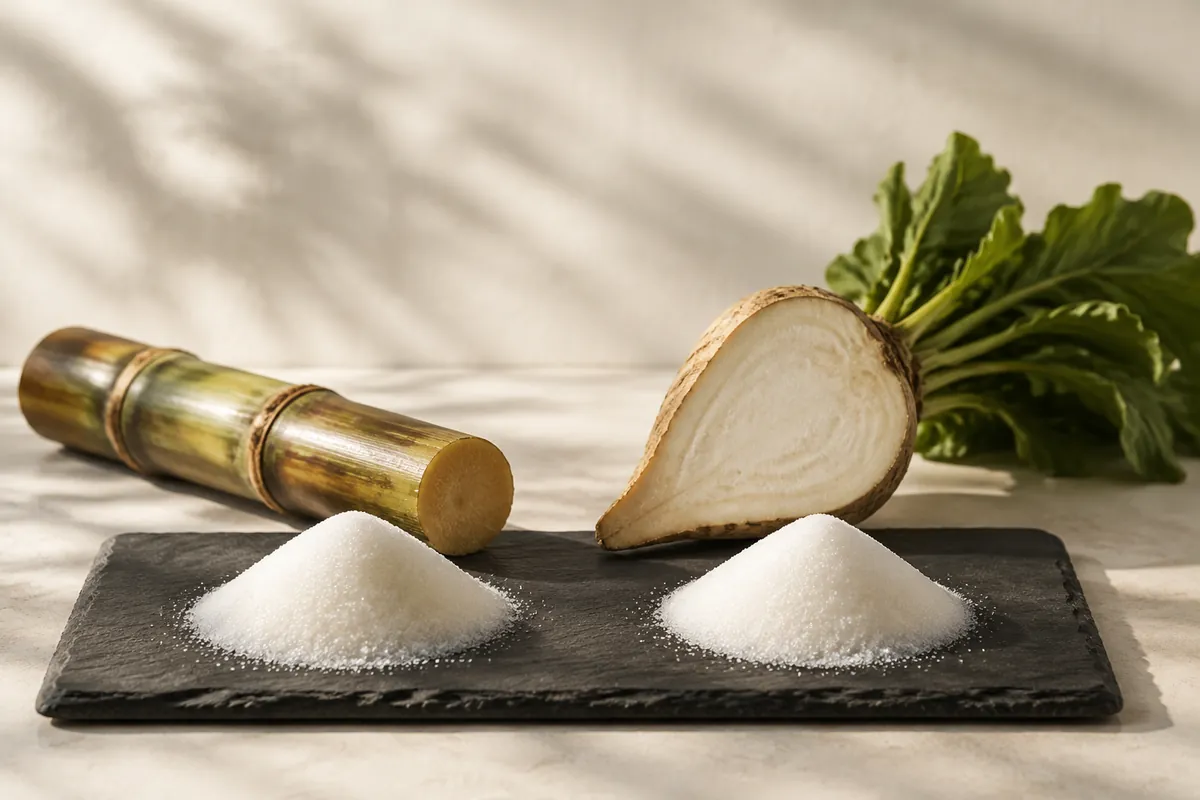
Roughly a fifth of the world's sugar comes from sugar beet rather than cane, and refined white sugar from the two is chemically the same substance: sucrose, purified to the point where the plant it came from has been removed along with everything else.
| Cane | Beet | |
|---|---|---|
| Plant | A tropical grass | A temperate root crop |
| Refined white | Sucrose, indistinguishable | Sucrose, indistinguishable |
| Unrefined forms | Many, and widely sold | Almost none reach a shelf |
| Molasses | Used as a food ingredient | Bitter, mostly used as animal feed |
| In a drink | No detectable difference once refined | No detectable difference once refined |
The difference appears only in the unrefined forms. Cane retains molasses well enough to be sold as demerara, muscovado and dark brown sugar; beet molasses tastes unpleasant and is not sold for drinking, so every unrefined sugar on a shelf is cane.
That is the honest answer to whether cane sugar is better in a drink. Refined, no.
Unrefined, the question stops being about cane versus beet and becomes a question about molasses.
What the molasses actually changes
Brown sugars are white sugar with molasses either retained or added back, and the amount decides the flavour far more than the name on the packet does.
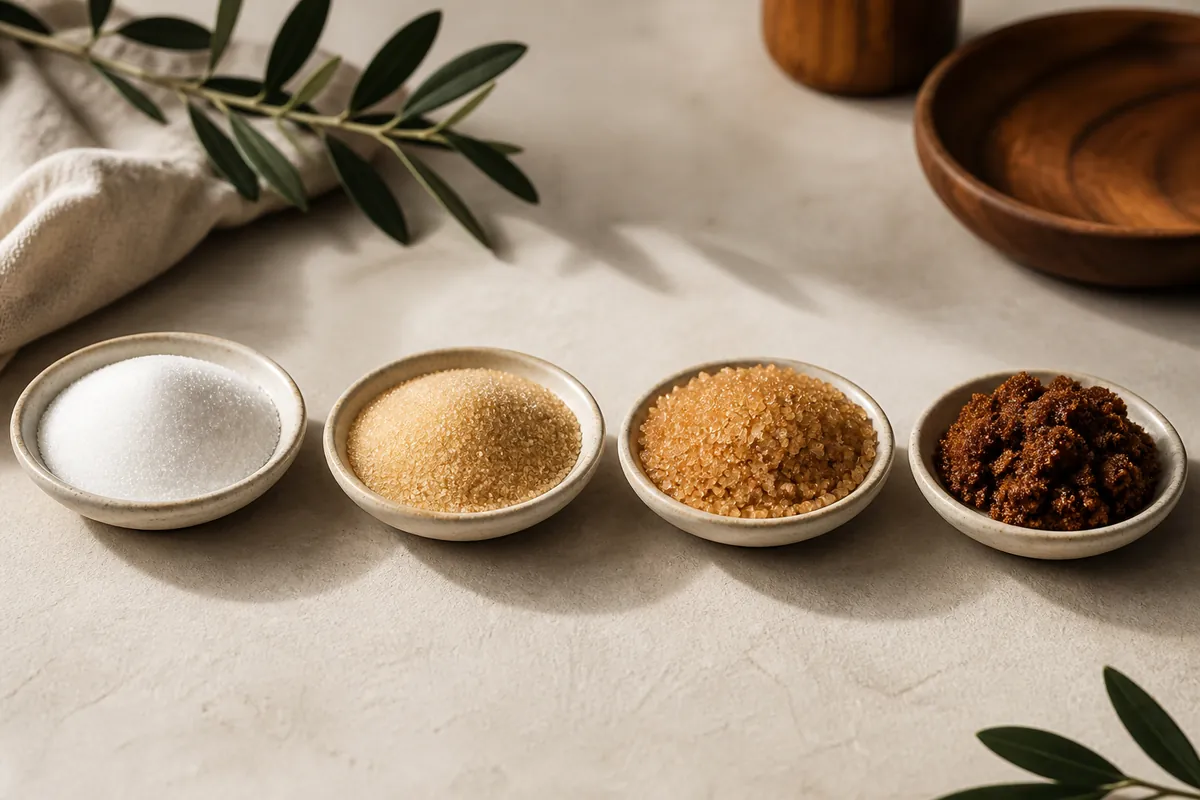
How much molasses, least to most
- White granulatedNone. Pure sucrose, no flavour of its own
- Golden casterA trace, and a faint warmth
- DemeraraNoticeable. Large crystals, toffee note
- Light brownSoft, moist, clearly caramel
- MuscovadoHeavy, almost bitter, with a liquorice edge
In a drink this matters in one direction: molasses adds flavour, so it is an ingredient rather than a neutral sweetener. Demerara in a dark coffee or a spiced drink is a genuine improvement, and the same sugar in a delicate green tea buries it.
Crystal size is the other practical difference and it is often the more annoying one. Demerara's large crystals dissolve slowly even in hot liquid, so a drink sweetened with it at the table can still be grainy several minutes later.
Where the molasses note is wanted but the grit is not, dissolving the sugar into a syrup first solves both at once. That is also the route to a spiced drink such as a Mexican hot chocolate tasting integrated rather than sandy.
What can replace it
Nothing replaces sugar in all three of its jobs at once, which is why substitution nearly always changes the drink rather than merely re-sweetening it.
| Substitute | Sweetness | Body | The catch |
|---|---|---|---|
| Simple syrup | Same | Same | Not a substitute; it is the same sugar, pre-dissolved |
| Honey | Similar | More | Its own flavour, and it seizes in cold liquid |
| Maple syrup | Slightly less | More | A distinct flavour that competes with delicate drinks |
| Agave | Higher | Less | Very sweet, thin, and near-neutral in flavour |
| Stevia and sucralose | Much higher | None at all | No body and no suppression, so acid arrives unbuffered |
The intense sweeteners are the instructive case. They deliver sweetness and nothing else, so a drink reformulated with them tastes both thinner and sharper than the original even when the measured sweetness matches exactly.
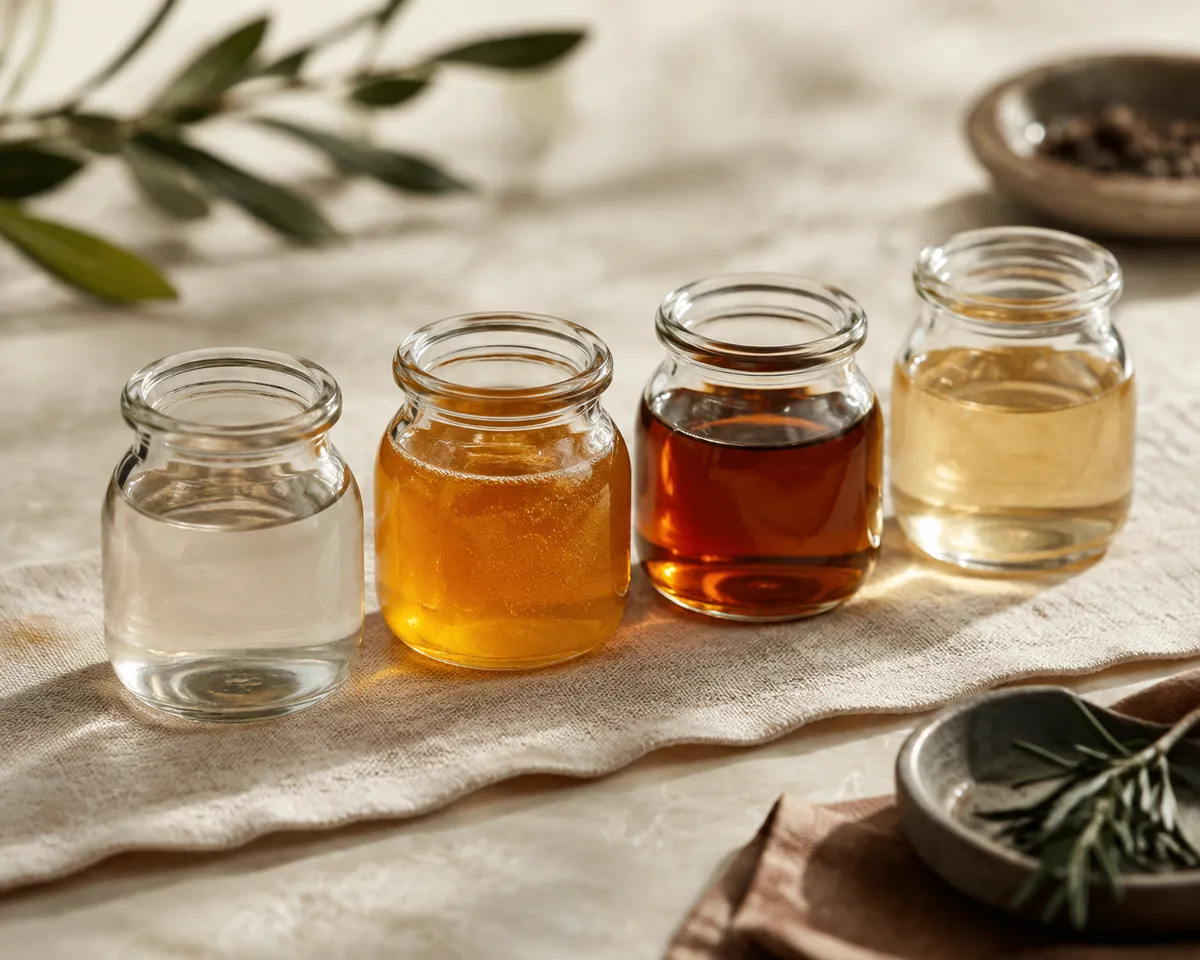
Honey is the closest whole-food substitute for a hot drink and the worst for a cold one, because its viscosity and its water content make it seize into a lump the moment it meets ice. Warm it, or dissolve it first, exactly as with granulated sugar.
For anything where the sweetener should be invisible, plain white sugar as a syrup remains the honest answer, and every other option on that table is a flavour decision dressed as a substitution.
Why white sugar clumps and brown sugar hardens
Cane sugar does not spoil. Sucrose is not a hospitable place for microbes, which is why sugar is a preservative in its own right, and a sealed bag will still be usable years after its printed date.
What ruins it is moisture, and the two failure modes run in opposite directions depending on which sugar you have.
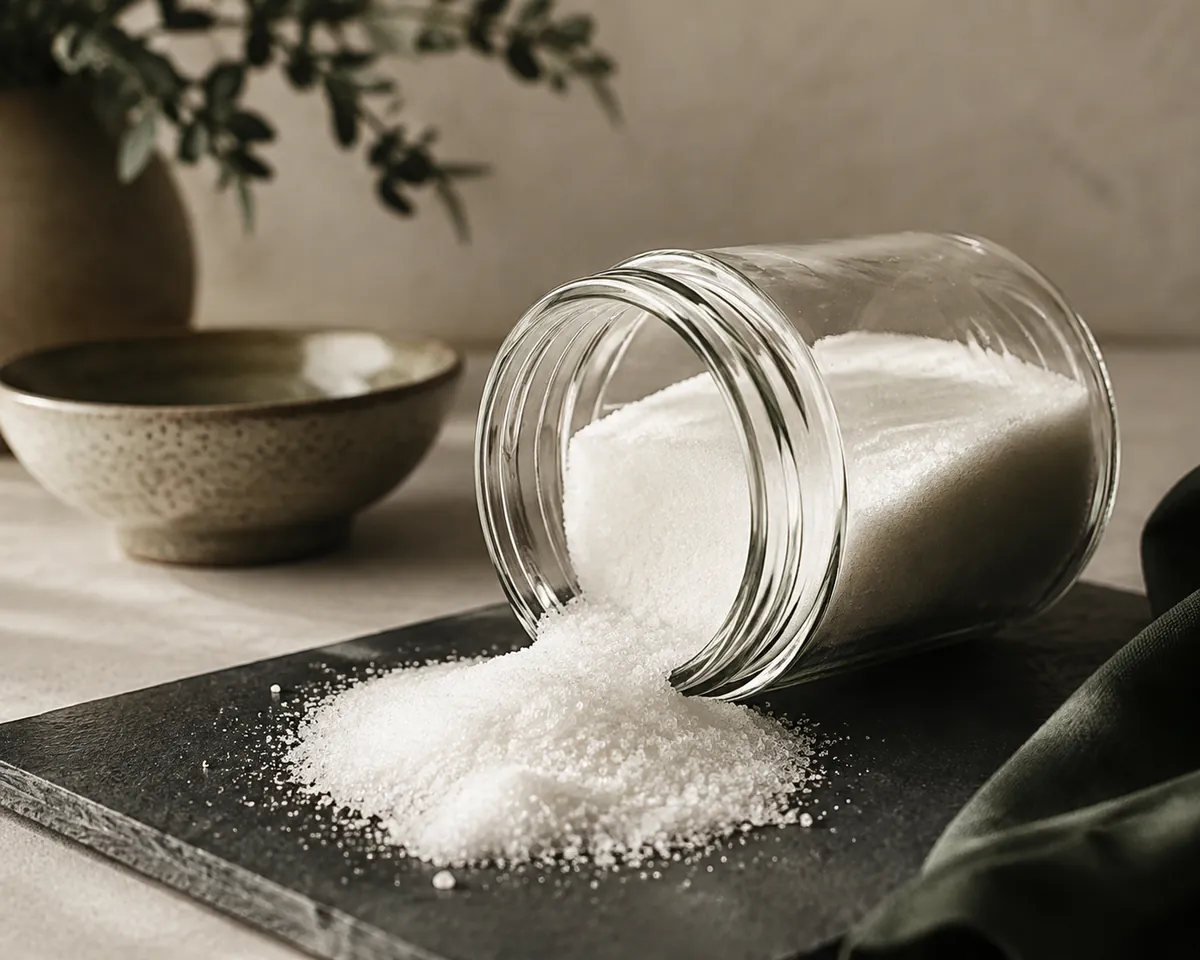
- Keep white granulated sealed and dry; damp air makes it clump into a solid block.
- Keep brown sugars sealed for the opposite reason, since they dry out and go hard.
- Store away from anything strongly aromatic. Sugar takes up smells readily.
- An airtight container beats the original bag for both types.
- Ignore the date on the packet and judge it by whether it pours.
A block of hardened white sugar is recoverable: break it up, and it behaves normally again, because nothing has changed chemically. Hardened brown sugar is recoverable too, by sealing it overnight with something that carries moisture, and it is the more common complaint of the two.
Neither is a hygiene question. A sugar that has gone hard has been stored in the wrong humidity, and it is still the same sucrose it was on the day it was packed.
Neutrality is the whole advantage
Set against the alternatives, cane sugar's advantage is that it is the one with no flavour of its own. Everything else on the shelf brings something extra, which is useful when you want it and a problem when you do not.
Cane sugar
Neutral. The default when the drink's own flavour should lead.
Demerara and muscovado
Cane again, with the molasses left in. A flavour choice.
That neutrality is why it survives as the reference point. A recipe that specifies sugar is specifying sweetness, body and suppression without also specifying a taste, and no other sweetener on the list does that.
It is also why sea salt belongs in the same conversation from the opposite direction: salt suppresses bitterness without adding sweetness, and a few grains sometimes achieves what a spoonful of sugar was reached for. In a green juice or a dark coffee, that is often the better lever.
Common questions
Why does sugar not dissolve in iced tea?
Sucrose dissolves readily in hot water and very reluctantly in cold, so granulated sugar stirred into a cold drink largely settles at the bottom. Dissolve it in a splash of hot water first, or use simple syrup, which is sugar that has already been dissolved.
Is cane sugar different from beet sugar in a drink?
Refined white sugar from cane and from beet is the same substance, sucrose, and neither is detectable in a drink. The difference appears only in unrefined sugars: cane retains molasses well enough to be sold as demerara and muscovado, while beet molasses is not sold for drinking.
How much sugar does a drink need before it tastes sweet?
Around 8 to 12 g per 250 ml is where most people begin to register a drink as sweet rather than merely rounded. Below that, sugar is still adding body and suppressing bitterness and acid without announcing itself.