Honey in Drinks, and Why It Will Not Dissolve Cold
Honey is not a like-for-like swap for sugar. It is roughly 17 per cent water, more acidic, and far more strongly flavoured, and each of those changes what it does in a glass.
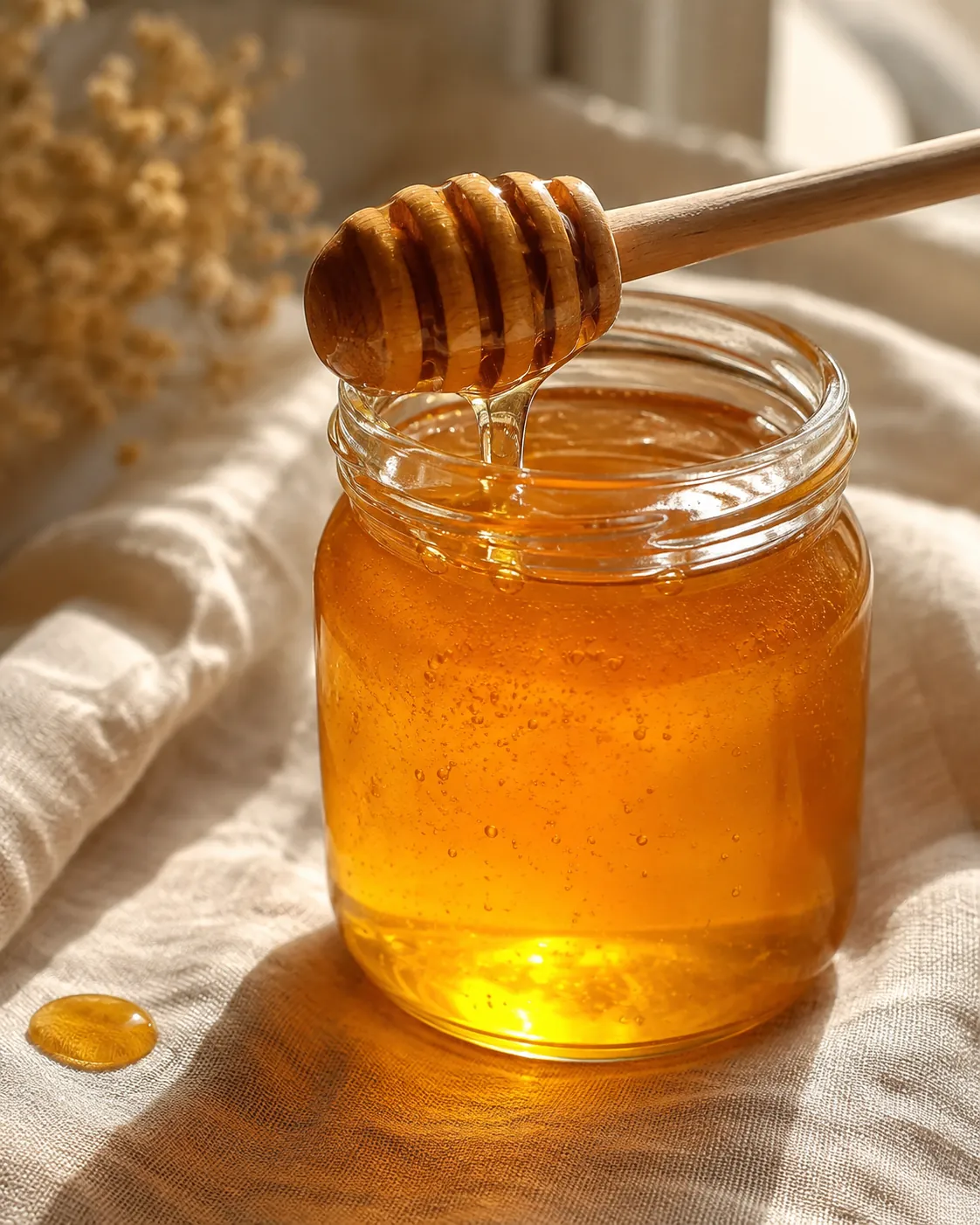
Honey is a concentrated sugar solution made by bees: mostly fructose and glucose, around 17 per cent water, and a little acid. Those three numbers explain almost everything it does in a drink, including the two things people find most frustrating about it.
The low water content is why a jar keeps for years and why it will not disperse in a cold glass. The acidity is why it behaves like an ingredient rather than a sweetener, and why it occasionally curdles the drink it was meant to improve.
Honey in a drink, at a glance
- Composition
- Roughly 38 per cent fructose, 31 per cent glucose, 17 per cent water
- Acidity
- Around pH 3.9, which is acidic enough to matter in milk and coffee
- Sweetness
- About 1.25 times granulated sugar by weight
- Viscosity
- Around ten thousand times that of water at room temperature
- In a cold drink
- Sinks as a blob unless thinned to a syrup first
- Sets because
- Glucose is the less soluble sugar and comes out of solution over time
- Keeps
- Indefinitely while sealed and dry. Water is the only real hazard
Why a spoonful sinks and sits there
The failure surprises people the first time, because honey is already a liquid and there seems to be nothing to dissolve. What defeats it is viscosity rather than solubility: honey is roughly ten thousand times thicker than water, so a spoonful lowered into iced tea descends as a coherent ribbon, settles on the bottom, and stays there while the spoon shears slowly through it.
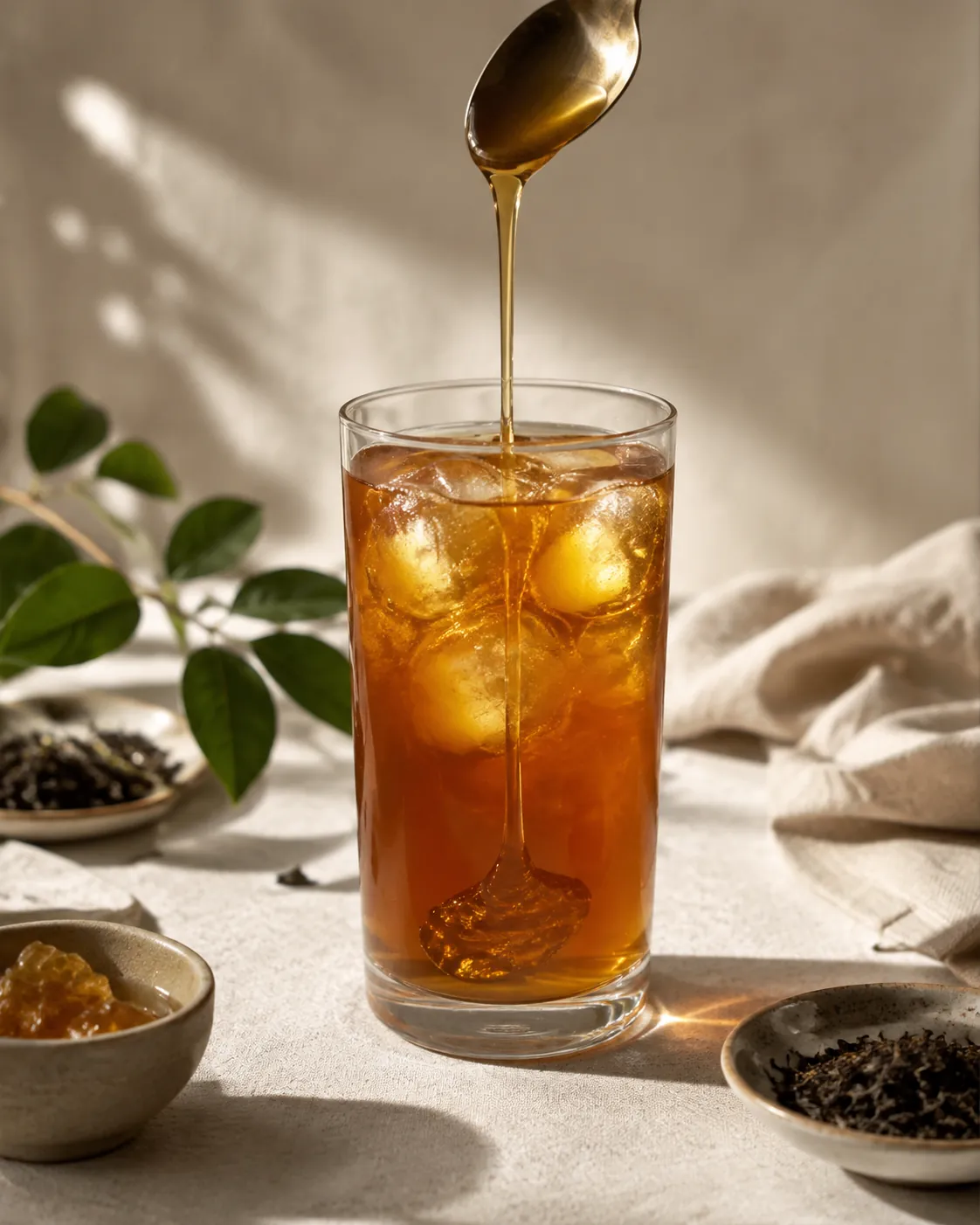
Thinning also fixes the measuring problem, which is the other reason honey is dosed badly more often than any other sweetener. A tablespoon holds about 21 g of honey against 12 g of granulated sugar, so a recipe written in spoons understates honey by a wide margin; and a third of what you did measure stays welded to the spoon.
Warming the spoon under a hot tap helps, weighing straight into the jug helps more, and keeping a bottle of honey syrup the way you would keep simple syrup removes both problems at once.
Cold drinks where honey beats sugar
Once it pours, honey earns a place in cold drinks that plain sugar cannot fill, and the reason is the acid it brings rather than the sweetness. Sugar can only add one sensation; honey adds sweetness and a faint sourness together, so it lands on both sides of the balance a cold drink is trying to strike.
Honey lemonade
Pale honey with lemon and cold water. The two acidities pull the same way, so it needs about a third less sweetener than the sugar version.
Iced black tea
Orange blossom honey against a strong brew, where tannin gives the floral note something to sit on rather than compete with.
Sun tea
Sweetened after brewing and after chilling, so honey syrup is the only form that will disperse at all.
Switchel
Honey, water, cider vinegar and ginger, served cold. Sharp, faintly savoury, and built entirely on the acid.
Cold brew
The one cold drink to approach carefully, since coffee acidity and honey acidity stack rather than balance.
Body in the drink decides whether the honey reads as flavour or as interference. A tea with tannin and weight carries a varietal honey; a delicate green tea is simply flattened by the same spoonful, and no adjustment of quantity rescues it.

Switchel is worth trying even if you never make it twice, because it is the clearest demonstration that honey works with acid rather than against it. Nothing in the glass is doing anything but sweetening and souring, and the result still tastes like a composed drink rather than sugar water.
Setting is what the honey is, not how old it is
A jar going solid and grainy is the commonest reason honey gets thrown away, and almost nothing about it indicates a problem.
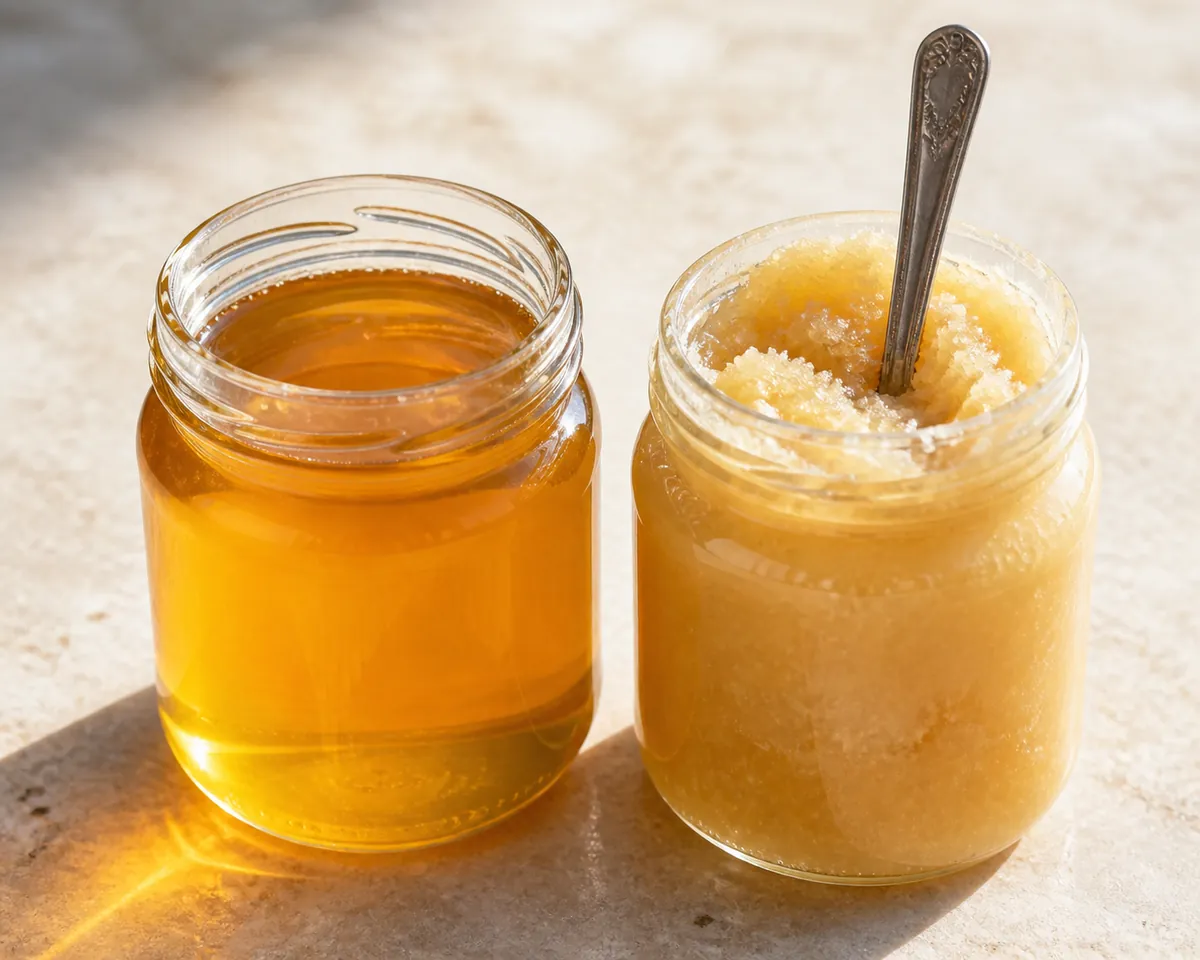
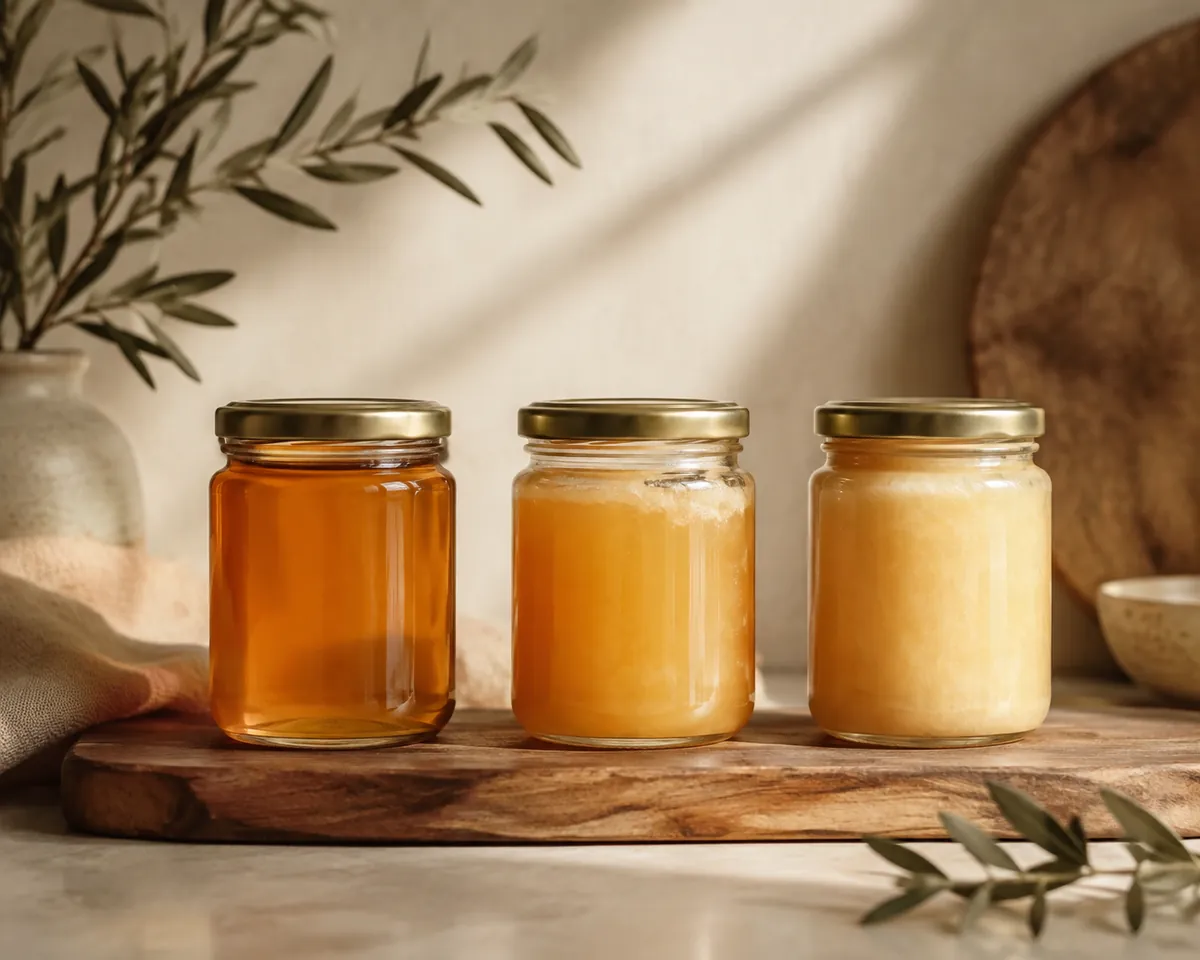
Honey is supersaturated. It holds more sugar than that quantity of water could normally keep dissolved, and glucose is the less soluble of the two sugars, so over weeks or months glucose comes out of solution as crystals and leaves the jar grainy or fully set.
What decides how fast a honey sets
- Glucose to fructose ratio
- The main factor. High-glucose honeys set within weeks
- Fructose-dominant honeys
- Acacia and tupelo stay runny for a year or more
- Temperature
- Fastest around 10 to 15 C, which is the temperature of a cool larder
- Seed crystals
- Any pollen, wax or existing crystal accelerates it
- Raw or unfiltered
- Sets faster, because more particles are present to seed it
Setting tells you what the honey is, not how old it is. To reverse it, stand the jar in water at about 40 C until it clears; hotter water works faster and costs aroma, which is the same trade made everywhere else on this page.
Nothing else in the jar is going anywhere either. The water content is too low and the acidity too high for microbes to establish, which is why sealed honey outlasts the label on it.
- Store it sealed at room temperature, not in the fridge, which sits in the fastest setting range.
- Keep water out of the jar. A wet spoon is the one thing that genuinely spoils honey.
- Expect crystallisation, particularly in raw and unfiltered jars.
- Buy small jars of expensive varietals, because aroma is what fades over years.
- Treat a best-before date on an unopened jar as a formality.
A wet spoon is the only real hazard, and it works locally: diluting one patch of honey raises the water content there far enough for fermentation to start, and that patch is what a genuinely spoiled jar looks like.
What the bees do to what they collect
Every property above follows from a process that changes the raw material completely, which is why honey is not simply a reduced version of what the bees collected.
The sugary liquid taken from flowers is mostly sucrose and around 70 per cent water. Bees add an enzyme, invertase, which splits that sucrose into its two halves, and then they spend days removing most of the water.
From flower to sealed comb
- CollectForager bees take the sugary liquid from flowers and carry it in a crop.
- Pass onIt is transferred between bees, and enzymes are added at each handover.
- InvertInvertase splits sucrose into glucose and fructose, which is why honey is two sugars rather than one.
- EvaporateThe bees fan the comb until water content falls below about 18 per cent.
- CapCells are sealed with wax once the honey is dry enough to keep.
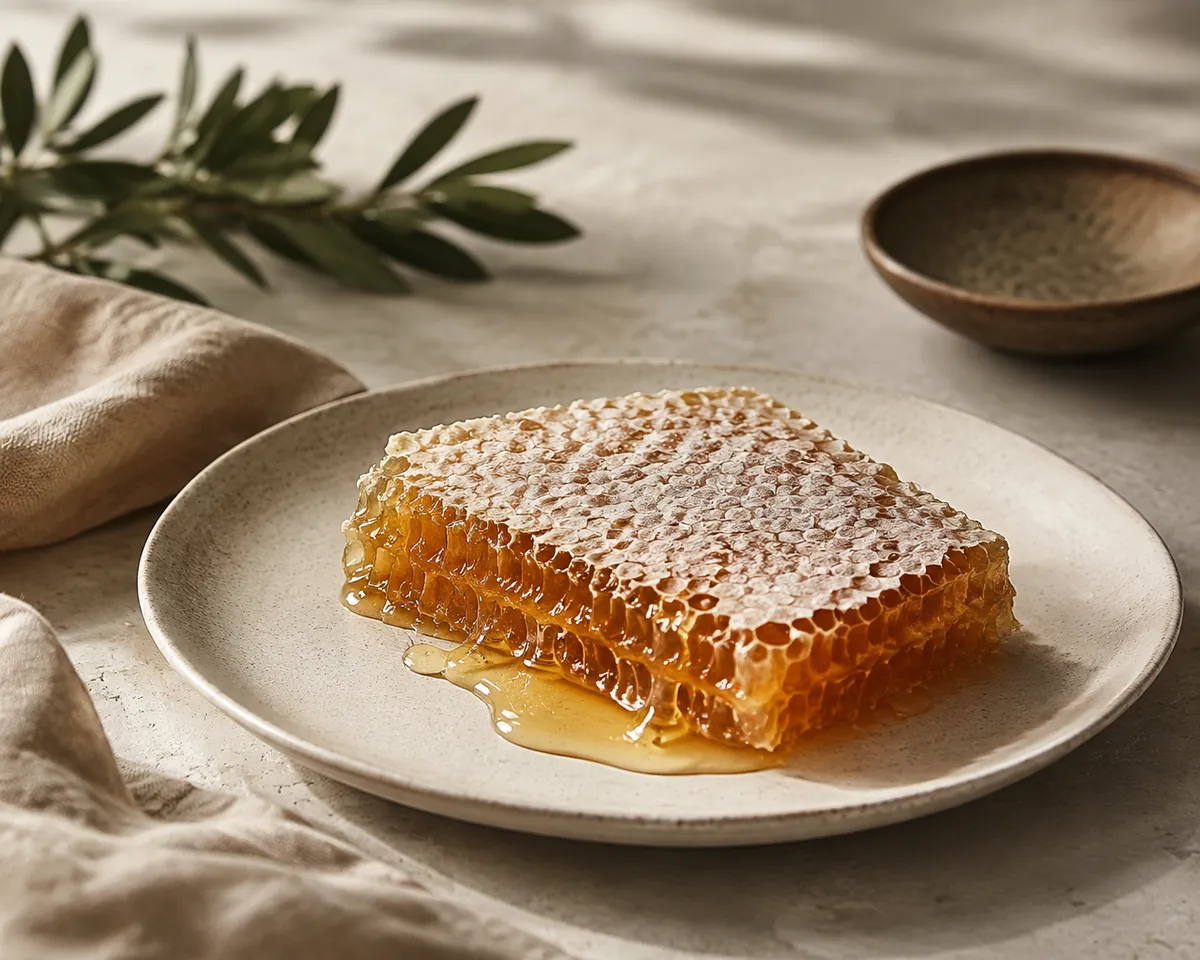
That 18 per cent threshold is the entire preservation mechanism, and the inversion step is the reason honey is sweeter than the sugar it started as. It is also the reason the glucose-to-fructose ratio varies by forage, which is what decides whether a jar sets in a month or stays clear for a year.
Raw, filtered, pasteurised, and what a label admits
Three words appear on jars, they describe genuinely different products, and only one of them is about the honey rather than the shelf.
| Raw | Filtered | Pasteurised | |
|---|---|---|---|
| Heated | Not above hive temperature | Warmed to help it flow | Heated to around 70 C |
| Pollen | Present | Reduced or removed | Present or not, depending |
| Appearance | Often cloudy | Clear and bright | Clear |
| Crystallises | Fast, since particles seed it | Slower | Slowest |
| Aroma | Fullest | Slightly reduced | Noticeably reduced |
Pasteurising is done for shelf appeal. It dissolves the seed crystals so a jar stays liquid and bright for a year, at the cost of some of the aromatics that made the honey worth choosing.
Ultrafiltration goes further and strips the pollen out entirely, which also removes any way of tracing the honey to a region, and that is why pollen content is what fraud testing looks at and why its absence counts against a jar.
What the words on the label mean
- Blend of EU and non-EU honeys
- An unspecified blend. The cheapest category, and the origin is unknowable
- Single country of origin
- Traceable, and usually a step up
- Monofloral, such as acacia
- A stated majority from one forage. Rarely regulated tightly
- Raw
- Unheated beyond hive temperature. Not a legally defined term in most markets
- Set, creamed or spun
- Deliberately crystallised to a fine, spreadable texture
- Honeydew or forest honey
- Not from flowers at all, but from aphid secretions on trees
Adulteration with rice or corn syrup is a documented problem in the global trade, and the practical signal is price: a claimed monofloral honey sold far below the market cannot have been produced the way the label says it was.
Pale honey sweetens, dark honey flavours
Forage changes honey more than most people expect, by enough that choosing a jar for a particular drink is a real decision rather than an affectation.
Acacia
Very pale, mild, floral, and slow to set. The safest choice in a delicate tea.
Clover
The supermarket default. Mild and sweet, sets at a moderate pace.
Orange blossom
Citrus and floral, and it suits iced tea particularly well.
Buckwheat
Very dark, malty, almost molasses-like, and strong enough to fight most drinks.
Honeydew
From tree secretions rather than flowers. Resinous, and less sweet than it looks.
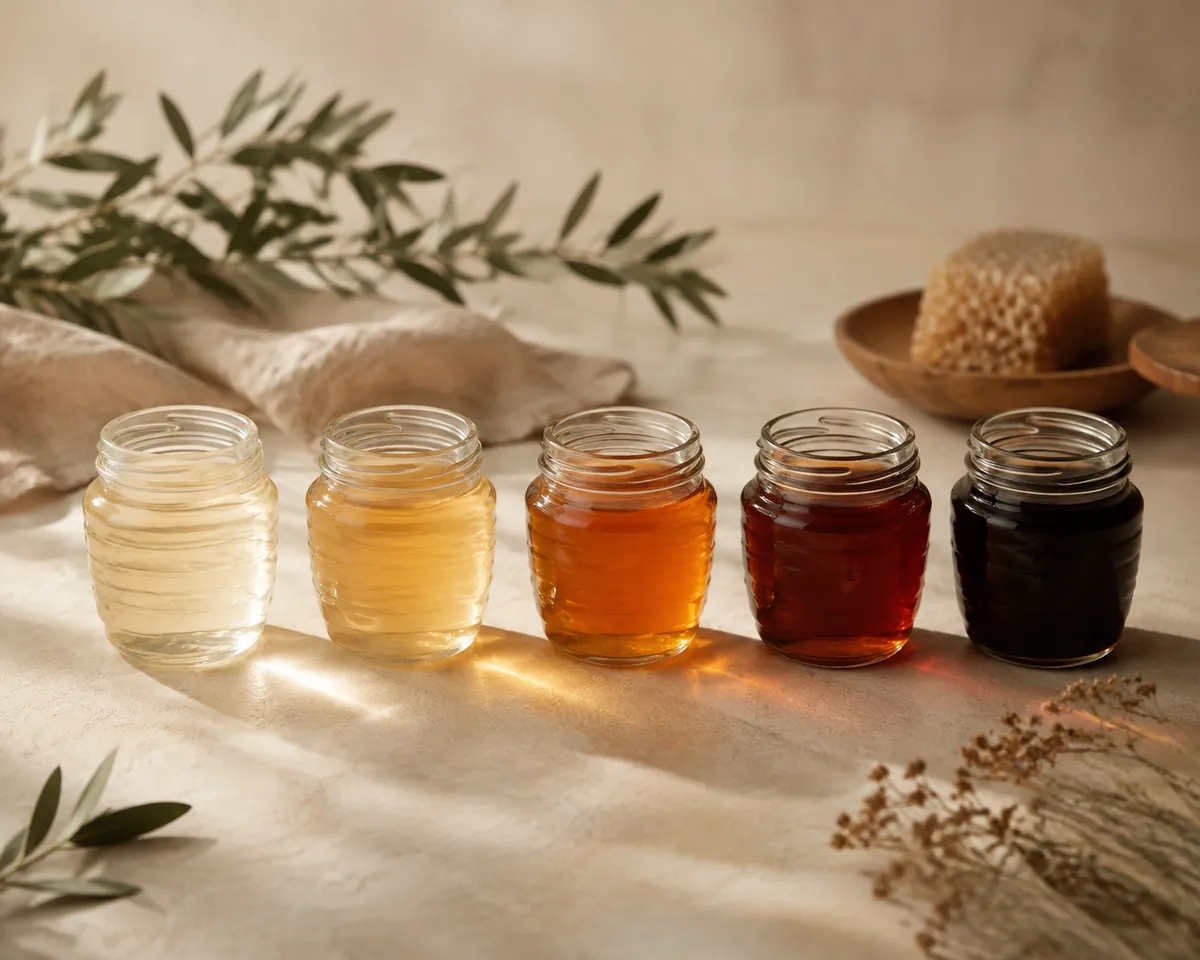
The dark end behaves so differently that it is worth treating as a separate ingredient. Buckwheat is the most assertive honey commonly sold, malty and almost meaty, and it will stand up to a dark roast where a pale honey vanishes.
Chestnut is similar and carries a real bitterness alongside the sweetness. Honeydew sits between the two and is the most useful of them in drinks, since its resinous note works with chai and with anything spiced, and its lower sweetness stops it dominating.
The rule that holds across the whole range is that pale honey is a sweetener and dark honey is a flavouring. Swapping one for the other is not a like-for-like change at any quantity, in either direction.
Acidity, and why the swap is not one for one
Replacing sugar with honey changes three things at once, and only the first is the one people plan for.
| Honey | Granulated sugar | |
|---|---|---|
| Sweetness | About 1.25x by weight | Baseline |
| Dissolves cold | No, without thinning | Also poorly, which is why syrup exists |
| Flavour | Distinct, and varies by varietal | Neutral |
| Acidity | Around pH 3.9 | Neutral |
| In plant milk | Can curdle it | Does not |
Sweetness is the easy adjustment. The water honey brings with it matters wherever the liquid balance is fixed, which is why a honey version of a fixed-volume drink comes out slightly thinner as well as sweeter.
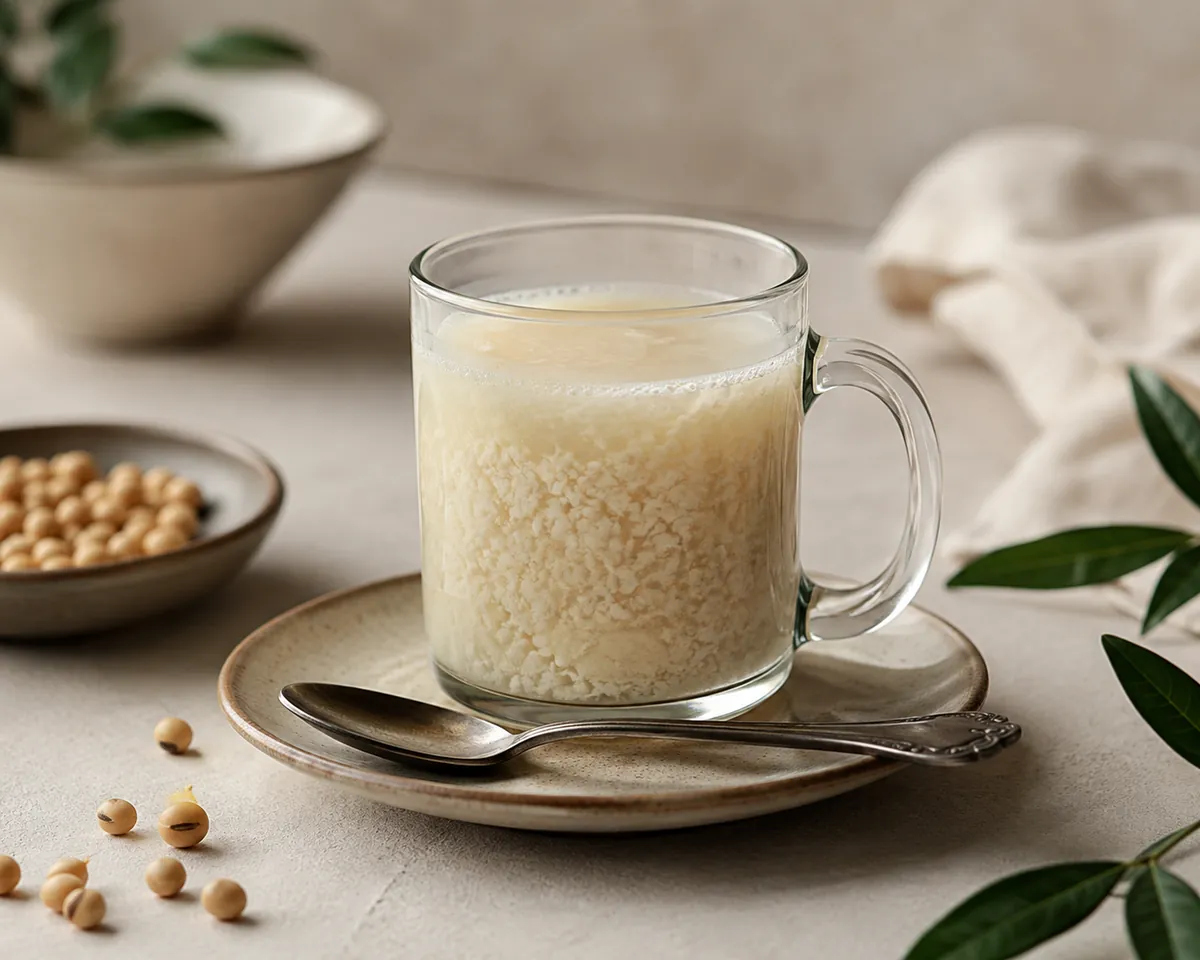
The acidity is the row that catches people out: stirring honey into a hot soy drink can produce exactly the graininess that coffee causes in plant milks, and for the same reason.
| Honey | Simple syrup | Maple syrup | Granulated | |
|---|---|---|---|---|
| Dissolves cold | Only if thinned | Instantly | Readily | Poorly |
| Flavour | Strong, and varies by jar | None | Strong, and consistent | None |
| Acidity | pH 3.9 | Neutral | Mildly acidic | Neutral |
| Sweetness by weight | About 1.25 times sugar | About half, at 1:1 | About the same as sugar | Baseline |
| Curdles plant drinks | Can | No | Rarely | No |
Reading down the acidity row settles most practical questions at once. Honey is the only common sweetener acidic enough to interact with the drink rather than simply sweeten it, which is what makes it excellent against citrus and awkward against milk.
Where the heat goes, and why coffee disappoints
Two complaints get made about honey in hot drinks and they are different complaints, so it is worth separating them.
The first is about aroma. Heat drives off the volatile compounds that distinguish one honey from another, so a delicate varietal stirred into boiling water contributes sweetness and very little of what you paid for.
Nothing harmful happens and no nutritional claim is made here; the argument is entirely about flavour, and it means letting a cup stand for a minute before the honey goes in. In a robust English breakfast or a rooibos that will dominate anyway, the timing makes no practical difference at all.
The second complaint is about coffee, and there the problem is acid stacking rather than heat. Coffee brings its own acidity and honey brings more, so in a bright light roast the two add up and the cup reads sour instead of sweet.
How well honey sits in a drink
- Iced tea and lemonadeAcid meets acid. The natural home for honey
- Chai and spiced drinksDark honey and spice reinforce each other
- Chamomile and herbal infusionsFloral honey extends what is already there
- Honey latteMilk buffers both the acidity and the flavour
- Dark roast coffeeWorkable. Less acidity of its own, enough bitterness to meet it
- Light roast AmericanoSour rather than sweet. The stacking is obvious
- EspressoNowhere for a strong flavour to hide
If you want honey in coffee, a honey latte is the version that works, and the recipe is a pale honey, thinned to syrup, at half the quantity you first thought of.
Infusing it, and what fresh ingredients cost
Honey takes flavour readily and holds it for months, which makes an infused jar one of the few kitchen projects that repays a two-minute effort.
Four infusions
- Ginger honey
- 200 g honey, 30 g sliced fresh ginger, 1 week at room temperature, strained
- Chilli honey
- 200 g honey, 2 dried chillies, warmed to 50 C for 20 minutes, left to steep
- Citrus honey
- 200 g honey, the peel of one lemon, 3 days, strained
- Herb honey
- 200 g honey, a handful of thyme or rosemary, 1 week
- Note
- Anything fresh and wet shortens the keeping time considerably
Fresh ingredients bring water, and water is the one thing that ends a jar. An infusion made with fresh ginger or citrus peel keeps a few weeks in the fridge rather than indefinitely, while dried chillies or dried herbs sidestep the issue entirely and let the jar sit in the cupboard.
Warm gently and never simmer, since the aromatics you are trying to capture are precisely the ones heat removes.
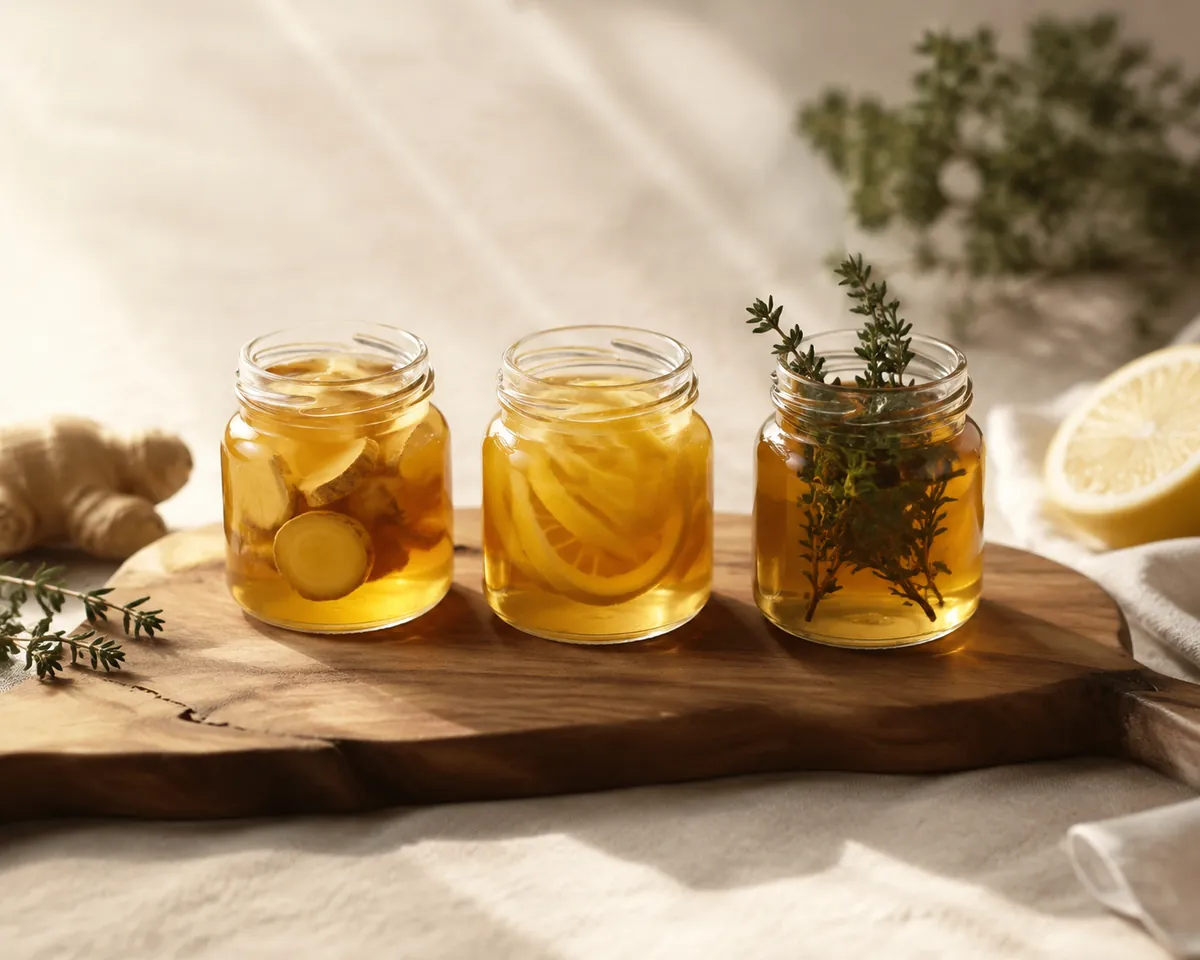
Pairing follows the pale-and-dark rule from further up. Ginger is the classic partner because heat and floral sweetness occupy different parts of the palate, so honey and ginger in hot water reads as a drink rather than a sweetened infusion.
Cinnamon and cardamom both want a darker honey whose resinous edge can meet the spice, and a pale acacia disappears against either. Chilli is the newer pairing and it is more than a novelty: a little heat lengthens the finish on something sweet, which is why hot honey has moved from a condiment to something people stir into infused water and cold tea.
Common questions
Why does honey not dissolve in iced tea?
Viscosity rather than solubility. Honey is thousands of times thicker than water at room temperature, so it sinks as a blob and stirring shears it only slowly. Thinning it three parts honey to one part warm water fixes it permanently.
Is crystallised honey still good?
Yes. Honey is supersaturated and glucose gradually comes out of solution as crystals. It indicates a glucose-rich honey rather than an old or poor one. Standing the jar in water at about 40 C clears it.
Does hot water ruin honey?
It drives off the volatile aromatics that distinguish one varietal from another, so a delicate honey in boiling tea contributes sweetness and little else. That is a flavour argument. In a robust black tea it makes no practical difference.