How to Make Masala Chai on the Stovetop
Masala chai is built in stages: spices release into water, strong black tea adds structure, and milk rounds the brew without erasing it. Control those extractions separately and the cup stays aromatic instead of becoming a muddy boil.
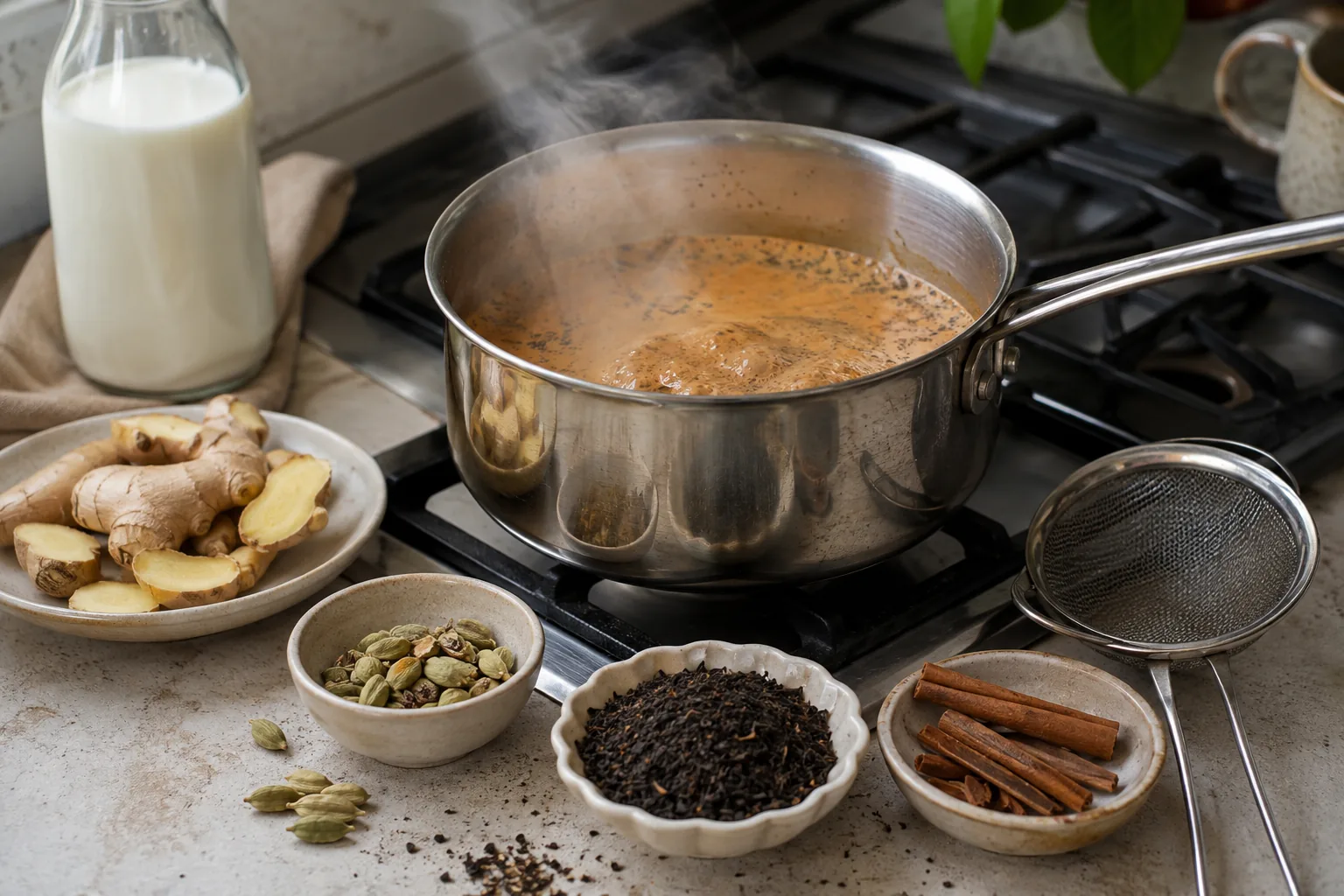
To make two cups of masala chai, simmer crushed spices in 300 ml water for three to five minutes, add 5 to 6 g of strong black tea for about two minutes, then add 200 ml milk and heat until the drink rises toward a simmer. Sweeten, strain, and serve immediately.
That is a starting structure rather than a fixed cultural formula. Chai simply means tea in much of South Asia, while masala chai means tea prepared with a spice mixture, and households vary the spice, milk, sweetness, and boiling pattern.
Two-cup chai build
- Water
- 300 ml
- Milk
- 200 ml
- Strong black tea
- 5 to 6 g CTC or broken Assam
- Core spice
- 6 cardamom pods and 15 g fresh ginger
- Supporting spice
- Small cinnamon piece, 2 cloves, 3 peppercorns
- Sweetener
- Start with 2 teaspoons and adjust
- Pan
- At least twice the finished liquid volume
Build a spice mixture with a clear center
Fresh ginger and green cardamom can carry the blend on their own. Cinnamon, clove, and black pepper are powerful supporting notes, and using all of them heavily makes each sip taste generally spicy rather than distinctly aromatic.
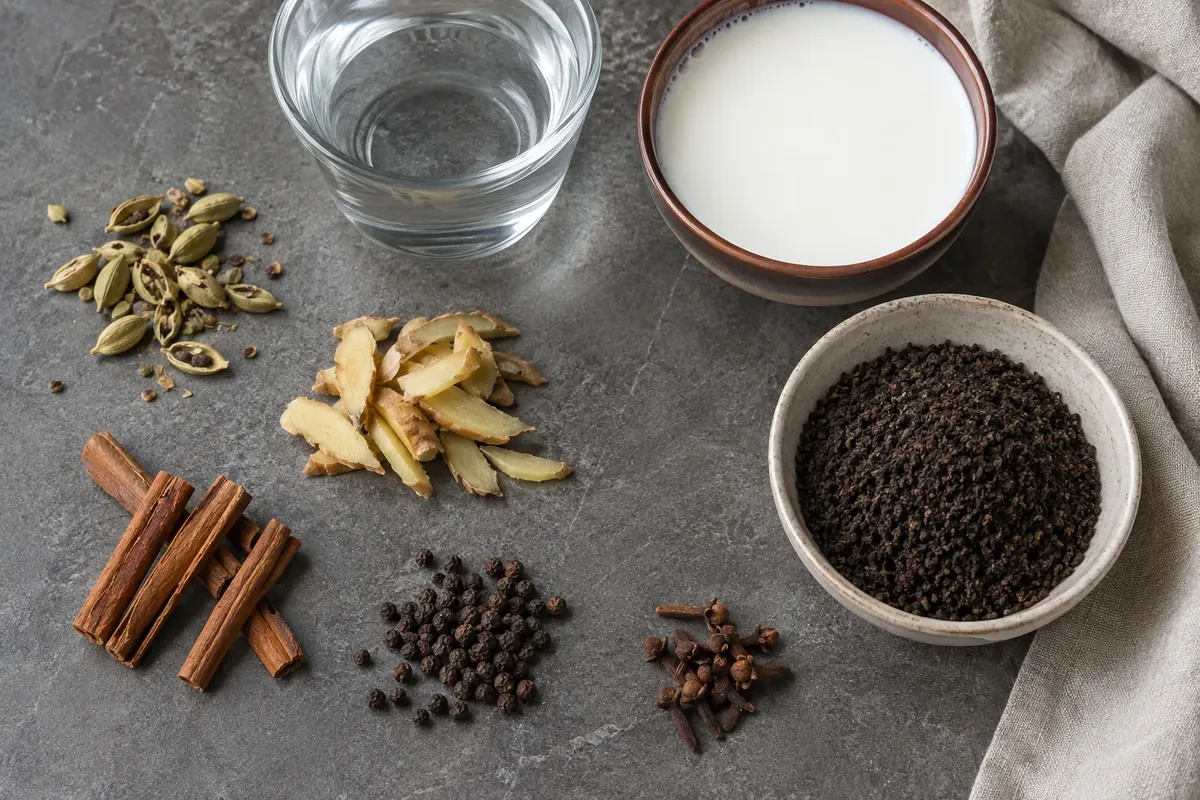
Crack cardamom pods until the seeds are exposed, bruise peppercorns, and slice or crush ginger. Breaking a spice creates fresh surfaces for water to reach. Ground spices extract fast but pass through ordinary strainers and create sediment.
Cardamom
Floral, resinous, and the clearest classic center
Fresh ginger
Bright heat that grows with simmer time
Cinnamon
Sweet woody warmth; use a small piece
Clove
Dense and numbing; one or two can dominate a pan
Black pepper
Dry heat in the finish rather than ginger's brightness
Fennel
Sweet anise character used in some regional and household blends
There is no need to include every spice. A short blend is easier to balance, and you can learn what one additional clove or a longer ginger simmer actually changes.
Choose tea strong enough to survive milk
Fine CTC Assam is a practical chai base because it extracts quickly and brings malty body that remains present after milk. Broken breakfast tea also works, while a delicate whole-leaf tea spends its aroma under spice and dairy.
Use loose tea if possible so you can measure it independently of bag size.
Two ordinary bags can substitute for 5 to 6 g, though brands vary enough that the first pan remains a trial.
The chai profile covers the drink's naming and regional range. This method owns the practical pan sequence and its corrections.
Extract spice in water before adding milk
Put water and prepared spices in a roomy saucepan, bring them to a lively simmer, then reduce the heat enough to prevent violent splashing. Covering the pan keeps volatile aroma in the liquid, but watch closely because a covered pan reaches a boil quickly.
Stovetop masala chai
- CrackOpen cardamom and bruise or slice the other spices
- SimmerCook spices in water for 3 to 5 minutes
- TeaAdd strong black tea and simmer gently for about 2 minutes
- MilkPour in milk and raise the heat gradually
- RiseStop or lower the heat when foam climbs the pan
- SweetenDissolve sugar while the chai is hot
- StrainPour through a fine strainer into warm cups
Water extracts many spice aromatics efficiently and lets you see and smell their progress. Starting with all milk increases the risk of scorching at the pan base and creates a thick foam that can hide a weak spice infusion.
Use a pan with generous headroom. Milk foam can climb from calm to overflowing in seconds, so the cook should remain at the stove once milk enters.
Add tea, then milk, without boiling flavor away
After the spice water smells complete, add the tea and let the liquid darken. A strong simmer is enough; a long hard boil extracts more tannin and drives off the high notes released by cardamom and ginger.
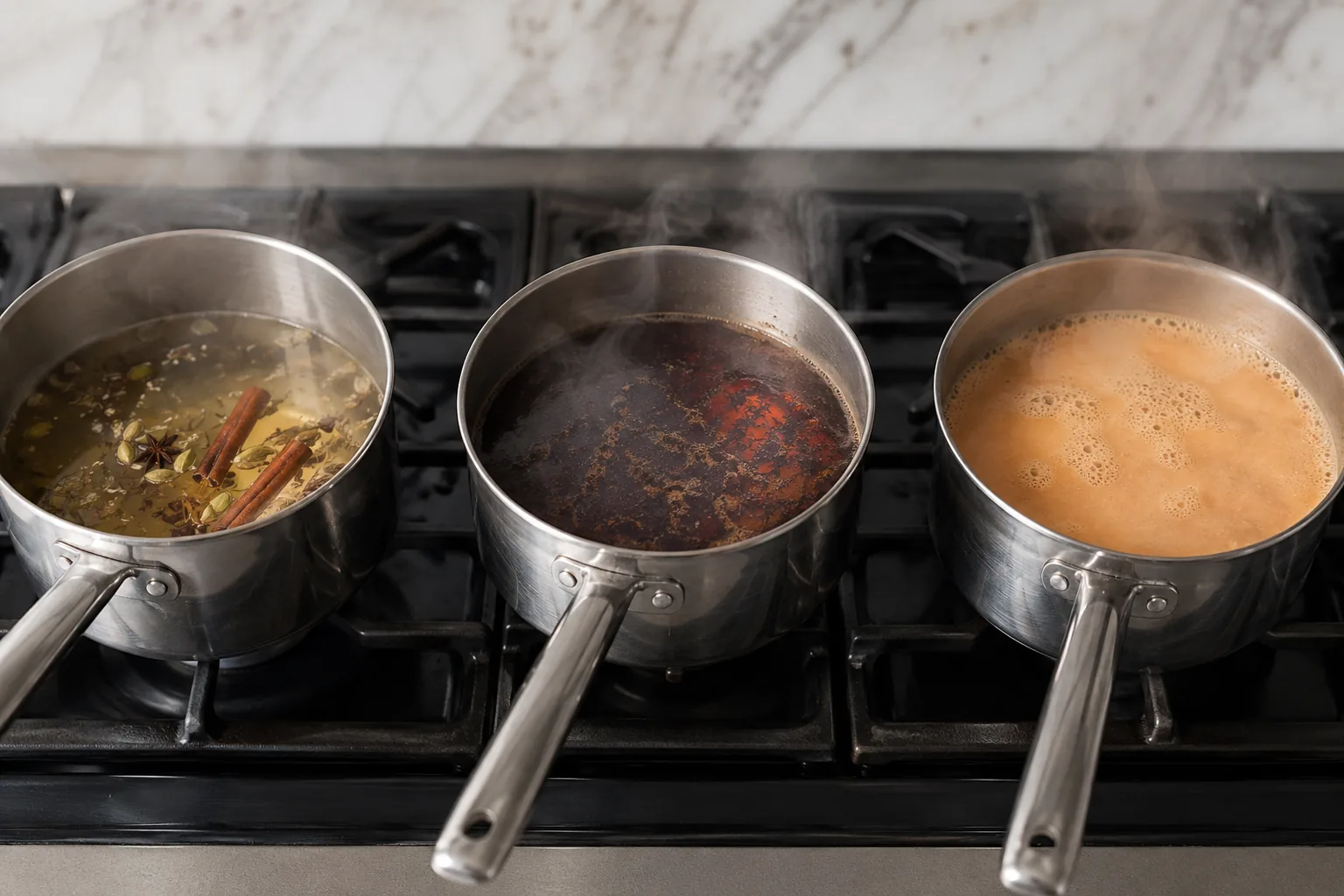
Pour in milk and stir across the pan base so nothing settles and catches. Dairy milk can rise dramatically as steam expands its foam, and turning the heat down as the surface climbs prevents both a spill and a cooked skin.
Some chai traditions deliberately raise and lower the foam several times. That aerates and concentrates the drink, but one controlled rise is enough for a balanced home batch and gives fewer chances to scorch the milk or over-extract the tea.
Use whole milk for a fuller cup or a lower-fat milk for a lighter one.
Unsweetened soy and barista-style oat drink usually tolerate heating better than thin plant drinks, but their sweetness and stabilizers change the final balance.
Sweeten to connect spice, tea, and milk
Sugar does more than make chai sweet: it reduces the perception of tea bitterness and allows cardamom and cinnamon to read more clearly. Add a modest amount while the chai is hot, taste after straining, and increase only if the spice still feels disconnected.
Jaggery or brown sugar contributes its own molasses character, while white sugar stays neutral. Acidic syrups, citrus, or fruit should not be added to a milk chai because they can curdle the milk.
How adjustments change the cup
- More water
- Lighter body and clearer spice
- More milk
- Softer tea and a rounder texture
- More tea
- Greater body and tannin
- Longer spice simmer
- Stronger ginger and woody notes
- More sugar
- Less perceived bitterness but less contrast
- Repeated boiling
- More concentration, cooked milk flavor, and tannin
Taste the strained chai, not only the saucepan. The fine spice fragments and wet leaf left in the pan make an unstrained spoonful seem harsher than the drink in the cup.
Correct weak, harsh, muddy, or split chai
Weak chai can mean weak tea, timid spice preparation, or too much milk, and each needs a different correction. Smell first: strong spice aroma with little body points to tea, while dark tea with a dull nose points to uncracked or stale spice.
| Result | Likely cause | Better next pan |
|---|---|---|
| Milky and weak | Too little tea for the milk | Add tea, not steep time |
| Dark and drying | Tea boiled too long | Add tea later and strain sooner |
| Flat spice aroma | Whole spices left intact | Crack or bruise them before simmering |
| Clove dominates | Too many cloves | Reduce to one or omit |
| Grainy texture | Ground spice passed the strainer | Use cracked whole spice or finer mesh |
| Cooked milk taste | Heat stayed high after milk entered | Use one controlled rise |
| Plant milk splits | Heat or acidity overwhelmed the emulsion | Lower heat and choose a stable unsweetened product |
A film on top after cooling is normal milk fat and protein, while sour aroma or persistent curds are not. The dedicated chai problems guide covers ingredient freshness and repeat faults beyond the immediate method.
Do not keep cooked chai warm on the stove for hours.
Cool leftovers promptly in a shallow covered container, refrigerate them, and reheat only the portion you will drink.
Tune ginger, cardamom, and heat independently
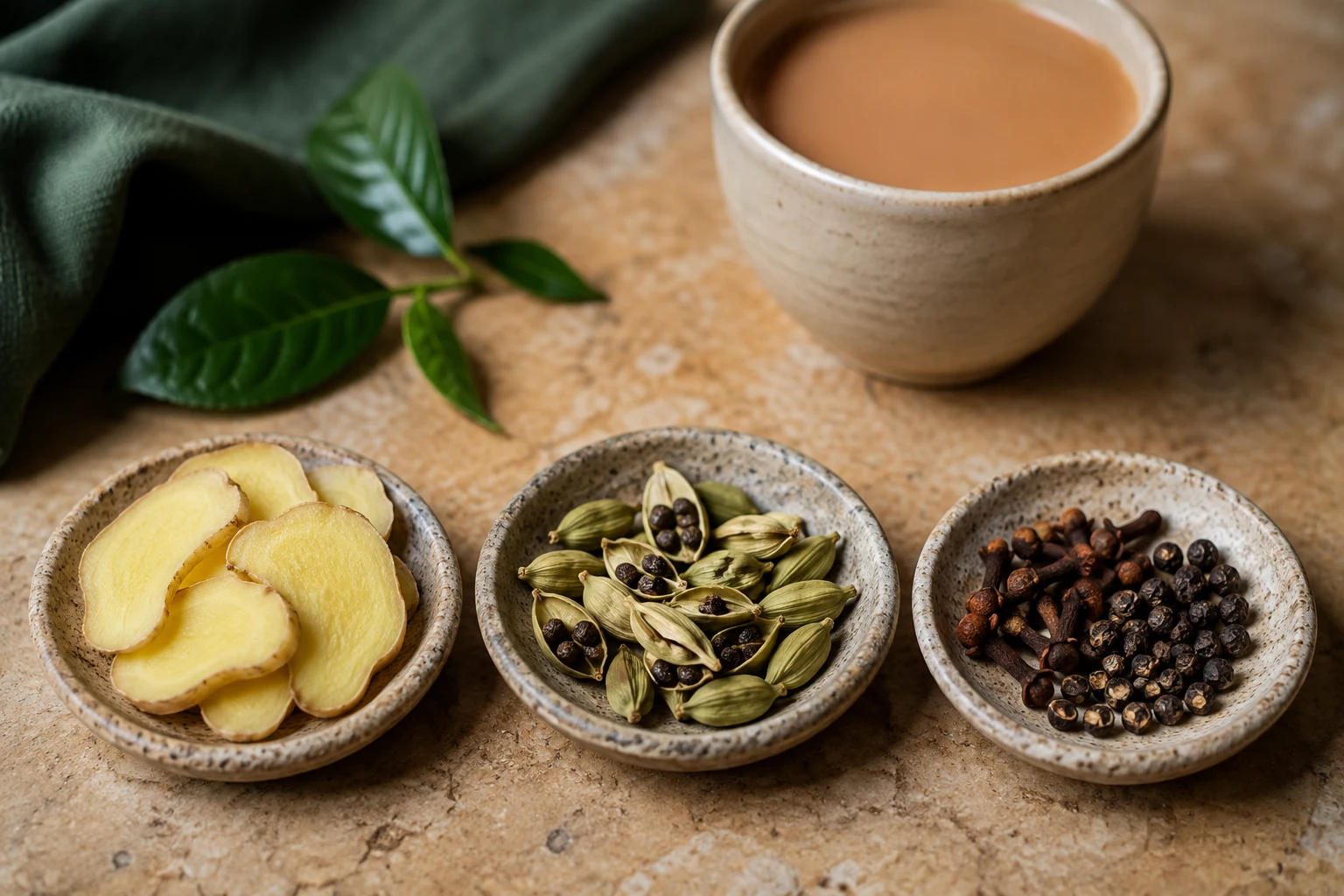
What each spice changes first
- GingerFresh heat and lift
- CardamomSweet floral aroma
- CinnamonWarm woody sweetness
- CloveDense medicinal warmth; easy to overuse
- Black pepperDry heat that lengthens the finish
Ginger strength depends on age, cut, and cooking time. Young sliced ginger gives a fresh citrus-like warmth, while mature crushed root releases a hotter fibrous bite; weighing it makes repeated batches easier than counting irregular pieces.
Cardamom loses aroma quickly after grinding because its oils meet air. Keep pods whole until cooking, crack them enough to expose the dark seeds, and discard pods that smell dusty rather than floral when opened.
Cinnamon sold under one name can be delicate and papery or thick and aggressively woody. Begin with a small shard, since another minute of simmering can be added but an over-cinnamon batch cannot be separated after cooking.
Clove contains enough aromatic oil to dominate two cups with only a few buds. If chai leaves a medicinal or numbing finish, remove clove on the next batch before reducing ginger or tea.
Black pepper contributes a dry throat heat and is easiest to overdo when finely ground. Bruise whole peppercorns so they release gradually and remain large enough for the strainer to catch.
Change one spice at a time when refining a house blend. Altering every ingredient after one imperfect pan makes it impossible to learn which spice caused the problem.
Use prepared chai masala without producing grit
- - Smell it for stale dust or faded spice aroma
- - Check whether sugar or milk powder is already included
- - Start below the packet maximum and taste the brewed result
- - Store the blend airtight, away from steam above the stove
A commercial chai masala is convenient and can be consistent, but its grind and freshness decide when it belongs in the pan. Fine powder extracts almost immediately and should enter late, while a coarse blend can simmer with the water.
Read the ingredient list before adding separate ginger or pepper.
Many powders already contain both, and doubling them is a common reason a recipe tastes hot but not aromatic.
Start with less than the package suggests when the tea and milk volumes differ from its recipe.
Stir the powder into simmering water, allow it to hydrate, then strain through a fine mesh after milk is added.
Some sediment will remain because the smallest spice particles travel with milk solids. Let the pan settle for a few seconds before the final pour, but do not leave the whole batch standing on wet tea.
A stale masala smells mostly of generic dust or cinnamon before it reaches water. Use fresh individual spices instead of a larger spoonful of faded powder.
Choose milk and sweetness as ingredients, not repairs
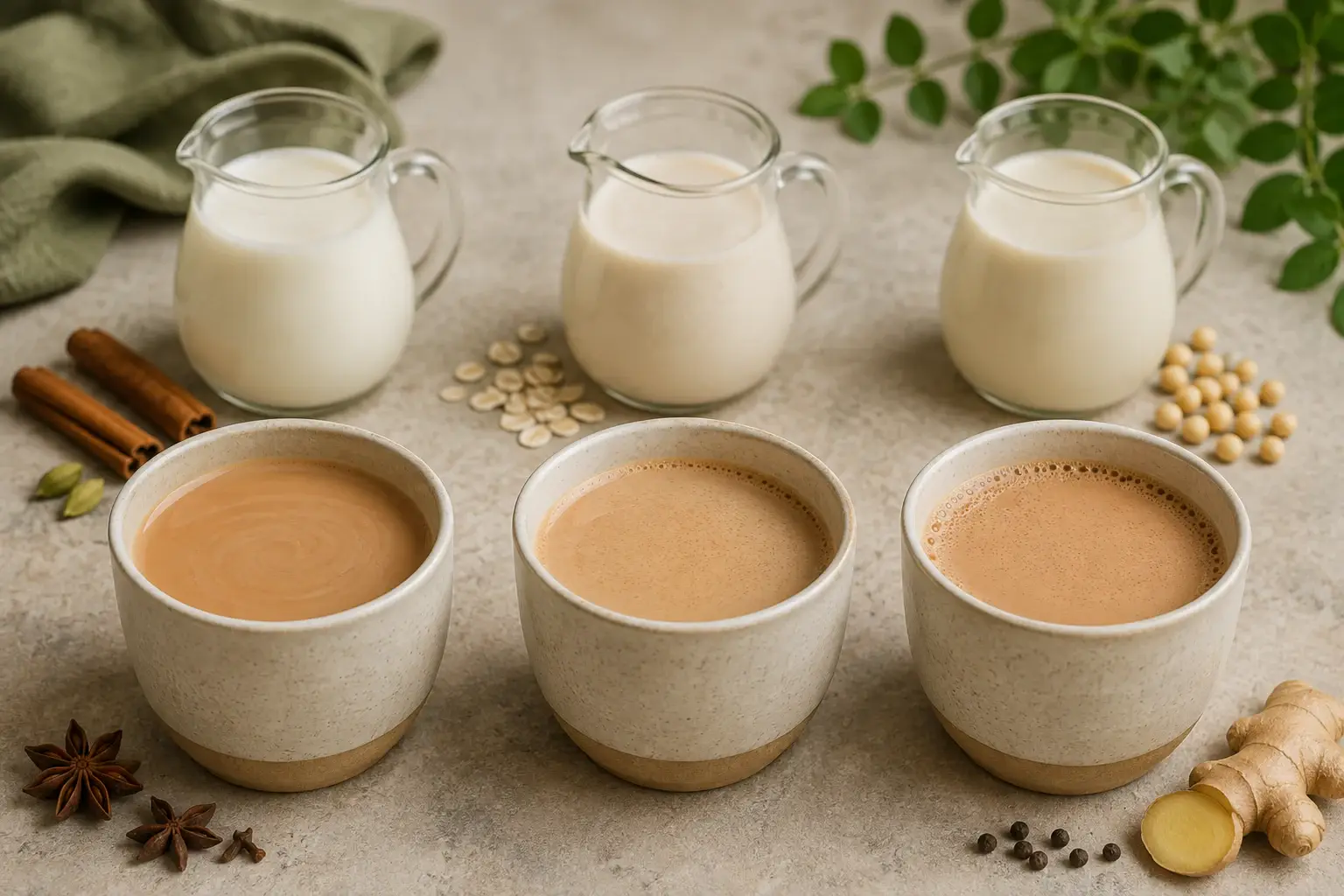
| Milk | Typical effect | Useful adjustment |
|---|---|---|
| Whole dairy | Rounded body and rich spice carry | Keep the tea concentrate assertive |
| Lower-fat dairy | Lighter body and clearer tea edge | Simmer gently to avoid thinness |
| Oat drink | Cereal sweetness and soft texture | Taste before adding all the sugar |
| Soy drink | Firm body with good spice support | Avoid a hard acidic or prolonged boil |
Dairy milk brings protein, fat, and lactose, so whole milk makes a rounder chai than skim without requiring extra simmering. Low-fat milk leaves spice more exposed and may suit a tea-forward cup, but it cannot be made richer by boiling it longer without also cooking its flavor.
Plant drinks differ far more between brands. Soy can supply useful body, oat can add cereal sweetness, and almond drinks may taste thin; choose an unsweetened product first so you can control sugar separately.
Warm a plant drink gently and avoid a violent boil. Stable texture depends on the product's formulation as well as the cook, so a split batch does not always mean the spice or tea sequence was wrong.
Taste before adding the last sugar.
Cardamom smells sweet without containing much sugar, cinnamon reinforces that impression, and ginger heat can make a low-sugar chai feel sharper than the same base with a teaspoon more.
Control sediment and the final pour
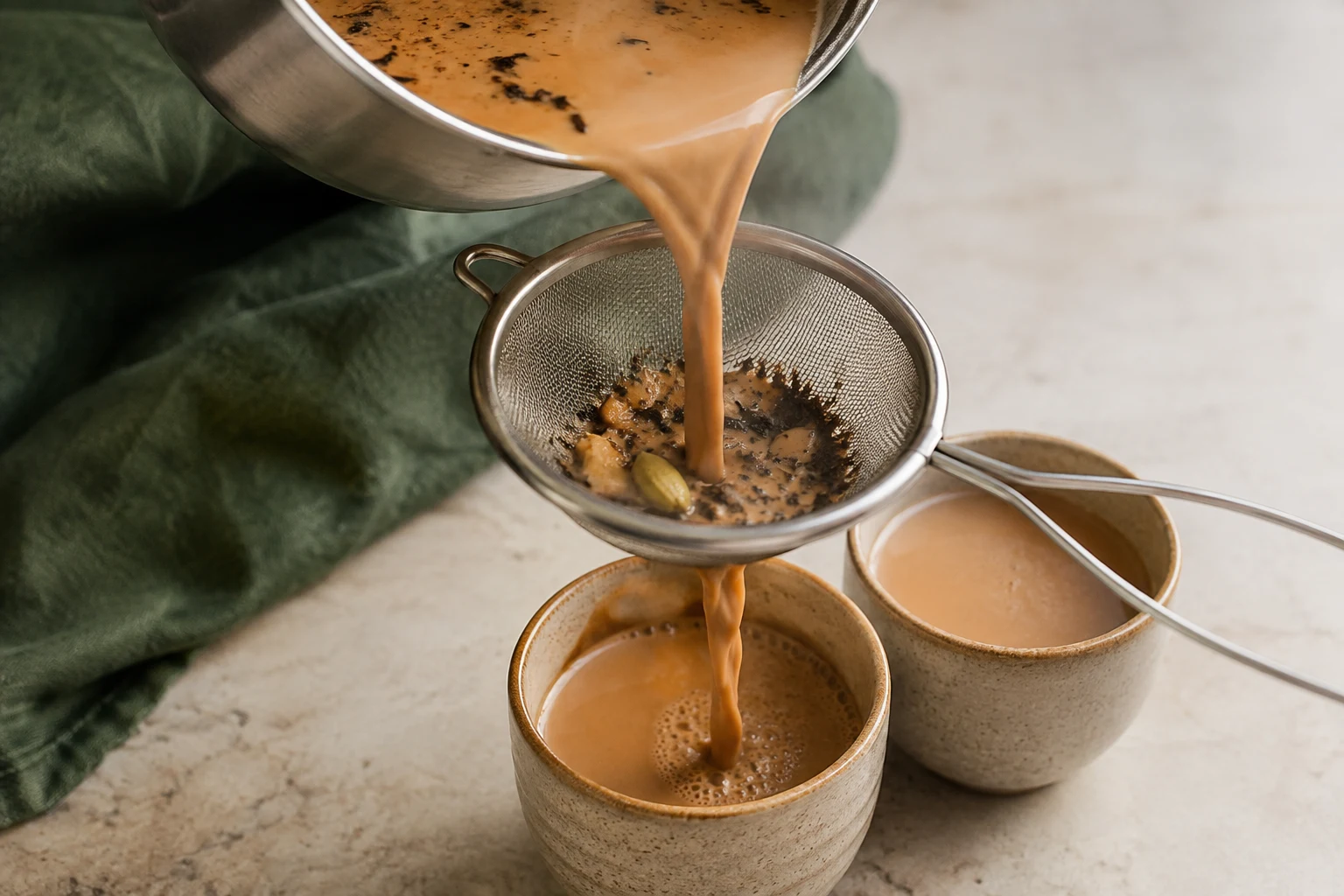
Finish chai without a gritty last cup
- SettleTake the pan off the heat and allow the rolling boil to stop
- StrainPour through a fine clean mesh in one steady movement
- DecantMove the whole batch away from tea and spice sediment
- ServeStir once if sweetness settled, then divide between cups
- RinseClean the mesh promptly before milk and spice dry onto it
A fine mesh strainer catches tea and cracked spice while allowing the liquid to move quickly. Paper filters remove more sediment but also trap milk solids and cool the chai, making them a poor fit for routine service.
Stir the pan before straining so each cup receives the same concentration, then pour the whole batch. Leaving the second serving above wet tea and spice gives it extra extraction and makes two cups from one pan taste unrelated.
A little sediment is a texture choice; grit is a preparation fault. Use whole spices cracked just before cooking when you want clarity, or accept a finer strainer and slower pour when using ground spice.
Rinse the pan promptly, especially around the milk line.
Dried milk and spice oil hold odor, and yesterday's residue can make a sound fresh batch taste stale.
Scale the pan without losing control
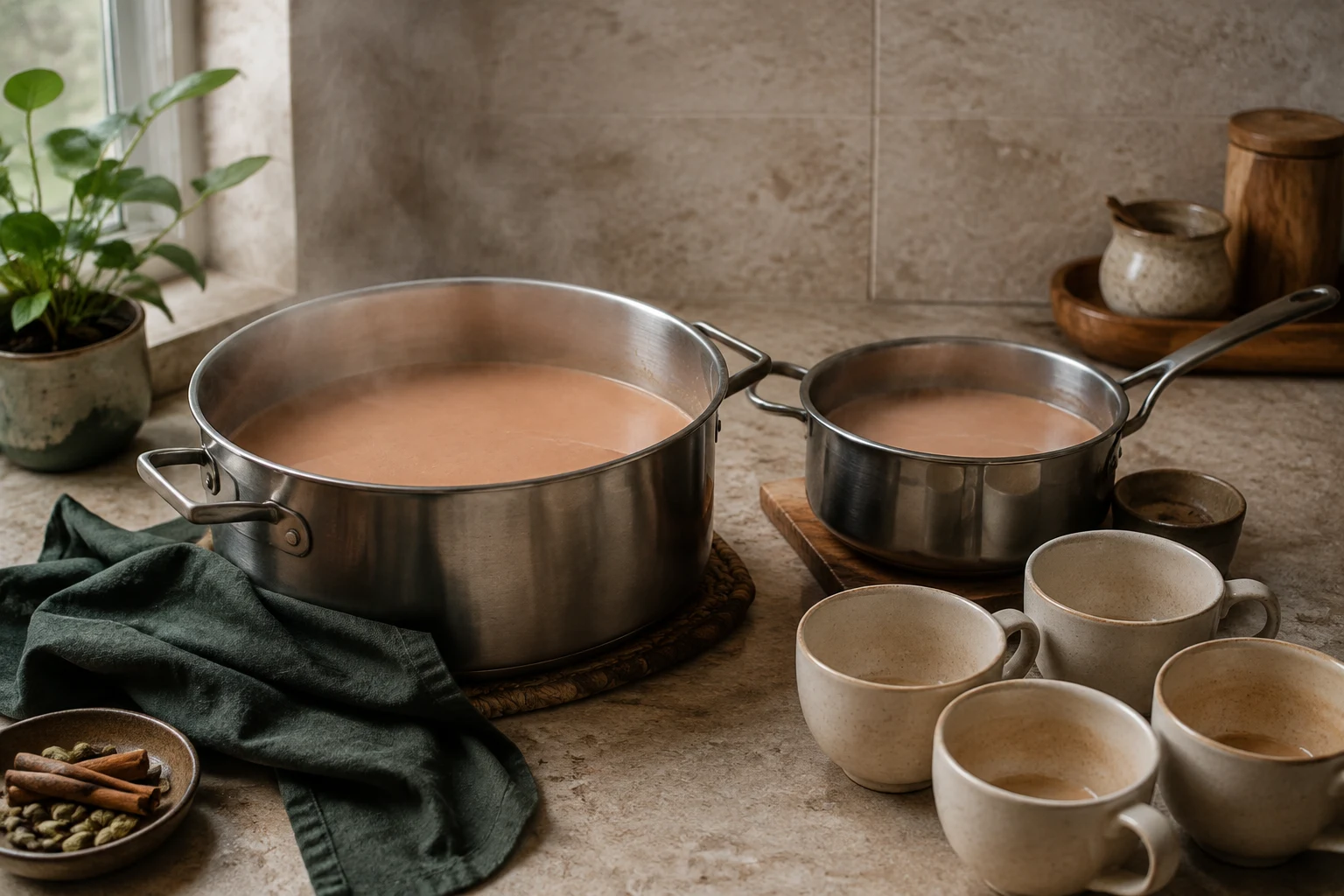
Scale a chai batch coherently
- Tea
- Multiply the tested leaf amount by the number of servings
- Water and milk
- Preserve the successful proportion while allowing for evaporation
- Whole spices
- Scale cautiously, especially clove and pepper
- Pan
- Leave headroom for foam to rise without boiling over
- Finish
- Strain the entire batch at once so later cups do not grow harsher
Doubling every ingredient is a sensible first move, but surface area and heating time do not double neatly. A larger pan takes longer to reach a simmer, keeps spices extracting during that wait, and gives milk more time to develop a cooked flavor.
For a larger batch, finish the spice water first, add tea for its normal short window, then add pre-warmed milk so the pan returns to serving temperature sooner. Strain the entire batch rather than leaving tea and spice in a serving pot.
A good batch tastes like tea, milk, and recognizable spice at once. None of those parts should need extra sugar to conceal the other two.
Stovetop masala chai
- Makes
- 2 cups, about 450 to 500 ml after simmering
- Water temp
- Serve hot after one controlled milk rise
- Total time
- 15 min
What you need
- 300 ml water
- 200 ml milk
- 5 to 6 g CTC or broken black tea
- 6 green cardamom pods
- 15 g fresh ginger
- Small piece cinnamon
- 2 cloves and 3 peppercorns, optional
- 2 teaspoons sugar, plus more to taste
Equipment
- Medium saucepan with ample headroom
- Fine strainer
- Measuring jug
- Spoon
Method
- PrepareCrack cardamom and bruise or slice the spices.
- ExtractSimmer spices in water for three to five minutes.
- TeaAdd black tea for about two minutes.
- MilkAdd milk and stir across the pan base.
- RiseLower the heat as the milk foam climbs.
- FinishSweeten, strain completely, and serve.
Common questions
What tea is best for masala chai?
CTC Assam or another strong broken black tea works reliably because it extracts quickly and keeps its body after milk and spices are added.
Should chai spices boil in milk or water?
Extracting spices in water first gives them time without scorching milk. Add tea later for a shorter extraction, then add milk and bring the finished chai to a controlled rise.
Why does homemade chai taste weak?
Test the parts separately: weak body needs more tea, faint aroma needs freshly cracked spice or a longer spice simmer, and a milky finish needs less milk or a more concentrated tea base.