What Is Usucha? The Thin Matcha Almost Everyone Means
Usucha is the thin preparation of matcha, and it is what almost everyone means by the word. Thin describes a concentration rather than a weakness, and that one ratio explains the foam, the small bowl and the grade you can get away with.
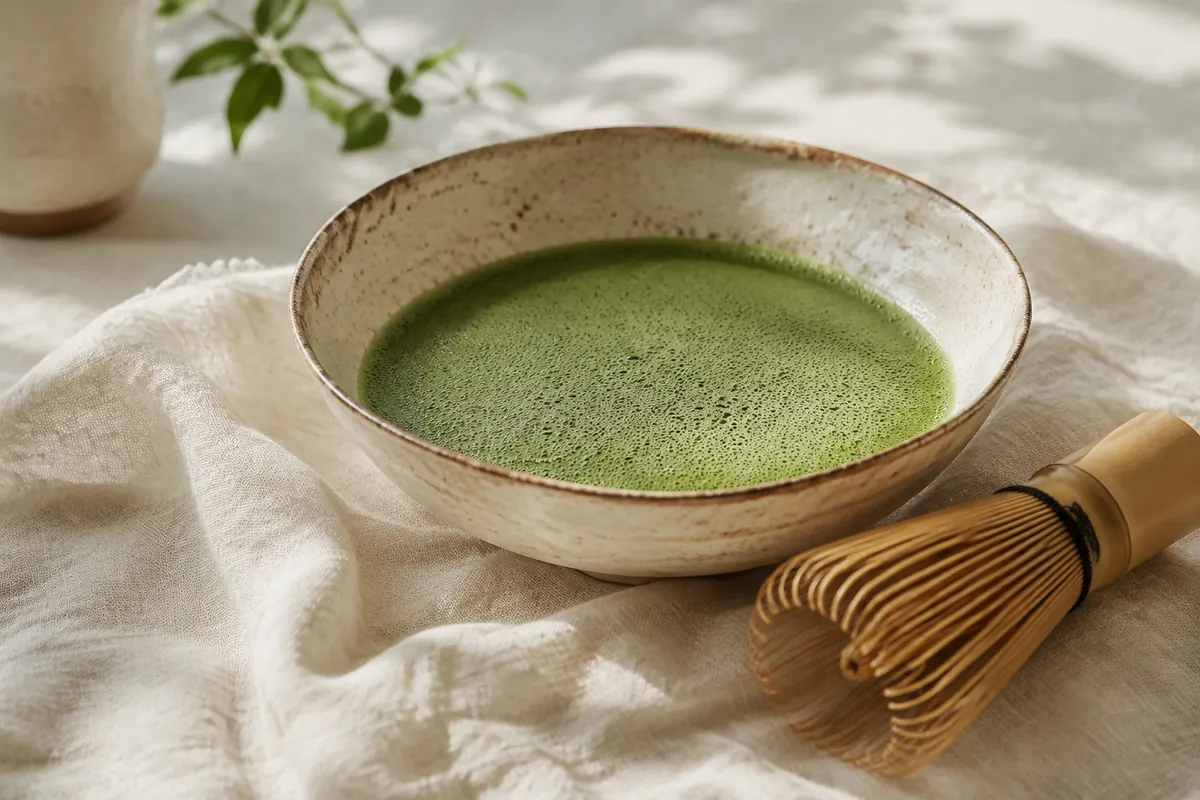
Usucha is the thin preparation of matcha: roughly two grams of powder whisked into sixty or seventy millilitres of water until a fine foam covers the surface. The name translates as thin tea, and thin is a statement about concentration rather than about the leaf.
Almost everyone who has ever drunk matcha has drunk usucha. It is what a cafe serves, what a starter kit is built around, and what the word matcha means in every language outside a tea room.
The other traditional form uses the same powder at about four times the density and almost none of the same technique. Most of what is interesting about thin tea comes from understanding what that one ratio is buying you.
Usucha at a glance
- Name
- Usucha, which reads as thin tea
- Powder
- About 2 g, sifted
- Water
- 60 to 70 ml at 75 to 80 C
- Finish
- Whisked briskly to a fine, even foam
- Volume in the bowl
- Three or four mouthfuls rather than a mug
- Grade needed
- Mid-tier upwards, since it tolerates what thick tea will not
- Where it sits
- The everyday form, and the closing bowl of a formal gathering
What thin actually means here
Usucha is a ratio before it is anything else. Two grams of powder in sixty-five millilitres of water works out at roughly thirty grams per litre, a concentration you can finish in three or four mouthfuls without the astringency stacking up on itself.
Thin does not mean weak. It says nothing about the tin either, since the identical powder taken at the thick ratio produces something four times denser.
The word is a recipe instruction rather than a grade, a quality tier or a verdict on the leaf.
That distinction goes missing in English because there is no everyday word for it, so a cafe writing matcha on a board means this preparation and only this one, and the fact that what matcha is describes a second traditional form at all comes as news to people who have been drinking it for years.
Why almost every bowl you have had was usucha
Ask someone who drinks matcha daily what ratio they use and they will describe usucha, whether or not they have ever met the name for it.
Starter kits are built entirely around it. The chawan, the sifter, the scoop and the bamboo chasen are all sized for a thin bowl, and nothing in a beginner's box will make the other form at all.
The commercial reasons are not complicated. Thin tea is forgiving enough to serve to a stranger and cheap enough per serving to put on a menu.
It is also fast, which matters when a bowl has to be made between two coffee orders.
There is a second reason, and it is the more interesting one: the thick preparation cannot survive a counter. It has to be drunk within a minute of being made and it demands a grade of powder no cafe would tip into a takeaway cup, so the form that travelled out of Japan was always going to be this one.
Nearly every general claim you read about matcha is therefore a claim about usucha. The colour, the foam, the price per serving and the figures set out in caffeine in matcha all describe a thin bowl.
How much powder goes into seventy millilitres
Two grams is the standard, and it is a midpoint rather than a rule. The band that still produces recognisable thin tea runs from about one and a half grams to two and a half, against fifty to ninety millilitres of water.
The two ends of that band taste genuinely unlike each other.
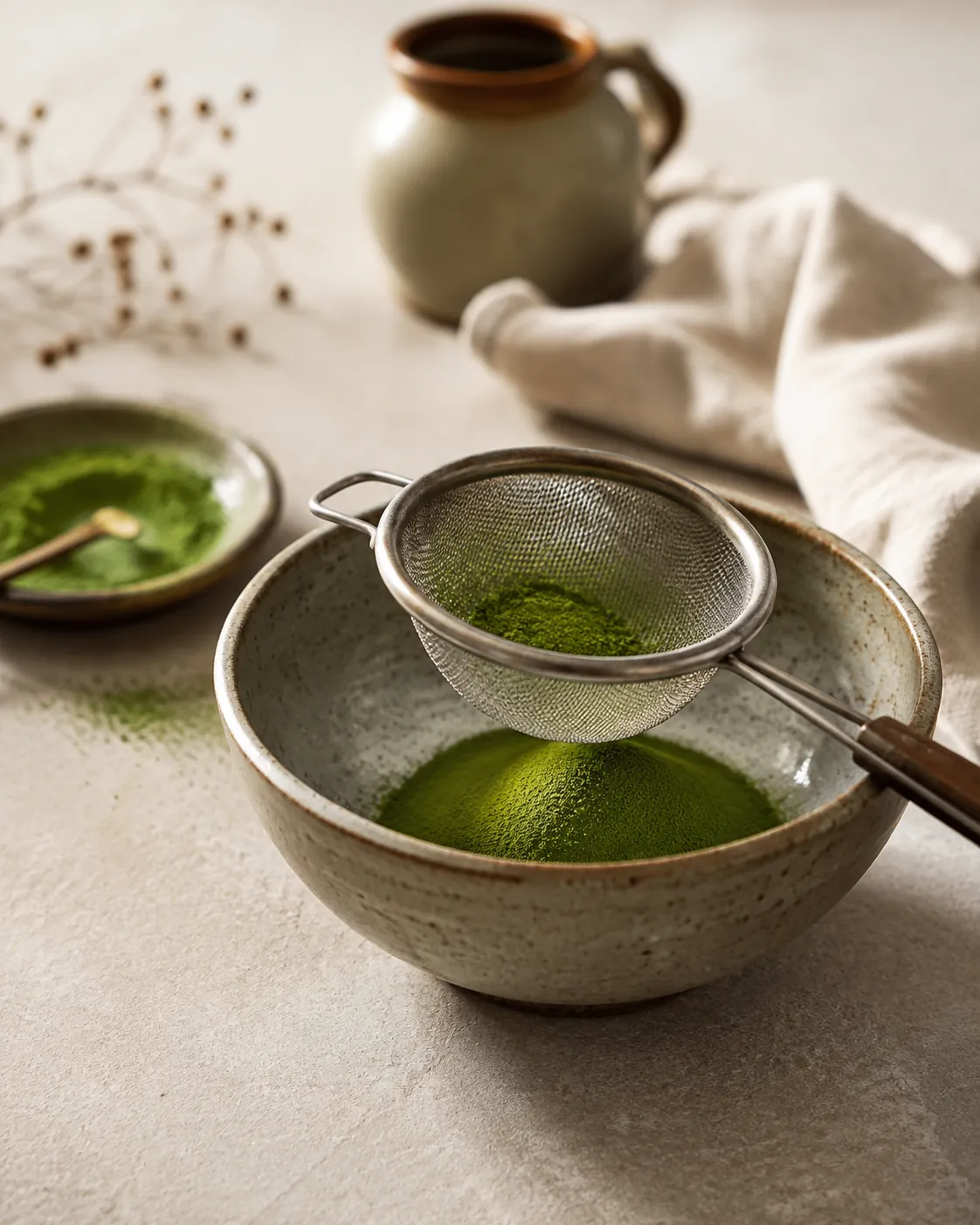
Where a bowl lands, thinnest to densest
- 1.5 g in 90 mlPale and quick to drink, closer to a strong steeped tea
- 2 g in 70 mlThe standard bowl. Foam holds, and the savoury note reads clearly
- 2 g in 50 mlDense and short, with the sweetness pushed forward
- 2.5 g in 60 mlThe upper edge of thin tea, and drying if the grade is ordinary
- 4 g in 30 mlNo longer usucha at all. This is the thick ratio
Weighing matters more than it sounds as though it should, because a bamboo scoop holds anywhere between one and two grams depending on how the powder has settled in the tin, and two scoops is the traditional measure.
That single fact explains why the same person makes a noticeably different drink on Tuesday from the one they made on Monday. Water volume is the lever almost nobody touches, and adding ten millilitres is a gentler correction than removing half a gram of powder, which makes it the first thing worth trying when a bowl reads harsh, ahead of working through why matcha tastes wrong.
Why the foam is part of the drink
Foam looks like decoration and behaves like an ingredient. A bowl of thin tea runs to three or four mouthfuls, so texture accounts for a far larger share of the experience than it would in a mug of anything, and the fine bubble layer is where that texture lives.
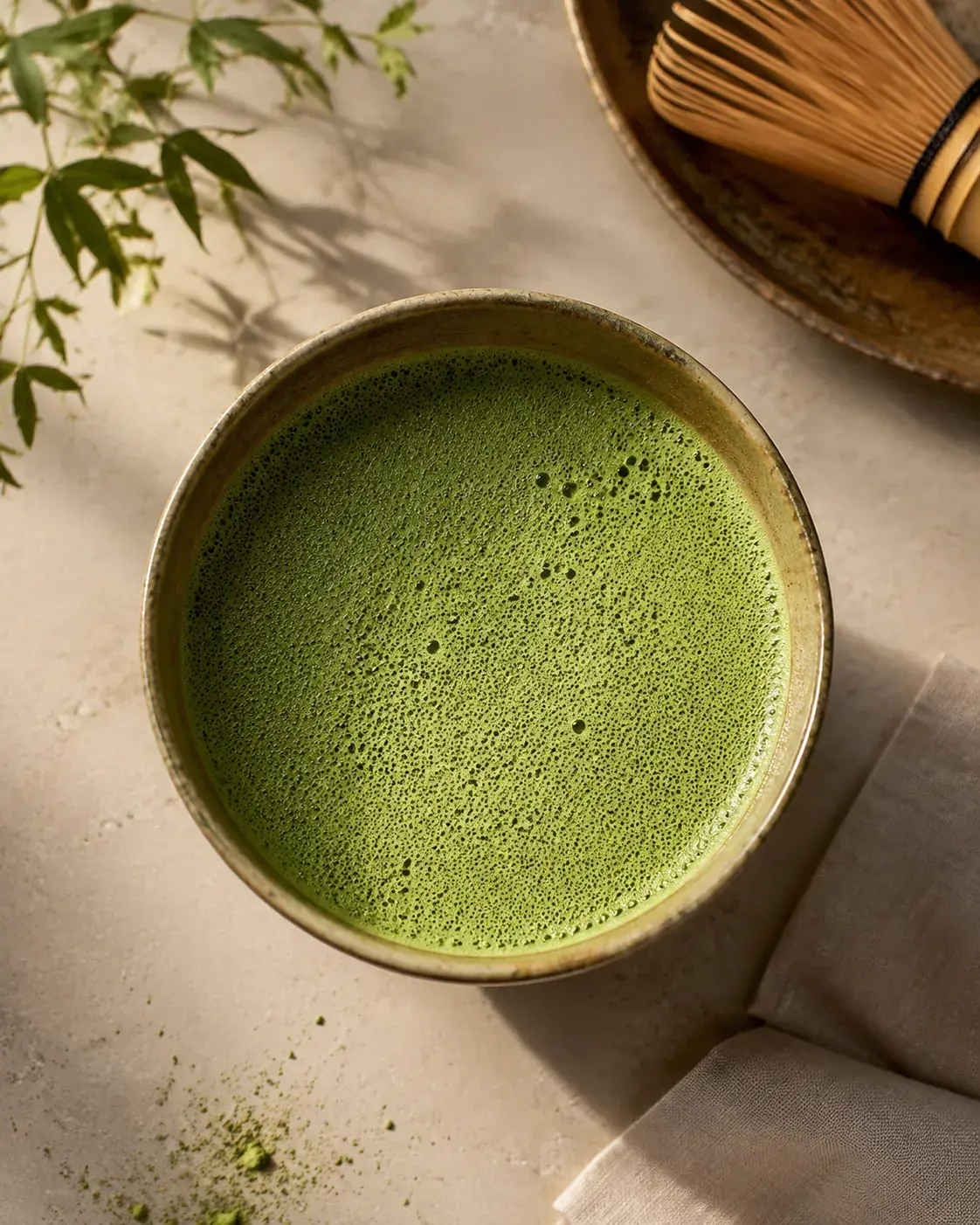
The bubbles come from saponins in the leaf, surface-active compounds that let a whisked suspension hold air. They also explain why fresh powder foams generously while a tin standing open for two months barely foams at all, a decline that storing an opened tin follows in more detail.
Aroma is the part people miss. The foam sits directly under your nose for the whole of a very short drink.
That is why a stirred bowl reads flatter and shorter than a whisked one made from the same powder in the same water, and why what matcha tastes like puts so much weight on the surface.
Pouring is the other half of it, since water dropped onto the paste from a height breaks it apart before the whisk gets to work, which is how the spout control of a gooseneck kettle comes to matter for a reason that has nothing to do with coffee, while how to whisk matcha sets out the wrist movement that builds the rest.
What usucha forgives that thick tea does not
Water is doing a great deal of forgiving at thirty grams per litre, and that generosity is the practical argument for learning this form before the other one.
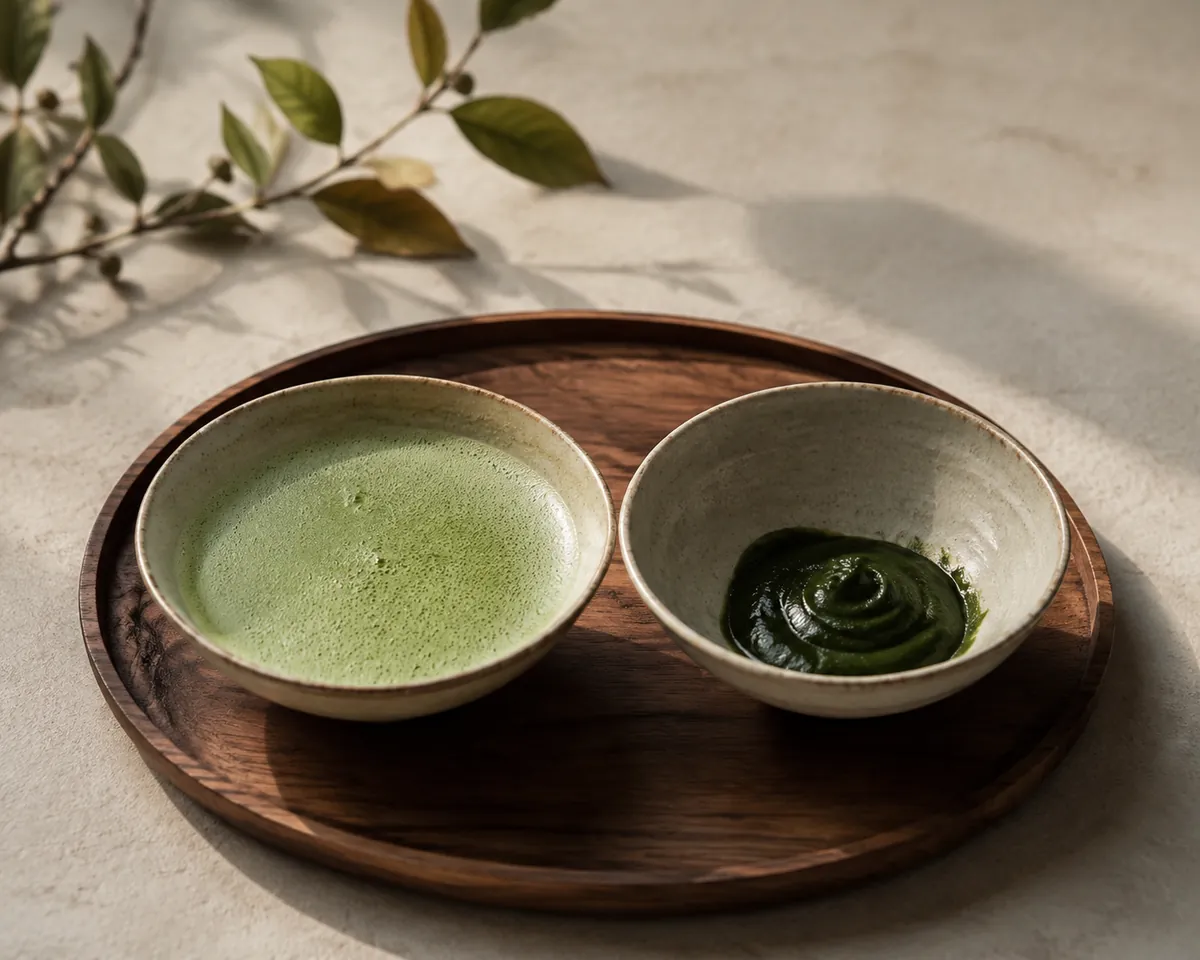
| Thin | Thick | |
|---|---|---|
| Powder to water | About 2 g to 65 ml | About 4 g to 30 ml |
| Astringency | Diluted, and balanced by the foam | Concentrated, with nowhere to hide |
| Grade tolerance | Mid-tier upwards is pleasant | First-harvest leaf, or it is undrinkable |
| Technique window | Wide. A poor whisk gives dull tea | Narrow. A poor knead gives lumps |
| Cost per serving | Modest | Several times higher |
A daily-drinking powder at a third of the top price makes an entirely respectable bowl of thin tea. The same powder at the thick ratio concentrates every rough edge in the leaf along with everything else, which is the case ceremonial grade makes about where a premium is genuinely earned.
Worth knowing before spending, then. The tin that transforms a thick bowl improves a thin one only modestly.
At the thin ratio the water is hiding half of what is wrong with a tin, and at the thick ratio it is hiding none of it.
Where it sits in a tea gathering
Formal Japanese tea has an order, and thin tea is not the centrepiece of it. A full gathering runs through a meal, then thick tea, then thin tea last, with the mood loosening at every step.
The order of a formal gathering
- KaisekiA light meal, served first.
- KoichaThick tea, made in one bowl and shared. The formal heart of the occasion.
- SumiThe charcoal is rebuilt while the room resets.
- UsuchaThin tea, one bowl for each guest, and the conversation opens up.
Guests each receive their own bowl, which is the visible difference from the round that precedes it. The host makes them in sequence and the talk turns ordinary.
Utensils are often handed round to be looked at, and that loosening of the formality is much of what the closing round is for.
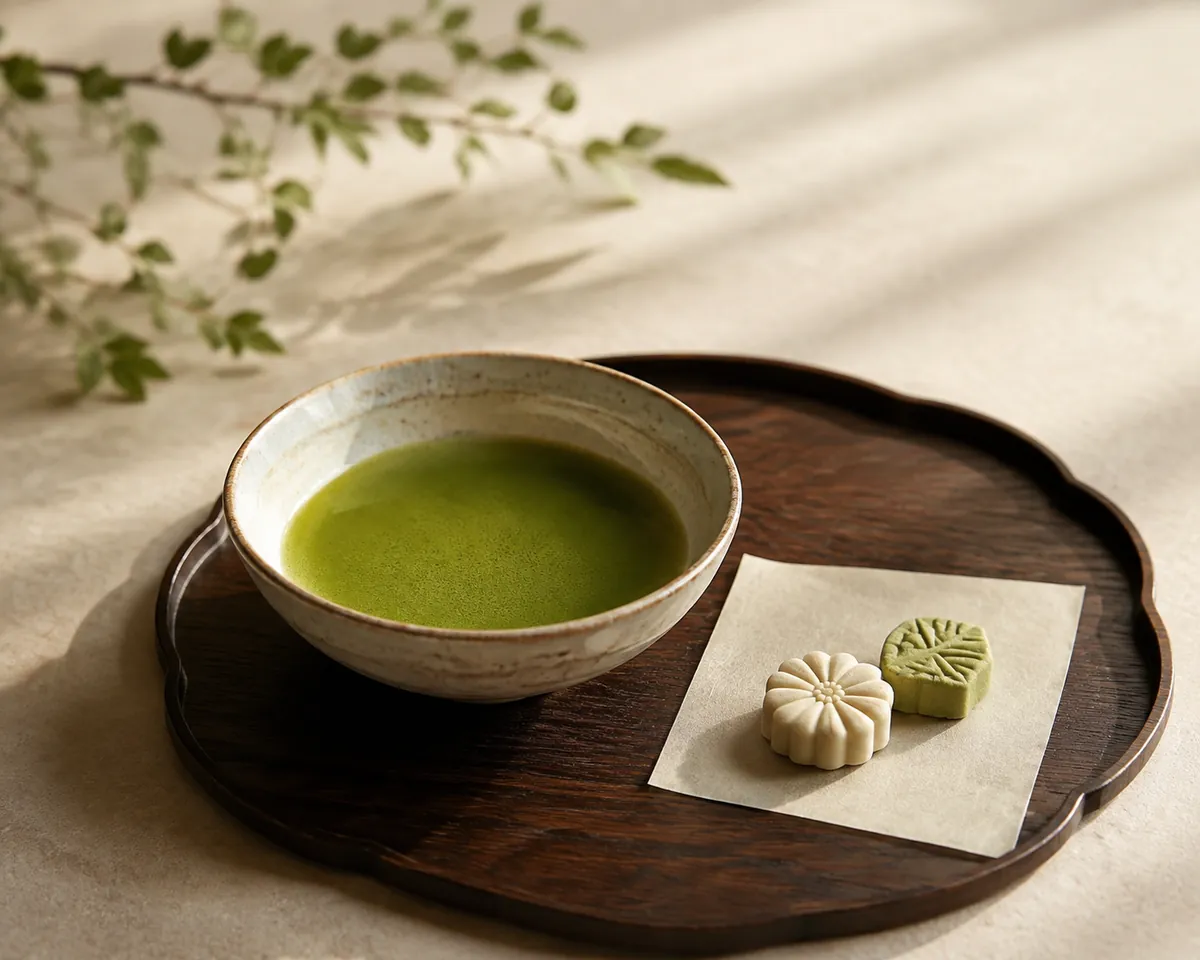
Dry sweets called higashi go with thin tea and moist ones with thick, a pairing that is not arbitrary, since a firm pressed sugar sweet leaves the palate ready for a light bowl whereas koicha needs something with real substance in front of it.
Two grams is three mouthfuls, not a mug
Portion size is where the drink is most often misread outside Japan. Sixty-five millilitres is roughly an espresso and a half.
A bowl is gone in three or four swallows, and concentration in a small volume is the entire design.
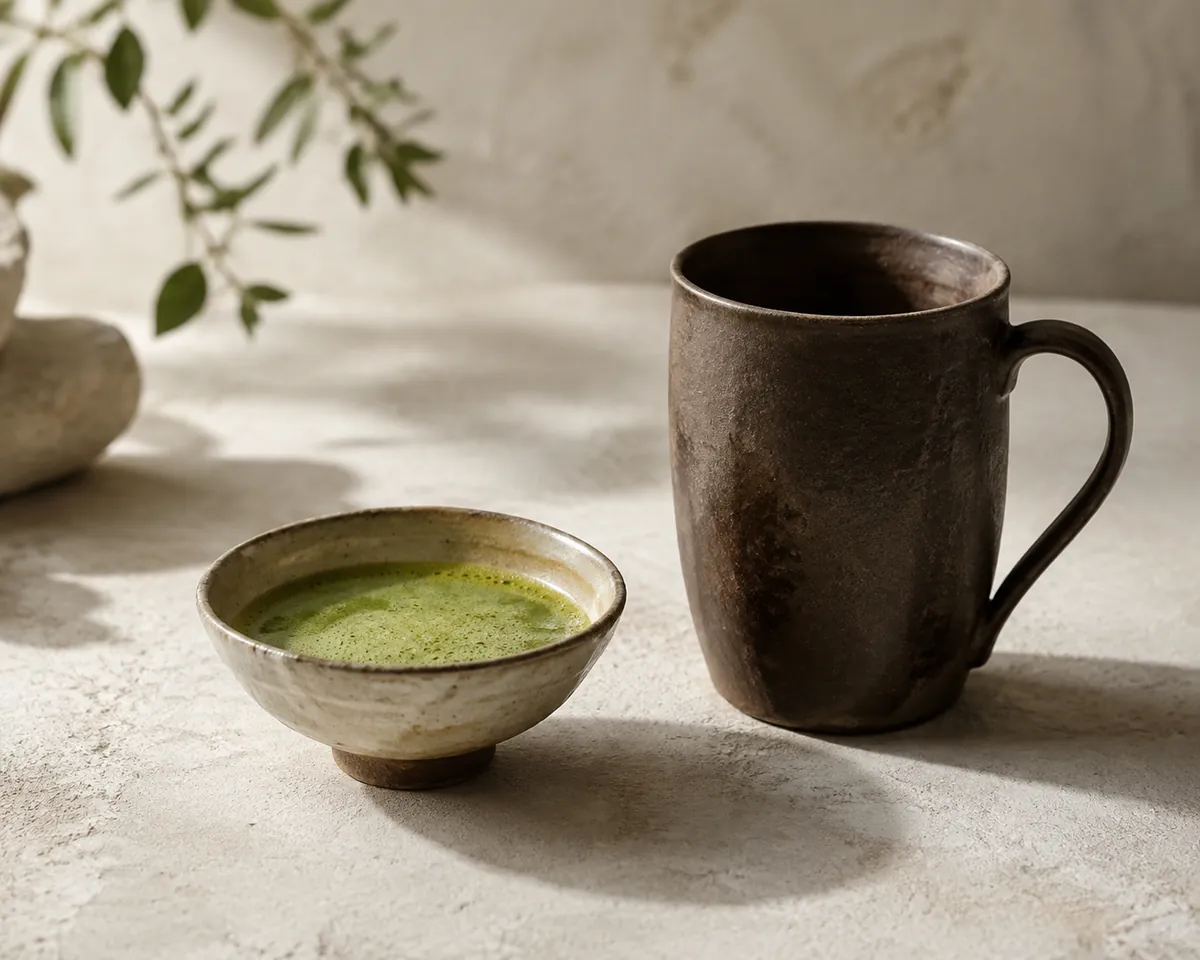
People used to a large cup of coffee tend to read that as mean and respond by adding water, which produces something much closer to a weak steeped green tea than to matcha.
Where a bigger volume is genuinely wanted, the honest routes are milk or ice rather than dilution. Both a matcha latte and iced matcha start from a small, properly whisked base and build outwards from it, which is a different move from thinning a bowl.
Why a bowl separates if you leave it standing
Nothing in a bowl of matcha is dissolved, since particles a few microns across are held up by the water they were whisked into and begin dropping out of it almost at once.
Two or three minutes is enough for a visible green layer to gather at the base, with the liquid above going correspondingly thin. That is not a fault in the powder.
It is not a sign of a coarse mill either, and it is simply what any suspension does when it is left alone.
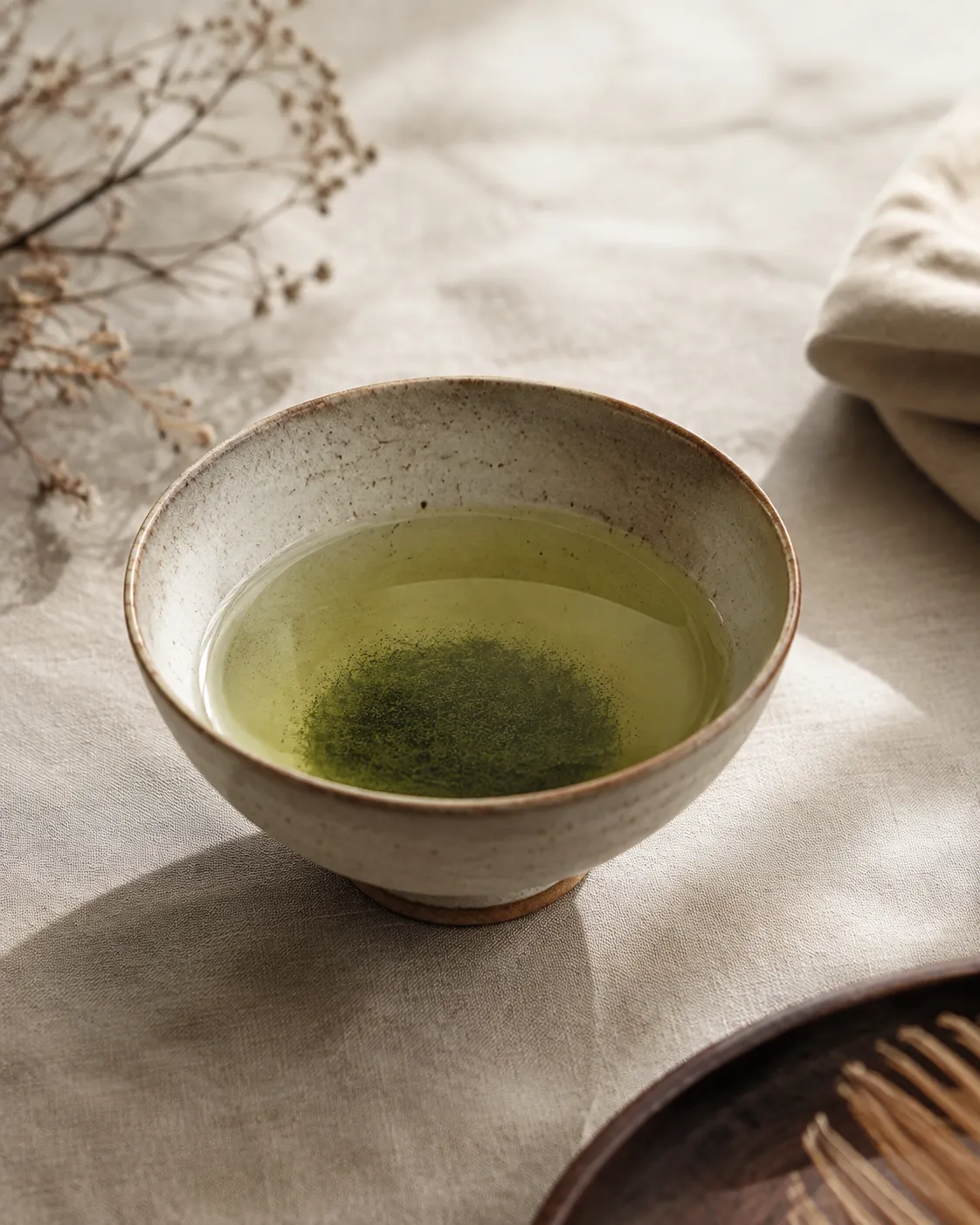
The practical consequence is that thin tea is made to order and drunk on the spot. A bowl carried across a room and then set down while a conversation runs on will want a quick re-whisk, a bowl abandoned for ten minutes is better remade, and that timing is part of the recipe rather than an afterthought.
When a second bowl is the right answer
Refills behave differently here from steeped tea, where a second infusion of the same leaf is ordinary practice. There is no leaf left over to infuse, because all of it went into the first bowl, so a second serving means a second dose of powder and a second whisking.
- Make a fresh bowl rather than topping up the one in front of you.
- Rinse and dry the chawan between bowls so old residue does not grey the next one.
- Re-soak the tines if the whisk has dried out while you were drinking.
- Keep the same ratio, since a second bowl made thinner tastes stale rather than lighter.
- Stop when the astringency starts arriving before the sweetness does.
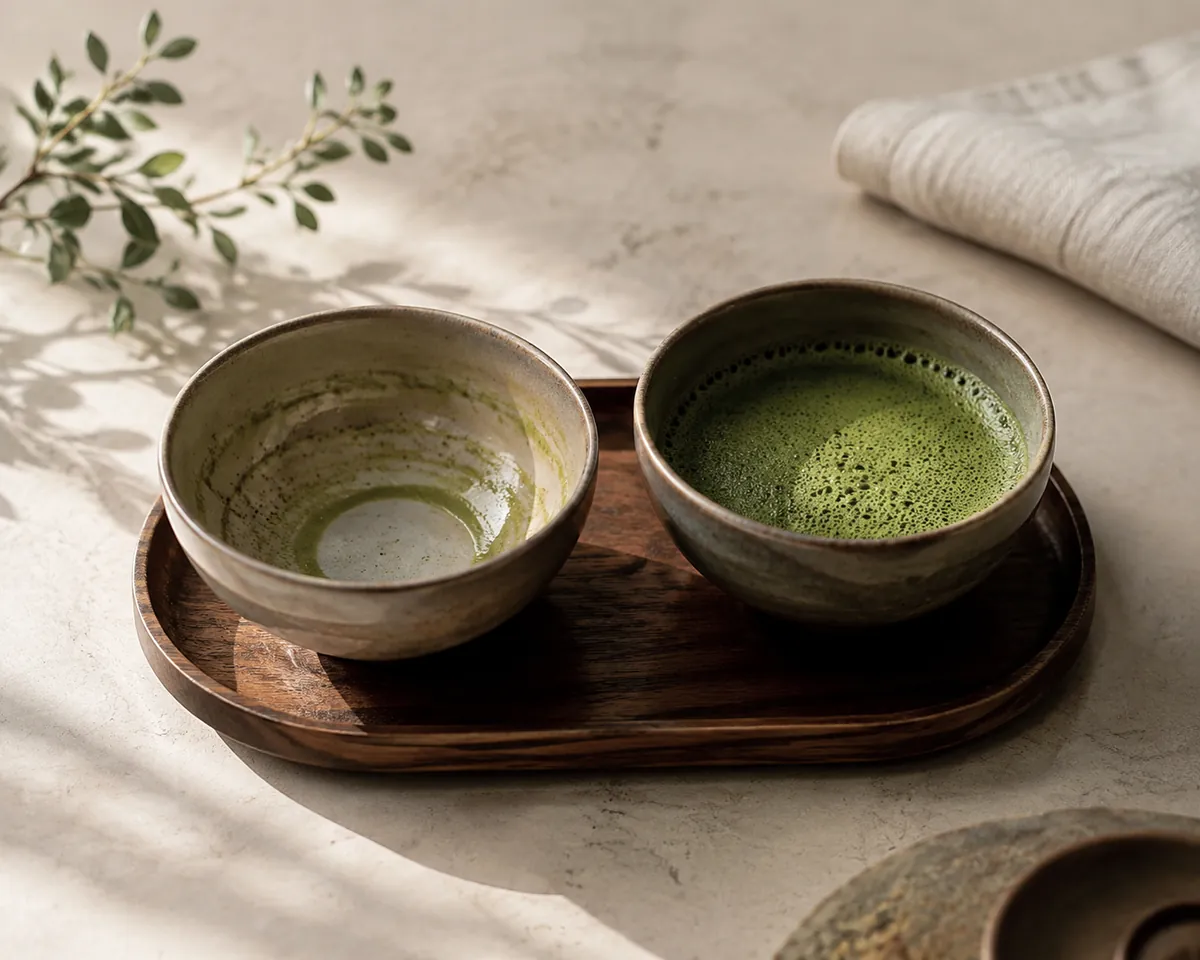
Two bowls at a sitting is ordinary. Three is common in a tea room, which is another reason the concentration sits where it does.
Thin tea is built to be repeated rather than lingered over, in a way the thick preparation never was.
The one case where a second bowl is not the answer is a disappointing first one, because making the same thing again changes nothing, and the variables worth moving are the water temperature, the sieve and the powder itself, roughly in that order.
Choosing a tin for everyday thin tea
Buying for thin tea is a different problem from buying for thick, and the honest answer is that the very top tier is largely wasted here.
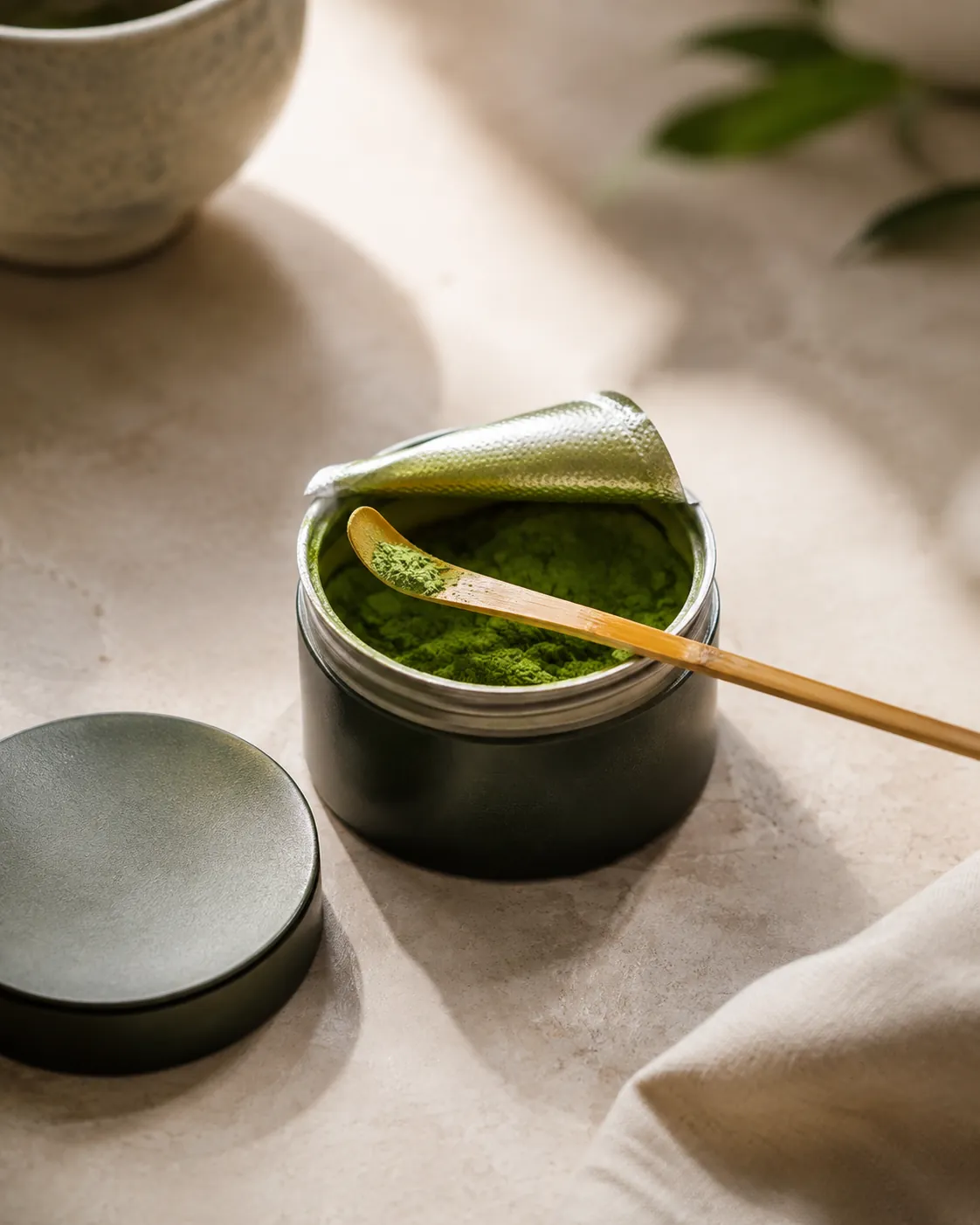
Everyday thin tea
A mid-priced first-harvest or daily-grade powder, bought in a 30 g tin.
Thick tea
The top tier, with no substitute. This is where the premium is earned.
Baking and ice cream
The cheapest tier, since sugar and fat cover everything else.
Harvest year and a milling date tell you more than any grade word does, because thin tea shows staleness plainly: the foam thins first, the sweetness goes next, and the astringency is left standing on its own. A small tin finished inside a month beats a bargain tin at twice the size.
Water is the cheapest upgrade available and the one most people skip entirely. Soft water at 75 to 80 C flatters a modest powder and hard water flattens a good one.
That reasoning is laid out in the water you brew with and in steeping temperature, and it is why a bottle of mineral water is a lottery rather than an upgrade.
Set a bowl of thin tea beside a cup of sencha from the same region and the family resemblance is obvious, while a shaded leaf such as gyokuro sits closer still. Where the two categories genuinely part company is mapped in green tea against matcha, and the flavour of a thin bowl on its own terms belongs to the taste of usucha.
Common questions
Is usucha the same as ordinary matcha?
Usucha is the thin preparation of matcha, about 2 g of powder whisked into 60 to 70 ml of water. Almost everyone who has drunk matcha has drunk usucha: it is what a cafe serves and what a starter kit is built around. The word describes a ratio, not a grade of leaf.
How much powder goes into a bowl of usucha?
About 2 g sifted, into 60 to 70 ml of water at 75 to 80 C. That works out at roughly 30 g per litre, a concentration you can finish in three or four mouthfuls without the astringency stacking up.
Why does a bowl separate if you leave it standing?
Matcha is a suspension rather than an infusion, so the powder is held in the water rather than dissolved in it. Left standing, it settles out, which is why usucha is drunk shortly after it is whisked.