What Is Coconut Milk Drink? The Carton Is Not the Tin
The coconut drink sold in a carton and the coconut milk sold in a tin are different products with the same name. Confusing them is the single most common mistake in this part of the shelf.
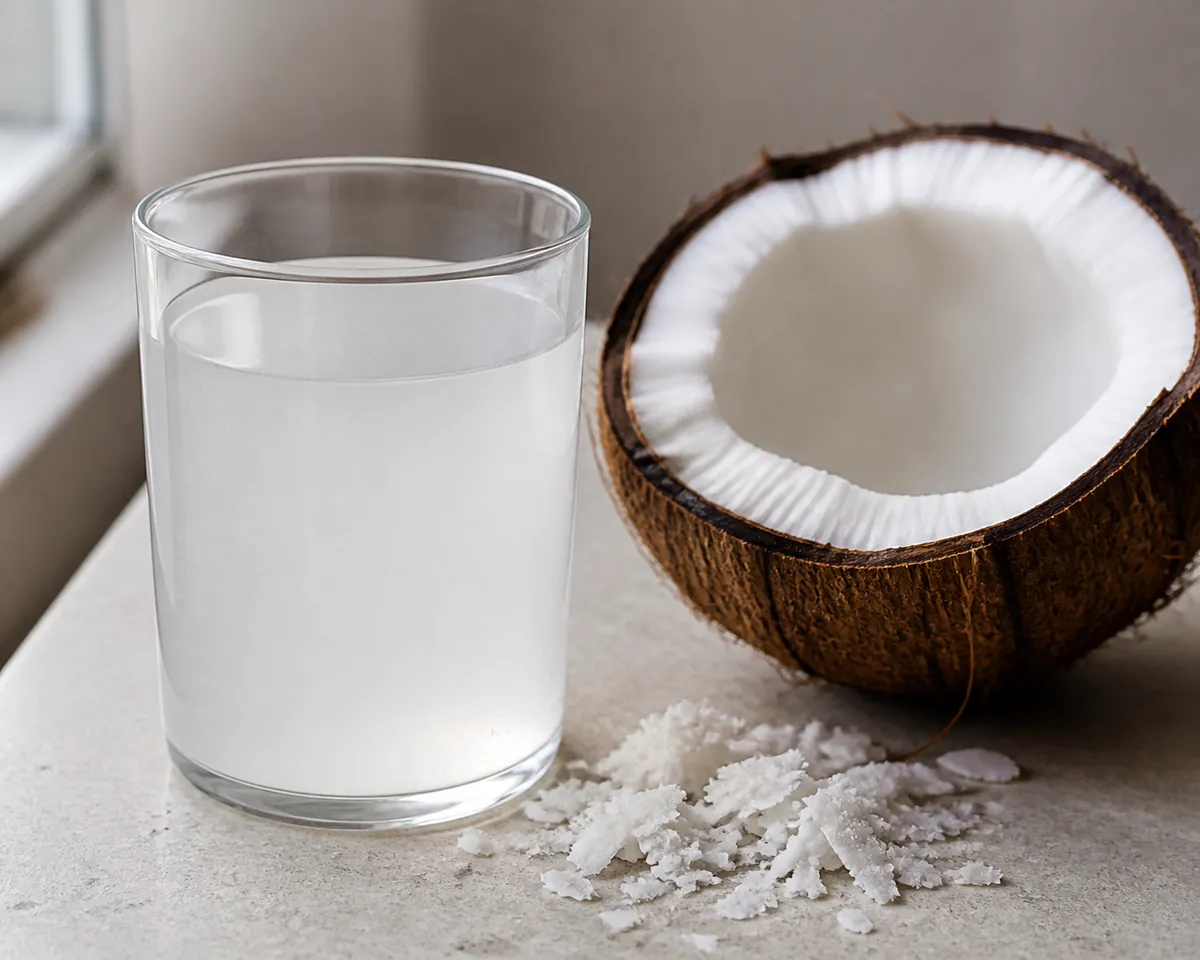
Coconut milk drink is a carton product built from a small proportion of pressed coconut extract, diluted heavily with water, then emulsified and stabilised so that it stays pourable from the fridge. It is made to be drunk cold, poured over cereal and stirred into coffee.
Tinned coconut milk carries the same two words on the label and is a different thing altogether. One is around a fiftieth coconut fat and the other close to a fifth, and a recipe written for either will disappoint with the other in it.
Coconut milk drink at a glance
- Coconut content
- Typically 5 to 10 per cent in a carton, against 50 to 90 per cent in a tin
- Fat
- Around 1 to 2 g per 100 ml, against 15 to 25 g in tinned coconut milk
- Protein
- Almost none, which is why any foam it makes is built on fat instead
- Taste
- Sweet, faintly floral, faintly toasted, and the most assertive in the category
- Cold behaviour
- Coconut fat sets near 24 C, so a fridge-cold glass can look speckled
- Once opened
- Five to seven days refrigerated, with a hard shake before every pour
Carton drink and tinned coconut milk are not one product
The two share a name, a fruit and very little else. A carton is formulated to be poured over cereal at breakfast, and a tin is formulated to carry spice and reduce in a pan without breaking.
| Carton drink | Tinned coconut milk | |
|---|---|---|
| Coconut content | Typically 5 to 10 per cent | 50 to 90 per cent |
| Fat | Around 1 to 2 g per 100 ml | 15 to 25 g per 100 ml |
| Purpose | Drinking, cereal, coffee | Cooking, curries, desserts |
| Texture | Thin, milk-like | Thick, sometimes solid when cold |
| Additives | Stabilisers, often sugar and calcium | Usually just coconut, water and an emulsifier |
| Substitutable | Not for cooking | Not for drinking neat |
Read the fat row first, because it drives every other row in the table. Using the carton drink in a curry gives a thin, watery sauce. Using the tinned version as a milk substitute gives something far too rich and fatty to drink.
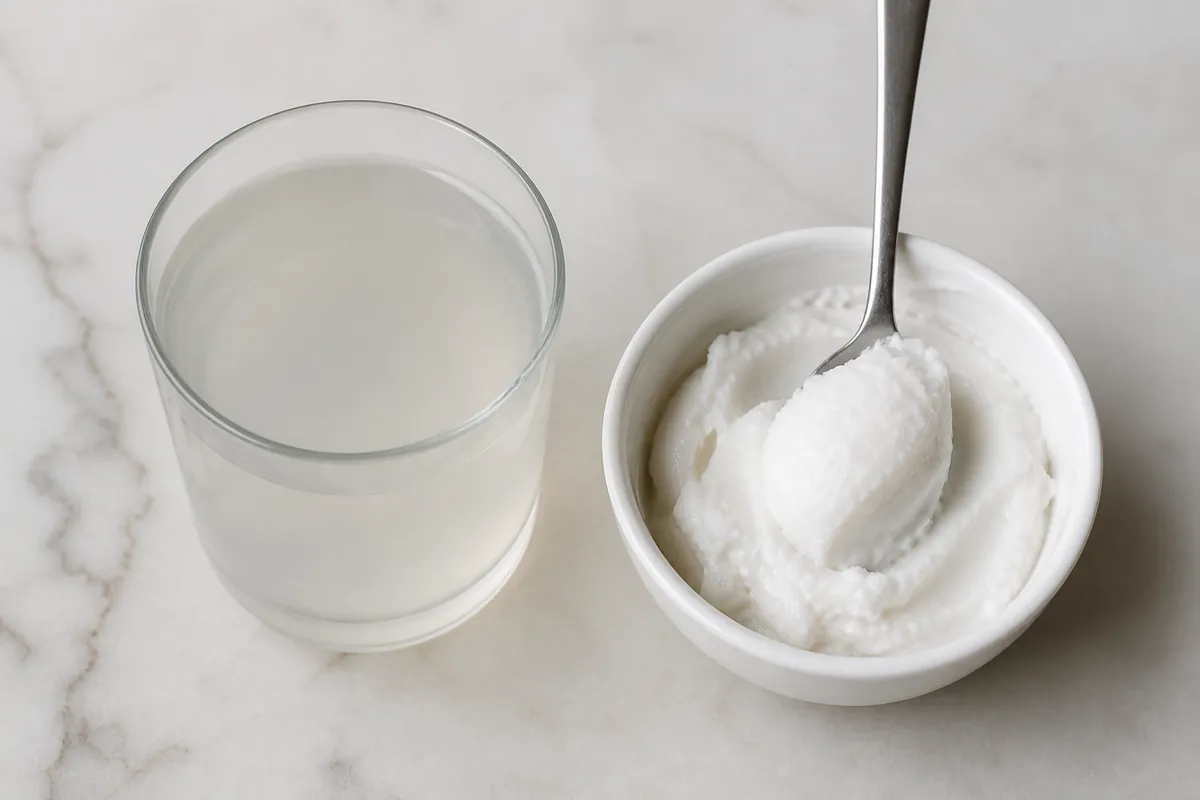
Coconut cream is a third grade again, thicker than the tin and sold without the emulsifier that holds a carton together, so it separates on standing and is meant to. The failure runs in both directions, which is what makes it so persistent: a cook who only ever buys tins reaches for one when a coffee recipe says coconut milk, and a drinker who only ever buys cartons reaches for one when a curry does.
Neither has misread the label. Both labels say coconut milk, and the shelves they sit on are usually two aisles apart.
Where a recipe genuinely needs a swap, what to use instead of coconut drink sorts the options by which job is being handed over, and the rest of the plant drinks section assumes the carton throughout.
From pressed cream to something you can pour
Dilution does more of the work here than extraction. Coconut cream is pressed from grated flesh at a concentration far above anything drinkable, and the manufacturing question is how to bring it down to a fiftieth of that without the result separating in the carton.
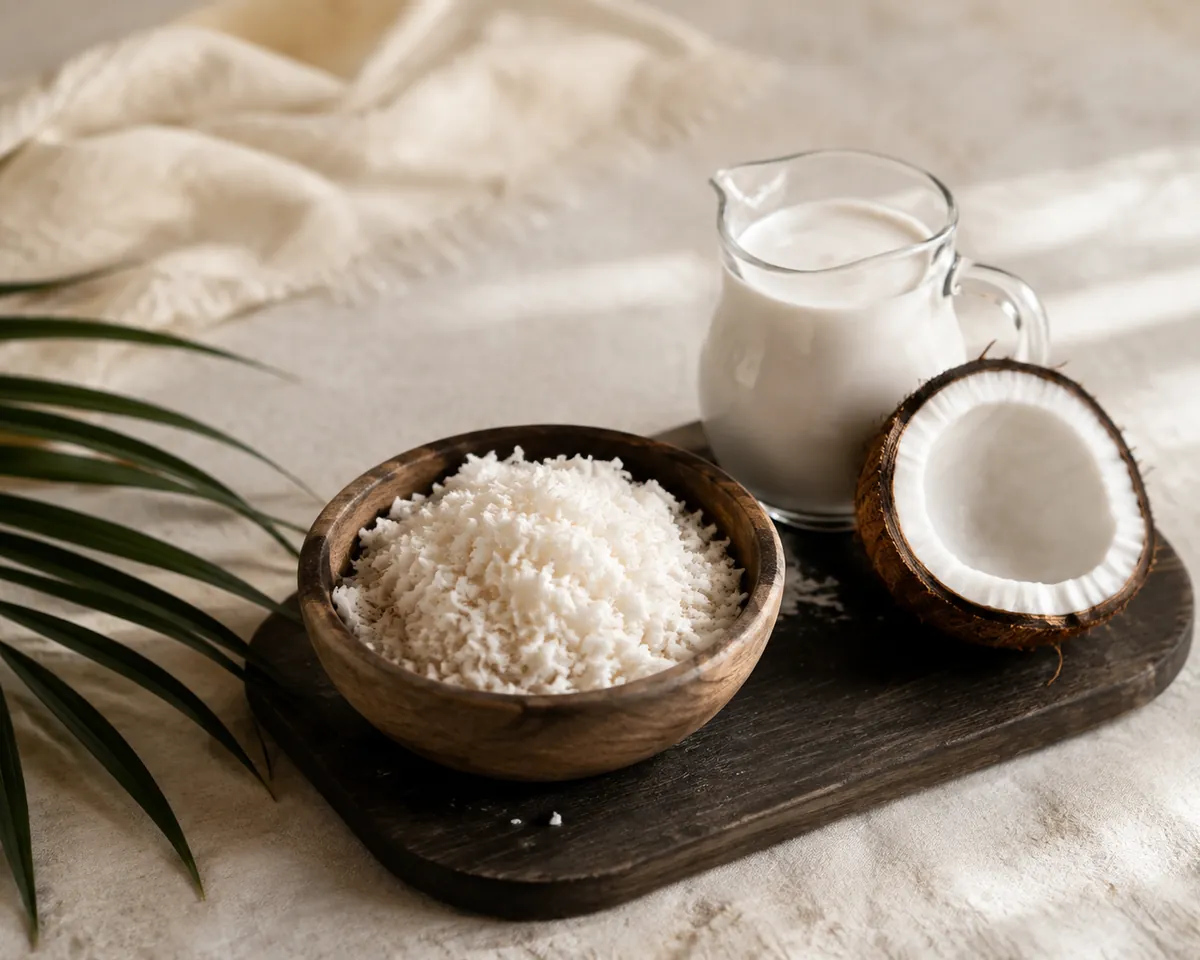
From coconut to carton
- ExtractCoconut flesh is grated and pressed to produce coconut cream.
- DiluteThat cream is diluted heavily with water, to around 5 to 10 per cent.
- EmulsifyEmulsifiers and stabilisers are added, since fat and water separate readily.
- FortifyCalcium and vitamins are commonly added, plus sugar in sweetened versions.
- Heat treatUHT processing for shelf life.
The emulsifiers are the step that makes the product possible rather than the step that makes it cheap. Coconut fat is solid below roughly 24 C, so a carton without them would arrive in a fridge and split into a fatty plug at the top and cloudy water beneath, and no amount of shaking puts a set plug back into suspension.
Gellan gum and lecithin keep the fat droplets small enough and suspended long enough that a shake is all the drink ever asks of you. That dependence on industrial emulsification is also why making coconut milk drink at home gives you something that has to be drunk within the hour.
The one plant drink chosen for its flavour
Coconut is the loudest flavour on this shelf, and how loud it is depends almost entirely on how much coconut the pack contains.
How much the drink tastes of coconut
- Blended coconut and riceCoconut as a background note
- Standard carton drinkClearly coconut, moderately sweet
- Barista coconutFuller, since more fat carries more flavour
- Tinned coconut milkIntense, rich, unmistakable
- Coconut creamThe most concentrated form
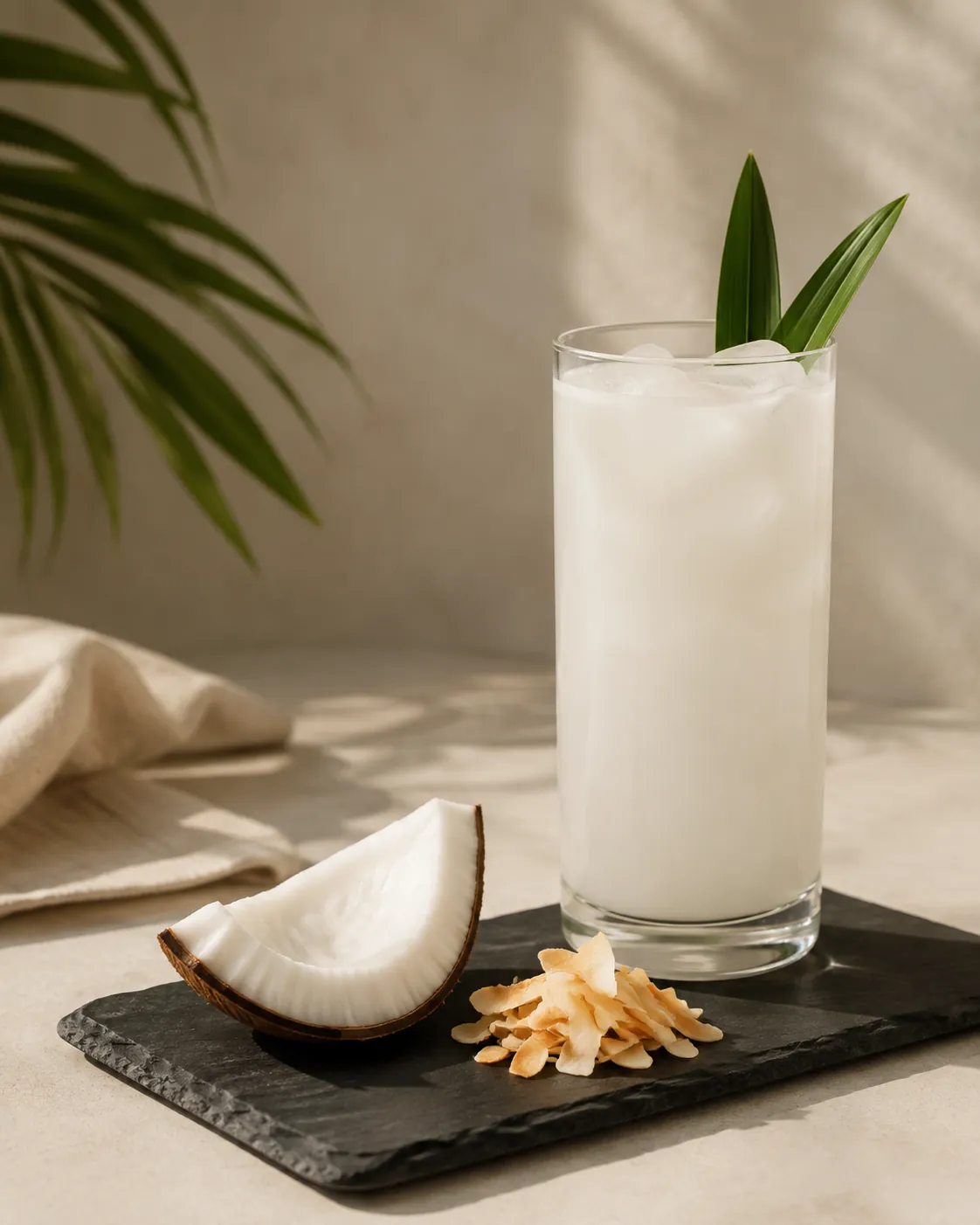
The flavour reads as sweet, slightly floral and faintly toasted, and it does not recede behind whatever it is added to the way almond milk or rice milk will. Fat is the carrier, which is why the richer cartons taste more strongly of coconut rather than merely feeling thicker, and why a low-percentage blend can taste of almost nothing.
| Coconut | Soy | Almond | Rice | |
|---|---|---|---|---|
| Fat | Moderate to high | Moderate | Low | Low |
| Protein | Very low | High | Very low | Lowest |
| Flavour strength | Highest | High | Low | Lowest |
| Foam | Moderate, fat-based | Best, protein-based | Poor | None |
| Chosen for | Its flavour | Its protein | Its neutrality | Its mildness |
The bottom row is the one to take away. Everything else in that table is bought so that it will get out of the way, and soy milk is bought for what its protein can do structurally, while coconut is bought to be tasted.
That makes it the wrong purchase for anyone who wants a neutral background liquid and the only sensible one for anyone who wants the glass to taste of something, and what coconut drink tastes like works through the sweetened and blended versions on the same terms.
Fat-stabilised foam, and what it costs you
In coffee, coconut sits in the middle of the category, and the reason is that it has one of the two things a foam needs and none of the other.
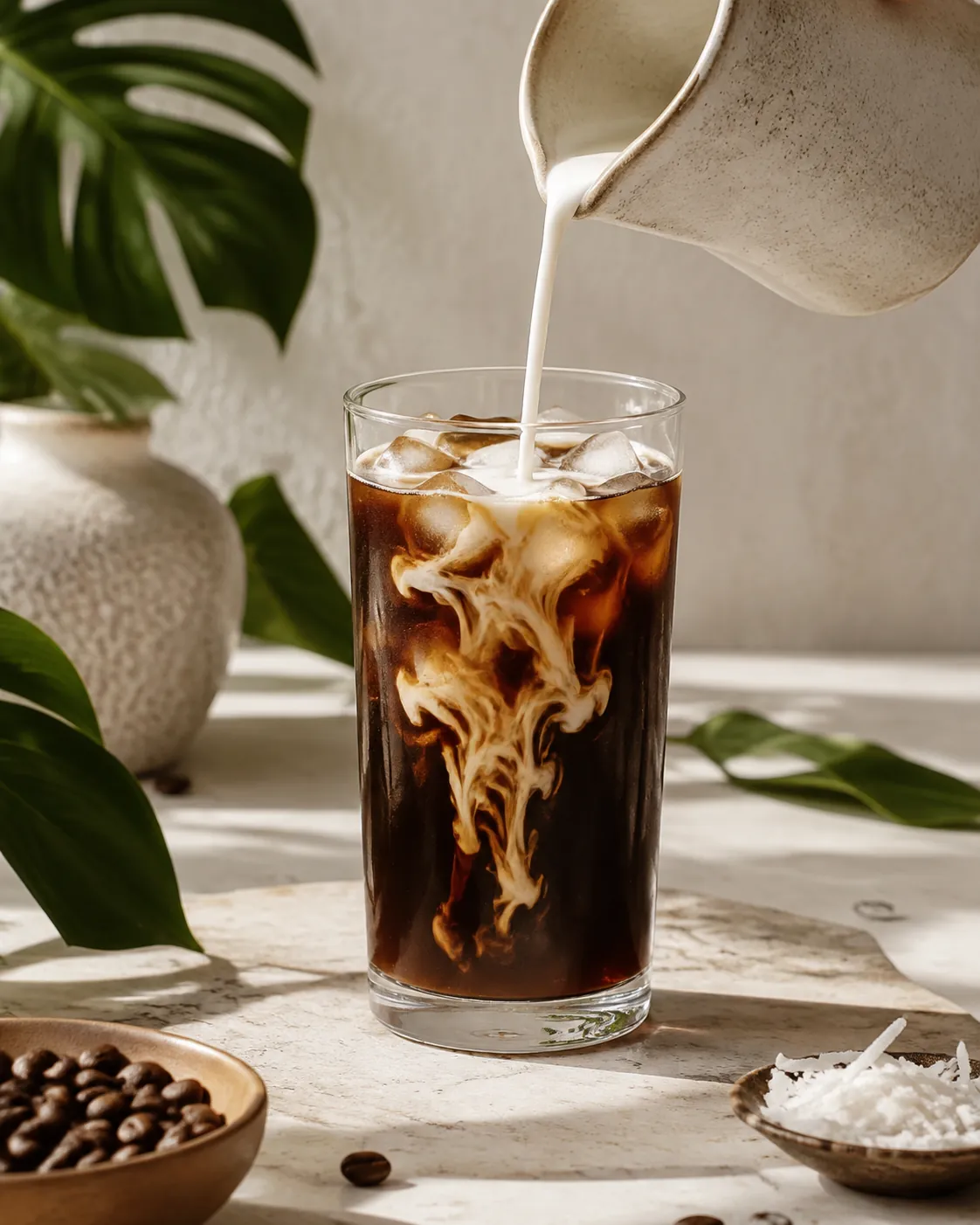
Fat gives body and slows the collapse of a bubble wall, so a coconut carton with a decent fat figure steams into something with more weight than a lean almond drink manages. Protein is what builds a fine, stable microfoam, and coconut has almost none, so the foam comes out coarse-bubbled and short-lived beside soy or oat drinks.
A flat white made with it looks right for about thirty seconds.
Coconut in coffee, honestly
- Foam
- Moderate. Better than almond or rice, well behind soy and oat
- Splitting
- Occasional. Less than almond, more than oat
- Body
- Good, thanks to the fat
- Flavour
- Dominant. It will change the taste of the coffee, not just its texture
- Best with
- Dark roasts and anything chocolatey, which stand up to it
Splitting happens occasionally rather than reliably, and by the mechanism set out in why plant milk curdles rather than anything peculiar to coconut. A very fresh espresso is the hardest case it meets, and the coarse foam is the fault that leads the list in coconut drink problems.
A milk frother with a fixed cut-off suits it better than a steam wand, since nothing done with the wand will build protein that the drink does not contain.
Which of the two belongs in the pan
The distinction that opened this page stops being academic at the stove, where the format you reach for decides whether a sauce concentrates or goes watery.
The carton is a flavoured liquid and behaves like one. It is at home in porridge, smoothies, pancake batter and light sauces, where the job is to add moisture and a coconut note, and it will not thicken or enrich anything, because there is not enough fat or protein in it to do either.
The tin is the format for curries, braises and custards: its fat lets the liquid reduce and concentrate instead of breaking, and the sauce that results clings to what it is poured over.
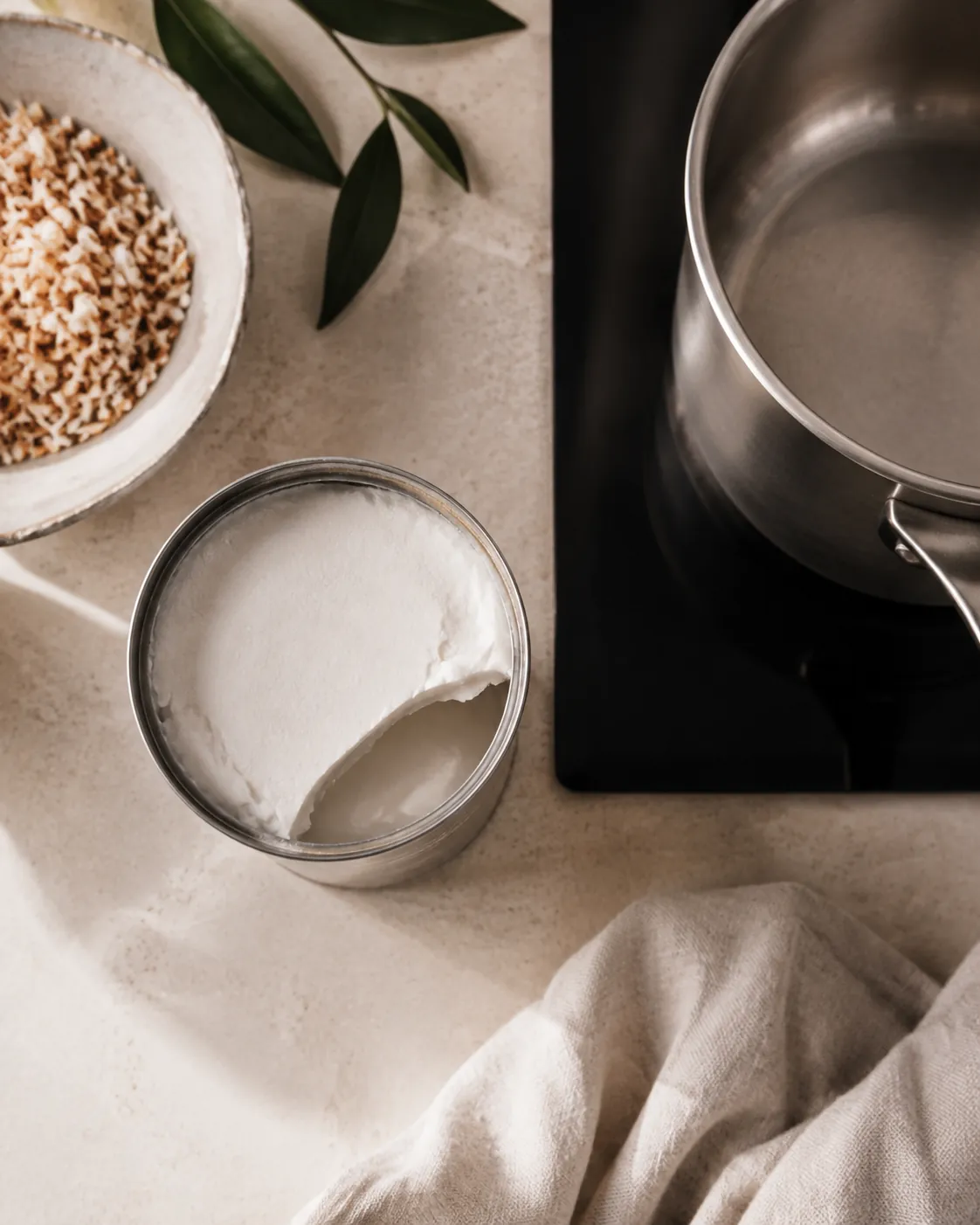
A carton cannot be divided that way at all, since the emulsifiers exist precisely to stop it happening on a shelf.
Cold, plain
Works, unusually for a plant drink. It has enough flavour to stand alone.
With cocoa
Very good. Coconut and chocolate reinforce each other.
In smoothies
Excellent with mango, pineapple and banana; poor with berries.
In coffee
Workable, and best with dark roasts that can meet the flavour.
In savoury cooking
Use the tin, not the carton.
Heat changes the flavour as much as the texture. Warmed, the fresh coconut note turns cooked and heavier, which is why it suits stovetop cocoa and porridge far better than a plain hot glass, and why a berry smoothie is the one blend where it fights the fruit rather than flattering it.
In black tea it simply takes over.
White specks in a cold glass
A carton taken straight from a cold fridge can pour with fine white flecks in it or feel faintly grainy on the tongue, and perfectly good drink gets thrown away on the strength of that.
Coconut fat is unusual among common food fats in melting across a very narrow band, at roughly 24 C. Most fats soften gradually over ten or fifteen degrees; coconut goes from firm to liquid in about two.
A fridge at 4 C sits far below that point, so the dispersed droplets crystallise into solid particles, and those particles are the specks. They redissolve as the glass approaches room temperature, and a shake breaks up the larger ones at once.
The same sharp melting point is why a tin sets firm in a cold larder and pours freely in a warm kitchen, and why a carton packed against ice in a cool box pours differently from one left on a worktop.
Keeping it
- Unopened ambient
- Months, at room temperature
- Once opened
- Five to seven days refrigerated
- Shake well
- Essential. Separation is more pronounced than with other plant drinks
- Fridge position
- The body of the fridge, not the door
- Freezing
- Not recommended. The emulsion breaks permanently
Graininess from the cold reverses on its own. Sourness, a sharp smell or a thickened pour does not, and storing coconut milk drink separates the ambient and chilled formats, which fail on different timescales.
Coconut water is the third product on the shelf
Two products would be confusing enough. There is a third, it is sold in the same aisle, and it is the least like the other two.
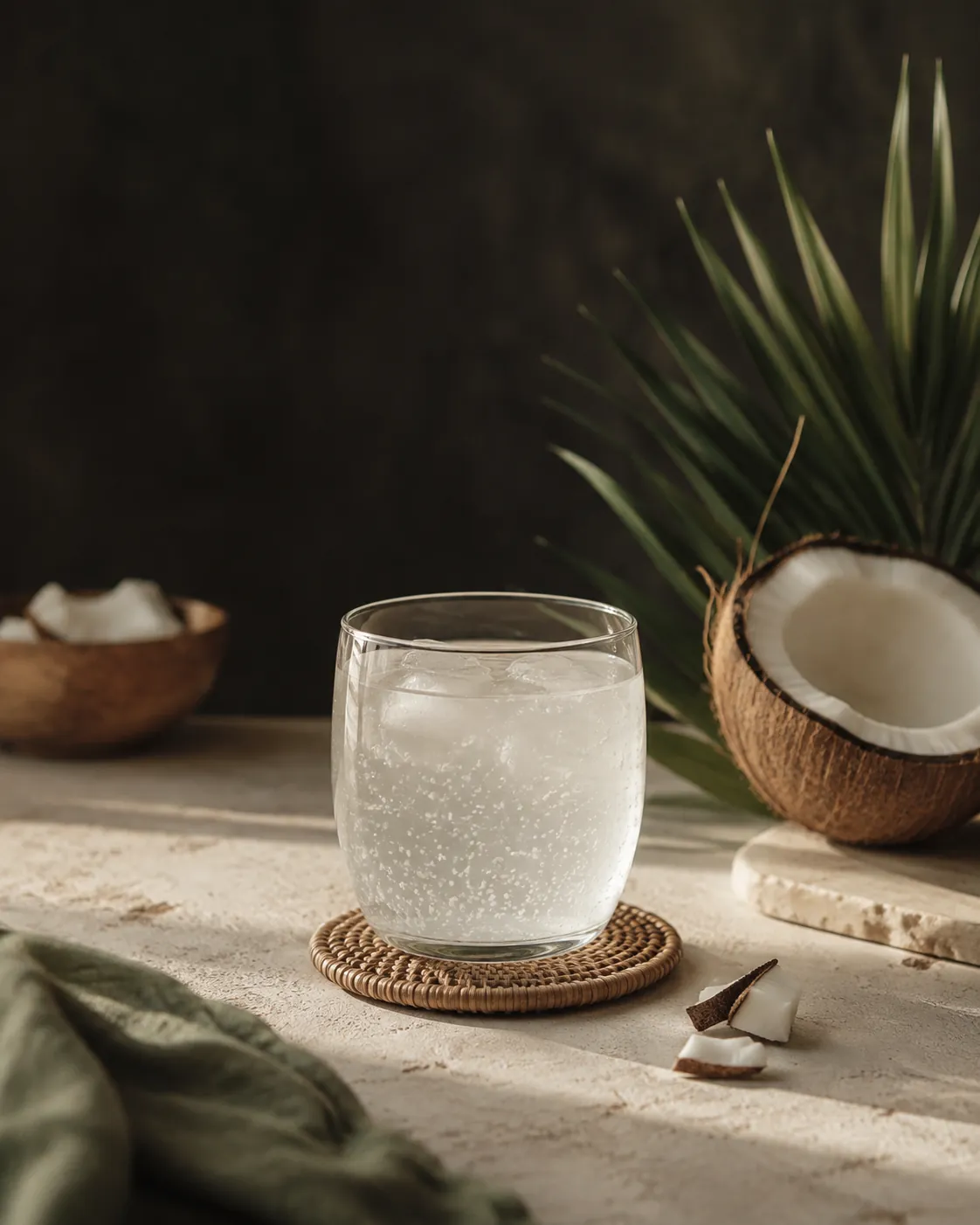
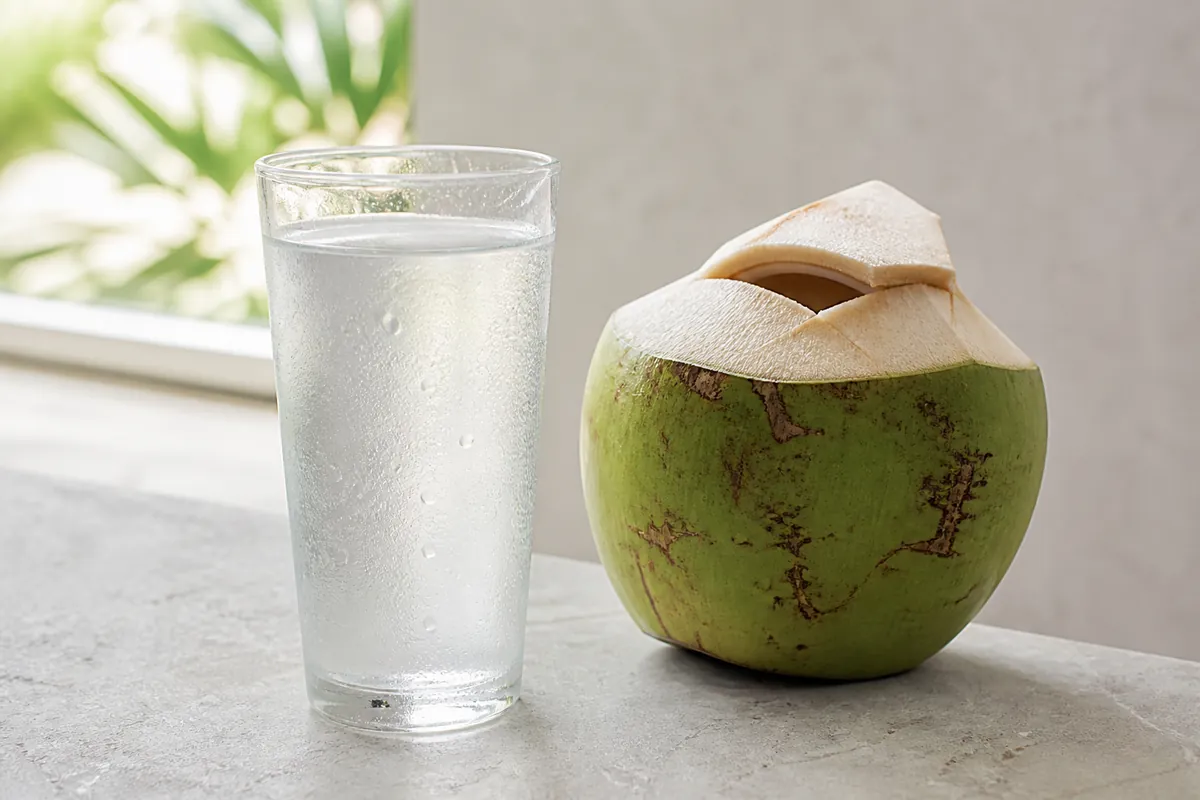
Coconut water is the clear liquid sitting inside a young green coconut, tapped rather than pressed out of the flesh. It carries almost no fat, which is why it is thin and translucent instead of white and opaque, and why it tastes light, faintly sweet and slightly saline rather than creamy.
Nothing that calls for coconut milk will work with it.
| Coconut water | Carton drink | Tinned milk | |
|---|---|---|---|
| Source | Liquid inside a young coconut | Pressed flesh, heavily diluted | Pressed flesh, concentrated |
| Fat | Near zero | 1 to 2 g per 100 ml | 15 to 25 g per 100 ml |
| Colour | Clear, slightly cloudy | White, opaque | White, thick |
| Taste | Light, sweet, slightly saline | Sweet, clearly coconut | Rich, intense |
| Used for | Drinking cold | Cereal, coffee, smoothies | Cooking |
None of the three substitutes for another. They come from different parts of the same fruit at different stages of its life, and coconut water has more in common with a chilled soft drink than with anything poured out of a coconut carton.
Why one coconut carton is nothing like the next
The spread between coconut cartons is wider than in any other plant drink, and two variables account for nearly all of it.
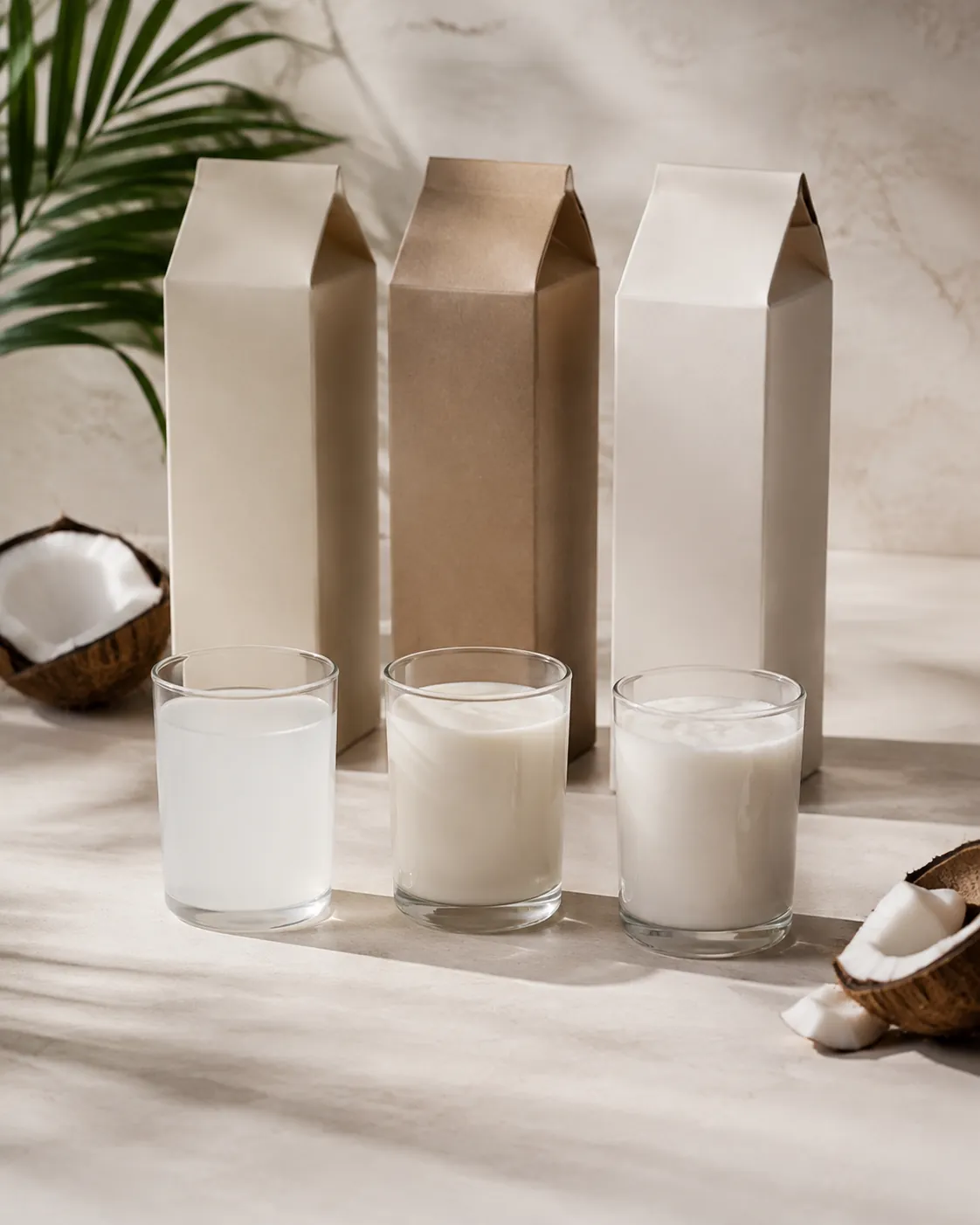
The first is coconut percentage, which runs from around 3 per cent in the thinnest budget cartons to 10 per cent or more in the richest. A threefold difference in the named ingredient shows before you have tasted anything: the low ones pour translucent and the high ones pour properly opaque.
The second is whether something else is doing the bulk of the work in the carton, which the front of the pack rarely admits to.
What separates one carton from another
- Coconut percentage
- The largest single factor in taste and body
- Blended or not
- Whether rice or another base makes up the bulk
- Added fat
- Some brands add coconut oil back for body
- Sweetened
- Several grams of sugar per 100 ml when present
- Barista formulation
- Adjusted fat and stabilisers for coffee
One consequence is worth holding onto. A single bad experience says very little about the category here, in a way it would for cashew milk or pea milk, where formulations cluster far more tightly around one recipe.
Two coconut cartons on the same shelf can be different drinks with the same picture on the front.
Telling a coconut drink from a rice drink in coconut clothing
Coconut is expensive against rice, so a great many cartons fronting coconut are mostly rice with coconut for flavour, and they behave like the rice underneath: thin, sweet, and flatly refusing to foam.
- Look for the coconut percentage, which is usually stated and ranges widely.
- Check whether it is blended. Many are coconut and rice, which is milder and cheaper.
- Compare fat content. It tracks both body and coffee performance closely.
- Check sweetened against unsweetened, since sweetened versions are quite sugary.
- Look for added calcium if you are replacing dairy, since coconut contributes very little.
The test takes a second at the shelf. A coconut drink lists coconut extract or coconut cream first and water second; a blend lists rice, or occasionally oat, ahead of it.
That single line of the ingredients panel predicts how the carton will pour, foam and taste more reliably than the percentage figure, the price or anything printed on the front, and it is the same habit that settles most of almond against oat.
Why the tin may say milk when the carton may not
Naming rules explain a label difference that otherwise looks like a difference in the product itself.
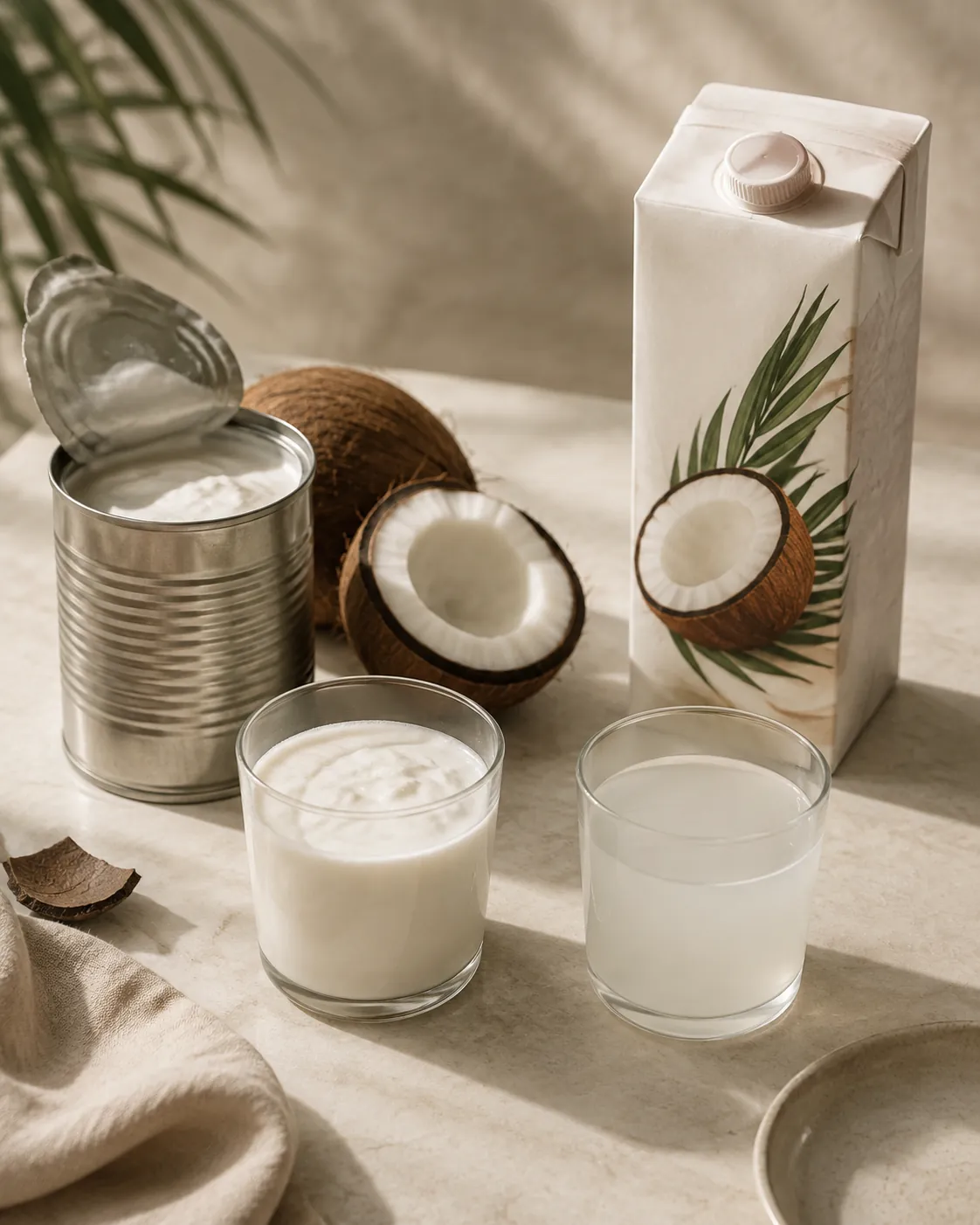
In the European Union the word milk is reserved for the animal product, so a coconut carton is sold as coconut drink and the front of the pack avoids the term entirely. Tinned coconut milk keeps the name under a long-standing exception, granted because the culinary usage predates the rule and is too established in cooking to displace.
Several other markets permit the term for both formats and the question never arises.
That exception quietly makes the confusion worse. The tin is allowed to say milk and the carton often is not, so the two look further apart on the shelf than the naming logic implies, while the real gap between them is a matter of fat and dilution that no label word describes at all.
Read the fat figure and the ingredients order and the name on the front stops mattering, much as it does for a tin of evaporated milk sitting a shelf below.
Common questions
Is coconut milk drink the same as tinned coconut milk?
No. The carton drink is roughly 5 to 10 per cent coconut with stabilisers, made for drinking. Tinned coconut milk is 50 to 90 per cent coconut and made for cooking. Swapping them produces either a watery curry or an undrinkably rich glass.
Why does coconut milk drink go grainy in the fridge?
Coconut fat solidifies below about 24 C, so small white specks or a grainy texture can appear when it is very cold. It disperses as the drink warms or with a shake, and it is not spoilage.
Does coconut milk drink work in coffee?
Reasonably. Its fat gives body and moderate foam, better than almond or rice but well behind soy and oat, which foam on protein. The main consideration is flavour: coconut will change how the coffee tastes.