The Tea Infuser, and How Much Leaf the Water Reaches
An infuser does nothing to the tea by itself. It only decides how much of the leaf the water can reach, and leaf packed into something too small brews weak and harsh at the same time.
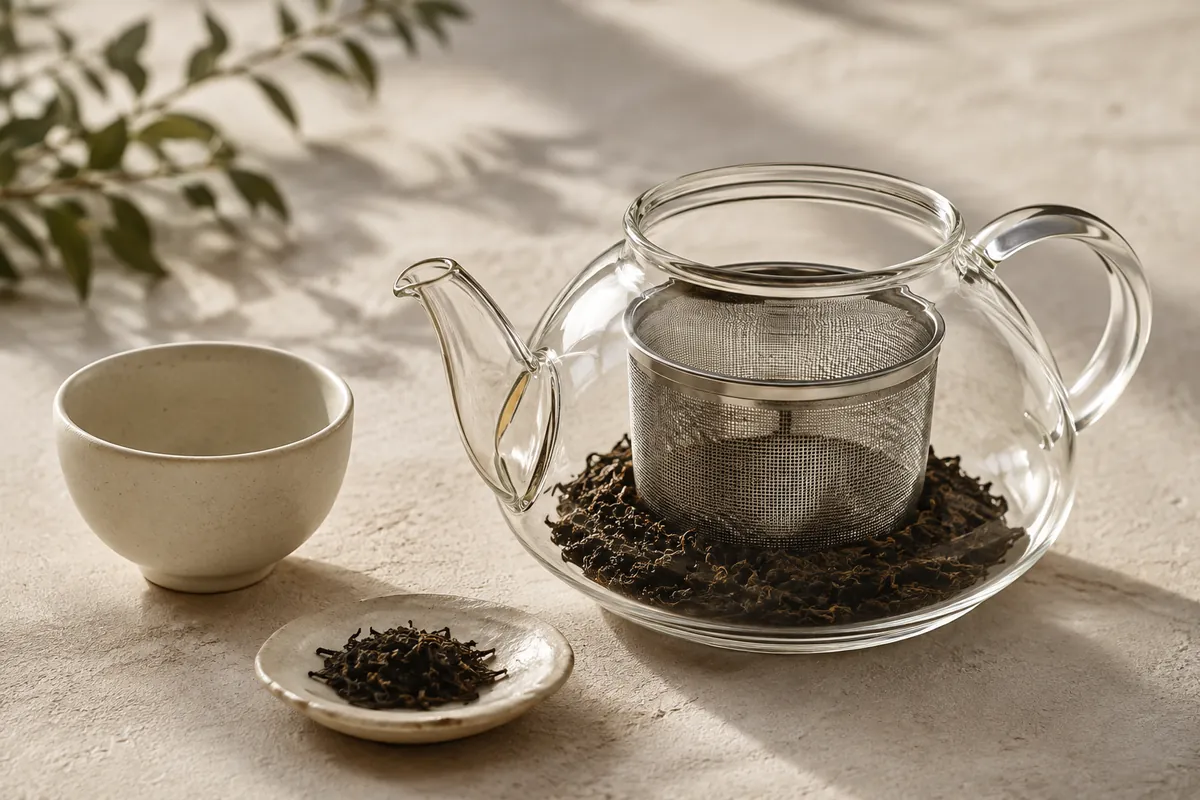
A tea infuser is a perforated container that holds loose leaf inside a cup or a pot while the water gets on with the brewing. It has no moving parts and it does nothing to the tea by itself.
That last point is the one worth holding on to, because an infuser is a filter rather than a brewer. The water, the temperature and the clock make the tea; the infuser only decides how much of the leaf the water can actually reach.
Which is why almost every complaint about infusers comes back to one thing. Wet leaf needs somewhere to go, and an infuser that does not give it room turns good leaf into a weak, oddly harsh cup that no adjustment at the kettle will fix.
The tea infuser at a glance
- What it is
- A perforated basket, ball or bag that holds loose leaf inside a vessel
- What it does
- Keeps leaf out of the drink and lets you end the steep by lifting it out
- The one rule
- Dry leaf should fill no more than a quarter of it
- Why
- Leaf swells to several times its dry volume, and cramped leaf under-extracts
- Best form
- A wide basket that sits down into the vessel
- Worst form
- A small hinged ball, which is the commonest kind sold
- Not for
- Powdered tea, which passes straight through any mesh
What an infuser is actually for
Two jobs, and only one of them is obvious. Keeping leaf out of your mouth is the visible one, and it is the lesser of the two.
The job that matters is that an infuser lets you stop the steep.
Loose leaf sitting in a mug keeps extracting for as long as it is wet, so a cup that tasted right at ninety seconds is a different drink four minutes later, and lifting a basket out is the simplest way to draw a line under it.
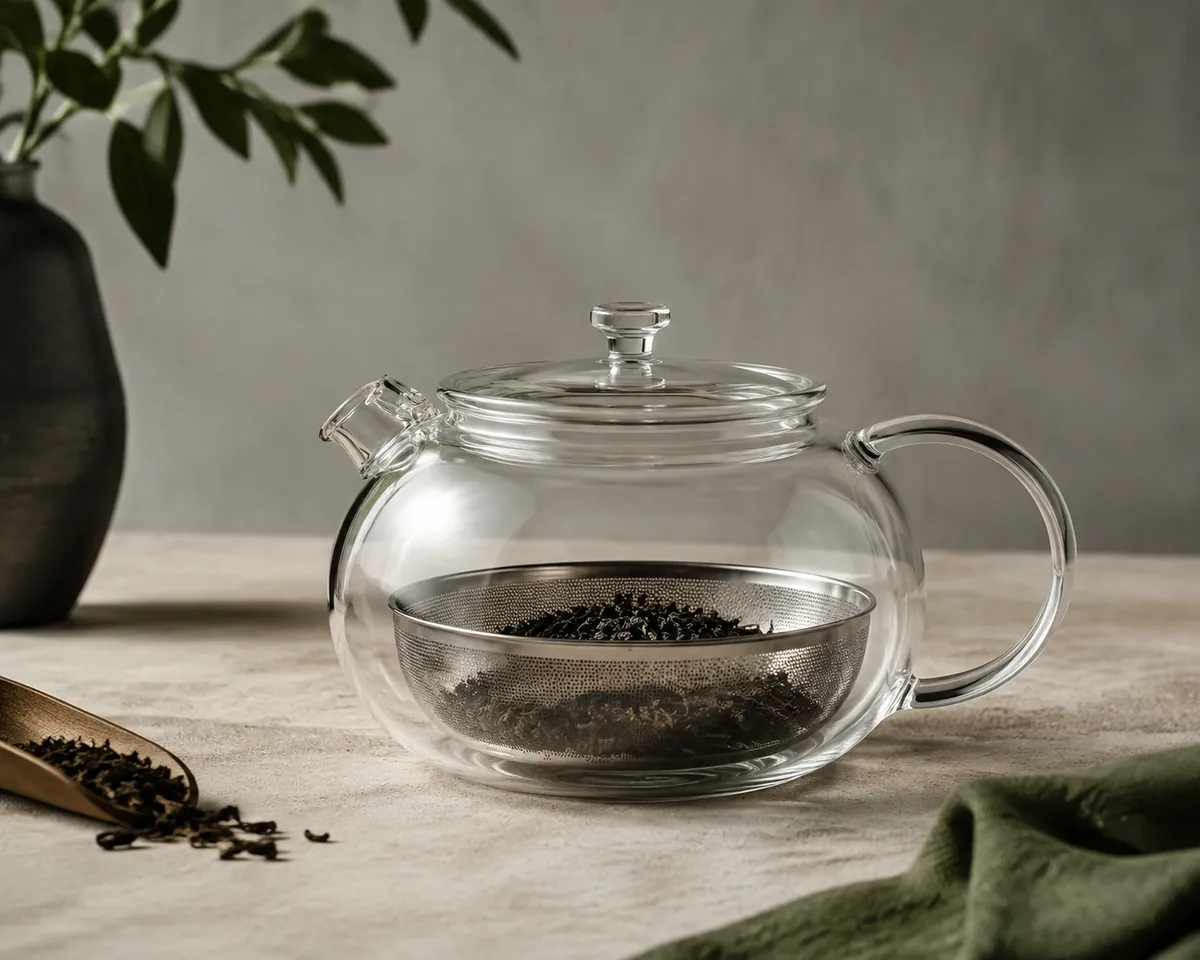
Everything else you might want from a brewing vessel comes from the vessel. Heat retention belongs to the pot, pouring control belongs to the spout, and the ability to run very short repeated steeps belongs to something like a lidded brewing bowl, which has no infuser at all and never needed one.
An infuser is therefore an accessory to a mug rather than a brewing method in its own right. It exists because most people brew in a mug, and a mug has no way to separate the leaf from the drink.
Why leaf needs room to expand
Dry tea leaf is a compressed, dehydrated thing that has spent its whole processing being rolled, twisted or pressed into as small a shape as possible. Hot water reverses all of that within a minute.
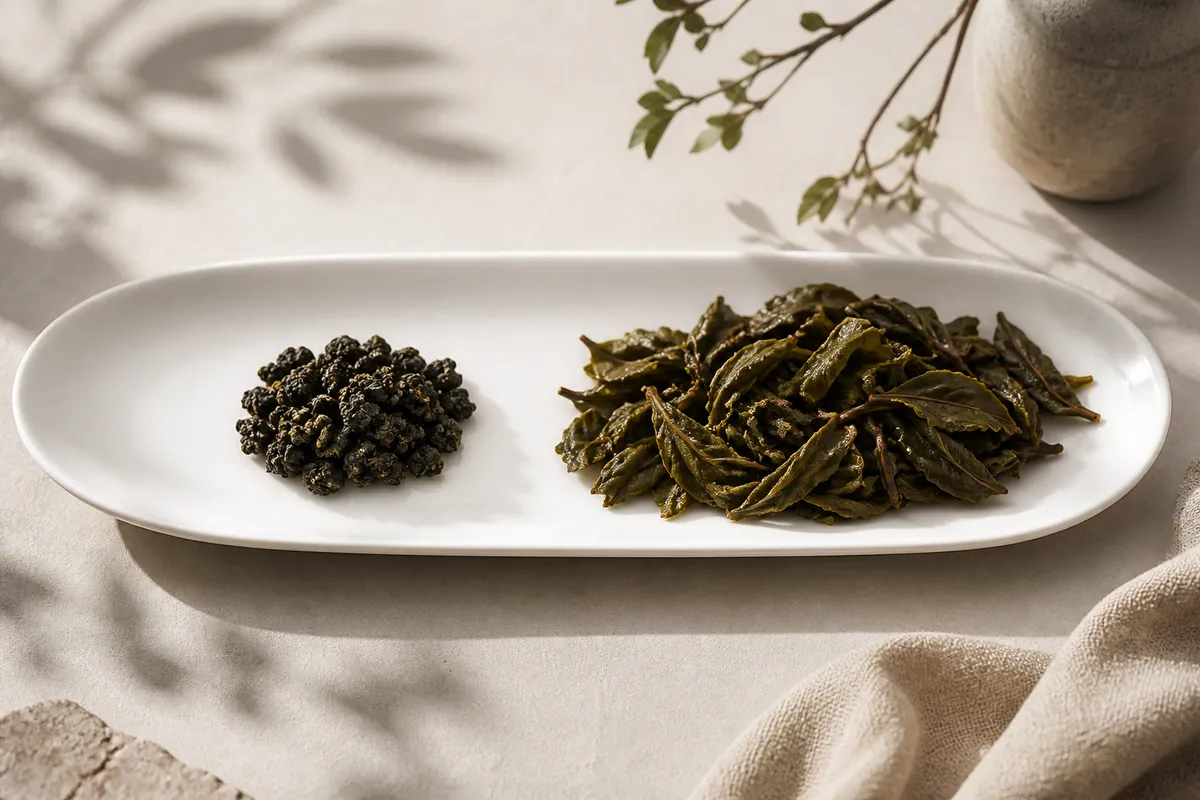
How far it swells depends on how it was made.
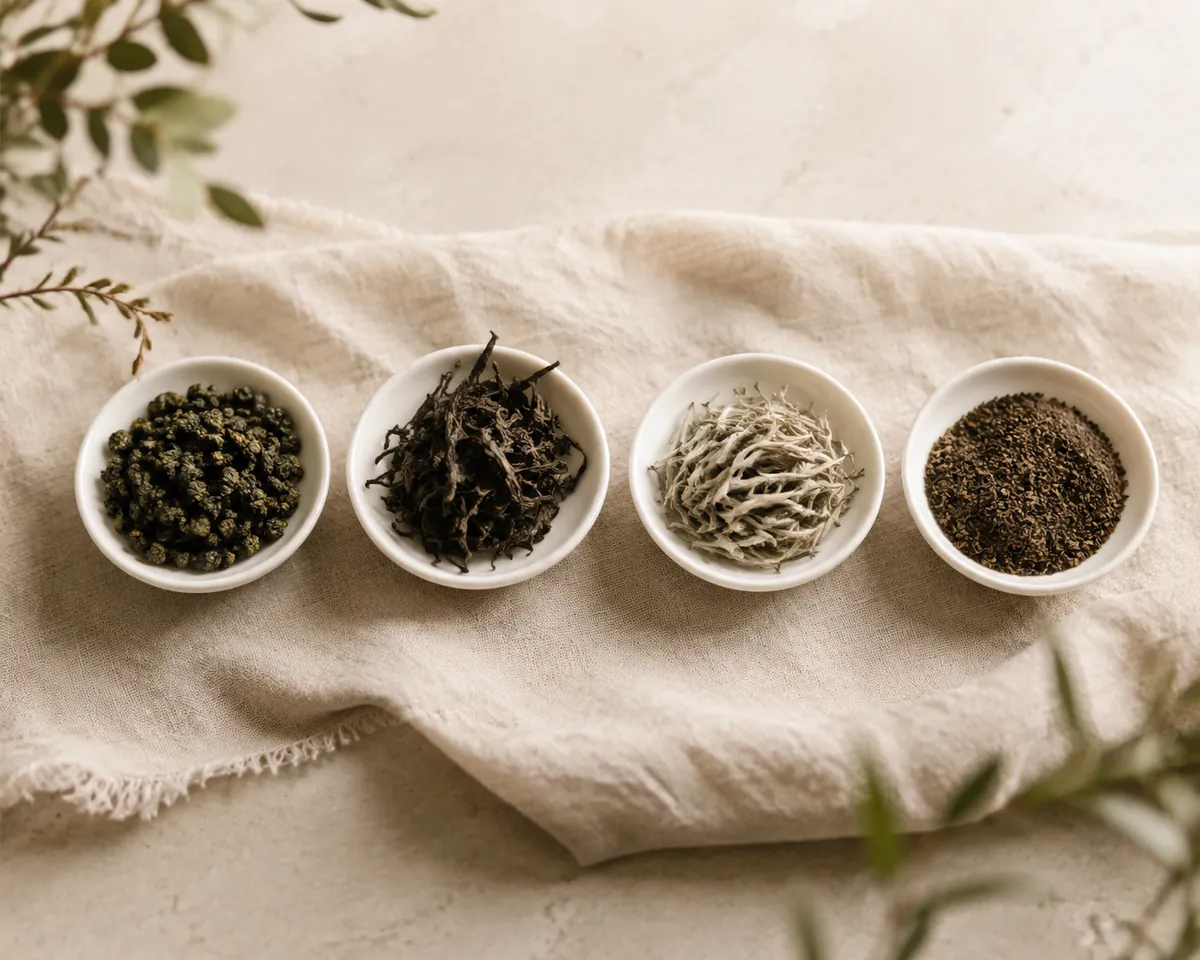
Loosely rolled leaf might double, a tightly rolled oolong pellet can open to five or six times its dry volume, and a compressed pu-erh chunk keeps expanding for several infusions.
How much room the leaf will need
- Rolled oolong pelletsFive or six times the dry volume, and they open slowly
- Compressed pu-erhKeeps opening across several steeps
- Whole white tea budsBulky when dry, bulkier still when wet
- Twisted Darjeeling leafLong and wiry, and it needs length rather than depth
- Rolled Japanese senchaRoughly triples, and unfurls fast
- Broken leaf and dustBarely swells at all, which is why bags can be small
Expansion is not only about volume, and this is the part that gets missed. The leaf has to be able to move, because water has to circulate through the whole mass rather than around the outside of it. A wet leaf pressed flat against a neighbour is a leaf the water is running past instead of through.
What actually goes wrong inside a cramped infuser
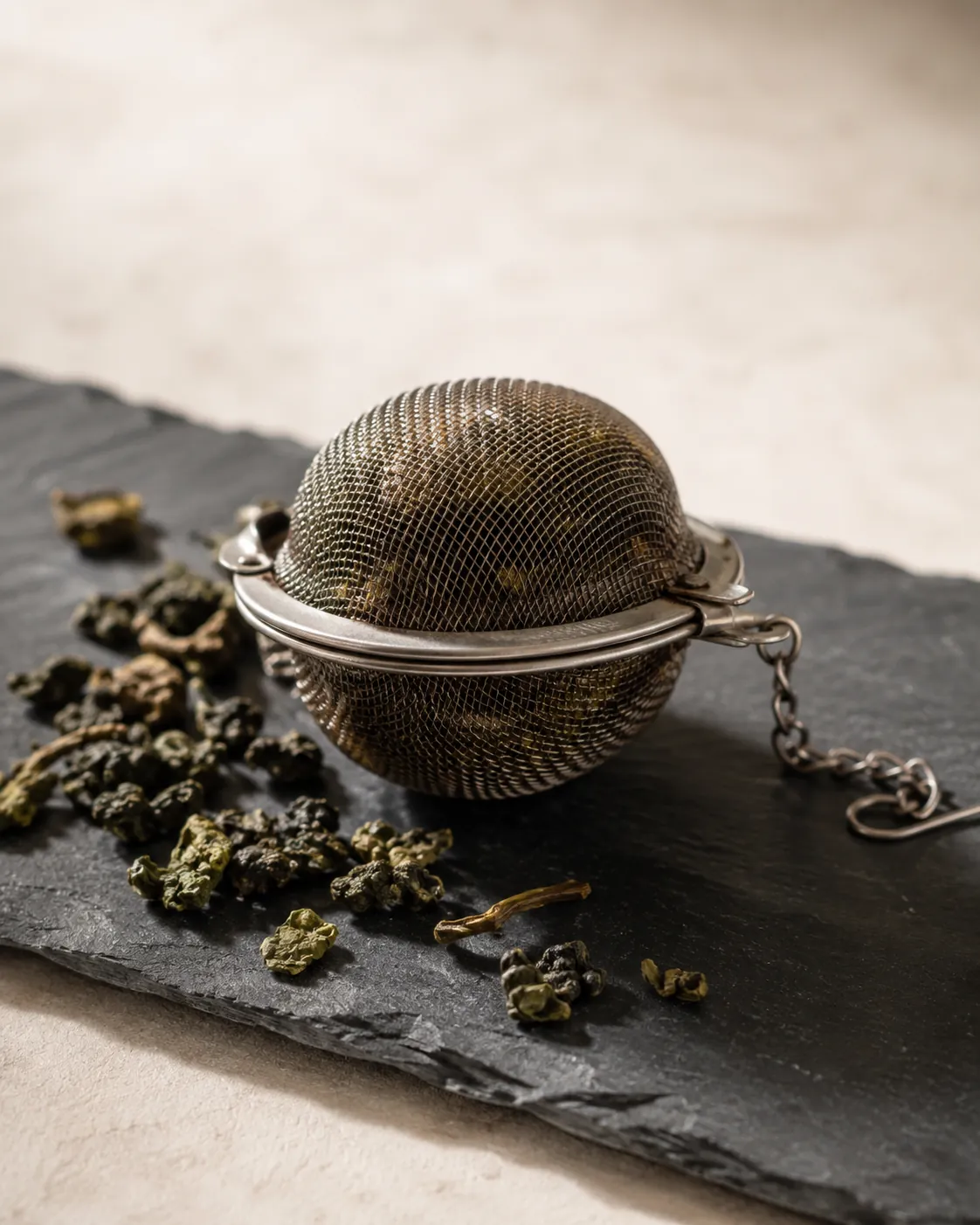
Pack leaf into a small ball and the outside of the mass brews normally while the inside barely brews at all. Water follows the path of least resistance, which is around the packed core rather than through it.
The cup that results is strange to diagnose because it is weak and harsh at the same time. Part of the dose over-extracted at the surface where the water was moving fastest, and part of it never got going, so you have the astringency of a long steep and the strength of a short one.
Then comes the compensation, which is where a mild fault turns into a serious one. The obvious response to a weak cup is more leaf and more time, and both make the packing worse, so the next attempt is weaker and harsher than the one before it.
None of this is a fault in the leaf, and that is worth saying plainly. Good leaf in a bad infuser makes a worse cup than modest leaf brewed loose, which is why making green tea treats getting the leaf out as a step rather than as an afterthought.
The basket, the ball and the bag
Three forms cover almost everything sold, and they are not variations on a theme so much as three different levels of compromise.
| Form | Room for leaf | Ends the steep | Where it fails |
|---|---|---|---|
| Deep basket | Good, if it is wide | Lift it out and set it on a saucer | Too shallow to submerge in a tall mug |
| Hinged ball | Very poor | Lift it out by the chain | Cramps the leaf, and springs open when full |
| Fillable fabric bag | Moderate | Lift and discard the leaf | Fabric holds odour, and fines escape a loose weave |
| Basket built into a pot | Usually good | Lift the whole basket out | Some are decorative and far too small |
| Paper filter bag | Moderate | Lift it out, and bin it | Single use, and the paper can taste of paper |
The wide basket is the only form that solves the underlying problem rather than working around it. It gives the leaf a floor to spread across, it sits down into the liquid so the leaf is properly submerged, and it comes out in one movement.
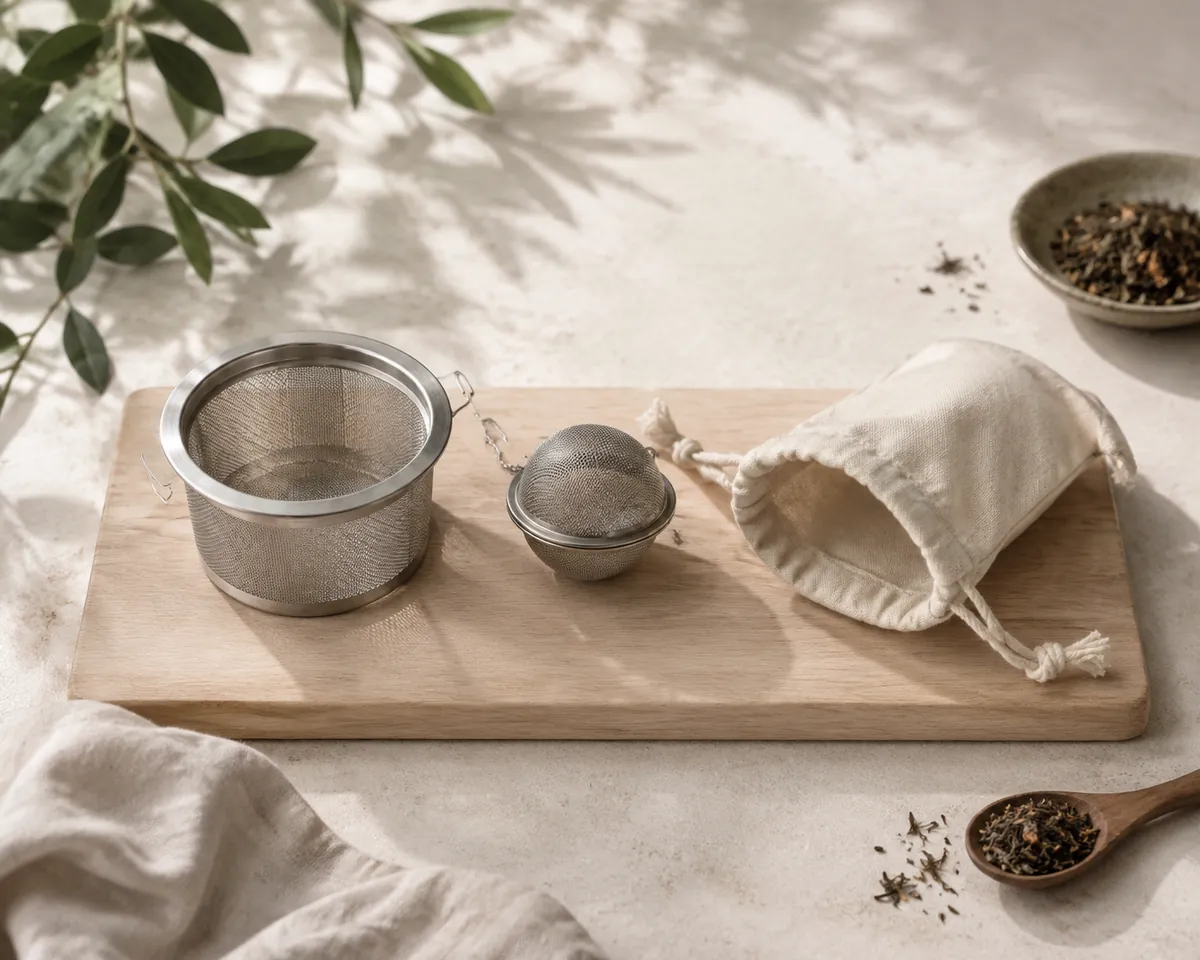
The hinged ball is the one to avoid and it is unfortunately the one most often given as a gift. Its capacity is a fraction of what a mug of leaf needs, the two halves spring apart when wet leaf expands, and the leaf that escapes ends up in the drink anyway.
Fabric bags sit between the two. They are cheap, they hold plenty and they are easy to empty, and the cost is that woven fabric picks up the smell of whatever it brewed last, which is a real problem if you drink both jasmine and peppermint out of the same one.
What size to buy, and how to check
Size is the whole decision and it is easy to get right, because the rule can be applied in a shop with nothing but your eyes. Buy the largest infuser that will still fit in the vessel you actually brew in.
The proportions that work
- Dry leaf
- No more than a quarter of the infuser's volume
- Basket width
- As close to the inside width of the mug or pot as it will go
- Basket depth
- Deep enough that the leaf sits below the water line
- Water
- The infuser fully submerged, not perched near the rim
- For a 300 ml mug
- A basket of roughly 100 ml, holding about 3 g of leaf
The quarter-full rule is the one to remember, and it is generous rather than fussy. Leaf that fills a quarter of the space when dry will fill most of it when wet, and it still leaves channels for the water to move through.
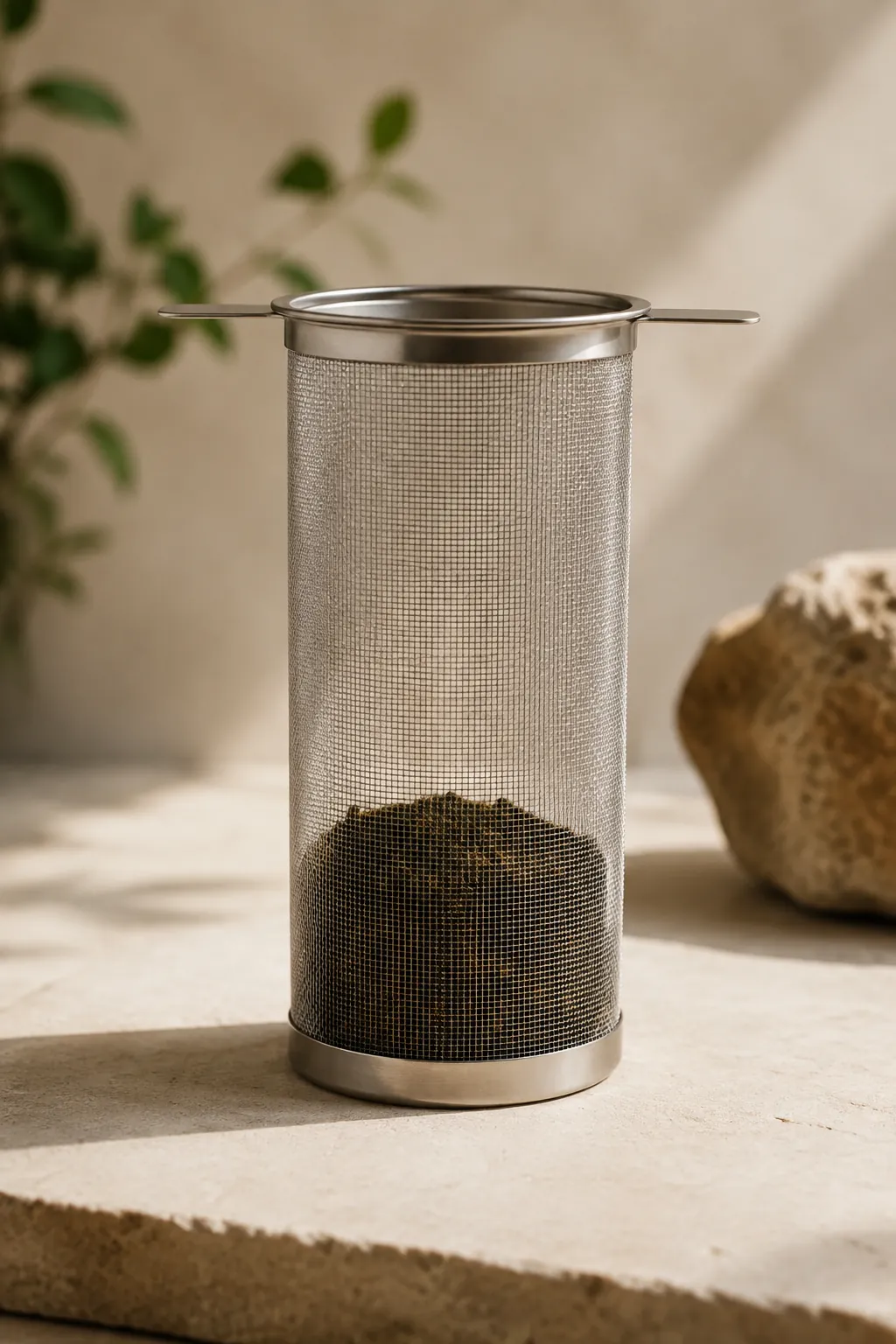
Depth matters as much as width and is thought about far less.
A shallow basket in a tall mug leaves the leaf sitting in the top third of the water, so the bottom of the mug is close to plain hot water until you stir it, and a stir is a step nobody remembers to take.
Check one other thing before buying: how you will get it out. An infuser with no rim, no handle and no chain has to be fished out of scalding water, which is how it ends up staying in the mug and ruining the tea it was bought to improve.
What the mesh is made of, and what it does to the cup
Stainless steel is the default and the sensible choice for almost everything. It is inert at brewing temperature, it does not hold odour, it survives being scrubbed, and the fine woven type catches far more of the small particles than the punched-hole type does.
Woven stainless mesh
The best general answer. Fine enough for most leaf, inert, and easy to clean.
Punched or perforated steel
Holes are large and few, so fines escape and water flow is uneven.
Nylon and food-grade plastic
Fine mesh and cheap, and it stains and eventually goes brittle with heat.
Cotton or muslin
Excellent flow and no taint when new, but it absorbs oils and odours over time.
Paper
Neutral and disposable, though a thick paper can leave a faint papery note in a delicate cup.
Silicone
Usually shaped as a novelty with too little capacity and holes that are far too large.
Hole size is the trade-off underneath all of that. A very fine mesh catches every fragment and slows the flow of water, while a coarse one lets water through freely and puts sediment in the cup, which is the same tension a French press resolves with a metal screen and a different cup as a result.
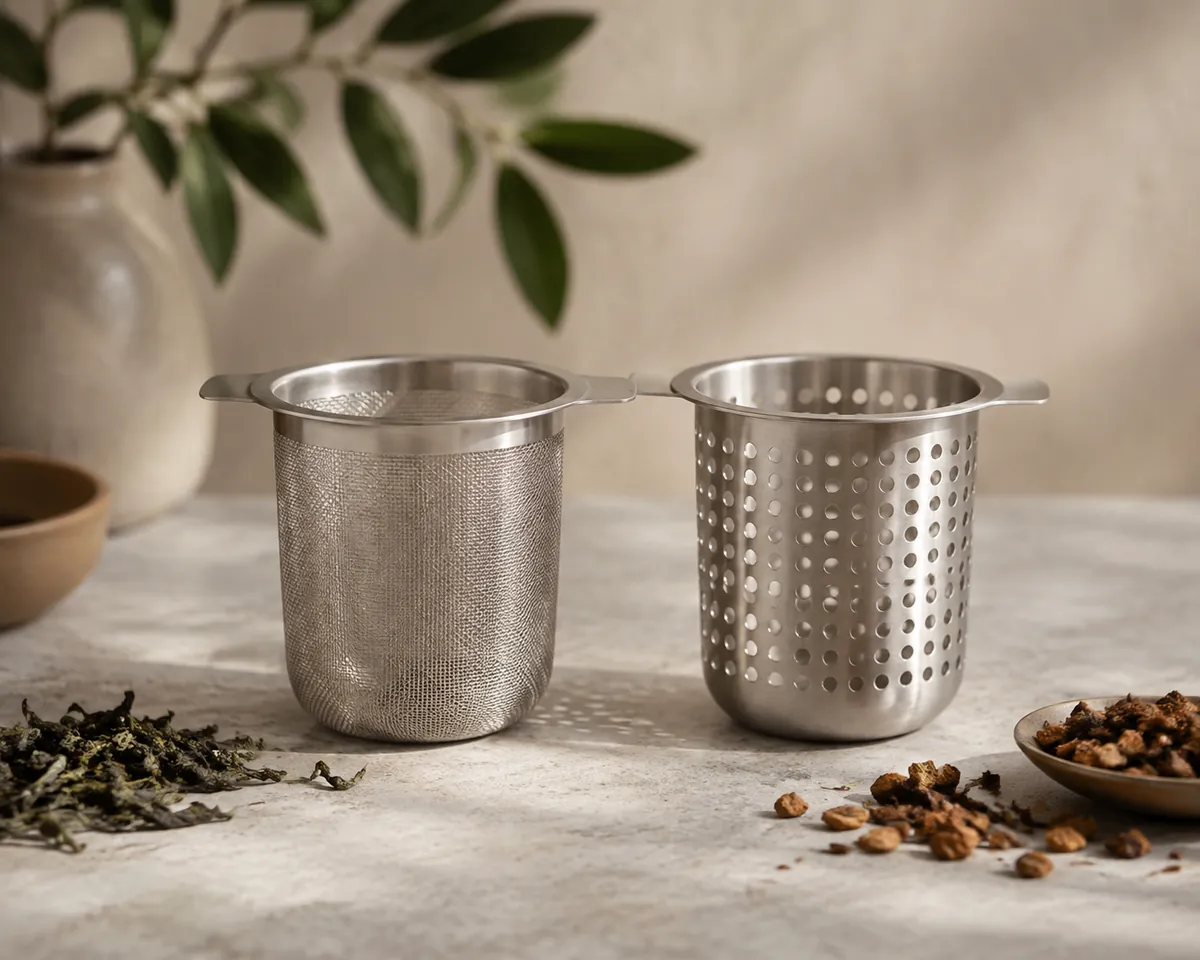
For broken leaf and dust the mesh has to be fine or the cup goes cloudy. Whole leaf can use a coarser mesh and benefits from the freer flow, so a single infuser rarely serves both a bagged-grade tea and a large-leaf one equally well.
Metal does not make tea taste metallic, despite how often that is repeated.
What does happen is that a neglected mesh holds old oils and tannin, and that genuinely taints the next cup, which is a cleaning problem rather than a materials one.
Which teas an infuser suits, and which it does not
Some teas barely notice the infuser and some are actively spoiled by one, and the dividing line is leaf size rather than tea style. The larger and more three-dimensional the dry leaf, the more the container around it matters.
- Broken leaf and bagged-grade tea work well in almost anything, since they hardly swell.
- Black tea in orthodox whole leaf wants a basket rather than a ball.
- Rolled oolongs need the most room of anything, and a ball is close to useless for them.
- White tea is bulky dry and bulkier wet, so it wants width above all.
- Herbal material such as rooibos is fine and light, so it needs fine mesh rather than volume.
- Whole spices in a chai do not need an infuser at all, since they are easy to strain out.
Powdered tea is the outright exception and it is worth stating clearly. Matcha is milled leaf rather than leaf to be steeped, it passes straight through any mesh made, and it is suspended rather than infused, so the tool for it is a whisk and never a basket.
At the other end, gyokuro is the tea most obviously beyond what an infuser can do. Its dose is several times a normal one and its brewing volume is tiny, so the leaf goes loose into a small pot with nothing around it and the pot is decanted completely instead.
How to use one without spoiling the cup
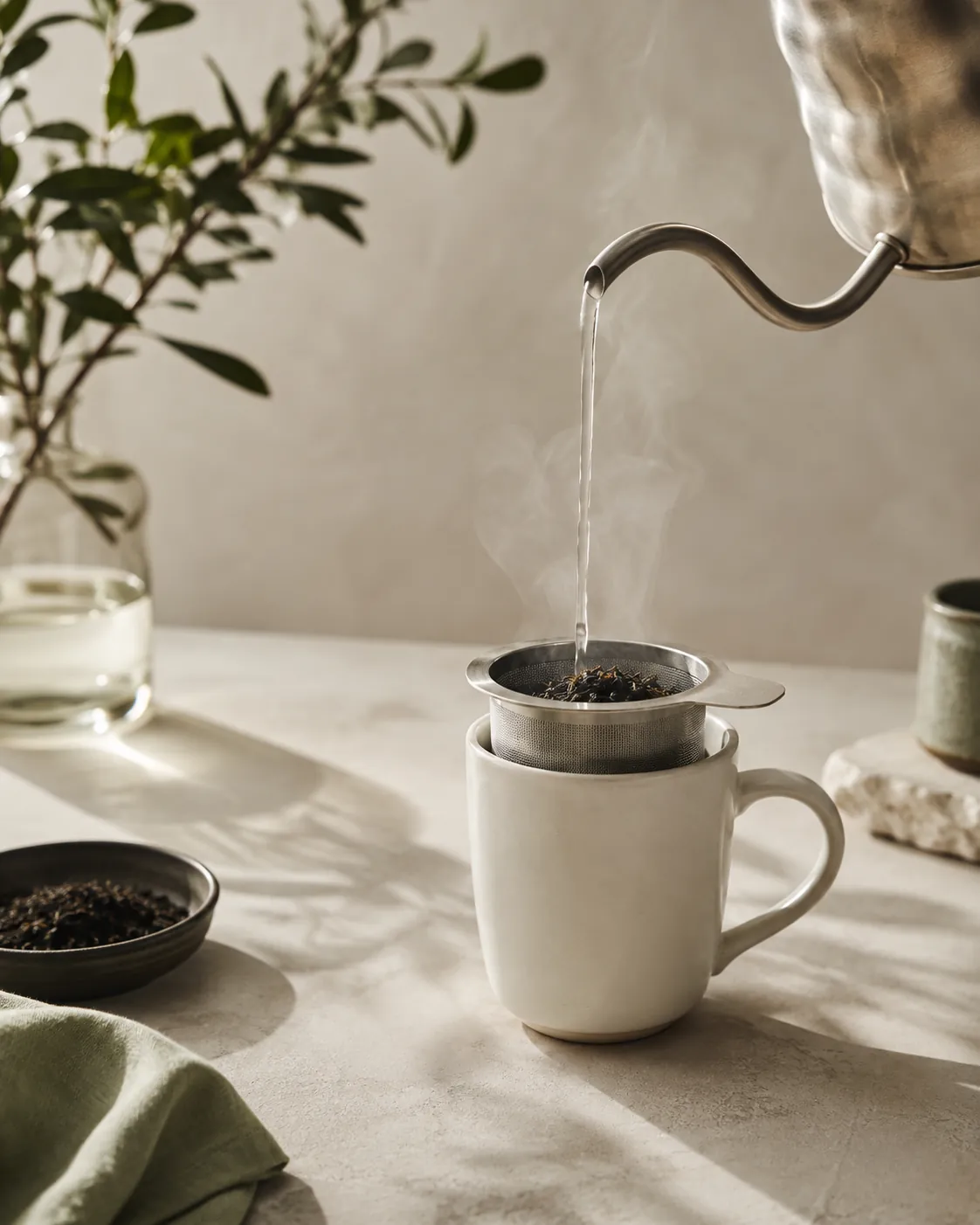
The sequence is short and two of its steps are the ones people skip. Put the dry leaf in first, then pour the water over the top of it rather than dropping the loaded infuser into a full mug.
Brewing with a basket infuser
- Load it dryWeigh the leaf into the basket before any water is anywhere near it.
- Set it in the vesselBasket in the mug or pot, sitting low rather than perched on the rim.
- Pour over the leafA steady stream from low down, onto the leaf itself, so every piece is wetted at once.
- Check it is submergedTop up until the water is above the level of the leaf, not merely up to it.
- Start the clockFrom the pour, and follow the time for the style rather than for the vessel.
- Lift it outStraight onto a saucer or a small dish, on time, and not later.
- Keep it for a second steepWhole leaf usually has another cup in it, so do not bin it yet.
Pouring onto dry leaf does the mixing for you and it costs nothing. Leaf dropped into standing water floats, clumps and wets unevenly, which produces the same weak-and-harsh cup a cramped basket does and for exactly the same reason.
Do not tamp or press the leaf down to make it fit. Compressing wet leaf is the fault this whole page describes, and if it does not fit loosely then the infuser is too small for the dose rather than the dose being too large for the mug.
Why the infuser has to come out on time
Leaving it in is the commonest mistake made with any infuser, and it undoes all the care taken over the water.
A basket left in the mug keeps brewing after the tea already tastes right. A mug with a basket still sitting in it keeps changing while you drink it, and the direction of that change is not neutral.
Sweet compounds arrive early and astringent ones keep arriving, so a cup left on its leaf loses balance rather than simply getting stronger, which is the mechanism why green tea tastes bitter follows through in detail.
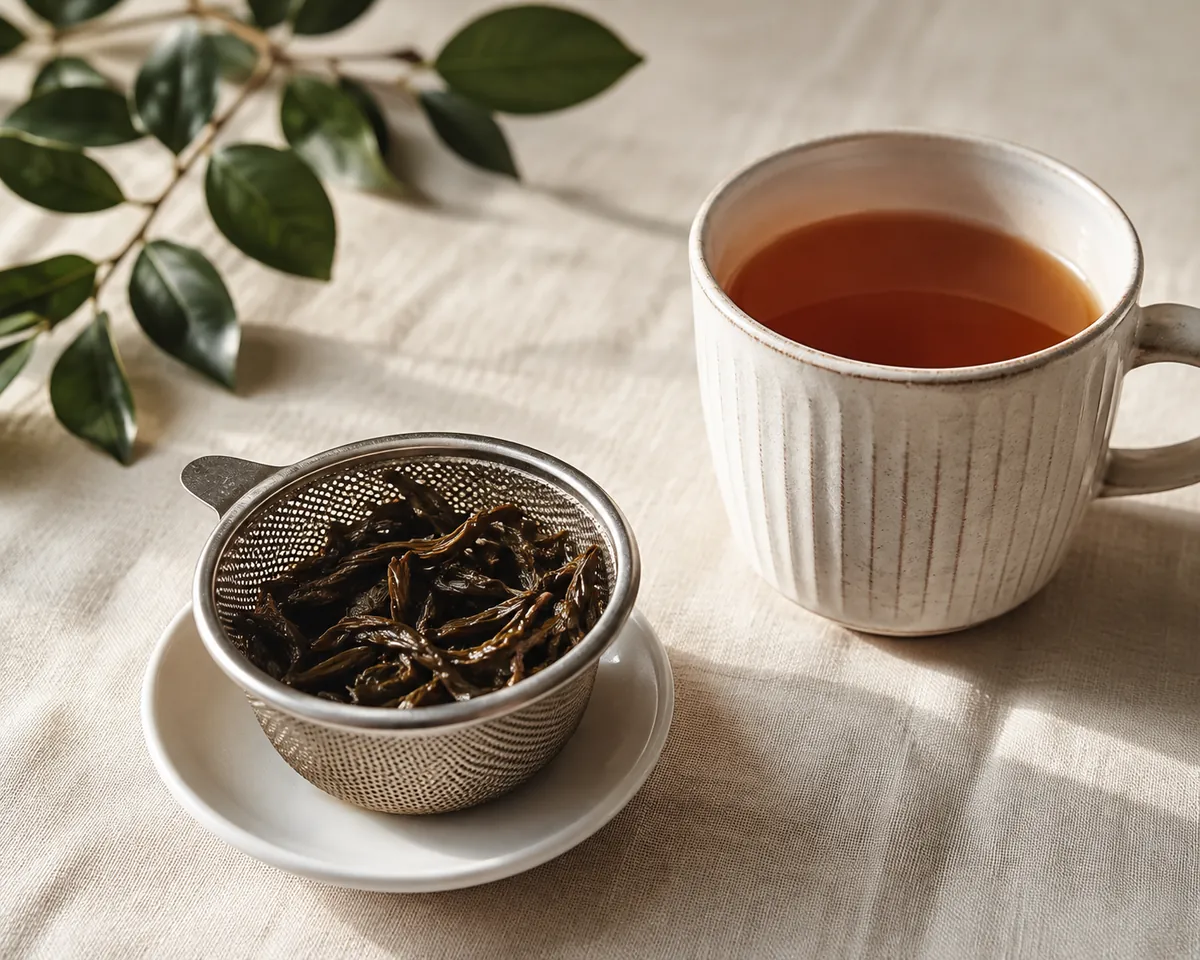
Draining matters too and it takes a second. Let the basket sit on the rim for a moment before lifting it clear, because the liquid held in the leaf is the most concentrated in the vessel and it belongs in the cup rather than on a saucer.
Cleaning it, and what a stained mesh does
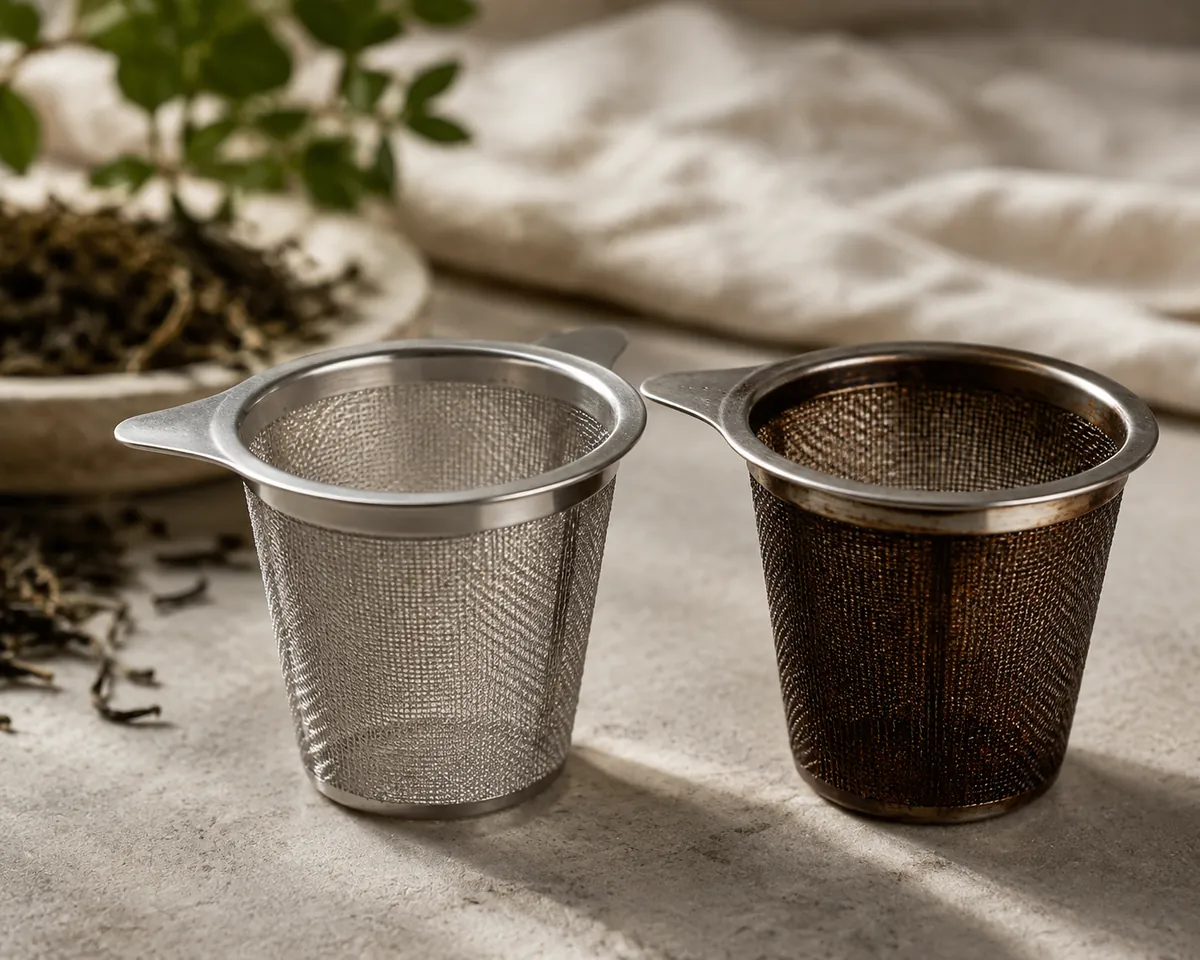
Rinse it under hot water as soon as the leaf is out, while everything in it is still soft. Left to dry, tannin sets into the weave as a hard brown film, and at that point a rinse will no longer shift it.
That film is not merely ugly.
It holds the character of every tea brewed before, so a heavily stained mesh passes a stale note into whatever comes next, and a delicate leaf shows it long before a robust one does.
- Empty and rinse immediately, before the leaf dries into the mesh.
- Once a month, soak in hot water with a little bicarbonate of soda and rinse thoroughly.
- Use a soft brush rather than anything abrasive, since scratched mesh traps more.
- Dry it completely and store it open, because a closed damp basket goes musty.
- Keep separate infusers, or a separate fabric bag, for strongly scented teas.
Fabric needs the most attention and gives the least warning. Cotton and muslin absorb oils rather than holding them on the surface, so a bag that looks merely brown may already be carrying enough of a previous tea to be noticeable in the next one.
Hard water leaves its own deposit on top of the tannin, and the two together are worse than either alone. A rinse in weak vinegar clears it, and brewing water covers what that same mineral load is doing to the tea itself.
When to skip the infuser altogether
The best cup an infuser can produce is still slightly worse than the same leaf brewed loose, because nothing at all constrains a leaf floating free in a pot. That is the honest position, and it is not an argument against owning one.
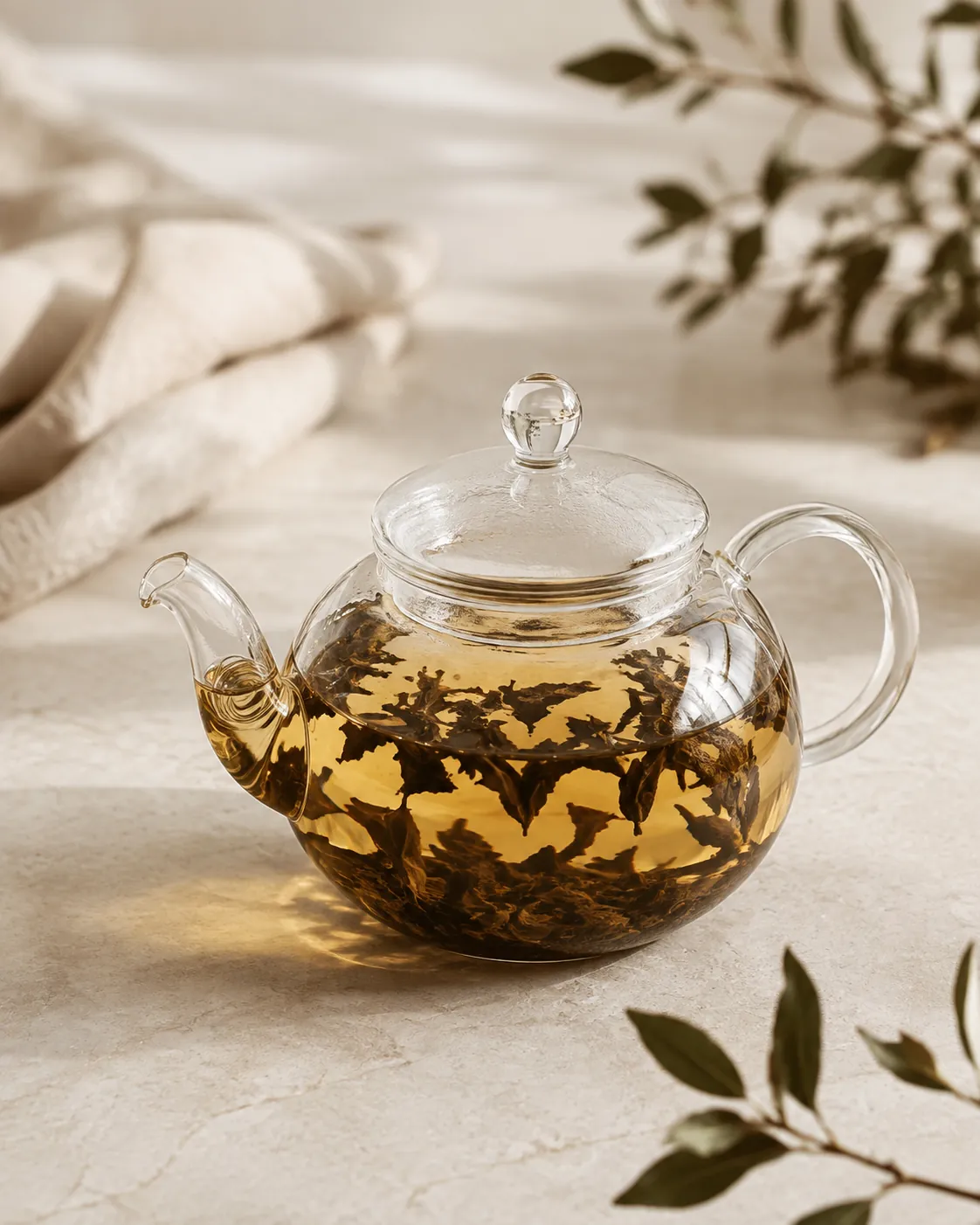
Brewing loose and straining as you pour costs one extra object, a small mesh strainer held over the cup.
It gives the leaf the whole vessel to move in. It ends the steep as completely as lifting a basket out does, and it works in any teapot already in the cupboard.
Works well for
- Lets you end a steep cleanly, which is the single largest improvement available to a mug
- Works in any vessel, so no new teapot is needed
- A wide basket gives most leaf close to the room it would have loose
- Reusable, with nothing to run out of and no papers to buy
- Keeps the leaf in one place, which makes a second infusion easy to take
Struggles with
- Even the best basket constrains the leaf slightly more than brewing loose does
- Small forms, and the hinged ball above all, cramp the leaf badly enough to spoil the cup
- Fabric and nylon hold odour and stain, and both need replacing eventually
- Needs somewhere to be put down, or it stays in the mug and over-brews the tea
- Useless for powdered tea, and awkward for very large or very fine leaf
Use a basket when
You are brewing in a mug, or in a pot with no built-in strainer.
Brew loose and strain when
The leaf is large, rolled or expensive, and you want everything from it.
Vessel choice quietly settles a great deal that people try to fix at the kettle. A wide chamber and a complete pour will do more for a difficult tea than another five degrees will, and the general temperature map in steeping temperature basics only works once the leaf is properly wetted in the first place.
Whatever you use, the same short rule covers it. Give the leaf room, wet all of it at once, and take it out when the time is up, and storing loose-leaf tea covers keeping the leaf worth the trouble in between.
Common questions
Why does tea brewed in an infuser taste weak?
Almost always because the leaf was packed too tightly. Water follows the path of least resistance around a solid mass rather than through it, so the outside of the dose over-extracts while the middle barely brews, and the cup comes out thin and drying at the same time. Dry leaf should fill no more than a quarter of the infuser.
Is a tea ball or a basket infuser better?
A wide basket, without much argument. It gives the leaf a floor to spread across, sits down into the liquid so the leaf is properly submerged, and lifts out in one movement. A hinged ball holds a fraction of what a mug of leaf needs and springs apart when wet leaf expands.
Can you use an infuser for matcha?
No. Matcha is milled leaf rather than leaf to be steeped, it passes straight through any mesh, and it is suspended in the water rather than infused. The tool for it is a whisk, not a basket.