What Is White Tea? Neither Heated to Stop Nor Rolled to Start
White tea is the least processed of the true teas. It is not heated to stop oxidation and not rolled to start it, which makes it the one style defined by what is left out.
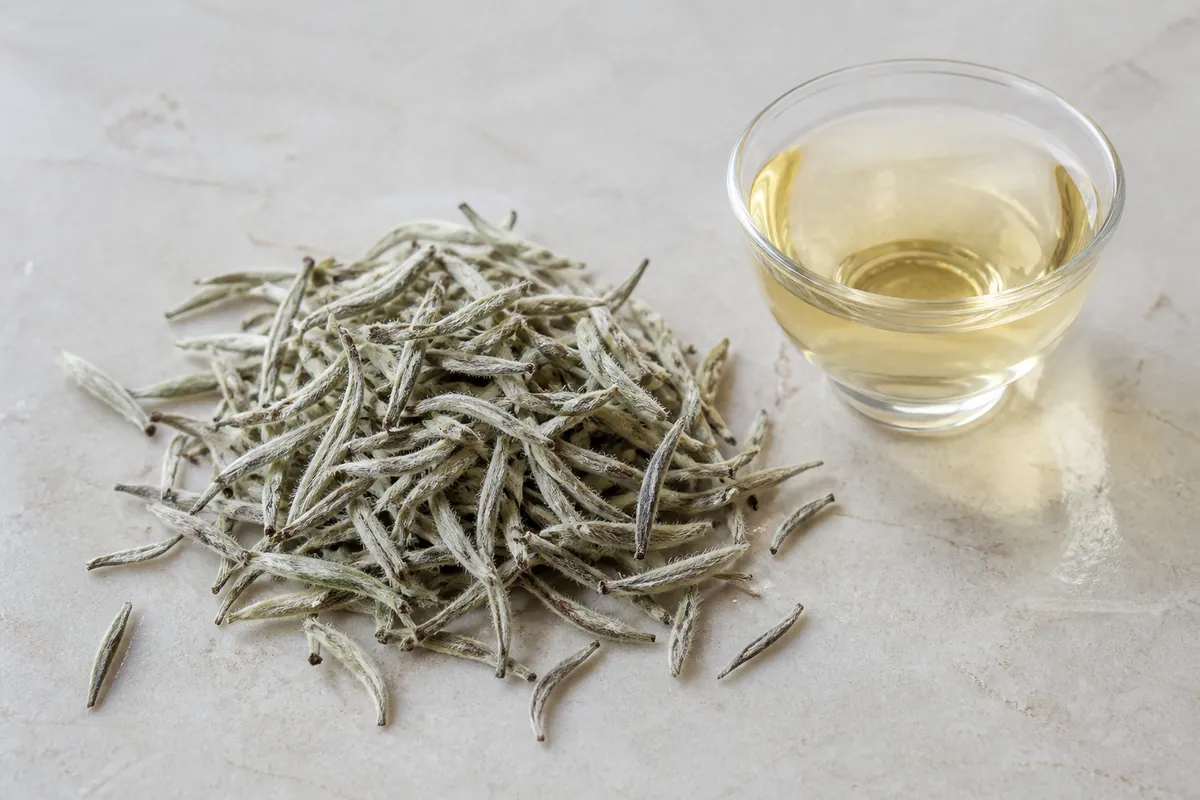
White tea is Camellia sinensis leaf that has been withered and dried, and very little else. There is no fixing step to stop oxidation and no rolling step to start it.
That makes it the one true tea defined by omission, and the one where the smallest handling error is the most visible in the cup.
White tea at a glance
- What it is
- Withered and dried leaf, with no fixing and no rolling
- Oxidation
- Slight, and caused by air during the wither rather than chosen
- Water
- 75 to 85 C
- Steep
- 2 to 5 minutes, longer than a green tea despite being more delicate
- Leaf
- 2 to 3 g per 200 ml, which looks like a very large heap
- Grades
- Silver Needle, Bai Mu Dan, Gong Mei, Shou Mei, by plucking standard
- Keeps
- One to two years loose, or indefinitely if pressed and aged on purpose
Picked, laid out, and left
Every other style of tea involves a deliberate intervention at a specific hour. Green tea is heated within hours of plucking, black tea is rolled to break the cell walls, and oolong is bruised and turned through the night.
White tea is picked, spread out, and left alone.
The whole process
- PluckBuds and young leaves are picked, usually in a narrow spring window.
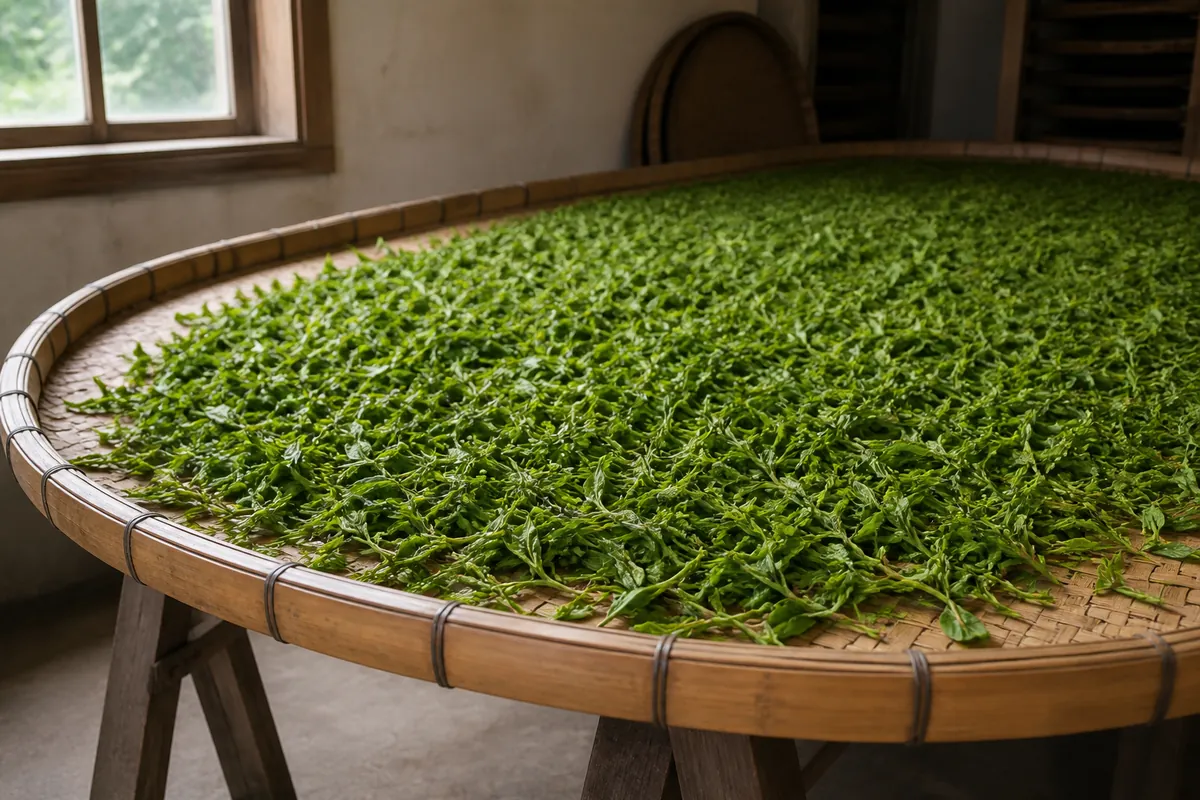
- WitherThe leaf is spread out to lose moisture, indoors or in shade, over many hours.
- DryGentle heat finishes the drying and brings the moisture down for storage.
- SortThe dried material is graded, mostly by how many buds it contains.
Nothing stops oxidation, so a little of it happens anyway. The leaf oxidises slowly and unevenly across the long wither, which is why white tea is not truly unoxidised despite being sold that way.
Where white tea lands on the scale
Intent is the whole difference from a green tea. Green tea is actively stopped, and white tea is simply never started, so the small amount of oxidation it carries is whatever the weather allowed during those hours on the tray.
Silver Needle, Bai Mu Dan, and what the price actually buys
Unlike the letters on a black tea packet, white tea grades describe the plucking standard, and they track price almost exactly.
| Name | What is picked | Character |
|---|---|---|
| Silver Needle | Unopened buds only | Delicate, sweet, honeyed. The most expensive |
| Bai Mu Dan | One bud and one or two leaves | Fuller, with more body and a hint of hay |
| Shou Mei | Later leaf, few buds | Darker, more robust, considerably cheaper |
| Gong Mei | Between Bai Mu Dan and Shou Mei | Varies widely by producer |
Silver Needle is expensive because of yield. Picking only unopened buds, in a short spring window, by hand, produces very little finished tea per hectare, and no amount of demand shortens the window.
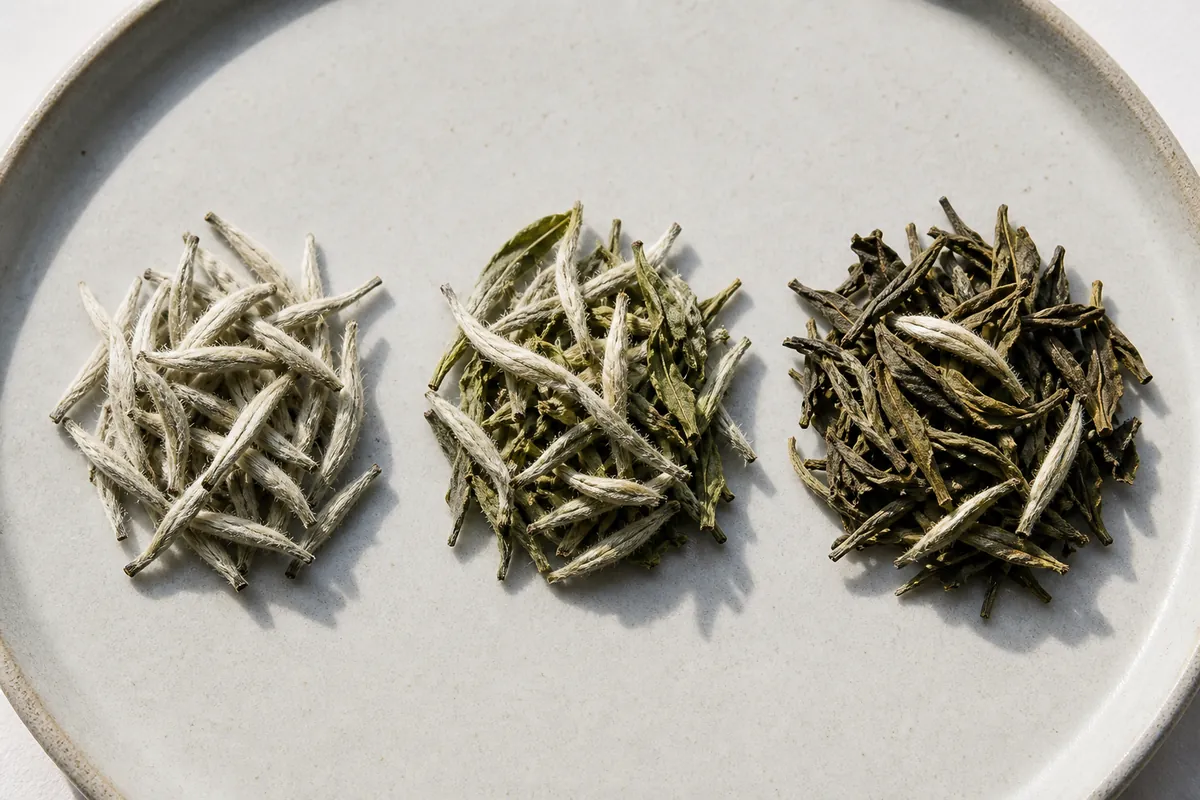
The downy white hairs on those buds are called trichomes, and they survive drying to sit visibly in the finished tea. They give the style its name and they are also the easiest thing on a shelf to fake with a photograph.
Whether the top grade repays the money depends on what you want a cup to do. Anyone who drinks tea for a definite flavour with milk in the morning will find Silver Needle reads as expensive hot water, and a good black tea serves them better for a fraction of it.
Bai Mu Dan is the sensible place to start instead. It costs a small fraction of Silver Needle, carries most of the same character, and has enough body to survive a slightly careless brew, which the bud grades do not.
Why it is the hardest true tea to judge
Quiet is the point rather than a weakness.
The core notes are hay, melon, honey and a faint floral sweetness, with very little astringency and almost no bitterness. Nothing bruised the leaf hard enough to release much of either.
The flavour, and where it comes from
- Sweetness
- From sugars and amino acids left intact by minimal handling
- Hay and dried grass
- From the long wither, which is a slow drying rather than a cooking
- Honey and melon
- Develops during withering, and deepens slightly with age
- Astringency
- Very low. Nothing bruised the leaf hard enough to release much
- Body
- Light, and easily overwhelmed by hard water or a strongly flavoured cup
That quietness is why white tea is defeated by its surroundings more often than by bad brewing. Hard water buries it, since the mineral content that gives a black tea body simply flattens something this light, which brewing water covers in full.
A mug that last held coffee does the same job. So does a teapot previously used for a scented tea, and so does drinking it too hot, because the aroma compounds carrying most of its character are gone before the cup reaches your mouth.
The practical rule that follows is nearly the opposite of how black tea is served. White tea has to be the strongest flavour present, which rules out milk, sugar, lemon and any dish carrying much salt, fat or spice.
Judging quality has the same problem. A dull cup might be a poor tea, or a good tea in the wrong water, at the wrong temperature, in the wrong cup, and white tea problems is mostly a list of ways to tell those apart.
Cool water and a long steep, which sounds backwards
The standing advice is cool water and a long steep, which sounds like the wrong combination for a delicate tea.
Starting point
- Water
- 75 to 85 C
- Steep
- 2 to 5 minutes, longer than green tea
- Leaf
- 2 to 3 g per 200 ml, and it is very light so this looks like a lot
- Infusions
- Three or more from good bud-heavy leaf
The leaf is whole and unbroken, so it gives up what it has slowly. A short steep produces something close to hot water, which is where white tea gets its reputation for being weak.
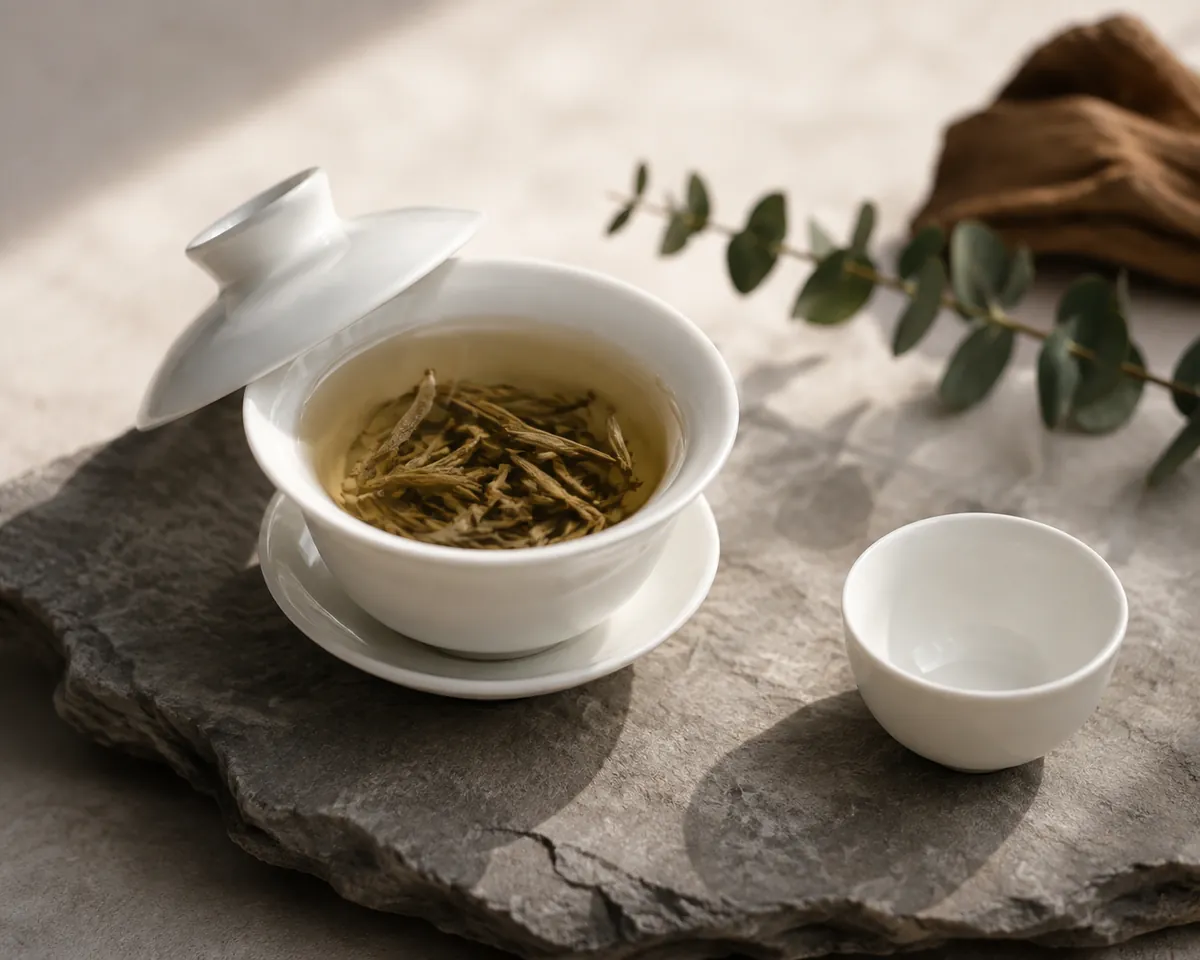
Temperature and time are pulling in opposite directions on purpose. The cool water protects the sweetness and the long contact makes up for how little the leaf releases, and steeping temperature sets that trade-off out across every style.
A small vessel earns its place here more than it does with a robust tea. Brewing in a gaiwan lets you pour off completely and taste each infusion separately, which is the only reliable way to find out whether a tea is thin or you were.
Caffeine, and a myth that will not go away
White tea is widely described as the lowest-caffeine true tea, and that is not reliably true.
Caffeine concentrates in the buds of the plant. Silver Needle is nothing but buds, so a bud-heavy white tea can carry as much caffeine as a green tea and sometimes more.
What lowers the figure in a real cup is the brewing rather than the category. Cooler water and whole unbroken leaf extract less than hot water and broken leaf would, so the same tea gives very different numbers depending on how it was made.
If the category name is unreliable, the plucking standard is the better clue. More buds means more caffeine is likely, which puts Shou Mei at the low end and Silver Needle at the high end, exactly the reverse of what the price ladder suggests.
That reversal catches people out often enough that white tea caffeine exists to lay the figures out properly. Nothing about the pale colour of the liquor predicts the number.
Fujian, and the origins that came after it
One province made this style and then, over a few decades, stopped being the only place that did.
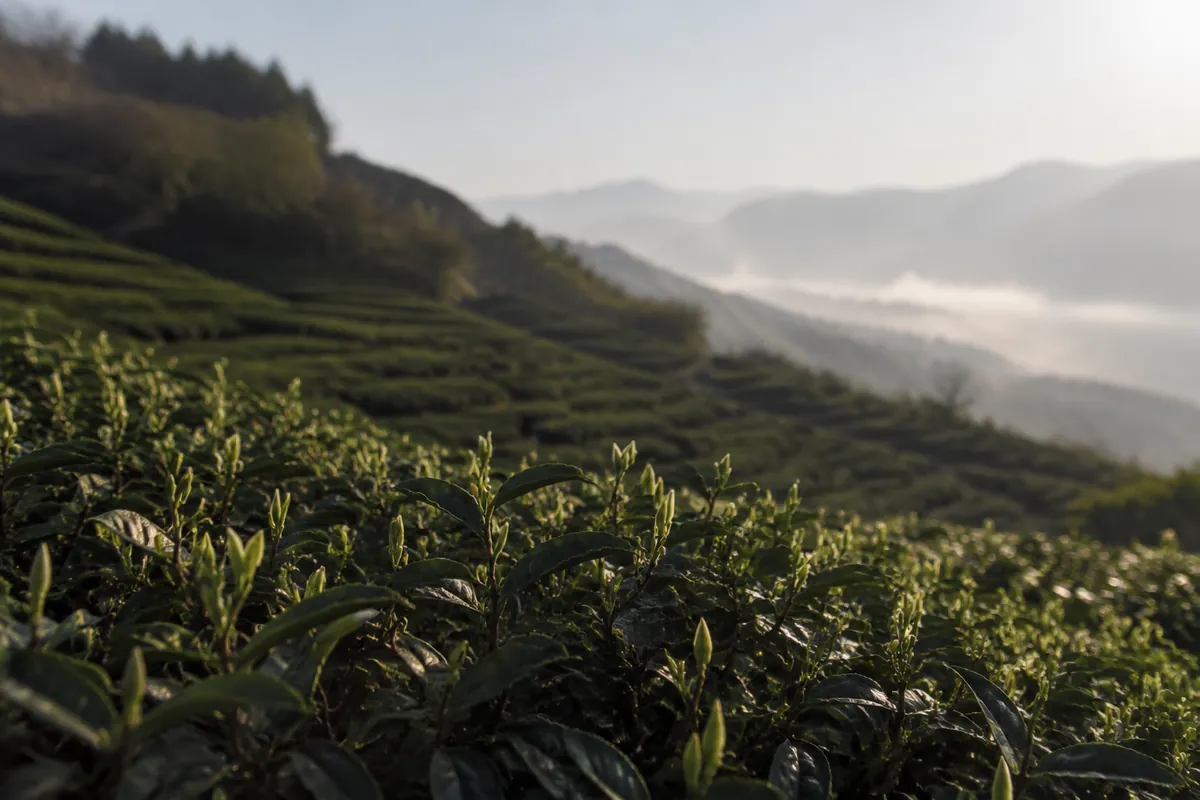
Fujian is the traditional home, and both Silver Needle and Bai Mu Dan originate there, from cultivars bred for large downy buds. The names describe teas from those specific plants as much as they describe a processing standard.
Production has since spread to Yunnan, Nepal, India, Sri Lanka and Kenya, and those newer origins produce genuinely different teas rather than imitations. A Kenyan white made from a local cultivar tastes little like a Fujian Silver Needle, and neither one is a counterfeit of the other.
Darjeeling makes a white tea worth knowing about for the same reason. It comes from the same bushes that give the region its famous partly oxidised Darjeeling black tea, so it carries a muscatel note no Chinese white has.
The buying consequence is that origin matters more here than the grade name does. Silver Needle from an unnamed source tells you the plucking standard and nothing about the plant, and the plant is doing at least half the work.
Reading a packet of white tea
White tea is the easiest true tea to overpay for, because every visual cue that signals quality is easy to imitate.
Reading a white tea
- Downy buds
- Visible silver hairs are a genuine sign of a bud-heavy pluck
- Uniformity
- Consistent size and colour suggests careful sorting
- Colour
- Pale silver-green is normal. Browning suggests age or a poor wither
- Aroma
- Dry leaf should smell sweet and faintly of hay, never musty
- Price
- Silver Needle is expensive everywhere. A cheap one is usually Shou Mei
Age is harder to read here than in any other tea, because a slightly aged white tea is not a fault. What you are trying to establish is whether it was aged deliberately in suitable conditions or simply left on a shelf in a warm shop.
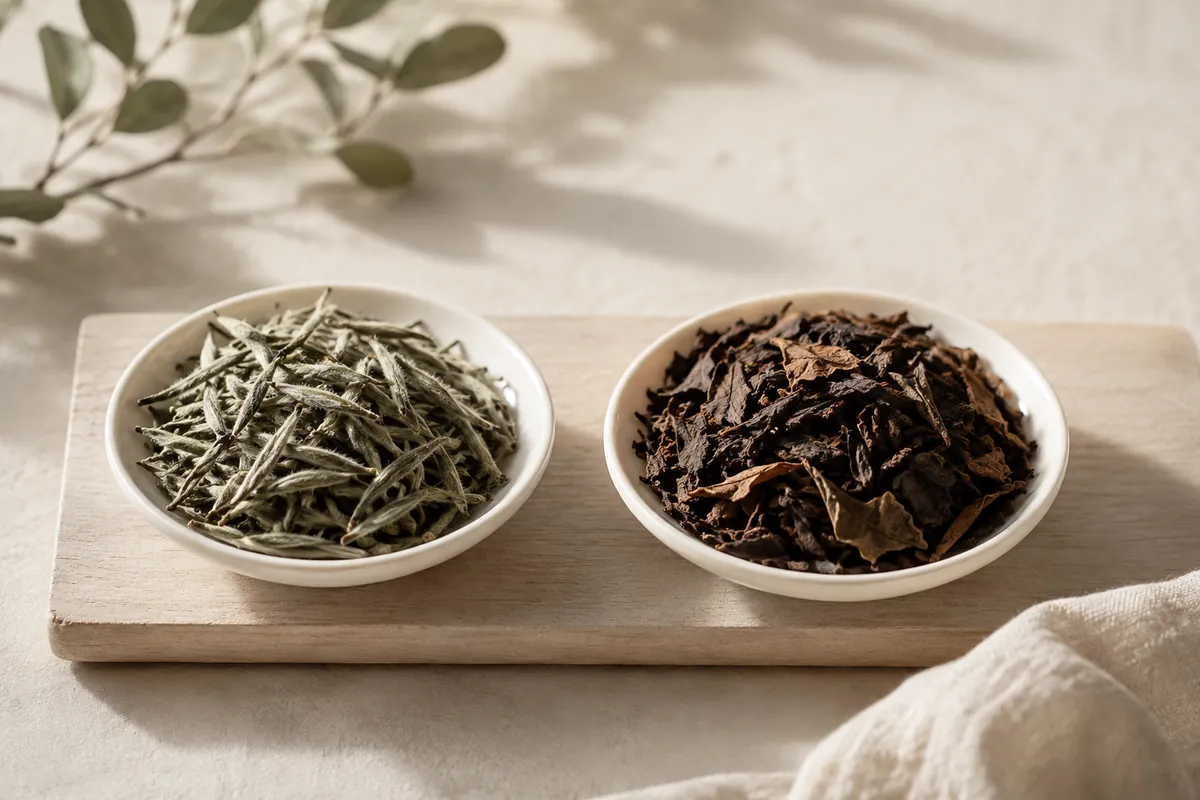
A tea sold as aged should say so, and should say when it was made. Silence about the age plus a brown leaf usually means old rather than aged, and the two are worth very different money.
The other trap is the word blend. White tea mixed with fruit or flower flavourings is common and cheap, and the delicacy that makes the base expensive is the first thing a flavouring covers over.
Smell is the check that costs nothing. Sweet and faintly of hay is right, flat means tired, and anything musty means the tea took on moisture somewhere between the wither and the shop.
Ageing it on purpose, and storing it by accident
White tea is one of two true teas that people deliberately keep for years, and the other is pu-erh.
Pressed white cakes, particularly Shou Mei, change substantially over time. The hay notes deepen toward dried fruit, honey and something closer to a light black tea, and the price of a well-kept cake climbs with them.
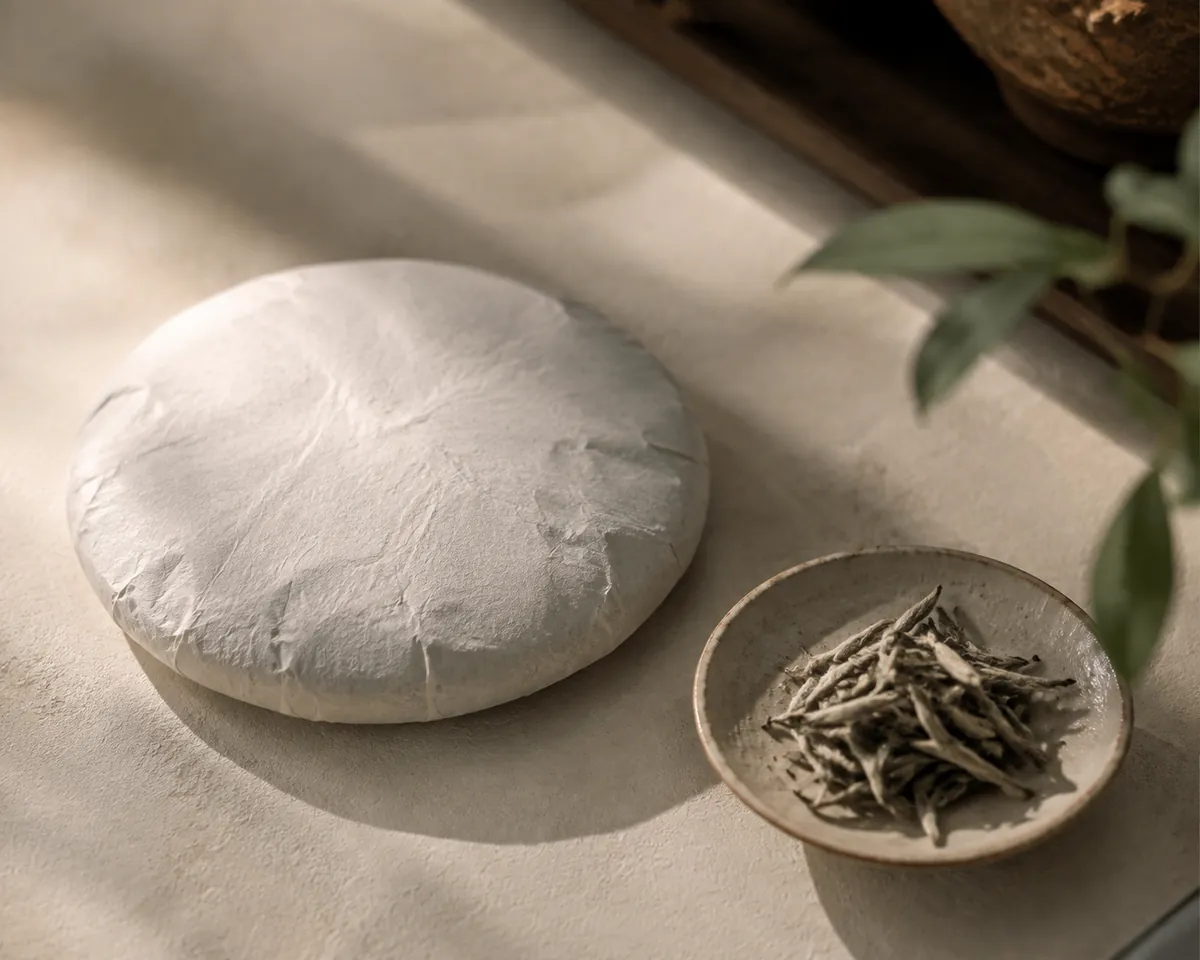
That change is a slow non-enzymatic one rather than the microbial activity that ages a pu-erh cake.
Ordinary loose white tea kept in a sealed tin does not develop in the same way. It simply fades, which is why ageing is a deliberate decision about format rather than a default that happens to any leaf left alone.
For everyday leaf the handling sits between green and black tea. The light oxidation during withering means there is less left for air to change than in a green tea, and the leaf is whole and open rather than tightly rolled, so a great deal of surface is exposed.
- Use an opaque airtight tin rather than a clear jar. Light fades it quickly.
- Keep it away from anything aromatic. Unrolled leaf absorbs odours readily.
- Do not refrigerate loose leaf. Condensation on opening does more harm than warmth.
- Expect one to two years for ordinary loose white tea before the sweetness dulls.
Pressed cakes are the exception to every line of that, since they are kept in paper precisely so they can go on changing. The container question across all the other styles is set out in storing loose-leaf tea, and storing white tea covers where this one departs from it.
Why cold brewing suits it better than any other tea
Subtlety turns from a liability into an advantage the moment the water is cold.
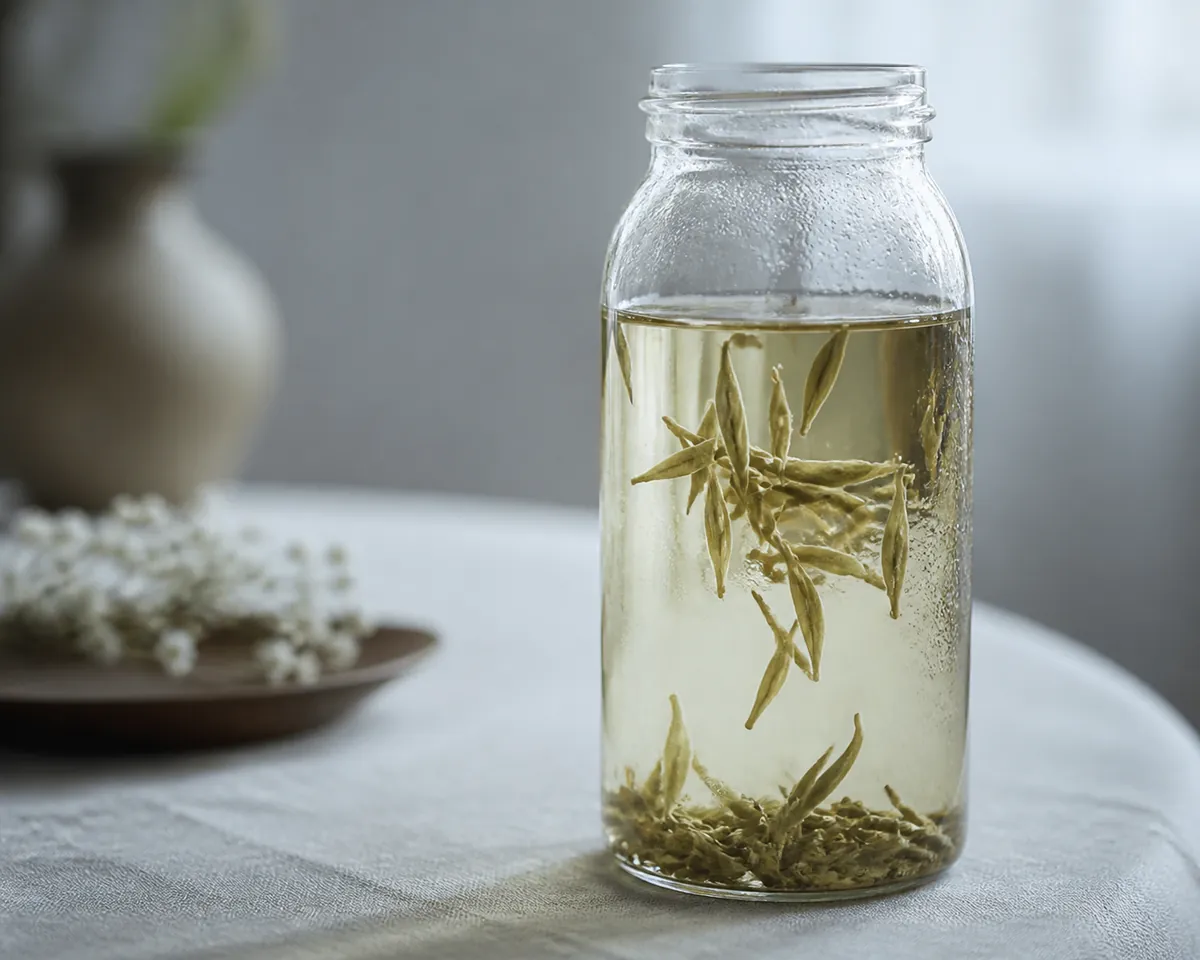
Cold water extracts sweetness and amino acids readily while leaving most of the astringent compounds behind. In a tea that had very little astringency to start with, the result is unusually clean.
Cold brew white tea
- Leaf
- 3 to 4 g per 500 ml, more than you would use hot
- Water
- Cold, straight into the fridge
- Time
- 6 to 10 hours
- Result
- Sweet, floral, almost no bitterness at any duration
It is also close to impossible to over-brew. Leaving it twelve hours instead of eight makes it slightly stronger rather than harsh, which is not true of any hot steep and not true of most cold ones either.
That second use is worth the small effort given what bud-heavy white tea costs. Pouring a hot brew over ice is the one route to avoid, because the melt dilutes exactly the delicate sweetness cold brewing was protecting.
White tea against green tea
These two are the pair most often confused, and the differences between them stay consistent enough to be worth learning as a set.
| White | Green | |
|---|---|---|
| Processing | Withered and dried | Heated within hours to stop oxidation |
| Oxidation | Slight, from air during withering | Prevented deliberately |
| Leaf | Whole, unrolled, often bud-heavy | Rolled and shaped |
| Flavour | Hay, honey, melon. Very low astringency | Grassy, vegetal, marine. Noticeably astringent |
| Water | 75 to 85 C | 70 to 80 C |
| Steep | Longer, 2 to 5 minutes | Shorter, 1 to 3 minutes |
| Forgiveness | Hard to ruin | Easy to make bitter |
The counterintuitive line in that table is the steep time. White tea wants longer despite being the more delicate of the two, because its leaf is whole and unbroken while a green tea's has been rolled and shaped.
Rolling is what makes a green tea quick to extract and quick to overshoot, which is the other half of why green tea bitters so readily. A white tea has no equivalent cliff to fall off.
Which one suits you is largely a question of what you want a tea to do. A green tea announces itself and a white tea does not, and anyone who has found how white tea tastes underwhelming has usually met it through a bag rather than through leaf.
What is in a supermarket white teabag
Bagged white tea and whole-leaf white tea are closer to different products than they are for any other style, and the gap is wide enough to be worth setting out plainly.
| What differs | In a supermarket bag | Whole leaf |
|---|---|---|
| Grade | Broken Shou Mei, the lowest grade | Silver Needle, Bai Mu Dan, or whole-leaf Shou Mei |
| Leaf state | Cut small enough to extract in three minutes | Intact buds and leaves |
| Extraction | Fast and uneven, because broken leaf gives everything up at once | Slow and even |
| What you get | Closer to a weak black tea | The subtle infusion this page describes |
A white teabag is almost always broken Shou Mei, cut small enough to give a result in three minutes. Bud grades are never used, because the entire point of a bud grade is that the bud stays intact.
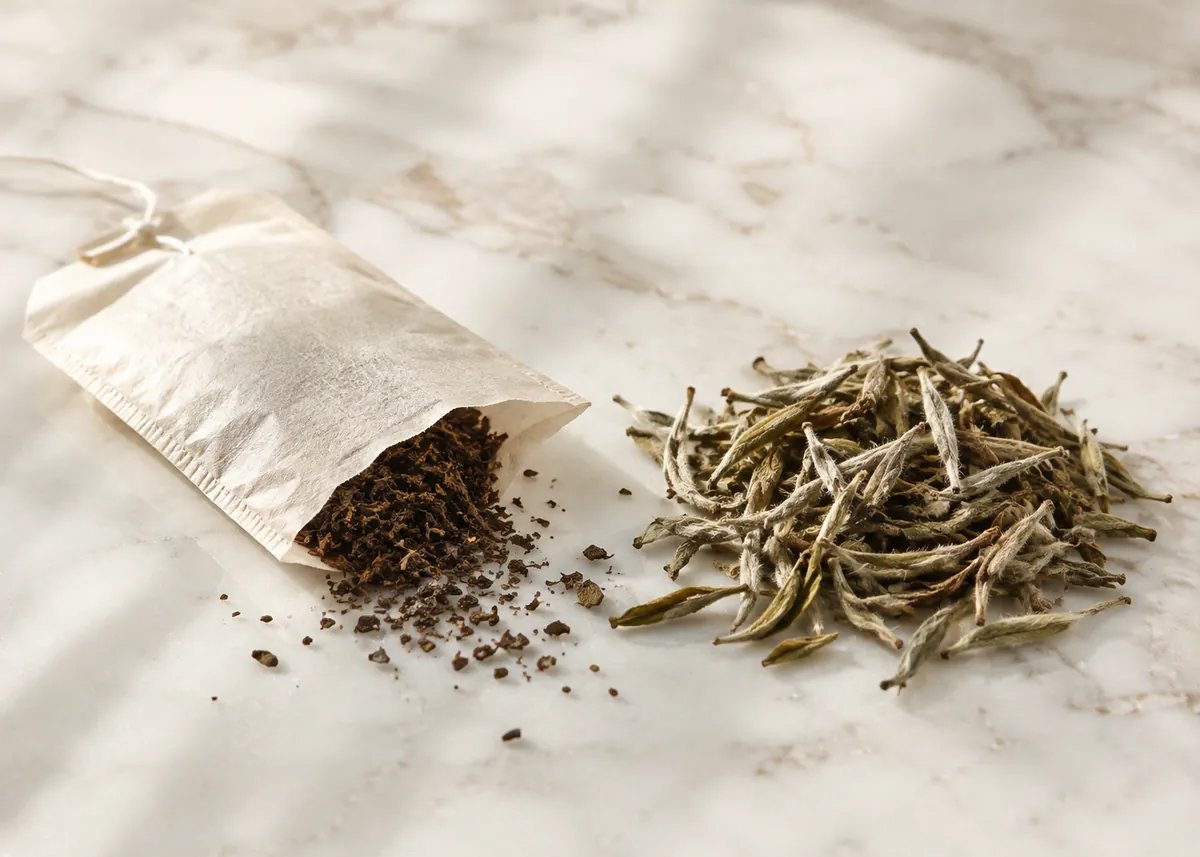
That cut changes the brewing rather than merely the quality. Broken leaf extracts fast and unevenly, so a bag left for the time printed on the box produces something closer to a weak black tea than to anything described further up this page.
Judging the style on a teabag is therefore a genuine mistake rather than snobbery. Loose leaf is not a refinement for white tea, and making white tea assumes the intact leaf throughout.
Common questions
Is white tea really the least processed tea?
Yes, in the sense that it has the fewest deliberate steps: withered and dried, with no fixing and no rolling. It is not unprocessed, because withering is a long and closely managed stage.
Why is Silver Needle so expensive?
Yield. It is made from unopened buds only, picked by hand in a short spring window, and a hectare produces a small fraction of what a leaf-and-bud pluck would.
Does white tea have less caffeine than green tea?
Not reliably. Caffeine concentrates in the buds, so a bud-heavy white tea can carry as much as green tea or more. Cooler water and whole leaf extract less, which is what usually lowers the figure in the cup.