Brewing Water, and Why 98 Per Cent of the Cup Is Not Neutral
Coffee is roughly 98 percent water by weight, and tea more still. Water is not a neutral background to a drink, it is the largest ingredient in it.
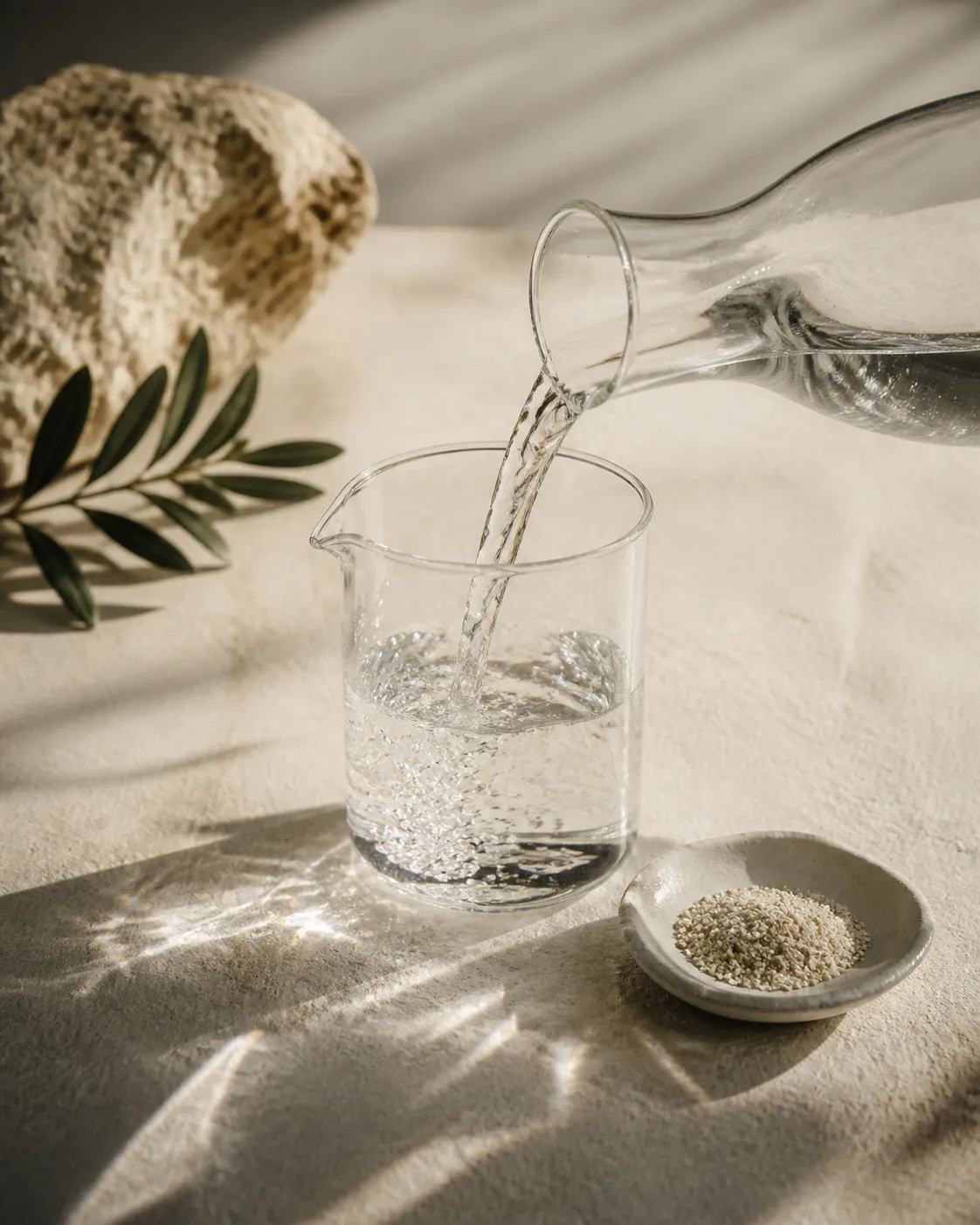
If a coffee tastes different at a friend's house using the same beans, the same grinder, and the same method, the water is the most likely explanation. It is the ingredient people are least likely to consider and the one present in the largest quantity.
A cup of coffee is about 98 per cent water, and a cup of tea slightly more. Everything else on the counter, the grinder and the scales and the beans themselves, is adjusting the remaining two per cent.
Water, as an ingredient
- Share of the cup
- About 98 per cent for coffee, a little more for tea
- The three properties that matter
- Hardness, alkalinity and chlorine
- What hardness does
- Dissolved calcium and magnesium help pull flavour out of the grounds or leaf
- What alkalinity does
- Neutralises acidity, which is what flattens a bright coffee
- What chlorine does
- Adds a chemical edge and dulls aromatics, most audibly in tea
- Where the figures come from
- Your supplier's water report for your postcode, published free
Hardness, alkalinity and chlorine, which are three separate things
Three properties matter for brewing, and the trouble starts with the fact that two of them usually rise and fall together in a given supply while doing quite different jobs in the cup.
The three that change the cup
- Hardness
- Dissolved calcium and magnesium. These minerals actively help extract flavour compounds from coffee and tea.
- Alkalinity
- The water's capacity to neutralise acid, mostly from bicarbonate. High alkalinity flattens the bright, acidic notes in coffee.
- Chlorine
- Added by water utilities to keep supplies safe. It is not harmful in a drink but it is easy to taste, and it dulls aromatics.
Hardness and alkalinity are separate properties doing separate jobs, and conflating them is where most water advice goes wrong. Hardness is a helper up to a point, since without dissolved mineral there is nothing for the flavour compounds to travel with.
Alkalinity is almost never a helper, because its whole function is to cancel acidity, and acidity is a large part of what a good light-roast coffee is for.
Mineral content, and what the cup does
- DistilledExtracts poorly, thin and hollow
- Very softThin and sour, not enough mineral to extract with
- ModerateFull and sweet, with clear acidity
- HardFlat and dull, the brightness is neutralised
- Very hardChalky, and it scales the kettle fast
| Water | In coffee | In tea |
|---|---|---|
| Very hard, high alkalinity | Flat and dull. The brightness is neutralised and the cup reads chalky. | Dull and muted. A scum can form on the surface of black tea. |
| Very soft, low mineral | Thin and sour. Not enough mineral content to extract properly. | Thin and sharp, without body. |
| Distilled or deionised | Poor. Extraction is genuinely impaired without minerals. | Flat and lifeless. |
| Chlorinated | A noticeable chemical edge over everything else. | Particularly obvious, since tea has less to mask it. |
| Balanced, moderately mineral | Full, sweet, with clear acidity. | Clean and full, with the leaf's character intact. |
The two failure modes pull in opposite directions, which is why a fix aimed at one of them makes the other worse, and why blanket advice to filter or to buy the softest bottle on the shelf helps some kitchens and ruins others.
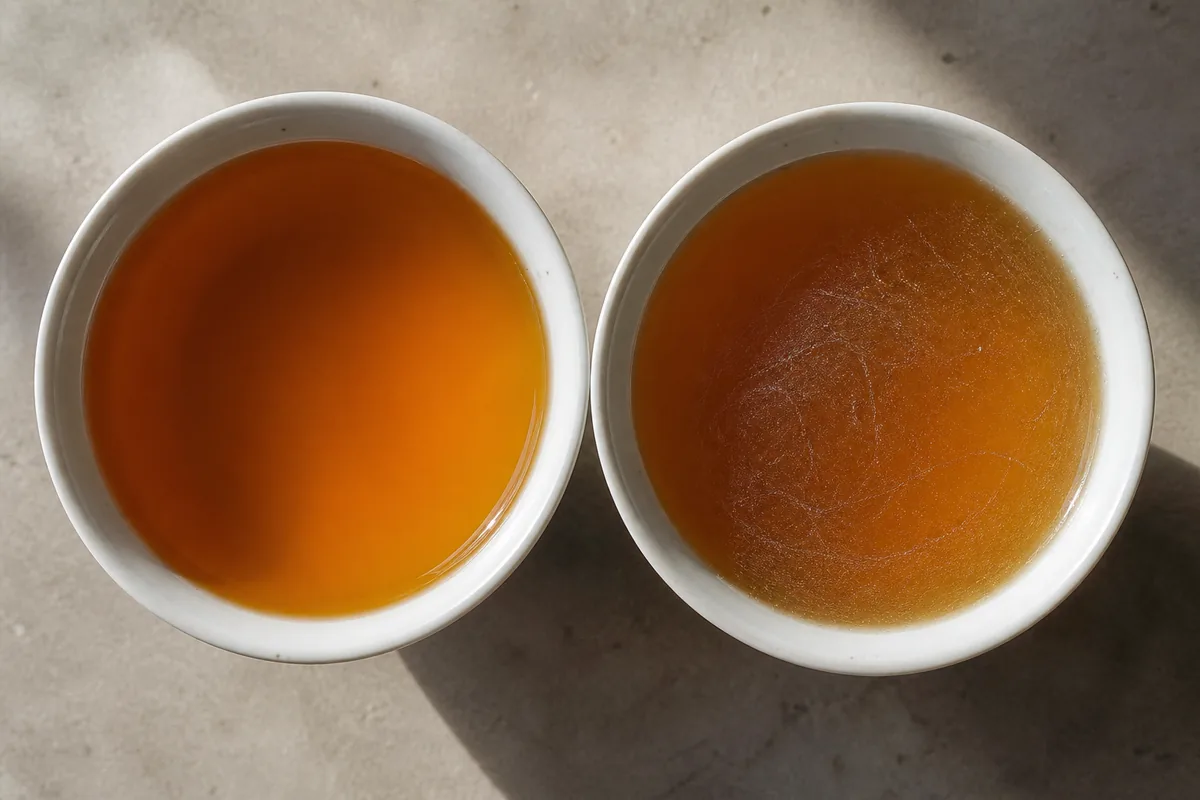
That film on the second cup is the classic hard-water tell in black tea, and it is calcium binding to the leaf's polyphenols rather than anything the leaf did wrong. Neither extreme announces itself in a glass of water on its own, which is the awkward part: the cup is usually the first place anyone notices.
The cheap fixes first, and what a filter jug cannot do
In rough order of effort and cost, four of these five cost nothing at all.
Practical steps
- Use fresh cold waterDraw it fresh and heat it once. Water reboiled repeatedly has lost dissolved gases and tastes noticeably flatter.
- Let chlorine offStanding water in an open jug for an hour lets much of the chlorine dissipate. Costs nothing.
- Use a carbon filterA jug filter removes chlorine effectively. It reduces hardness only partially, so it is a chlorine fix more than a hardness fix.
- Try bottled water as a testBuy a low-mineral bottled water and brew the same coffee with it. If the result is clearly better, your supply is the problem and you know it is worth solving.
- Consider your descaling routineHard water scales kettles and machines quickly, and heavy scale affects both temperature stability and taste.
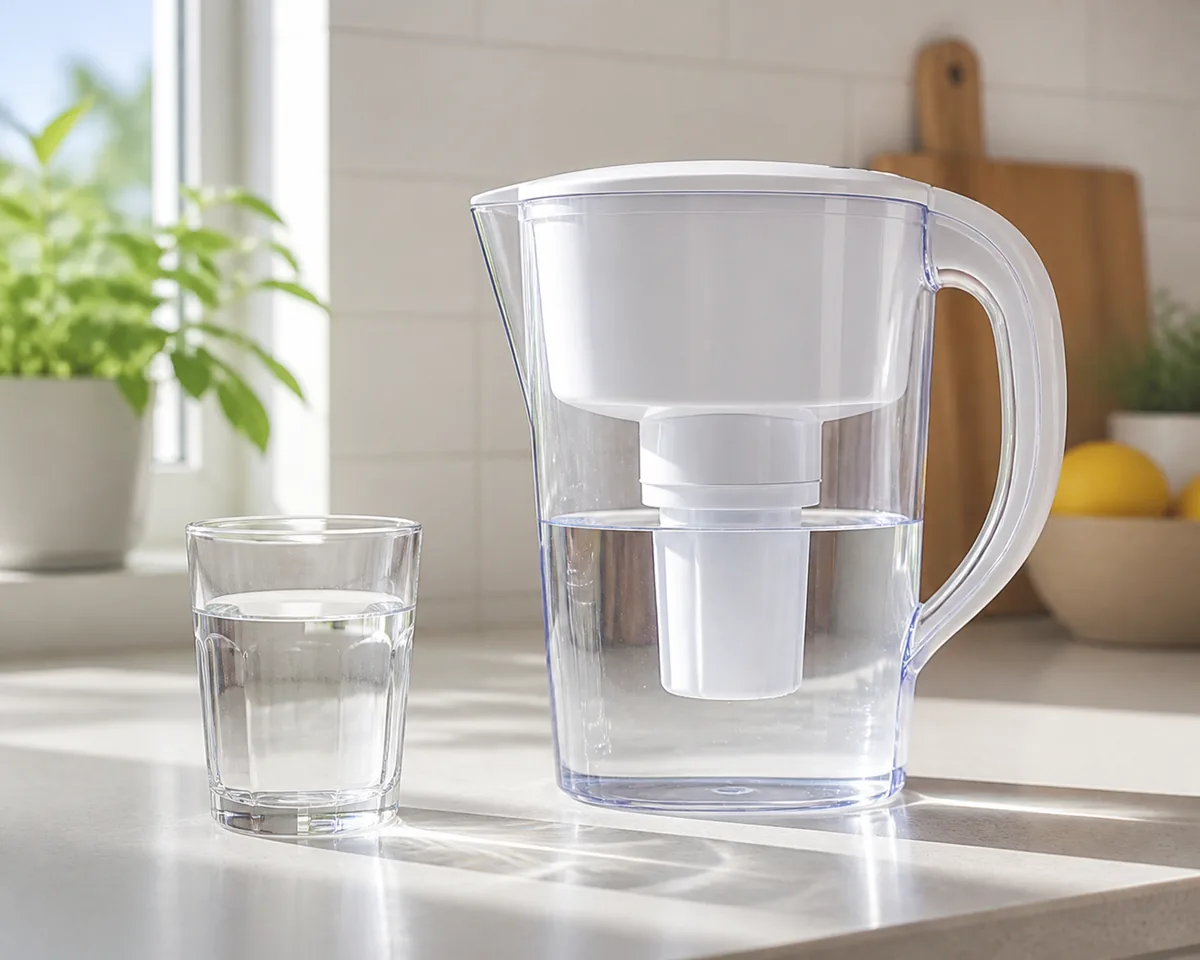
The one purchase worth making early is the third step, and it is worth being precise about what it buys you, because filter jugs are routinely bought expecting something they do not deliver.
- Removes chlorine well. This is what activated carbon is genuinely good at, and it is usually the most audible improvement.
- Reduces hardness partially. Ion-exchange resin in the cartridge softens somewhat, and the effect fades as the cartridge ages.
- Does not add minerals. If your water is already very soft, a filter cannot fix that and may make it slightly worse.
- Does not fix high alkalinity reliably. That is the property most responsible for flat coffee, and it is the hardest to shift at home.
So a jug is the right first purchase for most people and the wrong one for anybody whose supply is already soft. In that case the answer runs the other way, towards a bottled water with a moderate mineral content, and no amount of extra filtration will help.
Start with the cheapest option that fits your water, since most people are fixing a mild problem and do not need a mineral recipe to do it.
Which drinks expose bad water first
Water matters more the more delicate the drink, and the reason is simply arithmetic: the less dissolved material a drink carries of its own, the larger a share of what reaches the tongue comes from the tap.
How much a drink hides its water
- EspressoVery concentrated, and a dark roast masks a great deal
- Dark-roast French pressHeavy body and roast character over the top of it
- Instant coffeeThe powder brings its own flat character, which dominates
- Light-roast pour-overLittle to hide behind, and acidity is the first casualty
- Green tea and white teaAlmost nothing between the water and the palate
If you have invested in better beans or better leaf and the results have been disappointing, water is worth testing before anything else, ahead of a new grinder and ahead of any change to the recipe. It is a common hidden cause behind green tea that tastes bitter, where hard water strips the sweetness that would otherwise balance the astringency and leaves the harsh half of the cup standing alone.
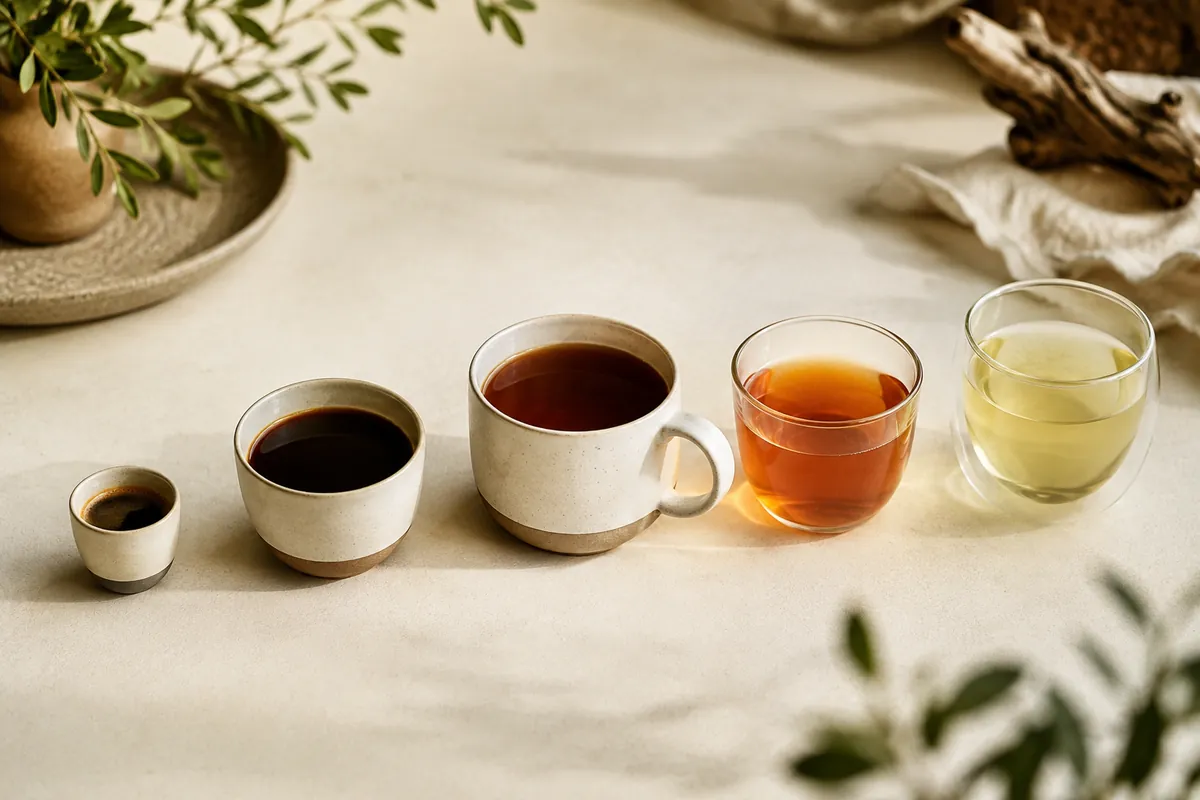
The same logic applies in reverse to anything strong. Nobody diagnoses their water from an espresso machine shot, because the drink is dense enough to carry a mediocre supply, and that is exactly why a household can drink acceptable coffee for years and still make disappointing tea.
Limescale, and the kettle you heat the water in
Hard water leaves calcium carbonate deposits on any heating element, which begins as a maintenance question and turns into a flavour one. Scale insulates the element, so a scaled kettle heats less predictably and a scaled machine drifts off its target temperature, and a kettle that takes noticeably longer to boil than it used to is furred rather than failing.
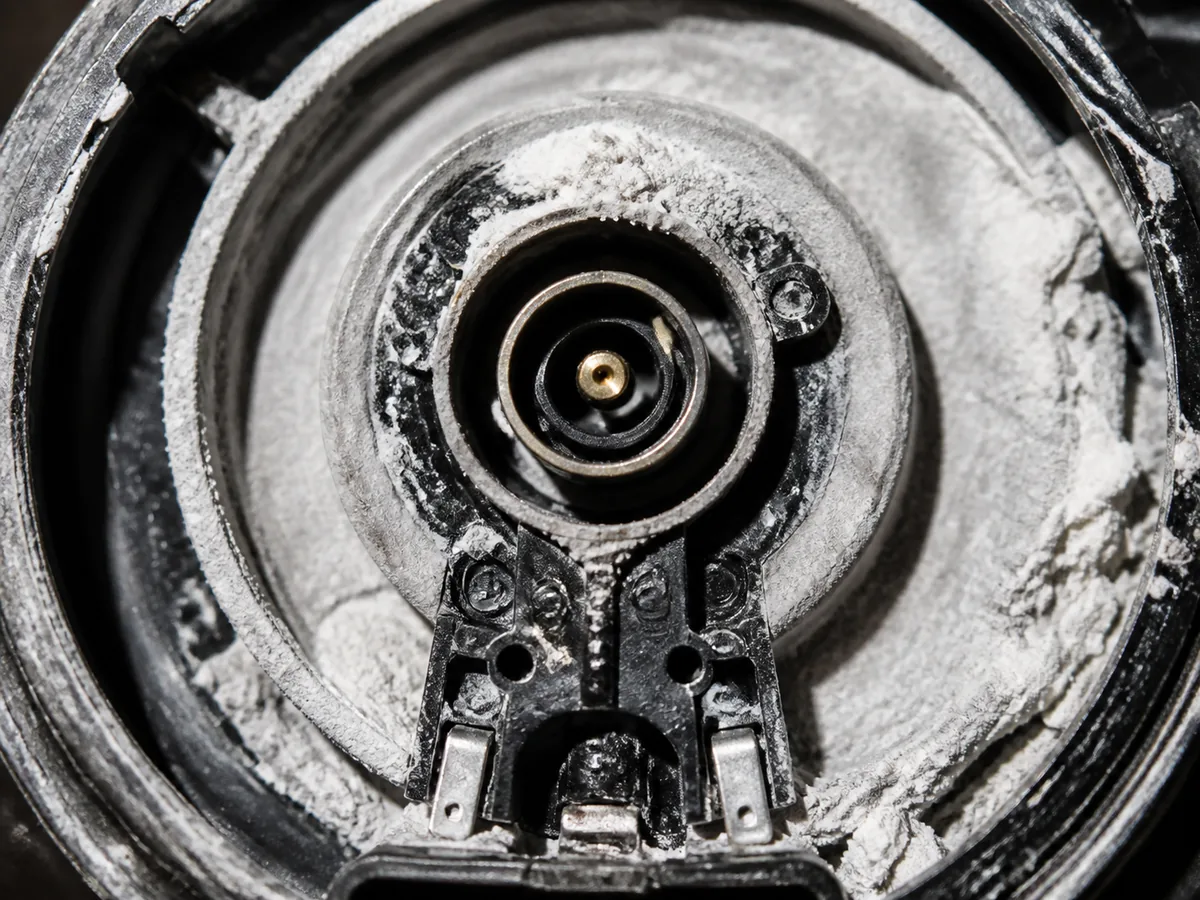
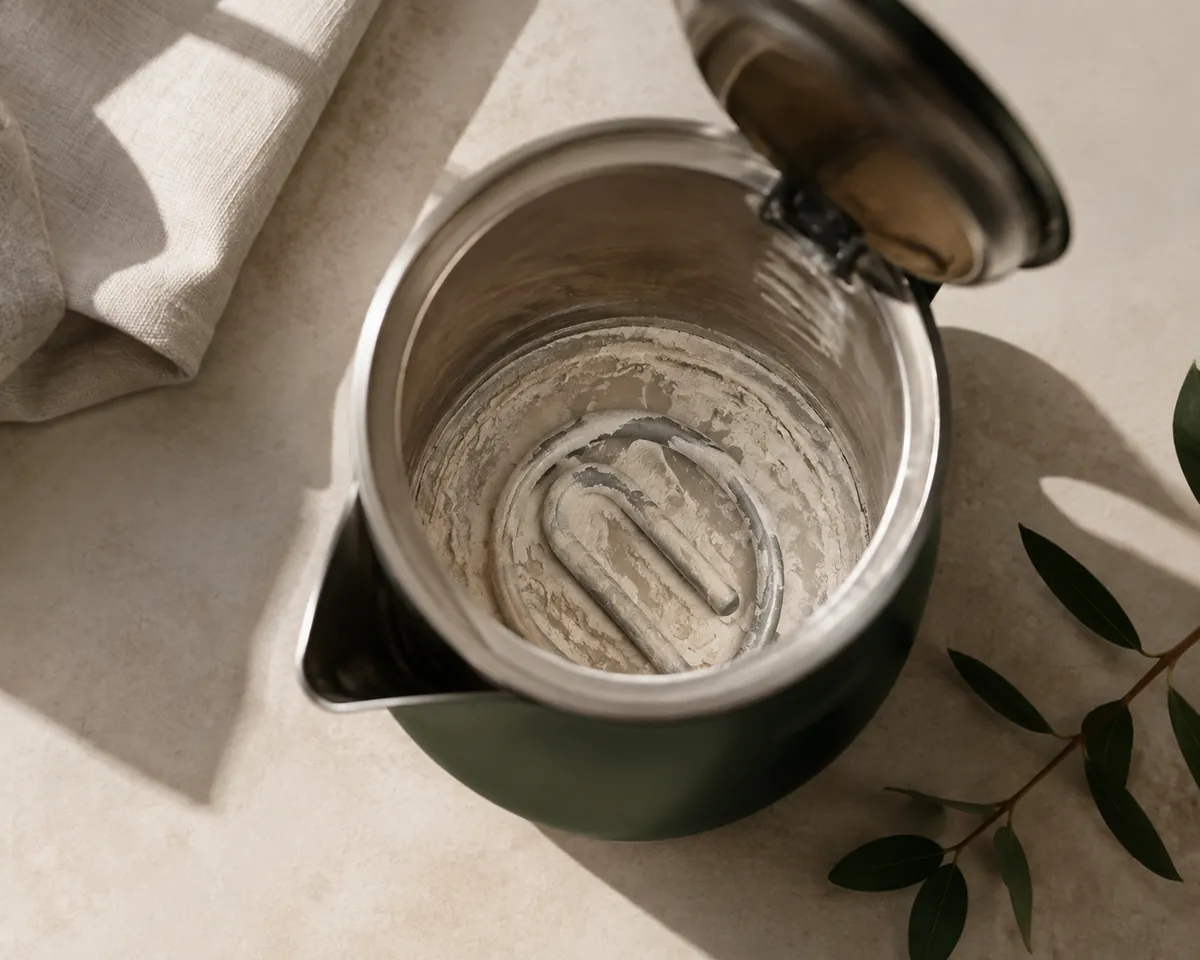
A scaled kettle also sheds particles into the water, and both effects reach the cup. Descale on the schedule the manufacturer gives and then halve the interval if you live somewhere hard, because those schedules are written for average supplies and a hard-water kitchen is not average.
Reboiling is the other habit worth changing, and it costs nothing to change. Water boiled repeatedly loses dissolved oxygen and tastes noticeably flatter, which is easiest to detect in a delicate tea and hardest in a concentrated coffee, so a gooseneck kettle filled to the line each morning and boiled once is doing something a full kettle reboiled four times is not.
- Draw fresh cold water for every brew rather than topping up what is already there.
- Boil once, and pour while the water is still moving.
- Empty the kettle at the end of the day instead of leaving standing water in it.
- Descale on the manufacturer's schedule, more often in a hard-water area.
- Rinse thoroughly after descaling; the acid used is easy to taste in the next cup.
The published targets, and the one figure to read first
The Specialty Coffee Association publishes a brewing water standard, and although it was written for coffee, the reasoning behind each figure is worth having in front of you when you open a water report for the first time.
What the standard asks for
- Total dissolved solids
- Around 150 mg per litre, acceptable between 75 and 250
- Calcium hardness
- Around 68 mg per litre as calcium carbonate, between 17 and 85
- Alkalinity
- Around 40 mg per litre as calcium carbonate. This is the one that flattens coffee
- pH
- Between 6 and 8, and close to 7 is fine
- Sodium
- Around 10 mg per litre. Low, and it contributes nothing to extraction
- Chlorine
- None detectable
Alkalinity is the figure to look at first, because it is the property most responsible for a flat cup and the one least visible from taste alone. A moderately alkaline water tastes perfectly pleasant on its own, which is why nobody suspects it, and it goes on quietly cancelling the acidity that a good light roast or a fresh bag of stored beans was supposed to deliver.
Most tap supplies sit above that alkalinity target and comfortably inside the hardness range, which is why the common British fault is dullness rather than thinness. A supply below 75 mg per litre of total dissolved solids is the less common problem and much the harder one to fix, since filtering can take things out and cannot put anything back.
Tea wants softer water than coffee does
The targets above were written for drip coffee and espresso, and tea is not the same problem at a lower concentration. It is a different problem, because the mineral that helps a coffee is the mineral that binds to a tea polyphenol.

Tea carries far less dissolved material than coffee, so the water is a larger share of what reaches the tongue and its faults are much less well hidden. Chlorine is obvious in a green tea and largely masked in a dark roast.
High calcium produces the film on a cup of black tea and flattens the sweetness in a delicate sencha noticeably, which is why softer water suits tea better than it suits coffee.
Green and white tea
Soft, low-mineral water. Around 30 to 80 mg per litre TDS
Black tea
More tolerant. Moderate hardness is fine and some traditions prefer it
Coffee
The SCA range above, at roughly double the mineral content tea wants
That range is the practical reason a single house filter rarely satisfies everyone under one roof. Water softened to suit a green tea leaves coffee thin, and water set to the coffee target dulls the tea, so a household that cares about both usually ends up keeping two supplies rather than finding one compromise that works.
Mixing your own from distilled water
There is a route that removes the guesswork entirely, and it is more accessible than it sounds. Start from distilled or reverse-osmosis water, which has nothing in it at all, then add back exactly what you want.
Two ingredients cover it: magnesium sulphate, sold in any chemist as Epsom salt, for extraction, and sodium bicarbonate for buffering.
A simple brewing water
- Base
- 1 litre of distilled or RO water
- Magnesium sulphate
- 0.5 g, dissolved fully
- Sodium bicarbonate
- 0.2 g
- Result
- Roughly 100 mg per litre TDS with modest alkalinity
- Note
- Weigh with a 0.01 g scale, or make a concentrate and dilute it
Making a strong concentrate and adding a measured quantity to each litre is far easier than weighing tenths of a gram every morning, and two bottles dosed by pipette is how most people who do this actually do it. The magnesium is doing the extraction work, so a version with more magnesium and less bicarbonate brews brighter, which is the adjustment to make if your results come out flat.
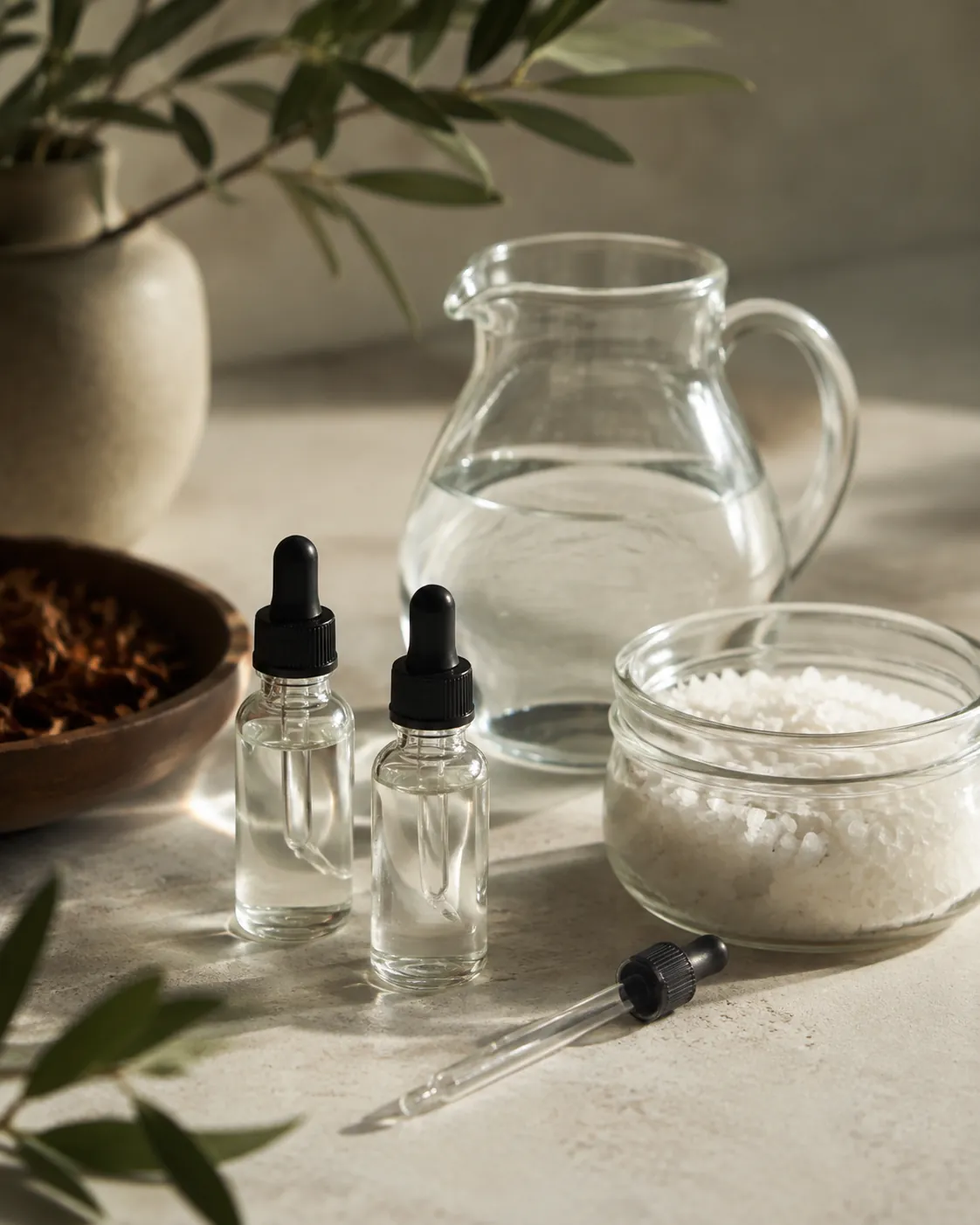
It is worth doing if you have tried everything else and the supply is genuinely the limitation, and it suits an AeroPress or a pour-over where the difference is audible. For most kitchens a jug filter and a bottled-water test are enough, and mixing water is a step past the point of diminishing returns.
Buying bottled water to brew with
Bottled water is the cheapest way to find out whether water is your problem at all, and the label carries everything you need to choose between two of them.
Look for the mineral analysis, which mineral water sets out how to read line by line. What matters here is a moderate dry residue or TDS, somewhere between 50 and 150 mg per litre, and a low bicarbonate figure, since bicarbonate is the alkalinity that flattens a cup.
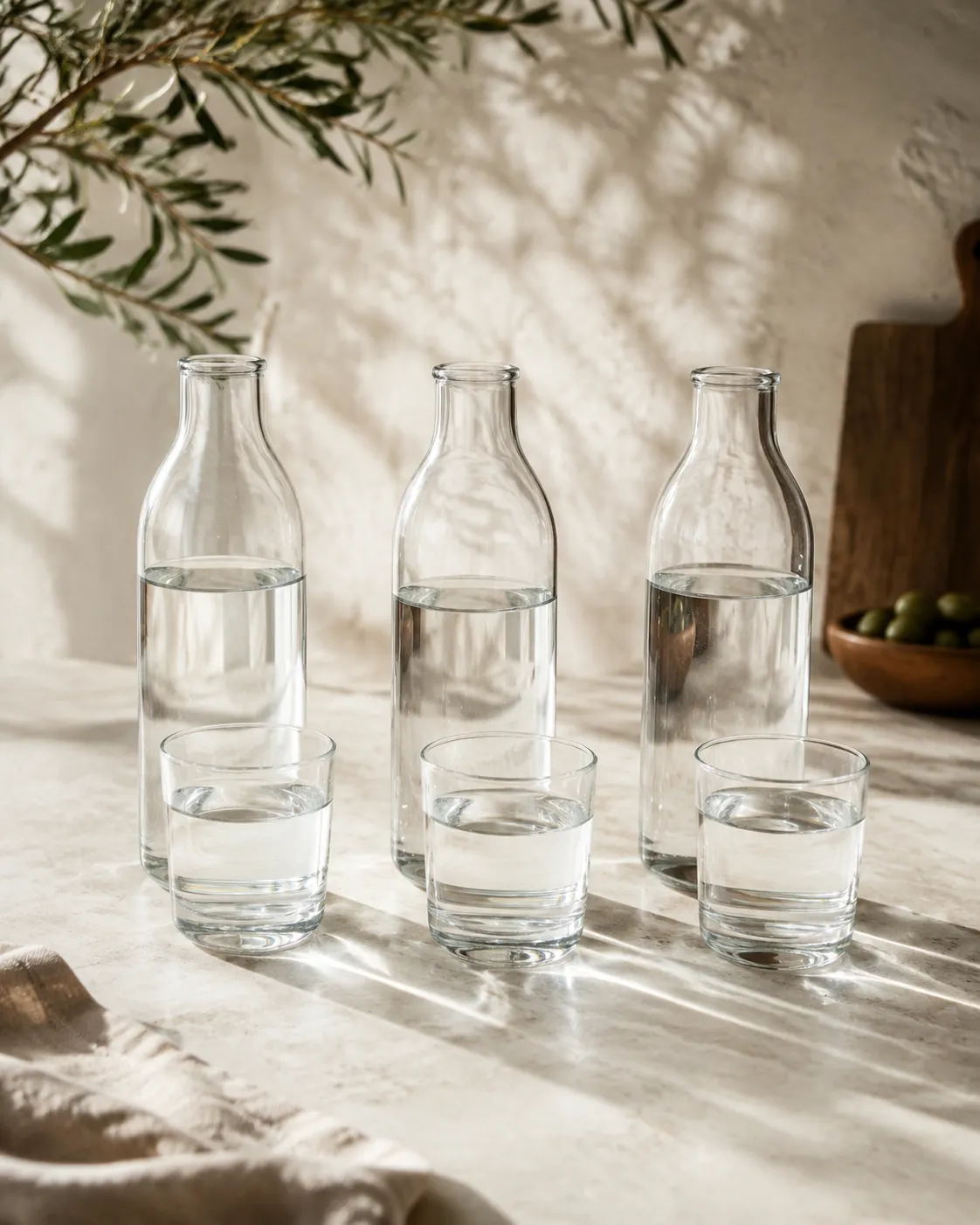
Avoid both extremes rather than just the hard one. A high-bicarbonate water dulls coffee exactly as a hard tap supply does, and a very low-mineral water at under 30 mg per litre extracts poorly and gives you the thin, sour result instead.
The same bottle that makes an excellent cold brew can make a hollow filter cup, because the long steep compensates for weak extraction and a four-minute brew does not.
Reading your own report, and the order to work in
Every supplier publishes a water report for your postcode and the units differ enough between them to cause real confusion, so the first task is translation rather than judgement.
| Figure on the report | What to do with it | Note |
|---|---|---|
| German degrees (dH) | Multiply by 17.8 | Gives mg per litre as calcium carbonate |
| French degrees (fH) | Multiply by 10 | Gives the same units |
| Parts per million | Use as it stands | Already mg per litre |
| Bicarbonate, mg per litre | Multiply by 0.82 | Gives the alkalinity figure the standard uses |
| Total hardness | Compare against 17 to 85 | The SCA calcium hardness range |
Supplies also change through the year, because many networks blend sources seasonally, so a report is an average rather than a promise and water that made good coffee in March can behave differently in September. That is worth knowing before you conclude that a bag of beans has gone stale or that your loose leaf storage has failed.
The order to work in is short. Filter for chlorine first, since it is the cheapest fix and the most audible, then brew with a low-mineral bottled water for a week and see whether anything changes.
If it does, the supply is the limitation and a bottled or mixed water earns its place. If it does not, water was never the problem, and the grind, the dose or the brewing temperature is where to look next.
The same reasoning applies to the ice in a cold drink, where the tap arrives late instead of early.
Common questions
Does water affect the taste of coffee?
Substantially. Coffee is roughly 98 percent water, and the water's hardness, alkalinity, and chlorine content all change what you taste. It is the most common explanation for the same beans tasting different in two kitchens.
Can I use distilled water for coffee?
It is a poor choice. Dissolved minerals help pull flavour compounds out of the grounds, so water with nothing in it extracts badly and produces a thin, sour cup.
Does a filter jug help?
For chlorine, considerably. Carbon filters remove it effectively. They only partially reduce hardness, so they are more of a chlorine fix than a hardness fix.