What Is Gyokuro? What Three Weeks Under Screens Changes
Three weeks under screens changes what is in the leaf before anyone boils a kettle. That single decision in the field explains the price, the savoury taste, and the unusually cool water gyokuro is brewed with.
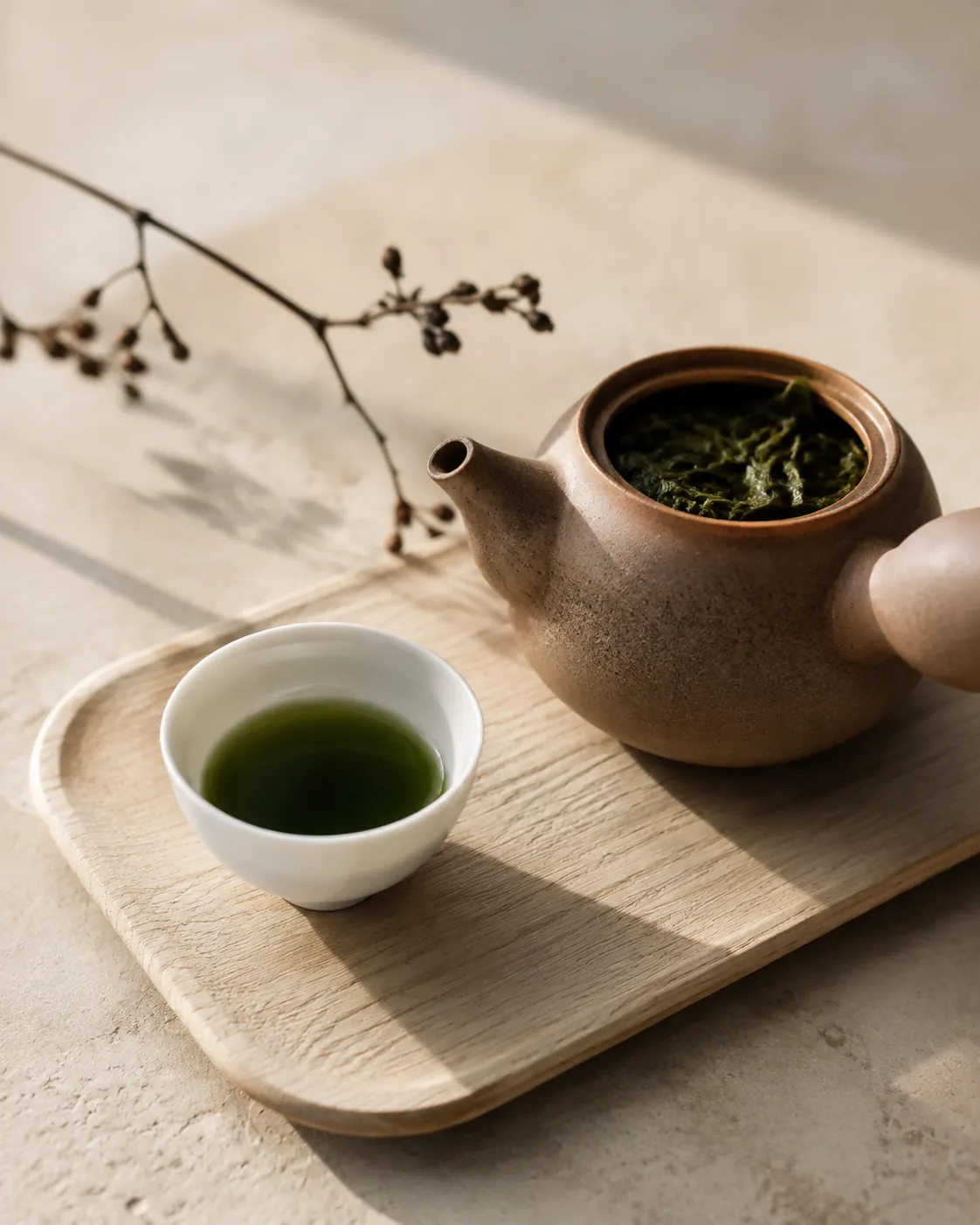
Gyokuro is Japanese green tea grown in the dark. For roughly the last three weeks before picking, screens go up over the rows and the plants finish their growth under heavy shade, and nearly everything unusual about the tea follows from that one intervention.
Sencha off the same estate, from the same bushes and the same spring, will taste nothing like it. Shaded leaf comes out sweeter, thicker and openly savoury, and it wants water so cool that most people brewing it for the first time assume something has gone wrong with the kettle.
The name translates as jade dew. It is the most expensive tea most drinkers will ever make at home by the cup, and it is also the one most reliably ruined on the first attempt, because every habit built on ordinary green tea works against it.
Gyokuro at a glance
- What it is
- Japanese green tea shaded for about three weeks before picking, then steamed and rolled
- Why it is shaded
- Low light leaves more theanine in the leaf and slows catechin development
- Water
- 50 to 60 C, cooler than anything else on this site
- Leaf
- Around 10 g per 100 ml, several times a sencha dose
- First steep
- 90 seconds to two and a half minutes
- Reads as
- Dashi broth, sweet peas and seaweed, with almost no drying grip
- Grown in
- Uji in Kyoto, Yame in Fukuoka, and Asahina in Shizuoka
What the screens over the field actually change
Shading is old practice and the equipment is unglamorous: reed screens laid on frames, or black synthetic netting, raised over the rows and thickened in stages until very little light reaches the leaf. Green tea covers the practice across the shaded grades in general.
What matters for gyokuro specifically is how far it is taken, because twenty days under near-darkness is a different agronomy from the week or so a kabusecha gets.
The plant makes theanine in its roots and moves it up into the new leaves. In full sun a good deal of that theanine is converted into catechins, the compounds behind the drying grip of an ordinary green tea.
Take the light away and the conversion largely stops, so the leaf is picked carrying an unusual amount of the sweet, savoury amino acid and comparatively little of the astringent material.
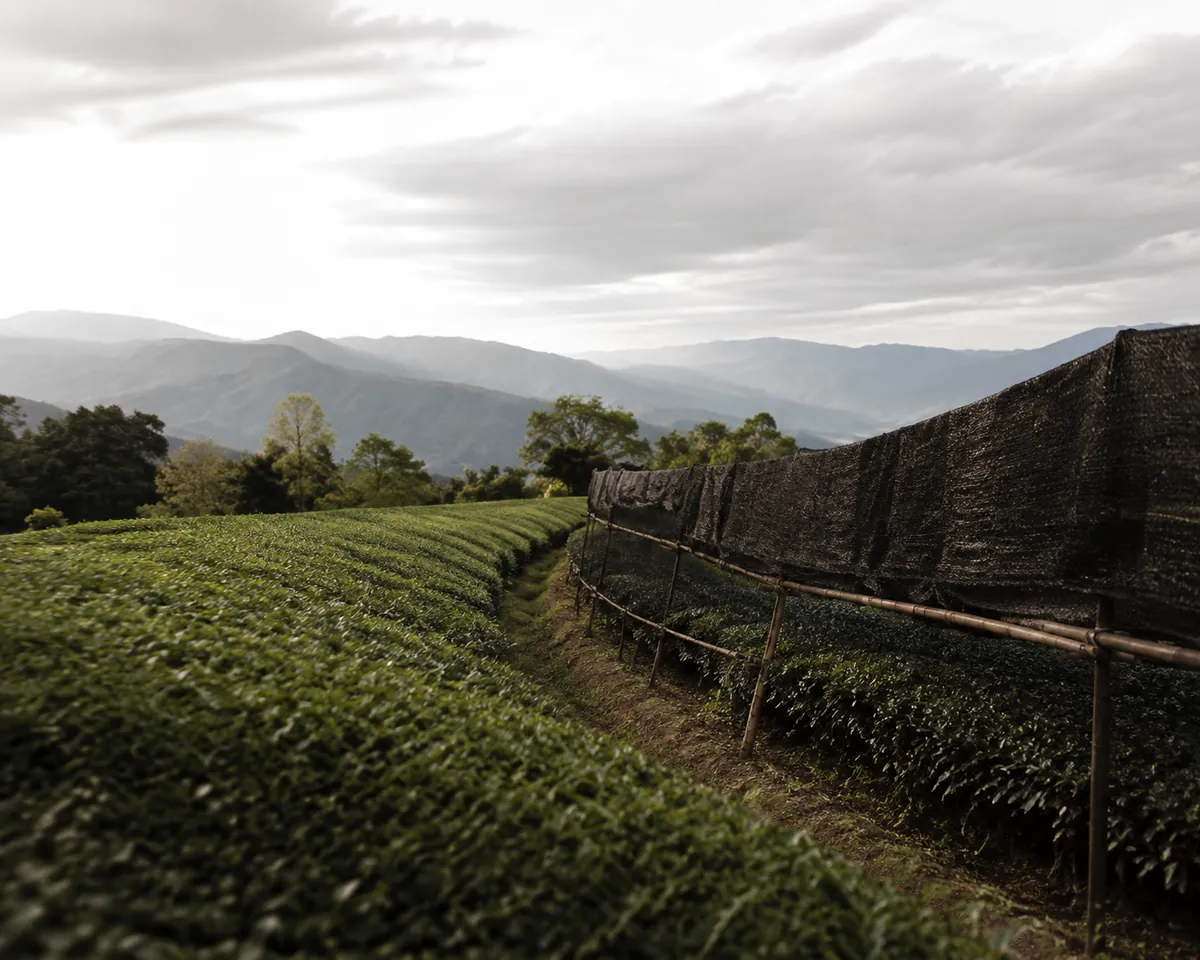
What happens under the screens
- Week oneLight is cut by roughly half. Growth slows and the new shoots darken.
- Week twoThe cover is thickened. Chlorophyll rises and the leaf turns near-black green.
- Week threeLight is down to a small fraction. Theanine accumulates, catechins stall.
- PickingOnly the softest top shoots are taken, and the field gives far less than an unshaded one.
Colour is the visible half of that, and it is the first thing anyone notices in a bag of gyokuro. The leaf is darker and glossier than sencha, closer to pine needles than to grass, and it stays that colour in the pot rather than fading out during the steep.
Why the water goes in at 50 to 60 C
Because there is nothing to be gained by going hotter, and a great deal to lose. Theanine and the simple sugars dissolve willingly in cool water, while the catechins need real heat before they come out in quantity, which is the mechanism why green tea turns bitter sets out in full.
Gyokuro is the tea where that difference is worth the most, since it has more theanine to collect and less astringency to avoid than any other steeped leaf.
Fifty-five degrees is hand-warm rather than hot. Poured into a cup it barely steams.
It feels closer to bathwater than to tea, and that is exactly why the instinct to top the pot up from the kettle has to be resisted, because one splash of boiling water undoes the whole method.
A first infusion, as a starting point
- Water
- 50 to 60 C, and the highest grades go to the bottom of that
- Leaf
- 10 g per 100 ml
- Time
- 90 seconds to two and a half minutes
- Vessel
- Small, thin-walled, and warmed only very slightly
- Yield
- Around 40 ml of liquor per person
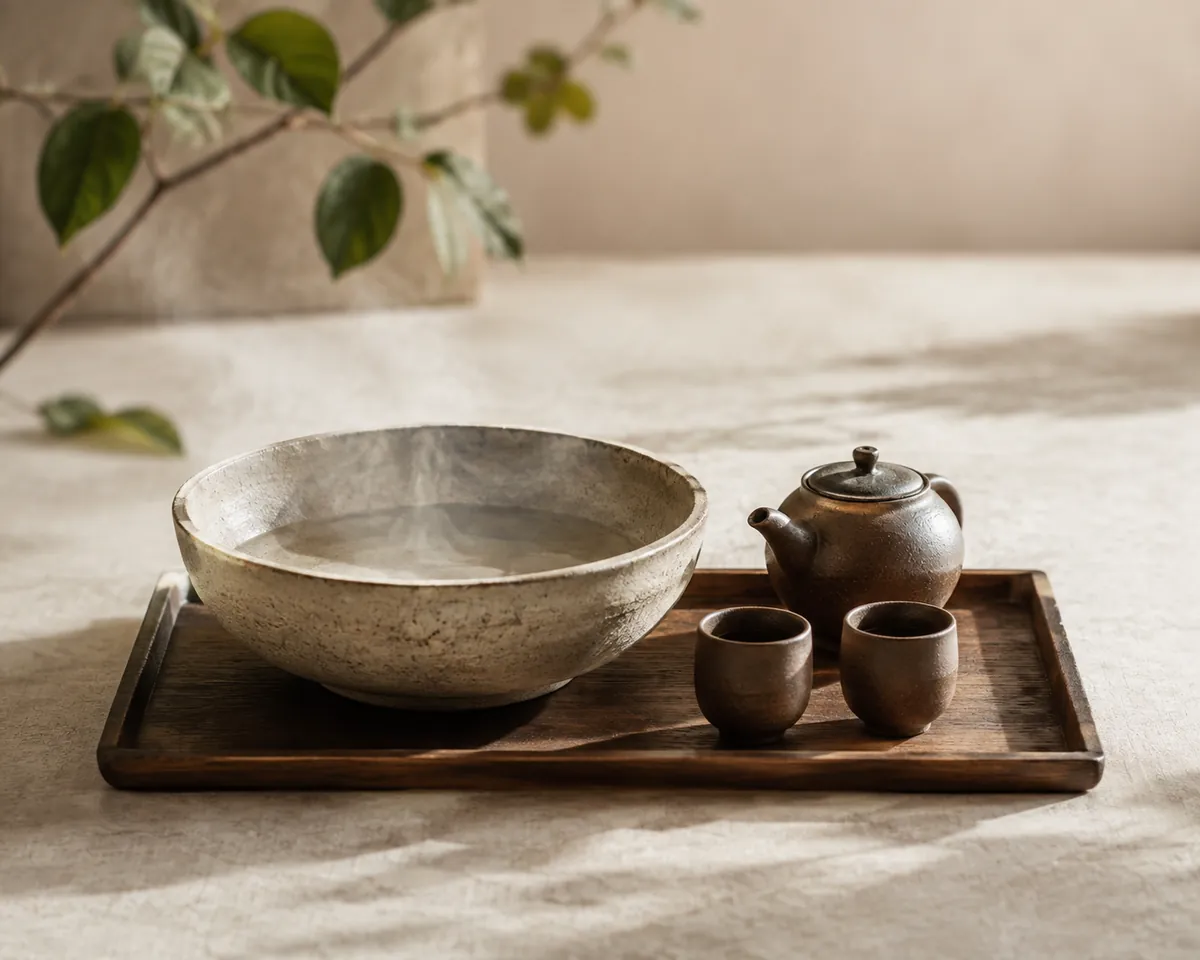
Getting there without a variable kettle is a matter of pouring rather than waiting. Boiled water dropped into a cool empty jug, then into a second cup, and then into the pot loses ten to fifteen degrees at each transfer, which is the reason Japanese sets include a wide unglazed cooling bowl.
A gooseneck kettle with a dial removes the arithmetic, and the general figures for every other style sit in steeping temperature basics.
A great deal of leaf and very little water
The ratio is the second shock after the temperature, and it follows directly from it. Cool water is a weak solvent, so it cannot draw much out of a modest dose in a reasonable time, and the answer is to pack the leaf in dense enough that the water is saturated almost at once.
Ten grams into a 100 ml pot is roughly five times what that pot would take of sencha, and the serving it produces is smaller again.
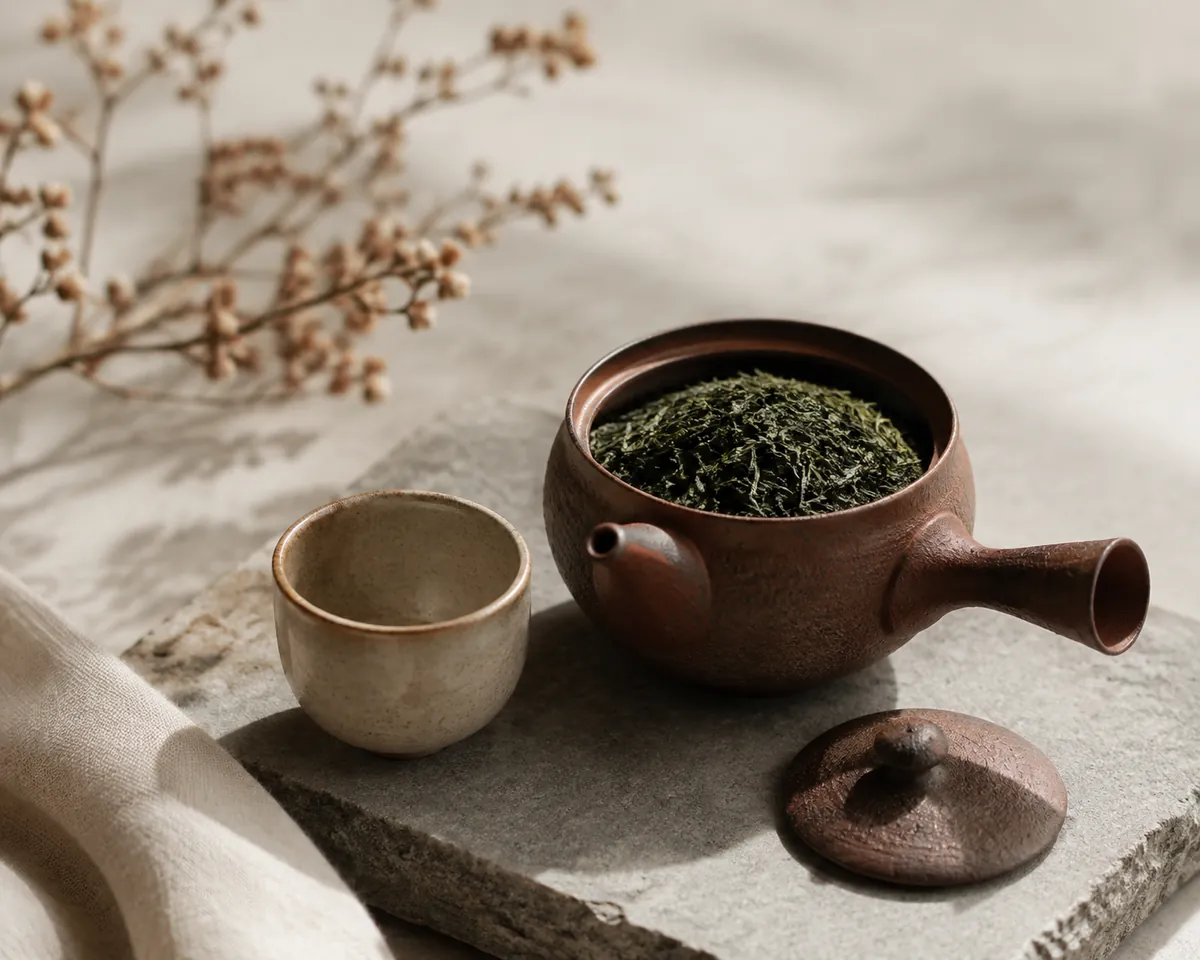
A thin-walled Japanese kyusu is the traditional vessel and a small gaiwan does the job equally well. Both hold very little, and neither steals heat from water that has none to spare.
Thick stoneware is for once the wrong choice, because it takes several degrees out of a pour that was already deliberately cool.
What you should not use is a mesh ball or a narrow basket. Ten grams of dry leaf swells to several times its volume and needs somewhere to go, and the tea infuser page follows what happens to leaf that is denied the room.
What gyokuro tastes like when it is made properly
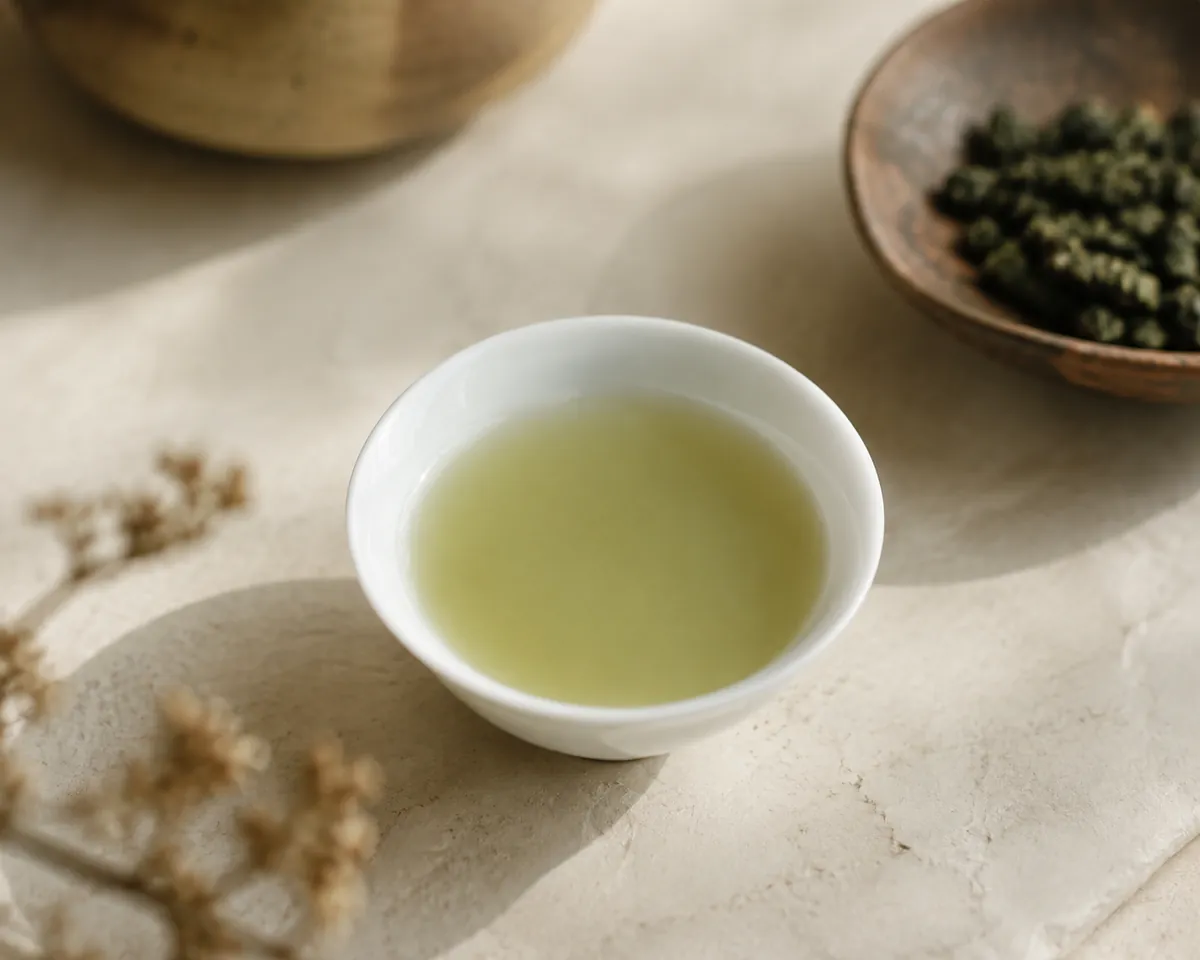
Savoury first, which surprises people who expect an expensive tea to be delicate and floral. The dominant impression is closer to a light dashi stock than to anything else on a tea shelf.
A broth-like weight sits across the middle of the tongue, with a clean marine edge behind it.
Sweetness arrives second and stays longest. It is a sweet-pea sweetness rather than a sugar one, and it lingers for a minute or two after the cup is empty, which is the quality Japanese tasting language names as the returning sweetness.
Umami
The leading note. Dashi, kombu, and a broth-like weight that no unshaded tea produces.
Sweetness
Sweet peas and young corn, arriving after the umami and lasting well past the swallow.
Marine
Nori and clean seawater, sharper in a Uji tea than in a Yame one.
Texture
Genuinely thick. The liquor coats rather than rinses.
Astringency
Almost absent when brewed cool, and the first thing to appear if the water was too hot.
The nearest thing to it is not another steeped tea at all.
Whisked matcha is the closer relative, since it comes off bushes under the same screens, and what matcha tastes like describes much the same register at a heavier concentration. What green tea tastes like places the wider category around it, while the flavour range of gyokuro works through the differences between one estate and the next.
Where gyokuro and matcha part company
They begin in the same field and under the same screens.
The split happens within hours of picking, and it comes down to a single decision about whether the leaf will ever be rolled.
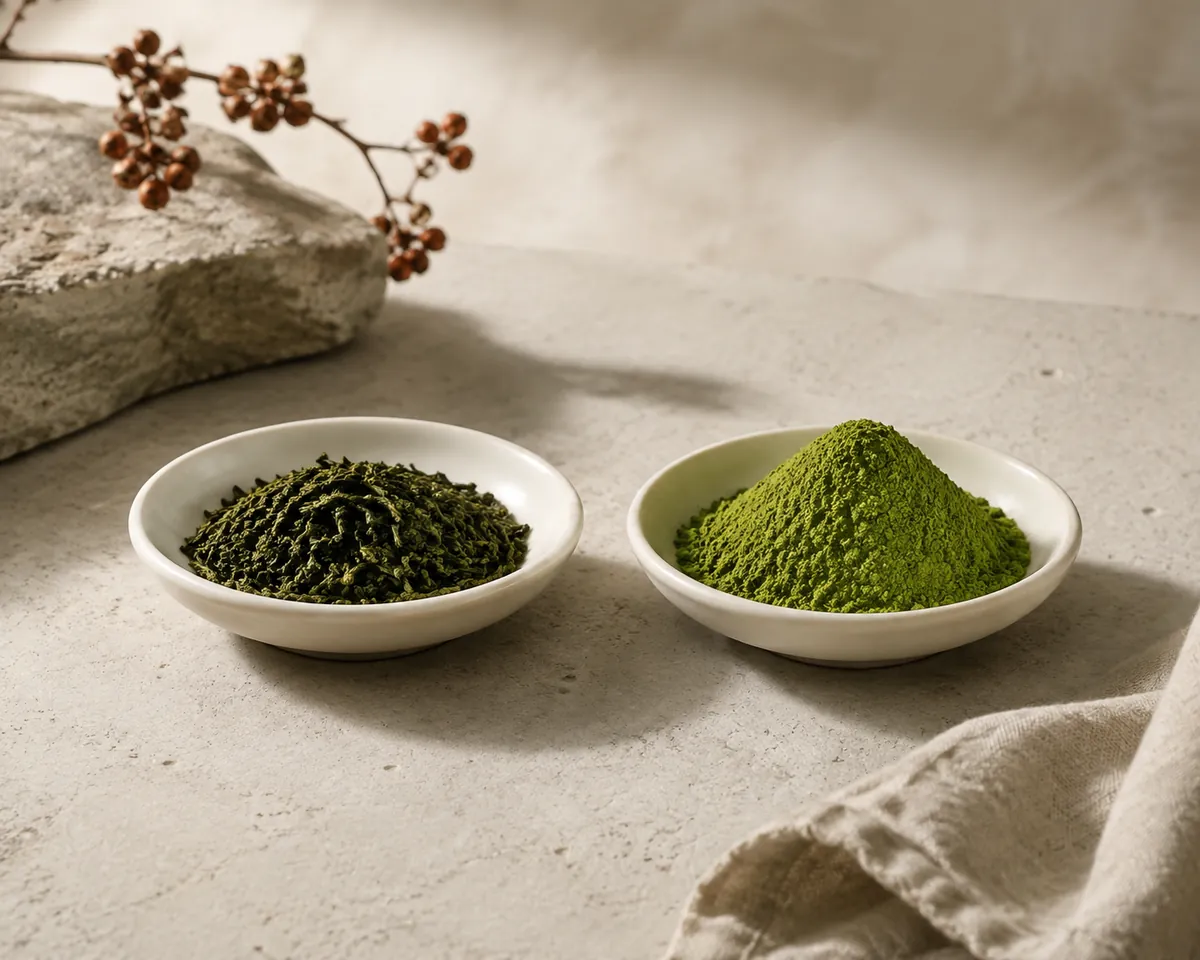
One shaded field, two products
- BothPicked from bushes shaded around three weeks, then steamed within hours.
- GyokuroRolled and shaped repeatedly while drying, into fine dark needles.
- TenchaDried flat, never rolled, with stems and veins blown out afterwards.
- Tencha againStone-milled to a powder, at which point it is matcha.
Rolling is the whole of the difference, and it is mechanical rather than cosmetic. Working the leaf ruptures its cell walls, so a rolled needle gives up its contents to water fast enough to be steeped and then thrown away.
Unrolled tencha would surrender very little in a pot, which is precisely why it is ground up and swallowed instead.
That leaves the two teas at opposite ends of an efficiency argument. A gyokuro drinker takes a fraction of the leaf and bins the rest, a matcha drinker consumes all of it, and that arithmetic sits underneath green tea against matcha and underneath the price of ceremonial grade powder.
How to read a gyokuro packet
The useful words are about the field rather than about the cup, and there are four of them worth hunting for. Shading duration is the first, usually printed in days, and twenty or more is the honest threshold.
Cultivar is the second, and it does more work here than in almost any other Japanese tea. Gokou, Asahi, Saemidori and Okumidori are the names that recur, all selected for the amino acid content that shading is meant to preserve, and Yabukita is comparatively rare in a good gyokuro despite dominating the country's acreage.
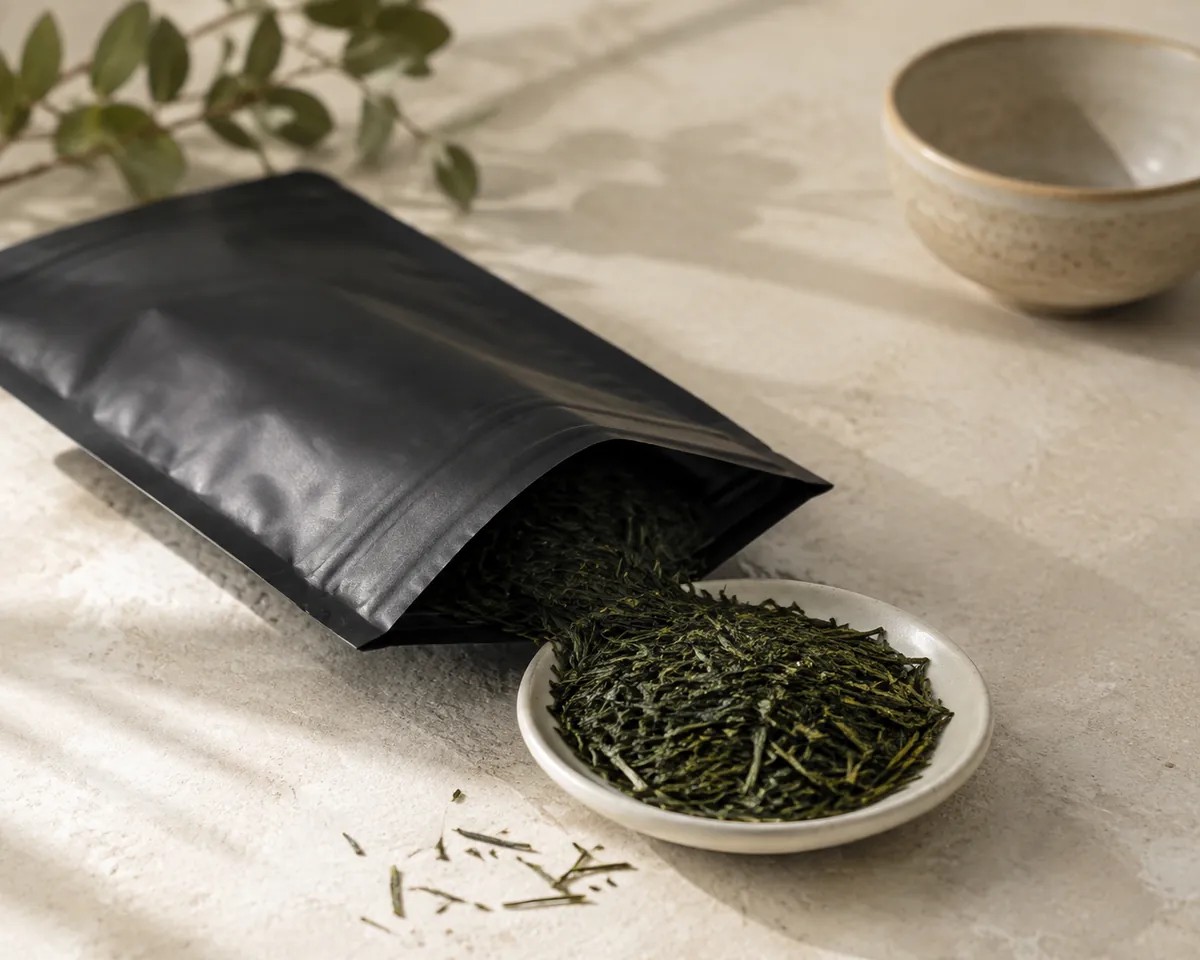
- A shading period in days, with twenty or more marking a genuine gyokuro rather than a kabusecha.
- A named cultivar such as Gokou, Asahi or Saemidori, rather than a blend sold under the region alone.
- A stated region: Uji, Yame or Asahina, since all three make gyokuro to different specifications.
- First-flush leaf, because gyokuro is made from the spring pick and nothing else.
- A vacuum-sealed foil pack rather than a paper bag or a tin with a loose lid.
- A pack of 50 g or less, which is more than enough for the number of cups it makes.
Kabusecha is the label to be careful with. It is the same idea at a shorter duration, roughly a week to ten days under cover, and it is genuinely good tea, but the line between the two is a matter of custom rather than of law and some packets stretch it.
Storage runs to the same short clock as any unoxidised leaf, which storing loose-leaf tea covers in general and storing gyokuro covers for this one.
Why it costs several times what sencha does
Shading is expensive in three separate ways, and only the last one is obvious. The screens themselves have to be built, raised and thickened by hand across a whole field on a schedule set by the weather.
Then the yield falls. A plant deprived of light grows slowly and produces far less leaf than the same plant in the sun, so an estate that shades a field is choosing to harvest a fraction of what it could have taken.
Where the money actually goes
- Lost yieldA shaded field gives a small share of what an unshaded one would
- Labour in the fieldScreens raised, thickened and removed by hand over three weeks
- PickingOnly the softest top shoots, often taken by hand rather than machine
- One harvest onlyGyokuro is made from the spring flush, so there is no second bite
- ProcessingSteaming and rolling, which is the same work sencha requires
Per gram the tea is expensive and per cup it is far less so, which is the part the shelf price hides. A 50 g pack at ten grams a pot gives five sessions, each of them three or four small servings, so the cost of a cup lands nearer a good coffee than the number on the label suggests.
Cheap gyokuro is the thing to avoid, since a bargain price nearly always means a short shading period sold under a long name, and a badly shaded leaf keeps the price of the category without the character.
How many infusions it gives, and how they change
Three or four, and the second one behaves in a way that catches out anyone applying ordinary tea logic to it. The usual rule is that later steeps want more time; with gyokuro the second steep is the shortest of the session.
The reason is that the first infusion did not really open the leaf so much as wet it. Cool water for two minutes leaves a great deal behind in leaf that is now fully swollen, so a slightly hotter second pour finds an open, saturated leaf and empties it in seconds.
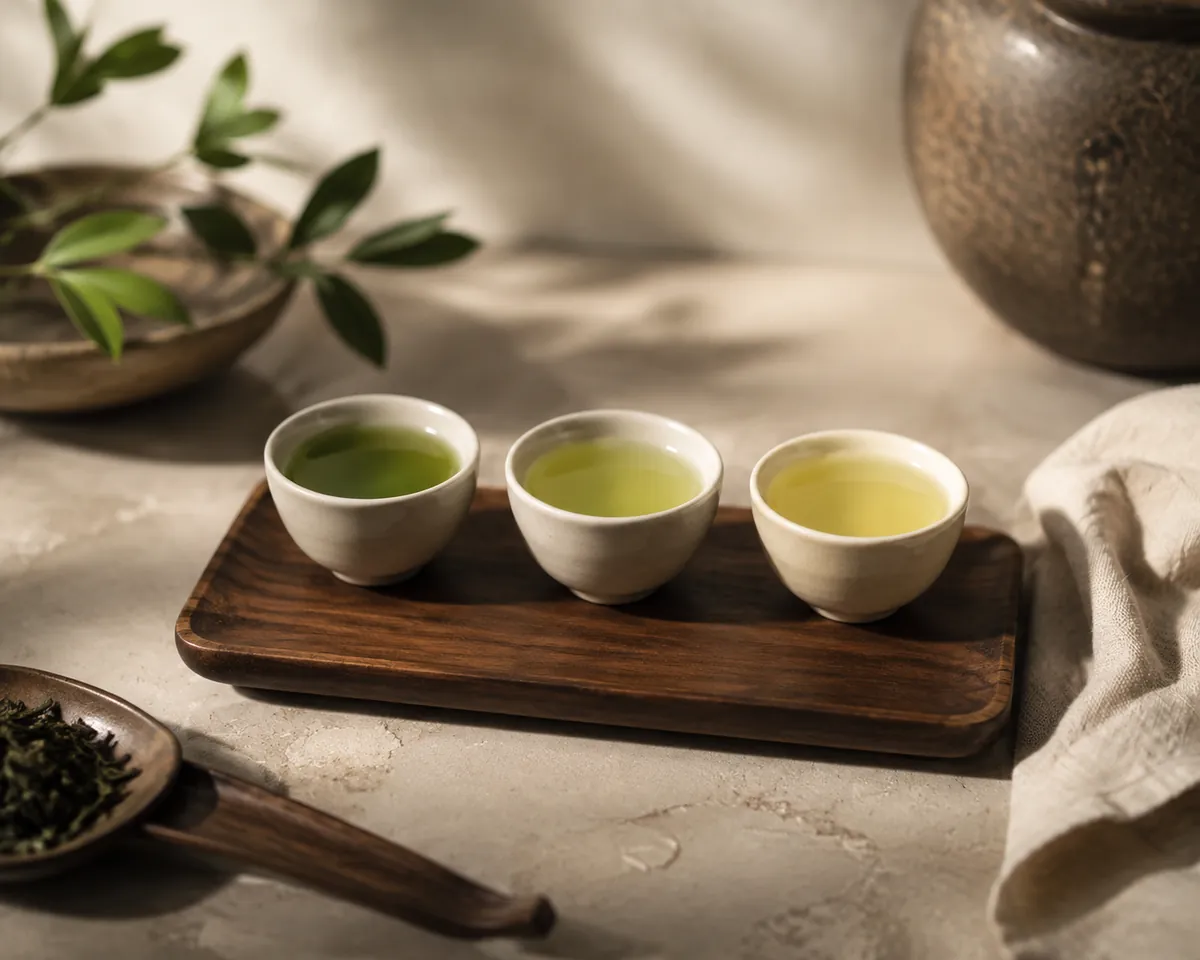
| Infusion | Water | Time | What arrives |
|---|---|---|---|
| First | 50 to 60 C | 90 to 150 sec | Thick, sweet, heavily savoury |
| Second | 60 to 70 C | 10 to 20 sec | The sweetest of the four, and the shortest |
| Third | 70 to 80 C | 30 to 40 sec | Lighter, greener, more like a good sencha |
| Fourth | 80 C or hotter | A minute | Brisk and plain, and a reasonable place to stop |
By the fourth pour the drink is no longer recognisably gyokuro, and there is no shame in stopping at three. The general pattern for other styles runs the opposite way and tea steeping temperature basics sets that out, so this is one of the few places where a site-wide rule genuinely does not apply.
The spent leaf is worth eating
Very little leaves the leaf during a gyokuro session, which is a direct consequence of brewing so cool. What sits in the pot afterwards is a wad of soft, intensely green, barely extracted young shoots, and in Japan it is normal to eat them rather than bin them.
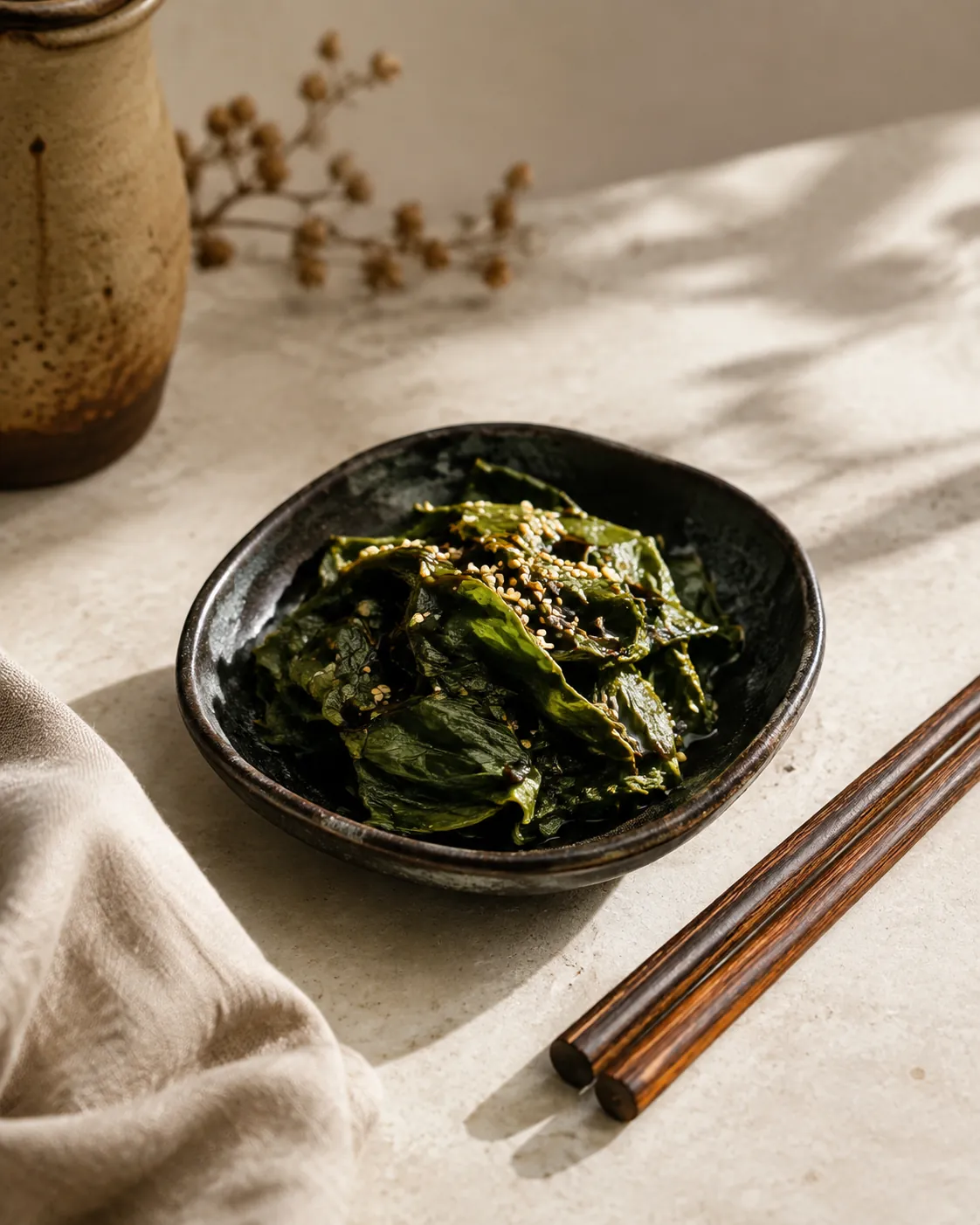
The practice is not unique to gyokuro, though it suits it best. Any tender first-flush Japanese leaf brewed gently is edible on the same terms, and a deep-steamed sencha is a reasonable second choice, whereas a coarse late-season leaf or a roasted hojicha is tough and not worth the plate.
How much caffeine ends up in a small cup
Two facts pull in opposite directions here, which is why the honest answer is a range rather than a figure.
Shaded leaf carries more caffeine per gram than unshaded leaf does, and the dose is several times a normal one, both of which push the number up.
Against that, the water is cool and the serving is tiny. Caffeine extracts readily even at low temperatures, so it is not held back entirely, but forty millilitres of liquor is a fraction of a mug and the total in front of you reflects that.
Across a whole session of three or four small servings the arithmetic changes again, since the later, hotter infusions pull out most of what the first one left. Gyokuro's caffeine works through the variables, matcha's caffeine covers the whole-leaf case where nothing is discarded, and caffeine by brewing method gives the coffee comparison people usually want next.
When gyokuro is the wrong tea to reach for
Most of the time, honestly, and that is not a criticism of it. This is a tea for ten minutes of attention at a table, not for a mug beside a keyboard, and a large vessel defeats it completely because the whole method depends on a small dense volume of cool water.
It is also the wrong tea for anyone who does not enjoy savoury flavours. A drinker who dislikes seaweed and stock is not going to be converted by an expensive example, and there is no brewing adjustment that turns the umami down without turning everything else off with it.
Reach for it when
You want twenty minutes and a table, and you like savoury flavours.
Skip it when
You want a large mug, a commute drink, or anything with milk in it.
Buy sencha instead when
You want everyday Japanese green tea that forgives a hot kettle.
A poorly brewed gyokuro is worse than a well brewed everyday tea, and it costs far more. Cold brewing is the one shortcut that genuinely works, since a few hours in the fridge produces the sweetness without any risk of overheating the leaf, and it turns the same expensive leaf into something you can serve over ice.
For the full sequence at the table, making gyokuro takes it pour by pour, and brewing water matters more here than anywhere, because nothing in a cool, delicate cup is loud enough to hide a heavy mineral load.
Common questions
Why is gyokuro brewed at 50 to 60 C?
Theanine and the simple sugars dissolve willingly in cool water while the catechins behind astringency need real heat to come out in quantity. Gyokuro has more theanine to collect and less astringency to avoid than any other steeped leaf, so there is nothing to be gained by going hotter and a great deal to lose.
What is the difference between gyokuro and matcha?
They come from bushes shaded the same way and steamed within hours of picking, and they part company over rolling. Gyokuro is rolled into fine needles and steeped, while tencha is dried flat, has its stems removed and is stone-milled into matcha, which is swallowed whole rather than infused.
How much leaf does gyokuro need?
Around 10 g per 100 ml, which is roughly five times what the same pot would take of sencha. Cool water is a weak solvent, so the leaf has to go in dense enough to saturate the water quickly, and the serving that results is about 40 ml.