The Kyusu, and Why the Handle Sits on the Side
A kyusu puts the handle on the side and the filter across the spout, and both decisions were made by the tea it pours. Small volumes, low temperatures and repeated fast pours explain the whole shape.
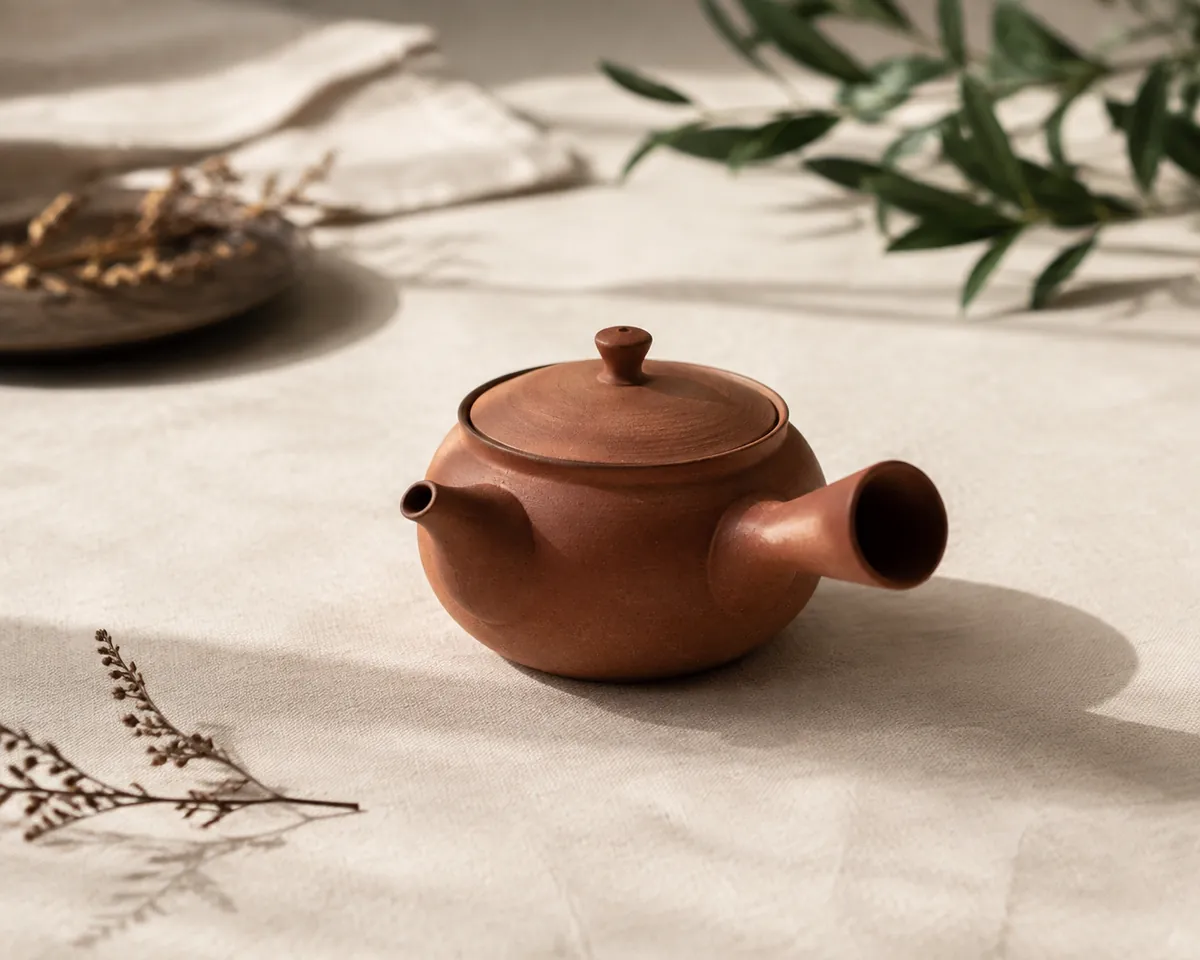
A kyusu is a Japanese teapot with the handle on the side and a filter built into the wall of the pot itself. Neither feature is a style choice, and both were settled by the tea the pot was made to pour.
Japanese leaf tea is brewed in small volumes, at low temperature, for well under a minute, and then poured again a few minutes later. A pot designed around that pattern ends up shaped nothing like one designed to stand on a table through a long afternoon.
The kyusu at a glance
- What it is
- A small side-handled teapot with a filter fired or fitted into the spout
- Usual capacity
- 200 to 360 ml, which serves two people two or three rounds
- Handle position
- At a right angle to the spout, poured with a wrist turn
- The filter
- Built in, so the leaf moves freely through the whole pot
- Built for
- Fine Japanese leaf such as sencha at 60 to 80 C
- Not built for
- Boiling water, big whole leaf, or a pot left to stand
Why the handle is on the side
Pick a kyusu up and the reason is immediate. Full, a 300 ml pot weighs less than a small mug of coffee, so there is nothing to lift with an overhead grip and no need for the leverage one gives.
The hand goes over the side handle from above, thumb resting on the lid knob, and the pour happens by turning the wrist rather than raising the arm. That single motion does two jobs at once.
The same hand that pours also holds the lid down, leaving the other hand free for the cups.
A western pot with a bail or an overhead handle needs the arm to do the tilting and the second hand to steady the lid.
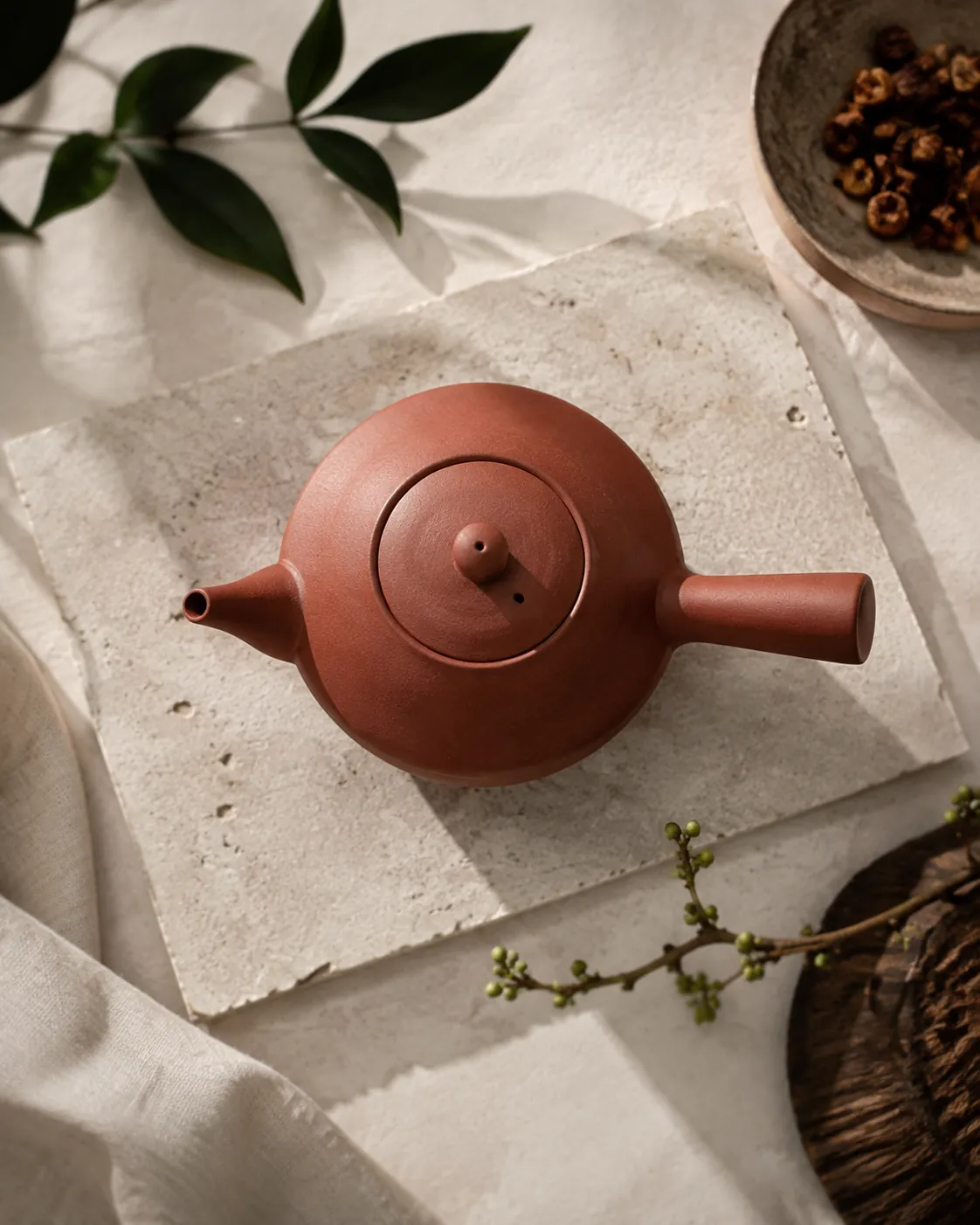
That difference is trivial once and tiring five times. A Japanese green tea session is five or six pours of a small volume, not one pour of a litre, and the side handle is the design answer to doing the same small movement repeatedly.
Low weight
A filled kyusu rarely passes 400 g, so no overhead leverage is needed.
Wrist, not arm
The pour is a rotation, which is faster and easier to stop precisely.
Lid secured
The thumb sits on the knob throughout, so the lid cannot slip mid-pour.
Cool grip
The handle projects away from the steam rising off the lid.
One hand free
Useful when pouring into several small cups in turn.
There is one real cost. A side-handled pot, called a yokode kyusu, is made for the right hand with the spout pointing left, and a left-handed drinker either hunts down a mirrored pot or buys a rear-handled one instead.
What the built-in filter is actually for
Japanese green tea sheds fines, and that single fact explains why the filter sits where it does rather than where every other teapot puts it.
Sencha is rolled into thin needles that break in the packet, and deep-steamed fukamushi sencha is fragmented on purpose during processing. That is why its liquor pours out cloudy.
A mug infuser fails such a tea twice over. Its basket squeezes the leaf into a fraction of the water, and its perforations are still far too coarse to hold the dust back.
The kyusu inverts the arrangement. Nothing surrounds the leaf at all, so it expands through the whole body of the pot.
The barrier goes across the exit instead.
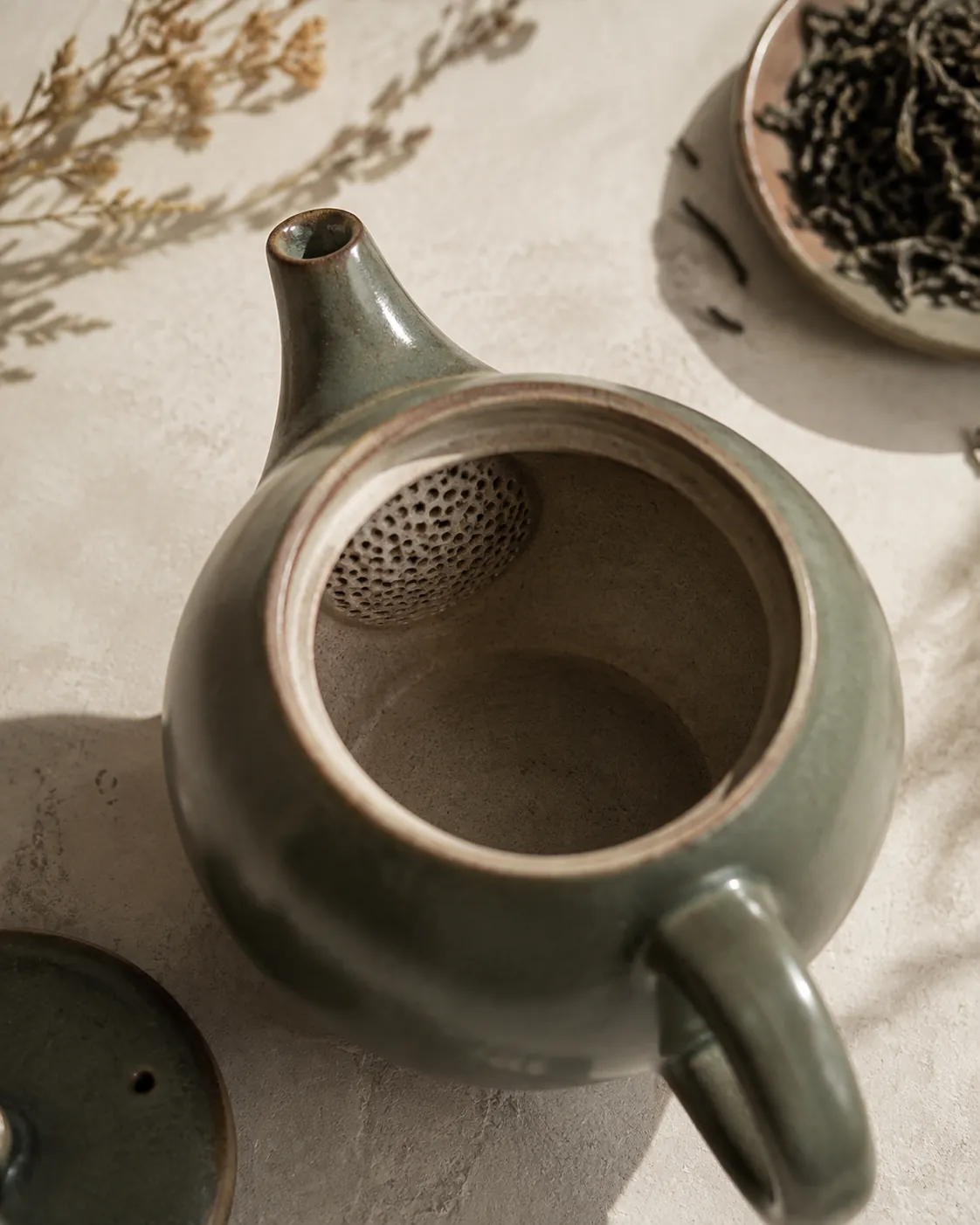
| Type | What it is | Suits |
|---|---|---|
| Sasame | Holes fired straight into the clay wall at the spout | Standard leaf, and it never corrodes |
| Obi-ami | A stainless band curved around the inside of the spout | Broad coverage, an easy compromise |
| Kanaami basket | A stainless mesh lining most of the pot body | Fukamushi and anything that sheds heavily |
| No filter | A plain hole, found on cheap pots | Nothing, in practice |
A wider filter is not automatically better. Ceramic sasame gives the cleanest cup and the slowest pour, a full stainless basket pours fast and clogs slowly but puts metal in contact with the liquor, and the band sits between the two.
Match it to the leaf you actually drink rather than to the price.
The kyusu set against a gaiwan
Both vessels answer one question, which is how to hold fine leaf back while the liquid leaves quickly. One adds a permanent filter and a handle.
The other removes every feature it can and hands the work to the drinker.
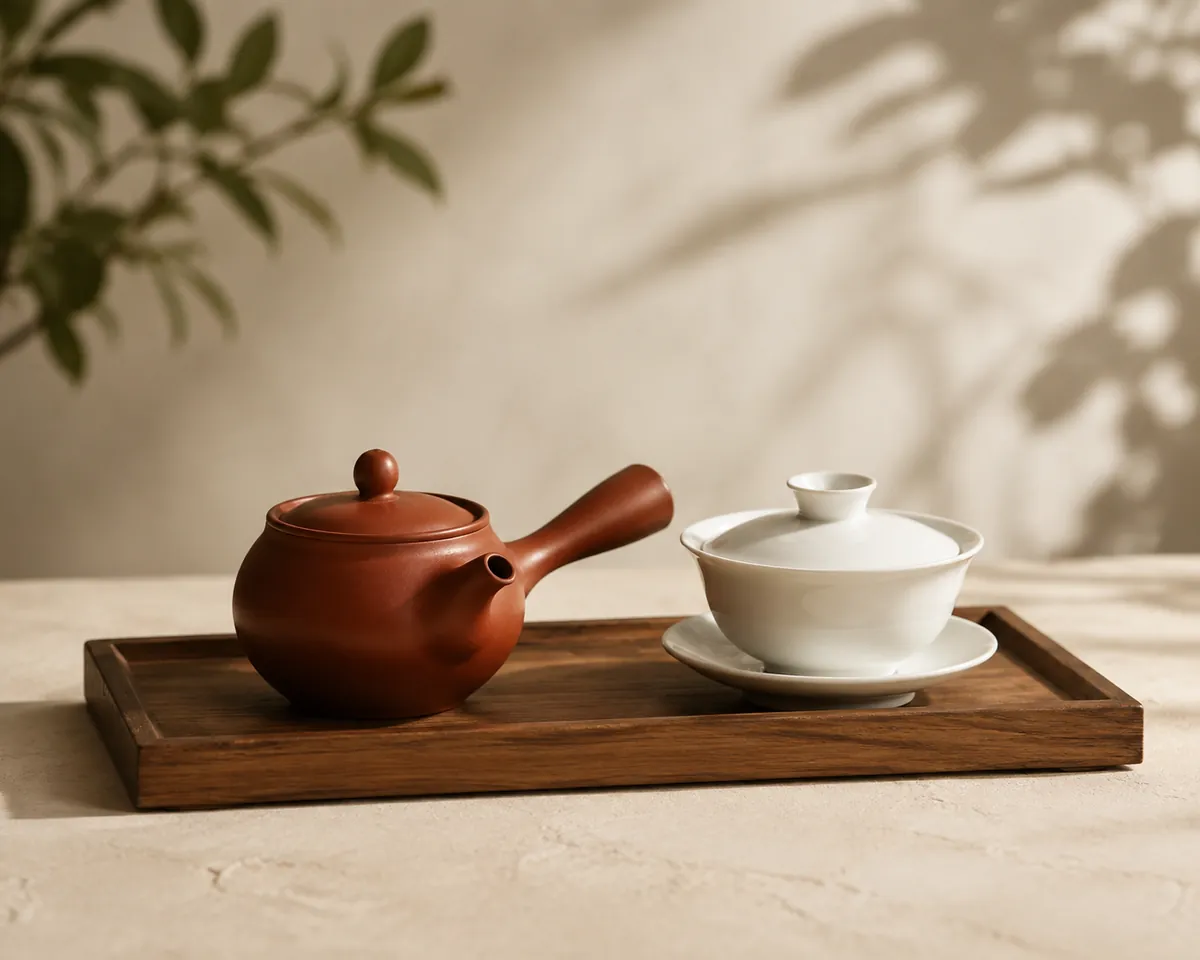
| Kyusu | Gaiwan | |
|---|---|---|
| Filter | Built in, at the spout | None. The lid does the work |
| Grip | Side handle, one wrist turn | Rim and lid, and it takes practice |
| Body | Usually unglazed clay | Glazed porcelain |
| Water | Suits 60 to 80 C | Comfortable at any temperature |
| Breadth | A specialist for Japanese green | A generalist for every category |
The practical division is that a gaiwan will brew anything acceptably and a kyusu will brew one family of teas better than anything else. Where a rolled oolong wants boiling water and a vessel that gives nothing back, porcelain is the right answer.
Where a fine green tea wants 70 C and no grit in the cup, the kyusu is the purpose-built tool and the bowl is an improvisation.
Owning both is not redundant. It is closer to owning a frying pan and a saucepan, and a clay yixing pot is a third answer again, dedicated to one tea rather than to one temperature.
How much a kyusu should hold
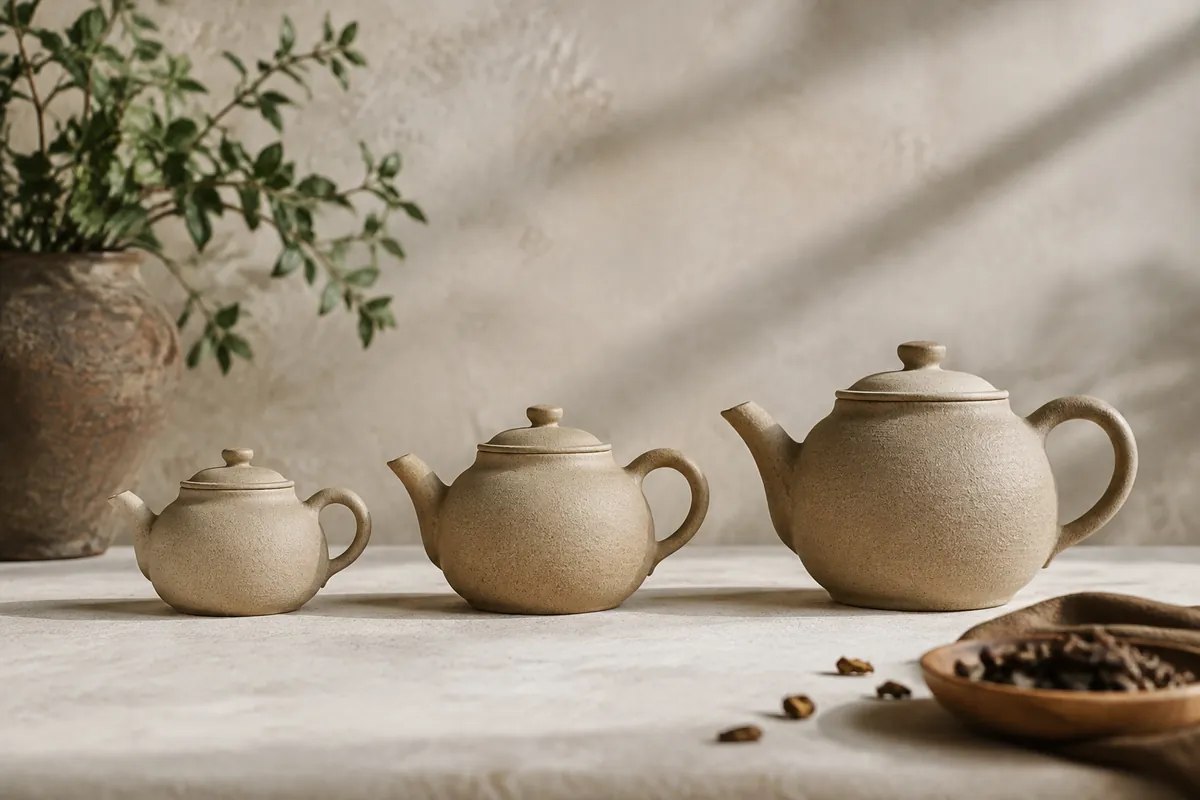
Capacity is the decision that most often goes wrong, and it goes wrong upward. A 500 ml pot looks like better value on a shelf and behaves badly on a table.
Two mechanisms punish a large kyusu. Water at 70 C in a thin-walled pot falls several degrees a minute, so a big volume is measurably cooler by the time the last cup is filled, and a long pour leaves the leaf sitting in water at exactly the point where steeping temperature has stopped protecting you from astringency.
| Size | Serves | Note |
|---|---|---|
| 120 to 180 ml | One drinker | The right size for gyokuro, which is brewed tiny and cool |
| 200 to 300 ml | Two drinkers | The standard, and the safe first purchase |
| 300 to 400 ml | Three or four | Workable, but pour fast and keep the steeps short |
| Over 450 ml | A table | Loses the point. Use a dobin instead |
The leaf ratio that goes with those volumes is high by western habit and short by western clocks. Around 4 to 5 g of leaf per 150 ml with a first steep of 45 to 60 seconds is the usual starting point.
The second steep is often shorter than the first rather than longer, because the leaf is already open and gives everything up at once.
Pouring to the last drop
The instruction sounds fussy and is the single most useful habit a kyusu owner learns. Tilt the pot until it is close to vertical, wait, and give it two or three small shakes.
Two things are happening. The liquid left in a pot is the most concentrated part of the infusion, since it has been in longest contact with the leaf at the bottom, and it is strong enough that the Japanese name for it translates as the golden drop.
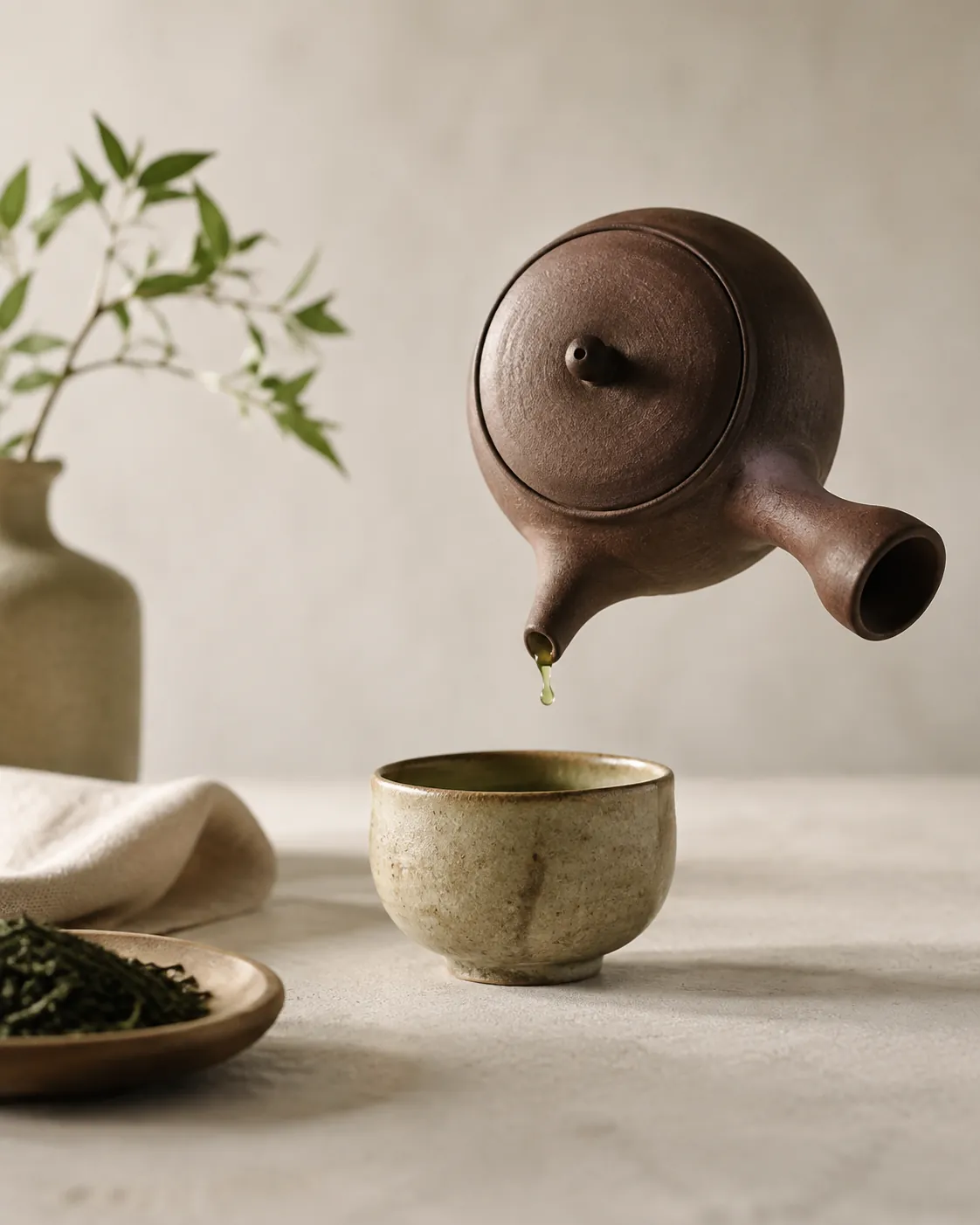
The second is the reason it matters more than flavour. Any water left behind goes on extracting at full strength and joins the next steep as concentrated bitterness. That is the usual cause of a bitter second cup from a tea with nothing wrong with it.
The fault is not the one described in why green tea turns bitter, because the leaf never over-steeped at all.
One round, start to finish
- WarmA rinse of hot water through the pot and the cups, then discard it.
- LeafStraight into the empty body. Nothing holds it, so it can spread.
- WaterPoured down the side, not onto the leaf, at 70 to 80 C.
- WaitForty-five to sixty seconds for the first steep.
- PourAlternating between cups, a little into each, then back again.
- EmptyTo vertical, with two or three shakes. Leave nothing.
Pouring alternately between the cups is the other half of the technique, and it exists because the first of a pour is weaker than the last. Filling one cup and then the next gives two quite different drinks, which is the fault a fairness pitcher solves in Chinese practice and the wrist solves here.
The rest of the sequence is covered in more depth under brewing Japanese green tea.
What the clay does in the cup
Most kyusu are unglazed inside, and the two clays you will meet by name are Tokoname from Aichi, a red iron-rich body sold as shudei, and Banko from Mie, usually a darker purple-brown.
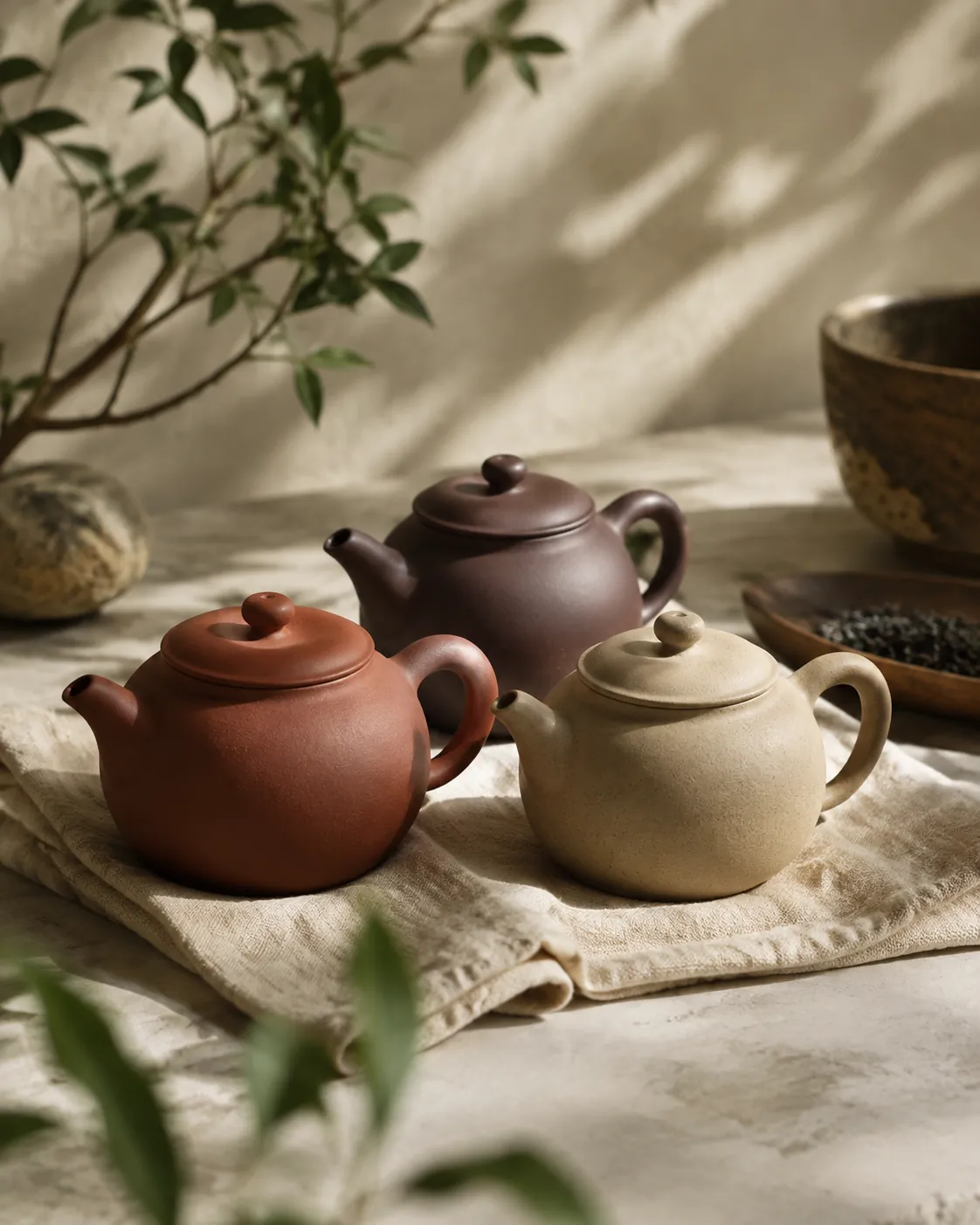
Claims about what the iron in the clay does to green tea are common and hard to test at home, so treat them as reported rather than settled. What is not in dispute is that porous unglazed clay takes up something from every pot of tea passed through it, which has one firm practical consequence: an unglazed kyusu becomes dedicated to one style of tea and should not be moved between a delicate green and a roasted hojicha.
A glazed interior removes that constraint entirely.
Unglazed Tokoname
The classic. Porous, and best kept to one family of teas.
Unglazed Banko
Denser and darker, often paired with a fine ceramic filter.
Porcelain kyusu
The same shape without any clay character. Easy to live with.
Cast iron
Holds heat far too well for a tea brewed under 80 C.
Whatever the body, the water going in matters more than the pot it goes into. A hard tap water flattens a fine green tea long before the clay gets a chance to do anything, so the water itself is the first variable to fix.
Which shape to buy, and what to check
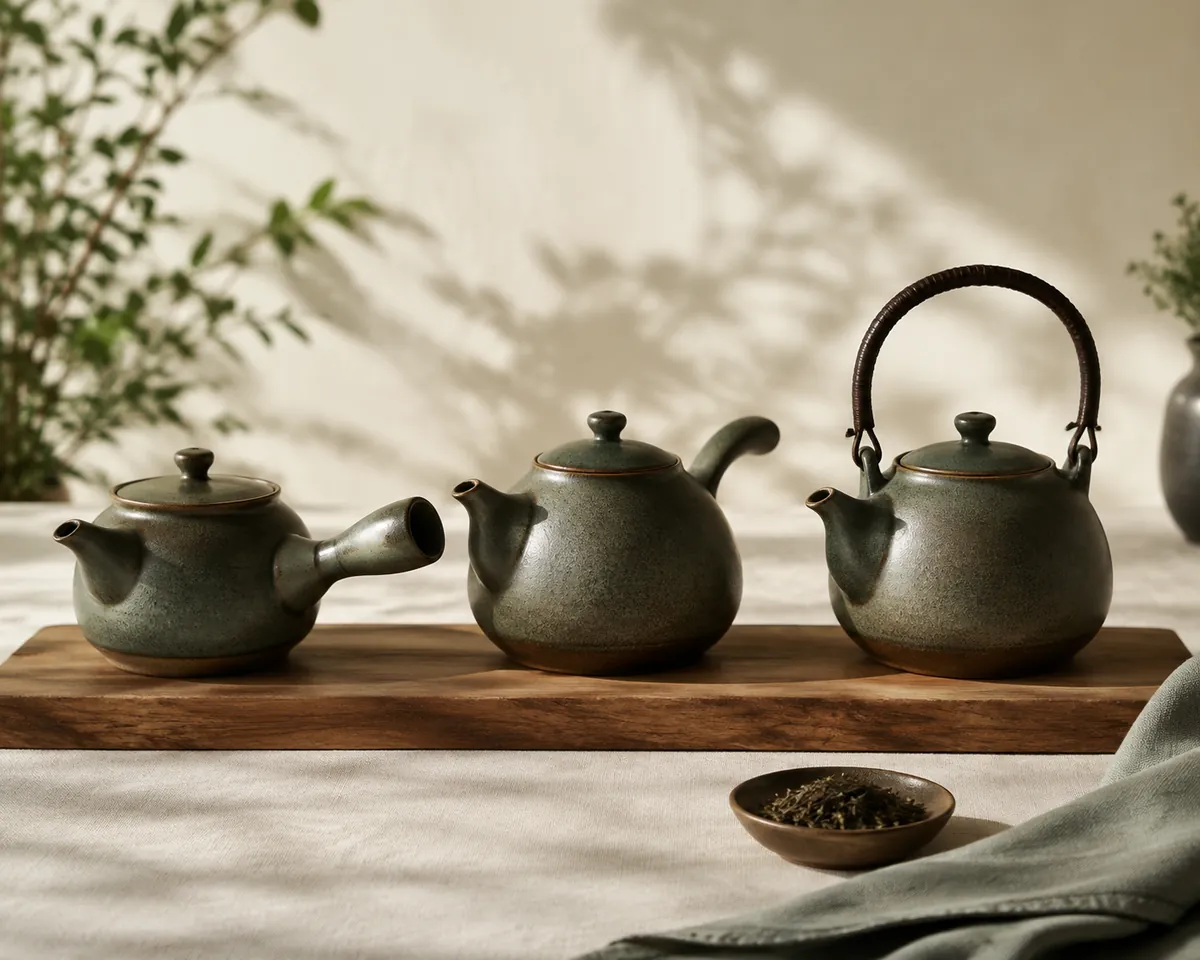
Three handle positions are sold, and the side handle is only the most common rather than the only one.
The rear-handled ushirode kyusu is the answer for left-handed drinkers and for anyone who finds the wrist turn awkward. The top-handled uwade shape, at larger sizes, becomes the dobin, a pot for the table rather than for repeated small pours, and it is the sensible choice for a roasted tea served to several people at once.
- Match the filter to your leaf: a full stainless basket for deep-steamed tea, ceramic for standard leaf.
- Check the lid sits flush and does not rock, since a loose lid drips down the outside.
- Look at the spout tip. A clean, undercut edge stops the drip that stains a table.
- Pick 200 to 300 ml unless you already know you want otherwise.
- Prefer a glazed interior if this is your only pot and you drink more than one style.
- Hold it before buying if you can. Handle thickness varies far more than photographs show.
Price behaves sensibly here. A good working kyusu costs about as much as a decent kettle, and beyond that the money buys a named potter and a finer clay rather than a better cup of tea.
A cheap pot with a plain hole for a filter is the one purchase to avoid, because there is no technique that compensates for leaf in every mouthful.
Where a kyusu is the wrong pot
Buying one for the wrong tea is the commonest disappointment, and it is worth naming the cases plainly rather than pretending the pot is universal.
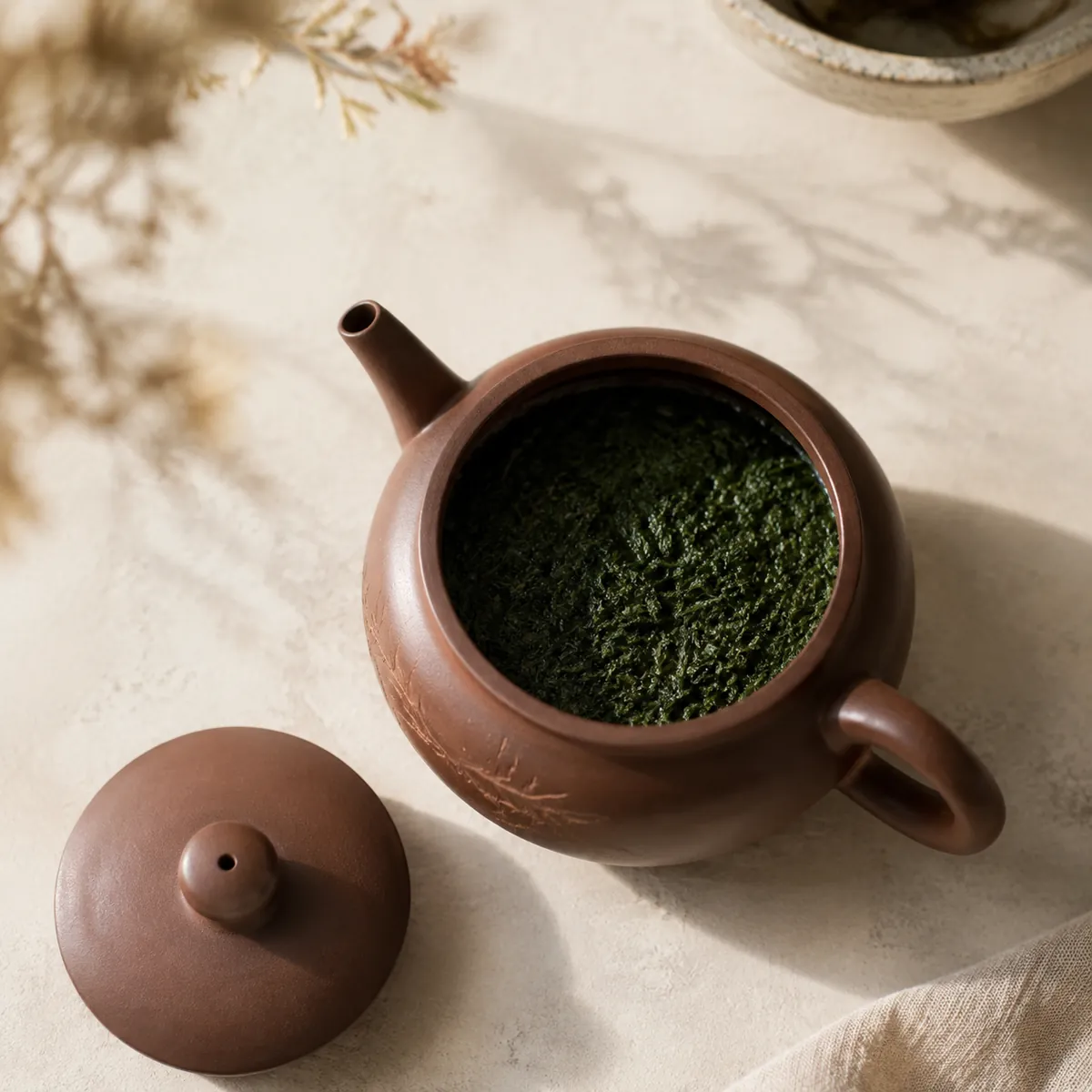
Works well for
- Built-in filter handles the finest leaf without a basket restricting it
- One-handed pour, which suits five or six rounds in a sitting
- Small and thin-walled, so it cools rather than stewing a delicate tea
- Nothing to remove, wash separately or lose
- Unglazed clay develops a character over years of one tea
Struggles with
- Wrong for boiling-water teas, which the thin body and small volume do not suit
- Too small for a group, and a large one stops working as intended
- Unglazed pots take on flavour, so one pot means one style of tea
- The mesh clogs, and a slow pour quietly over-steeps the leaf
- Made for the right hand unless you seek out a mirrored or rear-handled pot
Big whole leaf is the clearest mismatch. A white tea of open unbroken buds wants vertical room and near-boiling water, and a compressed pu-erh wants a vessel that gives its heat back rather than shedding it, so both are better served elsewhere.
The other mismatch is anything that is not steeped at all. Powdered matcha is whisked in a bowl and never meets a pot, and a teabag has already restricted its own leaf, so the filter has nothing left to do.
Cleaning it without ruining the mesh
Two rules cover almost all of it, and the first surprises people who are used to scrubbing a mug.
Detergent has no business inside an unglazed kyusu. The clay is porous, it will hold the soap as readily as it holds the tea, and hot water alone lifts everything that needs lifting.
Tannin staining inside the body is cosmetic and, on an unglazed pot, is the point.
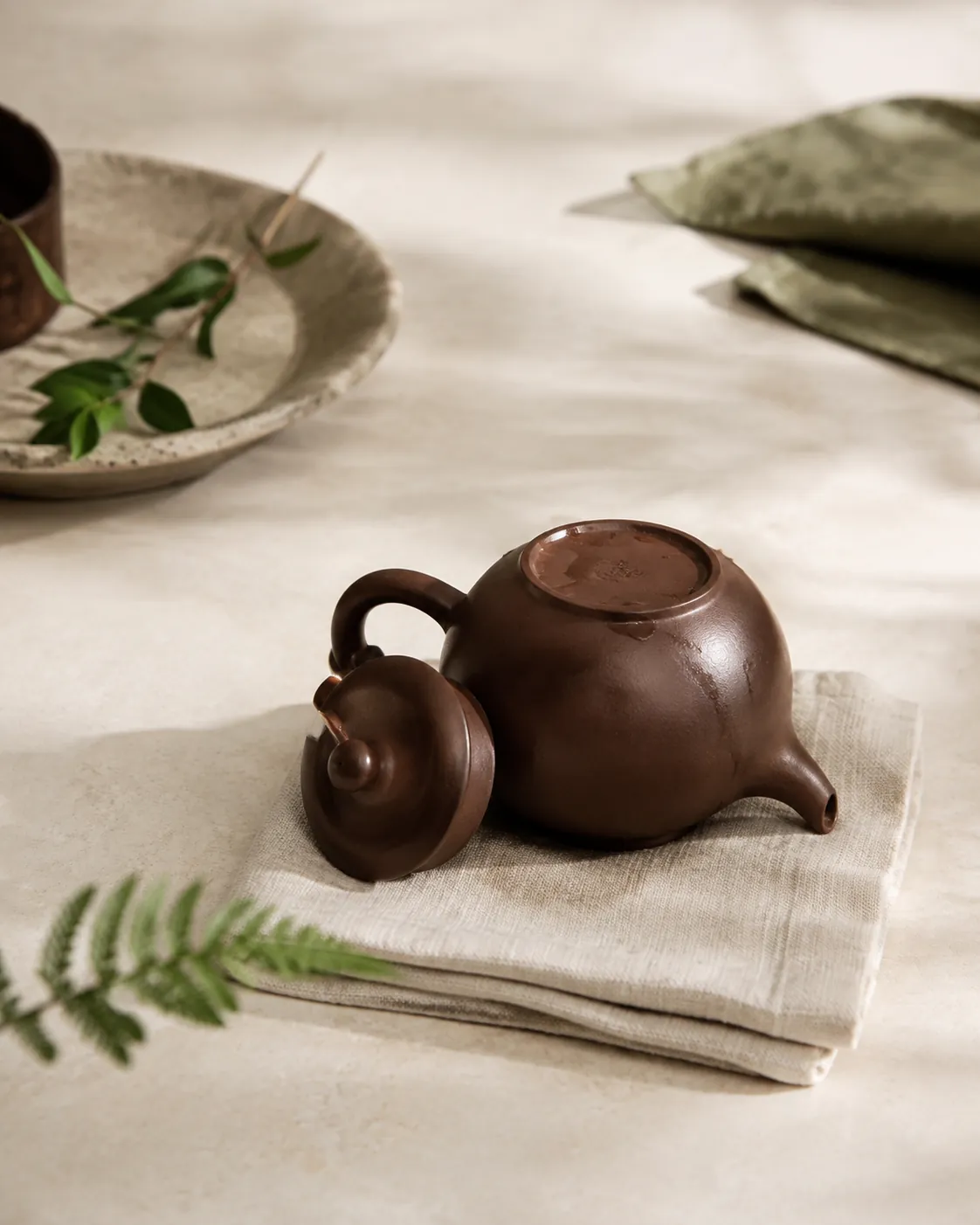
The filter is where genuine damage happens. Fines pack into a ceramic sasame over months and the pour slows from three seconds to fifteen.
The leaf then steeps for that extra time on every round, so the tea drifts bitter without any change in how you brewed it.
- Tip the spent leaf out while the pot is still warm rather than letting it dry in.
- Rinse with hot water only. No detergent, no scouring pad, never a dishwasher.
- Backflush the filter from the outside of the spout inward, under a running tap.
- For a clogged ceramic mesh, soak in hot water and work it with a soft brush.
- Dry upside down with the lid off, so nothing is trapped inside.
- Store the lid beside the pot, not on it, so the two do not grind at the rim.
None of this preserves the tea, only the pot. A well-kept kyusu will brew a stale leaf faithfully and show you exactly how stale it is, which is why keeping loose leaf does more for a cup than any amount of care lavished on the clay.
Tokoname, Banko and where the shape came from
Side-handled pots are older than the kyusu and were not originally for tea. Chinese pots for simmering herbal decoctions used the same arrangement, poured with one hand while the other did something else, and the form travelled with the practice.
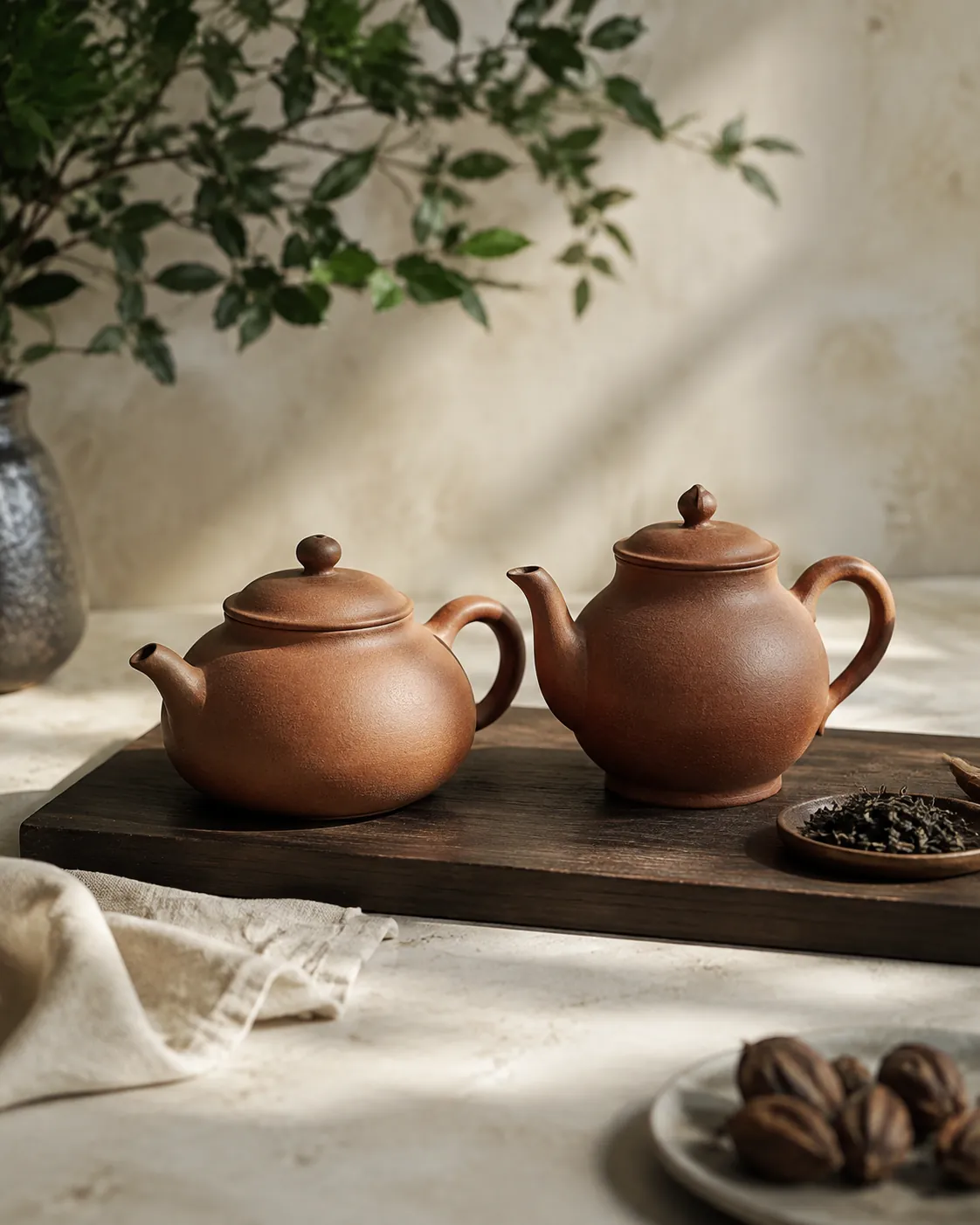
What made it a household object in Japan was steeped leaf tea itself. Powdered tea whisked in a bowl came first and survives as the ceremonial form, but from the eighteenth century onward a rolled, steamed green leaf steeped in water spread widely, and that tea needed a vessel that could hold fine leaf back and pour fast.
Two pottery towns answered, and both are still the names on the base of most pots sold today.
Tokoname
In Aichi, one of Japan's six ancient kiln towns. Red iron-bearing clay, and the default kyusu.
Banko
In Mie, known for a dark unglazed body and very finely made ceramic filters.
Hasami and Arita
Porcelain towns, where the same shape appears glazed and patterned.
Modern stainless
The kanaami basket, a twentieth-century fitting for deep-steamed leaf.
The shape has barely moved since, which is unusual for a kitchen object. It reached the form that suited its tea, and a scented leaf such as jasmine or any other tea brewed hot and long has simply gone on being made in something else.
Common questions
Why does a kyusu have the handle on the side?
A filled kyusu rarely passes 400 g, so there is nothing to lift and no need for the leverage an overhead handle gives. The hand goes over the side handle with the thumb on the lid knob, and the pour is a wrist turn rather than an arm movement, which suits five or six small pours in a sitting and leaves the other hand free for the cups.
What is the filter inside a kyusu for?
Japanese green tea sheds fines, and deep-steamed sencha is fragmented on purpose during processing. Rather than caging the leaf in a basket, which restricts it and still passes the dust, a kyusu leaves the leaf free in the whole pot and puts the barrier across the exit. It is fired into the clay as a sasame, fitted as a stainless band, or supplied as a full mesh basket.
What size kyusu should you buy?
Between 200 and 300 ml for two drinkers, which is the safe first purchase. Larger pots fail in two ways: water at 70 C falls several degrees a minute in a thin-walled pot, and a long pour leaves the leaf steeping while the last cup is filled. Around 4 to 5 g of leaf per 150 ml is the usual ratio.