The Yixing Teapot, and Why the Clay Is Left Unglazed
A yixing pot is left unglazed on purpose, so the clay stays porous and takes something from every brew. That one decision explains the seasoning, the ban on soap, and why the pot ends up committed to a single tea.
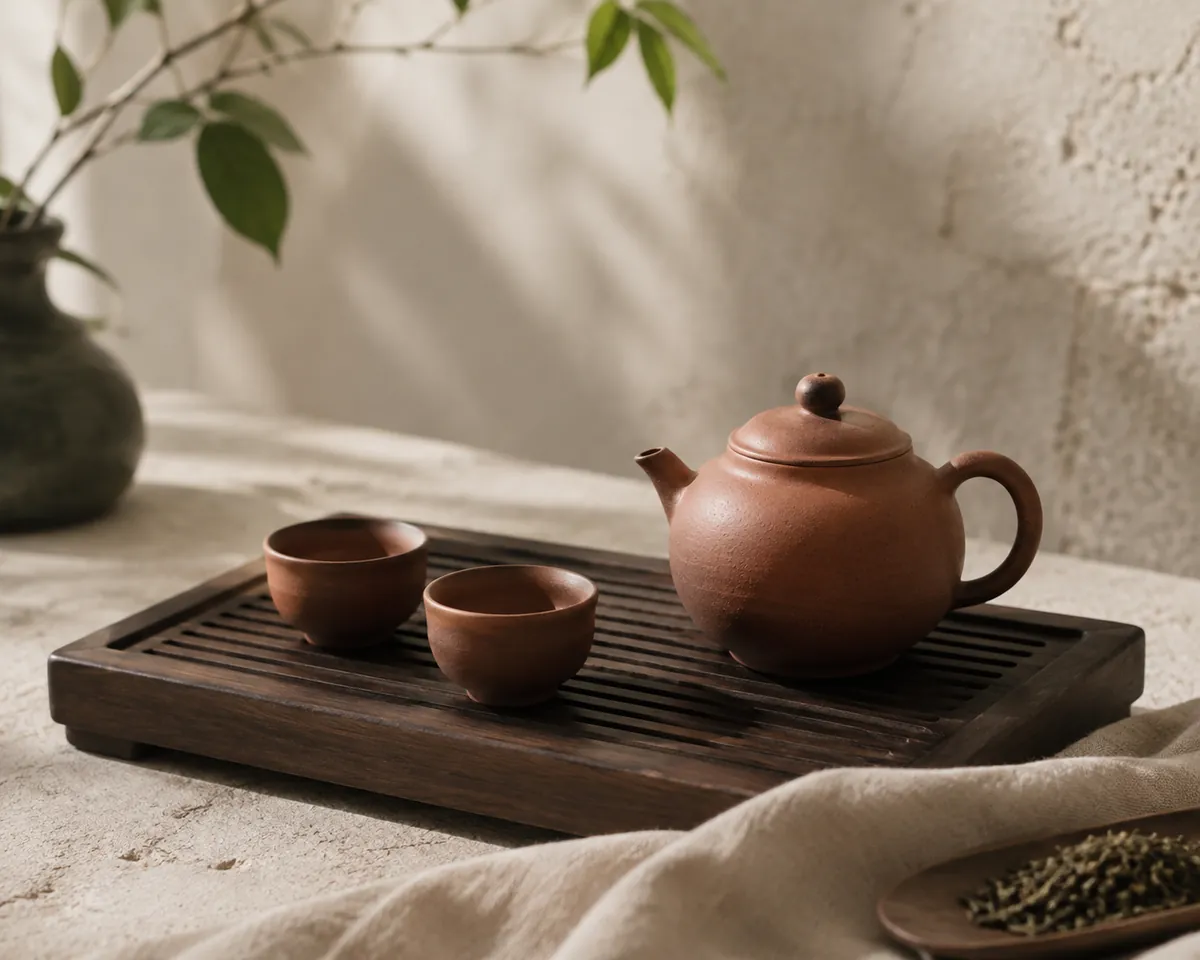
A yixing teapot is a small unglazed pot made from zisha, the clay found around the town of Yixing in Jiangsu province. It is fired hot enough to be watertight and then left bare, inside and out, with no glaze on any surface.
That single omission is the whole object. A glaze seals a pot and makes it inert; leaving it off means the clay stays slightly porous, and a porous pot takes something from every brew that passes through it.
Over months, that accumulation stops being a curiosity and becomes the point. The pot ends up carrying the tea it has been used for, which is why a serious user owns several and never lets them meet.
The yixing pot at a glance
- What it is
- A small unglazed teapot in zisha clay from Yixing, China
- Why unglazed
- The bare clay stays porous and absorbs tea oil with every brew
- The consequence
- One pot per tea, since it carries the last thing brewed in it
- Size to look for
- 100 to 200 ml, which suits gongfu brewing for one or two
- Cleaning
- Hot water only. Never detergent, and never a dishwasher
- Best suited to
- Roasted oolong, aged pu-erh, and dark black teas
- Least suited to
- Green and white teas, which the clay overheats and muddies
- Time to season
- Months of regular use, not a weekend ritual
What makes zisha clay different from ordinary pottery
Zisha is an iron-rich stoneware clay, dug and weathered and milled before it is used, and its usefulness comes from what happens during the firing rather than from anything mystical about the source.
Fired at high temperature, the clay vitrifies enough to hold water without a glaze. It does not vitrify completely, though, and the structure left behind is riddled with tiny voids and channels far too small to leak but large enough to hold liquid and, over time, oil.
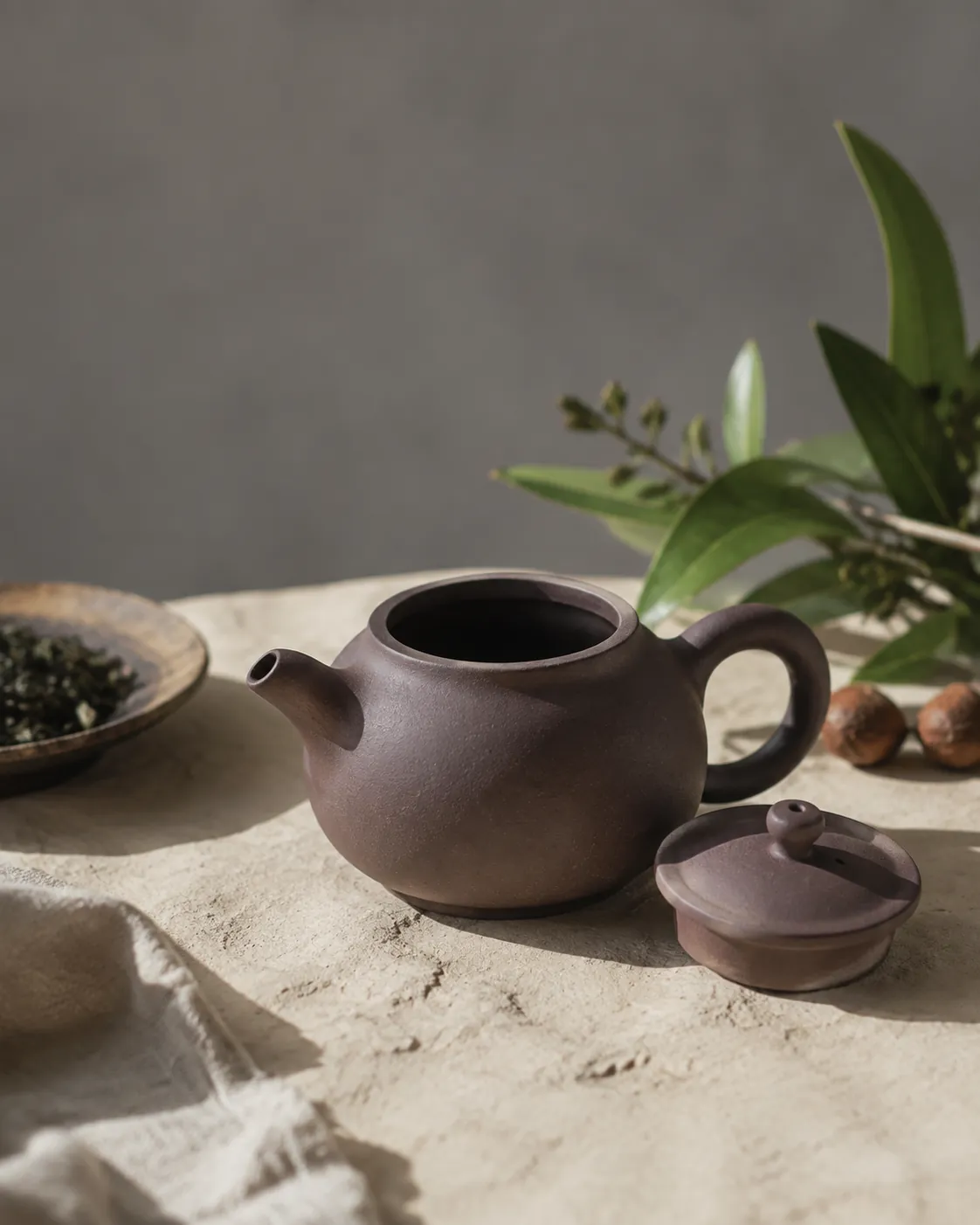
Unglazed inside
Nothing seals the bore, so the clay is in direct contact with the tea.
Porous but watertight
The voids are microscopic. A sound pot never seeps.
Iron-rich
Which gives the purple-brown, red and beige colours without added pigment.
Thick-walled
Far more thermal mass than porcelain of the same capacity.
Matt, then glossy
A new pot is dull. The shine comes from use, not from a finish.
Porosity is a spectrum rather than a property a pot either has or lacks. Some zisha clays are noticeably open and some are nearly as dense as porcelain, and choosing between them is the main technical decision in buying one.
The other thing the firing produces is heat retention. Thick stoneware holds temperature for a long time next to a thin porcelain vessel, and that difference is at least as important to how the tea comes out as the absorption is.
Why one pot ends up dedicated to one tea
Tea is not only water-soluble compounds. Oils, waxes and aromatic molecules come out of the leaf too, and in a glazed vessel they go into the cup and then down the sink.
In an unglazed pot they go into the walls. Each brew leaves a trace, hot water opens the clay slightly and lets more in, and the residue builds until the pot has a smell of its own that you can detect by holding it to your face after a rinse.
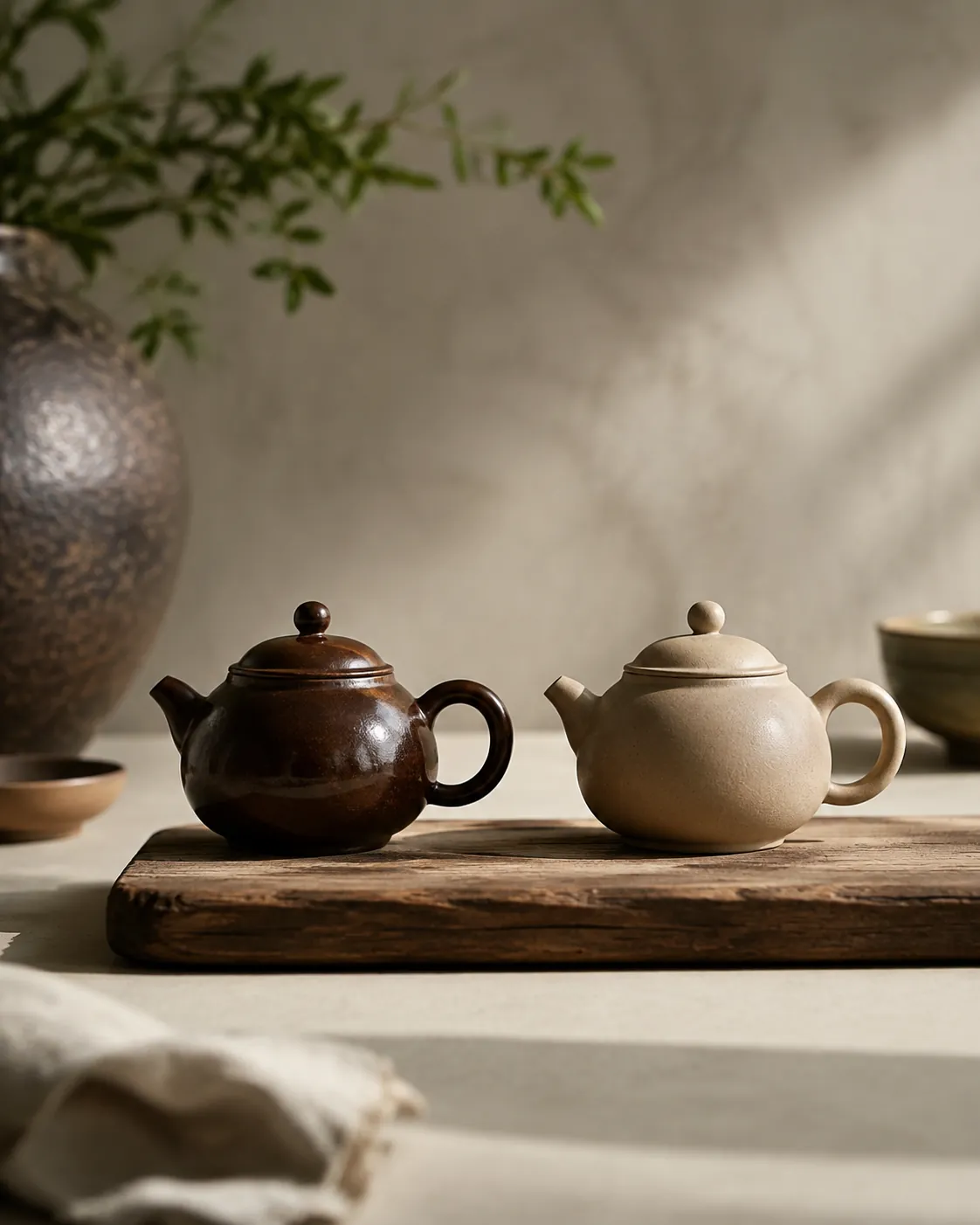
That accumulated character is called the patina, and it is why the pots are dedicated.
Brew a heavy roasted oolong for a year and then make a delicate green tea in the same pot, and the green tea arrives wearing the oolong's clothes.
How narrow the dedication needs to be is a matter of taste rather than a rule. Some people keep one pot per broad family, so a pot for pu-erh and a pot for roasted oolong, while others go further and dedicate a pot to a single tea they drink constantly.
The looser approach is defensible because teas within a family leave similar residues. The stricter one is defensible because the differences within a family are exactly what a serious drinker is trying to taste.
What the clay does to the tea in the cup
Two effects, and they are usually described together when they have almost nothing to do with each other.
The first is thermal. A thick clay pot preheated properly holds its temperature across a long steep instead of shedding it, which matters enormously for teas that want boiling water and want to keep it, and matters not at all for teas brewed at 70 C.
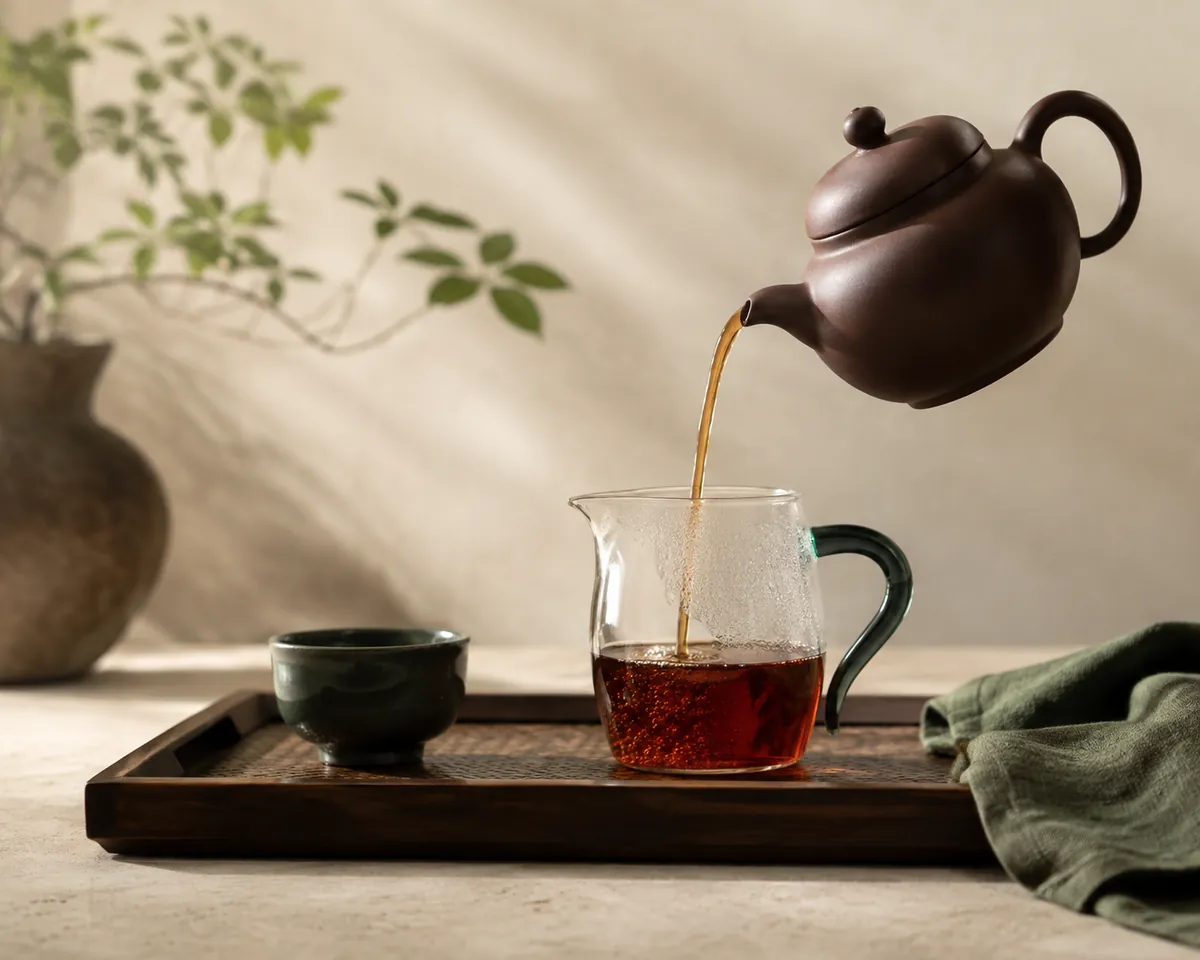
The second is the absorption working in reverse. Porous clay takes up some of what the tea releases, and the compounds it takes up most readily include the ones responsible for sharp edges, which is the mechanism behind the common report that a clay pot rounds a tea and takes the hard corners off it.
| Property | Unglazed zisha | Glazed porcelain |
|---|---|---|
| Heat retention | High, and holds through a long steep | Low, cools quickly |
| Absorbs tea oils | Yes, cumulatively | No, nothing at all |
| Effect on astringency | Softens it noticeably | Leaves it exactly as brewed |
| Versatility | One pot, one tea | Any tea, any day |
| Reading the leaf | Hidden inside the pot | Visible in an open bowl |
Softening is not always an improvement, which is the part enthusiasts skip. A tea whose sharpness is its character, such as a fresh Dragon Well, loses something when the pot rounds it off, and the same effect that rescues a rough aged pu-erh flattens a fine spring oolong.
Both effects are also weakest when the pot is new. A fresh pot has no patina, so the first months give heat retention without much else, and that is entirely normal rather than a sign that the pot is fake.
Which clay, and what each one suits
Zisha is a family rather than one material, and the differences between the main types are practical rather than decorative.
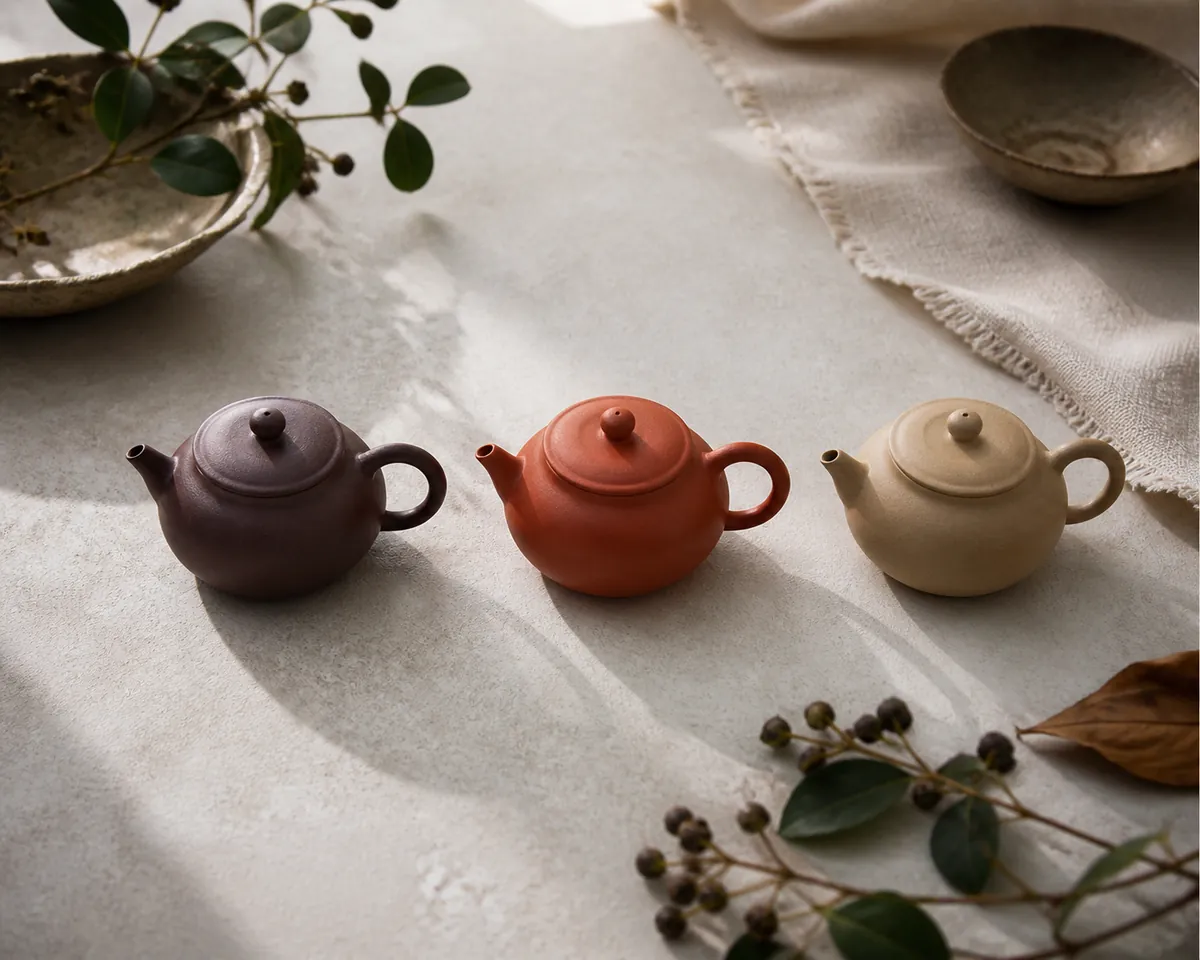
| Clay | Colour | Density | Suits |
|---|---|---|---|
| Zini | Purple-brown | Moderately porous, the default | Pu-erh, dark oolong, most black teas |
| Hongni | Warm red | Denser and finer than zini | Lighter oolong, black tea, more versatile |
| Zhuni | Bright orange-red | Very dense, high shrinkage, rings clear | Delicate roasted oolong, aromatic teas |
| Duanni | Beige to pale yellow | Open and thirsty | Heavy dark teas, absorbs quickly |
The rule of thumb is that a denser clay absorbs less and therefore alters less. Zhuni is prized partly because it is dense enough to preserve aroma rather than swallowing it, which suits a tea bought for its fragrance.
An open clay such as duanni does the opposite. It takes up a great deal, seasons visibly fast, and gives a very rounded cup, all of which is a virtue with a rough dark tea and a waste with anything subtle.
Wall thickness cuts across all of this. A thin-walled zini pot behaves quite differently from a thick-walled one of the same clay, and comparing two pots on clay type alone will mislead you.
How to open and season a new pot
A new pot arrives with kiln dust in it and no character at all. Opening it means cleaning it properly and then beginning the patina, and most of the elaborate rituals attached to this are optional.
Opening a new pot
- Rinse thoroughlyHot water, inside and out, until nothing gritty comes off on a finger.
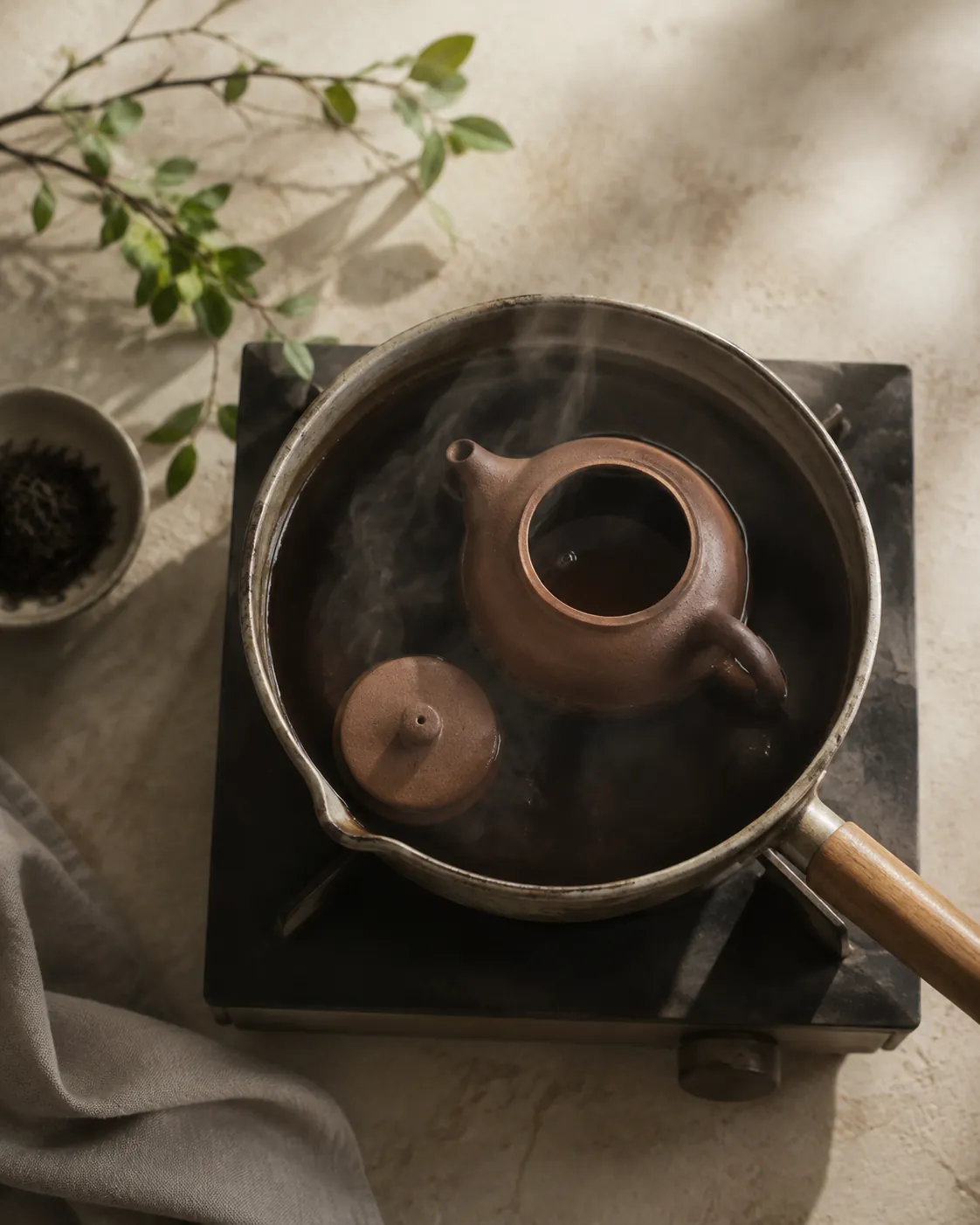
- Boil itTwenty minutes in a pan of plain water, with a cloth underneath so it does not rattle.
- Boil it again in teaSame pan, with a generous quantity of the tea the pot is being dedicated to.
- Cool it slowlyLeave it in the water as it cools rather than lifting it into cold air.
- Dry it fullyLid off, somewhere airy, before the first proper brew.
- Then simply use itThe real seasoning is months of ordinary brewing, not this first day.
The tea boil is the step people treat as magic and it is really just a strong head start. It puts the intended tea into the clay before anything else can get there, which matters mainly because it stops a stray brew setting the pot's direction by accident.
Some people also pour the last of each brew over the outside of the pot and wipe it dry with a cloth. That is what produces the deep sheen on an old pot, and it is cosmetic rather than functional, though it is a pleasant habit and does no harm.
Nothing about this is quick. A pot that looks meaningfully different from new has had hundreds of brews through it, and any pot sold as pre-seasoned has been treated with something you would rather not drink.
Soap is the one unbreakable rule
Detergent is the single thing that ruins a yixing pot permanently, and the reason is the same porosity that makes the pot worth owning.
Washing-up liquid soaks into the clay exactly as tea oil does. Unlike tea oil, it does not belong there, it does not fade, and every subsequent brew pulls a little of it back out into the cup.
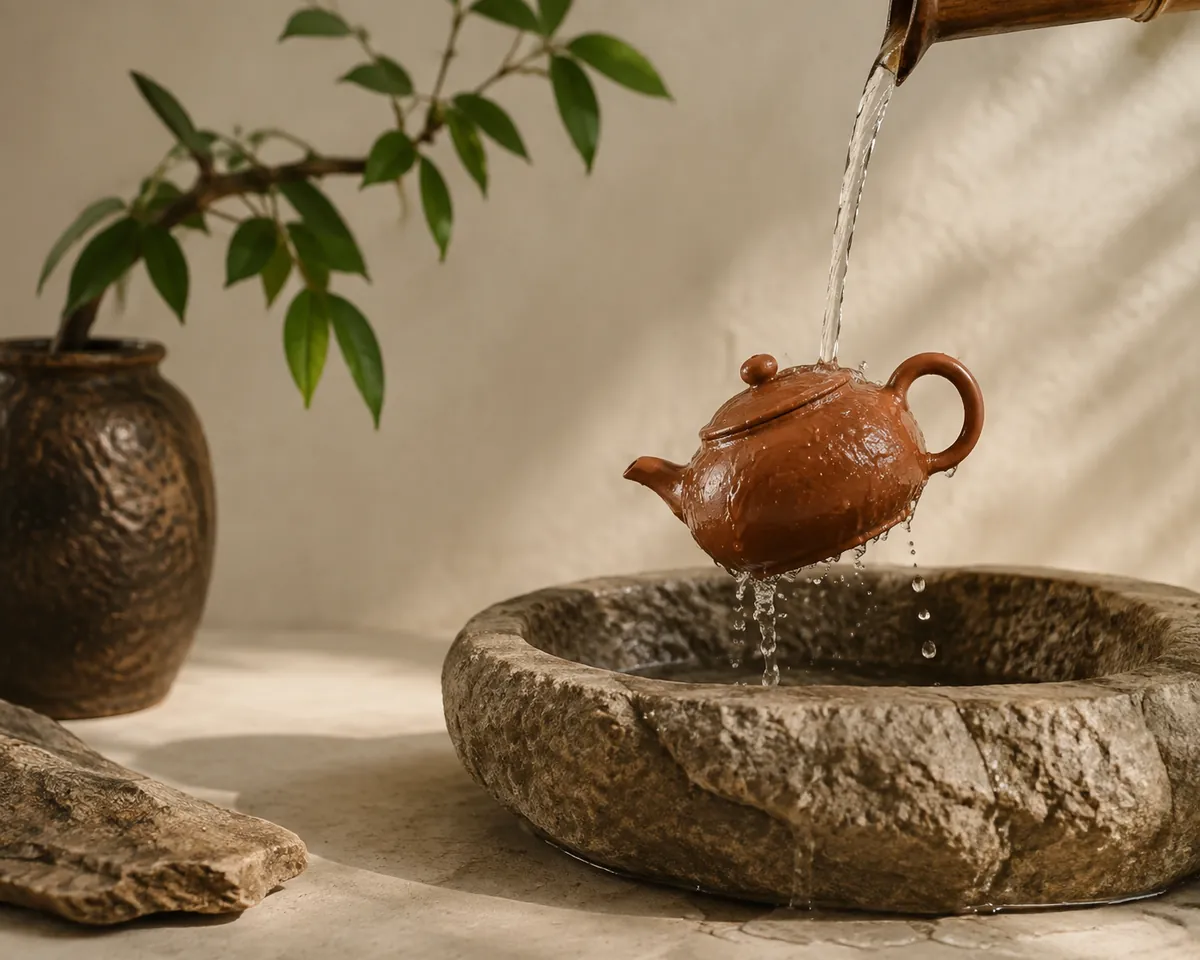
- Rinse with hot water only, immediately after use, inside and out.
- Tip the spent leaf straight out rather than leaving it to sit and sour.
- Use a soft cloth on the outside and nothing abrasive anywhere.
- Never put the pot in a dishwasher, which combines detergent with thermal shock.
- Dry it with the lid off and set aside, so no moisture is trapped inside.
- Leave tea staining alone. Inside a yixing pot it is the patina, not dirt.
The stain question is where people from a porcelain background go wrong. In a glazed vessel a brown film is a deposit sitting on an inert surface and can be scrubbed off with no consequence, while in a yixing pot the same discolouration is the thing you have spent a year building.
Trapped moisture is the only genuine hygiene concern, and it is easily managed. A pot put away damp with the lid seated can go musty, so the lid comes off and stays off between sessions.
If a pot does pick up an off smell, the recovery is a plain water boil and then a long airing. It will not restore a pot that has met detergent, but it handles a pot that was shut away wet.
Which teas suit it and which do not
Match the pot to the tea by asking two questions: does this tea want to be brewed hot and held hot, and would it be improved or diminished by having its edges softened.
How well the pot serves each tea
- Aged and ripe pu-erhWants boiling water held hot, and gains from rounding
- Roasted oolongThe classic match. Heat and softening both help
- Dark black tea such as AssamSuits the heat, and the malt survives the clay
- Aromatic oolong and jasmineOnly in a dense clay, or the aroma is absorbed
- White teaCooler water, and the pot's advantages go unused
- Green teaWrong temperature entirely, and the clay muddies it
Green tea is the clear mismatch, and the reason is not snobbery. Most greens want water well below boiling and a short steep in a vessel that cools, and a preheated clay pot supplies the opposite of every one of those, which produces exactly the harshness described in why green tea tastes bitter.
A leaf-in-a-basket approach makes even less sense here than elsewhere, so a mug infuser is not a shortcut to the same result. The pot works because the leaf moves freely in a small hot volume.
Roasted teas are the other end and the natural home of the pot. A roasted oolong or a hojicha has already been through fire, its aromatics are robust rather than fragile, and the clay's rounding suits a profile built on toast and caramel rather than on freshness.
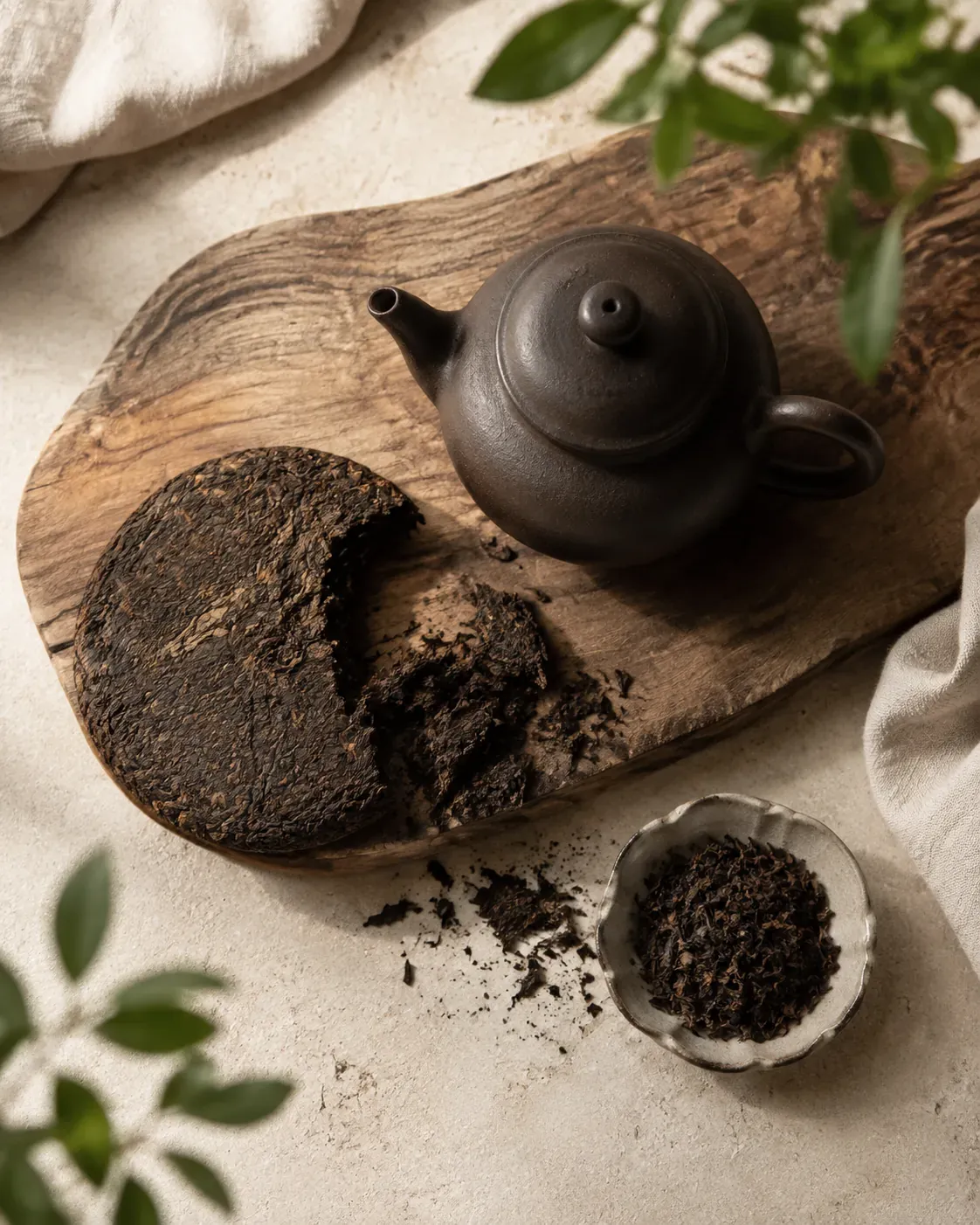
Aged pu-erh is where the argument for clay is strongest. It wants genuinely boiling water for many short steeps, it often carries a rough edge that softens beautifully, and holding heat across ten infusions is precisely what a thick-walled pot does better than anything else.
Darjeeling and other high-grown black teas sit awkwardly in the middle. They tolerate the heat, but their character is floral and delicate, and a pot that rounds them can take away the thing they were bought for.
How to choose one without being cheated
The market has a great many pots that are not what they claim, and the useful defences are mostly physical rather than a matter of provenance.
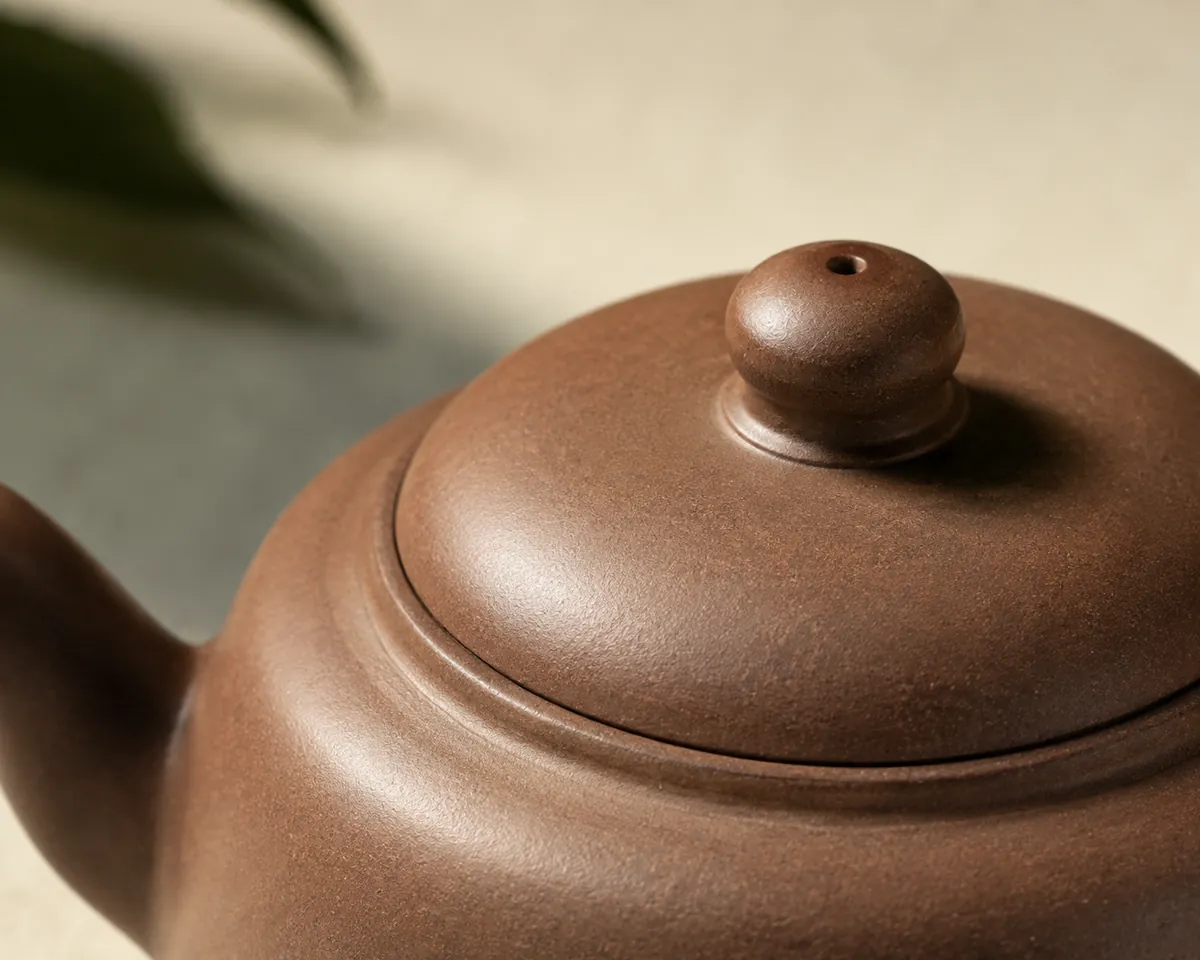
- Handle the surface. Real zisha is matt and slightly sandy, never glossy or plasticky when new.
- Check the lid sits level and turns in the rim without catching at any point.
- Fill it with water and pour. The stream should be straight and stop cleanly when you tip it back.
- Look inside for a clean bore and a spout filter that is not clogged with clay crumbs.
- Smell the dry pot. Anything chemical, sweet or paint-like is a reason to walk away.
- Prefer a small pot. Between 100 and 200 ml is where the method actually works.
Capacity is the mistake beginners make most reliably. Gongfu brewing uses a high leaf ratio and very short steeps, so a large pot holds so much water that the ratio collapses and the method stops behaving as intended.
The pour is the second test and it is more revealing than any seal or sound trick. A pot that dribbles down its own spout, or that keeps running after you level it, has a badly cut spout, and no amount of patina fixes geometry.
Decoration is not quality. Heavily carved and painted pots are often the ones hiding poor clay under the finish, and a plain pot with a good pour and honest surface is the better object.
Looking after it day to day
Once the pot is open and dedicated, the daily routine is short enough to state in a sentence and easy enough to get wrong in three ways.
A session, start to finish
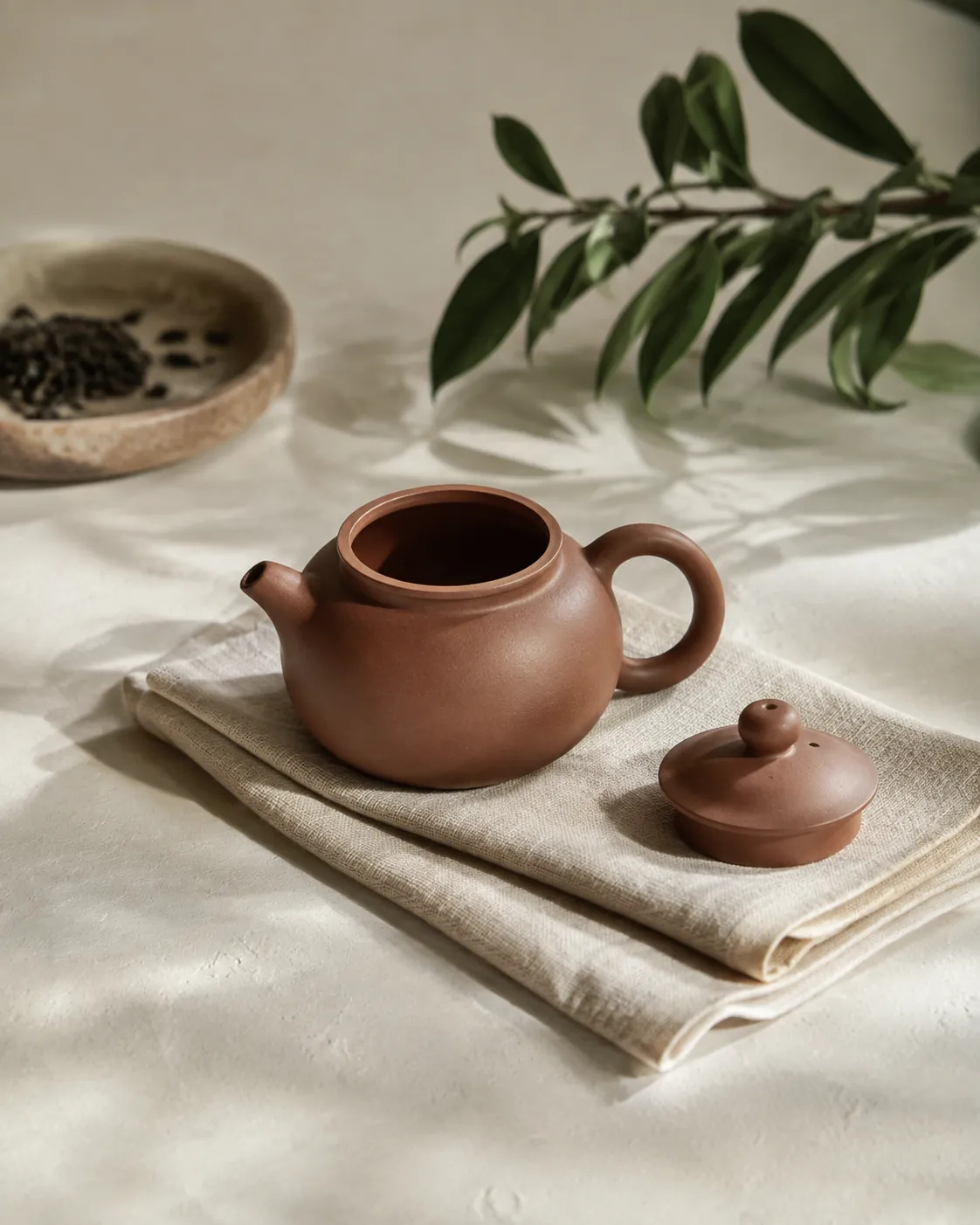
- WarmFill the pot with hot water and discard it, so the clay is at temperature.
- BrewLeaf in, water on, short steeps decanted completely each time.
- EmptyTip the spent leaf out as soon as the session ends.
- RinseHot water through and over, no detergent, no brush.
- OpenSet the lid aside and leave the pot to dry fully.
Preheating is the step that gets skipped, and it costs more here than elsewhere. Thick clay takes real heat to warm, so boiling water poured into a cold pot loses several degrees to the walls before it ever reaches the leaf, and the first steep of a session comes out weak for no other reason.
Thermal shock is the way these pots break. Boiling water into a stone-cold pot in a cold room, or a hot pot set down on a wet surface, cracks stoneware, and warming it first is the whole preventative.
A variable kettle helps for a different reason than usual here. Its value is not the pour, since a clay pot takes water any way it comes, but holding a steady boil across ten short steeps without reboiling the water each time.
Beyond that they are extremely durable. A yixing pot has no glaze to craze, no metal to corrode and no seals to perish, and a well-treated one outlives its owner, which is why old pots are handed on with the tea they were used for still noted.
The opposite trade-off from a porcelain gaiwan
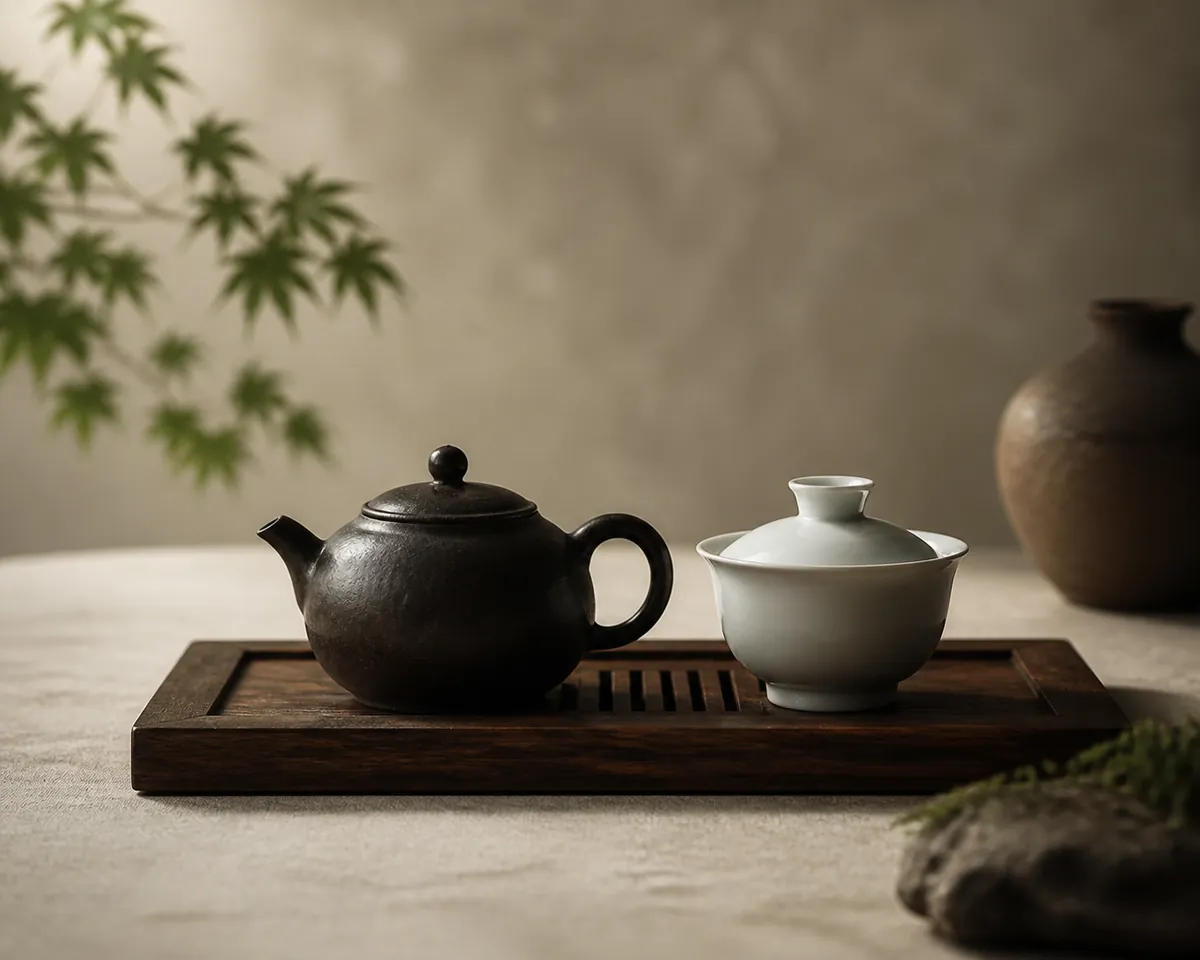
Set a yixing pot beside a gaiwan and you have the two ends of one decision, made in different directions for good reasons.
Works well for
- Holds heat far better than porcelain, which suits teas that want boiling water
- Softens astringency and rounds a rough tea
- Builds character over years, so it improves with use
- Extremely durable, with nothing to chip, craze or perish
- Small enough for the leaf ratios gongfu brewing needs
- A finished object in its own right, and pleasant to handle
Struggles with
- Dedicated to one tea, so you need several pots for several teas
- Absorbs aroma as well as harshness, which can flatten a fragrant tea
- The leaf is hidden, so you cannot watch it open or read the spent leaf
- Cannot be washed with detergent, ever
- Wrong for green and white teas, which is a large part of tea
- Widely faked, and hard to judge without handling
The pattern is clean once you see it. Porcelain buys flexibility by being inert, and clay buys character by being absorbent, and neither can be had without giving up the other.
Which explains why people who take tea seriously usually own both. A gaiwan is the first vessel to buy, because it will brew anything you happen to have and tells you what an unfamiliar tea actually tastes like, and a kyusu fills the same neutral role for Japanese green tea.
The clay pot comes later and answers a different question. It is bought once you know which tea you drink most, and it exists to make that one tea better rather than to make every tea possible.
What the patina is, and what it is not
There is a story, repeated often, that a pot seasoned for decades will brew tea from hot water alone. It is a good story and it is not true, and separating the real effect from the folklore is worth doing.
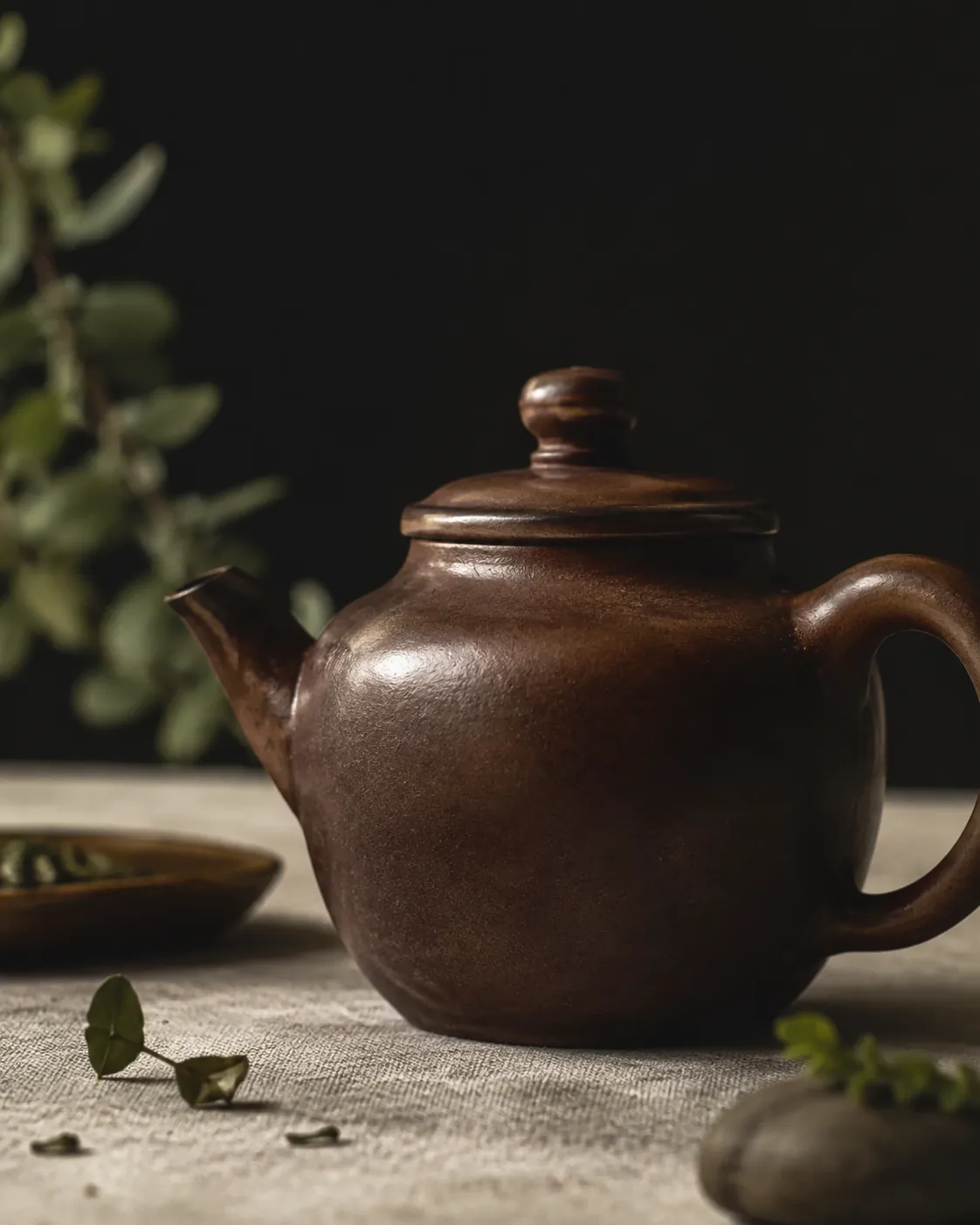
What genuinely happens is modest and cumulative.
The clay holds tea oils, those oils contribute a faint background to each brew, and a pot used constantly for one tea gives that tea a slightly deeper and rounder character than a new pot does.
What does not happen is flavour appearing from nothing. Hot water in a seasoned pot gives faintly tea-scented water, which is a curiosity rather than a drink, and any pot that delivers noticeably more than that has residue in it that should have been rinsed away.
The outside sheen is a separate matter again, and it is honest to call it what it is. It comes from repeated wiping with tea and handling with clean hands, it looks lovely, and it has no effect whatever on the liquid inside.
None of this makes the pot less worth owning. It just puts the pot in proportion against the things that decide a cup far more: the leaf, how it has been stored, the water you brew with, and the temperature you use, all of which outrank the vessel by a wide margin.
Common questions
Why can you only brew one type of tea in a yixing teapot?
The clay is fired without a glaze, so it stays slightly porous. Oils and aromatic compounds from the leaf soak into the walls with every brew and build up over months, until the pot has a character of its own. Anything brewed in it afterwards picks that character up, so a pot used for roasted oolong will carry the oolong into a green tea made in it later.
Why must you never use soap on a yixing teapot?
Detergent soaks into the porous clay exactly as tea oil does, but it does not fade, and every later brew pulls a little of it back into the cup. Rinse with hot water only, immediately after use, and leave the brown staining inside alone: in an unglazed pot that discolouration is the patina rather than dirt. Dry the pot with the lid off so no moisture is trapped.
Is a yixing teapot or a porcelain gaiwan the better first purchase?
A gaiwan, in almost every case. Glazed porcelain absorbs nothing, so one gaiwan brews every category of tea and tells you what an unfamiliar leaf actually tastes like. A clay pot is bought later, once you know which tea you drink most, because it exists to make that one tea rounder and hotter rather than to make every tea possible.