Black tea vs Green tea
Black Tea vs Green Tea: One Plant and One Decision
One plant, one decision, and everything else follows from it. Black tea forgives a careless brew and green tea does not, which decides more than flavour.
Both are Camellia sinensis, separated by whether the leaf was allowed to oxidise. Oxidation converts the astringent catechins in green tea into the larger, softer compounds in black tea, which is why black tea takes boiling water, milk and a long steep while green tea takes none of them. Black tea is the more practical single tea to own; green tea is the more rewarding second one.
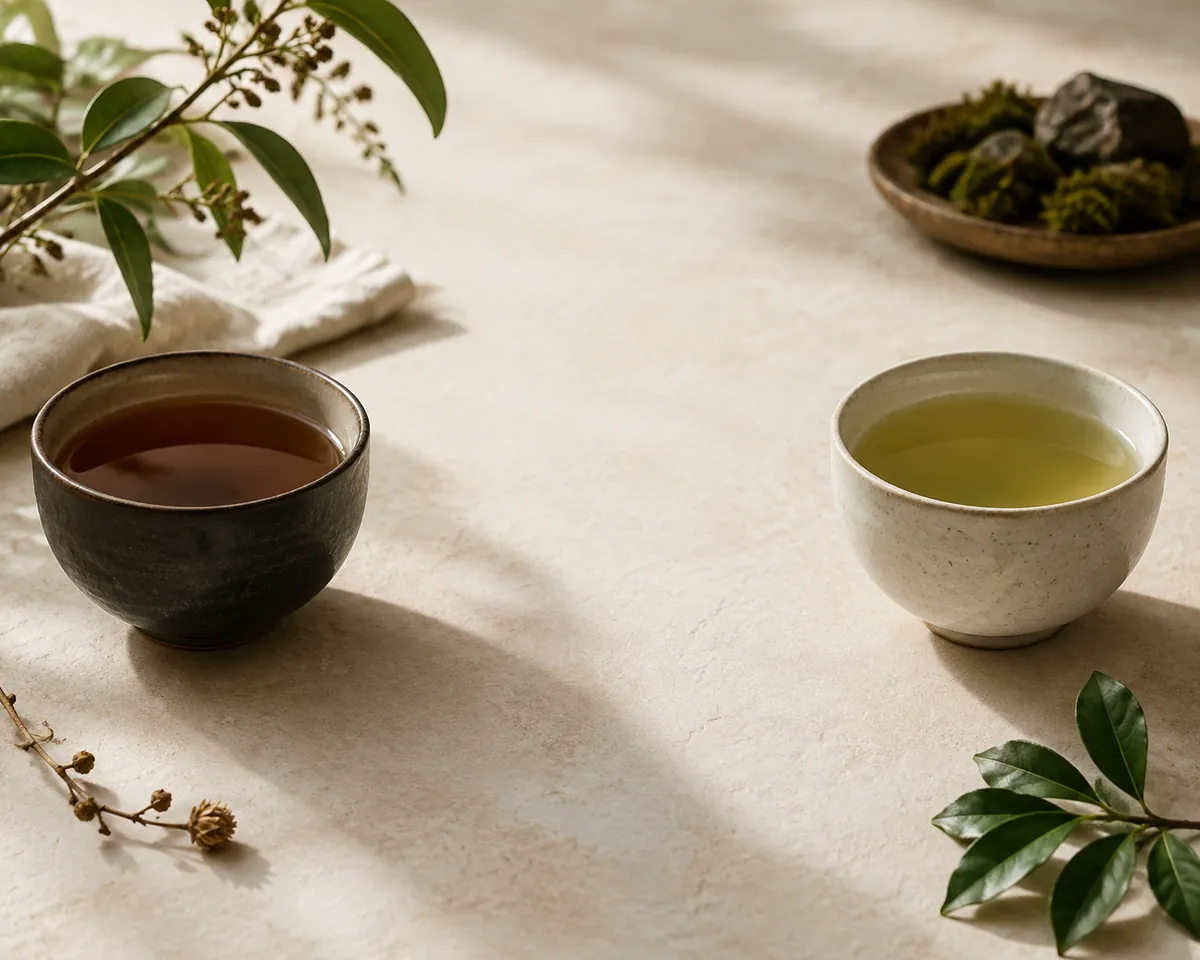
Side by side
| Attribute | Black tea | Green tea |
|---|---|---|
| Plant | Camellia sinensis | Camellia sinensis, the same species |
| Processing | Rolled, fully oxidised, then dried | Heated early to stop oxidation, then dried |
| Dry leaf | Dark brown to black, twisted or granular | Green, from flat needles to rolled pellets |
| Liquor | Coppery red to deep brown | Pale yellow to jade |
| Water | 95 to 100 C | 70 to 80 C |
| Steep | 3 to 5 minutes | 1 to 3 minutes |
| Caffeine | Around 47 mg per 8 fl oz | Around 28 mg per 8 fl oz |
| Takes milk | Yes, and it is traditional | No. There is no tannin structure for it |
| Second infusion | One, weaker | Two or three, each different |
| Keeps, once opened | A year or two | Three to six months |
| Forgiving of mistakes | Very | Not at all |
Oxidation is the only decision that separates them
Both teas are Camellia sinensis, and frequently the same cultivar off the same hillside.
Everything that separates them happens after plucking, in one decision about whether the leaf is allowed to oxidise. Green tea is heated within hours of picking, which kills the enzymes before they can work, and black tea is rolled to bruise the leaf and then left to oxidise fully before drying.
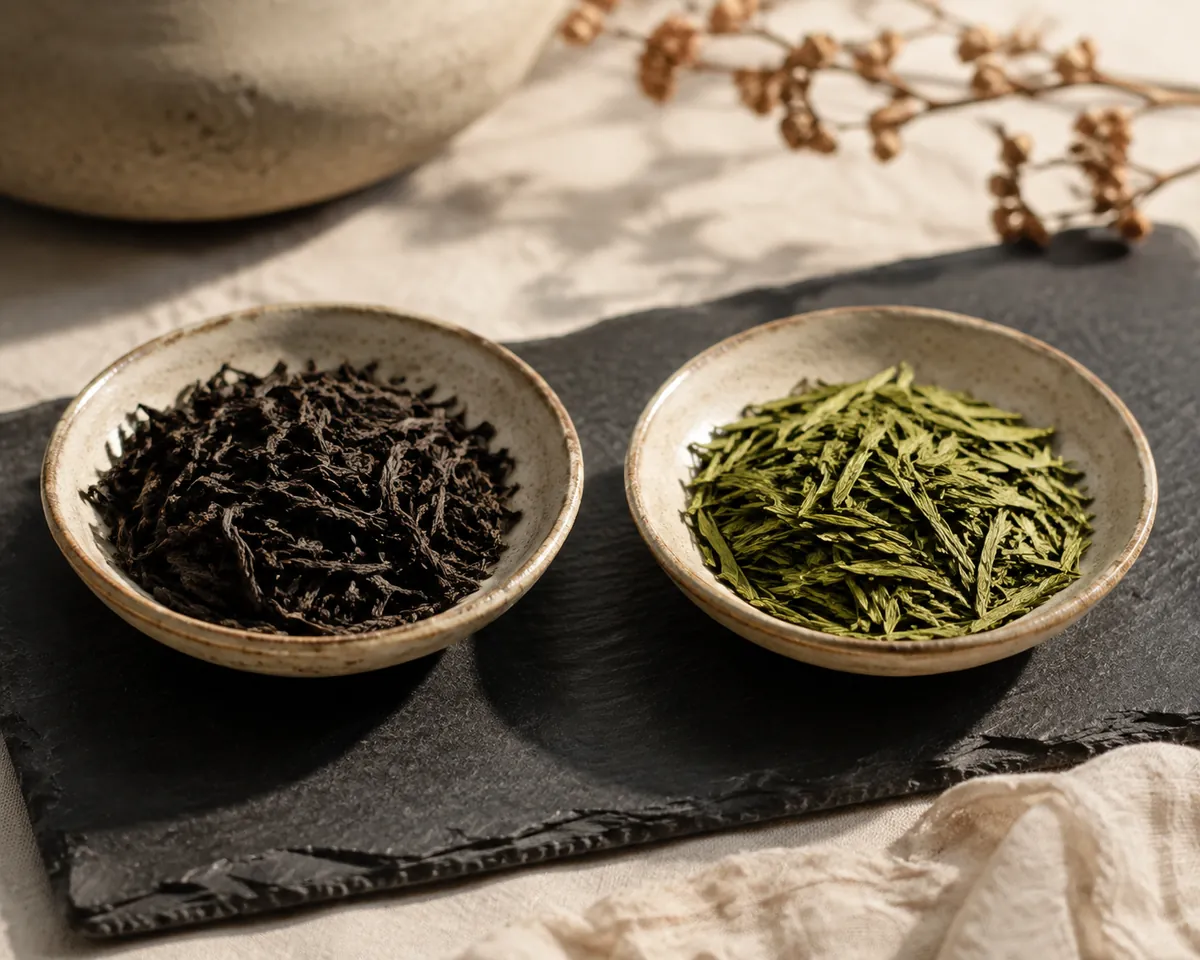
That is a difference of direction rather than of degree. Oxidation converts the catechins that dominate the fresh leaf into theaflavins and thearubigins, which are larger, darker and far less astringent, and every practical difference on this page follows from that conversion.
The caffeine gap is real and smaller than most people assume, and it moves more with leaf quantity and steep length than with the category. A strong green tea can carry more caffeine than a weak black one, which is why the figures on black tea caffeine are given as ranges rather than as a verdict.
On the caffeine axis neither wins outright, and the honest answer is that the two ranges overlap heavily.
Where the categories genuinely diverge is in what the kettle does to them, which is the next section and the one people discover by accident.
Five minutes off the boil ruins one of them
Boiling water and five minutes. That instruction is printed on almost every supermarket box, it was written for one of these teas, and applying it to the other is the commonest reason someone decides they dislike green tea.
| Black tea | Green tea | |
|---|---|---|
| Water | 95 to 100 C, straight off the boil | 70 to 80 C, rested two minutes |
| Steep | 3 to 5 minutes | 1 to 3 minutes |
| Leaf | 2 to 3 g per 200 ml | 2 g per 200 ml |
| Margin for error | Wide. A minute late is barely noticeable | Narrow. A minute late is a different cup |
| Second infusion | Usually one, and weaker | Two or three, and each differs |
| Failure mode | Astringent but drinkable | Harsh and drying |
Black tea was built for exactly the conditions that ruin the other. Its astringent compounds were converted during oxidation, so heat and time extract body rather than harshness, and the margin for error is measured in minutes rather than seconds.
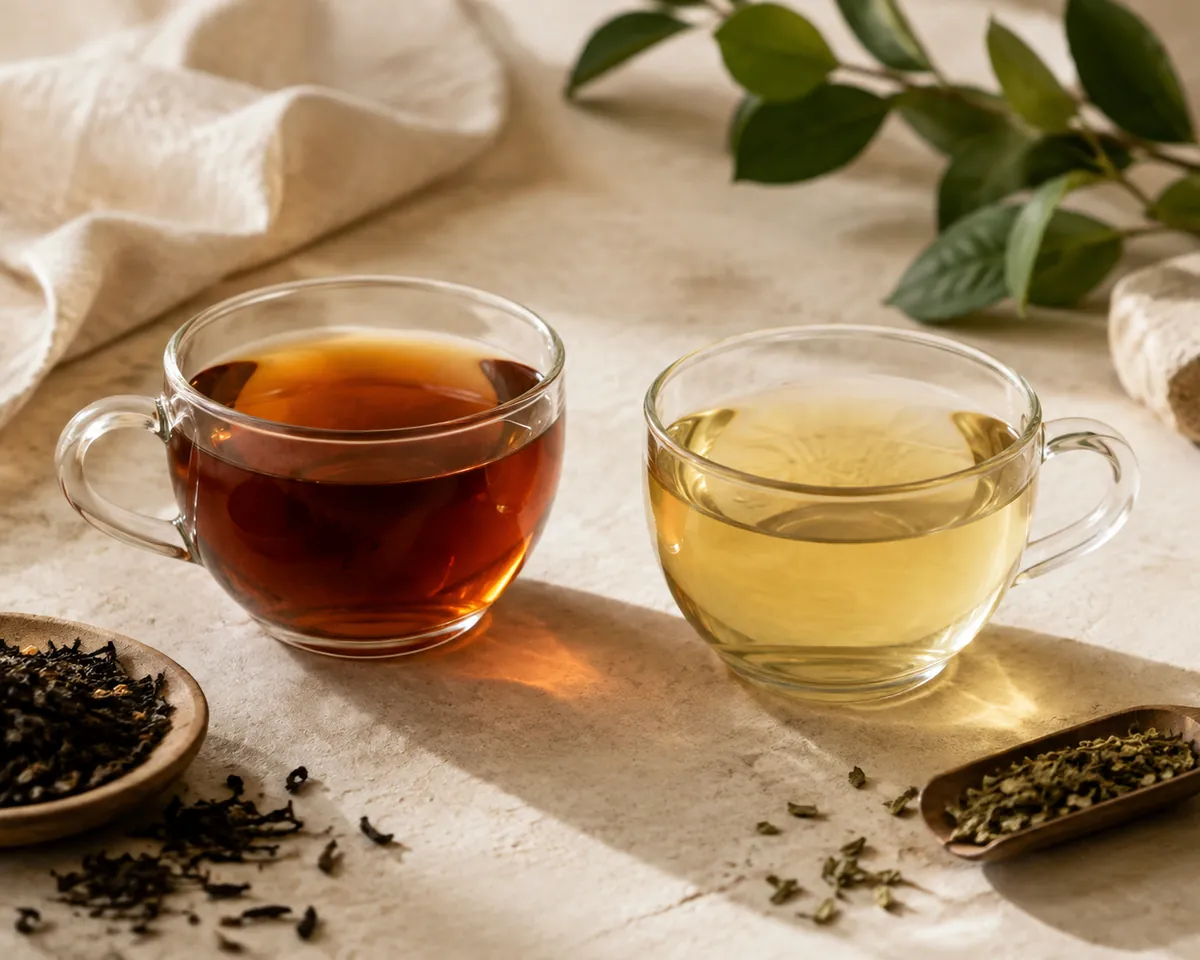
The forgiveness has a price that rarely gets mentioned. The same chemistry that lets a strong brew tolerate a long steep also means the leaf gives up nearly everything in one go, where a good green tea holds enough back for a second and third infusion that taste different from the first.
That reverses which one is better value by the gram, and it changes the vessel. A pot suits making black tea for a table, and a small gaiwan suits a leaf you intend to infuse three times.
A cup that arrives harsh is nearly always a water problem rather than a leaf problem, and why green tea tastes bitter works through the causes in order while steeping temperature gives the numbers for both.
Milk binds to one and sits in the other
Milk, lemon and sugar divide almost perfectly along the oxidation line, and the reason is structural rather than a matter of national habit, which is why no amount of getting used to it changes the outcome.
Black tea carries enough tannin for milk proteins to bind to. That binding is what softens the astringency and supplies body, and it is why milk in a strong brew works everywhere it is drunk.
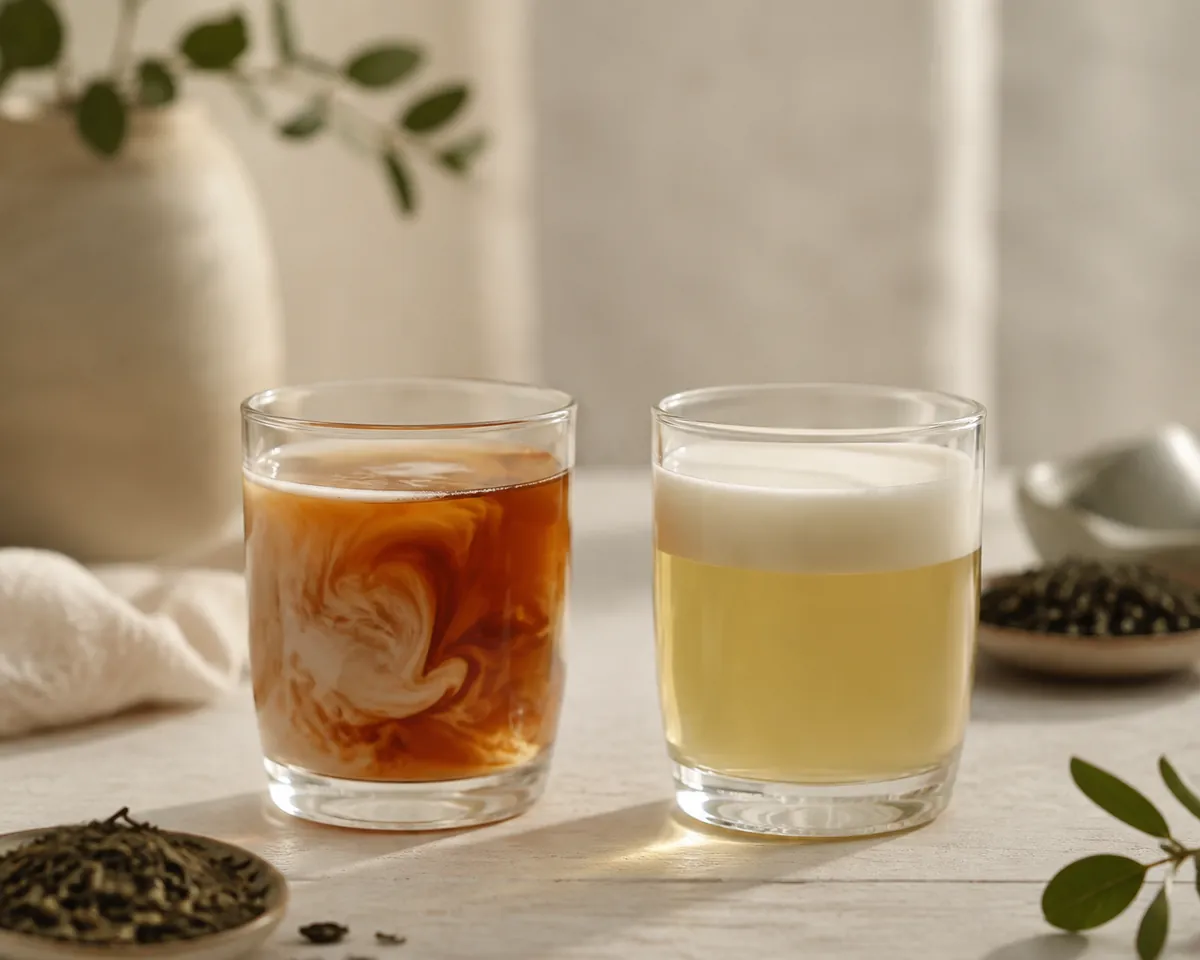
Green tea has far less of that structure, so milk sits in it as a separate pale layer rather than combining with anything. The result is thin and faintly odd, and quantity makes it worse rather than better.
Milk
Black tea only. There is nothing in green tea for it to bind to.
Lemon
Brightens black tea, flattens green tea, and never goes in the same cup as milk.
Sugar
Works in black tea, and buries the sweetness that green tea already has.
Lemon runs the opposite way from milk, lifting a brisk black cup and flattening a delicate green one, and the two additions cannot share a cup in either tea because acid and dairy curdle on contact. Plant drinks add a further complication that why plant milk curdles sets out in full.
Tea is less acidic than coffee, so the margin is much wider than a barista would expect, and an unbuffered carton still splits in boiled chai. That is the one place in this comparison where black tea is the fussier of the two.
Perishability runs the other way entirely
Oxidation is a form of ageing that has already happened, which decides how each tea behaves once you own it.
Black tea is stable for the same reason it is forgiving. Fully oxidised leaf has little left to react with, so a sealed tin holds a year or two and fades gently instead of turning.
Green tea is the most perishable of the true teas, because its character sits in precisely the compounds oxidation would have removed, and those keep reacting slowly inside a closed packet.
How long each keeps once opened
The buying pattern that follows is different for each, and it is the one piece of practical advice on this page that costs money to ignore. Fifty grams of green tea bought often beats two hundred grams bought on price, where black tea tolerates the larger bag and the back of the cupboard.
Air is the variable both share and only one punishes quickly, which storing loose leaf covers in general and storing green tea covers where it matters most.
What the money buys, and which tin to own
At the bottom of the range the two are not comparable at all, because a cheap black teabag makes a serviceable cup with milk while a cheap green teabag makes something most people describe as thin and grassy and then never buy again.
At the top the ranking reverses. A first-flush Japanese sencha tastes unlike anything at its price in the other category, where the improvement from mid-range to expensive black tea is genuine and far less dramatic.
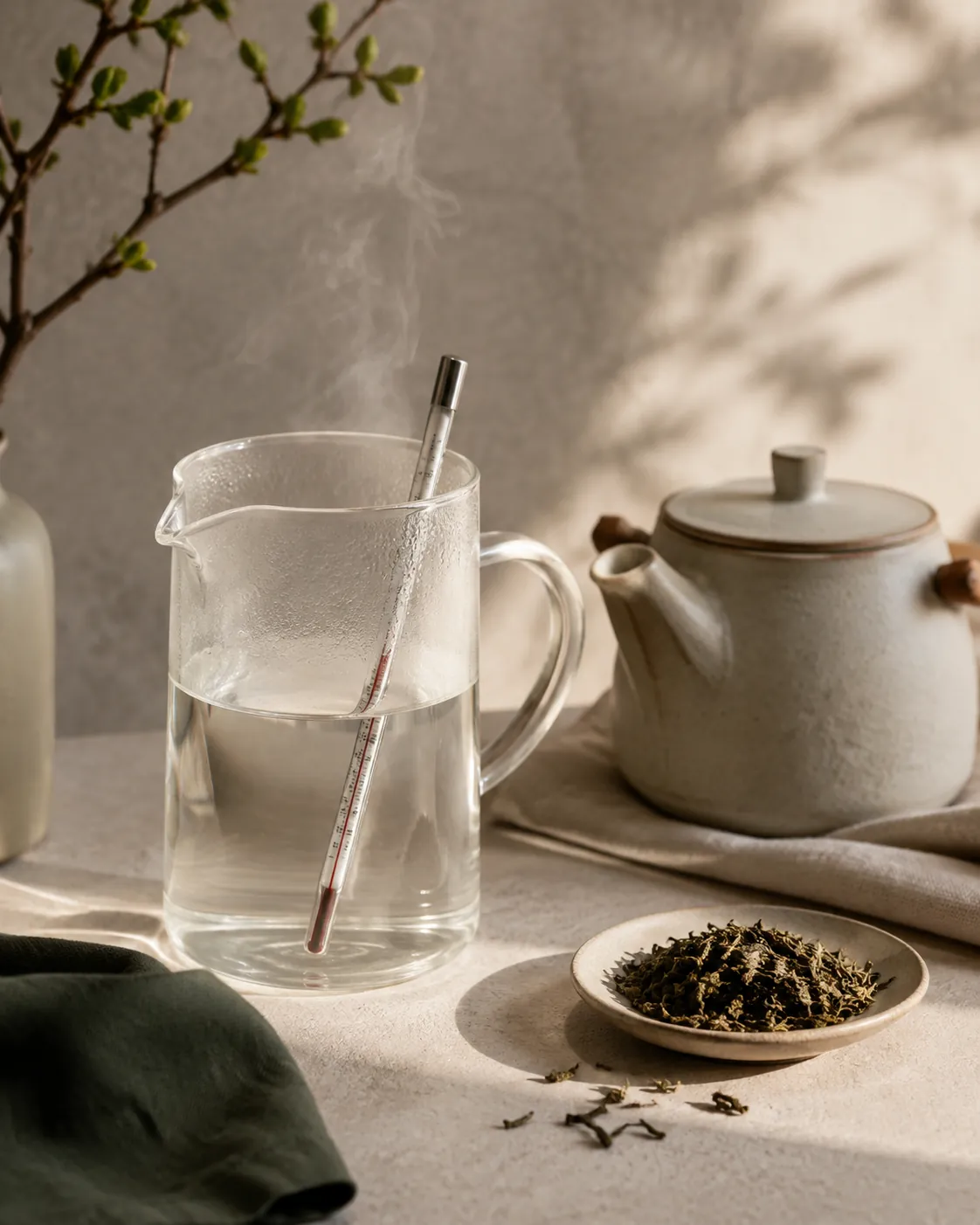
Equipment barely enters it. A thermometer and a second vessel to cool water in are the only things green tea asks for that black tea does not, and neither costs much next to the leaf.
For a household keeping one tea, the honest answer is black, and not because it is the better leaf. It survives being brewed wrong, it takes milk and sugar for the people who want them, it scales to a pot, and it keeps for a year in a cupboard, which is the full list of properties a single tin in a kitchen needs.
Green tea earns its place as the second tin rather than the first. Anyone buying a first good one should take fifty grams of a named sencha or a Chinese pan-fired leaf from a seller who states a harvest year, and should not judge it on a cup made with boiling water.
Choose by the hour, not by the leaf
The choice is usually about the moment.
First thing in the morning
Black tea. More caffeine, tolerant of a rushed brew, and it takes milk.
Mid-afternoon, alone
Green tea. Lower caffeine, and the short brew is a small ritual rather than a chore.
With rich or fried food
Green tea, or a roasted hojicha. The astringency cuts fat where milk tea competes with it.
With cake or something sweet
Black tea. It has the body to stand beside sugar.
Late evening
Neither, strictly, though green tea is the lighter of the two.
Made for a crowd
Black tea, in a pot, which holds up while people talk.
The pattern underneath that list is worth stating plainly, because it predicts the cases the list does not cover. One tea suits being made carelessly and drunk alongside other things, and the other suits being made deliberately and drunk on its own.
Food is where the difference is sharpest and least appreciated. Astringency scrubs fat from the palate, so a green cup resets the mouth between bites of something fried, while a milky black cup sits beside the same plate as another rich thing rather than as a counterweight to it.
Anyone who wants the morning slot filled without caffeine has left this pairing entirely, and the substitution that actually works is covered under black tea against rooibos.
The range inside each beats the gap between them
Treating this as two drinks understates both categories badly, and it explains why blind tastings surprise people so reliably.
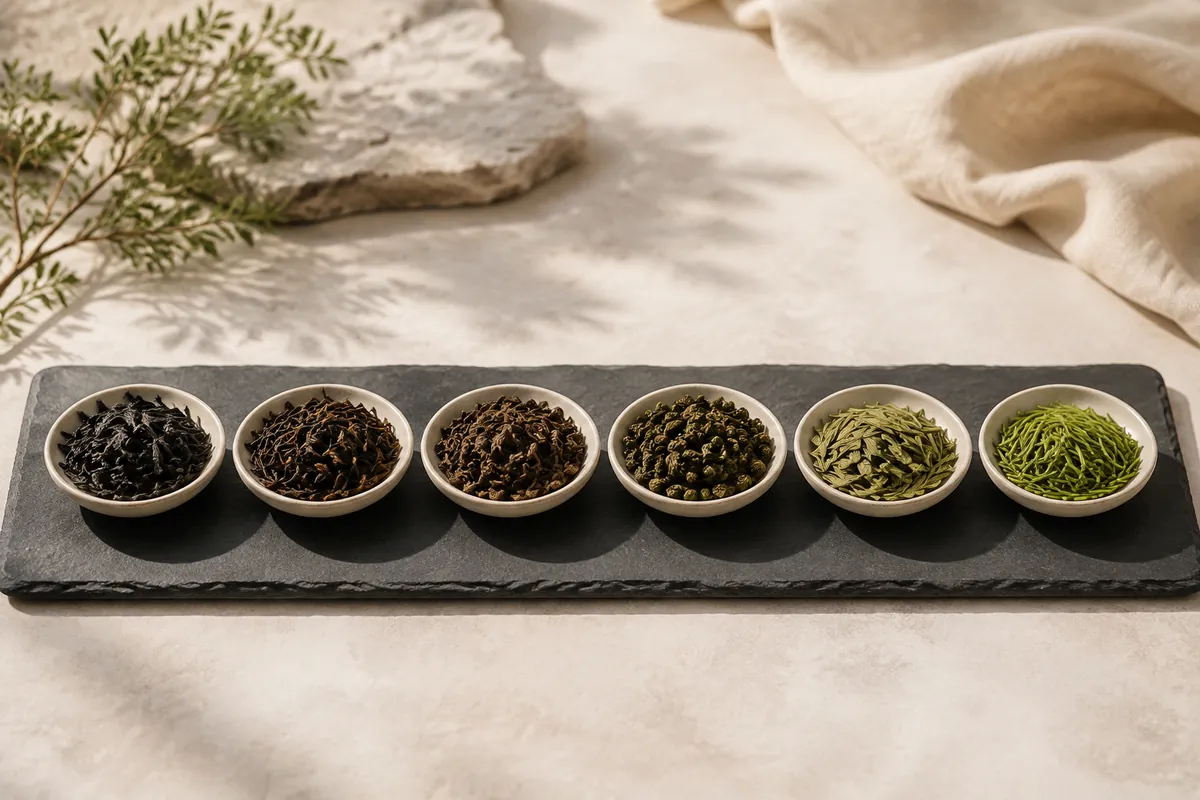
Black tea spans a brisk Assam that needs milk, a light first-flush Darjeeling that is ruined by it, a smoky Lapsang and a malty Keemun. The distance between the first two of those is larger than the distance between the Darjeeling and a robust green tea.
Green tea covers as much ground. A Japanese sencha is marine and savoury, a Chinese Longjing is nutty and toasted, and a gunpowder is smoky enough that people regularly place it in the wrong category.
| Style | Category | Reads as |
|---|---|---|
| Assam, CTC | Black | Brisk, malty, built for milk |
| Darjeeling, first flush | Black | Light, floral, almost green in character |
| Keemun | Black | Malty and slightly smoky, drunk plain |
| Longjing | Green | Nutty and toasted, closer to black than to sencha |
| Sencha | Green | Grassy and marine, the furthest from black tea |
| Gunpowder | Green | Smoky and robust, often mistaken for black |
Someone who has decided they dislike a whole category has usually met two or three examples of it, both from the same end. The useful move is the far end of the same category, not the other side of this comparison, and a pu-erh or a roasted oolong shows how little the two labels really constrain.
Cold and decaffeinated, the two altered forms
Both teas are sold iced and decaffeinated, and each alteration favours a different one of them.
Black tea is the default iced tea nearly everywhere and it carries one visible fault. Brewed hot and chilled fast, it turns cloudy as caffeine and tannins bind and drop out of solution, which cooling to room temperature first or brewing weaker will avoid.
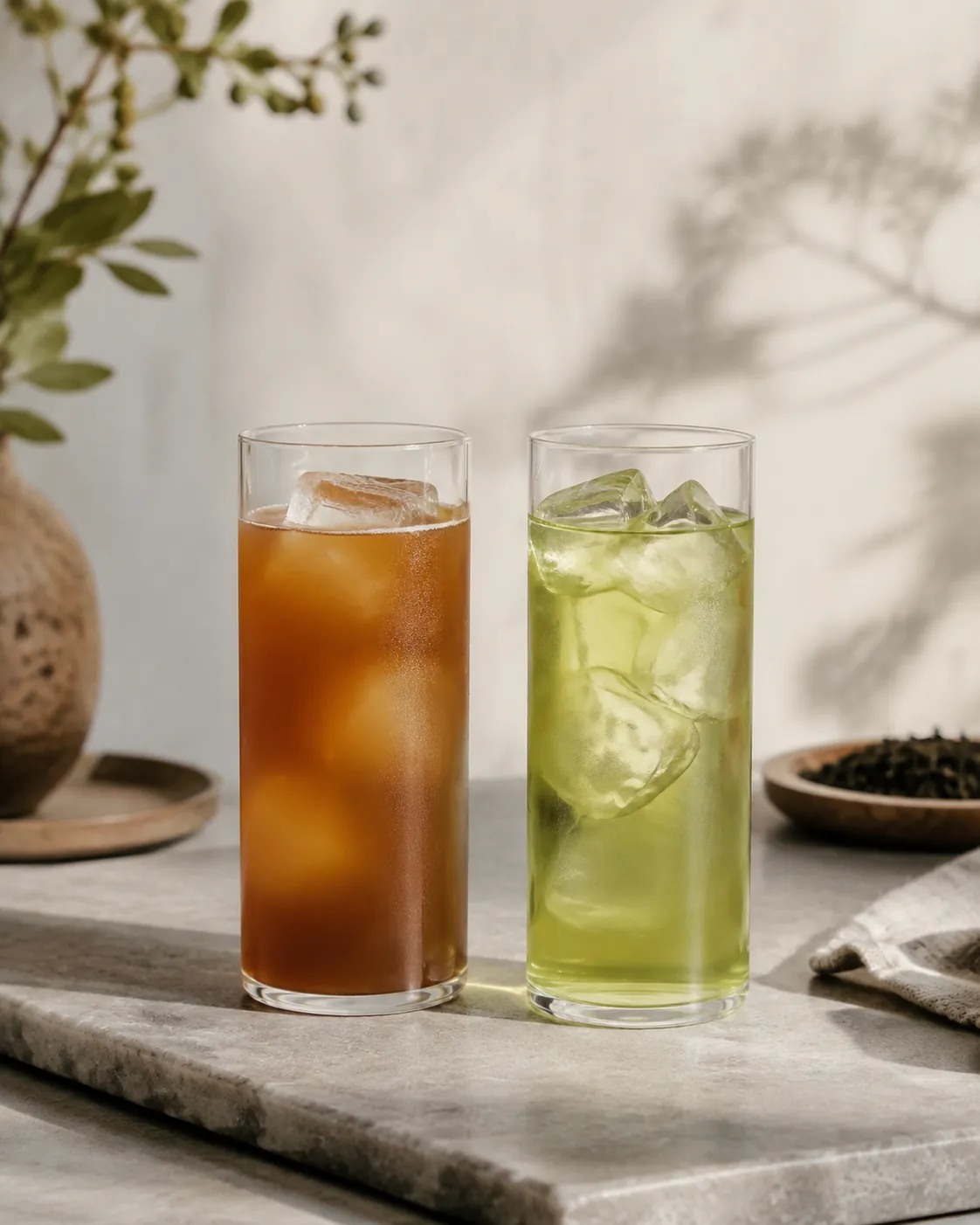
Green tea does not cloud, carrying far less of either compound, and what it loses instead is aroma. Cold suppresses the volatile notes that make it worth drinking, which is why a fridge brew suits it far better than hot tea poured over ice, and why the good version of each iced tea is made by a different method.
| Black tea | Green tea | |
|---|---|---|
| Hot brew, chilled fast | Clouds as tannins and caffeine bind | Stays clear |
| Cold brewed in the fridge | Flat and slightly thin | The better method by a distance |
| What cold takes away | Very little | Aroma, which is the point of the leaf |
| Decaffeinated | Survives it, with some loss of depth | Loses the sweetness it was bought for |
| Better low-caffeine route | Decaf, or a lighter leaf | Roasted hojicha rather than decaf |
Decaffeination reverses that advantage. It is a wet process followed by re-drying, it removes aromatics alongside the caffeine, and black tea has the more robust flavour compounds to lose, so it survives the treatment noticeably better than the delicate sweetness and marine notes on the green side.
Anyone wanting a low-caffeine cup that still tastes of something is usually better served by a naturally low-caffeine leaf than by a decaffeinated one. Roasting drives caffeine off, which is why hojicha works where decaf green tea usually reads as flat and papery, and the same trade-off appears on the decaf coffee page from the other direction.
Blended for consistency, scented for character
Most tea sold anywhere is blended or flavoured, and the trade treats the two categories by opposite logics.
Black tea is blended first for consistency and flavoured afterwards. Earl Grey is bergamot oil laid over a black base, English Breakfast is a blend of origins chosen so the cup tastes the same every year, and both are built to survive milk.
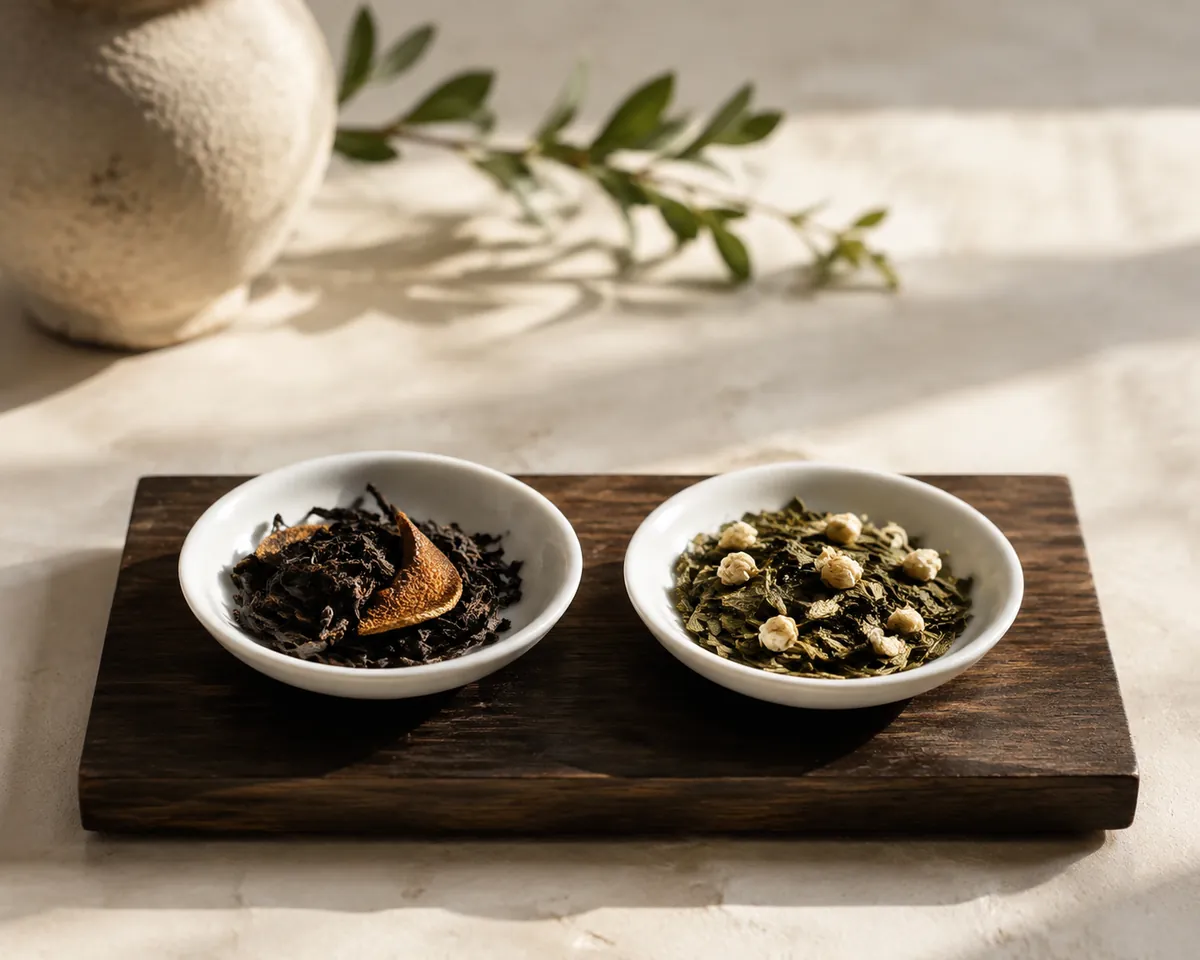
Green tea is more often scented than flavoured, and the base leaf is expected to show through the treatment. Jasmine tea is scented over several nights with real flowers, and genmaicha blends the leaf with roasted rice instead of adding an aroma to it at all.
That distinction tells you what a cheap example of each will be. A cheap Earl Grey is a thin black tea carrying enough bergamot to work anyway, and a cheap jasmine is a thin green tea scented in one pass instead of several, which is why the first is a reasonable buy and the second rarely is.
Four assumptions that cause the confusion
Four beliefs account for most of what goes wrong when people compare these two, and three of them are cheap to correct.
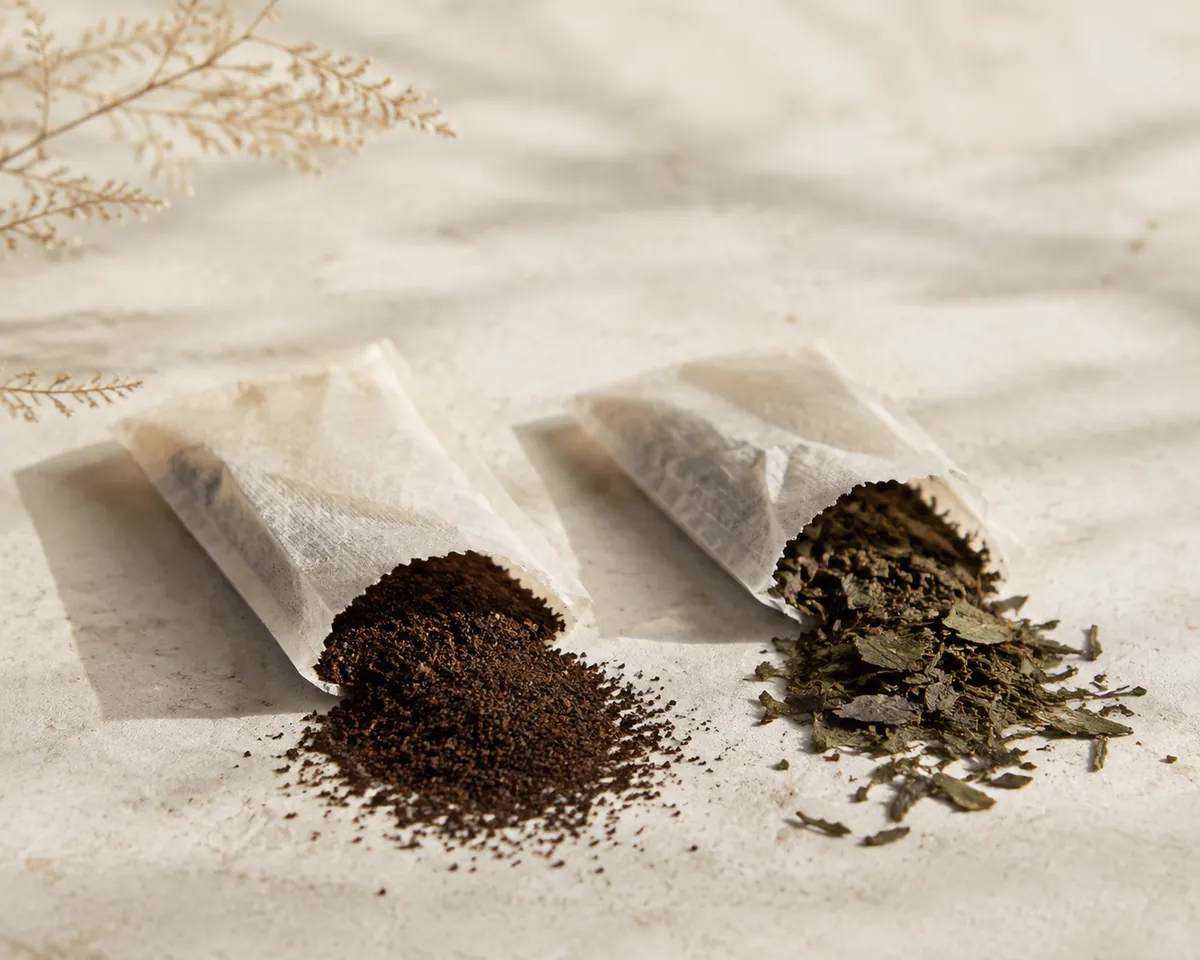
- That they are different plants. They are the same species, and often the same cultivar, separated only by processing.
- That black tea always has far more caffeine. It has more per typical cup, and dose and steep move the figure more than the type does.
- That green tea is delicate and black tea is strong. Green tea is more delicate to brew and can be more intense to taste, which is not the same thing.
- That a green tea which tastes harsh is a bad tea. It is far more often water that was too hot, which is free to fix.
The fourth is the expensive one, because it sends people to buy a better leaf to solve a problem the kettle caused, and the better leaf is usually more sensitive to the same mistake. A hotter kettle punishes a good sencha harder than it punishes a cheap one.
The other three matter less at the counter and more in what people expect from the cup. Reading either profile alongside brewing water settles most of it, since water hardness sits underneath both teas and gets blamed for neither.
Common questions
Is black tea just green tea that has been left to sit?
Close, but the bruising matters as much as the waiting. The leaf is rolled to break its cell walls, which lets the enzymes reach the compounds they convert, and only then is it left to oxidise. Green tea is heated before any of that can happen.
Does black tea have twice the caffeine of green tea?
No. Typical figures are around 47 mg per 8 fl oz for black and 28 mg for green, so roughly a two-thirds difference rather than double. How much leaf you use and how long you steep it move the number more than the type does.
Can I brew green tea with boiling water if I steep it for less time?
Partly. A shorter steep limits how much comes out, and boiling water still pulls the astringent compounds forward faster than the sweet ones, so the balance shifts even in a short brew. Cooling the water is the more effective change.
Why does milk work in black tea and not in green?
Black tea carries far more tannin, and milk proteins bind to it, which softens the astringency and adds body. Green tea has much less of that structure, so the milk sits in the cup rather than combining with it.