What Is Darjeeling? A Map Reference Rather Than a Recipe
Darjeeling is the only common tea whose name is a map reference rather than a recipe, and a great deal of it is oxidised well short of full despite being sold as black tea. That one fact decides how it should be brewed.
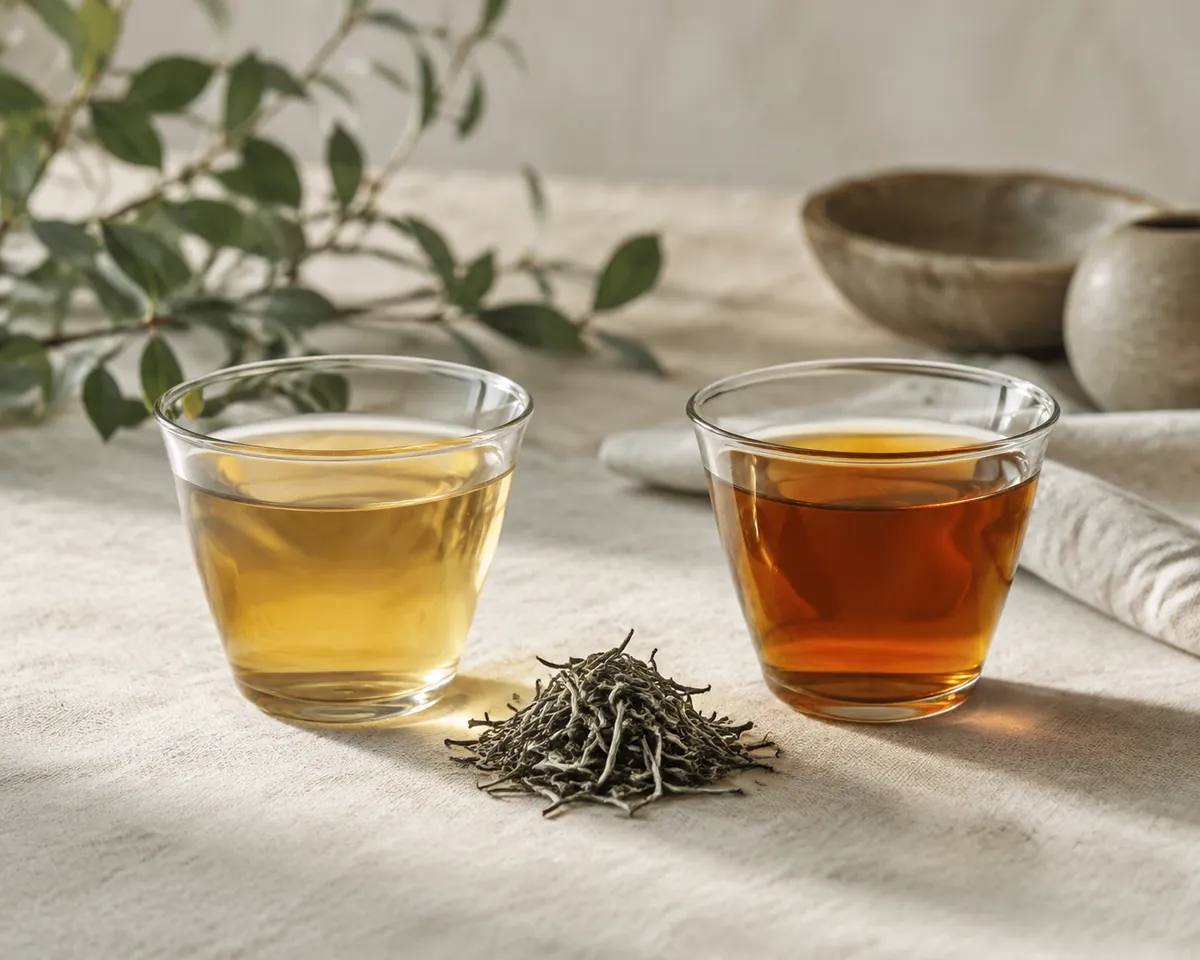
Darjeeling is a district in the hills of West Bengal, in the far north of India, and the tea named after it is the only tea on most shelves whose name is a map reference rather than a recipe.
That distinction does more work than it looks like it should. Sencha describes a process, oolong describes an oxidation band, and pu-erh describes an ageing regime, but Darjeeling describes about eighty estates on a set of very steep hillsides and says nothing whatsoever about what was done to the leaf after it was picked.
Which is why the single most useful fact about it is a negative one. A great deal of the tea sold as Darjeeling black tea has not been fully oxidised at all, and the cup that results behaves far more like a light oolong than like the black tea the packet claims.
Darjeeling at a glance
- What it is
- Tea from roughly eighty estates in the Darjeeling hills of West Bengal
- Why it is unusual
- Sold as black tea, yet often oxidised well short of full
- The plant
- Mostly the small-leaved China bush, not the Assam variety
- Altitude
- Gardens run from around 600 m to a little over 2,000 m
- The two teas
- First flush, pale and brisk. Second flush, amber and muscatel
- Water
- 85 to 90 C for a first flush, 90 to 95 C for a second
- Steep
- 3 minutes, and it turns thin and sour if pushed much past that
What the word Darjeeling actually promises
An origin, and very little else. The name is a legally protected geographical indication, the first Indian product to be granted one, and that protection covers where the leaf grew rather than how it was handled.
So a garden in Darjeeling can and does make several quite different teas from the same bushes in the same season. Green, white and oolong-styled Darjeelings all exist and all sell under the name, and the black tea that most people mean by the word is simply the commonest of them rather than the definition.
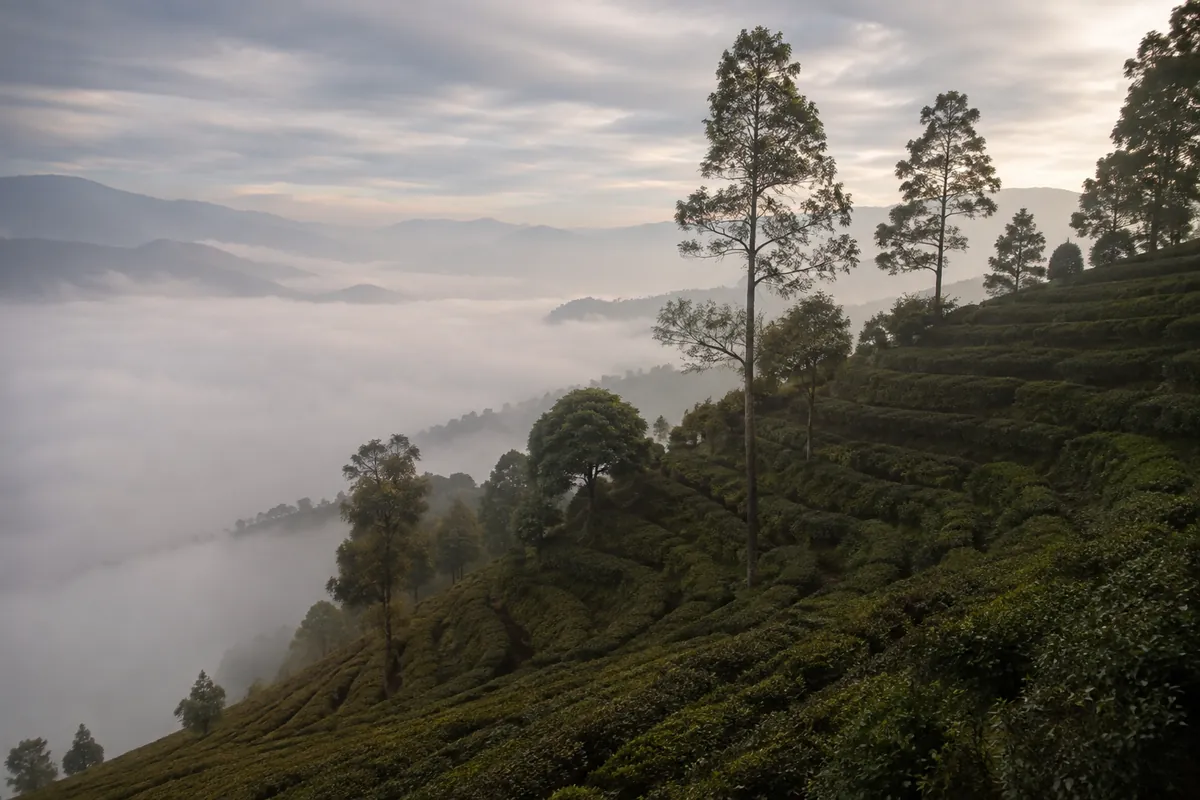
Region is not a style, and that is the trap. Assam names a place too, but nearly everything made there is a full-bodied fully oxidised tea, so the name has come to carry a flavour as well as a location.
Darjeeling never settled that way, which is why two packets bearing the same word can taste almost nothing alike.
The comparison worth holding on to is with wine rather than with tea. A bottle labelled by region tells you the soil, the altitude and the weather it came from, and it leaves the winemaker considerable latitude in what to do next, which is precisely the arrangement here.
Why it is sold as black tea when it often is not
Full oxidation is what makes a black tea black, and a large share of Darjeeling stops well short of it. First-flush leaf in particular is frequently taken to somewhere between a quarter and two thirds oxidised, which by any consistent definition puts it in oolong territory.
The reason is commercial rather than technical. Darjeeling built its reputation as an Indian black tea in the nineteenth century, the trade still classifies it that way, and the market pays for it under that heading.
Lightly oxidised leaf therefore keeps the label it has always had.
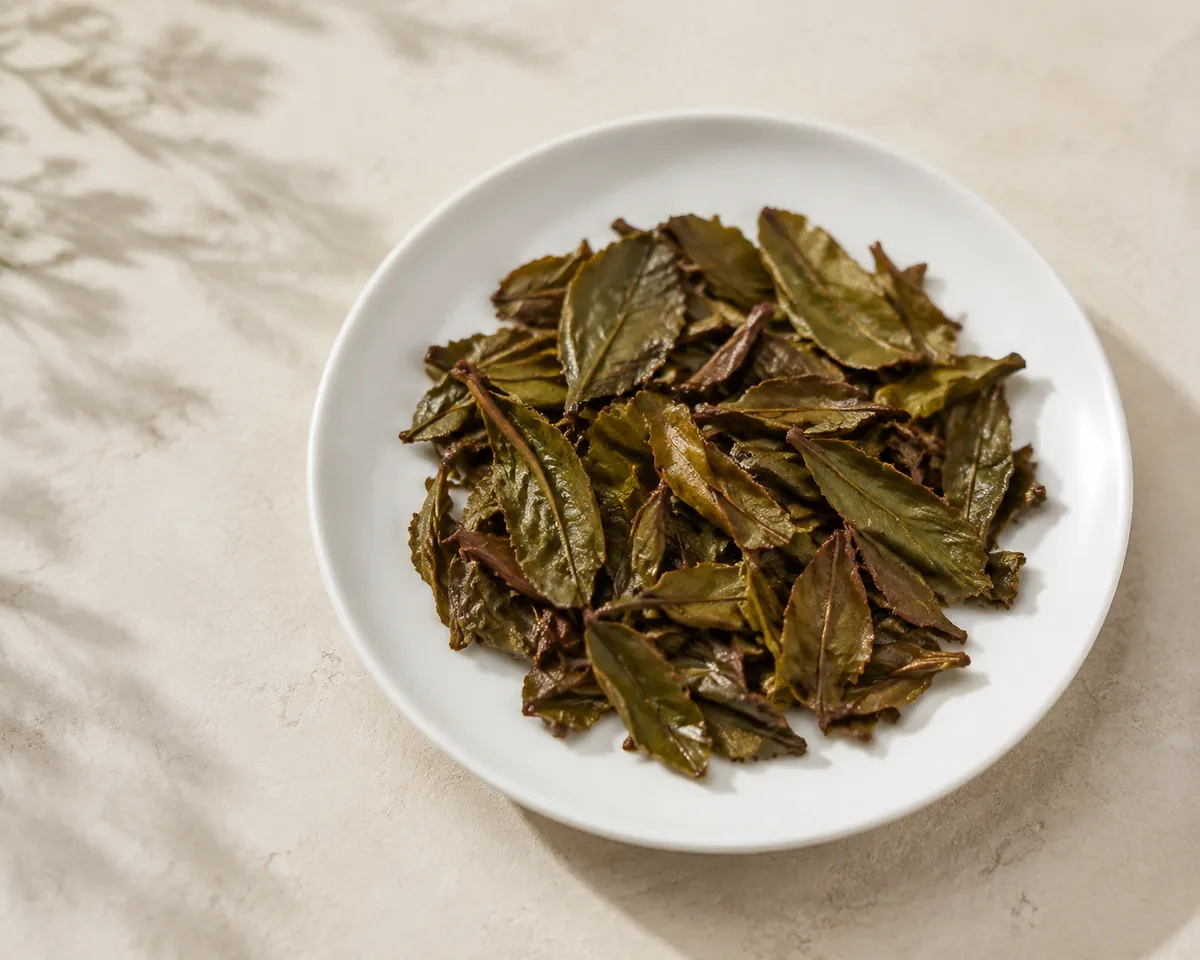
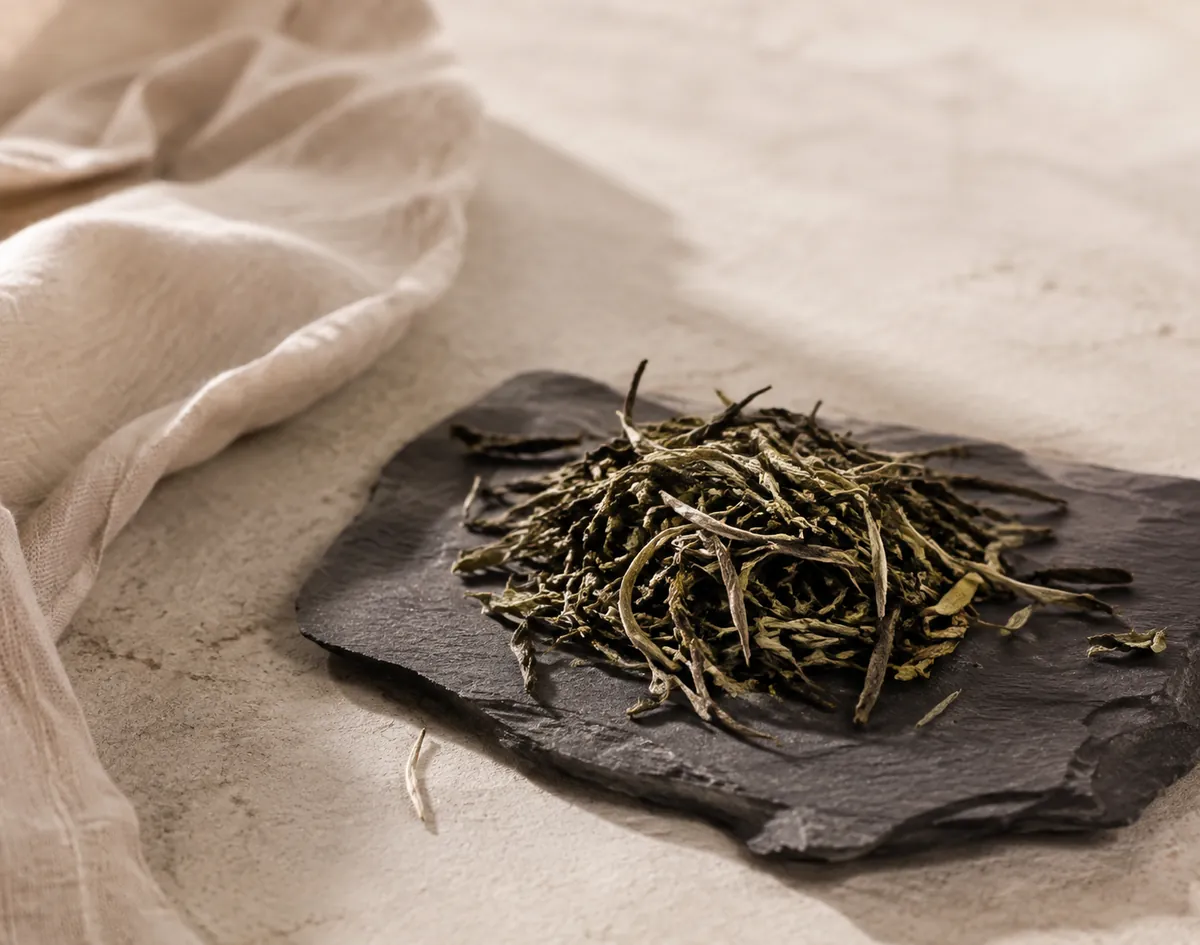
You can see it in the spent leaf, which is the honest test and takes ten seconds. Tip the wet leaf out after brewing and look at the colour: a fully oxidised black tea gives uniformly coppery brown leaf, while a first-flush Darjeeling gives leaf that is still green through the middle with browning only at the bruised edges.
That single fact explains most of the disappointment people report. A tea treated like an English Breakfast blend, boiled hard and left five minutes, turns thin, sharp and sour rather than strong, because the parts of the leaf that would have carried body were never developed in the first place.
First flush and second flush are two different drinks
Four harvests come off the same bushes each year and only two of them travel. The gap between those two is wider than the gap between many separate teas.
| Flush | When | Leaf | Cup |
|---|---|---|---|
| First | Late February to April | Green-grey with silver tips | Pale, brisk, floral, faintly astringent |
| Second | May to June | Darker, browner, some tip | Amber, rounder, muscatel, fuller |
| Monsoon | July to September | Coarse and dark | Plain and heavy. Mostly goes into blends |
| Autumnal | October to November | Dark, uniform | Coppery, mild, gently sweet, cheap to buy |
First flush is the year's first growth after the winter dormancy, and it is the tea that made the district's modern reputation. It brews pale gold rather than red, smells of cut flowers and green almond, and it is the flush most likely to be barely oxidised.
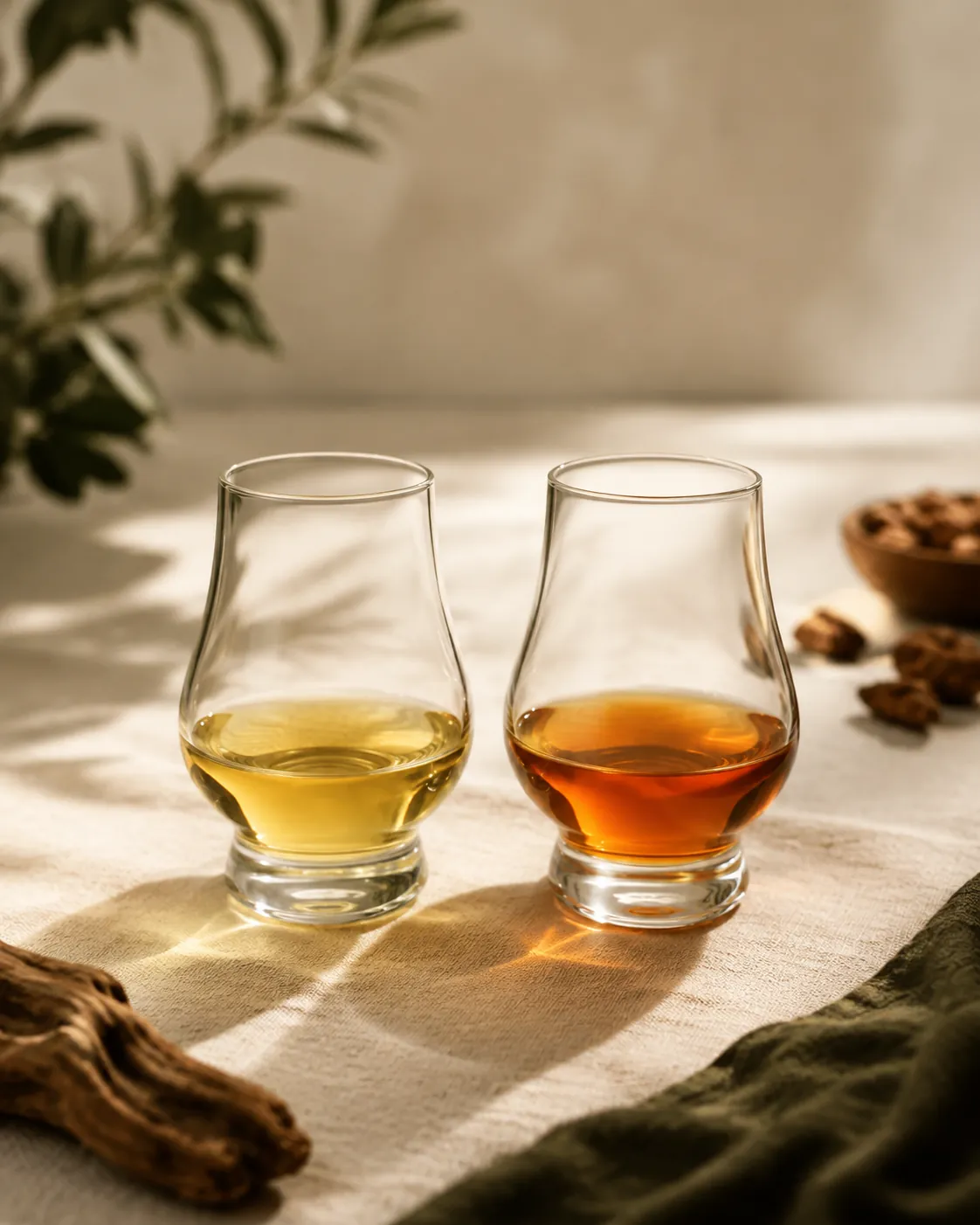
Second flush is the one people mean when they talk about the muscatel note. It is darker, rounder and considerably more forgiving in the pot, and it is the flush that actually behaves like the black tea it is sold as.
Autumnal Darjeeling is the value buy and it is almost never marketed as such. It has neither the perfume of the spring pick nor the fruit of the summer one, and what it does have is a soft coppery sweetness at a fraction of the price.
What Darjeeling tastes like works through all four in more detail.
What the muscatel note actually is
Muscatel is the tasting word that follows Darjeeling everywhere, and it means what it means in wine. A grapey, slightly musky sweetness, closer to a table grape or a raisin than to anything else in a tea cupboard.
It belongs to the second flush, and it is faint or entirely absent in the first.
The explanation is stranger than the word suggests. Tiny sap-sucking leafhoppers feed on the young shoots through the early summer, and the damage prompts the plant to build defensive aromatic compounds it would not otherwise make, which survive processing and arrive in the cup.
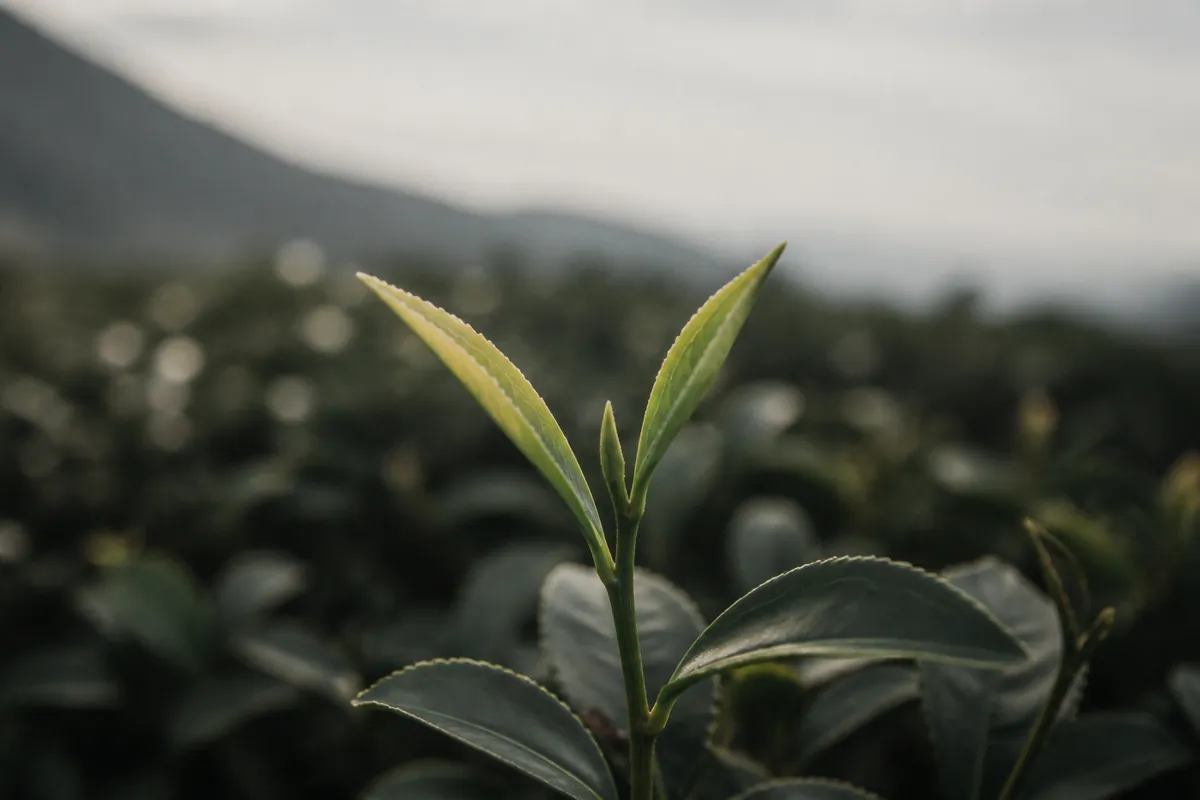
The insect
A small green leafhopper that feeds on new shoots in the warm months before the monsoon.
The plant response
Bitten shoots produce aromatic compounds as a defence, and growth slows.
The signal in the field
Slightly withered, mottled leaf that would look like a poor crop anywhere else.
The result in the cup
The grapey muscatel note, strongest in a good second flush.
The parallel
Taiwanese Oriental Beauty oolong is made from leaf bitten by the same kind of insect.
Nobody planted the insects and nobody can command them. Muscatel therefore varies from garden to garden and from year to year in a way no amount of skill in the factory can guarantee, which is a large part of why particular estates and particular lots reach the prices they do.
The note is also easy to lose at the kettle. Those aromatics are volatile, so an over-brewed second flush buries the muscatel under tannic grip, and the tea then tastes merely strong.
Why more Darjeeling is sold than is grown
The district is small, and its output is smaller than almost anyone assumes.
Its gardens together produce something in the region of eight million kilograms in a good year. Set beside Assam that is a rounding error, and set beside the world tea trade it is a fraction of a single day.
Estimates of how much tea is sold globally under the Darjeeling name have long run to several times the figure, and the conclusion that follows is not subtle.
What a Darjeeling label can actually mean
- Estate lot with a garden name, flush and invoice numberTraceable to one picking on one garden
- Garden name and flush, no invoice numberAlmost certainly genuine, blended across the season
- Darjeeling with the protection mark and no further detailGenuine origin, blended, and quality unstated
- Darjeeling blend or Darjeeling styleLegally cautious wording. Often mostly other tea
- Himalayan or Darjeeling-type in a supermarket tea bagTreat the word as a flavour description
The geographical indication exists precisely because of this, and it has teeth in India and in the European Union. What it cannot do is reach a packet in a market that never signed up to it, or stop the word being used as a loose adjective.
That is why the qualifying words around the name matter more than the name itself.
Price is the other tell and it is blunt. A hundred grams of single-garden first flush costs several times what a supermarket carton of Darjeeling tea bags costs, and the cheap one is not a bargain version of the expensive one so much as a different product wearing its name.
What the altitude and the plant do to the leaf
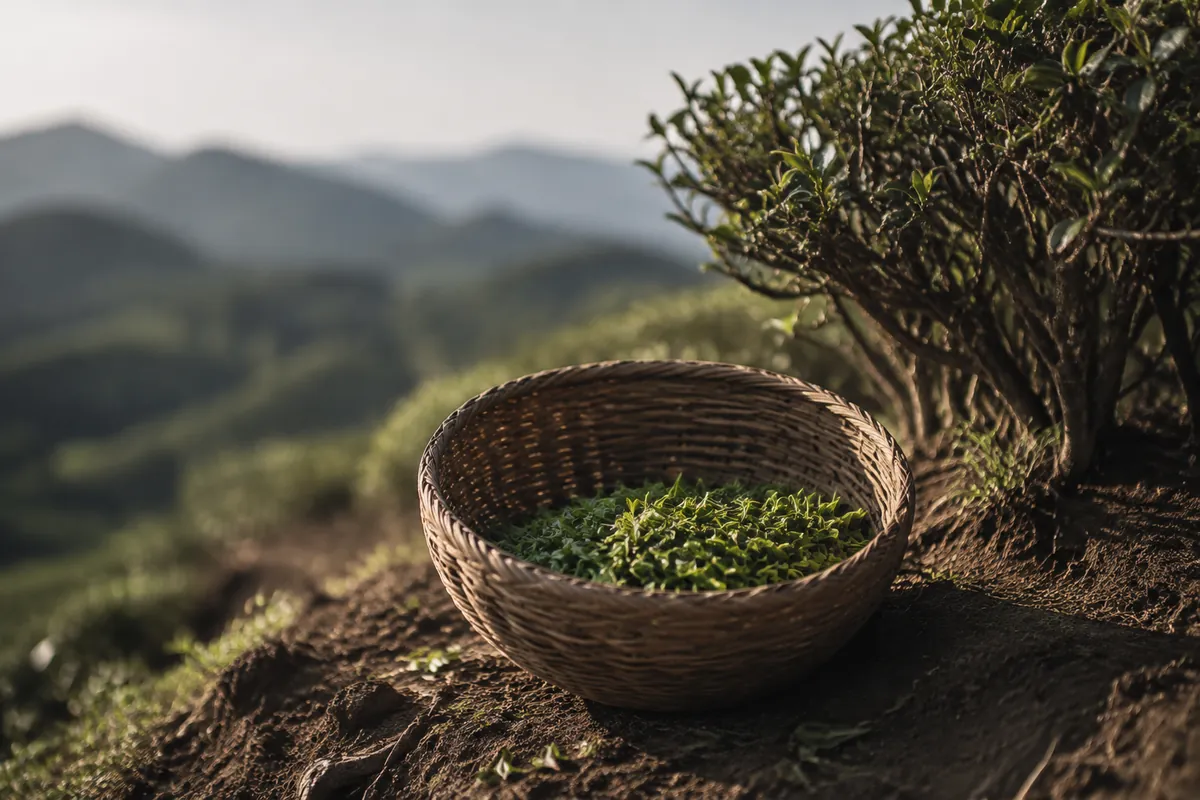
Two things separate these hills from the Indian tea plains, and both work in the same direction. The gardens sit between roughly 600 and 2,000 metres, and the bushes are mostly the small-leaved China variety of the tea plant rather than the broad-leaved Assam variety that dominates the rest of India.
Cold nights and thin mountain soils slow the plant down.
Slow growth gives small, tightly packed shoots with a higher concentration of aromatic compounds and considerably less bulk. Yield per bush is low and character per gram is high, which is the trade every high-altitude garden in the world makes.
The China bush is the other half of the answer. Its leaf is smaller, less robust and lower in the polyphenols that make an Assam heavy and malty, which is exactly why Darjeeling is light where its neighbour is thick and why Assam rather than Darjeeling ended up as the backbone of every breakfast blend.
Mist matters too, and these gardens get a great deal of it. Cloud sitting on a hillside cuts the light for hours at a stretch, which is not far off what a Japanese grower arranges deliberately with shade screens over a gyokuro field.
It is one reason the leaf keeps a delicacy the plains never manage.
How to brew it without treating it like an Assam
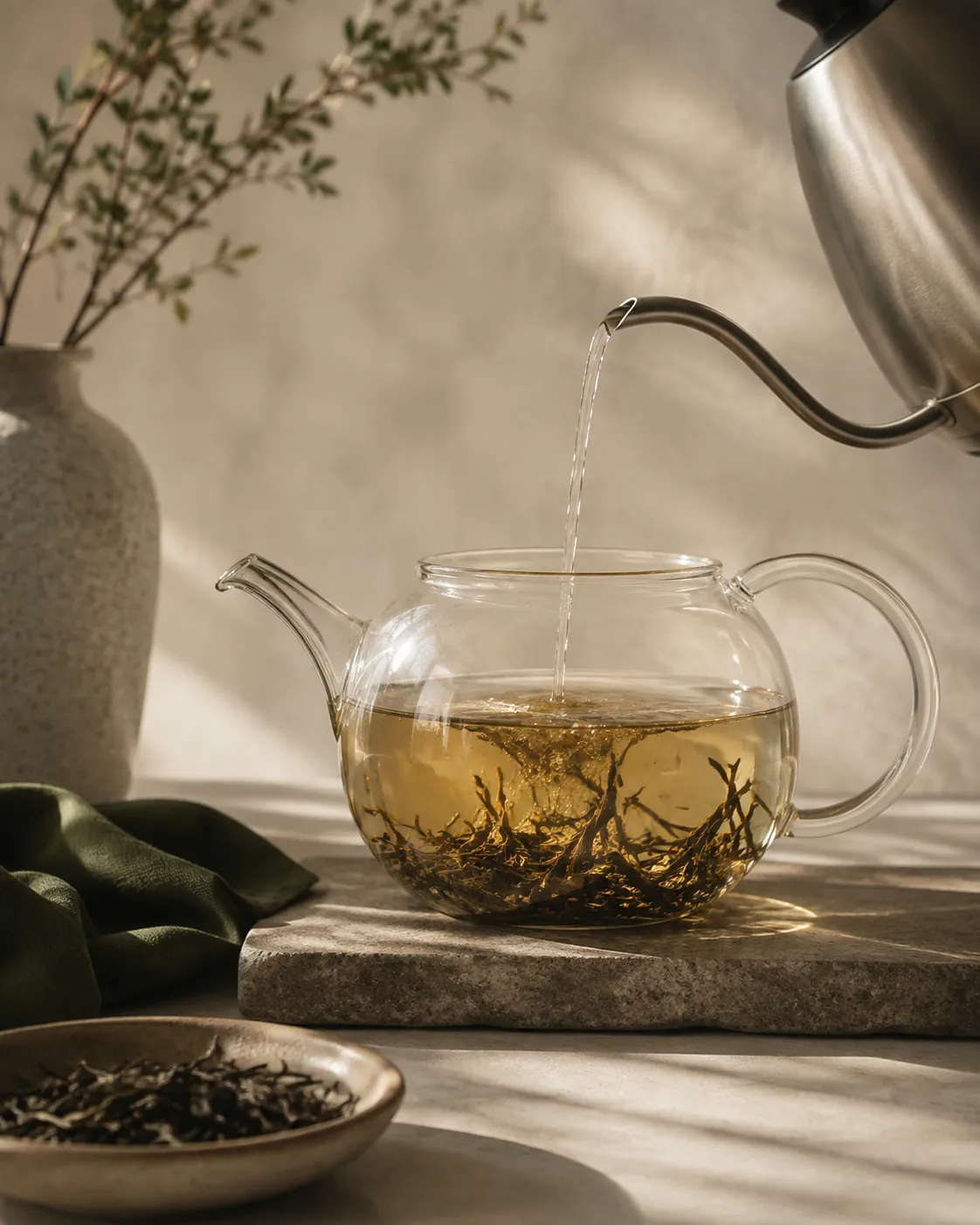
Everything above lands on the kettle, and the practical rule is that Darjeeling wants less heat and less time than the black tea shelf it sits on. Treat it as an oolong that happens to be sold in the wrong aisle and you will be right more often than not.
Starting points, by flush
- First flush
- 85 to 90 C, 2 to 3 minutes, 2.5 g per 200 ml
- Second flush
- 90 to 95 C, 3 minutes, 2.5 g per 200 ml
- Autumnal
- 95 C, 3 to 4 minutes, 2.5 g per 200 ml
- Second infusion
- Add a minute. Whole-leaf first flush usually gives one
- Vessel
- A wide pot or a gaiwan. The leaf is long and needs room
Time punishes this tea more than temperature does, which is unusual. Push a first flush past about three minutes and it does not turn bitter in the way a green tea does; it turns thin and faintly sour, losing its perfume while its astringency stays behind, and no adjustment at the table brings the aroma back.
The leaf itself is long, wiry and full of unbroken tip, so it needs somewhere to open. A cramped ball crammed into a mug produces a weak, uneven cup from expensive leaf, which is the failure the tea infuser page is built around.
Water is worth attention as well, because a delicate cup hides nothing, and brewing water with a heavy mineral load flattens a first flush noticeably.
For the general temperature map across the other styles, steeping temperature basics sets out where each one sits. Making Darjeeling takes this one through pour by pour.
Milk is the wrong instinct here
Milk works with an Assam or a strong breakfast blend for a specific reason. Milk proteins bind to the tannins that make a fully oxidised tea grip the tongue, and a cup that would otherwise be brisk to the point of harshness comes out rounded instead.
Darjeeling has comparatively little of that to soften.
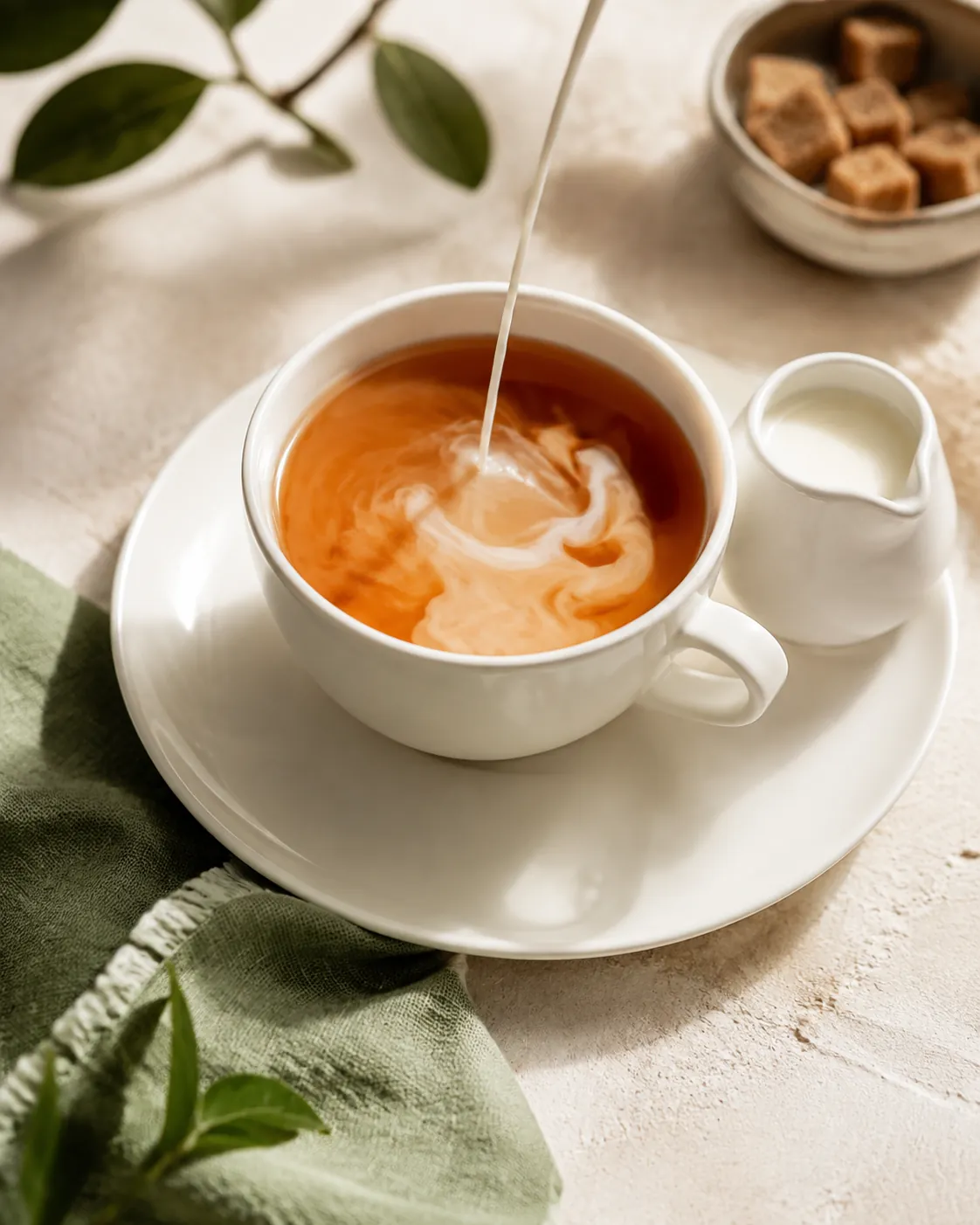
The first flush in particular has almost none, so the milk arrives with nothing to do except add its own weight, and what it does instead is smother the floral and grapey aromatics that were the entire reason for buying the tea.
Lemon is the more traditional accompaniment and it is less destructive, though it still competes. A thin slice lifts a second flush and drowns a first.
Lemon in tea works by adding acidity that shifts how the tannins read, rather than by binding to them the way milk does.
The honest position is that a good Darjeeling wants nothing in it. That is not snobbery about additions in general, since chai is built on the opposite principle and works beautifully, and it is simply that this particular leaf spends its money on aroma and aroma is the first thing anything else in the cup destroys.
How to read a Darjeeling label
Darjeeling packets carry more information than almost any other tea, and most of it is genuinely useful once the conventions are clear. Four things are worth finding, and the grade letters are not among them.
The garden name comes first, and it is the one that carries real information.
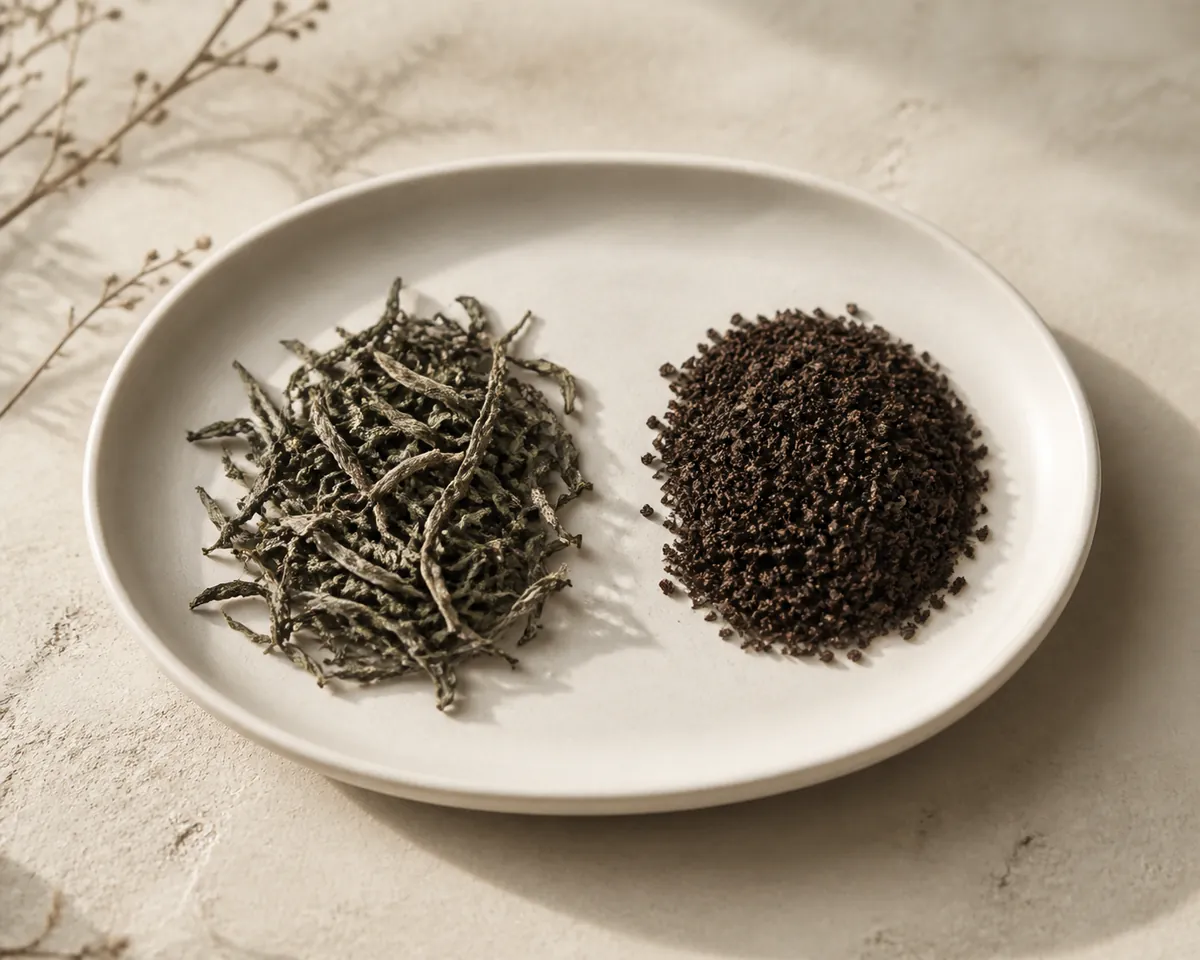
Estates such as Castleton, Margaret's Hope, Jungpana and Makaibari appear on packets because a specific garden in a specific season is the unit the trade actually buys and sells. A named garden is a claim someone can be held to, where the district name alone is not.
- A garden or estate name rather than the district alone.
- The flush, stated as first, second, monsoon or autumnal, with a year beside it.
- An invoice number, usually printed as DJ followed by a number, which ties the tea to one picking.
- The geographical indication mark, which certifies origin and nothing about quality.
- A harvest year, since a first flush is a seasonal product and does not improve with keeping.
- Whole twisted leaf with visible silver tip, rather than uniform small particles.
The grade letters are the part to worry about least. Strings such as FTGFOP and SFTGFOP describe leaf size and how much tip is present.
They inflate steadily as marketing pressure builds, and they are not a quality standard anyone polices.
Keeping is the last consideration and it runs shorter than most black tea. A first flush behaves more like a green tea in the tin than like an Assam, so it fades within the year, and storing Darjeeling and the general case in storing loose-leaf tea both apply more urgently here than the black tea shelf suggests.
What the caffeine does across the flushes
Darjeeling sits somewhere below a typical fully oxidised black tea and above a green tea, for the same reason of partial oxidation that runs through this whole page.
No single figure would be honest. A lightly oxidised first flush brewed at 85 C for two minutes gives up less caffeine than a second flush brewed at 95 C for four, from bushes that could be the same row.
Tip content pushes it upward slightly, since the youngest shoots carry the most caffeine and a high-tip Darjeeling is largely made of them. Darjeeling caffeine works through the variables, black tea against green tea covers the wider comparison, and caffeine by brewing method gives the coffee benchmark most people ask for next.
When it is worth the money, and when it is not
A single-garden first flush is one of the more expensive teas in a shop and it rewards attention in a way that very little else on the black tea shelf does. It also punishes inattention harder than anything else there, so the question is what you intend to do with it.
If the tea is going in a travel mug with milk at seven in the morning, buy an Earl Grey or a breakfast blend and spend the difference on something else. Nothing about a spring Darjeeling survives that treatment, and it is not a better version of a strong builder's tea so much as an unrelated drink.
Worth it when
You will brew it carefully, drink it plain, and finish the packet inside a year.
Worth it when
You already like light oolongs or white tea and want something in that register with more grip.
Not worth it when
You want a strong mug with milk, or a tea that forgives a boiling kettle.
Start here
A named-garden second flush, which carries the muscatel and forgives more than a first flush does.
Skip
Anything labelled Darjeeling blend in a box of two hundred tea bags, if what you want is the real thing.
Buy the flush before you buy the garden name, because the flush decides what kind of drink it is and the garden only decides how good that drink is. A second flush is the sensible first purchase and an autumnal is the cheapest way to find out whether the district suits you at all.
Where a cup goes wrong, common Darjeeling problems works back from the symptom, and cold brewing it over ice is a genuinely good use for a flush that turned out too delicate to serve hot.
Common questions
Is Darjeeling a black tea?
It is sold and traded as one, but a large share of it is oxidised well short of full, especially the first flush, which by any consistent definition sits in oolong territory. You can check it in the spent leaf: a fully oxidised black tea gives uniformly coppery brown leaf, while a first flush stays green through the middle with browning only at the bruised edges.
What is the difference between first flush and second flush Darjeeling?
First flush is the spring pick, brewing pale gold and tasting brisk and floral, and it is the flush most likely to be barely oxidised. Second flush comes in May and June, brews amber, carries the grapey muscatel note and is considerably more forgiving in the pot.
What does muscatel mean in Darjeeling tea?
It describes a grapey, slightly musky sweetness closer to a table grape or raisin than to anything else in a tea cupboard, and it belongs to the second flush. It is widely attributed to leafhoppers feeding on the young shoots, which prompts the plant to produce defensive aromatic compounds that survive processing.