What Is Sencha? Why Steaming Time Decides the Cup
Sencha accounts for most of the tea drunk in Japan. The variable that separates one from another is not origin or grade but how long the leaf was steamed, and the difference is large.
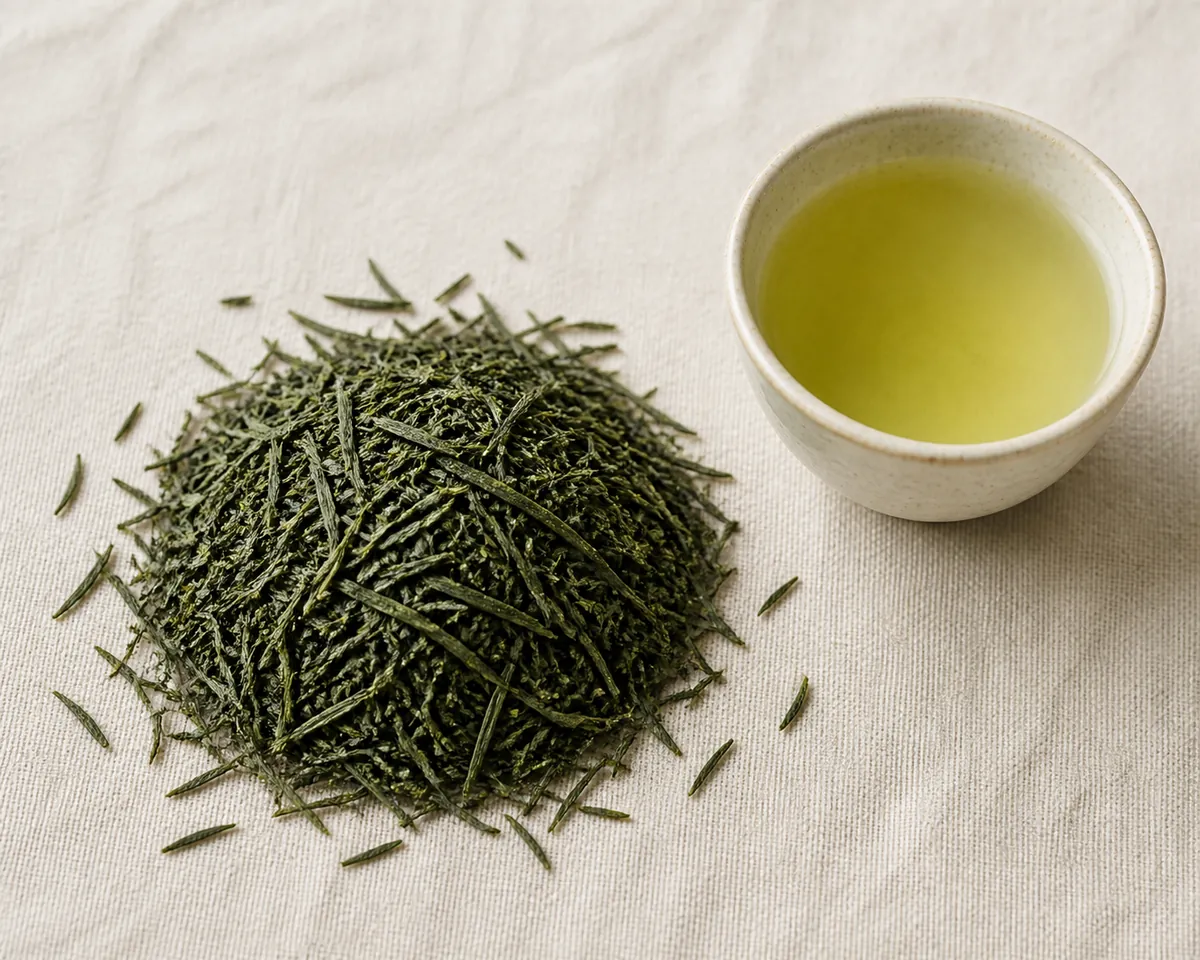
Sencha is Japanese green tea made from leaf that is steamed, rolled and dried. It is not a grade or a region; it is the standard process, and it accounts for roughly three quarters of Japanese tea production.
Steaming is what separates it from Chinese green tea, which is pan-fired. What green tea is sets out that division.
Sencha sits on the Japanese side of it.
Sencha at a glance
- What it is
- Steamed, rolled Japanese green tea. Three quarters of Japan's production
- The one variable
- Steaming time, from 20 seconds to over two minutes
- Water
- 70 to 80 C. Boiling water ruins it comprehensively
- Steep
- 60 to 90 seconds light-steamed, 30 to 45 deep-steamed
- Cloudy cup
- Deep-steamed, not badly made
- Keeps
- Three to six months opened. Among the most perishable teas here
Why steaming time is the variable that matters
Seconds decide it.
| Asamushi | Chumushi | Fukamushi | |
|---|---|---|---|
| Steam time | 20 to 30 seconds | 30 to 60 seconds | 60 to 120 seconds |
| Leaf | Whole, needle-like, intact | Standard | Broken, with fine particles |
| Liquor | Clear, pale gold-green | Light green | Cloudy, deep green |
| Flavour | Delicate, aromatic, crisp | Balanced | Rich, sweet, full, less aromatic |
| Brews | Slower, more forgiving | Standard | Fast. Easy to over-extract |
Longer steaming breaks the leaf down. Fukamushi leaf is partly shattered, which is why the liquor is cloudy: fine particles are suspended in it rather than dissolved.
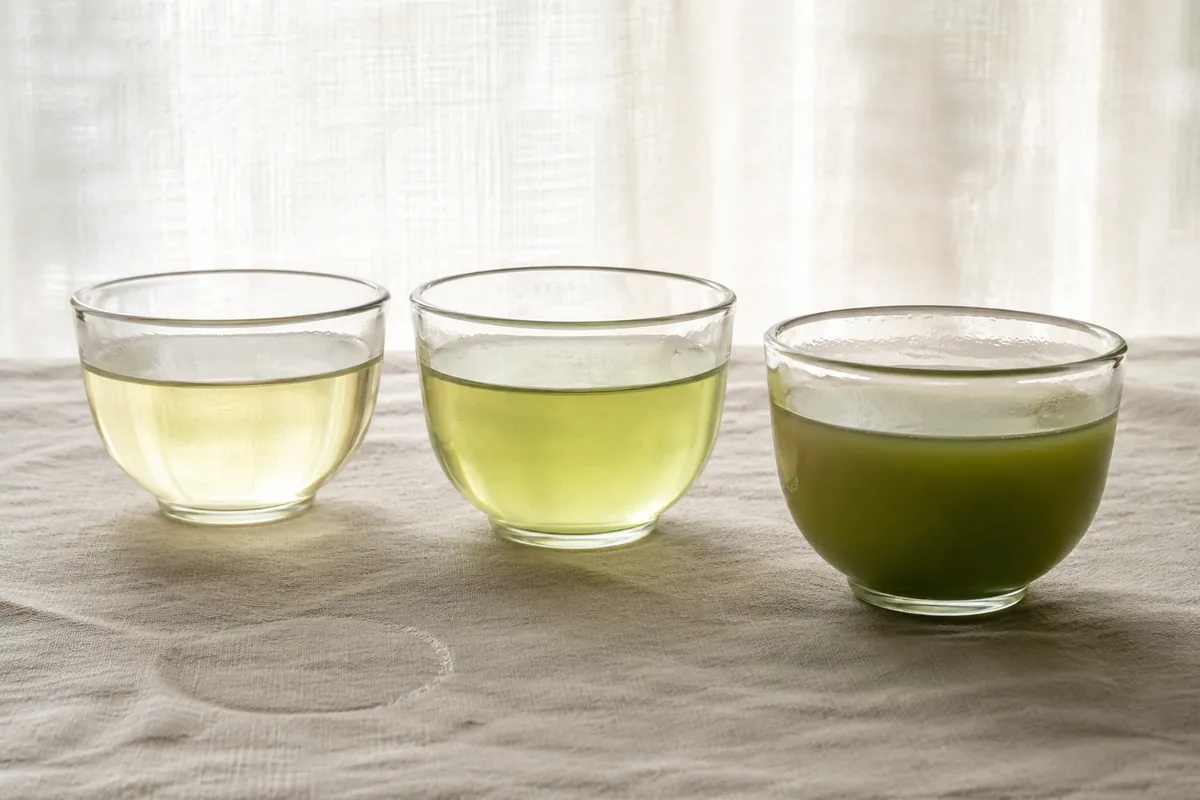
Cloudy sencha is not badly made sencha. It is deep-steamed, and the cloudiness is the point rather than a fault.
Steaming exists at all because the first step in making any green tea is to stop oxidation before it starts, and Japan and China solved that differently. Steam penetrates fast and evenly, arresting the enzyme within seconds and preserving the fresh, marine, vegetal character, where pan-firing is drier and slower and develops toasty, nutty notes instead.
That is why Japanese green tea tastes of seaweed and cut grass while Chinese green tea tastes of chestnut and toasted rice. Neither is a quality difference, and a drinker who dislikes one often likes the other.
How to brew sencha without making it bitter
The least forgiving tea on this site, and temperature is why.
Starting point
- Water
- 70 to 80 C, and lower for higher grades
- Steep
- 60 to 90 seconds for asamushi, 30 to 45 for fukamushi
- Leaf
- 4 g per 200 ml
- Second steep
- Hotter and shorter, around 10 to 20 seconds
Boiling water ruins sencha comprehensively, and the reason is set out in why green tea tastes bitter. This is the tea that misconception costs the most, and steeping temperature is the variable to settle before any other.
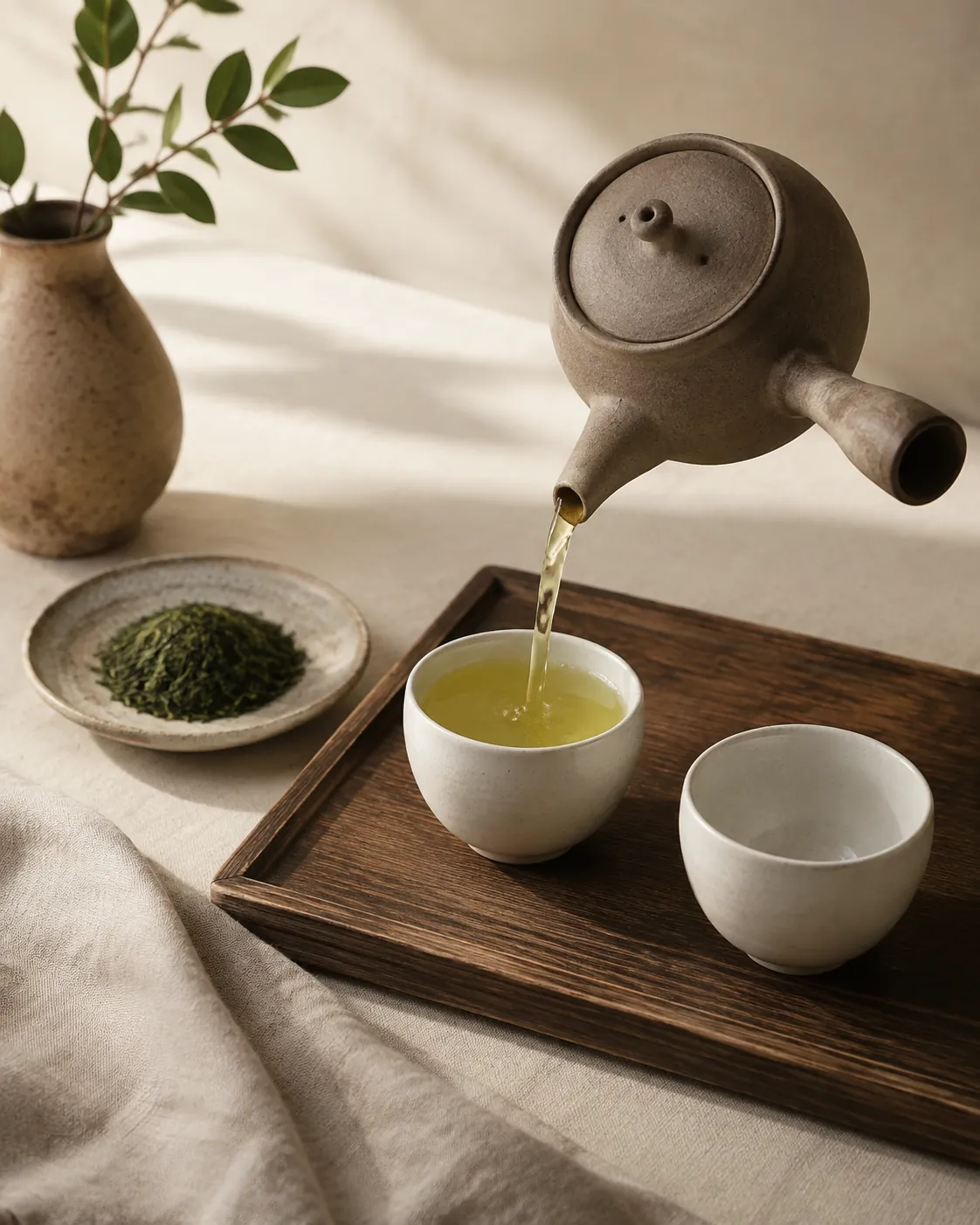
Whole-leaf sencha is not finished after one steep, and the second is brewed differently rather than identically. The leaf is already open and hot, so use water slightly hotter than the first steep and cut the time to ten or twenty seconds.
Making sencha covers the vessel and the pour in full. A third steep is usually possible with good leaf and asamushi in particular, at hotter water again and a slightly longer steep.
Deep-steamed fukamushi typically gives two good infusions and little after that, because its broken leaf released most of itself immediately.
A small vessel helps more than technique does here. Brewing in a gaiwan or a kyusu lets you decant completely in two seconds, which is the only reliable way to stop a 30-second steep at 30 seconds.
How to read a sencha packet
Sencha labels carry more useful information than most tea packets do, and the words that matter on them are processing terms rather than the region or the grade that a Chinese tea would lead with.
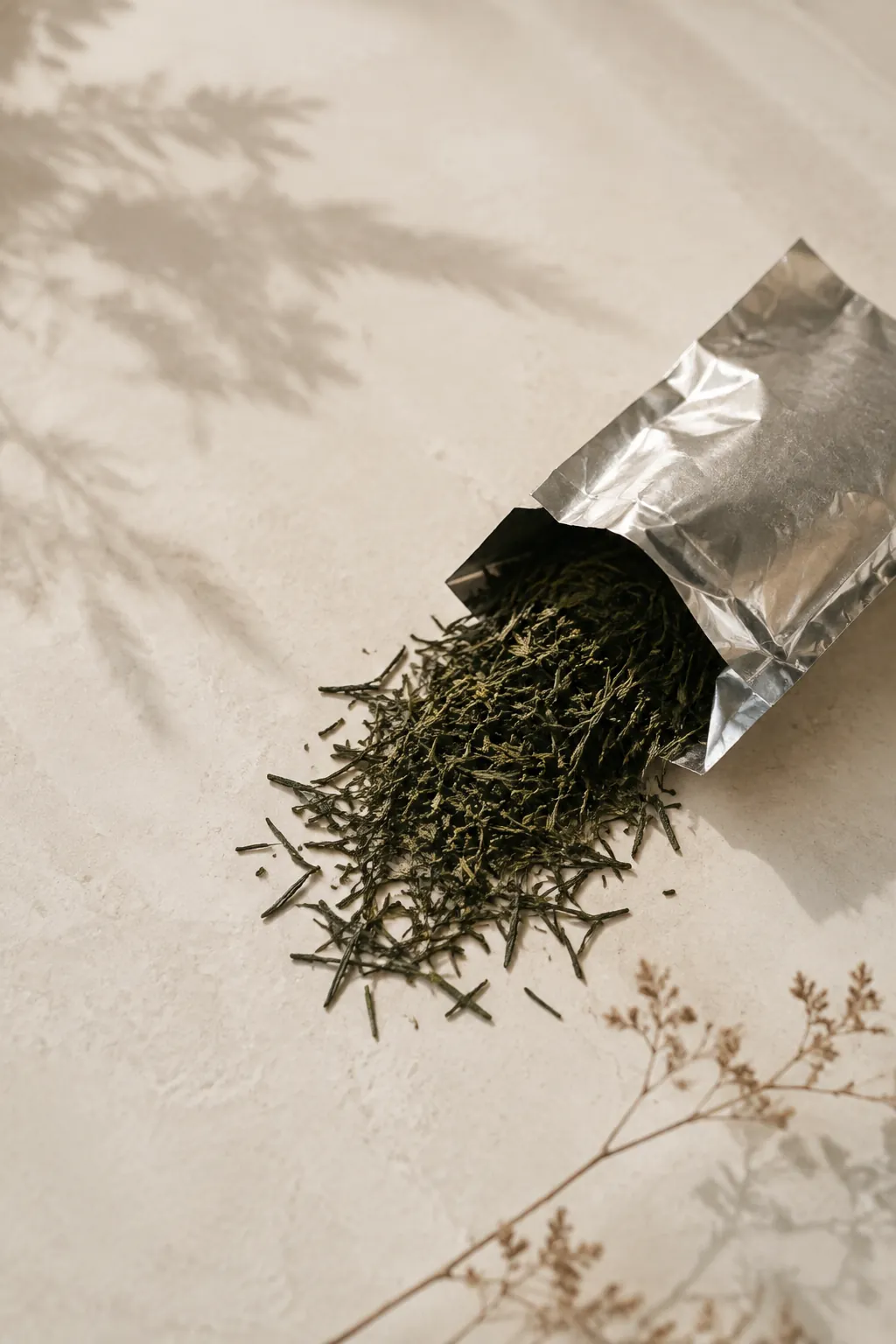
The words that matter
- Asamushi
- Lightly steamed, 20 to 40 seconds. Clear liquor, needle-like leaf, delicate
- Chuumushi
- Medium, 40 to 80 seconds. The middle ground and the commonest
- Fukamushi
- Deep-steamed, 80 to 200 seconds. Cloudy, broken leaf, full and sweet
- Aracha
- Unrefined, with stems and dust still in. Rare outside Japan, and cheap
- Shiage
- Refined and sorted, which is what nearly all retail sencha is
- Tanicha, single cultivar
- One variety rather than a blend. A sign of a careful producer
Fukamushi is the one to recognise by sight. Its leaf is visibly broken and much of it is small fragments, which looks like poor quality to anyone used to whole-leaf Chinese tea and is a processing choice rather than a fault.
- Look for the steaming grade: asamushi, chumushi or fukamushi.
- Check the harvest; first flush and shincha are noted when they apply.
- Prefer a stated region such as Uji, Shizuoka or Kagoshima over just Japan.
- Buy small quantities, since sencha fades faster than almost any other tea.
- Expect vivid green leaf; dull or yellowing leaf means age.
A packet giving none of these is almost always chuumushi, which is the safe default and what most blended supermarket sencha is.
The brewed cup then confirms it. A cloudy green liquor means fukamushi, a clear pale yellow-green means asamushi and usually a careful producer, and a brown or dull yellow cup means the leaf is old or the water was too hot.
Where sencha grows, and which cultivar
Three regions account for most Japanese tea, and one plant variety accounts for most of the flavour.
| Region | Share | Character |
|---|---|---|
| Shizuoka | Around 40 per cent | The benchmark. Balanced, classic, often blended |
| Kagoshima | Around 30 per cent | Southern and warm. Early harvest, deep-steamed, full and sweet |
| Uji, Kyoto | Small | Historic and expensive. Refined, high in umami |
| Mie | Moderate | Much of it kabusecha and deep-steamed |
| Fukuoka, Yame | Small | Rich and sweet, better known for gyokuro |
Kagoshima's warmth means its harvest starts weeks before Shizuoka's, which is why the earliest new-season tea each year is almost always southern.
Cultivar matters as much as region and is stated far less often. Yabukita accounts for roughly 70 per cent of Japanese tea acreage, selected in the 1950s for yield and cold tolerance, and its dominance is the reason so much sencha tastes broadly similar.
Yabukita
The default. Balanced, dependable, and the reference point for everything else.
Saemidori
Sweeter and less astringent, with a vivid green liquor. Increasingly popular.
Okumidori
Late-harvesting, mild and sweet, often used for matcha and gyokuro.
Asatsuyu
Naturally low in astringency, sometimes called natural gyokuro.
Zairai
Seed-grown native plants rather than a clone. Rare, variable, prized.
A stated cultivar is a sign of a careful producer, because blending is easier and cheaper. Single-cultivar sencha is worth trying once to see how much of the sencha taste is actually Yabukita.
Which harvest you are drinking
Four pickings a year.
Through the season
- IchibanchaLate April to May. Sweetest, most aromatic, least astringent
- NibanchaJune. Noticeably more astringent, less sweet, much cheaper
- SanbanchaJuly or August. Coarser still, often used for bancha or hojicha
- YonbanchaAutumn. Usually processed rather than sold as sencha
The plant accumulates amino acids over winter and spends them on the first growth, which is why ichibancha is sweet and later flushes are not, and why sencha's caffeine is highest in the earliest pick. Most supermarket sencha is a blend weighted toward nibancha.
That is the single largest reason a cheap sencha tastes harsh next to an expensive one, ahead of region, cultivar and steaming grade combined. The later flushes are not badly made, they are simply picked from a plant that has already spent its reserves.
Later harvests are not wasted. Sanbancha is exactly what hojicha is roasted from, and roasting turns the astringency that spoils it as a green tea into something warm and nutty.
Shincha, and when to buy it
The first harvest is sold as a seasonal product, and it behaves differently from the sencha on the shelf all year.
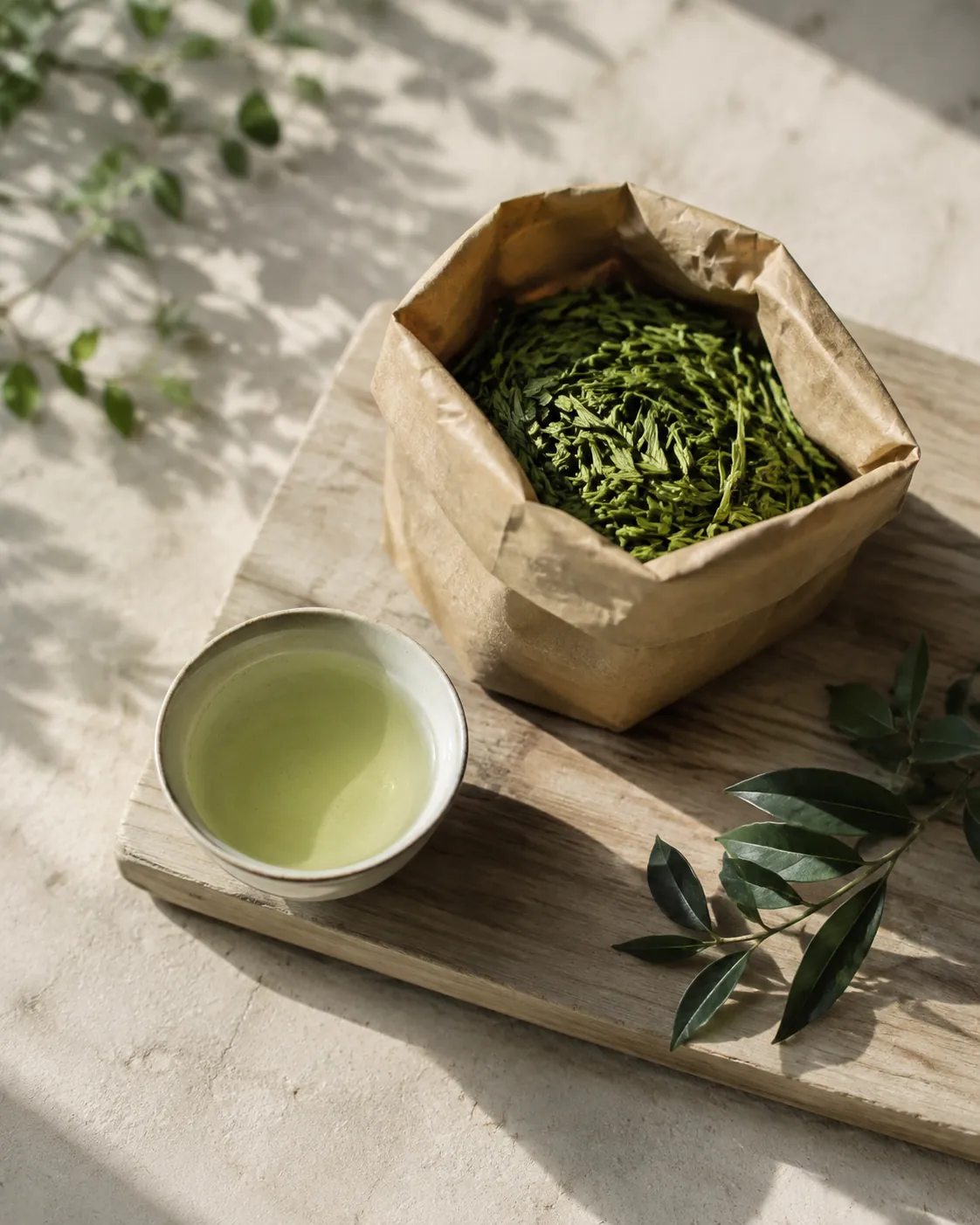
Shincha is the same leaf sold immediately after picking rather than after the usual months of resting. It arrives in late April and May and is gone within weeks, and it tastes greener, sweeter and more aromatic than the rested version of the identical tea.
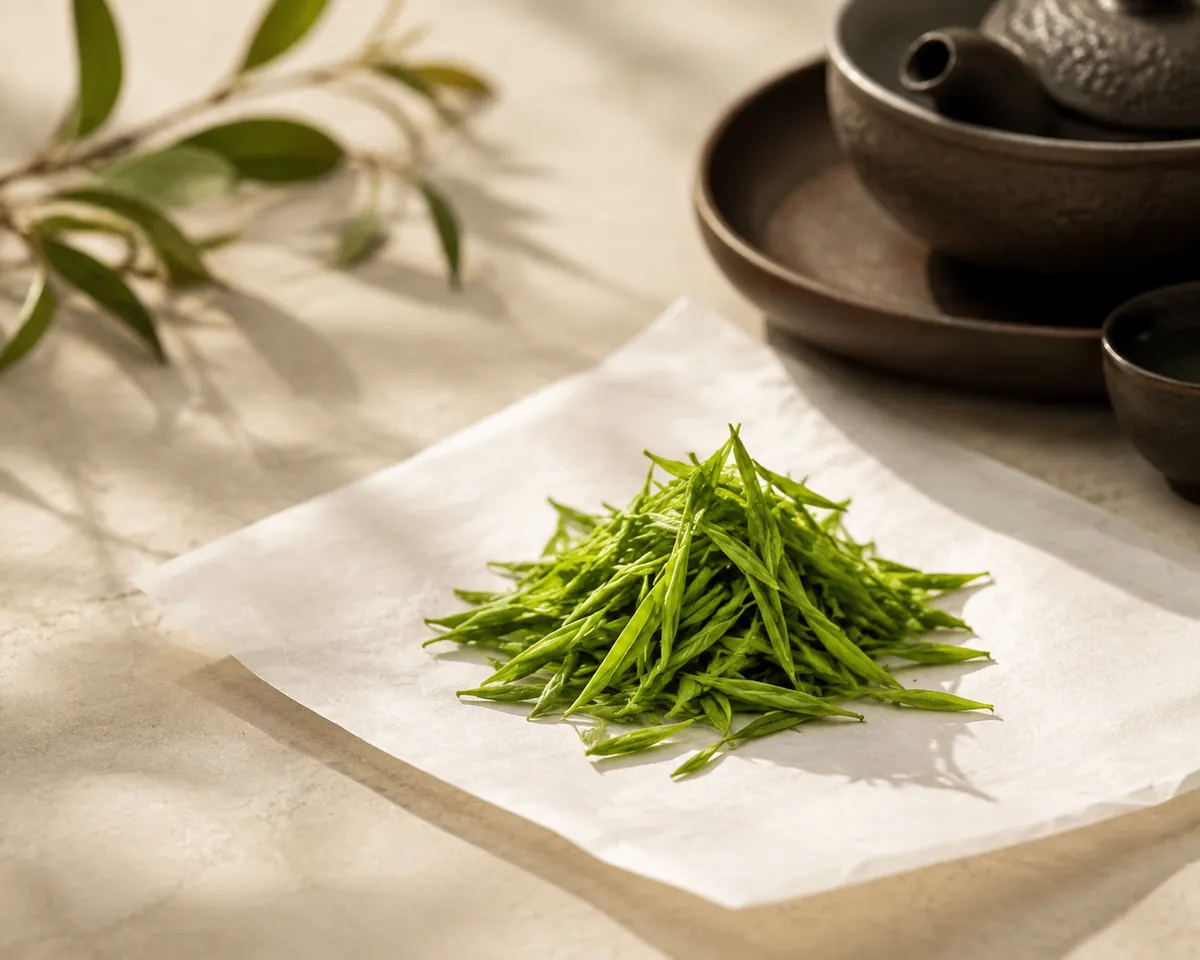
Resting is not a compromise, which is the part that surprises people. Most producers hold sencha for several months because the flavour rounds and deepens, and shincha is prized for exactly the sharpness that resting removes.
It is also the most perishable tea in a perishable category. Buy a small quantity, drink it quickly, and do not store it for the year, because the qualities that make it worth buying are the first to go.
Kabusecha, and where matcha begins
One neighbouring category explains a lot about sencha by contrast.
Kabusecha is sencha grown under shade for roughly a week before harvest. That short shading raises the amino acid content and lowers astringency, producing something sweeter and rounder than ordinary sencha and rather more forgiving to brew.
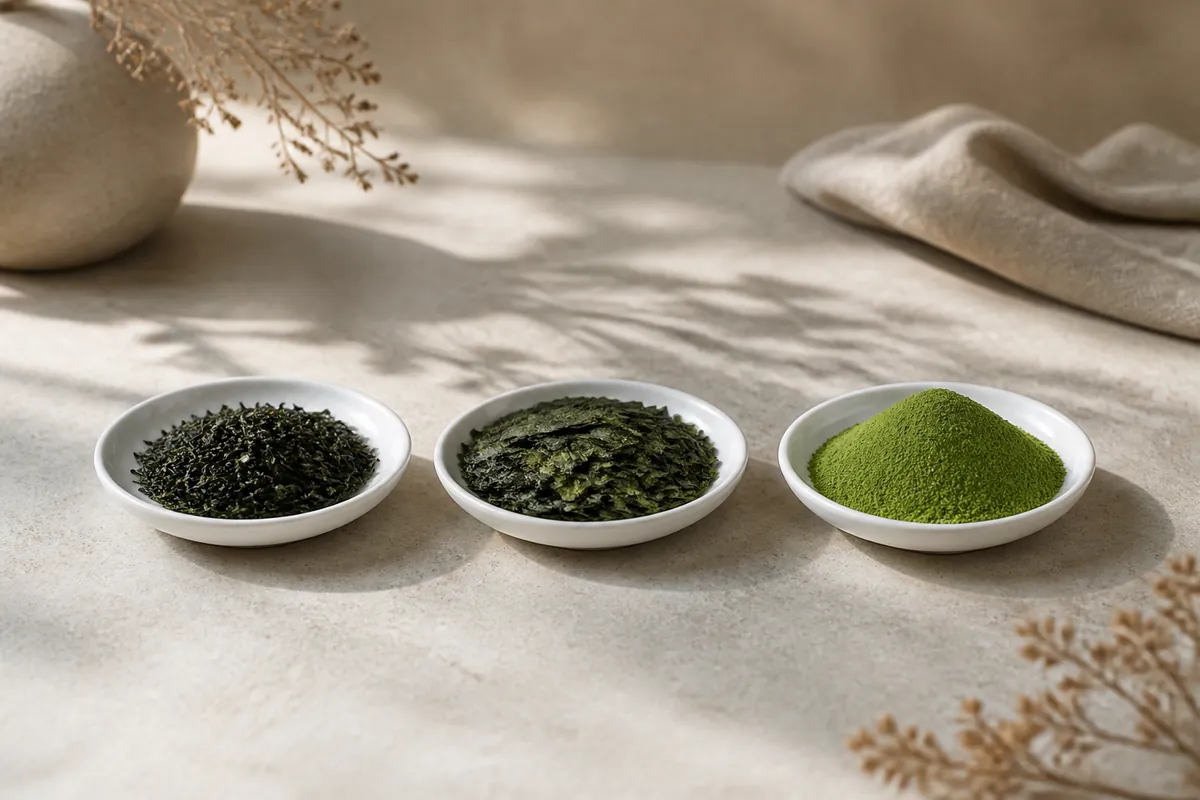
Extend the shading to three or four weeks and remove the stems, and the leaf becomes tencha, which is milled into matcha. Sencha and matcha are the same plant at two ends of one continuum of shading.
Gyokuro sits between them, shaded three weeks and brewed at 50 to 60 C, which is cooler than green tea generally asks for. It is the sweetest and most expensive of the steeped Japanese greens, and it tastes closer to matcha's flavour than to sencha's despite being brewed the same way.
Shading works by starving the plant of light, which stops it converting theanine into the catechins that taste astringent. The sweetness is not added, it is the absence of a conversion.
How to cold brew sencha
Sencha gains more from cold brewing than any other tea on this site, and the overnight wait pays for itself several times over in a tea that is otherwise the hardest here to brew forgivingly.
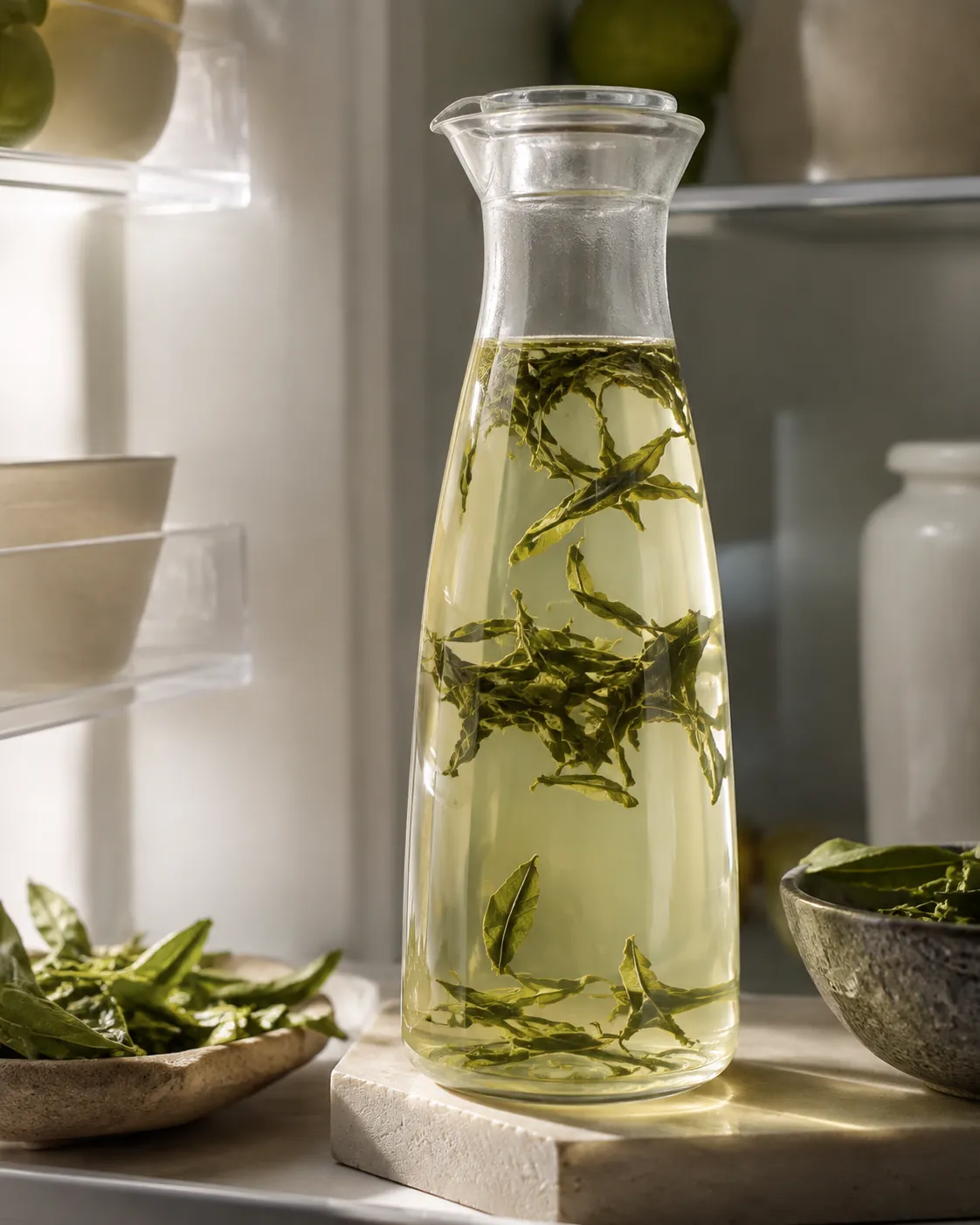
Mizudashi sencha
- Leaf
- 10 g per litre
- Water
- Cold, straight into the carafe with the leaf
- Time
- 3 to 6 hours in the fridge, and up to overnight
- Character
- Sweet, thick, no astringency at all
- Keeps
- Two days once the leaf is out
Cold water extracts the theanine that makes sencha taste sweet and very little of the catechins that make it astringent, so the result is a different balance rather than a weaker version. A tea that is difficult hot is often excellent this way.
Asamushi suits it best because its whole leaf gives up its contents slowly and evenly. Fukamushi cold-brews faster and can go cloudy and slightly muddy if left overnight.
Water quality shows more here than in a hot brew, because nothing is masking it. Brewing water with a heavy mineral load flattens a mizudashi in a way it does not flatten a hot cup.
How to store sencha, and what to spend
Among the most perishable teas, with the usual four enemies.
Unopened and vacuum-sealed it holds for a year or more, which is why Japanese producers vacuum-pack and often freeze it. Opened, three to six months is realistic before the sweetness noticeably drops away.
The first thing to go is the fresh green aroma, and the last is the astringency, which is why old sencha reads as harsh rather than merely faint. That is a fading problem rather than a brewing one, and no adjustment recovers it.
Storing sencha covers the containers, and storage matters more here than for black tea or pu-erh, because there is far more left in an unoxidised leaf for air to change. The general case is under storing loose leaf.
Where the money goes
- A large bag on offerThe second half is past its best before you reach it
- Competition gradeAudible side by side, and little else
- Supermarket blendThe baseline. Usually nibancha, usually chuumushi
- Named single cultivarThe largest single step in quality for the money
- Shincha in seasonNot better, genuinely different, and worth buying once a year
On price, the curve is steeper at the bottom than at the top. The step from supermarket blended sencha to a named single-cultivar tea is large and obvious, while the step from that to a competition-grade tea is smaller and audible mainly side by side.
Where money is genuinely wasted is on quantity. Fifty grams is around twenty-five cups, and a 200 g bag bought on price will spend its second half past its best.
Sencha among the Japanese greens
The reference point, and the family around it is worth placing.
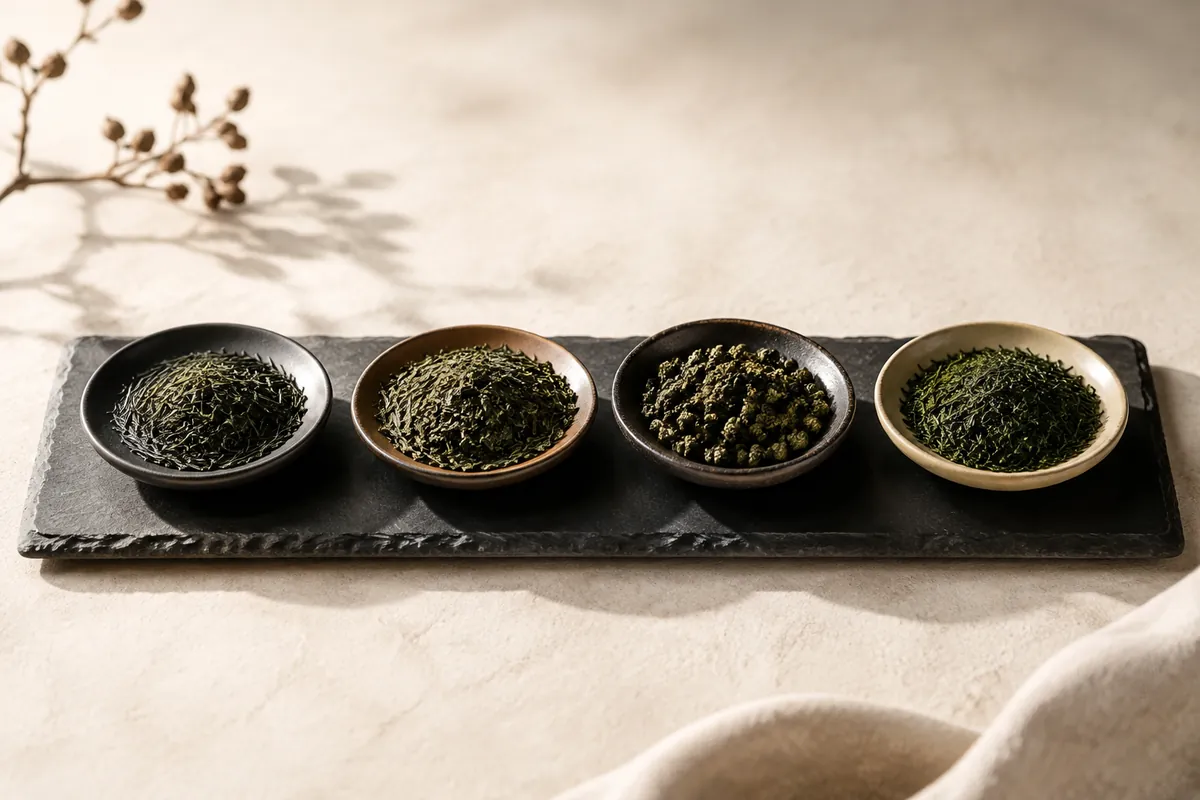
Gyokuro
Shaded three weeks, brewed at 50 to 60 C. Intensely sweet and expensive.
Kabusecha
Shaded one to two weeks. Between gyokuro and sencha, and more forgiving.
Bancha
Later harvest, coarser leaf, cheaper and more astringent.
Every one of those starts from the same plant, and most start from leaf that could have been sencha. The category is defined by what was done after picking, which is why the processing terms on a packet matter more than the origin does.
That is the opposite of how Chinese tea is usually organised, where oolong and white tea are named for oxidation level and region carries much of the identity. Two tea cultures, two different things written on the front of the packet.
Common questions
What is the difference between asamushi and fukamushi sencha?
Steaming time. Asamushi is steamed 20 to 30 seconds and stays whole, giving a clear, delicate, aromatic cup. Fukamushi is steamed 60 to 120 seconds, which breaks the leaf down, giving a cloudy, richer, sweeter cup that brews much faster.
Why is my sencha cloudy?
It is almost certainly deep-steamed, or fukamushi. Long steaming breaks the leaf into fine particles that stay suspended in the liquor. That cloudiness is characteristic of the style rather than a fault.
What temperature should sencha be brewed at?
Around 70 to 80 C, and lower for higher grades. Boiling water extracts catechins aggressively and makes it harsh. Deep-steamed sencha also needs a shorter steep, around 30 to 45 seconds, because the broken leaf extracts so quickly.