Tea Steeping Temperature Basics: A Starting Point for Each Style
Every tea style has a temperature range it was made for. Here are sensible starting points for each, and the reason the numbers differ so much between them.
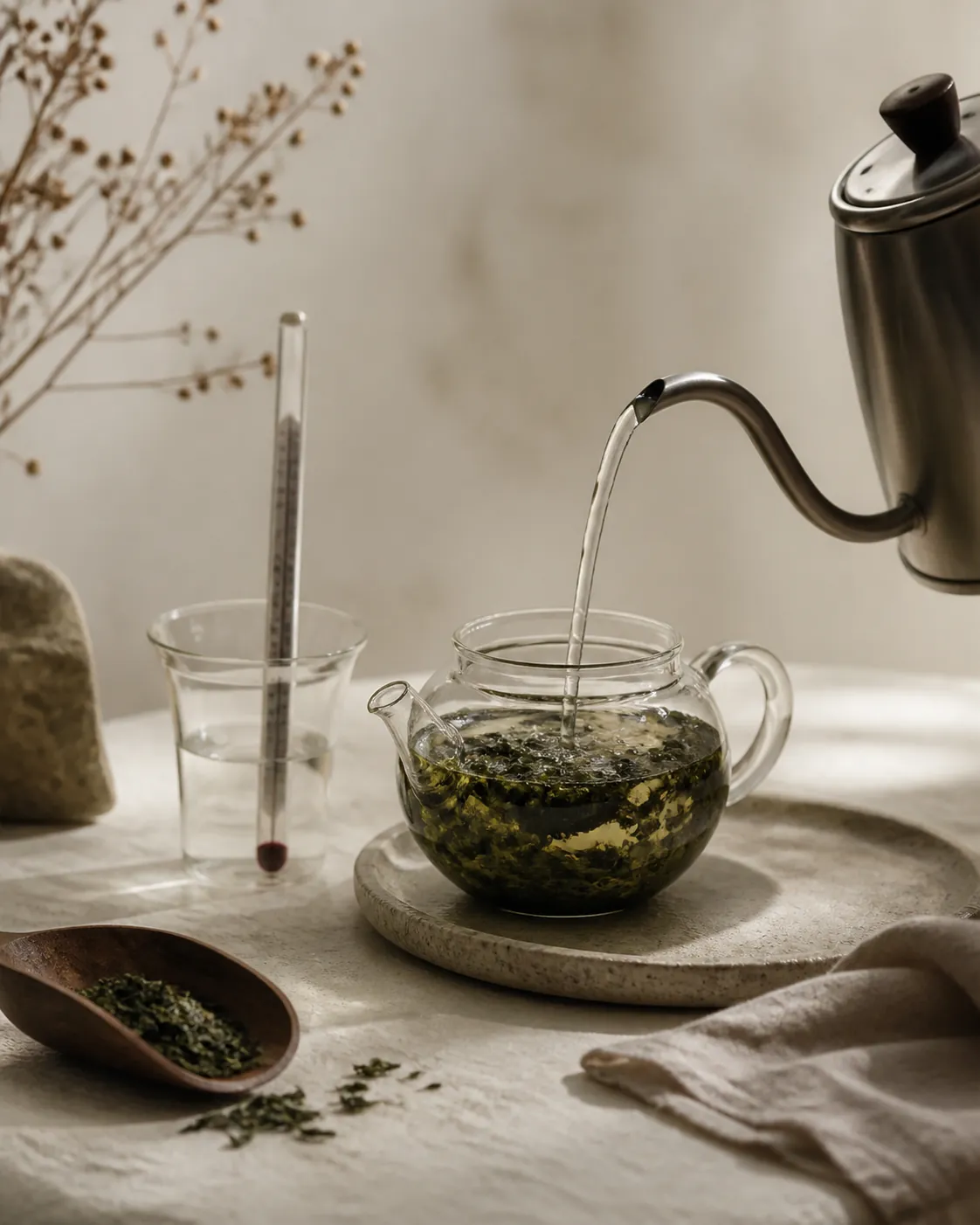
Tea brewing has three variables you control: the temperature of the water, how long the leaves sit in it, and how much leaf you use. Temperature is the one people get wrong most often, because a single kettle at a single setting is used for everything in the cupboard.
Everything below is a starting point rather than a rule. Different producers make the same style to different specifications, and any instructions on the packet know more about that specific tea than a general table can.
The numbers, and what puts them where they are
Three variables decide what comes out of a leaf, and this is the one worth learning first, because a wrong temperature cannot be corrected by a shorter steep or a smaller dose.
| Style | Water temperature | Steep time | Leaf per 200 ml |
|---|---|---|---|
| Green | 70 to 80 C / 158 to 176 F | 1 to 3 min | 2 g |
| White | 75 to 85 C / 167 to 185 F | 2 to 5 min | 2 to 3 g |
| Oolong, lightly oxidised | 85 to 90 C / 185 to 194 F | 2 to 3 min | 3 g |
| Oolong, heavily oxidised | 90 to 95 C / 194 to 203 F | 2 to 4 min | 3 g |
| Black | 95 to 100 C / 203 to 212 F | 3 to 5 min | 2 to 3 g |
| Pu-erh | 95 to 100 C / 203 to 212 F | 2 to 5 min | 3 to 5 g |
| Herbal infusion | 100 C / 212 F | 5 to 10 min | 2 to 3 g |
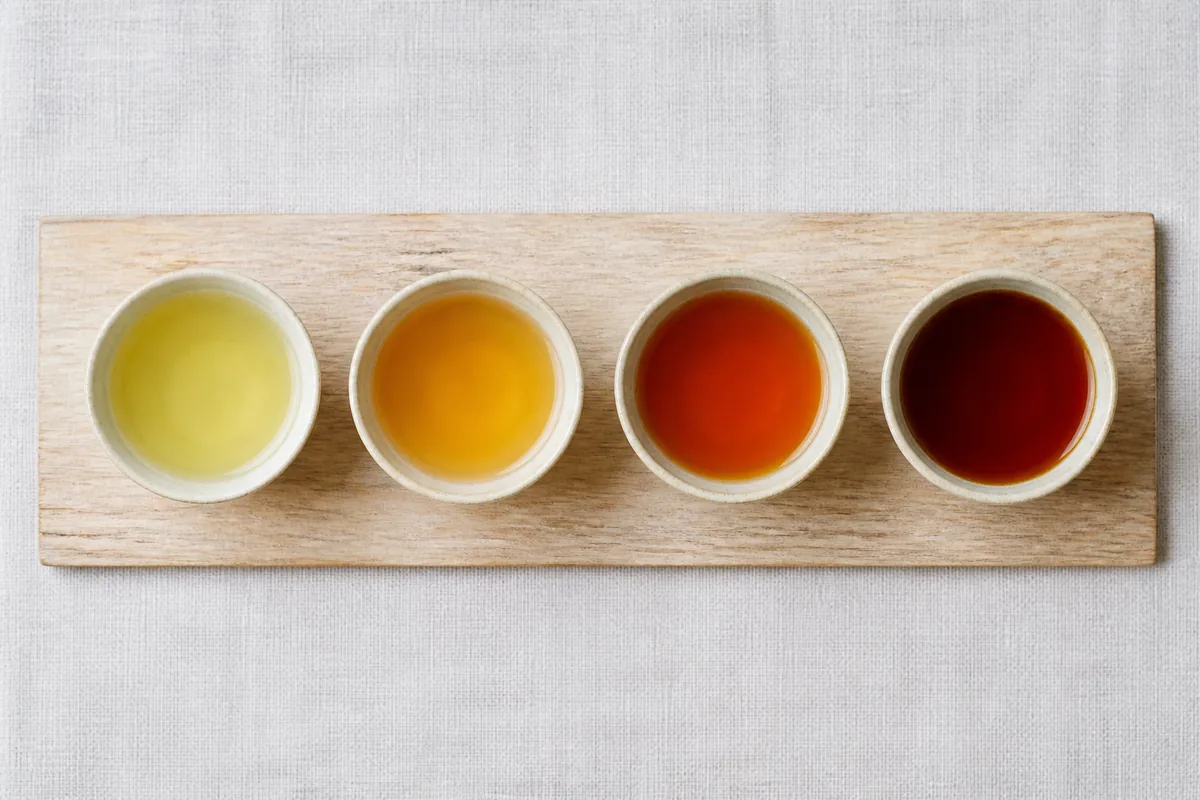
The pattern in that column is not arbitrary and it tracks one thing: how far the leaf was oxidised before it was dried. The compounds that taste bitter and astringent are most abundant in the least oxidised leaf, and oxidation converts many of them into larger compounds that are gentler on the palate.
The more oxidised the leaf, the hotter the water it will take. Green tea is carrying the full load and needs cooler, shorter treatment, while a fully oxidised leaf has far less of it left and tolerates boiling water for minutes. Oolong sits between the two and its range is wide because the category itself is wide, with a lightly oxidised Taiwanese oolong behaving close to a green tea and a heavily roasted one behaving close to a black.
Treat every number above as an opening bid. A tea you already know can take a different one, and the leaf in front of you always outranks a table.
What temperature actually changes
Heat does two things at once, and separating them explains most of what happens in a pot. It raises the rate at which everything dissolves, and it changes which compounds come out first.
Extraction rate
Everything soluble comes out faster in hotter water. Doubling the heat does not double the flavour; it shortens the window in which the cup is right.
Selectivity
Sweet amino acids and simple sugars dissolve readily even in cool water. The astringent compounds need heat to come out in quantity, which is why hotter water shifts the balance rather than simply strengthening it.
Aroma
Volatile aromatics lift out of a hot cup and are gone from a cooling one, so the same tea smells stronger and tastes flatter as it sits.
Leaf opening
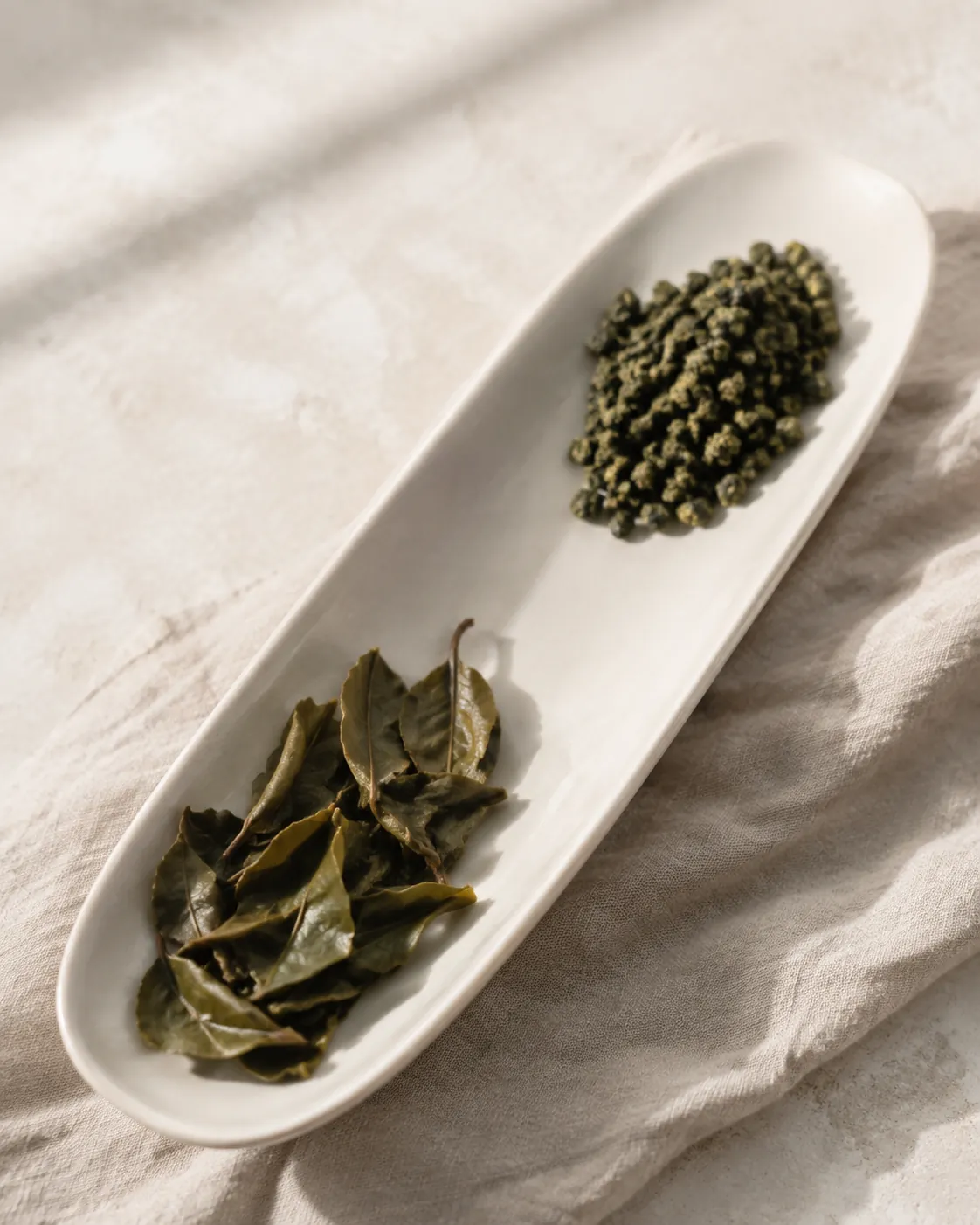
Rolled and compressed leaf needs heat to unfurl at all. Below its threshold it stays shut and gives up almost nothing.
Hotter is not stronger. A cup brewed at boiling and one brewed at 80 C for the same time contain different proportions of the same compounds, and the hotter one is weighted towards grip and away from sweetness.
Mineral content shifts the same balance again, which is why brewing water belongs in the same conversation as the dial on the kettle.
That is the whole of the mechanism, and every number on this page is an attempt to sit inside a window it creates. Why green tea tastes bitter follows the same argument through the style where the window is narrowest.
Getting to 80 C with an ordinary kettle
Most kettles only boil. That is workable, and it costs a minute of attention rather than a purchase.
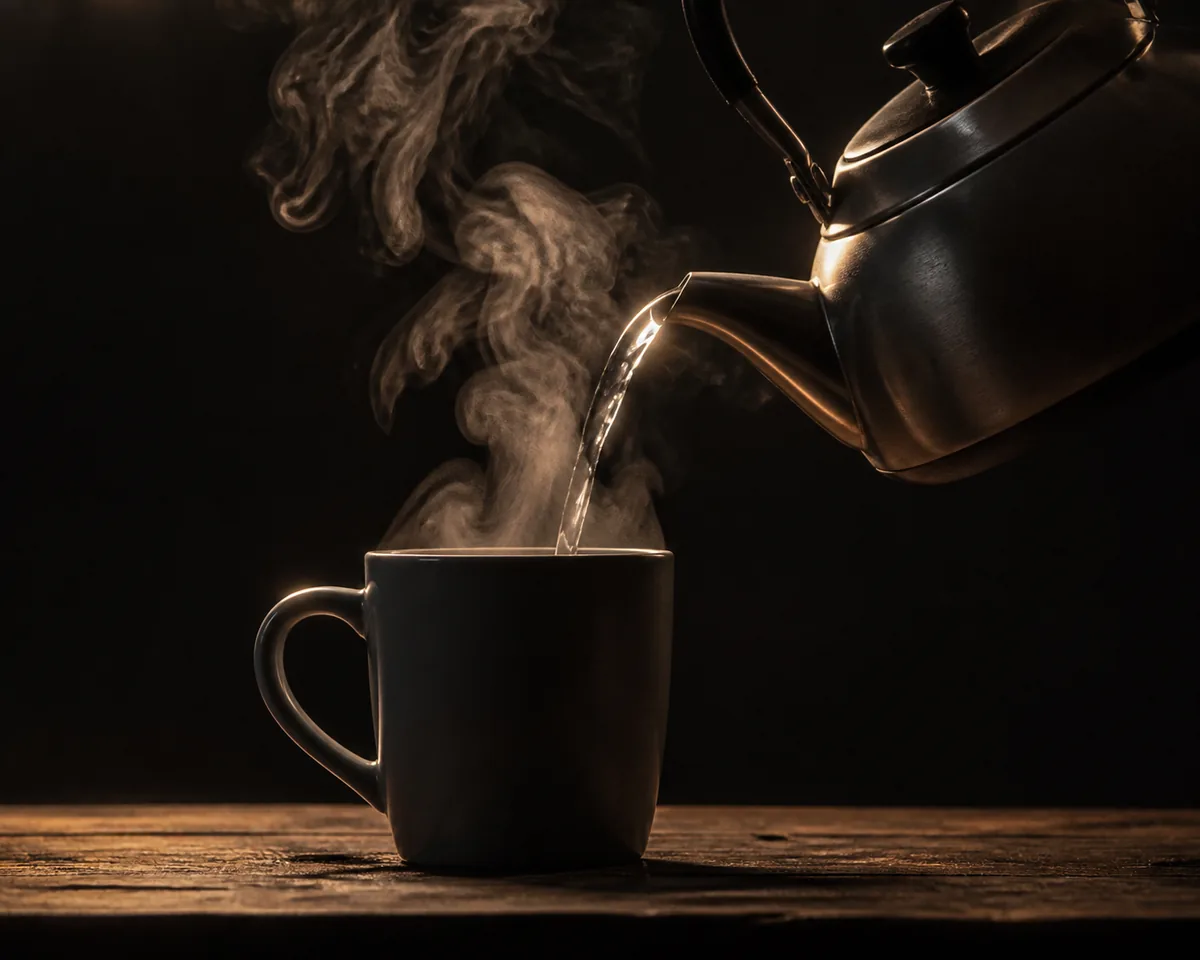
Pouring is itself a cooling step, and an open mug loses heat far faster than a covered pot does.
- Boiled water in an open cup drops to roughly 80 C in about two minutes at room temperature, and into the seventies by three.
- Pouring boiling water into a cold cup or pot takes several degrees off straight away.
- Adding a splash of cold water to boiled water is crude but effective. Roughly one part cold to four parts boiling lands near 80 C.
- A thermometer is the only way to actually know. Everything else is an estimate that varies with your room, your cup, and your volume.
Chinese tea practice described water temperature by what the bubbles look like, centuries before thermometers existed, and the descriptions are accurate enough to work from.
What the pot is telling you
- Shrimp eyes
- Tiny bubbles clinging to the base, no movement. Around 70 to 75 C
- Crab eyes
- Small bubbles releasing and rising singly, faint sound. Around 80 C
- Fish eyes
- Larger bubbles rising steadily, the sound peaking. Around 85 to 90 C
- Rope of pearls
- Continuous strings of bubbles from the base. Around 95 C
- Raging torrent
- A full rolling boil, and the sound drops away. 100 C
The sound is the part people miss. A kettle gets louder as it approaches the boil and then goes noticeably quieter once it arrives, which is the most reliable audible cue in the sequence.
A glass kettle makes the visual stages obvious where a metal one hides them, and a gooseneck kettle with a temperature dial removes the guessing altogether.
The vessel between the kettle and the leaf
A number measured in the kettle is not the number the leaf meets, and the gap depends entirely on what you brew in. Thermal mass is the reason, and it works in both directions: a cold vessel steals heat on the way in, and a warmed heavy one gives it back for longer than you intended.
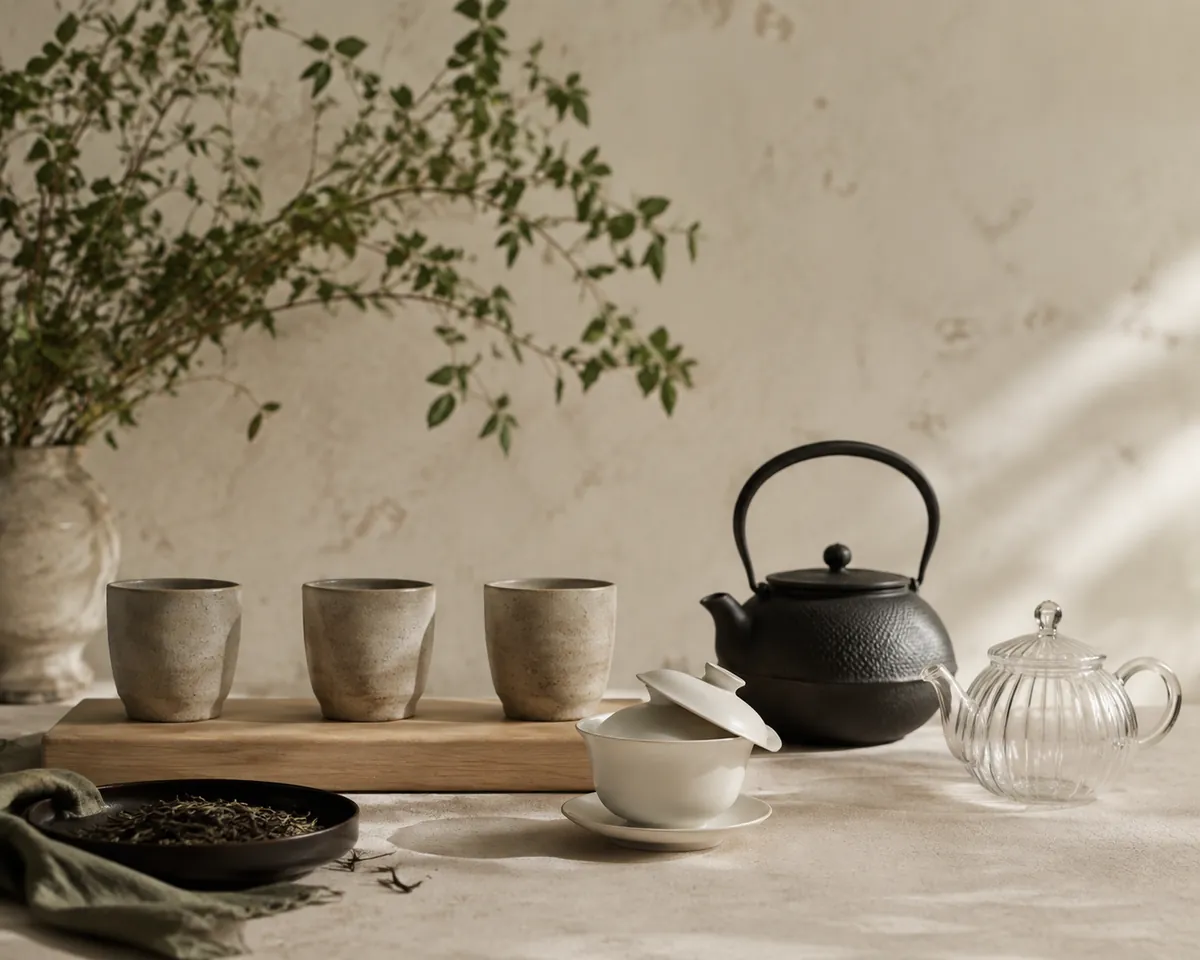
| Vessel | Thermal mass | What happens |
|---|---|---|
| Thin porcelain, such as a gaiwan | Almost none | Warmed, it holds close to the temperature you poured in |
| Thick stoneware or cast iron | High | Unwarmed it can take ten degrees off. Warmed it holds the tea hotter than intended |
| Glass | Low, but poorly insulated | Loses heat fastest through the sides, so it cools quickly while standing |
Thin porcelain has almost no thermal mass, so a warmed gaiwan holds close to the temperature poured into it, and a thin-walled kyusu behaves the same way. Thick stoneware and cast iron absorb a great deal on the way in and then hold it, so an unwarmed pot can take ten degrees off and a warmed one keeps the tea hotter for longer than the table intended.
Glass sits between the two and loses heat fastest through its sides, which is a mild advantage for a tea that does not want to sit hot. Volume matters as much as material here.
A 100 ml pour loses heat several times faster than a litre, so small-vessel brewing wants the water hotter at the kettle to arrive in the same place.
Brewing a cup in the order it happens
The variables above each get a section of their own. This is the sequence they occur in, which matters because two of the steps only work if they come before the water does.
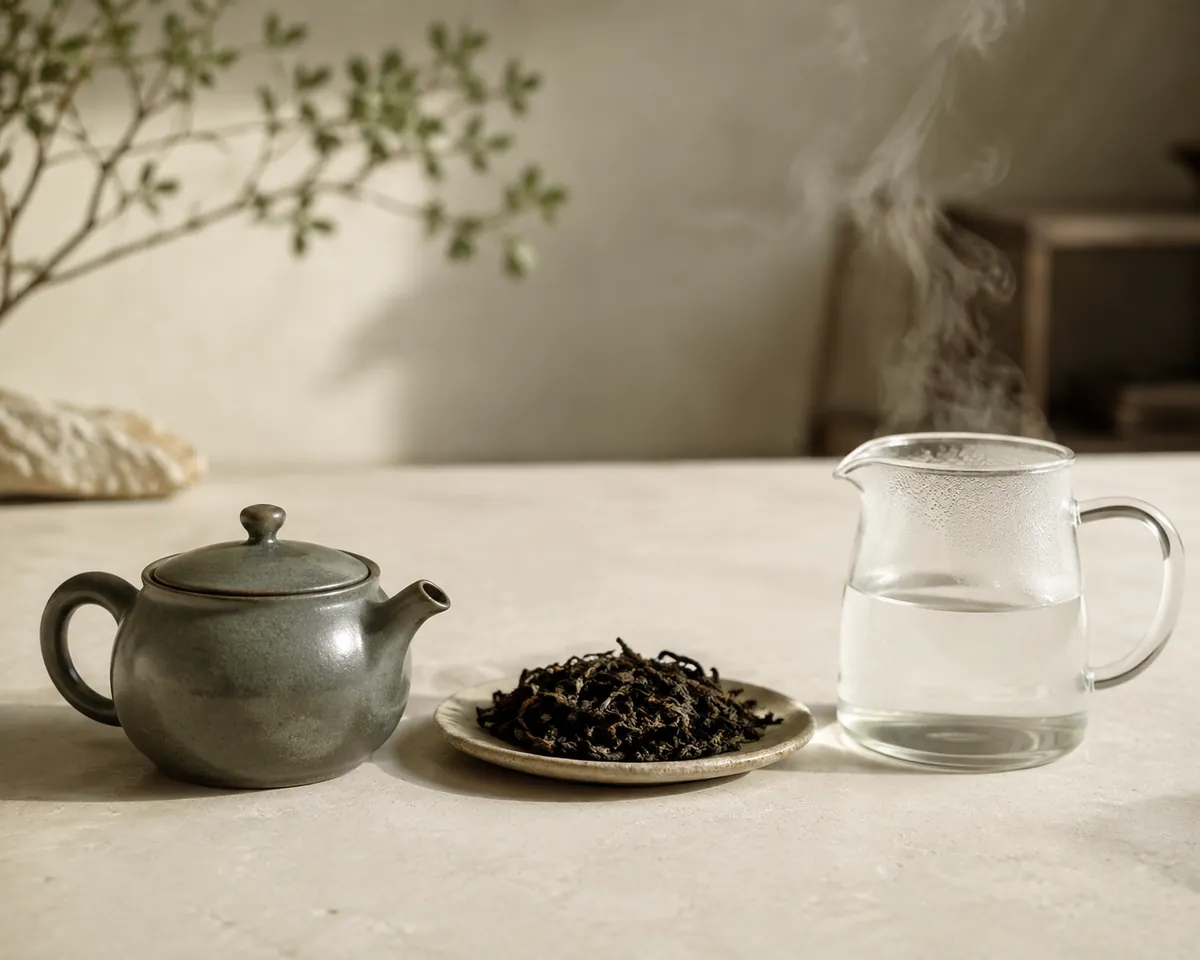
One cup, from a cold kettle
- Warm the vesselA splash of hot water into the pot or cup, swirled and tipped out. A cold vessel takes several degrees off the brew immediately.
- Weigh the leafAround 2 g per 200 ml for most styles. A spoon varies by more than the tea does.
- Heat the water past the targetBring it to the boil and then bring it down, since it is far easier to cool water accurately than to stop a kettle at 80 C.
- Cool it deliberatelyPour into a second vessel, or wait. Two minutes uncovered takes boiling water to roughly 80 C in a normal room.
- Pour onto the leaf, not the other wayWater onto leaf agitates it and wets all of it. Leaf dropped into standing water clumps and floats.
- Time it from the pourStart counting when the water goes in, not when you sit down.
- Take the leaf outRemove it completely rather than leaving it in the cup, or the tea keeps extracting while you drink it.
- Taste before adjustingThen change one variable, not three.
Pouring water onto the leaf rather than leaf into water is the step that looks like fussiness and is not. Dry leaf dropped into still water sits on the surface in a raft, half of it never wets properly, and the cup that results is both weak and uneven.
An infuser that fills the vessel makes this easier than a small ball crammed with leaf.
Leaf quantity, and changing one thing at a time
Dose is the least interesting of the three variables, because getting it wrong makes tea weak or strong rather than harsh, and both of those are obvious from the first mouthful. Too little leaf gives a thin cup that tastes of very little, and adding time will not fix it.
Too much gives a strong cup that turns astringent early, since there is simply more of everything in the water.
Whole leaf against broken leaf matters more than the number on the scale. Fine broken leaf extracts much faster at the same weight, which is why tea bags brew so quickly, and a bag at three minutes is closer to whole leaf at five.
Grade changes the clock more than dose changes the strength.
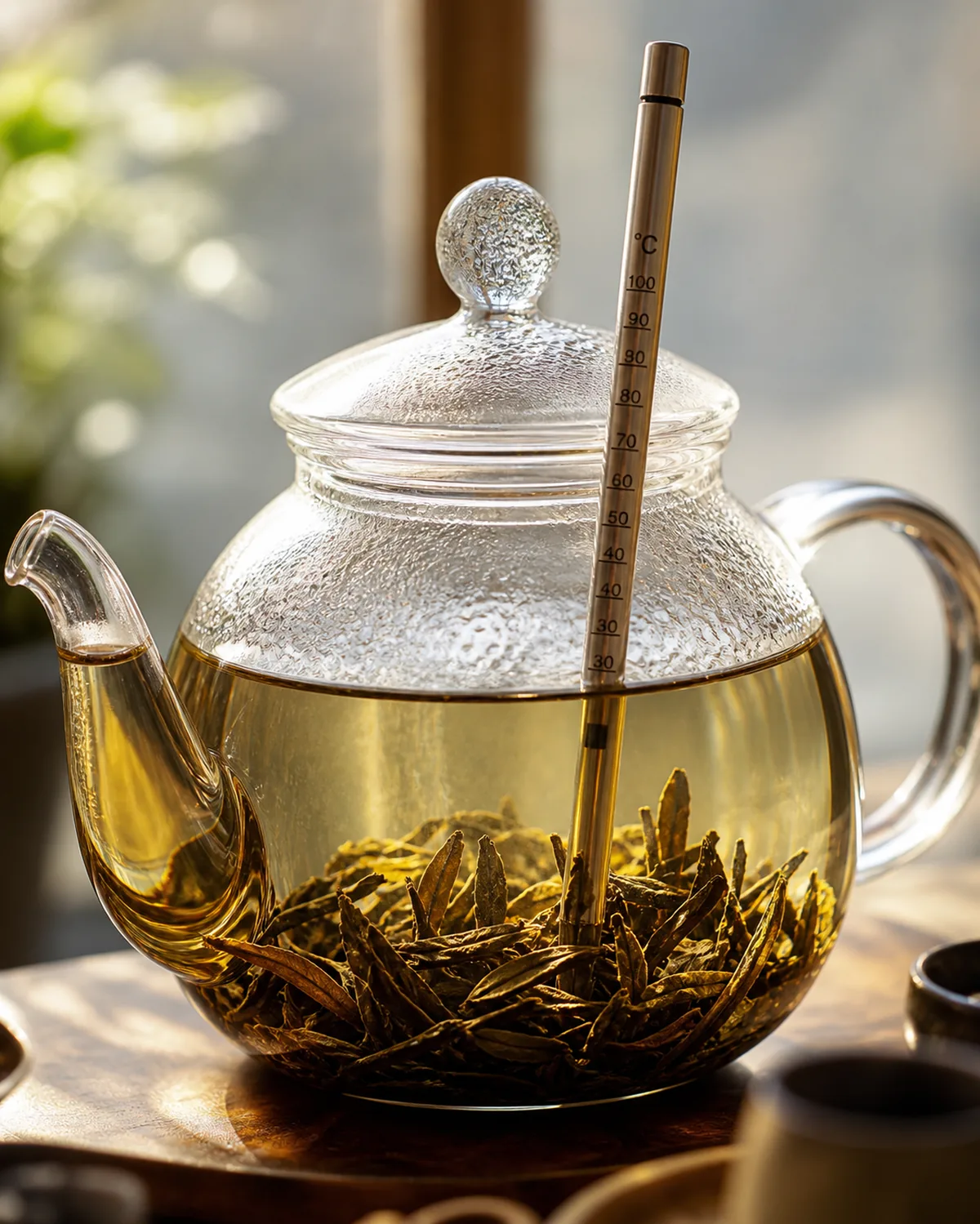
If a cup is not right, adjust a single variable and taste again, taking temperature first because it has the largest effect on the balance between sweet and bitter. Then time, then leaf quantity, and only then the water itself.
Adjusting all three at once produces a different cup without telling you which change was responsible, so you can neither repeat the good result nor avoid the bad one. Making green tea works that process through for the style that punishes it hardest.
Later infusions want more heat, not less
Whole-leaf tea is not finished after one steep. Most oolong and pu-erh give three or more infusions, green tea usually two, and each one differs from the last in a direction you can plan for.
The table at the top of this page describes a first infusion, and following it for every steep is a common way to end up with a disappointing third cup. The leaf has already given up its most soluble compounds and it is already open and hot, so what remains comes out more slowly, and the same temperature with the same timing produces something thinner each round.
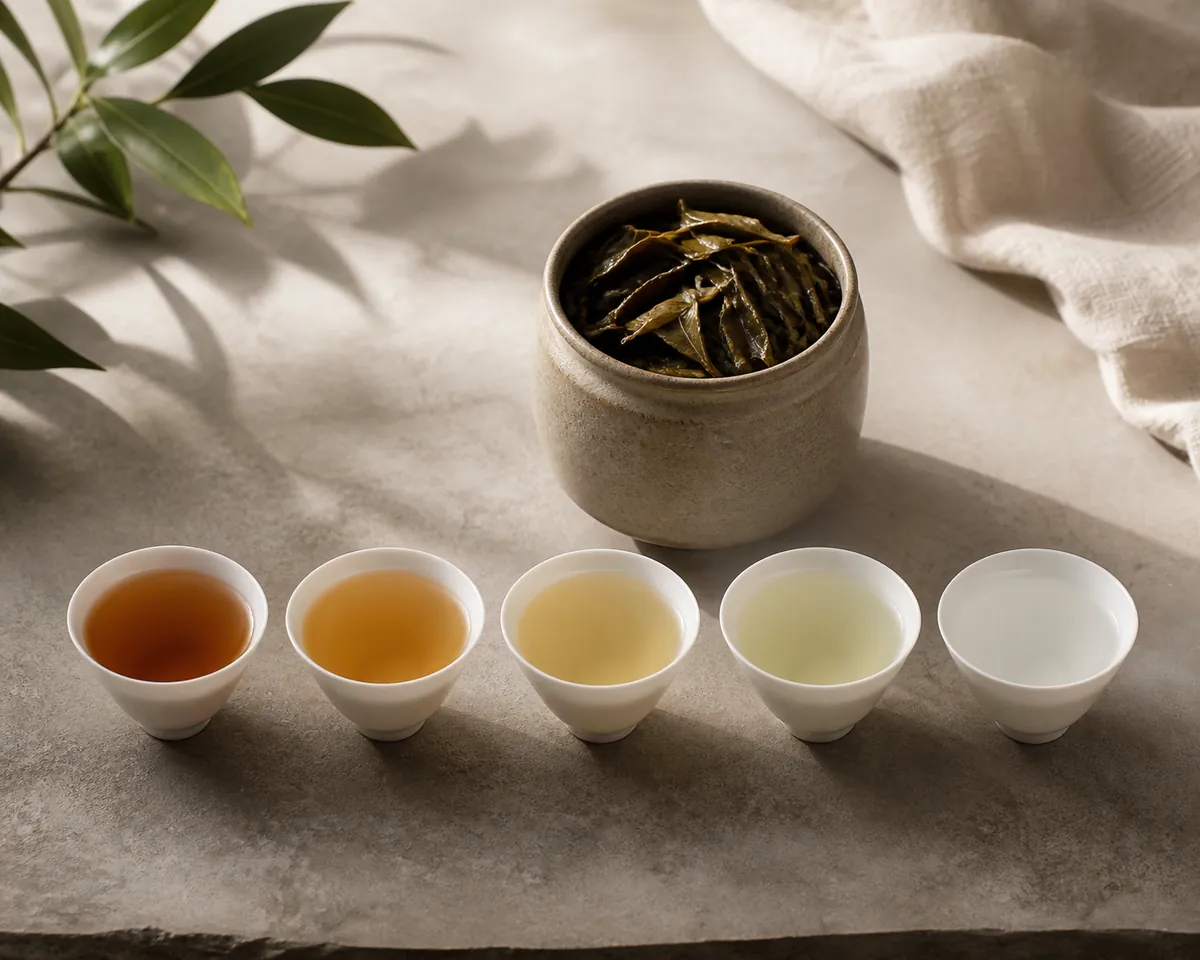
How a session usually moves
- OpeningThe temperature and time from the table above
- SecondAdd roughly thirty seconds, temperature unchanged
- ThirdAdd thirty seconds again, and a few degrees if the cup is thinning
- FourthApproaching boiling water for most styles
- Fifth and beyondBoiling water and a minute or more, until nothing comes
An oolong opened at 90 C for twenty seconds might take boiling water and forty seconds by the fifth infusion, and a pu-erh takes boiling water throughout. A tea that turns thin and papery on the second steep usually gave everything up on the first, which is a signal that the opening steep ran too long rather than that the leaf is poor.
What the packet knows, and what it cannot
Printed instructions are worth more than a general table and less than the leaf in front of you, and knowing which of the three to trust in a given moment is most of the skill.
A producer selling a specific lot knows how it was processed and how it behaves, so their numbers are usually a better starting point than anything here. Where a packet says 80 C and this page says 70 to 80 C, follow the packet, because it was written about that tea rather than about the category.
Instructions written for an export market are a different matter. Many are simplified to boiling water and three minutes because that is what a Western kitchen will actually do, and the same tea sold domestically may carry quite different numbers on quite a different packet.
A single line reading brew with boiling water for a delicate leaf is a translation decision rather than a technical one.
- A harvest year or season, which tells you whether the numbers were written for fresh leaf.
- A temperature in degrees rather than a phrase such as hot but not boiling.
- A steep time given as a range rather than a single figure, which means the producer expects you to taste.
- A leaf weight per volume rather than a number of spoons.
- Separate guidance for later infusions, which almost no export packet carries.
Where there are no instructions at all, the appearance of the leaf is the next best guide. Small, tightly rolled, dark leaf takes hotter water than large, pale, downy leaf does, and storing loose-leaf tea covers what the same leaf looks like once it has aged past the point where any of these numbers help.
Cold water, where temperature stops mattering
Removing heat entirely produces a genuinely different cup rather than a weaker one, and it is the only method on this page with no window to miss.
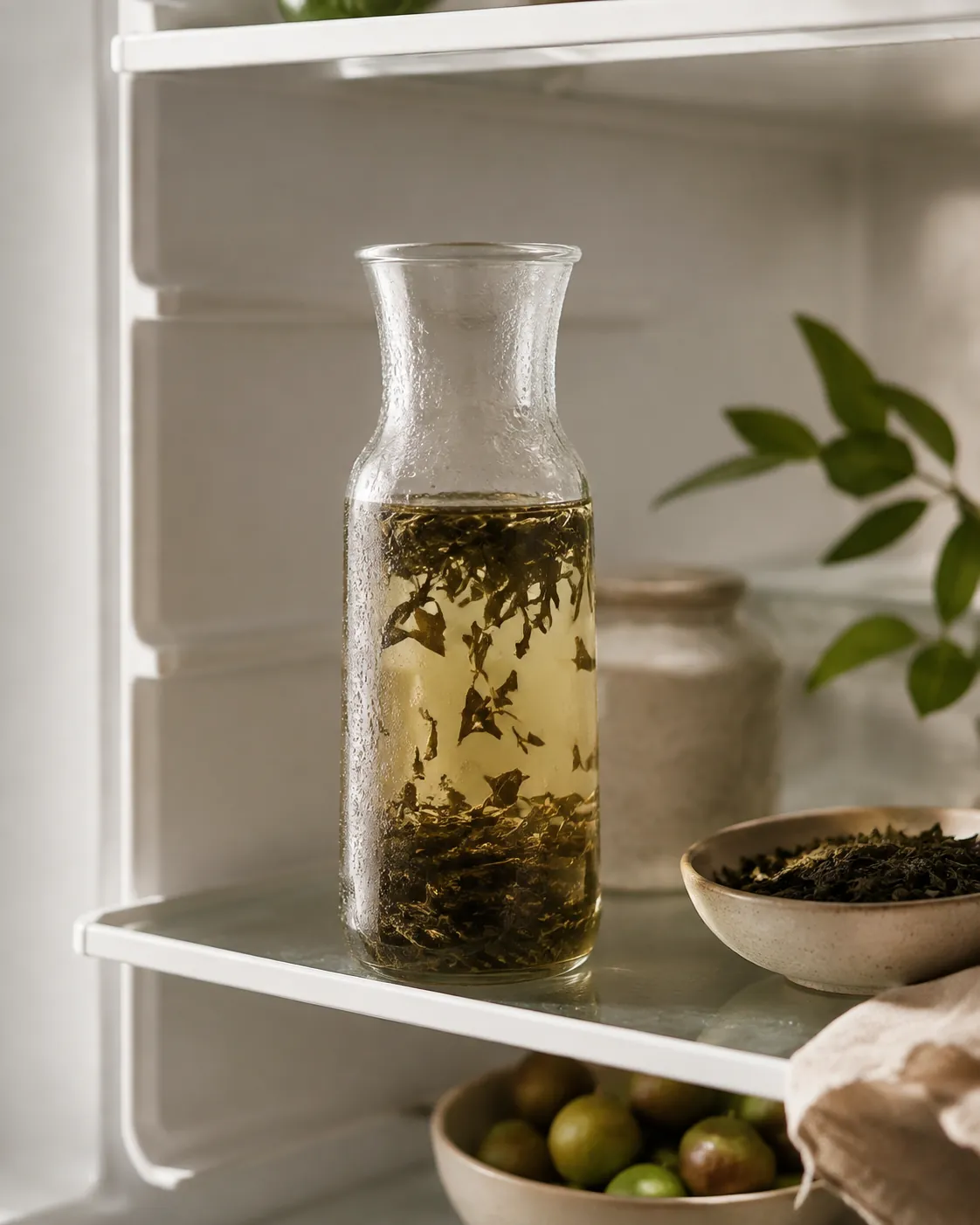
Cold water extracts the sweet amino acids and simple sugars readily and pulls out very little of the astringent material that makes a hot cup bitter. The result is sweeter, rounder and almost completely without grip, and it cannot be over-brewed however long you forget about it.
Cold-brewed tea
- Leaf
- 10 g per litre, roughly half again what hot brewing uses
- Water
- Cold, straight from the tap or filtered
- Time
- 6 to 12 hours in the fridge
- Suits
- Green tea and lightly oxidised oolong, which gain the most
- Keeps
- Two days refrigerated once the leaf is out
A sencha left twelve hours is sweeter than the same leaf at eight and not remotely bitter, so the only real decision is when to take the leaf out. Pour it over ice and it dilutes without going thin, which a hot brew chilled down never quite manages.
Herbal infusions gain the least from it. Rooibos and chamomile have no astringency to avoid in the first place, so hot brewing remains the sensible choice for those and the fridge space is better spent on leaf.
Two settings that cover most of a cupboard
Two settings cover more of a tea shelf than the table suggests, if you are only going to remember two.
Water off the boil and rested two minutes lands near 80 C, which is inside the range for green and white tea and only a little cool for a light oolong, with chai the one milk drink it will not serve. Straight off the boil covers black tea, pu-erh, chai and every herbal infusion in the house.
Between them, boiling and boiling-rested-two-minutes brew almost everything in the cupboard acceptably, and the table exists to get from acceptable to right. That last step is worth the trouble only once the leaf is worth the trouble, which is a judgement about the packet rather than about the method.
Common questions
Does boiling water ruin all tea?
No. Black tea, pu-erh, and herbal infusions are made for boiling or near-boiling water. It is the less oxidised styles, green and white in particular, that suffer.
How do I cool water without a thermometer?
Let boiled water stand in an open cup for two to three minutes, or pour it into a cold vessel first. Both are estimates, so a thermometer is the only way to be sure.
Can I re-steep the same leaves?
Yes, and with whole-leaf oolong and pu-erh it is normal. Later steeps usually need slightly longer than the first because the leaf has already given up its most soluble compounds.