Why Does Black Tea Taste Bad? Four Faults, Four Different Fixes
Four separate things can make black tea taste wrong, drying, weak, sour or metallic, and only one of them is still fixable once the tea is already in the cup.
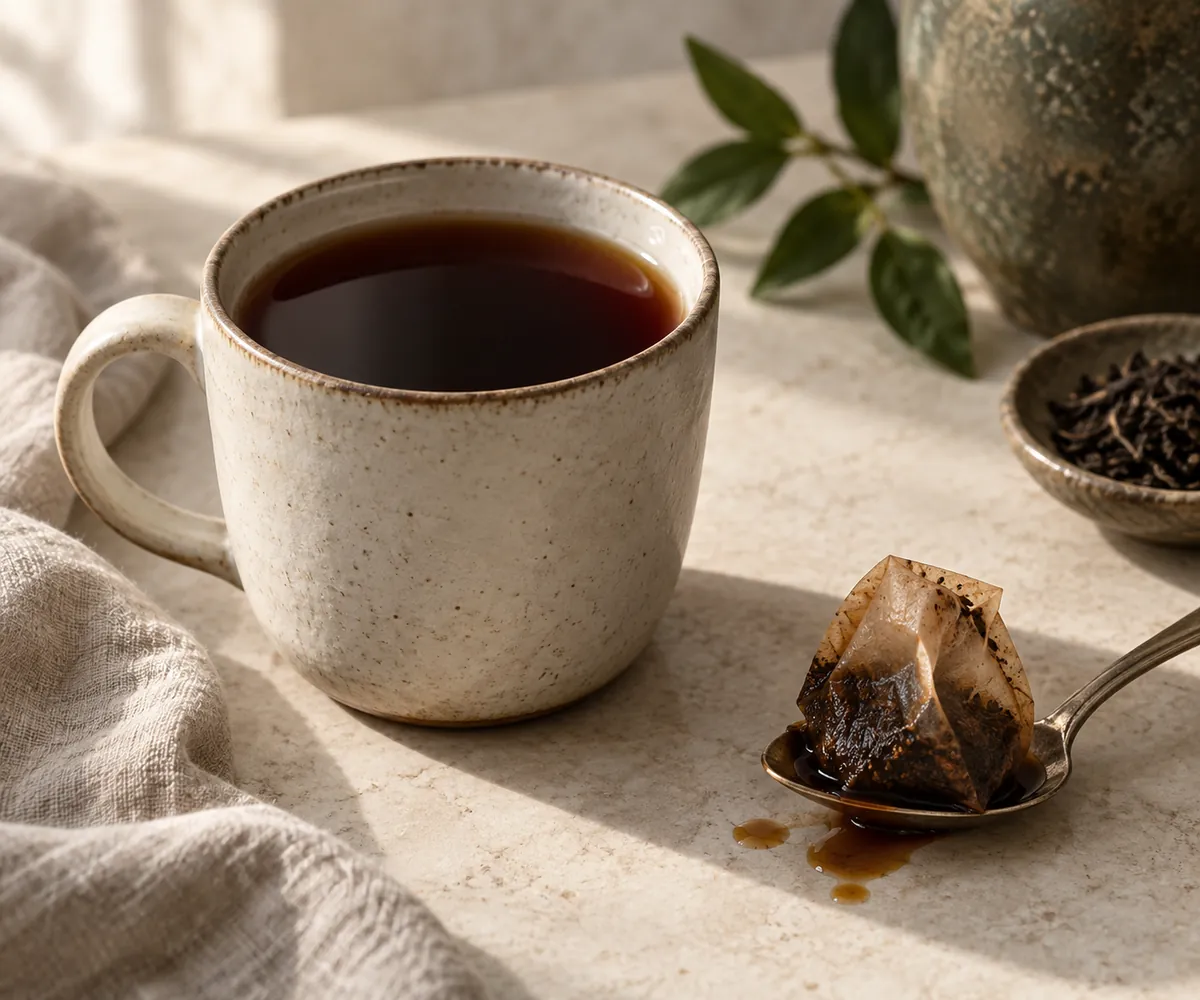
A cup of black tea can go wrong in more than one way, and the usual advice, steep it less, use less leaf, only ever fixes one of those ways.
Black tea has a reputation for being forgiving. Near-boiling water and a long steep are both normal for it, so when a cup genuinely tastes bad, it is easy to assume the method must be fine and the tea itself is at fault.
Sometimes that is true. More often, the cup is telling you which of a few specific things went wrong, and the fix depends entirely on which one it was.
Which fault matches your cup?
When you say a cup tastes bad, you could mean at least four separately-caused complaints, and lumping them together is why generic advice so often misses.
| What the cup tastes like | Most likely cause |
|---|---|
| Drying, grips the tongue, bitter | Over-steeped, too much leaf, or a squeezed bag |
| Thin, watery, not much flavour | Too little leaf, flat water, or stale leaf |
| Slightly sour or tangy | A processing fault, not a brewing one |
| Metallic, chalky, or dull | Hard water or standing too long in a steel container |
Drying and bitter, and weak and watery, are the two most common black tea taste complaints, and they sit at opposite ends of the same dose-and-time mistake. Sour and metallic are less common black tea complaints, but distinct enough from the other two to need their own answer, because neither responds to the timer at all.
Appearance is a different question from taste. A cloudy cup that still tastes fine is covered on what black tea is rather than here.
Is it over-steeped, over-dosed, or squeezed?
A drying, grippy, bitter cup is almost always one of three habits, and all three concentrate the same compound.
Over-brewing pulls more tannins out of the leaf, and it is the tannins rather than the caffeine that leave your tongue feeling dry. Black tea brewed well past its steep time turns drying and tannic rather than sharply bitter, which is a different sensation from the sharp bitterness a green tea gets from being brewed too hot.
Only one of those three habits involves a clock.
Too much leaf for the water concentrates everything it releases, tannins included, in the same way an over-steeped cup does, so doubling the leaf has the same effect on the cup as doubling the time. Most people only ever adjust one of the two.
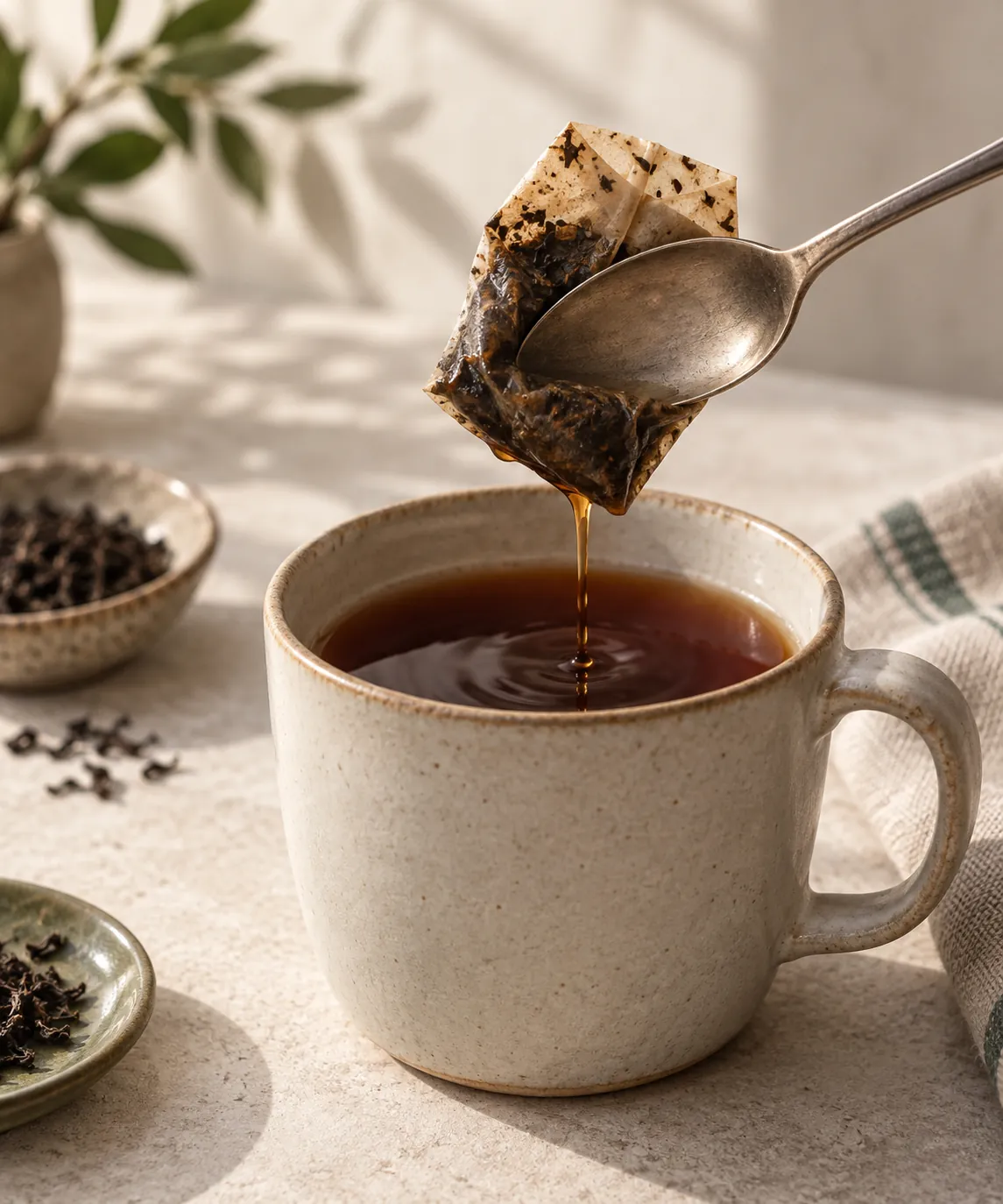
Squeezing a used black tea bag against the spoon, on top of an already over-steeped cup, forces out even more of the tannic liquid trapped in it. It is a habit almost nobody thinks of as brewing at all, closer to wringing out a cloth than to making tea, and it can turn an otherwise acceptable cup drying on its own.
Grade plays a part too, because dust and fannings have far more surface area than whole leaf. An over-dosed cup of them turns tannic faster and forgives less error, which is one reason a bagged tea punishes a slightly-too-long steep more than a loose-leaf one does.
A tea deliberately brewed strong for milk is meant to carry more tannin, so a drying finish there is not a fault. An orthodox whole-leaf black tea tolerates a longer steep before it turns over-steeped than a CTC or dust one does, which is worth knowing before blaming the timer for a tea that was never going to behave the same way.
Three to five minutes is the working window for most black tea, and the tannin level climbs sharply once the steep runs much past five. Even an extra thirty seconds is enough for you to notice in a small cup, especially with a fine-cut bag rather than whole leaf, which is most of why the same tea tastes fine one day and drying the next.
Is it the dose, the water, or the leaf?
A thin, watery cup looks like the opposite problem, and it usually is, but three different things can cause it and they need different fixes.
| Cause | What it looks like | Fix |
|---|---|---|
| Too little leaf | Pale, transparent, thin body | Add more leaf, roughly 2 to 3 g per 200 ml |
| Flat, reboiled water | Dull even at a normal dose | Use fresh water straight from the tap, not reboiled |
| Stale leaf | Thin and slightly woody, even brewed strong | Replace the packet |
The common reason for watery tea is too little leaf for too much water, which is the mirror image of the dose problem in the section above.

Water that has sat in a kettle a while, or been boiled and reboiled, holds less dissolved oxygen and tastes flat. That flatness is a distinct fault from simple under-dosing and can happen even when the leaf and the timer are both correct, so it is worth ruling out separately rather than folding it into a dose problem.
Tea left open in a cupboard for months absorbs moisture and loses its volatile aromatic oils, leaving a thin, woody cup no matter how much leaf goes in.
If your tea is thin but the dry leaf still smells sharp and fresh, it is a dose problem, and more leaf will fix it. Leaf that smells of very little when dry will taste of very little wet, whatever the dose, because no amount of extra leaf brings back what has already faded.
Is a sour cup a brewing mistake?
A sour or slightly tangy cup is the one fault on this page that has nothing to do with how you brewed it.
That sour, slightly fermented taste usually traces back to how the leaf was processed. In black tea, soluble sugars and pectins in the leaf can form the acids behind a sour cup when the heat-drying step meant to stop oxidation runs too slowly or unevenly.
During black tea processing, piling oxidising leaf too thick or too warm can let the centre of the pile overheat, triggering the bacterial activity behind a sour cup. That is closer to the genuine fermentation pu-erh uses on purpose than to the ordinary oxidation black tea relies on, which is exactly why it reads as a fault rather than a style.
The colour is often the first clue, before the first sip confirms it. Properly processed black tea settles into a bright orange-red liquor, while excess fermentation pushes the colour toward a dull, flat brown, the visible trace of the same reaction that produced the sour taste.

A very light, bright sour edge in a high-grown or first-flush black tea can be part of its intended character rather than a fault in the cup. The distinction is one of degree: a faint brightness alongside real sweetness is a style, and a cup that reads as flatly sour with nothing else going on is the processing fault above.
Is it the water or the vessel?
A metallic or chalky cup comes from either the water or the vessel, and telling the causes apart decides what you actually need to change.
| Cause | Sign in the cup | Fix |
|---|---|---|
| Hard tap water | Chalky, mineral, dulls the flavour | Filter it or switch to a softer bottled water |
| Standing in a steel flask or pot | Faint metallic or blood-like note | Drink it within its steep, not hours later |
| Scaled-up kettle | Flat or metallic even with soft water | Descale every four to six weeks in hard water, or every couple of months in soft |
Hard water carries calcium and other minerals that bind with tea's tannins, reading as a chalky, mineral edge rather than a clean cup. Because hard water already carries a high mineral load, it dissolves less of the tea's own character, so the cup can taste both duller and harsher at once, which is a strange combination until you know the cause.
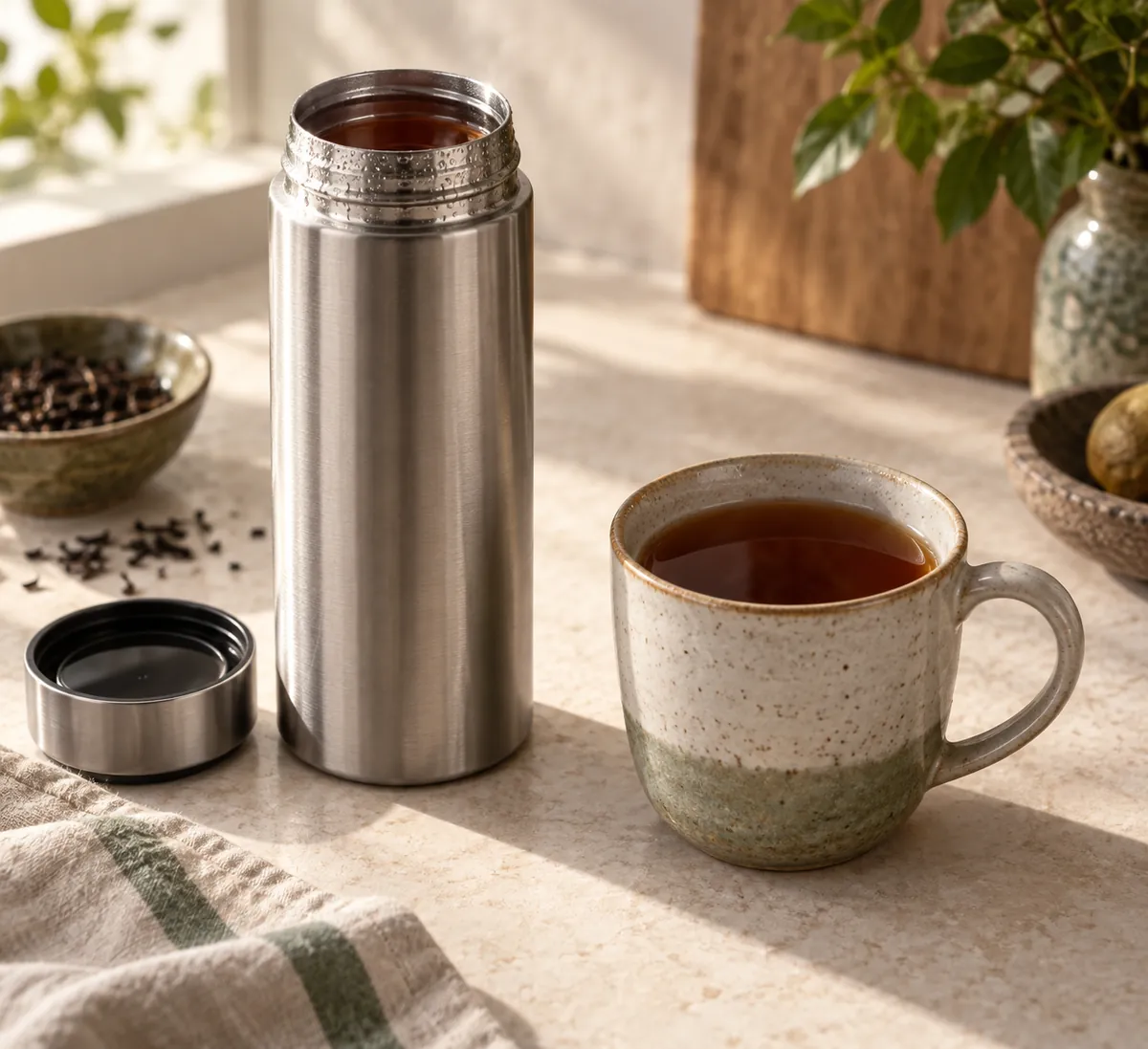
Tea left steeping or standing for hours in a steel flask or teapot can pick up a faint ferrous, blood-like note as the hot, acidic liquid reacts with the metal. A flask that tastes fine after twenty minutes can carry that note by the afternoon, even though nothing about the tea itself has changed.
A kettle left to scale up tells a related but separate story. Every boil leaves a trace of calcium and magnesium behind, and the limescale that builds up over weeks can flatten a cup or add its own metallic edge, independent of how hard the water was to begin with.
Descaling every four to six weeks in a hard-water area, or every couple of months in a soft one, keeps it from reaching the cup at all.
Very soft or distilled water can leave black tea tasting thin rather than metallic, which is the weak-tea fault above rather than this one.
Is there anything to do once the tea is already poured?
Once the tea is in the cup, only one of the four faults actually responds to a fix.
| Fault | Fixable after the fact? | What actually helps |
|---|---|---|
| Drying and bitter | Yes | Dilute with hot water, or add milk to soften the tannin without removing the cause |
| Weak and watery | No | Nothing left to dilute or bind. Brew the next cup stronger |
| Sour | No | Neither dilution nor milk touches a processing-stage acid |
| Metallic or chalky | No | Neither addresses minerals in the water or a metal reaction |
Diluting an over-steeped cup of black tea with hot water lowers the concentration of everything at once, including the tannins doing the damage. Adding roughly half as much hot water again, so a full cup becomes closer to a cup and a half, is usually enough to bring it back from drying to merely strong.
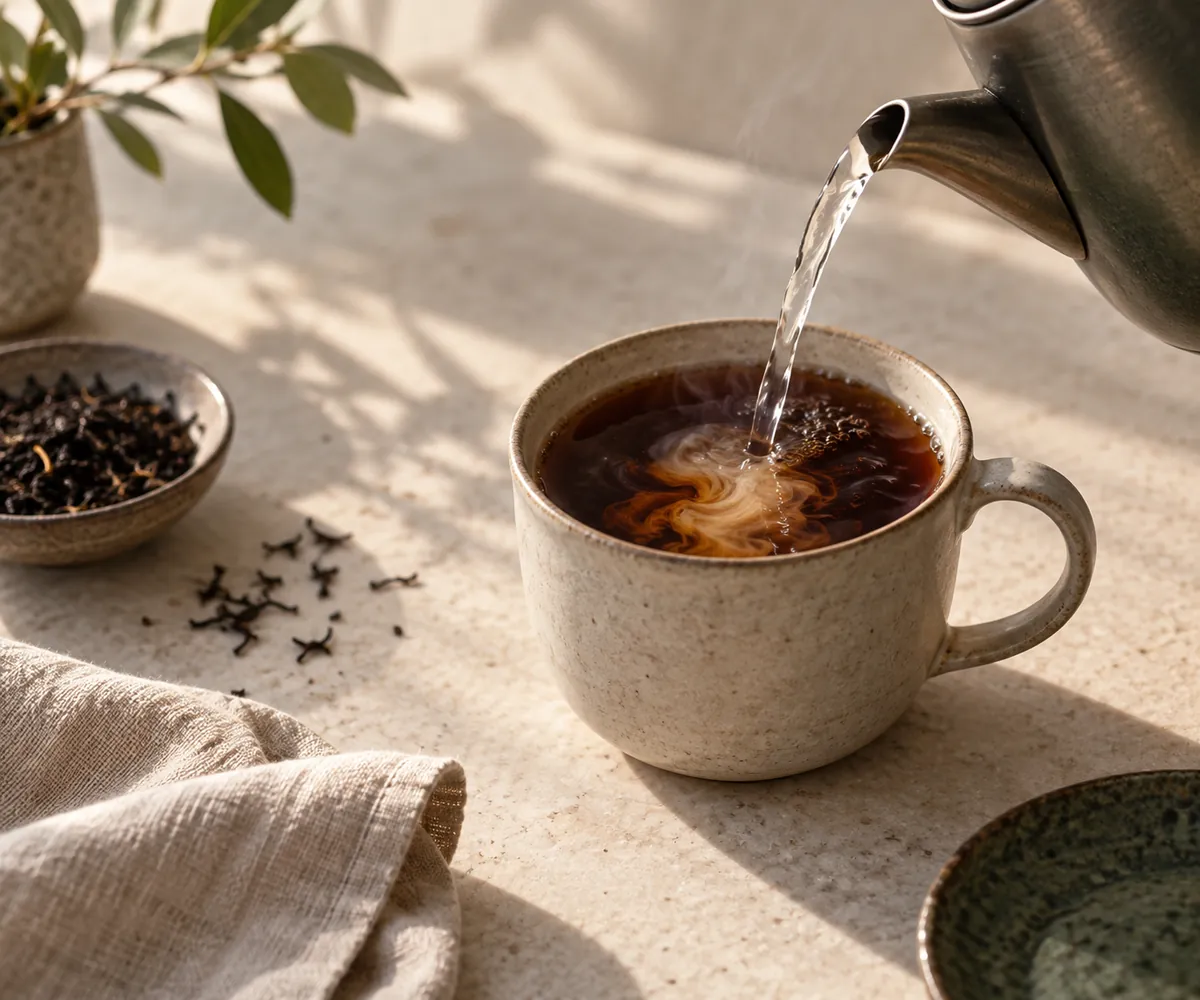
Dilution is the one genuine fix on this list, because it changes the actual chemistry of the cup rather than covering it up.
Milk's proteins bind to the tannins in an over-brewed black tea and soften its drying grip, but that binding masks the astringency rather than removing the extraction that caused it.
The tea underneath is still over-brewed, and it just reads as smoother because the tannin is bound to protein instead of sitting free against your tongue.
A weak or stale cup of black tea has nothing left to dilute or bind, so milk and sugar only add flavour on top of an already thin base. A slightly weak cup of black tea can be topped up with a short extra steep from the same leaf, if you have not yet discarded it, but that is a second brew rather than a fix to the first one.
A sour or metallic cup of black tea is not improved by either method, because neither addresses acids formed in processing or minerals carried in the water. Adding milk to a sour cup mostly adds a second, competing flavour on top of the first.
What changes prevent all four faults at once?
Sourness aside, three of the four faults above trace back to the same handful of habits, and heading them off is simpler than diagnosing them again next time.
Measure the leaf
Roughly 2 to 3 g of black tea leaf per 200 ml removes the guesswork behind two of the four faults, a bitter cup and a watery one.
Time the steep and remove the leaf
Set a timer, and take the leaf or bag out the moment it goes off, so the tea stops changing once it tastes right.
Use fresh water each time
Fresh water for every pot of black tea, rather than water reboiled from earlier in the day, avoids the flat taste reboiled water carries into the cup.
Buy and store whole leaf well
Buying whole or broken black tea leaf rather than dust, and keeping it sealed and away from light, protects the cup against staleness.
Filter hard water or drink flask tea promptly
Filtering hard tap water, or drinking tea from a steel flask soon rather than letting it stand for hours, avoids the mineral and metal causes.
None of these changes prevents a sour cup of black tea, because that fault is set in processing before the tea is ever bought. The other three faults come down to habit, and the five changes above head them off before the kettle is even on.
Common questions
Why does my black tea look cloudy?
That is tea cream, caused by compounds binding together as the tea cools, and it is a different question from taste. The black tea profile explains it in full, and a cloudy cup that still tastes right is not a fault.
Can reheating fix a bad cup of black tea?
No. Reheating does not undo over-extraction, add back lost aroma, or remove minerals, so a bitter, stale or metallic cup tastes the same warmed through as it did cold.
Does the brand of tea bag matter?
Less than the grade inside it. Most bags hold dust or fannings regardless of brand, which extract fast and forgive very little over-steeping, so the timer matters more than the name on the box.