How to Make Black Tea for the Leaf in Front of You
Black tea is forgiving about heat and unforgiving about leaving small particles in the water too long. Identify the leaf form, measure the water, and strain when aroma, body, and briskness meet.
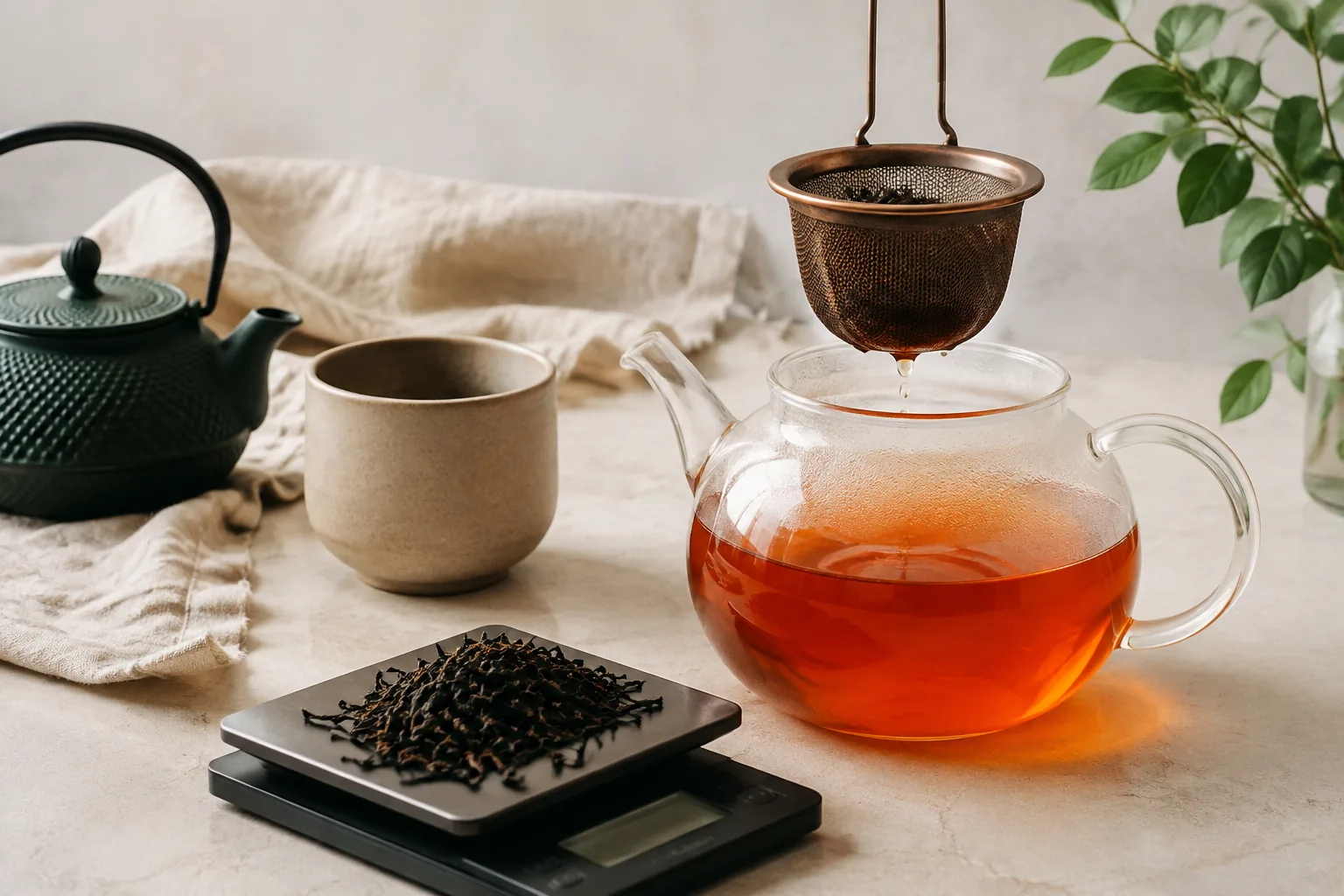
To make black tea, begin with 2 to 3 g of leaf per 200 ml of water at 95 to 100 C. Brew whole leaf for roughly three to five minutes, broken leaf for two to four, and fine tea-bag particles for one and a half to three, tasting before the upper limit.
The useful setting is not attached to the color black. It comes from leaf size, processing, water, and whether the cup will be served plain, with milk, or over ice.
Black tea baseline
- Leaf
- 2 to 3 g per 200 ml
- Water
- Fresh and near boiling
- Whole leaf
- Taste from 3 minutes
- Broken leaf
- Taste from 2 minutes
- Tea bag or fannings
- Taste from 90 seconds
- Strength control
- Change dose before pushing time
Identify how fast the leaf will extract
The black tea guide explains oxidation and origin, but the brewer first needs to read particle size. Whole twisted leaves open slowly, broken leaves work faster, and CTC or fannings can give up color and tannin almost immediately.
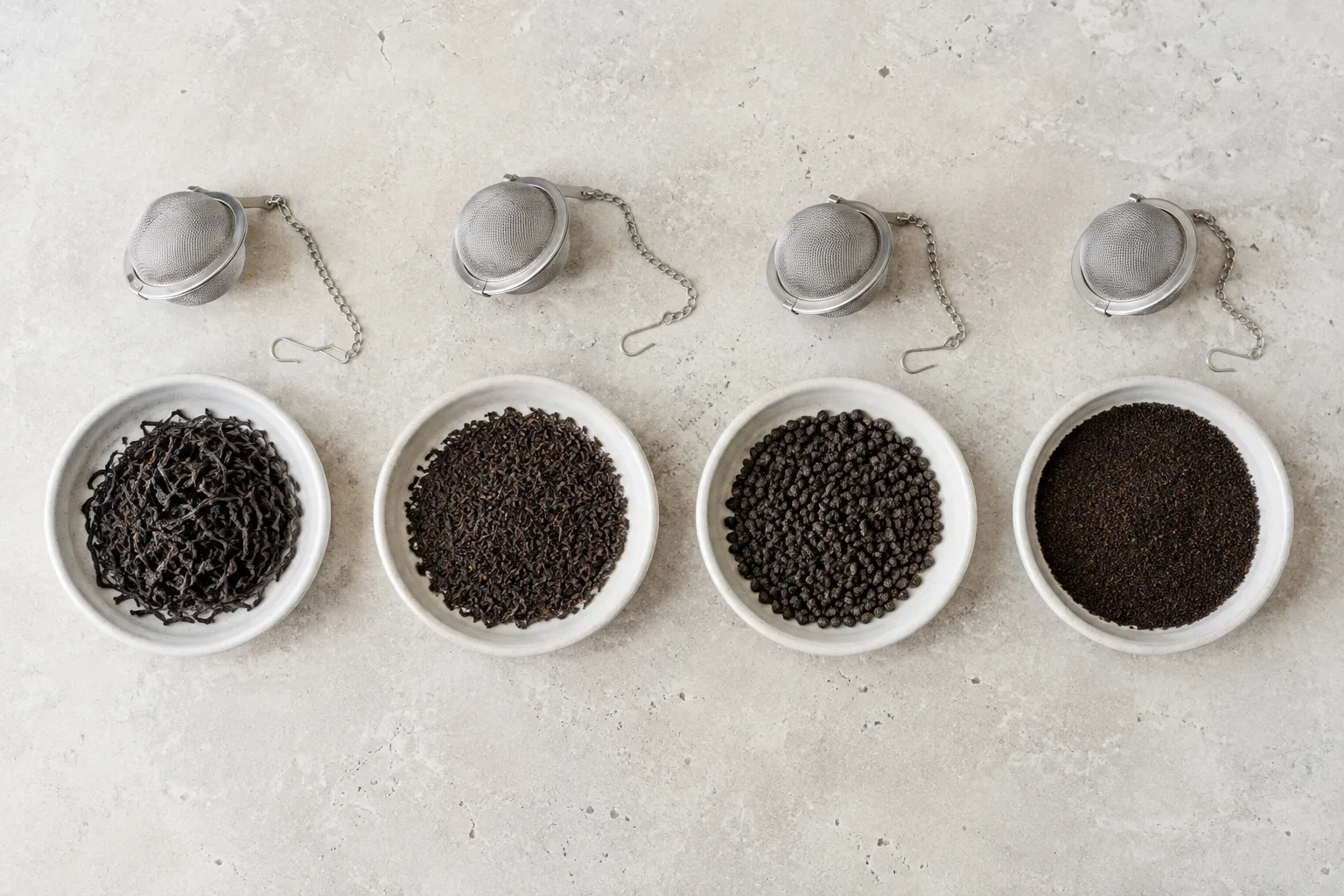
Smaller leaf needs an earlier first taste. A five-minute instruction that suits a wiry Keemun can make a fine breakfast bag aggressively drying.
A large basket tea infuser suits nearly every loose black tea because water can circulate and the basket can be removed cleanly. Tea balls work for compact particles but crowd long leaves after they expand.
Set dose and water before starting the timer
Weighing the leaf is the most repeatable method, yet consistency matters more than expensive equipment. Use the same cup and spoon while learning a tea, note the result, and alter one variable at a time.
One balanced mug
- Loose leaf
- 2.5 g
- Fresh water
- 200 ml
- Temperature
- 95 to 100 C
- First taste
- 2 minutes for broken, 3 for whole
- Maximum first trial
- 5 minutes
- Serving
- Strain completely into a warm cup
Black tea tolerates hotter water than green tea because oxidation has already transformed much of the leaf chemistry. Darjeeling first flush is an important exception, and the separate Darjeeling method explains why it often wants cooler water.
Minerals can change both clarity and perceived roughness. If every tea tastes muted or leaves a surface film, test filtered brewing water before buying another kettle.
Brew one clean extraction
Warm the vessel first. A cold heavy pot pulls enough heat out of the water to shorten the extraction before the leaf has opened, so rinse it with hot water, empty it, add the leaf, and pour the full measure. Cover the vessel to retain heat, then lift or strain out the leaf at the chosen point rather than letting it sit below the finished tea.
Black tea method
- HeatBring fresh water near a full boil
- WarmRinse a cold pot or mug with hot water and empty it
- DoseMeasure leaf for the actual water volume
- PourWet the leaf evenly and cover
- TasteCheck according to particle size
- StrainSeparate leaf and liquor completely
- AdjustChange one variable on the next cup
A gentle stir is useful when dry leaf floats, but squeezing a tea bag forces concentrated liquid from between the particles and can emphasize dryness. Lift the bag and let it drain briefly without wringing it against the cup.
Straining is part of the recipe, not cleanup. Tea continues extracting for every minute the wet leaf remains in contact with the drink.
Make stronger tea without over-steeping
Strength includes aroma, dissolved solids, body, bitterness, and astringency, so time cannot increase one without moving the others. Extra leaf gives more flavor-producing material while keeping the contact window short enough to avoid a rough finish.
For milk tea, try 3 g per 180 ml of water and leave room for 20 to 40 ml of milk. Strong Assam or a breakfast blend usually carries milk better than a delicate floral black tea.
Sugar dissolves most easily before cold milk lowers the temperature. Lemon and milk should not share the same cup because acid can make milk proteins gather into visible curds.
Diagnose what the cup is telling you
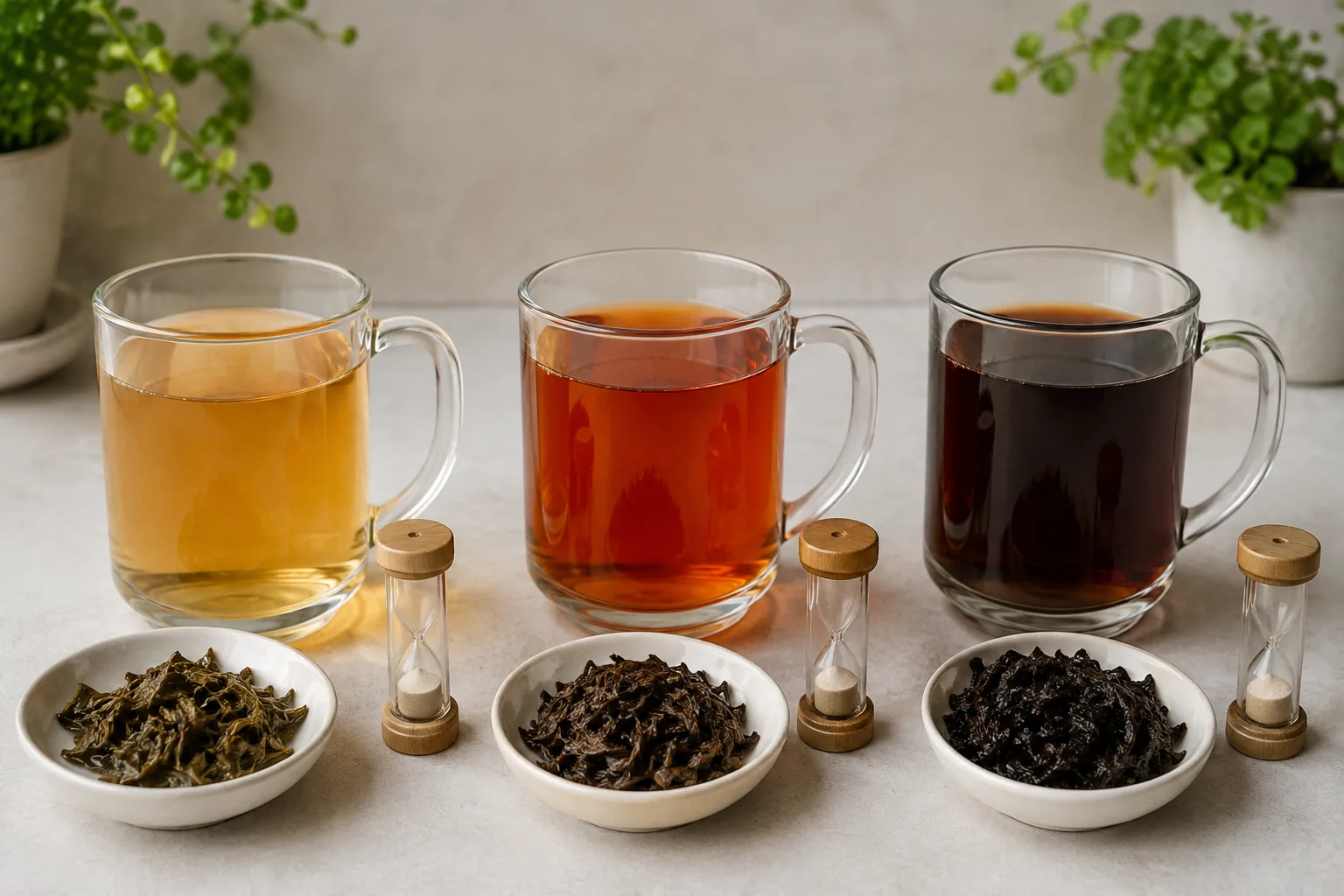
Color is an unreliable judge.
A pale cup can be correct for a delicate black tea, while a dark cup can still taste empty when the leaf is stale. Use aroma, body, and finish together rather than judging extraction from color alone.
- Weak and fragrant usually needs more leaf.
- Strong and drying needs a shorter steep.
- Flat and dark may point to stale leaf or mineral-heavy water.
- Sharp and thin can come from too little leaf brewed too long.
- Cloudy after cooling is often tea cream rather than spoilage.
| Symptom | Cause to test first | Better next brew |
|---|---|---|
| Little aroma | Too little leaf | Increase dose |
| Dry tongue and gums | Excess contact time | Strain earlier |
| Watery after milk | Brew was sized for a plain cup | Reduce water and add leaf |
| Dull color and film | Hard water | Try filtered water |
| Harsh tea bag | Fine particles over-extracted | Taste at 90 seconds |
| Uneven pot | Leaf remained below the pour line | Strain into a separate serving pot |
The best correction changes one variable. Moving dose, time, temperature, and water together may improve the cup, but it will not teach you which choice mattered.
Adapt the method to the serving job
Plain | Preserve aroma and origin character with the gentler useful extraction
With milk | Use more leaf and reserve cup volume for the milk
Over ice | Double leaf rather than steeping longer, then let ice supply dilution
Second infusion | Reserve for intact leaf that still smells lively after the first brew
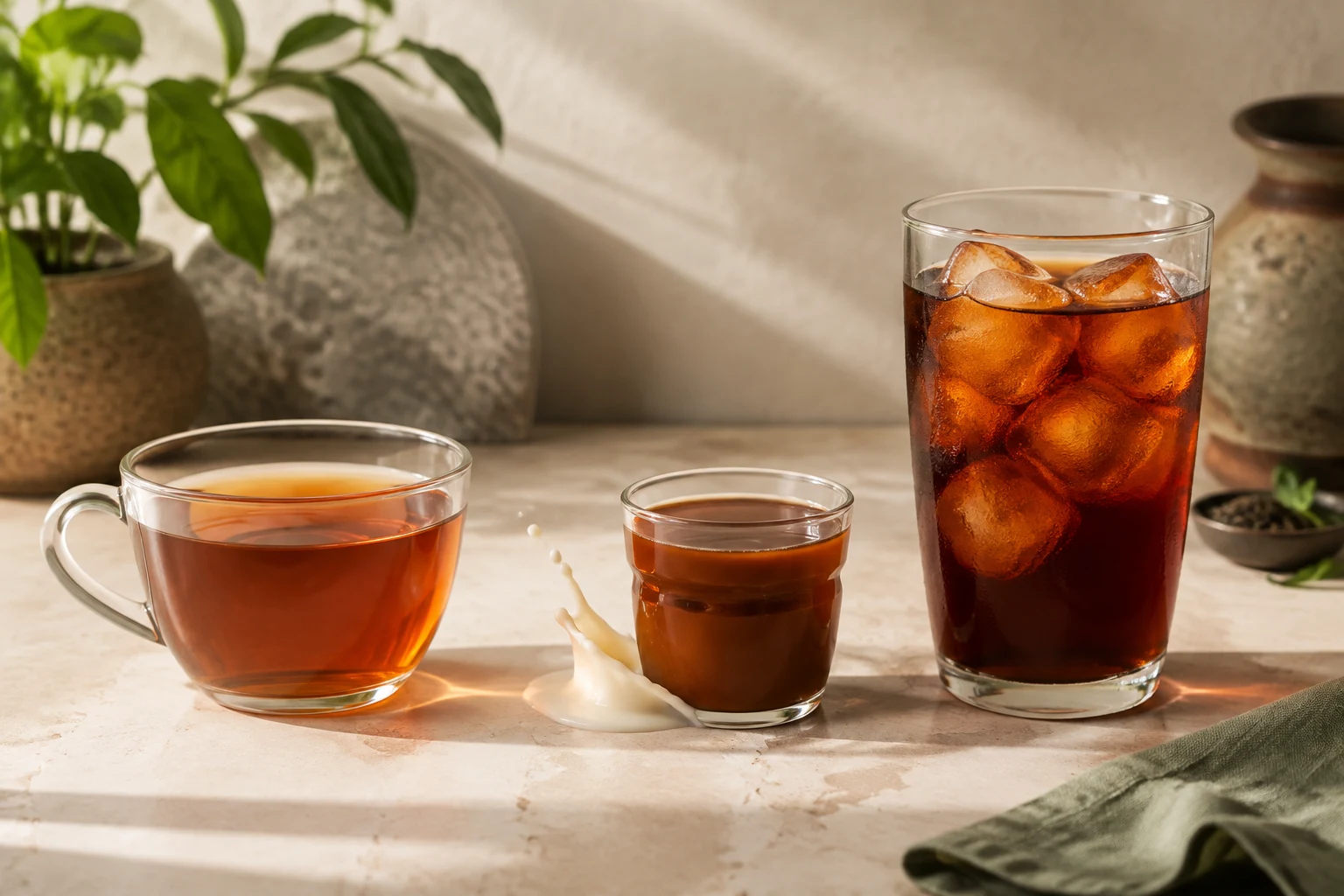
The serving job changes the useful brew strength.
A plain single-origin cup should preserve origin character, so begin at the gentler end of its timing range. A breakfast tea with milk needs concentrated body, while iced tea must account for melting ice before it is poured.
For hot-brewed iced tea, double the leaf dose, keep the normal steep time, and pour over enough ice to chill and dilute it. Extending the time produces a more astringent concentrate rather than a cleaner cold drink.
Orthodox whole leaf may give a second infusion if it is brewed again promptly with another minute added. Fine tea-bag leaf and CTC are designed for rapid one-pass extraction and rarely reward a second round.
Discard wet leaf after the brewing session, rinse the vessel, and let it dry open. Damp retained leaf is a source of stale aroma and microbial growth, not a way to preserve flavor.
Keep a simple record for unfamiliar tea
Record four variables.
Write down leaf mass, water volume, time, and whether the tea was plain or milked. Those four facts are enough to reproduce a good cup and correct a poor one without turning tea into laboratory work.
The label's recommended setting is a sensible first trial because the producer knows the leaf form. Your final setting should follow the cup, not the clock printed on the box.
A large pot should be scaled by both leaf and water, then decanted completely. Leaving the final cup around the leaves means each person receives a different extraction, even when the timer was correct at the start.
At high altitude, water boils below 100 C, so “boiling” does not describe one universal temperature.
Use a little more leaf or a pre-warmed vessel before lengthening the steep, since extra time brings tannin along with the missing strength.
Learn the flavor curve instead of one finish time
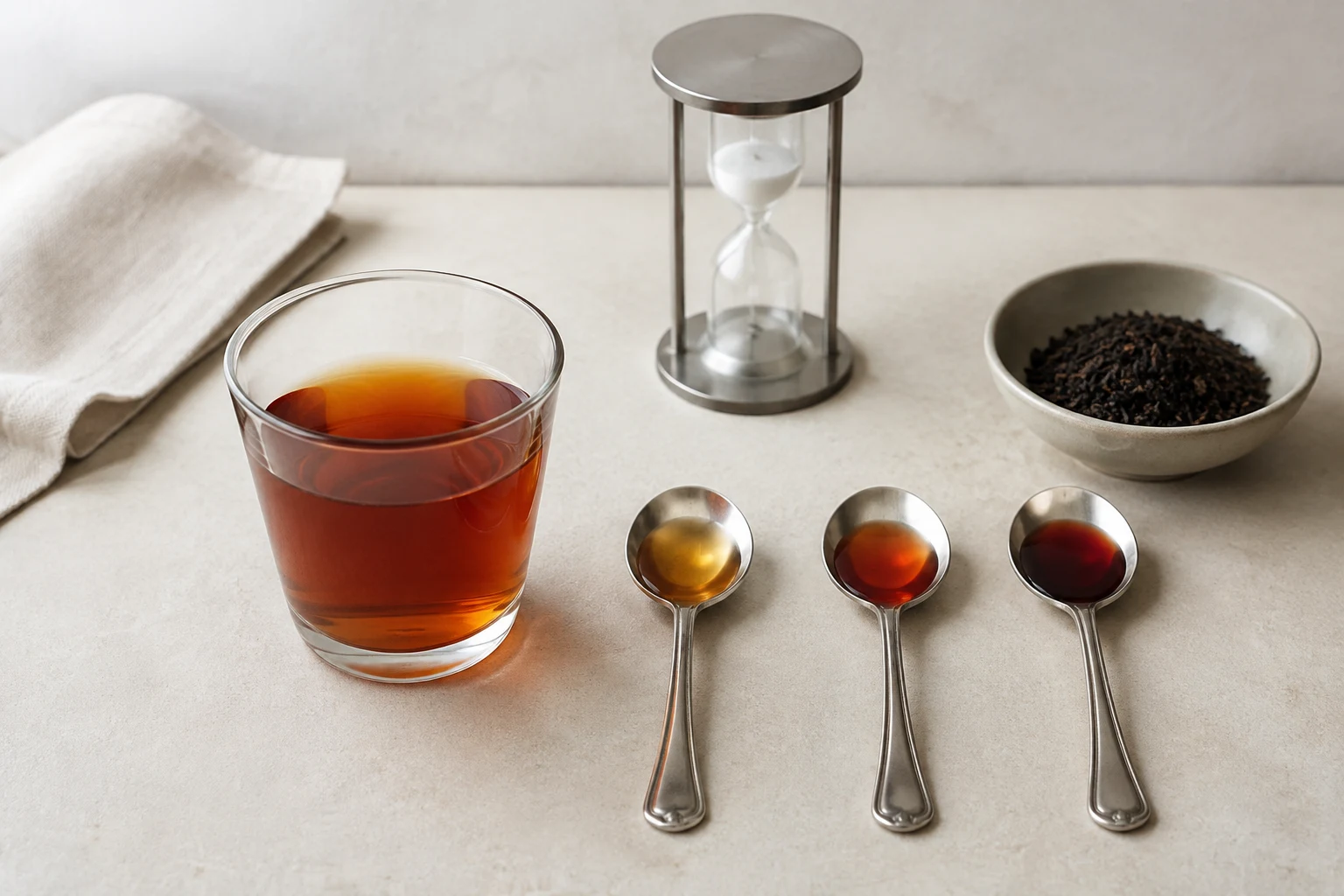
A practical black-tea extraction curve
- EarlyFragrance appears but body may still feel thin
- BalancedAroma, body, and a clean drying finish meet
- LateBitterness and persistent grip begin to dominate
- OverdoneDark color remains after the distinctive aroma has faded
Taste a new tea at intervals from the same infusion by taking a teaspoon at two, three, and four minutes. Early samples reveal aroma and brightness, while later samples show where body improves and where a drying finish begins.
The goal is not the strongest sample you can tolerate. Choose the point where the tea has enough body for its serving style and still leaves a recognizable aroma after swallowing.
Cooling changes perception, so keep each sample for a minute before deciding. Heat can hide sweetness and make a thin brew seem more forceful, while a balanced cup often becomes more expressive as it moves from scalding to comfortably warm.
Astringency is a tactile grip rather than a flavor. Some briskness gives black tea shape, especially with milk or food, but a persistent rough mouth after the aroma disappears signals that extraction has moved too far.
Bitterness is a taste and can come from over-extraction, smoke, flavoring, or the leaf itself. Separating it from astringency leads to better corrections: time often fixes grip, while water, freshness, or product choice may explain an odd bitter note.
Select the finish time from aroma, body, and afterfeel together. Color is useful supporting evidence but cannot make that decision alone.
Keep serving temperature from rewriting the brew
A thin cup cools rapidly and may seem under-extracted because it loses aroma before reaching the table. Pre-warm the serving cup, make only the volume you need, and cover a pot between pours without leaving leaves inside.
Reheating brewed tea drives off aroma and can make tannin more obvious as water evaporates. If a batch must wait, strain it completely into a clean insulated vessel rather than returning it to the kettle or keeping it on a hot plate.
Milk lowers temperature immediately. Warm it gently for a large breakfast serving, or use a small cold splash when the tea is concentrated and hot enough to remain comfortable.
A cold drink needs deliberate concentration because ice supplies water as it melts. Brew with additional leaf and normal time, chill quickly, and record both brewed volume and ice rather than judging the concentrate in isolation.
Good temperature management protects the extraction after the leaf is gone. It cannot repair a poor brew, but it prevents the serving vessel, milk, or waiting time from undoing one.
Account for blends, flavorings, and decaffeinated leaf
Breakfast blend | Let the smallest leaf particles set the first tasting point
Earl Grey or scented tea | Use aroma as well as color; prolonged heat drives off volatile flavoring
Fruit or spice blend | Allow bulky inclusions room while watching fine tea fragments for dryness
Decaffeinated black tea | Taste early because processing can leave a lighter body and a shorter useful window
A general black-tea time assumes one leaf form sitting in the water, and a blend, a scented tea and a decaffeinated leaf each break that assumption in a different place, which is why the packet in front of you decides more here than the category name does.
Breakfast blends are designed for consistency and milk, and they often contain several particle sizes. Taste them according to the finest visible leaf because those fragments reach dryness first.
Earl Grey and other scented black teas carry volatile oils that can fade or turn perfumed under a long hard extraction. Brew the black-tea base normally, then shorten time if the flavoring becomes sharp or soapy.
Decaffeinated leaf often tastes lighter because processing removes or changes aroma along with caffeine. Increase dose before increasing time, which preserves what aroma remains without making the finish coarse.
Spiced and fruit-flavored blends may contain large pieces that make a spoon look generous while contributing little tea mass. A scale is especially useful here, though the producer's dose remains the best first trial because the blend was balanced by weight.
Loose leaf and tea bags are tools rather than quality rankings. A well-made bag gives a fast dependable mug; it simply needs earlier removal because its small particles expose more surface area.
Clean the vessel without leaving another flavor behind
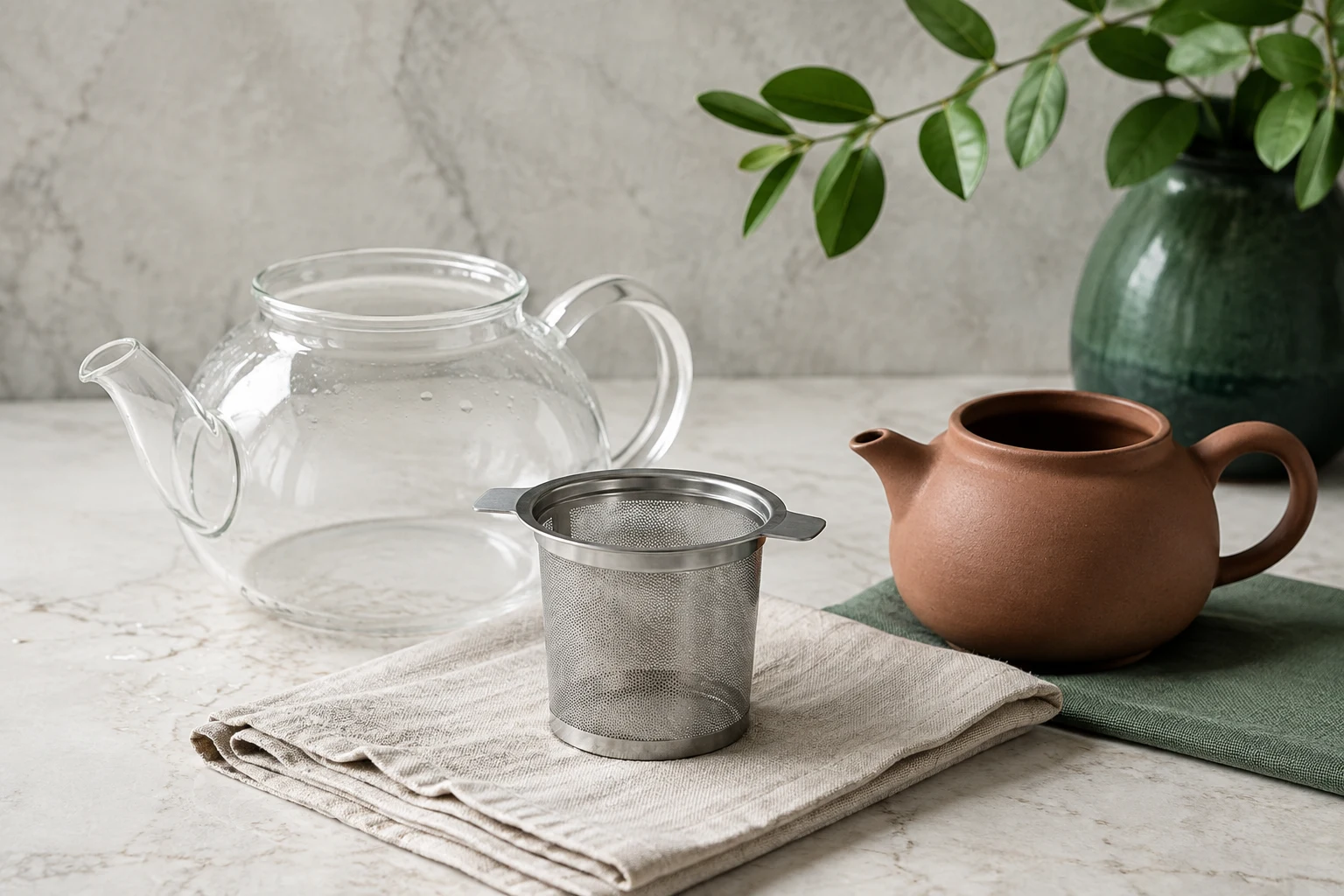
- - Rinse mesh until no trapped particles remain
- - Remove oily milk residue from lids and spouts
- - Descale a kettle that leaves mineral film in every cup
- - Let the vessel dry open instead of trapping damp odors
Tea tannins build a brown film on glazed pots, infusers, and travel mugs. A thin stain is not dangerous by itself, but old aromatic oils and trapped leaf fragments can flatten a delicate fresh brew.
Rinse loose leaf immediately, open the vessel to dry, and clean mesh where fragments collect. Strongly perfumed detergent can cling to porous clay or silicone seals, so use an unscented product and rinse thoroughly.
Reserve unglazed clay for one compatible tea style because it absorbs aroma. Glass, porcelain, and stainless steel are easier choices when the same vessel moves between smoky, floral, and unflavored black teas.
A thermos keeps tea hot but also holds aroma against plastic, rubber, and old residue. Brew and strain before filling it rather than placing leaves inside for a commute-long extraction.
A clean neutral vessel lets a brewing adjustment remain visible. Otherwise a shorter steep can still taste stale because the flavor came from yesterday's tea rather than today's leaf.
Storage matters once sound technique still produces a faded drink. The guide to storing loose-leaf tea covers air, light, heat, moisture, and odor transfer.
Black tea method
- Makes
- 1 cup, about 200 ml
- Water temp
- 95 to 100 C / 203 to 212 F for most black tea
- Total time
- 7 min
What you need
- 2 to 3 g black tea
- 200 ml fresh water
- Milk, sugar, or lemon, optional
Equipment
- Kettle
- Scale or measuring spoon
- Infuser or teapot
- Timer
Method
- IdentifyCheck whether the leaf is whole, broken, CTC, or fine.
- HeatBring fresh water near a boil.
- DoseMeasure leaf and water.
- SteepCover and begin tasting according to particle size.
- StrainRemove all leaf when aroma and body balance.
- AdjustUse more leaf rather than excessive time for a stronger cup.
Common questions
How long should black tea steep?
Taste fine tea-bag leaf from about 90 seconds, broken leaf from two minutes, and whole leaf from three. Most cups finish within five minutes, but the leaf form matters more than a universal number.
Should black tea be made with boiling water?
Most fully oxidized black tea works well at 95 to 100 C. Delicate first-flush Darjeeling is a notable exception and often shows more aroma at a lower temperature.
How do you make black tea stronger without bitterness?
Increase the leaf dose while keeping a moderate contact time. Extending an already complete extraction adds more drying tannin along with strength.