What Is Pu-erh? The One Tea That Is Genuinely Fermented
Pu-erh is the one tea where the word fermented is accurate. Microbes act on the leaf over months or decades, which is why it is the only tea that is deliberately aged.
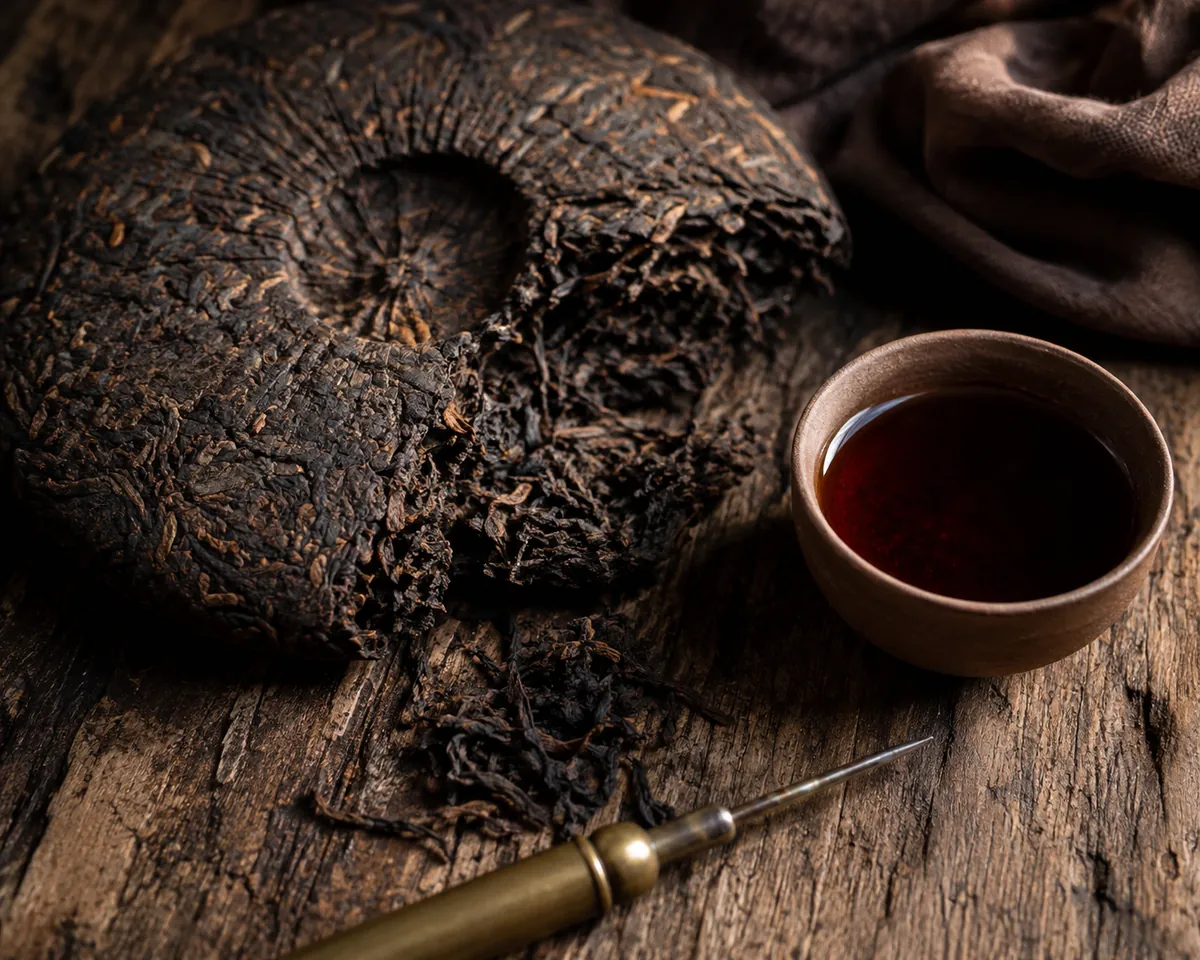
Pu-erh is tea from Yunnan that has undergone microbial fermentation. Every other tea on this site is oxidised, which is an enzymatic reaction between the leaf and oxygen, and black tea sets that reaction out in full.
Pu-erh is the exception where living organisms genuinely act on the leaf, and that single difference is why it improves with age when nothing else does.
Pu-erh at a glance
- Where from
- Yunnan, from large-leaf varietals rather than the usual cultivars
- Two types
- Sheng, raw and slowly aged. Shou, wet-piled and ready now
- What acts on it
- Microbes, over months or decades, rather than an enzyme over hours
- Sold as
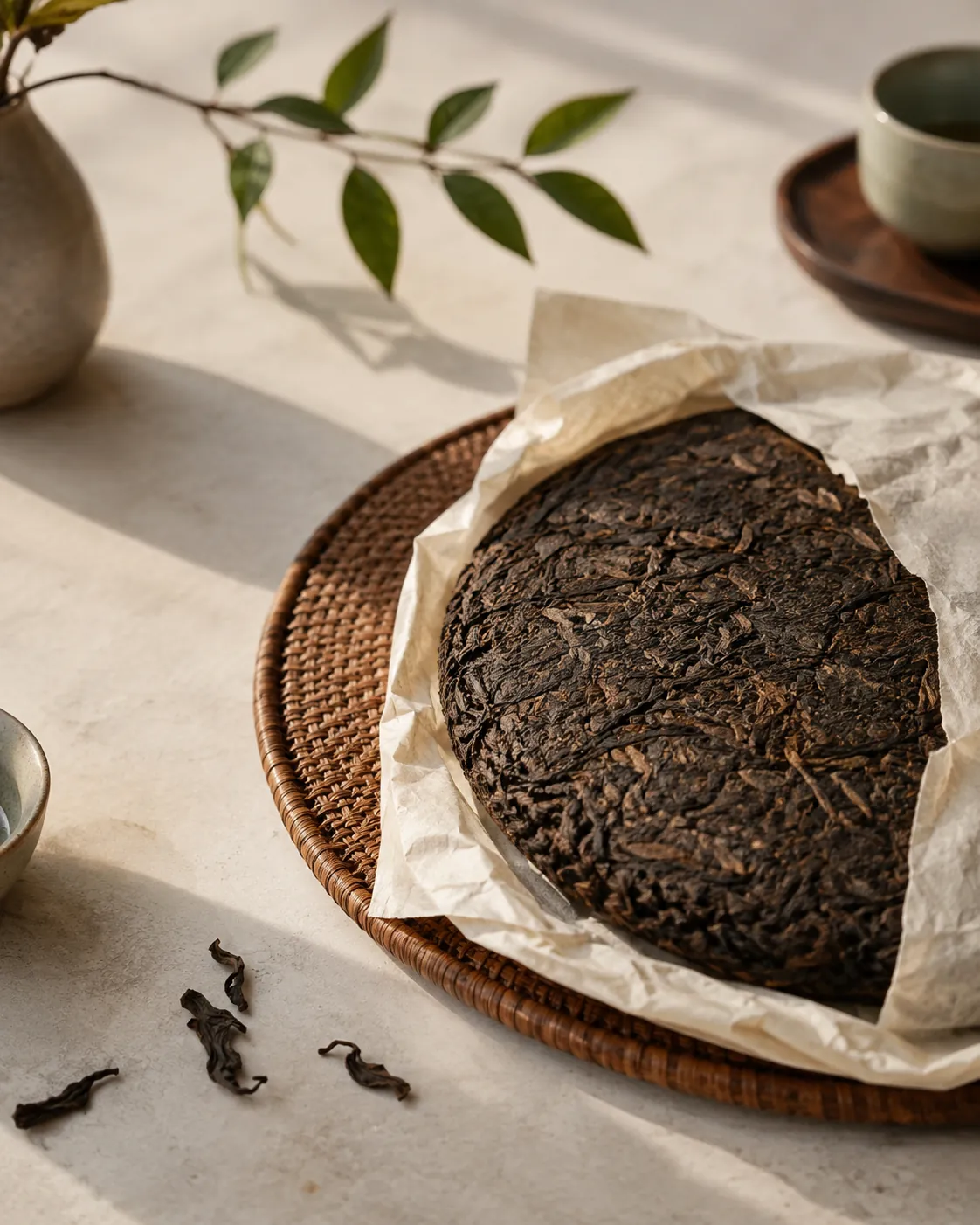
- Pressed cakes, bricks and nests, most often a 357 g disc
- Water
- Full boiling, throughout
- Leaf
- 5 g per 100 ml for a gongfu session, after a rinse
- Storage
- Paper and airflow. Sealing it airtight stops it developing
Sheng, shou, and where fermentation stops being a metaphor
The word fermented gets used loosely across the whole tea shelf and it is only accurate here.
An oxidised tea is one where an enzyme in the leaf met oxygen after the cell walls broke. Nothing living is involved, the reaction finishes when heat or dryness stops it, and the tea is then done.
Pu-erh is fixed like a green tea and then handed to microbes, which never quite stop.
| Sheng, raw | Shou, ripe | |
|---|---|---|
| Made by | Pressing young leaf, then decades of slow ageing | Accelerated fermentation over 45 to 60 days |
| Introduced | Traditional | 1973, to imitate aged sheng quickly |
| Young flavour | Bitter, astringent, grassy, sharp | Already smooth, earthy, dark |
| Aged flavour | Deep, sweet, complex. Improves for decades | Changes little after production |
| Colour | Pale gold when young, darkening with age | Very dark brown-red from the start |
| Price | Rises steeply with age | Stable and generally low |
Shou exists because sheng takes thirty years. The wet-piling process, wo dui, heaps damp leaf under controlled conditions so that microbes do in weeks what a warehouse would otherwise do in decades.
A cheap pu-erh is almost always shou, and there is nothing wrong with that. It is a finished product bought to drink rather than an unfinished one bought to keep.
That is also what makes this the only tea with a vintage on the wrapper. A green tea three years old is a stale green tea, while a sheng cake three years old has barely started, and how pu-erh tastes is a description of a moving target rather than a fixed one.
The incomplete kill-green, and why it matters for decades
Both types start out identically and separate at a single step, which is the one worth understanding before anything about ageing makes sense.
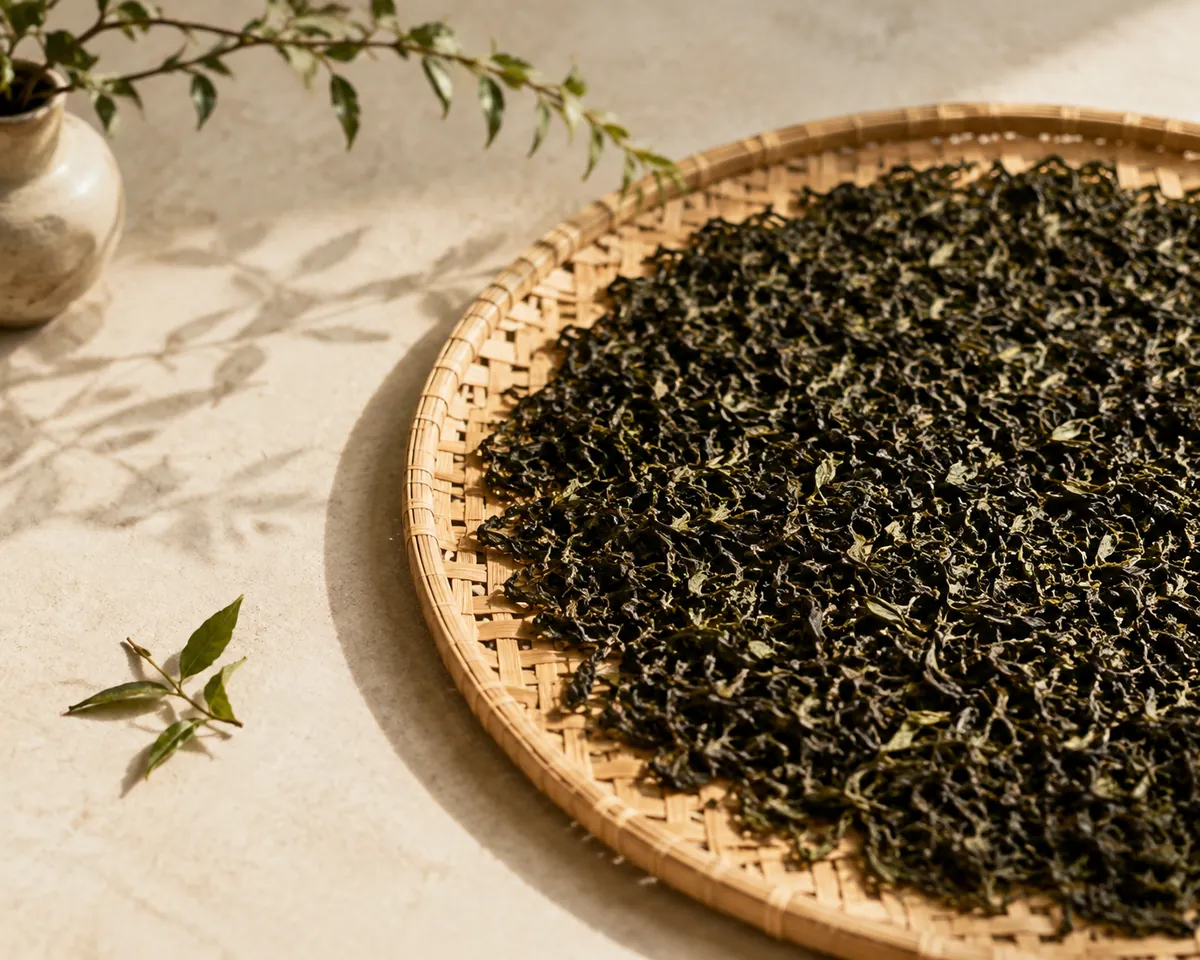
From leaf to cake
- PluckLarge-leaf Yunnan varietals, which are more robust than the cultivars used for green tea.
- Kill-greenPan-firing halts oxidation, exactly as for a green tea, but deliberately less thoroughly.
- RollThe leaf is bruised and shaped, breaking cell walls.
- Sun-dryDried in open air rather than by machine. The result is maocha, the raw material for both types.
- DivergeMaocha is either pressed as it is, becoming sheng, or wet-piled first, becoming shou.
The incomplete kill-green is the whole trick. A sencha is fired or steamed until its enzymes are dead, and pu-erh is fired just far enough to stop oxidation running away, which leaves enough enzymatic and microbial activity alive to keep working for decades.
Sun-drying protects the same thing. Machine drying at a higher temperature would finish what the pan started and leave a tea that tastes fine now and will never become anything else, which is the commonest way a cheap cake is spoiled before it is even pressed.
Wo dui, the wet piling that produces shou, is a controlled compost heap and nothing more romantic than that. Damp maocha is piled a metre deep, covered, turned periodically and watched for temperature across forty-five to sixty days.
Done badly it gives the muddy, fishy character that shou is criticised for, and the fault is unfixable afterwards. Making pu-erh covers where the process can go wrong at each stage.
Cakes, bricks and nests, and why any of it is pressed
Compression is a storage decision rather than a packaging tradition.
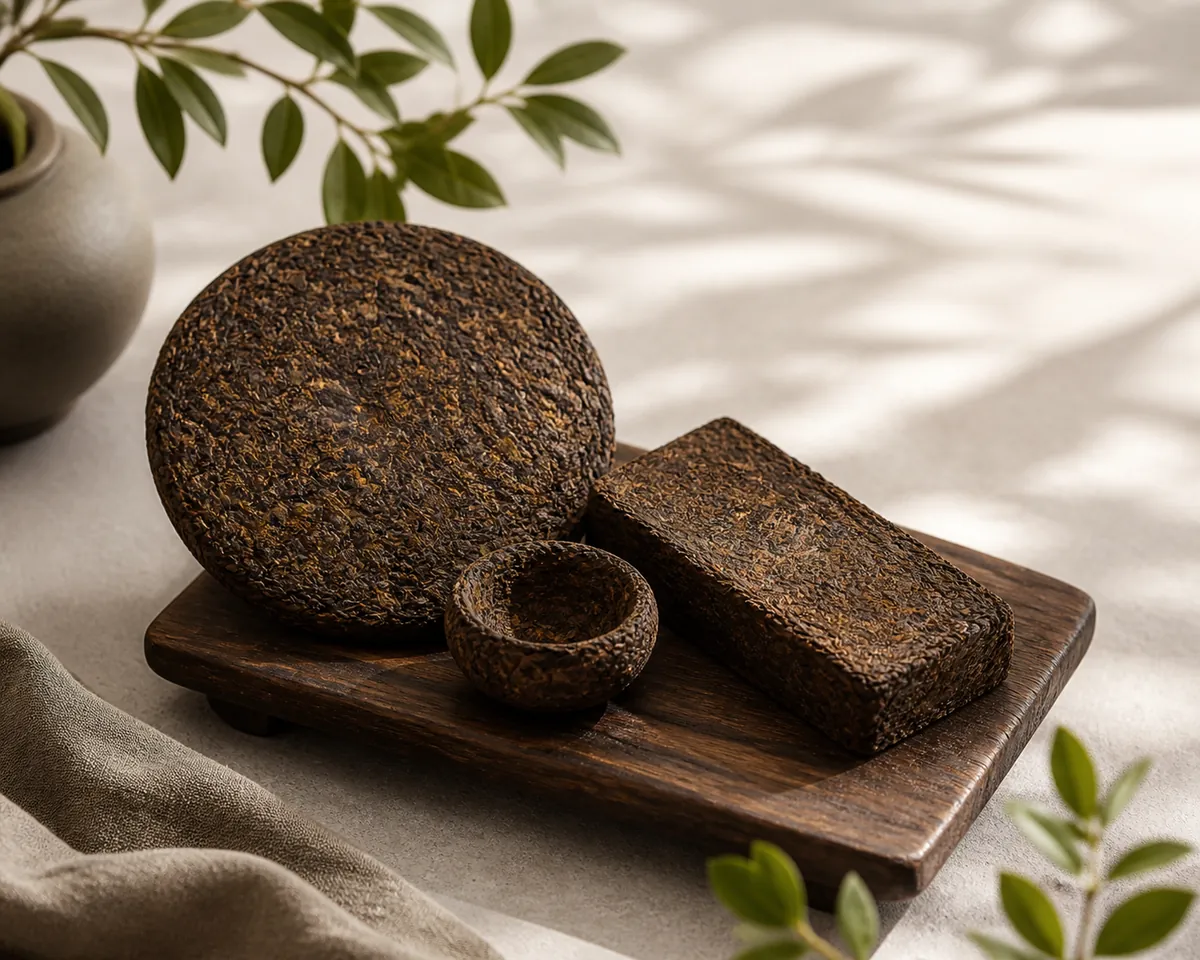
A loose pile of leaf ages quickly and unevenly, because every surface meets the same air at the same time. A pressed cake ages slowly and from the outside in, and that gradual front working inward is what produces the layered development sheng is valued for.
| Form | Shape | Typical weight | Note |
|---|---|---|---|
| Bing cha | Round disc | 357 g | The standard. Seven traditionally wrapped in a tong |
| Tuo cha | Small bowl or nest | 100 or 250 g | Denser, and harder to break apart |
| Zhuan cha | Brick | 250 or 1000 g | Historically for transport, often lower grade |
| Mini tuo | Single-serving nest | 5 to 8 g | Convenient, usually shou, usually mediocre |
| Loose | Unpressed maocha | Any | Ages faster and less evenly than a pressed cake |
The 357 g disc is not an arbitrary number. Seven cakes to a bamboo-wrapped tong made a unit of roughly 2.5 kg, which suited the horse caravans that carried tea out of Yunnan, and the format outlived the caravans by a century.
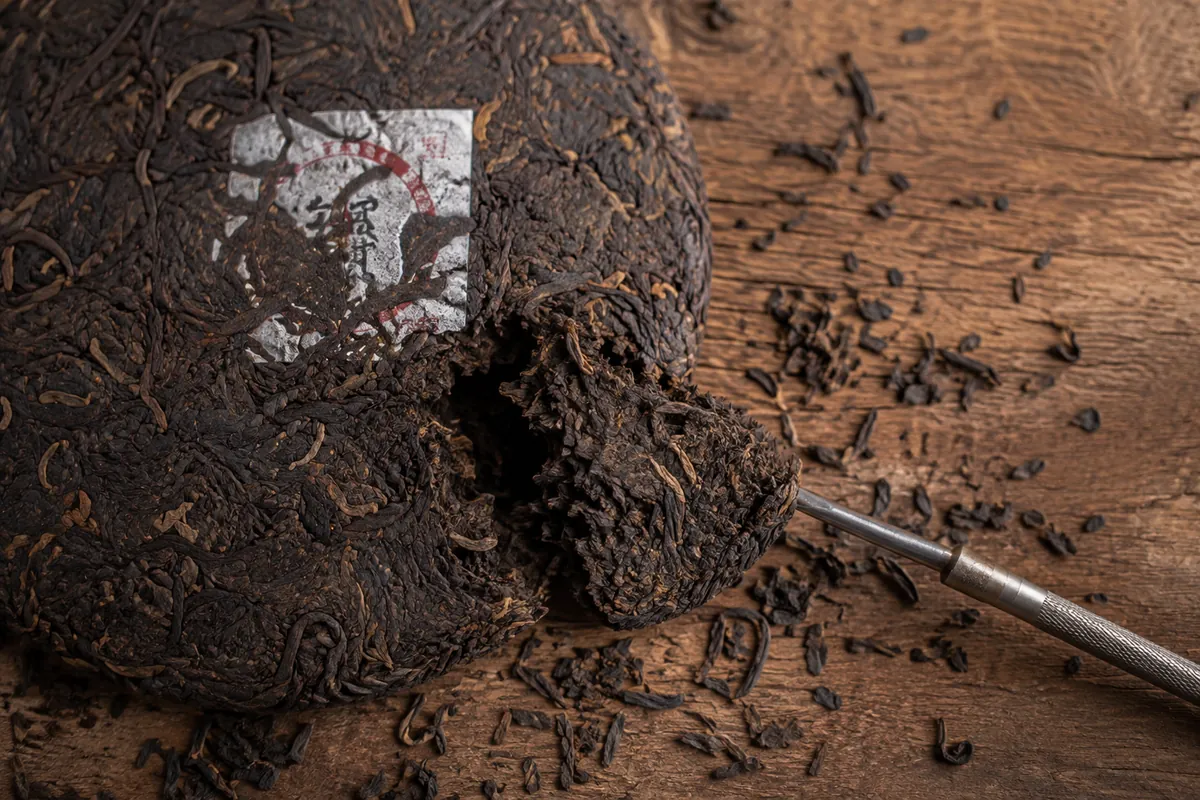
Compression also means the cake has to be opened, which is a skill in itself and the first place a good tea gets damaged at home.
Work in from the edge or from the dimple on the back, sliding the pick parallel to the layers rather than stabbing down through them.
The rinse, and why it is not optional
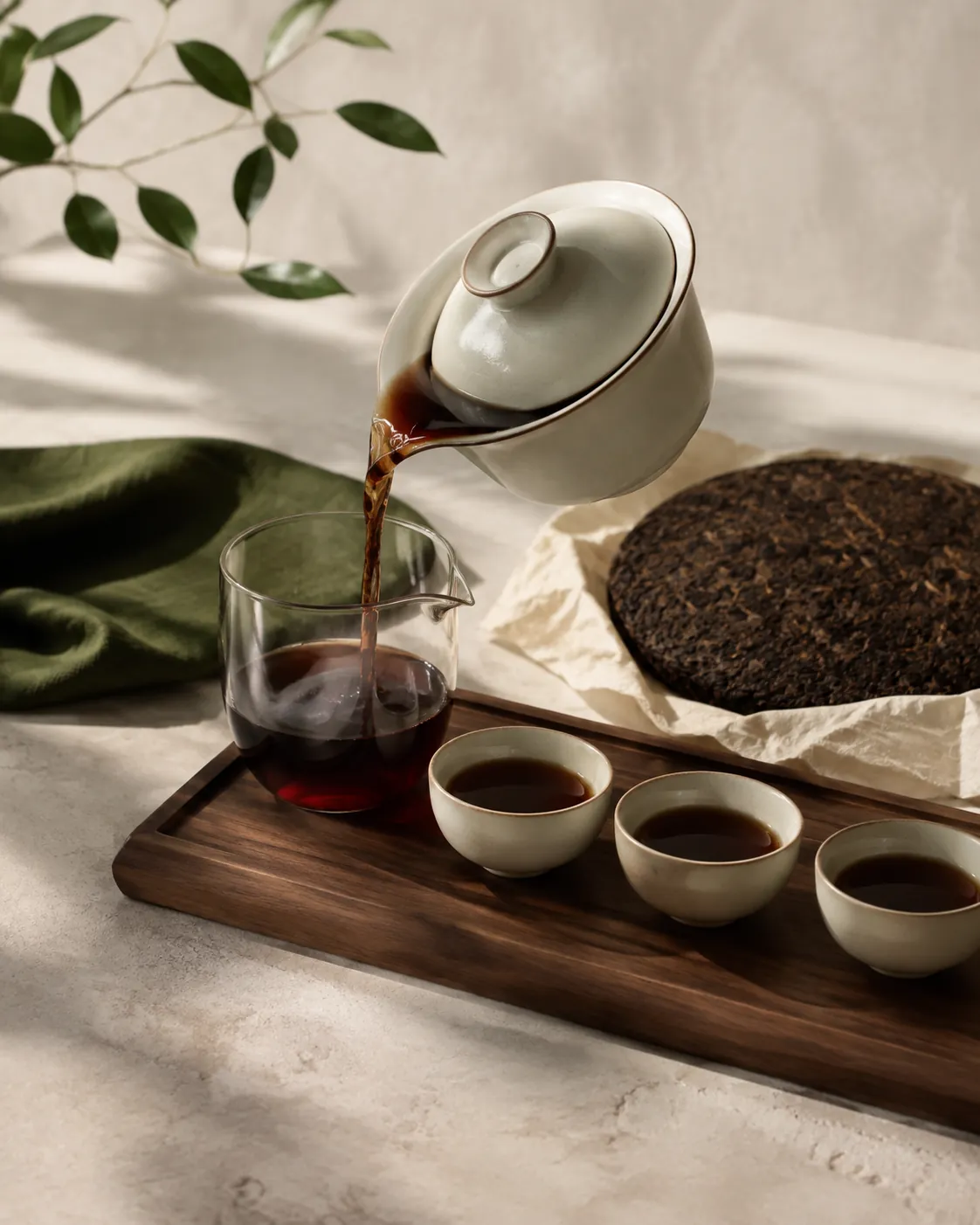
Pu-erh is brewed harder than anything else on this site, and the first pour is thrown away.
Gongfu, which suits it best
- Leaf
- 5 g per 100 ml
- Water
- Full boiling, 100 C
- Rinse
- One quick 5 second steep, discarded
- First steep
- 10 to 20 seconds
- Later steeps
- Add 5 to 10 seconds each time
- Infusions
- Eight or more from good leaf
The rinse does two jobs at once. It washes the dust off leaf that has been pressed, stored and levered apart, and it wakes compressed leaf up so the first real steep is not thin.
Boiling water is correct here and would ruin a green tea outright, which is the clearest illustration of what the microbial stage has done to the leaf. Shou in particular will not open at all below boiling, and steeping temperature marks this out as the one style where the hottest water available is simply right.
Shou usually wants two rinses rather than one. Wet piling leaves more dust behind, and the first pour off a compressed ripe cake is often visibly muddy, while a sheng needs one and a very old sheng sometimes none at all.
Water chemistry matters more than most drinkers expect at this dose. Hard water flattens the sweetness that ageing produced, which is the same effect brewing water describes for every other style, magnified by the leaf-to-water ratio.
How much caffeine is in pu-erh
Age does not touch the figure, which surprises people who expect a mellow old tea to be a gentle one.
Caffeine is a stable compound, so a thirty-year-old cake carries broadly what it carried on the day it was pressed. What changed over those decades was the astringency and the bitterness, which is why an aged sheng tastes soft while measuring much the same.
The wide range comes from how the tea is brewed rather than from what it is. A single small gongfu cup carries far less than the table suggests, and a session running through eight infusions of 5 g totals a good deal more, in the same way caffeine by brewing method describes for coffee.
Anyone counting should count cups rather than sessions, and pu-erh caffeine works through the arithmetic of a full table.
What pu-erh tastes like at each stage of its life
Describing pu-erh as one flavour is misleading, because the two types taste nothing alike and one of them keeps moving.
Young sheng to aged sheng
- 1 to 3 yearsSharp, bitter, grassy, aggressively astringent
- 5 to 10 yearsSoftening. Stone fruit and honey emerging
- 15 to 20 yearsSmooth, sweet, camphor and dried fruit
- 30 years and beyondDeep, mellow, almost no astringency left
Young sheng is the one that catches buyers out. It is genuinely bitter and aggressively astringent, closer to an unripe fruit than to a finished tea, and sharper than green tea bitterness ever gets, and a great deal of it is sold to people who assumed the word aged applied to the cake in front of them.
Shou runs on a different axis entirely. It is earthy and woody from the day it leaves the pile, often described as forest floor or damp wood, and it is smooth immediately rather than eventually.
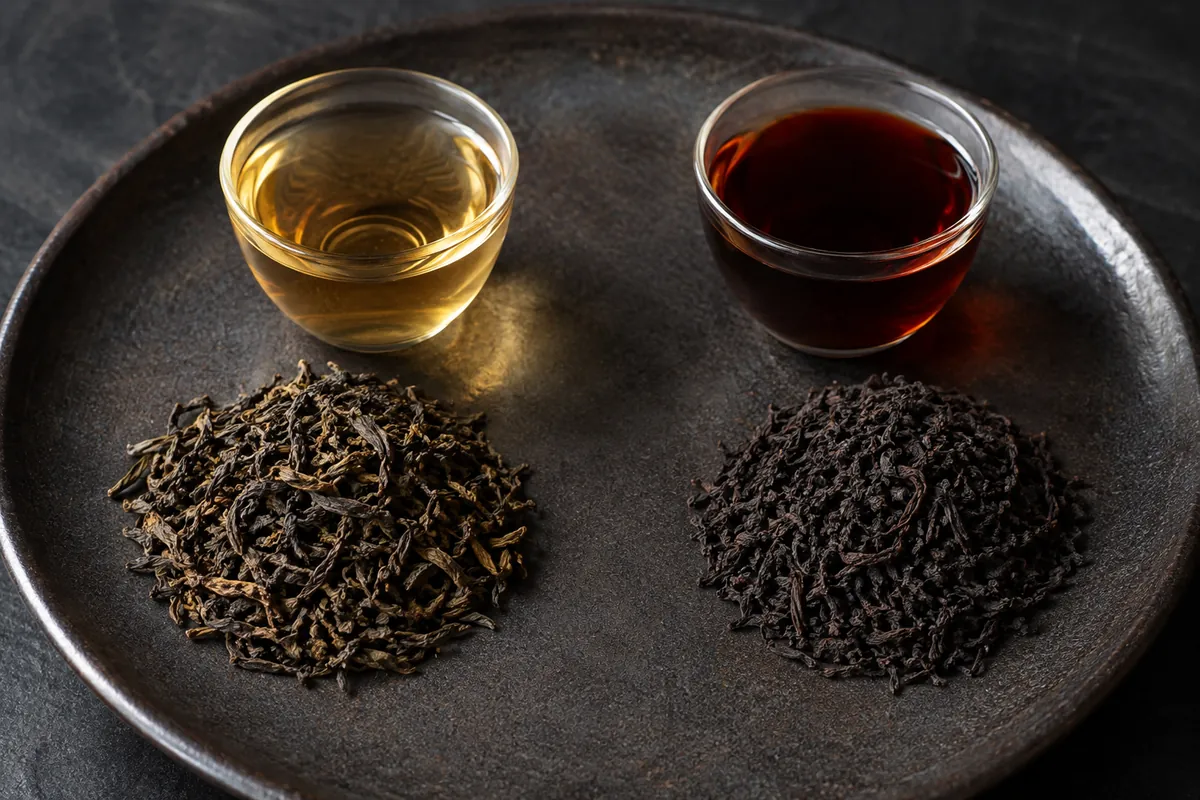
Badly made shou tastes of the pile it fermented in, and that muddy, faintly fishy note is the main quality risk across the whole ripe category. A first cup of it puts a lot of people off pu-erh permanently, which pu-erh problems tries to head off.
Storing it wrong by storing it too well
This is the only tea you can ruin by looking after it properly.
Sealed airtight, a cake stops developing altogether. It wants some airflow, moderate humidity and a stable temperature so the microbes stay slowly active, which is the direct opposite of the advice in storing loose-leaf tea for every other style.
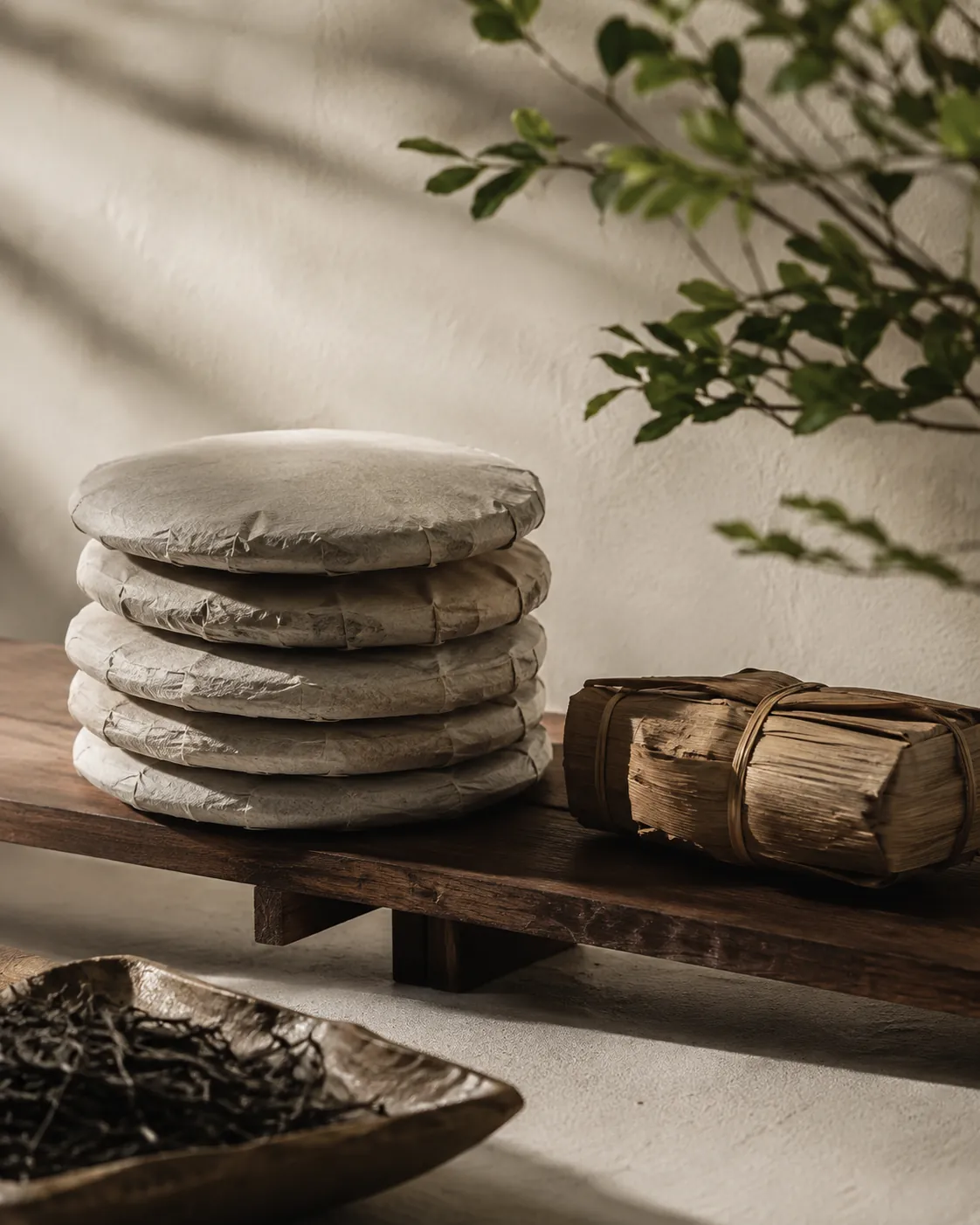
- Keep cakes in their paper wrapper, inside a cardboard box or unglazed clay jar.
- Never seal it airtight and never refrigerate it.
- Keep it away from strong smells, which it absorbs readily and permanently.
- Aim for stable humidity. Very dry storage stalls it, and very damp risks mould.
- Store shou and sheng apart, since shou is strongly aromatic.
Aged white tea cakes are kept much the same way, and aged oolong is the third member of that small club. Odour absorption is the commonest way any of them is quietly destroyed.
A disc kept near spices, a kitchen bin or a strong cleaning product takes that smell up and does not release it, and no amount of rinsing gets it back out.
| Dry storage | Traditional, or wet | |
|---|---|---|
| Humidity | Around 55 to 65 per cent | 70 to 85 per cent |
| Where | Taiwan, mainland China, Europe | Historically Hong Kong and Malaysia |
| Speed | Slow. Decades to soften | Much faster |
| Result | Bright, clean, retains fruit and florals | Deeper, earthier, camphor and wood |
| Risk | Stalls entirely if too dry | Mould, and a musty taste if poorly managed |
Neither approach is the correct one, and they produce different teas from the same cake. A 1998 disc stored dry and the same disc stored traditionally taste so unalike that experienced drinkers can usually separate them blind, which is why storage history matters more than the year.
A seller who can say where a cake has spent its life is telling you more than one who prints only a date, and storing pu-erh covers what a domestic shelf can realistically manage.
Buying a first cake without buying a problem
An investment market sits on top of this tea, and it brings problems no other style has.
Age claims are unverifiable and frequently false. A wrapper printed with 1998 proves nothing about when the leaf was pressed, and counterfeit wrappers of famous factories are common enough that the paper is the least reliable part of the purchase.
Buy shou to drink
Cheap, consistent, ready now. The sensible entry point.
Buy young sheng to drink
Only if you like sharp, bitter tea. Many people do not.
Buy sheng to age
A long commitment with real storage requirements attached.
Ignore age claims
Unless the seller is one you already trust on other grounds.
Buy samples first
Cakes run 100 to 400 g, which is a great deal of tea to dislike.
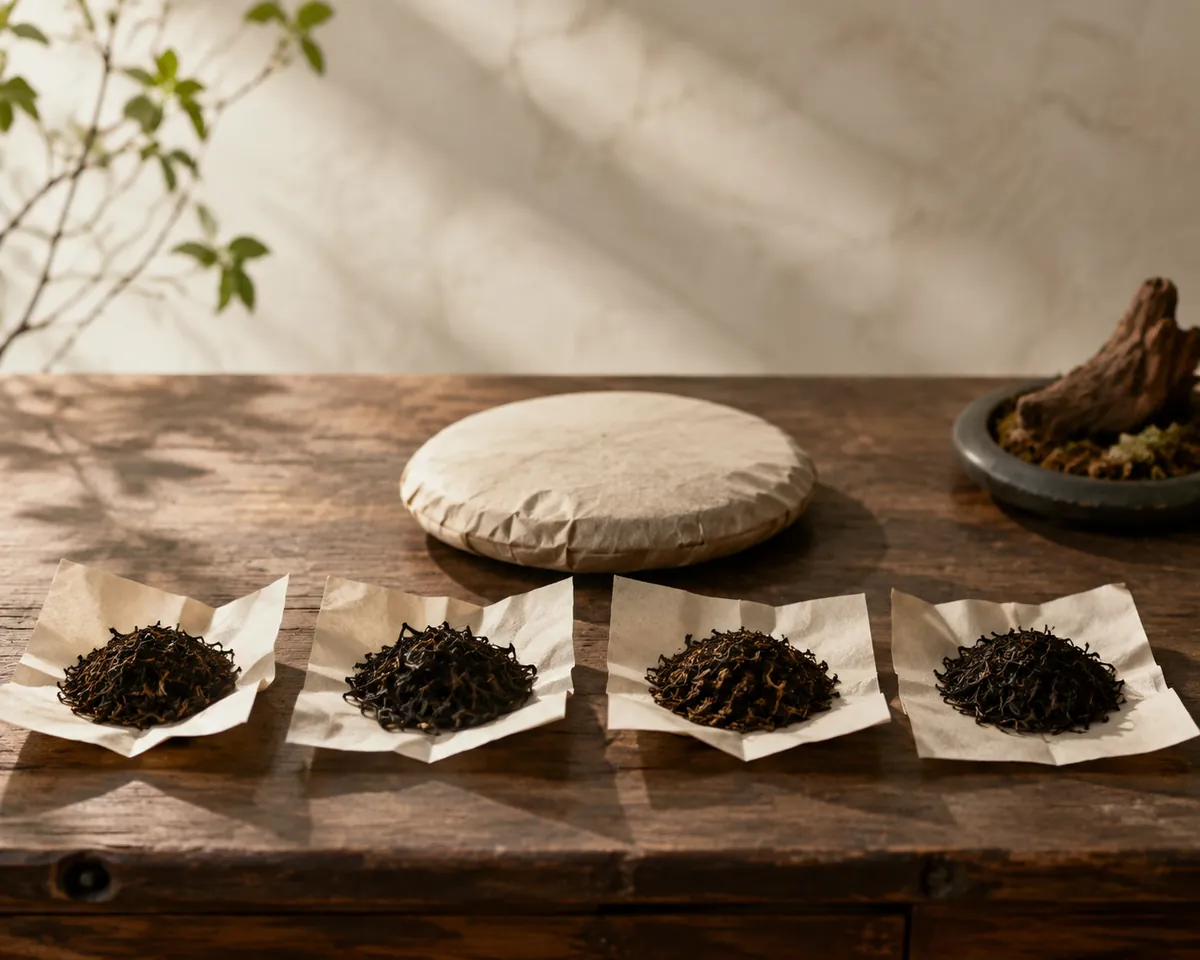
Samples are the answer to almost all of it. Most specialist sellers break 25 g portions off a cake, and four of those cost less than one disc while teaching a great deal more about what you actually like.
- 25 g samples first, from a seller who states the year and the factory.
- One shou and one young sheng, tasted side by side, before buying any cake.
- Avoid mini tuo cha, which are convenient and almost always poor.
- A cheap 7572 is a legitimate benchmark for shou and widely available.
- Buy a cake only once a sample has told you what you are buying.
Start with shou rather than sheng, whatever the enthusiast forums say. Ripe pu-erh is finished, consistent and inexpensive, and it answers the only question that matters at the beginning, which is whether you like the category at all before any question of ageing arises.
Reading a wrapper
Four printed digits carry more information than the rest of the paper put together, and decoding them is the main practical skill in buying older cakes.
The four-digit recipe number
- First two digits
- The year the recipe was created, not the year this cake was made
- Third digit
- The grade of leaf, where lower is younger and more tender
- Fourth digit
- The factory code
- 7542
- A 1975 recipe, grade 4 leaf, from factory 2, Menghai. The most famous sheng blend
- 7572
- The shou counterpart from the same factory, and the benchmark ripe cake
A recipe number names a blend that is produced every single year, so 7542 is a specification rather than a particular tea. A 2005 7542 and a 2015 7542 are different cakes made to the same instructions, and their prices are not remotely comparable.
Counterfeit wrappers are common on exactly the recipes worth counterfeiting. For anything expensive the seller's reputation is worth more than the printing, and buying a sample before a cake remains the only real protection available to a buyer at a distance.
How a session runs, and what it needs
Ten steeps from one charge of leaf is a different experience from one cup, and the equipment follows from the method rather than from ceremony.
A vessel that empties fast
Short repeated steeps need something that drains completely, which is what a gaiwan does and a mug infuser does not.
A fairness pitcher
Ten-second steeps vary sharply between the first of a pour and the last. Decanting evens that out.
Boiling water throughout
Unusual among teas, and one of the few cases where the hottest water available is correct.
The original wrapper
Between sessions the leaf goes back into paper, not into a sealed tin.
A small clay pot works as well as porcelain and becomes dedicated to pu-erh, since clay absorbs and will carry a shou across into anything brewed in it afterwards. A gaiwan stays neutral and is the easier first choice for that reason.
Pouring accuracy matters less than it does for a delicate tea, so a gooseneck kettle is a convenience here rather than a requirement.
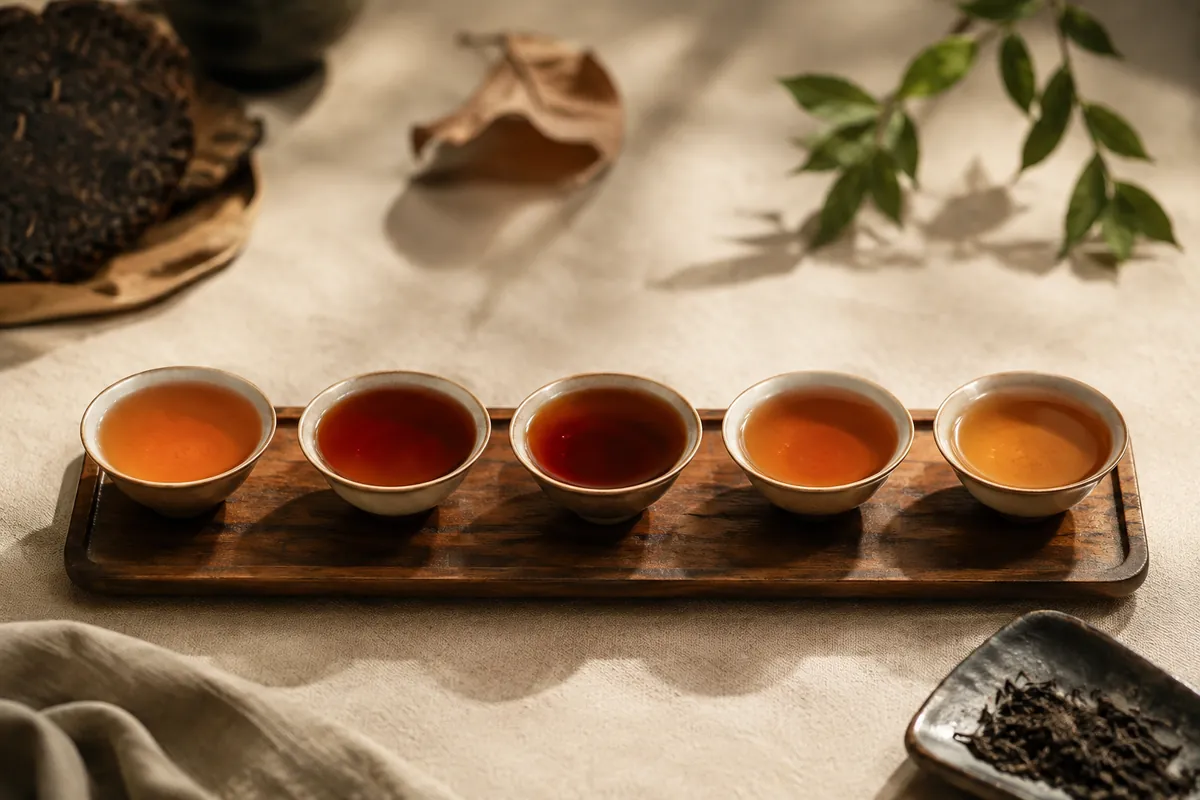
The arc across a session is fairly consistent once you know to expect it. The first two infusions after the rinse are the sharpest and the least representative, and a young sheng can be genuinely aggressive there while the leaf is still opening.
Steeps three to six hold most of what the cake has to offer. That is the stretch to judge a tea on, and where a good pu-erh separates itself from a cheap one clearly enough that no notes are needed.
From the seventh onward it thins and sweetens, and the woody or camphor notes come forward as everything else recedes. A session usually ends because the tea has flattened rather than because anybody decided to stop, and the leaf goes back into its paper afterwards rather than into a tin.
Common questions
What is the difference between sheng and shou pu-erh?
Sheng is raw, pressed young and aged slowly over years or decades, starting bitter and becoming sweet and complex. Shou is ripe, put through an accelerated fermentation over 45 to 60 days since 1973, and is smooth and earthy from the start.
Is pu-erh really fermented?
Yes, genuinely. Microbes act on the leaf, unlike every other tea where so-called fermentation is actually enzymatic oxidation with oxygen. That is why pu-erh is the only tea that improves with decades of age.
How should pu-erh be stored?
Not airtight. It wants some airflow, moderate humidity and stable temperature so fermentation continues slowly. Keep cakes in their paper wrapper in a box or clay jar, away from strong smells, which it absorbs permanently.