What Is Black Tea? The Same Leaf, Taken All the Way Through
Black tea is the same leaf as green tea, taken all the way through the reaction green tea is made to prevent. That single difference sets its colour, its strength, and its tolerance for boiling water and milk.
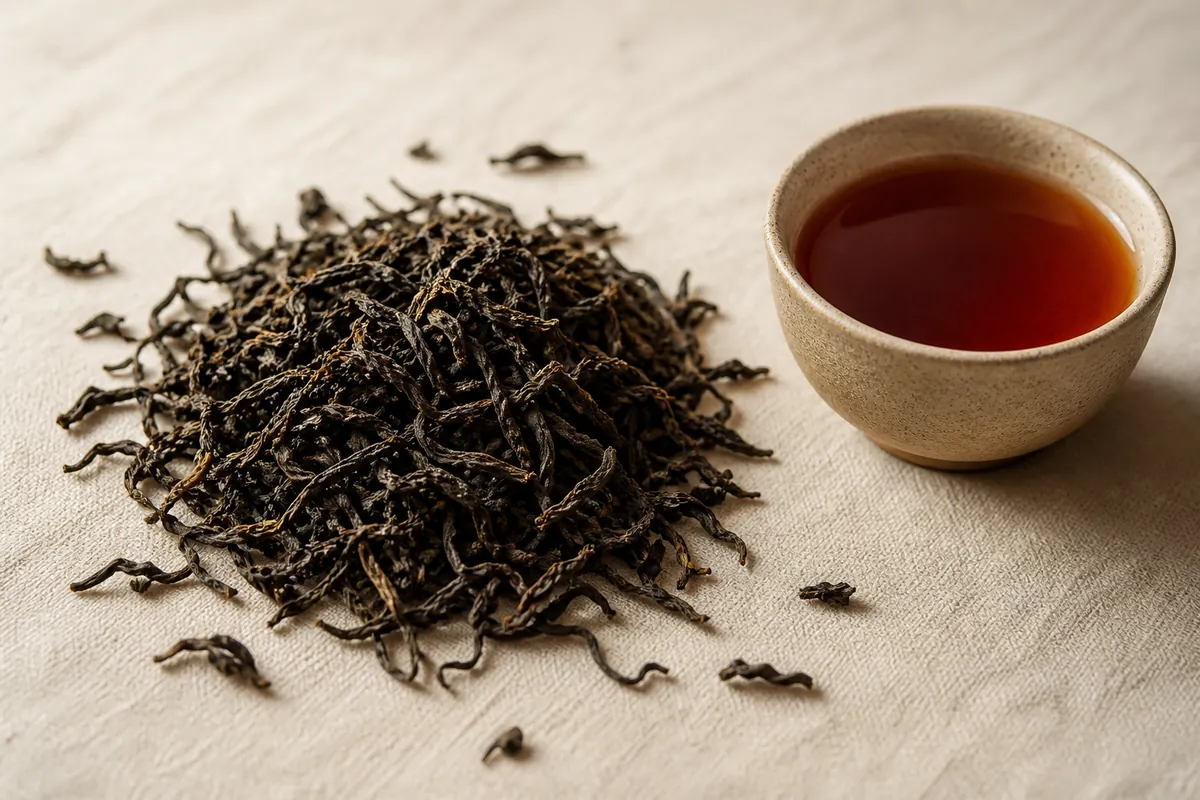
Black tea is made from Camellia sinensis, the same species behind green, white and oolong tea. What separates it is that the leaf is allowed to oxidise completely before drying.
Green tea is defined by preventing that reaction. Black tea is defined by finishing it, which makes this the page where the reaction itself is set out for the whole family.
Black tea at a glance
- What it is
- Camellia sinensis leaf carried to full oxidation, then dried
- Water
- 95 to 100 C, effectively boiling
- Steep
- 3 to 5 minutes for orthodox leaf, closer to 2 for a bag
- Leaf
- 2 to 3 g per 200 ml
- Caffeine
- Around 47 mg per 8 fl oz cup, USDA figure
- Keeps
- Two to three years sealed, opaque and away from heat
- Milk
- The one true tea that routinely takes it
The one reaction the whole tea family is sorted by
Every style of tea on this site is a different answer to a single question, which is how far the leaf is allowed to oxidise before somebody stops it. Black tea is the style that lets the reaction run all the way out.
It starts as mechanical damage. Rolling or crushing breaks the cell walls, which puts an enzyme called polyphenol oxidase in contact with oxygen, and that enzyme rebuilds the leaf's catechins into larger compounds.
Where each style stops the reaction
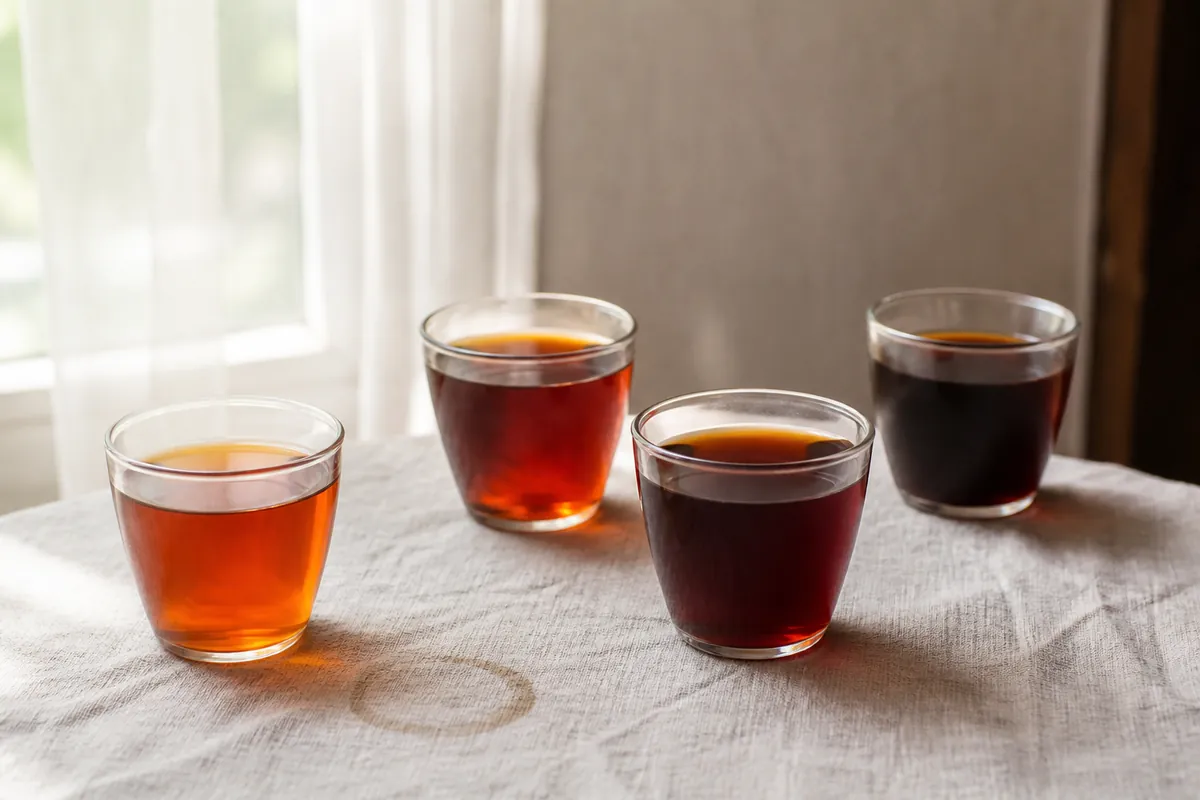
The two compound groups that result account for how the cup looks as well as how it tastes. Theaflavins give brightness and briskness, and thearubigins give colour and body.
What full oxidation produces
- Theaflavins
- Golden-orange compounds giving the brisk edge and the bright ring at the rim
- Thearubigins
- Larger and darker, giving the deep red-brown colour and most of the body
- Catechins
- Largely consumed by the reaction, which is why black tea is far less astringent
- Aroma
- Malty, fruity and floral notes appear that were not in the fresh leaf
- Word to avoid
- Fermented. No microbe acts on the leaf at any point
The word fermented turns up on packaging and throughout older writing, and it describes something that never happens here.
No microbe is involved in an enzymatic reaction with oxygen, and pu-erh is the only common tea where fermentation is the accurate term.
Because the catechins have largely been spent, black tea tolerates handling that would wreck a lighter style. Boiling water for five minutes deepens the cup rather than ruining it, and almost every practical instruction further down this page follows from that one fact.
The same chemistry read backwards explains the tea most people give up on. Those catechins are the entire source of green tea bitterness, and a black tea has already used them up.
Orthodox, CTC and the letters on the packet
Two machines, two different drinks. How the leaf is handled after oxidation decides more about the cup in front of you than the country it grew in.
| Orthodox | CTC | |
|---|---|---|
| What happens | Leaf is rolled, and stays largely whole | Leaf is crushed, torn and curled into pellets |
| Leaf appearance | Long, twisted, recognisable | Uniform granules |
| Extraction | Slower and more layered | Very fast and very strong |
| Typical use | Single-origin and specialty tea | Tea bags, chai, breakfast blends |
| Strength | Moderate, with more nuance | High, and built to take milk |
CTC exists because of milk. A tea meant to stand up to milk and sugar has to extract hard and fast, and crushing the leaf into granules achieves exactly that.
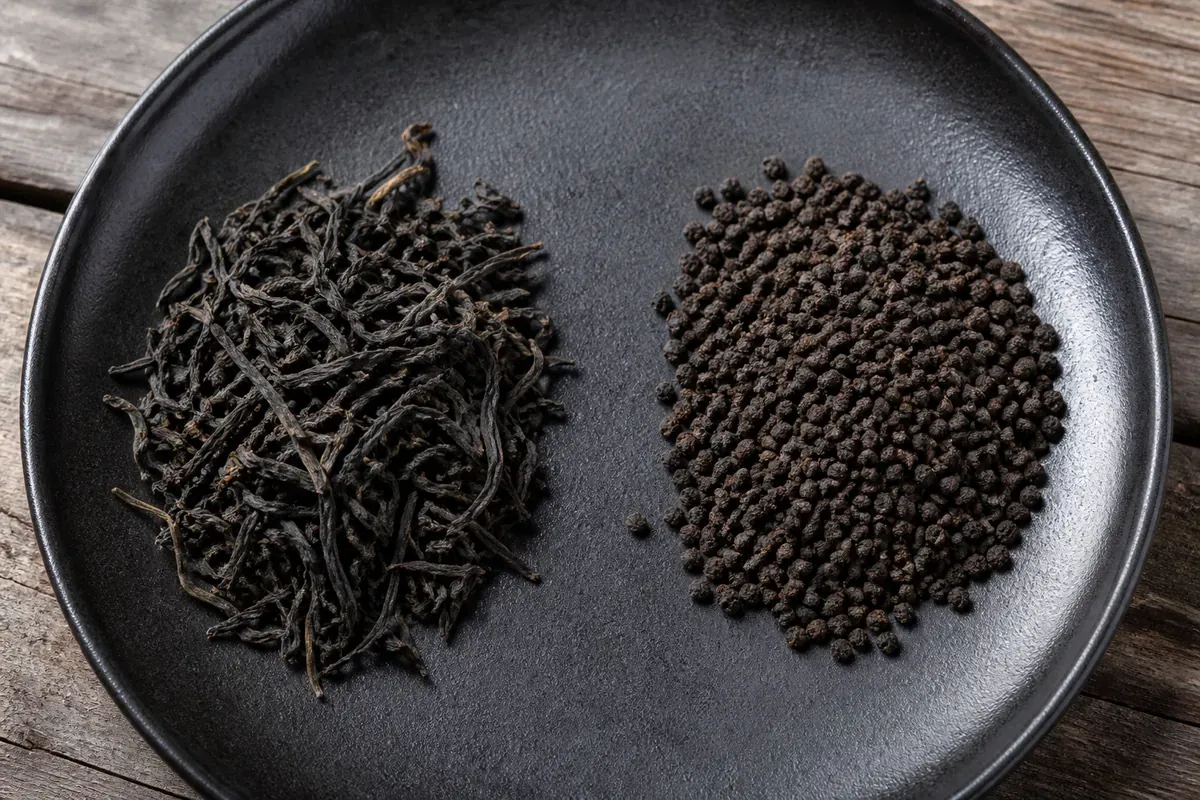
Orthodox leaf gives a more layered cup and asks for a longer steep. Brewing black tea therefore starts with the leaf form rather than one universal time. A bag that brews strong in ninety seconds is almost certainly CTC, whatever the box says about the leaf inside.
The acronyms printed alongside are a second system entirely, and they describe the size of the particle rather than the quality of the tea.
OP, Orange Pekoe
A leaf grade, and nothing to do with oranges. It describes whole leaf of a particular size.
BOP, Broken Orange Pekoe
Broken leaf. Extracts faster and gives a stronger cup.
FOP, Flowery Orange Pekoe
Includes leaf buds, generally from a more careful pluck.
Fannings and Dust
The smallest particles. Very fast extraction, and what fills most tea bags.
A well-made Broken Orange Pekoe beats a careless Orange Pekoe every time. The letters tell you how fast the tea will brew and how long you have before it turns, rather than how good it will be.
Timing is the consequence worth carrying away from all this. Fannings reach full strength in under two minutes and then keep going, which is why a forgotten bag turns drying rather than merely strong, a fault black tea problems takes further.
Assam, Darjeeling, Ceylon and Keemun
Four names cover most of the black tea sold outside the country that grew it.
| Origin | Character | Notes |
|---|---|---|
| Assam | Malty, brisk, full bodied | Grown in lowland northeast India. The backbone of most breakfast blends |
| Darjeeling | Light, floral, muscatel | High-grown, and often only partly oxidised despite being sold as black |
| Ceylon | Bright, citric, clean | From Sri Lanka. Varies a great deal by elevation |
| Keemun | Smoky, cocoa-like, gentle | Chinese, and the base of many English Breakfast blends |
The two workhorses behave predictably in a pot. Assam is malty and heavy enough to carry milk without vanishing, and a Ceylon is brighter and more citric, which is why it turns up in iced tea far more often than in a breakfast tin.
Darjeeling is the exception that catches people out. A great deal of what is sold as first flush has been oxidised well short of full, so it behaves like an oolong in the pot and wants water cooler than the figures below.
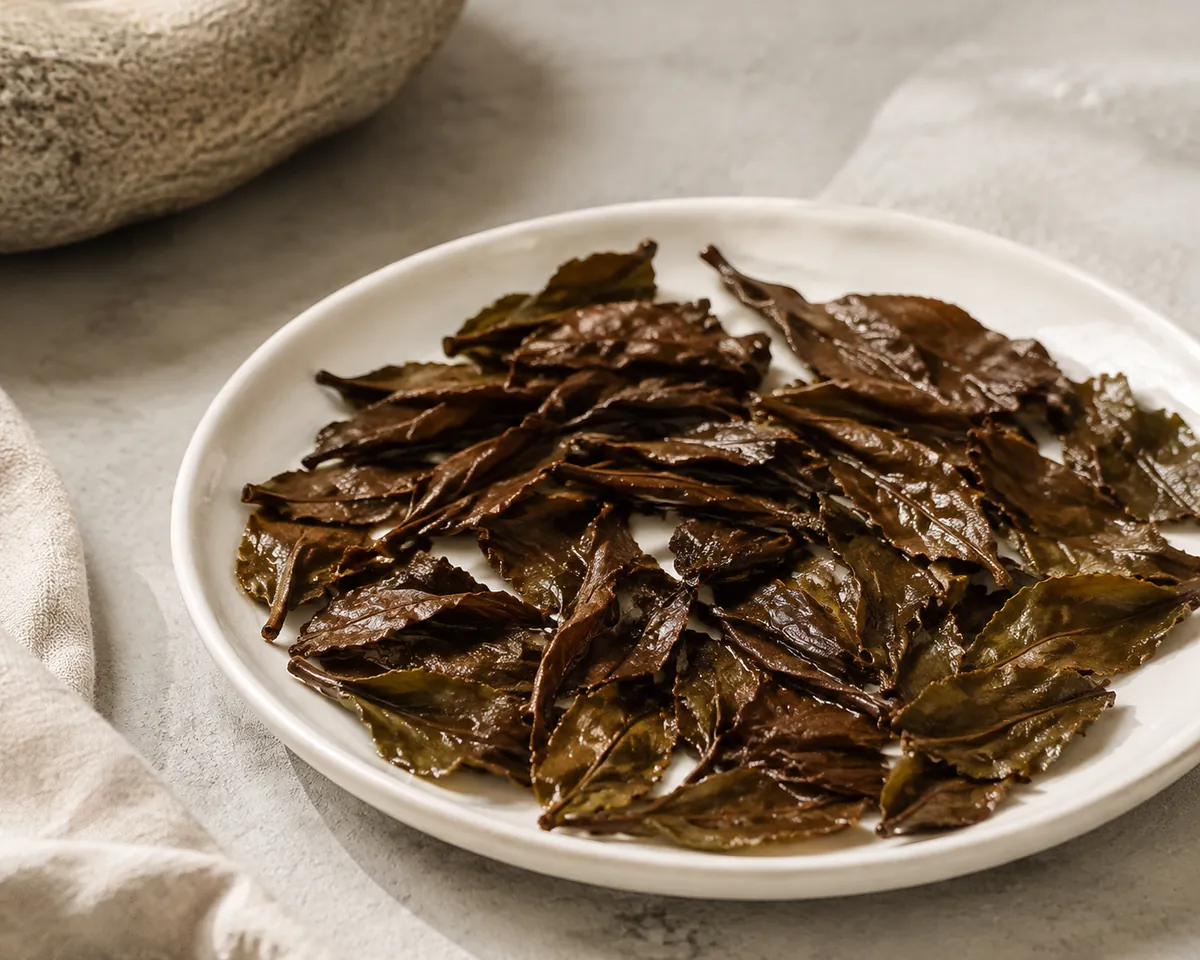
Keemun is the quiet one, and the base of many a blend that never names it. Its cocoa note and faint smoke come from the leaf and the firing rather than from anything added, which sets it apart from a deliberately smoked tea such as lapsang souchong.
Origin tells you less than the processing does, and less again than the freshness.
An Assam and a Ceylon handled the same way sit closer together than two Assams a year apart.
Boiling water, and how much it forgives
The reason black tea is brewed at a temperature that would ruin every other style on the shelf is that its oxidation has already run to completion. There is nothing fragile left to scald.
Starting point
- Water
- 95 to 100 C, effectively boiling
- Steep
- 3 to 5 minutes
- Leaf
- 2 to 3 g per 200 ml
- Second infusion
- Usually possible with orthodox leaf, rarely with CTC
Time is the variable that costs you something. Over-steeped black tea turns drying and tannic rather than sharply bitter. A cup that grips the tongue and has lost its sweetness was left too long, not brewed too hot.
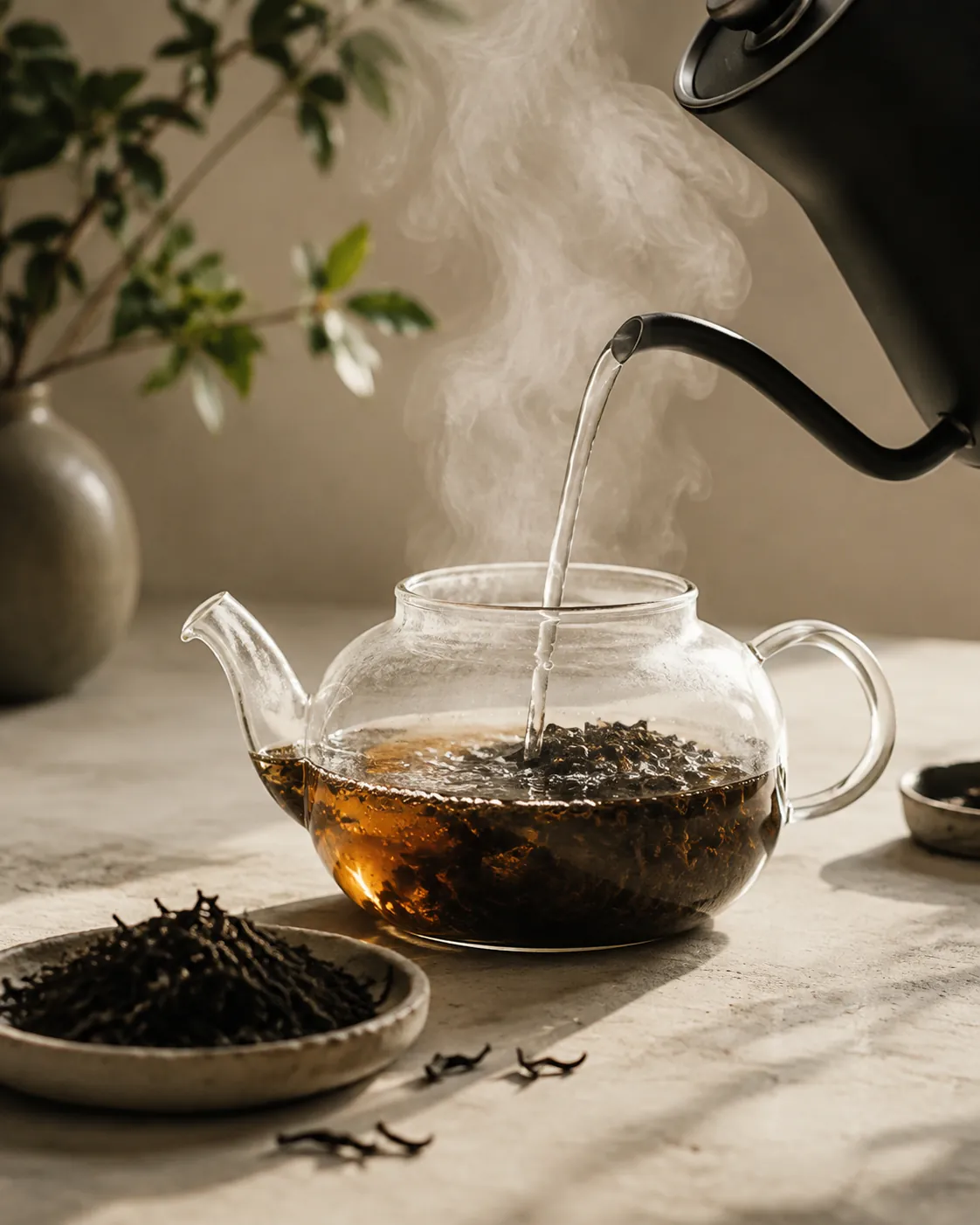
Water does more damage here than the kettle setting does.
Hard water dulls the colour, flattens the briskness and leaves a film across the surface, which brewing water sets out in full.
The temperature rule runs the other way for every less-oxidised style, and steeping temperature maps the whole range. Black tea is the one place where the hottest water the kettle can produce is simply correct.
Why milk works here and does nothing for a green tea
Milk is a chemistry question before it is a cultural one. Milk proteins bind to tannins, and in a tea carrying a great many of them that binding rounds off the astringency and fills out the body.
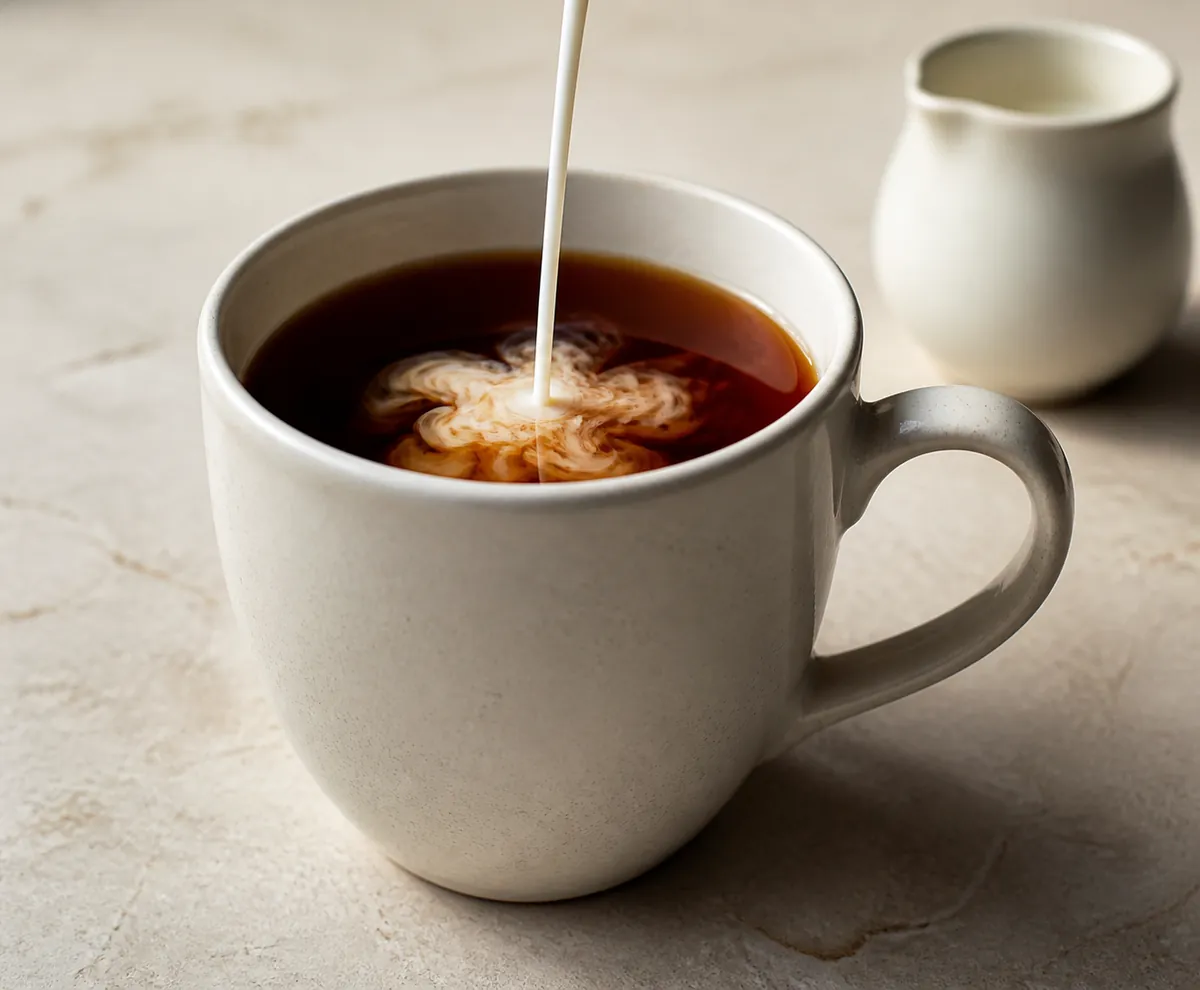
A green tea has far less for those proteins to find, so milk mostly just dilutes it. The same logic explains why rooibos takes milk comfortably despite not being tea at all.
Strength decides whether the result is any good.
Milk dilutes as well as softens, so a tea brewed to taste right black reads as thin the moment it goes in, and the answer is more leaf rather than more time.
Plant drinks change the arithmetic. Tea is acidic enough to split an unbuffered plant drink, though far less readily than coffee manages it, as why plant milk curdles sets out.
Where the brew is very strong, a concentrated milk is the traditional answer. Evaporated milk stands up to tea made at several times normal strength, which fresh milk simply disappears into.
English Breakfast, Earl Grey and what a blend is for
A large share of the black tea on any shelf was never sold as a single origin at all, and the names on those tins describe recipes rather than places.
English Breakfast
A blend, usually Assam-led, built to be strong and to take milk. No two brands are the same.
Earl Grey
Black tea scented with bergamot oil, most often over a Ceylon or a Chinese black base.
Masala chai
Strong CTC brewed with milk and spices, where the tea is one ingredient rather than the drink.
Lapsang souchong
Dried over pinewood fires, which gives a heavy smoke that has nothing to do with oxidation.
Blends exist for consistency rather than for complexity. A single-origin tea shifts with the harvest and the weather, and a breakfast blend is built to taste the same in March and in October.
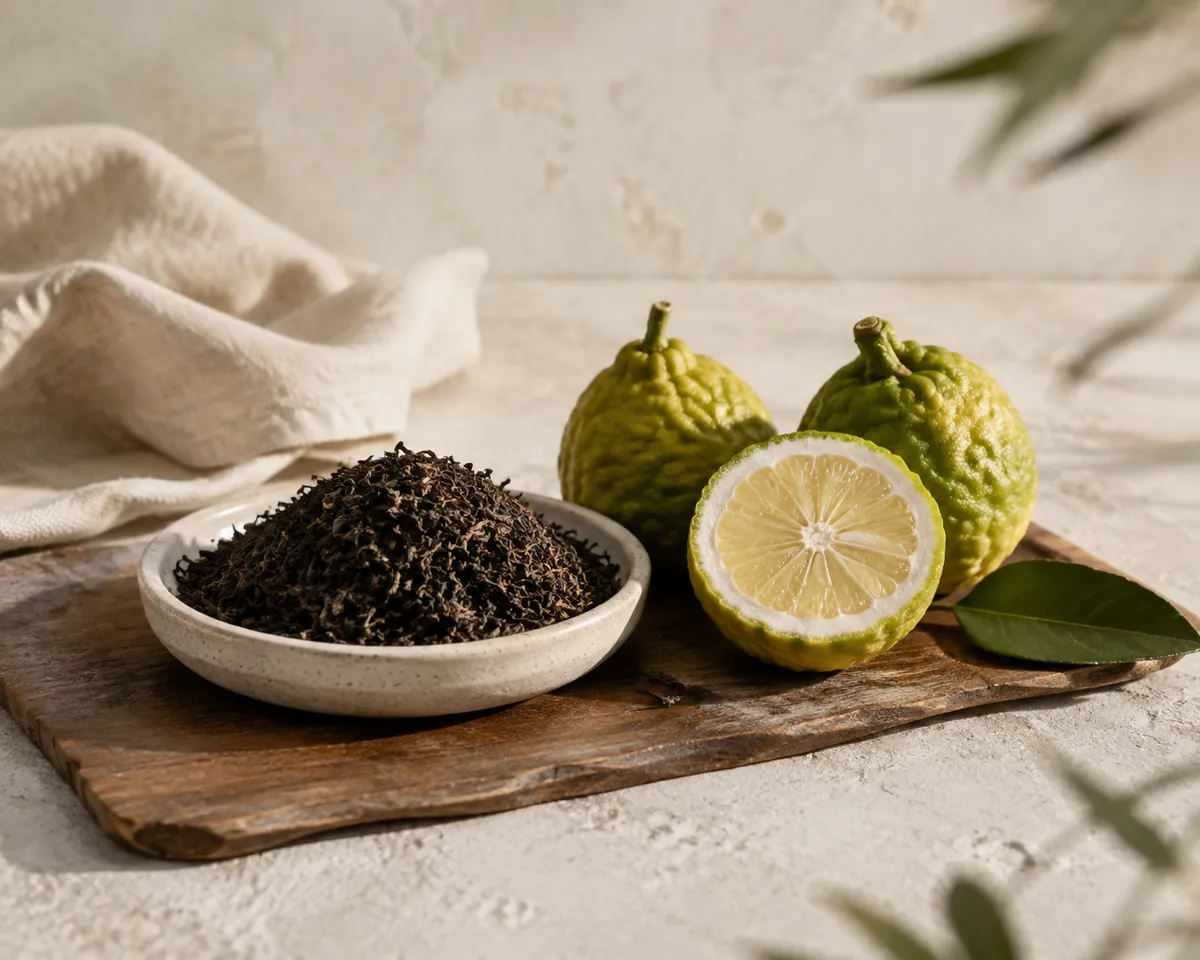
That is also why the same name means different things between brands. Two English Breakfast tins can rest on quite different bases, and drinking them side by side is the only way to find out which one you actually want.
Scenting is a separate operation from blending and behaves differently on the shelf. Earl Grey carries bergamot oil applied to finished leaf, and that oil fades well before the tea beneath it does.
The one blend where the tea is not the main event is masala chai.
A strong base is boiled with milk and spices, and the leaf is chosen for how much it can carry rather than for what it tastes of alone.
How much caffeine is in black tea, and what decaf removes
The figure is a range rather than a number. Black tea sits between green tea and coffee, and the spread inside the category is wider than the gap to either neighbour.
Extraction moves the number more than the leaf does. CTC granules give up caffeine fast, so a strong tea-bag brew lands well above that figure while a gentle orthodox infusion lands below it.
Caffeine by brewing method makes the same argument about dose and serving size on the coffee side.
Decaffeinated black tea is made by stripping caffeine out of finished leaf, and the method used shows up in the cup. Carbon dioxide is the gentlest process in common use and keeps the most flavour, while ethyl acetate is cheaper and tends to leave a sweetness the original tea never had.
No process takes all of it out. A decaffeinated tea keeps a small residual amount, and a packet claiming none of it is overstating what the equipment can do, which is the practical case for rooibos against black tea if the point is to avoid caffeine rather than to reduce it.
Yerba mate sits at the other end again, refilled from the same leaf a dozen times or more.
The home trick of discarding a short first steep does not work either. Caffeine leaves the leaf steadily rather than all at once, so thirty seconds removes a modest fraction of it and a great deal of the flavour.
Reading the label, and how long the tin lasts
Black tea packaging is unusually informative once you know which parts of it carry meaning and which are there to look reassuring. Three lines on a tin do real work and the rest is decoration.
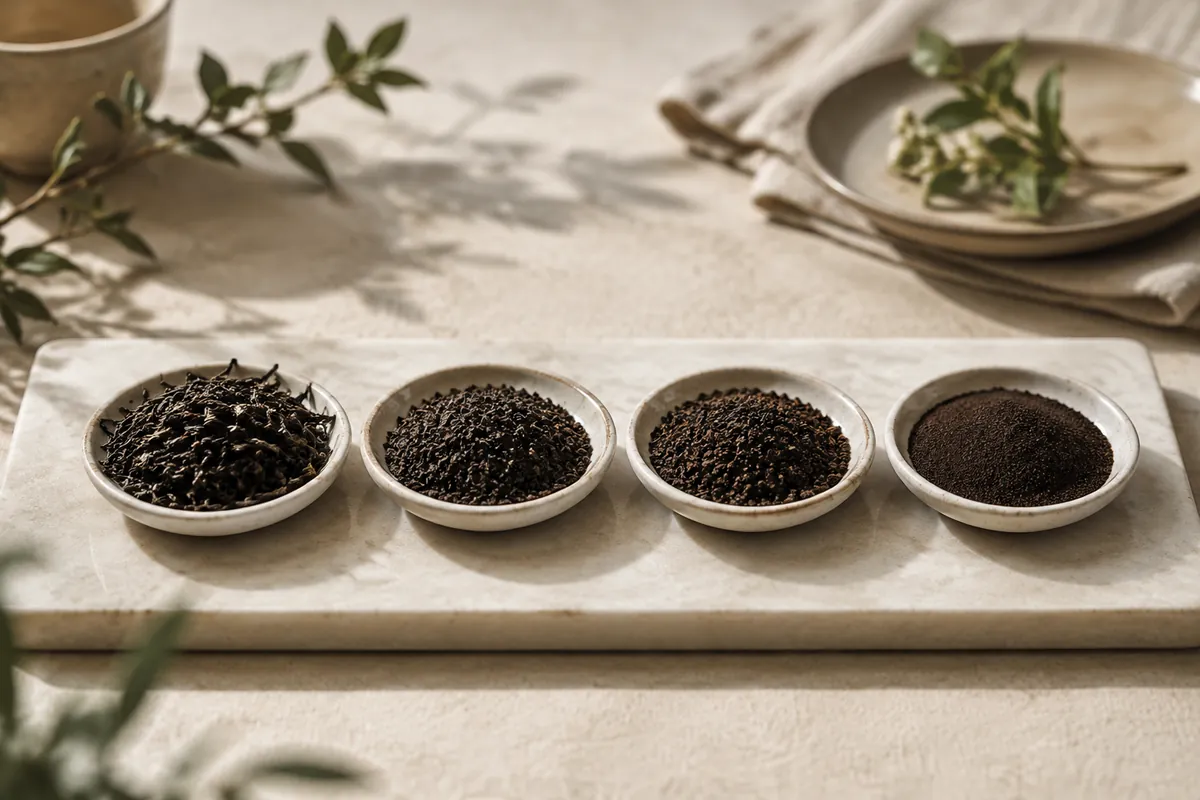
What to look for
- Leaf form
- Whole or broken tells you how fast it will brew. Fannings mean a strong, quick, one-shot cup
- Origin
- A specific origin such as Assam or Keemun says more than the words black tea
- Harvest
- First and second flush matter for Darjeeling and rarely appear elsewhere
- Blend or single
- Breakfast and Earl Grey are recipes, and their base changes between brands
- Grade letters
- Particle size. Useful for timing, useless as a ranking
Whole leaf is not automatically the better buy. For a strong mug with milk in three minutes, broken leaf does the job better and costs less, and whole leaf only repays the money when you intend to brew gently and drink it black.
The claim worth ignoring outright is anything about hand-picking. Nearly all specialty tea is picked by hand, and it says nothing about how carefully the leaf was withered, rolled or fired afterwards.
Shelf life is the other half of the same decision, and this is the most durable of the true teas. The reaction has already run, so there is far less left for air to change, and two to three years in a sealed opaque tin is realistic.
Durable is not the same as immortal.
The leaf still fades in light and still takes up the smell of whatever sits beside it, which is why storing loose-leaf tea begins with the container rather than the temperature.
Against a green tea the gap is roughly threefold, since six to twelve months is a realistic life for a green. The difference comes down to how much unreacted material each one is still holding, as green tea compared sets out.
Iced black tea, and the cloud that forms in it
Black tea is the most reliable of the true teas to serve cold, and oxidation is again the reason. Its flavour survives dilution where a green tea's hollows out, and the astringency that would be a fault in a hot cup reads as refreshing over ice.
Two ways to make it
- Hot brewed, leaf
- Double the usual dose, brew hot, pour over a full glass of ice
- Hot brewed, steep
- 4 to 5 minutes, then chill immediately
- Cold brewed, leaf
- Normal dose in cold water
- Cold brewed, time
- 8 to 12 hours in the fridge, then strain
The two routes give genuinely different drinks. Hot brewing and then chilling is faster and gives a brighter, more astringent glass, while cold brewing gives something rounder because less of the astringent material ever leaves the leaf.

Pouring a normal brew straight over ice is the third route and the weakest of the three. The melt dilutes at the same moment the tea is cooling, so the glass ends up both weaker and duller unless the brew was made at double strength.
Cloudiness is cosmetic and does not change the flavour. Commercial bottlers get around it by selecting leaf that stays clear in the bottle.
That is a manufacturing decision rather than a mark of quality.
The habit worth building is brewing strong and cooling fast. That one change fixes most of what goes wrong with a home-made jug, and iced tea covers the variations built on top of it.
What is actually inside a tea bag
Most of the black tea drunk in the world comes out of a bag, and what is inside one is a different product from loose leaf rather than a lesser version of it. The grade is chosen to suit the format.
Bags are filled with fannings or dust, which are the smallest grades of all. That is deliberate rather than a cost-cutting accident, because a bag has a fixed short contact time and the leaf inside has to give everything up within two minutes.
Why bag tea behaves as it does
- Fast extraction
- Small particles have enormous surface area, so strength arrives quickly
- Fast decline
- The same surface area means it over-extracts just as quickly
- Blended heavily
- Consistency across seasons matters more than origin character
- Bag shape
- Pyramid bags hold larger leaf and give it room to expand
The surface area that makes a bag quick is what makes it unforgiving.
Strength arrives in ninety seconds and keeps on arriving, so the window between weak and drying is narrower than for any loose leaf.
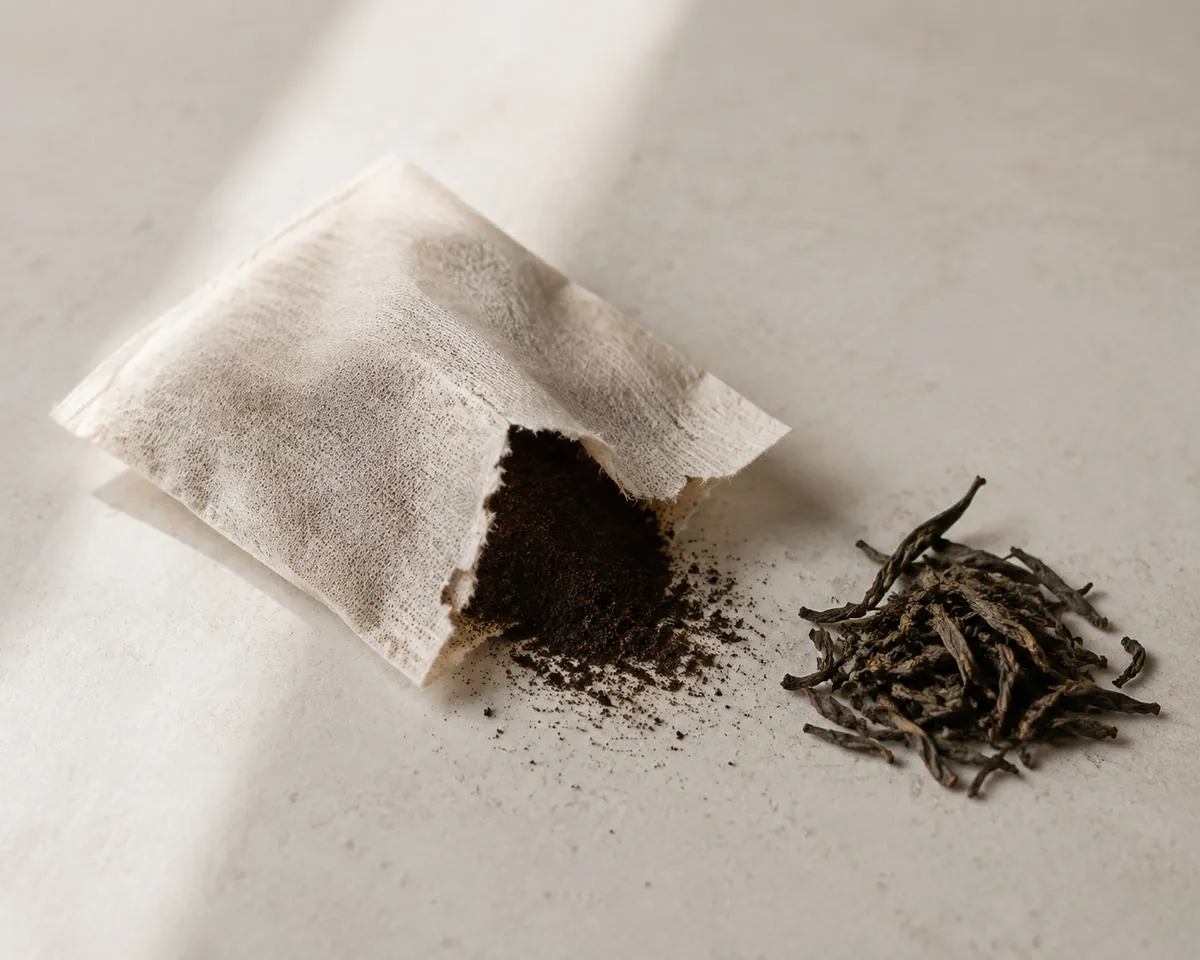
Squeezing the bag is the habit worth dropping. Pressing it against the side of the cup forces out the most concentrated and most tannic liquid the leaf is holding, which is why a squeezed bag gives a drier cup.
A pyramid bag is a real improvement rather than packaging theatre. It holds larger leaf and gives it room to open, which brings the cup closer to the conditions how black tea tastes assumes.
Common questions
Is black tea stronger than green tea?
In caffeine, usually yes: roughly 47 mg against 28 mg for a comparable cup. In flavour it is fuller and less astringent, because the compounds that make green tea sharp have largely been converted during oxidation.
Why does black tea go cloudy when it cools?
Theaflavins and thearubigins bind with caffeine as the tea cools and come out of solution, which is called tea cream. It is harmless, more common with hard water, and clears if you reheat the tea.
Can you re-steep black tea?
Orthodox whole leaf usually gives a second infusion, weaker and softer than the first. CTC leaf gives almost nothing on a second steep, because its crushed particles release nearly everything at once.