How to Store Loose-Leaf Tea: The Five Things That Flatten It
Tea does not spoil in a way that makes it unsafe. It goes flat. Five things cause that, and an opaque airtight tin in a cool cupboard deals with all of them.
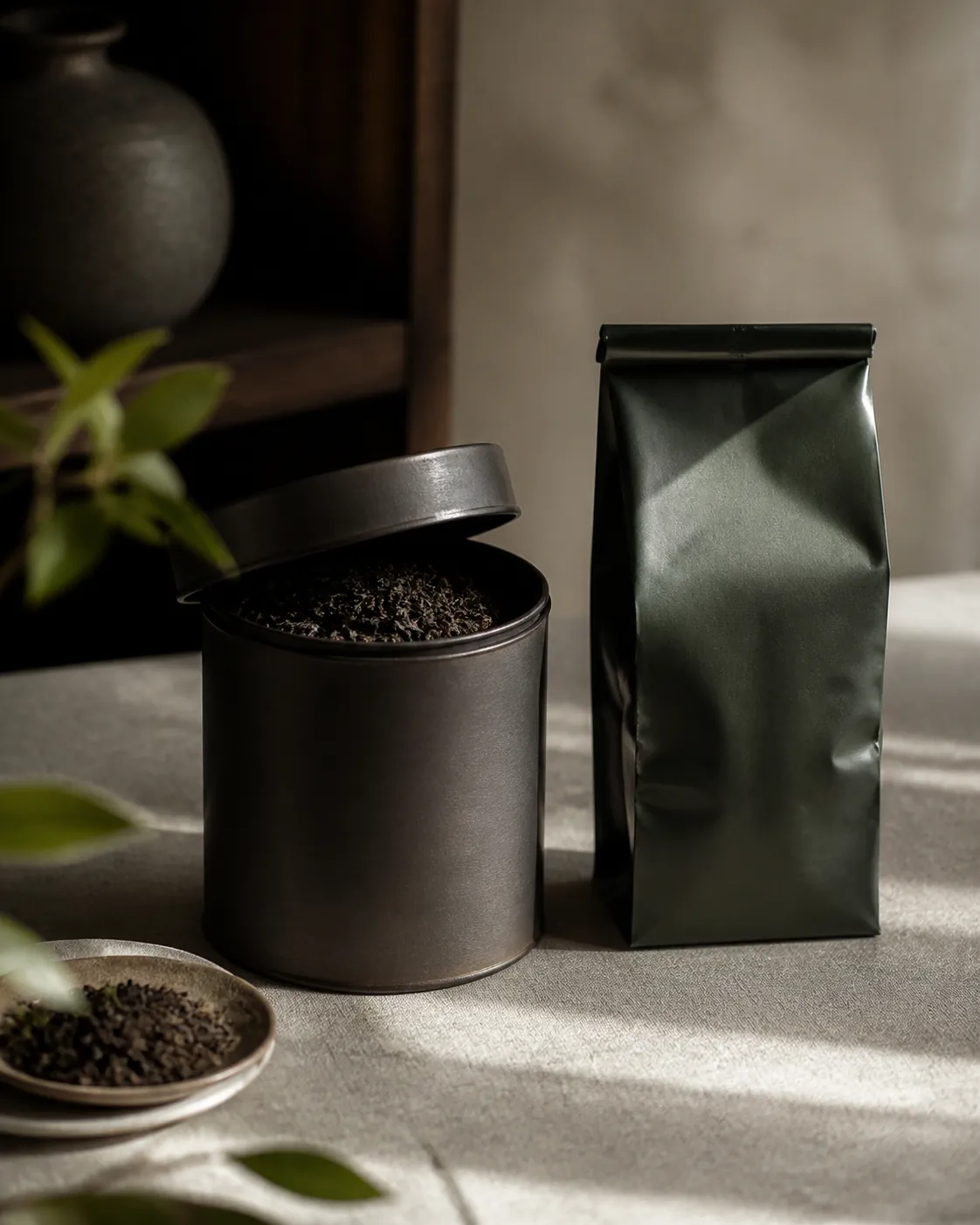
Dry tea leaf is stable in the sense that it does not become dangerous sitting in a cupboard. What it does is lose its aromatics, and the sweet and savoury notes go before the astringent ones, which is why old tea tastes flat and harsh rather than simply weaker.
That order matters more than the calendar does. A tea does not fade evenly into weakness; it loses the parts you liked and keeps the parts you tolerated, and by the time you notice, the pleasant half has already gone.
The five things that take a tea apart
Five things take a tea apart, and four of them are dealt with by the same decision about a container.
Air
Oxygen keeps reacting with the leaf's aromatic compounds long after processing. This is the main cause of flat tea.
Light
Ultraviolet light breaks down the compounds that give tea its colour and aroma. Clear glass jars on a windowsill are the worst case.
Heat
Warmth accelerates every other process. A shelf above the cooker is a bad place for tea.
Moisture
Dry leaf is hygroscopic and pulls water out of humid air. Damp leaf loses flavour quickly and can eventually support mould.
Odours
Tea absorbs smells readily. Stored near coffee, spices, or anything strongly scented, it will take on those aromas.
Air and light do the most damage between them, and they are the two a tin removes completely. Heat and moisture are a question of where the tin goes rather than what it is, which leaves odour as the one that a container alone does not solve.
How fast each style fades
- Green6 to 12 months, least oxidised so most left to lose
- White1 to 2 years
- Oolong1 to 2 years, roasted keeps longer
- Black2 to 3 years, already fully oxidised
- Pu-erhIndefinitely, and meant to keep changing
That order follows how far oxidation was allowed to run before the leaf was dried. The least oxidised leaf has the most left to lose, which is the same fact that makes it the most rewarding to drink fresh, and steeping temperature basics explains why the same leaf also wants the coolest water.
The tin, and what makes one better than a jar
An opaque, airtight container in a cool, dry cupboard covers four of the five, and the container matters considerably more than the shelf it sits on, which is the opposite of what most kitchens assume.
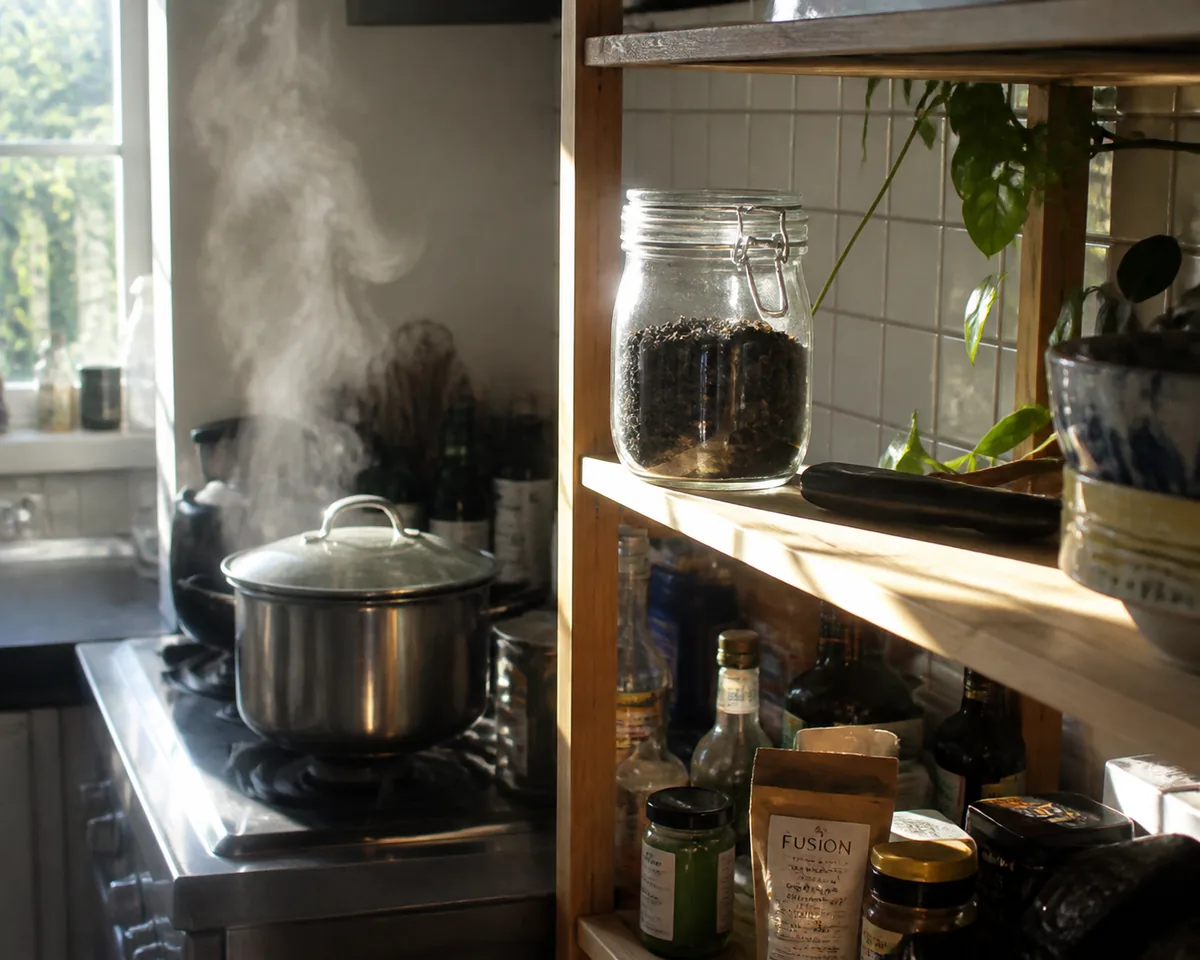
That shelf is doing three of the five kinds of damage at once.
A lidded tin is the classic answer because it is opaque and seals well, and a ceramic caddy with a good gasket does the same job at more expense. What both have over a jar is simply that light never reaches the leaf.
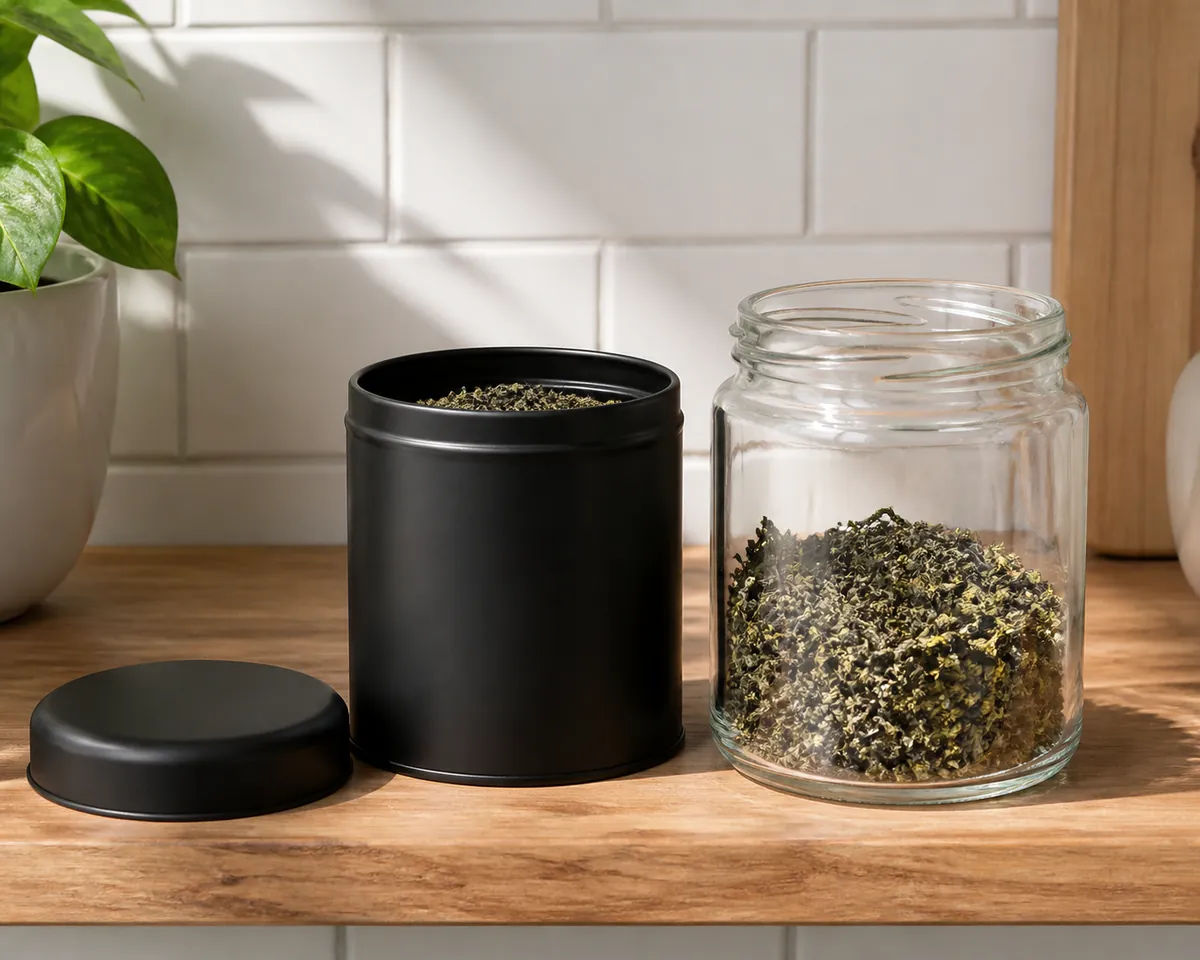
Both containers seal. Only one of them keeps the light out.
- Opaque, so light never reaches the leaf.
- Airtight, with a gasket or a tight double lid rather than a loose press-fit.
- Odour-free and non-porous. Metal and glazed ceramic are fine; unlined wood and plastic can hold smells and pass them on.
- Sized to the tea. A small amount rattling around a large tin sits in a large volume of air.
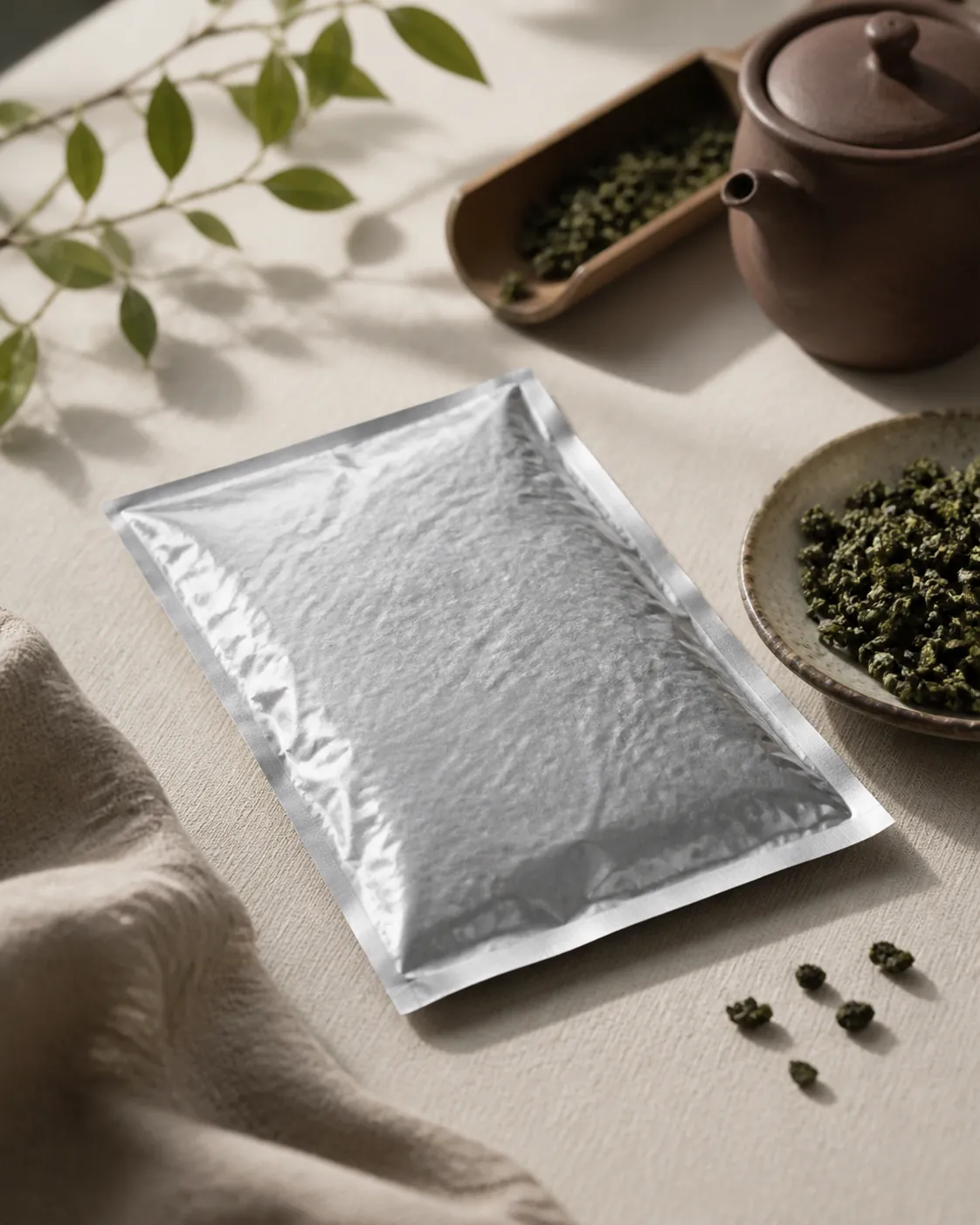
If the tea came in a resealable foil pouch with a one-way valve, that pouch is already well designed for the job, so press the air out, seal it, and put the whole pouch inside a tin. An opaque tin that seals beats an attractive glass jar every time, and tea kept where you can admire it is tea kept where light can reach it.
Location still decides the other two. An interior cupboard away from the hob at stable room temperature is right; above or beside the cooker, next to the kettle, or on any sunlit surface is wrong.
Steam is the hidden problem near a kettle, since each boil pushes humid air at the tin and a lid opened in that air lets the moisture straight in.
Odour is the loss nobody plans for
Dry tea leaf is porous. It adsorbs volatile compounds from anything nearby, and a tin stored next to ground coffee will taste of coffee within a fortnight while the leaf itself has degraded in no other sense.
That is what makes odour different from the other four. Air, light, heat and moisture take flavour away slowly and give you time to notice; a strong neighbour adds a flavour permanently and does it in days.
- Keep tea in its own cupboard, not the spice shelf and not beside coffee.
- Never store tea in a container that previously held anything aromatic, however well washed.
- Avoid plastic containers, which hold odour in the plastic itself.
- Keep scented teas such as jasmine separate from unscented ones.
- A tin that smells of anything when empty will pass it to the next tea.
The reverse applies just as strongly. Scented and smoked teas give off aroma as readily as they take it on, so a lapsang or a jasmine in a shared cupboard will quietly flavour everything around it, and storing beans is worth reading if the cupboard also holds coffee.
How long each style keeps, and why the ranges are wide
These are rough guides for flavour rather than safety dates, and the range inside a style is wider than the gap between two adjacent styles on the shelf.
| Style | Container | The thing to get right |
|---|---|---|
| Green | Small opaque tin | Buy in amounts you will finish. It fades while you are still enjoying it |
| White | Larger opaque tin | Open, bulky leaf. Do not crush it into a small container |
| Oolong | Opaque tin | Rolled leaf keeps better than open leaf; roasted better than green-style |
| Black | Any sealed tin | The most forgiving of the true teas. Ordinary storage is enough |
| Pu-erh | Paper wrapper, in a box | Never airtight. It is meant to keep changing |
| Matcha | Sealed, cold, small | Not loose leaf, and it fades in weeks rather than months |
Leaf shape explains most of the variation within a row. A tightly rolled oolong exposes far less surface to air than an open, downy white tea does, so two teas of the same style and age can be a year apart in how they taste.
Storing green tea narrows the same guidance to the style that needs it most.
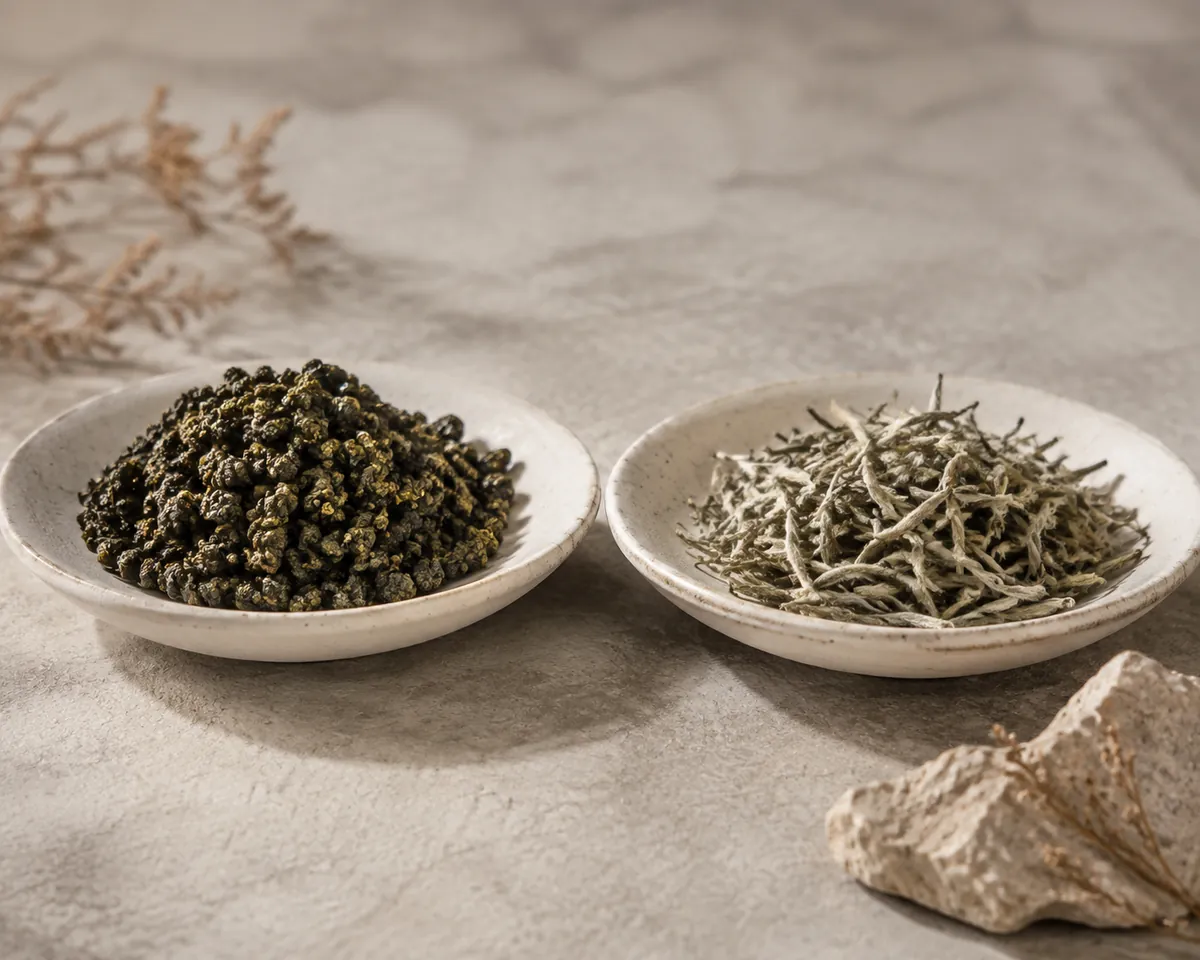
Matcha is the outlier in the other direction. Ground to a few microns it has more surface exposed than any leaf, which is why it fades in weeks and why its storage is a separate problem rather than a stricter version of this one.
Pu-erh wants the opposite of all this
Every rule on this page is written for tea that should stop changing. One category is meant to keep changing, and sealing it away is the mistake rather than the precaution.
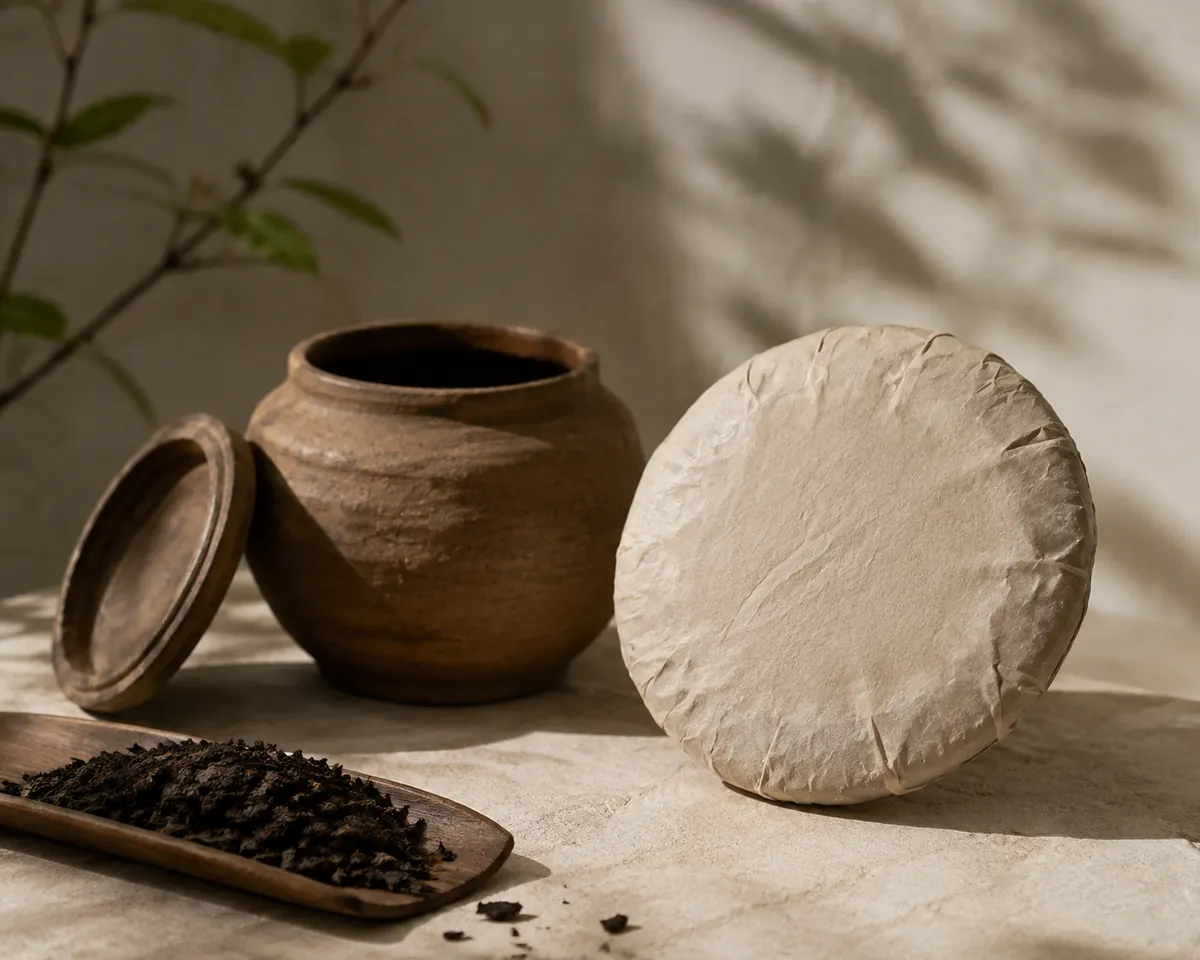
Pu-erh and other post-fermented teas continue developing through microbial and enzymatic activity, and that needs air and a little humidity. An airtight container arrests the process the cake was made for, so a sealed pu-erh does not spoil; it simply stops, which for a tea bought to age is the whole loss.
| Green, white, oolong, black | Pu-erh and dark teas | |
|---|---|---|
| Air | Exclude it | Needs some circulation |
| Humidity | As dry as possible | 55 to 70 per cent |
| Container | Airtight and opaque | Breathable: paper wrapper, cardboard, unglazed clay |
| Time | Degrades it | Develops it |
| Odour | Excludes everything | Absorbs everything, so isolation still matters |
The one rule they share is odour. A cake stored beside spices takes them on permanently, and unlike the other categories there is no point at which it stops absorbing, because the leaf never seals itself off.
Keeping the two together is therefore a mistake in both directions. A sealed tin of sencha in a humid pu-erh cupboard is perfectly safe, and a pu-erh cake in a dry sealed tin simply stops doing the one thing it was bought to do.
Telling a flat tea from a spoiled one
Open the tin and smell the dry leaf.
Fresh tea announces itself before you get close, and tea that smells of very little, or faintly of dust and cardboard, will brew a cup to match.
No adjustment to temperature or steeping time brings aromatics back once they have gone, which is worth knowing before you decide the problem is your kettle. Why green tea tastes bitter covers the cups that are genuinely a brewing fault, and stale leaf is not one of them.
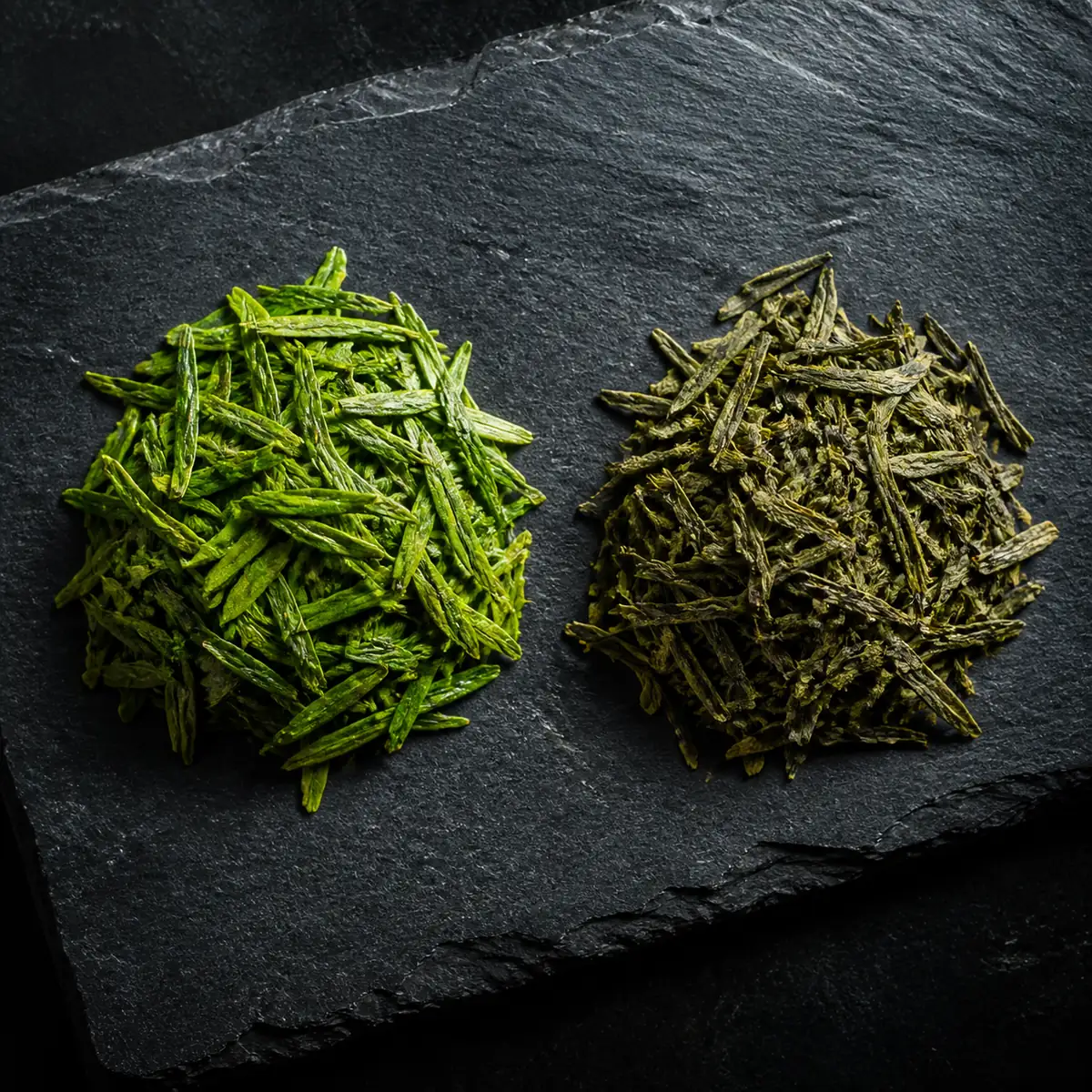
Colour is the other tell and it is easiest to read on green tea, which fades from vivid to a dull olive-brown. Stale tea is safe to drink, so the test is whether the cup still interests you rather than whether anything has gone wrong with it.
Freezing, and the one place it is standard
Freezing tea sounds wrong, and it is standard practice for one category and one purpose. Japanese producers routinely freeze sencha, shincha in particular, to hold a single spring harvest through the rest of the year.
It works because the leaf is dry, vacuum-sealed and never opened until it has fully thawed. The conditions are strict rather than fussy: genuinely airtight, frozen once, thawed to room temperature over several hours while still sealed, and then treated exactly like an open packet from that moment on.
The failure mode is condensation.
Opening a cold packet in a warm kitchen puts water directly onto leaf that has no defence against it, and a single careless thaw does more damage than a year in a cupboard would have.
For anything you will drink within six months it offers nothing at all. Freezing is a technique for holding a quantity of good green tea beyond its natural window, and it is not a general storage method for a tin you open twice a week.
What to do with a tin that has gone flat
Flat tea is not spoiled. Three uses are better than the bin, and one of them produces something you would choose on its own merits.
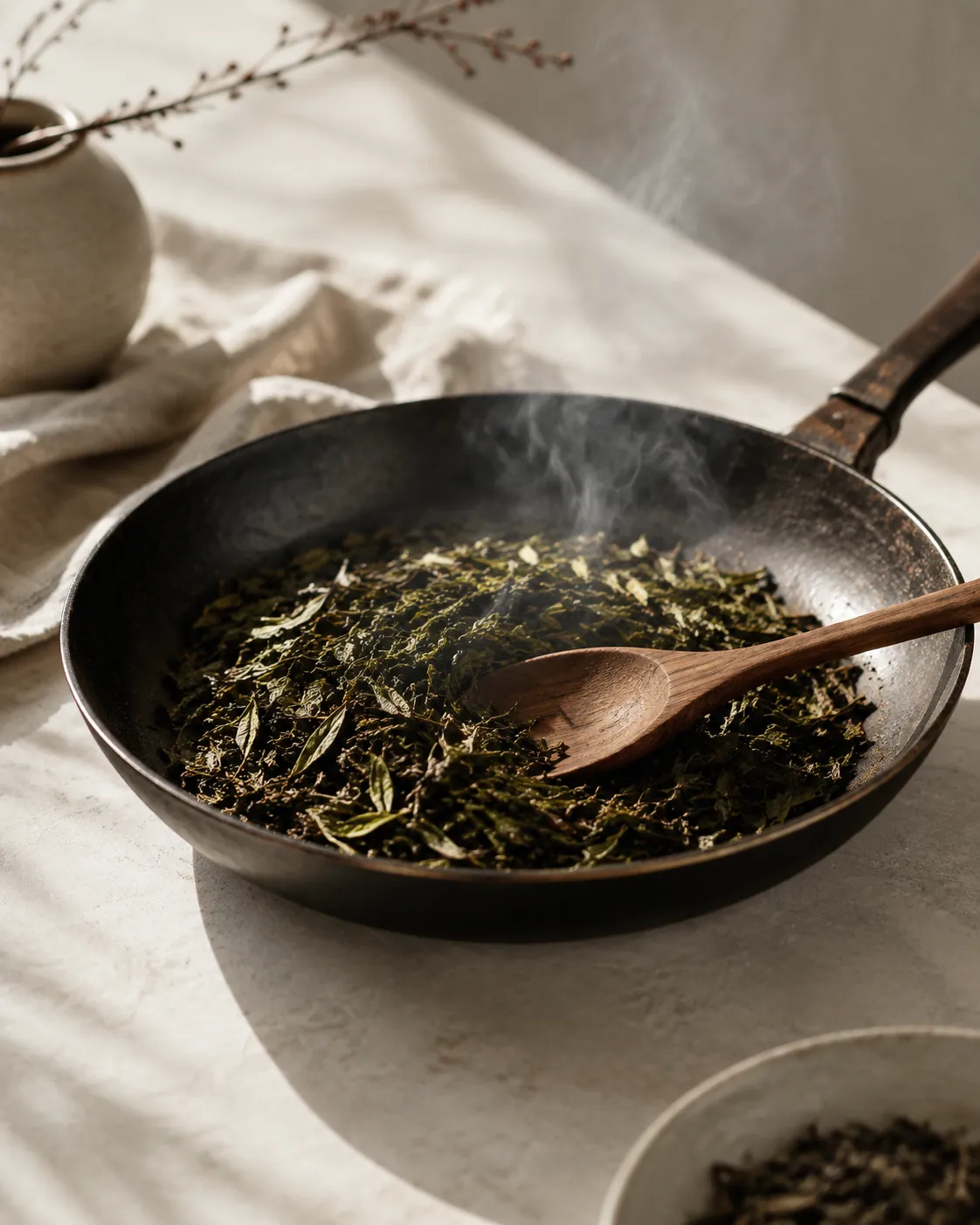
Roasting is the interesting one. A flat green tea in a dry pan over low heat for five to ten minutes, stirred constantly, becomes something close to hojicha, because roasting creates new aromatics rather than trying to recover the ones that faded.
Cold brewing is the second and the least effort. Cold water extracts what sweetness remains and very little astringency, so a tired leaf gives a far better cold jug than it does a hot cup, and the difference is large enough to be worth the overnight wait.
Cooking is the third and it suits the stronger styles. A flat black tea makes a good braising liquid or a smoking medium, where its remaining tannin and colour are precisely what the dish wants and its lost aromatics would have been wasted anyway.
Dating the tin, and buying to match how you drink
Storage rules are useless without knowing how long something has been stored, and the answer is almost never printed on the packet in a form that helps.
Tea is rarely sold with a harvest date outside specialist sellers, and a best-before date two years out tells you nothing about when the leaf was picked. Where a harvest year is printed it is the most useful thing on the packet.
Write the opening date on the tin in pen on the day you open it, and every rule here turns from a guess into a decision.
How long after opening, roughly
- MatchaWeeks. See storing matcha
- Green teaThree to six months before it noticeably flattens
- White teaSix months to a year, and some are aged deliberately
- OolongA year for roasted ones, less for green ones
- Black teaA year or two, and it fades gently rather than sharply
The other half of the problem is bought rather than stored. Fifty grams of a good green tea is roughly twenty-five cups, about a month for most people, and a hundred-gram bag bought for the better price per gram spends its second half past the point where the first half was worth drinking.
Buying to match how you drink also removes the hardest storage problem, which is a half-empty container. A tin holding a small quantity of leaf holds a large volume of air, and topping it up with a new batch mixes two ages of tea permanently.
Black tea, roasted oolong and anything post-fermented tolerate a larger purchase; green and white tea do not.
The one habit that does most of the work
One habit accounts for most of the benefit on this page, and it takes about ten seconds on the day the tea arrives.
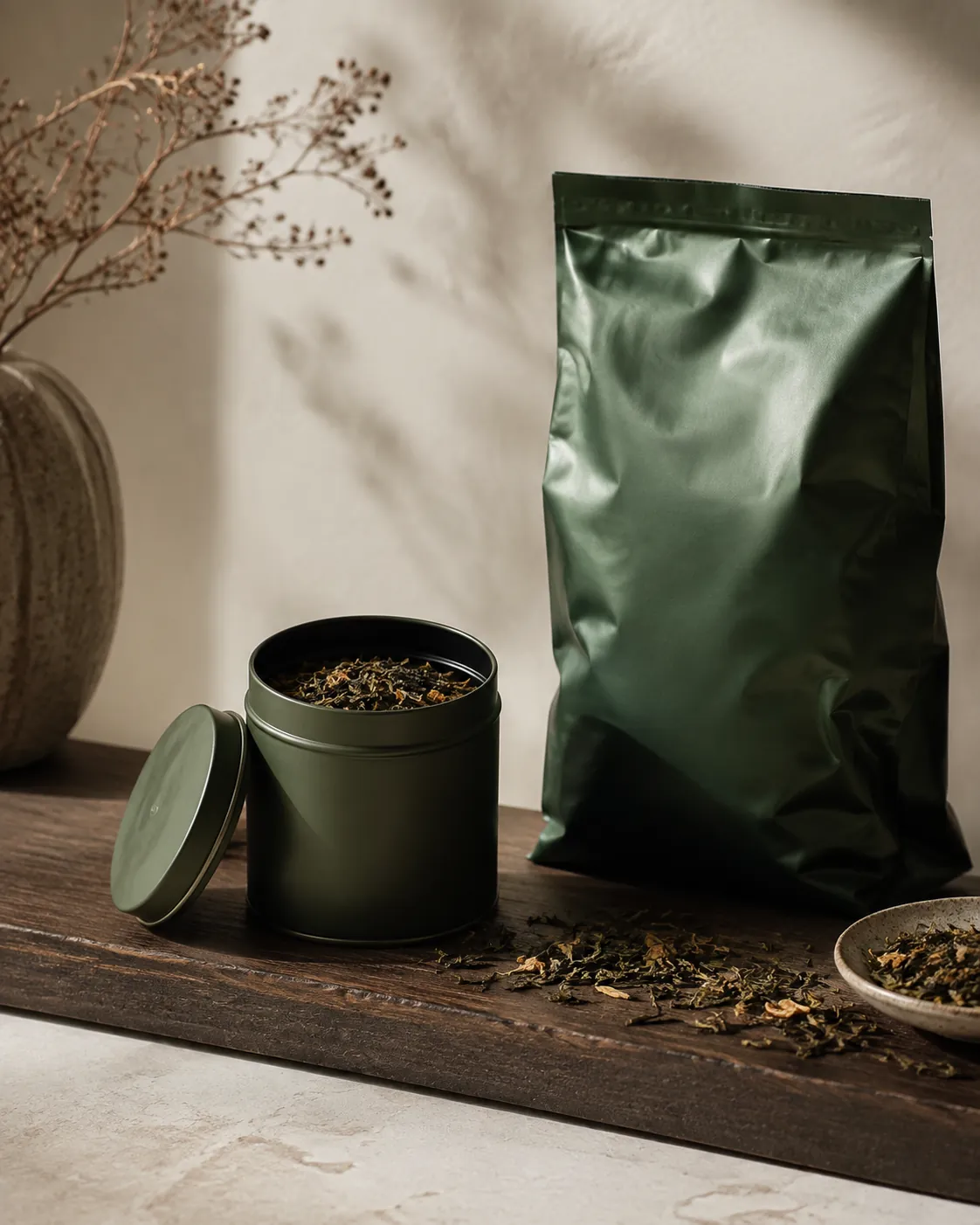
Decant into an opaque airtight tin and write the date on it. That single action deals with light, air and the not knowing how old something is, which is three of the five problems and the only three that are genuinely invisible until the tea disappoints you.
Everything else here is refinement on top of that, with one exception. Pu-erh wants the opposite and should stay in its wrapper, and storing pu-erh treats it as the separate problem it is.
The second habit worth adopting is buying less. A tin finished in two months never gets far enough along the curve for any of this to matter, which is the cheapest way to never think about storage again.
Common questions
Should tea be stored in the fridge or freezer?
Usually not. Fridges are humid and full of odours, and condensation forms on cold leaf when the container is opened. A cool, dry cupboard is more reliable for everyday tea.
Does loose-leaf tea expire?
It loses aroma and flavour rather than becoming unsafe, so best-before dates are about quality. The exception is leaf that has taken on moisture, which can develop mould and should be discarded.
Are clear glass jars bad for tea?
On a lit shelf, yes. Ultraviolet light degrades the compounds behind tea's colour and aroma. Glass is fine inside a dark cupboard, but a tin is a safer default.