How to Make Assam Tea Without Losing Its Maltiness
Assam can be a clear malty cup or a strong milk tea, but those versions need different leaf and timing. Start with the form of leaf, then build strength with dose instead of extracting until the cup turns rough.
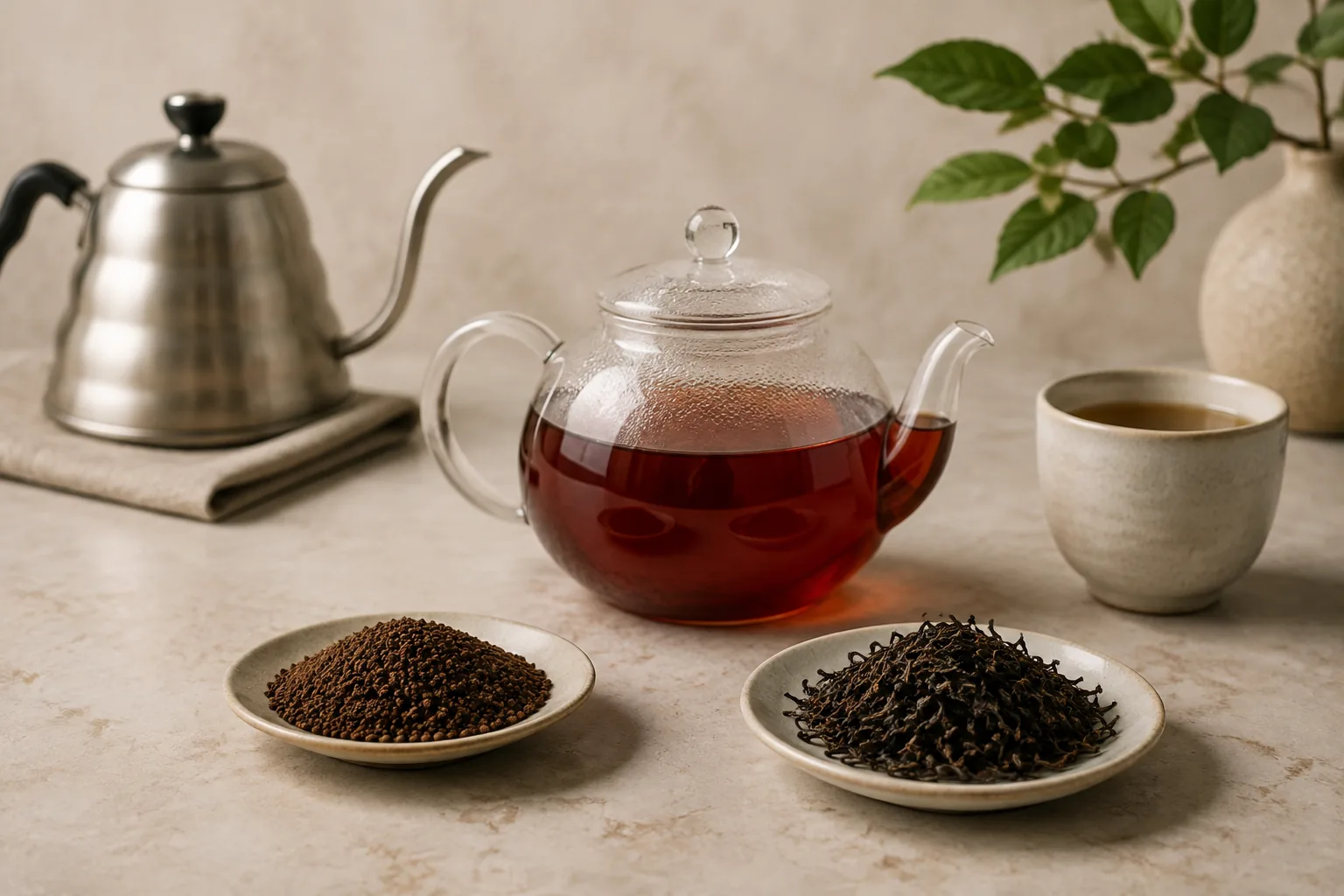
To make Assam tea, use 2 to 3 g of leaf per 200 ml of freshly boiled water and begin tasting at two minutes for CTC or three minutes for orthodox leaf. Strain as soon as the cup has a full malty aroma and a clean drying edge; add more leaf next time if you want greater strength.
That starting point changes when milk is the destination. CTC Assam can be brewed harder because milk softens its astringency, while a tippy orthodox Assam usually shows more honeyed detail when served plain.
Assam starting points
- Orthodox leaf
- 2.5 g per 200 ml, 95 to 100 C, taste from 3 minutes
- Broken leaf
- 2.5 g per 200 ml, 95 to 100 C, taste from 2.5 minutes
- CTC granules
- 2 g per 200 ml, 95 to 100 C, taste from 90 seconds
- With milk
- Increase the leaf dose before extending the time
- Best control
- A roomy basket infuser or small teapot with a complete strain
Choose the method from the leaf, not the word Assam
Assam tea names an origin and a recognizable malty style, but the dry leaf tells you how it will behave in water. Long twisted orthodox leaves expose less surface area than broken leaf, and CTC pellets expose much more.
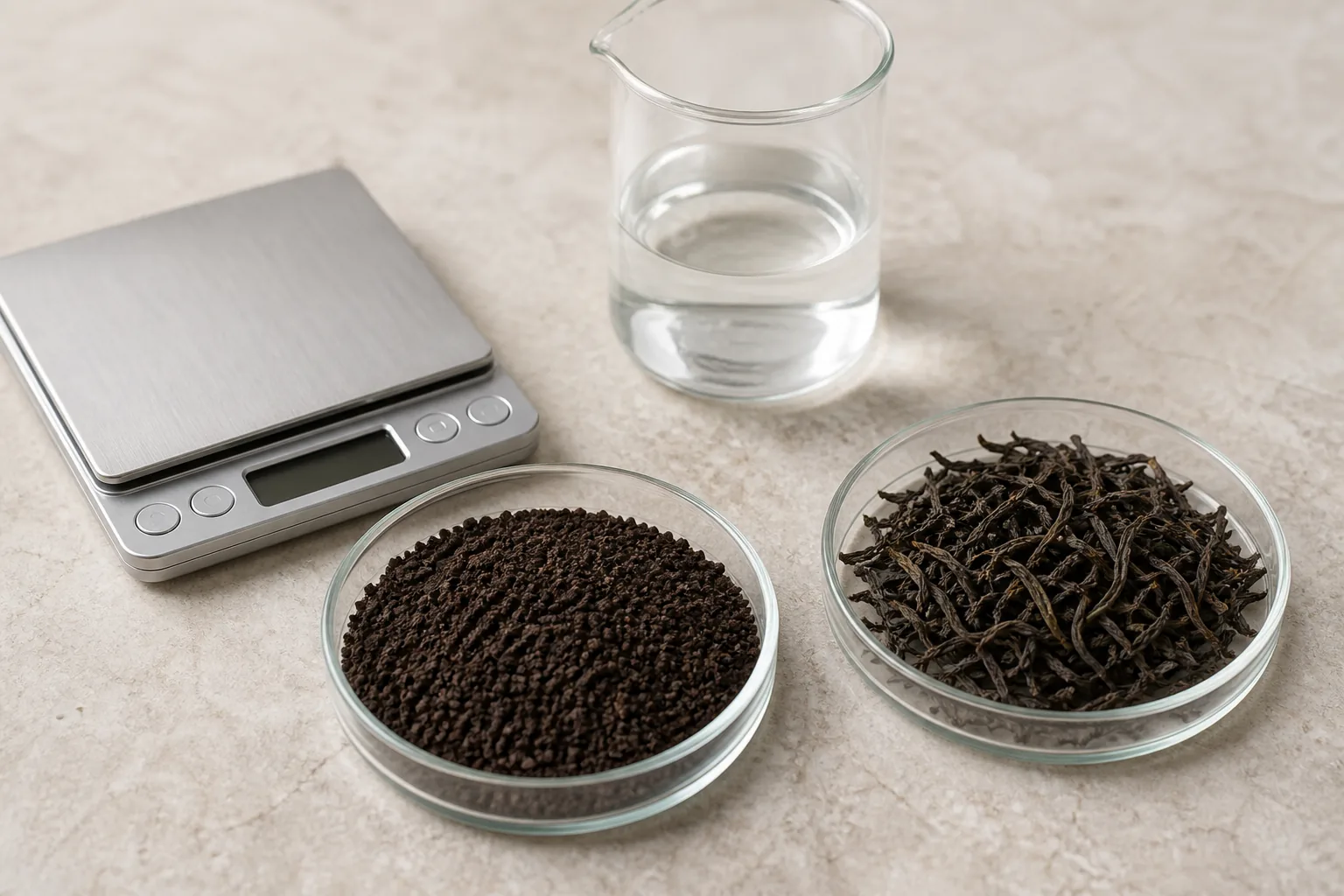
Particle size decides how quickly Assam becomes strong. A fine tea-bag filling may reach its useful point before an intact leaf has fully opened, so one universal five-minute instruction produces uneven results.
Use a roomy tea infuser that lets orthodox leaves unfold.
A tight ball traps expanding leaf against the mesh, which gives water an easy path around the outside and a less even extraction inside.
Measure a repeatable starting cup
A kitchen scale removes the largest uncertainty because a teaspoon of wiry leaf weighs far less than a teaspoon of compact CTC. If you do not have a scale, fill the same spoon the same way each time and change only one variable on the next brew.
A balanced plain Assam
- Leaf
- 2.5 g orthodox Assam
- Water
- 200 ml freshly boiled water
- Temperature
- 95 to 100 C
- Time
- 3 to 4 minutes, tasting at 3
- Vessel
- Pre-warmed cup infuser or small pot
- Finish
- Remove every leaf before serving
Fresh water matters because repeated boiling drives out dissolved gases and concentrates minerals. Hard brewing water can mute the bright copper color and make the drying finish feel heavier.
Pre-warm the vessel when it is thick or cold, then empty it before adding leaf.
This prevents a large temperature drop without leaving extra water to dilute the measured brew.
Steep, taste, and stop the extraction cleanly
Pour all the water promptly, cover the vessel, and start the timer once the leaf is wet. Agitation is optional; one gentle stir can wet floating leaves, but repeated stirring accelerates extraction and makes the result harder to reproduce.
Assam tea method
- HeatBring fresh water to a full boil and pre-warm the cup or pot
- DoseMeasure the leaf for the actual water volume
- PourWet all the leaf and cover the vessel
- TasteCheck CTC early and orthodox leaf after about three minutes
- StrainRemove the leaf completely when malt, body, and briskness balance
- ServeDrink plain or add a small amount of milk while the tea is hot
The timer ends when the leaf leaves the water. Lowering a plunger or moving a basket to the side while it still drips into the cup allows extraction to continue.
Judge the liquid after it cools for a few seconds.
Very hot tea hides sweetness and exaggerates neither bitterness nor astringency accurately, so an immediate sip can persuade you to steep too long.
Build Assam for milk without making it coarse
Milk dilutes aroma and tea solids as it softens the drying sensation of tannins. The practical response is more leaf, not a much longer steep, because time keeps extracting the rough compounds after the useful flavor is already present.
For one 200 ml finished mug, try 3 g of CTC in about 160 ml of water, strain at two to three minutes, then add 40 ml of warm or cold milk. Adjust those volumes to taste, but keep the total serving in view.
Add sugar while the tea is hot enough to dissolve it.
If you are making a cooked spiced drink, use the dedicated masala chai method because simmering tea with spice and milk is a different extraction job.
Read weakness, bitterness, and dryness separately
Weak Assam has little aroma, a pale liquor, and a short finish; it needs more leaf or hotter water. Bitter Assam gives a sharp unpleasant taste, while astringent Assam leaves the mouth feeling dry, and both often point to excessive time with small particles.
| Result | Likely cause | Next adjustment |
|---|---|---|
| Thin and pale | Too little leaf or large heat loss | Add leaf and pre-warm the vessel |
| Strong but hollow | Too much CTC for the water | Reduce dose before shortening time |
| Drying finish | Steep ran too long | Strain earlier |
| Harsh with milk | Tea was over-extracted before milk | Increase dose and restore a shorter time |
| Cloudy surface | Mineral-rich water or cooling tea solids | Try filtered water and serve promptly |
| Leafy but not malty | Orthodox leaf under-extracted | Add 30 seconds or slightly more leaf |
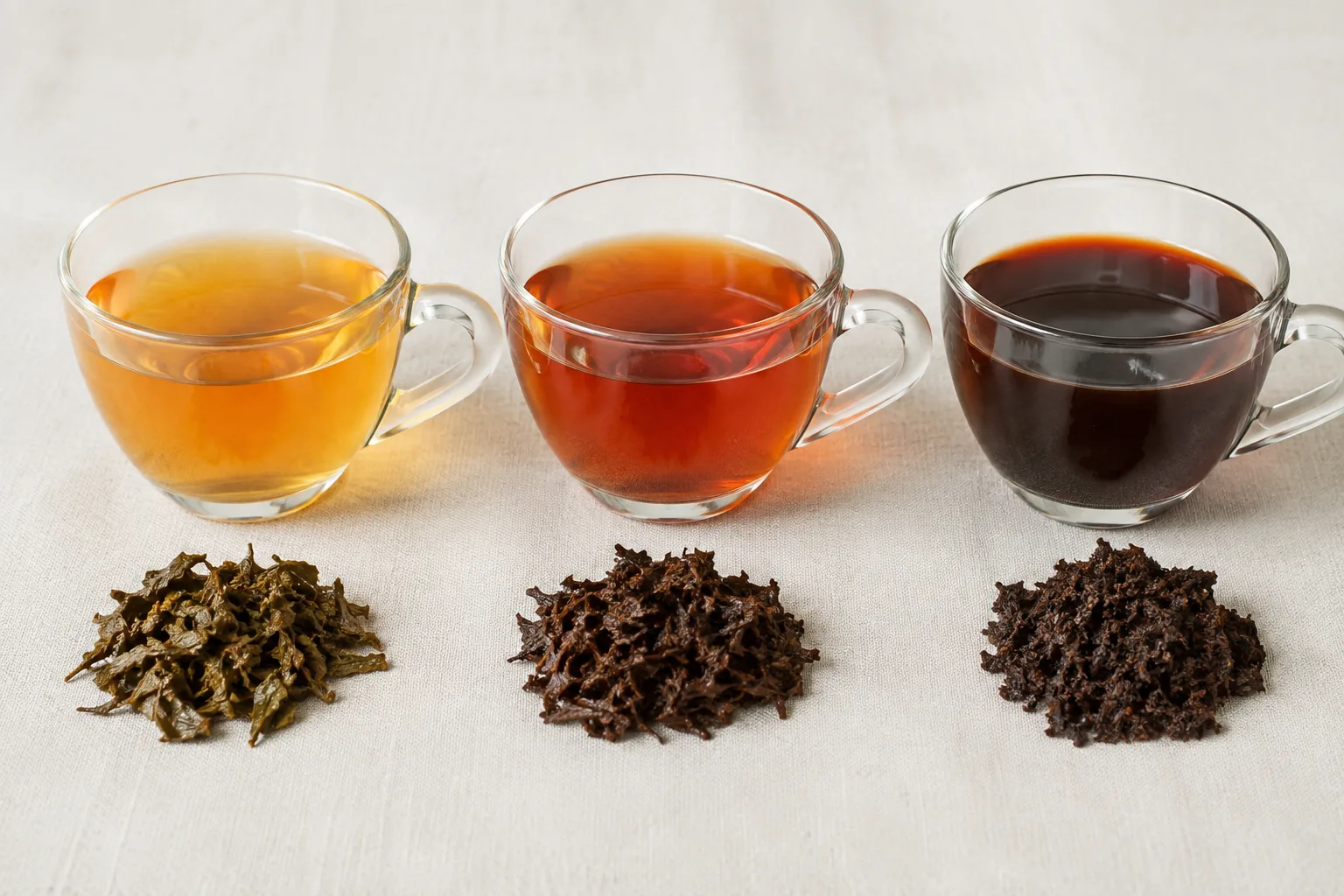
Color alone cannot tell you whether Assam is balanced. CTC can look dark before its aroma feels complete, and a fine tippy leaf can taste full while remaining a bright transparent copper.
The dedicated Assam problems guide goes further into stale leaf, water faults, and storage when timing changes do not solve the cup.
Scale a pot without making the last cup rough
Keep every cup from the pot equally extracted
- Scale together | Increase water and leaf in the same proportion
- Retain heat | Pre-warm and cover the brewing pot
- Stop extraction | Decant all liquor away from the leaves
- Adjust at the table | Add milk separately to each served cup
A teapot serving three people needs its water and leaf scaled together. For 600 ml, begin with 7.5 g of orthodox leaf rather than making one ordinary 200 ml dose sit three times longer.
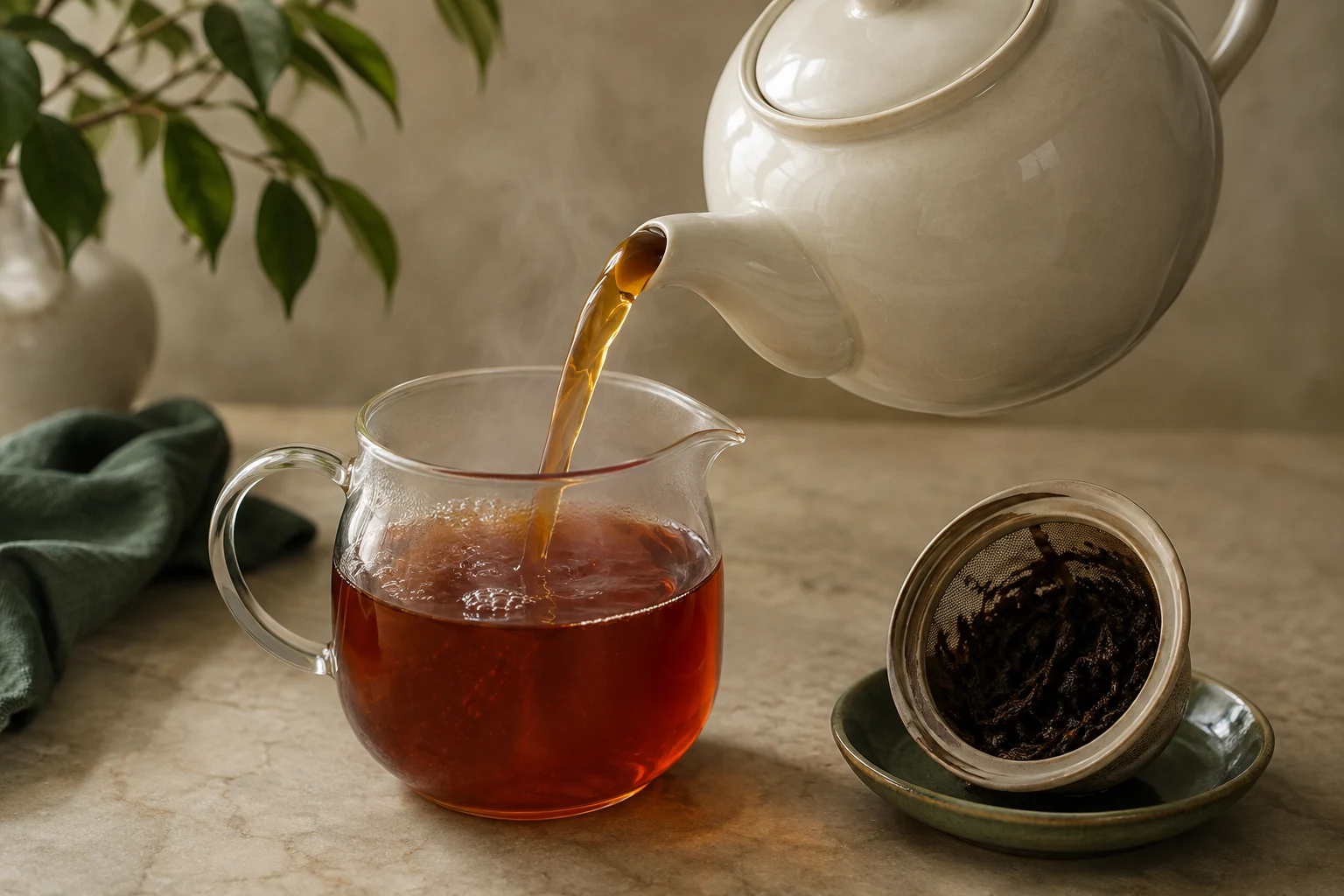
Pre-warm a large pot because its ceramic or metal absorbs more heat than a mug. Once brewed, decant all the tea into a second warm pot or serve every cup; tea left around the leaves grows more astringent while the first cup is being drunk.
A tea cosy retains heat but does not stop extraction. Separating liquor from leaf is the only reliable stop, whether the vessel is a mug, a small pot, or a family teapot.
When people want different amounts of milk, brew a concentrated but balanced pot and let each cup be adjusted separately. Putting milk in the shared pot hides the tea's strength, complicates reheating, and shortens the time leftovers can sit safely.
Match the packet to the cup you want
A golden-tipped orthodox Assam is bought for aroma and layered malt, so it deserves a plain first tasting and a gentler extraction. A uniform CTC Assam is chosen for speed, color, and enough force to cross milk and sugar.
Breakfast blends often combine Assam body with a brighter Ceylon or quieter Chinese black tea. Their timing follows the smallest particles in the blend, because those surfaces over-extract before the larger leaves have finished opening.
Price does not decide whether milk is appropriate; the intended character does. Milk can be excellent in a robust tea and wasteful in a delicate one, so taste once before setting a permanent routine.
Freshness also changes the useful dose. A well-stored recent leaf produces aroma before roughness, while faded leaf may require so much material that the cup becomes tannic without ever becoming fragrant.
Re-steep only leaf that still has something to give
- - The first infusion used intact orthodox leaf
- - The wet leaf still smells malty, fruity, or honeyed
- - You can brew it again promptly in the same session
- - You expect a lighter cup rather than a copy of the first
Whole orthodox Assam can produce a lighter second infusion. Use freshly boiled water and add roughly one minute, expecting less body and more woody or honeyed notes rather than a duplicate of the first cup.
CTC and fine bag tea usually surrender most of their useful material in one fast extraction. A second steep from those particles is often colored water with little aroma, so fresh leaf is the better use of the kettle.
Do not leave wet leaf at room temperature for the afternoon.
Re-steep it promptly, then discard it and rinse the basket or pot so old tannin and damp leaf aromas do not enter tomorrow's cup.
Adjust temperature, dose, and time in the right order
When an orthodox Assam tastes thin but smells promising, increase dose first. More leaf raises malt, fruit, and body together, while a longer steep disproportionately extends the drying finish.
When the same leaf tastes closed and woody, raise water temperature before adding time. A cold pot or water poured long after boiling may never warm the rolled leaves enough to release their aromatic material evenly.
CTC needs the opposite caution because its large exposed surface extracts quickly. Start with a smaller dose and an early taste, then add a little leaf if the cup lacks body; a long unattended steep can move from balanced to abrasive before its color changes much.
A sour or metallic note is rarely an Assam signature. Rinse a new metal infuser, descale a kettle carrying mineral deposits, and compare the same leaf in a clean glass or porcelain vessel before blaming the tea.
Room temperature changes the cup more than many recipes admit. A winter kitchen, thick ceramic pot, and small water volume can remove enough heat to weaken extraction, while a thin glass infuser in summer stays close to the kettle temperature.
Correct heat loss before compensating with extra minutes. Pre-warming and covering the vessel preserve extraction without forcing the leaf to sit in cooling water after its best aroma has already emerged.
Brew tea bags and loose leaf for their different jobs
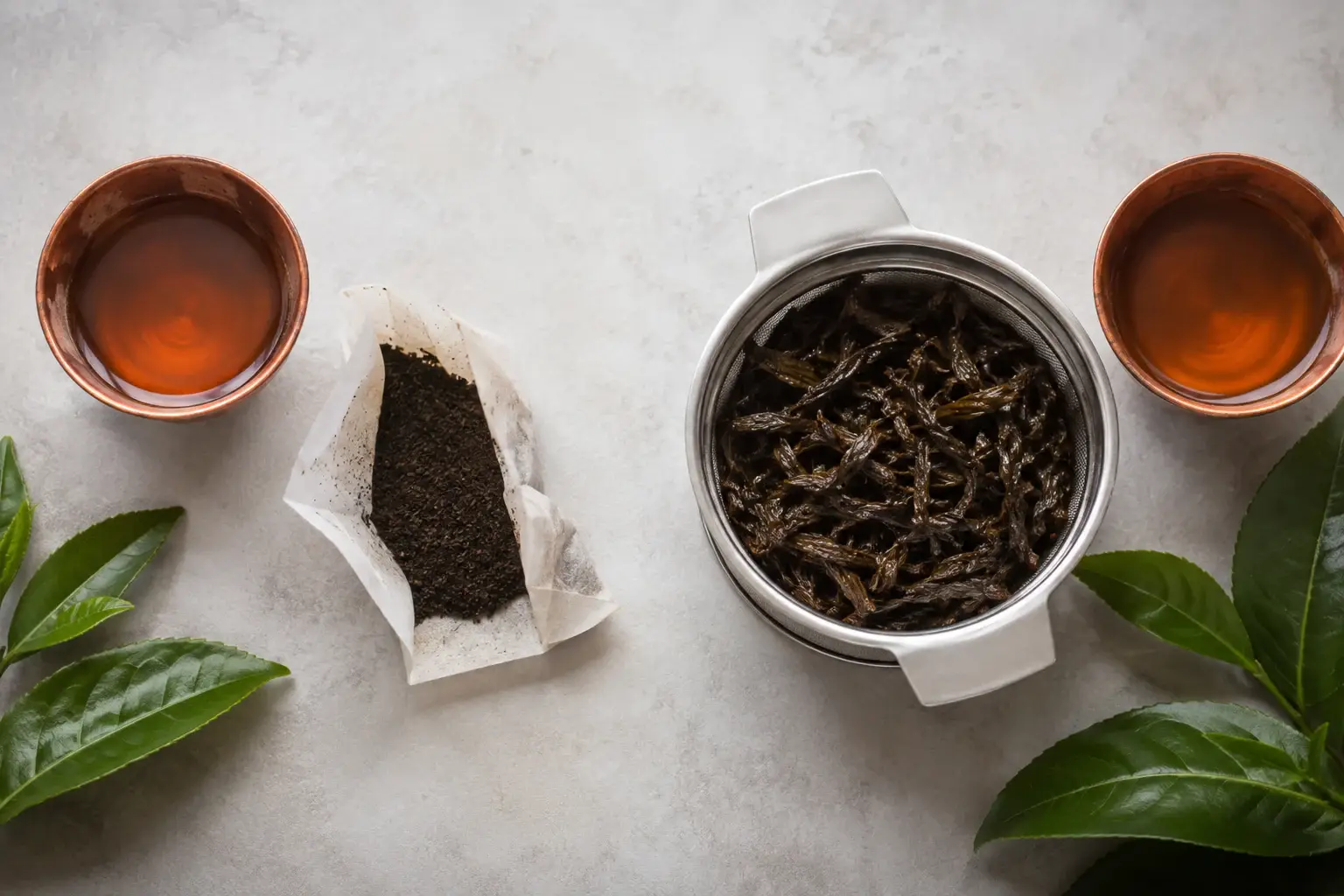
| Format | What to inspect | First useful taste |
|---|---|---|
| Flat paper bag | Fine fannings or CTC | About 90 seconds |
| Pyramid sachet | Whether it holds fragments or long leaf | 90 seconds to 3 minutes |
| Loose CTC | Small even pellets | 90 seconds to 2 minutes |
| Loose orthodox | Long twisted leaves | About 3 minutes |
An Assam tea bag usually contains CTC or fannings because those particles make a strong mug quickly. Treat it as a fast one-shot format: pour freshly boiled water, taste early, and remove the bag rather than leaving it in while drinking.
Loose orthodox Assam needs space and a longer window, but it also rewards closer tasting. The opening minute may smell woody, the middle gains malt and dried fruit, and the final useful point adds briskness before dryness begins to dominate.
Do not squeeze a tea bag hard against the cup.
That releases concentrated liquor trapped among the fine particles and can make the last mouthful seem harsher than the brew you actually timed.
A pyramid sachet provides more room than a flat paper bag, yet its leaf size still controls speed. Look through the material: long recognizable pieces behave more like loose leaf, while dark crumbs behave like a conventional bag.
A convenient format still needs controlled extraction. A bag, mug, and timer can make a more balanced Assam than expensive loose leaf abandoned in a decorative pot.
Keep milk temperature and dilution under control
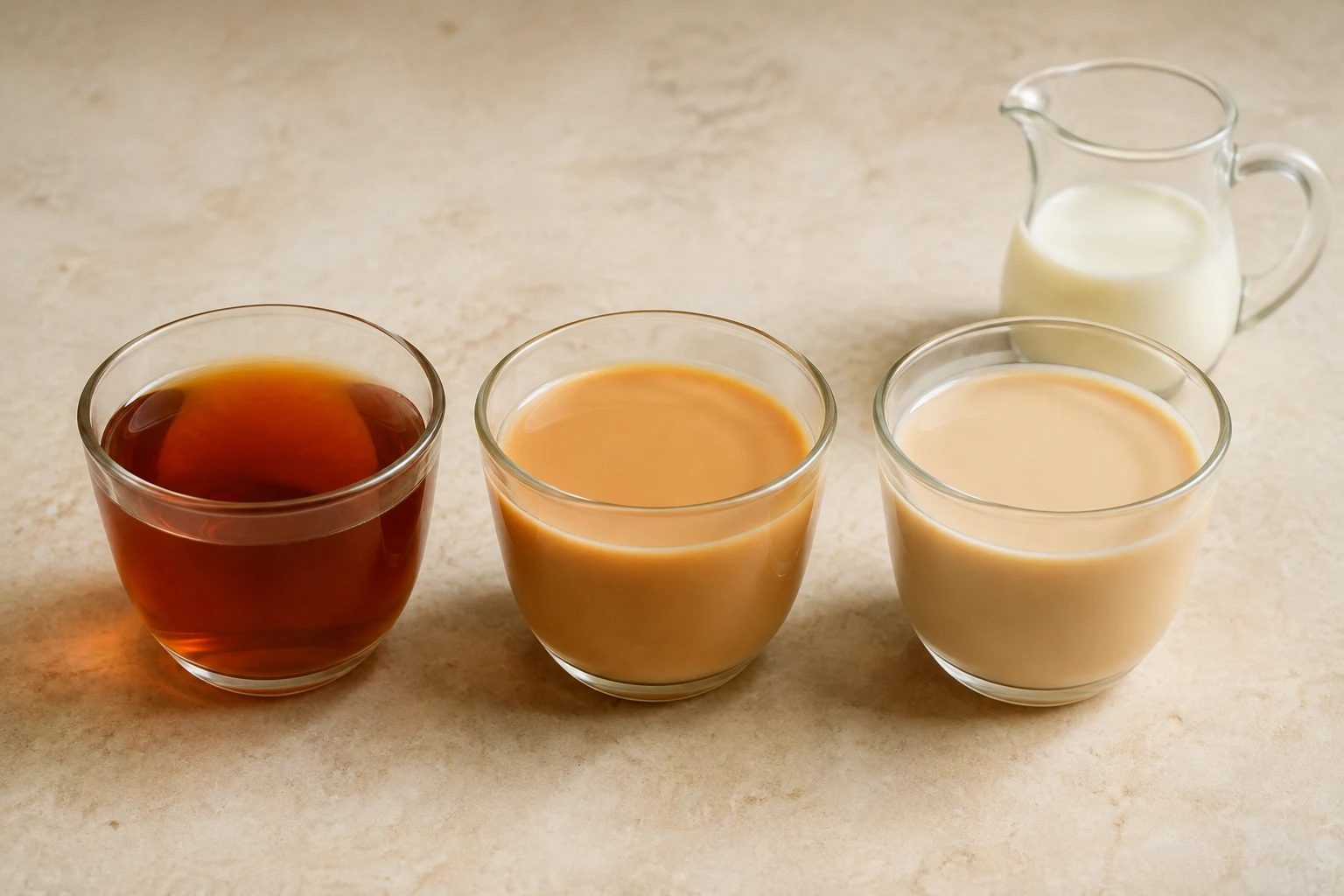
What changes as milk increases
- Small splashSoftens the drying edge while keeping malt clear
- Moderate additionSuits a concentrated CTC or breakfast-style brew
- Large additionRequires a deliberately stronger base or the tea disappears
- Very hot plant drinkGreater chance of visible separation; add slowly off the boil
Cold milk cools a small cup quickly, while boiled milk brings a cooked sweetness that can cover malt. Warm milk gently when using a large share, or use a small cold splash when the tea has enough heat and concentration to absorb it.
Add milk in measured steps during the first trials. Ten milliliters can change a 200 ml cup noticeably, and pouring by color encourages a different dilution whenever the tea itself brews darker or lighter.
Plant drinks bring their own cereal, nut, or bean flavors and may separate in very hot tea; the guide to plant milk curdling explains why acidity and heat make that more likely. Let the tea settle briefly off the boil and add a stable unsweetened product slowly if a clean appearance matters.
Milk should soften Assam without replacing its aroma. When the finished cup tastes only creamy or sweet, reduce the addition before making the tea more aggressive.
Serve the Assam you actually brewed
A plain orthodox Assam benefits from a light-colored cup that makes clarity visible. Let it cool just enough for malt, dried fruit, and briskness to separate, then decide whether it needs milk rather than adding it automatically.
A milk-built CTC Assam should remain recognizably tea after the addition. A successful cup keeps its malty center while losing the abrasive edge.
Pairing and tasting questions belong to the Assam taste guide, while caffeine varies enough with dose and particle size to need the separate Assam caffeine guide.
Assam tea method
- Makes
- 1 cup, about 200 ml
- Water temp
- 95 to 100 C / 203 to 212 F
- Total time
- 6 min
What you need
- 2 to 3 g Assam tea
- 200 ml fresh water
- Milk or sugar, optional
Equipment
- Kettle
- Scale or consistent measuring spoon
- Roomy infuser or small teapot
- Timer
Method
- HeatBoil fresh water and pre-warm the vessel.
- DoseMatch leaf amount to 200 ml of water.
- PourWet all the leaf and cover.
- TasteBegin early for CTC and at three minutes for orthodox leaf.
- StrainRemove every leaf once the cup is balanced.
- FinishAdd milk only after judging the brewed strength.
Common questions
How long should Assam tea steep?
Start tasting CTC at about 90 seconds to two minutes and orthodox leaf at about three minutes. Strain when the malty aroma and brisk body balance, because particle size changes the useful window.
Should Assam tea be made with milk?
Either style is valid. Tippy orthodox Assam often shows more detail plain, while strong CTC Assam is well suited to milk; build that version with a larger leaf dose rather than a much longer steep.
Can Assam tea be steeped twice?
Whole orthodox leaf can give a lighter second infusion with about a minute added. CTC and fine tea-bag particles usually extract too completely on the first pass to make a useful second cup.