AeroPress vs French press
AeroPress vs French Press: What the Filter Takes Out
Both are immersion brewers, so the coffee steeps the same way in each. Paper takes out the oils and the fines and metal leaves both in, and that single difference is the one you taste first.
An AeroPress forces the brew through a paper disc, giving a clean, bright, light-bodied cup, one serving at a time, in two or three minutes, and it ejects a dry puck that cleans up in seconds. A French press pushes a metal mesh through the brew, so oils and fine particles reach the cup and it lands heavy, round and sweet with silt at the bottom, from 350 ml up to a litre. The AeroPress is far more forgiving of a poor grinder; the French press needs a burr grinder before it shows what it can do.
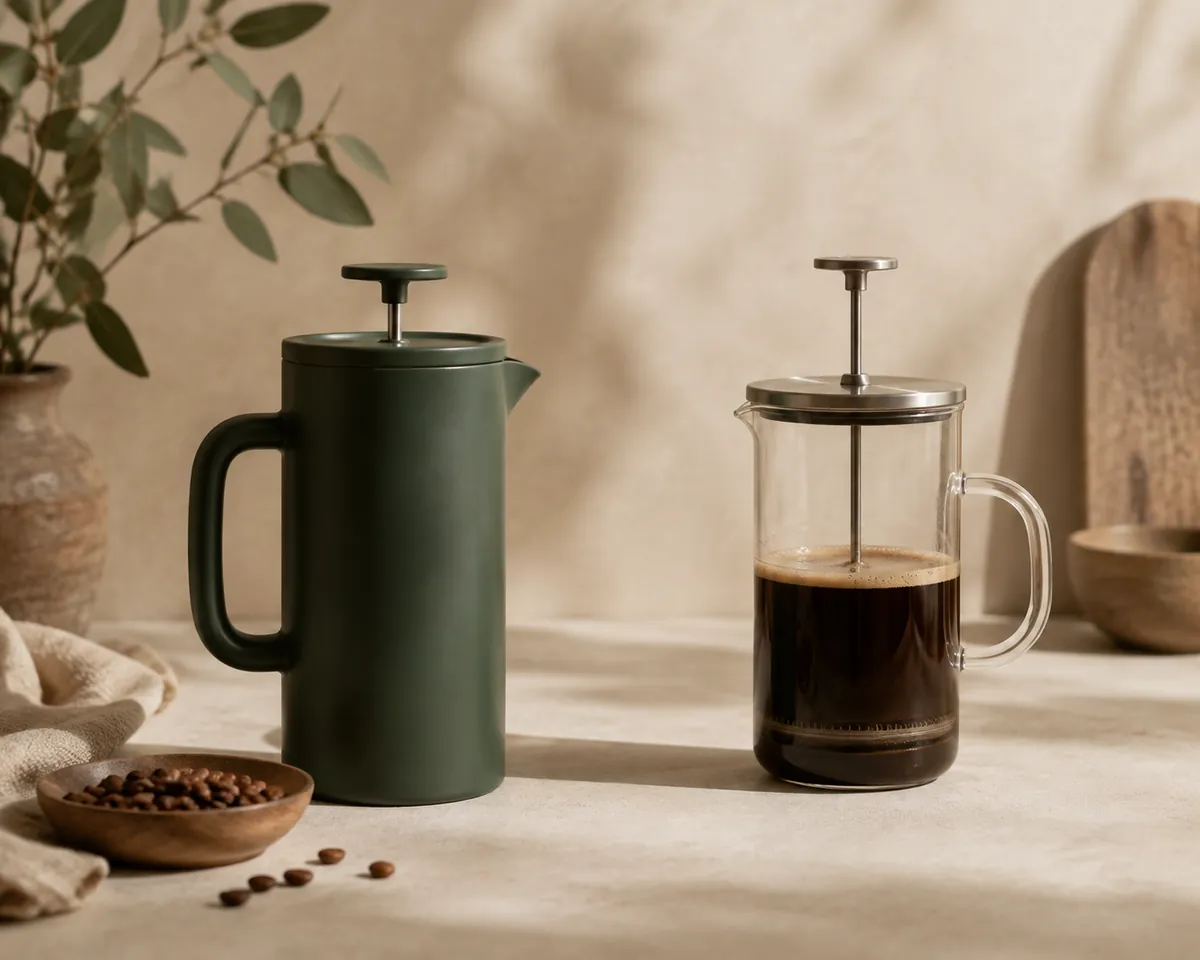
Side by side
| Attribute | AeroPress | French press |
|---|---|---|
| Filter | Paper disc, or a metal mesh disc | Metal mesh screen |
| Body | Clean and light | Heavy and full |
| Steep time | 1 to 2 minutes | About 4 minutes |
| Grind | Medium-fine, like table salt | Coarse, like sea salt |
| Capacity | One cup, 200 to 250 ml | 350 ml to 1 litre |
| Pressure | Roughly 1 bar, briefly, by hand | None |
| Cleanup | A dry puck, about fifteen seconds | Wet grounds and a three-part mesh |
| Durability | Moulded plastic, survives a rucksack | Usually glass, and the beaker breaks |
| Tolerance of a poor grinder | High; paper catches the fines | Low; every fine reaches the cup |
Both of these are immersion brewers. Coffee and water sit together for a few minutes, and then the two are separated.
Nothing about that basic idea differs between them.
What differs is the filter. An AeroPress pushes the brew through paper; a French press pulls a metal mesh down through it.
Paper removes the oils and the fine particles, and metal leaves both in the cup, which is the difference you taste before you notice anything else.
Everything else that separates them, and there is plenty, is about the vessel rather than the coffee: how much each makes, how long it takes, how it survives a rucksack, and how much mess is left behind.
Two immersion brewers with different filters
An AeroPress is a plastic tube with a rubber-sealed plunger and a small filter cap that takes a paper disc. Coffee steeps in the tube for a minute or two, then the plunger forces the liquid through the paper into a cup.
A French press is a glass or steel beaker with a plunger carrying a fine metal mesh. Coffee steeps loose in the beaker for around four minutes, then the mesh is pushed down to hold the grounds at the bottom while the liquid is poured off.
| AeroPress | French press | |
|---|---|---|
| Filter | Paper disc, or a metal mesh disc | Metal mesh screen |
| Separation | Brew forced through the filter | Grounds pushed away from the brew |
| Steep | 1 to 2 minutes | About 4 minutes |
| Pressure | Roughly 1 bar, by hand | None |
| Capacity | One cup, 200 to 250 ml | 350 ml to 1 litre |
| Body | Clean and light | Heavy and full |
The word press flatters both. Neither is doing anything like what an espresso machine does at nine bars, and the full account of each sits under the AeroPress and the French press.
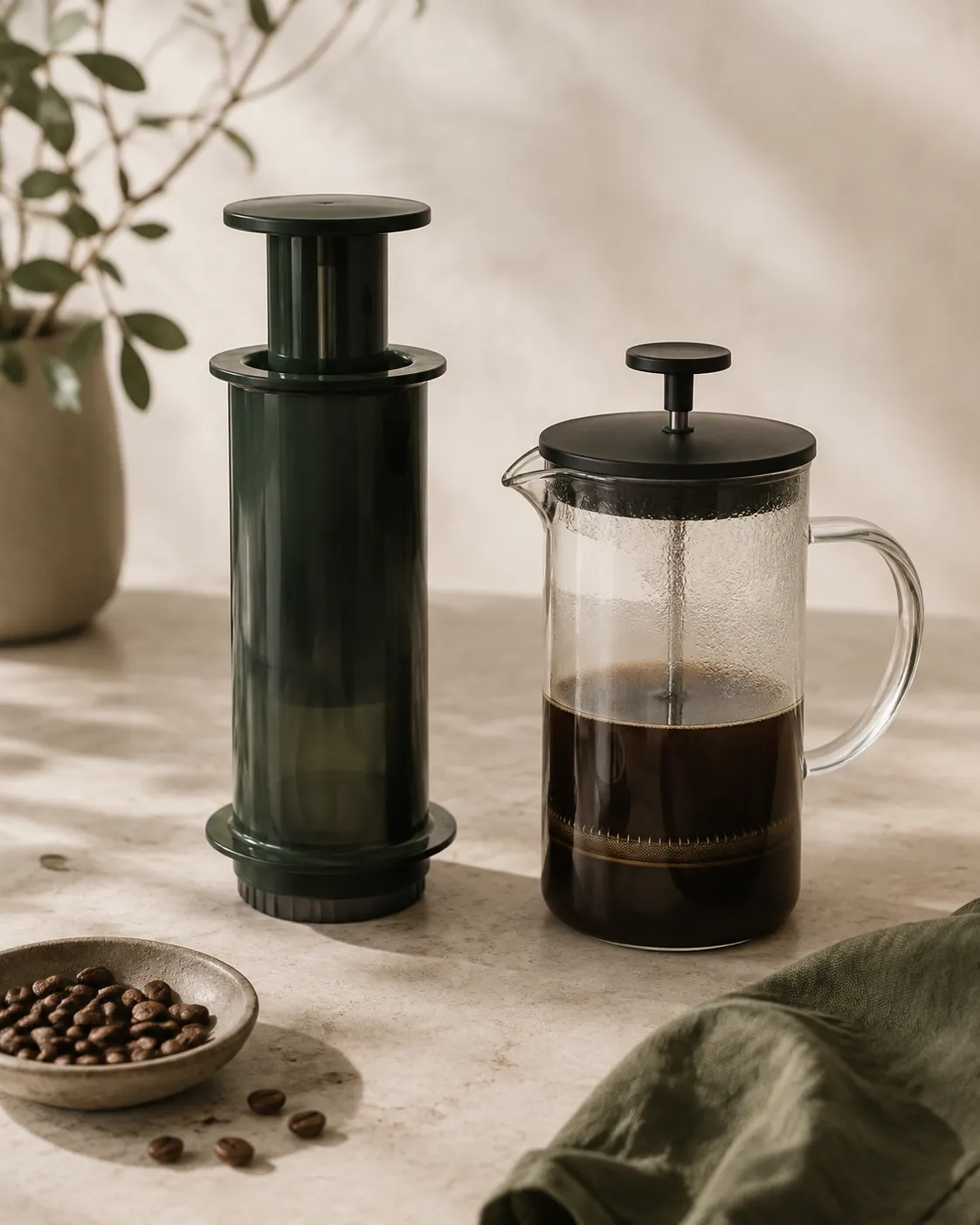
What paper takes out and metal leaves in
Paper holds back two things that matter: the coffee oils, and the very fine particles known as fines. Both pass straight through a metal mesh, and both change the cup substantially.
Oils carry aroma and give a drink weight on the palate. Take them out and the coffee tastes cleaner and more defined, with the acidity and the individual flavours easier to pick apart.
Leave them in and it tastes rounder, heavier and less precise.
Fines are the other half. They keep extracting after the brew is nominally over, they settle as sludge at the bottom of the cup, and they contribute a slightly gritty texture that some people like and some cannot get past.
What the filter decides
- OilsPaper removes most; mesh passes them
- FinesPaper stops them; mesh lets them through
- BodyLight and clean, against heavy and full
- ClarityBright and separated, against muddy and rounded
- Last mouthfulClean, against silt at the bottom
The filter, not the brewer, is doing most of the work here, which is why an AeroPress fitted with a metal disc tastes noticeably more like a French press. That swap is the cheapest way to hear the difference for yourself.
Pressure, and how much it actually contributes
The AeroPress plunger generates perhaps one bar over the couple of seconds of the press, which sounds significant and is not.
Extraction is overwhelmingly decided during the steep, before the plunger moves at all. The press is a separation step, and its main contribution is speed rather than strength.
That is worth stating plainly because the AeroPress is often described as making espresso, and it does not. A shot needs about nine bars sustained through a compressed puck, which is a different mechanism at a different scale.
What the press does contribute is control over the end of the brew. A French press keeps the grounds in contact with the liquid until the last drop is poured, so it continues extracting in the beaker; an AeroPress stops the moment the plunger bottoms out.
That is the same problem cold brew solves by straining, and the reason a decanted press pot tastes steadier than one left standing.
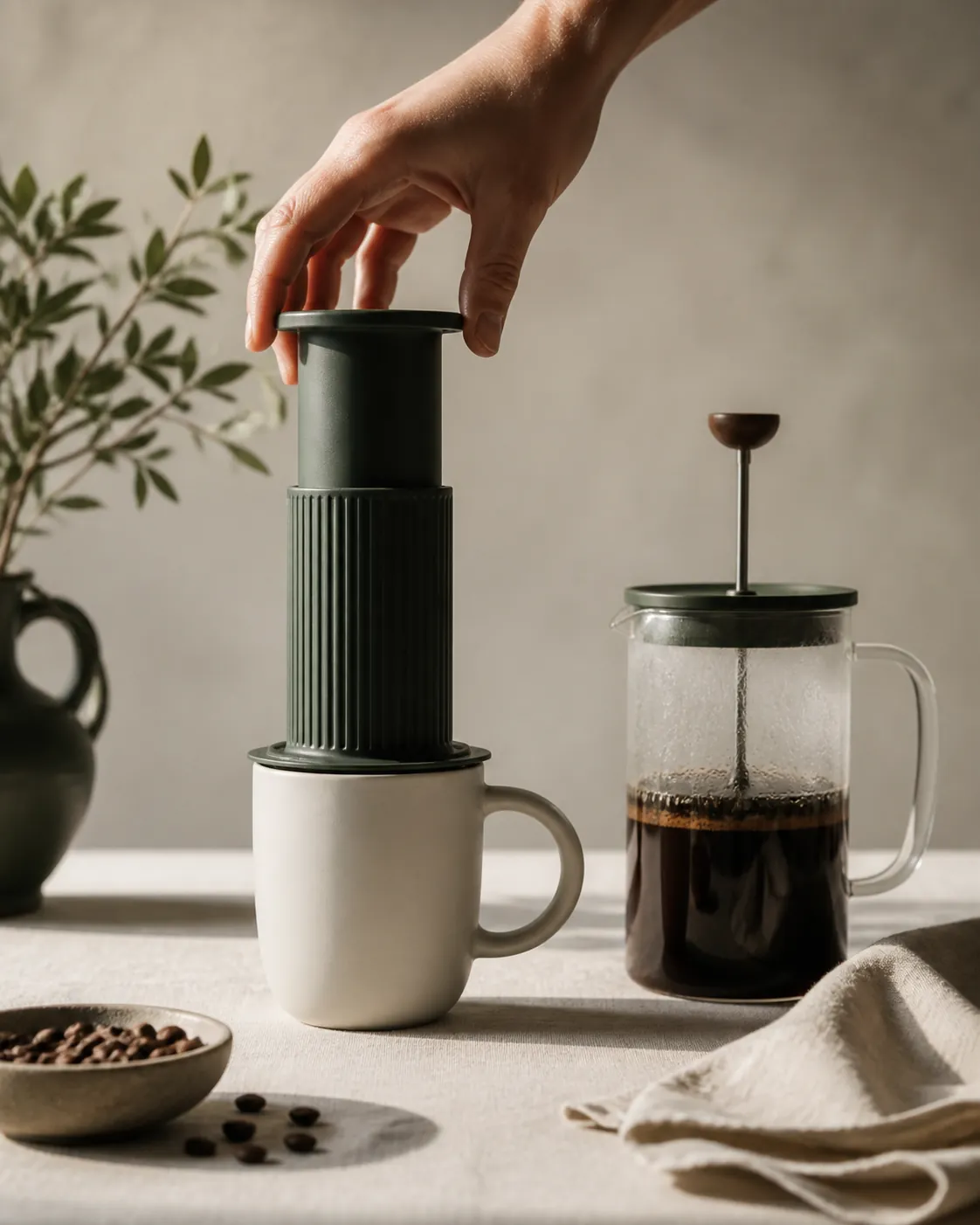
Grind: fine against coarse, and why
The filters dictate the grind, and the two brewers sit at opposite ends of the range.
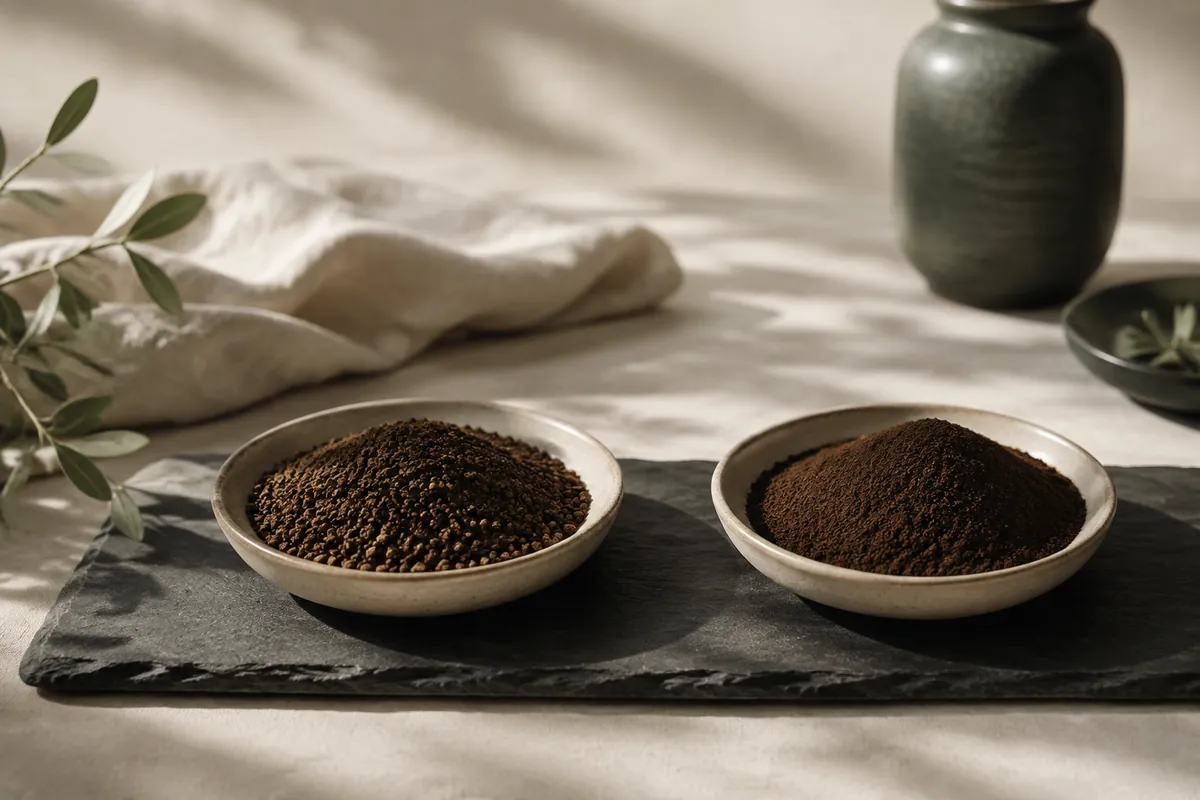
A French press needs a coarse grind, close to sea salt. Anything finer produces more fines than the mesh can hold back, and the cup turns muddy and over-extracted while the plunger becomes hard to push.
An AeroPress takes a medium-fine grind, closer to table salt, because the paper catches whatever the grind produces. That freedom is one of its real advantages and it is why the same brewer supports so many contradictory recipes.
Grind, coarsest first
- Cold brewVery coarse, almost cracked
- French pressCoarse, like sea salt
- Drip and pour-overMedium, like sand
- AeroPressMedium-fine, like table salt
- EspressoFine, like flour
Grind quality matters more for the French press than for anything else, and a burr grinder is close to essential. A blade grinder produces both boulders and dust at once, and the mesh passes the dust straight into the cup.
The step-by-step version is under making french press.
What each cup tastes like
Side by side with the same beans, the two are easy to tell apart at the first sip and the difference is not subtle.
The AeroPress cup is clean, bright and defined. Acidity comes through clearly, individual flavour notes are separable, and the finish is short and tidy.
It sits closer to a pour-over than most people expect.
The French press cup is heavy, round and sweet, with a thicker mouthfeel and a longer finish. Individual notes blur together into something fuller and less articulate, and the last centimetre of the cup carries silt.
Neither is objectively better, and preference splits fairly evenly. Bright and clean against heavy and rich is the choice, and it is the same axis that separates french press from pour-over.
Strength is a separate question from body, and it confuses the comparison constantly. A French press tastes stronger because it is heavier, but the actual dissolved coffee depends on the dose and the ratio, which caffeine by brew method sets out across the range.

How much each one makes
This is the difference that decides the purchase for most households, and it has nothing to do with flavour.
An AeroPress makes one cup. The tube holds around 250 ml at the outside, and while a concentrated brew can be diluted to fill a larger mug, it remains fundamentally a single-serving device.
A French press scales properly. A three-cup beaker makes 350 ml, an eight-cup makes a litre, and everyone at the table is served from one brew at one time.
- One person, one cup at a time: the AeroPress is built for it
- Two or more people: the French press wins outright
- A large mug rather than a small cup: the French press, comfortably
- Brewing repeatedly through a morning: the AeroPress, since cleanup is trivial
- A pot that stays hot on the table: neither, and both cool quickly
Nothing about the AeroPress scales, and no accessory changes that. Two cups means brewing twice.
Time at the counter, start to finish
Counted honestly from grinding to drinking, the AeroPress is faster, and the gap is larger than the steep times suggest.
Where the minutes actually go
- GrindingThe same for both, and the same grinder
- AeroPressSteep one to two minutes, press in twenty seconds
- French pressSteep four minutes, then pour slowly to leave the silt
- CleaningFifteen seconds against two or three minutes
- TotalTwo to three minutes against six or seven
A French press wants four minutes of steeping, and the pour that follows is slow if you want to leave the silt behind. Called from the top it is a six or seven minute exercise.
An AeroPress steeps for one to two minutes and presses in about twenty seconds. Two to three minutes covers the whole thing including the grind, which is the difference between a deliberate ritual and something you can do while a laptop starts.
Neither wants a gooseneck kettle or any pouring technique, which is a real advantage both share over filter methods and over a drip coffee maker that has to be filled and switched on. Water goes in, and that is the end of the skill required.
Neither keeps coffee hot either, which is where a thermal drip machine still wins for a household that drinks through a morning.
Cleaning up
This is the AeroPress's clearest win and the reason many people who own both reach for it on a weekday.
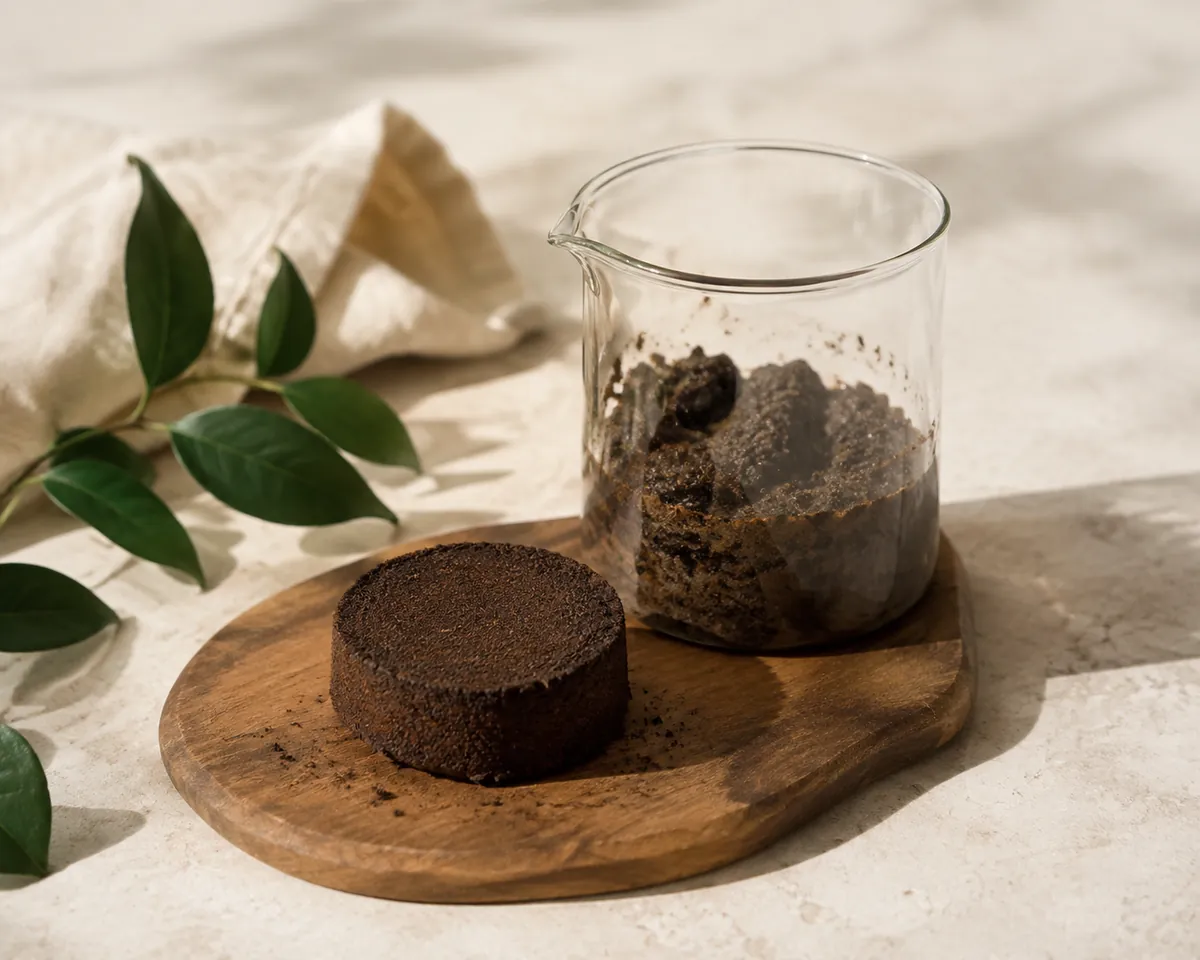
Pop the cap off, push the plunger through, and a dry puck of grounds ejects into a bin in one movement. Rinse the seal, and the whole cleanup is perhaps fifteen seconds with no wet grounds anywhere.
A French press is genuinely unpleasant to clean. Wet grounds pack the bottom of the beaker, they cannot go down a sink without eventually blocking it, and the mesh assembly holds fines that need rinsing out of three separate parts.
AeroPress
A dry puck, ejected in one push, then a rinse
French press
Wet grounds scooped or swilled out, then a three-part mesh
Sink risk
Grounds down a drain build up; both need a bin
Dishwasher
Both largely safe, though seals and glass prefer hand washing
Cleanup is a daily cost, and it compounds in a way a one-off comparison of cup quality does not.
Travel, durability and where each lives
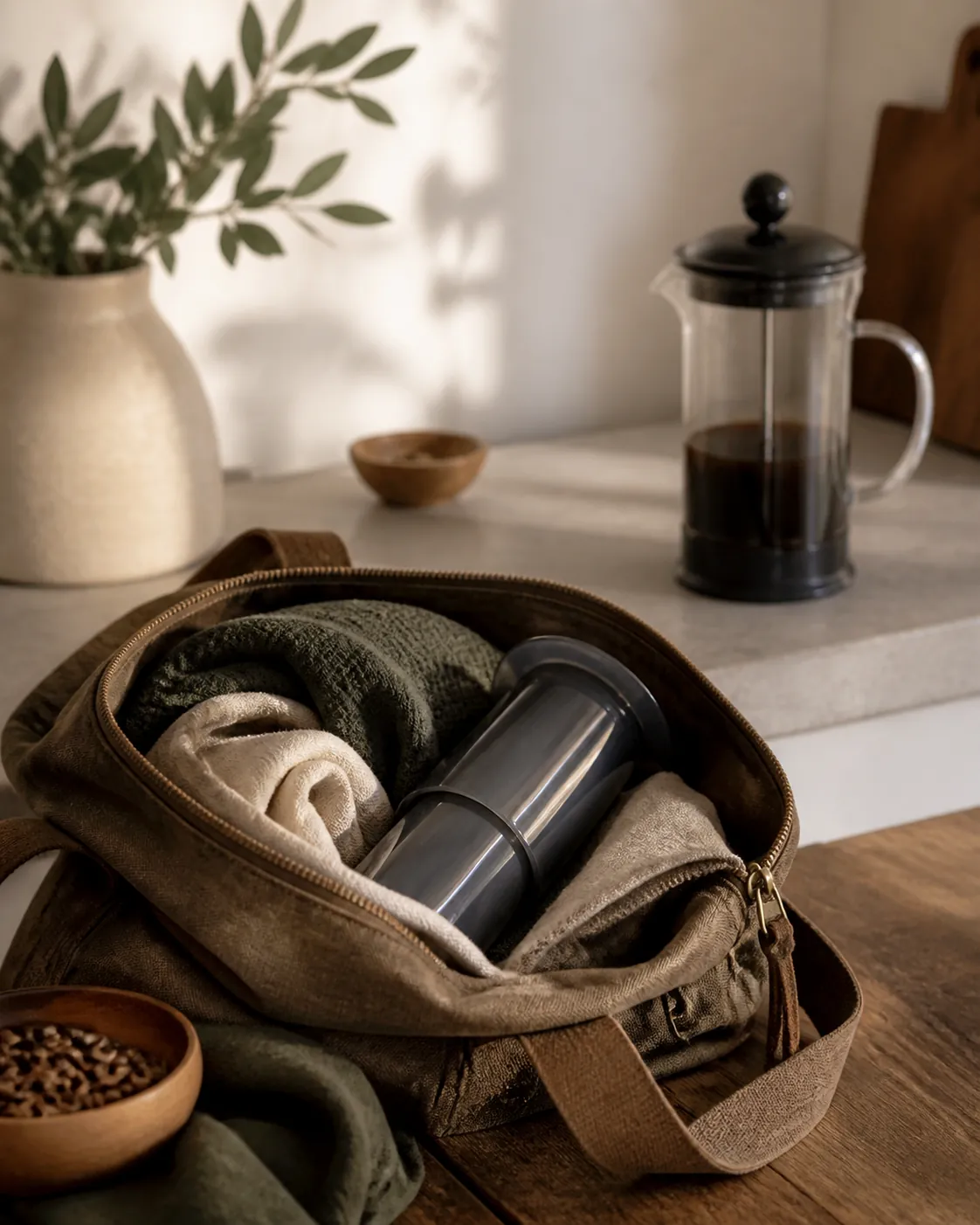
An AeroPress is moulded plastic with a rubber seal, and it survives being thrown in a bag. It has no glass, no hinge and nothing that snaps, which is why it turns up on camping trips and in hotel rooms.
A French press is usually glass in a metal frame, and the beaker is the part that breaks. Steel and plastic versions exist and are considerably more robust, at the cost of not being able to see the brew.
Neither needs power, and both work with water from any kettle, which puts them in a different category from an espresso machine or a moka pot that wants a hob.
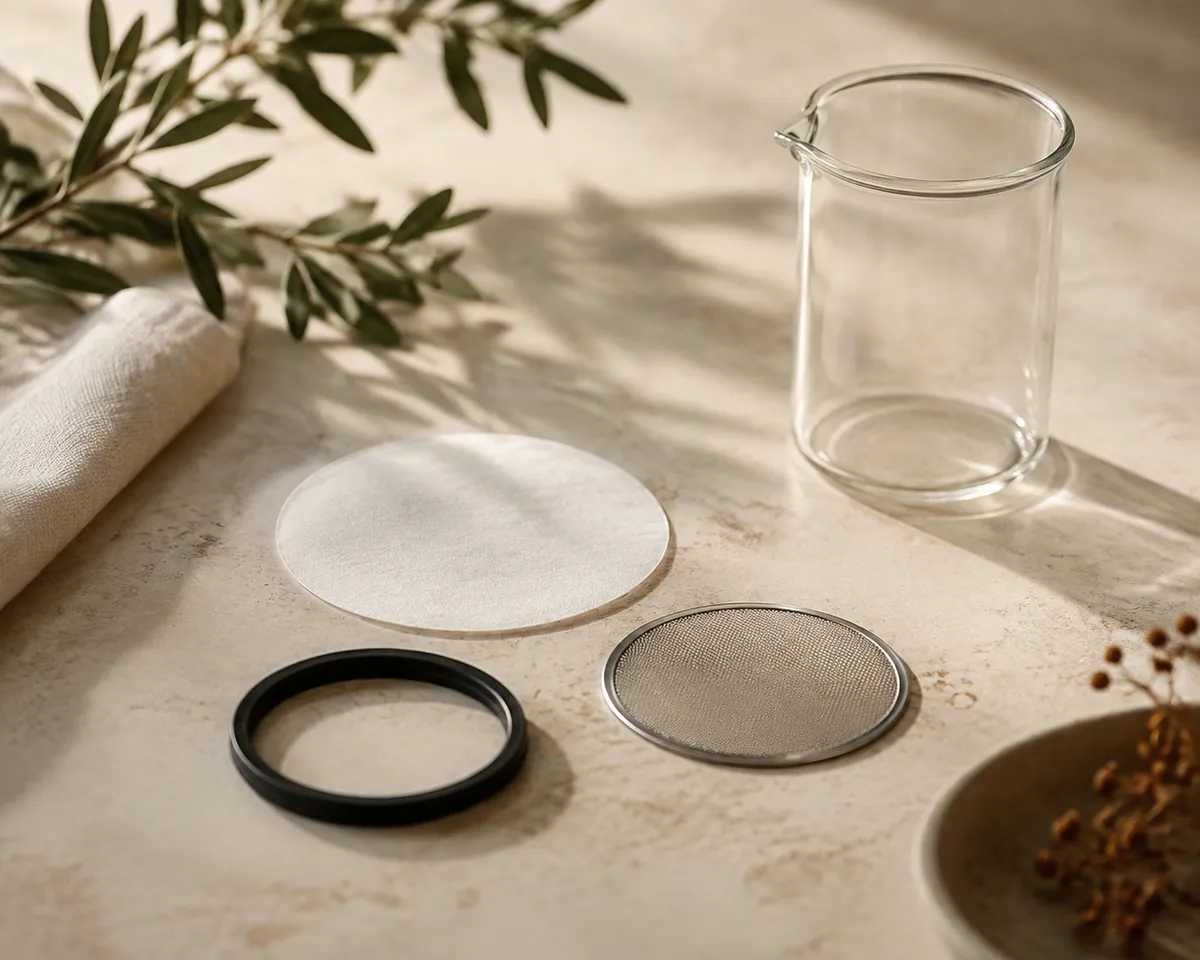
Running cost separates them more than purchase price does. An AeroPress consumes a paper disc per cup, which is small but permanent, and a French press consumes nothing at all once bought.
Over a year of daily use the papers cost roughly what a bag of coffee does, and metal discs exist for anyone who objects to that on either count.
Replacement parts split the same way. The AeroPress seal perishes and hardens after a few years and is sold separately; a French press loses its beaker to breakage and its mesh to wear, and both are usually cheaper to replace than the whole unit.
For anywhere away from a kitchen, the AeroPress is the obvious answer, and it is the one piece of coffee equipment worth owning purely for travel.
Which is more forgiving of a bad grinder
If you are working with an inexpensive grinder, the two brewers respond very differently, and this decides more purchases than it should.
The paper filter makes the AeroPress remarkably tolerant. Fines that would ruin a French press are simply caught, so an uneven grind produces a cup that is slightly less good rather than actively unpleasant.
The French press has no such safety net. Every fine particle the grinder makes reaches the cup, keeps extracting, and lands as silt, which is why a French press paired with a blade grinder is the most common bad-coffee setup in a domestic kitchen.
That does not mean the French press is a worse brewer. It means it asks for a real grinder, alongside good water and reasonably fresh beans, before it shows what it can do.
The bean matters as much as the burr, and a washed arabica shows the difference between the two brewers more clearly than a dark blend will.
Which to buy
Across the whole of coffee these two cover the two ends of immersion brewing between them. If you drink alone, want a clean bright cup, value fast cleanup, or travel, buy the AeroPress.
It is cheaper, more durable, more forgiving and quicker in every direction.
If you brew for two or more, prefer a heavy full-bodied cup, and already own a burr grinder, buy the French press. Nothing else at this price makes a litre of that style of coffee in one go.
Owning both is a reasonable outcome and a common one, because they are not really rivals. One is a weekday cup and the other is a Sunday pot, and the method-by-method detail for each sits with the rest of the brewing methods.
Common questions
Does an AeroPress make espresso?
No. The plunger generates roughly one bar for a couple of seconds, where a shot needs about nine bars sustained through a compressed puck. Extraction happens during the steep, before the plunger moves at all, so the press is a separation step rather than a source of strength.
Why is French press coffee muddy at the bottom?
The metal mesh passes fine particles that paper would catch. Those fines keep extracting after the brew is nominally over and settle as silt in the last centimetre of the cup. A coarse, even grind from a burr grinder reduces them; nothing removes them entirely.
Which one suits a cheap grinder better?
The AeroPress, by a wide margin. Its paper filter catches the dust an uneven grinder produces, so a poor grind gives a slightly less good cup rather than an unpleasant one. A French press has no such safety net, which is why it paired with a blade grinder is the most common bad-coffee setup in a home kitchen.