The Gooseneck Kettle, and Why Slow Pouring Matters
A gooseneck kettle exists to make pouring slow and precise. That matters enormously for pour-over coffee, and barely at all for a French press.
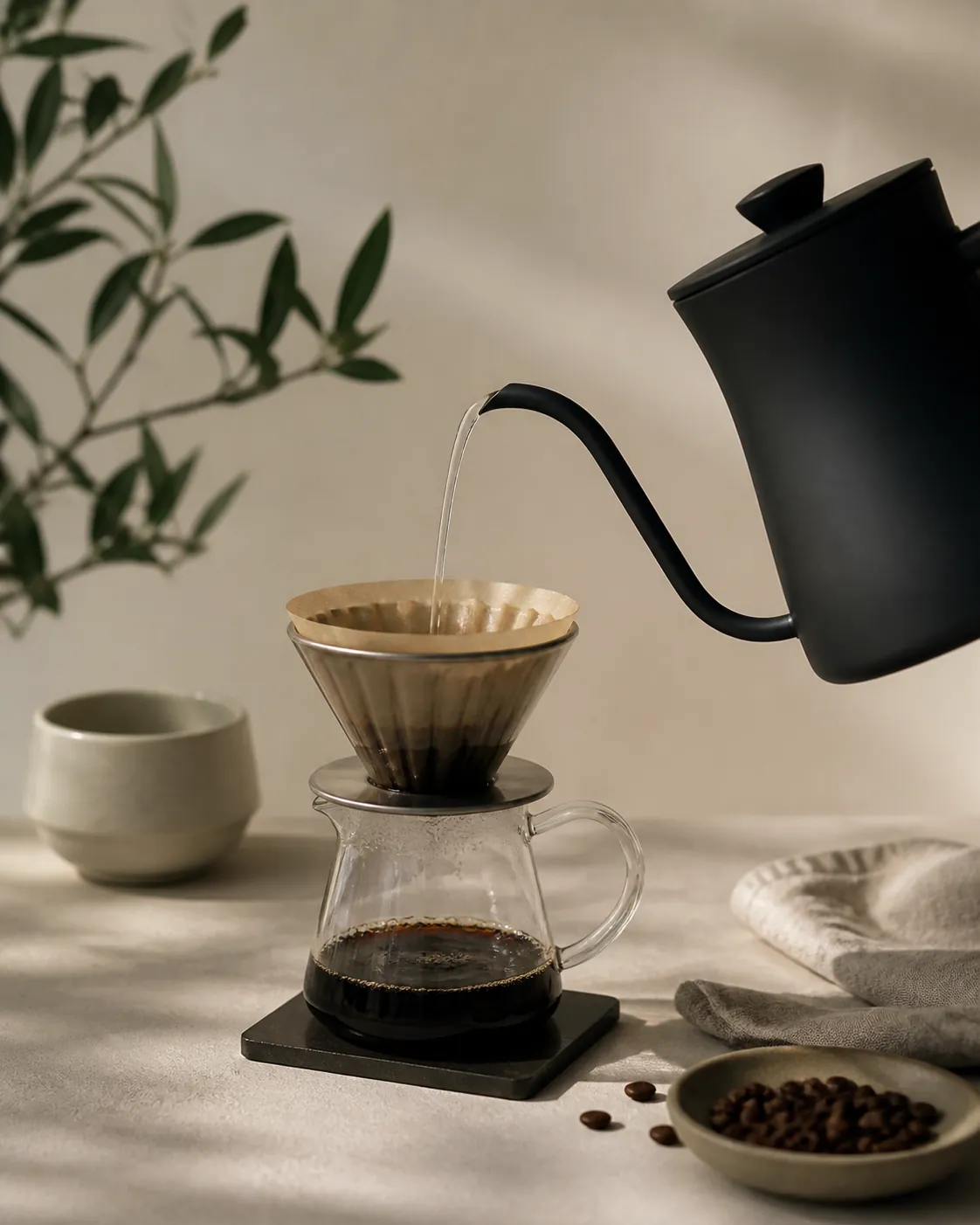
A gooseneck kettle has a narrow spout that rises from low on the body and curves over. The shape is entirely functional: it produces a slow, thin, steady stream that starts and stops cleanly, and it puts the point of the pour where you can see it.
A standard kettle has a wide spout designed to empty quickly. It surges when tipped, splashes, and dribbles when you stop, which is exactly what a coffee bed cannot tolerate.
The gooseneck kettle at a glance
- What it is for
- A slow, precise, controllable pour
- Where it matters
- Pour-over coffee, where the pour is the technique
- Where it does not
- Immersion brewing and steeped tea, which is most home coffee
- The other feature
- Settable temperature, which for many people is the real reason to buy
- Capacity to buy
- 0.6 to 1.0 litre. Larger is heavier and pours worse
- Budget route
- A stovetop gooseneck plus a clip-on thermometer
What a gooseneck kettle actually improves
Flow rate
A narrow spout restricts the stream, so you can pour slowly and steadily instead of in surges.
Placement
You can see exactly where the water is landing, which is what lets you wet a coffee bed evenly.
Stopping cleanly
The pour stops when you level the kettle, without the dribble a wide spout leaves.
Control at low volumes
A thin stream is controllable at the small pours a bloom needs.
None of that matters for immersion brewing. The kettle earns its place only where the pour itself is part of the method.
How much the pour shapes the result
- Drip machineThe machine pours, you do not
- Tea steepingImmersion, so the pour does nothing
- French pressImmersion again, grounds fully submerged
- MatchaA small precise pour helps, but does not decide the bowl
- Pour-over coneEven saturation is the whole method
Only the bottom row of that scale justifies the spout on its own. A gaiwan is the one tea vessel where the pour comes close, and even there it is precision at the rim rather than a controlled stream that matters.
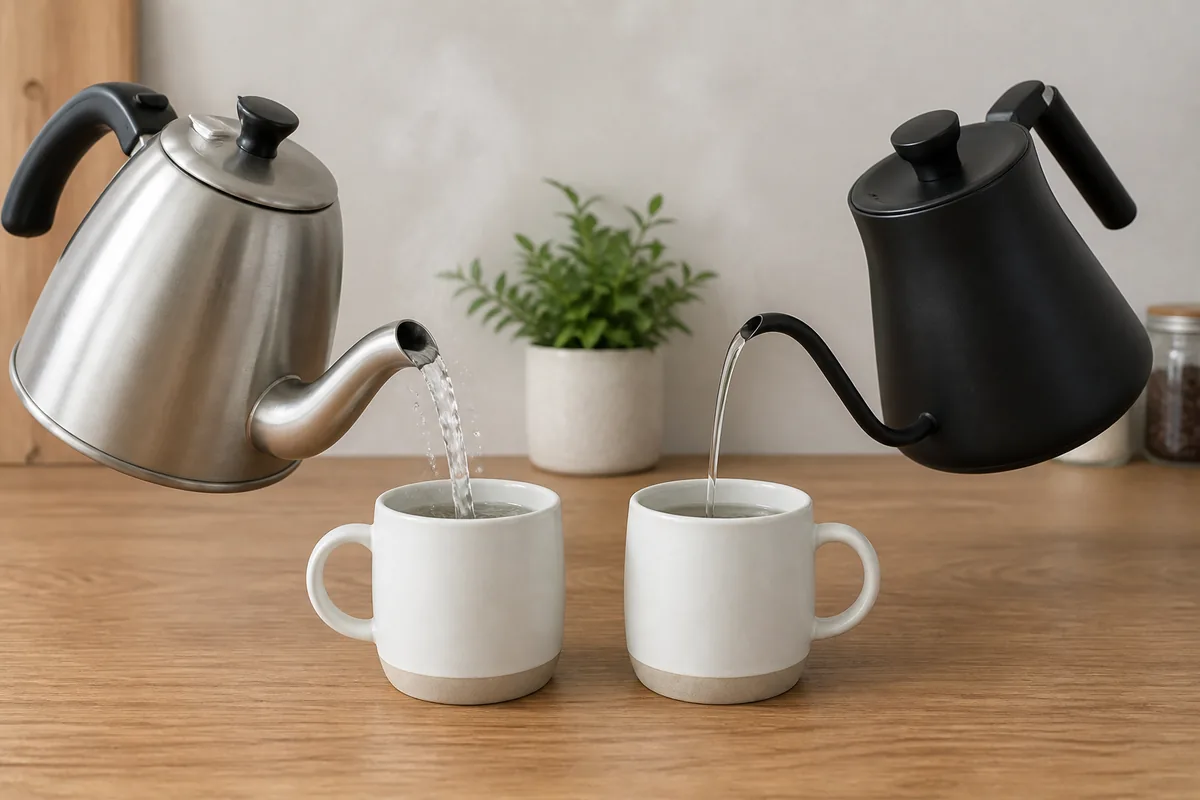
Worth saying plainly, since most writing on this equipment assumes you already want it: if you brew with a press, a drip machine, an AeroPress or a moka pot, and you steep tea rather than whisking matcha, the spout will not change anything in your cup.
The temperature control might still be worth it on its own. The spout will not be.
How the spout shape works
The spout is doing two separate jobs, and only one of them is obvious.
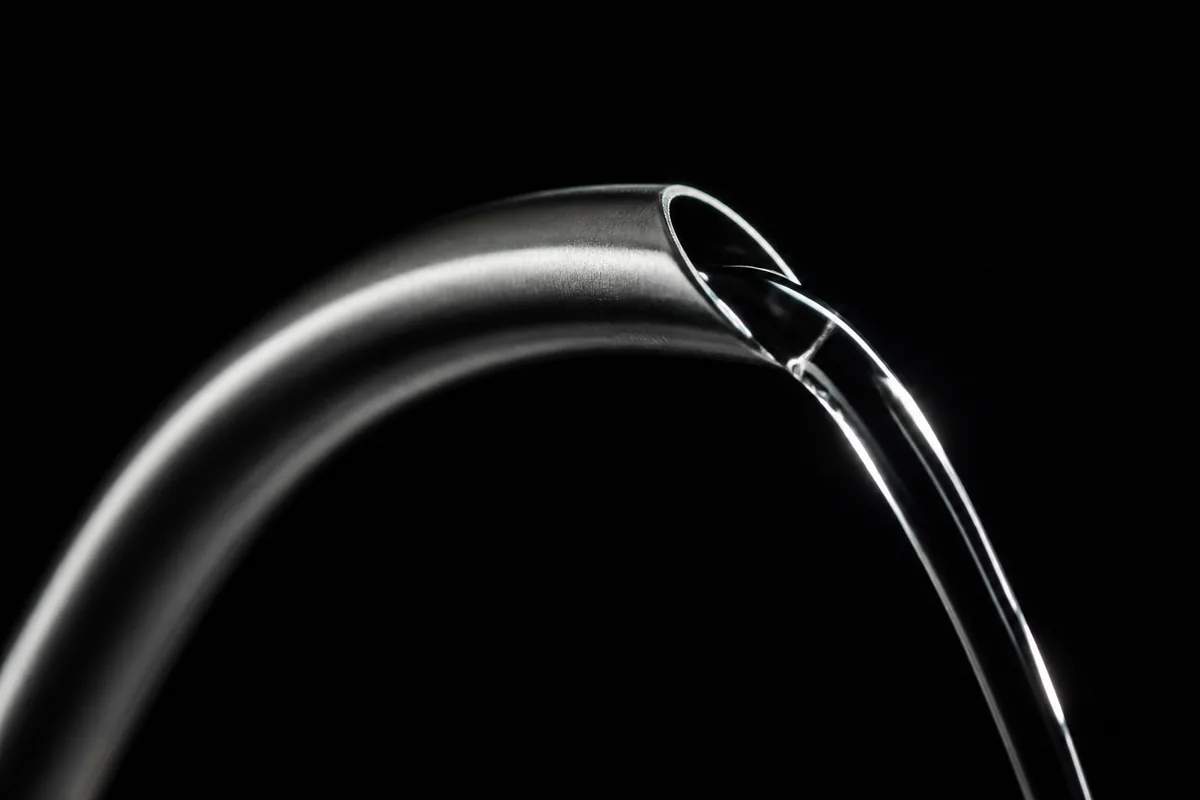
The narrow bore restricts flow, which is what allows a slow steady stream instead of a surge. The curve and the low takeoff point are what keep the flow smooth: water enters the spout from near the base of the kettle, so the pressure driving it changes gently as the kettle empties.
Narrow bore
Restricts the stream so a slow pour is possible at all.
Low takeoff
Water leaves from near the base, so the flow stays even as the kettle empties.
Long curve
Smooths turbulence, which is what stops the stream breaking into drips.
Cut spout tip
A cleanly cut tip releases the stream without it clinging and running back.
A wide-spouted kettle fails on all four at once, which is why the difference is so immediate rather than marginal.
The tip matters more than people expect. A rolled or rounded tip lets surface tension pull water back along the underside, which is the dribble that lands outside the cone.
Why variable temperature is often the real benefit
Many gooseneck kettles are electric with a settable target, and for a lot of people that turns out to be the more useful feature.
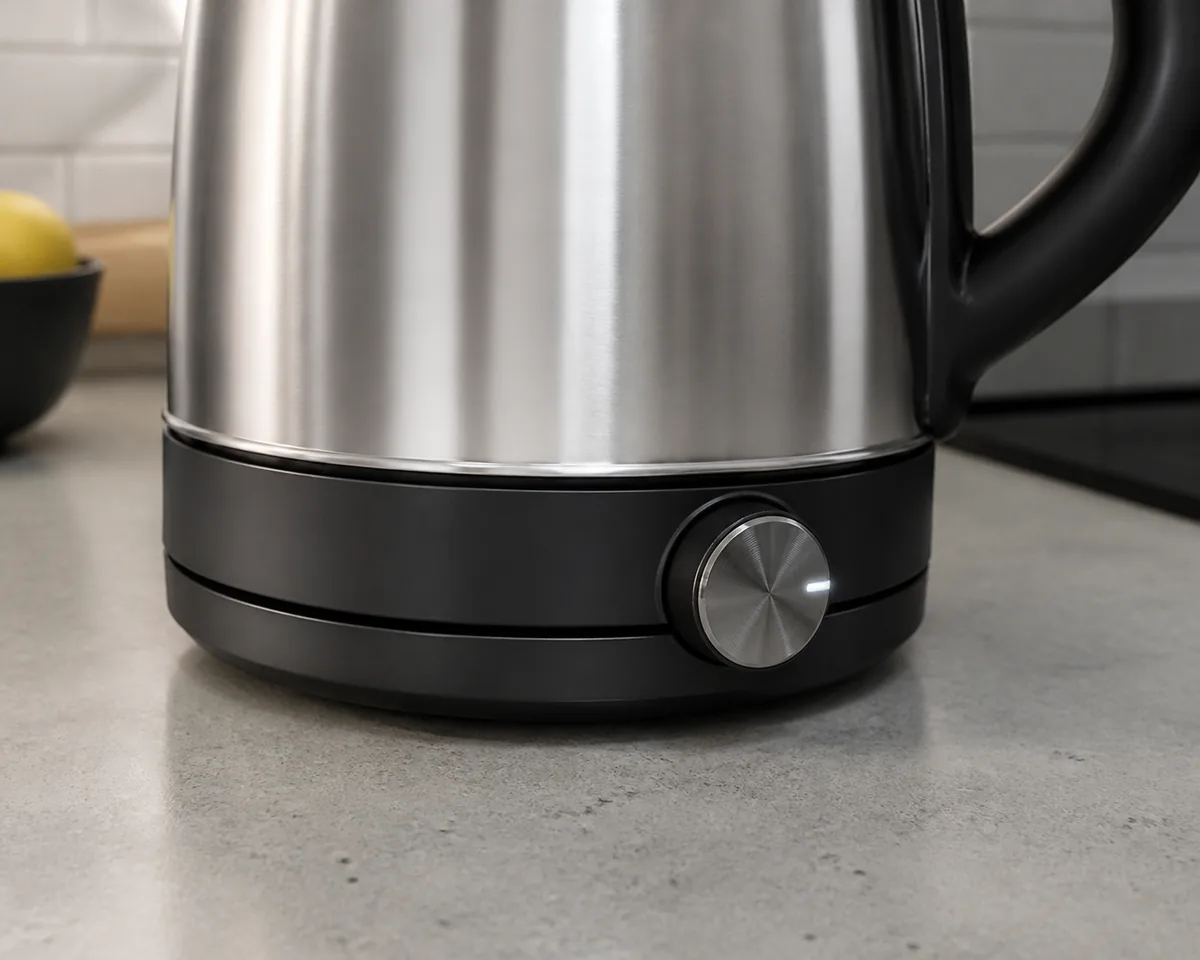
The reason is that different drinks want genuinely different temperatures. Green tea wants around 75 C, matcha around 80 C, and coffee around 93 C, and hitting those by boiling and waiting is guesswork that varies with your room, your vessel and your volume.
Common target temperatures
- Green tea
- 70 to 80 C
- Matcha
- 75 to 80 C
- Oolong
- 85 to 95 C
- Coffee
- 92 to 96 C
- Black tea and tisanes
- 95 to 100 C
Those bands are wide enough that a kettle holding a set temperature removes a variable rather than chasing a precise one. See steeping temperature basics for the full table, and why green tea tastes bitter for what the top of that range does to a delicate leaf.
For most people the temperature control is the reason to buy one and the spout is a bonus, not the other way round.
How to practise the pour
The kettle makes a controlled pour possible rather than automatic.
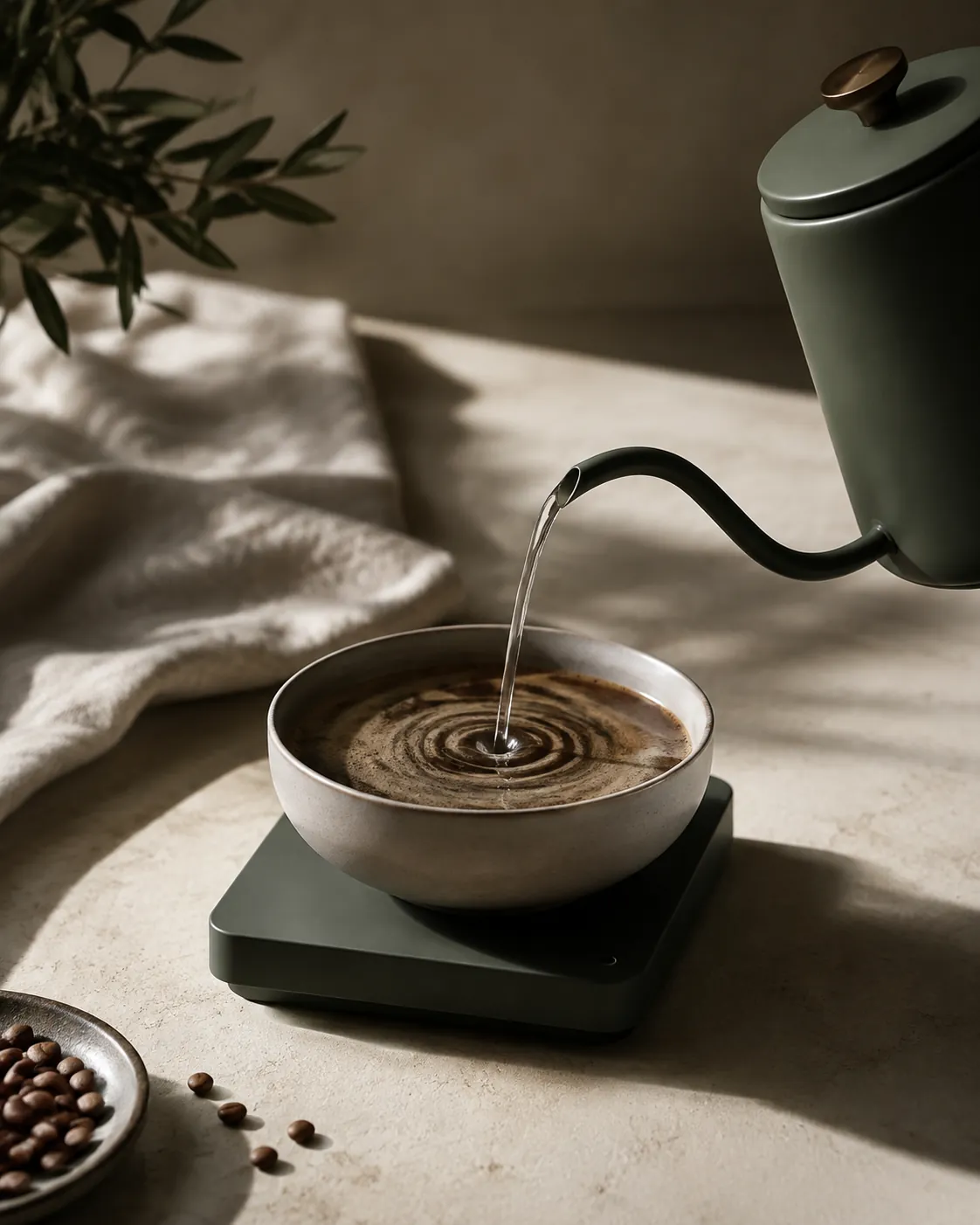
A short practice session
- Fill it with plain waterNo coffee, no cost, and you can repeat it as often as you like.
- Pour into an empty coneWatch the stream rather than the target.
- Aim for a constant thin streamThe skill is holding one rate, not pouring slowly.
- Move in a slow spiralCentre outward and back, without breaking the stream.
- Stop cleanlyLevel the kettle and check nothing dribbles down the outside.
- Repeat with the kettle full and half fullBalance changes as it empties, and so does the pour.
The skill is holding a constant rate while moving, and it transfers to every pour-over you make afterwards.
Most people improve more from ten minutes of that than from spending more on the kettle, which is the honest answer to whether an expensive model is worth having.
The common mistake is pouring slowly rather than evenly. A stream that starts fast and tails off saturates the centre of the bed and leaves the edges dry, and that shows in the cup as a sour, under-extracted rim.
Grind is the other half of that fault, and a burr grinder is the thing to fix before the kettle if the bed is channelling.
Practising with the kettle at different fill levels is the part people skip. A gooseneck pours differently at 200 ml than at 800, because the head of water behind the spout has changed.
How to choose one: spout, balance and capacity
Weight and balance matter more than the specification list.
- Spout shape: a long, narrow, well-curved spout pours better than a short stubby one.
- Balance: it should feel controllable when full. A kettle that is nose-heavy is tiring to pour slowly.
- Handle: it should stay cool and sit comfortably, because slow pours take time.
- Temperature control: a settable target is the feature most likely to change what you drink day to day.
- Hold function: keeping a temperature is useful when brewing several cups in sequence.
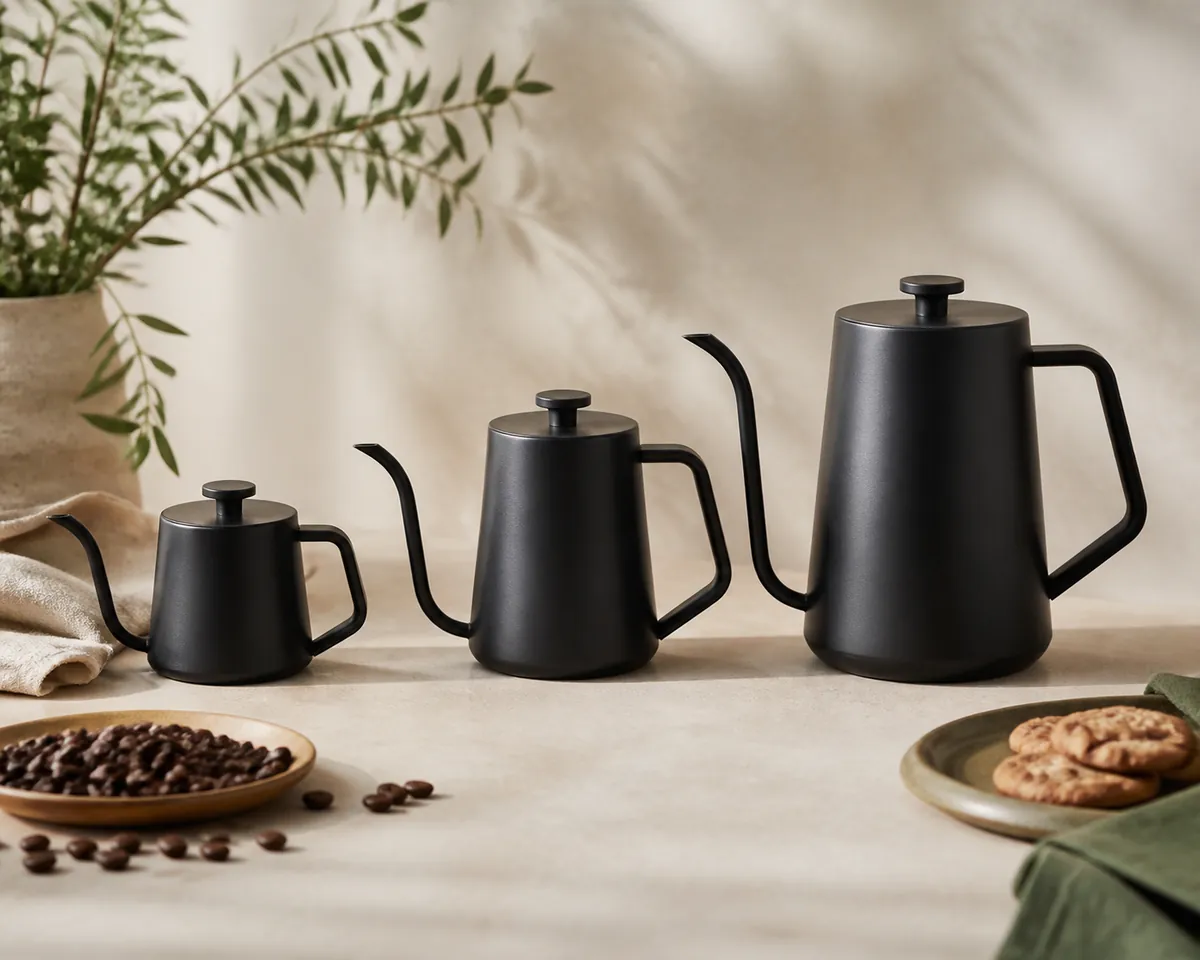
Capacity is the specification people get wrong most often, because larger looks like better value. A full 1.7 litre kettle is heavy, and pouring it slowly with a steady hand is genuinely tiring, so the pour degrades as your arm does.
Choosing a size
- 0.6 to 0.8 litre
- Ideal for one or two cups. Light, controllable, quick to heat
- 1.0 litre
- The common size, and a reasonable compromise for most homes
- 1.2 litre and above
- Heavy when full, and harder to pour slowly
- Boiling volume
- Heat only what you need. A part-filled kettle also pours better
Buy for the pour, not for the batch. If you regularly brew for four people, an immersion method handles the volume better than any kettle will, and a French press against a pour-over is the comparison that actually decides it.
Handle position is the detail specifications never capture. A handle set close to the body puts your wrist under the weight, while one set further back gives leverage and makes a slow pour far less tiring.
The only reliable test is lifting one full. A kettle that feels fine empty in a shop can be unpourable at a litre, and no review will tell you that about your own wrist.
Stovetop or electric
Two forms, and the choice is mostly about temperature rather than pouring.
- Stovetop. Cheaper, no electronics to fail, and works on any hob. You are back to boiling and waiting for temperature.
- Electric with a dial. Sets and holds a target, which is the feature most likely to change what you drink.
- Electric with a hold function. Keeps the temperature while you brew several cups in sequence, which matters more than it sounds.
Without a thermostat you reintroduce the variable the kettle was meant to remove. A clip-on thermometer closes most of that gap for very little money, and for pour-over specifically the spout still does its job, so a stovetop model plus a thermometer is a legitimate budget route.
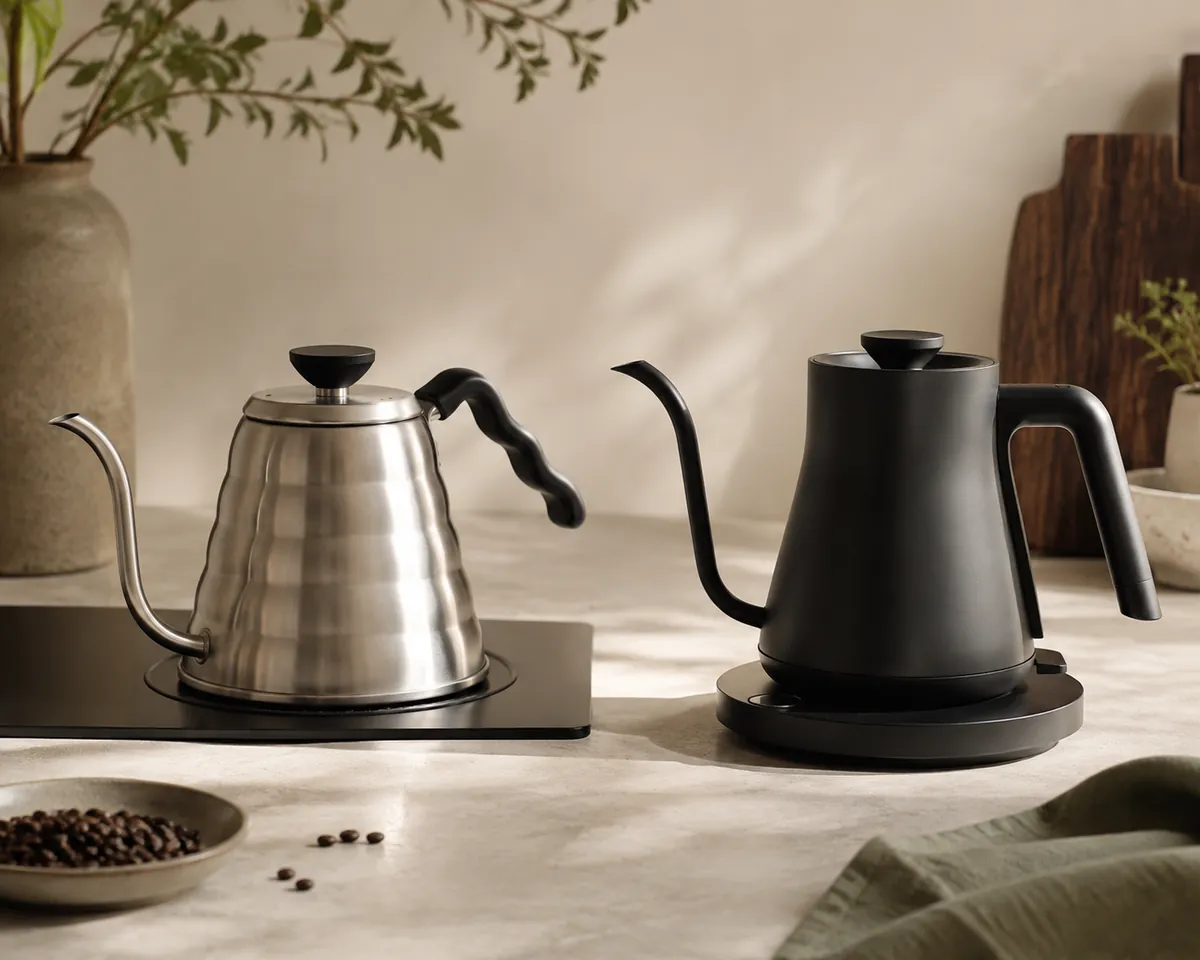
- Check induction compatibility if you have an induction hob. Not every stainless body is magnetic.
- Add a clip-on or probe thermometer rather than guessing at the wait.
- Expect the handle to get hot. Stovetop handles conduct in a way electric ones do not.
- Accept a slower workflow. Boil, wait, check, pour.
Induction hobs need a magnetic base, and a few stainless kettles are not compatible at all. That is worth checking before buying rather than after.
The hold function is the one feature worth paying extra for if you brew more than one cup. Without it an electric kettle hits its target, switches off and starts cooling, so the third cup is brewed several degrees below the first.
Stovetop models have the opposite problem and the same cause. Left on a low flame they drift upward instead, which is why a thermometer matters more than the hob does.
What the body is made of, and how to descale it
Body material affects heat and durability rather than pour quality.
| Material | Heat retention | Notes |
|---|---|---|
| Stainless steel | Good | The default. Durable, and safe on induction if the base is magnetic |
| Copper | Excellent conductivity | Heats fast and cools fast, and needs polishing to stay presentable |
| Enamelled steel | Moderate | Attractive and chip-prone, and the chips rust |
| Glass with steel base | Poor | Lets you see the water, loses heat quickly |
A gooseneck is harder to descale than an ordinary kettle, and the spout is where it matters most. Scale narrows the bore, and a narrowed bore changes the flow rate the kettle was designed around, so a kettle that used to pour cleanly and now spits is usually scaled rather than worn out.
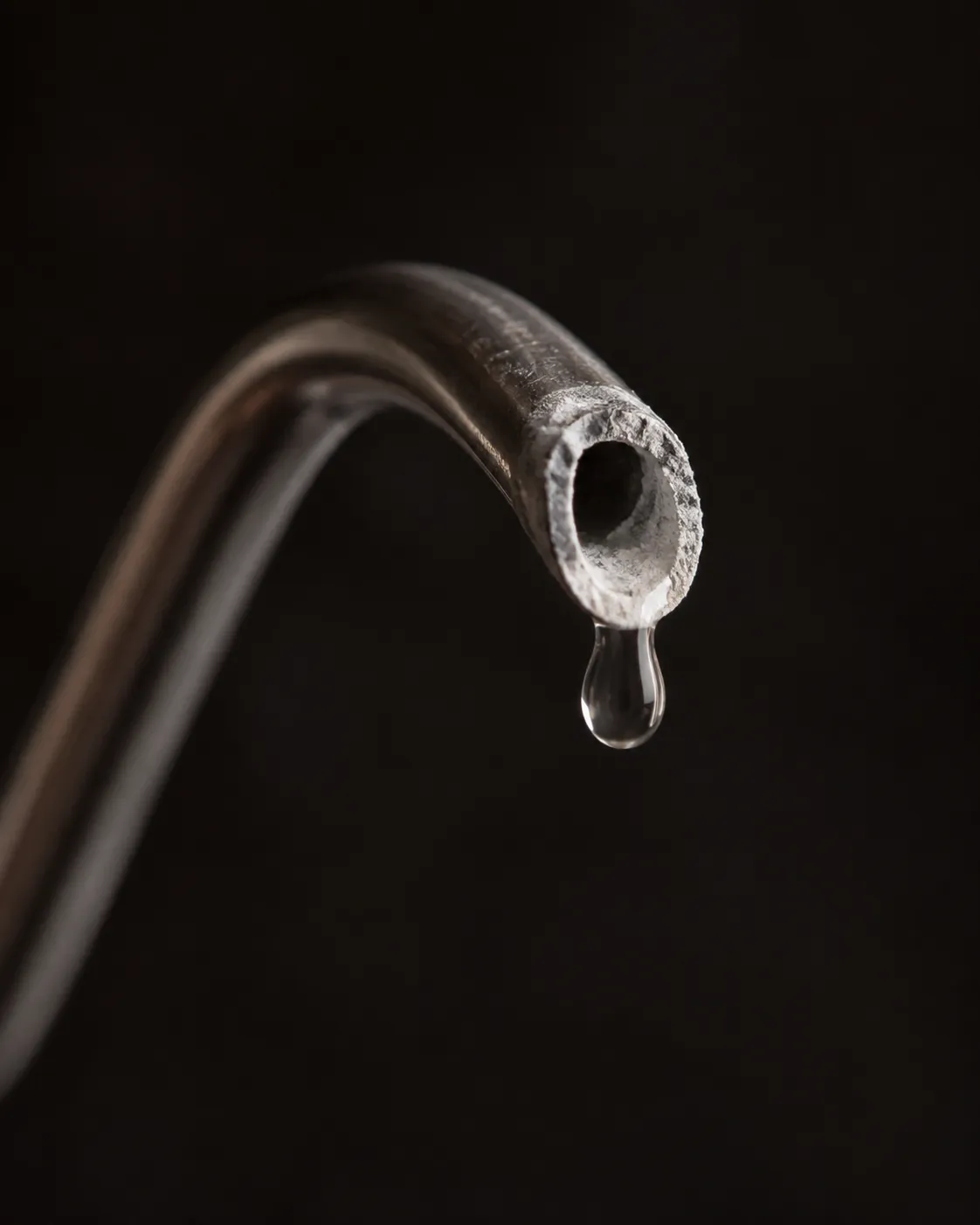
Keeping the pour clean
- Descale on the manufacturer's scheduleMore often in a hard-water area, where the spout narrows fastest.
- Run the descaler through the spoutFilling and emptying is not enough, because the bore is where the deposit matters.
- Empty it after useWater left standing deposits scale as it evaporates.
- Do not scour the interiorAbrasives on stainless leave scratches that scale grips better.
- Check the pour, not the kettleA stream that has gone uneven is the earliest sign it needs attention.
Brewing water covers why some kitchens scale far faster than others, and what to do about it upstream.
Copper is the material that most often disappoints. It conducts beautifully and it also tarnishes within weeks, so a kettle bought for how it looks stops looking that way unless it is polished regularly.
Glass is the other one to think twice about. Watching the water is genuinely pleasant, and losing several degrees between boil and pour is the price of it.
Is a gooseneck kettle worth the money
The honest answer depends entirely on how you brew, and it is not the same answer for everyone.
For a pour-over drinker it is the single piece of equipment that most improves consistency, because the pour is the technique. For someone brewing with a press or steeping tea, it changes nothing in the cup and buys convenience and temperature control.
Works well for
- Makes a controlled pour possible, which is the whole pour-over technique
- Temperature control removes guesswork for green tea, matcha and coffee alike
- A hold function is genuinely useful when brewing several cups in sequence
- Small capacity is easier to control and suits home brewing
Struggles with
- Expensive relative to an ordinary kettle
- Slower to fill and slower to pour when you just want tea
- Electric models add electronics that can fail
- Does nothing for immersion brewing, which is most home coffee
If the budget is limited and you brew pour-over, a cheap gooseneck plus a thermometer beats an expensive variable-temperature kettle with a wide spout. The spout is the part that cannot be replicated by patience.
Pouring for tea rather than coffee
Everything above is written around coffee, and the kettle does a second job that asks for the opposite pour.
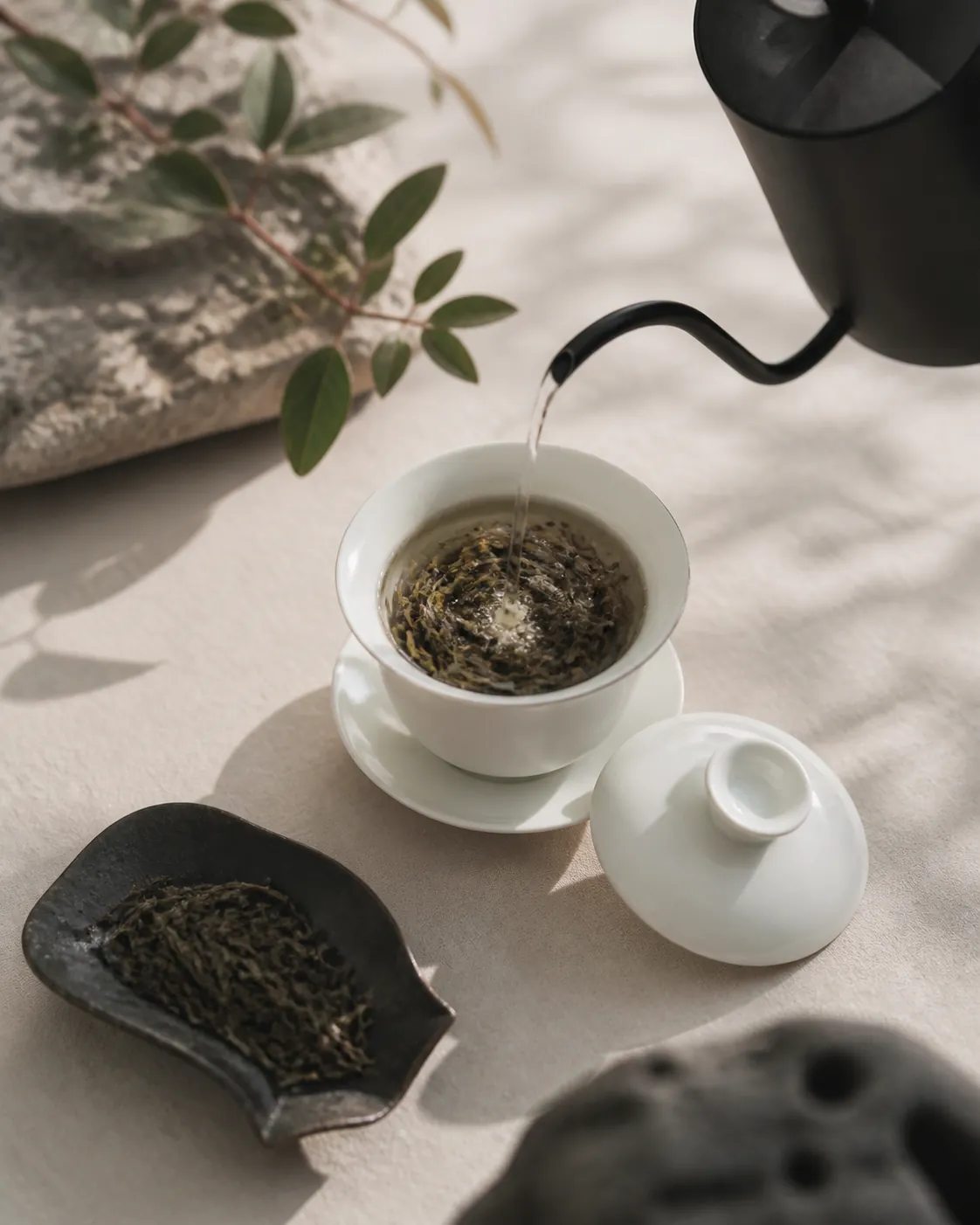
Coffee wants a slow, controlled, sustained stream that wets a bed evenly. Tea in a gaiwan or a small pot wants the reverse: a fast, high pour that fills the vessel in a couple of seconds and agitates the leaf as it goes.
That agitation is doing real work. Pouring from a height turns the leaf over and gets water through the whole of it, which is why gongfu pouring looks careless next to a pour-over and is not.
Where the gooseneck earns its place in tea is precision at the edges rather than the stream. Filling a 110 ml vessel to a centimetre below the rim without flooding it is difficult from a normal kettle spout and simple from a narrow one.
Temperature control matters more here than for coffee. A session runs to ten steeps over half an hour, and holding green tea at 80 C across all of them is something a variable kettle does and a stovetop one cannot.
Delicate leaf is where that shows first. A sencha or a white tea brewed at 80 C on the first steep and 95 C on the sixth is two different drinks, and the drifting kettle is doing that rather than the leaf.
Common questions
Do I need a gooseneck kettle?
Only if you brew pour-over coffee, where the pour is the technique. For a French press, tea, or a drip machine it is a convenience rather than an improvement to the cup.
What is a gooseneck kettle used for?
The narrow curved spout produces a slow, precise, steady stream, which is what evenly saturating a bed of coffee grounds requires. Many models also let you set a target water temperature.
Is a variable temperature kettle worth it?
For anyone brewing both tea and coffee, often yes, because those want very different temperatures. Boiling and waiting a few minutes gets you close, but it varies with your room, vessel, and volume.