How the AeroPress Works, and What Inverting It Adds
The AeroPress is an immersion brewer that finishes with hand pressure through a paper filter. It is not an espresso maker, and understanding what it actually is makes it far easier to use well.
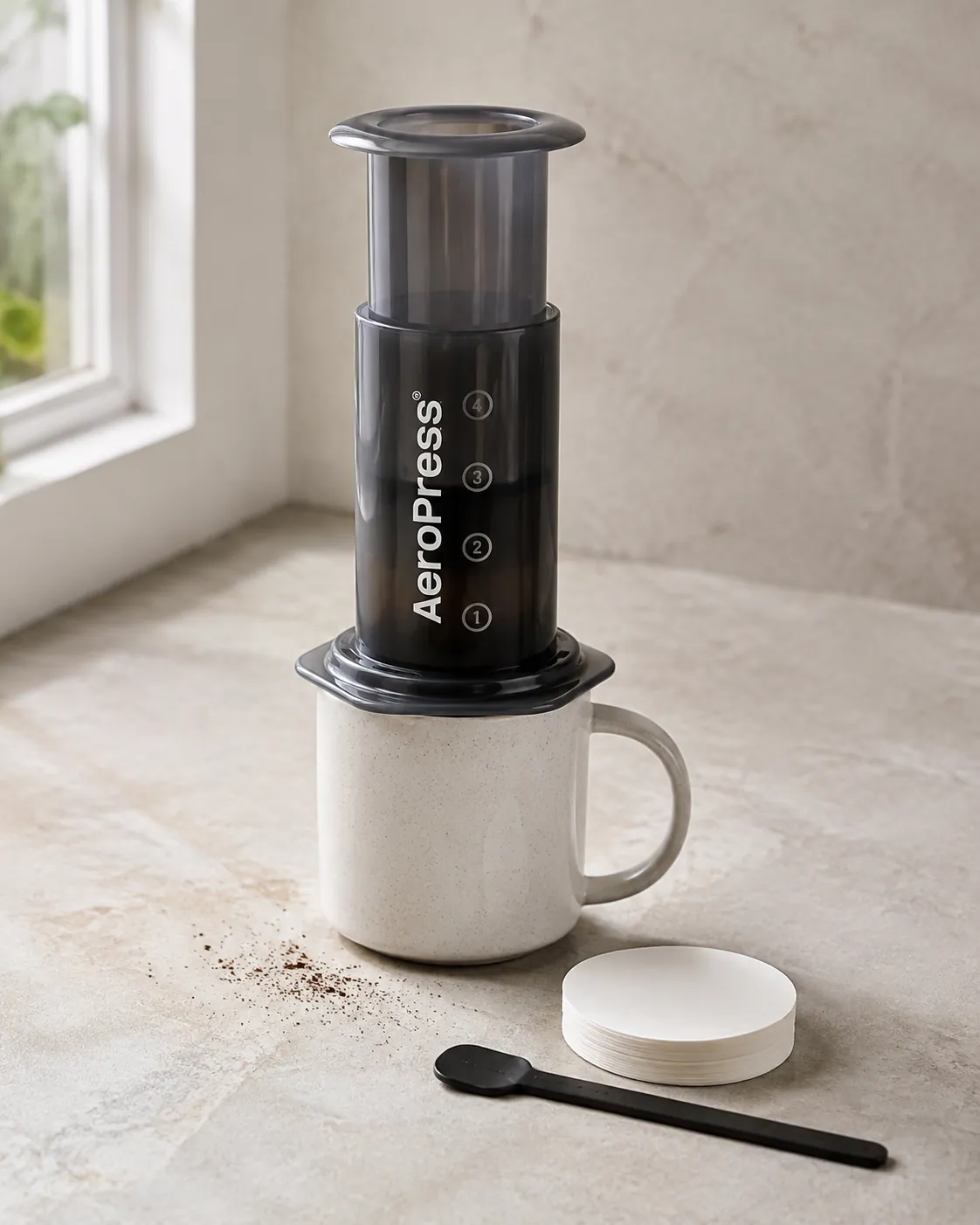
The AeroPress is a hand-operated brewer: a plastic cylinder, a plunger, and a filter cap that takes a small paper disc. Coffee steeps in the chamber and is then pushed through the filter by hand.
It is an immersion brewer with a filtered finish, which puts it somewhere between a French press and a pour-over cone. The first of those is the comparison people actually weigh, and the two set side by side takes it axis by axis.
The steep gives it the evenness of the first and the paper gives it the clarity of the second, and the plunge, which is the part everyone notices, is the least important thing it does.
The AeroPress as a piece of equipment
- Mechanism
- Full immersion, finished by hand pressure through a paper or metal disc
- Pressure
- Well under one bar, applied for 20 to 30 seconds
- Capacity
- Around 250 ml in the chamber, so one cup at a time
- Filter
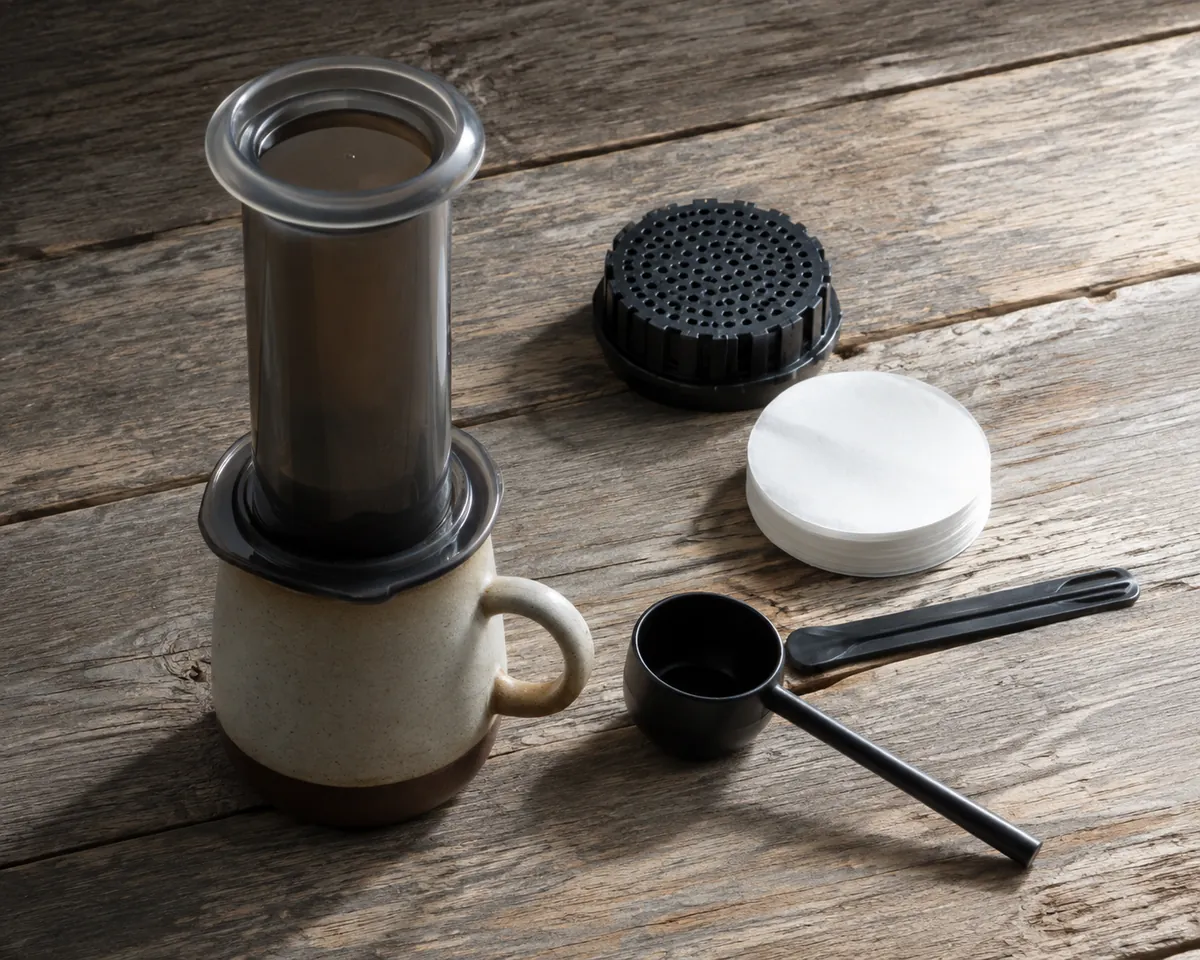
- A 6 cm paper disc, or a reusable metal one
- Grind
- Medium-fine as a default, with a wide usable range either side
- Brew time
- 1 to 2 minutes, plus about a minute to clean
- Parts that wear
- The rubber plunger seal, every few years
Under one bar, and why that is not espresso
Calling this an espresso maker is common enough in shop listings to be worth correcting directly, because the mistake leads people to expect a drink it cannot produce.
Espresso runs at around nine bars, sustained for the whole extraction. Hand pressure on a plunger produces well under one bar and holds it for seconds, at the end of a brew that has already finished, which is a different machine doing a different job.
| AeroPress | French press | Pour-over | Espresso | |
|---|---|---|---|---|
| Contact | Immersion | Immersion | Percolation | Percolation |
| Filter | Paper or metal | Metal mesh | Paper | Metal |
| Pressure | Under 1 bar, briefly | None | None | About 9 bars |
| Brew time | 1 to 2 minutes | 4 minutes | 3 minutes | 25 to 30 seconds |
| Body | Clean, with some texture | Heavy, oily | Cleanest | Concentrated, syrupy |
The pressure is a way of finishing the brew quickly, not a way of extracting under pressure. Most of what ends up in the cup dissolved during the steep, and the plunge is a fast, tidy separation.
Every other quirk of this brewer follows from that one fact, including the enormous variation between recipes that all work. Anything built on a genuine shot, an americano included, will be an approximation here rather than the drink itself, and what AeroPress coffee tastes like describes what it does produce instead.
Standard and inverted, and when brewing actually starts
Two methods dominate, and the difference between them is the moment the steep begins rather than anything about the press.
The standard method
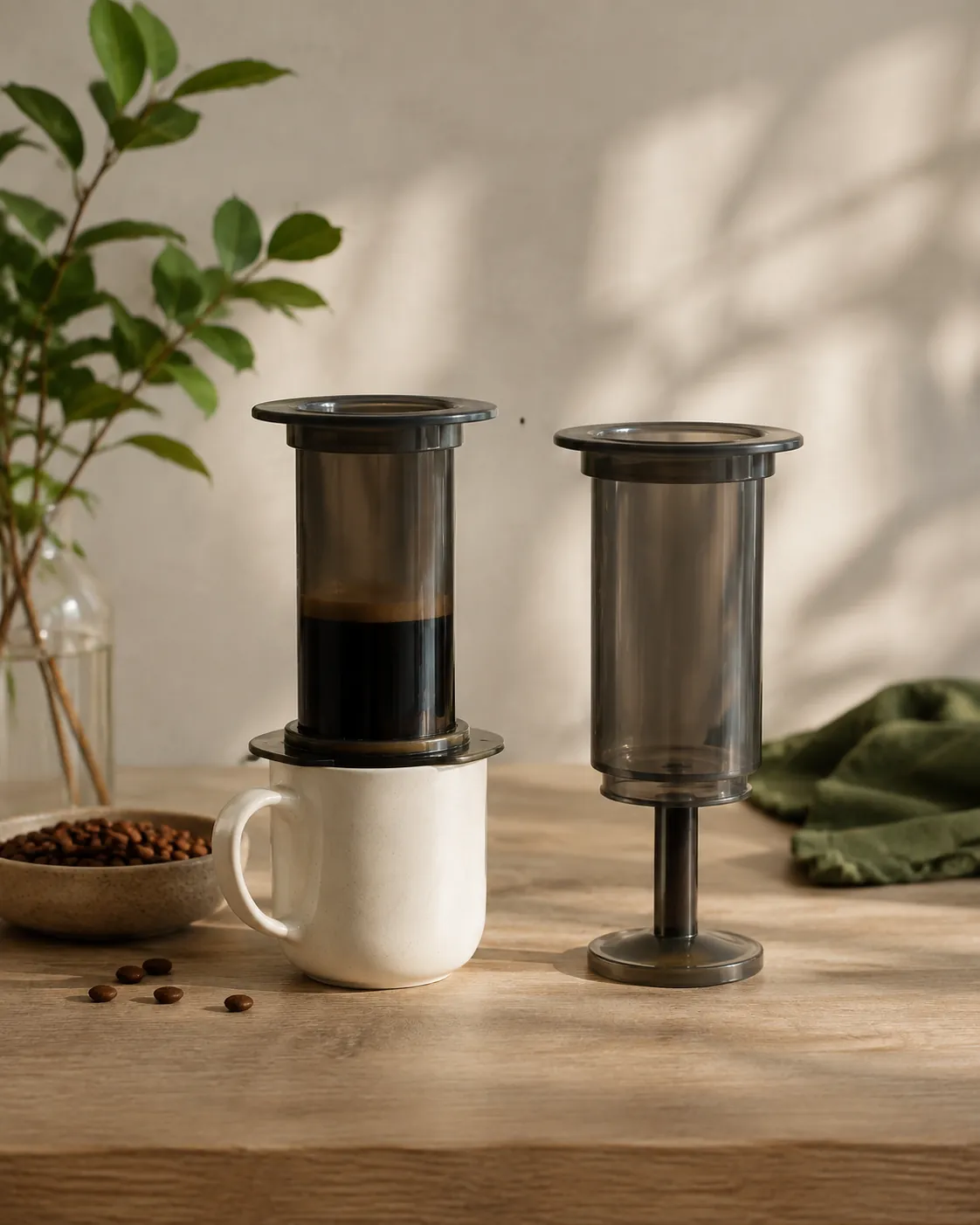
- AssembleFilter in the cap, cap on the chamber, chamber on the mug.
- Add coffeeThen pour water over it.
- SteepWater begins dripping through immediately, so the steep is partial.
- PressInsert the plunger and push down over 20 to 30 seconds.
That is the orientation the brewer ships in and the one most printed instructions assume. The alternative turns the whole thing over.
The inverted method
- Assemble upside downPlunger in first, chamber above it, open end up.
- Add coffee and waterNothing drips through, so the steep is complete and controlled.
- SteepFor as long as you choose.
- Flip and pressCap on, invert onto the mug, and press.
Inverted exists because the standard method leaks. Water starts passing through the paper the instant it is poured, so a stated steep time is only ever approximate and a fine grind slows the leak while a coarse one accelerates it.
The cost is that flipping a full chamber of hot coffee onto a mug is awkward and occasionally messy, and a slightly finer grind in the standard orientation gets most people close enough that the risk is not worth taking. Making AeroPress coffee walks through both.
A starting recipe, and the temperature that fixes most cups
No single correct recipe exists for this brewer, which is unusual and slightly unhelpful when you are standing over it for the first time.
A standard-orientation starting point
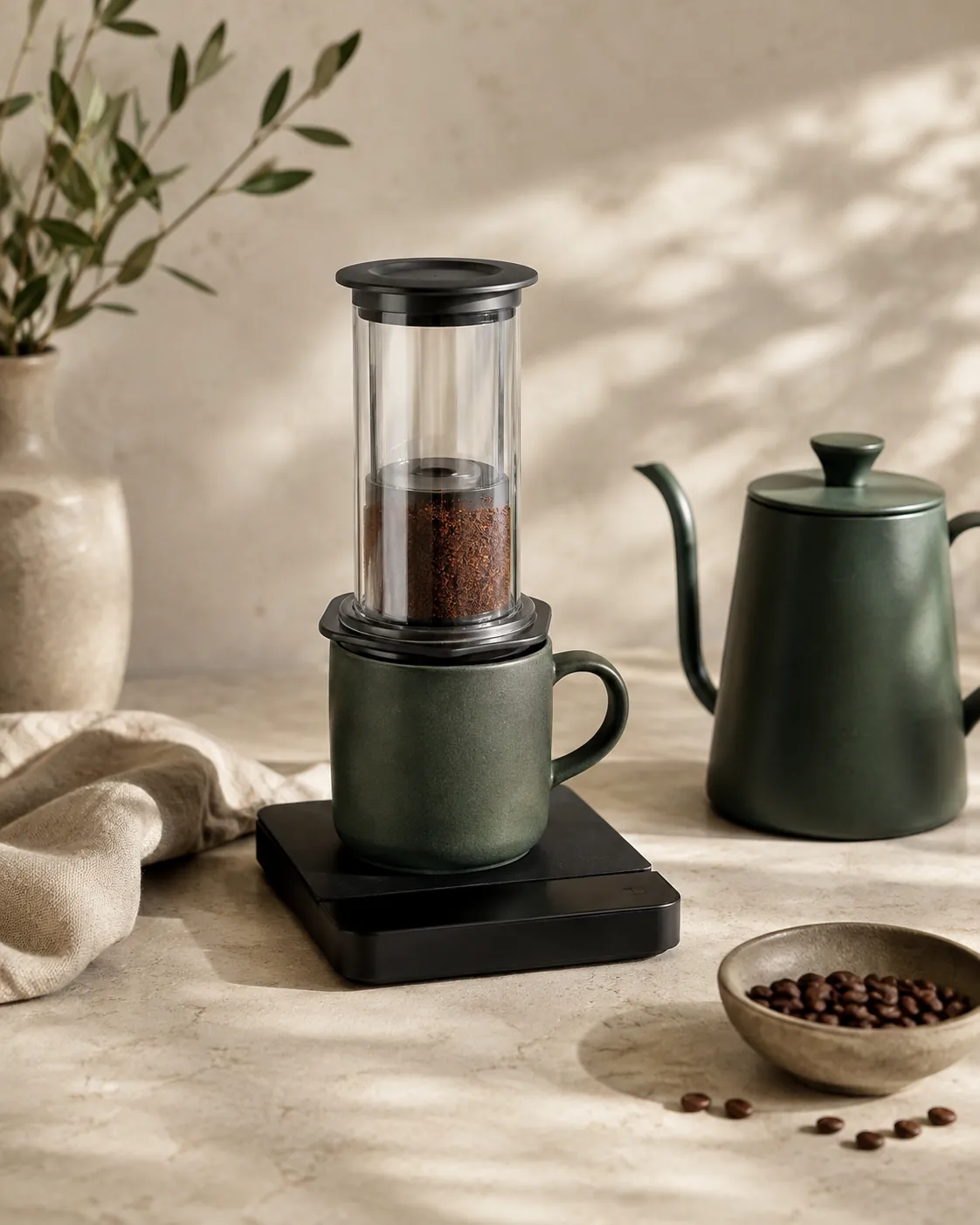
- Coffee
- 15 g, medium-fine grind
- Water
- 220 g at 85 to 90 C
- Bloom
- 50 g of water, stir, wait 30 seconds
- Fill
- Top up to 220 g
- Steep
- Until 1 minute 30 from the start
- Press
- 20 to 30 seconds, stopping at the hiss
Stop pressing at the hiss. That sound is air following the last of the liquid through the bed, and pushing past it forces the harshest fraction of the brew into the cup for no gain at all.
Dropping the water temperature is the first thing to try when a cup tastes harsh, and it is free. Everything else on this page is a refinement of those six lines.
Grind, and the press that tells you when it is wrong
Grind is the main variable, and the range this brewer tolerates is far wider than any cone would accept.
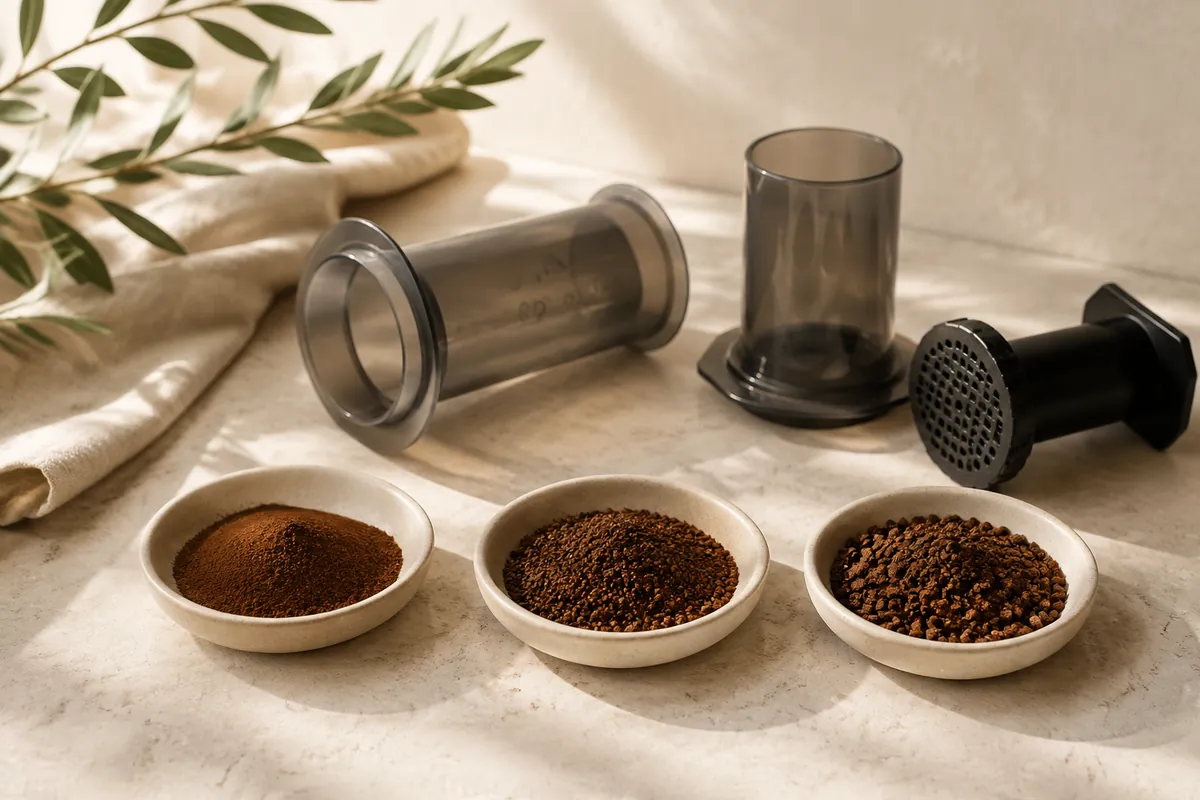
What each grind gives
- Espresso-fineVery hard to press, and often over-extracted
- FineQuick brews, 1 minute or less. More body, more risk of bitterness
- Medium-fineThe usual recommendation and the easiest to press
- MediumNeeds a longer steep, 2 minutes or more
- CoarseBehaves like a small French press. Long steep, light body
The plunger is the feedback instrument, which no other brewer offers. A press that takes real force means the bed is too fine, and forcing it risks blowing the seal past the coffee or spraying grounds across the counter, so the correction is a coarser setting rather than more effort.
A burr grinder matters here as everywhere, though the AeroPress forgives an uneven grind better than a cone does, where a gooseneck kettle and a steady hand are part of the technique rather than optional.
Paper, metal, and what to do when the discs run out
The stock filter is a paper disc, metal discs are the common aftermarket addition, and the choice decides what kind of cup the machine makes.
Paper
Cleanest cup, removes oils and fines. Cheap, and one disc per brew.
Metal
Lets oils through for a fuller body, closer to an immersion brew. Reusable.
Two papers
Cleaner still, and slows the press noticeably.
Rinsing paper
Removes any paper taste and preheats the cap. Worth the ten seconds.
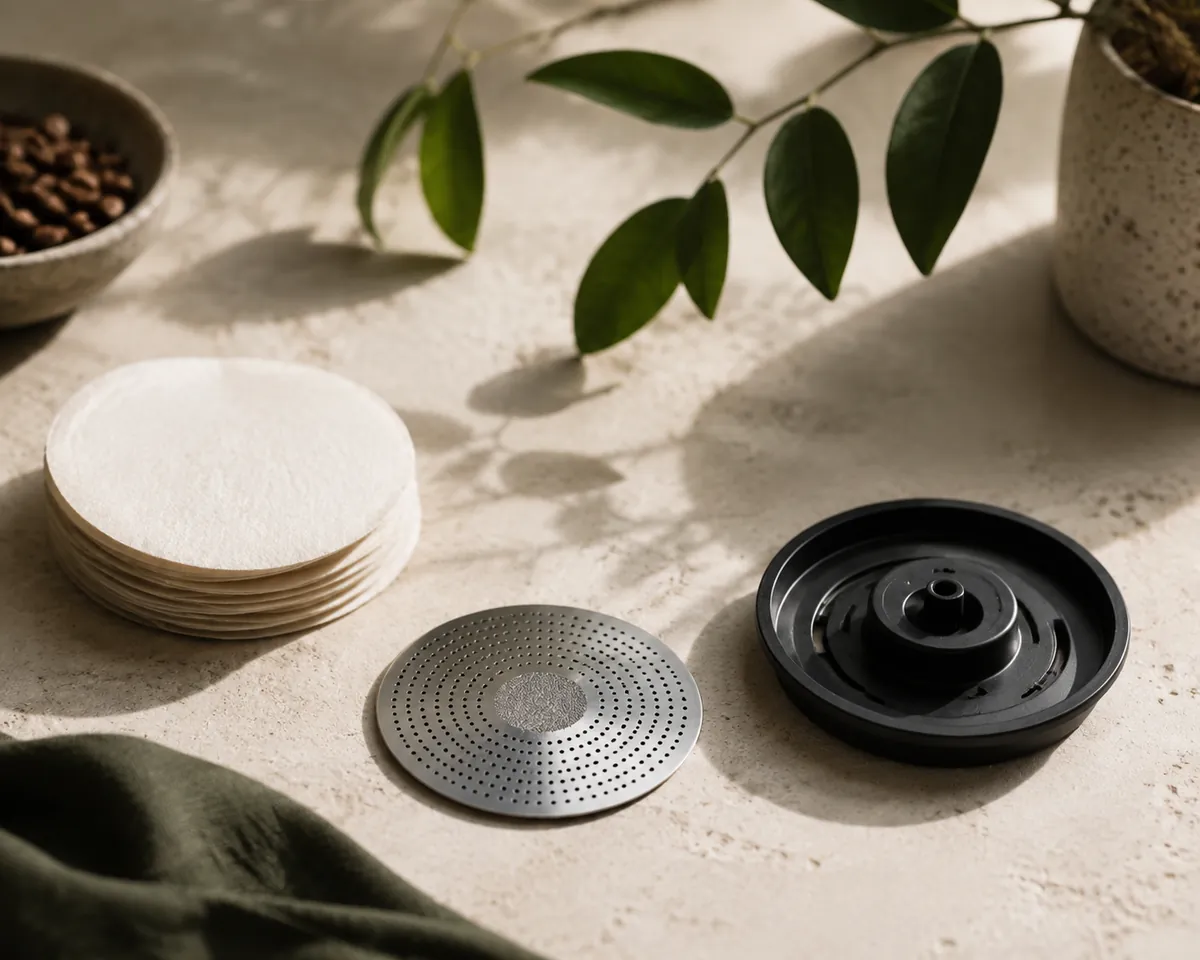
Paper is the better default, because clarity is what this brewer offers over a press pot and a metal disc trades that away for body available more easily elsewhere. Papers are also the one consumable, and packs run out at inconvenient moments, so it is worth knowing that a used disc rinses and goes again two or three times with the cup getting steadily less clean as it clogs.
Cutting your own from a standard cone works too, since several discs come out of one paper with a sharp blade around the cap. Metal solves the supply problem permanently, which makes it the right choice in a rucksack and the wrong one in a kitchen.
Concentrate, bypass, and why contradictory recipes all work
Brewing strong and diluting afterwards is the technique that explains most of the strange numbers you will see online.
A tight ratio, say 15 g of coffee to 100 g of water, gives a small volume of concentrate much like a cold brew concentrate does over twelve hours; hot water added afterwards, which everyone calls bypass, brings it to drinking strength.
The advantage is control, since one brew becomes a small intense cup or a large mild one depending on what goes in afterwards, and bitterness stays low because the coffee itself was never pushed too far, only made concentrated.
Full volume
All the water in the chamber. Even extraction, one fixed strength, the simplest thing to repeat.
Concentrate and bypass
A tight ratio, then dilution. Adjustable strength from a single brew.
Fast and fine
A minute or less on a fine grind. More body, and the press gets harder.
Slow and coarse
Two to three minutes on a coarse grind, behaving like a small immersion pot.
Immersion is what lets those contradict each other and still work. Every ground sits in all of the water for the whole steep, so extraction stays even regardless of technique, which is emphatically not true of a cone where the pour pattern changes the result.
Championship recipes push the range further still, using very short steeps, high doses and heavy bypass on expensive light roasts, and they are evidence of how wide the usable range is rather than instructions for a supermarket blend. Pick one recipe and change one thing at a time, since jumping between them teaches you nothing about any of them.
The seal, the puck, and two minutes from brewing to clean
Cleanup is a single motion, and it accounts for more of this brewer's popularity than any flavour argument does.
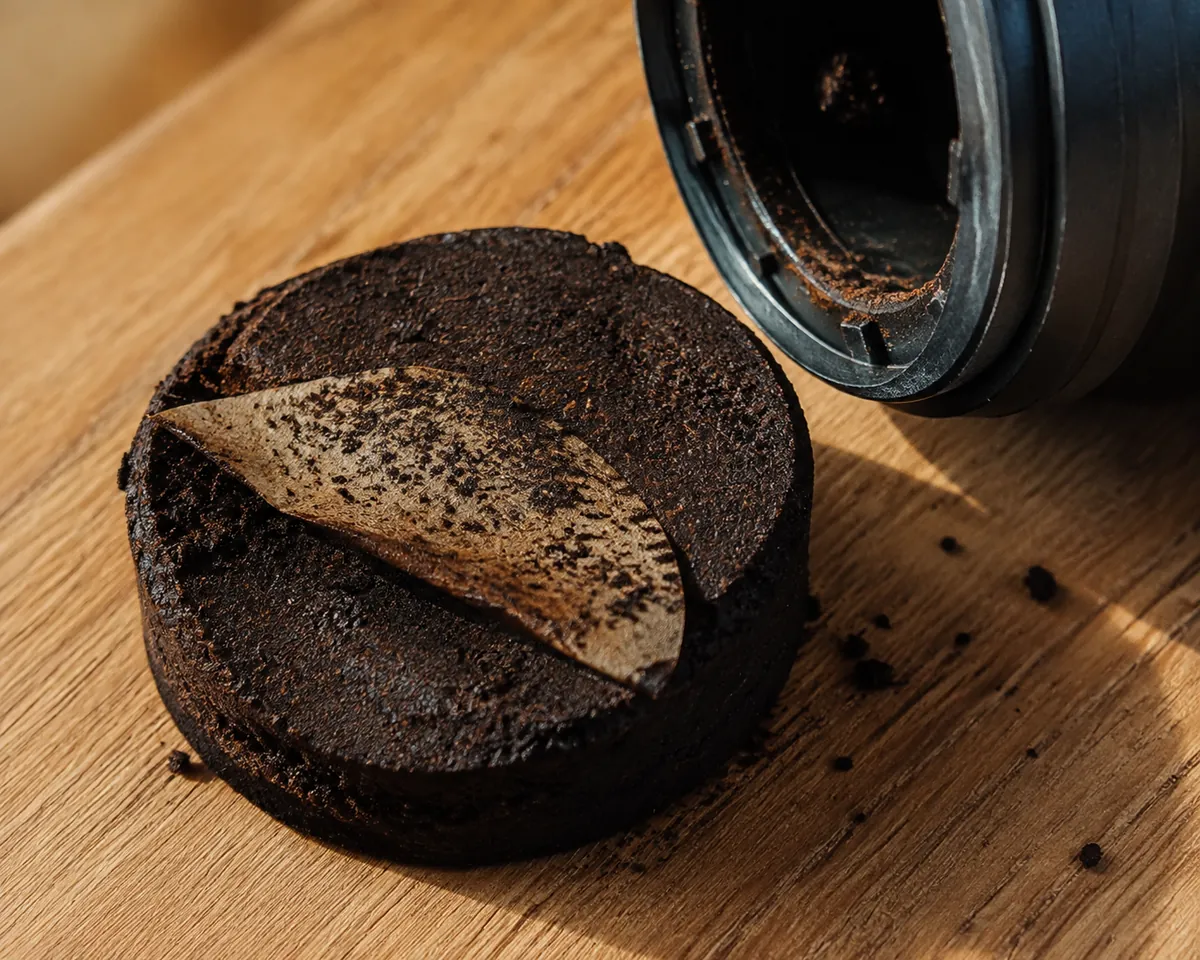
Pop the puck into the bin, rinse the seal, and it is done. A puck that ejects in one clean disc is also a report on the brew: it means the dose filled the chamber properly and the grind held together under pressure, where a sloppy or crumbling puck usually means too little coffee for the water.
- Eject the puck immediately, while it is still hot and holds together.
- Rinse the plunger seal each time; coffee oils build up and make it stiff.
- Do not leave it assembled with the plunger inserted, which compresses the seal.
- Replace the seal every few years if it hardens or loses grip.
- Wash the chamber occasionally with detergent, since oils accumulate invisibly.
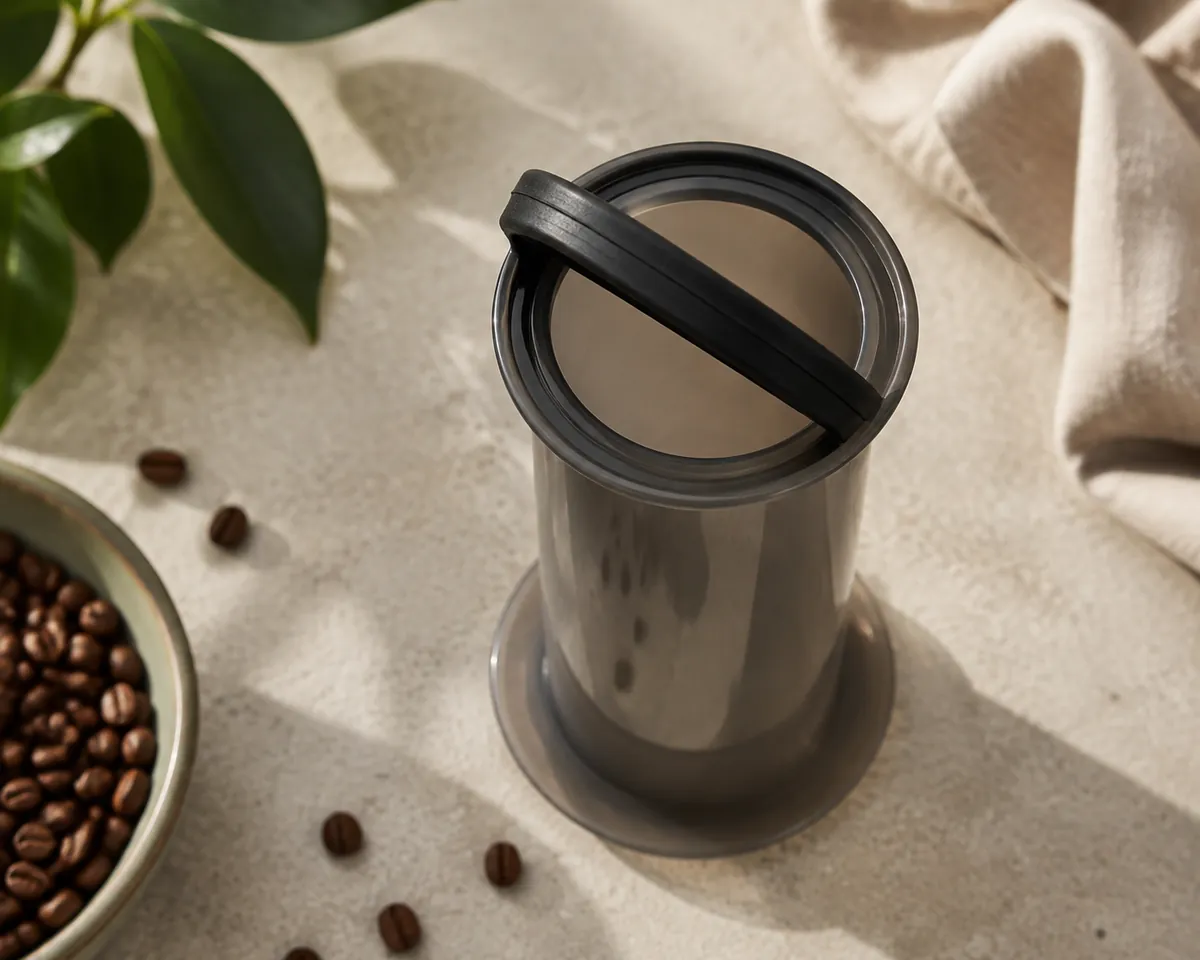
The rubber seal is the only part that wears, and it wears in two ways. Oils stiffen it, which turns a smooth press into a fight and is entirely preventable with a rinse.
Age hardens it, at which point it stops gripping the chamber wall and the press starts leaking around the edge instead of pushing through the filter; replacements are cheap and fit in a minute. Store it with the plunger pushed only slightly in, since months of full compression shorten its life more than daily use does.
What usually goes wrong, in order of likelihood
Failures cluster into three patterns, and they are worth working through in order because each masks the next.
Water too hot is the commonest by a distance. Boiling water on a fine grind in full immersion extracts aggressively and lands bitter, and coming down to 85 C fixes it without touching anything else.
Pressing past the hiss is second, since everything after that point is the harshest fraction of the brew being pushed through a bed that has already given up what it had. Grinding too fine causes a difficult press and over-extraction simultaneously, which is why it so often gets blamed on the beans.
- Drop the water to 85 C before changing anything else.
- Stop pressing at the hiss rather than pushing to the bottom.
- Grind coarser if the plunge takes real effort.
- Rinse the paper filter, which takes ten seconds and removes a cardboard note.
- Change one variable at a time, or the result tells you nothing.
An unrinsed paper leaves a faint cardboard note that is easy to miss until you taste a rinsed brew directly against it. Why AeroPress coffee tastes wrong goes through the rarer causes once these four are ruled out, and the caffeine it carries moves with dose rather than with any of them.
Travel, camping, and the ceiling of one cup
Nothing else competes with it away from a kitchen, and the reasons are practical rather than sensory.
It is plastic, so nothing shatters in a rucksack. It needs no power, no cone stand and no carafe, because it brews directly into whatever cup you are carrying, and the whole assembly nests inside its own chamber for packing.
Water temperature matters less here than for any other manual method, which is genuinely useful over a camp stove where measuring anything is optimistic.
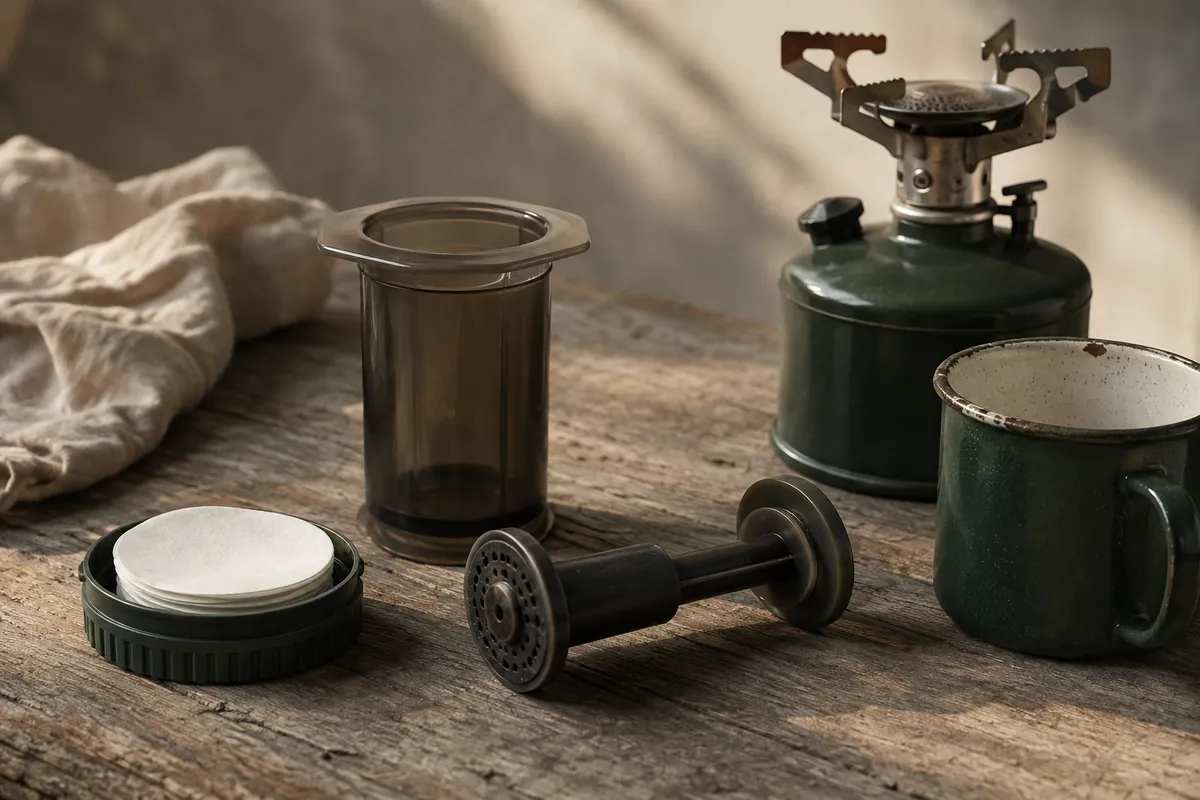
The ceiling is volume, and it is hard. The chamber holds around 250 ml, bypass runs out of room before a large mug is full, and four people means four brews with three going cold.
That constraint cuts both ways: this is an unusually good tool for a small strong cup and an awkward one for a big mild one. For a table of people a drip machine or a press pot is simply the right tool, and the AeroPress stays what it is, a personal brewer that happens to travel.
The case for owning one, and what it will not do
The AeroPress has an unusually clear case, and the things it cannot do are as definite as the things it can.
Works well for
- Forgiving to a degree no other brewer matches, since a wide range of recipes all produce something drinkable
- Paper filtration gives a clean cup with none of the sediment of an immersion brewer
- Start to clean in under two minutes, which no other manual method approaches
- Almost unbreakable, light, and the obvious brewer to travel with
- Brews concentrate, so one device covers a short black coffee and a long one
Struggles with
- One cup at a time, with no practical way to scale to a table of people
- Paper filters are a consumable that runs out at the worst moment
- Not espresso, whatever the pressure claims, so it is a poor base for milk drinks
- The rubber seal perishes and needs replacing every year or two
- Plunging is genuine physical effort if the grind drifts fine
Forgiveness is why it is recommended to beginners and why experienced drinkers keep one on the shelf next to better equipment. A brewer that produces an acceptable cup from a careless recipe is doing something a cone cannot, and it does it with cheap decaf and expensive arabica alike.
It suits one or two cups made quickly with easy cleanup, it wants beans no fresher than storing coffee beans already recommends, and unlike a moka pot it needs no hob and no watching. What it will not do is scale, and no recipe fixes that.
Common questions
Does the AeroPress make espresso?
No. Espresso needs around nine bars of pressure; hand pressure on an AeroPress produces well under one bar, applied briefly at the end. It makes a concentrated immersion brew, which is a different drink.
What is the inverted AeroPress method?
Assembling the brewer upside down so nothing drips through during the steep, then capping it, flipping it onto the mug and pressing. It gives precise control over steep time, which the standard orientation cannot.
Should you use paper or metal AeroPress filters?
Paper for a cleaner cup, which is the AeroPress's main advantage over a French press. Metal lets oils through for more body but gives away that clarity, and a French press does heavy body better anyway.