What Is Instant Coffee? Real Coffee With the Water Taken Out
Instant coffee is real coffee that has been brewed and then had its water removed. What is missing from the cup is not the coffee, it is the aroma that left with the water.
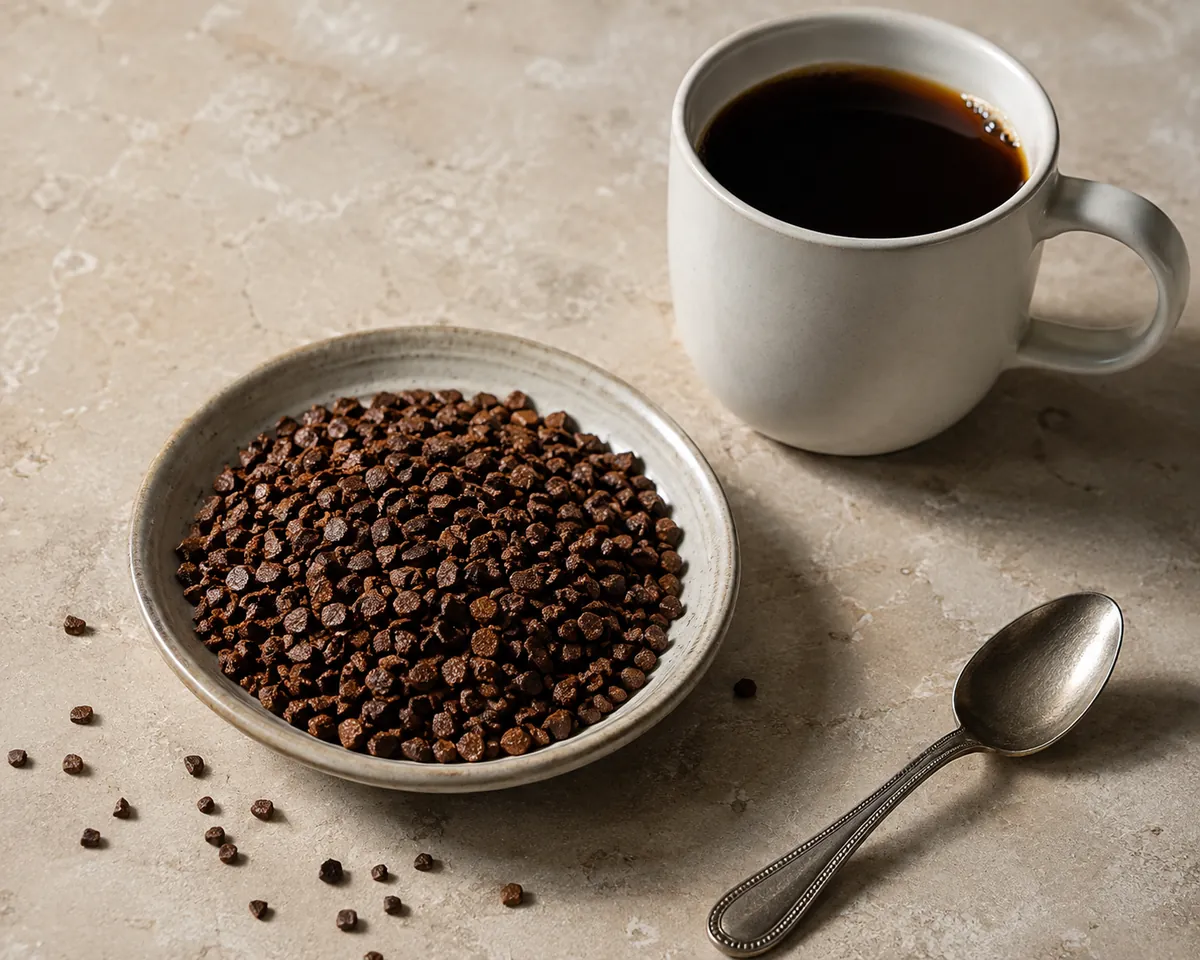
Instant coffee is coffee that has been brewed at industrial scale and then dried into a soluble powder or granule. Adding water reconstitutes it, with none of the equipment an espresso shot demands.
It is genuinely coffee. The gap between it and a fresh brew is not adulteration, it is what the drying process removes.
Instant coffee at a glance
- What it is
- Brewed coffee with the water taken out, then rewetted in the cup
- Two processes
- Freeze-drying, which keeps more aroma, and spray-drying, which is cheaper
- Beans
- Heavily robusta, because it yields more soluble solids per kilo
- Typical dose
- A heaped teaspoon, roughly 4 g, per 200 ml
- Water
- 80 to 90 C rather than boiling
- Caffeine
- Around 60 to 80 mg in a typical mug
- Keeps
- For its stated shelf life, provided the jar stays sealed and dry
Freeze-dried against spray-dried
Two processes dominate the category, they cost very different amounts to run, and the products they turn out are distinguishable by eye before you taste either.
| Freeze-dried | Spray-dried | |
|---|---|---|
| Process | Frozen, then water removed under vacuum | Sprayed into hot air as a fine mist |
| Temperature | Very low | Very high |
| Appearance | Irregular hard granules | Fine uniform powder |
| Aroma retained | More | Less |
| Cost | Higher | Lower |
| Typical use | Mid and premium products | Budget products and vending |
Freeze-drying preserves more aroma because it never heats the coffee. Spray-drying is faster and cheaper and drives off a great deal of what makes coffee smell like coffee, since the mist meets hot air at the exact moment the aromatics are most free to leave.
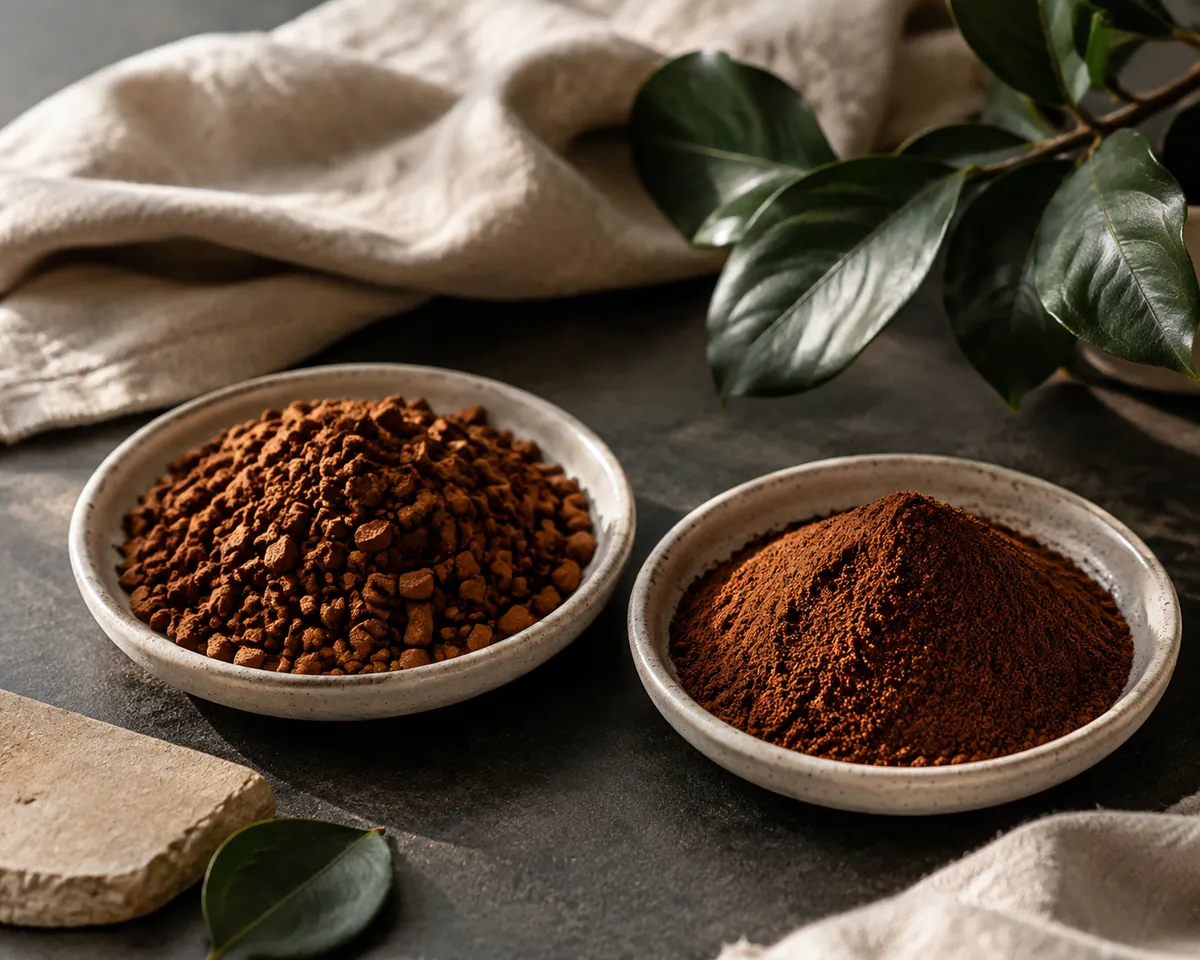
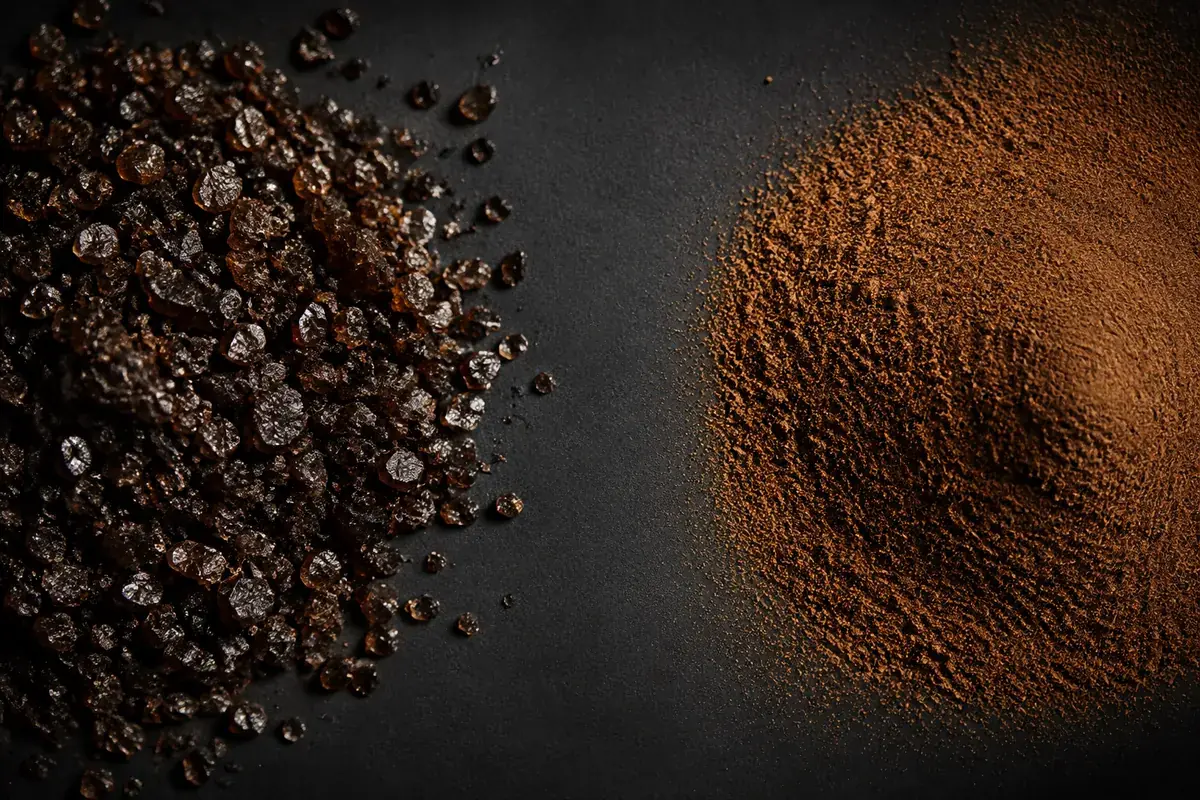
Granule shape gives it away. Irregular, glassy-looking chunks with sharp edges are the broken sheet a freeze-dryer produces; uniform fine powder is what falls out of a spray tower.
That check works through the glass of a jar and it is the one piece of information no marketing copy on the label can obscure.
Where the aroma goes
The category's central limitation has a specific and unglamorous cause. Coffee's smell comes from several hundred volatile compounds, and volatile is exactly the property that makes them leave with the water.
Both drying processes exist to remove water, so both remove aroma along with it, and freeze-drying only limits the damage rather than avoiding it.
Where the aroma goes
- BrewIndustrial extraction produces a coffee liquor, usually very concentrated.
- ConcentrateWater is evaporated, and aromatics leave with it.
- DryFreeze or spray drying removes the rest of the water and more aroma.
- AromatiseCoffee oil is often sprayed back on for the smell on opening the jar.
- PackSealed quickly, since the granules absorb moisture readily.
The fourth step explains a familiar disappointment. That hit of aroma when a jar is opened is largely added back, from coffee oil recovered earlier in the process and sprayed onto the finished granules, which is why the jar can smell far better than the cup ever tastes.
What that gap actually amounts to on the palate is set out in how instant coffee tastes.
Why the bean choice shows up more here
Species matters more in instant coffee than in almost any other category, because the economics of drying reward exactly the bean that tastes least of anything.
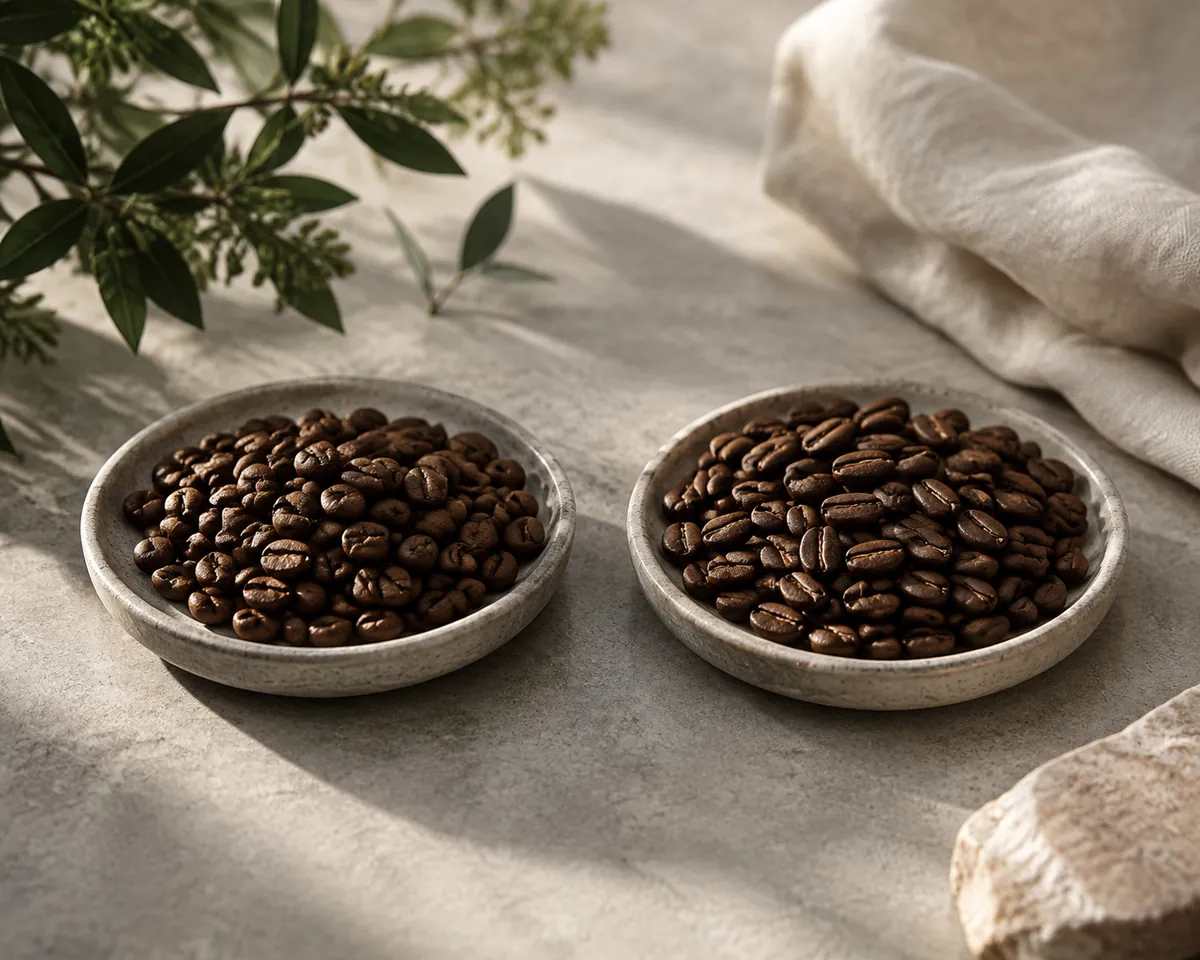
Robusta is used heavily for three reasons at once: it is cheaper per kilo, it carries more caffeine, and it yields more soluble solids, which at industrial scale means more jars from the same tonnage of green coffee. Since the drying process flattens delicate flavour anyway, the argument for paying more for the bean is weaker here than anywhere else on this site.
What the beans contribute
- Robusta
- Higher yield, more caffeine, rubbery and harsh notes
- Arabica
- Better flavour, lower yield, more expensive
- 100 per cent arabica instant
- Noticeably smoother, and priced accordingly
- Blends
- The commonest, and the ratio is rarely disclosed
- Microground added
- Fine ground coffee mixed in, which adds body and some aroma
That said, "100 per cent arabica" is one of the few instant coffee claims that reliably means something. It represents a real cost difference to the manufacturer, it is audible in the cup as less of the rubbery edge, and its absence from a label is a reasonably safe signal that robusta is in there.
Dose, paste and water below the boil
Instant responds to technique more than its reputation suggests, and the three variables that matter are the amount, the order and the temperature.
- Do not use boiling water. Around 80 to 90 C avoids scalding the granules, which adds bitterness.
- Dissolve the granules in a splash of cool water first, then top up with hot.
- Use more than the jar suggests. Most recommendations are conservative.
- Add a pinch of salt, which suppresses bitterness noticeably.
- Store the jar sealed and dry. Granules clump and stale fast once damp.
Dose is the largest and least controlled of the three, because instant is the only coffee measured by an unweighed spoonful. A level teaspoon is roughly 2 g and a heaped one can be 4 g or more, so two cups made by the same person on consecutive mornings can differ twofold in strength.
Weighing is impractical for most people, so the workable habit is to standardise the spoon and the heap. One consistently heaped teaspoon per 200 ml is a fair starting point, and it is stronger than most jars recommend.
Jar instructions tend to produce a weak cup, because they are written to make the jar last and to suit the widest palate at once.
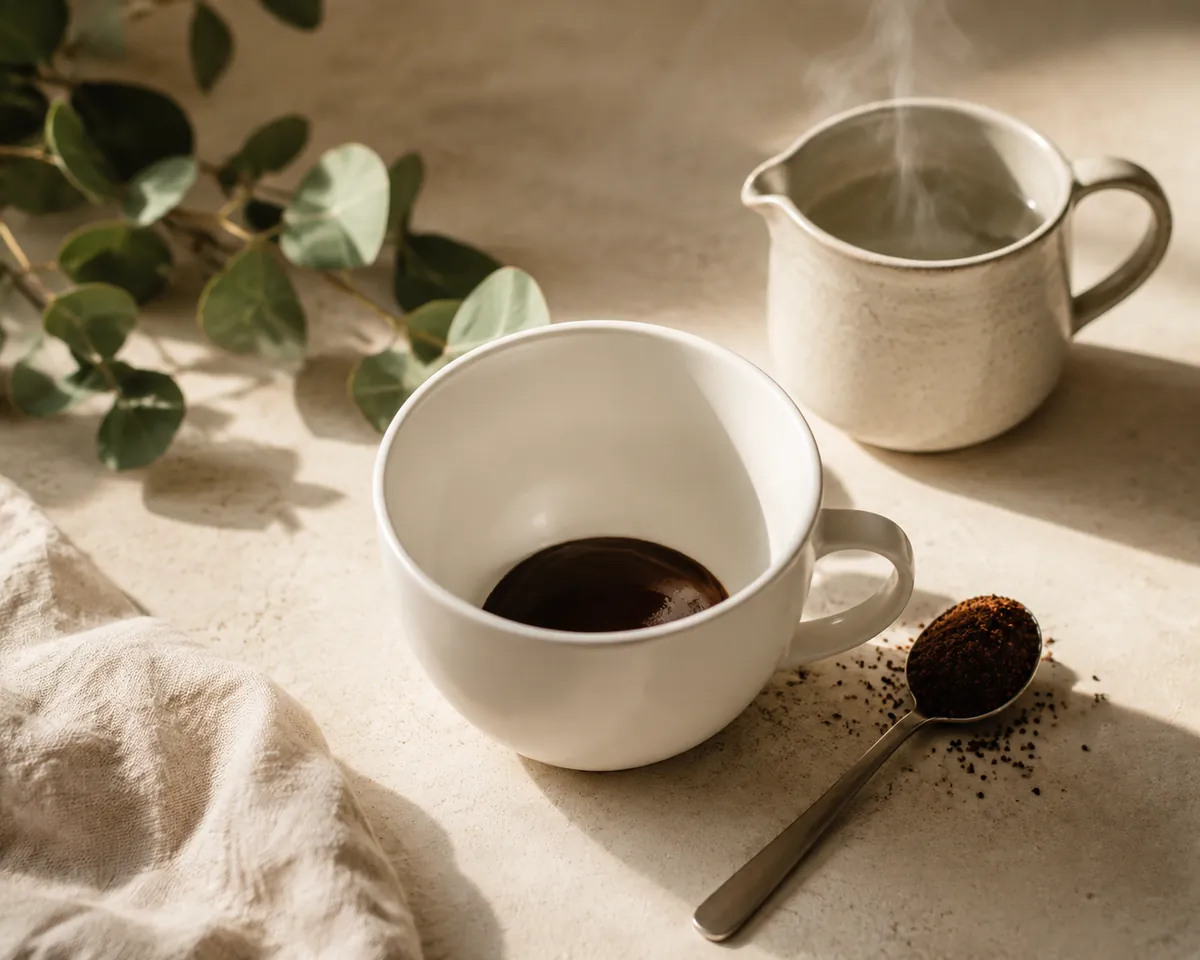
The paste step is the least known and the most useful. Instant granules dissolve endothermically, absorbing heat as they go into solution, so a large dose hitting a small volume of water drops the temperature enough to leave granules undissolved and sitting on the surface.
Wetting everything with cool water first removes temperature from the problem entirely.
The order that always works
- DoseA consistently heaped teaspoon per 200 ml, more than the jar suggests.
- PasteA splash of cool water, stirred until no granules remain.
- Top upHot water at 80 to 90 C, not boiling.
- SeasonA pinch of salt if it tastes bitter, before reaching for sugar.
A few grains of sea salt do more for a bitter cup than sugar does, since salt suppresses the perception of bitterness rather than covering it, and the whole sequence is walked through in making instant coffee.
Microground, sachets and the upmarket end
The category has moved upmarket over the past decade, and two developments account for most of it.
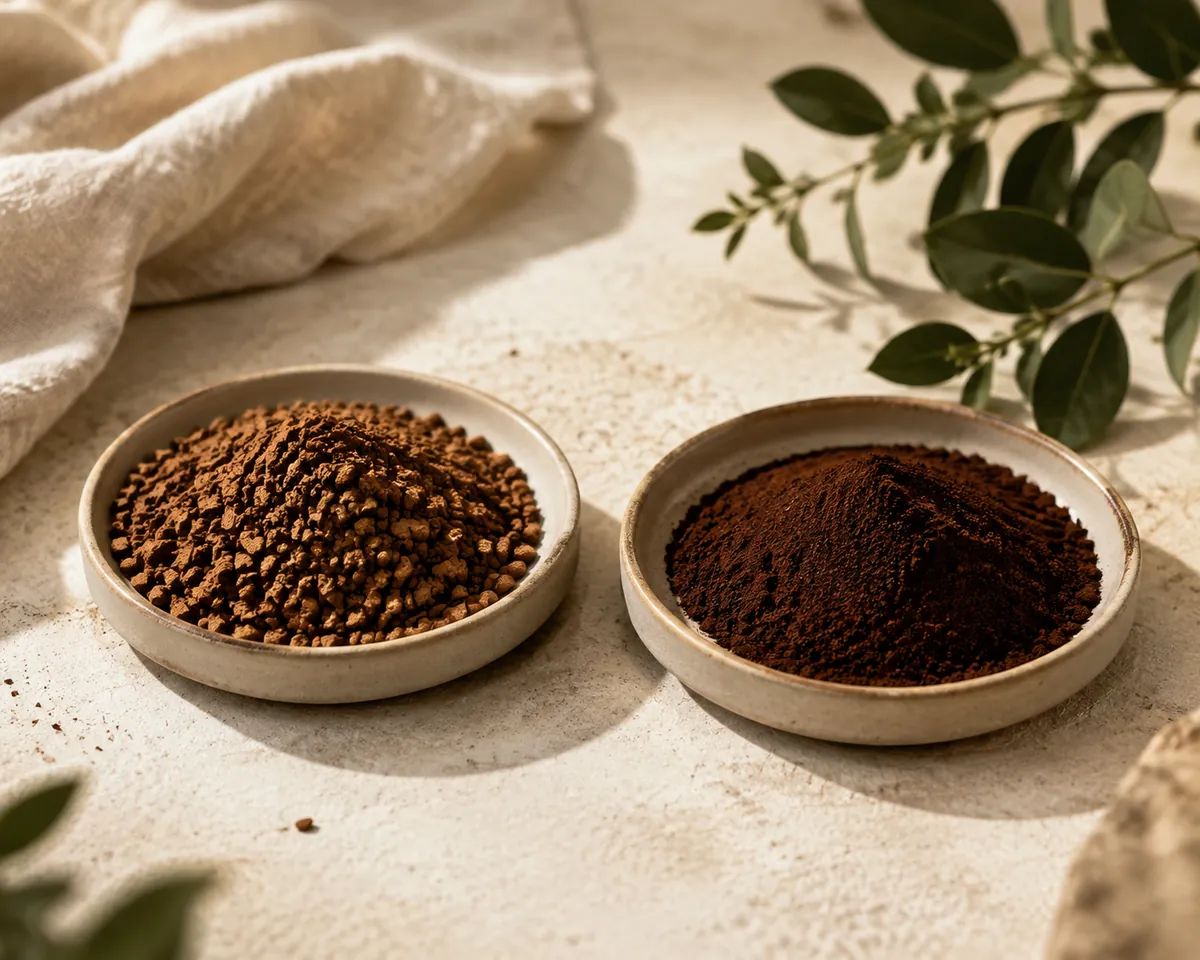
Microground products mix finely ground roasted coffee into the soluble granules. That ground fraction does not dissolve, so it contributes aroma and body from a source the drying never touched, at the cost of a slight sediment in the bottom of the mug.
Specialty instant sold in single-serve sachets goes further, using better green coffee and gentler processing, and costs several times as much per cup.
Decaffeinated instant combines both processes, and decaf coffee explains what the earlier of the two does to the bean before it is ever brewed and dried. Neither route closes the gap entirely, because the limitation is drying rather than bean quality, and no amount of money spent on the green coffee changes what leaves with the water.
Reading the jar, and keeping it dry
Instant coffee labels carry less information than almost any other coffee packaging, so it is worth knowing which few lines mean anything.
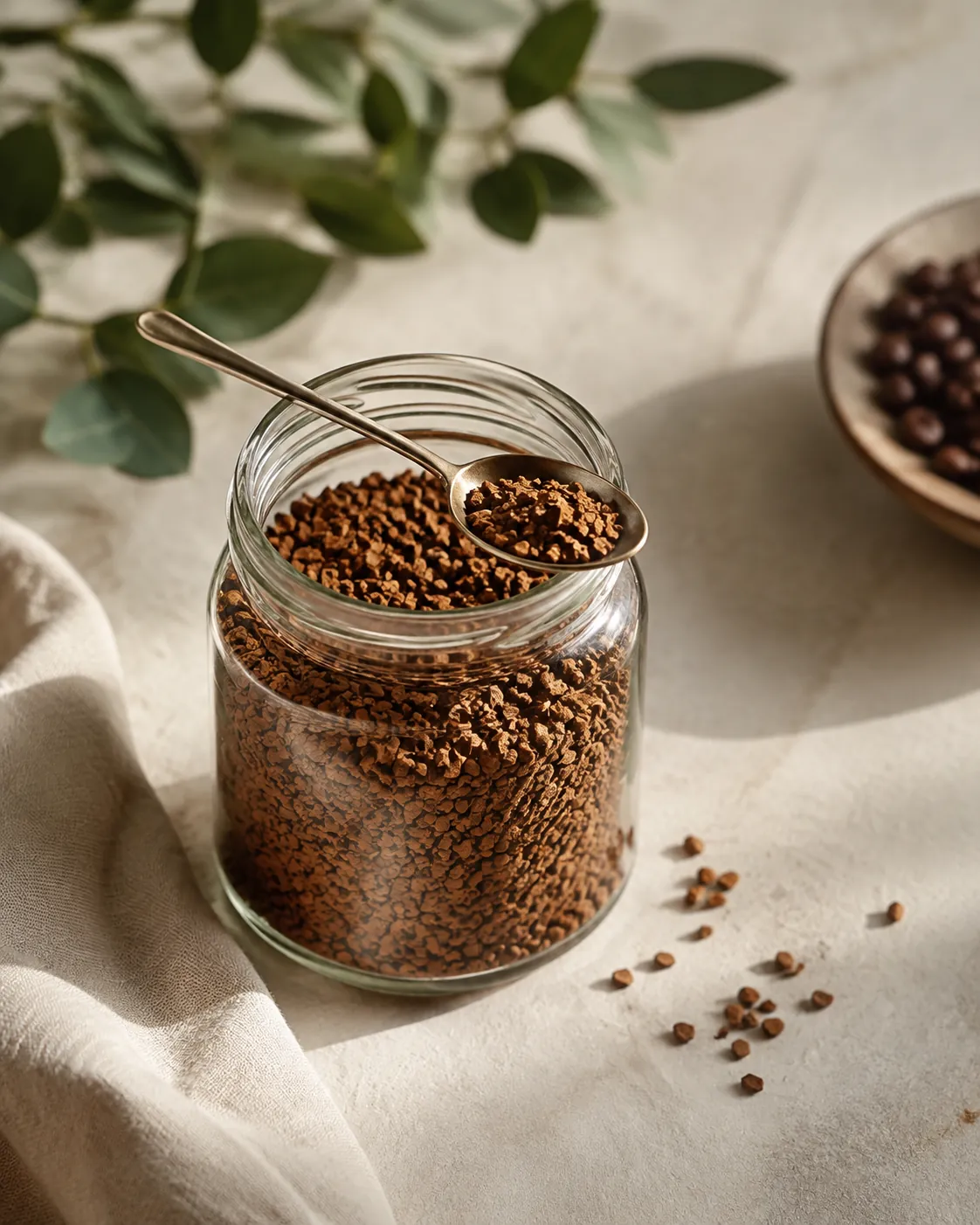
Freeze-dried is usually stated when it is true, and if the words are absent the product is almost certainly spray-dried. "100 per cent arabica" is the single most reliable quality signal in the category, and its absence implies robusta content that will never be given as a percentage.
What you will not find is a roast date, and its absence is honest rather than evasive: the coffee was brewed and dried months ago, and what matters from that point is whether the jar has stayed sealed and dry.
What the jar actually tells you
- Freeze-dried
- Stated when true. Irregular granules confirm it
- 100 per cent arabica
- The most reliable quality signal in the category
- Microground
- More aroma, and a slight sediment in the cup
- Robusta content
- Never stated as a percentage, only implied by its absence
- Best-before
- Meaningful here, unlike a roast date, provided the jar stayed sealed
Storage follows from the same fact. Instant does not go rancid, because there is very little oil left in it to spoil, but it absorbs moisture aggressively, and damp granules clump, dissolve badly and taste stale.
Never put a wet spoon in the jar, keep it away from a steaming kettle, and treat a clumped jar as one that has already lost its aroma rather than one that has gone off. That is the opposite of the roast-date logic in storing coffee beans, and the specifics are in storing instant coffee.
Caffeine, and the spoon that decides it
Instant sits slightly below brewed coffee per serving, and the variable that moves it is not the beans but the hand holding the spoon.
Two heaped teaspoons is a very different drink from one level one, and no other brewing method has that much slack in its dose. Robusta content pushes the figure up as well, since robusta carries roughly twice the caffeine of arabica by dry weight, which is one reason a budget jar can be stronger than a premium one.
Caffeine by brewing method sets out the wider comparison and instant coffee caffeine works through the arithmetic for a single mug.
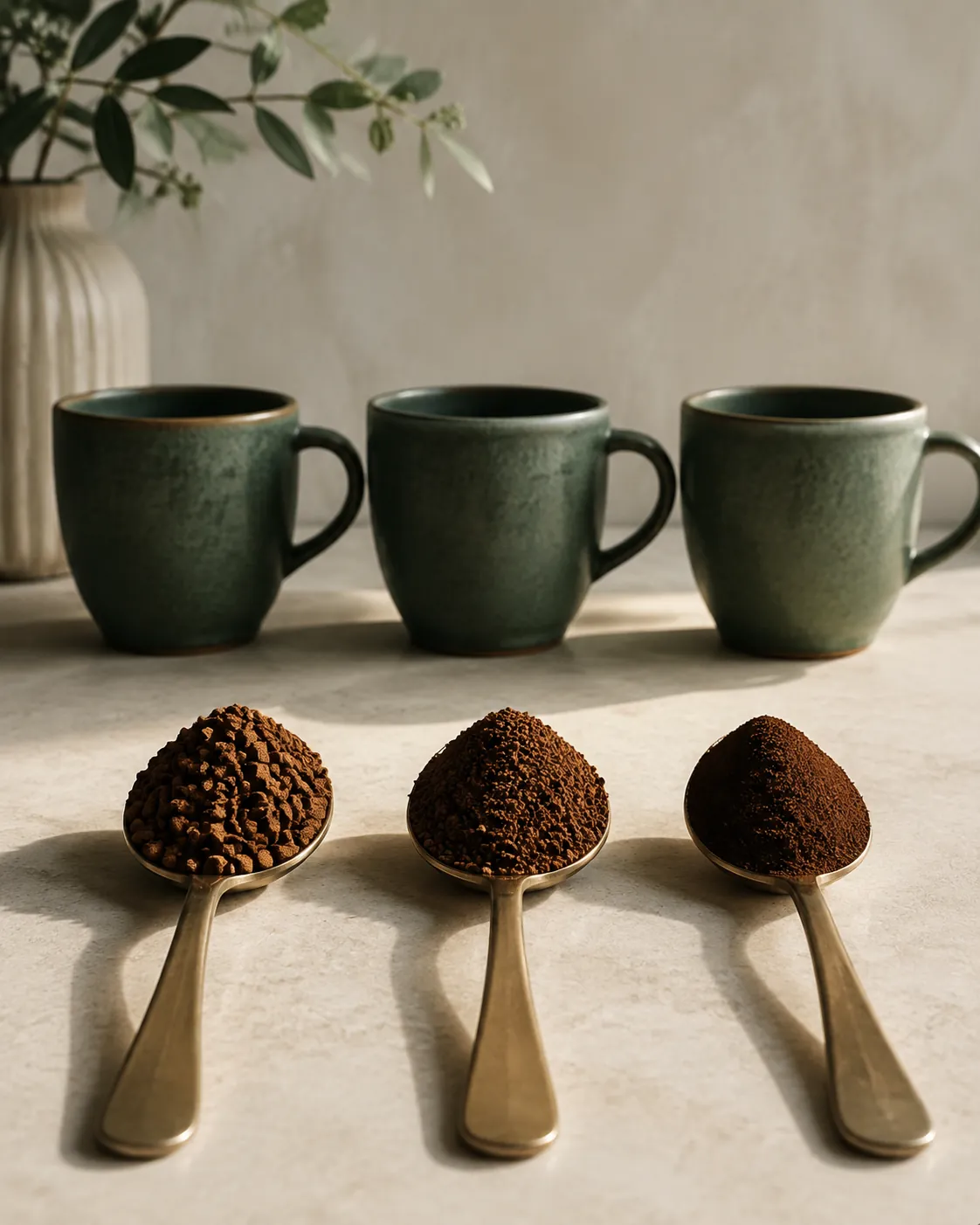
What it beats, and what beats it
Being fair to the category means naming what it is actually good at rather than defending it in general.
Convenience
No equipment, no grinder, no waste, no cleanup. Nothing else competes.
Travel and camping
Weight and volume are a fraction of beans plus a brewer.
Cooking and baking
The best use. It dissolves fully and adds coffee flavour without liquid.
Iced coffee
Dissolves in cold water far more readily than cold brew grounds ever will, and in seconds rather than hours.
Consistency
The same cup every time, which is not true of any manual method.
Baking is where it stops being a compromise and becomes the right answer, and travel is where the weight argument settles the matter on its own. It also sits beside the other shelf-stable coffee ingredient, coffee creamer, for exactly the same reasons.
Placed against its neighbours in the mug, the position is still clear enough to state without hedging.
| Instant | Cold brew | Espresso | |
|---|---|---|---|
| Equipment | None | A jar and a sieve | A machine and a grinder |
| Time to a cup | 30 seconds | 12 to 24 hours ahead | 2 minutes, once set up |
| Aroma | Lowest | Muted | Highest |
| Consistency | Very high | High | Depends entirely on the operator |
| Best use | Convenience, baking, travel | Batch, iced, low acidity | Concentration and milk drinks |
It wins on speed and on repeatability, and it loses on aroma, and no amount of technique moves either of those. Set directly against a filter cup, the trade is laid out in instant beside drip.
The gap narrows against a French press or a drip machine, since all three are immersion or percolation brews at heart, and widens sharply against espresso, where the aromatics instant lacks are the entire point of the drink.
Baking, ice cream and a cold glass
Beyond the mug, instant earns cupboard space for reasons that have little to do with drinking it, and they all come back to one property: it dissolves, and no ground coffee does.
That makes it the correct tool rather than a compromise for cakes, brownies, ganache, icing, ice cream and dry rubs, wherever coffee flavour is wanted and added liquid would wreck the texture. A teaspoon in a chocolate recipe is the classic use, too little to taste of coffee and enough to deepen the cocoa, and it behaves the same with natural cocoa or with Dutch-process cocoa.
It also goes into cold mixtures, which matters for no-bake desserts and buttercream where hot liquid would be a problem.
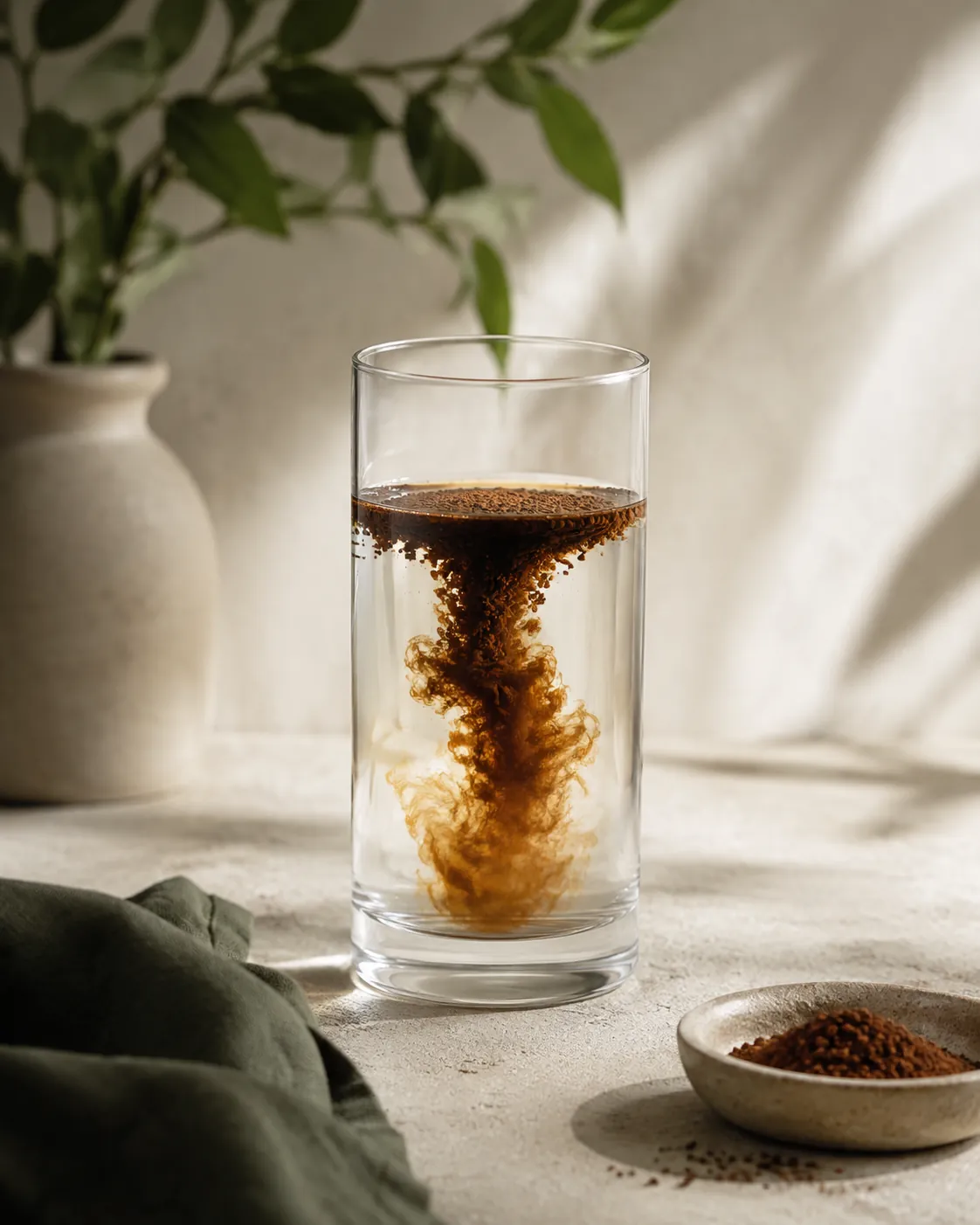
In a cold glass the paste step is not optional. Dropped straight into cold water the granules dissolve slowly and incompletely and end up on the bottom, so wet them with a splash of warm water first, stir smooth, then add ice and cold water or milk.
That makes an iced coffee in about a minute, with no brewing and no waiting, which is the one place instant genuinely outperforms every other method. For anything blended it is the practical choice for the same reason, adding coffee flavour without the water a brewed coffee would bring with it.
Placing it honestly
Instant coffee is easy to dismiss and worth placing accurately, which means neither defending it as a substitute nor pretending the gap is small.
It cannot compete on aroma, and the reason is structural rather than fixable: the limitation lives in the drying, not in the beans or the water or the spoon. What it offers instead is a recognisable coffee flavour with no equipment and no skill, in half a minute, and nothing else solves that particular problem at all.
Judge it against the alternative you would actually have made, which at a desk or on a train is usually no coffee rather than a pour-over.
The closest genuine contest is against cold brew as the base of a milk drink, since both are low in acidity and heavy on roast character. When a cup does come out badly the cause is almost always dose, water temperature or a damp jar, and instant coffee problems works through them in that order.
Common questions
Is instant coffee real coffee?
Yes. It is coffee brewed at industrial scale and then dried into a soluble form. What is missing is aroma, which leaves with the water during drying, rather than any of the coffee itself.
What is the difference between freeze-dried and spray-dried instant?
Freeze-dried coffee is frozen and dried under vacuum without heat, which preserves more aroma and produces irregular hard granules. Spray-dried coffee is dried in hot air, which is cheaper and costs more aroma, and gives a fine uniform powder.
How do you make instant coffee taste better?
Use water around 80 to 90 C rather than boiling, dissolve the granules in a splash of cool water first, and use more than the jar suggests. A pinch of salt suppresses bitterness noticeably.