How to Store Coffee Beans: Opaque, Airtight, Room Temperature
Buy whole beans, keep them in an opaque airtight container at room temperature, and grind them as you go. Almost everything else about coffee storage is a detail on top of those three.
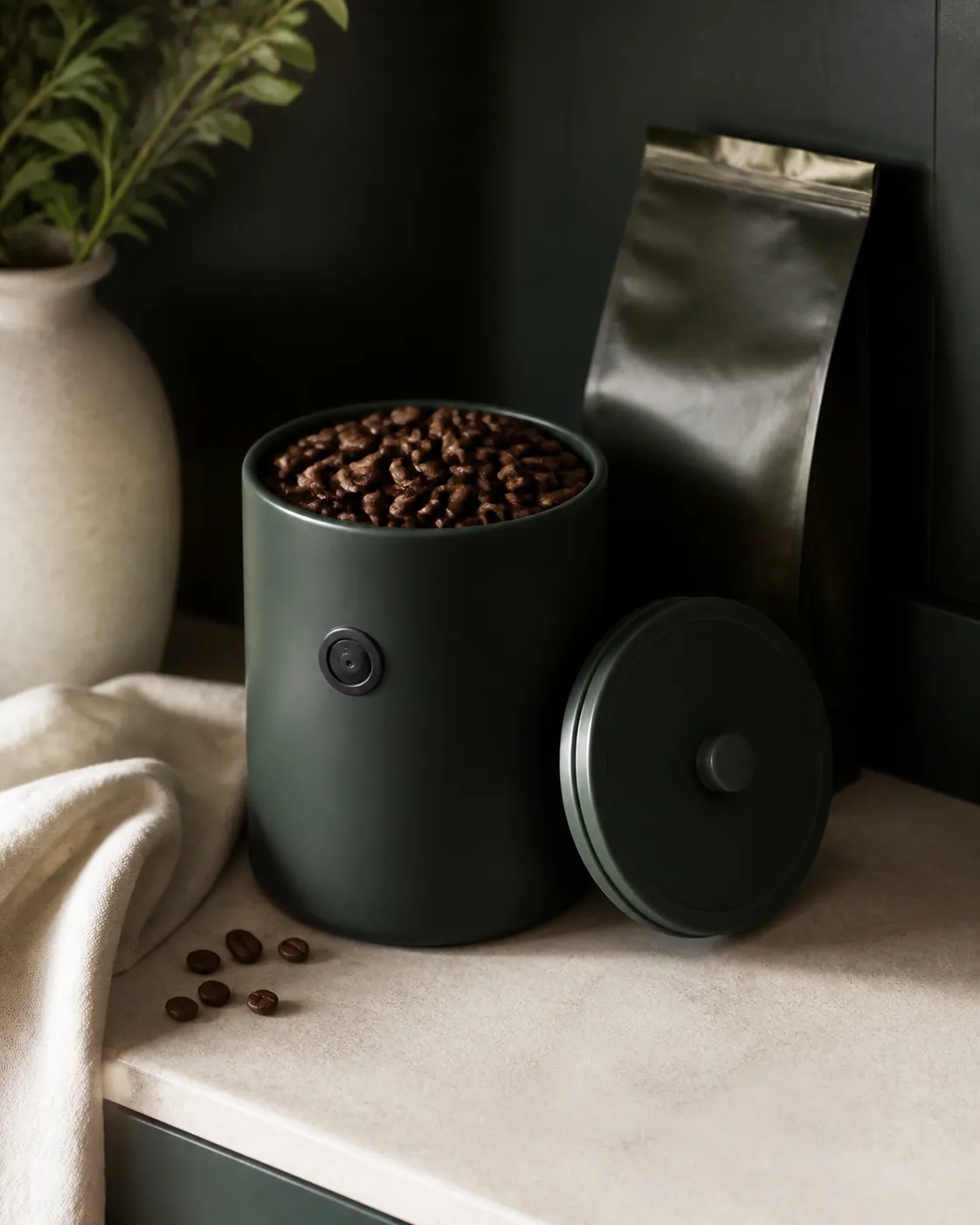
Roasted coffee goes stale rather than unsafe.
The aromatic compounds that make coffee smell like coffee are volatile, and they leave. Oxygen speeds that up, and so do heat, light and moisture.
Storage is therefore a delaying action rather than a preservation method, and the delay it buys is measured in weeks.
None of this is about safety. It is about how long the coffee stays worth drinking, and which of the decisions on offer actually changes that.
Grinding, and why it outranks every container you could buy
Grinding multiplies the surface area exposed to air enormously. A whole bean presents a small outer skin to the world; the same bean ground presents thousands of times more area, all of it fresh and all of it reacting.
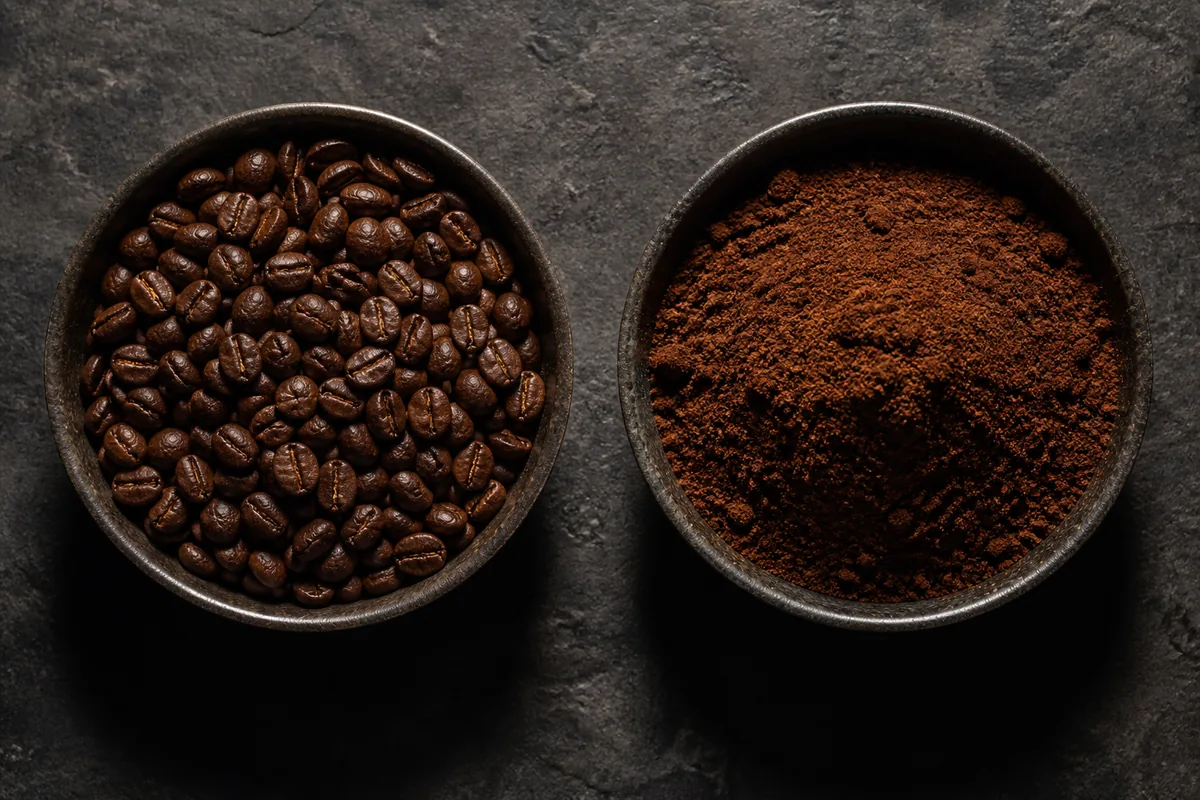
Whole beans hold up well for several weeks after roasting; ground coffee loses its best aromatics within days, and noticeably within hours.
Ground coffee cannot be rescued, though the rate of loss can be slowed, and every rule further down this page applies to it harder. Airtight matters more, a full container matters more, and the useful window shrinks from weeks to days.
- Buy the smallest bag sold, and buy it more often. Volume discounts are false economy here.
- Decant into a small airtight jar the ground coffee actually fills, rather than leaving it in a half-empty bag.
- Keep it away from the cooker. Warmth accelerates the loss of exactly the aromatics that survived grinding.
- Do not store it beside spices or in a cupboard with anything strongly scented.
- Accept a week as the good window and a month as the outer limit.
Freezing ground coffee is more defensible than freezing beans, since there is no grinding step left to protect and the loss is running faster. Portion it, seal it, and brew straight from frozen without thawing.
The curve from roast day to papery, and how to hear it coming
Roasted coffee moves through predictable stages, and the useful window is narrower than the printing on most supermarket bags implies.
The life of a bag of beans
- Days 0 to 3Degassing hard. Brews unevenly because escaping gas blocks the water.
- Days 4 to 14The best window. Aromatics intact, gas settled.
- Weeks 3 to 4Still good. Slowly losing the top notes.
- Month 2 onwardFlat. Not unpleasant, but the aroma has gone and a papery finish arrives.
Nothing spoils along that curve; the coffee simply becomes less interesting, and the drop is steepest in the first fortnight. Which date is printed matters more than the date itself, because a roast date locates the bag on that curve and a best-before date tells you almost nothing about where it sits.
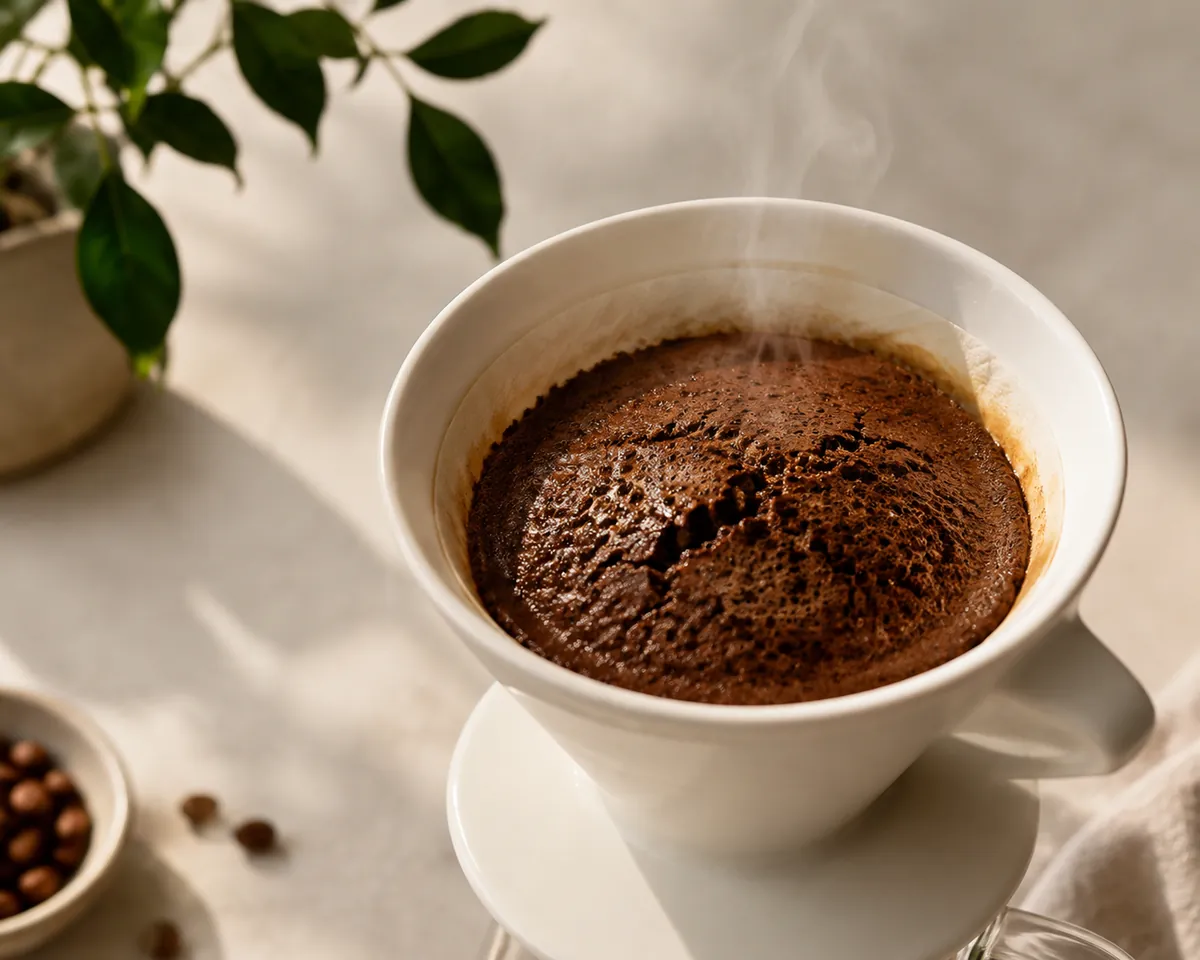
Two checks tell you where you are without any label at all. Open the container and smell: fresh beans smell strongly and specifically, of the particular coffee they are, while stale beans smell faint, flat or slightly of cardboard.
Then watch the first pour, because fresh coffee swells and cracks when wetted and coffee that sits flat under the water has very little gas left in it. In the cup, staleness reads as dullness rather than as a fault, with the aroma gone, a papery finish arriving, and nothing you could point to as wrong.
What the valve bag and the canister are each doing
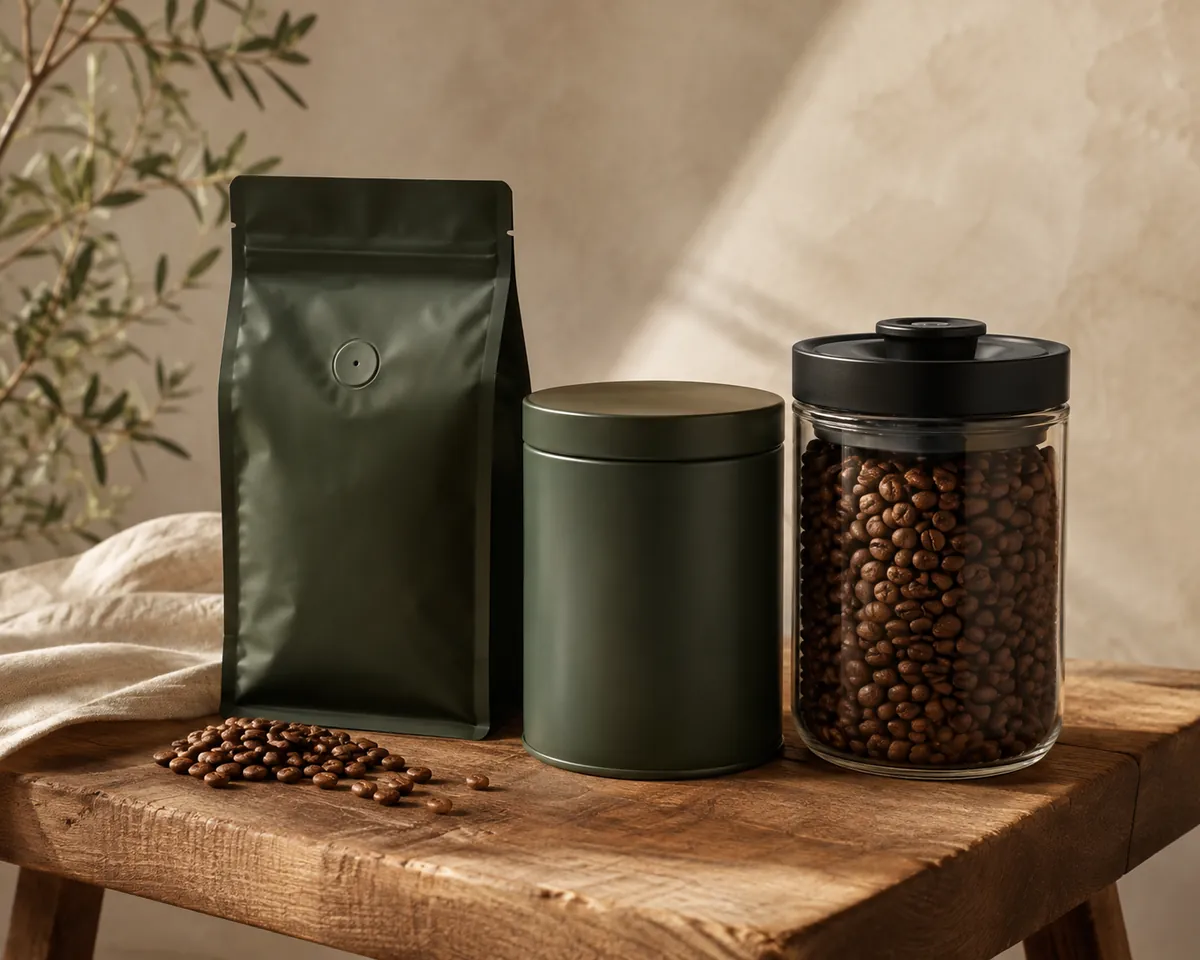
Opaque and sealed, in a cupboard rather than on the counter, covers most of the requirement.
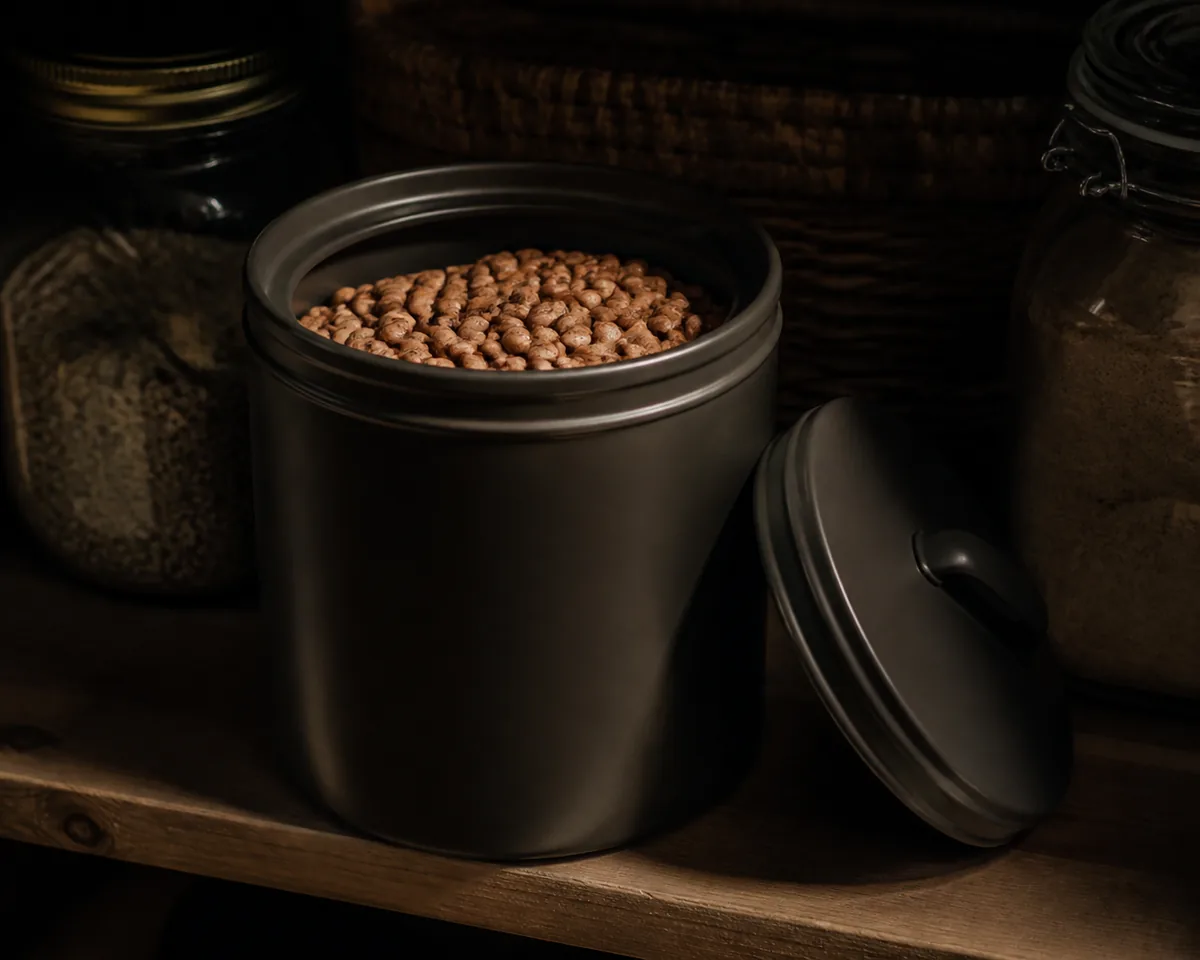
- Opaque, so light does not reach the beans.
- Genuinely airtight, with a gasket rather than a loose lid.
- Room temperature, in a cupboard away from the cooker and away from a sunlit worktop.
- Sized so the container is reasonably full. A handful of beans in a large jar sits in a large volume of air.
The bag the coffee arrived in may already satisfy all four. Most specialty coffee ships with a one-way degassing valve, the small plastic disc on the front, and it exists because coffee gives off carbon dioxide for days after roasting: enough to puff a bag up, enough to make a fresh pour-over bloom violently, and enough to build pressure inside a fully sealed container that has no way to vent.
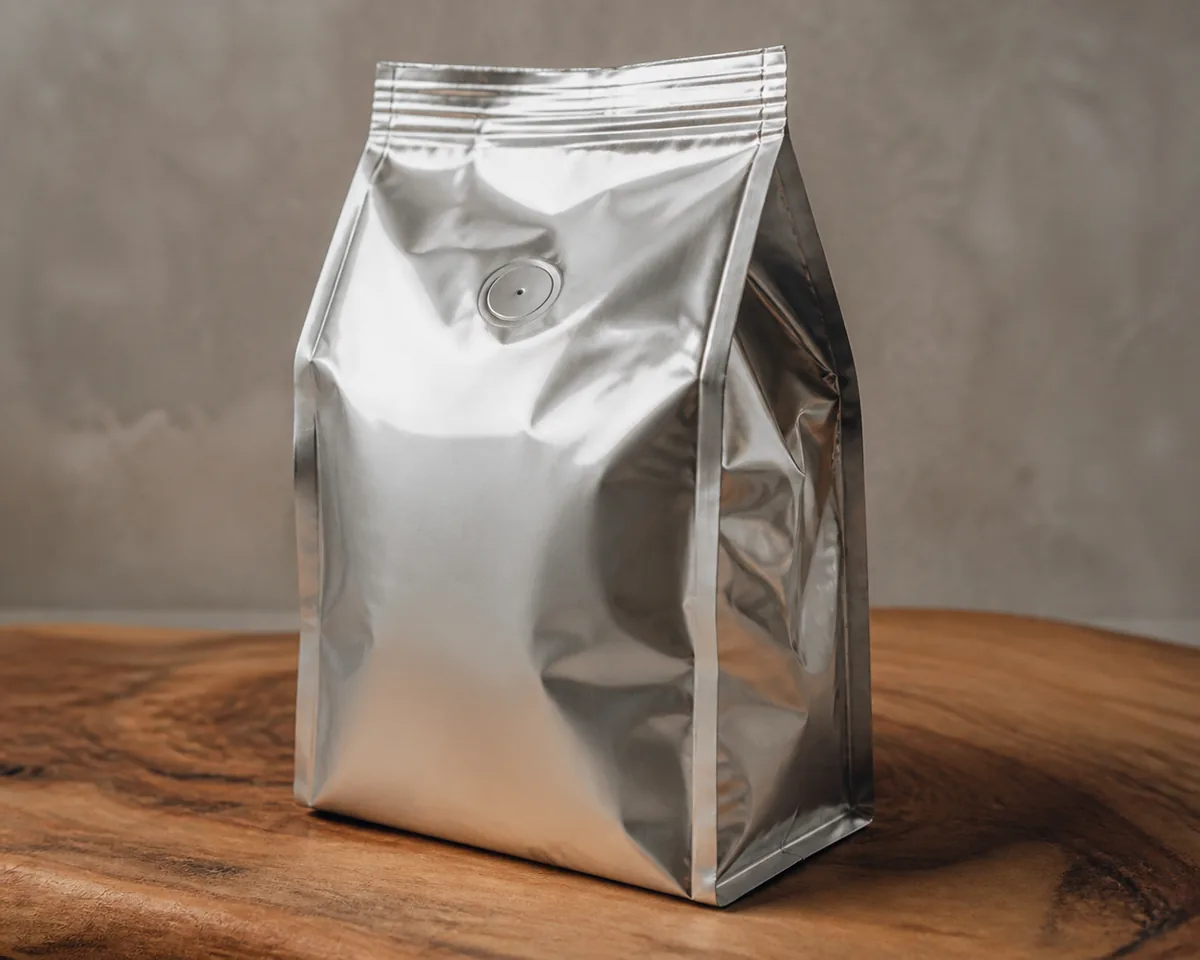
That valve lets the gas out without letting oxygen in, which is a real job rather than packaging decoration. A bag without one is either very fresh and swelling, or old enough that the gas has already gone.
If the bag reseals properly, with a clip or a working zip rather than a fold, leaving the coffee in it is a perfectly good answer, and decanting into a jar half its size is not.
Buying a quantity you can finish, and where the fridge sits
The storage problem is usually a buying problem wearing a different hat.
- A 250 g bag is about 15 to 18 cups of filter coffee, which is two to three weeks for one person drinking daily.
- A 1 kg bag is cheaper per gram and will be past its best long before you reach the bottom, unless a household is getting through several cups a day.
- Two smaller bags bought a fortnight apart beat one large bag on flavour almost every time.
The saving on the large bag is real, and so is the third of it you drink flat.
| Original bag | Airtight canister | Vacuum canister | Freezer | |
|---|---|---|---|---|
| Air | Good, if it reseals | Good | Best | Good, if sealed |
| Light | Good | Good if opaque | Varies | Good |
| Moisture | Good | Good | Good | Risky on thawing |
| Odour | Good | Good | Good | Bad, unless double-sealed |
| Effort | None | None | A pump each time | Portioning up front |
| Worth it for | Two to three weeks | Two to three weeks | A month | Beyond a month |
The fridge is absent from that table because it belongs in none of the columns. It carries every disadvantage of the freezer, humidity and borrowed odours, without the compensating low temperature, which leaves it as the only option here with nothing at all in its favour.
Vacuum canisters do work, and the gain is smaller than the price suggests: pulling most of the air out roughly doubles the useful window, which matters for a kilo and is irrelevant for a bag finished in a fortnight.
The freezer, portioned, and the trick of grinding straight from it
Freezing coffee is genuinely debated, and the honest position is that the outcome depends almost entirely on how carefully it is done.
Works well for
- Slows staling considerably for beans you will not use within a month
- Works reasonably well when beans are divided into small, single-use portions
- The portions must be sealed as airtight as you can manage before they go in
Struggles with
- Repeated freezing and thawing is clearly bad, because condensation forms on the beans each time
- A freezer is full of strong odours, and coffee absorbs them
- For coffee you will finish within a few weeks, it offers nothing over a cupboard
Portion first, seal each portion as well as you can, and take out only what you need. Nothing goes back in once it has come out of the freezer.
A portion that is going to be opened should come fully to room temperature first, so that moisture condenses on the outside of the bag rather than on the beans, which is the single failure that turns freezing from a benefit into damage.
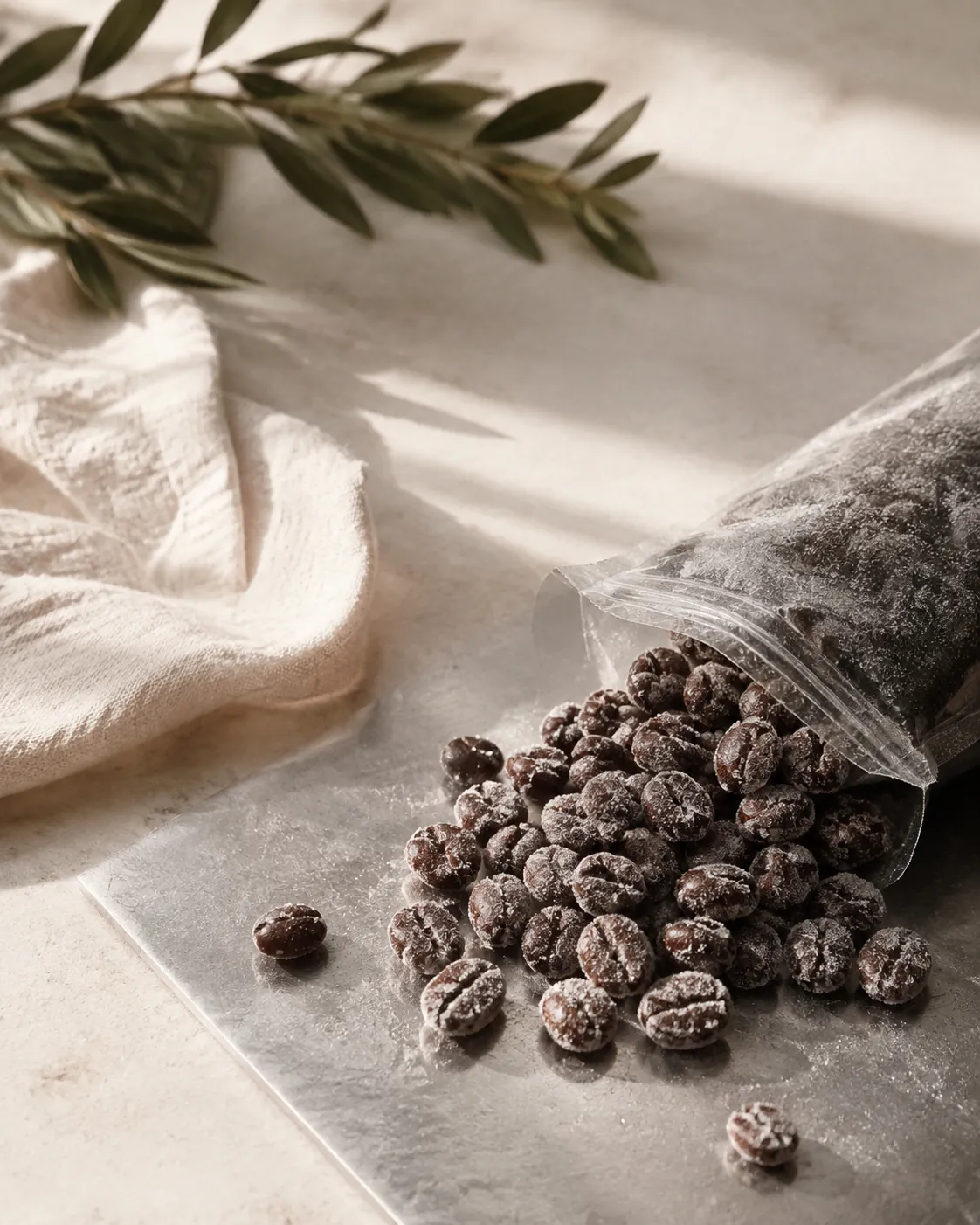
There is one deliberate exception to all that thawing, and it runs the other way. Cold coffee is more brittle, so it fractures more evenly under burrs and throws fewer fines at the same setting, which is precisely the uniformity a burr grinder was bought to produce.
Beans go in still frozen and are brewed immediately, nothing is thawed, and no condensation forms at any point. The gain is modest on filter and clearer on espresso, where fines govern how the puck resists water.
Rest before brewing, and why espresso waits longest
How long to leave a fresh bag alone depends on the brewer, because carbon dioxide interferes in proportion to the pressure applied to it.
Days off roast, before it brews well
- Espresso7 to 21 days. Very fresh coffee gushes and channels under pressure
- Moka pot5 to 14 days, for the same reason at lower pressure
- Filter and drip coffee4 to 14 days. A vigorous bloom is manageable
- AeroPress3 to 14 days, since the paper and short brew tolerate gas
- Cold brewAny age. Twelve hours of contact makes degassing irrelevant
A bag bought on its roast day can therefore make a poor espresso and a perfectly good cold brew on the same afternoon, and nothing is wrong with the coffee in either case. Dark roasts degas faster than light ones, because more of the cell structure has been broken open, so a dark roast is frequently ready in half the time a light one needs and a light roast bought for espresso can want the full three weeks.
Rest interacts with storage in one way worth planning for: a bag resting on the counter is also staling on the counter. The rest happens in the cupboard, sealed, and the fortnight it takes for a light roast to settle is a fortnight off the far end of its window, which is an argument for buying smaller and more often rather than for buying earlier.
Green beans, and why the clock starts at the roaster
Unroasted coffee follows completely different rules, which matters the moment a home roaster enters the picture.
Green beans stay stable for a year or more somewhere cool, dry and dark, for the plain reason that none of the volatile aromatics exist yet. Roasting creates them out of sugars and acids that have been sitting inert in the bean since harvest, and only then does the clock described at the top of this page start running.
What green coffee loses over that year is moisture and what the trade calls liveliness, so a two-year-old green bean roasts flatter than a fresh crop without ever going bad. It fades on a scale of seasons rather than weeks.
That difference is the whole reason coffee is shipped green and roasted close to where it is drunk, and it explains how a roastery holds stock for months while asking you to drink its output within a fortnight. A decaf bean behaves the same way, since decaffeination happens before the bean meets heat, though storing decaf once roasted runs faster than storing arabica.
Getting the last decent cup out of a bag past its best
Stale coffee is still coffee, and the bin is rarely the right answer for it.
What staleness takes is aroma and the delicate top notes. What it leaves behind is body, bitterness, caffeine and the roast character, and several preparations lean on exactly those.
Cold brew
The most forgiving use by a distance. Twelve hours of contact extracts plenty from beans that brew flat when hot.
Milk drinks
A latte hides a great deal, since the milk supplies sweetness and body the coffee has lost.
Moka pot or espresso
Concentration and pressure mask flat aromatics better than a filter brew does.
Baking and cooking
Coffee in a cake or a rub is asked for bitterness and depth, not for aroma.
What an old bag will not survive is a light-roast pour-over, a method built entirely around the aromatics that staleness removes first. One check settles whether a bag is usable.
Beans that smell faint or of cardboard are stale and perfectly drinkable, while beans that smell sharply rancid have oxidised oils on the surface and are worth binning.
The four decisions, on the back of an envelope
Everything above reduces to four choices, and everything that follows is refinement on top of them.
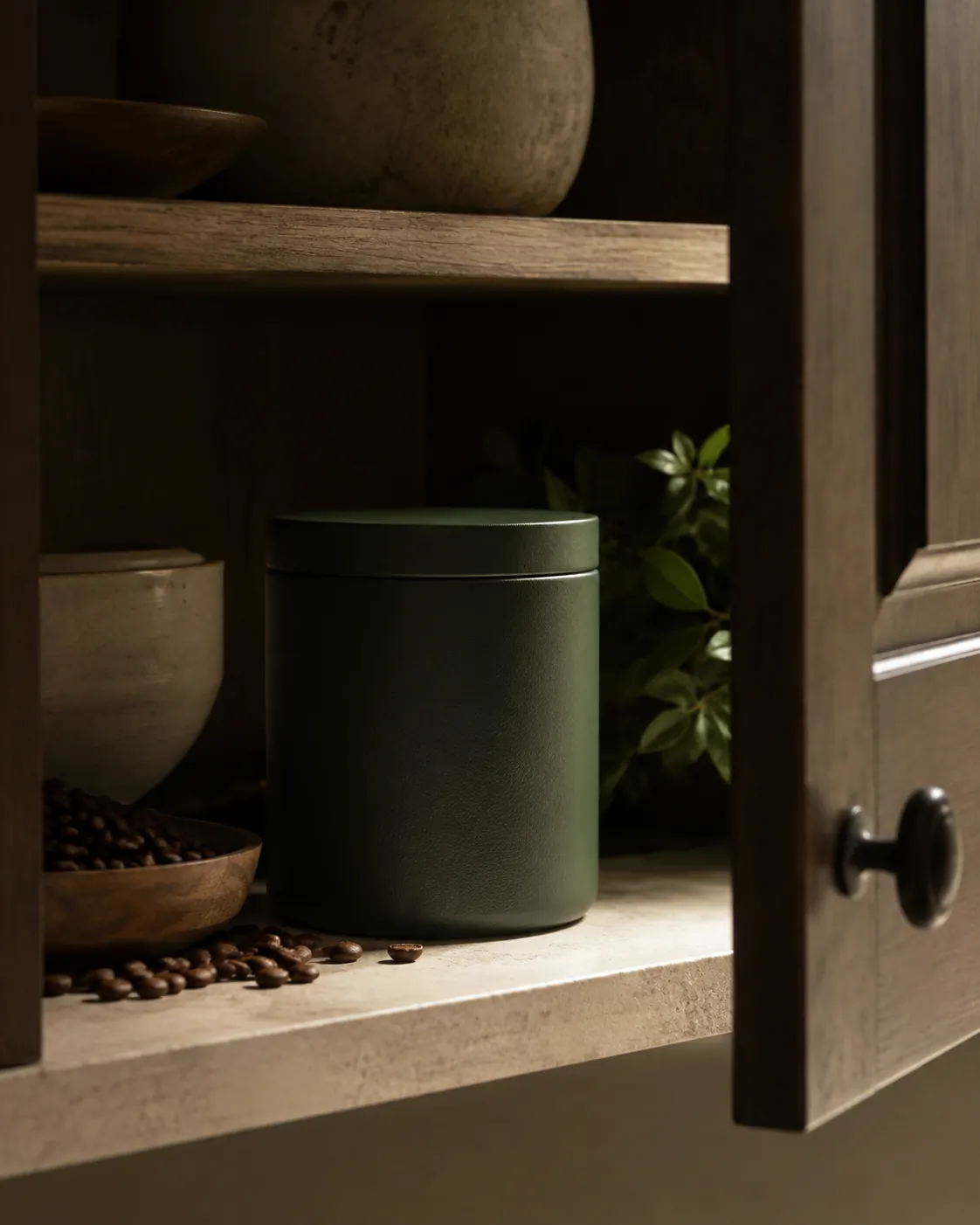
Buy whole beans carrying a roast date, in a quantity you will finish in two to three weeks, which does more for the cup than any container ever will. Keep them sealed, opaque and at room temperature in a cupboard away from the cooker, and use the original valve bag if it reseals properly.
Grind immediately before brewing, every time, since that is the largest single improvement available and it costs nothing once the grinder is paid for.
Use the freezer only for a bag you will not reach for a month, portioned and sealed, and let a portion warm through before opening it. Anyone brewing at the far ends of the range will find the same logic applied in detail in instant coffee, which has no aromatics left to protect, and in caffeine by brewing method, where dose rather than freshness sets the figure.
Common questions
Should coffee beans be kept in the fridge?
No. A fridge is humid and full of odours, and it is not cold enough to meaningfully slow staling. A cool, dark cupboard in an airtight container is better.
How long do roasted coffee beans stay fresh?
Whole beans are generally at their best from a few days to around four weeks after roasting. Ground coffee loses its aromatics within days, and noticeably within hours.
Can you freeze coffee beans?
Yes, if you portion them into small sealed amounts first and thaw each portion fully before opening it. Repeatedly freezing and thawing the same bag causes condensation and does more harm than good.