What Matters in an Espresso Machine, and What Does Not
An espresso machine has two jobs: hold water at a stable temperature and deliver it at around nine bars. Most of the price difference between machines is about how well they do the first one.
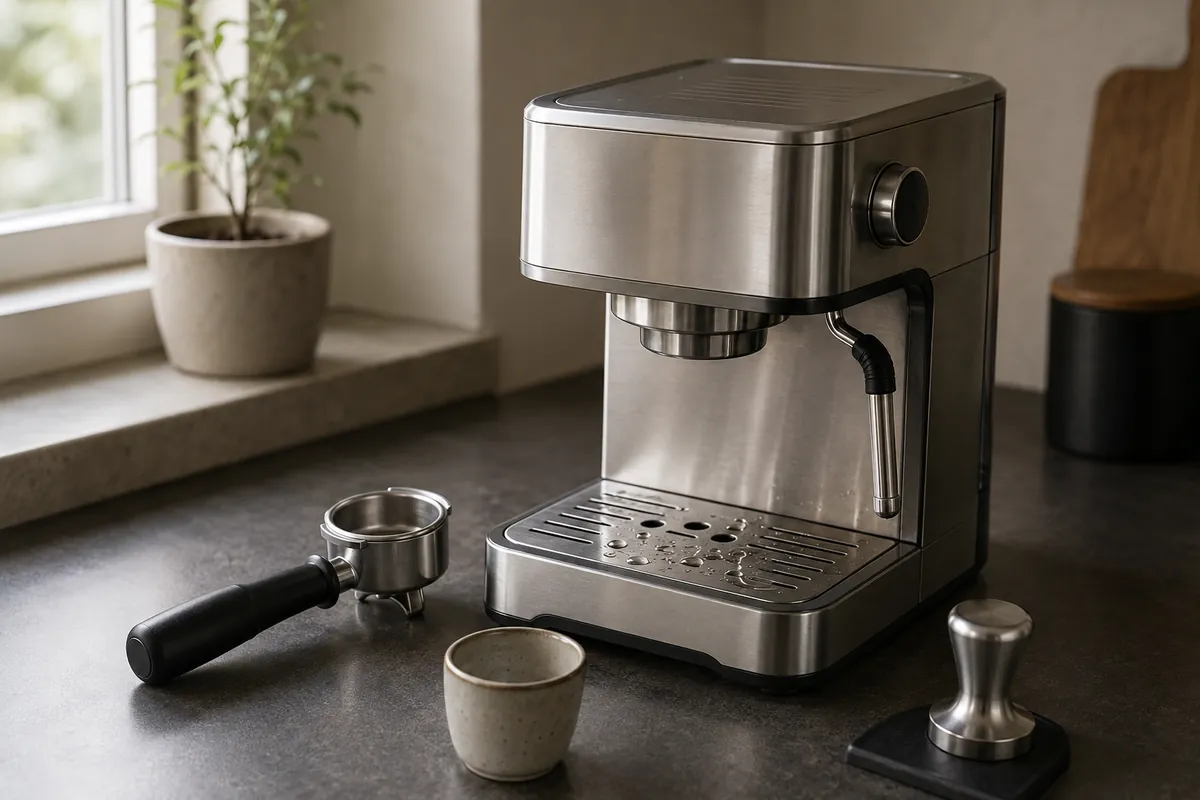
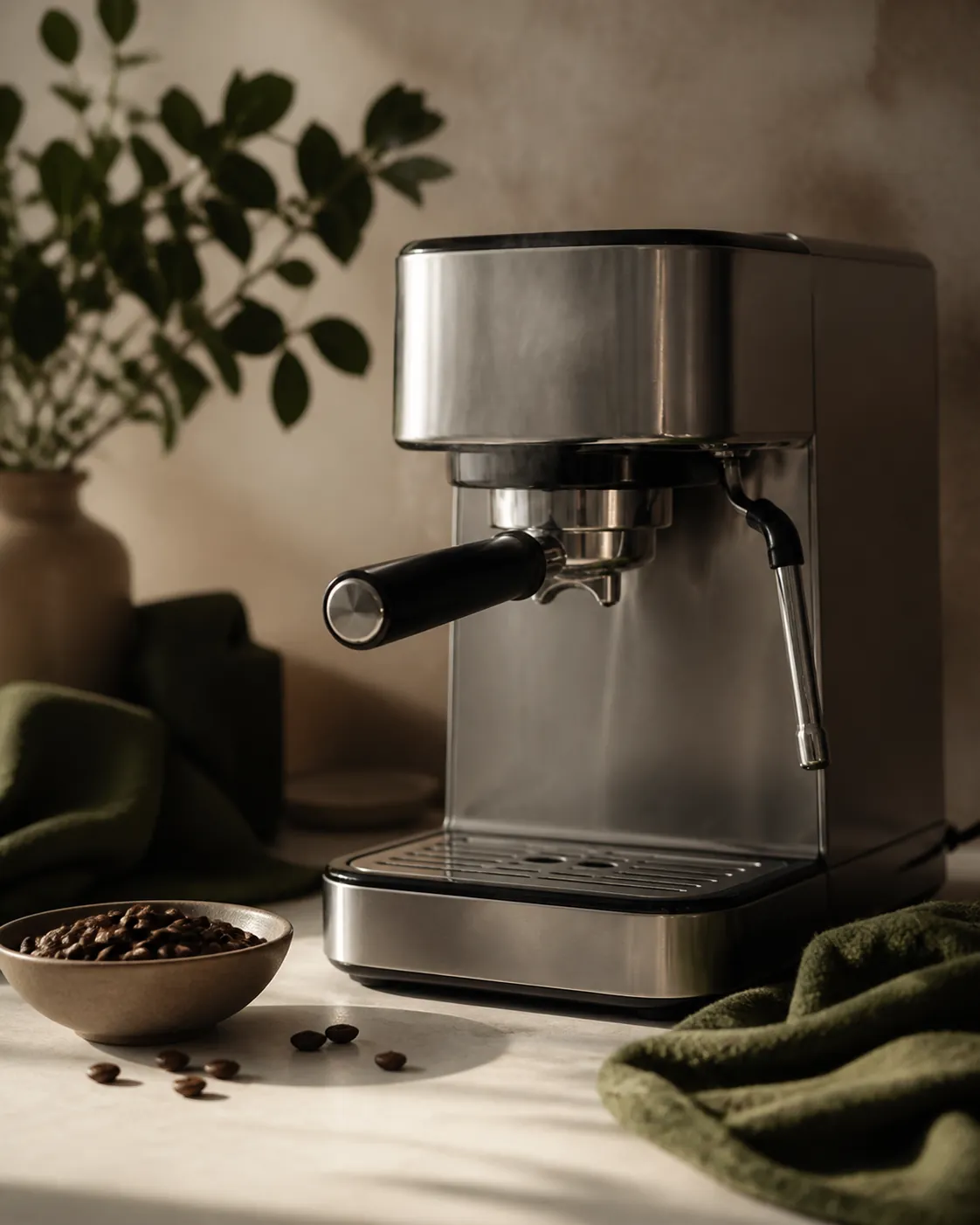
An espresso machine heats water, holds it at a stable temperature, and pushes it through a bed of coffee at roughly nine bars.
Everything else, the styling, the steam wand design, the number of buttons, sits on top of those two functions.
The espresso machine at a glance
- What it does
- Delivers water at a held temperature through a packed coffee bed
- Brew pressure
- Around 9 bars, steady rather than spiking
- Brew temperature
- 92 to 96 C, held through the whole shot
- The design conflict
- Steaming wants roughly 130 C, so one boiler cannot do both at once
- Warm-up
- Fifteen to thirty minutes on any machine with a real boiler
- The second purchase
- A grinder that adjusts finely enough for espresso, which is not optional
- Upkeep
- Daily wiping, weekly backflushing, descaling on a schedule
Stable water at nine bars, and why that is difficult
The machine has two jobs and both of them are about heat. It has to deliver water at a precise temperature and hold that temperature while the shot is actively drawing heat out of it, and it has to push that water through a packed bed at around nine bars without the pressure spiking as the bed resists.
The two jobs, and why they are hard
- Temperature
- Water needs to arrive at 92 to 96 C and stay there through the shot
- Stability
- Brewing draws heat out, so the machine must replace it in real time
- Pressure
- Around 9 bars, held steady rather than spiking
- Steam
- Producing steam needs a much higher temperature than brewing
- Conflict
- One boiler cannot easily be at brew temperature and steam temperature at once
That last line explains most of the machine categories. Brewing wants about 93 C and steaming wants about 130 C, and how a machine resolves that conflict is what its architecture is for.
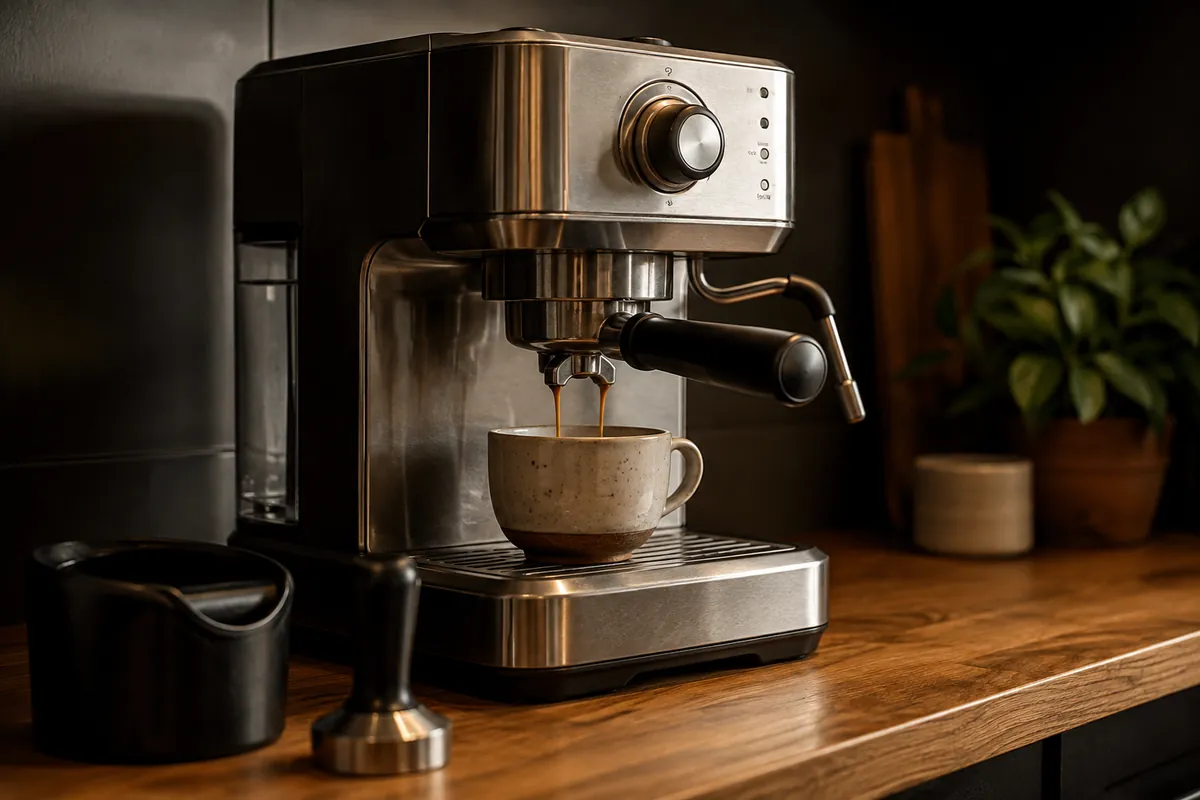
A specification list becomes much easier to read once that conflict is in view, because most of the features on it are answers to it. Two machines at very different prices can pull a similar single shot and differ enormously in how many they can pull in a row, which is the difference the architecture buys.
What lands in the cup at the end of it is described in what espresso tastes like.
Four answers to the temperature problem
Because a single vessel cannot easily sit at brew temperature and steam temperature in the same minute, the four architectures on sale are four different compromises between waiting, cost and stability rather than four levels of quality.
| Thermoblock | Single boiler | Heat exchanger | Dual boiler | |
|---|---|---|---|---|
| Brew and steam | Sequential, with a wait | Sequential, with a wait | Simultaneous | Simultaneous |
| Temperature stability | Poorest | Moderate | Good, needs a cooling flush | Best |
| Warm-up | Fast | 10 to 20 minutes | 20 to 30 minutes | 20 to 30 minutes |
| Typical price | Entry | Entry to mid | Mid to high | High |
| Suits | Occasional single shots | One or two milk drinks | Several milk drinks | Back-to-back use |
A single boiler machine has to switch between brewing and steaming, which means waiting for it to climb or cool between the two. For one milk coffee that is a minor annoyance; for four in a row it is genuinely tedious.
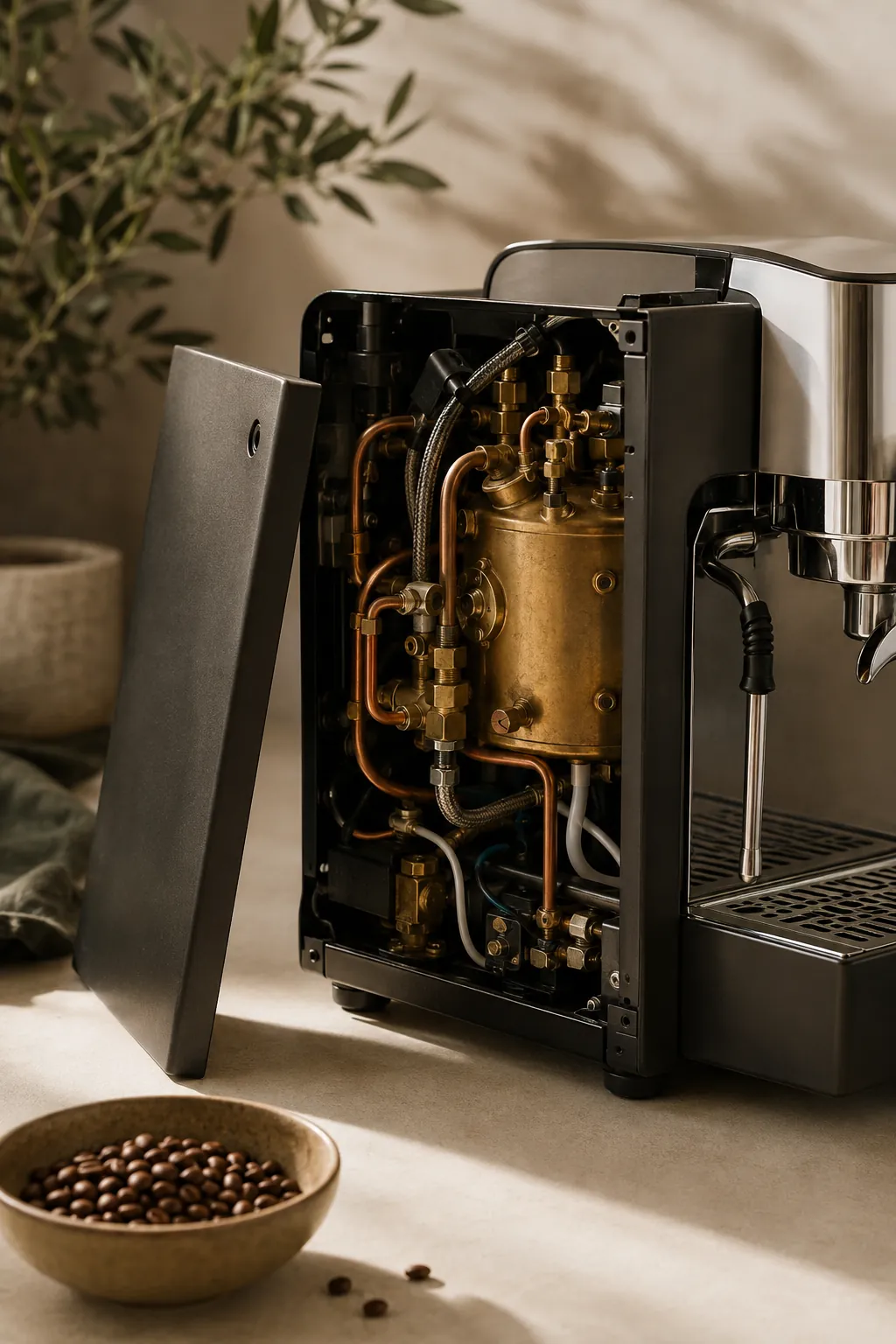
A PID sits across all four designs and is worth understanding separately, since the three letters appear on a great many mid-range machines with no explanation attached. It is a controller that holds the boiler at a set temperature far more precisely than a simple thermostat, which switches on and off across a wide band.
The practical effect is repeatability: without one, shot temperature varies according to where in the heating cycle you happen to pull it, and that variation reads in the cup as operator error. A PID also lets you choose the temperature deliberately, which matters because lighter roasts generally suit it hotter and darker roasts cooler.
The waiting: warm-up, thermal mass and the steam that follows
The specification nobody prints is how long the machine takes to be ready.
A thermoblock machine is nominally ready in under a minute, which is its main selling point, and in practice the group head and portafilter are still cold, so the first shot lands noticeably cooler than the boiler setting suggests. Boiler machines take fifteen to thirty minutes to reach equilibrium, because the whole mass of brass and steel has to come up to temperature and not just the water inside it.
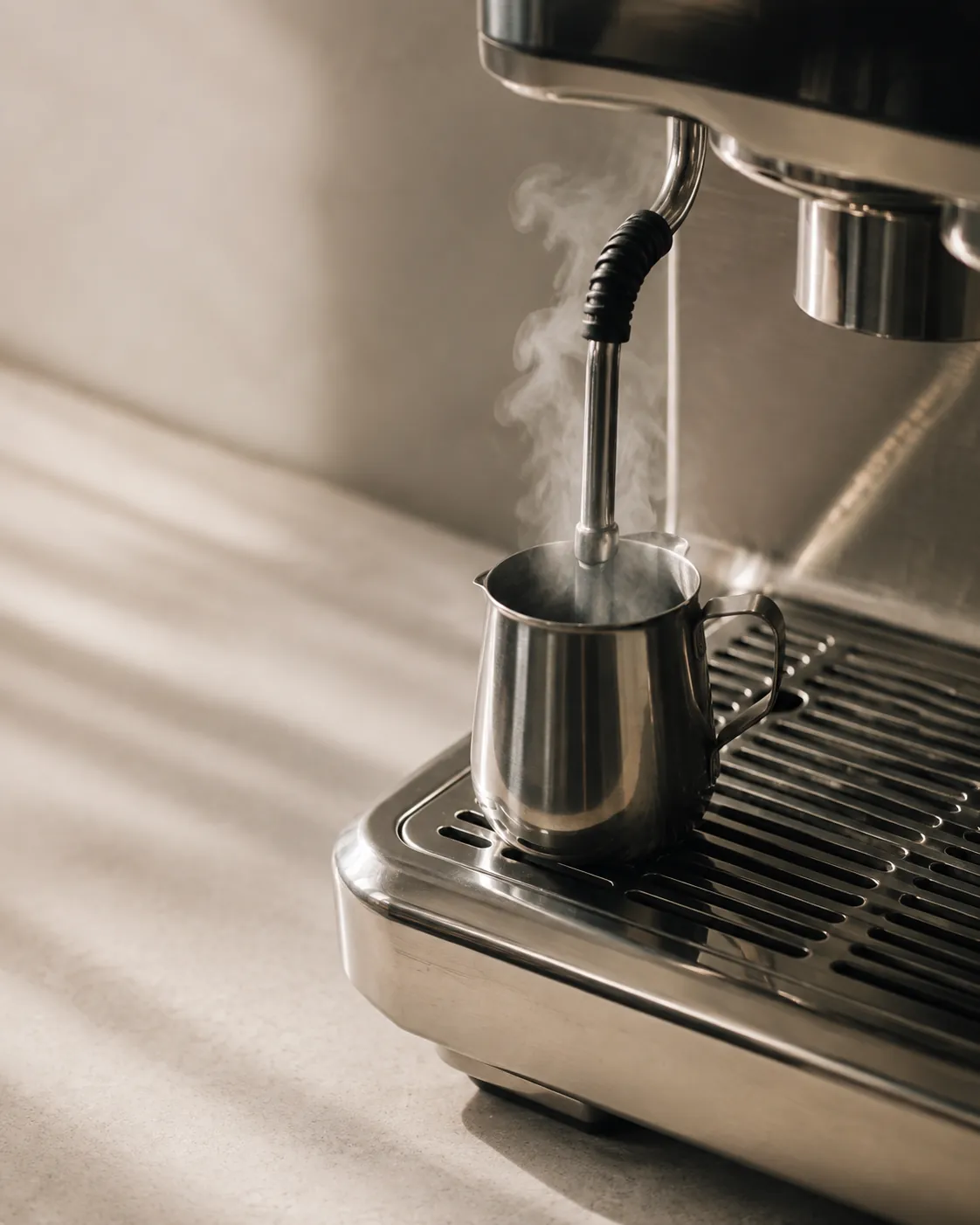
That is why serious machines are often left switched on, and why a timer plug is a common accessory: it puts the warm-up before you get up rather than after it.
Steaming adds a second wait on any single-boiler machine, and for anyone making milk drinks the wand matters more than most of the brewing specification does. Steam power decides how quickly you can texture milk, and slow steaming makes it hard to get air in before the milk warms past its working window, so a weak wand produces bubbly milk through timing rather than through technique.
Wand design counts as well: a ball joint that moves freely, enough length to reach into a jug, and a tip with two to four holes suited to domestic volumes.
A cappuccino forgives a weak wand more readily than a flat white, which wants a fine glossy microfoam and gives you nowhere to hide. Plant drinks are harder again on a slow wand, which is why barista formulations of oat milk exist at all, and where a machine steams badly a standalone frother will do the milk better than a struggling single boiler.
Baskets, and what actually changes the shot
Entry-level machines usually ship with pressurised baskets, and it catches people out. A pressurised basket has a single small hole behind the normal filter plate, which creates artificial back-pressure, so it produces something resembling crema regardless of grind quality or technique.
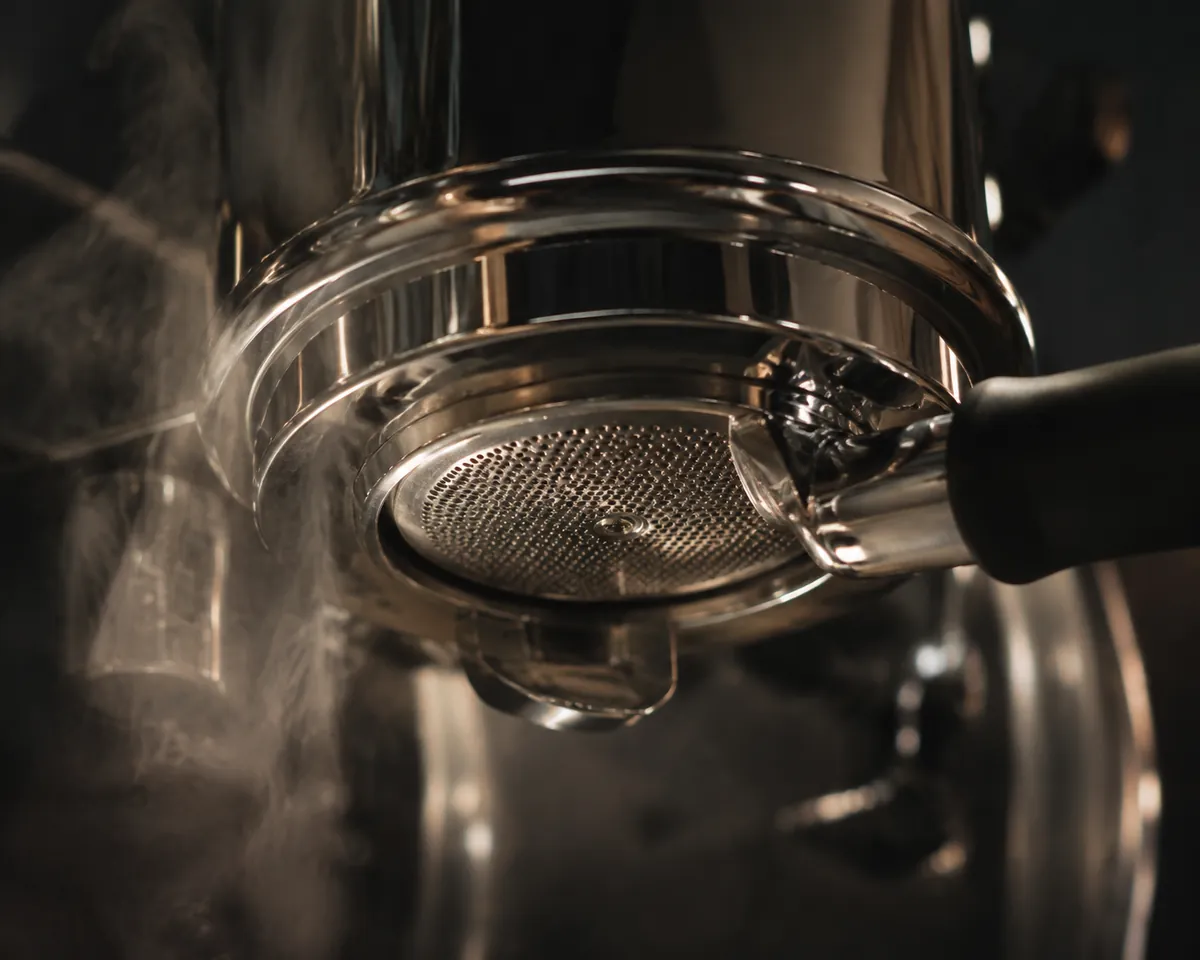
Pressurised
Forgiving, works with pre-ground coffee, produces fake crema. Hides all feedback.
Non-pressurised
Requires a good grind and even tamping. Gives real feedback and a real shot.
Why it matters
A pressurised basket makes it impossible to learn, because bad technique looks the same as good.
When to switch
Once you have a grinder capable of espresso-fine adjustment.
A pressurised basket is a crutch that removes the feedback you need. It is the right choice while you are using pre-ground coffee and the wrong one from the moment you own a grinder that adjusts finely enough, which what a burr grinder is doing to the particles sets out in full.
What actually affects the shot
- Your grinderNothing the machine does can fix an inconsistent grind
- Temperature stabilityBoiler type and PID. The main thing you are paying for
- Basket typeNon-pressurised, once the grinder supports it
- Steam powerOnly if you make milk drinks, and mostly about time
- Pressure gauges and profilingRefinements, useful once everything above is sound
That first line is not a formality. A modest machine behind a grinder that adjusts finely consistently beats an expensive machine fed by a poor one, which is why the standing advice is to buy the grinder first and why pulling a shot begins with the grind rather than with the machine.
Pumps, and what the gauge is really reading
Two pump types are used. Vibration pumps are small, cheap, noisy and fitted to almost every domestic machine, while rotary pumps are quieter, smoother, more expensive and standard in commercial equipment.
Enthusiast discussion makes considerably more of the gap than the cup does.
Both reach nine bars comfortably, so a rotary pump is a comfort and durability upgrade rather than a quality one. Most domestic machines in fact run their pumps well above nine bars and bleed the excess through an over-pressure valve, which is why the gauge on many machines is not reporting what the coffee is experiencing.
What the gauge is genuinely good for is spotting a fault. A reading well below normal usually means a blocked basket or a failing pump, and a needle that climbs unusually high before the first drops appear points at a grind that has gone too fine, which espresso problems works through symptom by symptom.
Backflushing, descaling, and what it costs to keep running
Espresso machines ask for more upkeep than any other brewer on this site, and because neglect shows up as an expensive repair rather than as one bad cup, it is the part of ownership most often discovered late.
- Backflush weekly with a blind basket if the machine has a three-way valve.
- Descale on the schedule the manual specifies, and use filtered water to slow scale.
- Clean the shower screen and group gasket, which collect old grounds and oil.
- Replace the group gasket every year or two; a leaking group usually means a hardened one.
- Wipe and purge the steam wand immediately after every use, before milk dries in it.
Scale is the failure that ends machines. Water composition decides how fast it builds, which is why manuals specify water at all, and brewing water sets out what those figures mean in an ordinary kitchen.
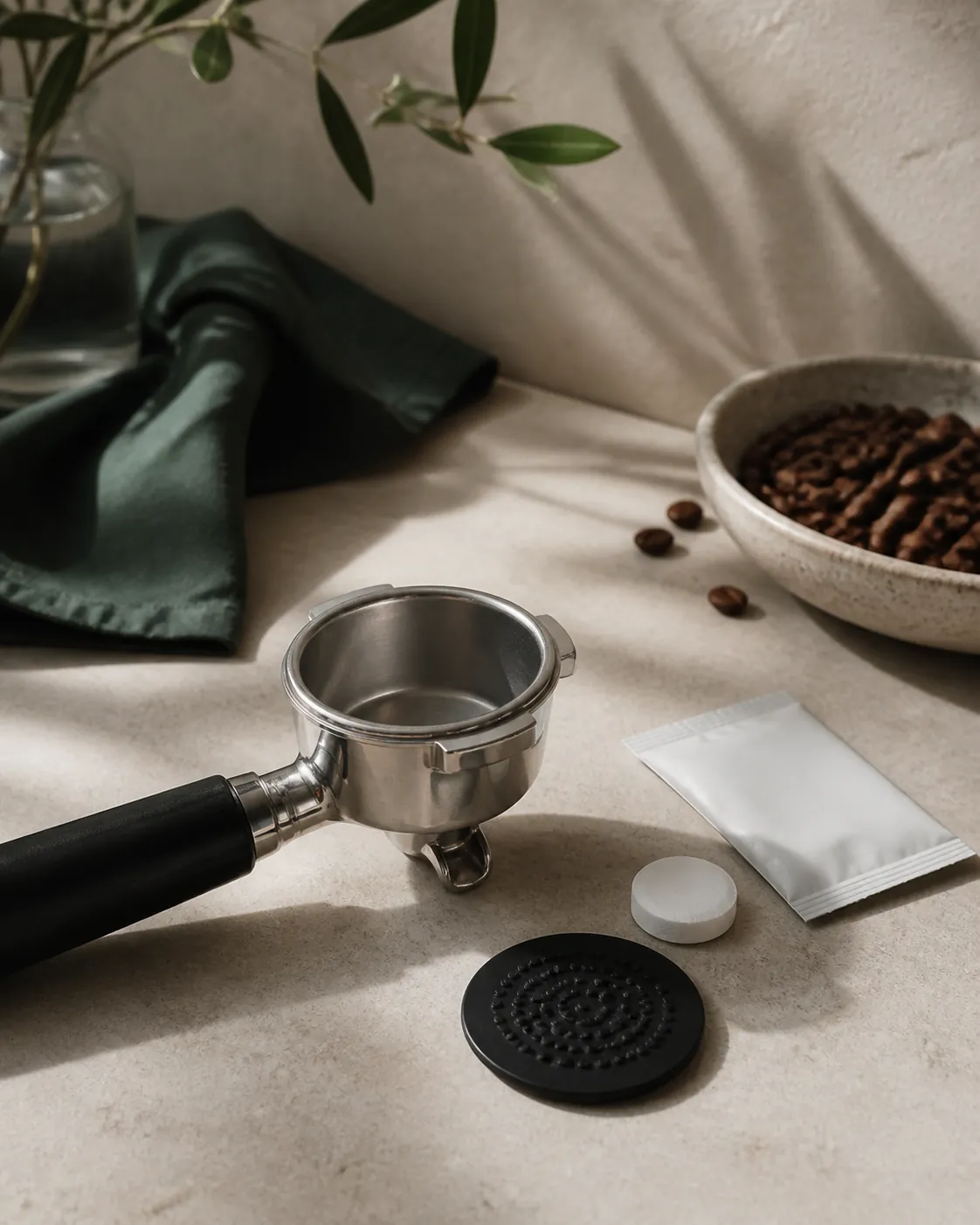
Ongoing costs beyond coffee
- Descaler
- A few times a year, depending on water hardness
- Water filter
- If the machine takes one, every few months
- Group gasket
- Every year or two, and cheap
- Cleaning tablets
- Monthly if you backflush regularly
- Electricity
- Non-trivial if the machine is left on for hours daily
Set against those, home espresso is far cheaper per cup than buying it, which is the usual justification and a sound one once the equipment is paid off. The cheaper hob-top route is weighed against it in machine or stovetop pot.
The honest framing is a substantial upfront cost and a small ongoing one, with the grinder inside the upfront figure rather than sitting outside it as an optional extra.
Buying used, and where the machine can live
Boiler machines hold up well.
They are largely mechanical and repairable, since gaskets, seals, pumps and even boilers are replaceable parts, so a well-kept machine from a decade ago can be entirely serviceable. The risk is scale: a machine run on hard water without descaling can have a scaled boiler and blocked passages, which is expensive or impossible to put right and invisible from the outside, so what came out of the previous owner's tap is the first thing to ask about.
- Ask what water was used and how often it was descaled; a vague answer is a warning.
- Run it if you can, and watch for a slow fill or an unsteady pressure gauge.
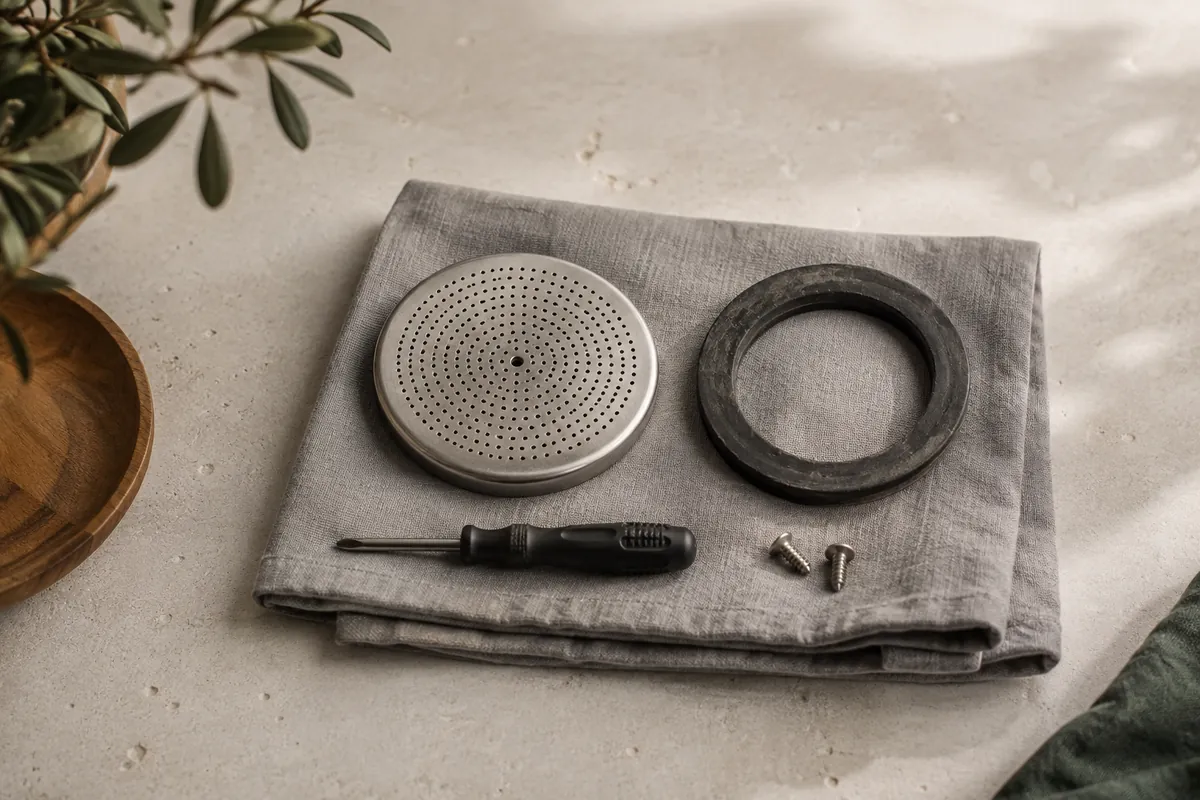
- Check the group gasket and shower screen, which show how well it was maintained.
- Prefer well-supported machines where spare parts are still sold.
- Budget for a service, which on a neglected machine can cost a significant fraction of the price.
Thermoblock machines are the opposite case: cheap, largely unrepairable, and rarely worth buying second-hand at any discount, because the part that fails is the part nobody replaces.
Where the machine will stand is the other question that is far easier to answer before buying. Most domestic machines have a removable tank you refill by hand, which is simple and lets the machine sit anywhere with a socket, while plumbed machines connect to a mains supply and a drain and remove the refilling and emptying entirely.
Plumbing in is a real convenience for heavy daily use and a significant installation commitment; for most households the tank is the right answer and the refilling is a chore rather than a limitation.
Whether you need one, and what it will not do
Because an espresso machine is the most expensive and most demanding option on this site, whether it earns its place deserves asking directly rather than being taken as settled by anyone who has read this far.
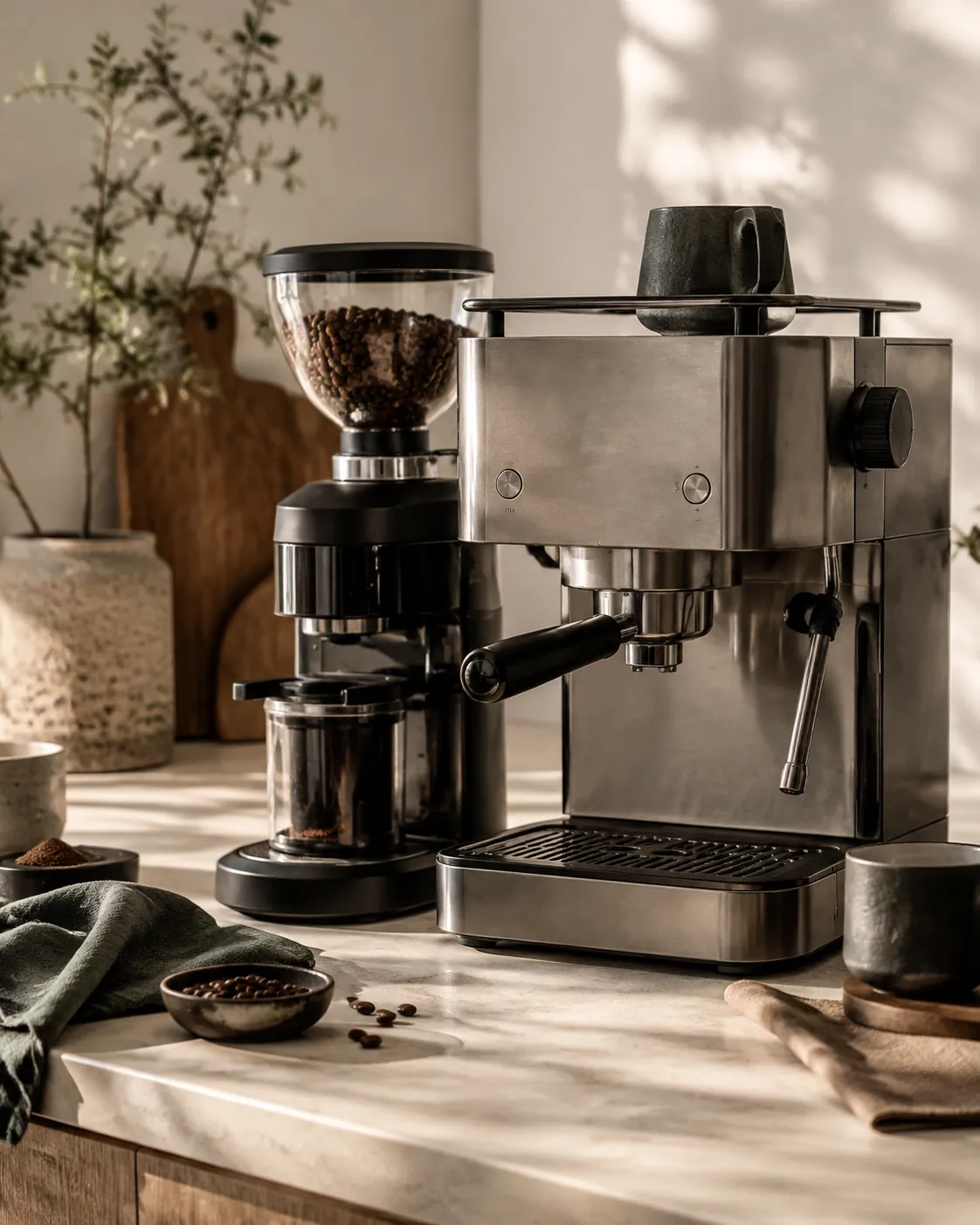
It is the only way to make genuine espresso at home, and therefore the only route to a cortado or any other drink built on a real shot. If those are what you want, nothing substitutes.
If you mainly drink black coffee, a pour-over cone or a French press will produce excellent results for a fraction of the cost and effort, and an americano is the one espresso drink a filter brewer can approach closely.
Buy a machine
If you want real espresso and milk drinks at home, and will buy a grinder too.
Buy a grinder first
Always. A modest machine with a good grinder beats the reverse.
The limits belong in the same breath as the case. A machine will not make a good shot from a bad grind, and it will not compensate for stale coffee, unsuitable water or an uneven tamp; none of its features address any of those.
What it supplies is stable hot water at the right pressure, repeatably, and the coffee, the grind, the distribution, the tamp and the timing all stay with you.
What you are trading for the shot
The machine sits at one extreme of every axis in coffee. The summary is short, and the second half of it is the half people skip while reading.
Works well for
- The only route to true espresso at home, and the only route to real microfoam
- Complete control over dose, temperature, pressure and time
- Fast once it is warm, at around thirty seconds a drink
- Covers every milk drink on a cafe menu from one device
- Repeatable to a degree no manual brewer reaches, once it is dialled in
Struggles with
- Expensive, and a capable grinder is a second mandatory purchase rather than an option
- Twenty to thirty minutes of warm-up before the first usable shot
- A genuine learning curve, and the first weeks of shots are poor
- Daily wiping and weekly backflushing, neither of which is optional
- Heavy, hot, and it takes permanent counter space
The grinder point is the one that catches buyers out. A machine paired with an inadequate grinder cannot produce a good shot at any price, which is why the usual advice is to split a budget rather than spend all of it on the machine.
The other surprise is concentration: a double shot carries more caffeine into a very small cup than the volume suggests, and caffeine by brew method places it alongside the larger drinks it is often compared with.
Pulling a shot
Everything above is the machine, and this is what the operator does with it, in an order that matters rather more than any individual step within it.
One shot, start to finish
- Warm up properlyTwenty to thirty minutes with the portafilter locked in, so the group head and the basket are at temperature rather than just the boiler.
- Purge the groupA two-second flush clears cooled water and any residue from the last shot.
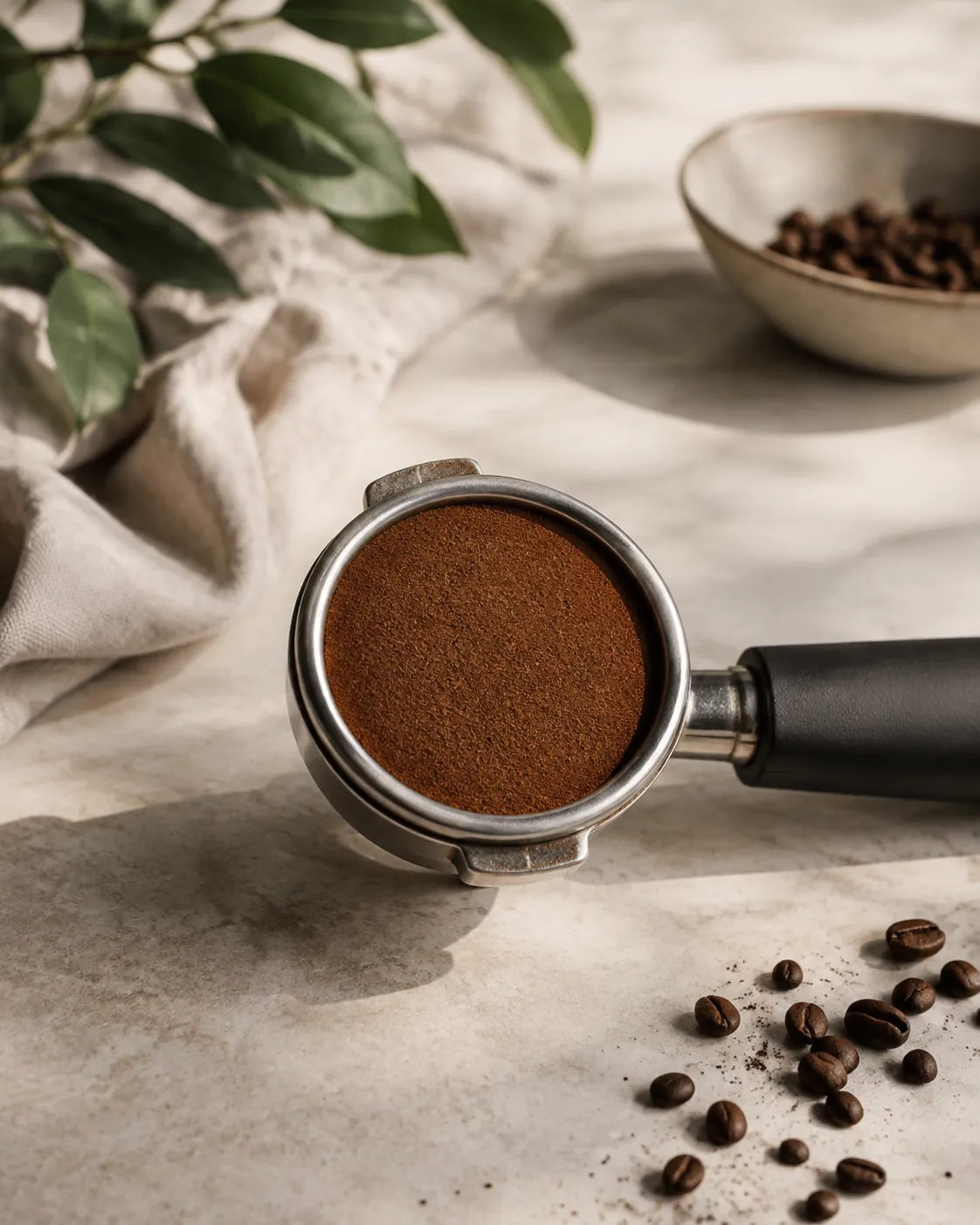
- Dose and levelWeigh the coffee rather than filling by eye. Distribute it flat before tamping, since an uneven bed channels whatever you do next.
- Tamp levelFirm and, above all, square. Pressure matters far less than a tamp that leaves the bed tilted.
- Lock in and start at onceCoffee sitting in a hot group head before extraction begins is already cooking.
- Watch the first dropsThey should appear at around eight to twelve seconds. Much earlier means too coarse, much later means too fine.
- Stop on weightRoughly twice the dry dose, weighed on a scale. Time is a diagnostic, not a target.
- Knock out and wipeImmediately, and wipe the basket dry before the next shot.
The first drops are the most useful diagnostic on the whole machine. Their timing reads the grind before the shot has finished, which means a bad extraction can be abandoned rather than drunk, and it needs neither a scale nor a timer to be useful.
Stopping on weight rather than on time is the change that most improves consistency at home. A shot pulled to thirty seconds can be any strength at all; one pulled to a target weight is the same drink every morning, and the time it took becomes the reading that tells you the grind has drifted.
Beans drift as well, and a bag that wanted one setting on day four wants another on day eighteen, which is why storing coffee beans matters more at espresso fineness than anywhere else in coffee.
Common questions
What is the difference between a single boiler and a dual boiler machine?
A single boiler must switch between brew and steam temperatures, so you wait between pulling a shot and steaming milk. A dual boiler has separate boilers for each and can do both at once, with better temperature stability.
What does a PID do on an espresso machine?
It holds the boiler at a set temperature far more precisely than a simple thermostat. The practical effect is repeatability, plus the ability to set brew temperature deliberately for lighter or darker roasts.
Should I use the pressurised basket that came with my machine?
Only if you are using pre-ground coffee. It creates artificial back-pressure and fake crema, which hides all feedback about your grind and technique. Switch to a non-pressurised basket once you have a grinder that adjusts finely enough.