What Is Alkaline Water? A pH Figure, and What It Describes
Alkaline water is water with a pH above 7. That is a measurable property with a precise meaning, and it is surrounded by a volume of claims this page does not repeat.
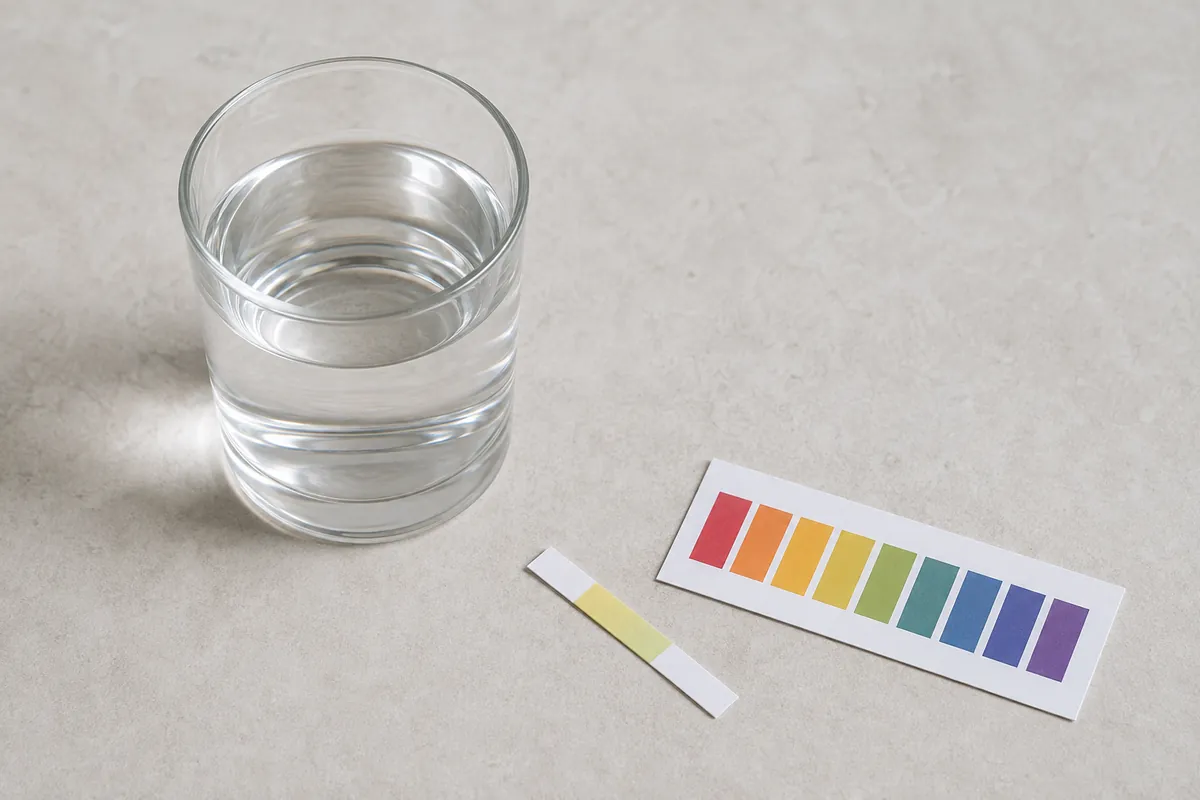
Alkaline water is water with a pH above 7. It reaches that either naturally, by dissolving minerals underground, or artificially, usually by electrolysis in an ioniser.
pH is a real and precisely defined measurement, so the category has an unambiguous definition even where the marketing around it does not. What that measurement means, and what it does not, are two separate questions, and only the first belongs on a drinks site.
Alkaline water at a glance
- What it is
- Water measuring above pH 7, from minerals or from electrolysis
- Typical range sold
- pH 8 to 10, against pH 7 for neutral water
- Two routes
- Carbonate rock underground, or an electrolysis cell on a worktop
- The stable one
- Naturally alkaline water, which is buffered by dissolved carbonate
- The unstable one
- Ionised water, whose pH drifts back towards neutral
- Taste
- Soft and faintly sweet when mineral-rich; close to the input water when ionised
- In brewing
- Alkalinity suppresses acidity, which flattens coffee and tea
The pH scale, and measuring it on your own worktop
Logarithms are the part of this scale that gets glossed over, and skipping them makes every figure on a bottle look smaller than it is.
pH measures the concentration of hydrogen ions, and each whole number is a tenfold change. Water at pH 9 holds a tenth the hydrogen ion concentration of water at pH 8 rather than slightly less, which is why a jump that looks like one point on a label is a large chemical move.
Where things sit on the scale
- ColaAround pH 2.5
- Orange juiceAround pH 3.5
- CoffeeAround pH 5
- Pure waterpH 7, neutral by definition
- Alkaline waterTypically pH 8 to 10
Bottled still water is commonly slightly alkaline already. A great many ordinary mineral waters sit between pH 7.5 and 8 because of dissolved bicarbonate, without any of them being sold on that basis, and the same is true of most tap supplies drawn from chalk. Against them, a glass of orange juice at pH 3.5 is several thousand times more acidic than the water it was diluted with.
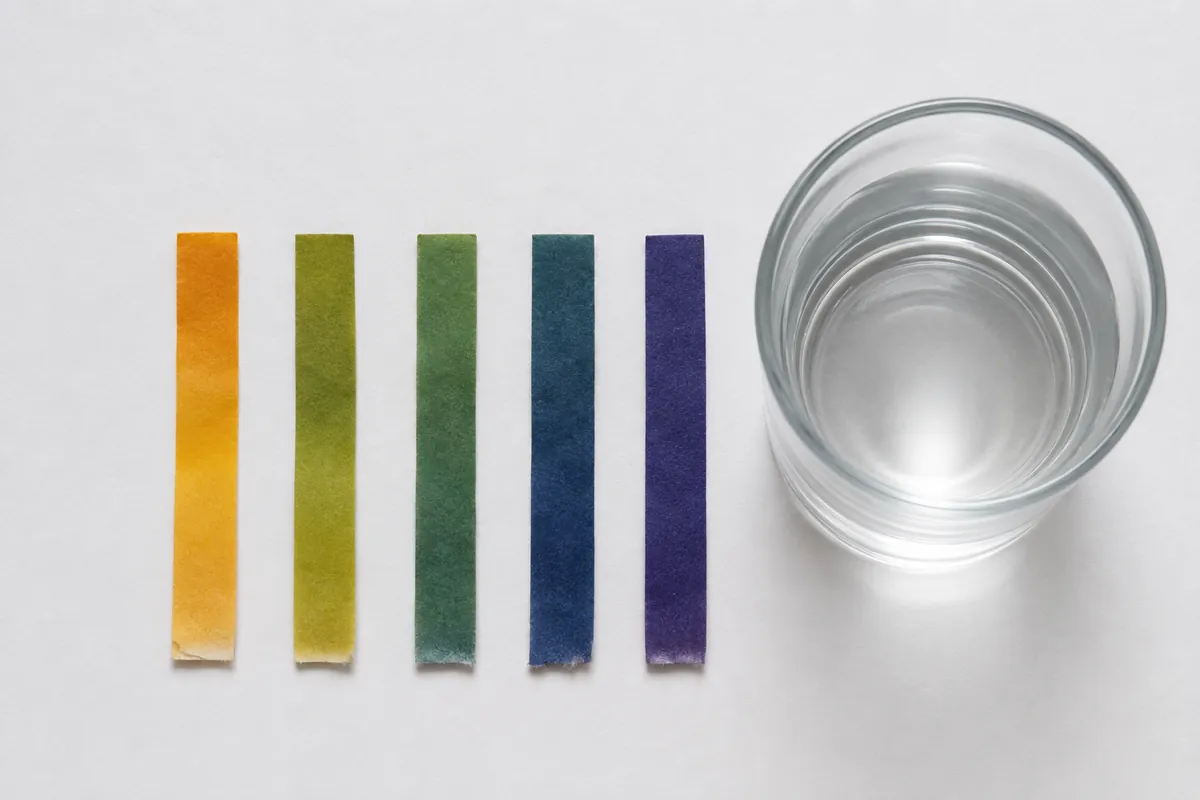
Two different numbers get measured at home and confusing them is the commonest error in the whole category. Paper strips are cheap, read to roughly half a unit, and will separate tap water from a pH 9 product without ever distinguishing 8.2 from 8.6; a digital meter reads finer and is meaningless until it has been calibrated against buffer sachets.
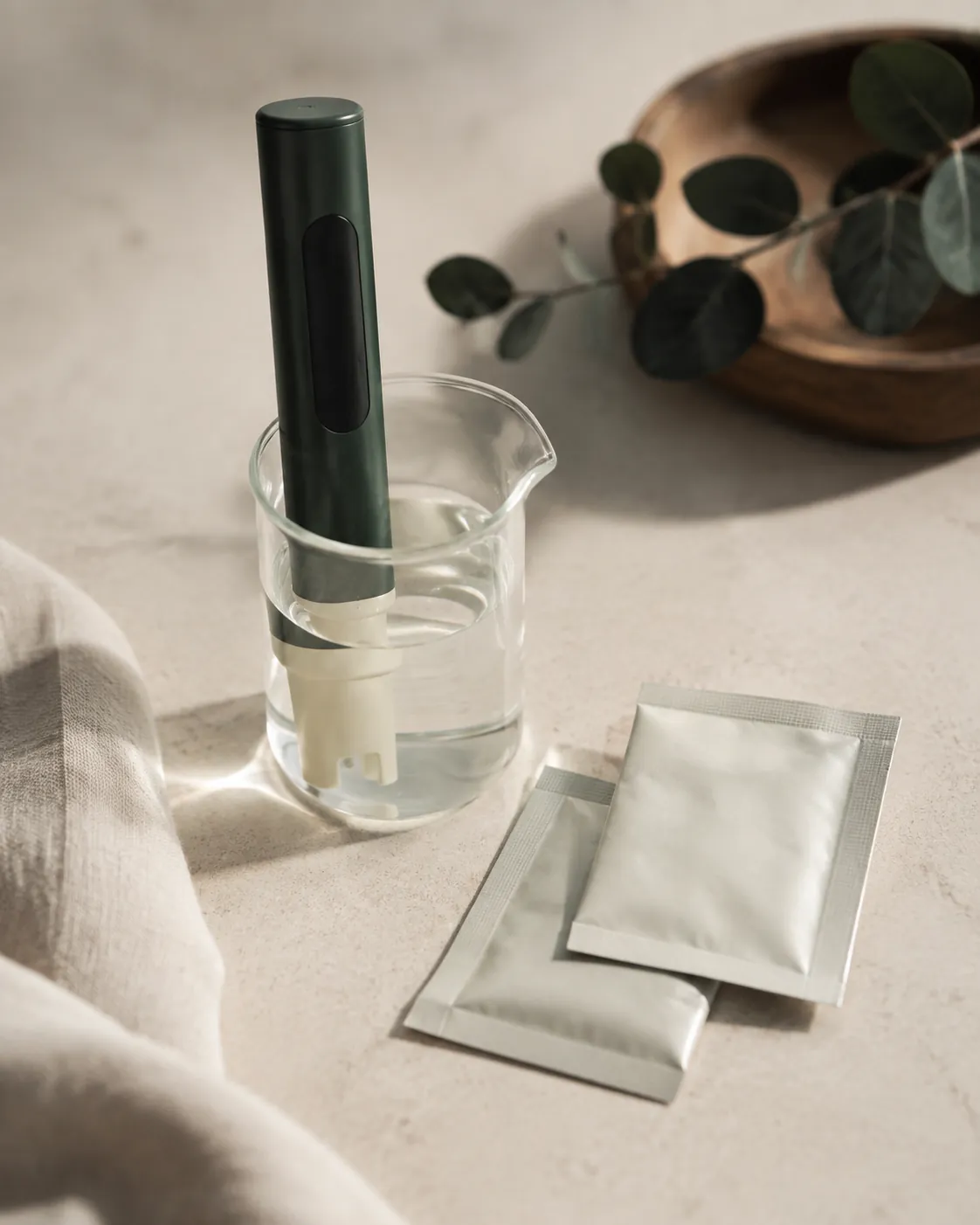
Alkalinity is the second measurement and no strip reports it. It is a titration, sold cheaply as an aquarium KH test kit, and it counts how much acid the water can absorb before its pH starts to fall.
That second number is the one that predicts behaviour: a water at pH 9 with low alkalinity shifts the moment it meets a coffee, while a water at pH 8 with high alkalinity flattens the same coffee completely.
Carbonate rock, and why alkaline usually means hard
Two quite different processes arrive at the same reading on a meter, and they produce water that behaves nothing alike.
| Naturally alkaline | Ionised | |
|---|---|---|
| Source | Springs flowing through mineral-rich rock | Any water, run through an ioniser |
| Alkalinity from | Dissolved bicarbonate, calcium, magnesium | Electrolysis separating the stream |
| Mineral content | High, and stated on the label | Unchanged from the input water |
| Buffering | Strong, because minerals resist pH change | Weak, and the pH drifts back over time |
| Stability | Stable indefinitely | Loses alkalinity over hours to days |
The natural route is geology and nothing more mysterious. Rain arrives slightly acidic, having taken up carbon dioxide on the way down; where it then works through limestone or dolomite it dissolves calcium and magnesium carbonate, and that carbonate consumes the acidity and lifts the pH.
| Rock | What dissolves | Result |
|---|---|---|
| Limestone | Calcium carbonate | pH 7.5 to 8.3, hard water, high alkalinity |
| Dolomite | Calcium and magnesium carbonate | Similar pH, and a magnesium note in the taste |
| Volcanic basalt | Silica and bicarbonate | Moderate pH, distinctive soft mouthfeel |
| Granite | Very little | Soft, low mineral, near neutral or slightly acidic |
Alkaline water and hard water arrive together for that reason: the dissolved carbonates that raise the pH are the same ones that fur a kettle, so a naturally alkaline bottle is by definition a hard one.
The stability follows from the same chemistry, since a carbonate-buffered water holds a reservoir of carbonate ready to neutralise whatever acid reaches it, which is why a bottled spring water reads the same in a year and an ionised glass does not.
Inside an ioniser, and the half that goes to the drain
The machine turns out to be simpler than the language around it, and knowing what it does explains why its output behaves as it does.
Water passes over charged plates in an electrolysis cell, which splits the incoming stream in two. Positive ions such as calcium and magnesium collect at the negative plate and leave as the alkaline fraction; the negative ions go the other way and leave as an acidic fraction.
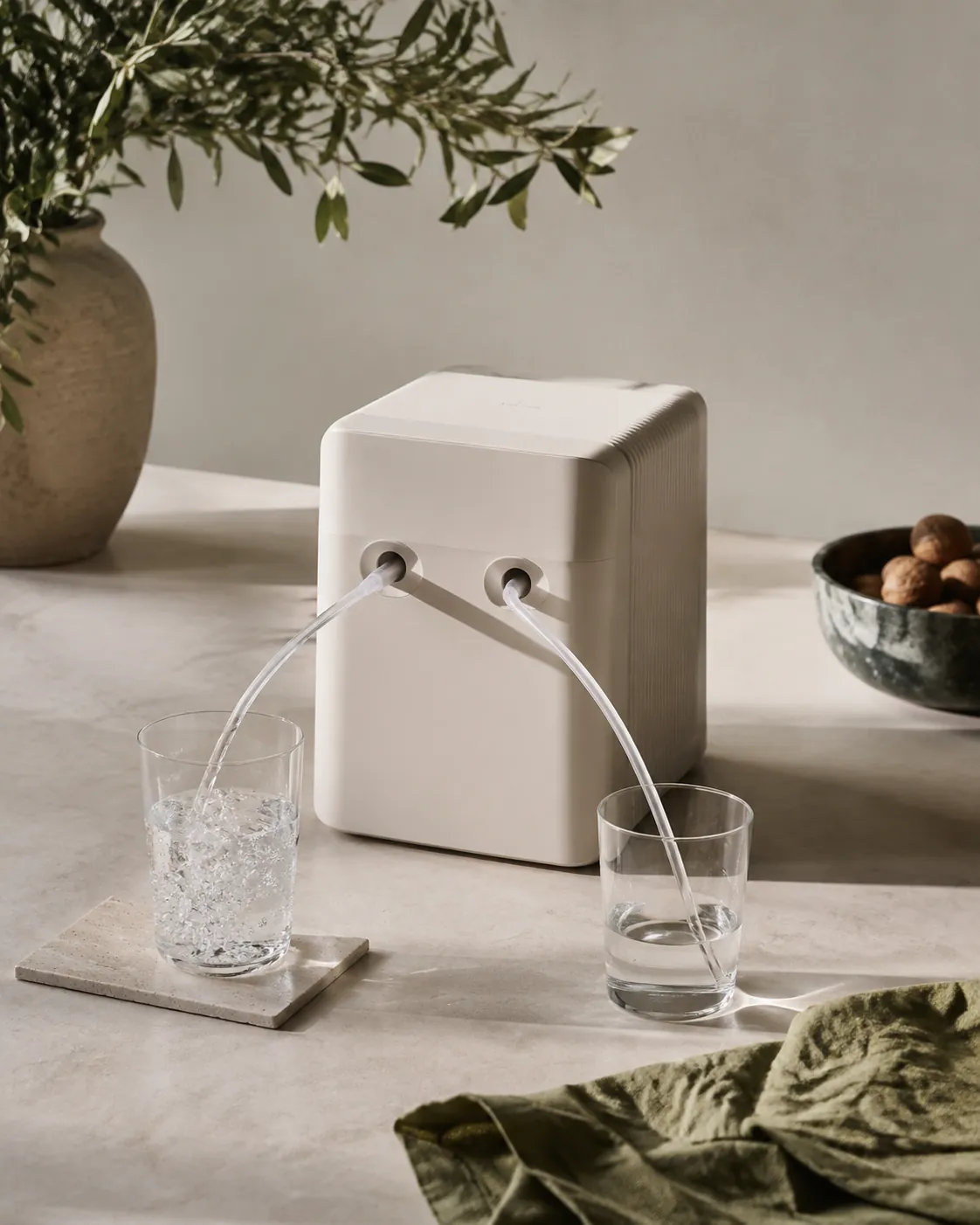
What that means in practice
- Input matters
- An ioniser can only separate what is already there. Distilled water barely ionises at all
- Waste stream
- Roughly a third to a half of the water goes to the drain as the acidic fraction
- Flow rate
- Slower flow gives higher pH. The number on the display depends on the tap
- Scaling
- The plates scale up like a kettle and need periodic cleaning
- Drift
- The pH falls back over hours as the separation re-equilibrates
Drift is the property that separates the machine's output most sharply from a spring's. A glass poured now and measured tomorrow reads closer to neutral, because nothing was added to hold the pH where the display put it, and a glass that reads low straight from the tap usually means the input water had little to separate.
The acidic half is the part rarely discussed on the box. It leaves at somewhere around pH 4 to 6, carrying the ions the alkaline side rejected, and most machines simply plumb it to the drain: a household drinking two litres a day is discarding another litre or more, which matters where water is metered or short.
Some owners collect it for cleaning surfaces, rinsing produce or watering acid-loving plants, all of which are sensible uses for mildly acidic water and none of which need a machine, since white vinegar in tap water reaches the same pH for a fraction of the cost.
What it tastes like, and what the label is telling you
There is a genuine, describable taste difference here, and it comes from the dissolved minerals rather than from the pH figure itself.
Naturally alkaline mineral waters read as soft, round and faintly sweet, because that is precisely what bicarbonate does to water, and it is the same effect that makes a high-bicarbonate bottle taste gentler than its carbonation would suggest. Ionised water, having had nothing added to it, tastes much like whatever went into the machine, though some drinkers report a slightly slippery or soapy mouthfeel at the upper end of the pH range.
Anyone comparing the two side by side is really comparing mineral content, and the taste of alkaline water follows the analysis rather than the number on the front.
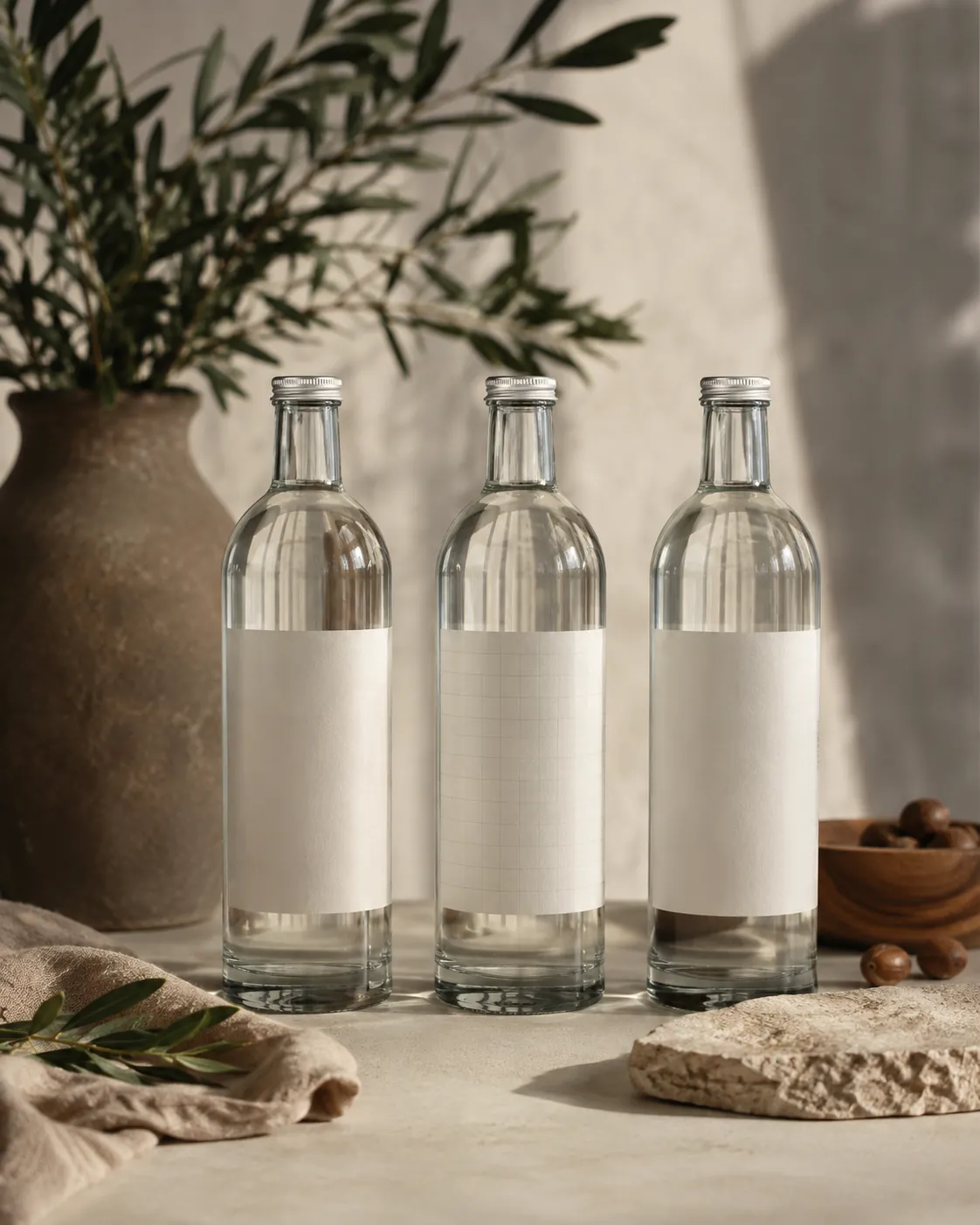
What each term on a label tells you
- pH 8 to 9.5
- The claimed range for most products. Plain water sits near 7
- Ionised or electrolysed
- Made by running water through an electrolysis cell
- Naturally alkaline
- Alkalinity from dissolved minerals at source, not from a machine
- Added minerals
- Bicarbonate, calcium or magnesium salts added to raise pH
- TDS
- Total dissolved solids. The number that actually predicts taste
- Alkalinity
- Buffering capacity, which is a different measurement from pH
pH and alkalinity are the two lines most often read as one, and only the second is stable. A water at pH 9 with almost nothing dissolved in it heads back towards neutral as soon as it meets anything at all, while a mineral-rich water holds its reading against whatever it is mixed with.
Total dissolved solids is the line that predicts the taste, and it is the one alkaline branding tends to leave smallest.
In a coffee pot and in a pan of noodles
Alkalinity does something measurable to two things a kitchen makes, and the two outcomes point in opposite directions.
In brewing it is unhelpful, and the mechanism is straightforward: alkalinity buffers acidity, so water at pH 9 or above neutralises the acids that give a bright coffee its definition and leaves the cup flat. The same buffering dulls a delicate green tea, which is why hard water and alkaline water cause the same complaint by the same route, and why no adjustment to steeping temperature recovers what the water has already taken out.
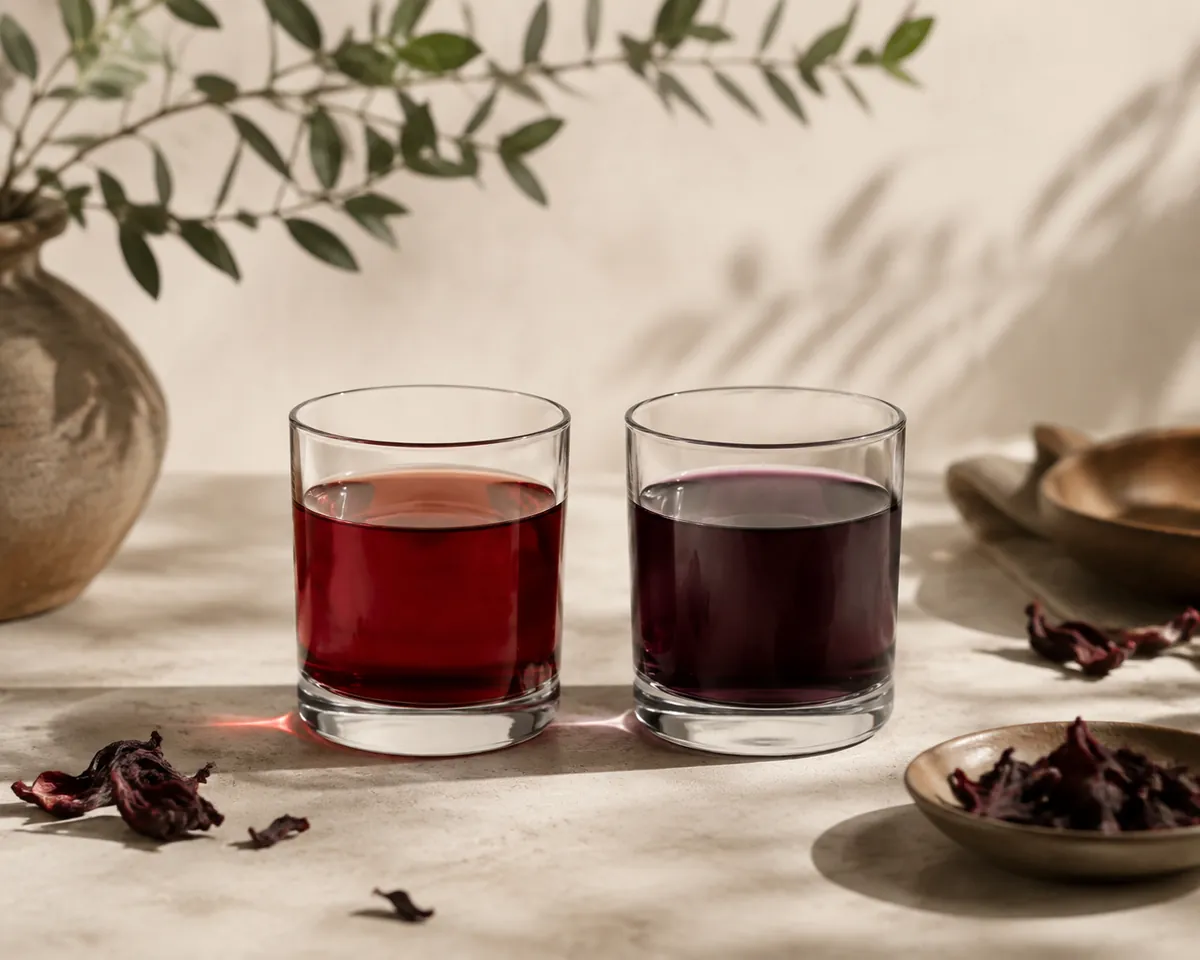
Colour moves with pH as well, visibly. Anthocyanin-rich infusions such as hibiscus shift from red towards purple in alkaline water, which is the cheapest demonstration of the chemistry there is and a useful check that a bottle is doing what it claims.
An espresso pulled with strongly alkaline water shows the same thing in reverse, tasting hollow where the acidity should have been.
Cooking is where alkalinity earns its place. It firms and greens vegetables, which is why a pinch of bicarbonate in blanching water keeps beans vivid, and it softens dried pulses by breaking down pectin faster.
The clearest case of all is noodles: kansui, an alkaline solution, is what gives ramen its yellow colour, springy bite and particular smell, and substituting plain water produces a completely different noodle. None of that transfers to a glass, since what alkalinity does to a coffee is the identical chemistry running the wrong way.
The claims this page does not evaluate
Alkaline water is marketed with a large volume of claims attached to it, and it would be dishonest to describe the category without naming that.
There is no health claims for any drink. This page therefore makes no claim that alkaline water does anything beneficial, and equally makes no claim that it is harmful or that any particular assertion about it is false.
Weighing those claims is work for regulators, researchers and qualified professionals, and a drinks reference that took a position either way would be pretending to an authority it has not got.
What is here instead is what pH measures, how the two production routes differ, how the water tastes, what the label means and what happens when it meets a coffee or a pan of noodles. Those are questions with checkable answers, and they are the ones an editorial site can answer honestly.
Anyone arriving with a question about their own circumstances has come to the wrong sort of page, and no rearrangement of what is on this one would change that.
A spring, a machine, or a spoon of bicarbonate
Three routes reach the same reading on a meter, and they differ in price by more than an order of magnitude.
Bicarbonate stirred into tap water raises the pH for almost nothing and produces a drink that tastes faintly of soda. It is the cheapest way to reach the measurement and the least pleasant to drink, which says something worth noticing about what people are actually buying, and it is the whole of making alkaline water at home.
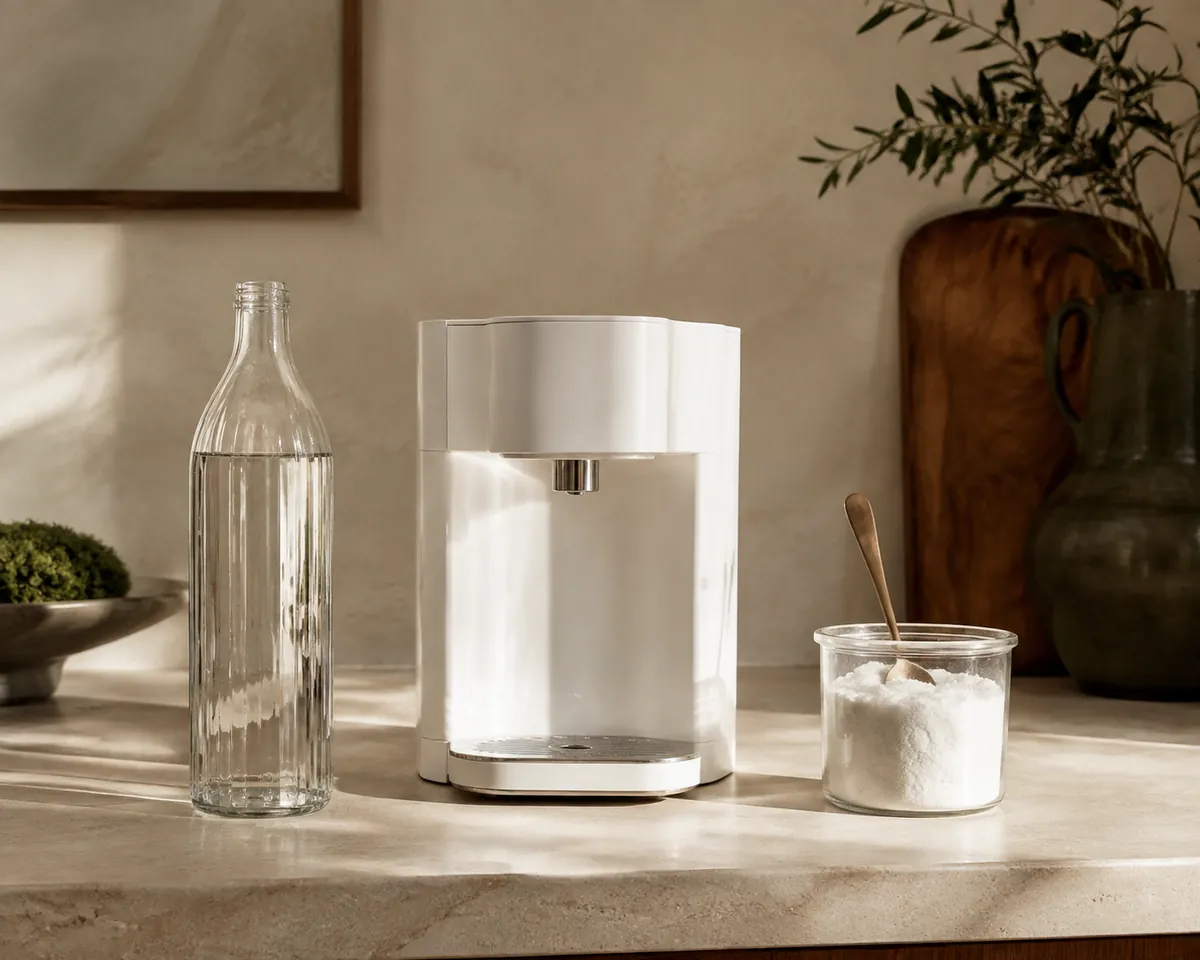
Between the other two, a naturally alkaline mineral water hands you a stated analysis, a stable pH and a taste of its own, while an ioniser hands you an adjustable number from any input at a low running cost, with alkalinity that fades and no mineral content to speak of.
For the taste, the bottled spring water is the more informative purchase; for brewing anything at all, neither is what you want, and a moderate low-bicarbonate water beats both.
The honest comparison is against an ordinary bottle with a good analysis printed on it, since a great many sit at pH 7.5 to 8 already, cost less than either, and say exactly what is dissolved in them.
Alkaline and sparkling pull opposite ways
Two properties that appear together on some labels are, chemically, working against each other.
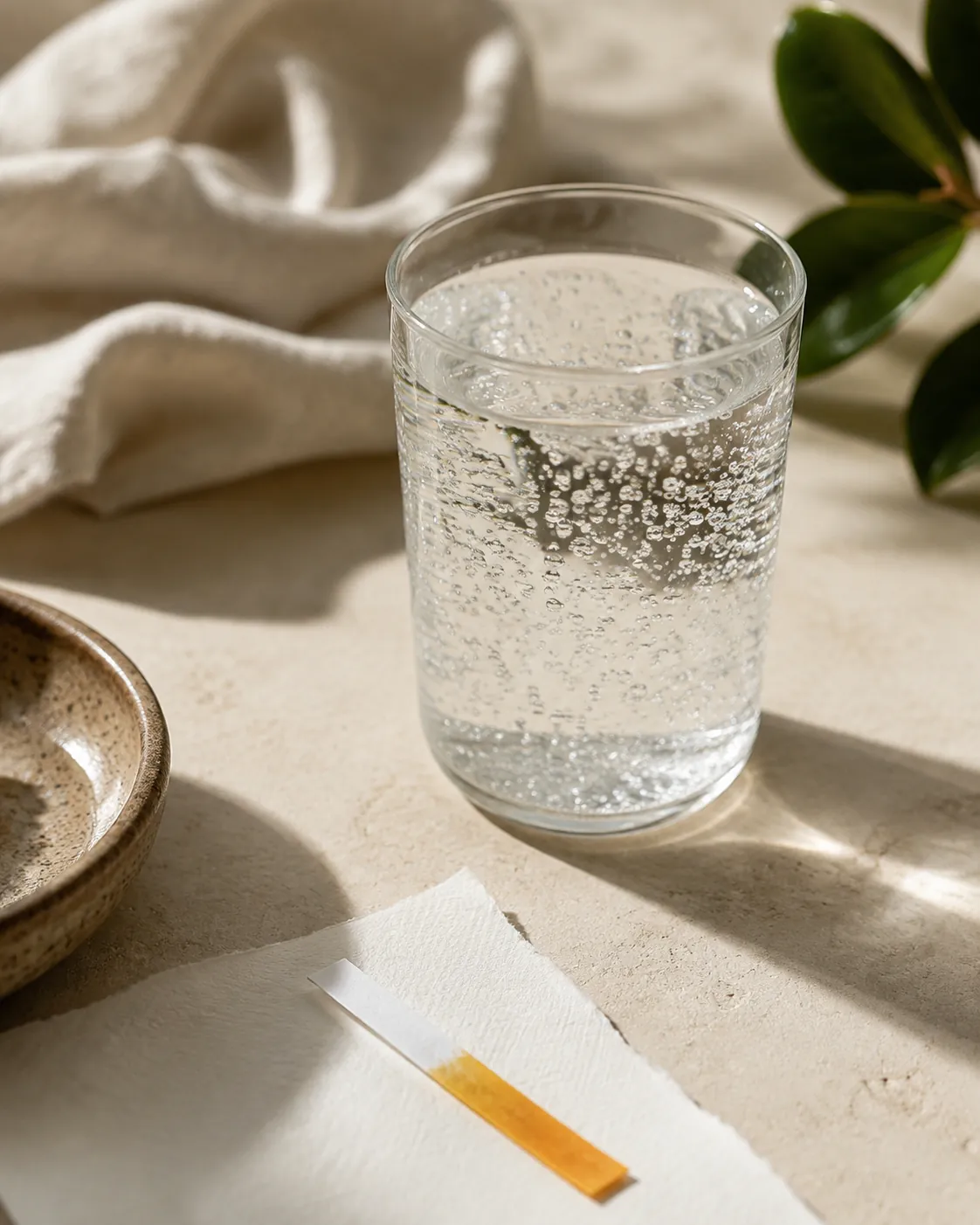
Dissolving carbon dioxide in water produces carbonic acid, which is what drops sparkling water to somewhere near pH 5. Carbonation is an acidifying process by definition, so a still water at pH 9 does not stay at pH 9 once gas goes into it.
A sparkling water sold as alkaline is therefore one of two things. Either it was alkaline before carbonation and is mildly acidic in the bottle you are holding, or it is so heavily mineralised that the bicarbonate absorbs most of the drop.
The second case is real and it is exactly what high-bicarbonate springs do, which is why a few genuinely mineral sparkling waters still measure above 7 with gas in them.
That same buffering explains why soda water tastes softer than plain seltzer at identical carbonation: the added bicarbonate is neutralising part of the carbonic acid in the glass, performing on a bottling line the reaction a limestone aquifer performs underground.
The three things sold as alkaline water
Set against the rest of the bottled-water shelf, the category turns out to be narrower than its marketing presence suggests.
Naturally alkaline mineral
A mineral water with a high-bicarbonate analysis. Stable, informative, and often not sold as alkaline at all.
Ionised
Adjustable pH from a machine, no minerals added, and the alkalinity fades.
Added-mineral
Purified water with salts added to reach a target pH. The analysis is a recipe rather than a place.
Only the first three are alkaline water in any useful sense, and of those the first is usually the cheapest as well as the most informative, since a spring water with a printed analysis tells you both its pH and everything else dissolved in it. The added-mineral route sits in the middle: its composition is a formulation rather than a place, which makes it stable and predictable while removing the one thing a source guarantee is for.
A sports drink and an infused water both turn up in the same aisle and belong to neither conversation, since one is built around dissolved salts at a stated concentration and the other around flavour, and neither is designed around a pH figure at all.
Common questions
What does alkaline water actually mean?
Water with a pH above 7. The scale is logarithmic, so each whole number is a tenfold change in hydrogen ion concentration. Many ordinary bottled mineral waters already sit between pH 7.5 and 8 without being marketed as alkaline.
Is ionised water the same as naturally alkaline water?
No. Naturally alkaline water gets its pH from dissolved minerals, which also buffer it so the pH is stable. An ioniser changes pH by electrolysis without adding minerals, so the alkalinity drifts back over hours to days.
Can you brew coffee or tea with alkaline water?
You can, and it makes a poor cup. Alkalinity buffers the acids that give coffee and tea their brightness, so the result is flat and dull. Brewing wants moderate mineral content and a near-neutral pH.