What Is Mineral Water? A Legally Defined Category, Not a Claim
Mineral water is a legally defined category, not a marketing phrase. It must come from a protected underground source and be bottled without treatment, and its mineral analysis is printed on the label.
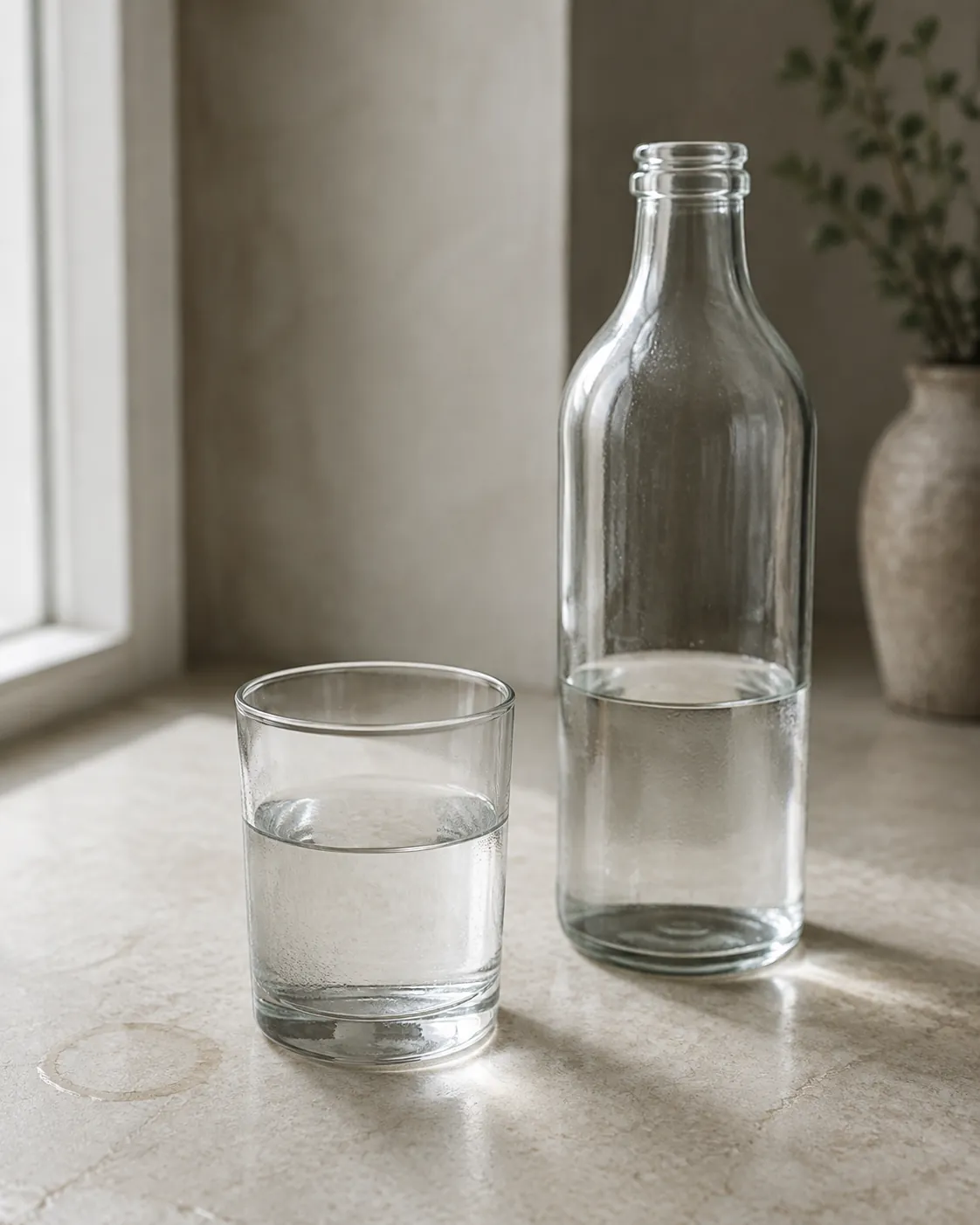
Natural mineral water is a legally defined product. In the European Union and the United Kingdom it must come from a specific protected underground source, be microbiologically safe at source, and be bottled without treatment beyond removing unstable elements such as iron.
That definition is why the analysis printed on the bottle means something. The composition cannot be adjusted, so what is on the label is what the ground supplied, and it will be the same next year.
Mineral water at a glance
- What it is
- Water from one protected underground source, bottled without treatment
- What is fixed
- The composition, which the producer is not permitted to adjust
- The headline figure
- Total dissolved solids, from under 50 to well over 1500 mg/l
- What sets it
- Geology, and how long the water spent underground
- Tasting temperature
- Around 12 to 16 C, not fridge cold
- Two forms
- Still, and sparkling from either the source or a plant
- Not the same as
- Spring water, table water or purified water
What a bottled-water label is allowed to say
Three legal categories sit side by side on the same shelf under names that suggest far more similarity than exists between them, and only one of the three is making a promise about where the water came from.
| Natural mineral water | Spring water | Purified or table water | |
|---|---|---|---|
| Source | A single protected source | A single source | Any, including mains supply |
| Treatment | Essentially none permitted | Limited treatment permitted | Extensively treated |
| Composition | Must be stable and declared | Declared, less strictly regulated | Adjusted or effectively removed |
| Analysis on label | Required | Sometimes | Rarely meaningful |
| Consistency | Fixed by the source | Fairly fixed | Set by the producer |
Only natural mineral water guarantees a stable composition from a named source. The others may be excellent drinks; they are simply not making the same promise, and the price on the shelf does not track which promise is being made.
The phrase that catches most people is natural spring water, which sits one word away from natural mineral water and carries none of the source and treatment requirements. Anything described only as drinking water, table water or purified water has no source guarantee whatever, and its composition may have been adjusted or stripped out entirely.
Purified water sold in bottles is very often treated mains supply, which is legal, disclosed in small type, and frequently identical to what a tap gives. It is also the usual base for infused water, where composition matters far less than what is steeping in it.
Reading the analysis in ten seconds
The mineral analysis is the most useful and least read panel on a water label, and three lines of it carry almost everything.
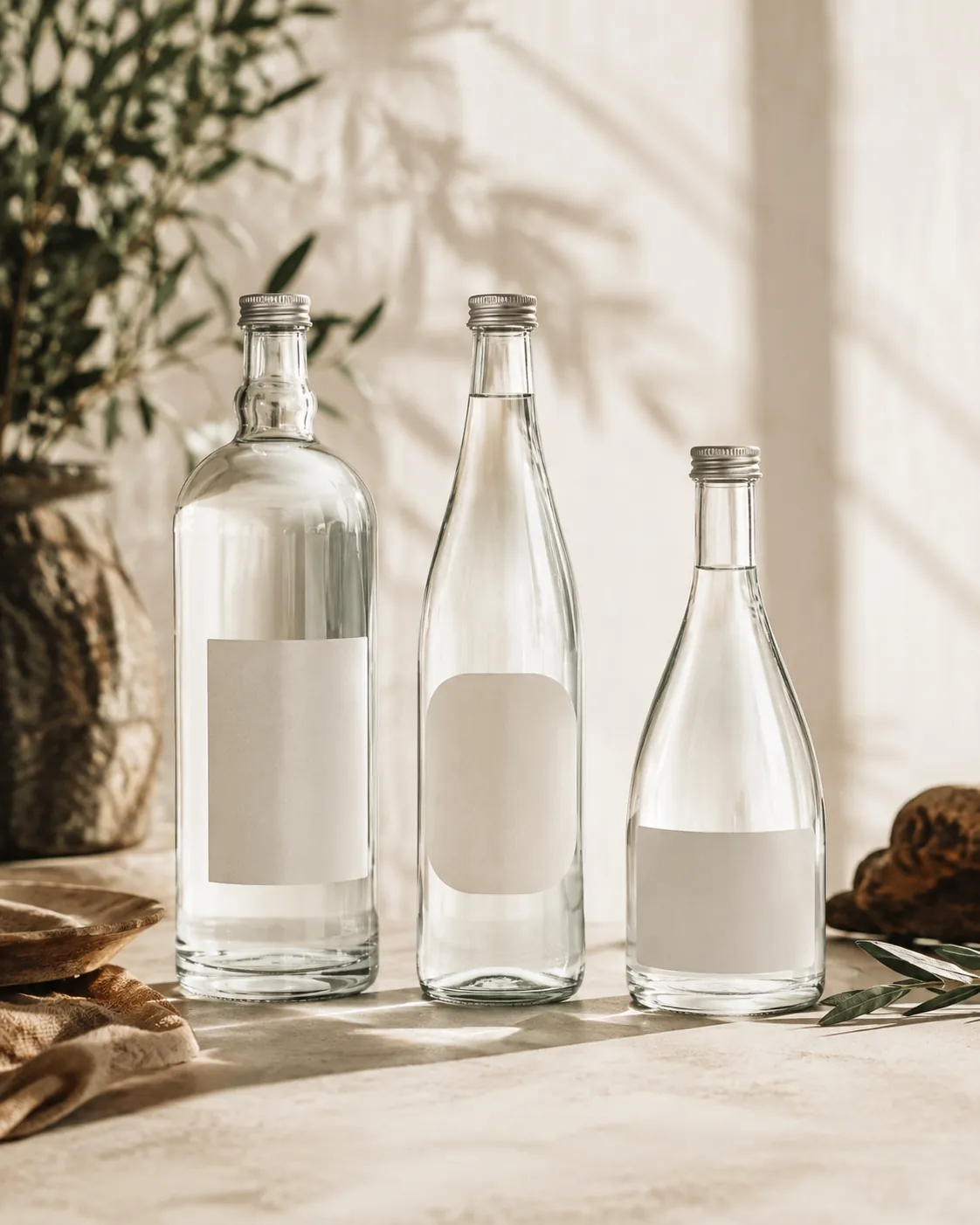
What each figure does to the taste
- Total dissolved solids
- The headline figure. Low means light and neutral, high means full and characterful
- Bicarbonate
- Softness. It buffers acidity and rounds the water out
- Sulphate
- A dry, firm, faintly bitter finish
- Calcium
- Body and a chalky quality at high levels
- Magnesium
- A distinct slightly bitter edge, noticeable above about 50 mg/l
- Sodium
- Roundness and a faint salinity
Total dissolved solids is the single most predictive number on the bottle. Under 100 mg/l a water tastes light and almost of nothing; over 1000 mg/l it tastes distinctly of itself, and people either seek that out or avoid it.
Total dissolved solids
- Under 50 mg/lVery low mineral. Light, clean, almost neutral
- 50 to 250 mg/lLow mineral. The most common bottled range
- 250 to 800 mg/lMedium. Noticeable body and character
- 800 to 1500 mg/lHigh. Distinctly mineral, sometimes described as savoury
- Above 1500 mg/lVery high. Strongly characterful and divisive
Neither end of that scale is better. A very low TDS water is prized for its neutrality, and a high TDS water is bought precisely because it tastes of something, which is a different axis entirely from the added salts in a sports drink or an electrolyte drink, where the figures were chosen by a formulator rather than found in the ground.
After TDS, read bicarbonate against sulphate: bicarbonate-dominant waters taste soft and round, sulphate-dominant ones taste dry and firm. Then look at magnesium, because above roughly 50 mg/l it becomes a distinct edge that some people enjoy and others call metallic, and it is the figure most likely to explain a strong reaction to one particular brand.
Everything else on the panel is detail.
Rock, time underground and the silica line
Variation between waters comes from geology, and knowing which rock supplied which figure makes an analysis far quicker to read.
Rain falling on rock dissolves whatever it can as it filters down. Limestone and chalk yield calcium and bicarbonate; gypsum yields calcium and sulphate; granite yields very little of anything; volcanic rock yields a profile of its own again.
Time matters as much as rock type, since water that has filtered for decades carries far more than water that passed through in months, which is why some sources make a feature of the age of their water.
Rock, and what it puts in the water
- Limestone and chalk
- Calcium and bicarbonate. Hard, round, soft-tasting water
- Gypsum
- Calcium and sulphate. Dry, firm finish
- Granite
- Very little dissolves. Low TDS, light and neutral
- Volcanic
- Often high in silica and bicarbonate, and sometimes naturally carbonated
- Sandstone
- Variable, and usually moderate
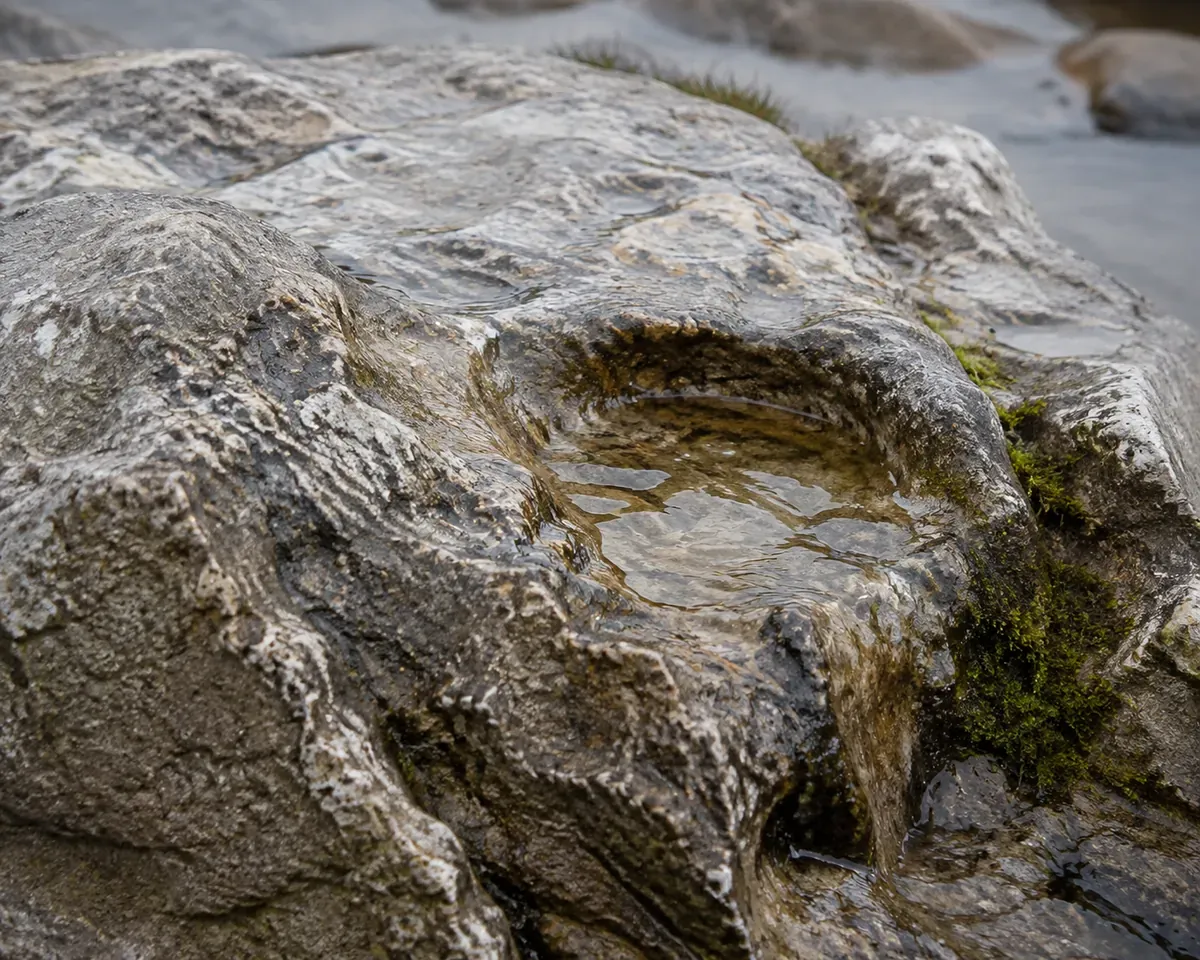
Because the geology does not change, the composition does not either, and that stability is the whole basis of the legal category. One figure that appears on premium labels more often than its effect on the drink justifies is silica, or silicon dioxide, dissolved out of volcanic and granitic rock and reaching 50 mg/l or more in some sources.
Its contribution to taste is genuinely subtle, a faintly rounded smoothness that is hard to isolate against the much larger effects of bicarbonate and sulphate. No health claim is made about silica or any other mineral, so it appears here only because you will meet it on a label and because it is not one of the numbers that predicts how the water will taste.
Hardness, which is not the same as mineral content
Hardness and mineral content get used interchangeably and describe different things.
Hardness counts dissolved calcium and magnesium alone. A water can carry high total dissolved solids and still behave as relatively soft if most of those solids are sodium and bicarbonate, which is why two bottles with the same headline TDS can treat a kettle and a teapot completely differently.
Hardness is also what dulls a delicate green tea most noticeably, flattening the aromatics before the cup reaches the table.
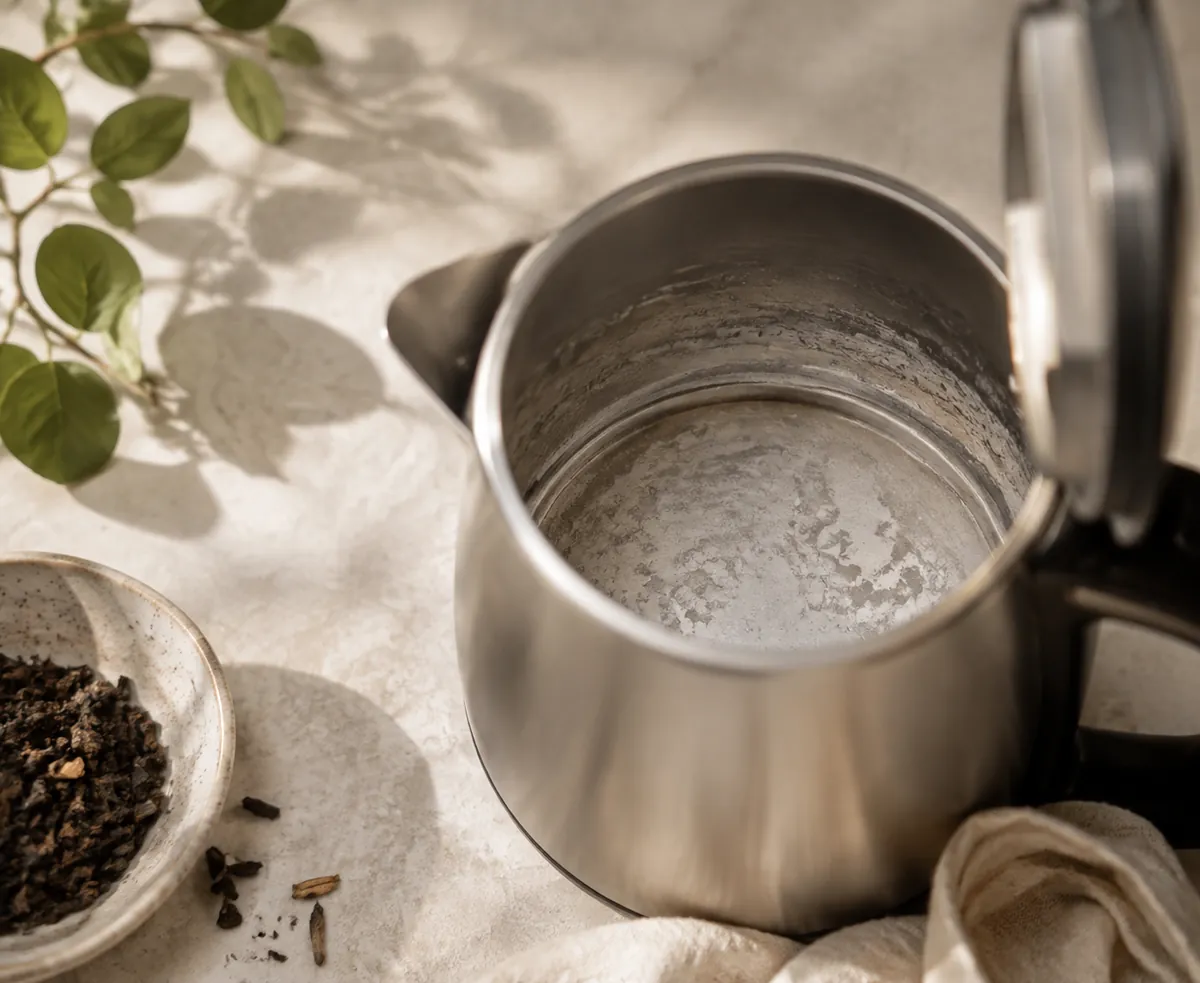
Scale in a kettle is the visible consequence. Calcium carbonate comes out of solution as the water heats and deposits on the element, which is a hard-water problem rather than a high-TDS one, and it is why a very mineral water from a granite source will never fur a kettle while a moderate one from chalk will.
Descaling frequency is a better guide to your own supply's hardness than any figure you can remember, and a gooseneck kettle shows it sooner than a covered one because you can see the base.
What the water does to a coffee and a pan of beans
Minerals take an active part in extraction rather than sitting in the background. Calcium and magnesium bind to compounds in coffee and tea, so the cup that comes out is meaningfully different depending on what was already dissolved in the water going in.
That range is the reason a moderate-mineral, low-bicarbonate water makes a noticeably better espresso than a hard tap supply, and the reason very soft and very hard water both cause trouble at opposite ends. Bicarbonate is the awkward one: it buffers the acidity that gives a light roast its definition, so a high-bicarbonate water flattens exactly the qualities such a coffee is bought for.
The same buffering shows up in tea, where it blunts the brisk edge a hot infusion is meant to have, and it is one of the reasons steeping temperature alone cannot rescue a cup made with the wrong water.
Cooking is the less obvious half of it. Dried pulses soften faster in soft water and drag in hard, because calcium stiffens the cell walls of the skins, and blanched greens hold their colour better in slightly alkaline water.
That last effect is where alkaline water has a genuine kitchen use that has nothing to do with drinking it. For anything where water is a background ingredient rather than most of what you taste, an expensive bottle is simply poured away.
Tasting two bottles against each other
Water can be tasted systematically, and most people are surprised by how far apart two bottles turn out to sit once the method is right.
- Serve at cellar temperature rather than fridge cold, since cold suppresses flavour.
- Use identical clean glasses, and rinse them with the water being tasted.
- Taste from lowest TDS to highest, or the mineral ones will erase the light ones.
- Note the finish rather than the first sip. Most of the difference is in the aftertaste.
- Compare against your own tap water, which is the reference point that actually matters.
The finish is where sulphate and magnesium show themselves, and it is the part people skip when they conclude that all water tastes the same. Temperature is the other thing they get wrong, and it matters more here than in almost any other drink.
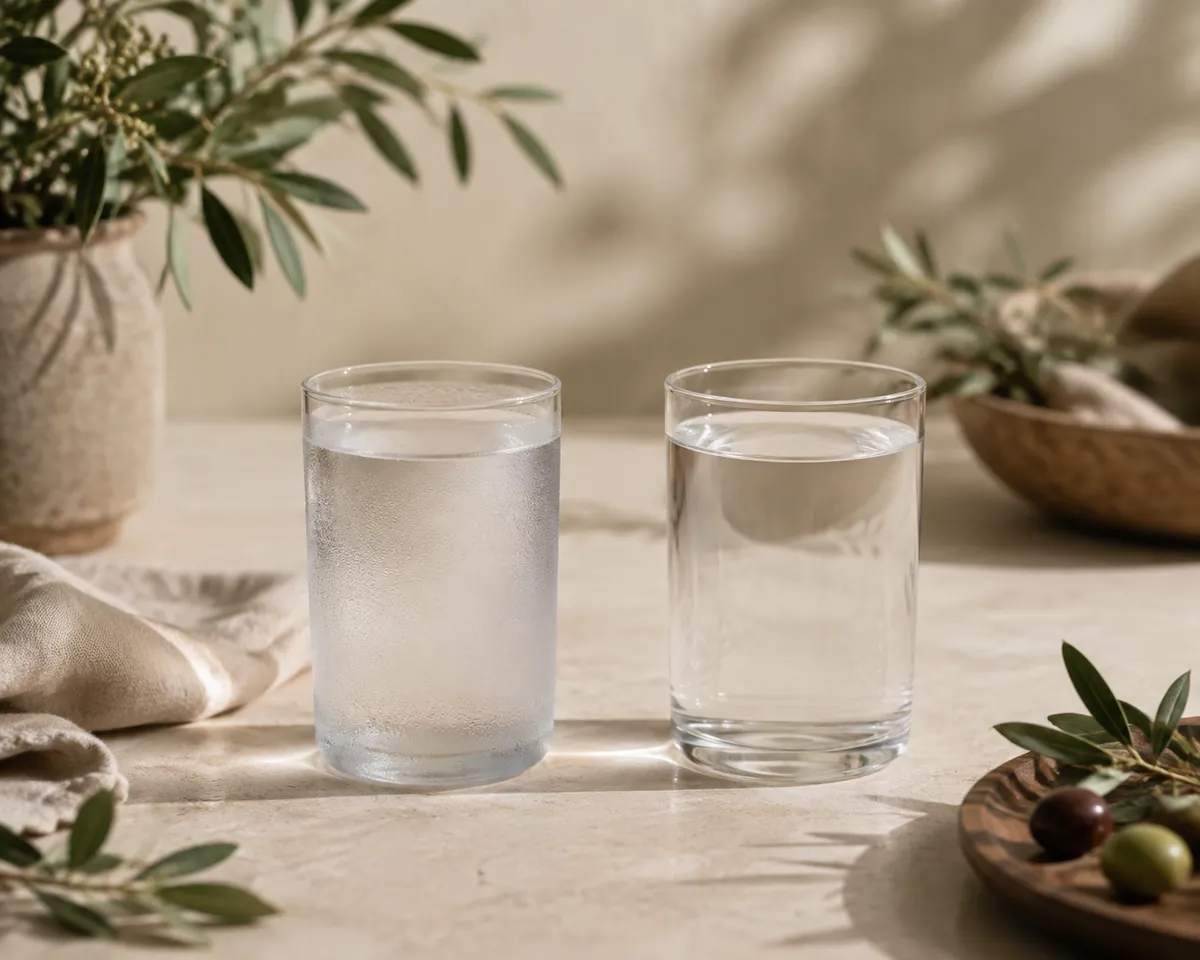
Cold suppresses flavour perception across the board, and in water there is so little to perceive in the first place that chilling can erase the distance between two quite different sources: very cold water of any composition tastes broadly alike. Somewhere around 12 to 16 C the mineral character comes forward again, which is why formal tastings are run at cellar temperature rather than fridge cold.
If the analysis is the reason a bottle was bought, serving it ice cold throws that away; if cold water is the point, the analysis stops mattering very much, and how a given source actually tastes becomes an academic question.
Still, sparkling and lightly petillant
Mineral water is sold both ways, and the gas in the sparkling version may or may not have come out of the same ground as the water.
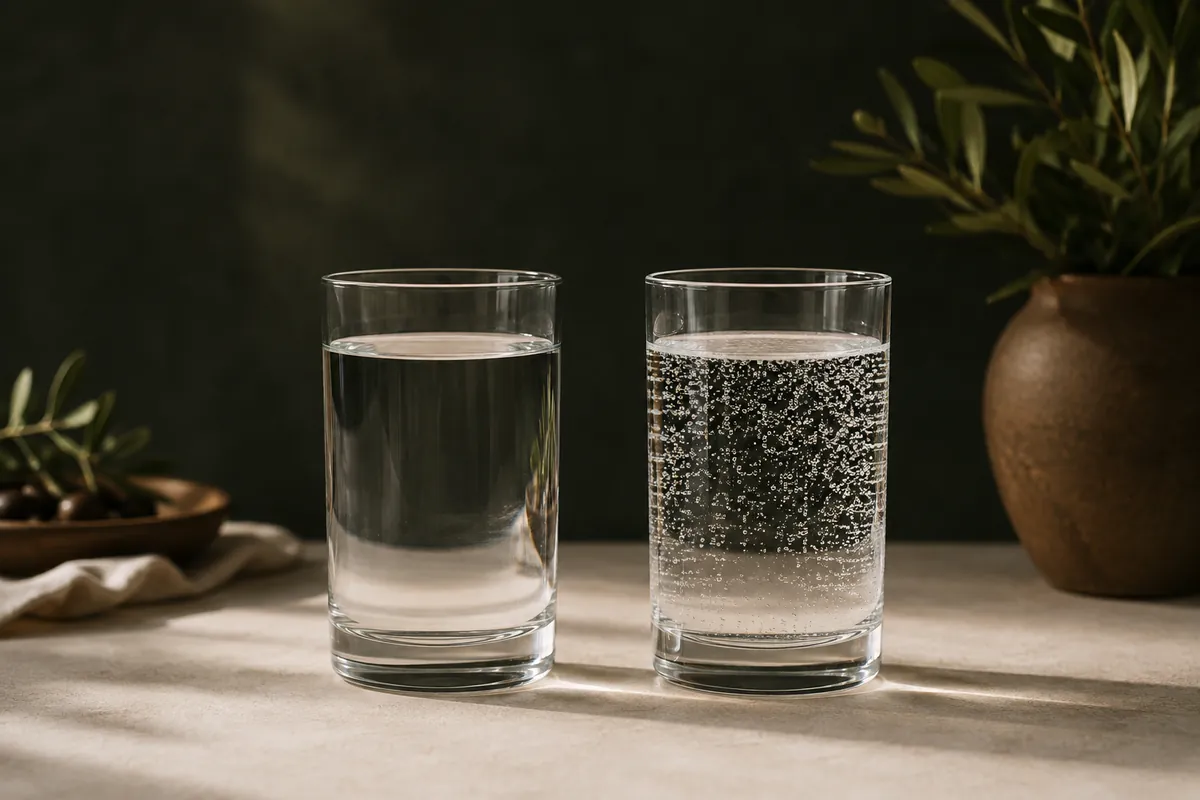
Some sources are naturally carbonated, picking up carbon dioxide underground from activity beneath the aquifer. In most of those cases the gas is captured separately at the source, the water is transported apart from it, and the two are recombined at bottling, an arrangement that still qualifies for the natural description in many markets.
Naturally sparkling
Carbonated at source, and the gas returned at bottling.
Carbonated natural mineral water
The same water with carbon dioxide added.
Still
No carbonation at all.
Lightly sparkling
A lower carbonation level, sometimes called petillant.
Carbonation shifts perception considerably in either case. The carbonic acid it introduces makes a water read as sharper and drier than its analysis suggests, which flatters a high-bicarbonate source, since the bicarbonate buffers the new acidity back down, and overwhelms a very light one that had little character to defend.
The mechanics of dissolved gas, bubble size and why a warm bottle goes flat in minutes belong with sparkling water rather than here, and soda water covers the version where the salts were added rather than found.
Glass, plastic and how long a bottle keeps
Water looks like it ought to be indefinitely stable, and it very nearly is.
Glass is inert and holds the taste unchanged for as long as the seal does. Plastic is slightly permeable in both directions, so a bottle stored beside anything strongly scented will take that scent up through the wall, and long storage in warmth can leave a faint plastic note of its own.
Neither failure is dramatic and both are irreversible, which is why the sensible rule is cool, dark and away from strong odours, with glass preferred for anything you intend to taste attentively rather than simply drink.
Sparkling bottles are the exception to the calm picture, since they hold pressure and lose it steadily once opened, and the practicalities of that sit with storing mineral water. A still bottle that has developed an off note has almost always picked it up from its surroundings rather than from anything happening inside it, which is worth knowing before blaming the source.
The tap, the filter jug and what to buy
The comparison most people actually want deserves a direct answer rather than a diplomatic one.
Mains water in most developed supplies is treated, monitored and of a quality that makes the bottled comparison a matter of taste rather than of safety. Two complaints account for nearly all of it: chlorine, which is a treatment residue and leaves on standing, and hardness, which is a source characteristic and does not.
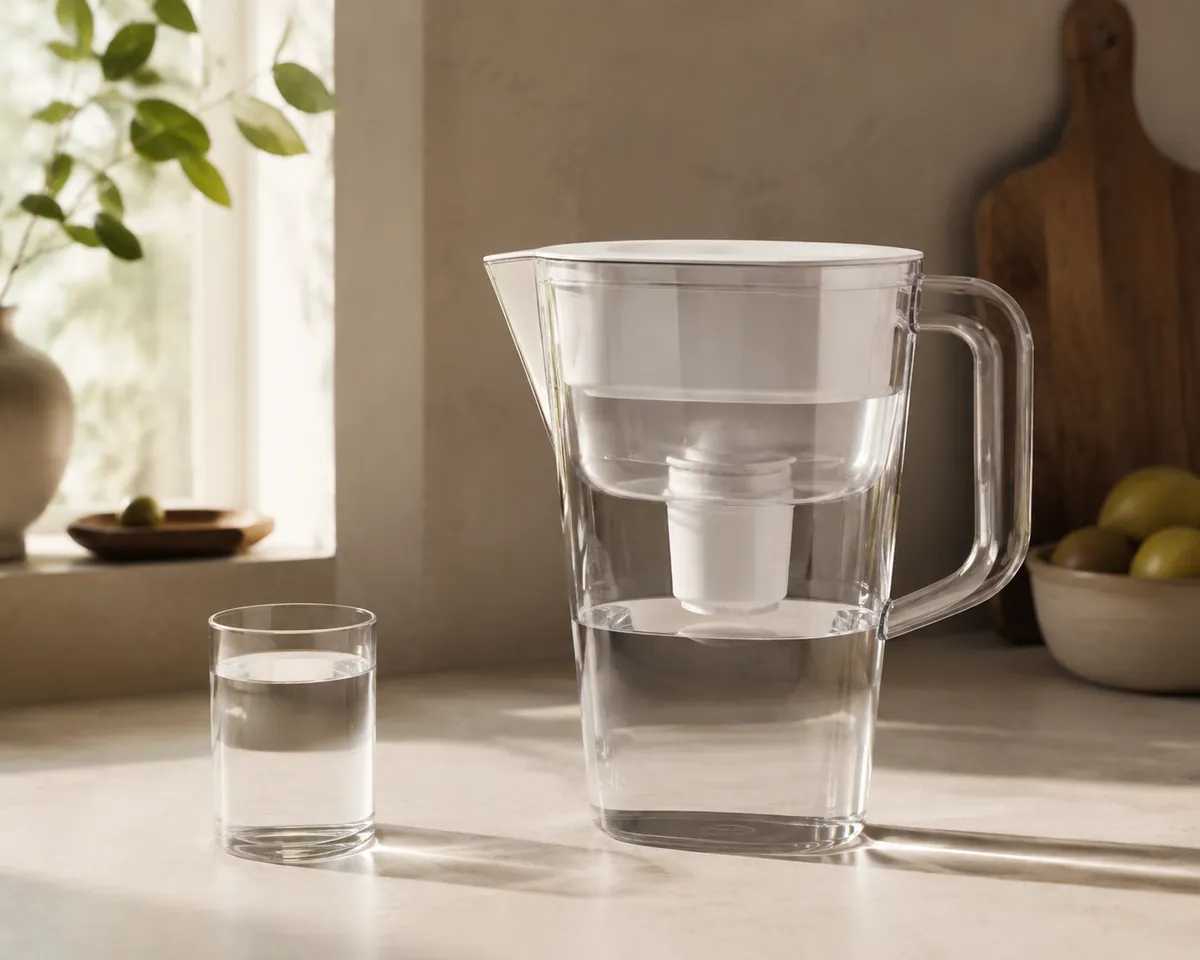
Chlorine taste
Fills a jug and leaves it uncovered for an hour, or filters it. Both work.
Hardness
A filter jug reduces it. It affects kettles and brewing more than drinking.
Neutrality
Some mains supplies are lower TDS than most bottled waters.
Consistency
Mains composition varies seasonally; a bottled source does not.
Water companies publish an analysis by postcode, and the figures there mean exactly what they mean on a bottle, so knowing your own supply is more useful than buying anyone else's.
Where a bottle earns its price is in specificity: a moderate TDS water between 250 and 800 mg/l has enough character to sit beside food without competing with it, a low-TDS water gets out of the way of a delicate dish, and a high-TDS one is bought for its own flavour.
For brewing, check hardness rather than TDS and aim for the forgiving middle. For everything else, a filter jug and the tap answer the question, and the rest of the bottled hydration shelf is a different purchase entirely.
Beside a plate of food
Mineral water is the one drink on this site chosen mainly for how it behaves next to something else on the table, and the choices are more specific than they look.
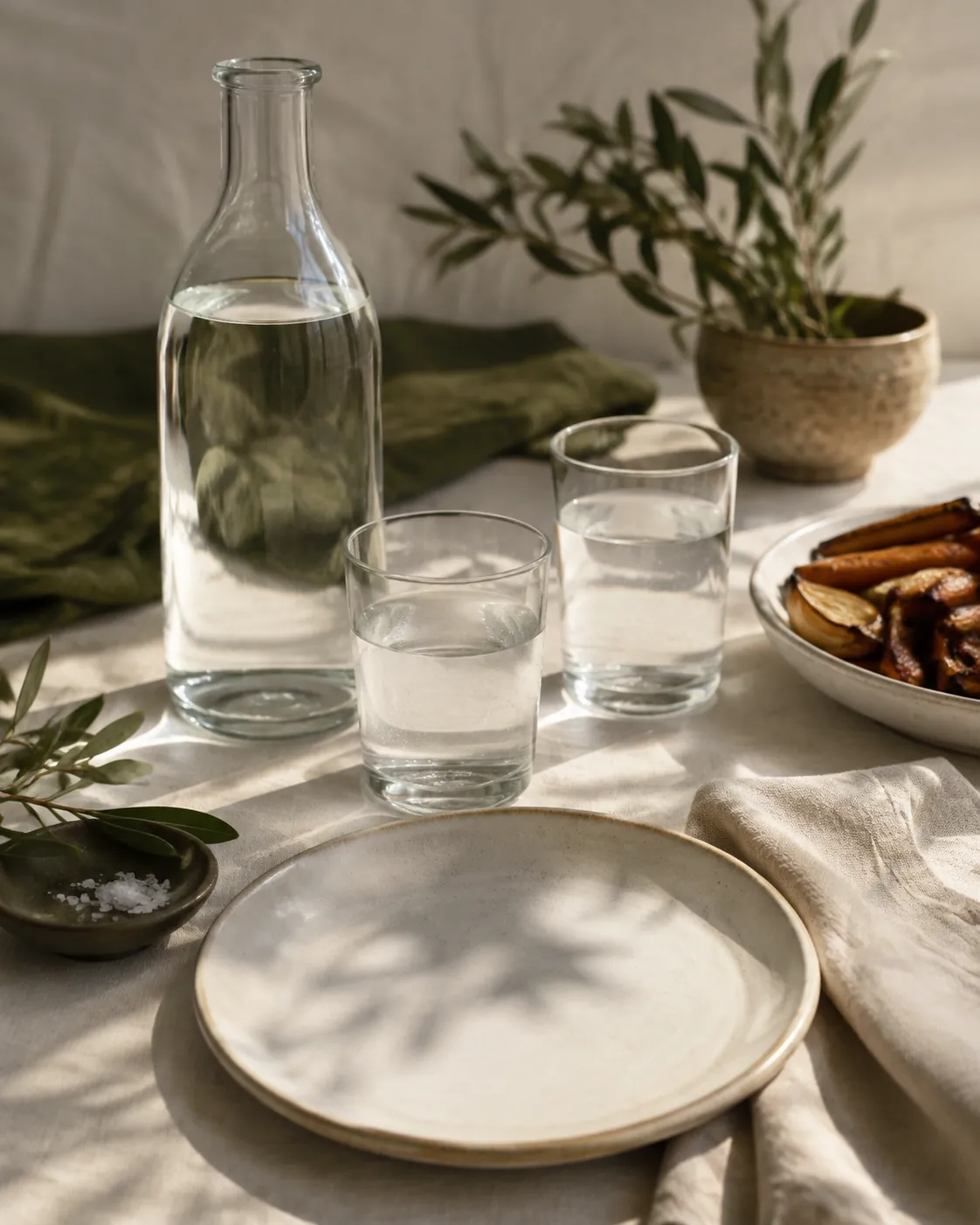
High-mineral, high-TDS waters have a flavour of their own and stand up to strong or fatty food without disappearing. Low-TDS waters read as clean and stay out of the way, which suits delicate dishes and anything where the water is competing with a white tea or another drink you are trying to taste properly.
Carbonation does a separate job again, since bubbles scrub fat from the palate between mouthfuls, which is why sparkling is the conventional choice with rich food and still the conventional choice with subtle food.
Temperature is the variable most often got wrong at a table. Poured very cold, an expensive water tastes like any other and the analysis becomes decoration, which is the same argument that applies to paying for a pH figure you cannot detect.
Around 12 C is where a mineral analysis turns into something you can actually taste, and that is a serving decision rather than a shopping one: the cheapest bottle served at the right temperature beats the most expensive one served from the freezer door.
Common questions
What is the difference between mineral water and spring water?
Natural mineral water must come from a protected source, be safe at source, and be bottled essentially untreated with a declared stable composition. Spring water also comes from a single source but is less strictly regulated and may be treated.
What does TDS mean on a water bottle?
Total dissolved solids, the combined weight of everything dissolved in the water. It is the single most predictive figure for taste: under 100 mg/l is light and neutral, over 1000 mg/l tastes distinctly mineral.
Does mineral water make better coffee?
It depends on the analysis, not the label. Water needs some mineral content to extract properly, so very low TDS water gives thin coffee, while very hard water dulls it. A moderate mineral content is the useful target.