What Is Cold Brew Coffee? Why Temperature Matters, Not Time
Cold brew is coffee steeped in cold water for many hours rather than brewed with heat. Temperature, not time, is what makes it a different drink.

Cold brew is coffee steeped in cold or room-temperature water for a long period, usually 12 to 24 hours, then strained. It is an immersion method, like a French press run very slowly.
No heat is applied at any stage. That is the definition, and it separates cold brew from every other method on the site.
Cold brew at a glance
- Method
- Immersion, with the grounds sitting in the water throughout
- Heat
- None at any point, which is what the name describes
- Grind
- Coarse, roughly like sea salt
- Usual ratio
- 1:5 for a concentrate, about 1:12 for a ready-to-drink brew
- Steep
- 12 to 16 hours at room temperature, 18 to 24 in the fridge
- Keeps
- Seven to ten days refrigerated as concentrate
- Caffeine
- Not low. Caffeine dissolves readily even in cold water
What cold water leaves behind in the grounds
Temperature governs which compounds dissolve and how quickly, and cold water turns out to be selective in a way hot water is not. Some of what makes hot coffee taste like hot coffee needs heat to become soluble at all, so it stays in the grounds and goes into the bin with them.
What cold water extracts, and what it leaves
- Caffeine
- Dissolves readily even cold, so cold brew is not low in caffeine
- Sugars
- Dissolve well, which is why it tastes sweet
- Chlorogenic acids
- Extract far less, which removes much of the perceived acidity
- Bitter compounds
- Largely left behind, since many need heat to become soluble
- Aromatics
- Muted. The volatile compounds that make hot coffee smell vivid stay put
The sweetness is not added, it is what remains when the acids and bitterness are absent. Sugars are fully present and the compounds that would balance them are not, so the same coffee reads as sweeter.
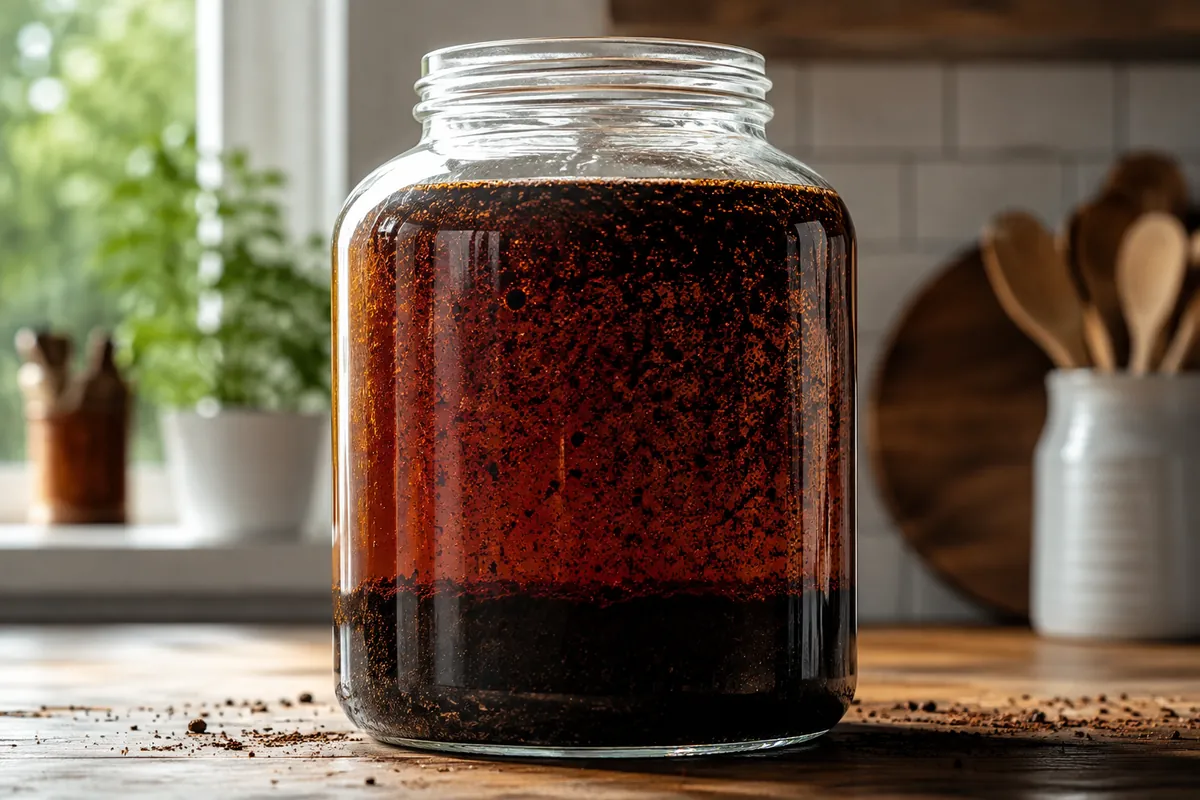
The practical consequence is that the method decides more of the flavour than the bean does, which is why two very different coffees brewed this way land closer together than anyone expects. The full sensory picture is set out in how cold brew tastes.
Concentrate, dilution and the steep window
Almost every cold brew recipe is written for a concentrate rather than a drink, and that single convention accounts for most of the confusion around its ratios.
Concentrate, then dilution
- Coffee
- 100 g coarse ground
- Water
- 500 ml cold
- Ratio
- 1:5 for a concentrate
- Steep
- 12 to 18 hours at room temperature, or up to 24 in the fridge
- Strain
- Through a fine filter or cloth
- Serve
- Dilute 1:1 to 1:3 with water, milk or ice
A 1:5 brew is a concentrate, not a drink, and tasting it neat is the most common first-attempt mistake. If you would rather skip the dilution step entirely, brew at around 1:12 and pour it straight, at the cost of taking up five times the fridge space for the same amount of coffee.
The sequence for either version is in making cold brew.
What happens as the steep runs longer
- Under 8 hoursThin, sour, obviously under-extracted
- 12 to 16 hoursThe usual window at room temperature
- 18 to 24 hoursThe fridge window. Fuller, still clean
- Beyond 24 hoursWoody and papery notes appear
- Beyond 36 hoursFlat and dull, with no gain in strength
Room temperature and refrigeration are two settings of the same dial. A warmer steep extracts faster and gives a fuller, slightly heavier cup in 12 to 16 hours; the fridge is slower and cleaner and wants 18 to 24.
Leaving either one longer stops helping well before it starts actively hurting, which is why published recipes cluster so tightly around the same numbers.
Coarse grind, and why you strain it twice
Grind size does different work here than in hot brewing, where it sets the speed of extraction. Over twelve hours or more, almost everything soluble comes out regardless, so the grind is really deciding how much sediment you have to remove at the end and how much bitterness the fines contribute while they sit there.
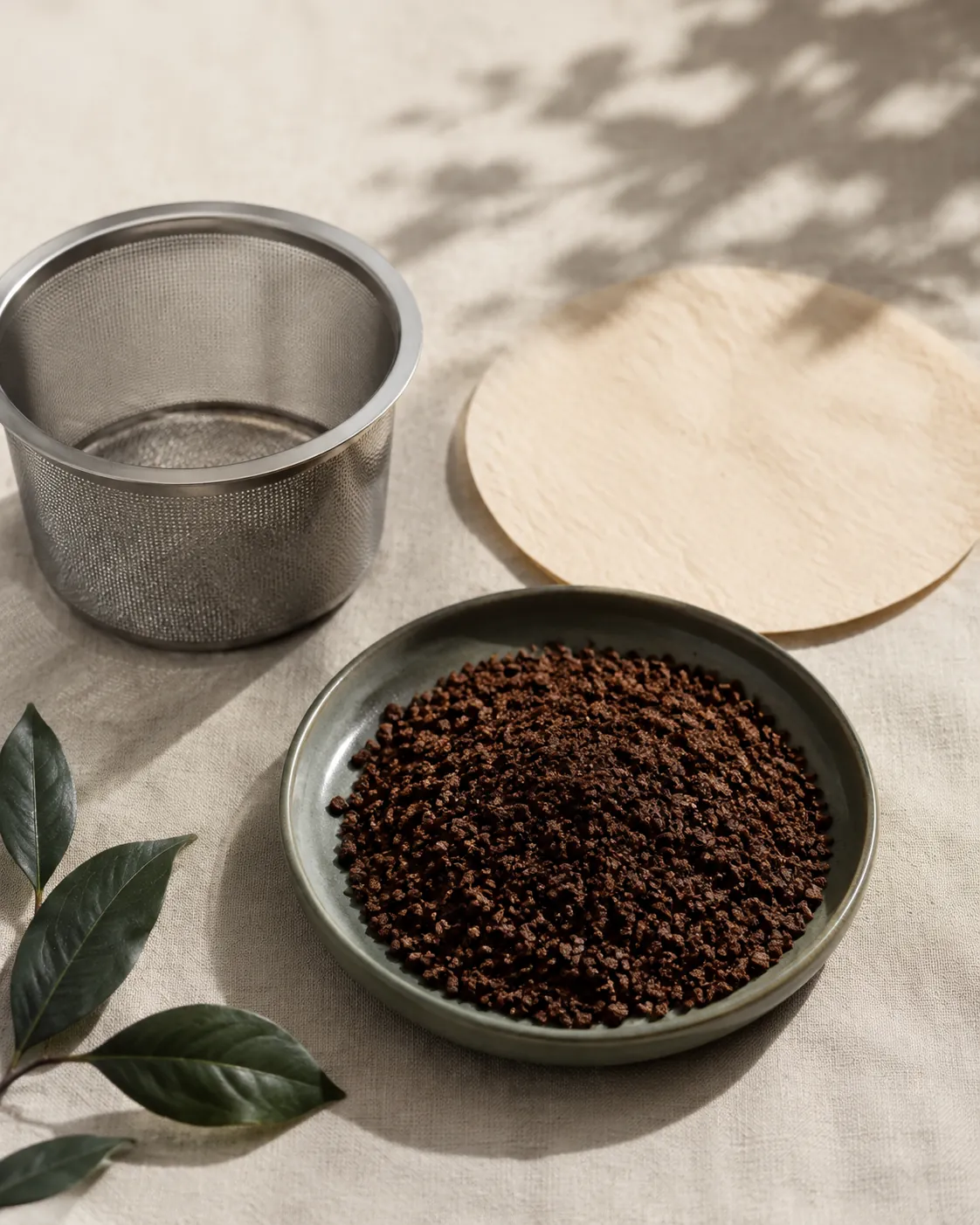
Coarse is standard, roughly like sea salt and if anything coarser than for a French press. A fine grind over eighteen hours over-extracts, and more practically it turns straining into a slow, silty job that ends with fines in the bottle.
- Grind coarse, coarser than for a French press if anything.
- Wet the grounds fully at the start; dry pockets never extract.
- Steep at room temperature for a faster, fuller brew, or in the fridge for a cleaner one.
- Strain once through a coarse mesh, then again through paper or cloth for clarity.
- Do not press or squeeze the grounds, which pushes fines and bitterness through.
Two-stage straining is what separates a clean batch from a silty one: the first pass removes the bulk, the second removes the fines that would otherwise keep extracting in the bottle for the rest of the week.
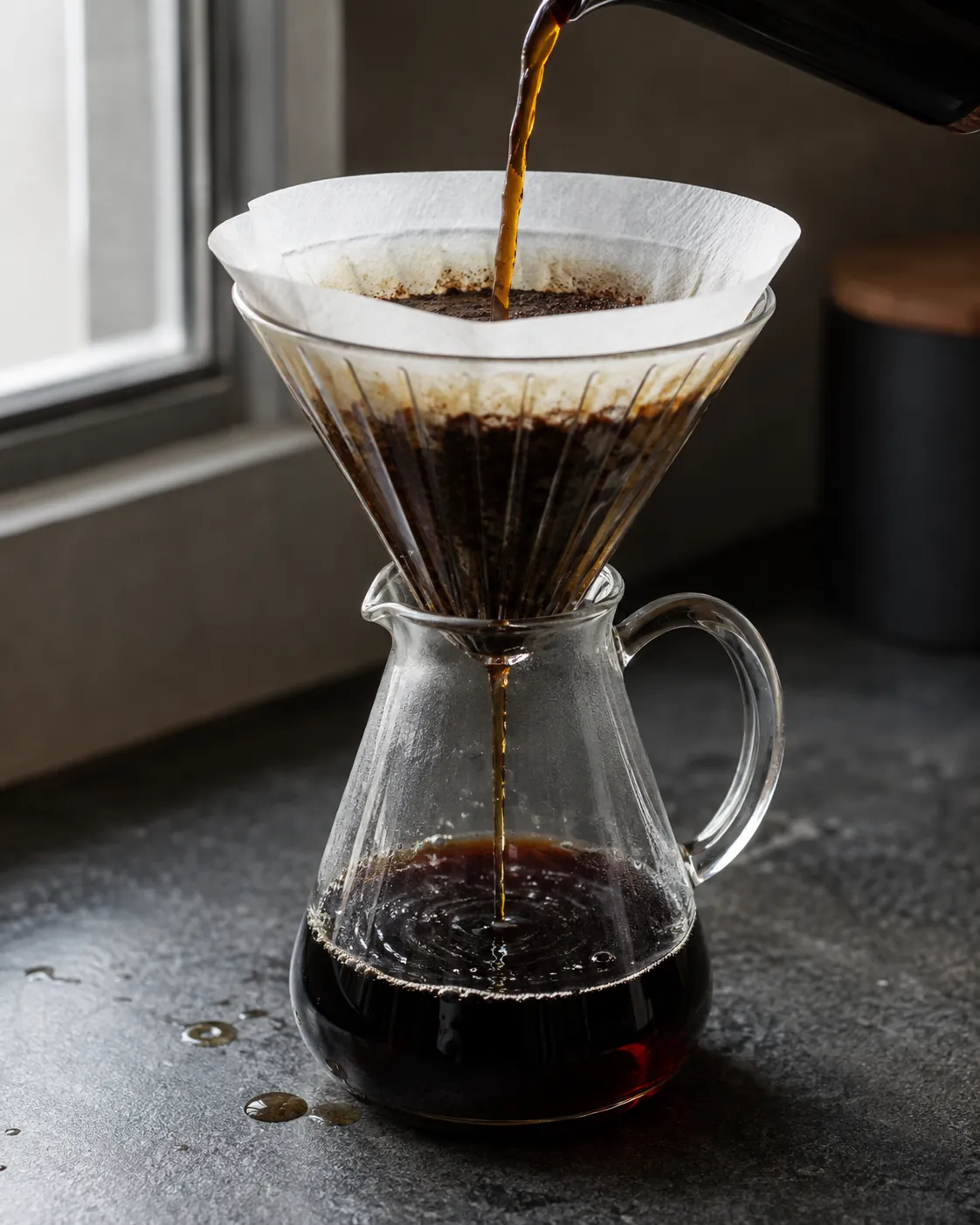
Let it drip through under its own weight, however long that takes. Pressing the filter to speed it up is exactly what pushes the fines you were trying to remove into the carafe, and the same instinct spoils a pour-over for the same reason.
Cold brew, iced coffee and the Japanese method
These three get used interchangeably on menus and they are different drinks made in different ways.
| Cold brew | Iced coffee | Japanese iced | |
|---|---|---|---|
| Brewed with | Cold water | Hot water | Hot water |
| Time | 12 to 24 hours | Minutes | Minutes |
| Cooled by | Never heated | Chilling afterwards | Brewing directly onto ice |
| Acidity | Low | Normal | Bright and high |
| Aromatics | Muted | Reduced by cooling | Preserved, since chilling is instant |
Japanese iced coffee is the interesting one, because it solves the problem cold brew creates. Brewing hot directly onto ice, with that ice counted as part of the brew water rather than added afterwards, gives a cold cup that keeps the aromatics hot brewing produces and loses none of them to standing time.
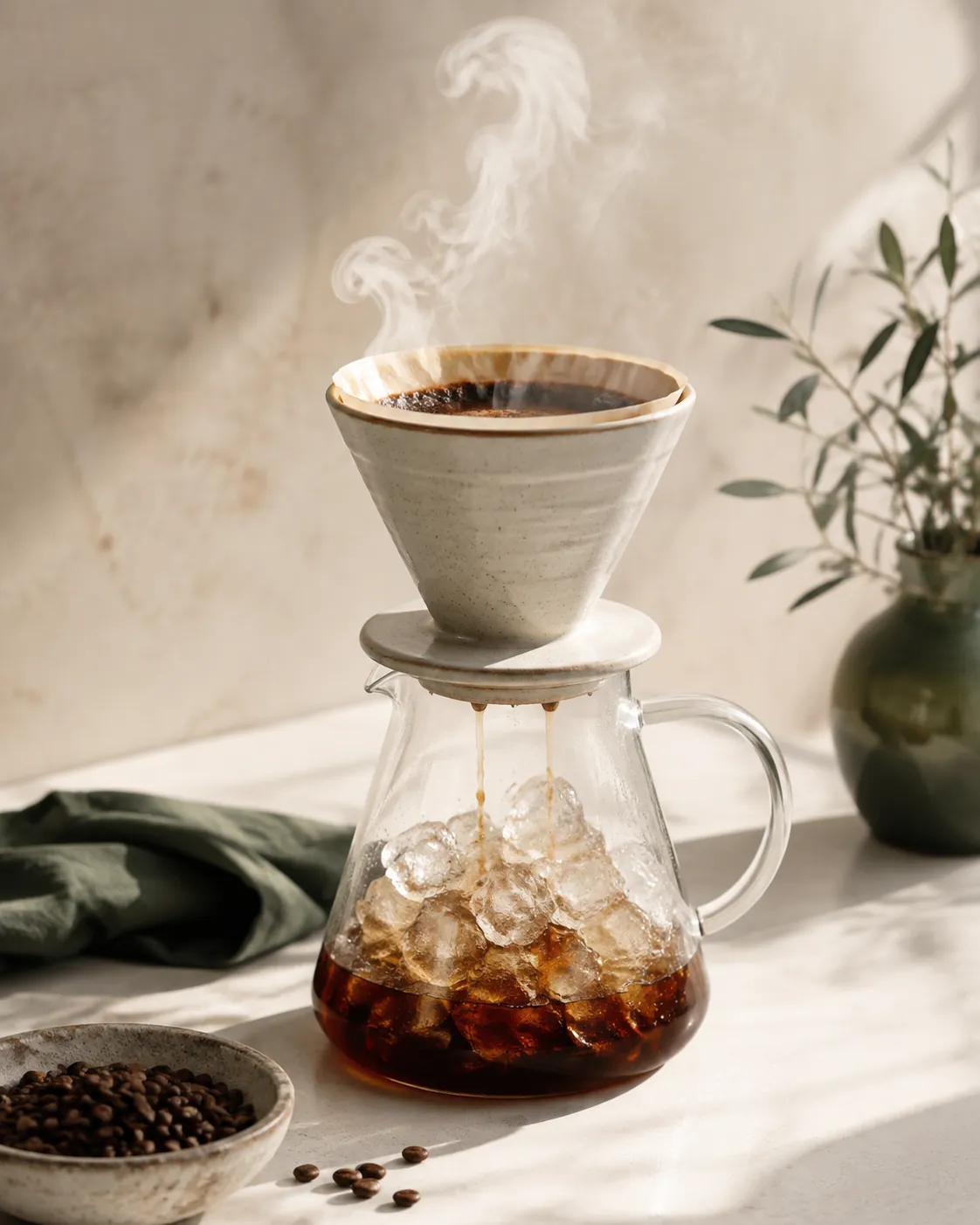
Japanese iced coffee, roughly
- Coffee
- 20 g, medium grind
- Ice in the carafe
- 150 g, weighed as part of the water
- Hot water poured
- 200 g
- Total brew water
- 350 g, of which the ice is part
- Result
- Bright, aromatic, and cold within seconds of brewing
If you find cold brew flat and want something bright and cold, the answer is a different method rather than a different recipe. No adjustment to a cold steep will put back aromatics that were never extracted, and the comparison with plain chilled coffee is set out in iced coffee.
Nitrogen, and why it reads as creamy
The nitro version is worth understanding because it changes the texture of the drink without changing a single thing about how the coffee was made.
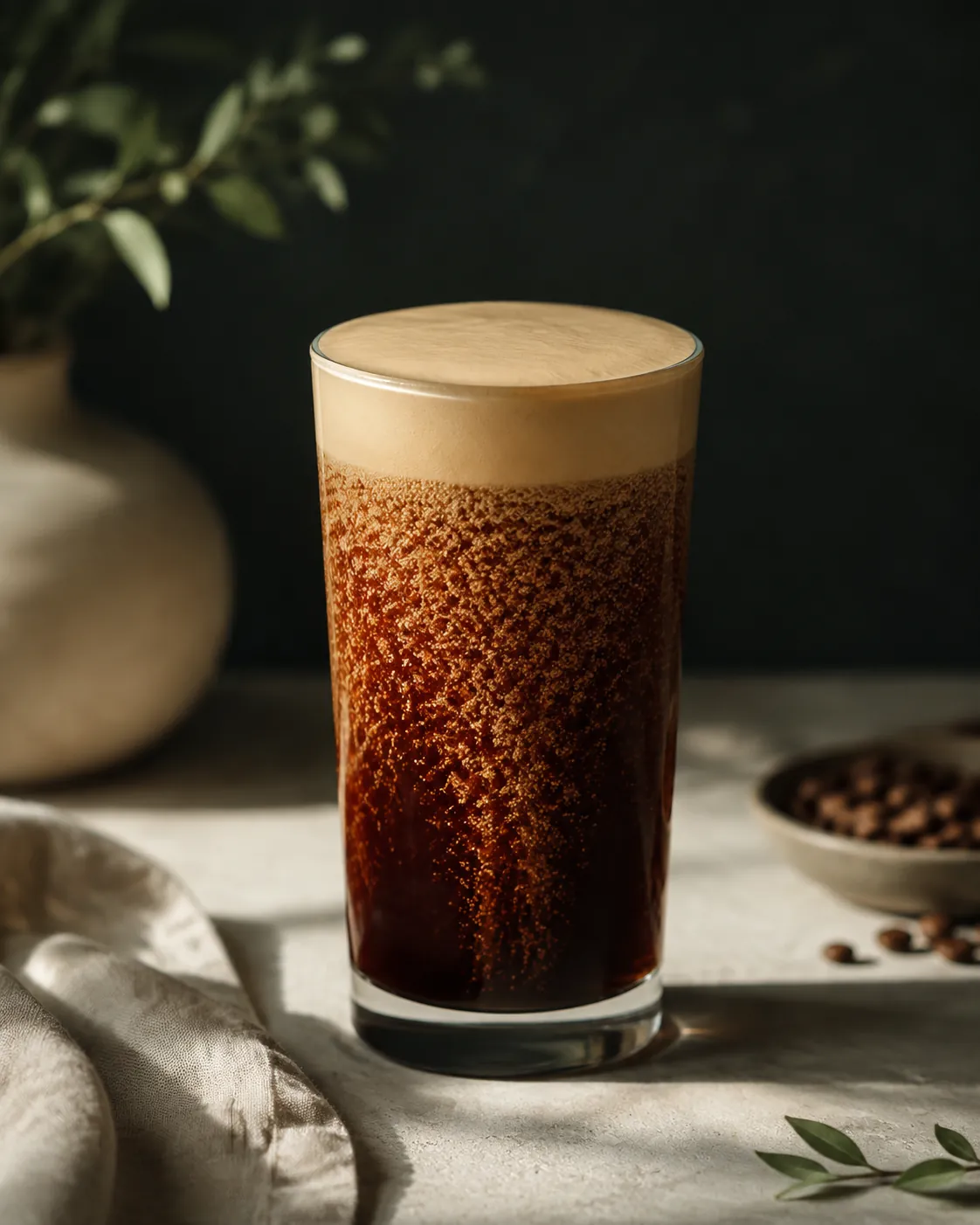
Nitro is cold brew infused with nitrogen and dispensed under pressure through a restrictor plate. Nitrogen dissolves poorly in water, so it comes out of solution almost immediately as very fine bubbles rather than the sharp prickle carbon dioxide gives, and those bubbles are small enough to hold together as a foam instead of breaking at the surface.
The result is a cascading pour, a dense head, and a mouthfeel that reads as rounder and sweeter than the same coffee poured flat. Nothing has been added: the coffee is unchanged and the whole difference is physical, which is why nitro tastes creamy without the steamed milk a latte needs to get there, and why nitro coffee is treated as its own drink rather than a serving style.
Ten days in the fridge, and what shortens it
Cold brew keeps better than any other brewed coffee, and that is a large part of why it exists on menus at all.
Concentrate holds seven to ten days refrigerated in a sealed container, against hours for a hot brew. Diluted cold brew is a different proposition and is closer to two or three days before it goes flat, since the water it was cut with brings nothing that preserves it.
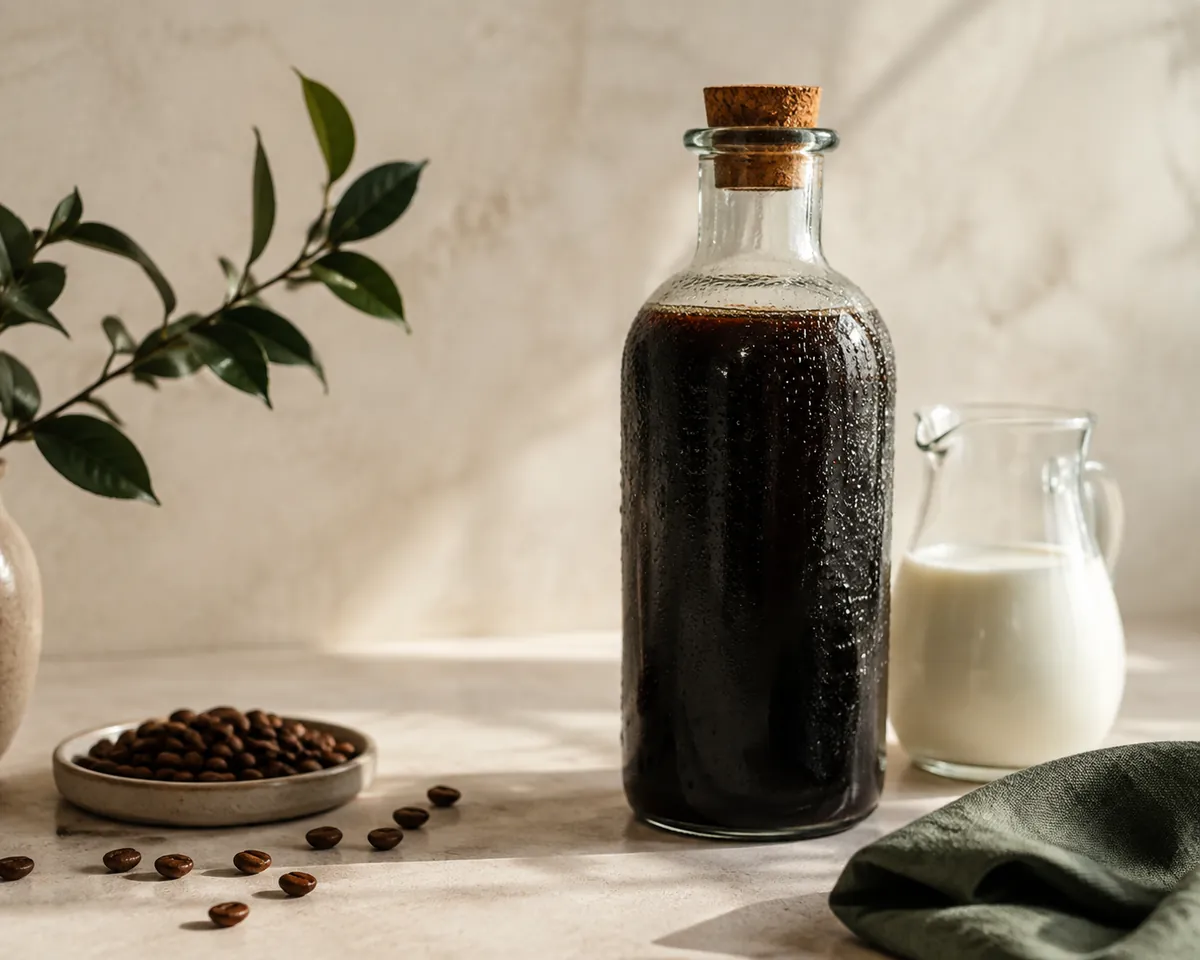
The low acidity that makes it pleasant to drink also makes it less self-preserving than a hot brew, so refrigeration is not a nicety. Keeping it in the container it was strained into, rather than decanting, avoids the other slow spoiler, which is oxygen.
Timescales for both concentrate and diluted are set out in storing cold brew.
Which roasts survive the method
Cold brew flatters some coffees and quietly wastes others, and the pattern is consistent enough to shop by.
Medium and medium-dark roasts suit it best, because the chocolate and nutty notes they carry come from the roast rather than from the fruit acids, and roast character extracts perfectly well in cold water. Light, bright, fruity coffees are largely thrown away here: the acidity and floral aromatics that justify their price are exactly what cold extraction leaves behind, so an expensive Ethiopian ends up tasting much like a cheap Brazilian.
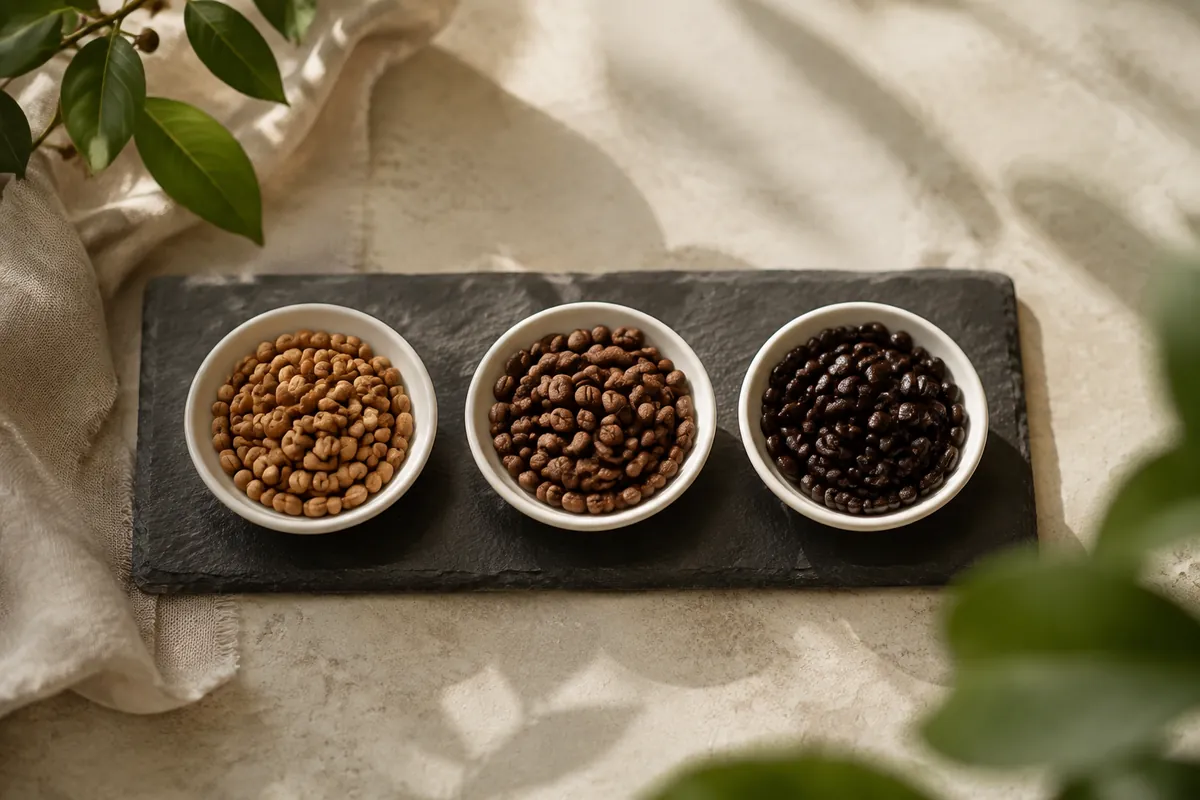
How well each roast suits cold brew
- Medium-darkChocolate and nut notes survive cold extraction intact
- MediumThe safe default, and what most commercial cold brew uses
- DarkWorks, though ashy notes come through more than expected
- Light, washedThin and flat. The acidity that carried it is gone
- Light, fruity single originThe most wasted. Pay for it and brew it hot
This is the method to use up good-but-not-special coffee, and the wrong place to spend money on a delicate single origin. A little robusta in the blend is less of a liability than usual, since the heavy body it brings is welcome and the harshness it can bring never fully extracts.
Freshness matters less than for espresso, since aromatics play a smaller role from the start.
A jar, a sieve, and the habits that separate batches
Almost nothing here requires a purchase, which is unusual in coffee and is a fair part of the appeal.
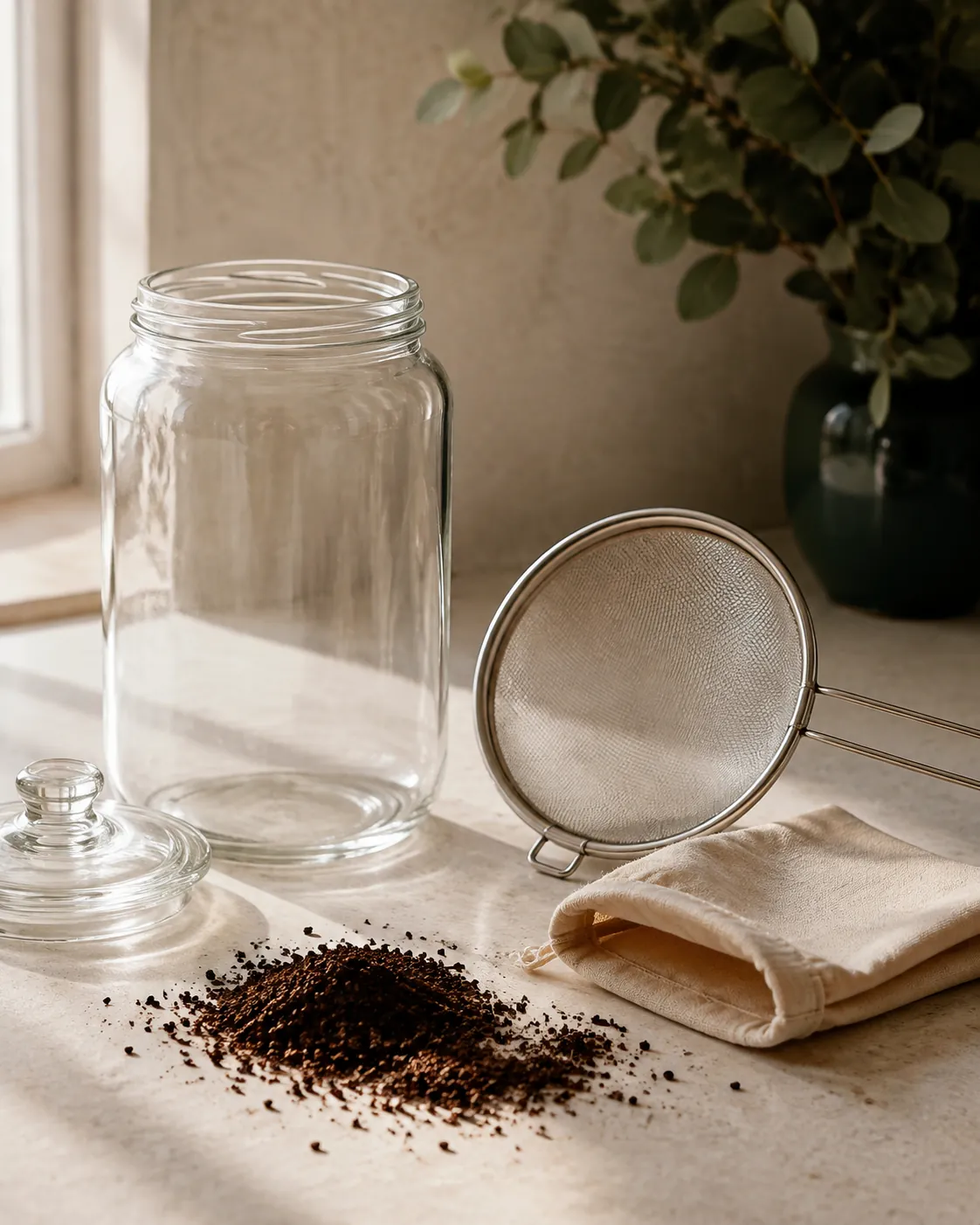
A jar and a sieve
Genuinely sufficient. Steep, strain twice, done.
Dedicated cold brew jugs
A built-in mesh filter. Convenient, and the mesh is often too coarse.
Filter bags
Reusable cloth or disposable. Simplest to clean, and they strain well.
A French press
Works, though the metal mesh lets fines through and it needs a second strain.
Commercial towers
Slow drip rather than immersion. A different method with a different result.
A large jar, a sieve and a paper filter produce results equal to any dedicated device, and the case for a purpose-made cold brew maker is convenience rather than quality. What actually separates a flat batch from a good one is a short list of habits.
- Weigh the coffee and the water, since the ratio is the whole recipe.
- Wet all the grounds at the start and stir once; dry pockets never extract.
- Steep at room temperature rather than in the fridge for a fuller result.
- Strain twice, and never squeeze the grounds.
- Dilute to taste at serving rather than storing it pre-diluted.
Storing it concentrated and cutting each glass as you pour is the single most useful of those. It keeps longer, takes less fridge space, and lets the same batch serve as a small strong glass in the morning and a long milky one in the afternoon.
Dilution, and what each gives
- Undiluted concentrateToo strong to drink. Use for cooking or affogato
- 1:1 with waterVery strong, closer to a long espresso
- 1:2 with waterThe usual serving strength
- 1:3 with water or milkMild, and the common café iced-latte base
- Over ice onlyDilutes as it melts, so it starts strong and finishes weak
Work down that list once with a single batch and you will know your own preference, which no published recipe can tell you.
What concentrate is good for besides a glass of it
Concentrate is more versatile than a jug of ready-to-drink coffee, because it adds coffee flavour without adding much liquid, and several of its uses have nothing to do with drinking it cold.
Affogato
A small pour of undiluted concentrate over ice cream works well.
Baking
Concentrated coffee without added water, useful in cakes and ganache.
Hot
Diluting with hot water rather than cold gives a low-acid hot coffee.
That last one surprises people and is worth trying before dismissing. Cold brew let down with hot water is a perfectly good hot drink that keeps the low acidity the method was chosen for in the first place.
Food pairings follow the same logic and are not the ones that suit hot coffee. Acidity is what lets a hot cup cut through fat and pastry, and cold brew has much less of it, so it sits alongside rich food rather than slicing into it.
Works well
Chocolate, caramel, nuts, oats, anything toasted or roasted.
Works well cold
Ice cream and cream, where the low acidity stops it splitting.
Works less well
Sharp fruit, citrus desserts, anything with vinegar.
Neutral
Pastry and bread, which neither help nor hurt it.
Sweetened, it wants a liquid sweetener rather than granulated, since there is no heat in the glass to dissolve anything; simple syrup exists largely for this problem.
Strong in two different senses
Anyone making cold brew for the first time tends to hit the same two surprises, and both come from the same place.
The first is how strong the concentrate is. A 1:5 brew tasted neat is close to undrinkable and people conclude they have made it wrong, when it is behaving exactly as intended.
The second is how little it smells: there is almost no aroma over the glass compared with a hot cup, because the volatile compounds that produce that smell were never extracted in the first place.

The word strong is doing two jobs here and they pull in opposite directions. Concentration is how much dissolved coffee sits in the liquid, and a 1:5 cold brew is very high on that measure.
Extraction is how much was pulled out of the grounds, and cold brew is genuinely low on that one, which is why it tastes intense and smooth at the same time. Diluting it therefore does not make it weak the way an under-brewed hot coffee is weak; it makes it less concentrated while keeping the same low-extraction character, and the caffeine that came with it is untouched.
Why cafes adopted it, and what the method costs the coffee
Cold brew went from niche to standard in about a decade, and the reasons were commercial at least as much as they were about taste.
For a café it is the only coffee that can be made entirely in advance, held for a week and served in seconds with no barista skill involved, which nothing else on a coffee menu offers. For a drinker the low acidity and natural sweetness make it approachable without milk or sugar.
Its growth is a logistics story as much as a flavour one, and that is not a criticism: a drink that is easier to serve and easier to like was always going to spread.
Made ahead
A week of stock brewed once, then served in seconds with no barista skill.
Approachable black
Low acidity and natural sweetness, so it needs neither milk nor sugar.
Forgiving of the bean
Twelve hours of contact extracts plenty from coffee that brews flat hot.
Blind to origin
The acidity and aromatics an expensive lot is bought for never come out.
Misleading on strength
A ready-to-drink bottle can carry twice a filter coffee's caffeine.
What the method costs is clarity of origin. It is the least demanding preparation here on the coffee itself, since twelve hours of contact extracts plenty from beans that would brew flat and hollow hot, and by the same token an expensive single-origin arabica is mostly wasted on it.
It is also the most misleading on strength: a ready-to-drink bottle can carry twice the caffeine of a filter coffee at a similar volume, which caffeine by brew method places against the other preparations and cold brew caffeine works out per glass. When a batch does come out wrong, the cause is usually the grind or the strain rather than the beans, and cold brew problems sorts one from the other.
Common questions
Is cold brew stronger than regular coffee?
Cold brew concentrate is much stronger, typically brewed at 1:5. What reaches the cup depends entirely on dilution: served at 1:1 to 1:3, it lands broadly in the range of ordinary brewed coffee.
What is the difference between cold brew and iced coffee?
Cold brew is steeped in cold water for 12 to 24 hours and never heated. Iced coffee is brewed hot and then chilled. Cold brew is lower in acidity and less aromatic; iced coffee keeps more of the character hot brewing produces.
How long should cold brew steep?
Twelve to sixteen hours at room temperature, or eighteen to twenty-four in the fridge. Past about twenty-four hours woody notes appear without any real gain in strength.