How to Make Decaf Coffee That Tastes Full
Decaf uses the same brewers as regular coffee, but its more brittle beans can create extra fines. Start with a stable ratio, then adjust grind from flow and taste.
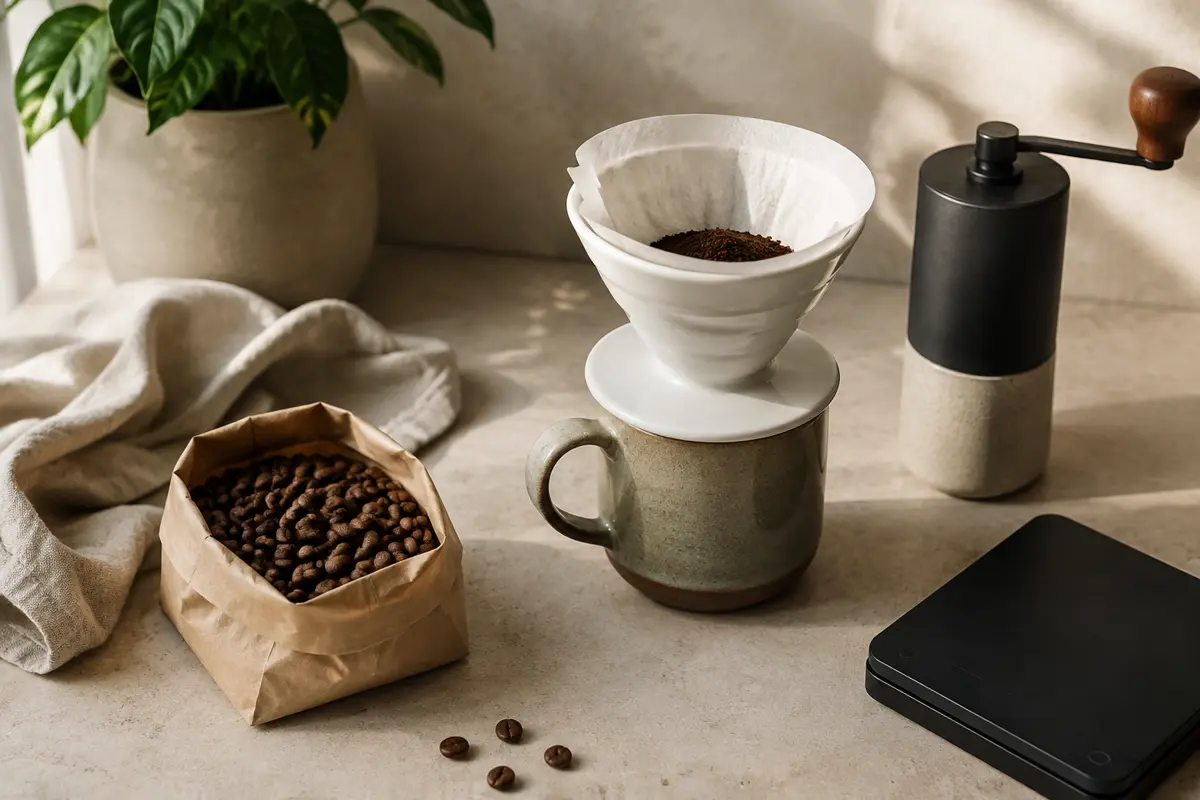
To make decaf coffee that tastes full rather than papery, start with fresh beans, weigh coffee and water, and brew it by the same method you would use for regular coffee.
Decaffeination changes the bean before roasting, so the useful adjustment is usually a small grind or dose change, not a completely different recipe.
Begin with 60 g of coffee per litre of water for filter brewing, or 18 g to 300 g for one mug. Use water near 92 to 96 C, taste the finished cup after it cools for a minute, and change only one variable on the next brew.
A dependable decaf starting point
- Coffee
- 18 g
- Water
- 300 g
- Temperature
- 92 to 96 C
- Filter grind
- Medium, then adjust by flow and taste
- Contact time
- Let the brewer and batch size set the window
- First correction
- Change grind before extending contact time
Choose decaf beans that still smell alive
The word decaf describes what was removed from green coffee, not how old the roasted beans are or how dark they were roasted. A bag with a roast date, an intact seal, and a clearly named decaffeination process gives you more useful information than a bag that promises strength without identifying the coffee.
Decaffeination exposes green beans to water, carbon dioxide, or a solvent system before roasting.
That extra processing can make the roasted bean more porous and brittle, which means the grinder may create more fine particles than it does with a regular bean at the same numbered setting.
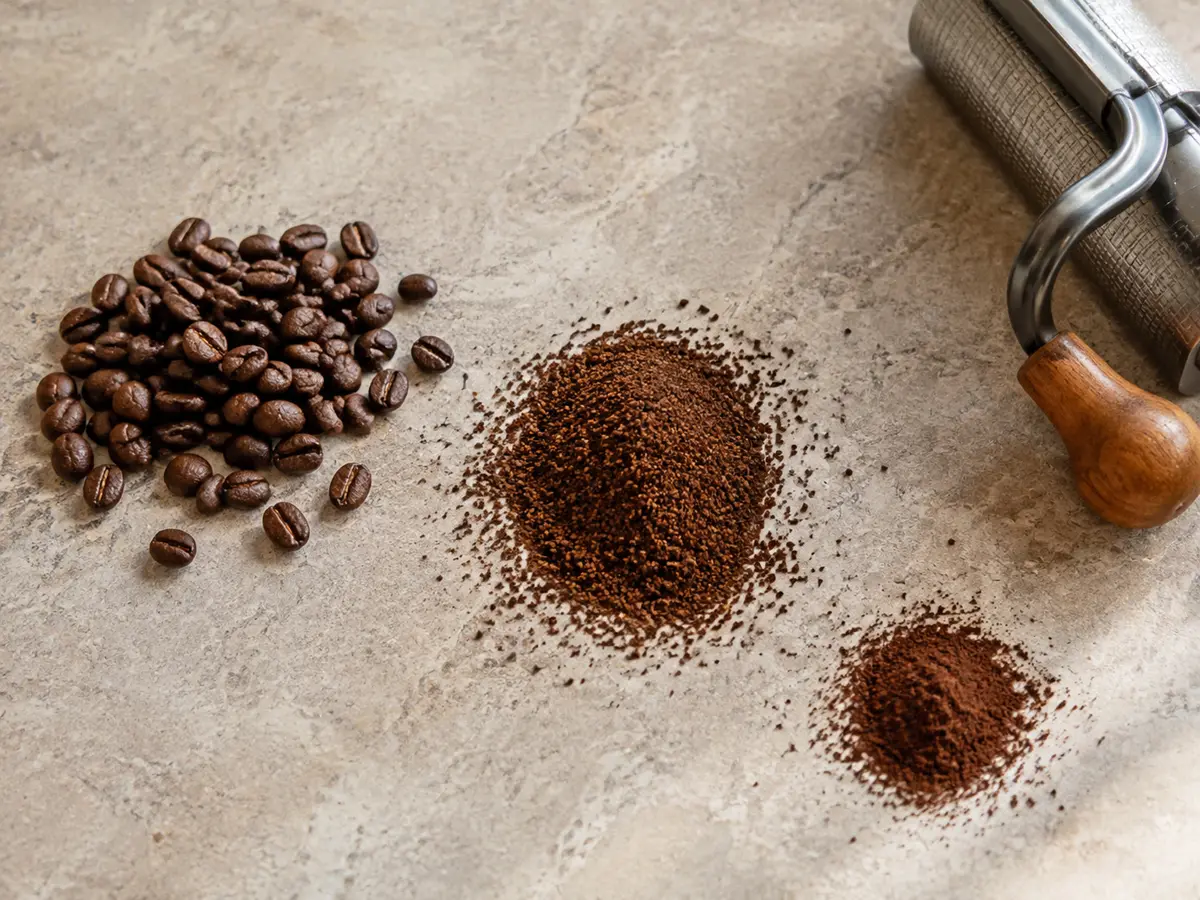
Dark color is especially unreliable with decaf because some processes change how the bean browns. Choose by aroma and roast date, then let the brew tell you whether the grind is right.
Whole beans also reveal whether the bag contains many chipped pieces. Those fragments are not automatically bad, but they can break into extra fines and make a familiar filter recipe drain more slowly than expected.
Buy a smaller bag when decaf is an occasional drink.
Opening one large bag for a single weekly cup exposes the remaining beans to far more air than finishing a modest pack over a shorter period.
A stale decaf often smells woody or faint before water reaches it. No ratio can rebuild volatile aroma that has already escaped, so freshness comes first when the cup is hollow at every setting.
Set the ratio before correcting the grind
Ratio controls concentration, while grind controls how quickly water can dissolve material from the grounds. Mixing those two jobs causes most failed adjustments: adding extra coffee to fix sourness can make the drink stronger while leaving it under-extracted.
Filter decaf for one mug
- Coffee
- 18 g
- Water
- 300 g
- Ratio
- 1:16.7
- Water temperature
- 92 to 96 C
- Expected result
- Clear sweetness, recognizable roast aroma, clean finish
Use the same ratio for the first two trials.
If the cup tastes thin yet sharp, move the grind slightly finer.
If it tastes dry, bitter, and slow, move slightly coarser.
Very dark decaf can extract readily and may taste cleaner at the lower end of the temperature range. A light decaf may need hotter water or a little more contact, but temperature follows roast and taste, not the decaf label alone.
Measure the water that actually reaches the brewer rather than the nominal capacity of the mug. Some automatic machines retain water in tubing and grounds, while a kettle pour can lose a little mass to steam and the wet filter.
For a larger batch, scale coffee and brew water together before changing grind. The deeper bed usually drains differently, so taste the completed batch before deciding that the ratio itself failed.
Filtered brewing water is worth testing when every coffee tastes flat or chalky. Excess hardness can mute acidity and aroma, while extremely soft water may leave the cup bright but empty.
Use the same water for regular and decaf comparison brews.
If both cups share a chalky finish or muted aroma, changing the water is more informative than assuming decaffeination caused every difference.
Preheat the brewer and server when making a small dose because cold ceramic can remove heat rapidly. Empty all rinse water before brewing so the measured recipe is not diluted by an unknown amount.
Brew filter decaf with an even coffee bed
Rinse the paper filter, add the measured grounds, level the bed, and wet all the coffee during the first pour.
Fresh decaf may release less visible gas than a recently roasted regular coffee, so a modest bloom is enough when no dry pockets remain.
One-cup decaf filter method
- PrepareRinse the filter and preheat the brewer and cup
- DoseAdd 18 g of medium-ground decaf and level the bed
- BloomWet every ground with about 45 g of water
- PourAdd the remaining water in controlled pulses
- FinishLet the bed drain without shaking or pressing it
- TasteJudge aroma, sweetness, and finish after brief cooling
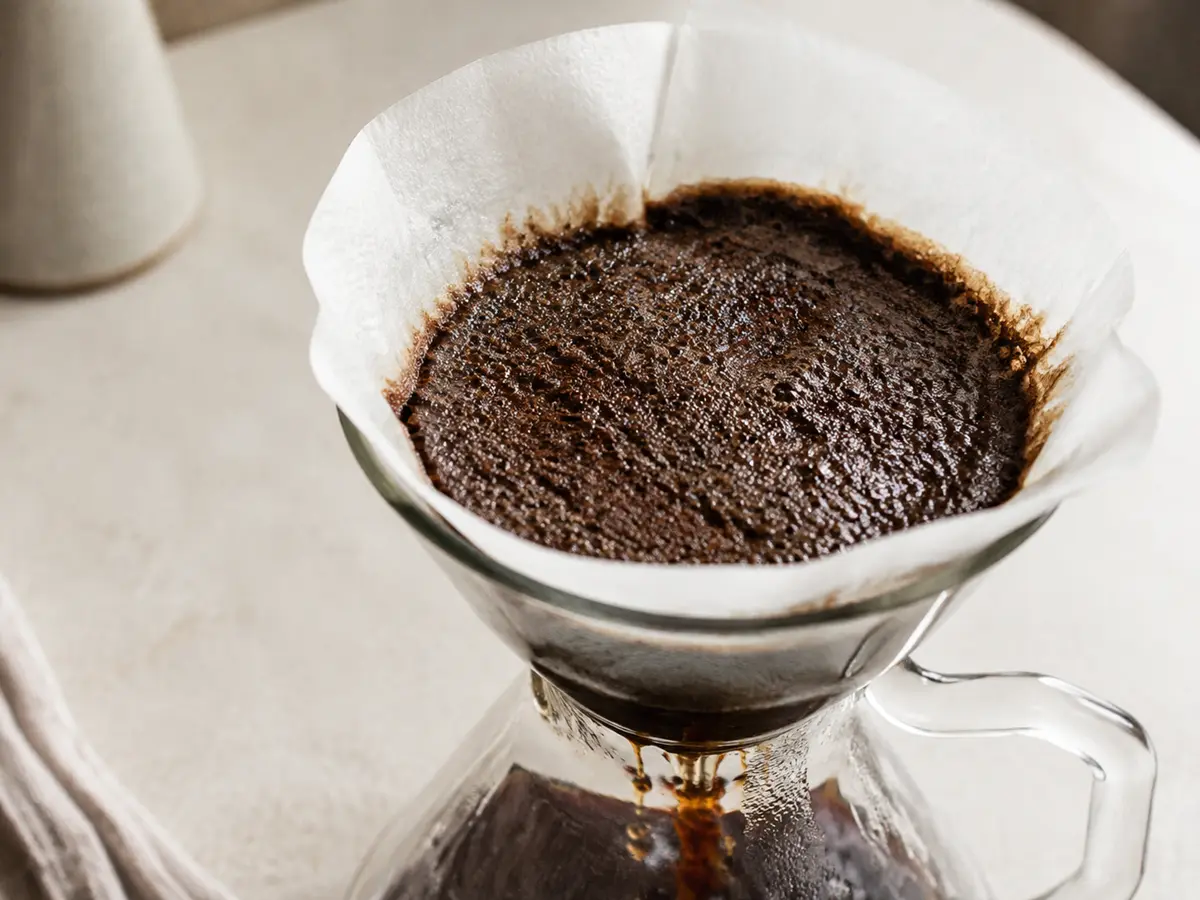
Watch the flow rather than forcing an exact time onto every dripper.
Decaf fines can migrate downward and slow the drawdown, especially after vigorous stirring or repeated swirling.
If water stalls above a muddy bed, coarsen before reducing dose. Keeping the ratio stable makes the effect of the grind change visible in the next cup.
An automatic drip machine follows the same logic, but the basket shape and showerhead decide how evenly the bed wets. Spread the grounds level, keep the spray holes clean, and avoid brewing a batch smaller than the machine can wet evenly.
Paper shape matters as well. A filter that collapses against the outlet can restrict drainage, while one that folds away from the basket wall lets water bypass the coffee and produces a weak cup even with the correct dose.
Do not chase a perfectly flat spent bed as a beauty standard.
The useful evidence is whether all grounds became wet, flow remained steady, and the cup tastes evenly extracted.
Adapt decaf to immersion and pressure brewers
Immersion methods are more tolerant of extra fines because the grounds do not form the only path water must cross. A French press can therefore suit brittle decaf beans, provided the plunge remains gentle and the drink is decanted promptly.
| Method | Useful starting point | First thing to watch | Likely correction |
|---|---|---|---|
| Paper filter | 60 g per litre | Drawdown and dry pockets | Change grind by one small step |
| Automatic drip | Machine's normal batch ratio | Even showerhead coverage | Level the bed and clean the spray holes |
| French press | 60 to 65 g per litre | Sediment and drying finish | Grind coarser and decant fully |
| AeroPress | Short measured recipe | Press resistance | Grind coarser if the plunge needs force |
| Espresso | Existing basket recipe | Flow, yield, and taste | Dial in as a new coffee |
The French press retains oils and suspended particles, which can give a light-bodied decaf more weight. Avoid a forceful plunge because it pushes fine sediment through the mesh and makes the last mouthful rough.
Espresso needs a fresh dial-in even when the regular and decaf bags share a roast label. More fines can slow the shot, while a brittle bean may change puck resistance from one small grinder movement.
Begin with the basket dose and beverage yield already known to fit the equipment, then observe how long the first drops take and how the stream develops. A shot that barely moves needs a coarser grind or better distribution before it needs a lower dose.
For immersion decaf, separate brewing time from serving time. Pour or decant the full brew after the target contact period, because leaving coffee beneath the press screen continues extraction and makes later cups progressively rougher.
An espresso machine cannot compensate for stale beans or an uneven puck. Distribute the grounds evenly, tamp level, and stop changing dose, yield, and grind at the same time.
Diagnose weak, hollow, bitter, or stalled decaf
Weakness describes concentration. Sourness, hollowness, bitterness, and dryness describe extraction or the coffee itself.
Name the fault before changing the recipe, because each points in a different direction.
- Weak but clean: use a little more coffee or less water while holding the extraction setting.
- Sharp and hollow: grind slightly finer or extend useful contact without increasing every variable.
- Bitter and drying: grind coarser, shorten contact, or lower temperature for a dark roast.
- Slow and muddy: reduce agitation and coarsen enough to limit fine-particle blockage.
- Flat at every setting: check roast age, storage, and water before buying new equipment.
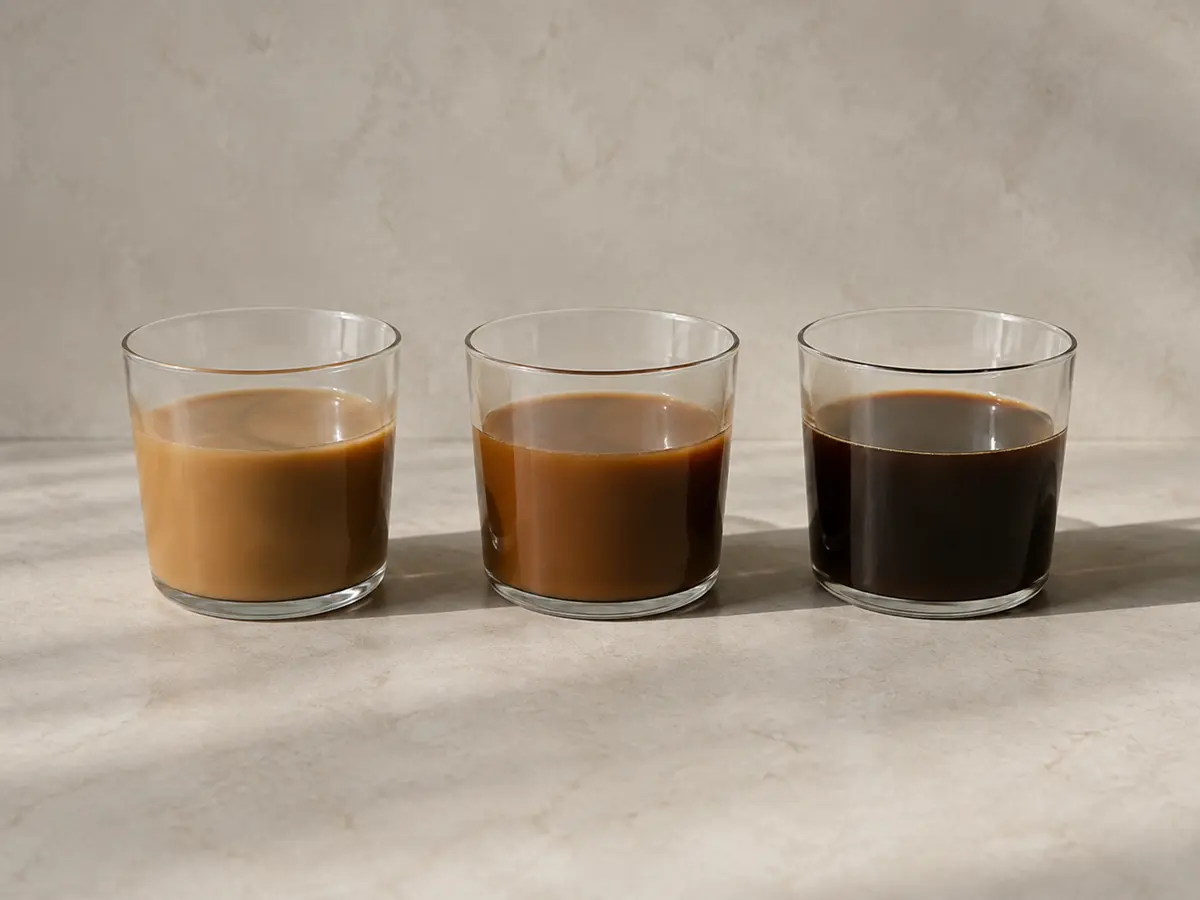
Taste after the cup drops below scalding temperature.
Heat can hide sweetness and make a thin brew feel more forceful, while a drying finish becomes easier to notice after swallowing.
Change one variable per brew. A simultaneous shift in ratio, grind, temperature, and time may produce a better cup, but it will not reveal which correction worked.
Write down the direction and size of each adjustment. “One click finer” on a stepped grinder is more useful than “finer,” while stepless grinders benefit from a marked reference point that can be restored later.
Compare cups at similar temperatures and in the same clean vessel. A wide cup releases aroma faster than a lidded travel mug, and detergent residue can make a delicate decaf seem papery or chemical.
When a change improves sweetness but makes flow inconveniently slow, recover flow with less agitation before abandoning the grind. This separates particle-size extraction from the fines migration caused by forceful stirring or swirling.
Keep the caffeine claim accurate
Decaf is low in caffeine rather than caffeine-free. The amount left varies with the bean, removal process, dose, and serving size, so brewing it weaker is not a dependable way to make a categorical zero-caffeine drink.
The decaf coffee profile explains the removal methods and why their flavor effects differ. For brewing, caffeine does not require a special pour pattern, and taste still controls the recipe.
Milk, ice, and added water change concentration but do not remove caffeine already extracted. If a product-specific number matters, use the producer's tested figure rather than assigning one universal value to every decaf cup.
Cold service needs its own concentration decision. Brew a normal-tasting hot decaf over a full glass of melting ice and it will become weak; use extra coffee or less hot water while keeping the extraction balanced, then count the ice as part of the final water.
Milk drinks expose a different weakness: milk can cover the limited aroma of an old decaf while also making a thin base disappear. Build a clean, slightly concentrated coffee first, then add milk gradually instead of over-extracting the grounds for color.
Store and serve it before the aroma fades
Keep the roasted beans sealed from air, heat, light, and moisture, and grind only what you need. Decaf can seem to fade quickly because its aroma may already be lighter after processing, so a poor container becomes obvious sooner.
The same storage rules used for coffee beans apply: close the bag tightly, keep it in a stable cupboard, and avoid moving cold beans in and out of a humid freezer. Water condensing on the beans damages quality long before the brewing method can help.
- - Confirm the bag still smells clearly of coffee when opened
- - Weigh the actual brew water rather than relying on cup capacity
- - Check that the grinder is not producing an unusual mound of dust
- - Clean paper holders, mesh, showerheads, and server lids
- - Taste warm rather than scalding, then record the single next change
Serve filter decaf soon after brewing or transfer a batch to a clean insulated server. A hot plate drives aroma away and concentrates the remaining liquid as water evaporates.
Reheating cannot restore lost aroma. Brew the amount you will drink, then use a chilled surplus in a milk or iced drink where a softer aromatic profile is less exposed.
Decaf filter method
- Makes
- 1 mug, about 300 ml
- Ratio
- 18 g coffee to 300 g water
- Water temp
- 92 to 96 C / 198 to 205 F
- Grind
- Medium, adjusted by flow and taste
- Total time
- 7 min
What you need
- 18 g freshly ground decaf coffee
- 300 g fresh water
Equipment
- Kettle
- Paper dripper and filter
- Scale and timer
- Grinder
Method
- PrepareRinse the filter and preheat the brewer and cup.
- DoseAdd 18 g of medium-ground decaf and level the bed.
- BloomWet all grounds with about 45 g of water.
- PourAdd the remaining water in controlled pulses.
- FinishLet the bed drain without forceful agitation.
- TasteJudge the cup after brief cooling and change one variable next time.
Common questions
Do you brew decaf coffee differently?
Use the same basic method and ratio, then dial in the beans as a new coffee. Decaf can produce more fines, so a slightly coarser grind or gentler agitation may improve flow.
What ratio works for decaf filter coffee?
A useful starting point is 60 g per litre, such as 18 g coffee to 300 g water. Change concentration with the ratio and extraction with grind, heat, or contact time.
Why does decaf coffee taste weak?
It may be under-concentrated, under-extracted, stale, or brewed with unsuitable water. Identify whether it is simply light, sharp and hollow, or flat before changing the recipe.