What Is Espresso? A Brewing Method, Not a Bean or a Roast
Espresso is a brewing method, not a bean or a roast. It is defined by pressure, a fine grind and a tight ratio, and everything distinctive about the cup follows from those three.
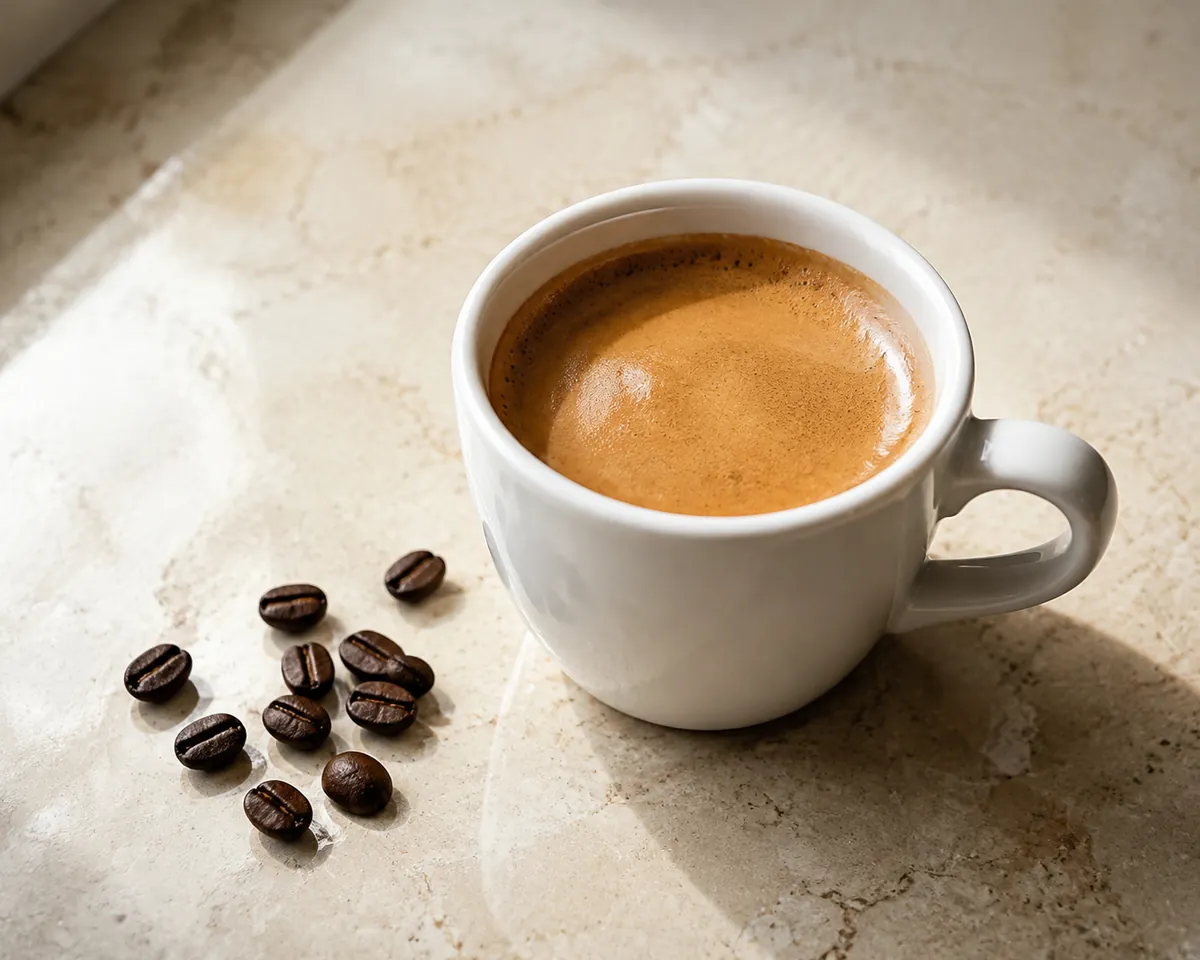
Espresso is coffee brewed by forcing hot water through a compressed bed of very finely ground coffee under pressure, conventionally around nine bars, in roughly 25 to 30 seconds. It is the base of every drink in the latte family, and it is a method rather than an ingredient.
There is no espresso bean and no espresso roast in any technical sense, only coffee ground and dosed for this particular way of brewing it. What makes the method behave unlike every other one is how little time the water gets: under half a minute to do the work a French press has four minutes for.
Every variable is therefore pushed to an extreme, and every mistake is concentrated along with the coffee.
Espresso at a glance
- What it is
- A brewing method, not a bean and not a roast level
- Dose
- 18 to 20 g of dry coffee in a double basket
- Yield
- 36 to 40 g of liquid in the cup
- Brew time
- 25 to 30 seconds from the moment the pump starts
- Pressure
- About 9 bars, by convention rather than by physics
- Water temperature
- 92 to 96 C
- Grind
- Fine, roughly the texture of table salt
- Crema
- An emulsion of carbon dioxide in coffee oil, not a grade of quality
Dose, yield and the ratio that names the shot
Three measurements describe a shot completely, and none of them means much alone. Dose is the dry coffee in the basket, yield is the liquid that lands in the cup, and the ratio between the two is the figure that actually gets adjusted when a coffee refuses to behave.
A conventional modern espresso
- Dose
- 18 to 20 g of ground coffee
- Yield
- 36 to 40 g of liquid espresso
- Ratio
- Roughly 1:2, dose to yield
- Time
- 25 to 30 seconds from pump start
- Pressure
- About 9 bars
- Water
- 92 to 96 C
Ratio and time together describe the shot, and neither number means anything without the other.
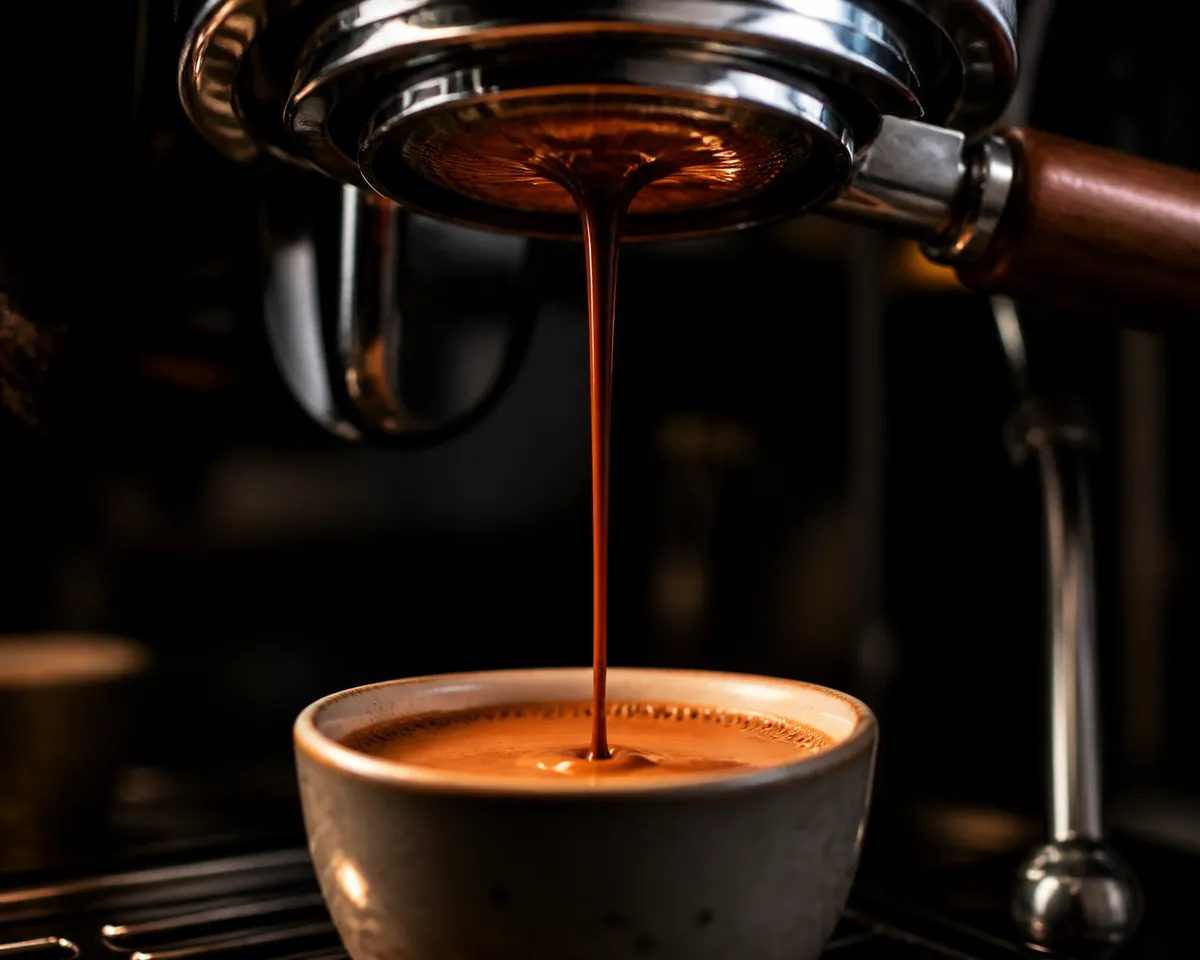
A shot pulled to 1:2 in 27 seconds is the modern default, and it is a place to start rather than a target to defend. Stop the same dose earlier and the cup is more intense and often sour at the edges, because extraction ends before the sweetness has finished arriving.
Let it run longer and the tail of the liquid carries the drying, bitter compounds that the first half left behind in the bed.
The three traditional names describe exactly that spread of ratios.
Ristretto
Roughly 1:1. Short, thick and frequently sweeter, since extraction is cut off before the bitter tail.
Normale
Roughly 1:2. The balance point, and what a cafe pulls unless told otherwise.
Lungo
Roughly 1:3 or 1:4. More water through the same coffee, so more of everything including the harshness.
Americano
A finished normale with hot water added to it afterwards, which is a different operation entirely.
The lungo and the americano are the pair that get confused, and the difference is what the extra water passes through. A lungo drives more water through the coffee bed and pulls more out of it.
An americano dilutes a shot that has already finished, so nothing further is extracted, and the two taste nothing alike at the same volume.
What the crema is actually made of
The hazel foam on top is the most recognisable thing about espresso and the most consistently misread. It is an emulsion of carbon dioxide bubbles suspended in coffee oils, and the gas is left over from roasting, driven into solution by the pressure in the group head and released the instant the liquid returns to room pressure.
What crema reports and what it does not
- Freshness
- A genuine signal. Stale coffee has already lost its CO2 and gives thin, pale crema
- Quality
- Not a signal at all. Plenty of poor coffee makes a thick head
- Taste
- Slightly bitter on its own, which is why stirring it in is normal practice
- Persistence
- It collapses within a couple of minutes, and that is expected
Because robusta foams so readily, blends sold on the strength of their crema tend to lean on it, and a photograph of a thick golden head tells you about the blend rather than about the cup underneath. That is worth knowing before paying a premium for the look of a shot.
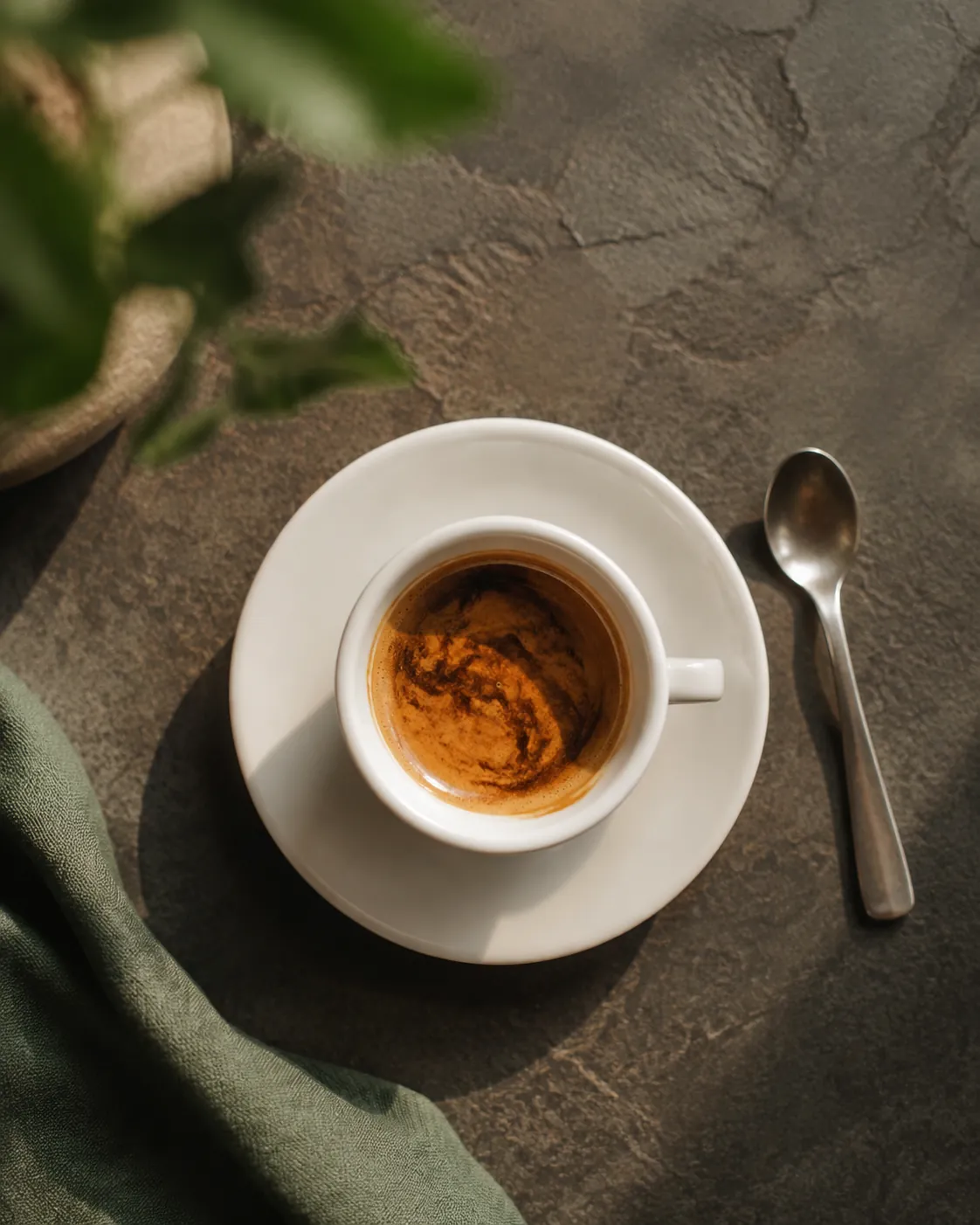
Crema also changes what you taste in the first mouthful. Left undisturbed it sits as a bitter layer on the surface, so the opening sip of an unstirred shot reads harsher than the drink below it, and stirring before tasting removes a variable rather than spoiling anything.
Anyone comparing one coffee against another should settle on one habit and keep it, because the difference between a stirred and an unstirred first sip is larger than most of the differences being judged.
Grind size, and reading sour against bitter
Espresso is ground finer than any other common method except Turkish, and the reason is arithmetic rather than tradition: water is in contact with the coffee for well under thirty seconds, so the bed has to present an enormous surface area for anything to be extracted at all.
Grind size by method
- TurkishPowder, finer than espresso
- EspressoFine, roughly like table salt
- Moka potSlightly coarser than espresso
- Pour-overMedium, like caster sugar
- French pressCoarse, like sea salt
Grind is also the main lever, and it is the only one worth touching while a coffee is still being found. A finer grind slows the flow and raises extraction.
A coarser one speeds the flow up and lowers extraction. That single relationship accounts for most of what a shot tastes like, and almost every other adjustment is a refinement on top of it.
| Symptom | Likely cause | Fix |
|---|---|---|
| Sour, thin, watery | Under-extracted, ran too fast | Grind finer, or raise the dose |
| Bitter, dry, hollow | Over-extracted, ran too slow | Grind coarser, or lower the dose |
| Sour and bitter together | Channelling | Improve distribution and tamping |
| Weak but not sour | Ratio too long | Stop the shot earlier |
| Harsh and ashy | Roast too dark, or water too hot | Change coffee, or drop the temperature |
Telling sourness from bitterness is the one skill worth practising deliberately, because the two faults call for opposite corrections and a wrong diagnosis moves you further away with every adjustment. Sourness is sharp, arrives at the front of the mouth and fades quickly.
Bitterness is flat and drying, and it sits at the back long after the cup is empty, which is the distinction how espresso tastes sets out at length.
Channelling, and what the spent puck reports
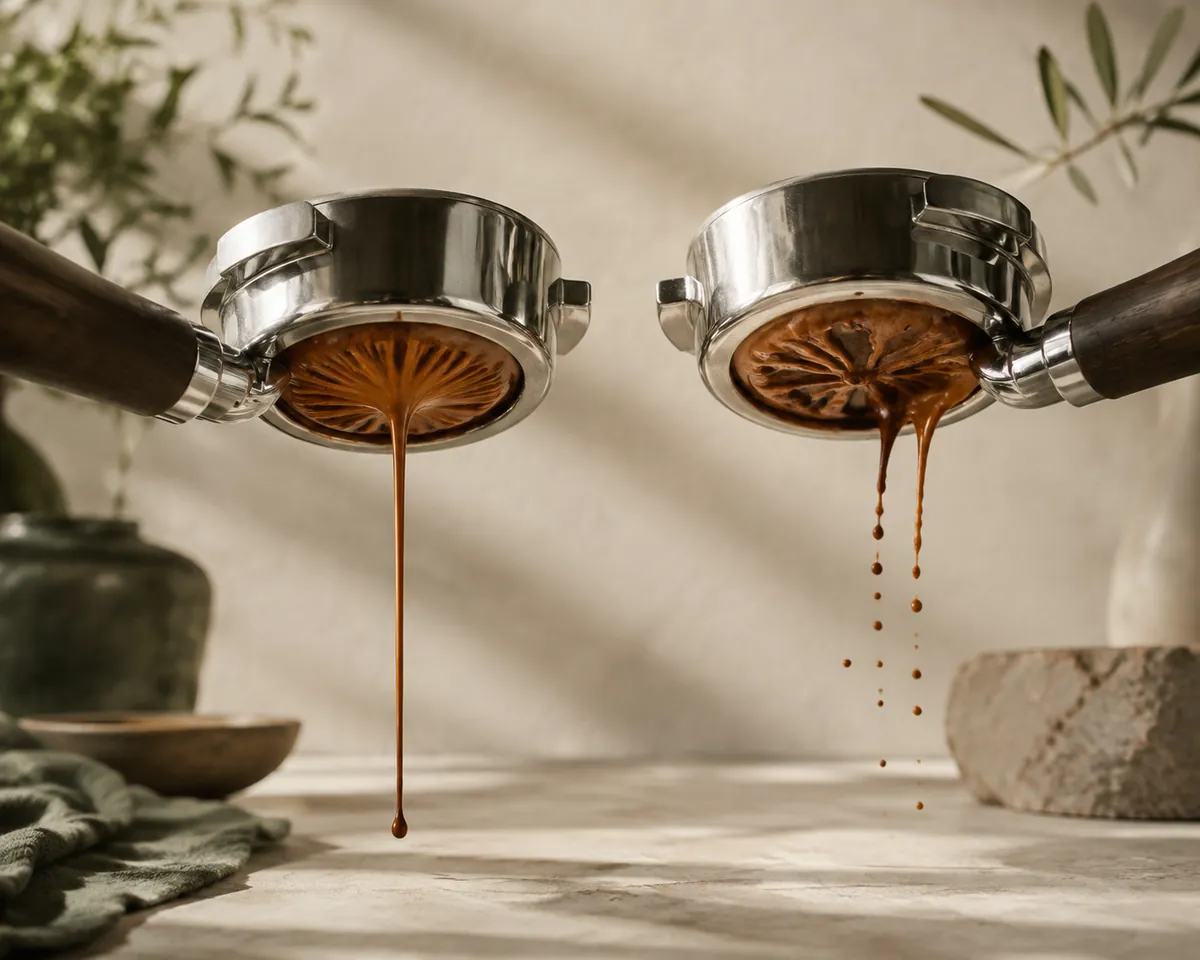
Water takes the path of least resistance, and a coffee bed is never perfectly uniform. Where the bed is weakest the water carves a channel, over-extracting the coffee along that route while barely touching the rest, which is how a single shot manages to taste sour and bitter at the same time.
How to avoid it
- DistributeBreak up clumps and level the grounds before the tamper goes anywhere near them.
- Tamp levelEvenness matters far more than force. A tilted tamp guarantees a channel down one side.
- Consistent doseWeigh it. Volume varies with grind and with bean density.
- Clean basketOld grounds dried into the holes create uneven flow from below.
- Watch the pourA bottomless portafilter shows channelling immediately, as jets spraying sideways.
Tamping pressure matters much less than the ritual around it suggests. Anything from roughly 10 to 20 kg gives a similar result, because the bed compresses to a limit and then stops compressing, so what changes the outcome is whether the surface is flat and the grounds beneath it are evenly packed.
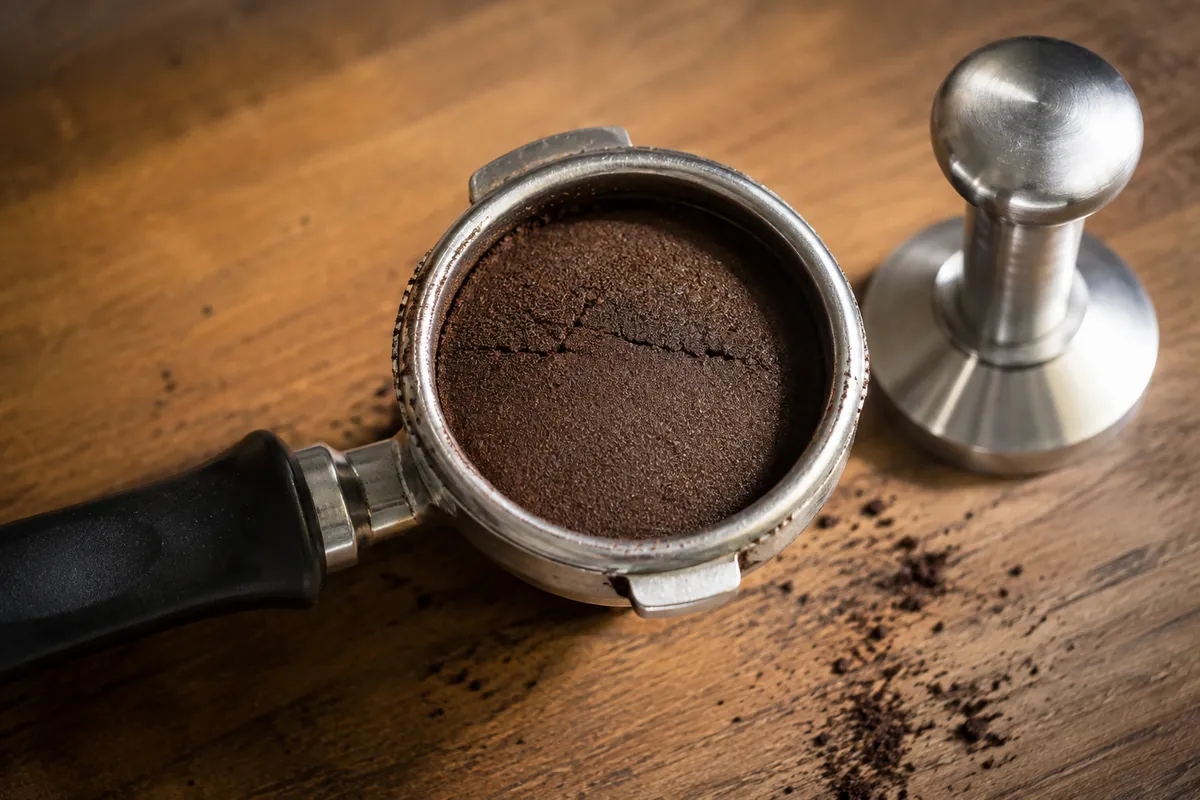
The puck knocked out afterwards carries a record of what happened and takes two seconds to read. A firm disc that releases cleanly means the dose suited the basket.
A soupy puck that smears means under-dosing, since there was headroom for water to pool above the bed instead of pressing through it. A crater or a bore hole is channelling made visible, and it almost always traces back to distribution before the tamp rather than to the tamp itself.
No single sign decides anything, and all of them are free information for the next shot, which is where espresso faults begin.
Dialling in, and why the grinder outranks the machine
Adjusting a new bag until it brews well is called dialling in, and the discipline of it consists of changing one thing at a time. Coffee moves under you as it ages, so a bag settled on day five will want a small correction by day fifteen, and expecting that saves a good deal of frustration.
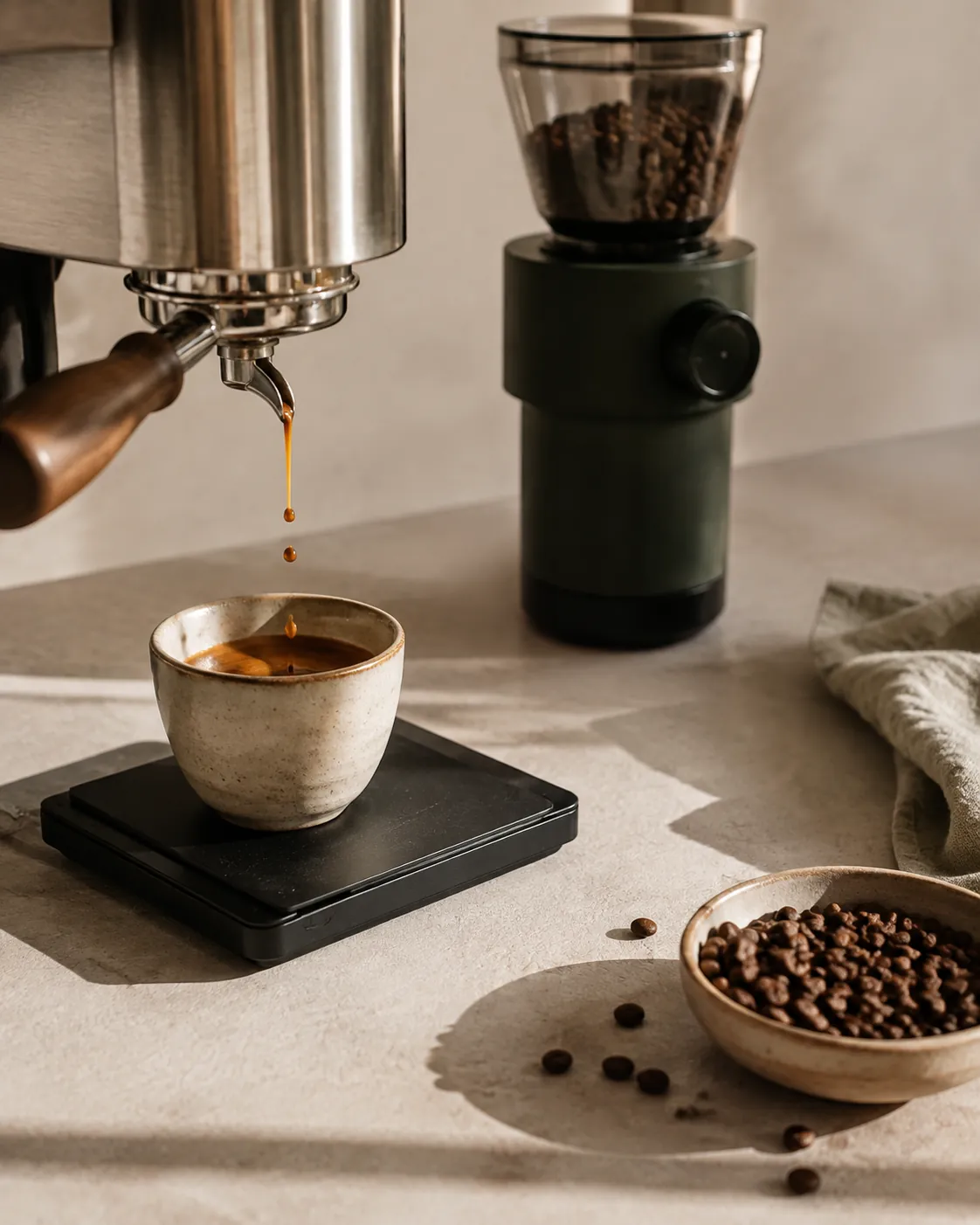
The order to change things
- Fix the doseWeigh it and keep it constant. Everything else is judged against it.
- Set the ratioDecide the yield, usually twice the dose, and weigh the cup.
- Adjust the grindThe only variable to move while you are still finding the coffee.
- TasteSour means grind finer. Bitter means grind coarser.
- Then temperatureOnly once the grind has settled, and only in small steps.
Changing grind and dose together makes the result impossible to interpret, which is how people work through a whole bag without learning anything from it. Expect to spend several shots on a new coffee and to tip most of them away.
Equipment priority follows from the same logic. A grinder that cannot adjust in very fine steps cannot produce an even bed, and an uneven bed channels no matter what the boiler underneath it cost, which is why a burr grinder is the first thing to spend money on and the espresso machine is the second.
Scales come third and temperature stability fourth. Pressure gauges and profiling curves are refinements that only start to matter once those four are sound, and making espresso works through the sequence in order.
Nine bars, and what happens below it
The figure appears on every machine and its origin is historical rather than scientific. Early spring-lever machines produced roughly nine bars at the start of the pull, the convention outlived the levers, and pump machines inherited it as a published specification.
Lower pressure is increasingly used in specialty settings, often around six bars, and it tends to reduce channelling and give a sweeter, less abrasive shot, because the water is not being driven hard enough to tear a route through the bed. Higher pressure does not extract more.
It mostly raises the chance of carving a channel, which is why pressure profiling exists on higher-end machines: varying the pressure across the shot gives more control than holding one number throughout it.
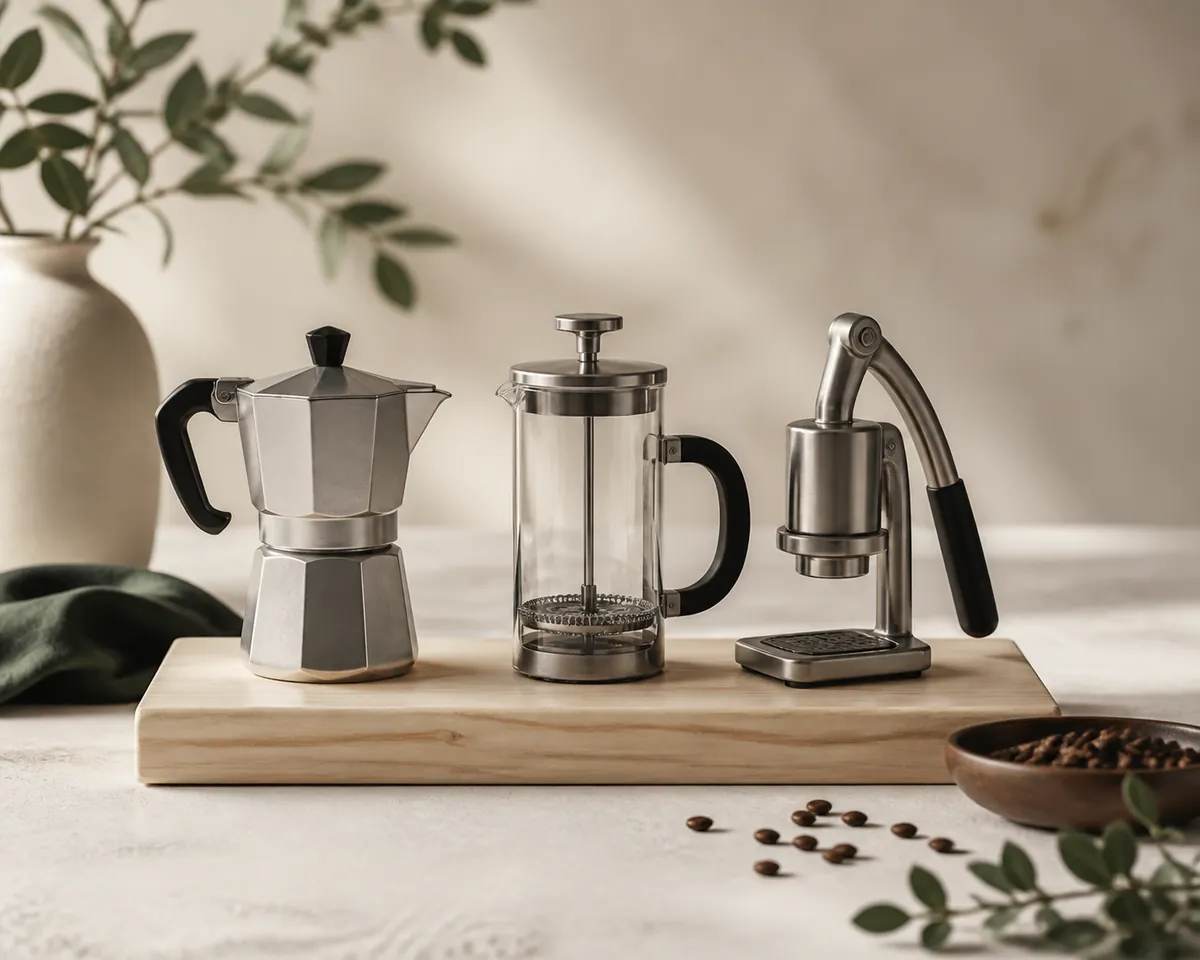
Several devices produce something espresso-adjacent without reaching that pressure at all, and the distinction is worth keeping straight.
Manual lever presses
Small hand-powered devices that genuinely reach nine bars.
Capsule machines
Real pressure, with grind, dose and tamp all decided at the factory.
None of these is a failure any more than instant coffee is a failed brew. They make different drinks, and the only real problem is the borrowed name, since calling a moka pot brew espresso sets an expectation the cup was never built to meet.
Choosing beans, and the window they are good in
Since espresso is a method, any coffee can go through it, but the method concentrates whatever is already there. A defect that passes unnoticed in a filter brew is unmissable at this strength, which is the opposite of cold brew, where a long cool steep hides a great deal.
- Buy coffee roasted within the last three weeks and rested at least three days.
- Whole bean only. Pre-ground coffee is almost never fine enough, and it stales within days.
- Single origin gives clarity. Blends give consistency and usually more body.
- Darker roasts forgive dialling-in errors, and decaf beans want a coarser grind than their regular equivalents.
- Note the roast date rather than the best-before, which tells you nothing useful.
Both ends of that window matter, and the near end is the one that catches people out. Coffee roasted two or three days ago is still venting carbon dioxide vigorously, and the gas disrupts flow through the puck, giving fast, foaming, sour shots that no grind adjustment rescues.
Past about four weeks the aromatics have gone and the crema thins visibly. Five to twenty-five days from roast is the usable stretch, which is the reason specialty roasters print a roast date at all.
Storage does more work here than in any other method, because a fine grind exposes so much surface to air that a week-old jar of pre-ground coffee is a different substance from the beans it came from. Whole beans in a sealed opaque container at room temperature covers almost all of it, and storing coffee beans explains why the freezer is a more complicated answer than it first appears.
Roast level, from Italian dark to specialty light
Espresso spans a far wider roast range than its reputation suggests, and the choice changes the approach to everything downstream of it.
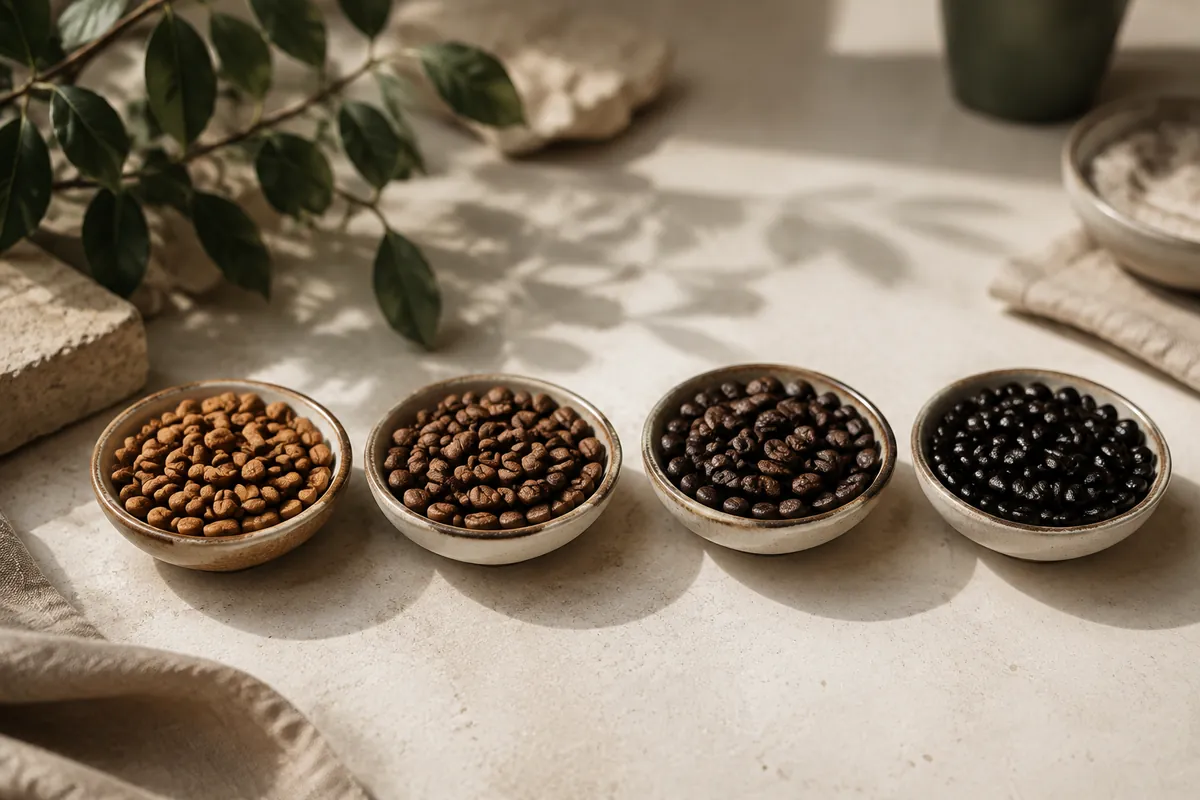
Traditional Italian espresso is dark, often carries robusta in the blend, and was built for milk. It gives body, generous crema, low acidity and a bitter-chocolate character that survives being diluted with 200 ml of steamed milk.
Modern specialty espresso is lighter, usually pure arabica, and built to be drunk on its own: more acidic, more delicate and considerably harder to dial in, because the gap between sour and correct is narrower.
Neither is the right answer, and the deciding question is what the shot is going into. A light roast largely vanishes under the milk of a latte and can read as thin and sharp there, while a dark roast drunk straight tastes flat and ashy to anyone used to the alternative.
A cortado is unusually revealing on this point, since it carries enough milk to soften a dark roast and not enough to bury a light one.
Roast level also shifts the grind. Darker beans are more brittle and break into finer particles at the same setting, so a change of roast is a change of grind, and that is the adjustment most often forgotten when a new bag disappoints on the first morning.
Water, the ingredient nobody weighs
Espresso is by some distance the method most sensitive to water composition, because whatever the water brings is concentrated along with everything else. Minerals in solution are what the extraction actually works with, so water behaves as a working ingredient rather than as a neutral carrier for the coffee.
What water does to a shot
- Too soft
- Thin, hollow and sour. Not enough mineral content to extract with
- Moderate
- Full and sweet, with clear acidity. The target
- Too hard
- Flat and dull in the cup, and scale in the boiler
- Chlorinated
- A chemical note that concentration makes obvious
- Distilled
- Extracts very poorly, and damages some machines
Scale is the reason machine manuals specify water at all, and it is the expensive half of the problem rather than the flavour half. A boiler furred with limescale heats unevenly, loses the temperature stability the shot depends on, and is tedious and sometimes impossible to strip, which is why filtered water is standard advice rather than a refinement for enthusiasts.
The flavour half is easier to taste than to describe. Soft water gives a hollow shot that no grind change repairs, because the extraction is limited by what the water can carry rather than by contact time or surface area, and people usually chase the fault around the grinder for a week before thinking to check the tap.
Brewing water sets out the mineral targets in full.
How much caffeine a single shot carries
Espresso has a reputation as the most caffeinated coffee there is, and per serving that is simply not the case.
Per millilitre a shot is far more concentrated than anything else on a coffee menu, and a serving is small, so a mug of drip coffee carries more caffeine than a single espresso does. The rest of that contrast, from body to cost per cup, sits under espresso beside filter coffee.
The figure follows the dry coffee rather than the strength of the taste, which is why a milk drink built on the same shot carries the same amount however mild it tastes in the cup.
Dose and serving size do all the work here, exactly as they do everywhere else in coffee, and the number of shots is the only thing that moves the figure. A larger cup adds milk or water rather than coffee, and an affogato adds ice cream, which changes the drink entirely while leaving the caffeine exactly where it was.
Common questions
Is espresso a type of bean or a roast?
Neither. It is a brewing method defined by pressure, a fine grind and a tight ratio. Coffee sold as espresso roast is usually dark, but that is a convention rather than part of the definition.
Does thick crema mean a good shot?
No. Crema indicates that the coffee is fresh and still holding carbon dioxide, and robusta produces more of it than arabica regardless of quality. Plenty of poor coffee produces thick crema.
Does espresso have more caffeine than filter coffee?
Per millilitre, far more. Per serving, less: a single espresso carries around 63 mg against roughly 95 mg in an 8 fl oz mug of brewed coffee, because the serving is so much smaller.