The Drip Coffee Maker, and Why Most Are Engineered Down
The drip machine makes more coffee than every other method combined, and most of them are engineered down to a price in the two places that decide the cup.
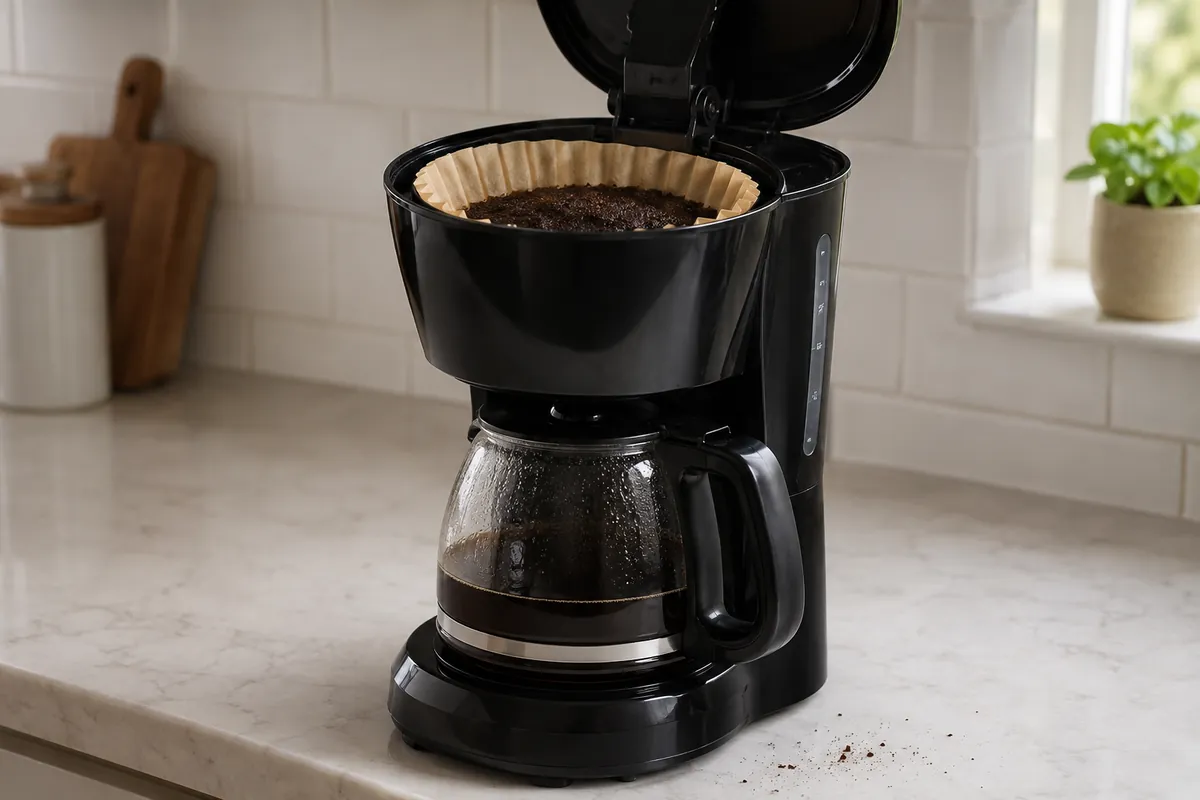
A drip coffee maker heats water, drips it over a bed of ground coffee in a paper filter, and collects the result in a carafe below.
It is an automated pour-over brewer, and where it falls short is in doing badly the two things a person doing it by hand does well.
The drip coffee maker at a glance
- The mechanism
- Heated water dripped over a paper-filtered bed, collected below
- Brew temperature
- 92 to 96 C is the target, and cheap machines never reach it
- Brew time
- Four to six minutes for a full carafe
- Dose
- About 60 g of coffee per litre of water, weighed rather than scooped
- Grind
- Medium, roughly the texture of caster sugar
- The worst feature
- A warming plate, which keeps cooking the coffee after brewing
- What it is for
- Volume and consistency without attention, rather than the best possible cup
The five places a cheap machine loses
Almost every complaint about drip coffee traces to one of five things, and four of them are decisions made in a shop rather than mistakes made at the counter. The fifth is a habit that costs nothing to break.
Where cheap machines lose
- Temperature
- Many never reach 92 C, so the coffee under-extracts and tastes sour
- Shower head
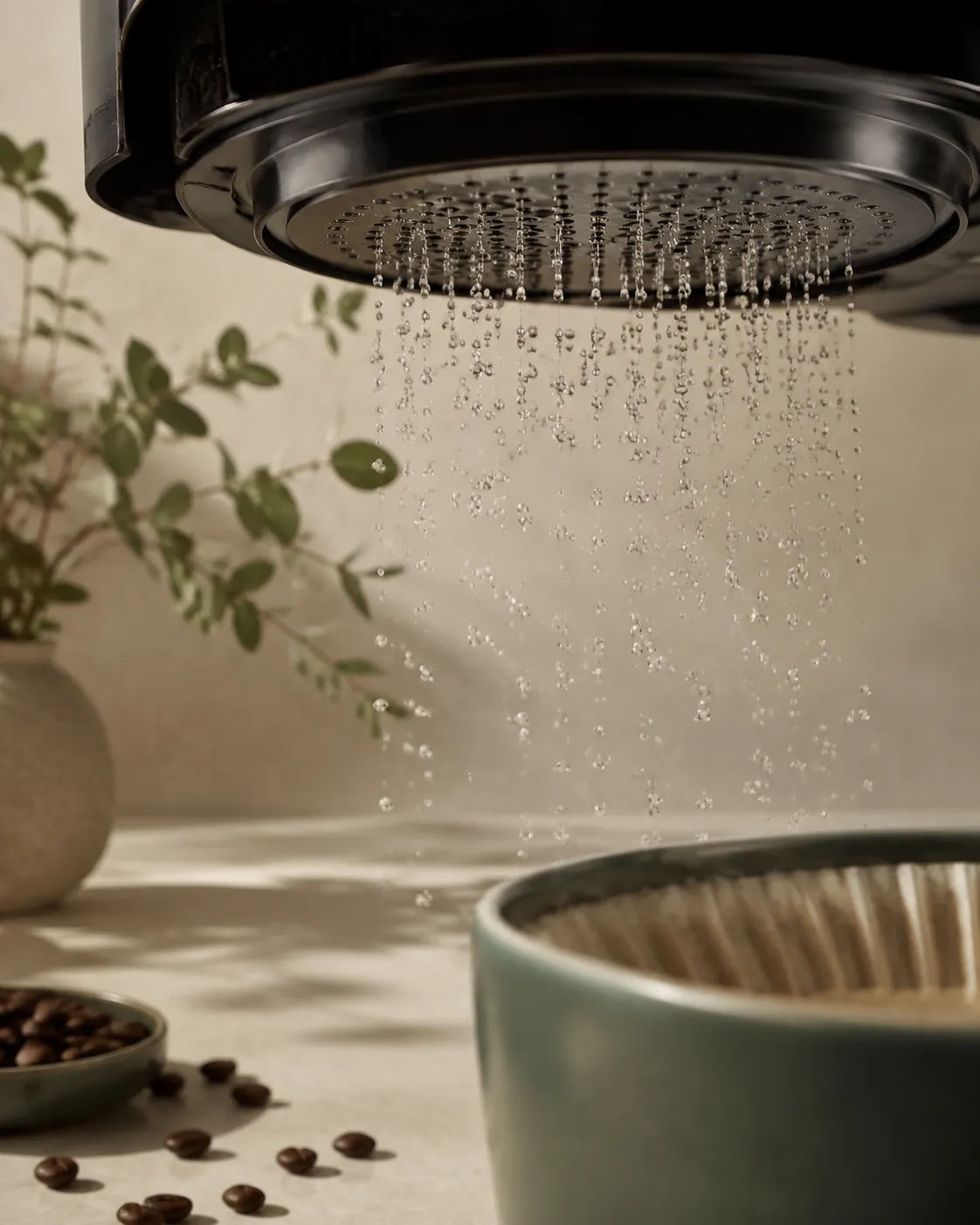
- A single central hole wets only the middle of the bed
- Contact time
- Too fast or too slow, with no way to adjust
- Hotplate
- Continues cooking the coffee after brewing, which is the worst of them
- Bloom
- No pause for degassing, so the first water hits gas-filled grounds
Temperature is the one that cannot be worked around. A machine that brews at 85 C will produce sour, thin coffee with any bean and any grind, and nothing the operator does fixes it, which is a large part of why what drip coffee tastes like varies so wildly from one kitchen to the next.
The hotplate is the most damaging feature on most machines, and unlike the other four it is a fault you can simply stop using. Coffee held at 80 C for twenty minutes develops bitter, stewed, papery notes that were not in it when it finished brewing.
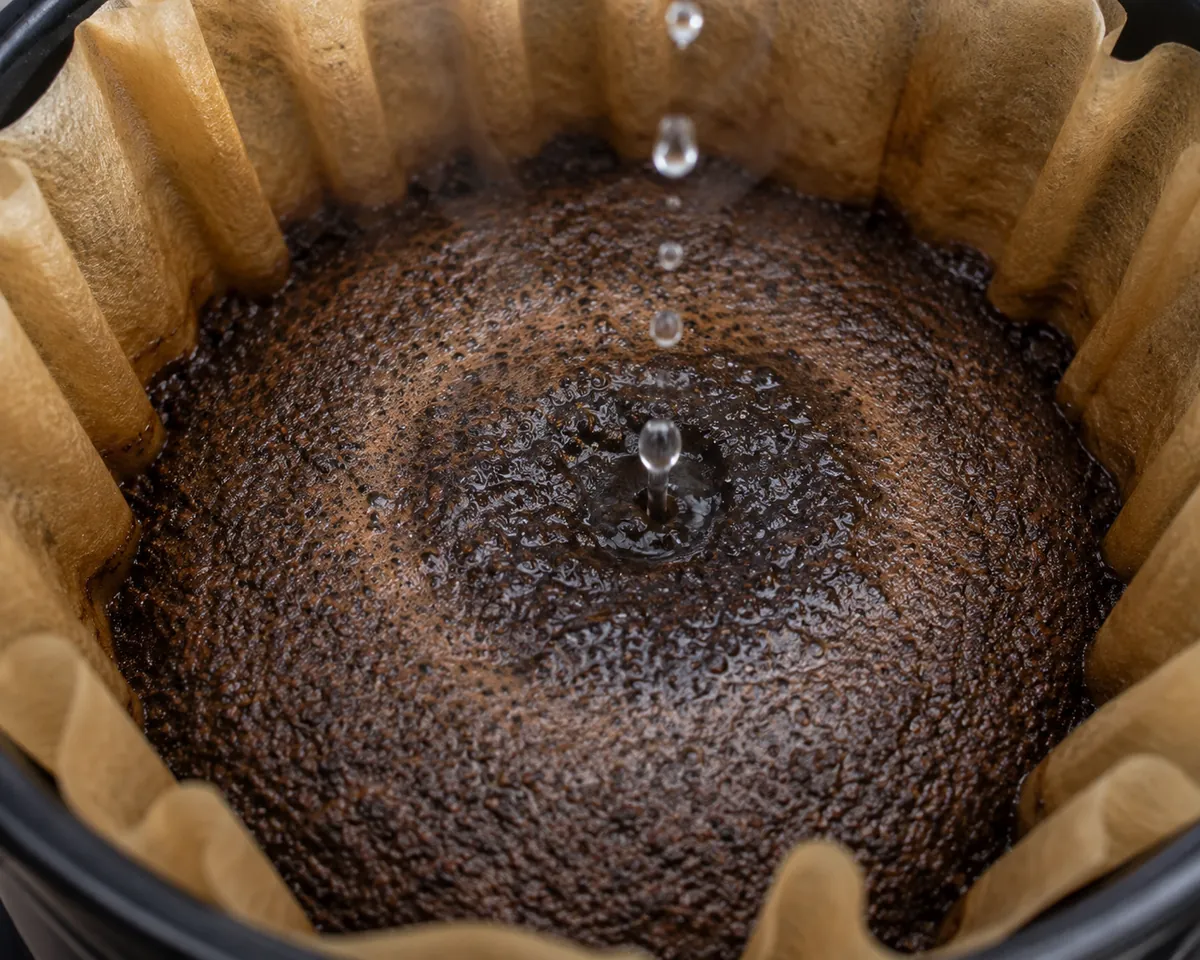
Put positively, the specification that matters is short: water reaching the bed at 92 to 96 C and held there through the brew, a shower head that spreads water across the whole surface rather than drilling a hole in the middle of it, a total brew time between four and six minutes, and a thermal carafe in place of a warming plate.
Reading a machine when the box omits the number
Because brew temperature is almost never printed on a box, a buyer ends up inferring it from figures chosen for another purpose entirely, and wattage is the one most often offered in its place.
Wattage is a poor proxy. A high-wattage machine heats water faster rather than hotter, and a fast heater paired with a fast flow rate can deliver cooler water to the bed than a modest one does.
Heater design matters more than the rating: a flow-through element heats water once as it passes and struggles to hold temperature across a large batch, while a machine with a heated reservoir brings the whole volume up before it starts dripping and stays far steadier over a full carafe.
Reading a machine without a spec
- Brew time
- Four to six minutes for a full carafe. Under three means the water is barely in contact
- Shower head
- Count the holes. One central hole is the cheapest possible design
- Basket shape
- Flat-bottom tolerates weak water distribution better than a cone
- Carafe
- Thermal removes the hotplate problem outright
- Certification
- The Specialty Coffee Association tests exactly the things the box omits
Anyone can test their own machine in two minutes with a kitchen thermometer. Brew a carafe of plain water, hold the probe in the stream falling into the basket and read it; anything under 90 C explains a sour cup on its own, whatever the beans were.
That one measurement settles whether a disappointing drip coffee is worth chasing through the grinder or is simply the machine telling you what it is.
Basket shape, and why half a carafe brews badly
The basket shape changes extraction more than people expect.
| Flat-bottom | Cone | |
|---|---|---|
| Bed shape | Shallow and even | Deep in the centre |
| Extraction | More uniform | Water concentrates in the middle |
| Forgiving of | Uneven water distribution | Uneven grind |
| Typical of | Most drip machines, and batch brewers | Some machines, and most manual pour-overs |
| Grind | Medium | Slightly finer |
Flat-bottom baskets are the norm in drip machines for a reason: they tolerate the poor water distribution of a weak shower head far better than a cone does, because a shallow bed still spreads a badly placed stream across most of its surface.
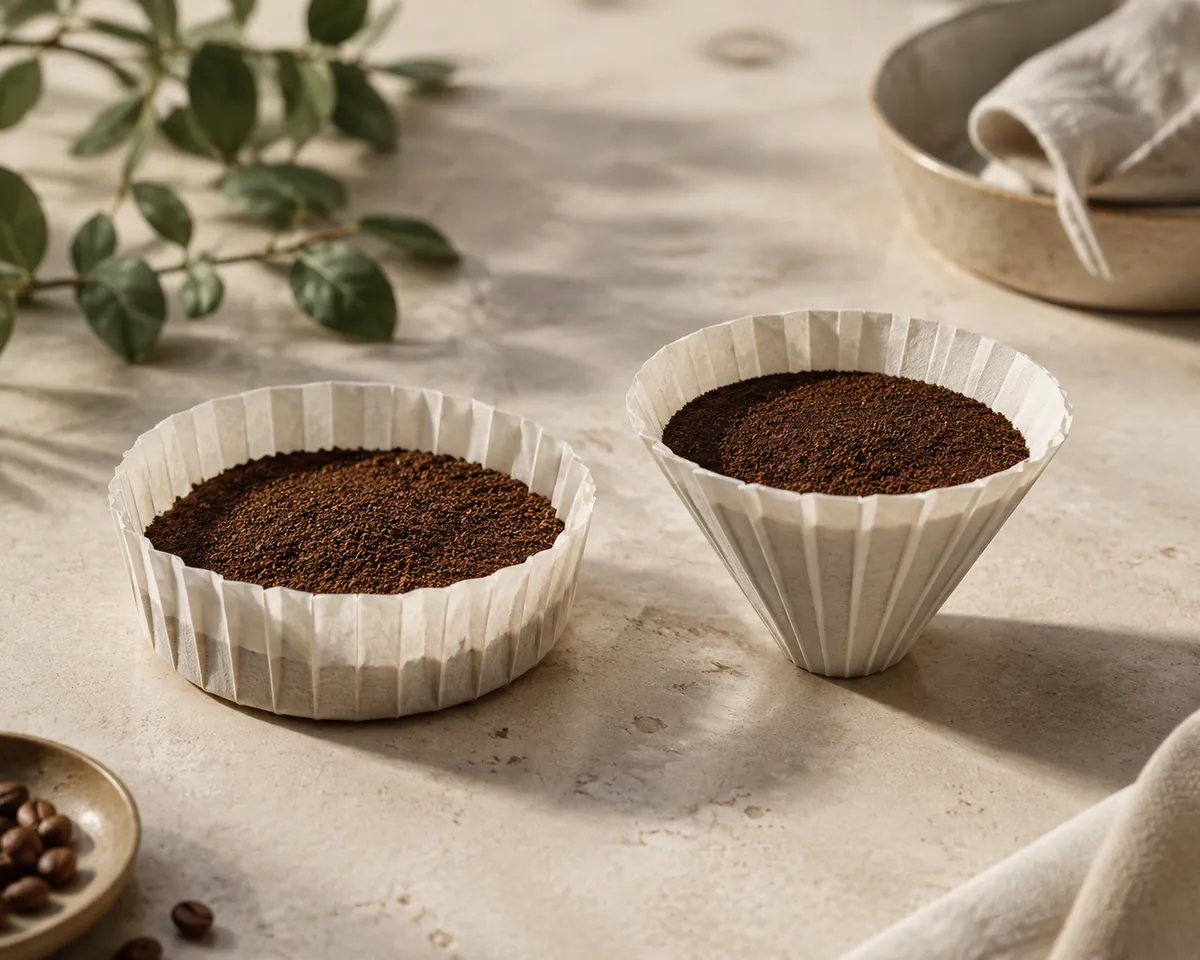
Bed depth is also why a machine degrades quietly below a full carafe. A smaller charge of water passes through the heater faster and arrives cooler, and a shallow layer of grounds sitting in a basket sized for twelve cups gets channelled water rather than an even soak, so half a batch comes out thin and sour rather than merely smaller.
Some machines carry a small-batch setting that slows the flow to compensate. Where there is none, brewing the full amount and chilling the remainder over ice gives a better iced coffee than a quarter carafe gives a hot one, and it is a different drink from cold brew rather than a shortcut to it.
Running one properly
The specification above describes the machine. What follows is the part the operator controls, and on most kitchen counters it is worth more than an upgrade would be.
- Grind fresh, medium, roughly like caster sugar. This is the largest single improvement.
- Use the right dose: about 60 g of coffee per litre of water, weighed rather than scooped.
- Rinse the paper filter with hot water first, which removes papery taste and preheats the carafe.
- Decant immediately into a thermos if the machine has a hotplate.
- Run a cycle of plain water first, so the machine and carafe start warm.
Rinsing the paper and decanting off the hotplate cost nothing and between them fix the two most noticeable faults in cheap drip coffee.
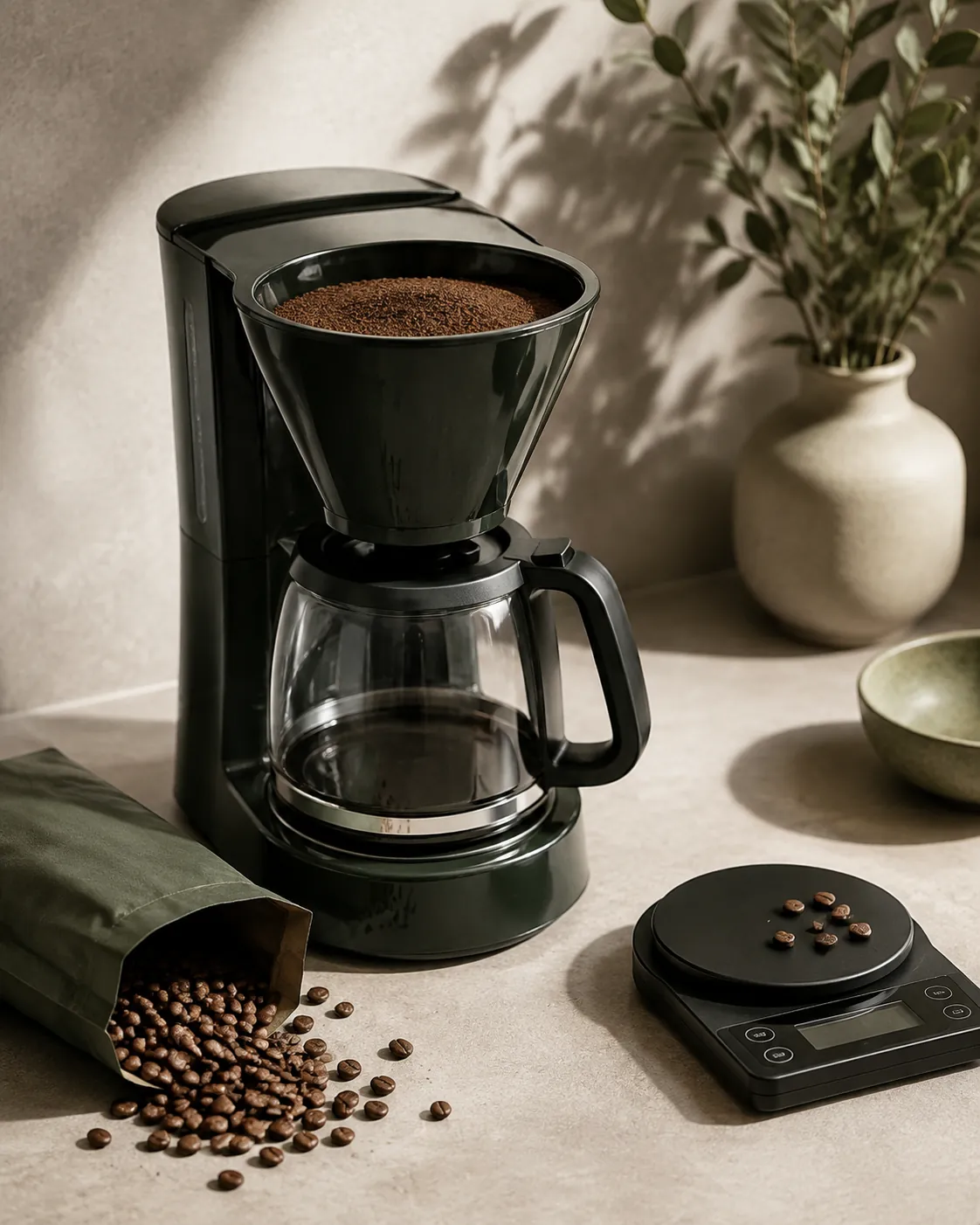
A brew from cold
- Run a water cyclePlain water, no coffee. It warms the machine, the carafe and the tubes, and the first brew of the day is otherwise noticeably cooler.
- Weigh the waterFill to a measured volume rather than the tank markings, which are frequently optimistic by a cup.
- Grind freshMedium, about the texture of caster sugar. A burr grinder matters more here than any feature on the machine.
- Rinse the paperHot water through the empty filter, then tip it out. This removes the papery taste and preheats the carafe.
- Dose and levelAround 60 g per litre, weighed. Shake the basket flat so water meets an even bed.
- Brew and leave it aloneOpening the lid mid-cycle drops the temperature at the point it matters most.
- Decant at onceInto a thermos if the machine has a hotplate. This single habit fixes the worst fault of cheap machines.
The water cycle at the start is the step people skip and the one that changes the first cup most, since a cold metal block and a cold glass carafe between them take several degrees out of a brew that had none to spare.
Weighing the coffee rather than scooping it removes the largest source of day-to-day variation, because a scoop of a light roast and a scoop of a dark one differ by several grams, which is enough to move a cup from balanced to thin.
The routine written out end to end is in making drip coffee.
The carafe decides what happens next
Brewing is over in five minutes and the coffee then sits for forty, which makes what it sits in the most consequential choice on the machine and the one buyers weigh least.
| Glass on a hotplate | Thermal carafe | Decanted to a thermos | |
|---|---|---|---|
| Temperature after 30 min | Too hot, and still cooking | Around 5 C down, stable | Around 5 C down, stable |
| What it does to flavour | Stewed, bitter, papery within 20 min | Little change for an hour | Little change for an hour |
| Pouring | Easy, and you can see the level | Slower, and the level is hidden | |
| Cost | Cheapest | Adds meaningfully to the price | Free if you own a flask |
| Best for | Nothing, honestly | A household drinking over an hour | Rescuing a machine you already own |
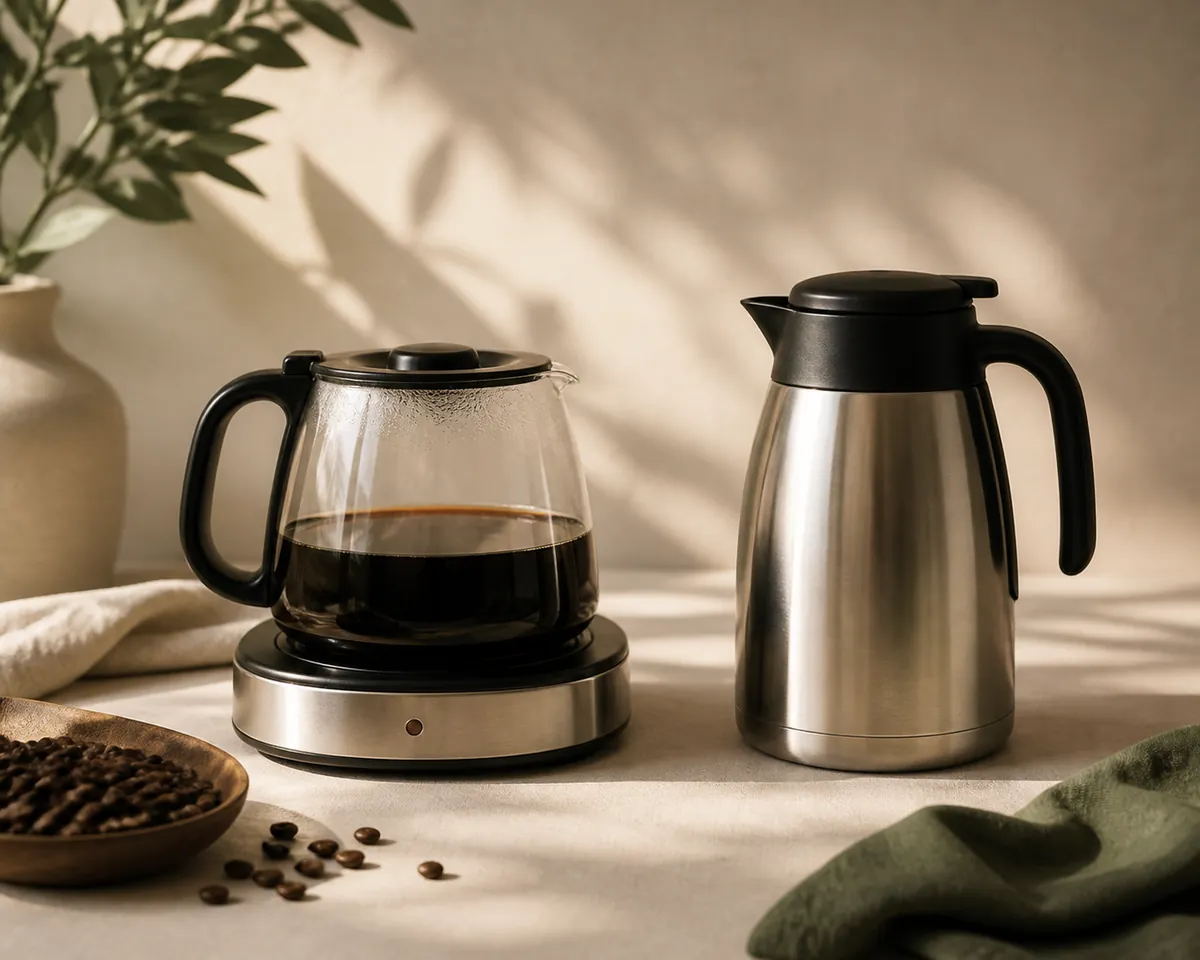
A hotplate holds coffee somewhere around 80 C, which is hot enough to keep driving reactions that had finished when the brew stopped, and twenty minutes of it produces the flat, bitter cup that office coffee is famous for.
Decanting costs nothing and recovers most of what a thermal machine would have given you, which makes it the highest-value habit available to anyone who already owns a cheap machine, and the first thing to try before reading drip coffee problems any further.
Cleaning and descaling, which are different jobs
Two maintenance jobs get conflated. Descaling removes mineral scale from inside the heater and the tubes; cleaning removes coffee oils from the basket, the shower head, the carafe and the spout, and those oils go rancid within days.
Between them they decide how long a machine lasts and how stale it tastes on the way there.
Scale does two things once it builds, and both attack the specification that mattered most. It slows the flow, so the brew time lengthens.
It also insulates the heater, so the brew temperature falls. A scaled machine therefore gets progressively worse in exactly the way that ruins a cup.
Descale on the schedule the manual gives and more often in a hard-water area, since brewing water decides how fast the deposit forms in the first place.
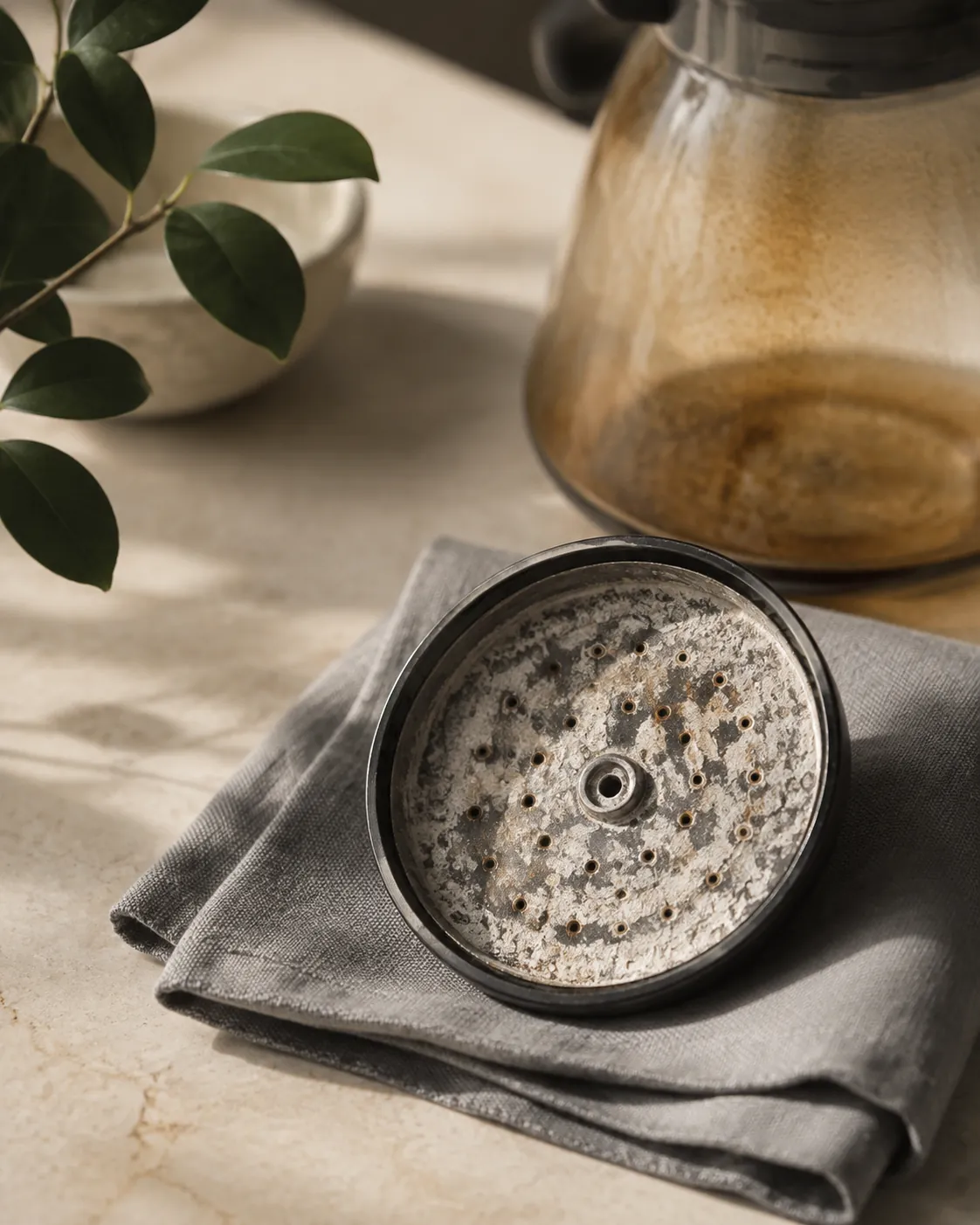
- Wash the basket and carafe after every brew, with detergent, not just a rinse.
- Scrub the shower head monthly; blocked holes are a common cause of uneven wetting.
- Run a cycle of hot water with a spoon of baking soda if the carafe has a brown film.
- Empty the reservoir if the machine will sit unused, since standing water grows things.
- Keep the lid open between brews so the inside dries.
Rancid oil is a distinct fault from stewed coffee and it tastes different: flat and slightly waxy rather than bitter. A machine that makes every bean taste the same has usually stopped being clean rather than stopped being hot, and it is the fault owners misread most often, because it arrives slowly enough to feel like the coffee getting worse rather than the equipment.
When the cup is wrong
Drip failures fall into a short list.
The machine turns out to be responsible for fewer of them than owners assume, which is worth establishing before anyone starts shopping for a replacement.
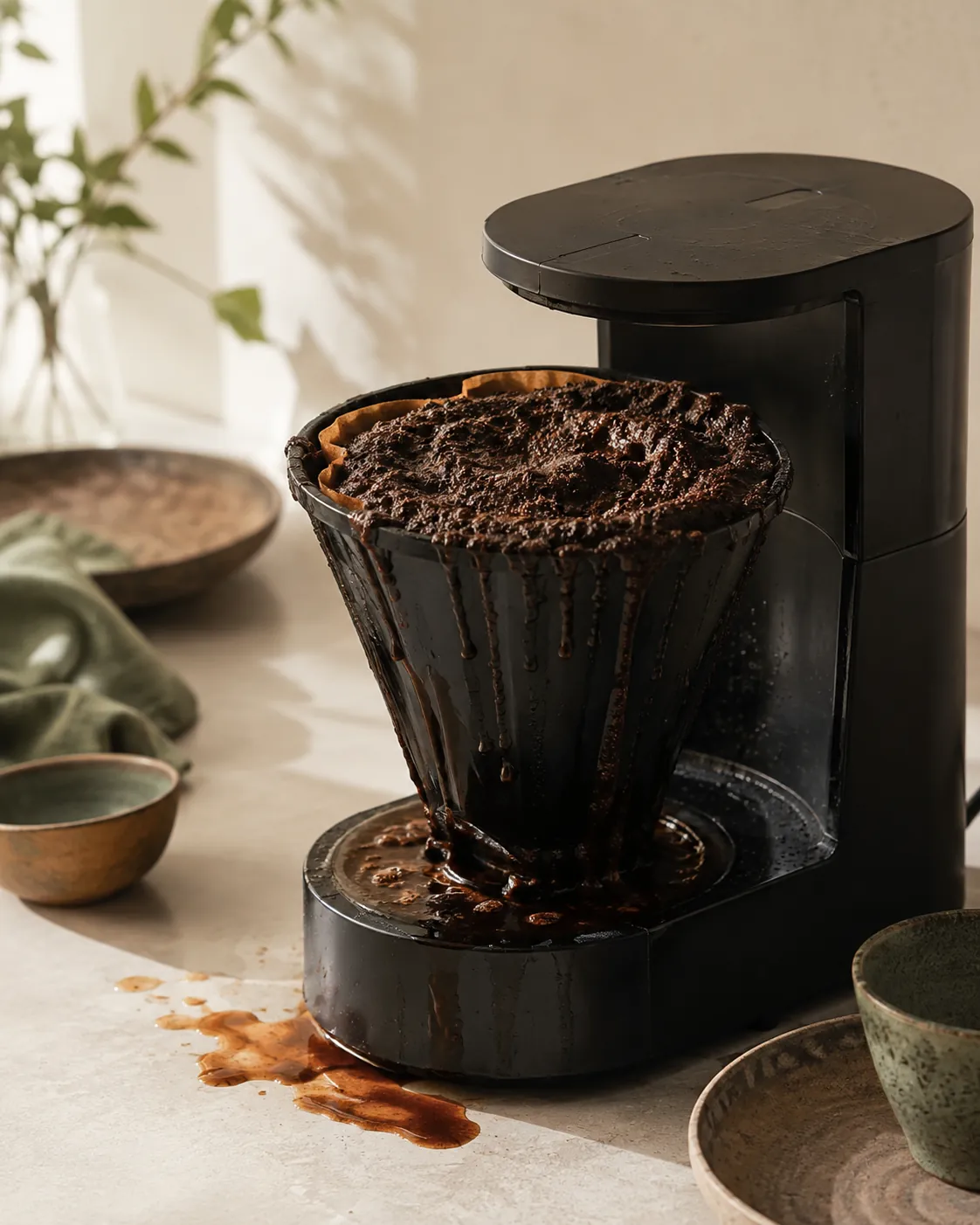
| Symptom | Most likely cause | Fix |
|---|---|---|
| Sour and thin | Brew temperature too low, or grind too coarse | Preheat; grind finer; test the machine's temperature |
| Bitter and stewed | Left on the hotplate | Decant immediately |
| Weak but not sour | Under-dosed | Weigh it. Around 60 g per litre |
| Overflowing basket | Grind too fine, or a blocked filter | Coarser grind; check the paper is not doubled |
| Slow, and slower each month | Scale | Descale, then keep to a schedule |
| Every coffee tastes alike | Rancid oils in the basket and shower head | Wash properly, not just rinse |
Only two rows there are the machine's fault, and one of those is maintenance rather than design. Before replacing a drip maker it is worth checking the beans, the grind and the dose, since storing coffee beans badly flattens a cup out of any brewer, and a grind that has drifted coarse produces the same sour, thin result a cold machine does.
How particle size decides extraction is the place to tell one from the other.
What the machine is actually for
Because a drip machine is usually sold on features it does not need and then judged against cups it was never attempting, its real case tends to disappear between the two.
It makes a litre of coffee unattended while you do something else, at a consistency no manual method matches, and for a household making several cups every morning nothing else comes close for practicality. What it is not is the best coffee available at its price, since a cone and a decent grinder cost less and produce a better cup, at the price of standing there for four minutes.
Works well for
- A litre of coffee, unattended, while you do something else
- More consistent between batches than any manual method, because nothing depends on a person's pour
- Genuinely cheap per cup once the machine is bought
- Trivial to teach, so anyone in the house can make the coffee
- Paper filtration gives a clean cup with none of the sediment of an immersion brewer
Struggles with
- Brew temperature is fixed by the machine and is often too low to extract properly
- No control over pour rate, bloom, or agitation, which are where a manual brewer wins
- Poor at small volumes, since half a batch brews differently from a full one
- A hotplate actively degrades the coffee it just made
- Descaling is mandatory and universally neglected
Everything in the second list is a control problem rather than a quality ceiling. A certified machine run properly makes coffee most drinkers will not distinguish from a careful hand-poured cup, and it comfortably beats the convenience option it actually competes with, which drip against instant works through and instant coffee covers on its own terms.
Buy for volume and temperature stability, not for programmable features. A machine holding 60 g of coffee per litre at 93 C will out-brew any amount of scheduling, and strength remains a separate question from caffeine, which caffeine by brew method sets against the smaller and more concentrated drinks.
Against the manual methods
Placing the drip machine beside the brewers it replaced makes its case clearer than any feature list does. The axis it sits on is control against attention, and it occupies one end of it completely.
| Drip machine | Pour-over | French press | AeroPress | |
|---|---|---|---|---|
| Attention needed | None once started | Four minutes of it | Two minutes | Two minutes |
| Volume | Up to a litre and a half | One or two cups | Up to a litre | One cup |
| Control | Almost none | Total | Grind and time only | High |
| Body | Clean, light | Clean, light | Heavy, with sediment | Clean, medium |
| Consistency | Very high | Depends on the pourer | High | High |
| Best case | A household, every morning | One careful cup | A table of people | One cup, fast |
A hand-poured cone gives a person every variable and then requires them to stand there using them, while a drip machine takes the variables away and hands the four minutes back.
Body is the other real difference: a moka pot or a press produces something heavier than any paper-filtered brewer can, so a drinker who wants weight in the cup will not be satisfied by a better drip machine, and neither will one who wants the concentration an espresso machine delivers into a much smaller cup.
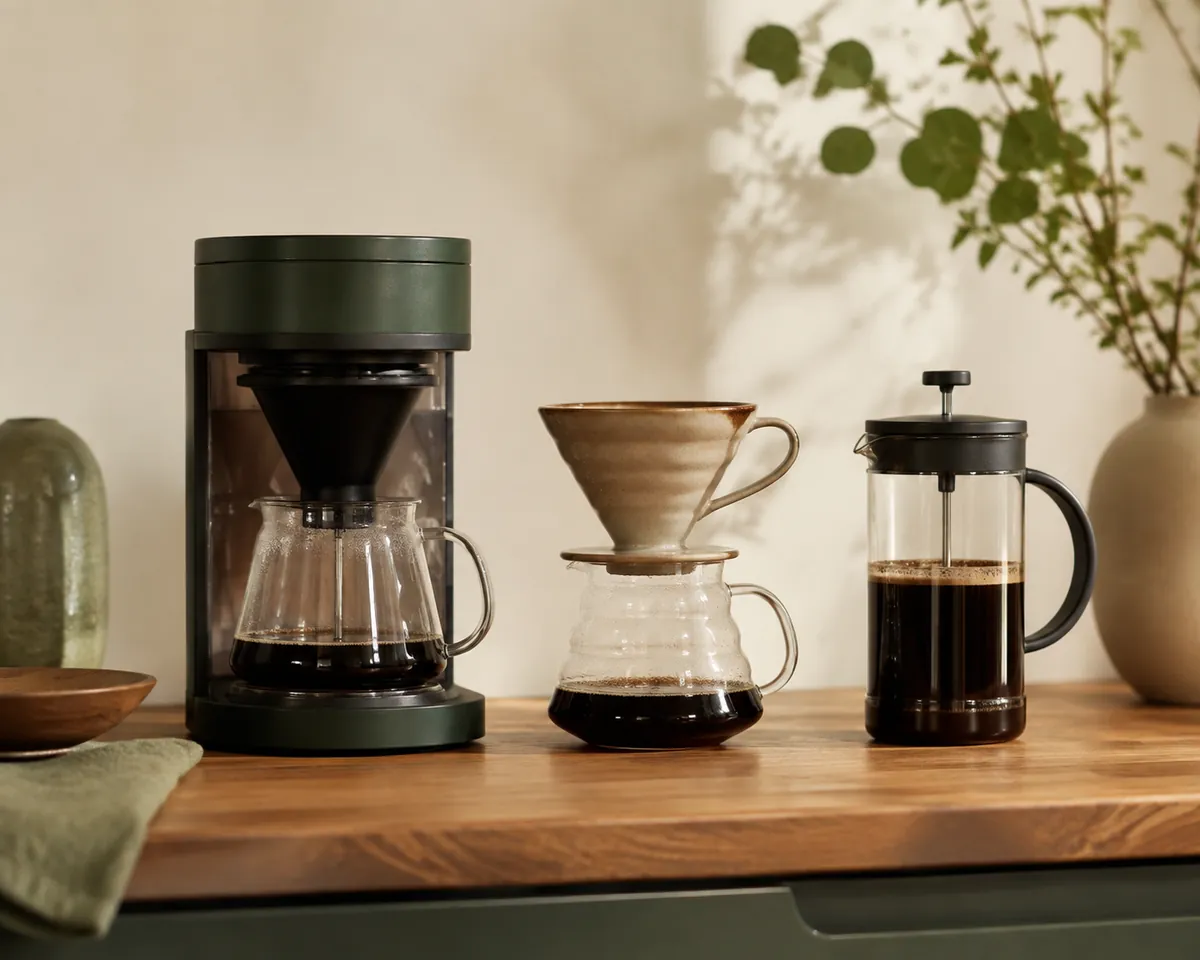
Where the drip machine has no competition at all is the second and third cup. Every manual method makes one brew and then stops, and repeating it is the whole effort over again, which is the same convenience the percolator offered households for decades before drip machines took it over with better temperature control.
The rest of the brewed coffee methods sit somewhere between those two poles.
Common questions
Why does my drip coffee taste sour or thin?
Usually brew temperature. Many cheap machines never reach 92 C, which under-extracts the coffee whatever the bean or grind. Uneven water distribution from a single-hole shower head produces the same result on part of the bed.
Is the hotplate bad for coffee?
Yes, and it is the most damaging feature on most machines. Coffee held at around 80 C develops bitter, stewed, papery notes within twenty minutes. Decant into a thermos as soon as brewing finishes.
How much coffee should a drip machine use?
About 60 g per litre of water, weighed rather than scooped. Grinding fresh at a medium setting is the single largest improvement available on any machine, good or bad.