What Is Green Tea? The Decision Made in the Hours After Picking
Green tea and black tea grow on the same bush. What separates them is a decision made in the hours after the leaf is picked, and that one decision explains almost everything else on a tea shelf.
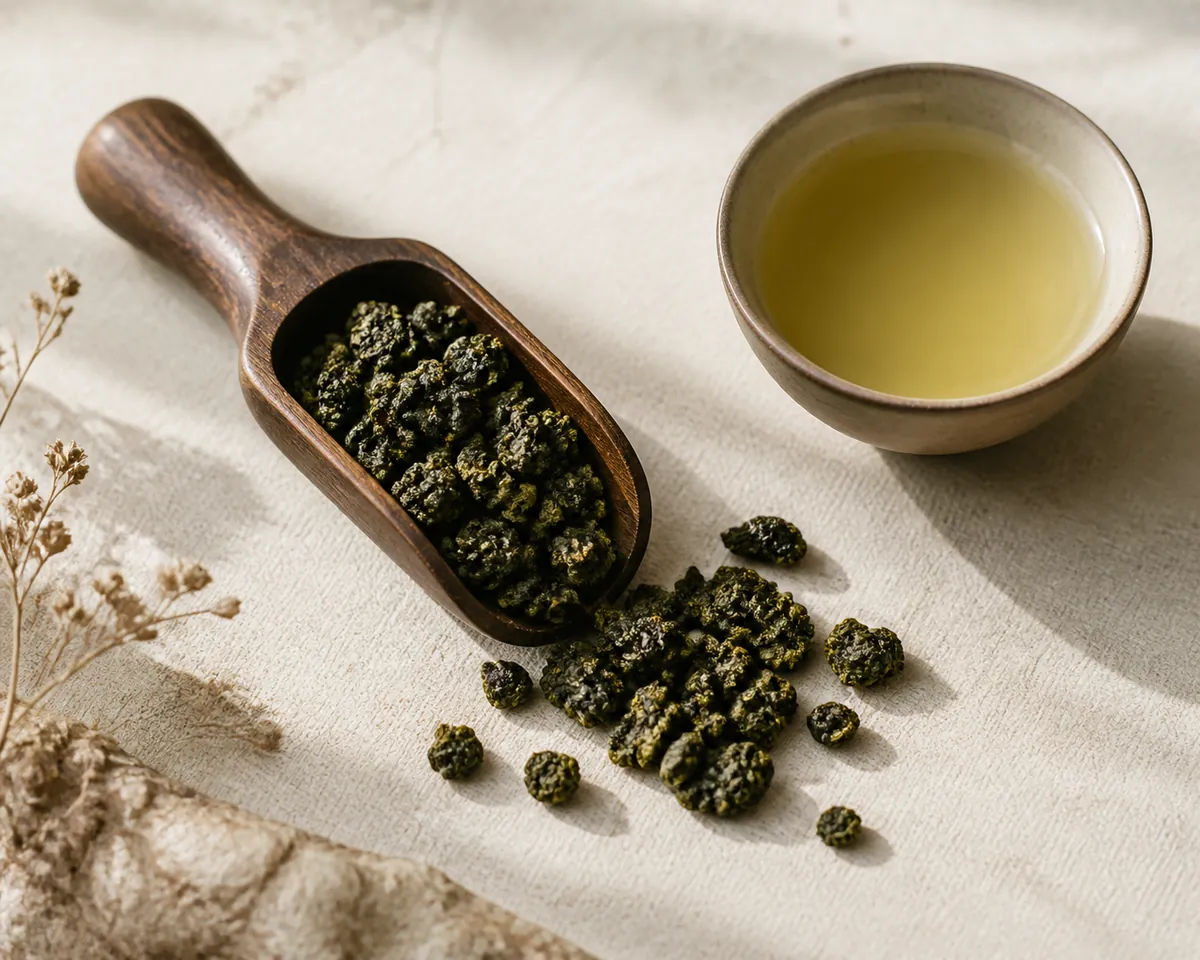
Walk past a tea shelf and green tea looks like a category of its own, sitting apart from black tea and oolong as though it came from somewhere else.
It did not. All of those teas are the leaf of one species, and what separates them is how long the leaf was allowed to react with air before someone stopped it.
Where it grows, how the leaf is handled in the hours after plucking, and which of the two great traditions shaped it then decide everything else. The brewing window is narrow, and why it turns bitter is where it goes wrong.
Green tea at a glance
- What it is
- Leaf of Camellia sinensis, heated within hours of plucking so it cannot darken
- Two fixing methods
- Steaming, dominant in Japan. Pan-firing and roasting, dominant in China
- Shaded grades
- Gyokuro, kabusecha and tencha, grown under netting for the last few weeks
- Names you will meet
- Sencha, bancha, hojicha, genmaicha, Longjing, Biluochun, gunpowder
- Caffeine
- Roughly 28 mg in an 8 fl oz cup, USDA, and it moves with dose and heat
- Water
- 70 to 80 C for one to three minutes, cooler than any other true tea
- Once opened
- Three to six months before the sweetness noticeably drops away
One species, stopped at five different points
Green tea comes from Camellia sinensis, the same species behind black tea, white tea, oolong and pu-erh, and what makes it green is a decision taken within hours of plucking rather than anything about the plant itself. Two cultivated varieties do most of the commercial work.
The small-leaved var. sinensis dominates China and Japan, while the large-leaved *var.
assamica* dominates Assam and much of east Africa.
Both are made into green tea. Assamica leaf is more often carried to full oxidation because its higher polyphenol content suits the heavier result, which is a commercial habit rather than a rule about the plant.
The oxidation gradient
- GreenHeated within hours, oxidation stopped before it starts
- WhiteBarely handled, lightly oxidised by air alone
- OolongPartly oxidised, across a very wide band
- BlackCarried to full oxidation before drying
- Pu-erhFixed, then aged with microbial activity
Read that as one process interrupted at different points rather than as five separate products. Green tea is the earliest interruption, which is why it holds the colour and the fresh character of the raw leaf.
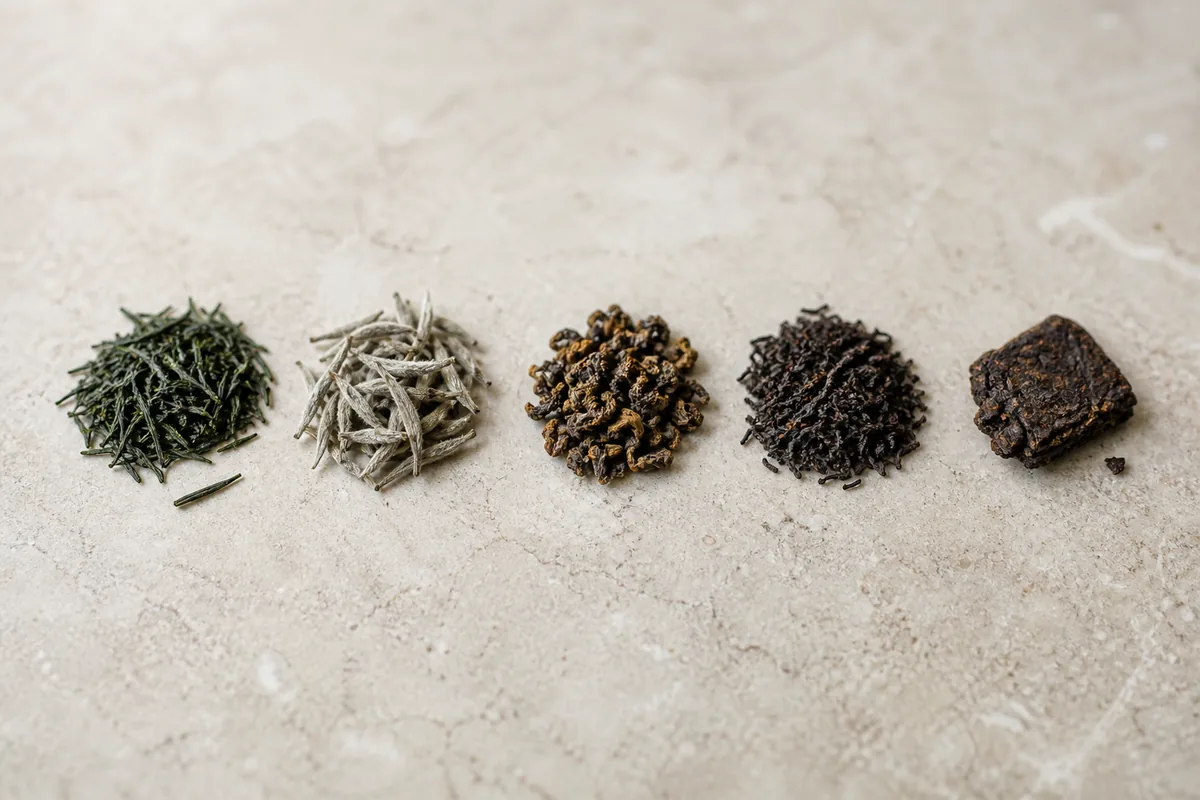
The same species at five stopping points. Colour is the visible record of how long the leaf was left to react.
Pu-erh is the one that leaves the line. It is fixed like any other tea and then aged, and microbial activity takes it somewhere the oxidation scale cannot describe.
None of that makes green tea unprocessed, though the word attaches to it constantly. The leaf is heated, rolled, shaped and dried, which is a great deal of handling, and the only thing it escaped was oxidation.
White tea is the better candidate for minimal handling, since it is essentially withered and dried and left alone in between.
The heat that ends the reaction
Plucking damages the leaf. Cell walls break, and an enzyme called polyphenol oxidase meets oxygen for the first time.
Left alone, that enzyme converts the leaf catechins into larger coloured compounds, the theaflavins and thearubigins responsible for a fully oxidised tea's copper colour and heavier body. The same enzymatic browning turns a cut apple brown on a kitchen counter, so nothing exotic is happening in a tea factory that does not happen on a chopping board.
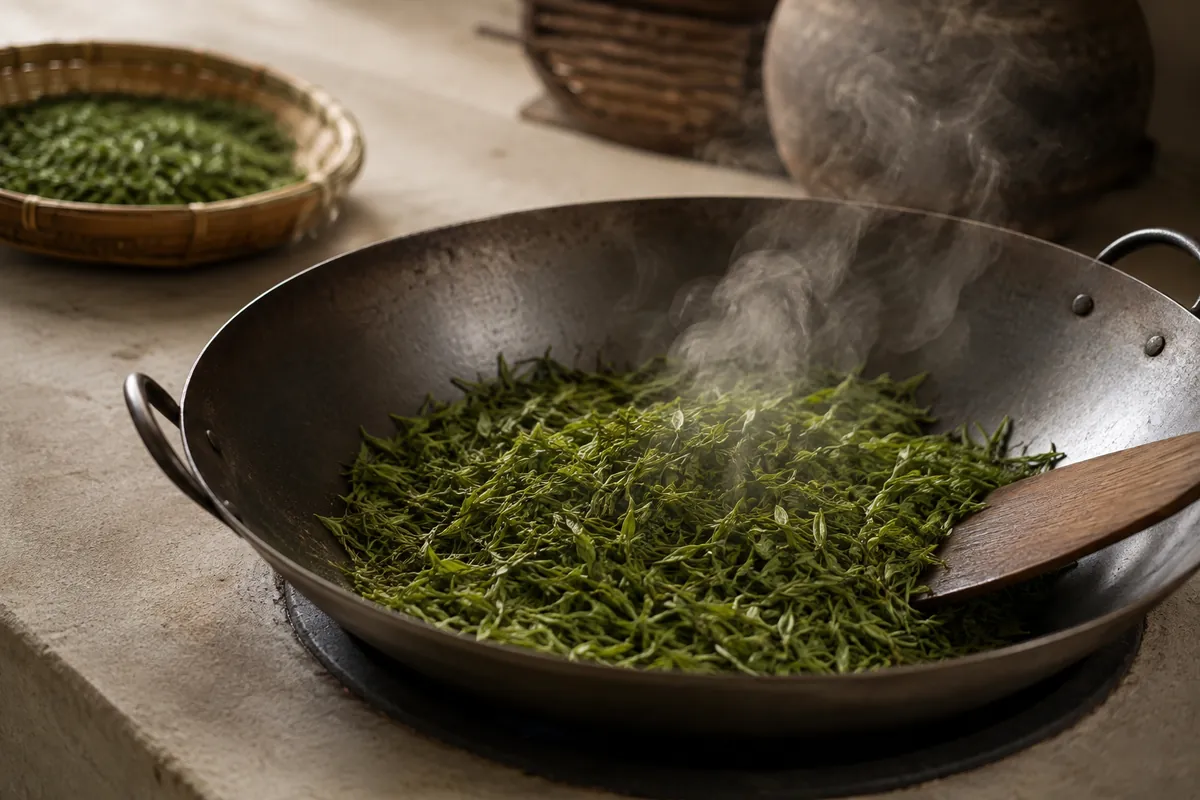
Heat is what stops it, and the mechanism is blunt: heat denatures the enzyme, and once denatured it cannot restart however long the leaf then sits.
A packet reading unfermented is following an old trade convention rather than making a claim about the leaf, so it is not the sign of a careless producer.
Notice what the heat does not do. It does not remove the catechins the enzyme would otherwise have consumed, and those compounds stay in the leaf, which is the whole reason black tea against green tea is a comparison of what survived rather than of two different plants.
Steamed or pan-fired, and reading it off the leaf
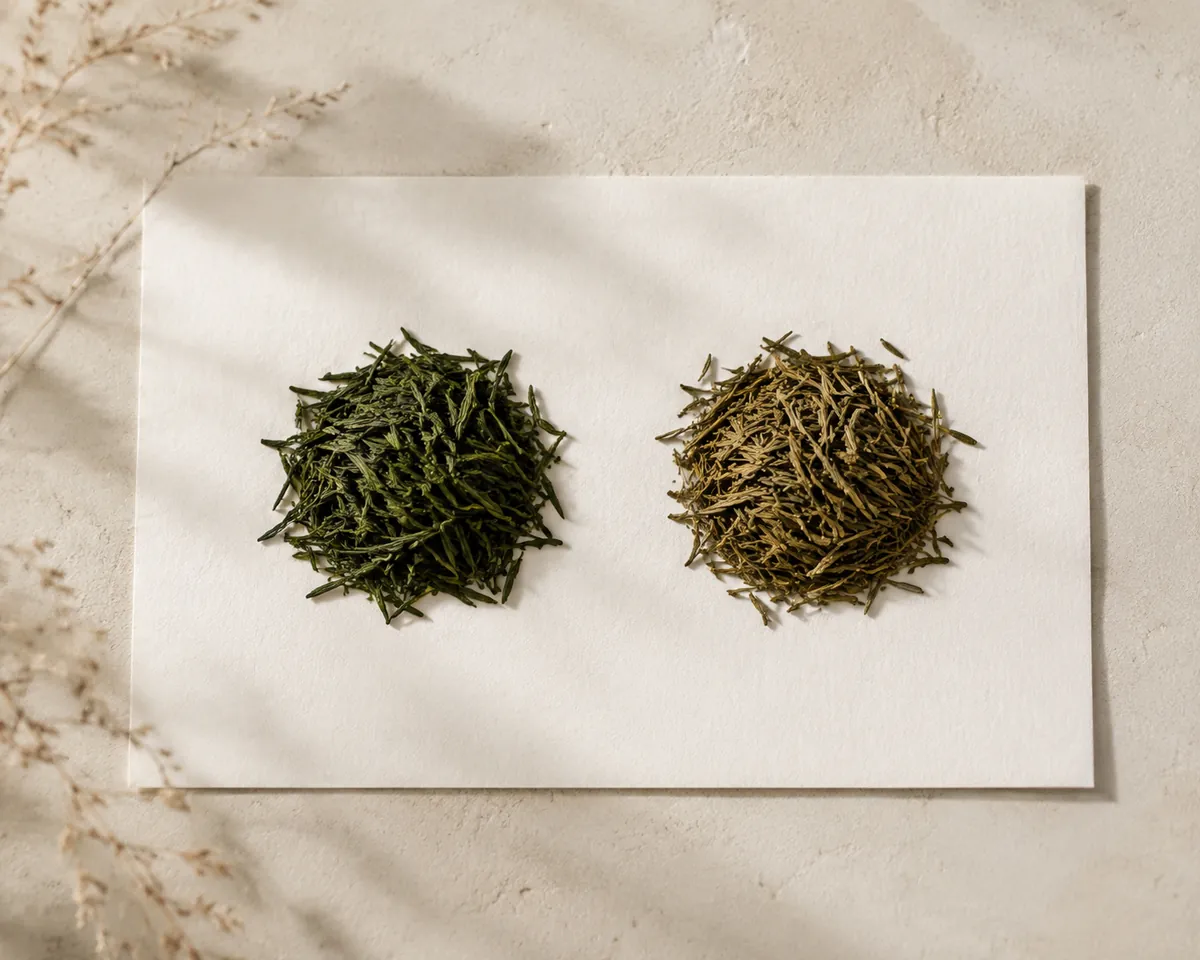
Put a Japanese sencha beside a Chinese Longjing and they look like different products, one a bundle of fine dark needles and the other a handful of flat, pale jade blades. Both are green tea, correctly labelled, and what separates them is how the enzyme was killed.
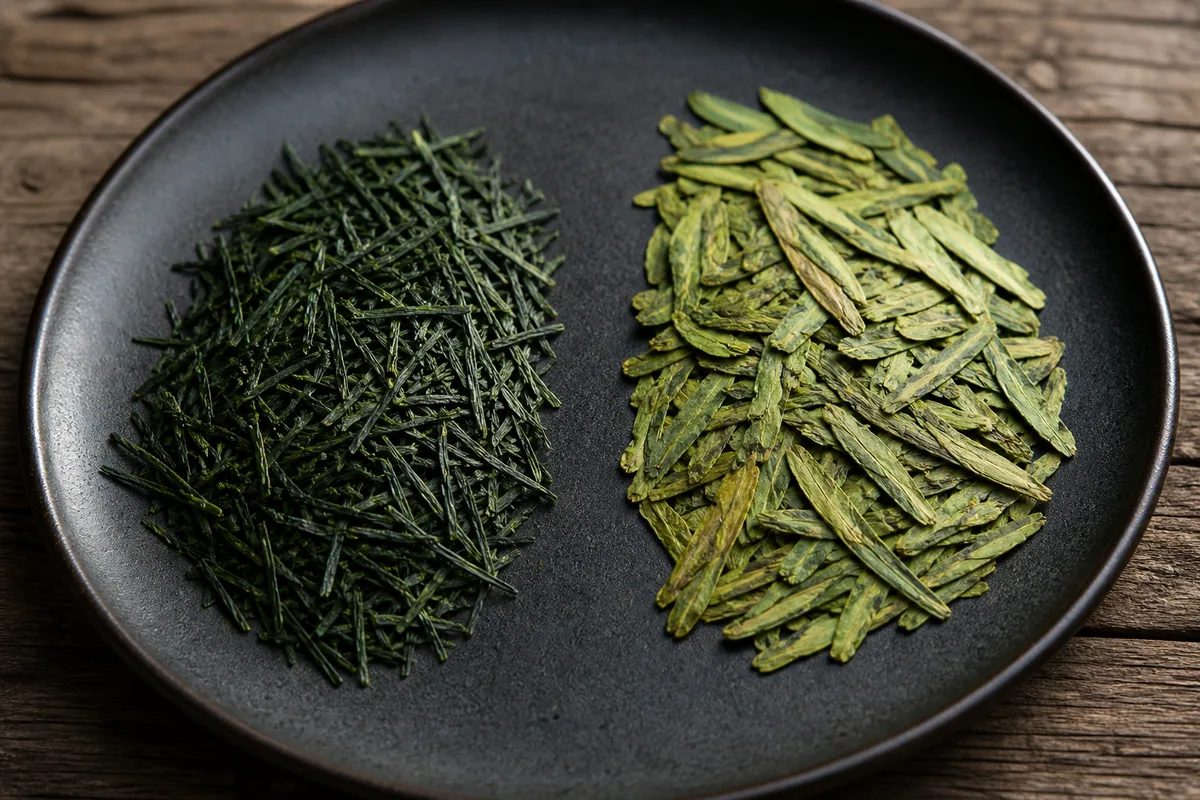
Steamed sencha on the left, pan-fired Longjing on the right. The shape of the dry leaf is the clearest record of which heat it met.
Steaming is the dominant Japanese method. Steam carries heat into the leaf quickly and evenly, which holds a deep saturated green and breaks more of the leaf into fine particles.
Pan-firing and roasting dominate in China, where dry heat against metal drives moisture off more slowly and adds a toasted edge that steamed leaf never picks up.
| What you can check | Steamed | Pan-fired |
|---|---|---|
| Dry leaf shape | Fine needles, tightly rolled | Flat pressed blades, or tight curls and pellets |
| Leaf colour | Deep, saturated green | Paler, jade through to olive |
| Liquor clarity | Cloudy, as fine particles carry into the cup | Clear |
| Aroma register | Marine and vegetal | Toasted, nutty, grain |
| Teas you will meet | Sencha, gyokuro, bancha | Longjing, Biluochun, gunpowder |
Cloudiness is the most reliable cue, because it survives brewing and needs nothing to compare against. A cup you cannot see the bottom of came from steamed leaf.
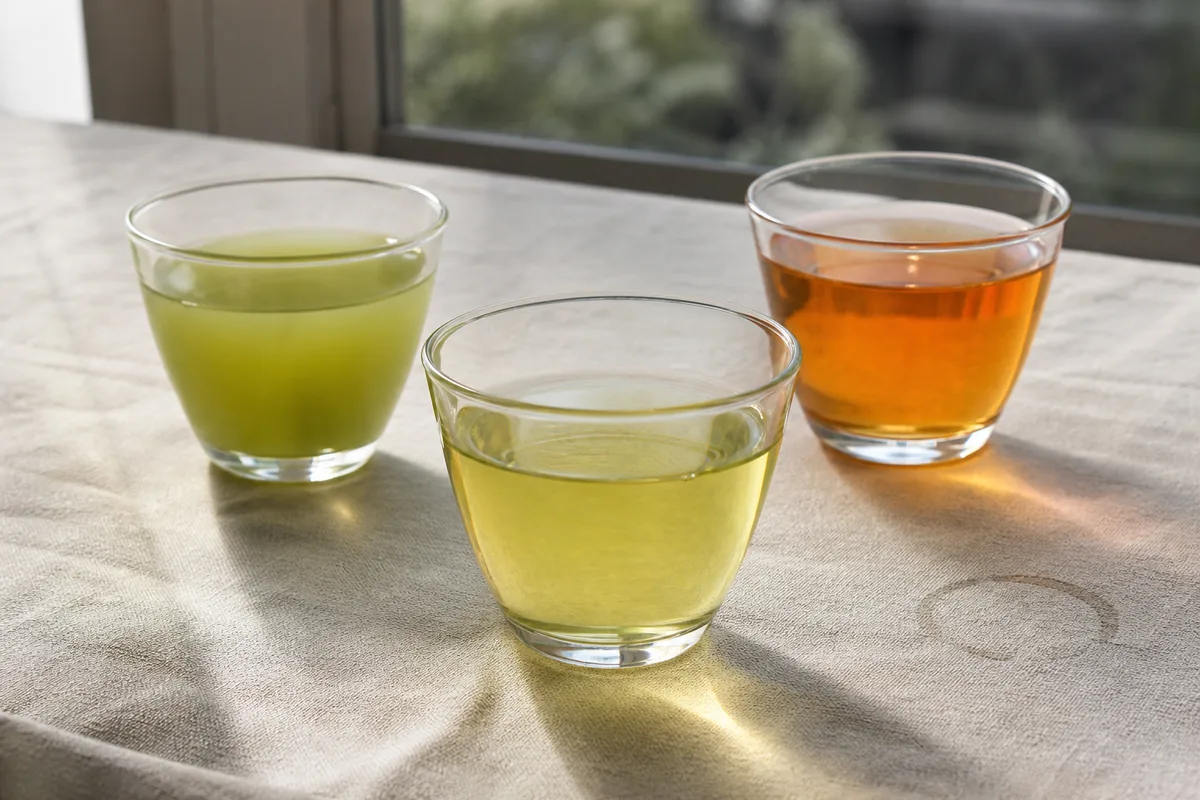
Cloudy jade from steamed leaf, clear yellow-green from pan-fired leaf, and amber from roasted hojicha.
Japanese producers push this further with deep steaming, running the leaf through steam for two or three times as long. The leaf breaks down more, the liquor turns opaque, and the cup gets noticeably thicker.
Country is a strong tendency rather than a rule, since Chinese steamed greens and Japanese pan-fired greens both exist, so the cues in the leaf tell you more than the flag on the packet.
Three weeks under netting
Every decision so far happens after plucking. One group of green teas is altered before it, and the intervention is agricultural rather than industrial.
For roughly the last three to four weeks of growth the bushes are covered, with reed screens or dark netting going up above the rows to cut out most of the light. The plant compensates by building more chlorophyll to catch what light remains, which deepens the leaf colour well past that of an unshaded field.
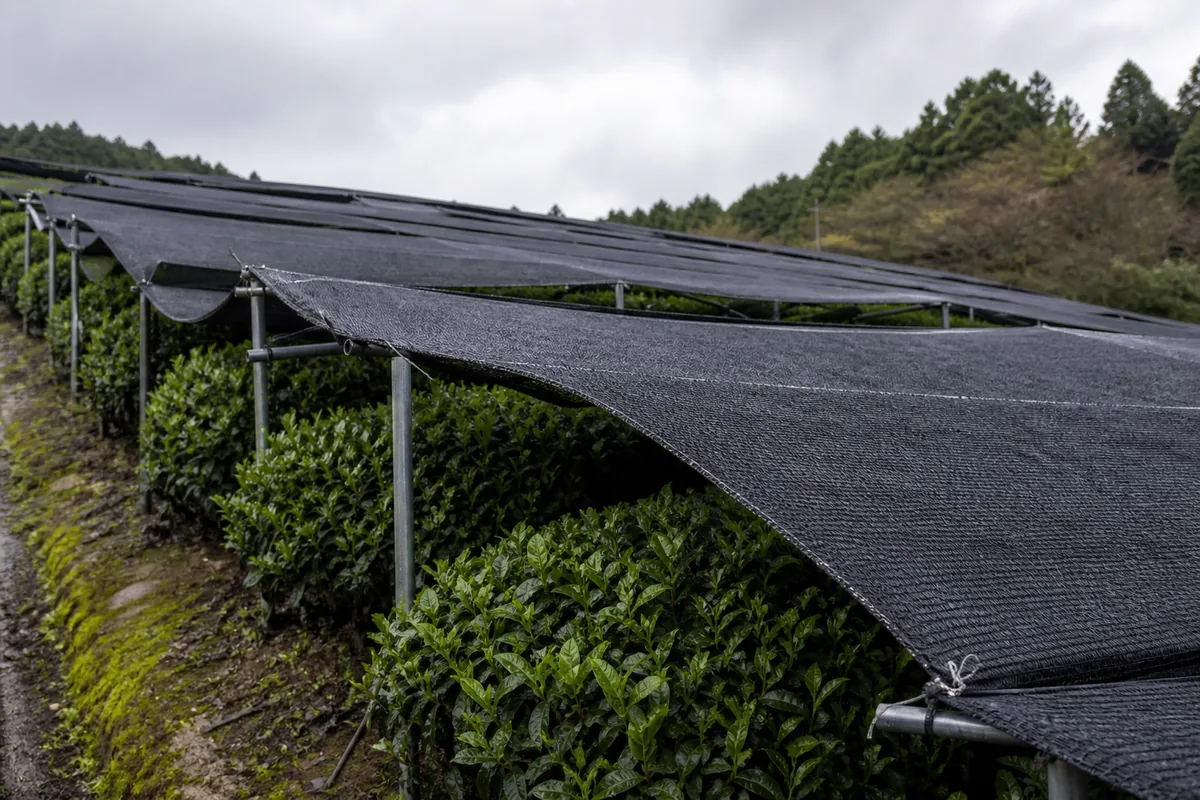
Netting on frames above the rows, with a gap at the edge showing the deep green leaf it is protecting.
It also holds on to more theanine, the amino acid behind the savoury, almost brothy character of these teas, while catechin development slows in the low light. That single change in the field is why a shaded leaf can be brewed at temperatures that would wreck an unshaded one.
What covering the bushes changes
- Time under cover
- Roughly 3 to 4 weeks before plucking
- Theanine
- Rises, giving a rounder and more savoury character
- Catechins
- Develop more slowly, so the leaf reads as less astringent
- Chlorophyll
- Rises, deepening the colour of the leaf
- Teas produced
- Gyokuro, kabusecha, and tencha, the leaf milled into matcha
Three teas come out of the practice. Gyokuro and kabusecha are sold as leaf, while tencha is the shaded leaf milled into matcha and never sold to be steeped.
Shading costs the grower yield, which is most of the reason gyokuro carries the price it does, and kabusecha sits under cover for a shorter spell that places both its character and its price between the two.
Grass, seaweed and toasted chestnut
Ask two people what green tea tastes like and one will say seaweed while the other says toasted chestnut, and both are describing something real, because the fixing method sets the register before anything else does. Steamed Japanese leaf reads marine and vegetal, closer to spinach water and nori than to anything sweet.
Pan-fired Chinese leaf reads toasted and nutty, with a chestnut or roasted-grain note that comes from dry heat against metal rather than from the plant. Shaded leaf goes further in the savoury direction again, thick and brothy in a way that surprises people expecting something light.
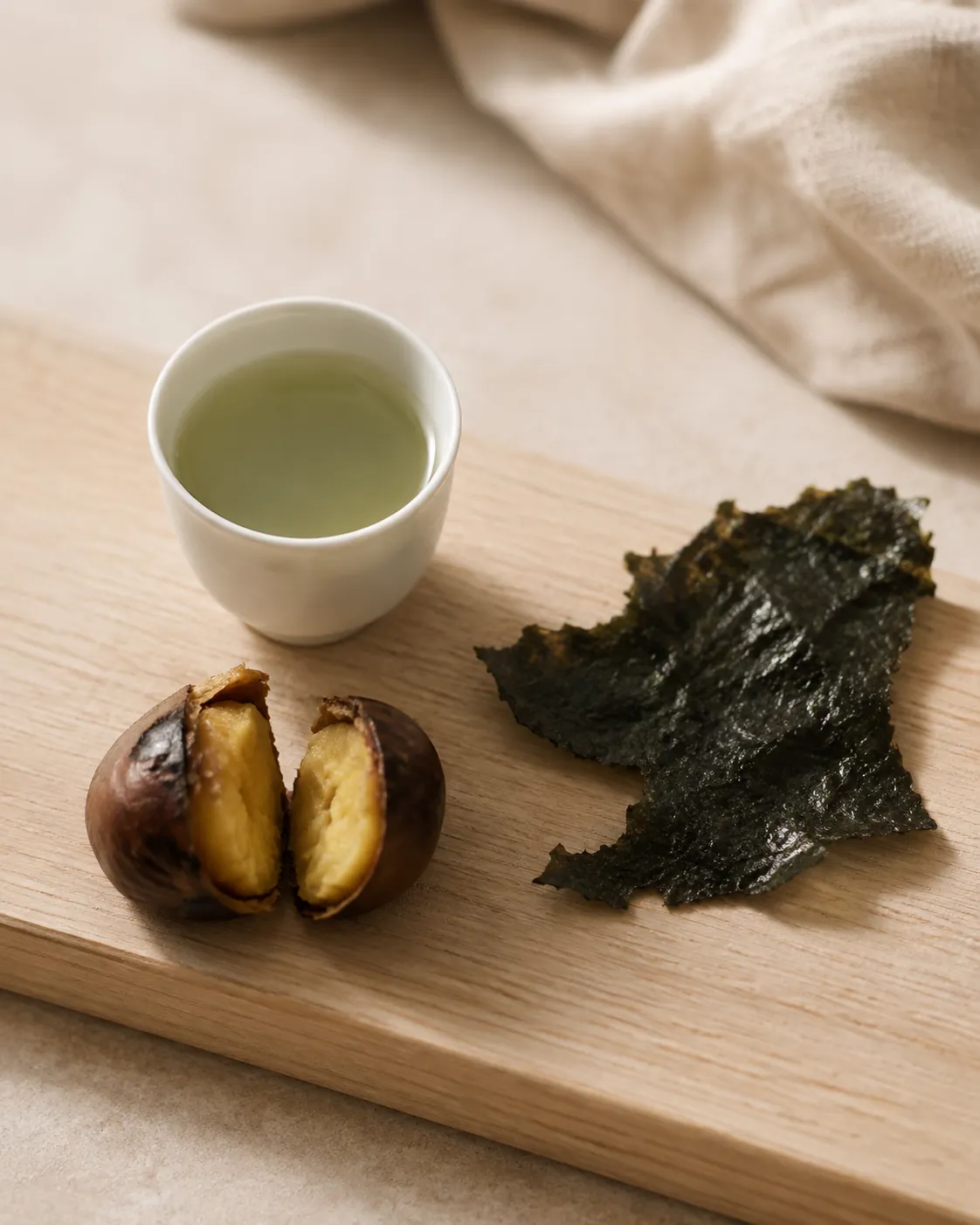
Steamed Japanese leaf
Marine and vegetal. Spinach water, nori and cut grass, with a thick mouthfeel that comes from the fine particles.
Pan-fired Chinese leaf
Toasted and nutty. Chestnut and roasted grain, over a clearer and noticeably lighter body.
Shaded leaf
Savoury and brothy. The umami register, and the least drying of the four.
Roasted hojicha
Toasted and woody. Almost no grip, and what sweetness there is reads as caramel rather than as grass.
Sweetness in green tea is real but quiet. It arrives early in the steep and it is the first thing to leave as the leaf ages, which is why a tired packet tastes harsh rather than weak.
Astringency is the other half of the profile, a drying grip rather than a taste, and it belongs to the same catechins the heat preserved, so green tea bitterness is a brewing problem before it is a leaf problem.
Roasting rewrites the profile entirely. Hojicha comes off the same bushes and often the same leaf as sencha, and roasting turns it brown, toasty and almost free of grip, which is worth knowing before you decide the whole category is not for you. What green tea tastes like works through the range in more detail.
Sencha, Longjing and what the names describe
The names on a tea shelf describe at least three different kinds of thing, which is why they resist memorising. Some name a processing style, some name a harvest, and some name a treatment applied to a tea that was already finished.
Sencha
The default Japanese green tea, steamed and rolled into fine needles. Most Japanese green tea sold abroad is some grade of sencha.
Gyokuro
Shaded for weeks before plucking, then steamed. Deep colour, heavy savoury character, and a price to match.
Bancha
A later harvest from the same bushes as sencha. It names when the leaf was picked rather than how it was made.
Hojicha
Green tea roasted after processing. Roasting turns the leaf brown and drives the caffeine well down.
Genmaicha
Green tea blended with toasted rice. A blend rather than a leaf type.
Longjing
The reference pan-fired Chinese green, pressed flat against the wok into jade blades.
Biluochun
Pan-fired and rolled into tight spirals, so the curl is its processing signature.
Gunpowder
Leaf rolled into small hard pellets. The name describes the shape and says nothing about the flavour.
Two of those are not leaf types at all. Hojicha and genmaicha are treatments applied to an existing green tea, which is why they sit oddly beside the rest and why they brew to different rules.
A name is not a grade, and bancha and sencha can come off the same bushes in the same year, where the gap between a cheap sencha and a careful one is far wider than the gap between those two names.
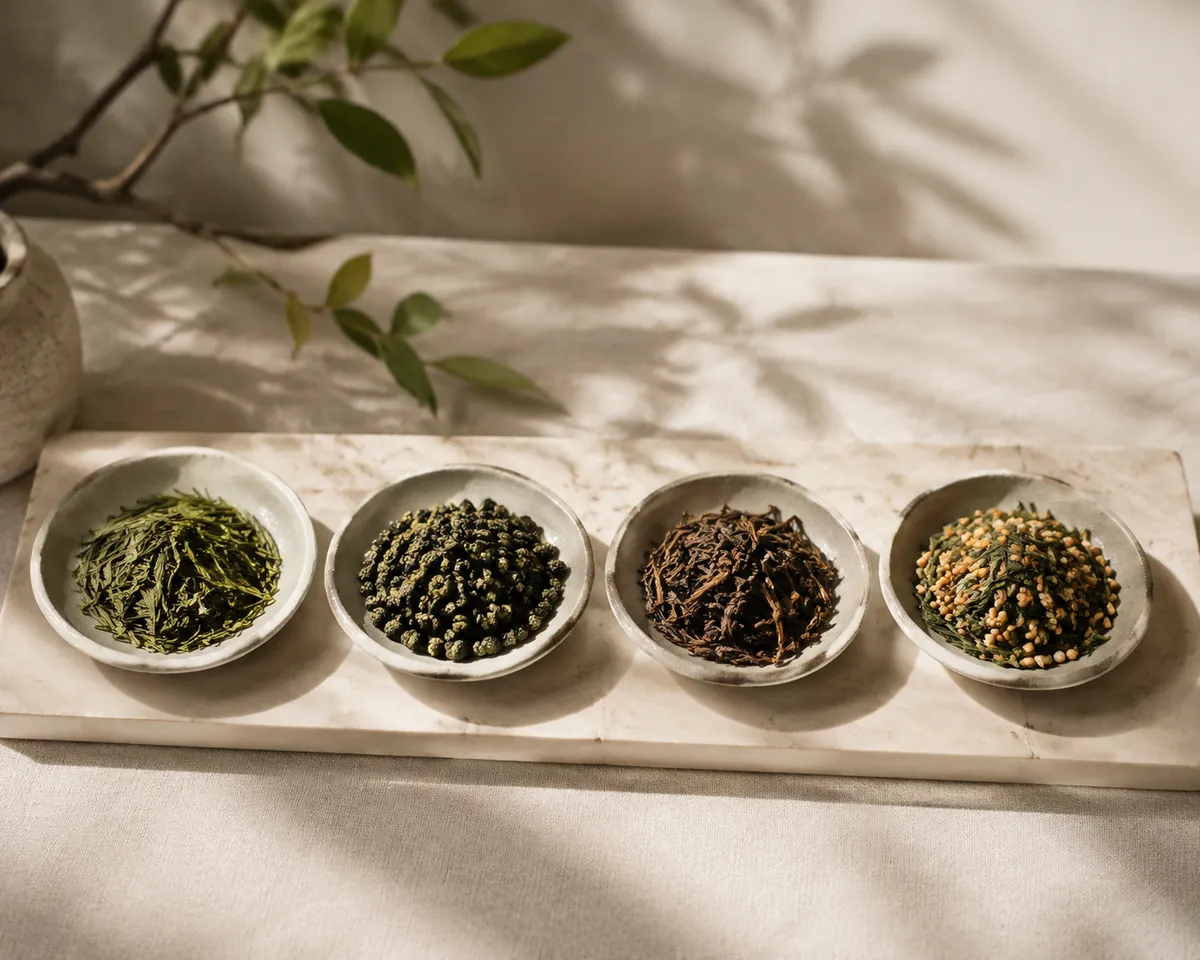
All four start from the same plant and the same decision to stop oxidation, and what separates them is what happened afterwards. That is also why one brewing rule fails across the category, since a hojicha takes boiling water and a sencha does not.
Korea and Vietnam, the producers nobody names
Most writing treats green tea as a Chinese and Japanese product. Two other producers are worth knowing about, and one of them is probably in your cupboard already without saying so.
Korea makes green tea in small quantities, mostly around Boseong and Jeju. It is usually pan-fired in the Chinese manner but tastes distinctly different, often nuttier and rounder than a Longjing, and it is sold almost entirely under its own name rather than into blends.
Vietnam is a large producer by volume and much of it goes into blends and bottled drinks rather than being sold under its own origin. Vietnamese green tea tends to be robust and slightly smoky, which suits it to a blend where a delicate leaf would disappear.
Neither appears often on a shelf under its own flag, and that is most of why the two-country picture persists.
Caffeine and what else the leaf carries
USDA FoodData Central puts brewed green tea at roughly 28 mg of caffeine in an 8 fl oz cup. Black tea sits near 47 mg over the same measure, and brewed coffee near 95 mg.
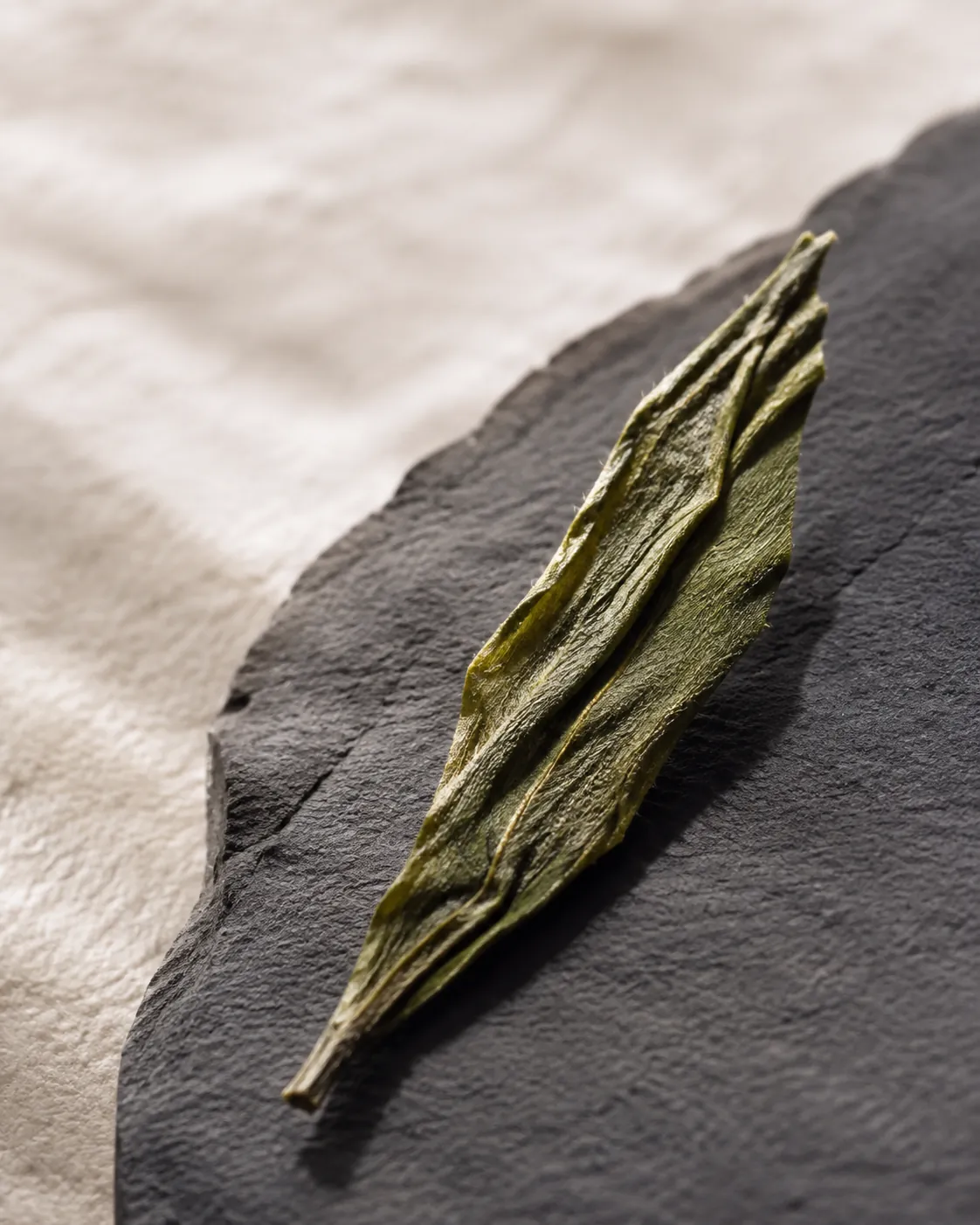
Treat that as a midpoint rather than a value. Leaf dose, water temperature and steep time move the extracted caffeine well outside it, and roasted hojicha falls a long way below the figure, so the number describes a preparation rather than a category.
Beyond caffeine, the leaf carries catechins, the polyphenol group that survives precisely because oxidation never consumed it, and EGCG is the most abundant of them. Theanine is the other compound worth naming, and shaded leaf carries the most of it.
Milled whole leaf changes the arithmetic, which is what green tea against matcha turns on.
Reading a packet of green tea
Three things on a packet tell you more than the price does, and none of them is the word premium. A harvest year or season is the first, because green tea is perishable and a stated year is a shop taking freshness seriously rather than a marketing flourish.
A named style or region is the second. Sencha, Longjing and Biluochun describe a real process and a real place, while green tea sold under no further name is a blend assembled to a price, and there is nothing wrong with that as long as you know which you are buying.
Whole leaf rather than dust is the third, and it is the one that changes the cup most. Fine broken leaf has enormous surface area, extracts within seconds and turns astringent long before the timer says it should, which is most of why bagged green tea disappoints people who then blame the style.
Making green tea sets out what to do with either.
- A harvest year or a season printed somewhere on the packet.
- A named style or region rather than the words green tea standing alone.
- Whole leaf you can identify by shape rather than broken fragments and dust.
- A resealable foil pouch rather than a paper packet or a loose-lidded caddy.
- A pack size you will finish within three months of opening it.
Buy small quantities more often. A hundred grams is thirty to fifty cups, which is a month or two of daily drinking, and the last third of a larger bag is usually drunk after the point where it was worth drinking.
Why an opened bag fades in months
Buy green tea in smaller amounts than you would buy black tea, because it fades faster and for a reason this page has already given. Stopping oxidation left the reactive catechins intact in the leaf, and black tea has already been through that reaction, so it has far less left to lose.
Light, warmth, moisture and air keep that slow change moving inside the packet, which is why an opened bag tastes flatter after a few months than it did on the first day. What goes first is the fresh green aroma, and what remains is the astringency, so old green tea reads as harsh rather than merely faint.
Three to six months after opening is realistic before the sweetness noticeably drops away. Roasted green tea is the exception, since hojicha keeps considerably better than unroasted leaf, and vacuum or nitrogen-flushed packaging changes the picture again by removing the air before you ever open it.
The containers and the habits are the same as for any tea and only the timescale is halved, which storing loose-leaf tea covers in full, along with the one storage mistake that ruins a tin outright.
Common questions
Is matcha a green tea?
Yes. Matcha is tencha, a shaded green tea, milled to a powder and whisked into the water rather than steeped and strained. Because you drink the leaf itself instead of an infusion of it, it behaves differently in the cup from any steeped green tea.
Does green tea go off?
Not in the way fresh food does. Dry leaf kept cool, dark and sealed stays safe well beyond a year, but it loses aroma and sweetness steadily, so the practical limit is flavour rather than safety.
Is decaffeinated green tea still green tea?
Yes. Decaffeination is an extra step applied after the leaf has been fixed and dried, so the leaf is still unoxidised. The process carries off some aroma compounds along with the caffeine, which is why decaffeinated versions usually taste flatter.